Homework station ideas for small spaces usually get dismissed as impossible without a spare room, but the truth is a genuinely focused study spot needs about three feet of wall, not a whole room. The real trick isn’t finding space, it’s designing a spot small enough to fit and structured enough to actually hold a kid’s attention.
What makes a small homework station actually work isn’t the size of the desk, it’s how clearly it signals “this is where work happens.” A defined, uncluttered nook, even a narrow one, does more for focus than a big desk buried in toys or mail ever will, and that’s the thread running through every idea below.
I’ve grouped these twenty-two into four directions: closet and nook conversions, wall-mounted and vertical setups, rolling and portable stations, and focus and lighting details, so there’s a starting point whatever kind of space you’re working with.
Before You Start: Quick Setup Tips
- Pick a spot with a door or a clear boundary if you can. A defined edge matters more than square footage for signaling focus time.
- Keep the desktop itself nearly empty. Storage belongs on the wall or in a drawer, not spread across the work surface.
- Match the setup to the kid’s age. A first-grader needs color and reach, a teenager needs outlets and laptop space.
- Light the task, not just the room. A single desk lamp does more for focus than one overhead bulb ever will.
- Build in a reset habit. A station that gets cleared at the end of each session stays usable the next day.
Closet and Nook Conversions
1. Convert an unused closet into a compact study nook
This is the single highest-impact project on this whole list if you have even one closet doing nothing.
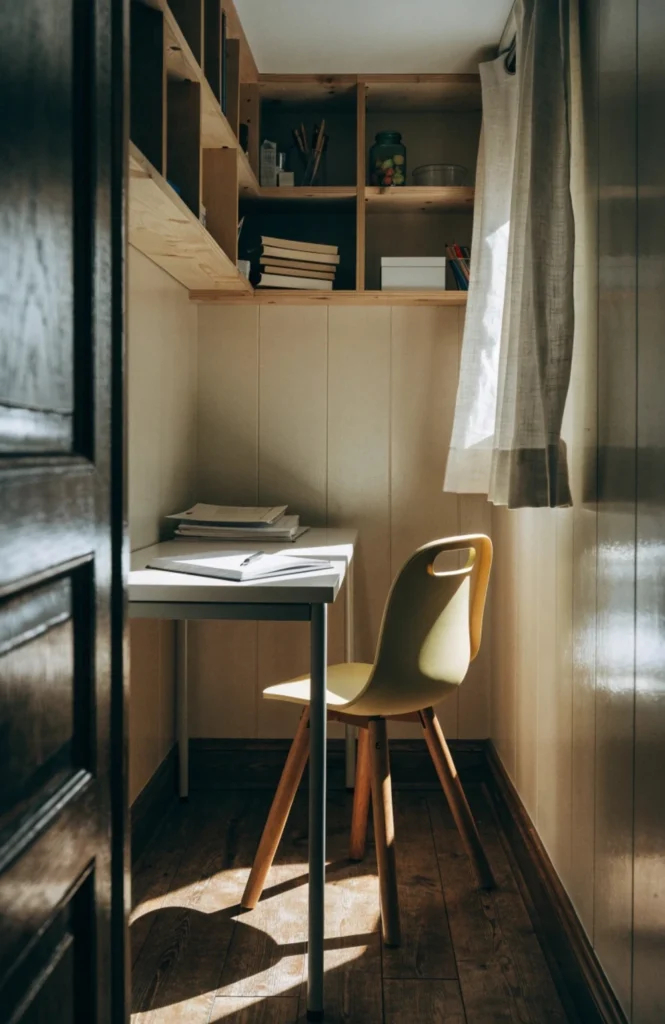
Removing the closet doors, adding a slim desktop across the width, and fitting two or three shelves above turns dead storage space into a real study spot, typically for 150 to 350 dollars in materials. A depth of at least 20 inches keeps the desktop usable for both writing and a laptop.
It works because the closet’s existing walls create the sense of enclosure that open rooms can’t offer on their own. Kids who get distracted at an open kitchen table often focus noticeably better once the space has real edges around it.
2. Build a homework alcove under the stairs
That triangular gap under a staircase is almost always empty, and it’s a genuinely strong fit for this.
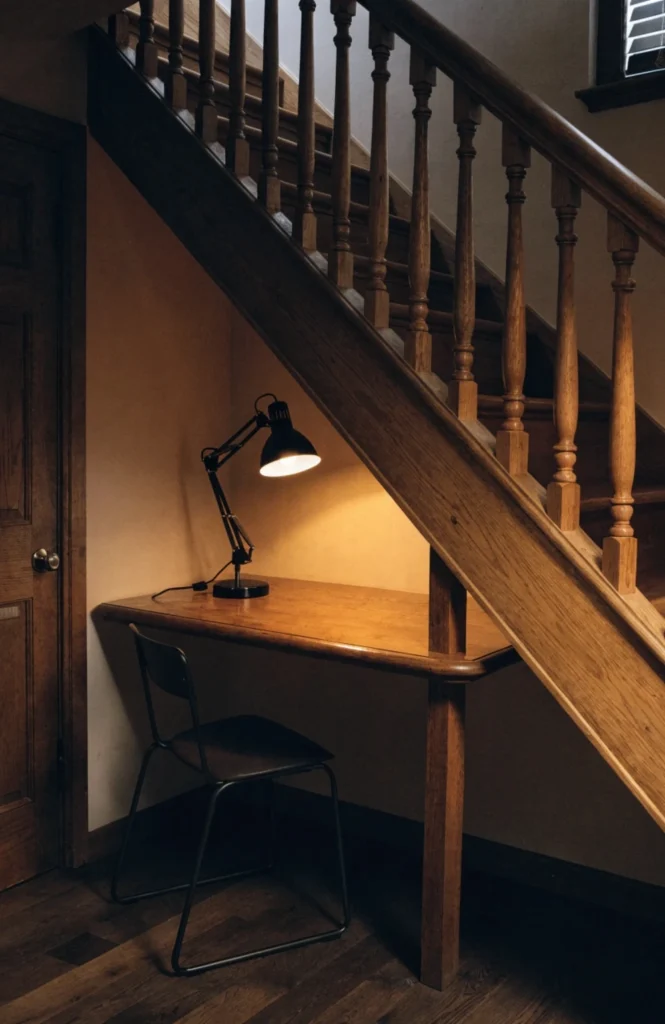
A built-in desk fitted to the slanted ceiling line, paired with a compact rolling chair sized to fit the lower headroom, typically runs 300 to 700 dollars for a simple build using stock lumber and basic shelving. Paint the interior a bright, warm tone since under-stair spaces get little natural light.
The slanted ceiling that makes this space hard to use for almost anything else is exactly what gives it a cozy, enclosed feel here. It’s one of the more unusual homework station ideas on this list, but it reliably turns unused square footage into a genuine focus zone.
3. Turn a hallway landing into a shared study spot
A wide upstairs landing is one of the most overlooked homework spots in a home.
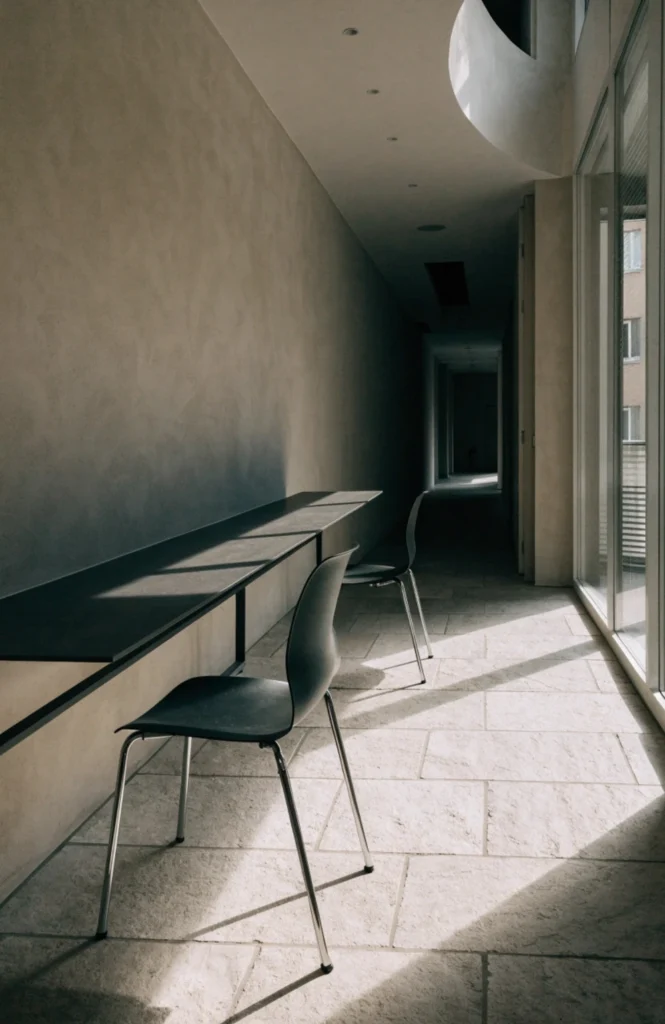
A slim wall-mounted desktop, roughly 40 to 60 inches long, paired with two matching chairs, fits comfortably along most landings wider than four feet and typically costs 80 to 180 dollars for the desktop and hardware. Keep the palette neutral so it blends into the hallway rather than looking like a bolted-on addition.
This setup works particularly well for siblings who need to work near each other but not in the same bedroom. It also keeps homework visible to a parent working nearby without needing a dedicated room at all.
4. Convert a window seat into a study nook
If a bedroom already has a window seat or bay window, it’s already halfway to being a homework spot.
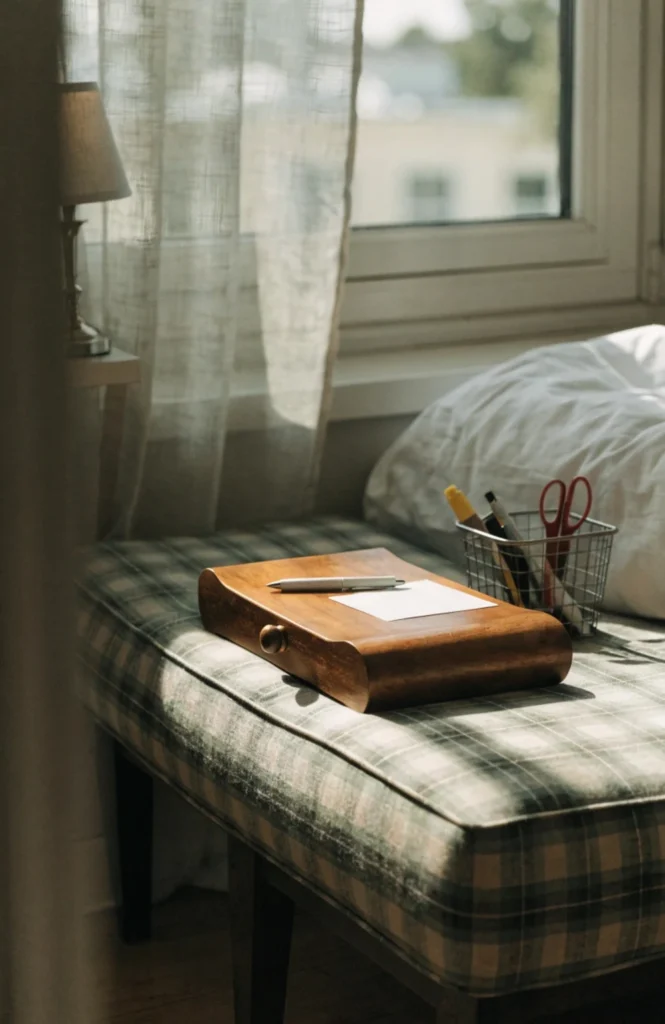
Adding a lap desk or a slim fold-out shelf across the window seat, along with a supply basket tucked beside it, costs under 60 dollars and takes advantage of a spot that’s often just used for sitting. Natural light from the window does double duty as both mood lift and task lighting during the day.
It’s one of the lowest-cost ideas on this list since it uses furniture that’s already there. Kids often gravitate toward window seats naturally, so this option tends to get used without much convincing.
5. Fit a mini desk into a stair landing closet
A shallow closet on a stair landing, often too small for clothes, is often just the right size for this.
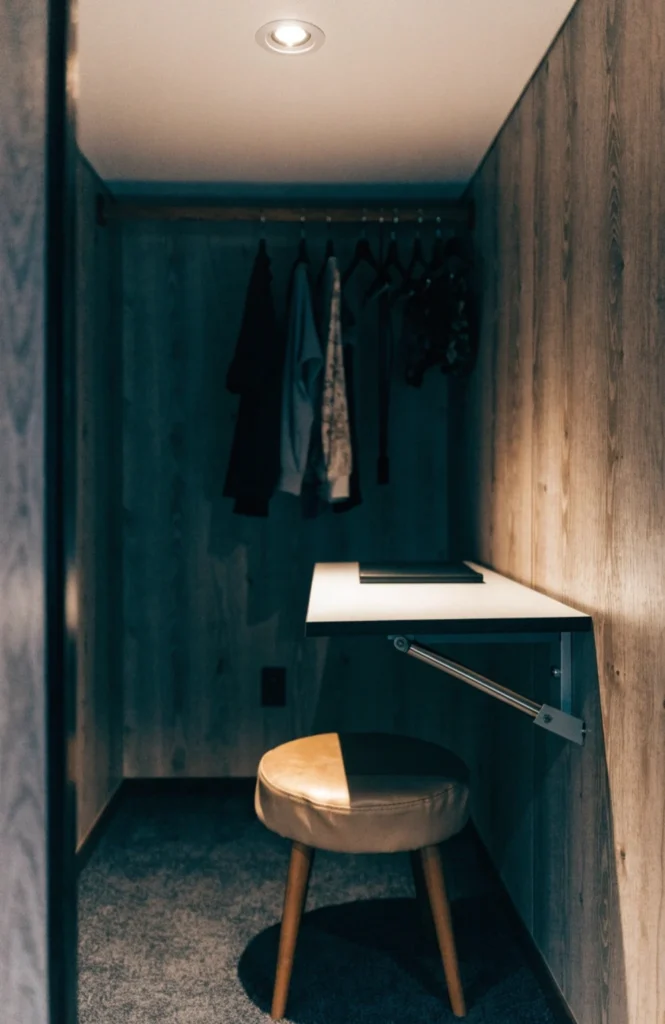
A narrow fold-down or fixed desktop, sized to the closet’s exact width, paired with a stool that tucks fully underneath, typically costs 100 to 250 dollars depending on materials. A battery-powered puck light solves the lighting problem these closets almost always have.
It reclaims a space that would otherwise sit empty or become general clutter storage. The enclosed, doorless nook still reads as a defined zone, which is the detail that actually matters for focus.
Wall-Mounted and Vertical Setups
6. Install a floating wall-mounted desk
For a bedroom with zero floor space to spare, this is the most direct fix on the whole list.
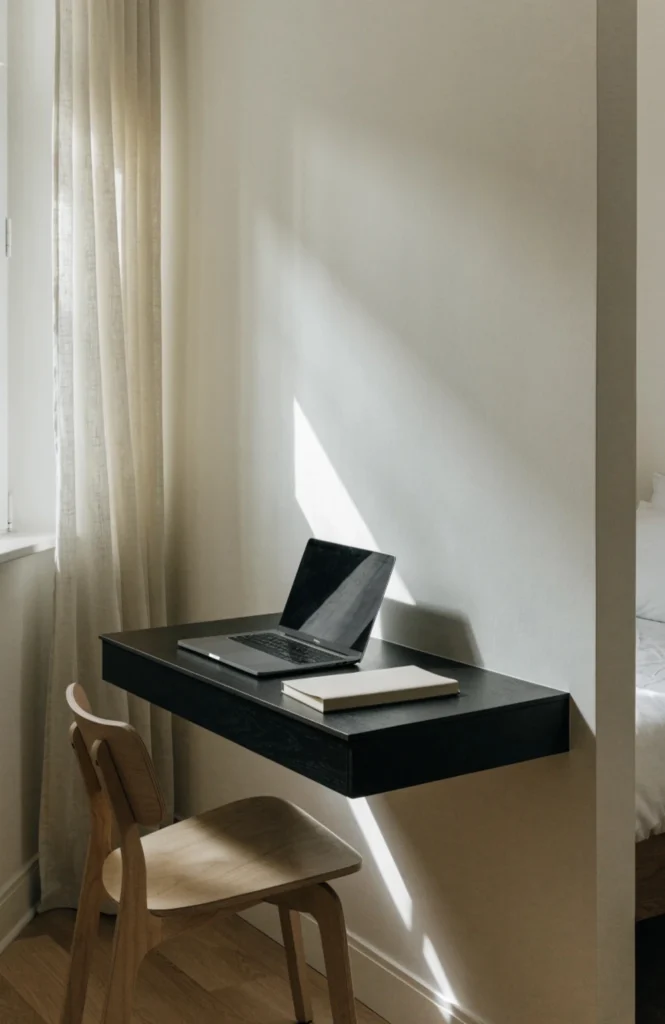
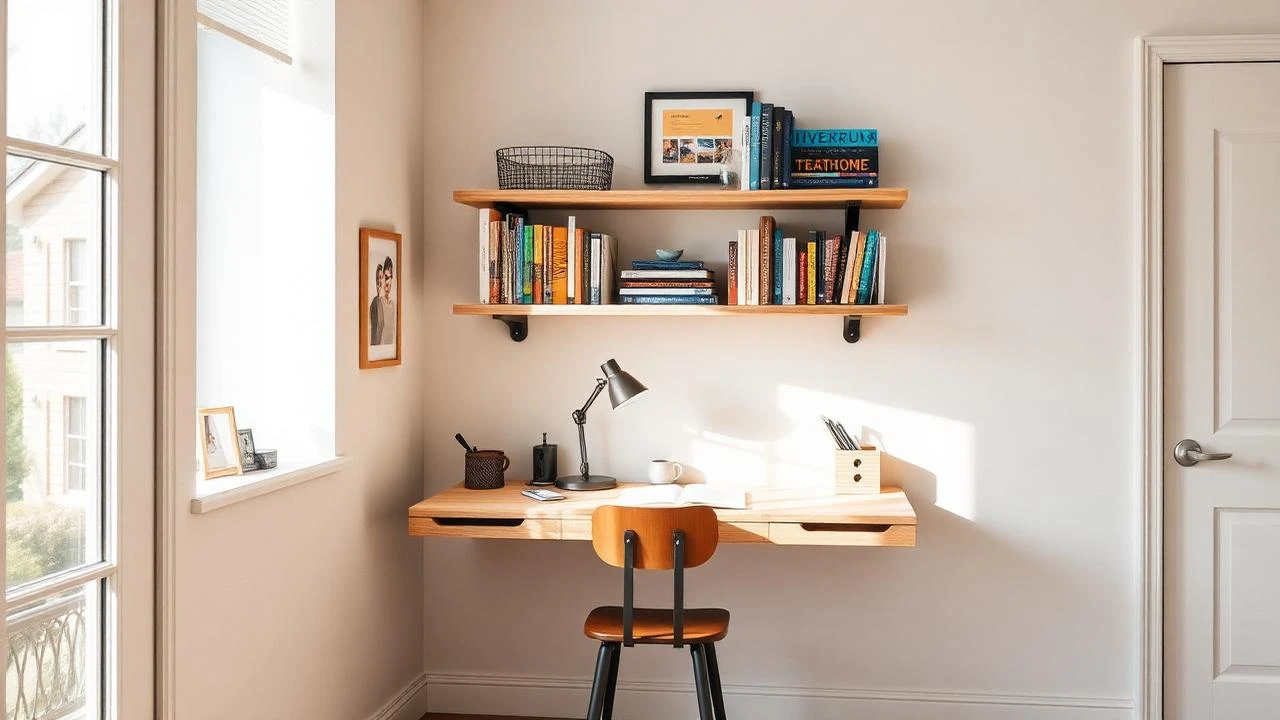
A floating desk, mounted with hidden brackets rated for at least 50 pounds, typically runs 60 to 150 dollars and holds a laptop or notebook without needing any legs or floor footprint at all. Mount it at a height where a standard chair tucks fully underneath when not in use.
Because nothing touches the floor beneath it, the room can be swept or vacuumed without moving furniture first. It’s one of the cleanest-looking options on this list for a genuinely tiny bedroom.
7. Add a fold-down desk that tucks flat against the wall
This solves the problem of a room that needs to be a bedroom most of the time and a study spot only sometimes.
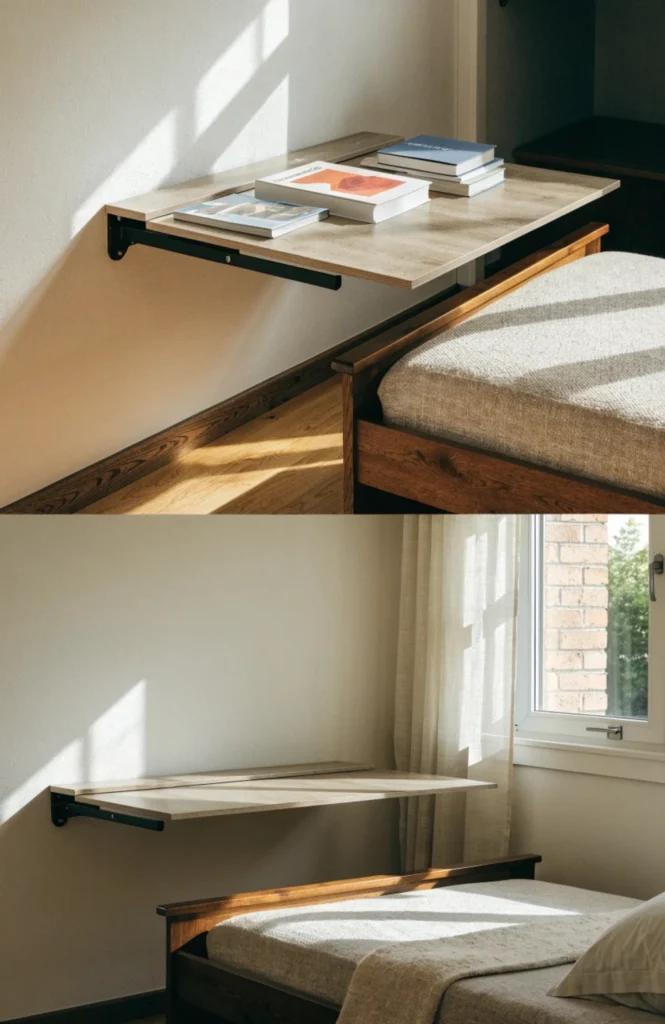
A hinged fold-down desk, typically 100 to 250 dollars, mounts flush to the wall and folds flat when not in use, freeing the floor completely for play or other activities. Support legs that fold out from underneath keep the desktop stable while it’s open.
It’s an especially strong pick for a shared kids’ room where floor space genuinely can’t be given up permanently. The desk disappearing after homework time also gives a clear, physical end to the work session.
8. Stack floating shelves above eye level for supplies
Wall height does real organizing work once a homework station’s desktop starts filling up with books and bins.
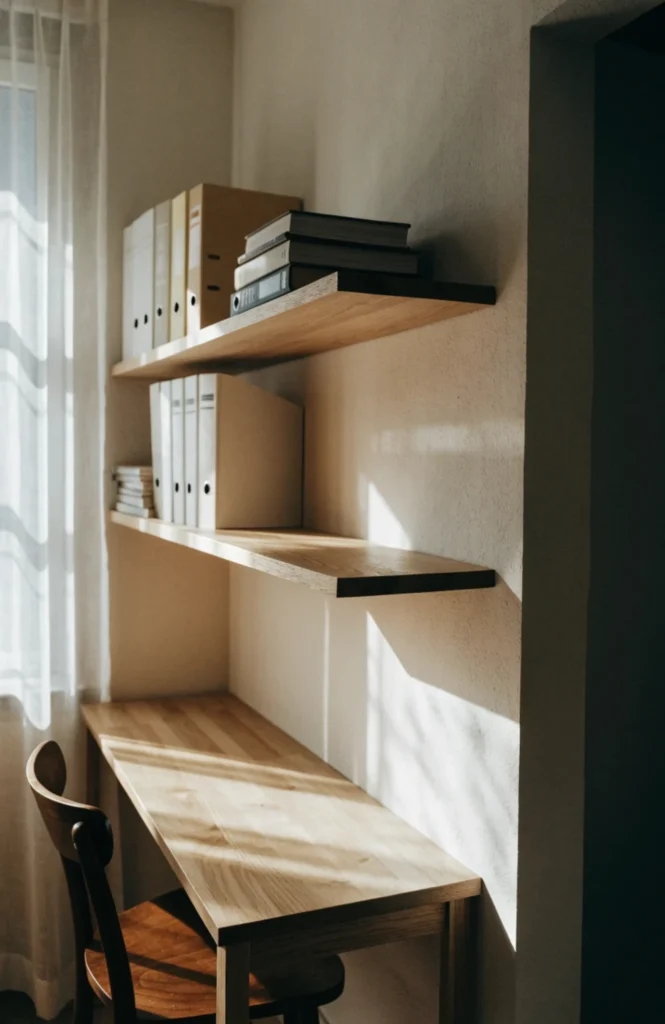
Two or three floating shelves, mounted above the desk at increasing heights, typically 20 to 40 dollars each, hold reference books and binders up and out of the way while keeping only current work within reach. Anchor into studs since loaded shelves get heavier than they look once books are stacked.
Getting clutter off the desktop and onto the wall is one of the single biggest focus improvements a small station can make. It also means the actual work surface stays clear enough to spread out one assignment at a time.
9. Mount a pegboard behind the desk for supply access
A pegboard turns wall space into the exact kind of visible, reachable storage a small station actually needs.
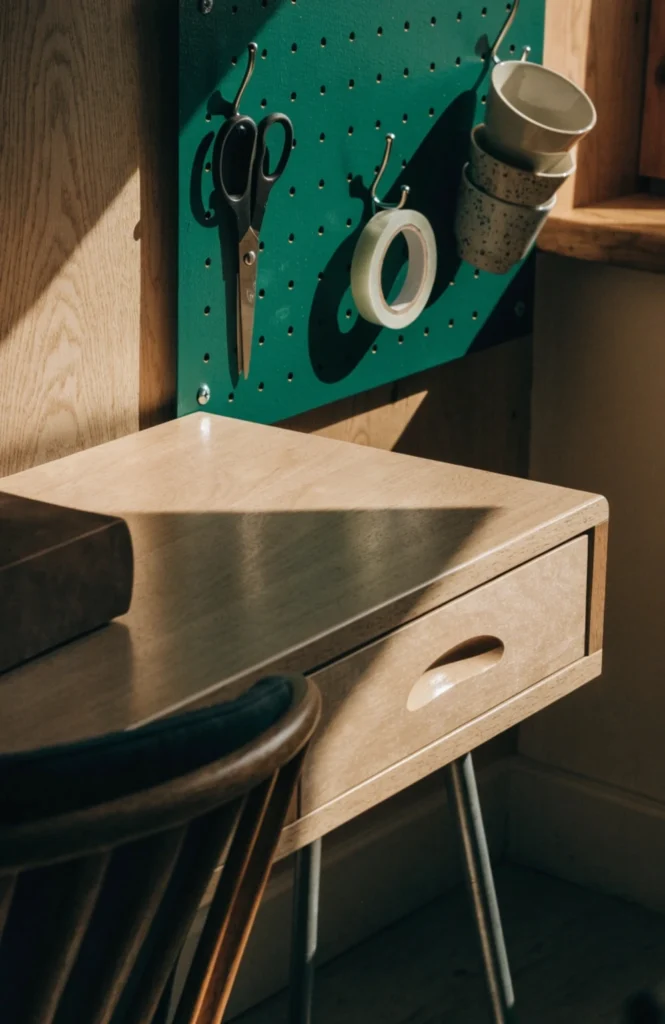
A painted pegboard panel, roughly 24 by 32 inches and running under 40 dollars for the board and hooks, holds scissors, tape, and small caddies within arm’s reach without eating into any desk or shelf space at all. Paint it a color that matches the room so it reads as designed rather than utilitarian.
Supplies staying visible means less time spent digging through a drawer mid-assignment. It’s one of the easiest upgrades on this list to add to an existing desk that’s already working otherwise.
10. Use a corkboard for schedules and reminders
Loose permission slips and assignment sheets are one of the most common small-station clutter problems.
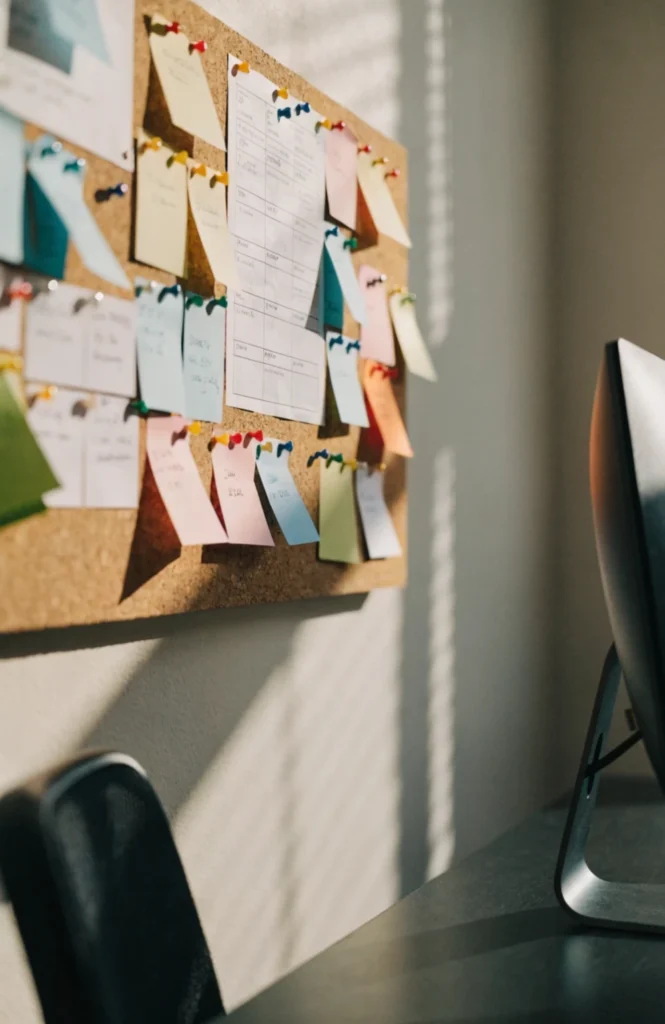
A cork or felt bulletin board, roughly 24 by 36 inches and running 20 to 40 dollars, mounted directly above the desk gives every paper that needs to be seen, not filed away, one single visible spot. Color-coded pins by subject or day make it easier for a younger child to scan at a glance.
It keeps important papers from disappearing into a backpack or a pile on the floor. This is a particularly strong fit for kids who respond better to seeing their schedule than being reminded of it verbally.
11. Add a wall-mounted file sorter for papers
Paper clutter is one of the fastest ways a small station starts to feel chaotic.
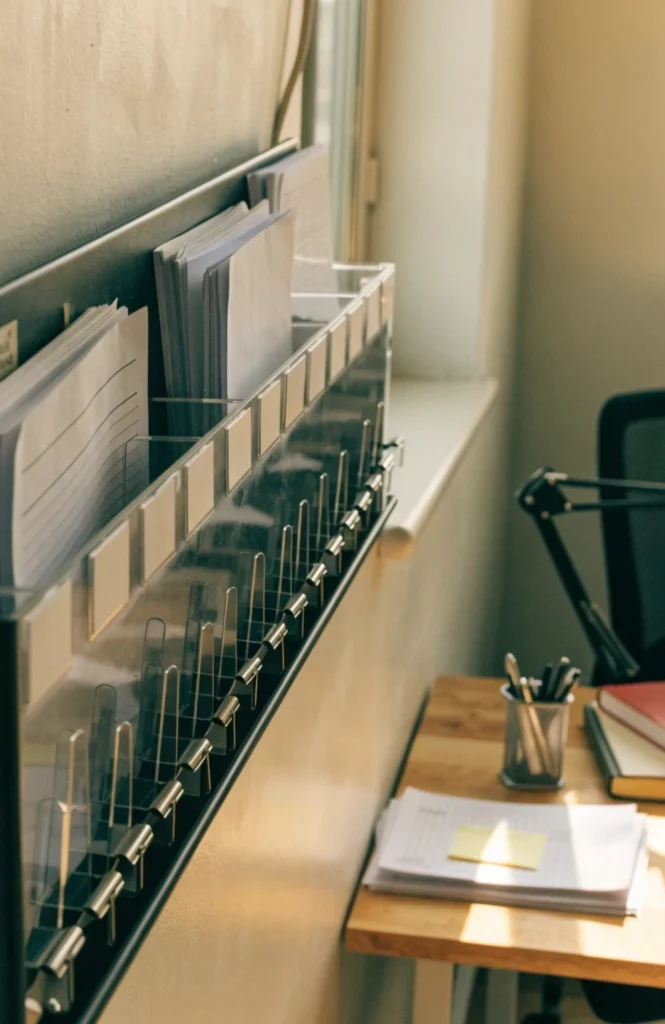
A slim wall-mounted file sorter, usually 15 to 30 dollars, holds labeled sections for to-do, completed, and needs-a-signature papers, keeping the desktop clear while still making every paper easy to find. Mount it at a height the child can reach without help.
It solves the specific problem of important school papers disappearing into random piles. A five-second habit of sorting a paper into the right slot prevents most of the last-minute scrambles before school.
Rolling and Portable Stations
12. Build a rolling supply cart for a shared table
When there’s no dedicated room at all, a rolling cart makes any table temporarily into a homework station.
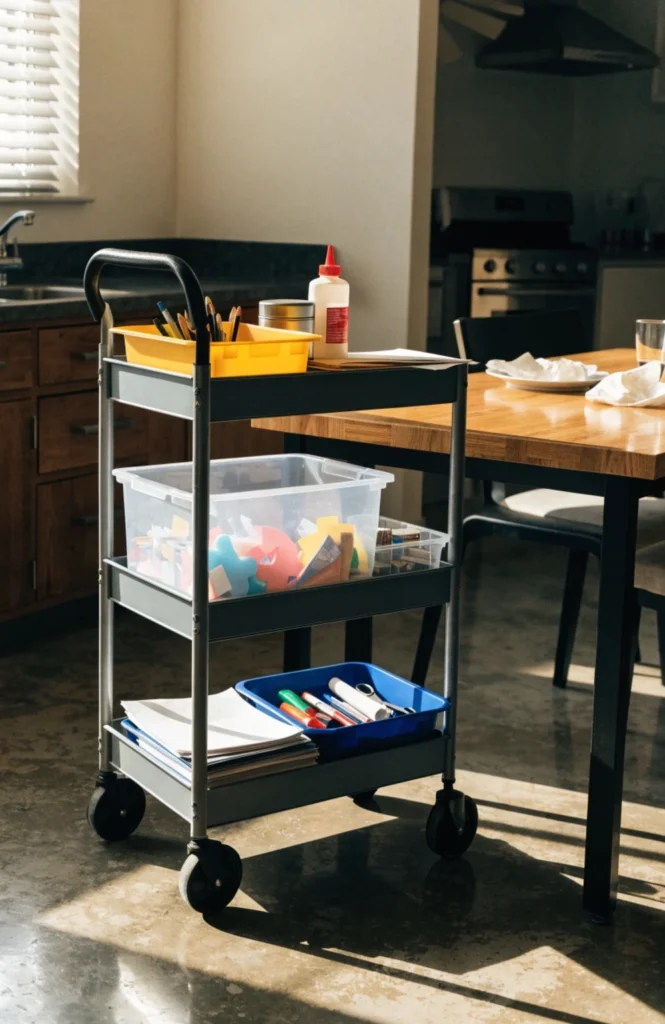
A three-tier rolling cart, typically 30 to 70 dollars, holds all the supplies a kid needs and wheels up to the kitchen table, a desk, or even a couch, then rolls away completely once homework’s done. Stock each tier by category, writing tools, paper, and reference materials, so nothing needs to be dug for mid-session.
It solves the real problem of not having permanent space to dedicate at all. The cart itself becomes the “this is homework time” signal, even without a fixed physical spot.
13. Use a lap desk for a no-furniture setup
For genuinely tight spaces, sometimes the answer is skipping a fixed desk entirely.
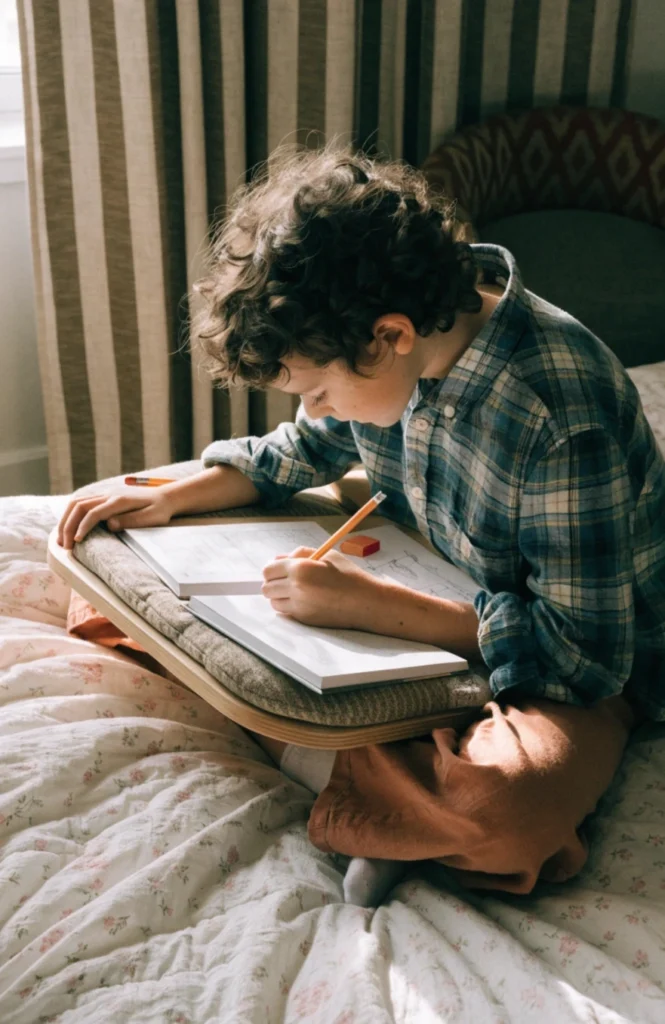
A cushioned lap desk, usually 20 to 35 dollars, gives a stable, tilted writing surface that works from a bed, a couch, or the floor, without requiring any dedicated furniture or floor space at all. Pick one with a small ledge to keep pencils from sliding off.
It’s the most flexible and lowest-commitment option on this entire list, which makes it a strong starting point before investing in anything bigger. Some kids also genuinely focus better in a soft, low seat than at a traditional desk.
14. Set up a homework caddy or basket system
This is the lowest-cost, most portable homework station idea on the entire list.
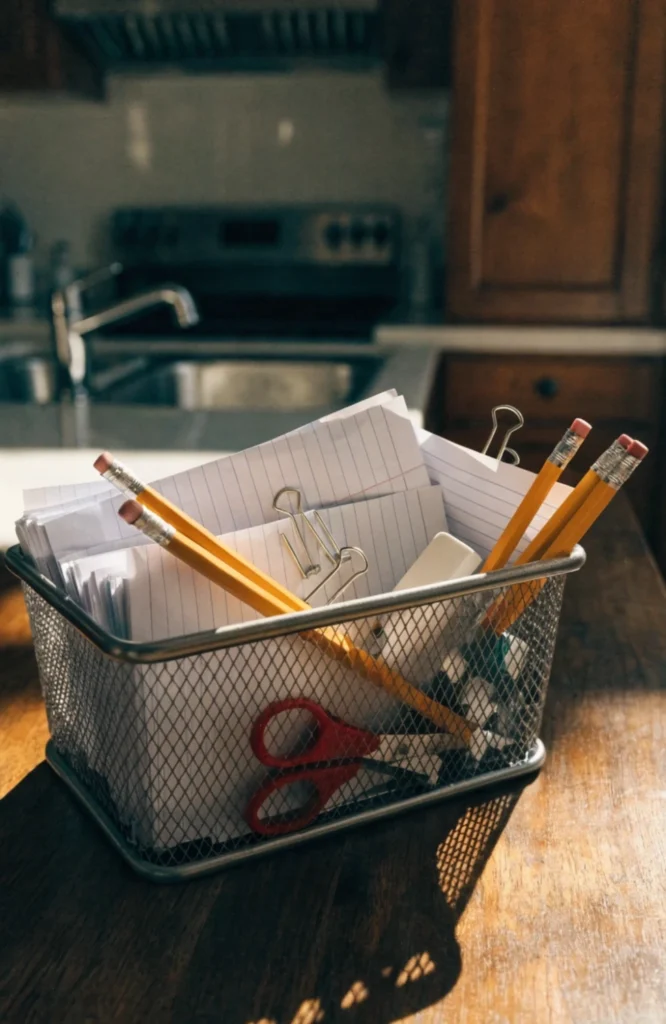
A single basket or caddy, stocked with every supply needed for a typical assignment, costs under 25 dollars and gets carried to whatever table is free that day, then packed away completely afterward. It works especially well in homes where the dining table serves multiple purposes throughout the day.
Because the whole system fits in one container, there’s no ongoing footprint at all once homework’s finished. It’s the easiest idea on this list to try first before committing to anything installed or built.
15. Add a rolling file cart for long-term projects
Long-term school projects need somewhere to live between sessions, and a rolling file cart solves that without a dedicated shelf.
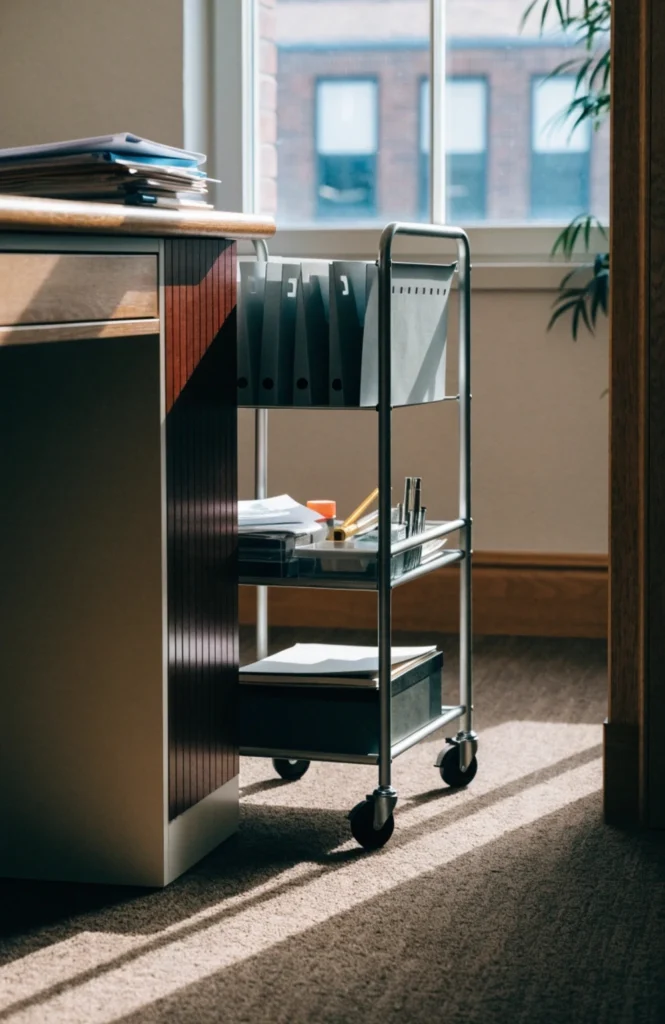
A slim rolling file cart, typically 40 to 80 dollars, holds project supplies, folders, and reference materials in one mobile unit that tucks beside a desk or closet when not needed. It keeps in-progress work contained instead of spread across multiple surfaces around the house.
This is especially useful for a project that spans several weeks, since nothing needs to be re-gathered each time work resumes. It also teaches a genuinely useful habit, keeping one project fully contained in one place.
16. Use a repurposed bar cart as a mobile station
A bar cart isn’t just for drinks, and its shape happens to suit a homework setup extremely well.
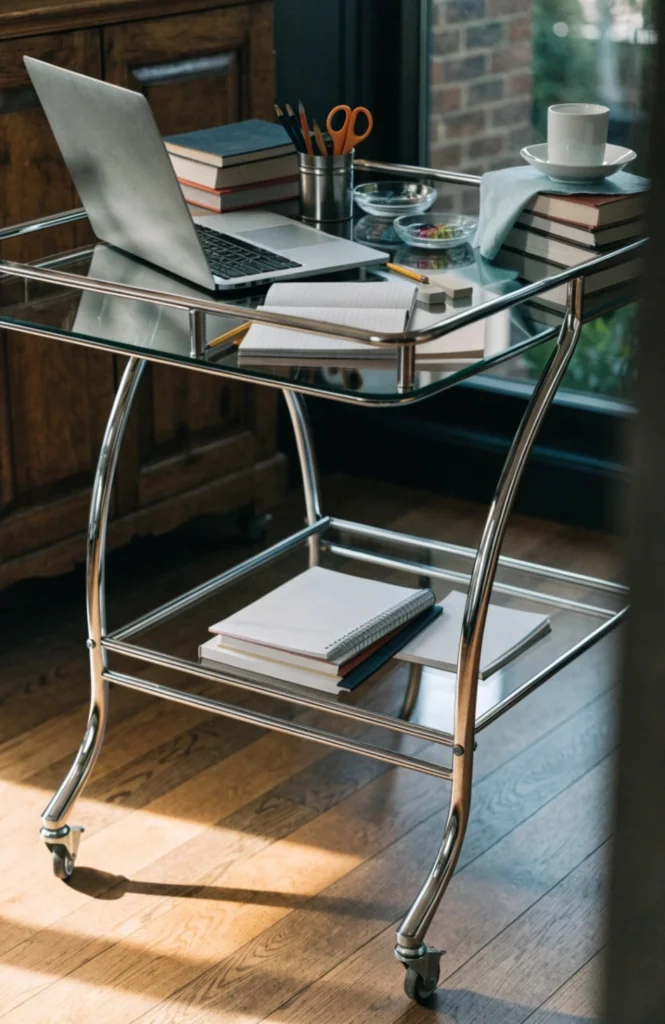
A two- or three-tier bar cart, thrifted for 20 to 50 dollars or bought new for more, holds books, supplies, and a laptop across its tiers and rolls to wherever the day’s homework happens to land. The lower shelf works well for a bin of extra supplies kept fully out of the way.
Its wheels mean it adapts to a family’s actual daily routine instead of forcing homework into one fixed spot. It’s also one of the more stylish options on this list, since bar carts already come designed to look good in a room.
Focus and Lighting Details
17. Add a warm, adjustable desk lamp
Lighting affects focus more directly than almost anything else on this list, and it’s one of the cheapest fixes.
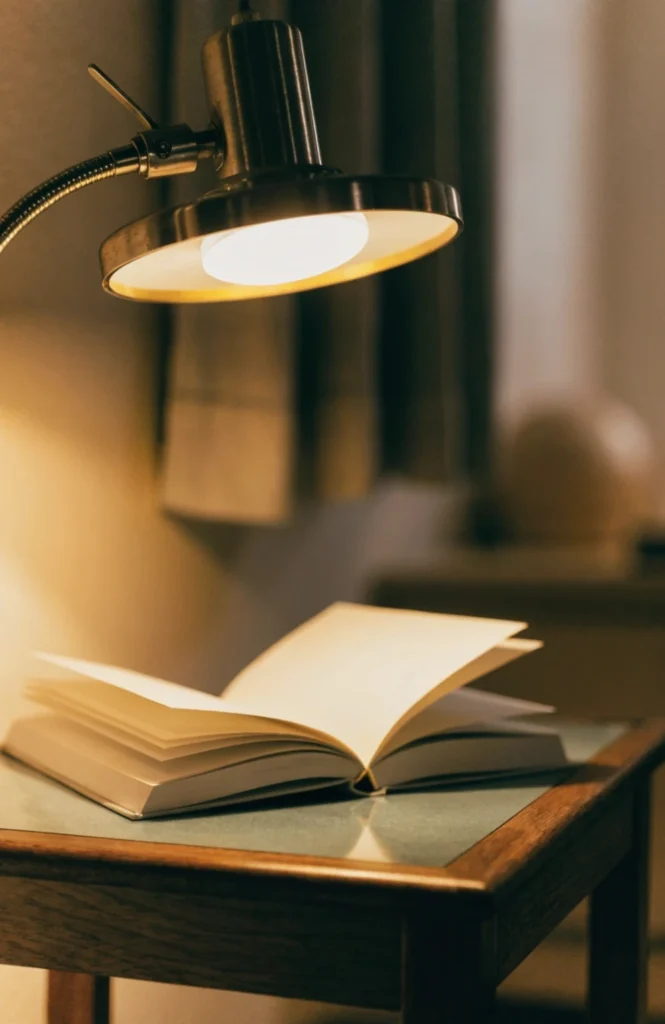
An adjustable desk lamp with a warm-to-neutral color temperature, typically 15 to 35 dollars, lights the actual work surface directly instead of relying on a dim overhead fixture that leaves shadows across the page. Position it on the non-writing-hand side to avoid shadow interference.
Task lighting specifically, not just brighter overhead light, is what actually reduces eye strain during longer homework sessions. It’s a small purchase that has an outsized effect on how long a kid can comfortably stay focused.
18. Use a visual timer to structure work sessions
A simple visual timer solves the “how long is this going to take” problem that derails a lot of homework sessions before they even start.
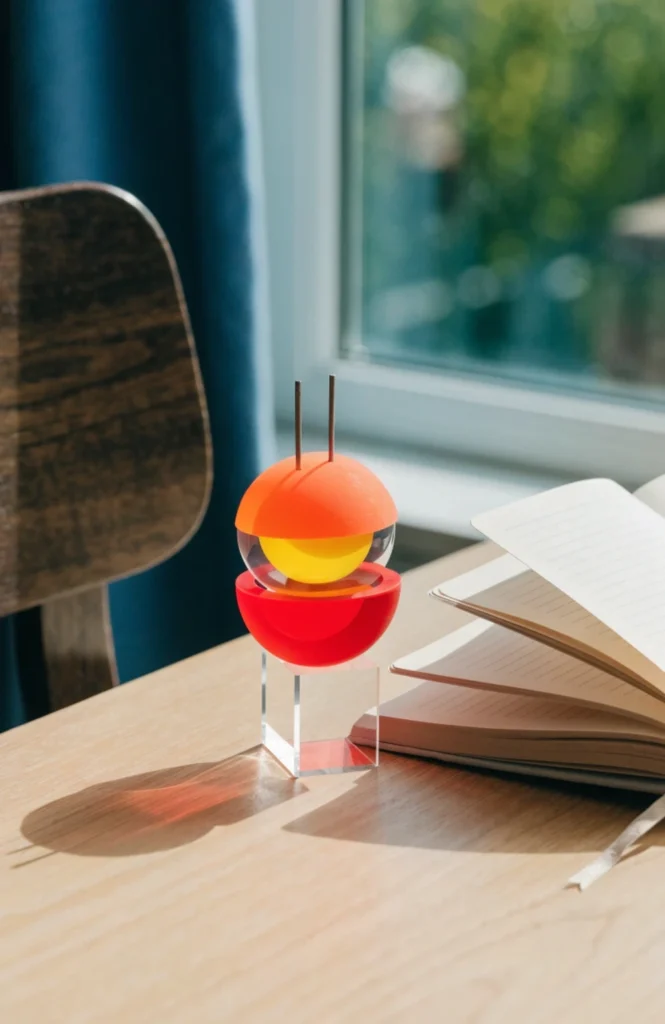
A countdown visual timer, usually 15 to 25 dollars, shows time passing as a shrinking colored disk rather than numbers, which makes the passage of time concrete for younger kids in particular. Pairing it with a set rule, like twenty minutes of work followed by a five-minute break, gives the whole session a predictable shape.
It turns an open-ended task into something with a visible end point, which measurably reduces the urge to get up and wander. It’s one of the cheapest additions on this list relative to how much it actually changes a kid’s ability to stay seated.
19. Keep a small snack and water station within reach
A tiny dedicated spot for a snack and water bottle prevents the single most common homework interruption there is.
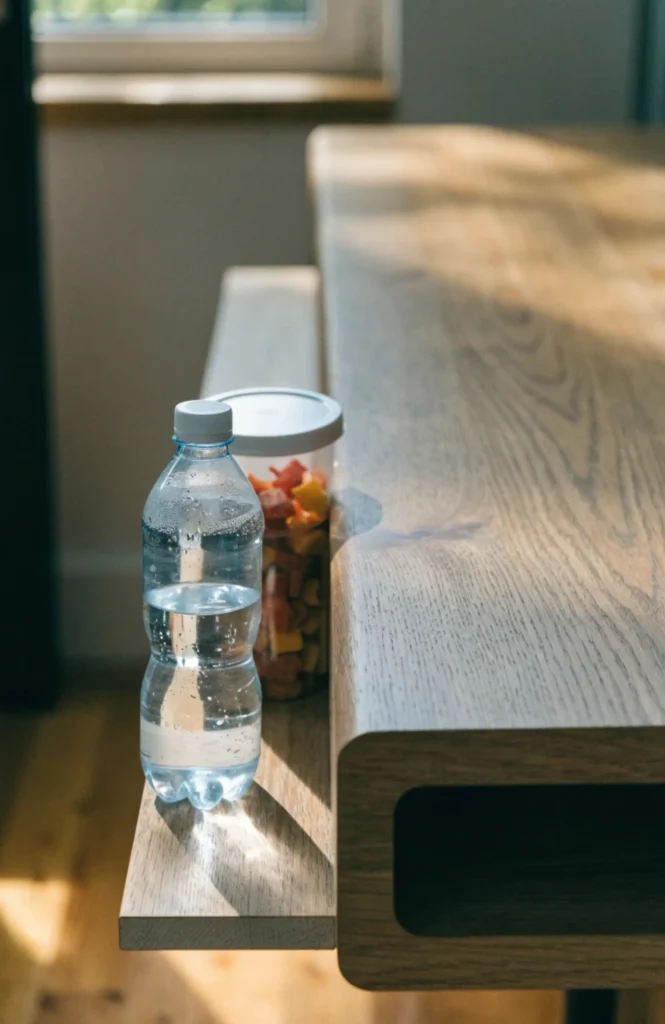
A small bin or shelf beside the desk, stocked with a water bottle and a couple of easy snacks, costs almost nothing and removes the need to leave the station mid-assignment for a trip to the kitchen. Restock it as part of the daily homework routine so it’s never the reason for a break.
Every trip away from the desk resets focus more than people expect, so removing the most common reason for one has a real payoff. It’s a small detail, but it’s one of the most practical ones on this entire list.
20. Add a noise-dampening element for shared spaces
In a small home, homework often has to happen near other activity, and a little sound buffering goes a long way.
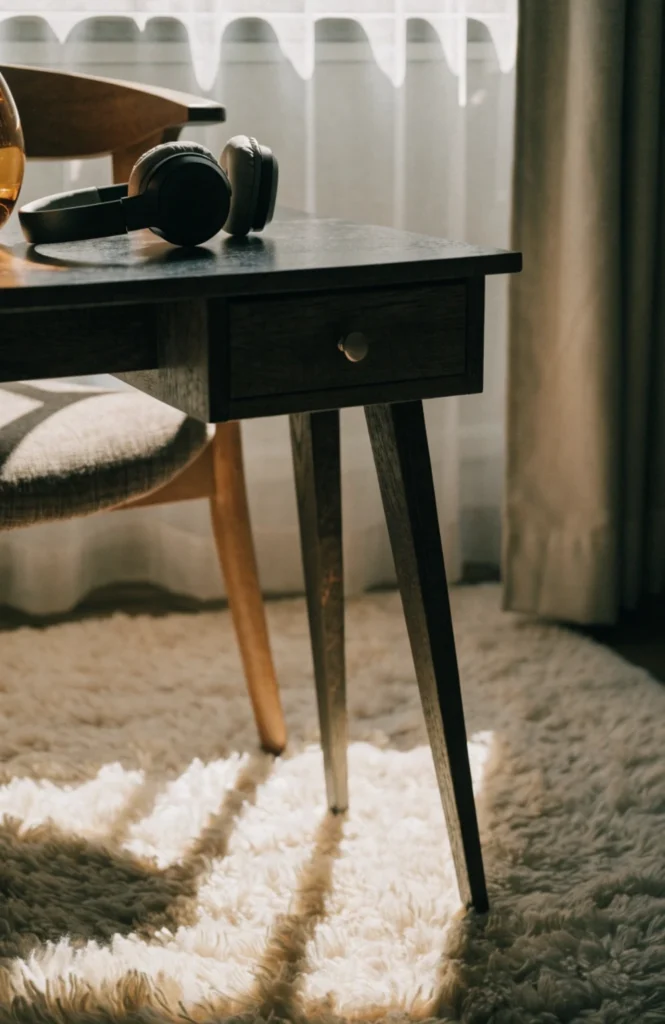
A soft rug placed under the desk chair, paired with a set of simple over-ear headphones for focus music or white noise, together cost 30 to 60 dollars and noticeably cut down on the ambient noise reaching the work area. Instrumental or lyric-free music tends to interfere with reading comprehension less than music with words.
This matters most in open-plan homes where the homework spot can’t be fully separated from the rest of daily life. It’s a low-cost way to create a quieter zone without needing an actual closed door.
21. Let the kid personalize one small section of the station
A station a kid helped design gets used far more willingly than one that was simply assigned to them.
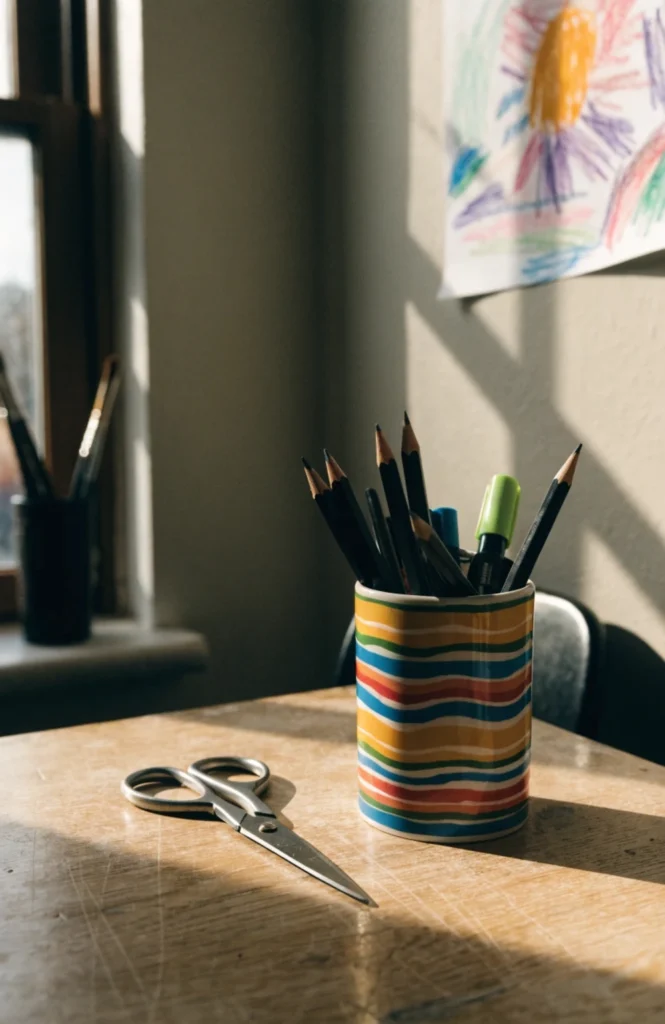
Giving them control over one small element, a favorite-colored pencil cup, a small motivational sign, or a corkboard corner for their own artwork, costs under 20 dollars and builds a sense of ownership over the space itself. Keep the personalization contained to one corner so it doesn’t turn into visual clutter across the whole desk.
Kids consistently use spaces they had a hand in creating more consistently than ones that were simply set up for them. It’s a small investment of choice that pays off in actual daily use.
22. Create a phone or device drop zone away from the desk
For older kids especially, the device itself is often the biggest obstacle to actually focusing.
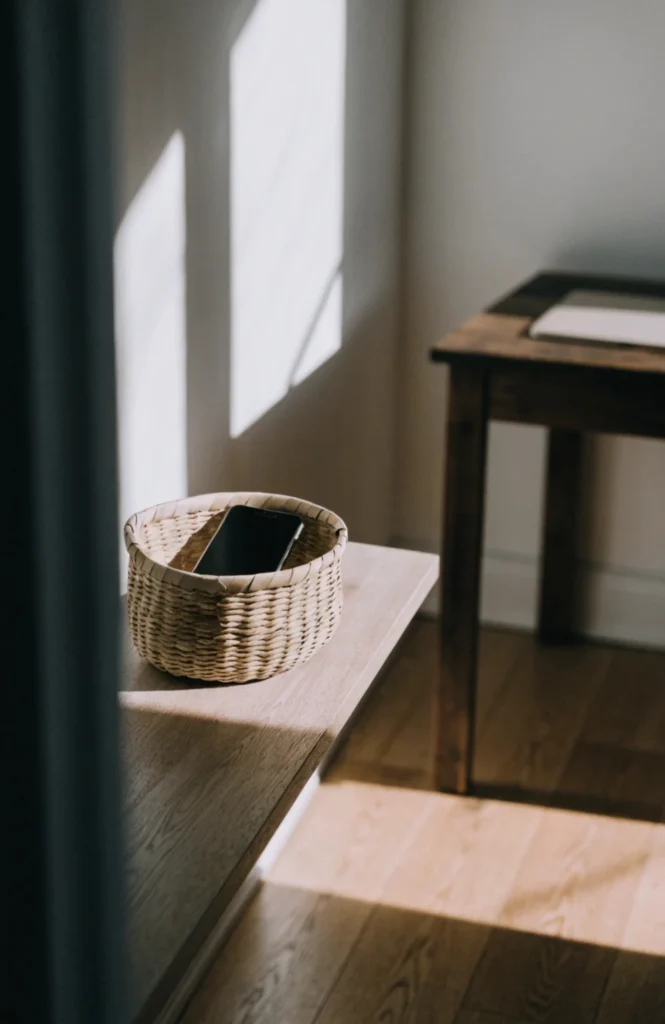
A small designated bin or basket, placed a few feet away from the desk rather than on it, gives a phone or tablet somewhere to go during homework time without it needing a lecture every single day. Keeping it visible but out of arm’s reach removes the temptation without making it feel like a punishment.
This single habit change often does more for focus than any furniture or lighting upgrade on this entire list. It’s free to set up and it’s the one idea here worth prioritizing first for a teenager’s station specifically.
Conclusion
The homework stations that actually get used aren’t the biggest or most elaborate ones, they’re the ones with clear boundaries and the fewest reasons to get up. If you’re starting from nothing, pick whichever idea fits the space you already have rather than the one that looks best in photos, since a station that’s actually convenient will get used every single day, while one that requires effort to reach won’t. From there, add lighting and a timer before worrying about decor, since those two changes affect focus more directly than anything else on this list.