Small kitchen cabinet organization always feels like it needs a renovation until you actually try fixing it, and most of the time it just needs a handful of the right inserts placed in the right spots. Every cabinet in a tight kitchen ends up doing double or triple duty, and the ones that feel chaotic are usually just missing structure, not space.
What actually works for small kitchen cabinet organization isn’t buying more storage, it’s dividing the storage you already have so nothing gets buried or stacked wrong. A cabinet with dividers holds noticeably more than the same cabinet with everything piled loose, and that’s the idea behind every tip below.
I’ve grouped these twenty into five directions: vertical and wall space, drawer and cabinet inserts, corner and awkward space fixes, pantry and food storage, and under-sink and specialty zones.
Before You Start: Quick Organizing Tips
- Empty one cabinet completely before organizing it. You can’t divide clutter, only empty space.
- Put your most-used items at eye level or in the top drawer, not buried in a back corner.
- Measure your cabinet’s interior before buying any insert. A riser or divider that’s an inch too wide won’t fit.
- Group by task, not by category. Coffee supplies together, baking supplies together, even if that mixes item types.
- Label anything that goes in a deep or dark cabinet. You’ll actually use what you can see.
Vertical and Wall Space
1. Add shelf risers inside deep cabinets
This is the cheapest fix on this entire list, and it might be the most effective one.
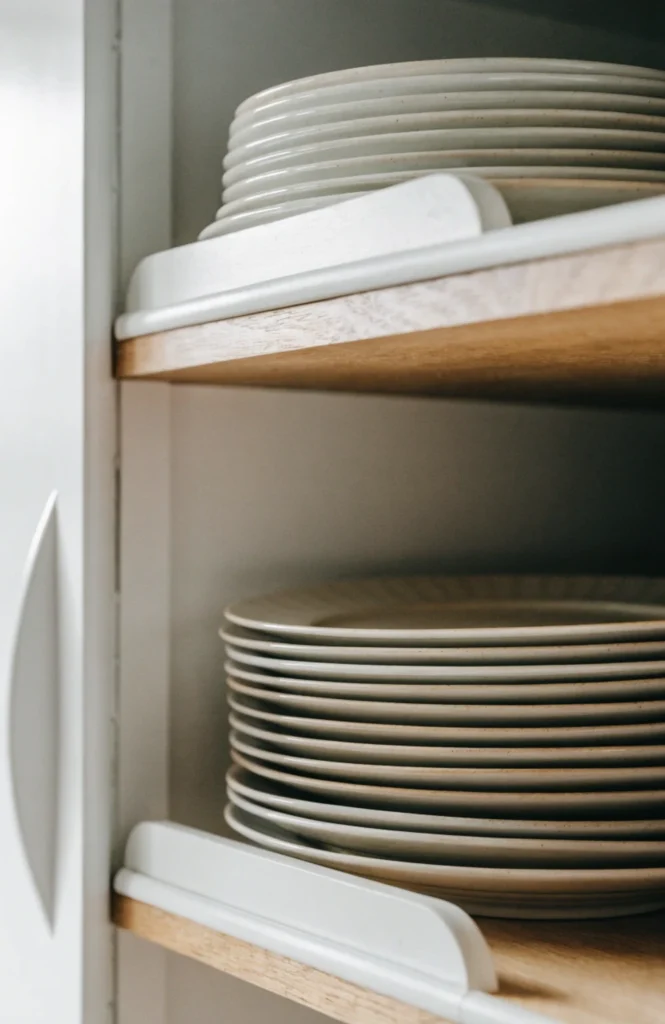
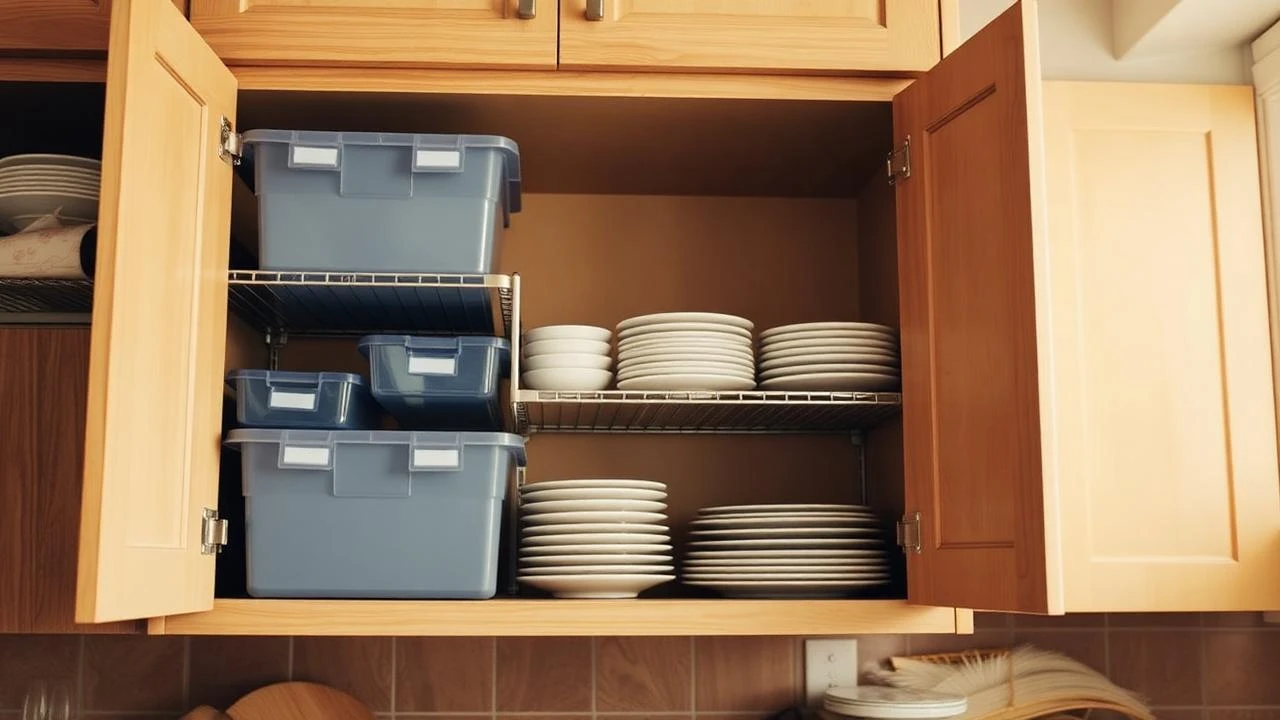
A set of expandable wire or bamboo shelf risers, usually under 25 dollars for a pack of two, sits inside a cabinet and doubles the usable space by creating a second level above your plates or mugs. Most adjust to fit cabinets between 12 and 24 inches wide, so measure first.
Once they’re in, you stop stacking mismatched dishes into towers that topple every time you reach for the bottom one. It’s a five-minute fix that makes a cluttered cabinet look intentional, and it works in literally any kitchen regardless of layout or cabinet age.
2. Install a painted pegboard on one open wall
If you have even one free wall, this replaces an entire base cabinet’s worth of storage.
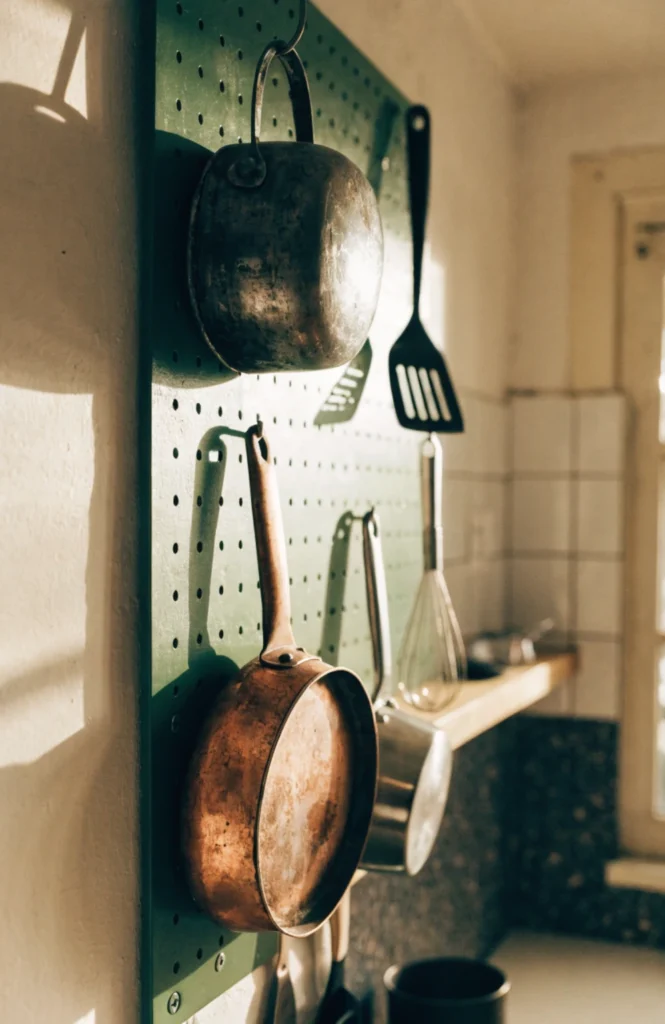
A 24 by 48 inch pegboard panel, painted to match your wall or as a contrast accent, costs under 50 dollars for the board and hooks combined. Hang pots, pans, and frequently used utensils directly on it, which pulls heavy items out of low cabinets entirely.
This is one of the biggest small kitchen storage trends for 2026 specifically because it turns dead wall space into daily-use storage. It also means you’re not bending down to dig through a stacked pot cabinet every single time you cook dinner.
3. Use the inside of cabinet doors for flat storage
This space sits empty in almost every kitchen, and it’s genuinely wasted square footage.
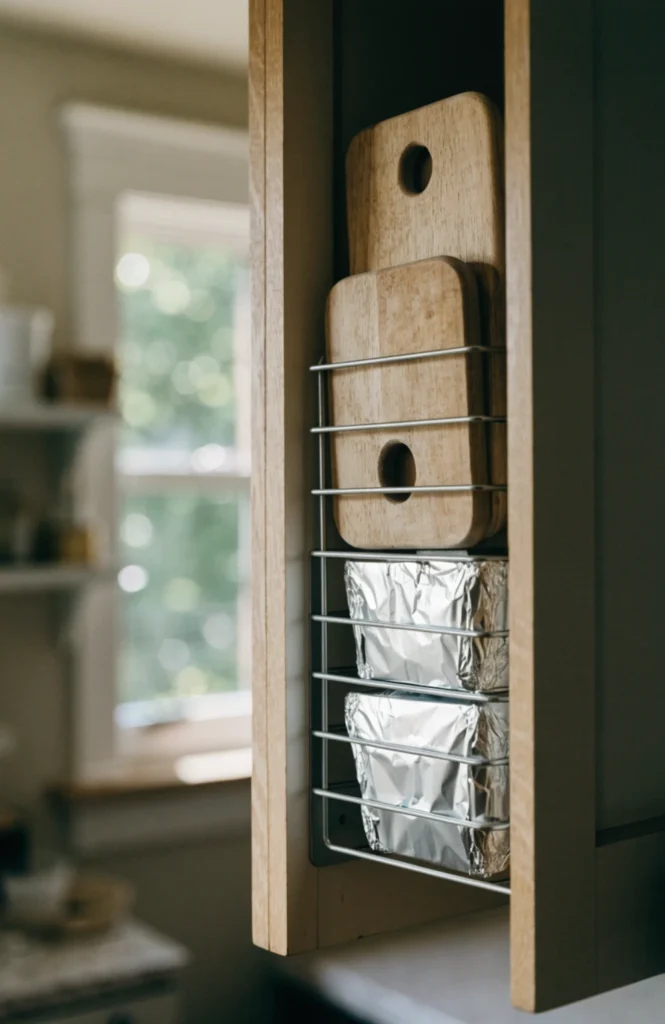
Small adhesive or over-the-door racks, usually 10 to 20 dollars, mount to the inside of a cabinet door and hold cutting boards, foil boxes, or spice jars flat against the door itself. Measure the door’s clearance against shelves behind it before installing, since a too-deep rack will hit whatever’s stored inside.
It’s one of the only upgrades on this list that adds storage without touching a single inch of existing shelf space. Foil, wrap, and cutting boards specifically stop sliding around loose on a shelf once they’re corralled here.
4. Mount a magnetic strip for knives and metal tools
A small swap that clears an entire drawer’s worth of clutter.
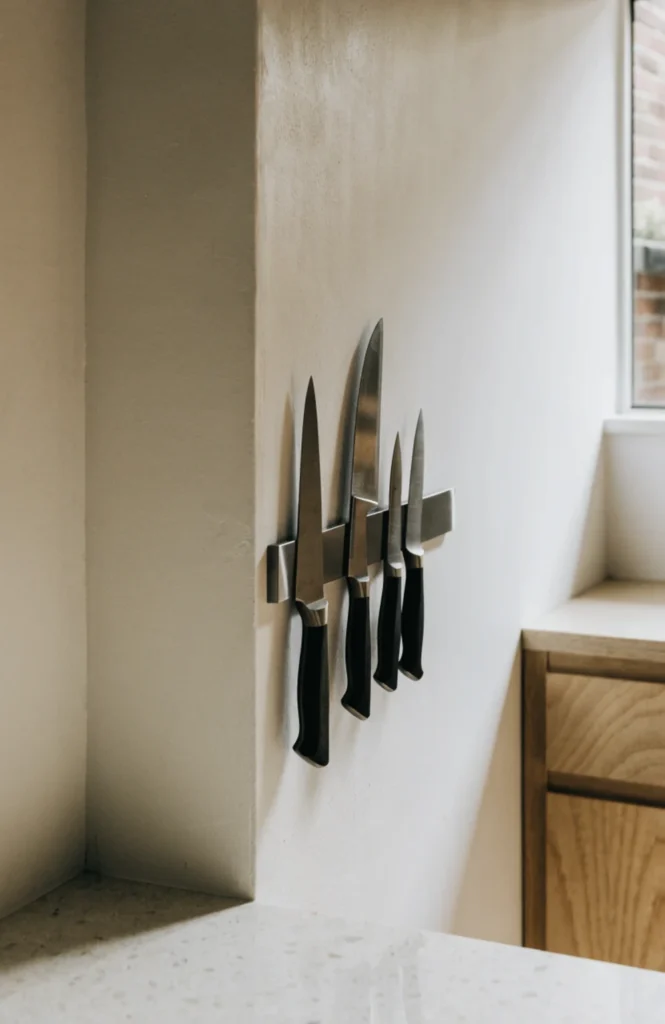
A magnetic knife strip, usually 15 to 30 dollars, mounts to the inside of a cabinet or on an open wall and holds knives, metal spice tins, or scissors upright and visible instead of loose in a drawer. Keep it at a height where blades are visible edge-down, not reachable by small hands if kids are in the kitchen.
This is one of the fastest ways to free up drawer space without buying a single organizer insert. It also means knives stay sharper longer, since they’re not knocking against other metal tools in a drawer.
Drawer and Cabinet Inserts
5. Add adjustable drawer dividers to every drawer
Almost every messy kitchen drawer has the exact same problem: nothing has an assigned spot.
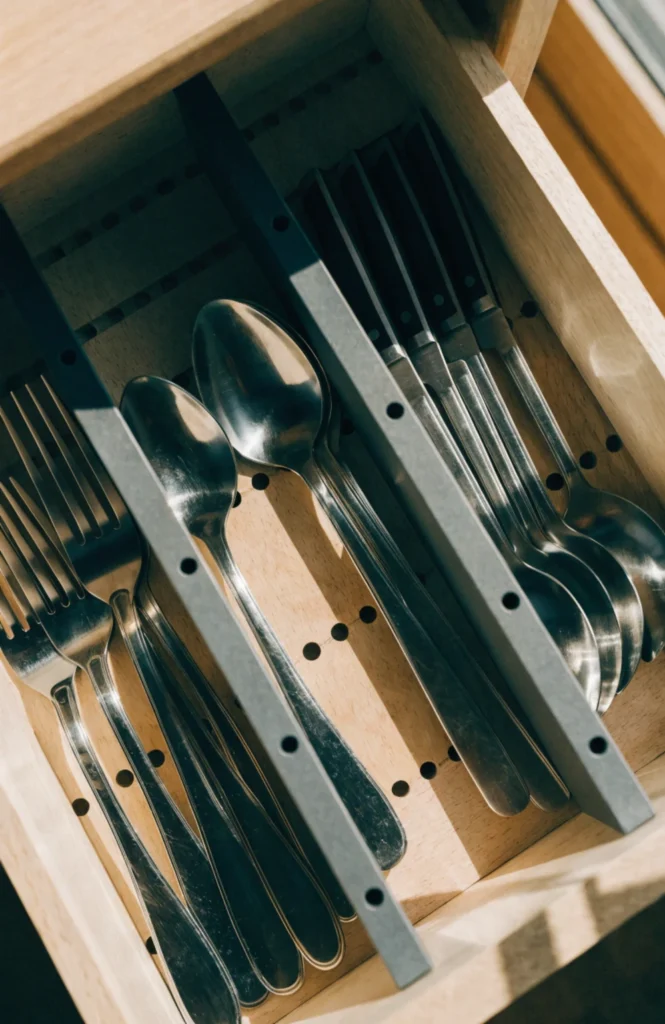
Adjustable bamboo or plastic drawer dividers, usually 20 to 35 dollars for a set, slot into any drawer width and create fixed lanes for utensils, gadgets, and small tools. Measure the drawer’s inside width first, since most dividers adjust across a set range rather than fitting any size.
Once every item has one specific lane, things stop drifting to the back of the drawer where they’re forgotten. It’s a fix that pays off every single day, since it’s the drawer you open the most in the entire kitchen.
6. Use a tiered lazy Susan for spices or condiments
This rotating fix solves the single most common small-kitchen complaint: spices you can never find.
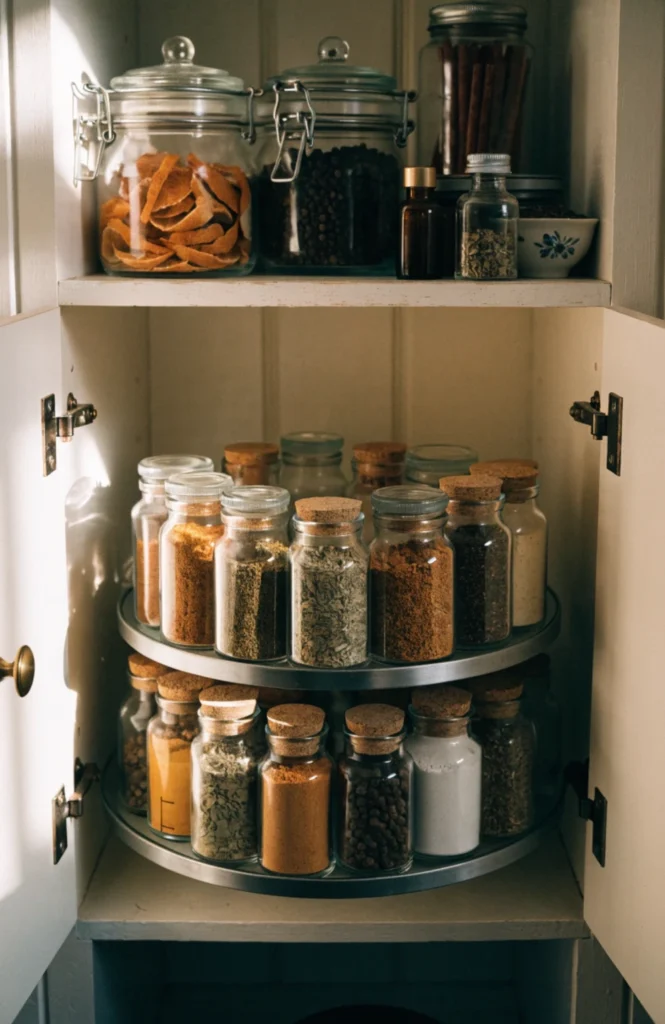
A two- or three-tier lazy Susan, usually 15 to 25 dollars, sits inside a cabinet or on a shelf and lets you spin the whole unit to see every bottle at once instead of digging through a flat row. It works in both upper cabinets for spices and lower cabinets for larger condiment bottles.
Nothing gets pushed to the back and forgotten once it’s on a rotating tier, since every item comes back around into view. It’s a small purchase that ends the constant search-and-dig routine for good.
7. Add a pull-out rack to existing base cabinets
This upgrade turns a cabinet you have to crawl into into one that comes to you.
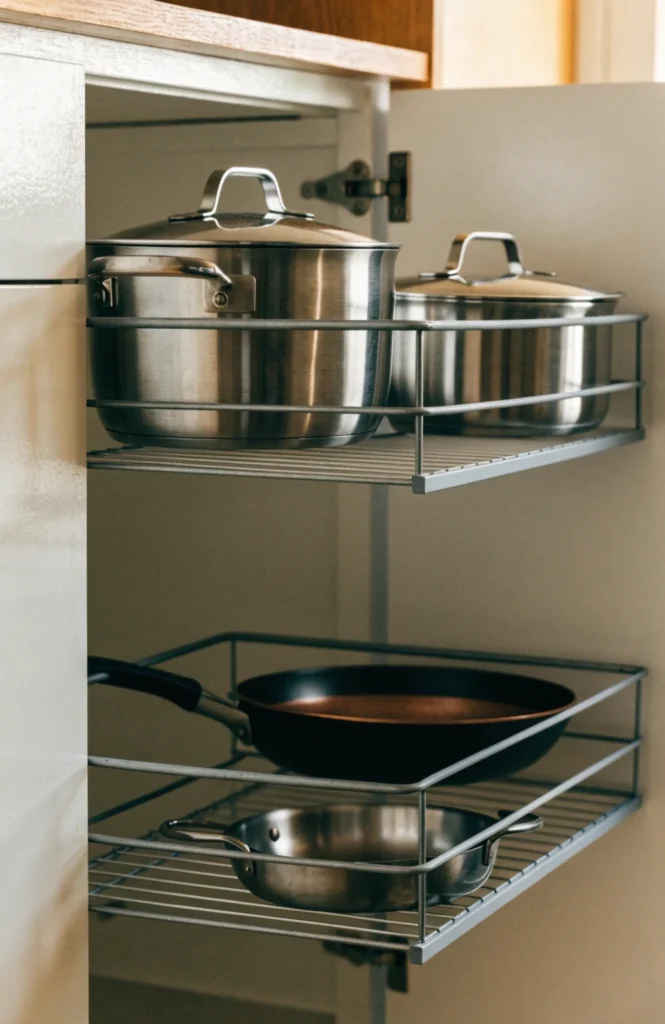
A pull-out wire or wood rack, usually 40 to 90 dollars depending on width and material, mounts onto the existing cabinet floor and slides forward like a drawer, bringing pots or pantry items into full view without any digging. Measure both the cabinet width and depth carefully, since these need to clear the door hinges when fully extended.
It’s a bigger investment than most items on this list, but it solves the deepest, hardest-to-reach cabinets in the kitchen permanently. Once it’s in, you’ll wonder why the cabinet ever worked any other way.
8. Use stackable, clear bins for loose items
Anything without a fixed shape in a cabinet eventually becomes clutter, and this fixes that permanently.
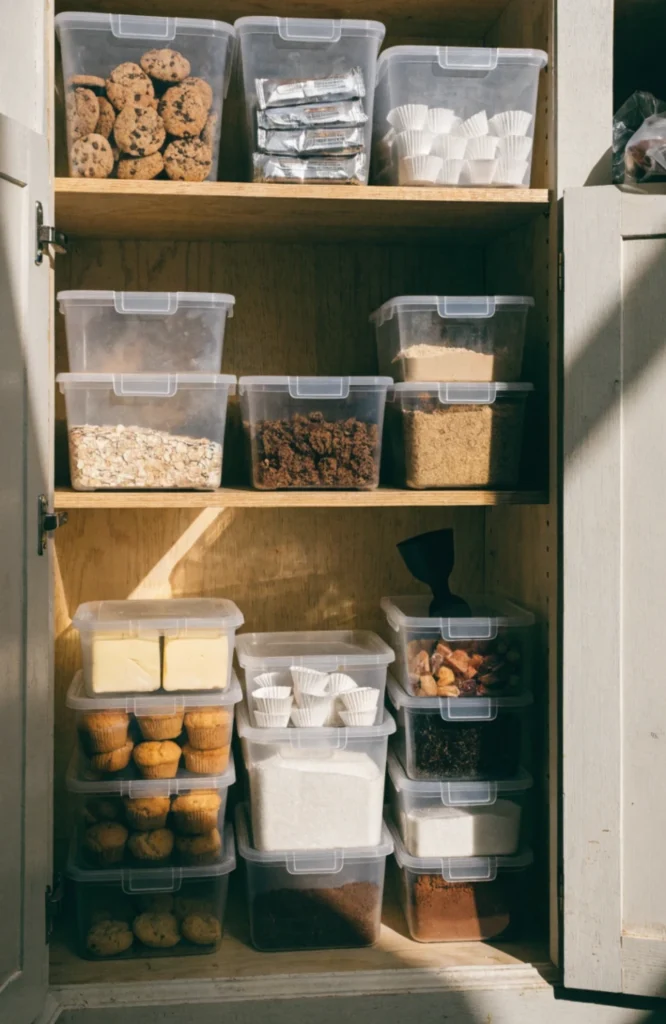
Clear stackable bins, usually 8 to 15 dollars each, group loose items like snack bags, baking supplies, or cleaning tools into a single defined container instead of letting them roll around a shelf individually. Label each bin so the system holds up even when someone other than you is putting things away.
Being able to see through the bin means nothing gets lost or forgotten at the back of a shelf ever again. It’s one of the lowest-cost fixes on this list with one of the highest visible impacts once it’s done.
Corner and Awkward Space Fixes
9. Install a rotating corner cabinet organizer
The corner cabinet is almost always the least functional spot in a small kitchen, and this fixes it directly.
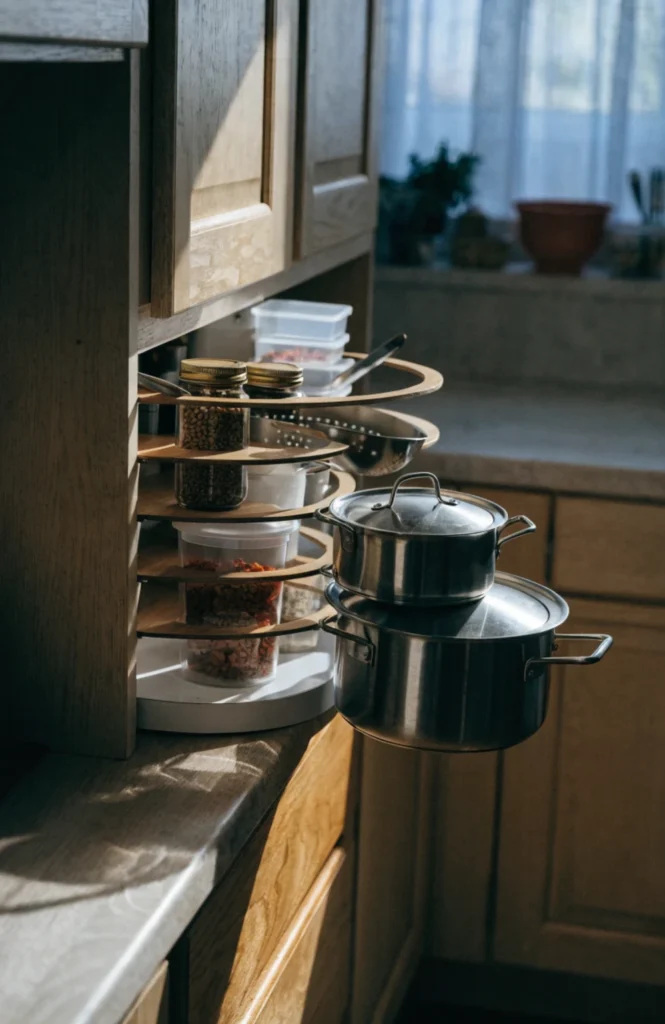
A rotating corner unit, usually 60 to 150 dollars depending on size and mechanism, swings out from the corner cabinet so items stored deep in the blind spot become fully visible and reachable. Measure the cabinet’s opening width carefully, since corner units come in specific size ranges that need to match your cabinet exactly.
This single upgrade often reclaims more usable storage than any other single change in a small kitchen. It’s worth prioritizing this cabinet first if you’re only tackling one this year.
10. Convert the toe-kick space into a shallow drawer
This is genuinely dead space in almost every kitchen, sitting right at the base of your cabinets.
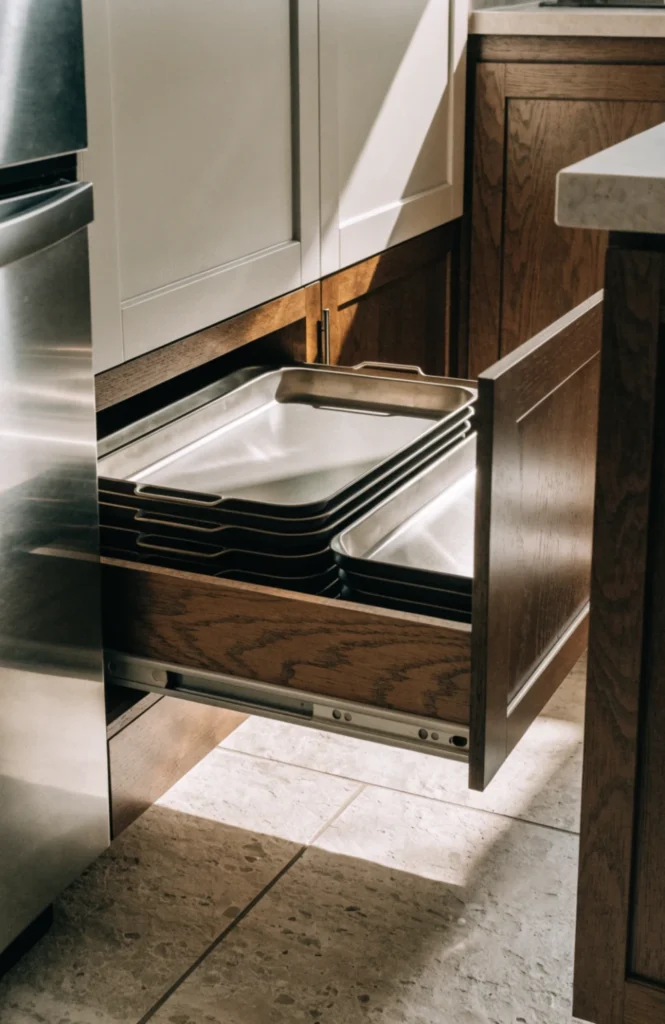
The 4-inch gap beneath most base cabinets can be converted into a shallow pull-out drawer, typically costing 150 to 400 dollars for a professional retrofit, perfect for storing baking sheets, trays, or platters that are otherwise nearly impossible to store flat. It’s a bigger project, best done alongside other cabinet work if you’re already renovating.
It’s one of the more overlooked storage upgrades for 2026 specifically because almost no one realizes that space is usable at all. Flat items that never had a home suddenly do.
11. Use a narrow pull-out cabinet beside the stove
That thin gap next to a stove or fridge is almost always wasted, and it’s an easy fix.
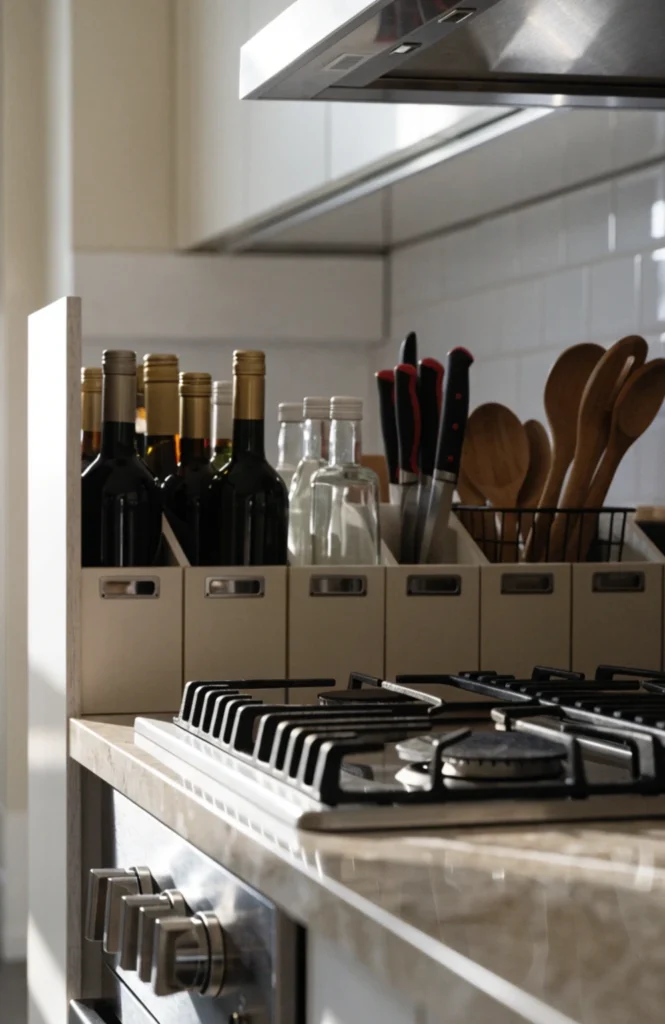
A narrow pull-out cabinet, usually 4 to 6 inches wide and running 100 to 250 dollars installed, slides into that slim gap and holds cooking oils, cutting boards, or utensils in small upright compartments. Measure the gap precisely before ordering, since even a half-inch miscalculation means it won’t fit.
It turns a completely unused sliver of space into some of the most functional storage in the whole kitchen. Everything inside stays upright and visible instead of buried in a drawer somewhere else.
12. Add an appliance garage for countertop clutter
Small appliances eat up more counter space than people realize until they’re actually hidden away.
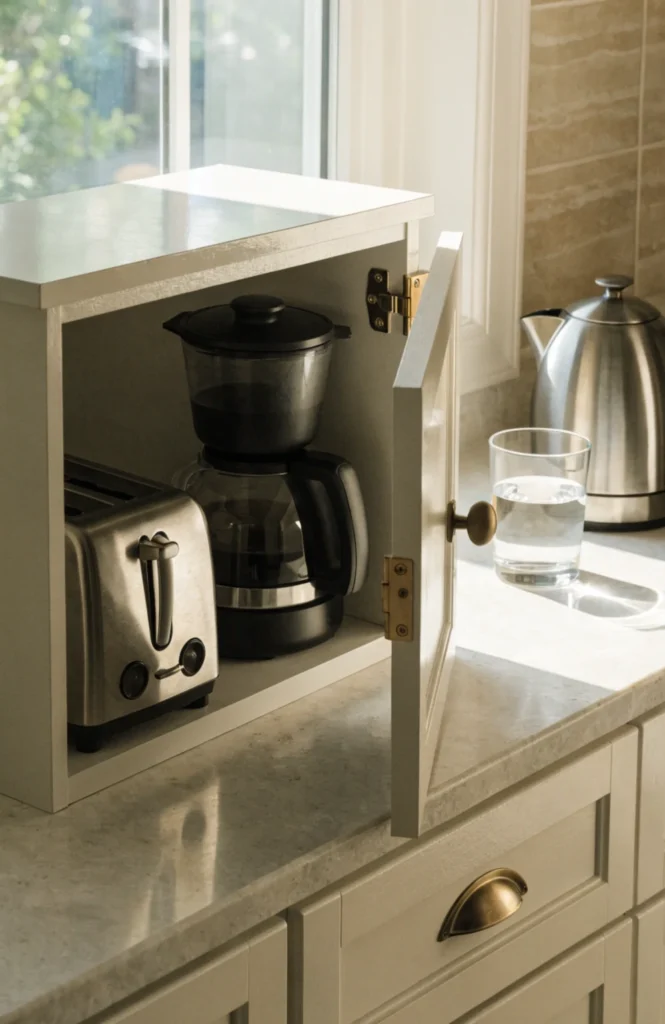
An appliance garage, either a retrofit or a simple curtained cabinet insert running 100 to 300 dollars, gives a toaster or coffee maker a dedicated spot behind a door instead of sitting out on the counter permanently. Position it near an outlet so the appliance stays fully plugged in and usable without moving it every time.
It keeps counters clear without asking you to actually put appliances away after each use, since they’re already tucked behind a door. Small kitchens gain real visual calm once counters are clear.
Pantry and Food Storage
13. Add a slim pull-out pantry column
If you have even 15 inches of space beside a fridge or cabinet run, this solves food storage almost entirely.
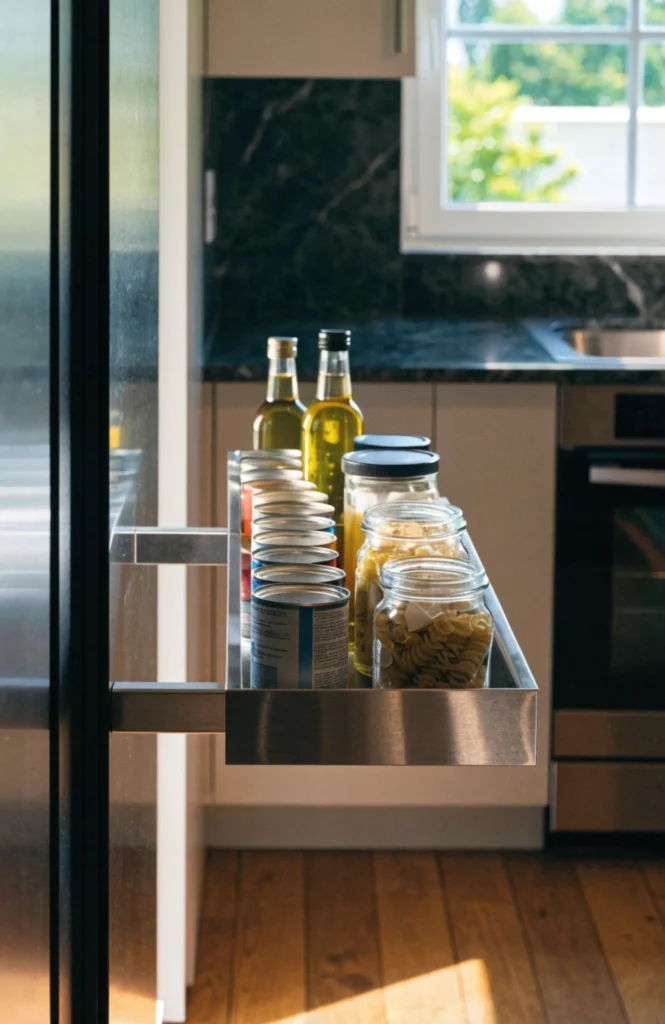
A 15-inch-deep pull-out pantry column, typically running 400 to 900 dollars installed depending on hardware, lines up canned goods, oils, and dry pasta in a single visible row instead of stacking them in a deep cabinet. This is one of the top-requested kitchen renovation features going into 2026 for exactly this reason.
Nothing gets lost behind something else once every item sits in its own visible row. It’s a bigger investment, but it’s often cheaper than a full walk-in pantry addition and solves the same problem.
14. Use uniform airtight canisters for dry goods
Mismatched bags and boxes are one of the biggest visual culprits in a cluttered small pantry.
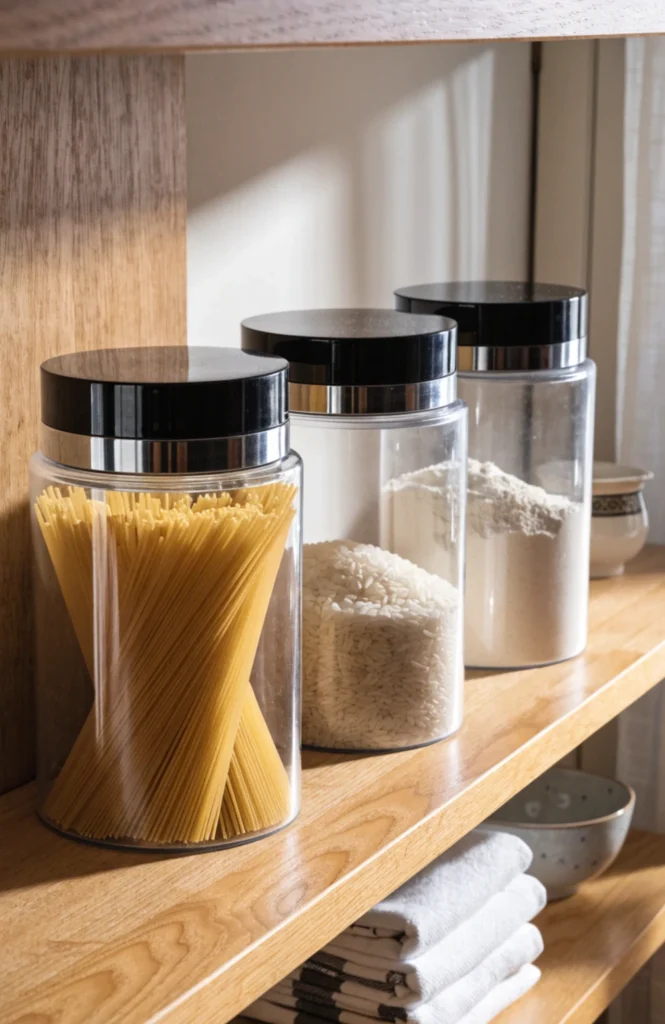
A set of matching airtight canisters, usually 30 to 60 dollars for a set of six, replaces bulky cereal boxes and half-used flour bags with uniform, stackable containers that actually fit a small shelf efficiently. Label each one clearly, since identical containers become confusing fast without labels.
Beyond the visual upgrade, airtight containers keep dry goods fresh noticeably longer than their original packaging ever does. It’s one of the easiest weekend projects on this entire list to actually finish in one sitting.
15. Add a door-mounted pantry organizer
The back of a pantry door is one of the most overlooked storage spots in a small kitchen.
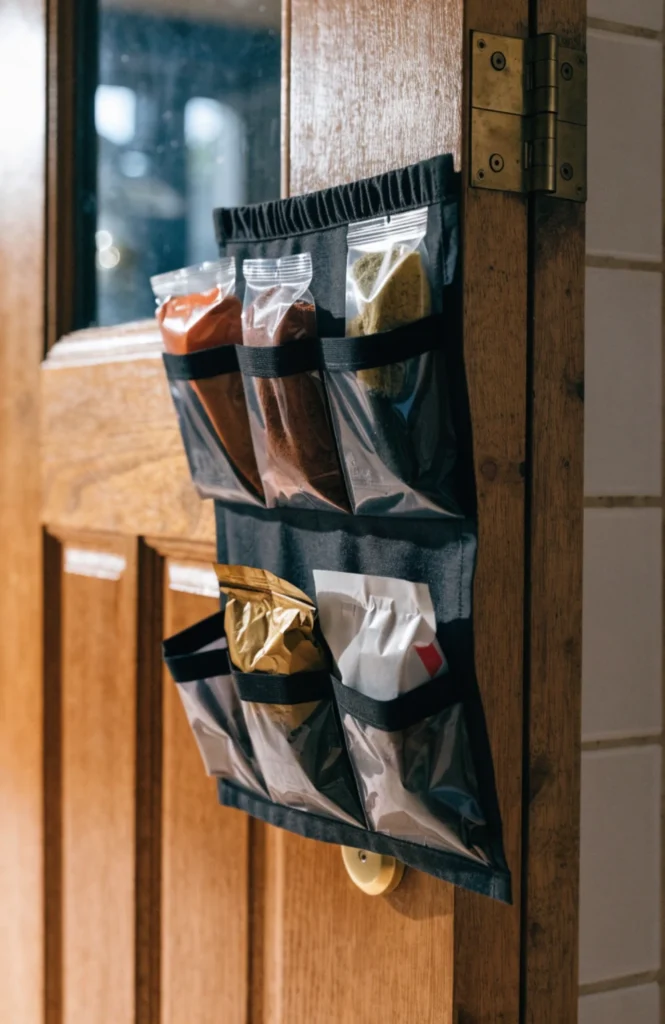
An over-the-door pantry organizer, usually 30 to 45 dollars, hangs directly on the pantry or cabinet door and holds spice packets, snack bags, or small jars in a tiered pocket system. Check the door’s swing clearance first, since a deep organizer can hit shelving behind it when the door closes.
It adds a genuinely new storage zone without touching any existing shelf space at all. Small, loose items that used to clutter shelves finally get an actual home.
16. Store water bottles and cans on a tiered rack
Water bottles and canned goods roll around and waste vertical space more than almost anything else in a cabinet.
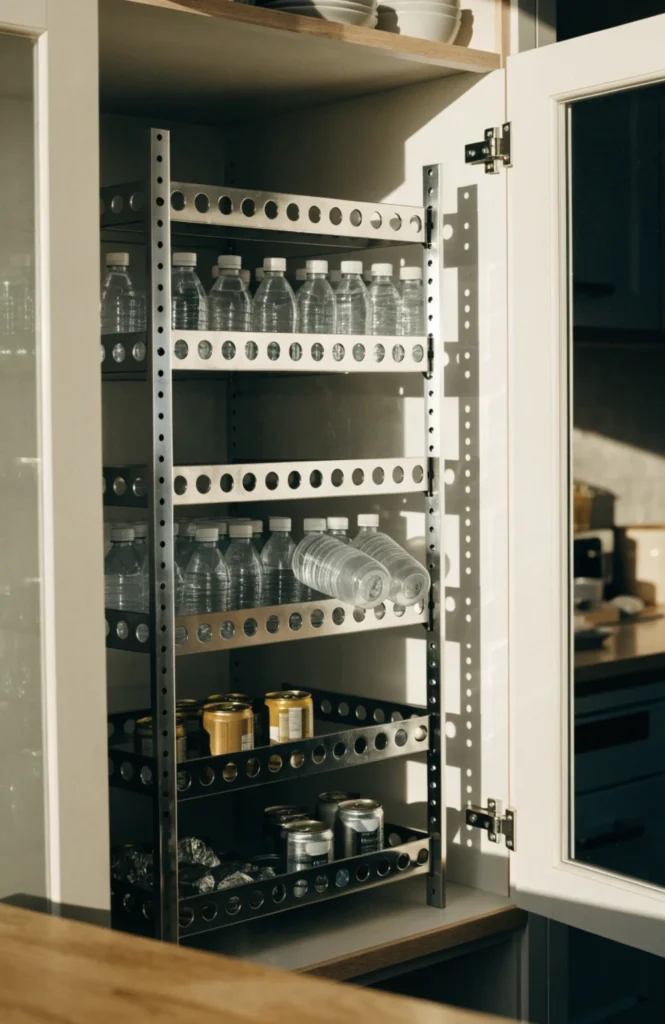
A three-tier bottle and can rack, usually 20 to 35 dollars, holds up to a dozen bottles or cans stacked in visible rows instead of rolling loose across a shelf. It fits inside most standard base cabinets without needing any mounting hardware at all.
Everything stays upright and visible instead of rolling to the back of a deep shelf where it’s easy to forget. It’s a small, cheap fix for one of the most common small-kitchen annoyances there is.
Under-Sink and Specialty Zones
17. Use clear bins to organize under the sink
The cabinet under the sink is one of the most-used and most chaotic spots in any kitchen.
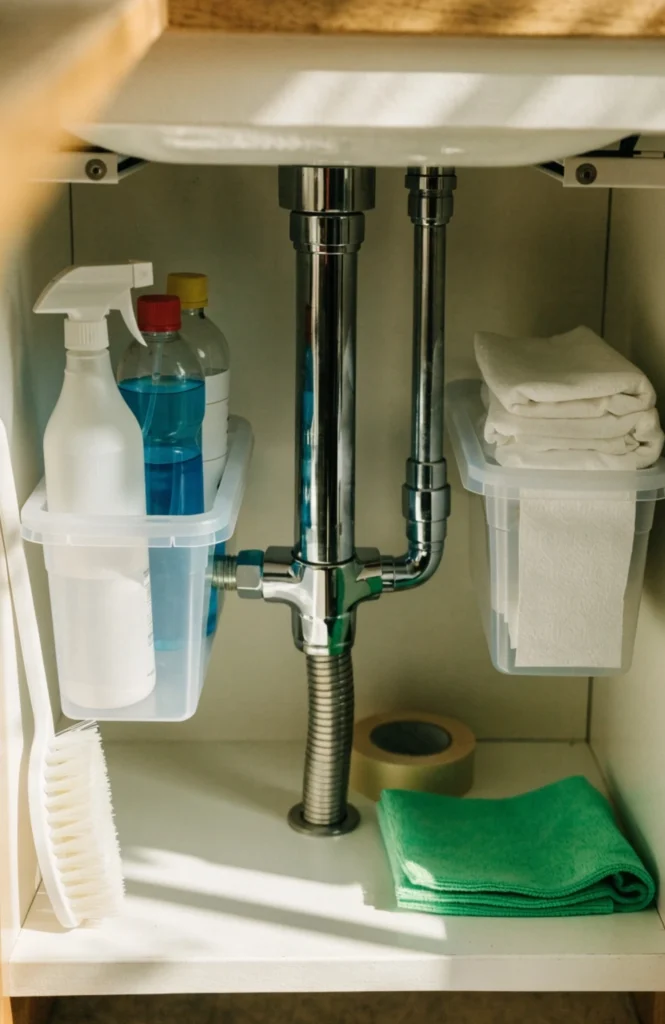
Wide, clear bins, usually 15 to 25 dollars each, group cleaning sprays, dish soap, and sponges into defined sections on either side of the plumbing, keeping the center clear for pipes and the garbage disposal. Measure around your specific plumbing layout before buying, since under-sink cabinets vary more than any other cabinet in the kitchen.
A balanced, bin-based layout keeps this cabinet from becoming a random pile the moment life gets busy. It’s one of the highest-clutter cabinets in the whole kitchen, so this fix has an outsized impact.
18. Add a sliding basket for trash bags and liners
Trash bags and bin liners almost always end up as a loose, tangled pile at the back of a cabinet.
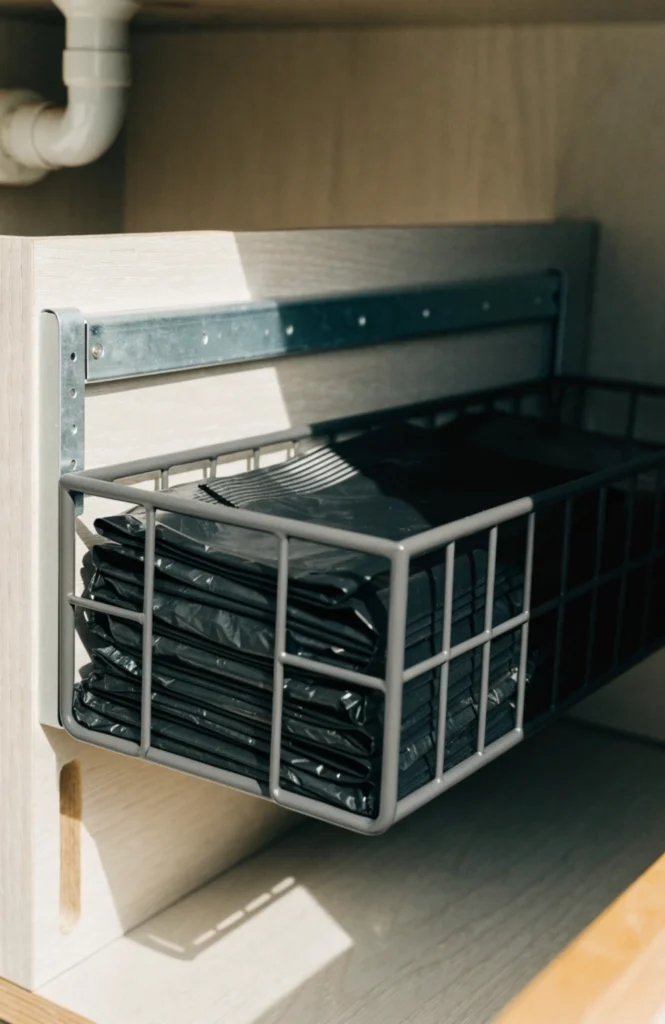
A slim sliding basket, usually 15 to 25 dollars, mounts to the inside wall of the under-sink cabinet and holds folded bags and liners upright and separated by size or type. It takes about ten minutes to install with basic adhesive or screw-in brackets.
Once bags are corralled here, you stop untangling a knotted pile every single time you need one. It’s a small fix, but it’s one of the most immediately satisfying ones on this whole list.
19. Install a battery-powered light in dark cabinets
Deep or dark cabinets are genuinely harder to keep organized simply because you can’t see into them properly.
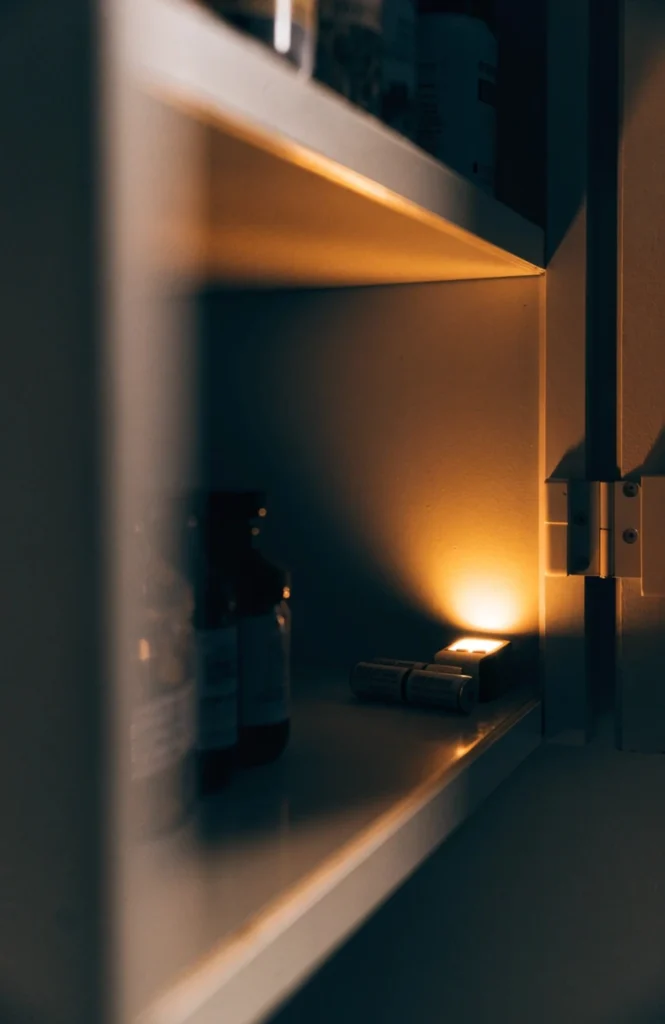
A stick-on battery-powered LED light, usually 10 to 20 dollars each, mounts inside a dark pantry or lower cabinet and switches on with a tap or motion sensor, making it possible to actually see what’s stored in the back. No wiring or electrician is needed for this one, which makes it one of the easiest upgrades on the entire list.
Once you can see clearly into a cabinet, you naturally stop shoving things in without thought. It’s a small investment that changes how every other tip on this list actually gets used day to day.
20. Set up a dedicated coffee station drawer
Mornings go smoother when everything coffee-related lives in exactly one place.
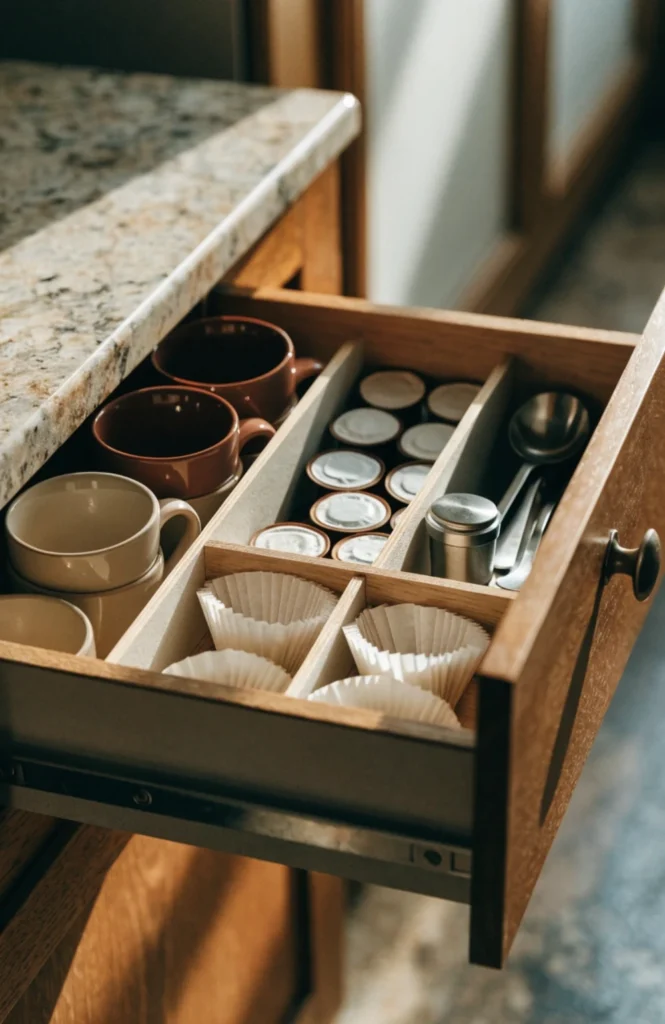
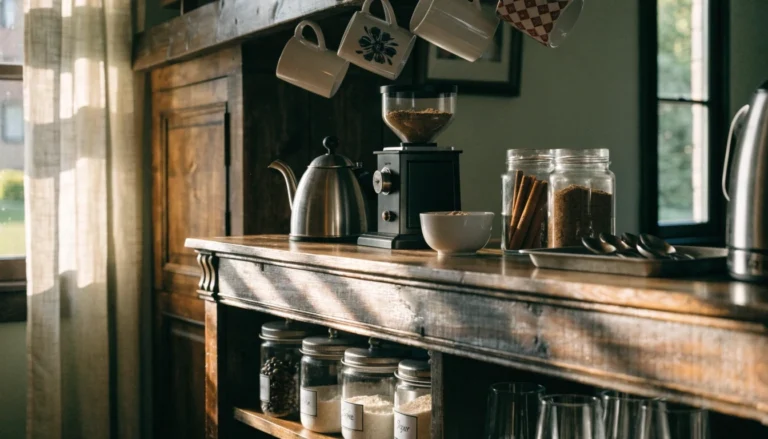
A single deep drawer, fitted with a simple insert or divider, can hold mugs, pods, filters, and a small bag of grounds all in one spot, turning the counter above it into a genuinely clutter-free prep zone. This kind of task-based zoning, grouping by activity instead of item type, is one of the biggest small-kitchen organization shifts going into 2026.
Everything needed for a morning coffee routine slides out in one motion instead of being scattered across three different cabinets. It’s a small change that makes the busiest five minutes of the day noticeably calmer.
Conclusion
The small kitchens that actually feel organized aren’t the ones with the most storage, they’re the ones where every single item has one clear, assigned spot. If you’re only tackling a few of these this month, start with the cheapest fixes first, shelf risers, drawer dividers, and clear bins, since those alone solve most of the daily frustration before you spend anything on a bigger installed upgrade. Once those are in place, move on to the corner cabinet or the toe-kick drawer, since those two reclaim more genuinely wasted space than almost anything else on this list.