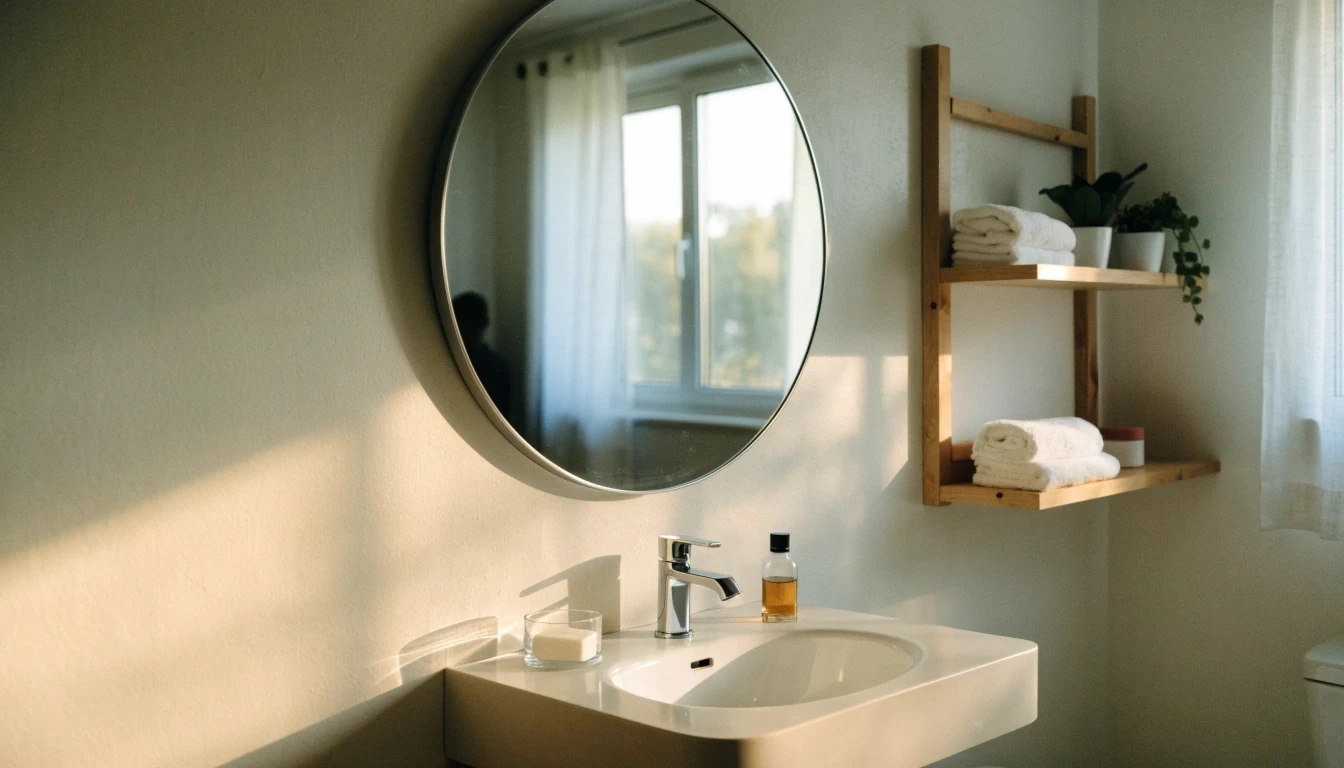
My small bathroom felt cramped for years because I kept trying to fit big-bathroom ideas into a small-bathroom footprint. What actually made it feel bigger wasn’t a renovation, it was a handful of small decisions, a lighter paint color, a floating vanity, one oversized mirror, that all worked together to open the room up instead of filling it up.
The ideas below are grouped by what they solve, color and walls first, then storage, mirrors and lighting, textiles, and the small finishing touches that make the space feel styled rather than just functional. The same small-space logic used in these small patio decorating ideas applies just as well indoors, choose furniture and storage that does double duty, and let light and mirrors do the work of making the room feel bigger than it is.
Before You Start
- Measure your available wall and floor space before buying storage or furniture, a piece that’s an inch too deep can make a small bathroom feel noticeably tighter.
- Stick to light, warm tones for the largest surfaces, walls, tile, vanity, and save darker or bolder colors for small accents instead.
- Prioritize vertical storage over floor storage wherever possible, floor space is the most limited resource in a small bathroom.
- Choose humidity-tolerant materials and plants for anything staying in the room long-term, standard paper art or non-tropical plants won’t hold up well.
Color and Walls
1. Choose a Light, Warm Paint Color to Expand the Space
Repainting from a cool gray to a warm off-white made the room feel noticeably larger without changing a single fixture.
A quart of mildew-resistant bathroom paint runs $18 to $30, usually enough for a small bathroom’s walls in one coat over existing light-colored paint.
It works because light, warm tones reflect more available light around the room, while cool or dark colors tend to visually shrink a space that’s already working with limited square footage.
2. Add Wallpaper to Just the Lower Half
Wallpapering only below a chair rail let me add pattern without the busy, closed-in feeling a full wall of wallpaper gave the room.
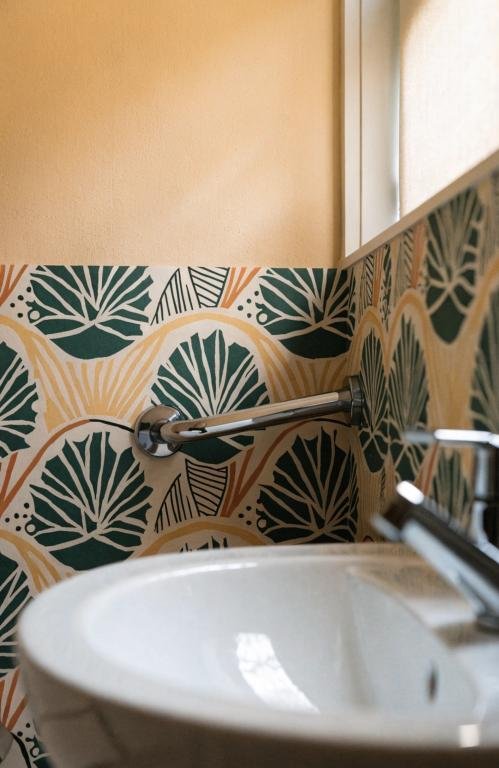
A moisture-resistant vinyl wallpaper runs $30 to $60 per roll, and most small bathrooms need just one to two rolls to cover the lower half of the walls.
It works because keeping the upper wall a solid light color while patterning only the lower half adds visual interest without lowering the room’s perceived ceiling height.
3. Use Large-Format Tile to Reduce Grout Lines
Switching to larger tile with fewer grout lines made the floor read as one continuous surface instead of a busy grid.
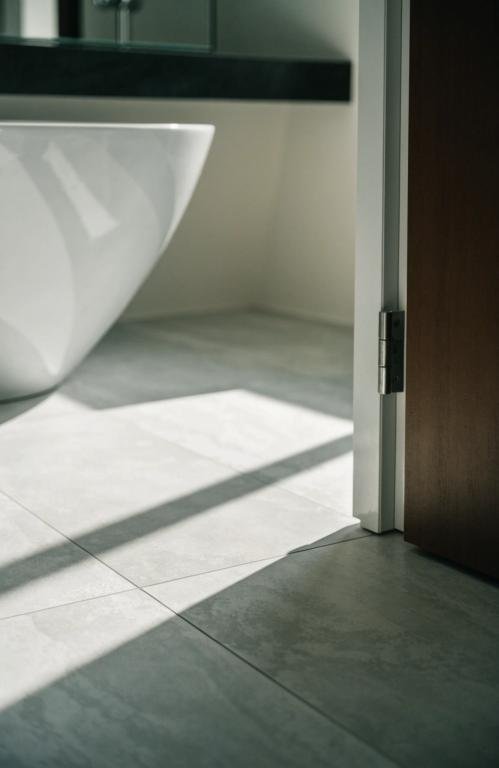
Large-format porcelain tile runs $4 to $9 per square foot before installation, and fewer grout lines also means less ongoing cleaning and mildew maintenance over time.
It works because fewer visual breaks in the floor or wall surface let the eye read the space as more open, while a busy small-tile pattern can make a small room feel more cluttered.
4. Paint the Ceiling to Match the Walls
Carrying the wall color straight up onto the ceiling removed the visual line that was making my low bathroom ceiling feel even lower.
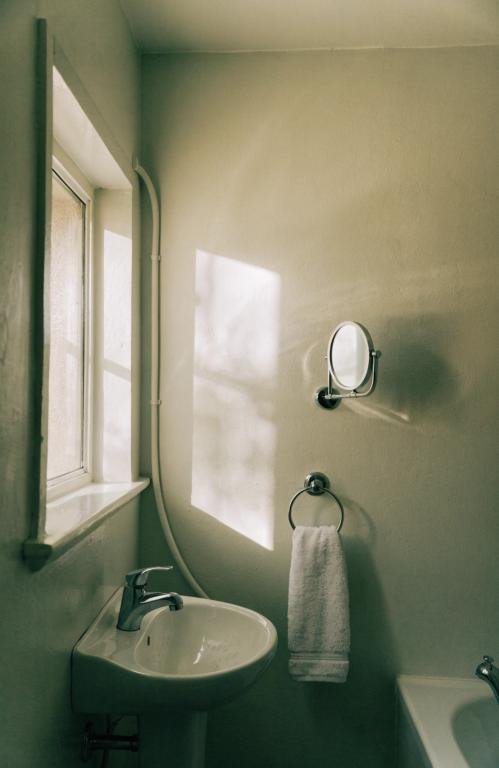
This adds essentially no extra cost beyond the paint you’re already using for the walls, since it’s the same quart or gallon covering a small additional area.
It works because removing the contrast between wall and ceiling color eliminates a visual stopping point, making the room’s boundaries feel less defined and the space feel taller.
Storage and Organization
5. Add a Floating Vanity to Free Up Floor Space
Swapping a boxy floor-standing vanity for a floating one made the whole floor feel bigger the moment it was installed.
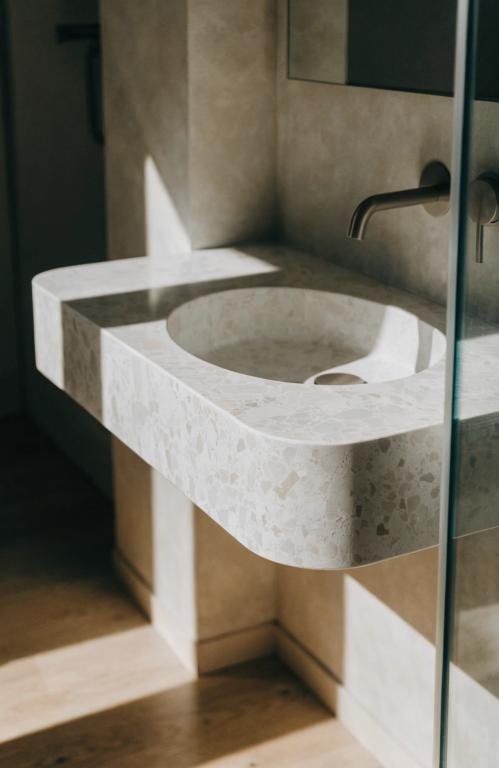
A wall-mounted floating vanity runs $200 to $500 depending on size and material, plus installation if you’re not doing it yourself.
It works because visible floor space beneath the vanity reads as more open room, the same principle behind why small kitchen cabinet organization focuses on freeing up visible surface area rather than just adding more storage.
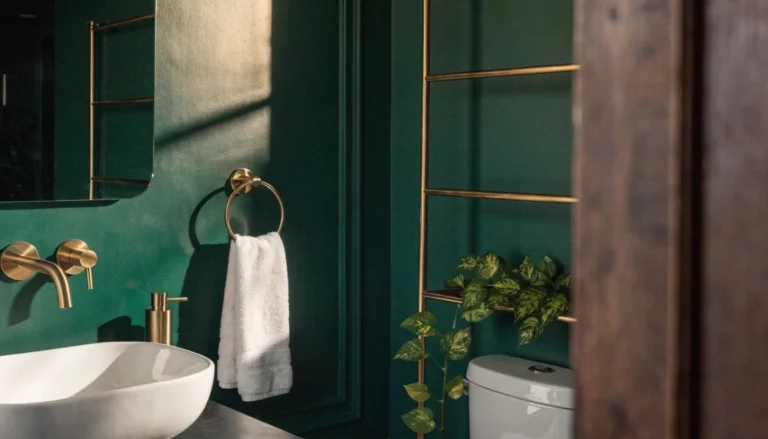
6. Use a Ladder Shelf for Vertical Storage
A slim ladder shelf in the corner added storage without needing any floor footprint beyond what a towel bar would take.
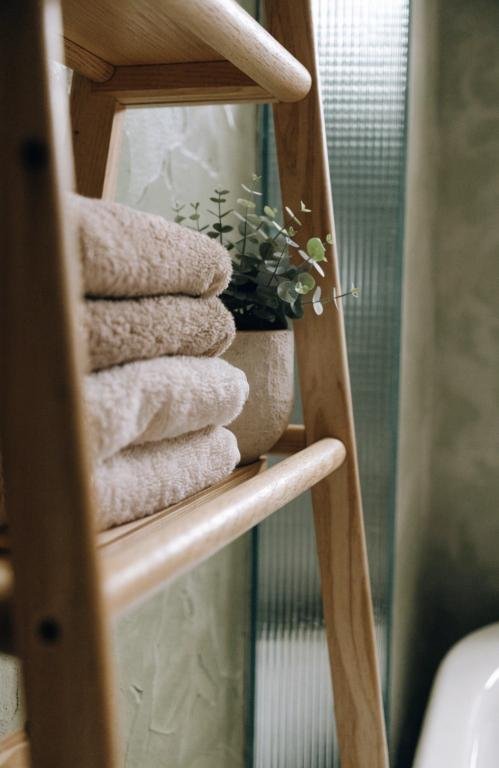
A wood or bamboo ladder shelf runs $40 to $90 depending on height and material, and it works well for towels, baskets, and small plants layered across the rungs.
It works because it uses vertical wall space that’s otherwise empty, which matters most in a room where floor space is the scarcest resource.
7. Add Baskets Under the Sink
Sorting bathroom supplies into a couple of woven baskets under the sink stopped the cabinet from turning into a junk drawer.
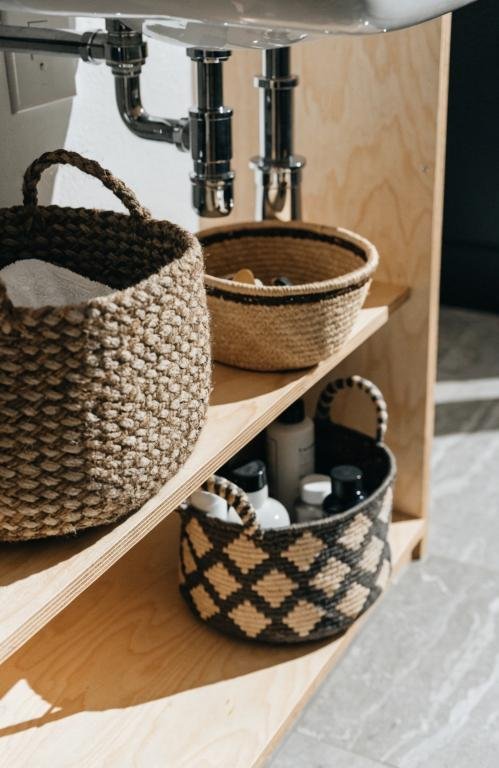
Small woven or plastic bins run $8 to $18 each, and two to three fit most under-sink bathroom cabinets while keeping items grouped and easy to find.
It works because it contains loose items the same way it does in a kitchen cabinet, grouping by category means one grab instead of digging through everything.
8. Install a Recessed Medicine Cabinet
Recessing the medicine cabinet into the wall instead of mounting it on the surface gave back a few precious inches of usable space.
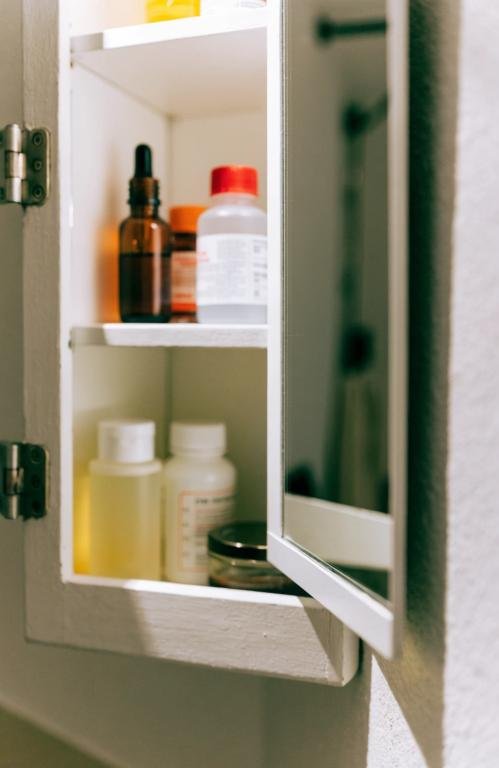
A recessed medicine cabinet runs $80 to $200 including the mirror front, more than a surface-mount version but worth it for the reclaimed depth.
It works because it stores items within the wall cavity rather than protruding into the room, which matters most in a bathroom tight enough that every inch counts.
9. Use a Slim Rolling Cart Beside the Toilet
A narrow rolling cart tucked beside the toilet fit into a gap that no built-in storage option ever could.
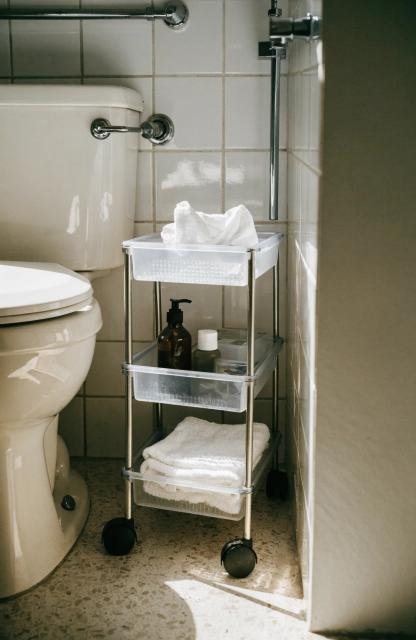
A slim three-tier rolling cart runs $25 to $50, and it can roll out for cleaning access or restocking without needing to be mounted or built in.
It works because narrow gaps beside fixtures are usually too small for standard storage furniture, and a slim cart is one of the few options actually built for that exact width.
Mirrors and Lighting
10. Hang an Oversized Mirror
Replacing a small builder-grade mirror with one that spans most of the wall above the vanity made the biggest visual difference of anything on this list.
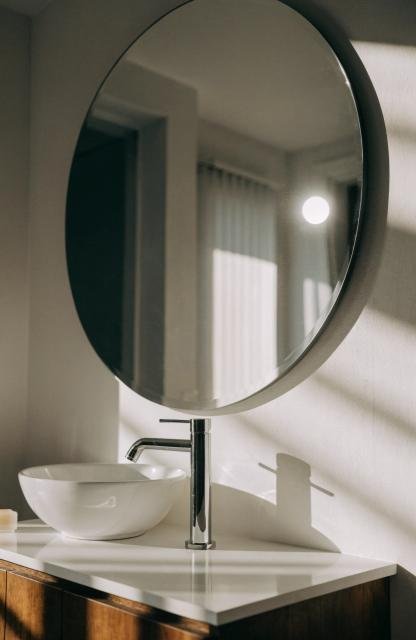
An oversized bathroom mirror runs $80 to $200 depending on frame style and size, and choosing one close to the full width of the vanity maximizes the reflected light.
It works because a mirror doubles the perceived depth of whatever it reflects, and a bathroom-sized mirror reflects most of the room’s available light and floor space back into view.
11. Add Sconce Lighting on Either Side of the Mirror
Adding sconces on either side of the mirror got rid of the shadows a single overhead light was casting across my face every morning.
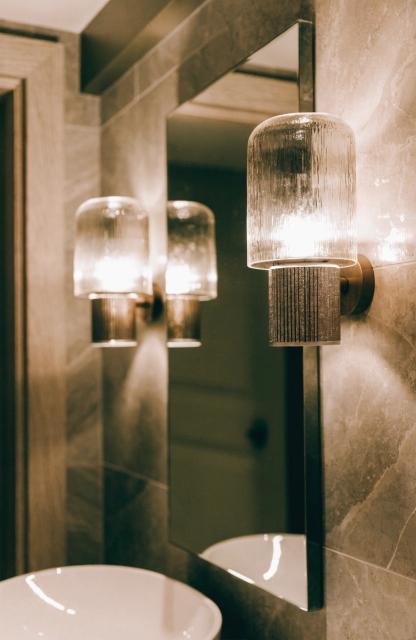
A pair of wall sconces runs $40 to $100 total, and mounting them at eye level on either side of the mirror gives more even, shadow-free lighting than an overhead fixture alone.
It works because side lighting eliminates the harsh shadows that overhead-only lighting creates, which matters for both function and how flattering the space feels.
12. Use a Mirror with a Built-In Light Ring
An LED ring mirror solved the lighting problem and the mirror upgrade in one single fixture, which mattered when I didn’t have budget for both separately.
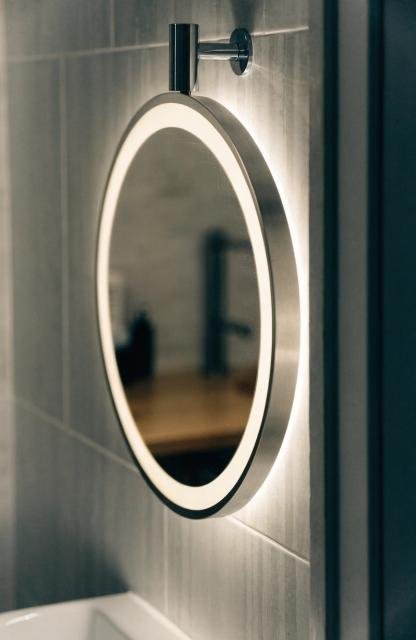
A round or oval mirror with a built-in LED light ring runs $100 to $250 depending on size and dimmer features.
It works because it combines two upgrades, better lighting and a larger mirror, into a single install, which is useful when wall space or budget for two separate fixtures is limited.
13. Add a Skylight or Solar Tube if Possible
A small solar tube brought in natural daylight to a windowless bathroom that had always felt dim no matter how many lamps we added.
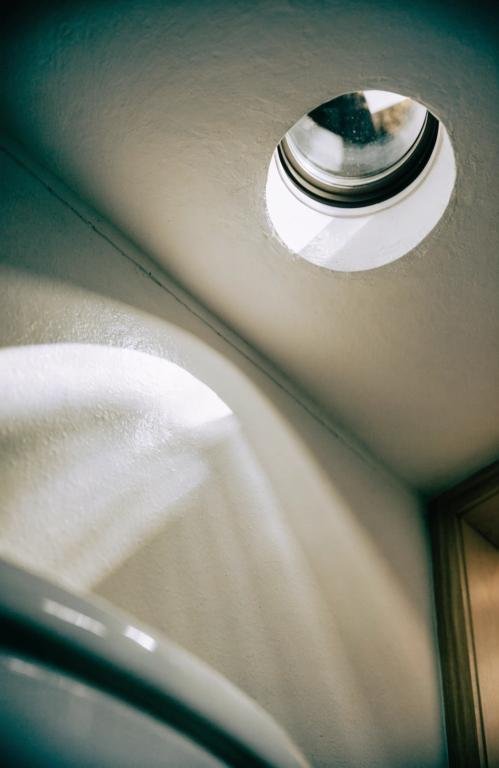
A solar tube installation typically runs $500 to $1,000 including professional installation, a bigger investment than most items on this list but one that changes the room’s daytime feel completely.
It works because natural daylight reads as more expansive than artificial lighting alone, and it’s especially valuable in interior bathrooms without any windows.
Textiles and Accents
14. Layer a Small Runner Rug Instead of a Bath Mat
Swapping the standard rectangular bath mat for a narrow runner along the vanity made the floor feel more like a designed space than a functional afterthought.
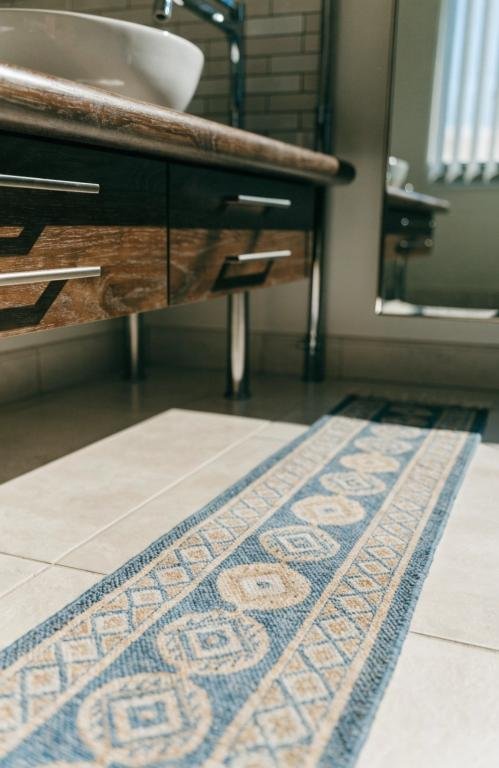
A small washable runner rug sized for a bathroom runs $20 to $45, and a low pile height is easier to keep dry and mildew-free than a plush one.
It works because a runner shape fits the narrow floor space in most small bathrooms better than a square mat, and it adds texture and color at floor level.
15. Add a Textured Shower Curtain
A textured woven shower curtain replaced a plain vinyl one and immediately added the kind of softness a small tiled bathroom usually lacks.
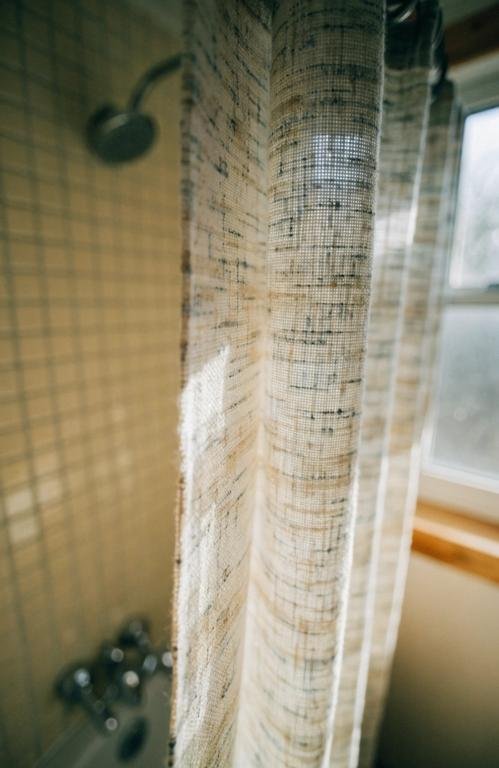
A textured cotton or linen-blend shower curtain runs $25 to $50, and pairing it with a matching liner keeps the water-resistant function intact.
It works because texture softens the hard surfaces, tile, glass, porcelain, that dominate most bathrooms, adding warmth without requiring any structural changes.
16. Use Coordinated Fluffy Towels
A matching set of thick towels, rather than mismatched leftovers, did more to make the room feel like a finished space than anything else I tried.
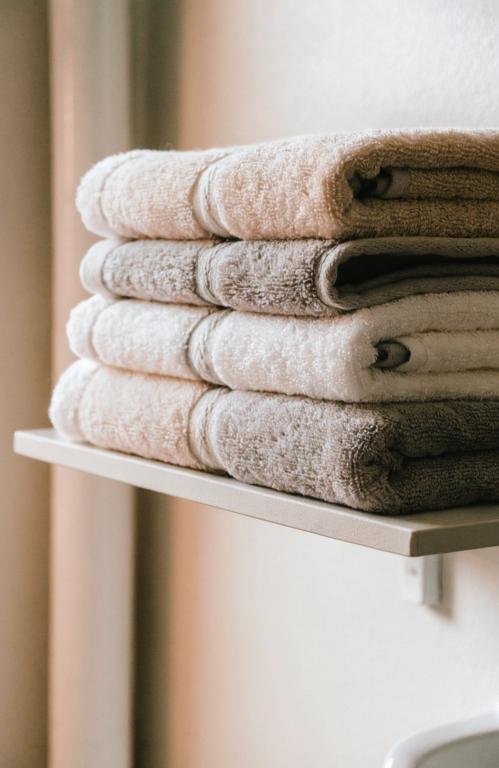
A coordinated set of two bath towels and two hand towels runs $30 to $60, and a solid neutral color tends to read as more polished than a busy print.
It works because coordinated colors and folded, displayed towels signal an intentionally styled room, while mismatched towels read as purely functional.
17. Add a Small Potted Plant That Tolerates Humidity
A small pothos on the corner of the vanity is the one plant that’s actually thrived in my bathroom’s humidity instead of struggling against it.
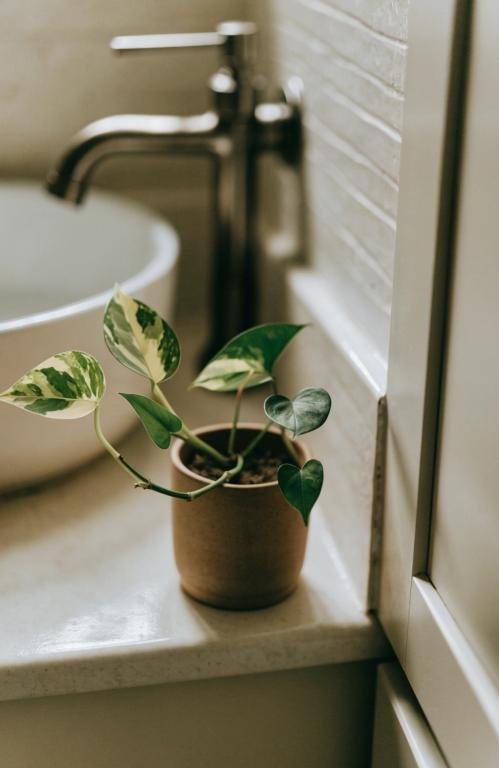
A small potted humidity-loving plant like pothos, snake plant, or a fern runs $10 to $25 depending on pot and size.
It works because choosing a plant suited to the bathroom’s actual conditions means it survives and adds greenery long-term, instead of dying within weeks like most standard houseplants would in that environment.
Finishing Touches
18. Add a Tray on the Vanity for Small Items
Corralling loose bottles and jewelry into a single tray stopped the vanity counter from looking cluttered no matter how many small items were on it.
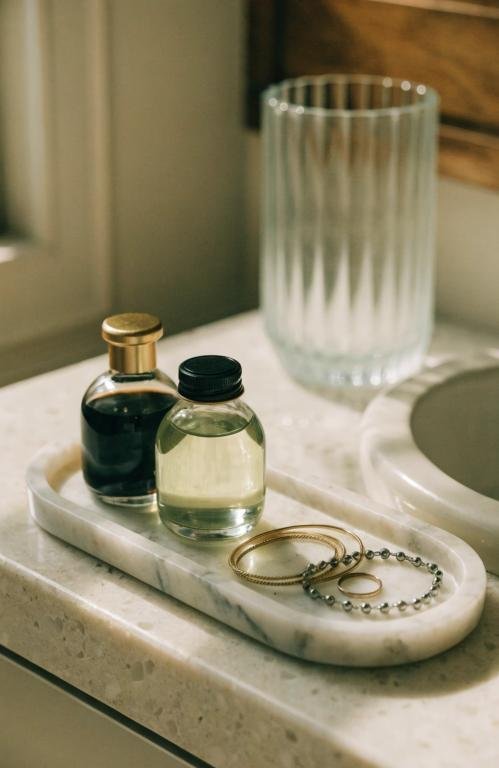
A small decorative tray in wood, marble, or ceramic runs $10 to $30, and it groups everyday items into one visually contained zone.
It works because a tray creates a visual boundary around loose items, similar to how a bin groups items in a cabinet, so the counter reads as styled rather than cluttered.
19. Hang Art in a Waterproof Frame
A small piece of art in a sealed frame added personality to a wall that had been completely bare for years.
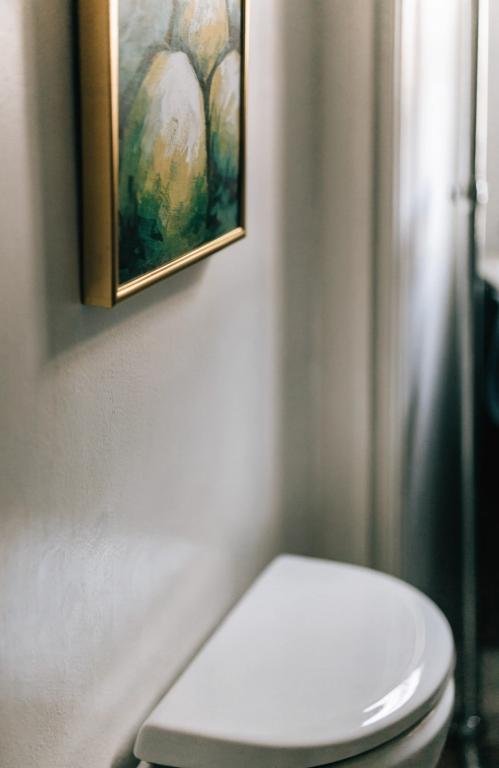
A small print in a waterproof or acrylic frame runs $20 to $50, and choosing acrylic over glass avoids any risk of the glass fogging or cracking from humidity over time.
It works because it’s one of the only ways to add real personality and color to the walls without repainting, and a sealed frame means it holds up to the room’s humidity long-term.
20. Add a Scented Candle or Diffuser
A small reed diffuser on the vanity solved the lingering bathroom smell issue without needing to burn a candle unattended in a small room.
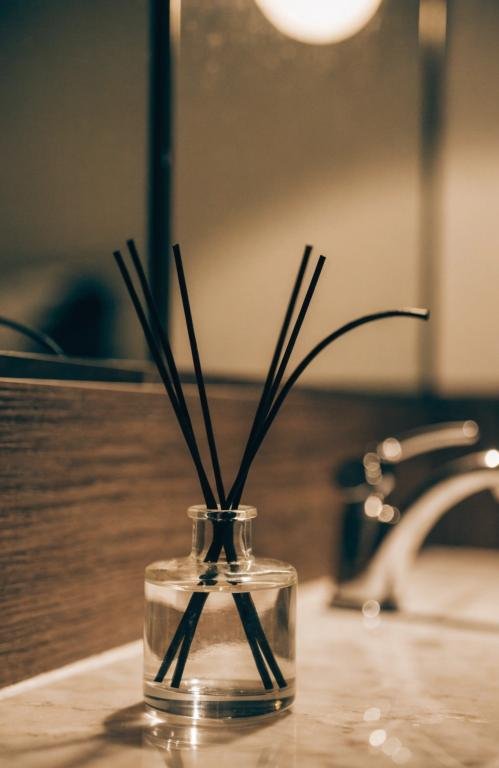
A reed diffuser runs $15 to $30 and typically lasts two to three months, while a small candle runs $10 to $20 if you prefer that over a diffuser.
It works because scent is the last sensory layer most bathroom styling skips, and it’s one of the cheapest ways to make the finished room feel complete rather than just visually done.
Conclusion
If you’re starting with just one or two changes, an oversized mirror and a lighter paint color together do more to open up a small bathroom than almost anything else on this list, and both are achievable in a single weekend. Add vertical storage and better lighting next, then round it out with textiles and small finishing touches once the bones of the room are working for you instead of against you. The goal isn’t to fit more into a small bathroom, it’s to make the space you already have feel intentional.
FAQ
What’s the fastest way to make a small bathroom feel bigger?
An oversized mirror and a lighter, warmer paint color are the two fastest changes, both achievable in a weekend and both directly addressing how light moves through the room.
What plants actually survive in a bathroom?
Pothos, snake plants, and ferns tolerate humidity and lower light well, making them a better choice than most standard houseplants for a bathroom environment.
How do I add storage without shrinking the floor space?
Prioritize vertical storage, ladder shelves, recessed cabinets, wall-mounted baskets, over anything that sits on the floor, since floor space is the most limited resource in a small bathroom.