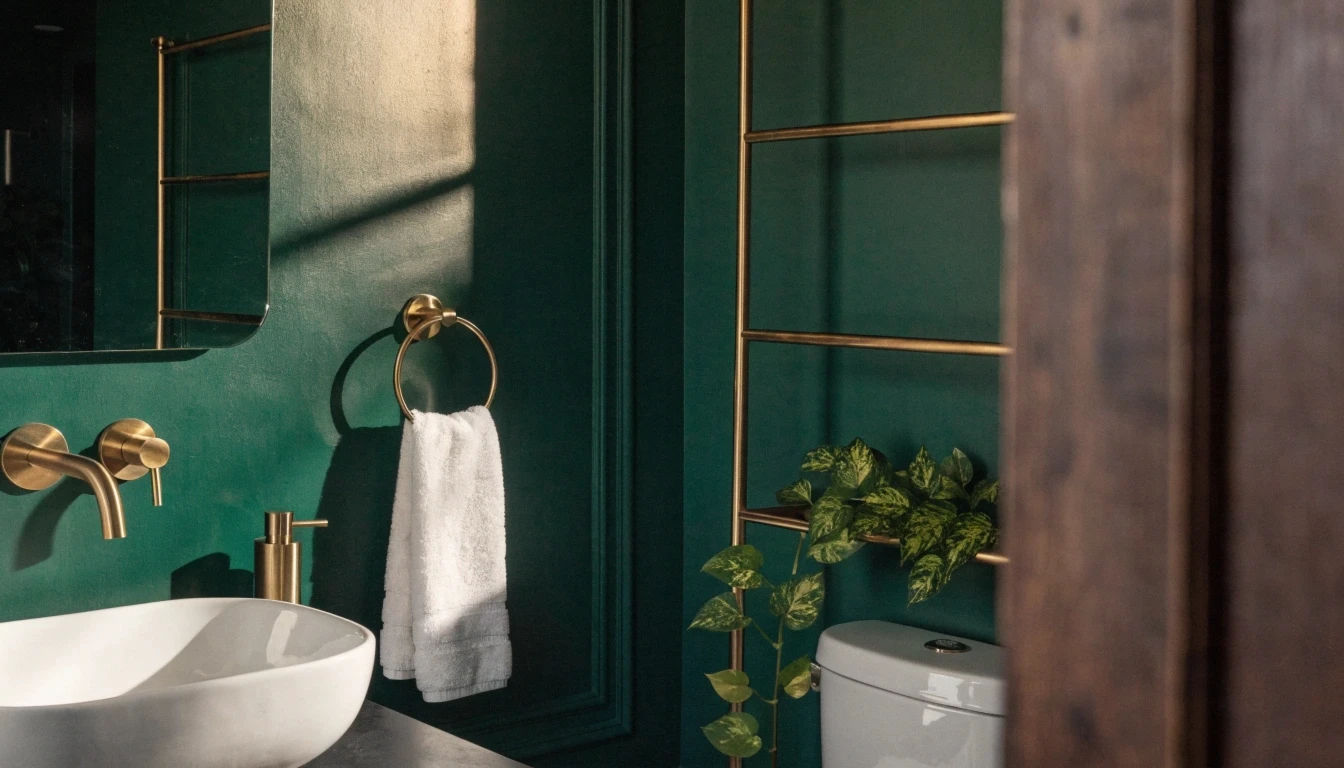
My bathroom stayed a plain builder-white box for years because green felt like a risky color to commit to in a room that small. Once I finally tried it, a deep forest green on just the vanity, then plants, then brass hardware, it turned out to be the easiest room in the house to make feel calm and a little bit like the outdoors. Green in a bathroom doesn’t need to be loud, it just needs the right supporting materials around it.
The ideas below are grouped by what they change, wall color and finishes first, then tile and surfaces, plants and natural elements, fixtures and hardware, textiles, and the lighting and finishing touches that pull the whole look together. Once the bones of the room are set, styling the vanity shelf with a few natural, earthy pieces works the same way as any open shelving, the layering principles in these bookshelf styling ideas apply just as well to a small bathroom counter.
Before You Start
- If you’re nervous about committing to a bold green, start with just the vanity or one accent wall rather than every surface at once.
- Pair green with warm materials, brass, wood, cream, rather than cool white or gray, to keep the room feeling warm instead of clinical.
- Choose plants suited to your bathroom’s actual light and humidity level, a windowless bathroom needs different plants than a bright, sunny one.
- Always use mildew-resistant paint and materials rated for bathroom humidity, regardless of which shade of green you choose.
Wall Color and Finishes
1. Paint Walls in a Deep Forest Green
Committing to a deep forest green on all four walls felt bold, but it made the small bathroom feel cocooning rather than cramped.
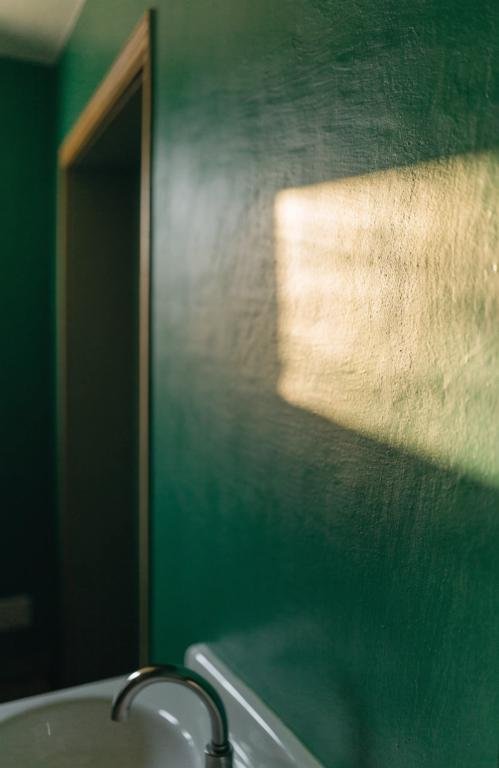
A quart of mildew-resistant bathroom paint runs $18 to $32, and most small bathrooms need one to two quarts depending on wall area.
It works because a deep, saturated color on all the walls makes a small room feel intentional and enveloping rather than cramped, which is the opposite of what most people expect from a bold color in a tight space.
2. Choose a Sage Green for a Softer Look
Sage green gave me the same nature-inspired feel as forest green but with a softer, more calming effect that suited a bathroom I use first thing every morning.
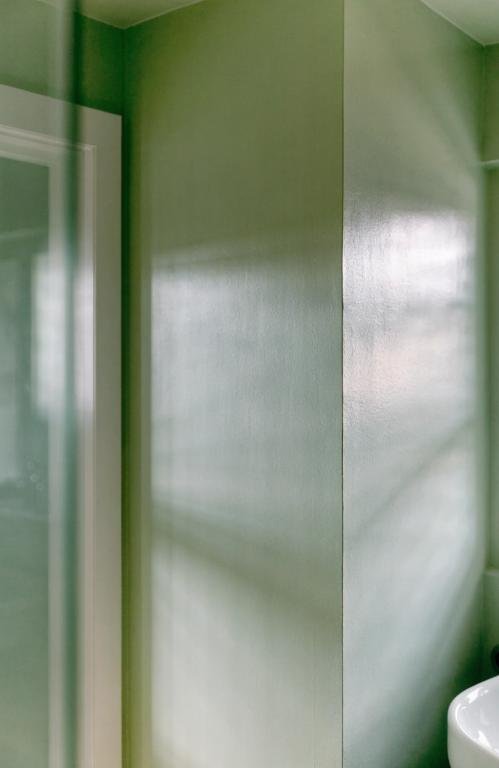
A quart of sage green bathroom paint runs $18 to $30, the same cost as any other shade, just a lighter and more muted tone.
It works because a lighter, grayed-out green reads as calming rather than dramatic, and it pairs easily with more neutral fixtures if you’re not ready for a bolder statement.
3. Add a Green Textured Plaster Finish
A limewash finish in a muted green gave the walls a depth that flat paint alone never achieved, catching light differently throughout the day.
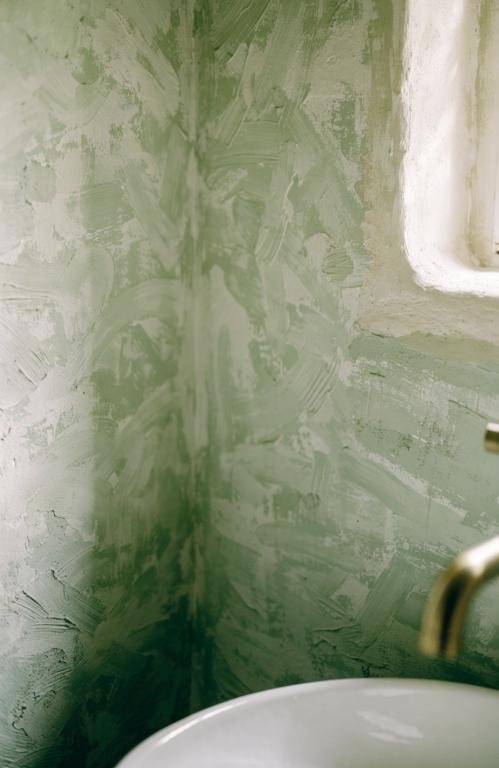
A limewash or textured plaster paint kit runs $50 to $100 for enough to cover a small bathroom’s walls, more than standard paint but with a distinctly different finish.
It works because texture adds visual depth to a single-color room, giving the green more dimension than a flat, uniform coat of paint provides.
4. Use Green Grasscloth Wallpaper
Grasscloth wallpaper in a mossy green tied the room’s color directly to an actual natural material, not just a paint color meant to evoke one.
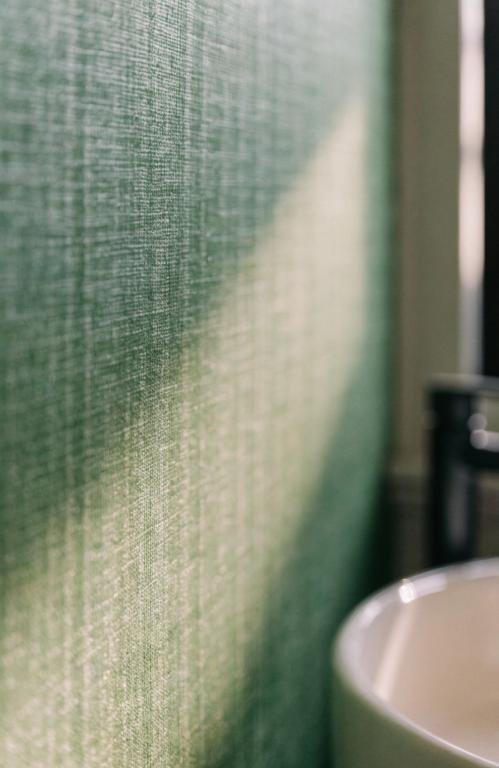
Moisture-resistant grasscloth-look wallpaper runs $35 to $65 per roll, and most small bathrooms need one to two rolls for a single accent wall.
It works because grasscloth’s natural woven texture directly reinforces the nature-inspired theme, doing double duty as both color and texture in one material.
5. Paint Just the Vanity in Green
Painting only the vanity a deep green while keeping the walls neutral was the low-commitment way I tested the color before going bigger.
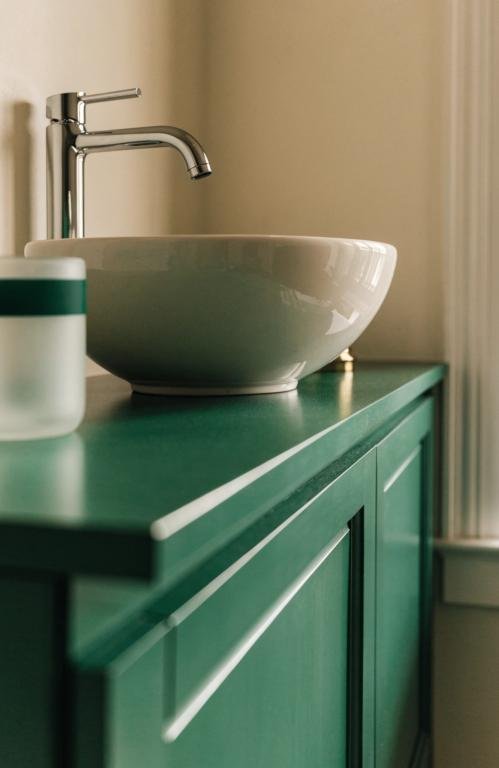
A quart of cabinet-grade paint runs $20 to $35, enough to cover a standard vanity with a coat or two.
It works because it lets you test the color commitment on a smaller, more contained surface before deciding whether to expand it to the full room.
Tile and Surface Choices
6. Add Green Subway Tile to the Shower
Green subway tile in the shower kept the color theme consistent even in the wettest part of the room.
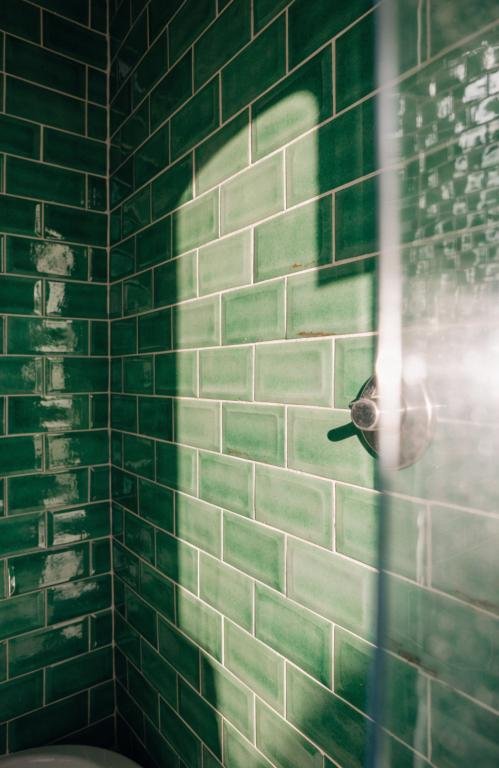
Green ceramic subway tile runs $4 to $9 per square foot before installation, similar to standard white subway tile in cost.
It works because it extends the green theme into the shower itself without needing paint, which isn’t practical in a constantly wet area anyway.
7. Use Green Mosaic Tile as an Accent Border
A thin band of green mosaic tile as a border added detail without the cost of tiling an entire wall.
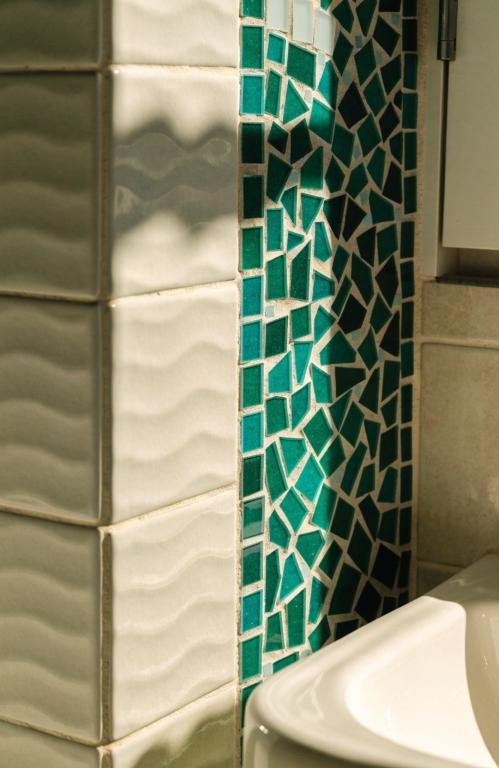
Green mosaic tile sheets run $8 to $15 per square foot, and using it only as a thin accent border keeps the overall cost manageable.
It works because a small accent border adds detail and color at a fraction of the cost and labor of tiling a full wall or floor.
8. Choose a Green Marble-Look Countertop
A green-veined countertop became the room’s real showpiece, more than any paint color or accessory.
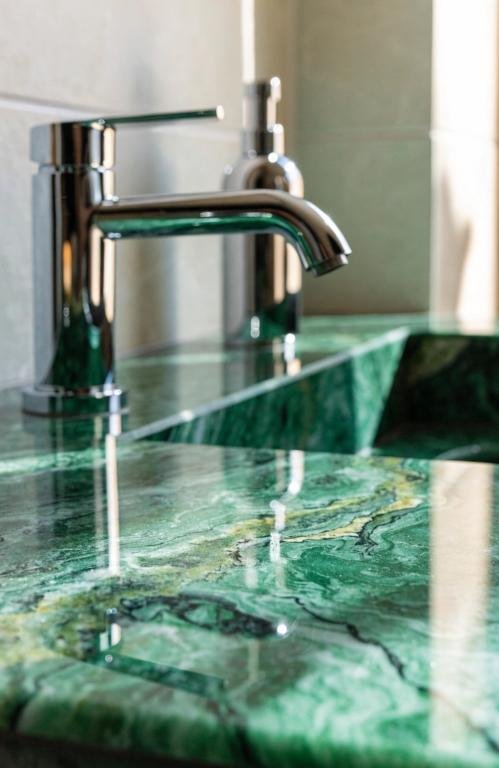
A green marble-look quartz vanity countertop runs $40 to $80 per square foot installed, a bigger investment but a lasting focal point.
It works because a countertop is one of the largest continuous surfaces in the room, and green veining on it becomes the room’s natural focal point.
9. Add Green Penny Tile to the Floor
Green penny tile on the floor added texture and pattern underfoot that the rest of the room’s flatter surfaces didn’t have.
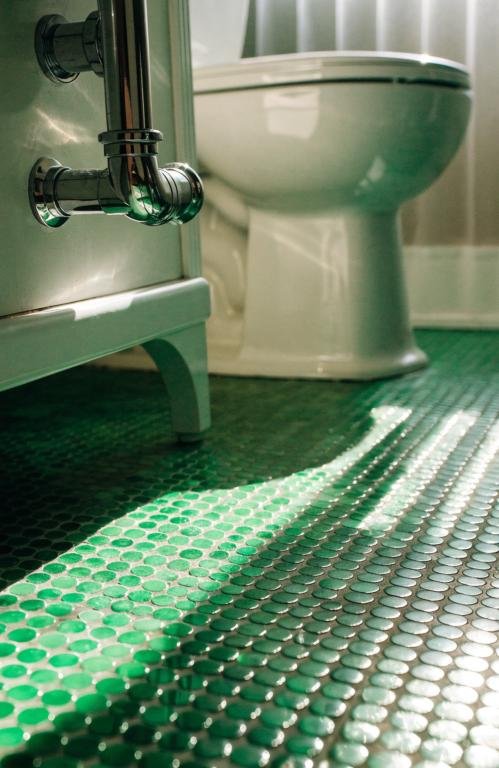
Green penny tile sheets run $10 to $18 per square foot, more than standard tile due to the detailed installation work involved.
It works because small-format tile like penny rounds adds visual texture and pattern to the floor, an area most bathroom renovations leave plain.
Plants and Natural Elements
10. Add a Trailing Pothos Near the Window
A trailing pothos on the windowsill has thrived in my bathroom’s humidity for years, longer than any plant I’ve tried in drier rooms of the house.
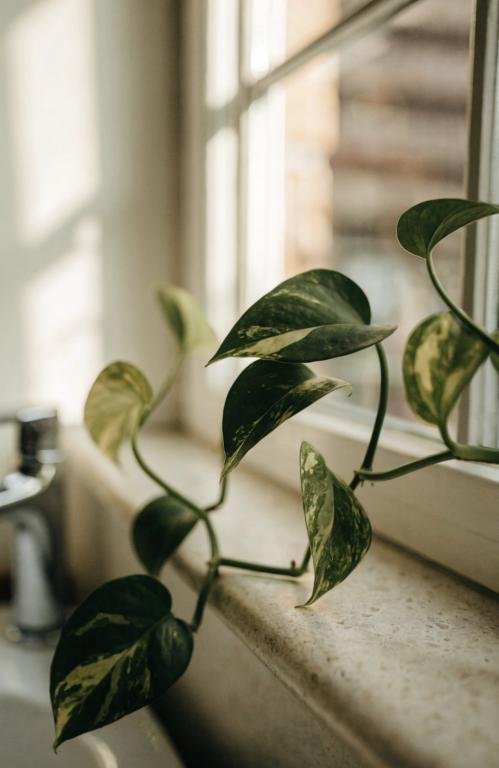
A small potted pothos runs $8 to $18 depending on size, and it tolerates both low light and high humidity well.
It works because pothos genuinely thrives in bathroom humidity, unlike many houseplants that struggle in that environment, making it one of the most reliable green additions on this list.
11. Include a Boston Fern for Humidity-Loving Greenery
A Boston fern in the corner became noticeably fuller within a few months, clearly happier in the bathroom’s humid air than it had been anywhere else.
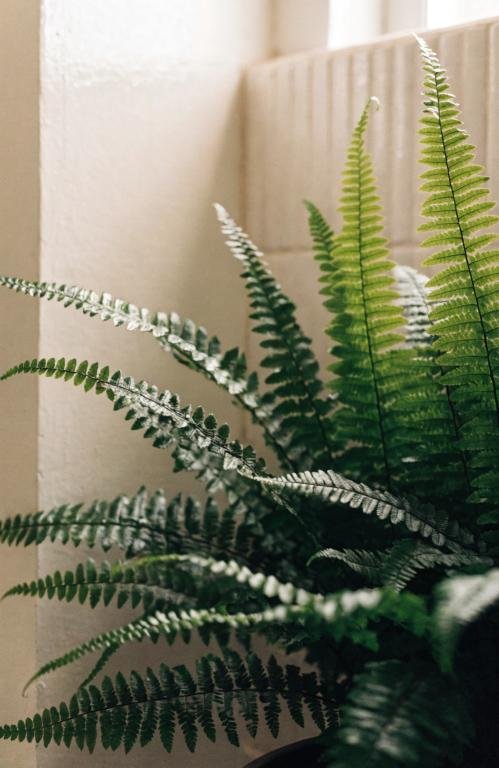
A Boston fern in a hanging or floor pot runs $15 to $30 depending on size, and it specifically benefits from the higher humidity a bathroom provides.
It works because ferns are humidity-loving plants that often struggle in drier rooms, making a bathroom one of the few spots in the house where they genuinely flourish.
12. Add a Snake Plant for Low-Maintenance Green
A snake plant in the corner survived weeks of neglect during a busy stretch and still looked exactly the same when I finally checked on it.
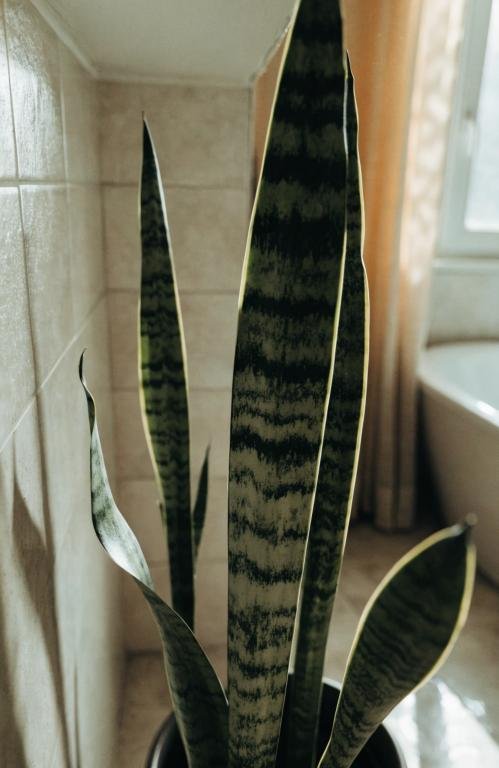
A snake plant in a floor pot runs $15 to $35 depending on height, and it tolerates low light and irregular watering better than almost any other houseplant.
It works because it’s one of the most forgiving plants available, ideal for a bathroom with limited natural light or an owner who forgets to water regularly.
13. Use a Woven Planter for Natural Texture
Swapping the plastic plant pot for a woven basket planter matched the natural theme far better than the plant alone managed on its own.
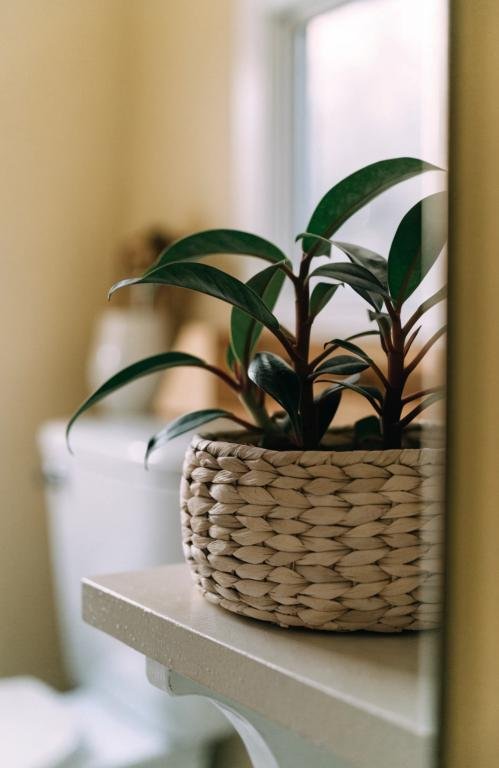
A woven seagrass or rattan planter cover runs $12 to $28 depending on size.
It works because the planter itself becomes part of the natural texture story, not just a container hiding a plastic nursery pot underneath.
14. Add a Small Living Wall Panel
A small living wall planter above the toilet used vertical space that had been completely empty and added real greenery without any floor footprint.
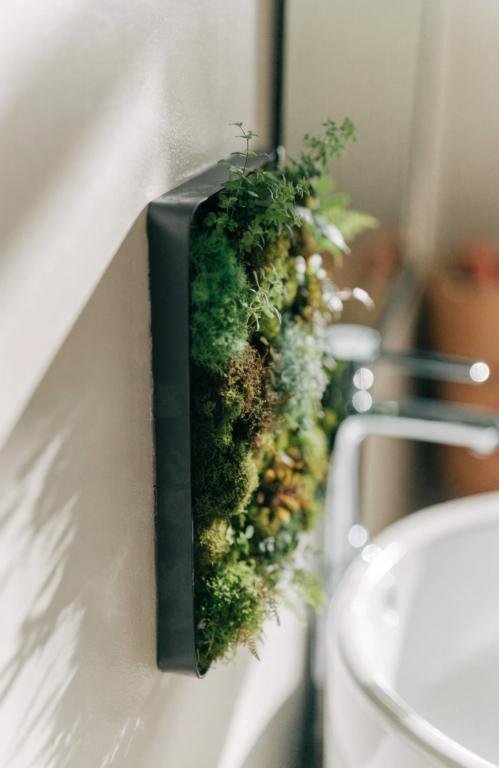
A small wall-mounted living wall planter system runs $30 to $70 depending on size and number of pockets.
It works because it uses vertical wall space most bathrooms leave completely bare, adding real, living greenery without taking up any floor space.
Fixtures and Hardware
15. Choose Brushed Brass Fixtures to Warm Up the Green
Swapping chrome faucets for brushed brass warmed up the whole room and made the green feel richer instead of cold.
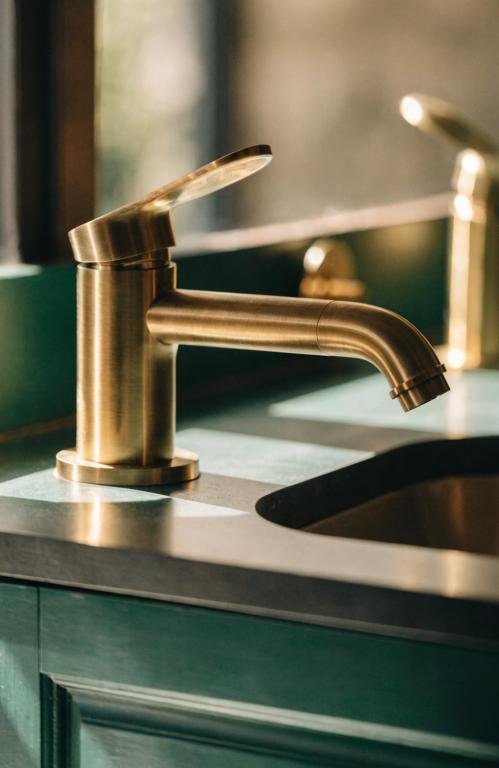
A brushed brass faucet runs $80 to $180, and matching cabinet hardware adds another $20 to $40.
It works because brass and green are natural complements, both evoking an earthy, organic palette that cool chrome or nickel tones don’t support as well.
16. Add a Green Ceramic Sink Basin
A green ceramic vessel sink became a genuine statement piece, more striking than a green wall alone would have been.
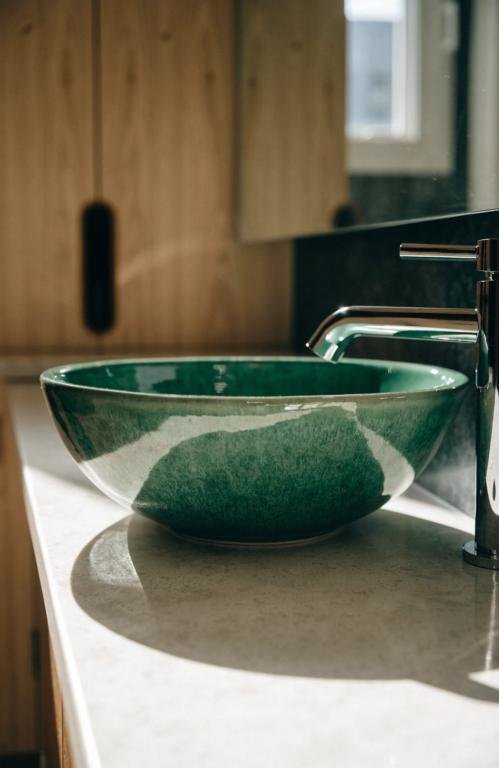
A green ceramic vessel sink runs $120 to $280 depending on size and glaze finish.
It works because a colored sink basin is an unexpected detail that most bathrooms skip, immediately making the space feel more custom and considered.
17. Use Matte Black Hardware for Contrast
Matte black cabinet pulls against the green vanity gave the room a sharper, more grounded contrast than the brass alone provided.
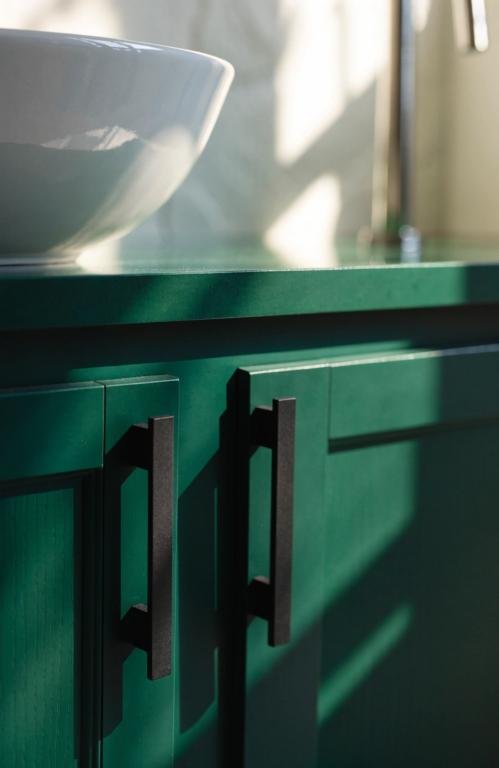
Matte black cabinet hardware runs $3 to $8 per pull, and a full vanity typically needs four to six pulls.
It works because black provides sharp, grounding contrast against green, and it’s a good alternative if brass feels too warm or traditional for your overall style.
18. Add a Green Glass Pendant Light
A single green glass pendant above the vanity added color at eye level, somewhere the paint and tile alone couldn’t quite reach.
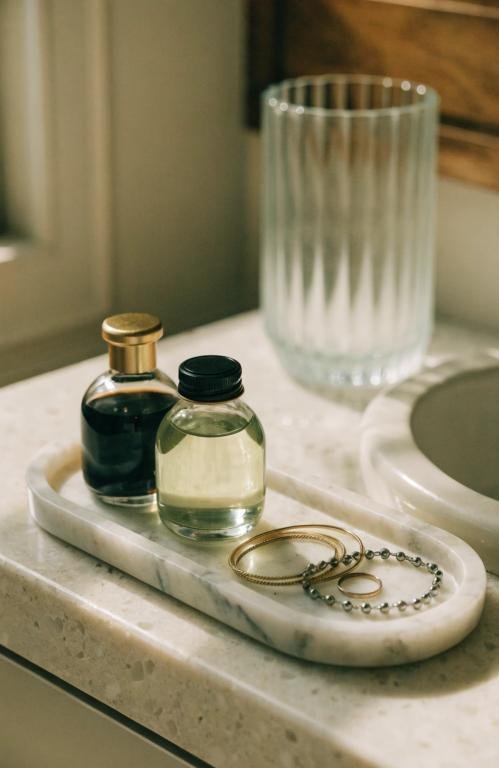
A green glass pendant light runs $50 to $120 including basic installation.
It works because it introduces the color at eye level, filling in a spot the wall paint and floor tile don’t naturally reach.
Textiles and Accents
19. Layer in a Green and White Striped Towel Set
Coordinated striped towels tied the whole color scheme together without adding any permanent changes to the room.
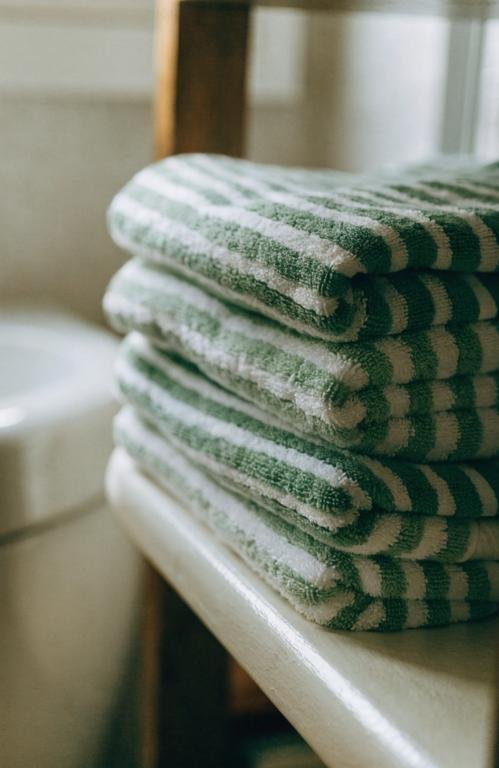
A set of two bath towels and two hand towels in a green and white stripe runs $30 to $55.
It works because it’s a completely reversible way to bring the color scheme into the textiles, easy to update if you ever want to shift the palette later.
20. Add a Green Bath Mat with Texture
A textured green bath mat added warmth underfoot and grounded the whole floor-level part of the room.
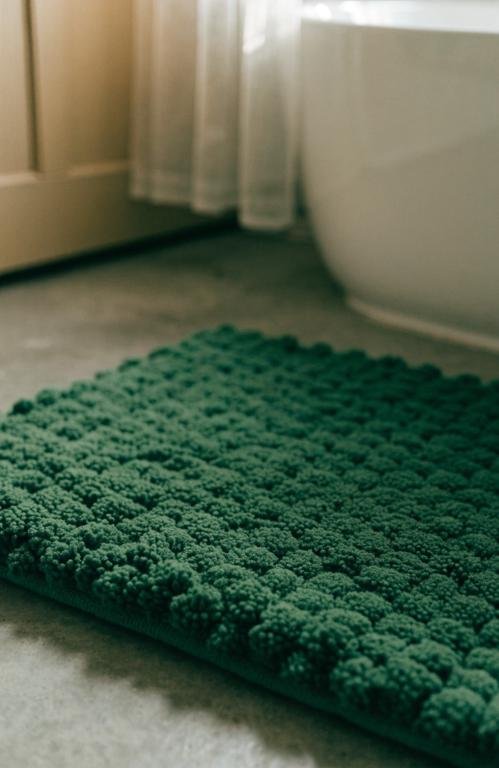
A textured cotton or chunky knit bath mat in green runs $20 to $40.
It works because it extends the color scheme down to floor level while adding texture underfoot, an area that’s otherwise easy to overlook when styling a bathroom.
21. Use a Botanical Print Shower Curtain
A botanical print shower curtain reinforced the nature theme without needing any tile or paint changes in the shower itself.
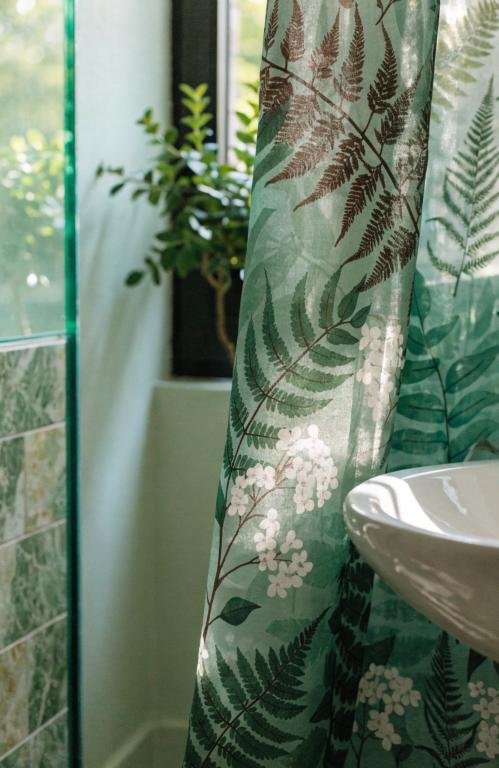
A botanical or leaf-print shower curtain runs $25 to $45, and pairing it with a matching liner keeps the water-resistant function intact.
It works because a botanical print directly reinforces the nature-inspired theme, and it’s one of the largest visual surfaces in most bathrooms, making a real impact for a relatively low cost.
22. Add Green Glass Accessories on the Vanity
Swapping a plastic soap dispenser for a green glass one is such a small change, but it added color exactly where my eye landed most often.
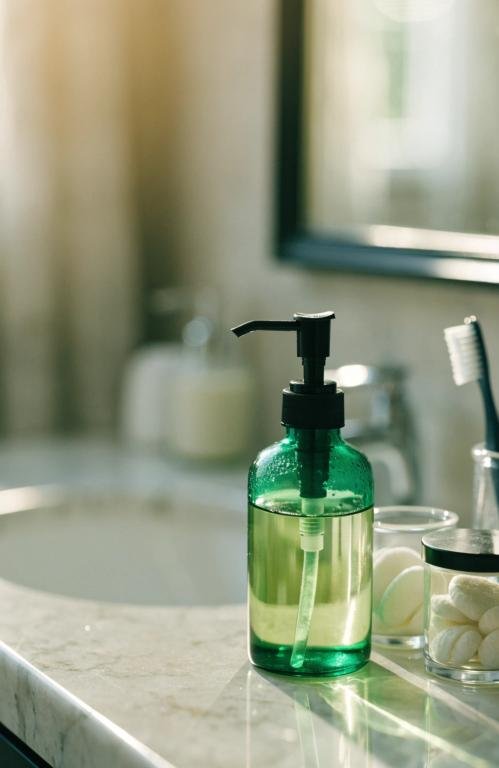
A green glass soap dispenser and tumbler set runs $20 to $40.
It works because small daily-use objects like a soap dispenser are exactly where your eye lands most often, so upgrading them has an outsized visual impact for a low cost.
Lighting and Finishing Touches
23. Add a Skylight or Solar Tube for Natural Light
A small solar tube brought real daylight into a windowless bathroom, which made the green feel alive rather than flat under artificial light alone.
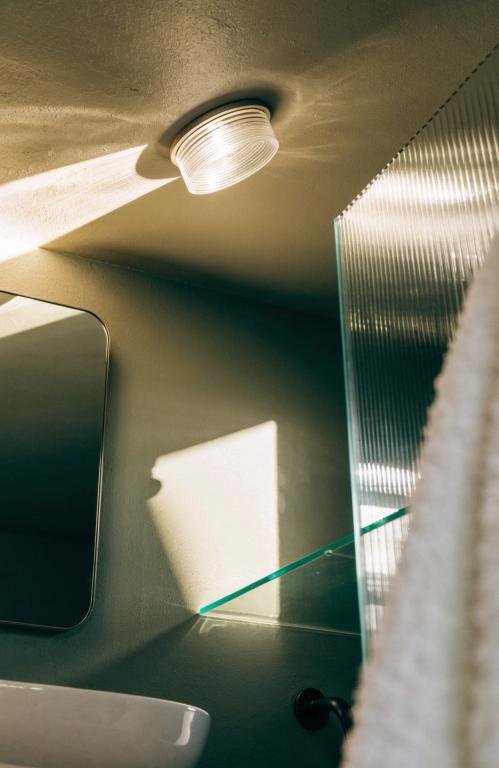
A solar tube installation typically runs $500 to $1,000 including professional installation, a bigger investment but one that changes how the color reads throughout the day.
It works because natural light shows a green color’s true tone far better than artificial lighting alone, which matters especially in an interior bathroom without windows.
24. Use Warm White Bulbs to Complement Green Tones
Swapping to warm white bulbs kept the green from reading cool or sterile the way it did under the bathroom’s original cool white lighting.
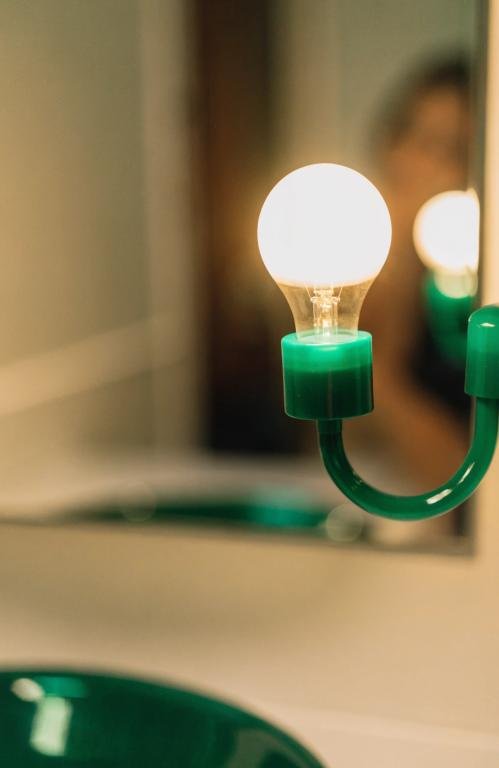
Warm white LED bulbs run $3 to $8 each, and swapping two to three bulbs in a small bathroom costs $10 to $20 total.
It works because cool white light can make green read as sterile or clinical, while warm light brings out the earthier, more natural undertones in the color.
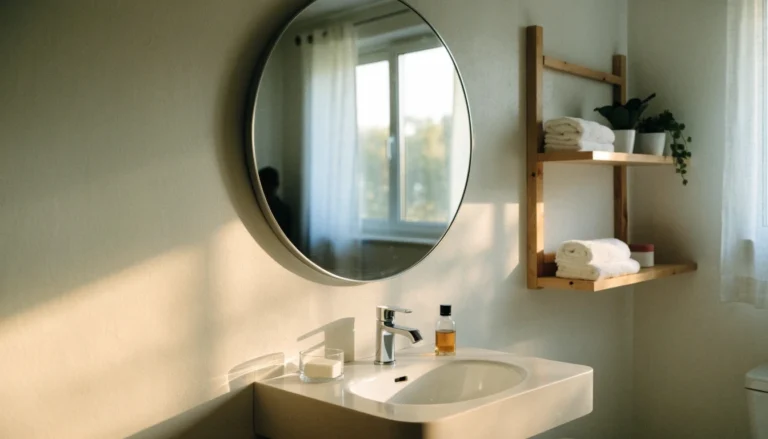
25. Add a Woven Wood Mirror Frame
A woven wood mirror frame added natural texture right where I look every single morning, tying the whole nature theme together at the most-used spot in the room.
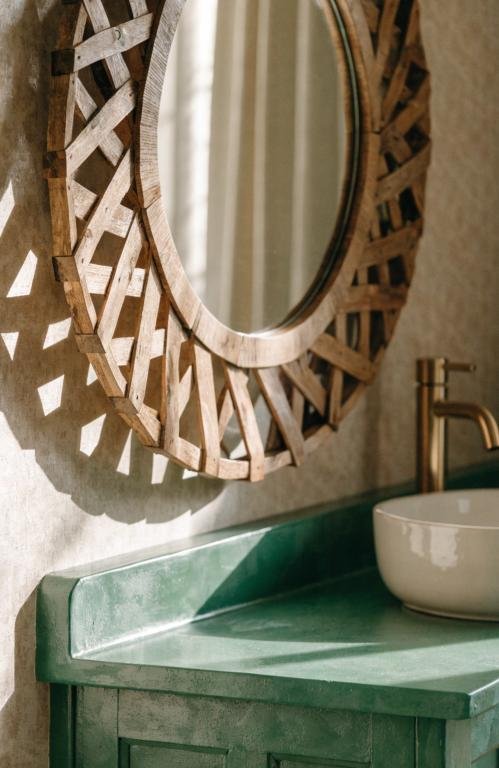
A round mirror with a woven rattan or wood frame runs $60 to $130 depending on size.
It works because it adds natural texture right at the room’s main focal point, tying the whole nature theme together at the spot people actually spend the most time looking.
26. Include a Small Diffuser with an Earthy Scent
A cedar-scented diffuser reinforced the nature theme in a sense beyond sight, and it’s a detail guests always mention when they use the bathroom.
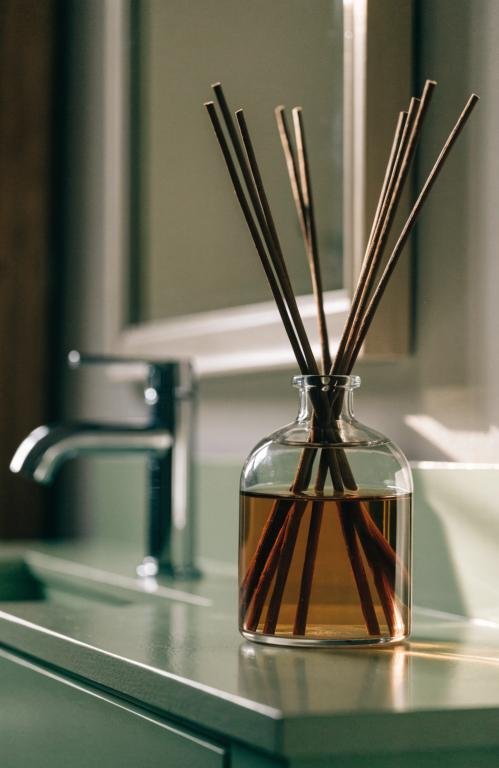
A reed diffuser in an earthy scent like cedar, eucalyptus, or moss runs $15 to $30 and typically lasts two to three months.
It works because scent is the sensory layer most bathroom styling skips, and an earthy fragrance reinforces the nature-inspired theme beyond just what’s visible.
Conclusion
If you’re nervous about committing, start with the vanity in green and add one or two humidity-loving plants, both are low-risk, reversible changes that give you a real sense of the look before going further. Add brass or black hardware next to warm up or ground the palette, then finish with textiles and a botanical shower curtain once you know the color works for the room. A green bathroom doesn’t need every surface covered to feel nature-inspired, sometimes one bold wall and a healthy plant collection carries the whole theme.
FAQ
What shade of green works best in a small bathroom?
Both deep forest green and softer sage work well in small spaces, deep tones create a cocooning effect while lighter sage keeps the room feeling more open.
What plants actually survive in a bathroom?
Pothos, Boston ferns, and snake plants all tolerate bathroom humidity and lower light well, making them more reliable choices than most standard houseplants.
What metal finish pairs best with a green bathroom?
Brushed brass warms up green tones and reinforces the natural, earthy feel, while matte black offers a sharper, more grounded contrast if you prefer that look instead.