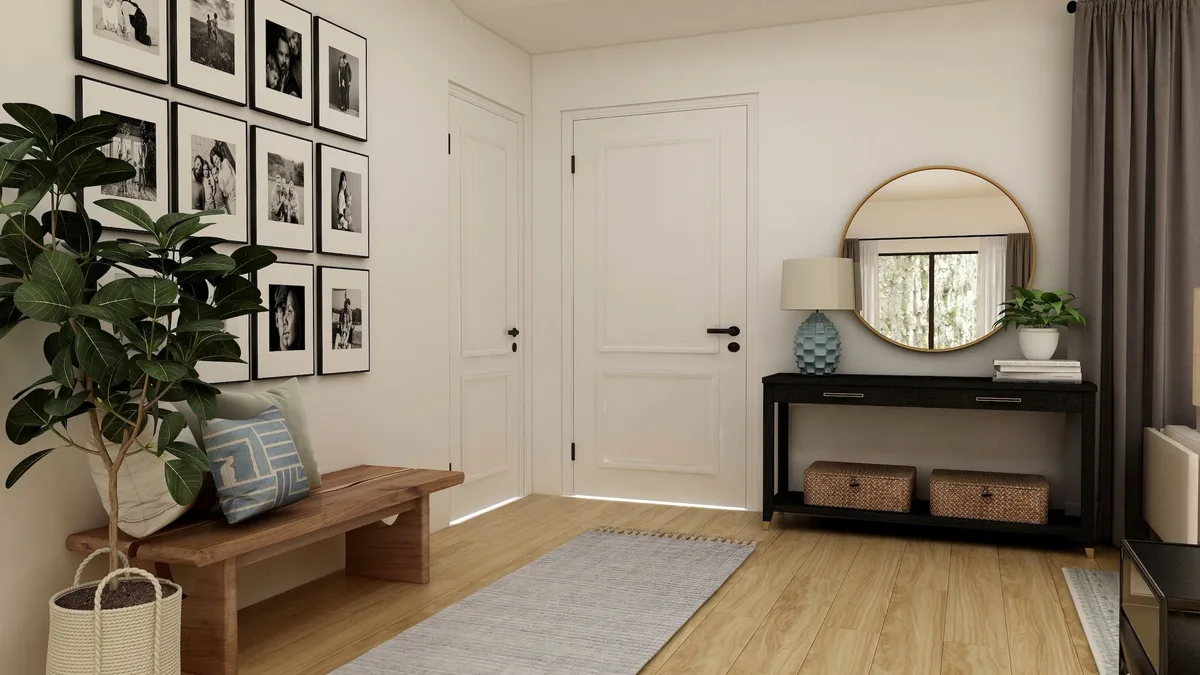
Your entryway is the first thing you see when you walk in and the last thing you see when you leave. When it is a mess, the whole house feels off. These entryway organization ideas for small spaces fix that, even if your entryway is just a patch of wall next to the front door.
Small and awkward spaces need smart thinking, not big furniture. A narrow hall, a corner with a weird angle, a door that opens straight into the living room. All of them can work with the right pieces. Most of these ideas cost under 40 dollars and take an afternoon at most.
You will find 21 ideas here, from five minute fixes to small weekend builds. Every one is made for tight square footage, and several use things you already own. Once the clutter has a home, you can dress the space up with entryway table decor ideas that make it feel finished.
Quick Picks for a Tidy Small Entryway
Short on time? Start here. Any one of these brings order in minutes.
- Best for tiny walls: A wall mounted hook rail. Coats, bags, and leashes all hang in one slim strip.
- Best for shoe chaos: A tilt out shoe cabinet. It holds a surprising number of pairs and looks like a console table.
- Best for renters: An over the door pocket organizer. No holes, no tools, instant storage.
- Best for families: Kid height backpack hooks. Little ones can hang their own bags and actually will.
- Best for corners: A corner storage bench. It turns dead space into seating plus hidden storage.
- Best for keys and mail: A wall mounted mail sorter with a key strip. The two things you lose most, finally in one spot.
Why Entryway Organization Matters in Small Spaces
A small entryway has no room for error. In a big foyer, a pile of shoes is a minor eyesore. In a four foot wide hall, that same pile blocks the path and trips everyone who walks in. Every item needs a home or the whole space stops working.
The good news is that small spaces reward simple systems. One hook rail, one tray, one bench, and suddenly the chaos has edges. You do not need a full mudroom, just a few smart pieces that fit the space you actually have.
1. Wall Mounted Hook Rail
A hook rail is the hardest working piece in a small entryway. One slim board holds coats, bags, hats, and leashes without taking a single inch of floor space. Look for a rail with four to six sturdy hooks.
Mount it about 60 inches from the floor, and add a lower rail for kids if you need one. A basic wood rail runs 15 to 30 dollars and installs in minutes.
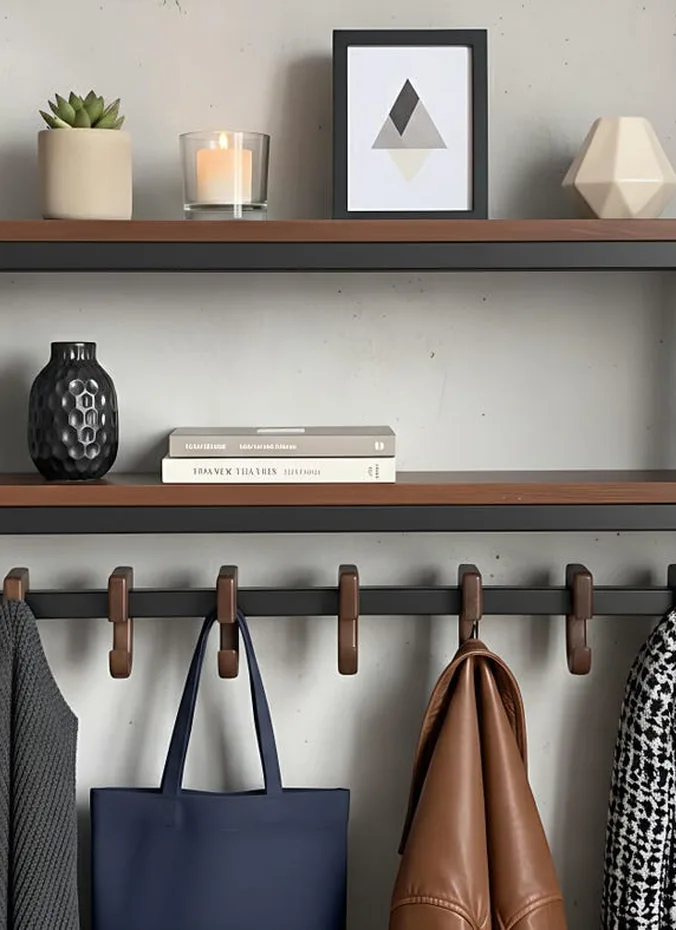
Leave one hook empty for guests. An empty hook looks inviting, while a packed rail just looks crowded.
2. Slim Console Table With Baskets
A console table no deeper than 12 inches fits hallways that feel too narrow for furniture. The top becomes a landing spot for keys and mail, and the space underneath holds baskets for shoes or scarves. Leave at least 36 inches of walking room.
Slide two low baskets underneath, one per person or one per category. Slim tables run 40 to 80 dollars new, and thrift stores often have them cheaper.
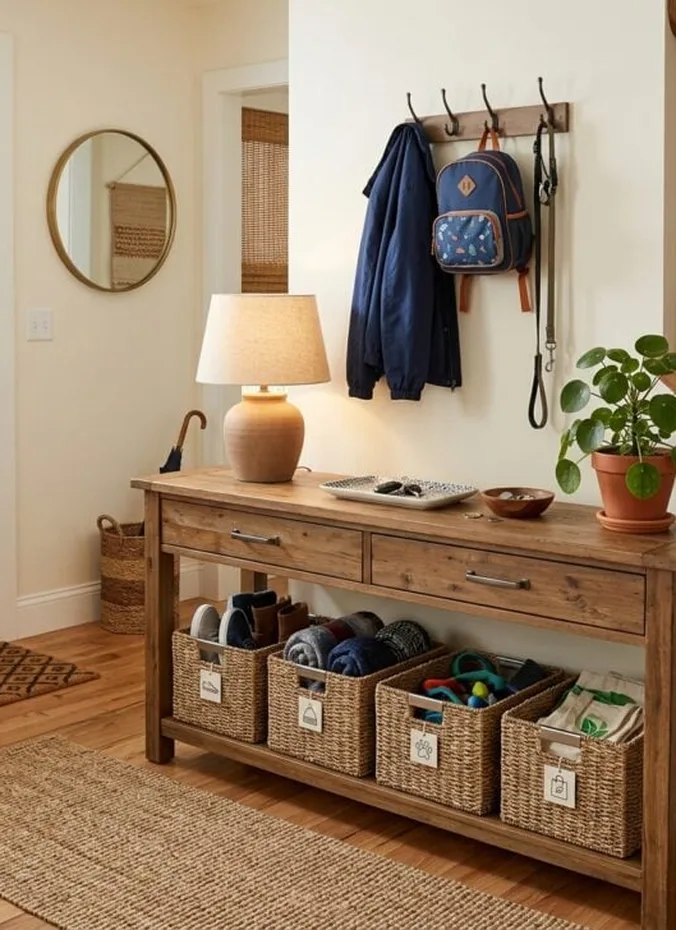
Keep the tabletop nearly clear. A small tray for keys and one pretty object is plenty.
3. Over The Door Pocket Organizer
Renters, this one is for you. An over the door pocket organizer hangs on any standard door in seconds with no tools and no holes. The pockets hold sunglasses, sunscreen, reusable bags, and gloves.
Hang it inside a coat closet door or on the back of the front door itself. They cost 10 to 20 dollars and work instantly.
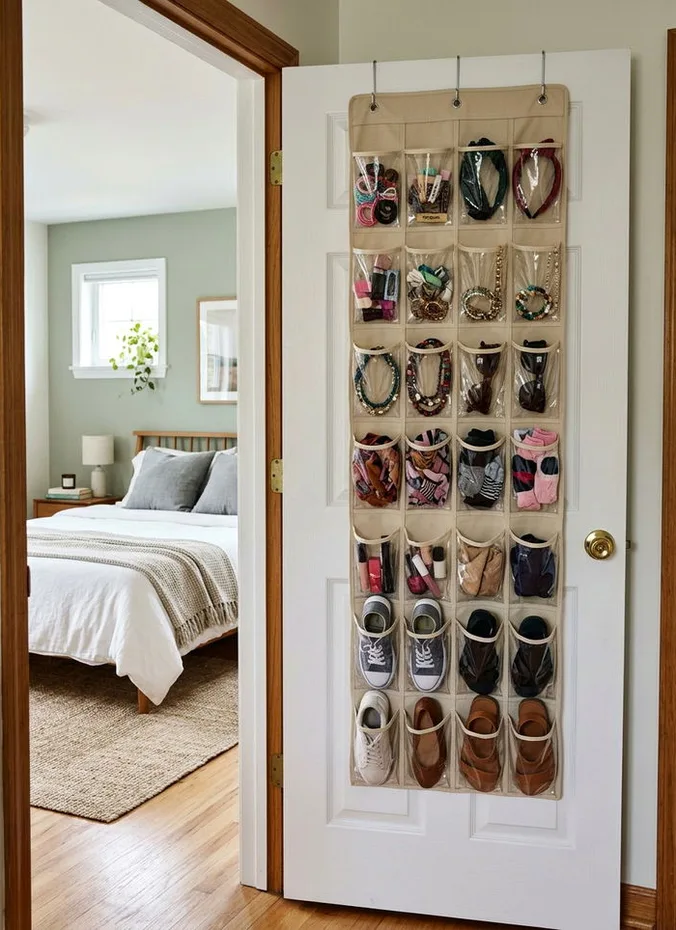
Assign each pocket a job so things stop migrating. Top row for sunglasses, middle for small essentials, bottom for the dog bags.
4. Floating Shelf With Hooks
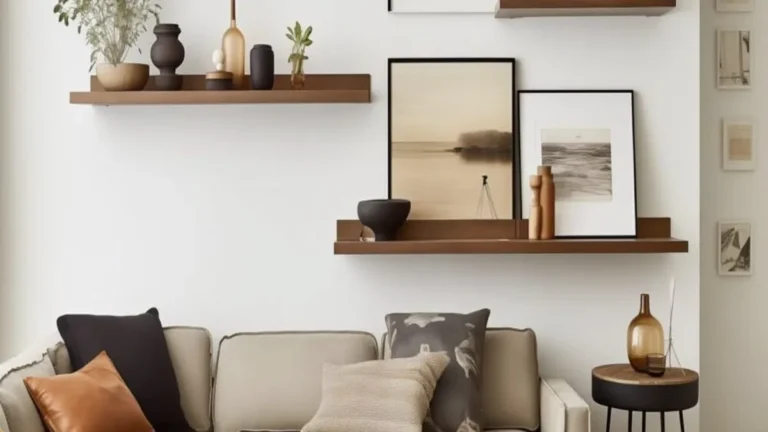
A floating shelf with hooks underneath does two jobs at once. The shelf holds a plant or a sunglasses tray, and the hooks below hold keys and tote bags. Zero floor space used, which is exactly what a tight entryway needs.
Mount it near the door at chest height so you can drop things the second you walk in. Pre made combos run 20 to 35 dollars.
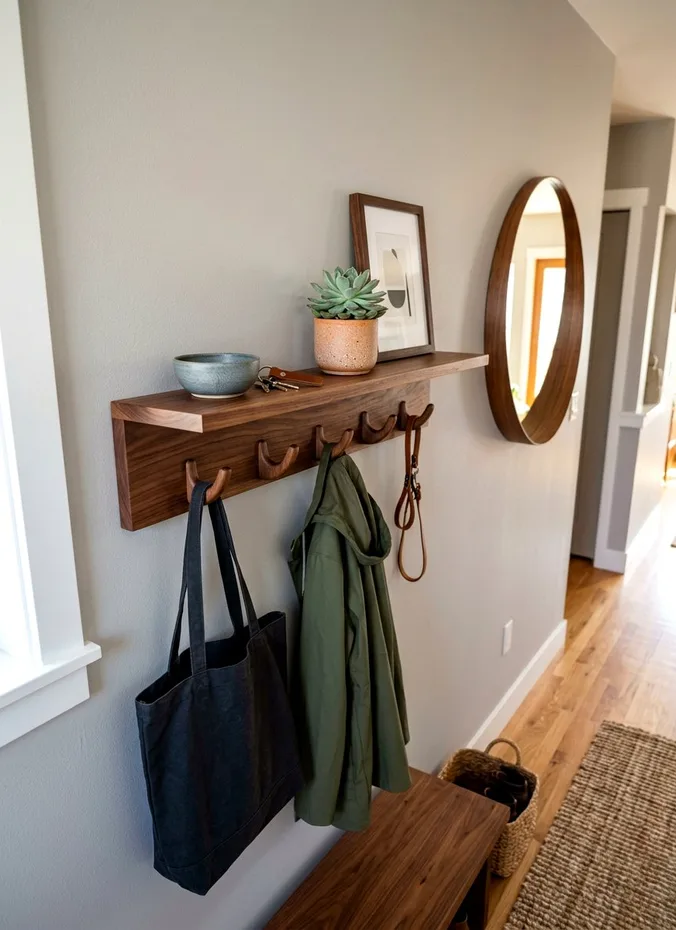
Do not overload it. If the shelf bows or the hooks strain, you have put too much on it.
5. Corner Storage Bench
Corners are the most wasted space in small entryways. A corner bench turns that dead triangle into a seat for putting on shoes plus hidden storage inside. Use a triangular bench made for corners, or turn a square bench at an angle.
Keep one bin inside per family member, and rotate the contents by season. Corner benches run 50 to 100 dollars, one of the bigger buys on this list.
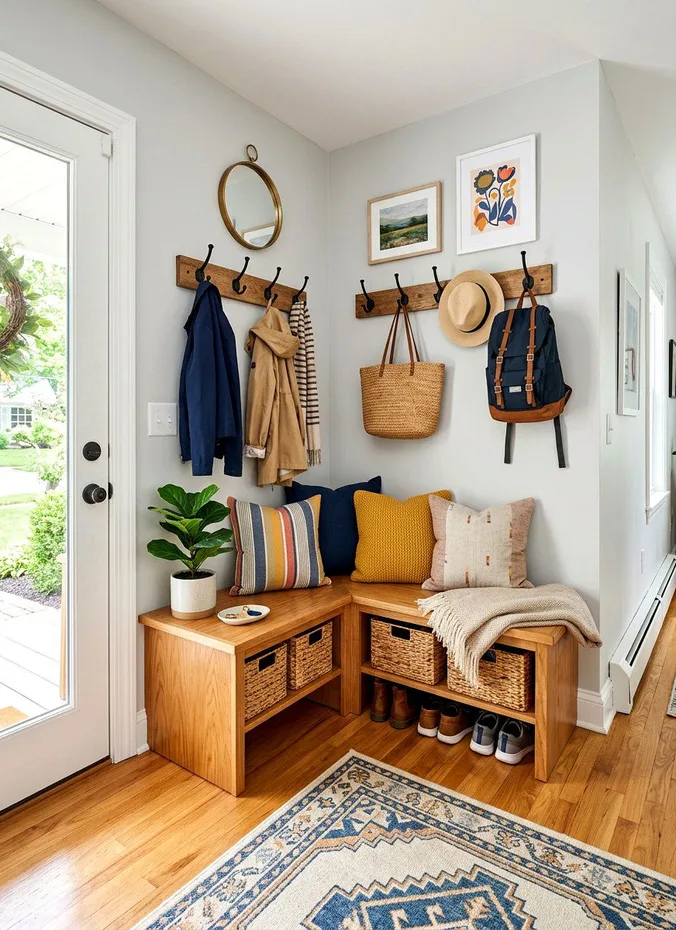
Add a cushion on top. If nobody wants to sit on a hard bench, the seating goes unused.
6. Magnetic Key Holder Strip
Lost keys waste more morning minutes than almost anything else. A magnetic strip by the door ends the search for good. Mount it, stick a small magnet on each key ring, and keys snap into place.
Put the strip at eye level next to the door you use most. It costs 10 to 15 dollars and installs in ten minutes.
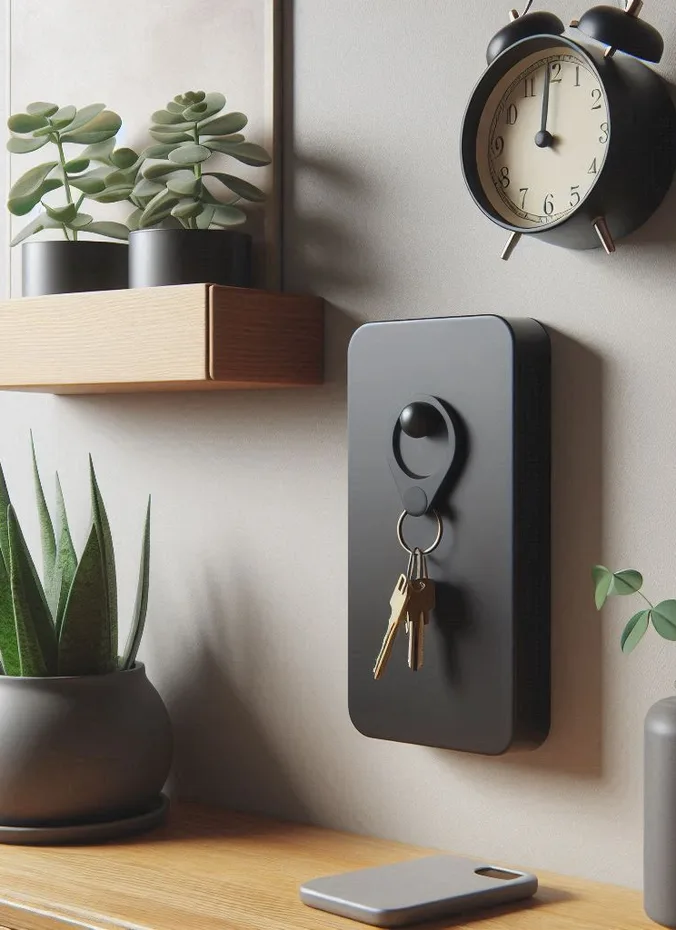
Make it a house rule that keys live on the strip, no exceptions. The system only works if everyone uses it every time.
7. Tilt Out Shoe Cabinet
A tilt out shoe cabinet looks like a slim console table but hides rows of shoes behind tilt down doors. Most are only 10 inches deep, so they fit narrow halls easily.
Count your everyday shoes before you buy. A two tier cabinet holds 6 to 8 pairs, a three tier holds 12 or more. Prices run 60 to 120 dollars.
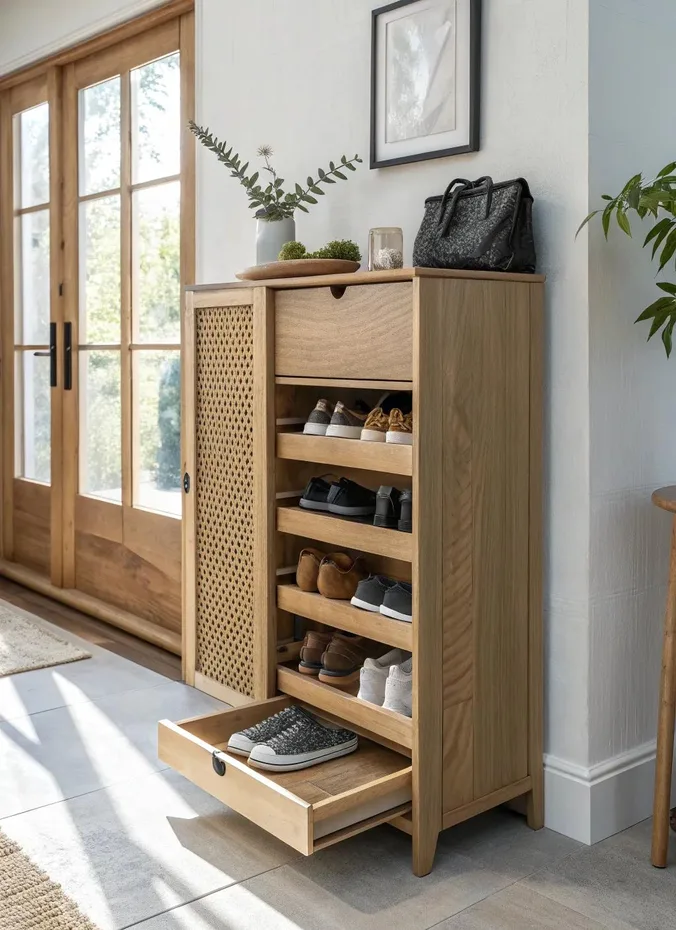
Keep only current season shoes inside. Out of season pairs belong in a closet or under the bed.
8. Rolling Cart Drop Zone
A three tier rolling cart makes a brilliant entryway station. Top tier for keys and sunglasses, middle for mail, bottom for bags or shoes. When guests come, roll the whole thing into a closet.
The slim ones are about 12 inches wide and tuck beside a door without blocking the path. Carts run 25 to 45 dollars. Add small bins on each tier to keep things from sliding.
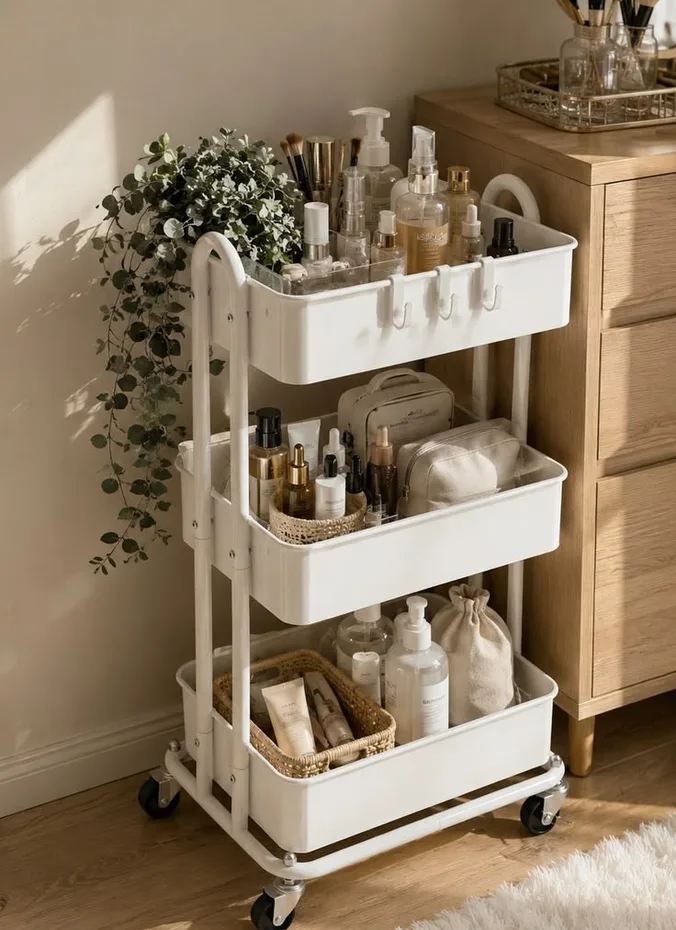
Lock the wheels once you find its spot, or the cart will slowly migrate across the room.
9. Pegboard Command Wall
A pegboard turns a blank wall into fully custom storage. Hooks, small shelves, and baskets all hang from one board, and you can rearrange them whenever needs change. Perfect for awkward walls too narrow for furniture.
A two by three foot board covers most entryway needs. Paint it to match your wall or make it a bold feature. Boards run 15 to 25 dollars plus a few dollars for hooks.
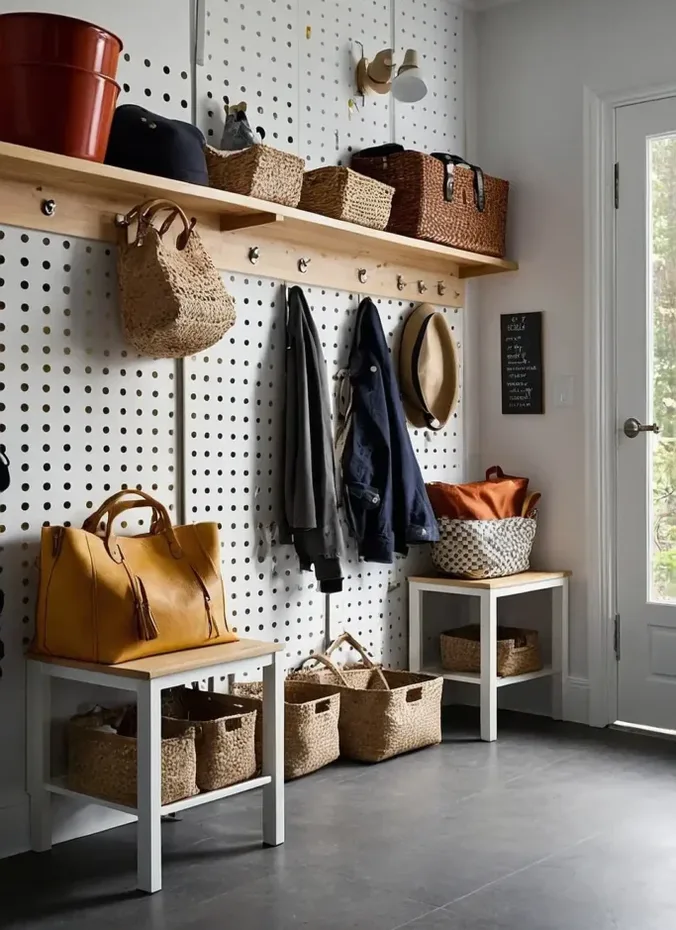
Trace around your most used items before hanging hooks, so everything has an outline to return to.
10. Narrow Bookcase Turned Locker
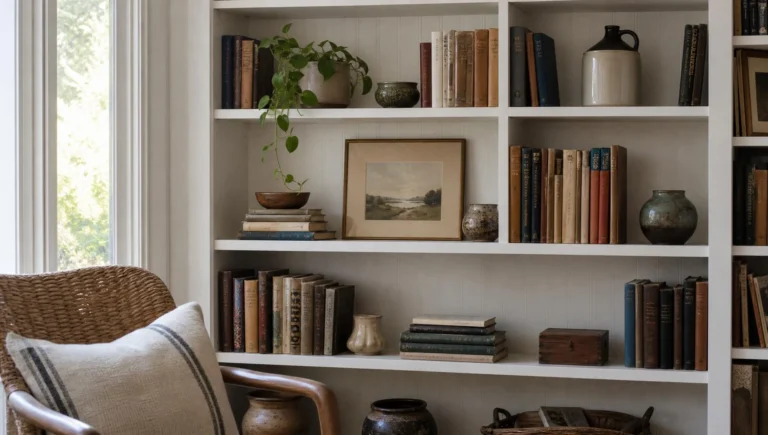
A narrow bookcase about 12 inches deep becomes a locker station with a few tweaks. Add a tension rod across one shelf for hanging, slide bins onto the others, and screw hooks to the sides. Each shelf becomes one persons zone.
Look for bookcases 24 to 30 inches wide. A basic one costs 30 to 60 dollars, and bins add about 15 more.
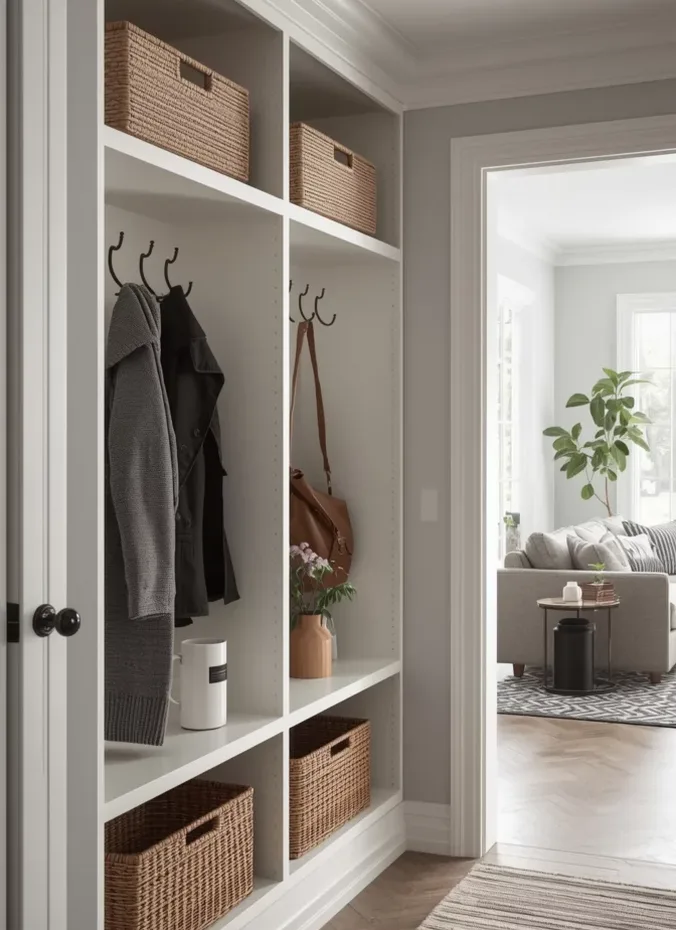
Anchor it to the wall, especially if kids will use it. A loaded bookcase tips easily.
11. Inside The Closet Door Storage
The inside of a closet door is free real estate most people ignore. Stick on hooks, a small mirror, or a hanging organizer and you gain a whole extra layer of storage.
Adhesive hooks hold hats and scarves, while a hanging shoe file keeps small items visible. Total cost is usually under 15 dollars.
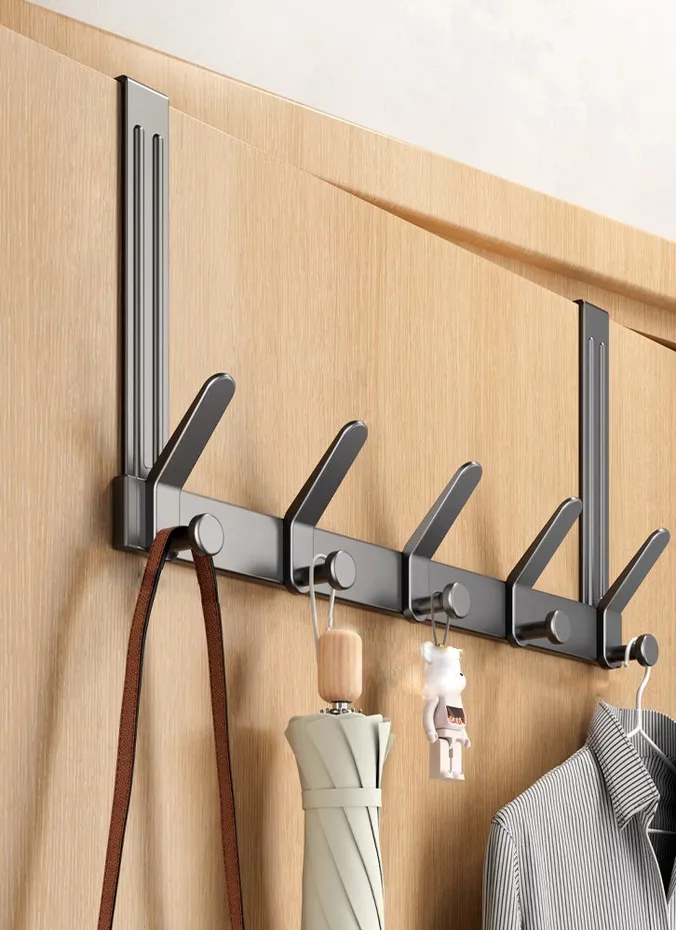
Keep it light. A door weighed down with heavy bags will not close properly and strains the hinges.
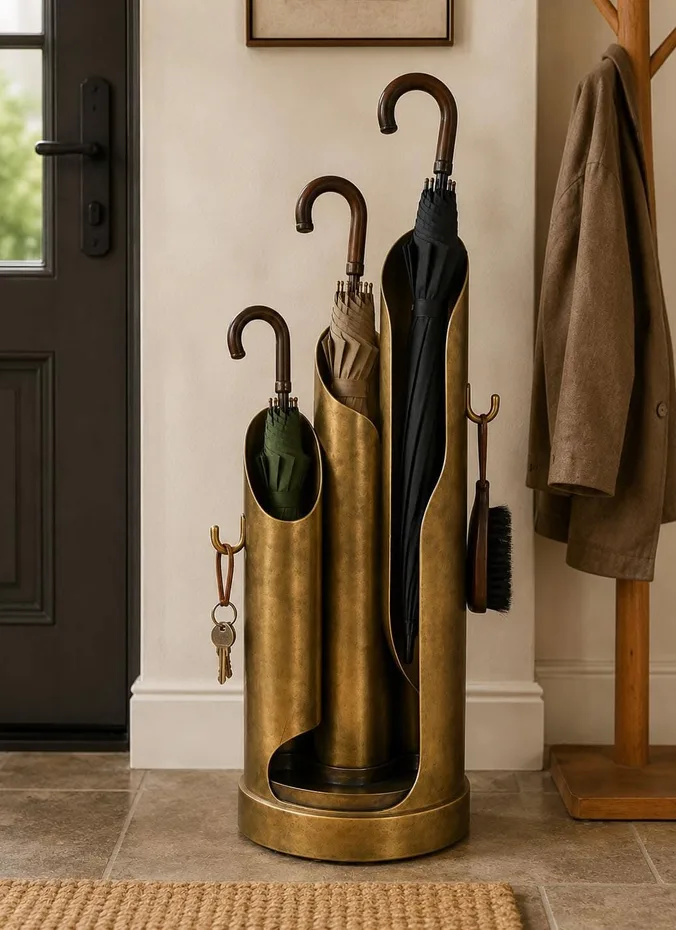
12. Tall Slim Umbrella Stand
Umbrellas end up in corners, behind doors, and under tables. A tall slim stand gives them one proper home. Choose one no wider than 10 inches so it slides into the gap beside a door.
Pick a stand with a drip tray or waterproof base, since wet umbrellas ruin floors. They run 20 to 40 dollars and also hold walking sticks and reusable bags.
Rinse the drip tray weekly. Mud and water build up fast, and a dirty tray defeats the purpose.
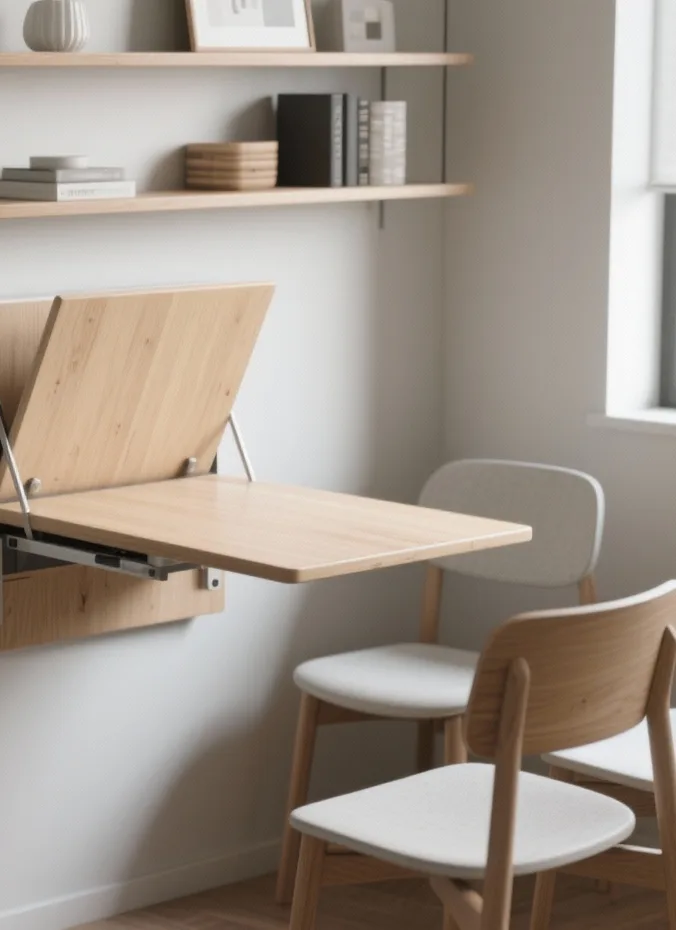
13. Fold Down Wall Table
A fold down wall table is a drop zone that disappears. Fold it up for a shelf for keys and mail, fold it flat when you need the wall clear for a stroller or a crowd. Ideal for entryways that double as hallways.
Mount it at counter height, about 36 inches. Most support 20 to 30 pounds, plenty for everyday items. They run 30 to 60 dollars.
Test the latch before you load it up. A table that will not stay flat is worse than no table at all.
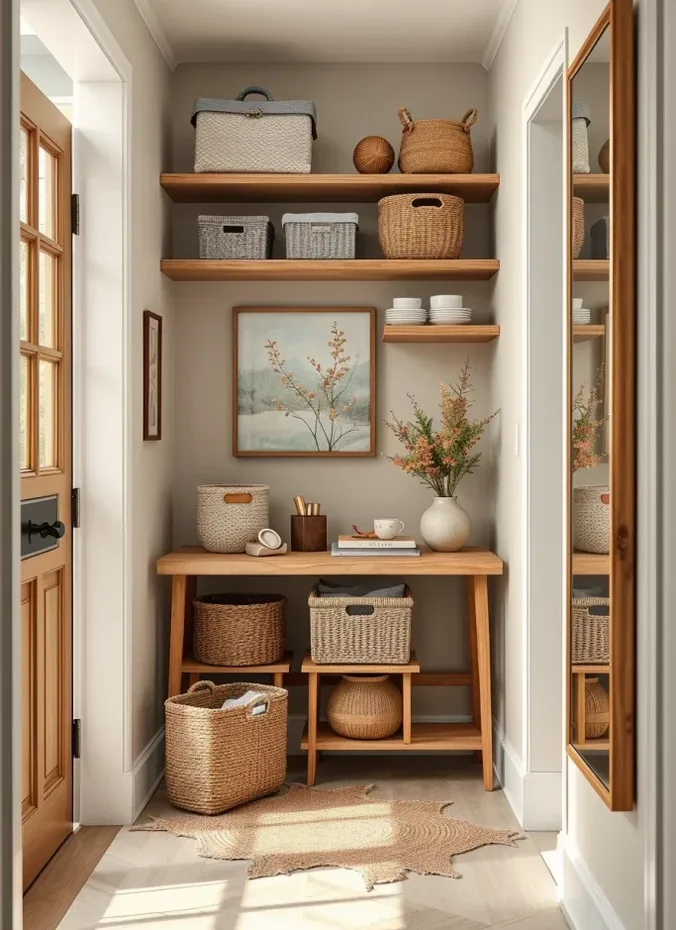
14. Baskets Above The Door Frame
The space above a door frame is almost always empty, and it suits things you need rarely. Mount a deep shelf up there for out of season gear or the air mattress you use twice a year.
Use lidded baskets so contents do not collect dust, and label the front of each one. A shelf plus two baskets runs about 30 dollars.
Keep a small step stool nearby, or this becomes storage you never actually use.
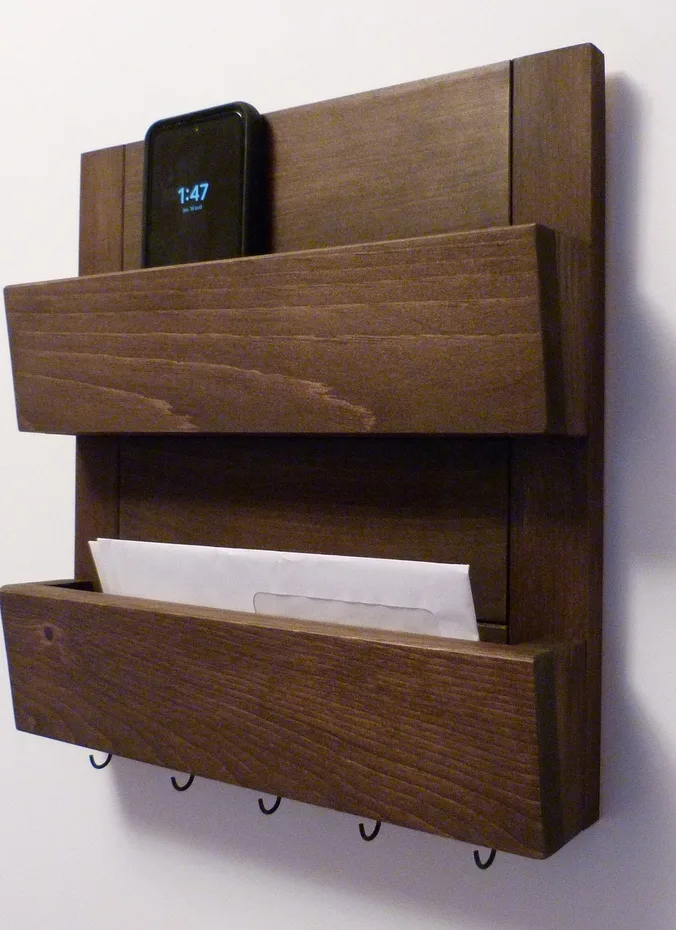
15. Wall Mounted Mail Sorter
Mail piles make an entryway look chaotic fast. A wall mounted sorter with a slot per person, plus one for bills, keeps paper under control. Mount it by the door so mail goes straight in.
Sort the moment you walk in and toss junk mail into recycling immediately. A five minute weekly clear out stops overflow. Sorters run 20 to 40 dollars.
Go paperless where you can. Every bill you move online is one less paper fighting for space.
16. Kid Height Backpack Hooks
Kids will never use an adult height hook. Mount a row at their shoulder height and suddenly they can hang their own backpacks. It ends the trail of bags across the floor.
Space hooks 12 inches apart so bulky bags do not crowd each other, and use hooks rated for at least 15 pounds. Four good hooks cost 10 to 20 dollars.
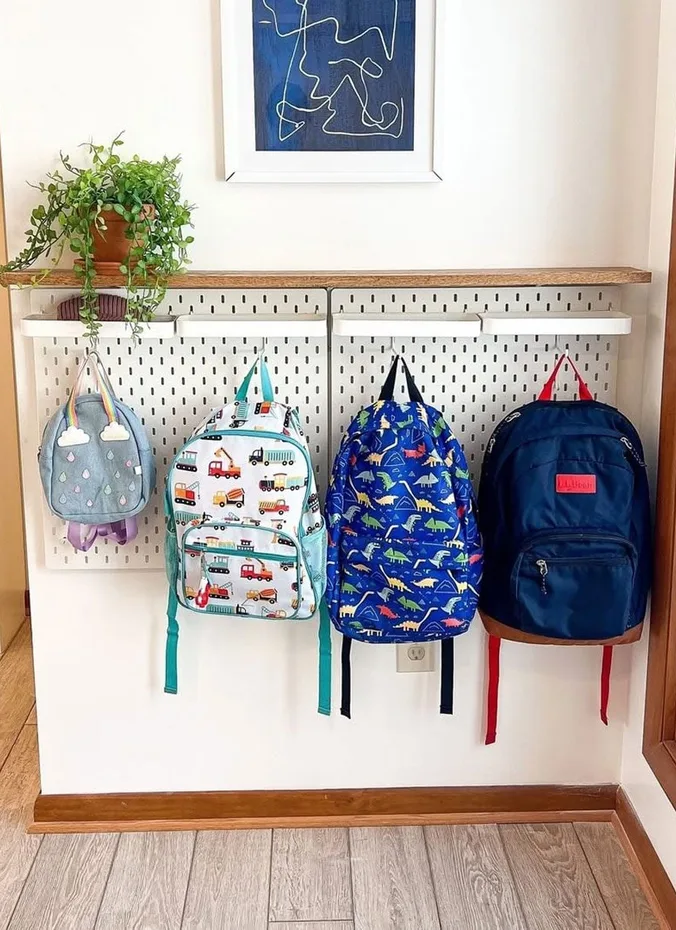
Add a small bin underneath for shoes. When the whole after school routine has one spot, mornings get calmer too.
17. Mirror Cabinet With Hidden Storage
A mirror cabinet gives you a last check before you leave plus secret storage behind the glass. Keys, sunglasses, and wallets hide inside, and the mirror makes a small entryway feel twice as big.
Shallow cabinets stick out only 4 to 5 inches, so they suit narrow halls. They run 40 to 90 dollars depending on size.
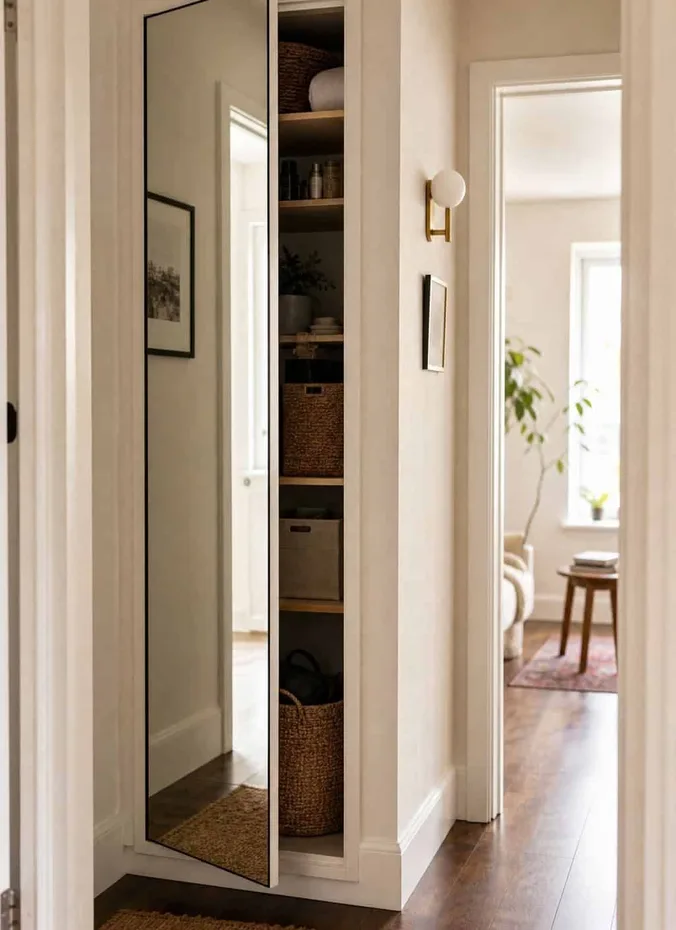
Use small trays inside so tiny items do not slide into a jumble. A cheap set of drawer organizers does the job.
18. Boot Tray By The Door
A boot tray is the simplest idea here and one of the most effective. Set it right inside the door and wet shoes have a home that protects your floors. No more puddles creeping across the hardwood.
Choose a tray with a raised edge and ridged bottom so water stays put. A 30 inch tray fits three to four pairs and costs 15 to 30 dollars.
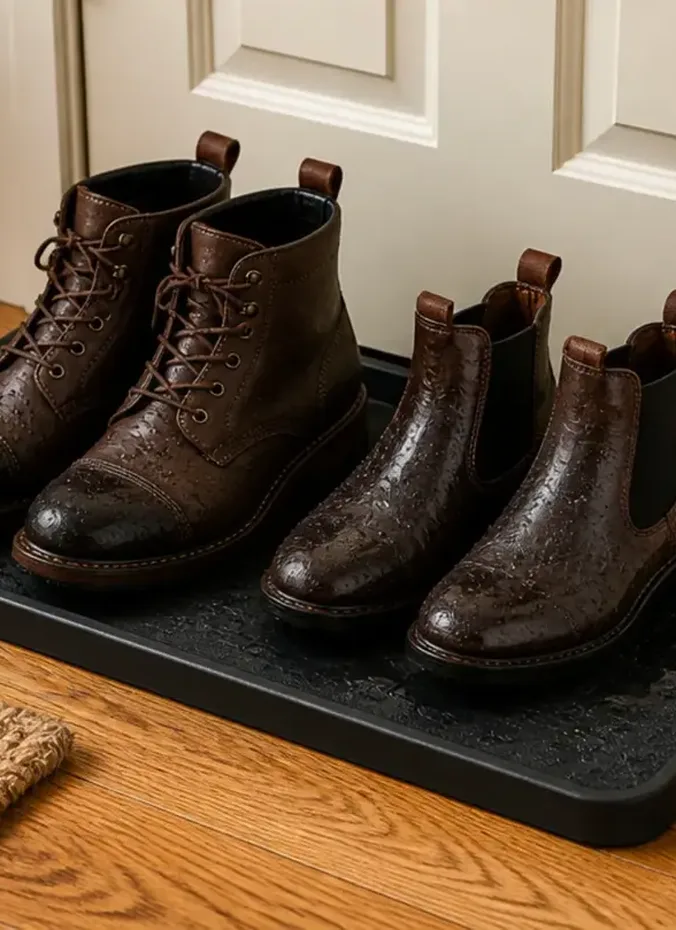
Rinse it out every week or two. Mud and road salt build up fast.
19. Coat Tree For The Corner
A freestanding coat tree claims a corner without a single screw in the wall. It holds coats, hats, and bags on tiered hooks, and you can move it whenever the layout changes. Great for renters.
Pick one with a heavy base so it does not wobble under winter coat weight. They run 30 to 60 dollars. Place it where the door swing will not knock it over.
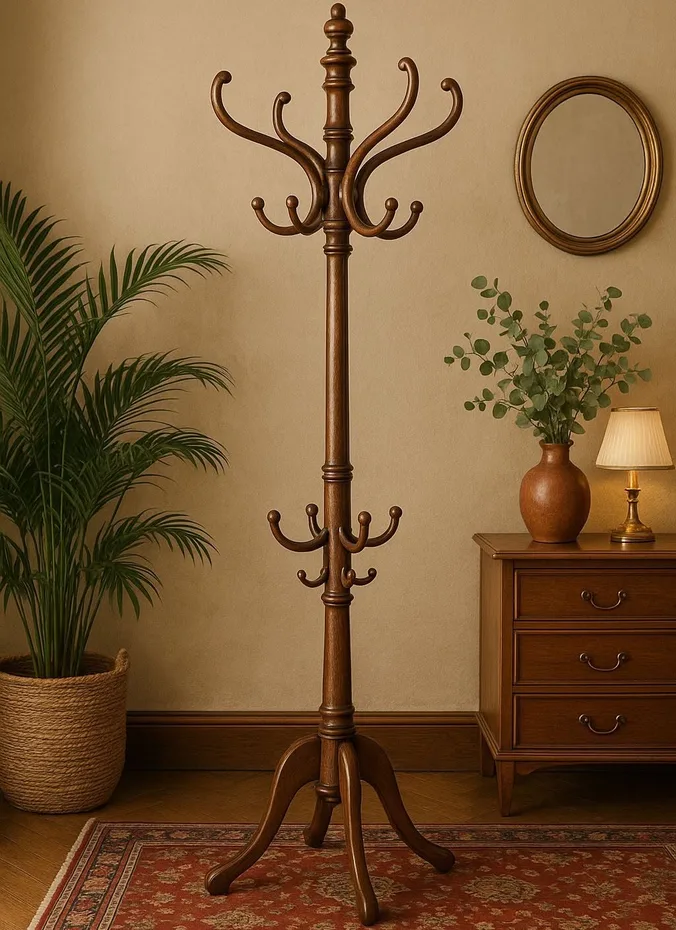
Do not let it become a floordrobe. If a coat has not been worn in two weeks, it belongs in a closet.
20. Shoe Bins Under The Bench
The space under a bench is prime shoe storage going to waste in most entryways. Slide low open bins underneath, one per person, and shoes finally have a boundary. Open bins beat lidded ones since nobody bothers with lids at the door.
Measure the clearance first. Most benches fit bins 6 to 8 inches tall, running 8 to 15 dollars each.
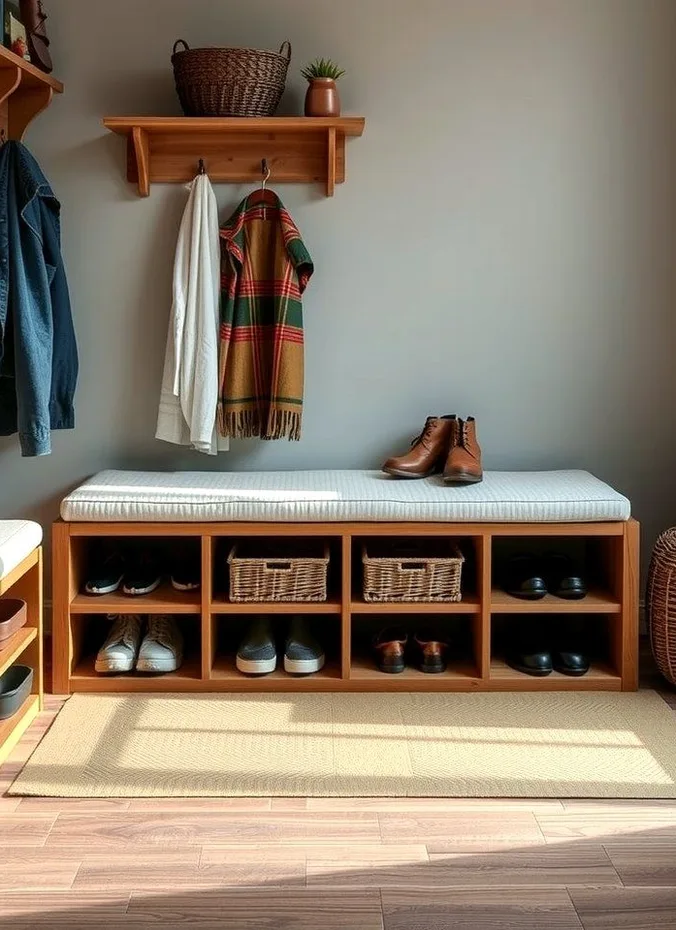
Enforce one bin per person. When a bin overflows, out of season shoes need to move elsewhere.
21. Chalkboard Command Center
A chalkboard by the door becomes mission control. Shopping lists, reminders, and the weeks calendar all live in one visible spot. Check it on your way out and nothing gets forgotten.
Pair it with a small ledge for chalk and pens. A two by three foot framed board runs 15 to 30 dollars and looks intentional.
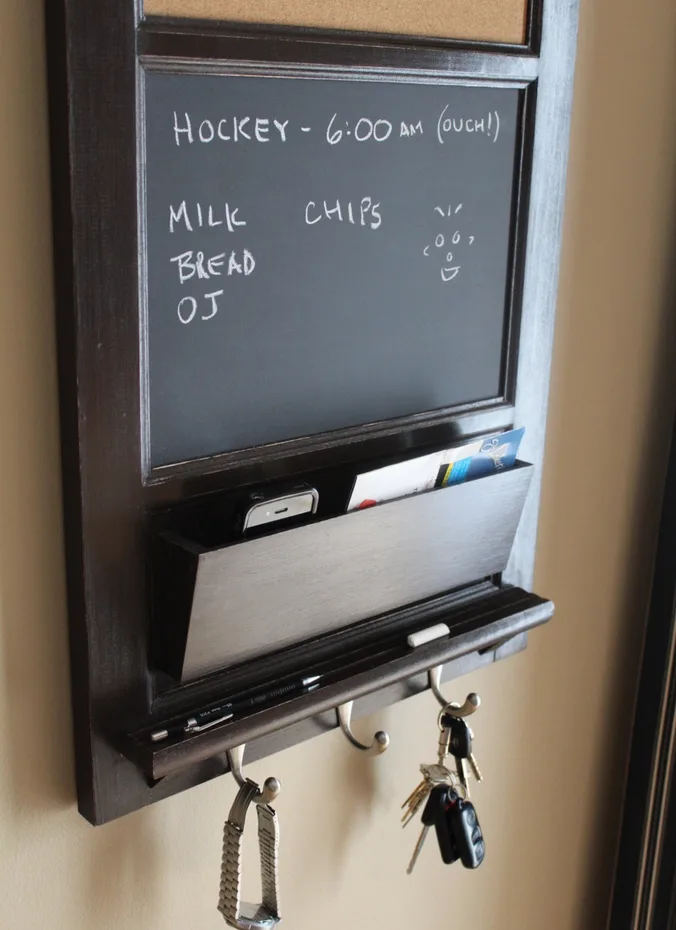
Erase and refresh it every Sunday. A board covered in three month old notes stops commanding anything.
How to Organize Your Entryway on a Budget
A tidy entryway does not need a big budget:
- Start with hooks: A 15 dollar hook rail solves more clutter than almost anything else. Hang coats and bags first, then see what is left.
- Use dollar store bins: Fabric bins, small trays, and adhesive hooks cost a dollar or two and do the same job as fancy versions.
- Shop your house first: A bookshelf from the bedroom or baskets from the living room can move to the entryway. Buy new only after you have looked around.
- Think like small space pros: The tricks in small kitchen cabinet organization ideas translate perfectly to entryways. Vertical storage, zones, and strict limits work everywhere.
- Buy secondhand: Benches and console tables are plentiful at thrift stores. A coat of paint makes a ten dollar bench look brand new.
- Go vertical before you go wide: Wall storage costs less than floor furniture and fits spaces where nothing else will.
- Set a one in one out rule: Every new pair of shoes means an old one leaves. Free, and it stops clutter from growing back.
Common Mistakes to Avoid in a Small Entryway
Small spaces punish big mistakes. Steer clear of these traps:
- Buying furniture before measuring: That bench looks small in the store and huge in your hall. Measure the space and the door swing first.
- Storing out of season gear by the door: Winter coats in July eat space you need now. Rotate seasonally and store the rest elsewhere.
- No landing spot for keys: Without one dedicated spot, keys end up in coat pockets and couch cushions. A tray or magnetic strip ends the daily hunt.
- Blocking the door swing: Furniture that the door hits is furniture in the wrong place. Watch the full swing before you commit to a layout.
- Skipping the weekly reset: Even the best system drifts. Five minutes every Sunday putting strays back keeps the entryway working.
Frequently Asked Questions
What are the best entryway organization ideas for small spaces with no closet?
Go fully vertical. A hook rail for coats, a wall mounted mail sorter, a floating shelf for keys, and a tilt out shoe cabinet cover every category without a closet. A coat tree and rolling cart add storage that moves with you.
How do I organize a very narrow entryway hallway?
Keep the floor as clear as possible. Use wall mounted pieces that stick out 6 inches or less, like hook rails, magnetic key strips, and shallow shelves. A slim console table no deeper than 12 inches is the only furniture most narrow halls can handle.
How can renters organize an entryway without drilling holes?
Over the door organizers, freestanding coat trees, and rolling carts need no holes at all. Heavy duty adhesive hooks hold surprising weight on smooth walls and remove cleanly. A storage bench simply sits on the floor.
How do I keep my entryway organized with kids?
Lower everything to their level. Kid height hooks, low shoe bins, and one labeled cubby per child make tidying something they can actually do. Keep the system simple enough that a tired seven year old can follow it.
How often should I declutter my small entryway?
Do a five minute reset weekly and a real declutter each season. Pull everything out, toss what is broken, relocate strays, and rotate seasonal gear. Small spaces stay tidy only with regular attention.
Conclusion
A small entryway does not have to feel chaotic. With a hook rail, a tray for keys, and a home for shoes, the busiest corner of your house can run like clockwork. Start with the idea that solves your biggest pain point.
Most of these entryway organization ideas for small spaces cost less than a dinner out and take less than a weekend. The payoff is daily, every time you walk in to calm instead of clutter.
Pick your first project this week. Hang the hooks, set out the tray, slide the bins under the bench. Future you, rushing out the door on a busy morning, will be very grateful.