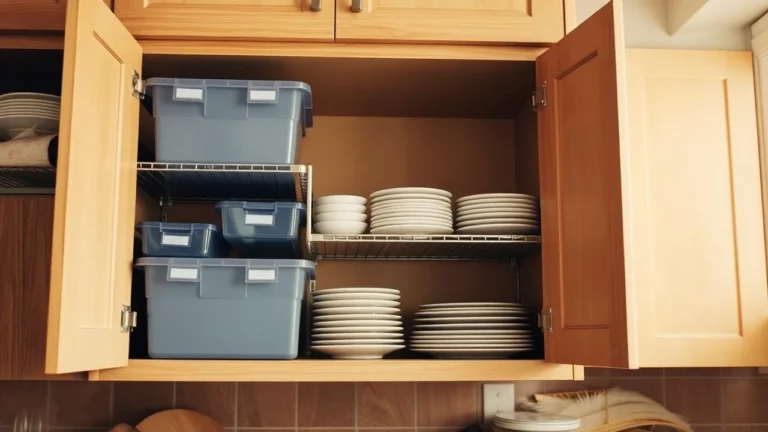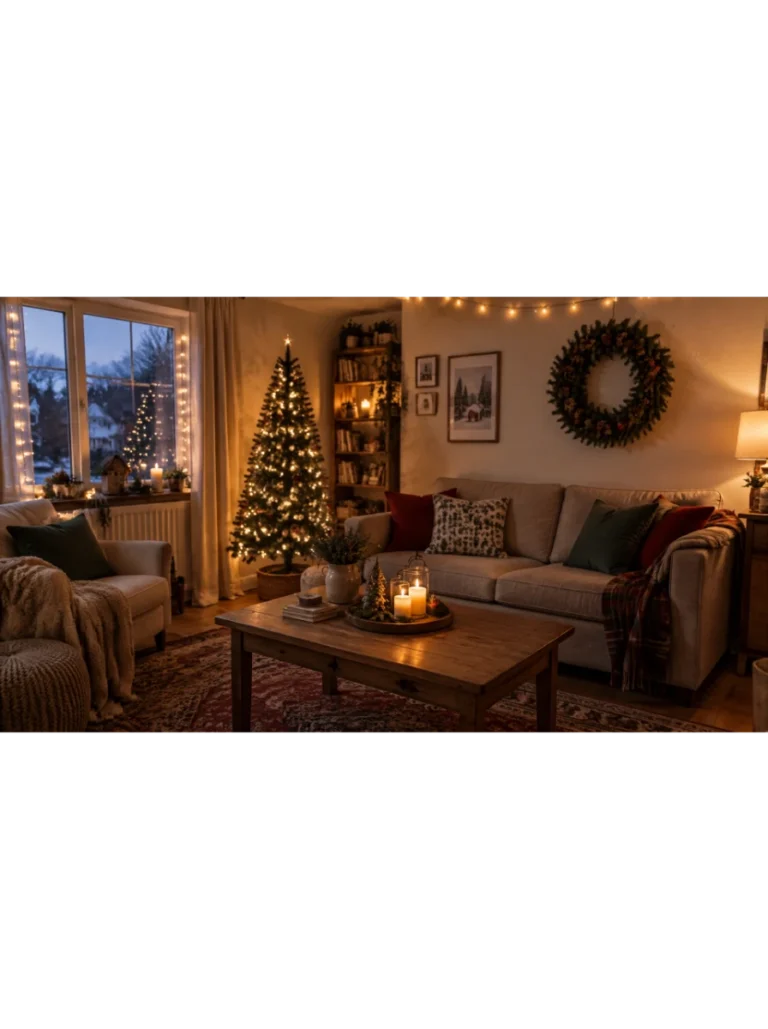

Every home has one of these, a corner too small for real furniture but too big to just leave alone. You finish decorating the whole room, feel done, and then that one empty corner keeps catching your eye like the room forgot to finish a sentence.
The trick isn’t finding something to shove into the gap, it’s picking the one thing that actually gives the corner a job. A plant, a chair, a shelf, even a sculpture on a small plinth, each idea below works because it gives that dead space an actual purpose instead of just filling it.
Quick Picks
- Fastest fix: One large-leaf plant in a solid pot
- Best for storage: A corner bookshelf or floating shelves
- Best for a window corner: A built-in or freestanding window seat
- Best statement move: A single bold accent chair
Did You Know? Designers note that corners aren’t always a problem to solve, sometimes the eye genuinely needs a break, and an empty corner can keep a busy room from feeling overcrowded. The goal isn’t to fill every corner, just the ones that feel glaringly empty rather than intentionally quiet.
Before You Start
- Decide if the corner needs filling at all. Some empty space is doing the room a favor by giving the eye somewhere to rest.
- Measure the actual footprint. A corner too small for a chair might be perfect for a plant stand or a slim shelf instead.
- Give the space one clear job. Storage, seating, or display, pick one rather than trying to cram in all three.
- Consider the natural light. A window corner opens up completely different options than a dark interior one.
- Match the scale to the room. An oversized piece can look intentional in a large room and cramped in a small one.
Furniture Solutions
1. A single statement accent chair
One bold chair does more for an empty corner than a small side table ever could.
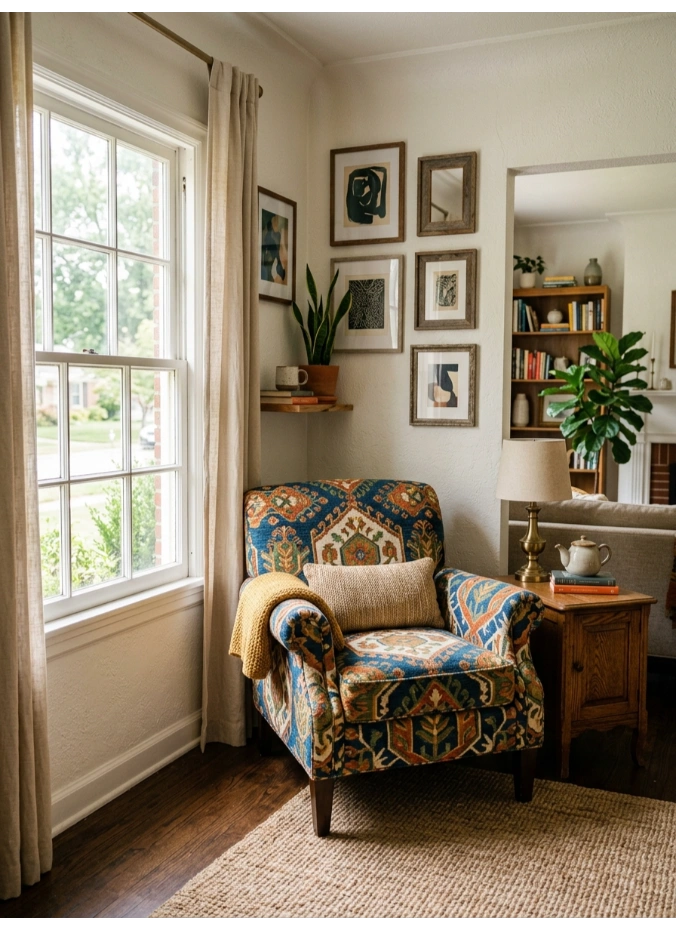
A single chair in a strong color, print, or unique shape gives an empty corner an obvious purpose, a spot to actually sit, while doubling as a piece of visual interest in the room.
This works especially well in a corner too small for a full seating group but large enough for one genuinely comfortable piece.
2. Nesting or corner accent tables
A functional piece that barely registers as furniture until you need it.
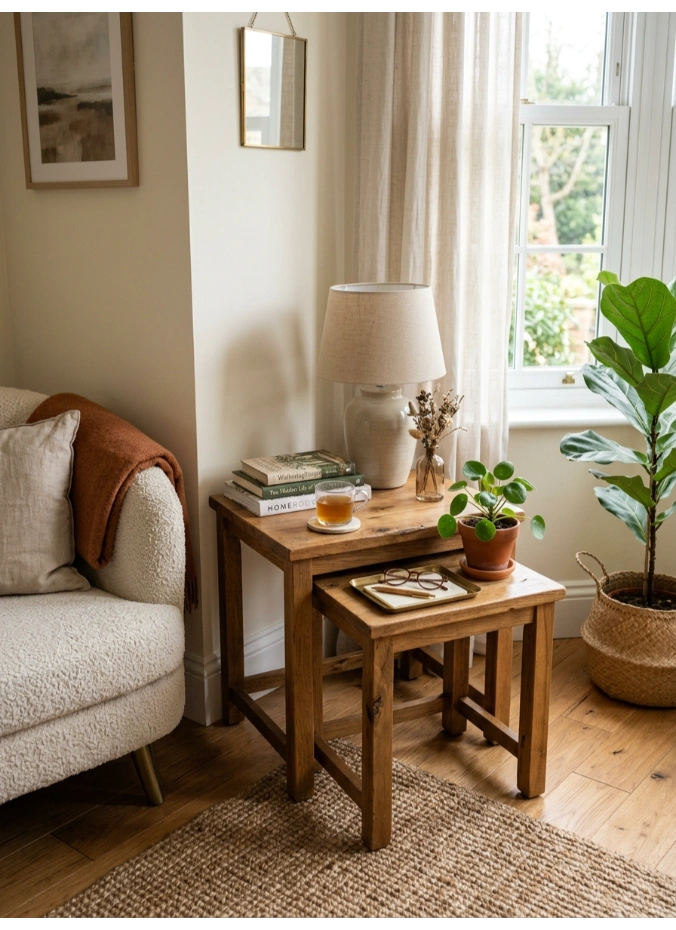
A small corner table, or a set of nesting tables that tuck together, gives the space a surface for a lamp or a drink without demanding much floor space at all.
This is one of the lowest-commitment ideas on this entire list, since the tables can shift elsewhere the moment your layout changes.
3. A repurposed vintage chair with real character
An unexpected piece with history does more than something bought purely to fill space.
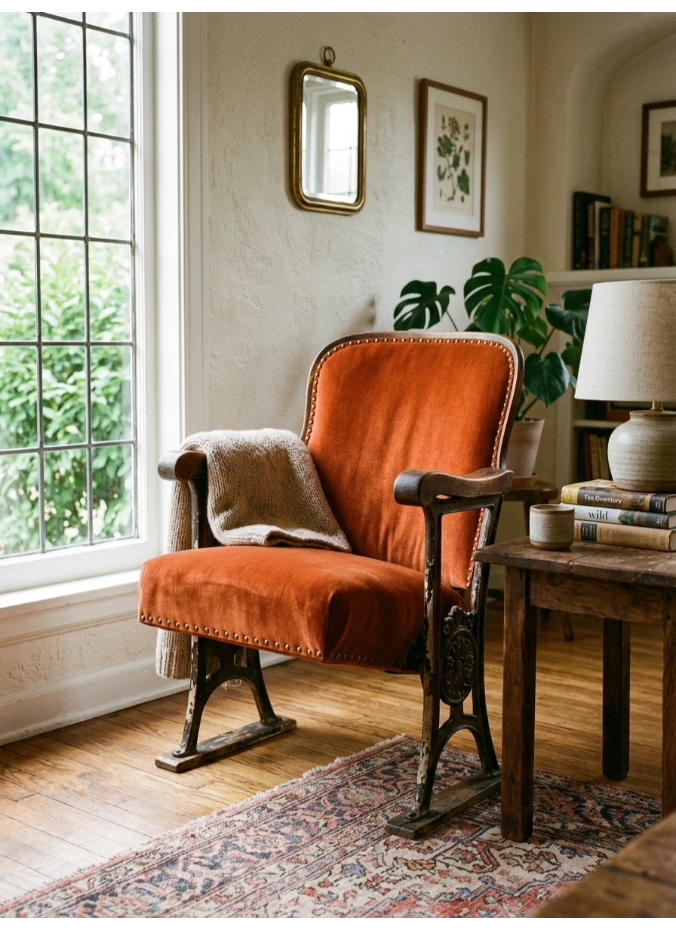
A thrifted or inherited chair, reupholstered in a fabric that fits the room, turns an empty corner into a genuine focal point with a story behind it.
This idea works particularly well if the rest of the room leans more neutral, since the chair can carry all the personality on its own.
4. A slim console table against the corner wall
Not every corner needs a piece angled into it, sometimes flat against the wall works better.
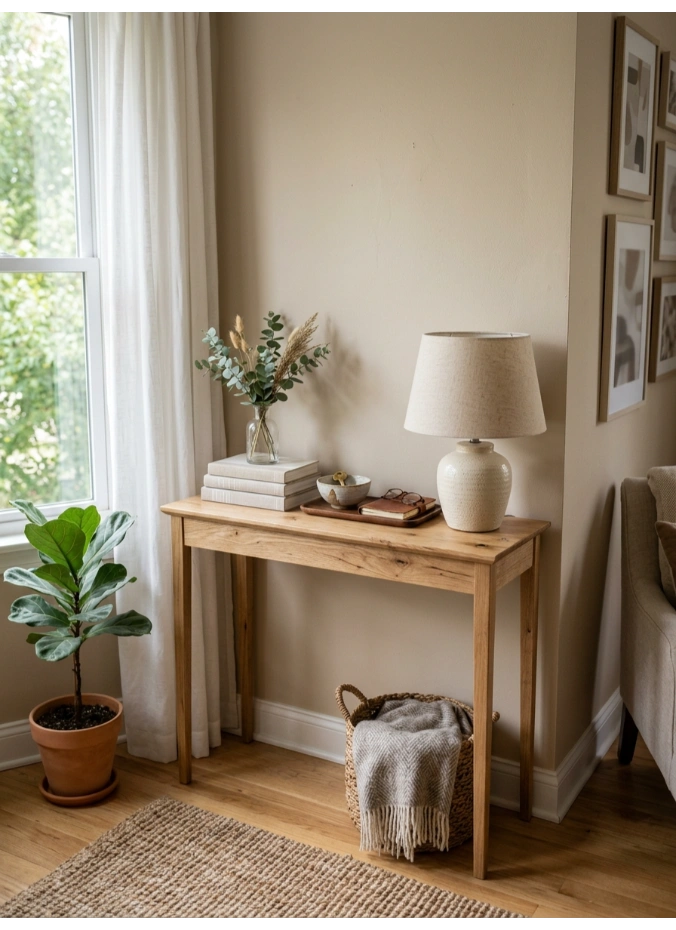
A narrow console pushed into the corner adds a genuine surface for lighting and display without eating into the walking space around it.
This is a strong pick for a corner near a doorway or walking path, where floor space needs to stay as open as possible.
Storage and Shelving
5. Floating corner shelves
This is one of the most repeated solutions for a reason, it adds real storage without adding bulk.
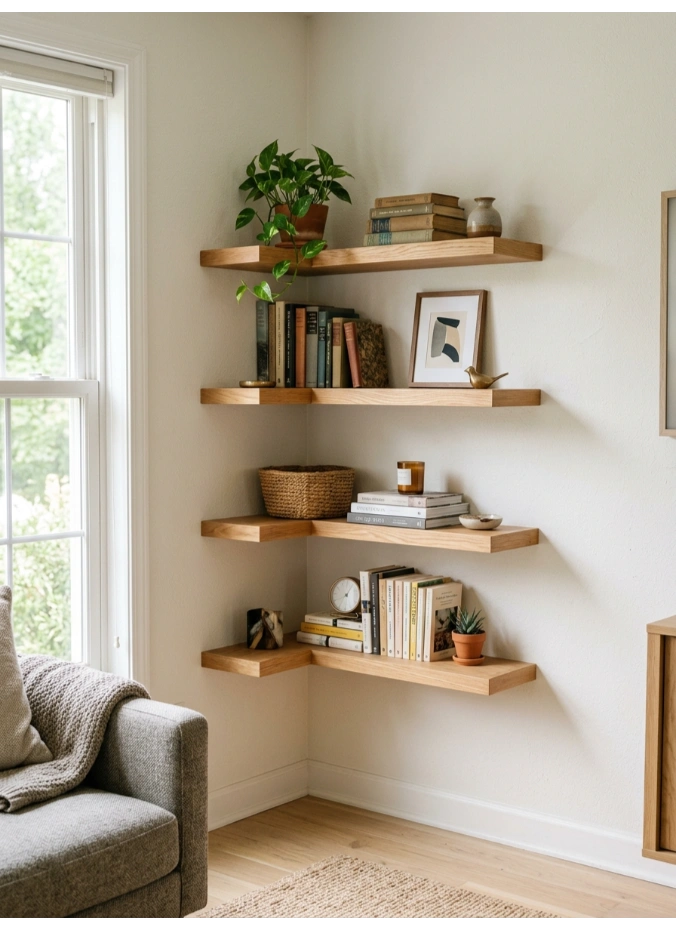
A set of floating shelves, mounted to follow the corner’s angle, uses vertical space that a floor piece never could, while keeping the actual floor completely clear.
This is especially useful in a protruding corner, where the wall itself juts slightly into the room and limits what furniture would even fit there.
6. A corner bookshelf as a reading nook anchor
Books fill a corner with genuine warmth, not just visual bulk.
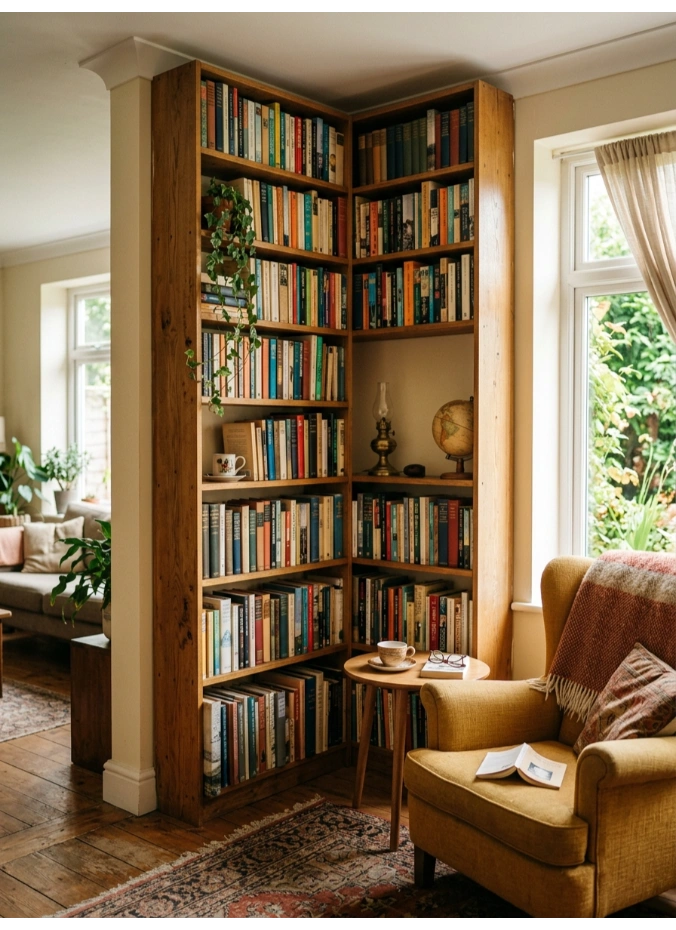
A tall, narrow bookshelf built to fit the corner’s shape turns dead space into genuine storage and display, especially when paired with the same styling restraint that makes any bookshelf read as decor rather than clutter.
This idea works especially well when the corner sits near a window or a reading chair, since the two naturally combine into one small nook.
7. A freestanding corner cabinet for display
An old-fashioned solution that’s genuinely making a comeback.
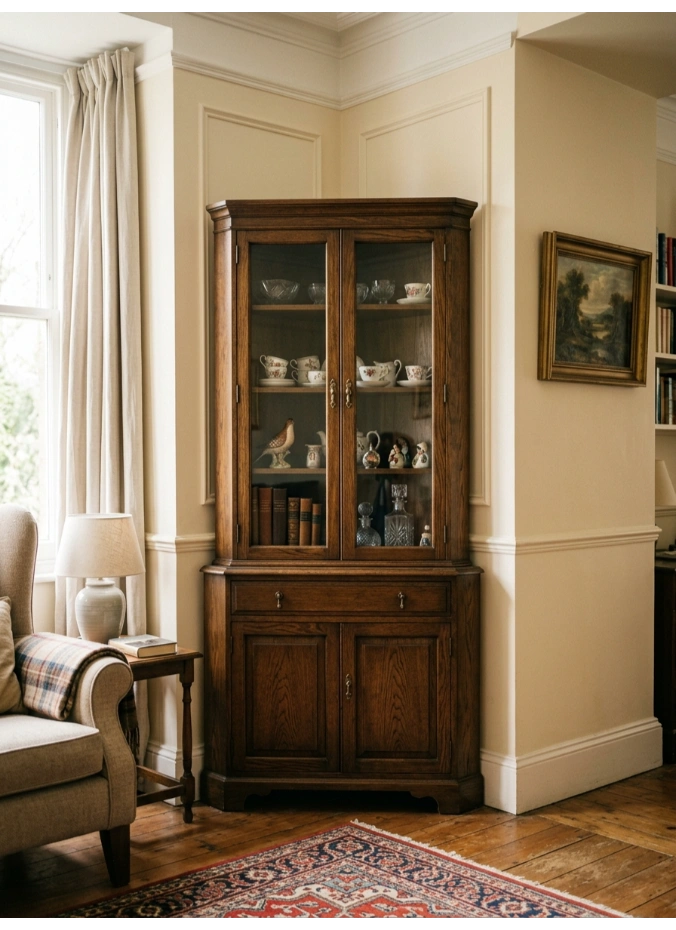
A corner cabinet, whether vintage or new, gives collectibles, glassware, or decor a genuine home while fitting neatly into a space few other furniture types are shaped for.
This is a strong choice for a more traditional or classic living room where the corner genuinely needs a piece of furniture, not just a decor accent.
8. A woven basket for blanket or magazine storage
Sometimes the smallest possible solution is the right one.

A generously sized woven basket tucked into the corner holds throw blankets or magazines, giving the space real function without needing any actual furniture piece at all.
This is one of the cheapest ideas on this list, and it solves a storage problem the room probably already had.
Plants and Greenery
9. One large-leaf plant in a solid pot
This is the single most recommended fix for a reason, it genuinely works in almost any corner.
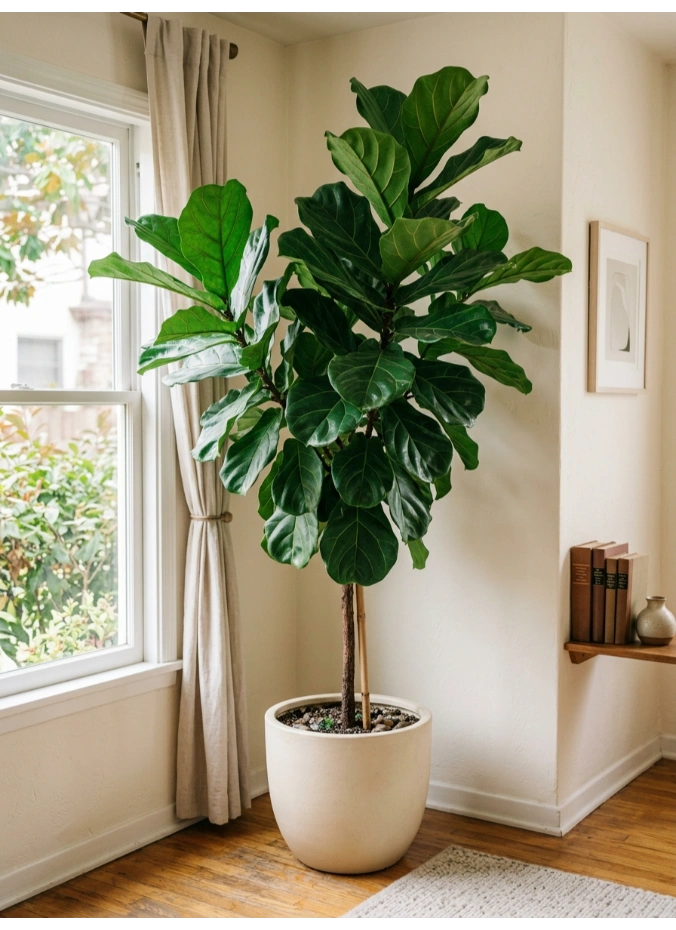
A substantial plant, like a fiddle leaf fig or a palm, in a simple solid-colored pot brings genuine life and height to a corner that furniture alone often can’t achieve.
Placing it directly on the floor or on a low stand both work, the key is choosing one plant large enough to feel intentional rather than accidental.
10. A cluster of plants at varying heights
More than one plant, arranged with intention, reads as a curated moment rather than clutter.

Grouping two or three plants of different heights, using a small stand to lift one of them, creates a fuller, more layered look than a single plant provides on its own.
This approach works especially well in a corner with enough floor space to spare, where one plant alone might look a little lonely.
11. A trailing plant on a pedestal stand
Height and movement do a lot of work in a corner that otherwise feels flat.

A trailing plant like pothos or a string of hearts, elevated on a pedestal stand, lets the vines cascade downward, adding real movement to a corner that a stationary object never could.
This is a strong pick for a corner that needs softening more than it needs bulk or storage.
12. A small indoor tree for real architectural presence
For a genuinely tall, empty corner, a tree-sized plant fills the vertical space properly.

An olive tree or another tall indoor variety, planted in a substantial pot, fills a corner from floor to eye level in a way that smaller plants and furniture pieces simply can’t reach.
This is worth the investment in a room with high ceilings, where a shorter plant or piece of furniture would otherwise look lost in the space above it.
Functional Nooks
13. A cozy window seat
An off-center or corner window is an opportunity most people overlook entirely.

A window seat built into or placed within a corner turns an awkward architectural gap into genuine seating, and a version with a storage bench underneath solves two problems in one piece.
Getting the proportions right matters here, a seat too shallow or too high won’t actually get used, so measure against how the space will really be sat in.
14. A compact home office corner
Not every home has room for a dedicated office, but most homes have one spare corner.

A slim desk and a single chair, tucked into an underused corner, creates a genuine work-from-home spot without sacrificing an entire room to the purpose.
This idea works especially well in a corner near natural light, since that’s exactly the kind of spot that makes a small workspace feel less like an afterthought.
15. A small bar cart for cocktail hour
A playful, functional option for anyone who entertains at home.
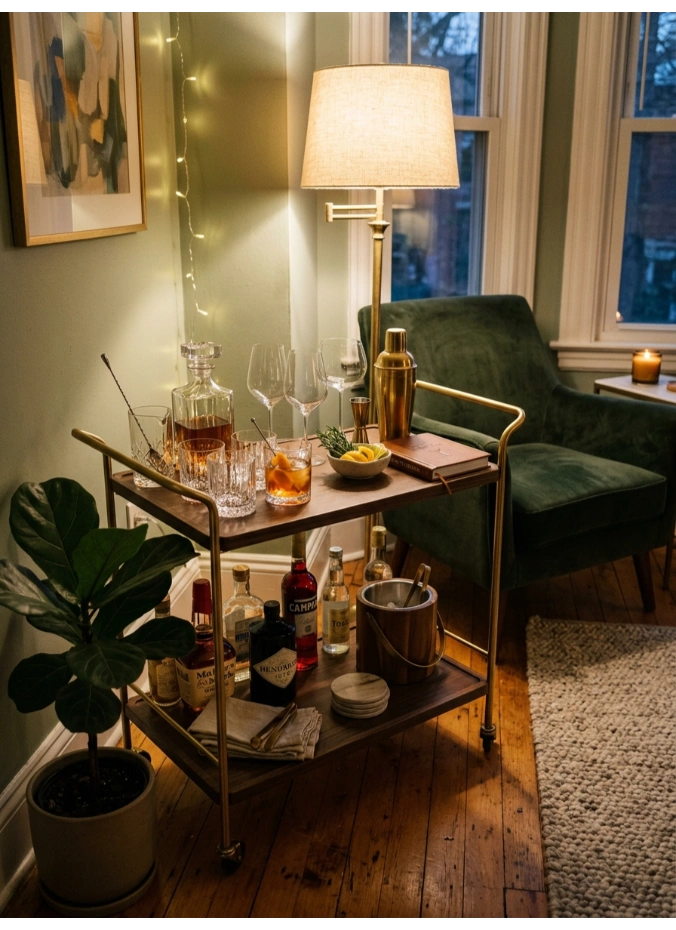
A compact bar cart gives an empty corner a genuine reason to exist, and it rolls out of the way entirely when it’s not being used, following the same styling logic covered in a full DIY bar shelf setup if you want to build one from scratch instead.
This is a strong pick for a corner near the main seating area, where guests naturally gather during a gathering.
16. A meditation or yoga corner
A quiet, intentional use for a corner that doesn’t need to hold anything at all.
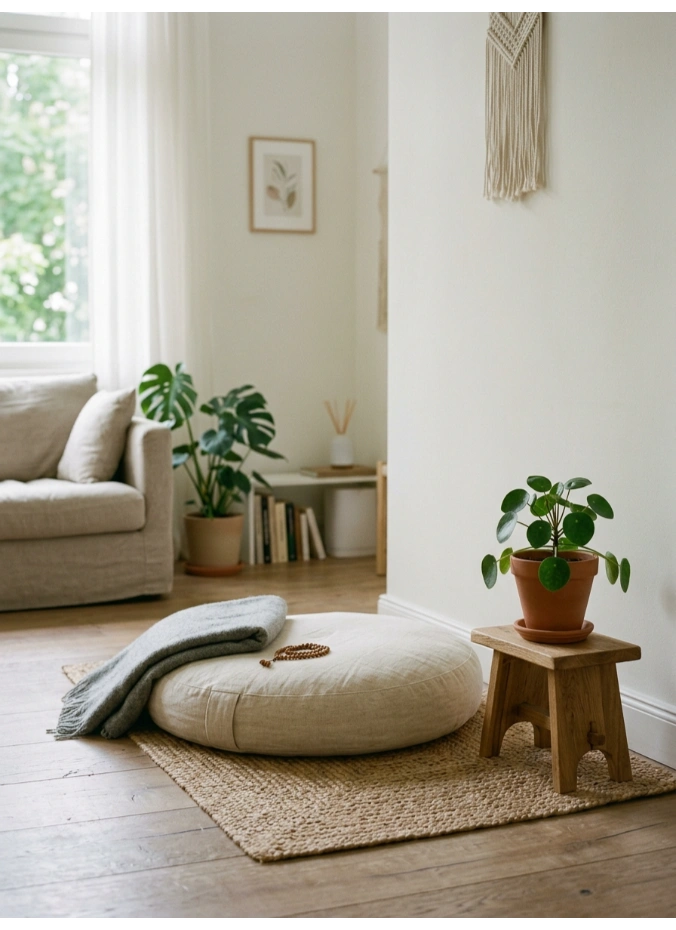
A single floor cushion, a small plant, and perhaps a candle turn an empty corner into a dedicated spot for a few quiet minutes, without needing any real furniture investment.
This idea works particularly well in a corner that gets soft natural light, since that’s exactly the kind of setting the space is meant to encourage.
Art and Statement Styling
17. A sculpture or object on a small plinth
Minimal floor space, maximum visual impact.
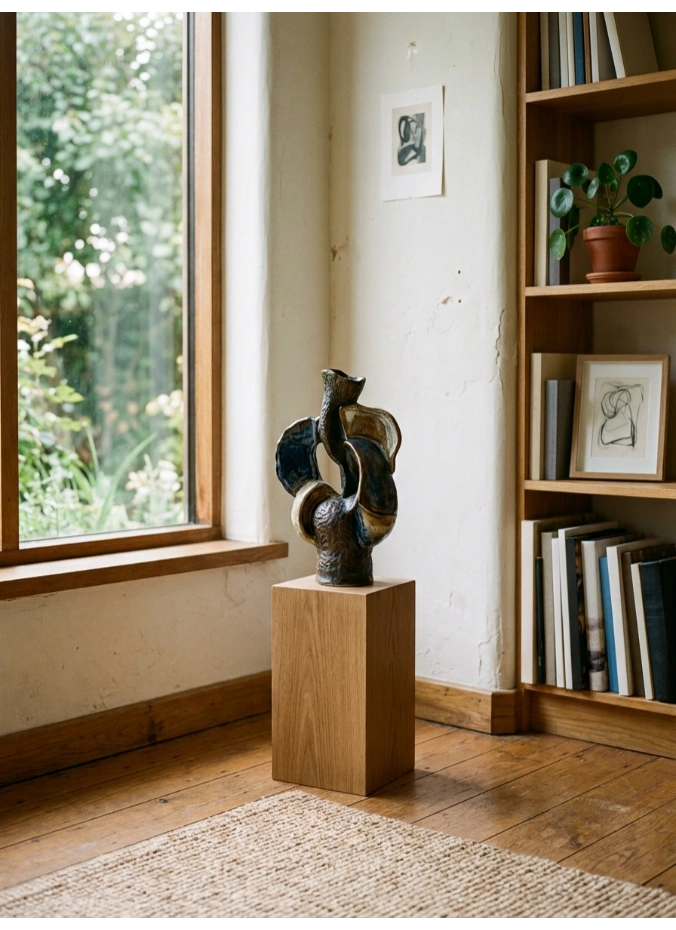
A single sculpture or meaningful object, elevated on a small plinth or pedestal, takes up minimal floor space while still giving the corner a genuine focal point.
This is one of the most elegant solutions on this list for anyone who wants the corner filled without adding any real furniture at all.
18. A large mirror leaned into the corner
Reflecting light and space does double duty in a room that needs both.
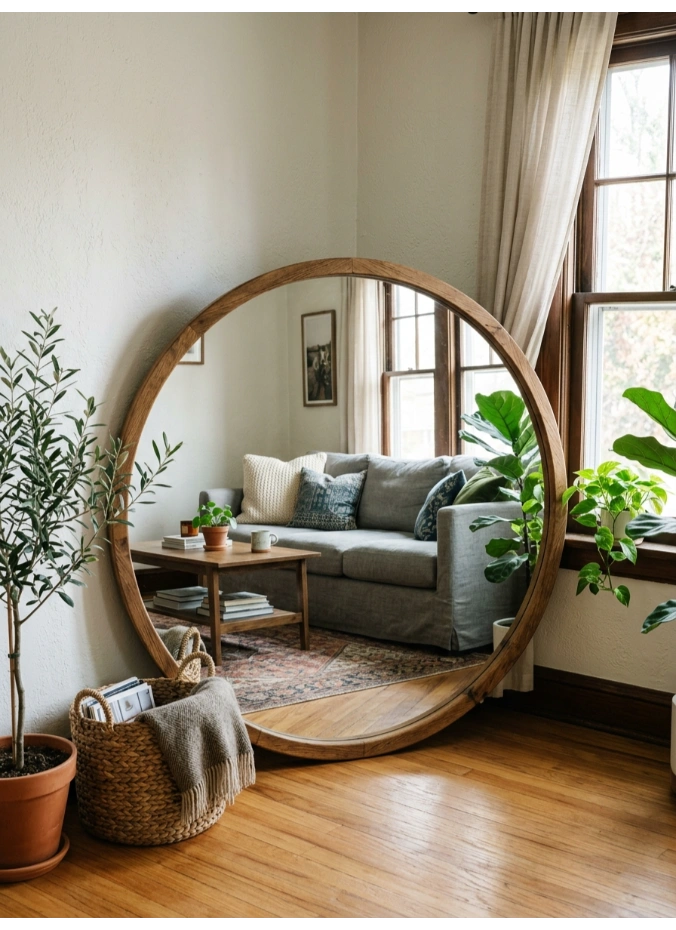
A generously sized mirror, leaned rather than mounted, bounces light back into the room while giving the corner real visual presence without needing a single piece of furniture.
Positioning it to reflect a window or a piece of art elsewhere in the room amplifies the effect even further.
19. A gallery of framed art angled into the corner
Wall art doesn’t need to stop at the corner’s edge.

Continuing a gallery wall arrangement around the actual corner, rather than stopping it flat against one wall, treats the awkward angle as an opportunity rather than an obstacle.
This works especially well in a corner too narrow for furniture but with plenty of wall space still available on both sides.
20. A maximalist, fully styled corner moment
For anyone ready to lean all the way into a bold approach.

Combining a bold chair, patterned wallpaper, and a piece of art all within one corner creates a genuinely eclectic, layered moment that turns the awkward space into the room’s most interesting spot.
This approach works best when the rest of the room stays relatively simple, letting the corner carry the boldest personality in the space, the same layering instinct behind a broader bohemian living room styling if you want to extend the look beyond just the one corner.
Common Mistakes to Avoid
- Filling every empty corner automatically, when some quiet, unfilled space actually helps a busy room breathe.
- Choosing a piece too small to feel intentional, which can look more accidental than a genuinely empty corner would.
- Ignoring natural light when deciding what goes in a window-adjacent corner.
- Blocking a natural walking path with furniture that technically fits but disrupts how the room actually flows.
Frequently Asked Questions
What’s the easiest way to fill an empty living room corner?
A single large plant in a solid-colored pot is the fastest, lowest-commitment fix that works in almost any style of room.
Should every corner in a living room have something in it?
No, some empty space genuinely helps a room feel balanced rather than crowded, only fill a corner if its emptiness feels glaring rather than intentional.
What should go in a corner near a window?
A window seat, a reading chair, or a small desk all take advantage of the natural light in a way an interior corner can’t offer.
Conclusion
An empty corner isn’t a flaw in the room, it’s unclaimed space waiting for a job. Whether that job is storage, seating, greenery, or a single striking object, the corners that work best are the ones given one clear purpose rather than a scattered pile of small decor. Start with whatever the room is actually missing, more storage, more seating, more life, and let that need decide what finally goes there.