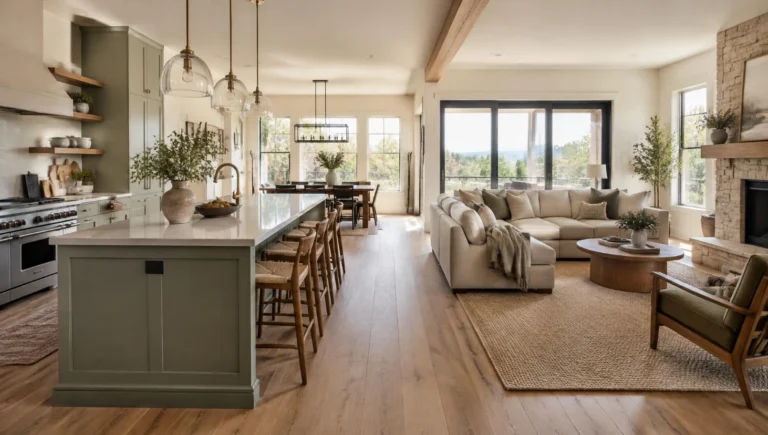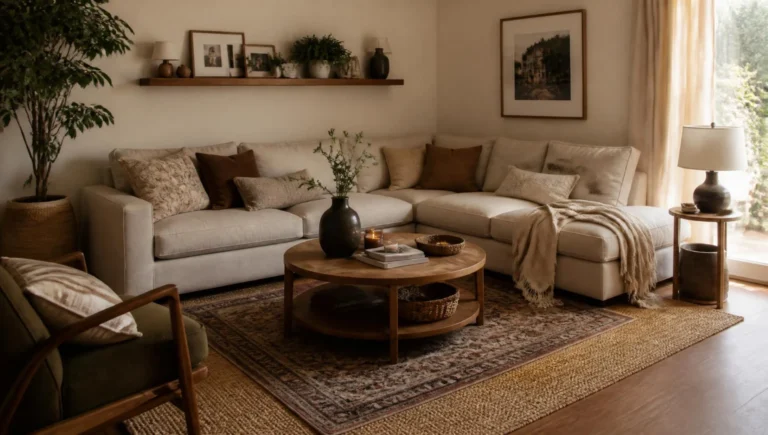
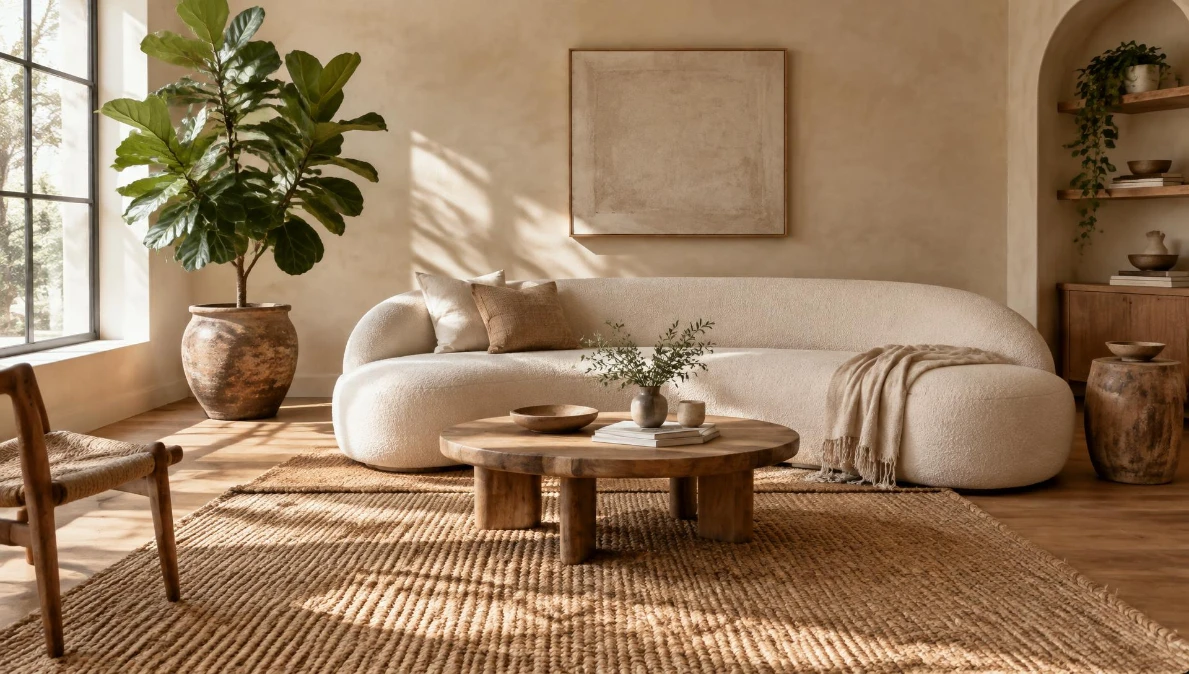
Minimalist bohemian living room ideas work because the two styles solve each other’s biggest weaknesses. Pure minimalism can feel stiff and a little cold, while pure boho can tip into cluttered, and the blend of the two keeps a clean, uncluttered layout while letting texture and warmth do the emotional work instead of color and objects.
What actually makes this look land in 2026 is a shift away from stark white minimalism toward something warmer, creamy walls, soft wood, and rounded furniture, paired with just enough woven texture and greenery to keep the room from feeling sterile. Every idea below builds on that same balance of restraint and warmth.
Quick Picks
- Best for a small budget: A jute rug and one oversized floor plant
- Best statement piece: A curved, low profile sofa in a warm neutral tone
- Best for warmth without clutter: Layered natural textiles in three tones only
- Best finishing touch: A woven pendant light over the seating area
Before You Start
- Pick a warm neutral base first. Creamy white, sand, and soft taupe read as more current than stark white or gray in 2026.
- Choose texture over color for the boho layer. Woven baskets, jute, and linen carry the aesthetic without adding visual noise.
- Keep furniture low and rounded where possible. Curved silhouettes are the defining shape trend this year for this exact style blend.
- Limit yourself to one or two accent colors. Earthy terracotta or sage work well without pulling the room away from minimal.
- Edit before you add. A minimalist boho room still needs empty space to read as calm rather than collected.
Furniture and Layout
1. A low, curved sofa as the room’s anchor
Curved silhouettes have become the defining furniture shape for this style blend in 2026.
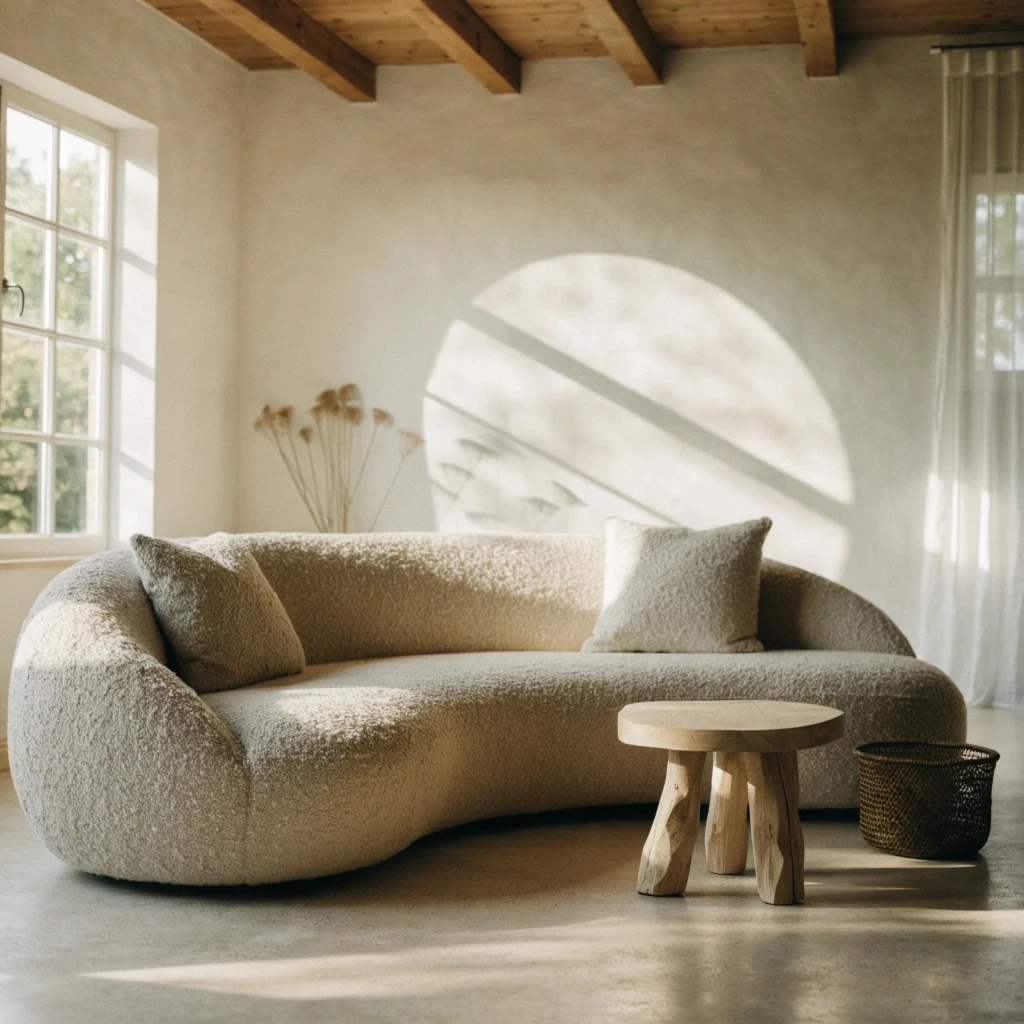
A sofa with rounded arms and a low profile softens the whole room instantly, reading as considerably more relaxed than a sharp edged, boxy silhouette would.
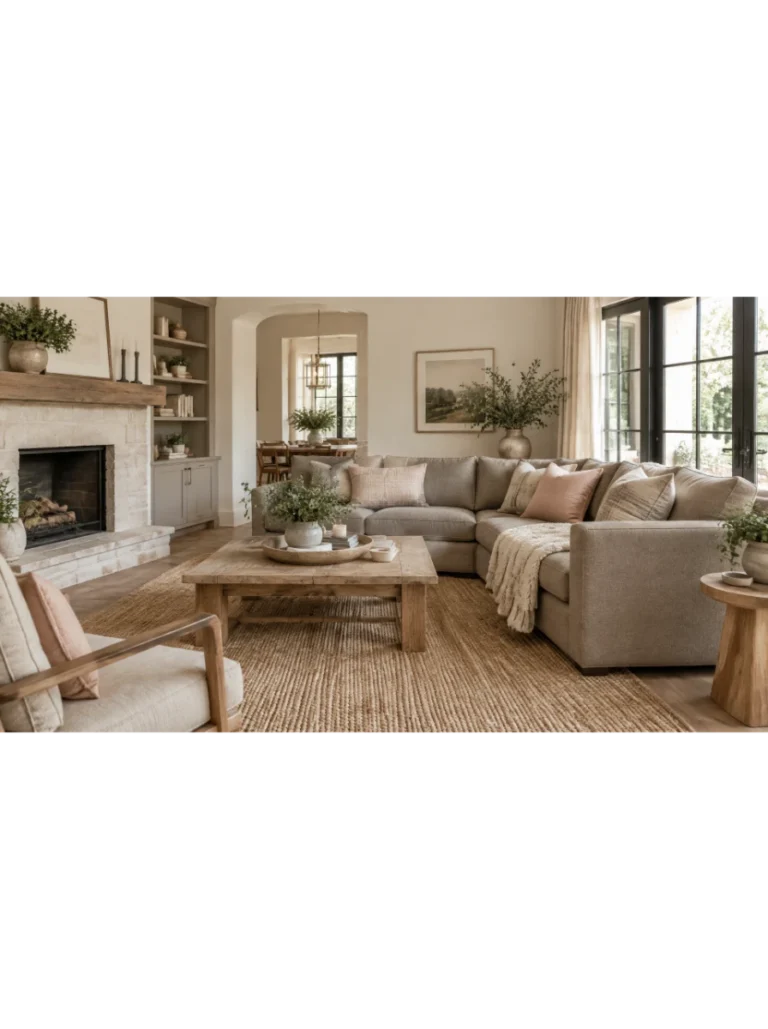
If you already have a boxy sofa, an L shaped layout can still work here with the right styling, and the same softening principles apply whether the frame is straight or curved.
2. A sculptural wood coffee table instead of glass
Wood grounds a room in a way glass simply can’t.
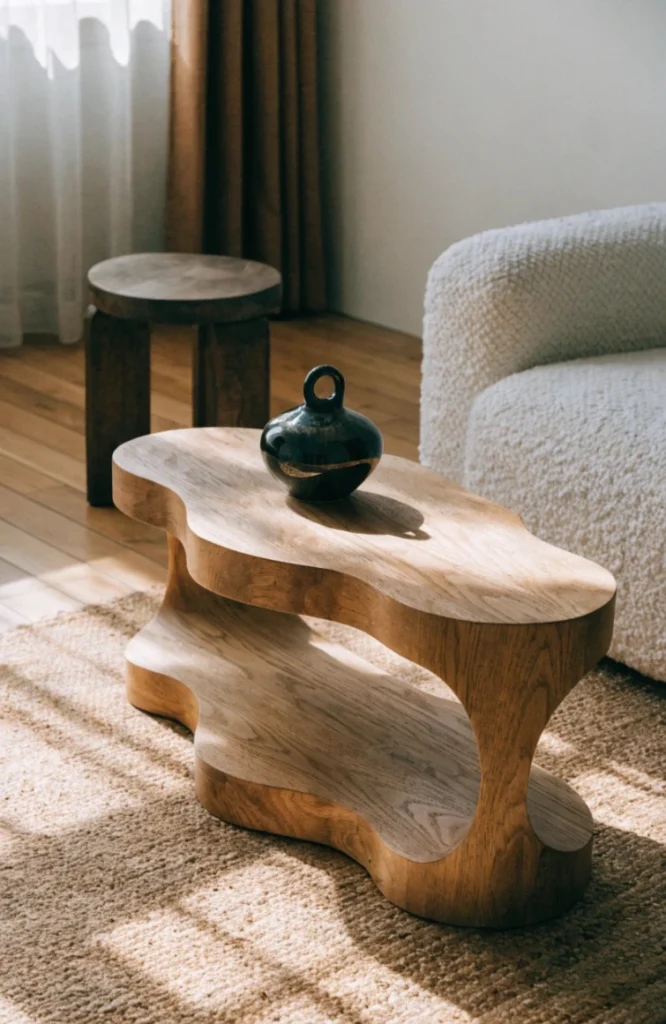
[IMAGE PLACEHOLDER: Horizontal photo of a sculptural low wood coffee table in a minimalist bohemian living room, natural daylight, realistic warm material detail, no text]
A low, organically shaped wood table adds warmth and a handmade quality that pairs naturally with the boho half of this aesthetic.
Styling the top with restraint, a single tray and one small object, keeps the piece from undoing the room’s overall sense of calm.
3. Open, floating shelving instead of a closed cabinet
Storage doesn’t need to disappear to still feel minimal.
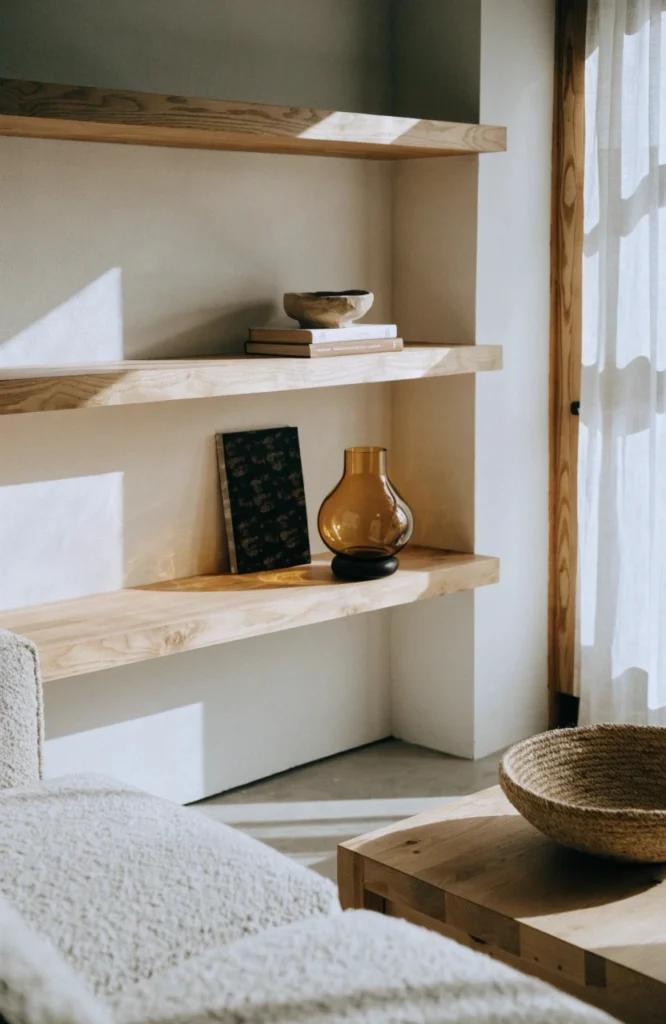
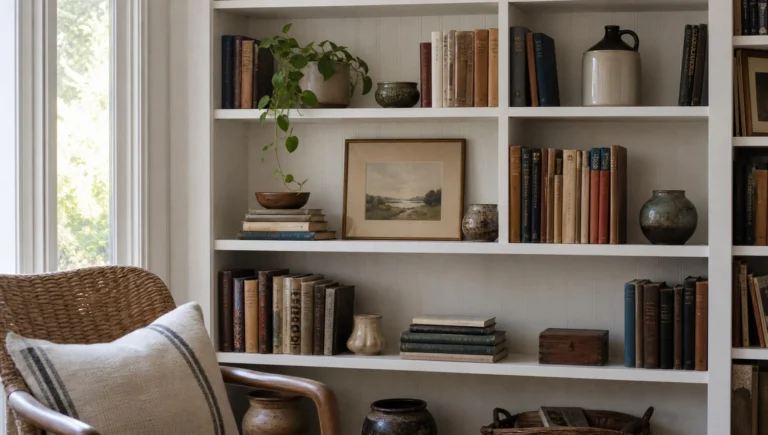
A few floating shelves, styled with restraint, let a small curated collection of books and objects double as both storage and display.
Keeping the arrangement loosely edited rather than fully filled is what separates a shelf that feels calm from one that reads as cluttered, and there’s a real art to turning bookshelves into a genuine part of the room’s decor rather than just storage.
4. A single oversized floor plant as the room’s focal point
One large plant does more for the space than several small ones scattered around.
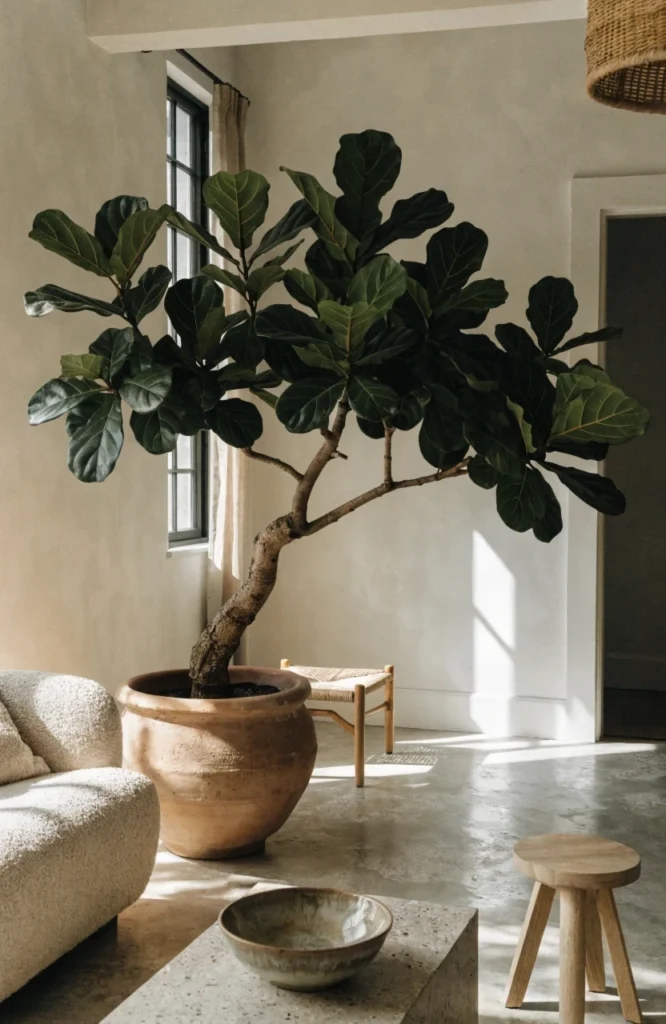
A single substantial plant, in a simple woven or ceramic pot, brings genuine life into the room without adding the visual clutter several smaller plants would.
It reads as intentional in a way a collection of small plants scattered across surfaces rarely manages.
5. A low profile media console in warm wood
The television doesn’t need to disrupt the room’s calm if the piece beneath it is chosen carefully.
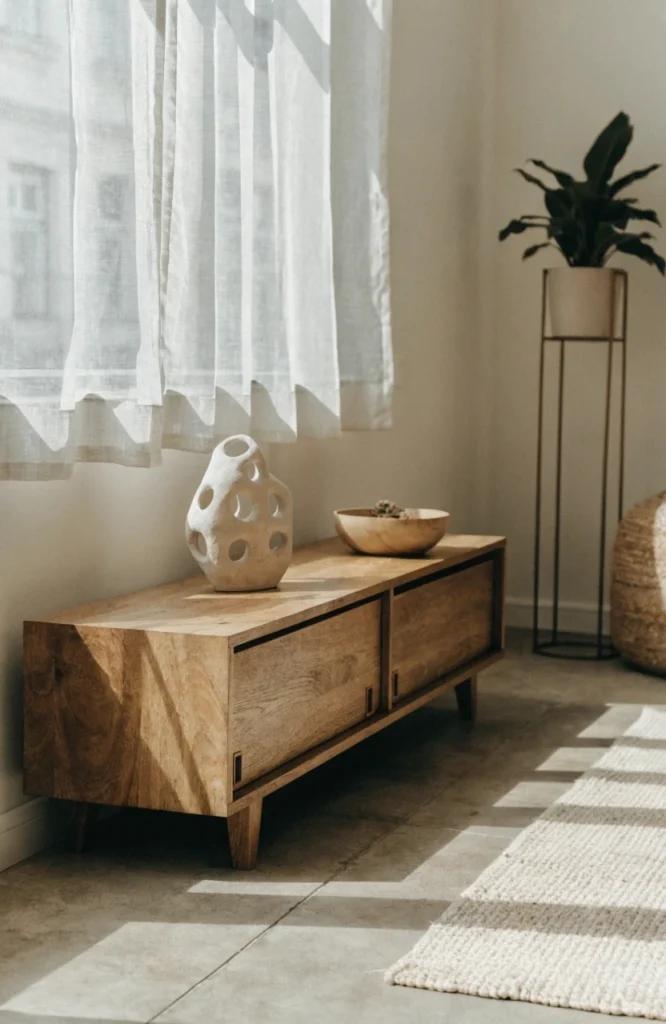
A simple, low console in a warm wood tone keeps the media area from becoming the room’s visual center, letting the seating and lighting carry that role instead.
Leaving the top mostly clear, aside from one small styled object, keeps the whole wall feeling calm.
Color and Texture
6. A layered jute and wool rug combination
Layering two rug textures adds depth without adding pattern or color.
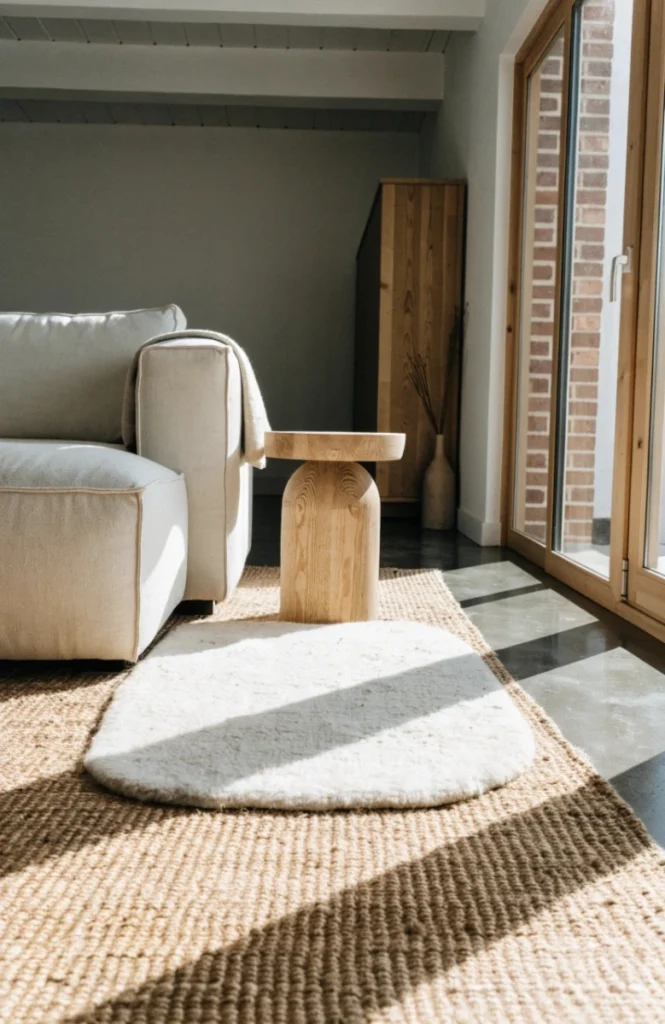
A large jute rug as the base layer, topped with a smaller wool or sheepskin rug near the seating, brings genuine warmth underfoot without needing bold color.
This layering trick is one of the fastest ways to add the boho half of the aesthetic without touching the walls or furniture at all.
7. Linen curtains in a soft, undyed tone
Curtains carry more visual weight in a room than people usually expect.
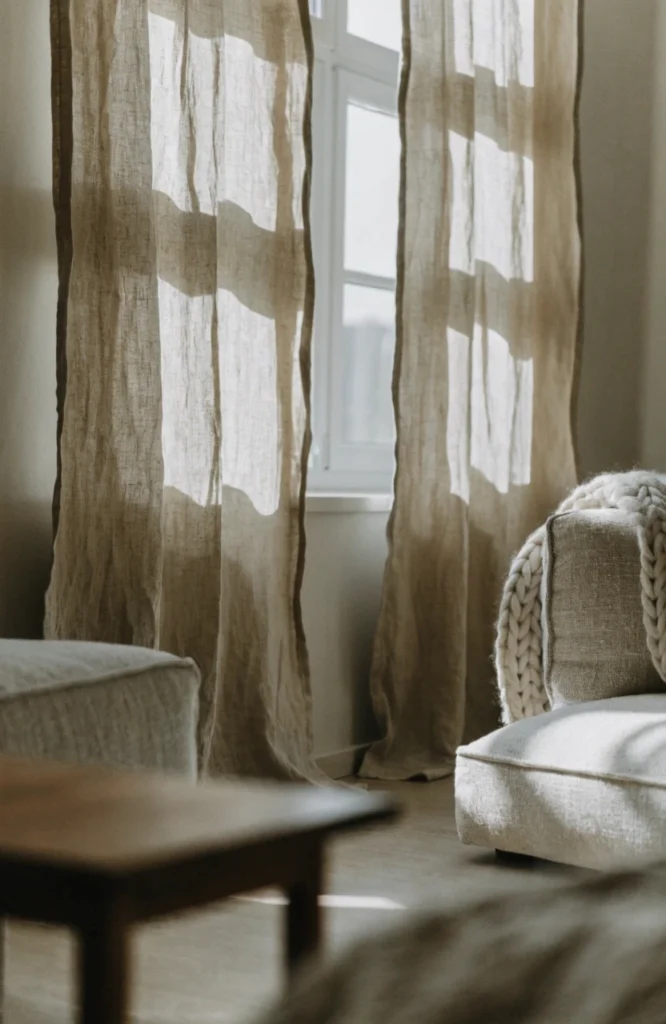
Undyed, natural linen curtains let light filter through softly while keeping the palette exactly as neutral as the rest of the room.
The slightly rumpled, imperfect texture linen naturally has is part of what makes it read as boho rather than sterile.
8. A limited palette of no more than three tones
Restraint in color is what actually keeps this style from tipping into either extreme.
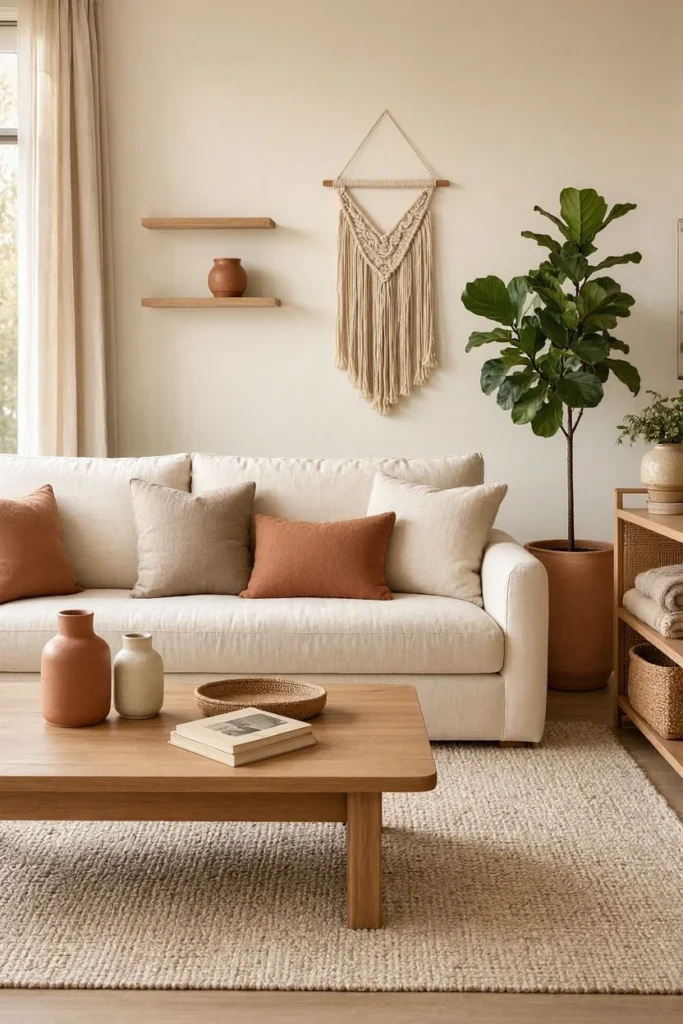
Choosing one base neutral, one warm wood tone, and one accent color, like a muted terracotta or sage, keeps the whole room cohesive at a glance.
Every additional item brought into the room should fit within these three tones, which is the discipline that keeps the space from drifting toward clutter.
9. Woven textured wall hangings instead of framed art
Wall texture reads as more boho than flat, framed pieces do.
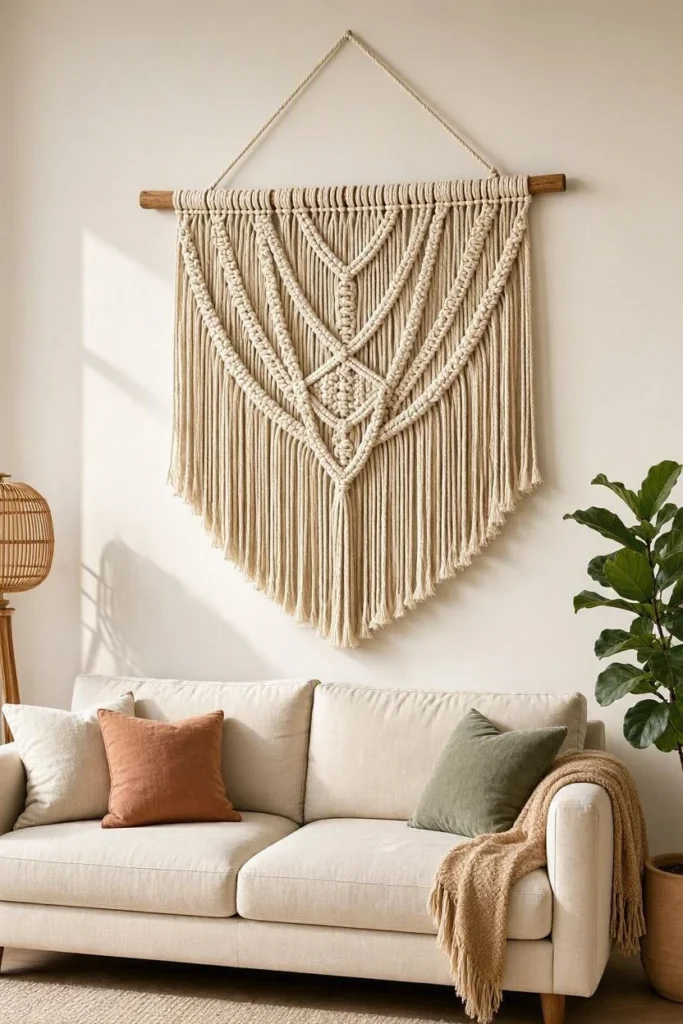
A single large, simple woven hanging, kept to natural fiber tones rather than bold color, adds dimension to a wall without needing a full gallery arrangement.
One piece, sized generously, does more here than several small framed prints scattered across the same wall.
10. Mixed wood tones used deliberately, not accidentally
Wood tone consistency matters more in a minimal room than in almost any other style.
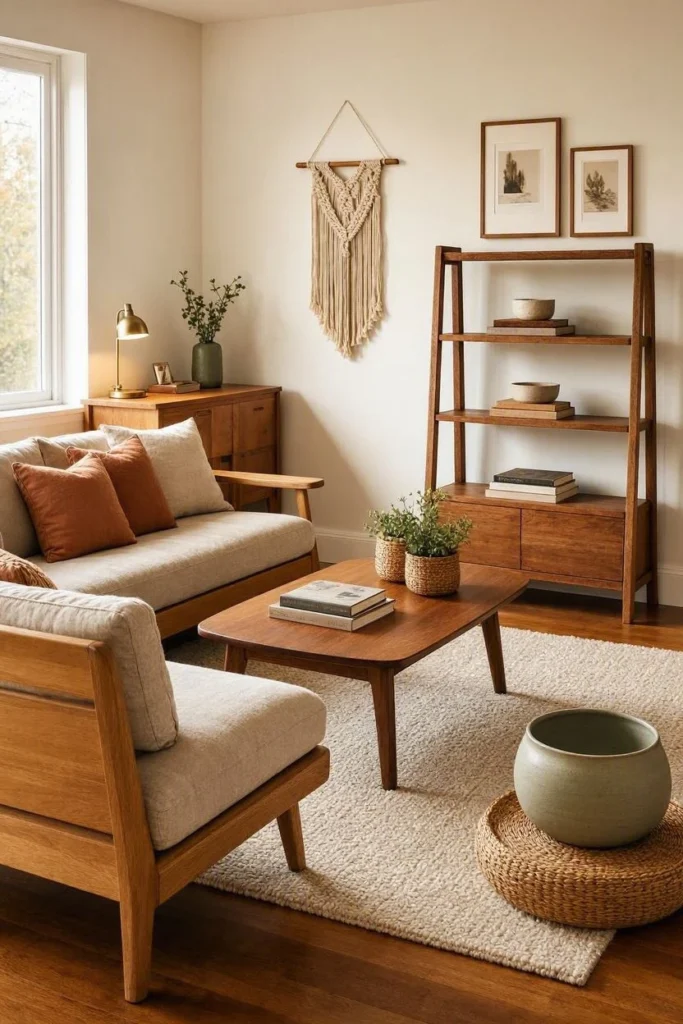
Choosing warm, honey toned woods across the coffee table, shelving, and any wood furniture keeps the room feeling intentional rather than assembled piece by piece.
Mismatched cool and warm wood tones in the same room are one of the fastest ways to undercut an otherwise well styled space.
Plants and Natural Elements
11. Trailing plants placed at varying heights
Height variation adds visual interest without adding clutter at floor level.
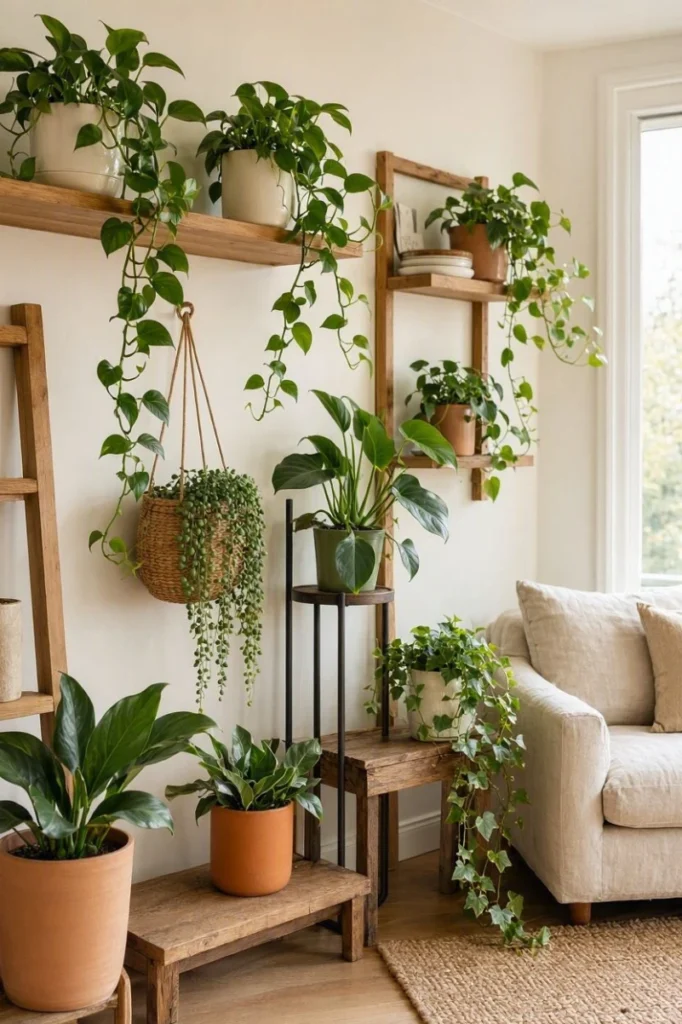
A trailing pothos on a high shelf, paired with a taller floor plant elsewhere in the room, creates natural height variation the way art or shelving usually would.
This approach keeps greenery from all sitting at the same eye level, which reads as more considered.
12. A dried floral arrangement instead of fresh flowers
Dried elements suit this aesthetic’s low maintenance, natural feel better than fresh blooms do.
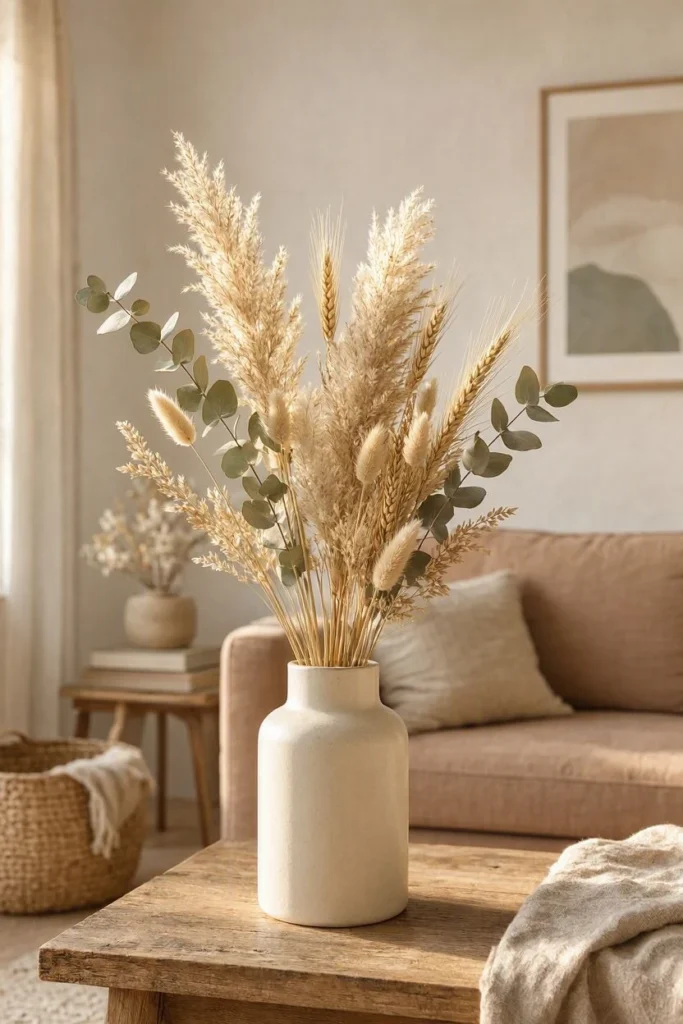
Dried pampas grass or preserved eucalyptus in a simple ceramic vase adds organic texture without any of the upkeep fresh flowers require.
The muted, faded tones of dried florals also fit naturally within the room’s limited color palette.
13. Natural stone or wood objects as sculptural accents
Small, unshaped natural objects add texture with almost no visual weight.
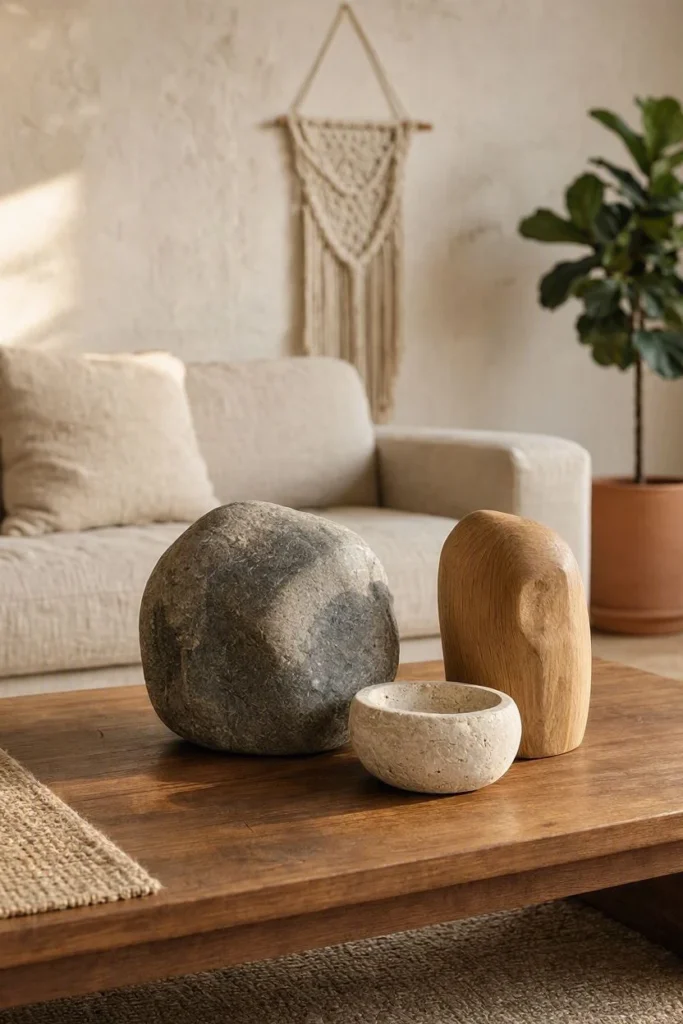
A few simple stone spheres or a piece of driftwood, styled on a coffee table or shelf, brings in raw, natural texture without needing any color at all.
These objects work particularly well styled alongside a coffee table tray arrangement, where a tray naturally corrals a few small pieces into one contained, intentional grouping.
14. A woven basket used for functional storage
Storage doesn’t need to disappear behind closed doors to stay minimal.
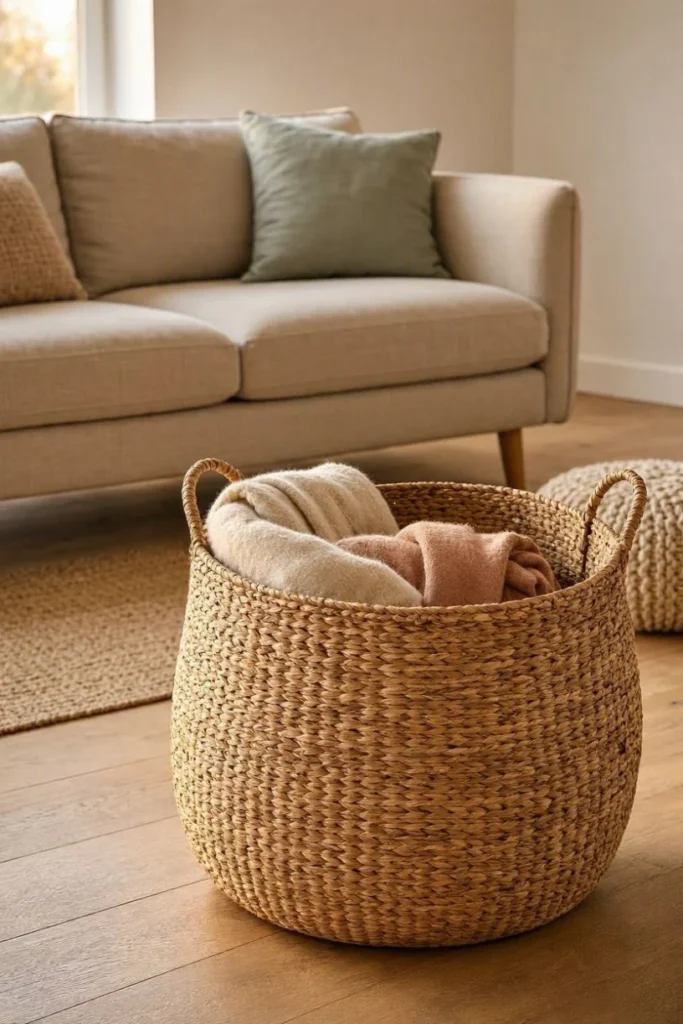
A large, simple woven basket beside the sofa holds throw blankets in plain sight, turning a practical need into a textural styling element.
Choosing one basket rather than a cluster of several keeps the storage from becoming its own visual distraction.
15. A single potted olive or fig tree in a woven planter
The planter matters as much as the plant itself for this particular look.
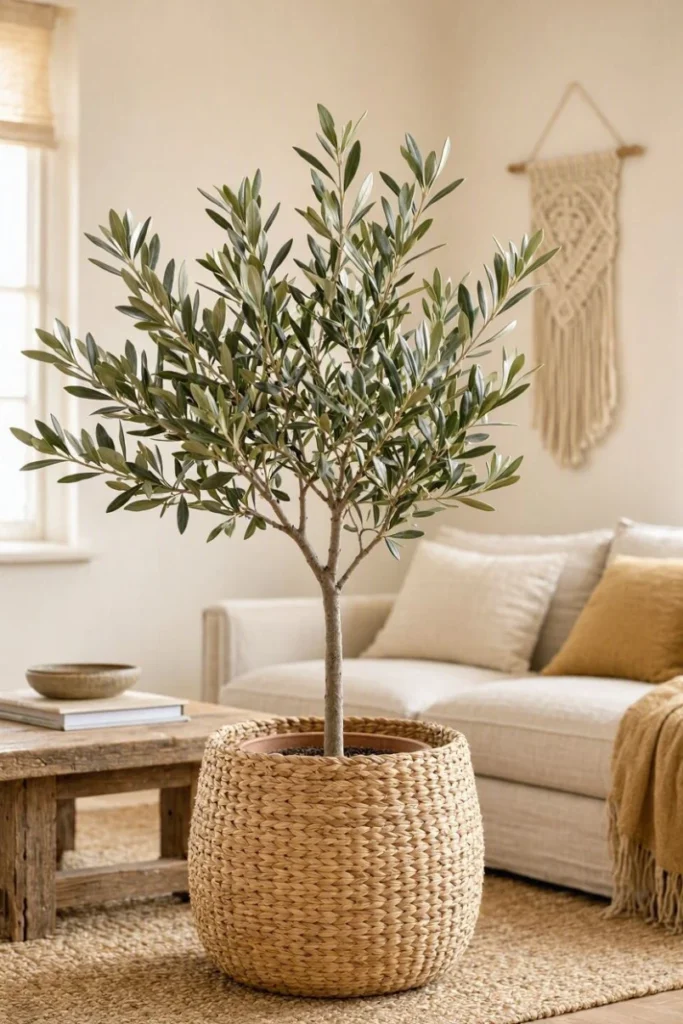
Swapping a plastic plant pot for a woven seagrass or rattan planter ties the greenery directly into the room’s broader material palette.
It is a small, low cost swap that makes an already owned plant feel considerably more intentional.
Lighting and Ambiance
16. A woven pendant light over the seating area
Lighting fixtures carry real styling weight in a room this pared back.
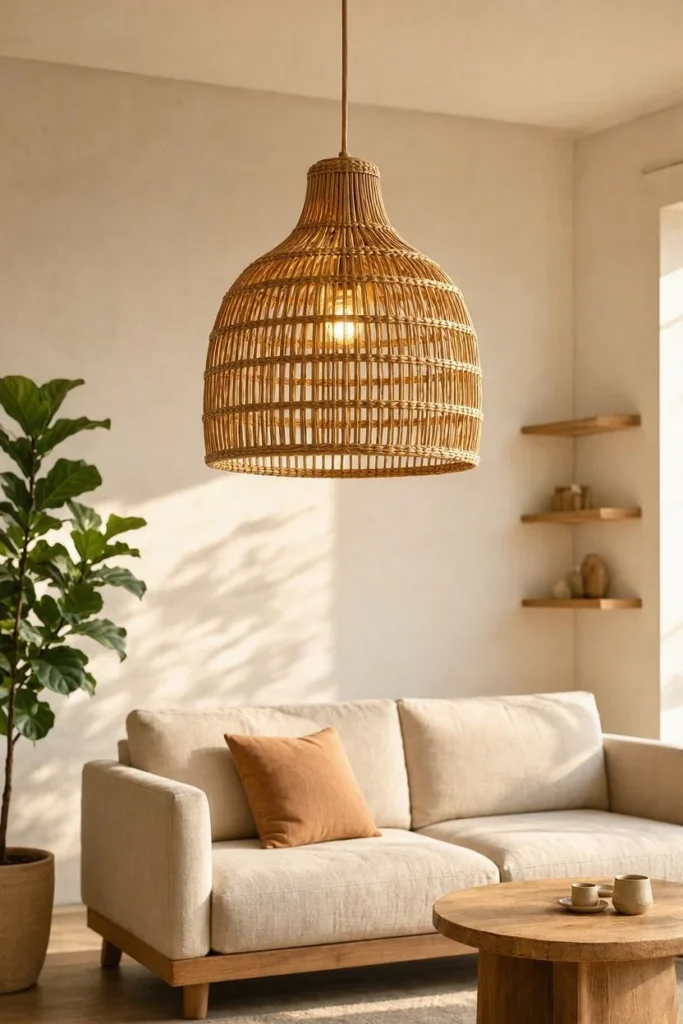
A rattan or woven pendant fixture adds warmth and shadow play across the ceiling and walls in a way a plain flush mount fixture never could.
This single fixture often becomes the room’s most noticed detail, precisely because everything else around it stays so restrained.
17. Warm dimmable lighting instead of a single overhead fixture
Layered, warm lighting suits the relaxed, calm mood this style is built around.
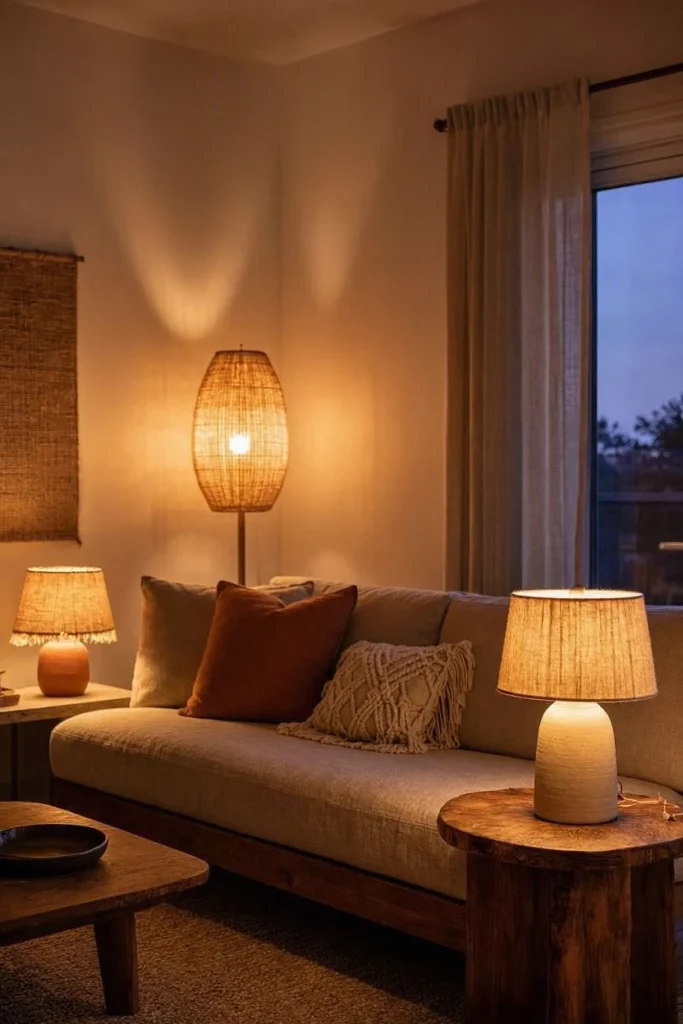
A pair of simple table lamps with a warm, dimmable bulb, used instead of one bright overhead light, keeps the whole room feeling softer and more intentional.
This kind of layered lighting is a big part of what separates a warm, lived in minimal room from a stark, showroom feeling one.
18. Natural light left unobstructed wherever possible
The best lighting choice here often costs nothing at all.
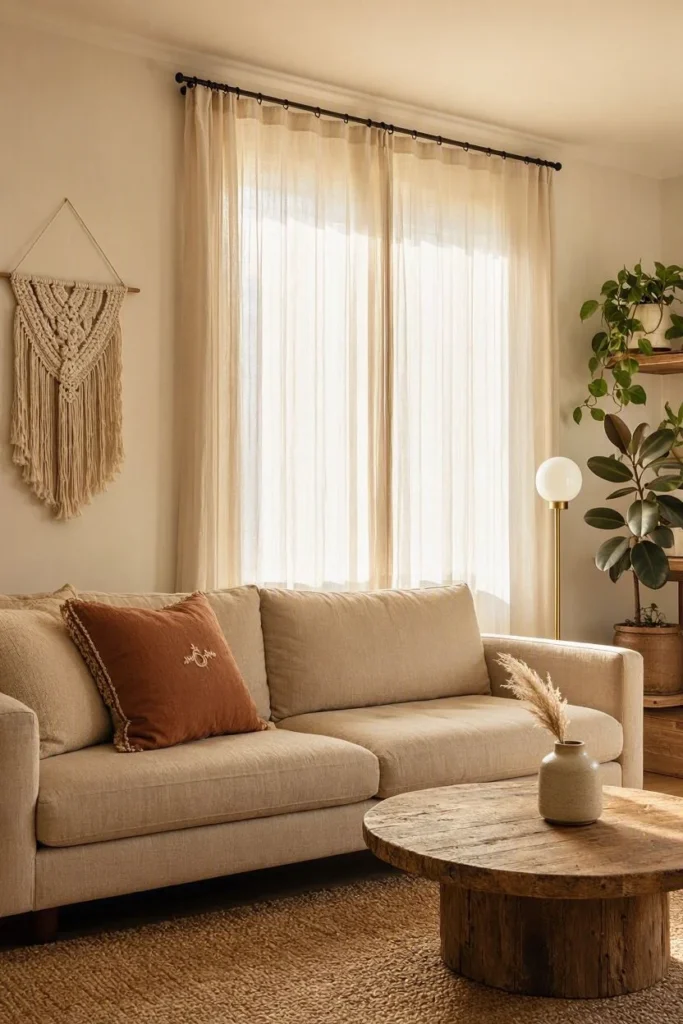
Keeping furniture and plants clear of windows lets natural light do most of the room’s ambient work during the day, which is exactly the effect this style relies on.
Sheer or lightweight linen curtains, rather than heavy drapes, keep this light soft without blocking it entirely.
Styling and Personal Touches
19. One meaningful object displayed with intention
A single personal piece does more here than a shelf full of small collected items.
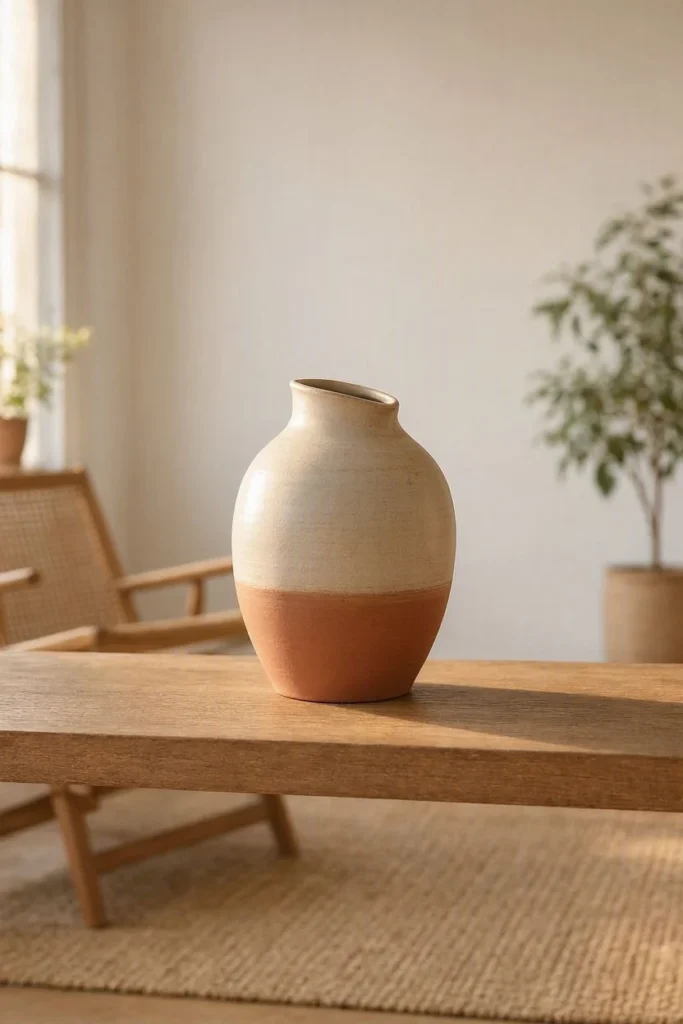
Choosing one genuinely meaningful object, a piece of pottery, a travel find, and giving it its own dedicated space keeps the room personal without cluttering it.
This is the detail that keeps a minimalist room from feeling generic or showroom staged.
20. A neutral throw blanket layered over the sofa arm
A small, low cost detail that adds warmth in seconds.
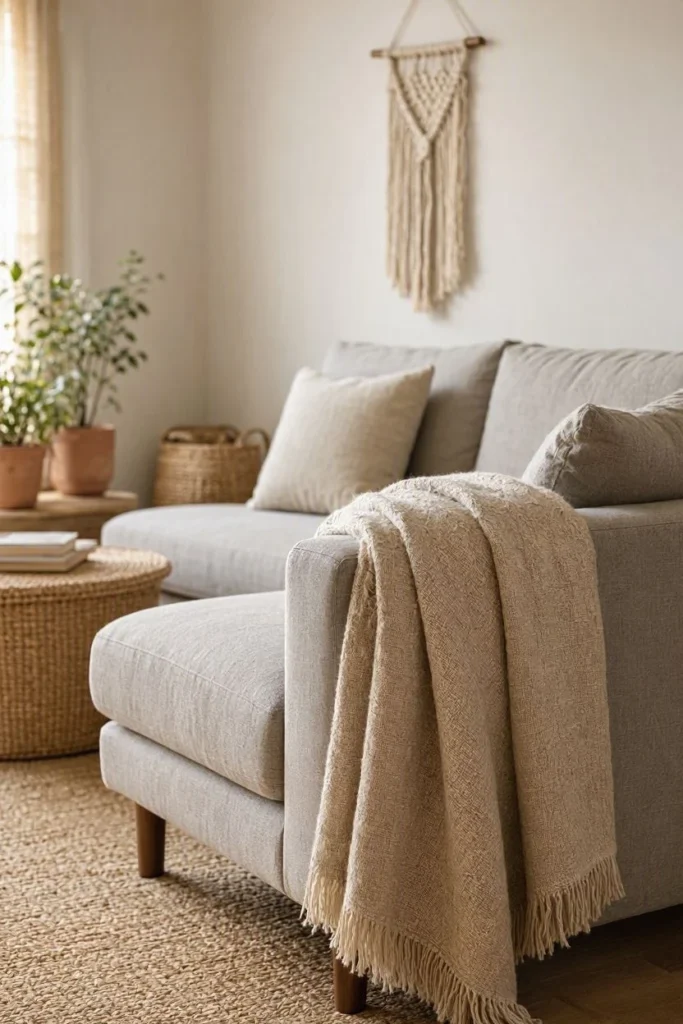
A textured, neutral throw draped loosely over the arm of the sofa adds visible texture and a lived in feel without introducing any new color.
It is one of the easiest, most repeatable styling moves on this entire list, and one of the cheapest to swap seasonally.
Common Mistakes to Avoid
- Adding too many small plants and objects instead of a few larger, more intentional pieces.
- Mixing cool and warm wood tones without a clear plan for how they relate.
- Choosing stark white over the warmer neutral palette that actually defines this look in 2026.
- Filling every shelf and surface completely, which erases the sense of calm the style depends on.
Frequently Asked Questions
What colors work best for a minimalist bohemian living room?
A warm neutral base like cream or sand, paired with one wood tone and a single muted accent color such as terracotta or sage.
How do I add boho warmth without making a minimalist room feel cluttered?
Lean on texture, woven rugs, linen, rattan, rather than adding more objects or color to the room.
Is stark white minimalism still on trend for living rooms?
No, 2026 design is shifting toward warmer, creamier neutrals paired with natural texture rather than the starker white minimalism of past years.
Conclusion
The living rooms that actually pull off this blend are the ones that treat minimalism as the structure and bohemian as the warmth layered carefully on top, rather than trying to do both at full volume at once. Start with a curved, low profile piece of furniture and a warm neutral palette, then add texture through rugs, plants, and one or two personal objects, and let empty space do just as much work as anything you add.