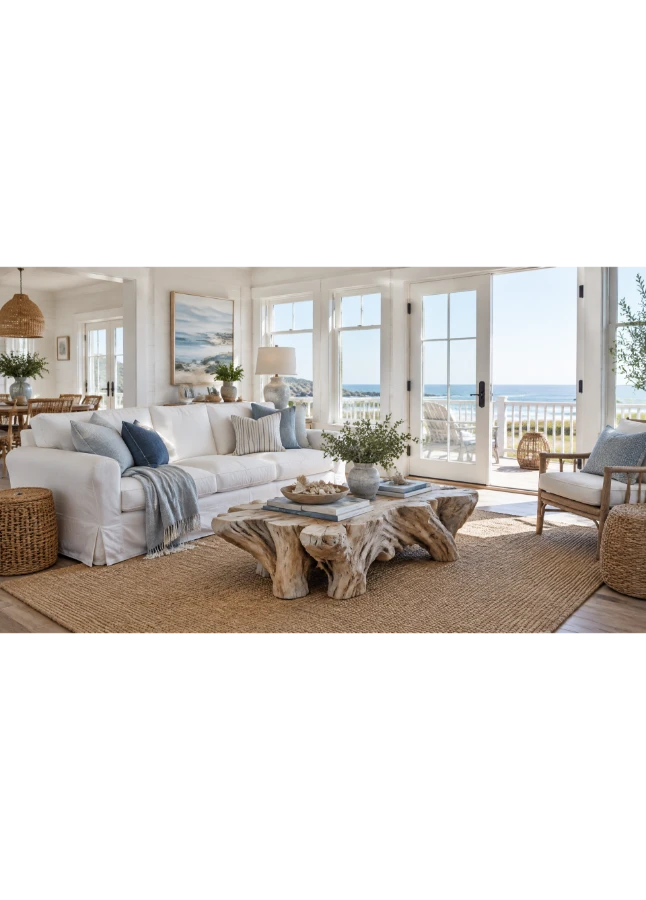
Coastal design used to mean anchors on the wall and a rope-trimmed mirror above the couch. That version is fading fast. The style that’s replacing it relies on real materials, soft light, and a genuine connection to the landscape, not a theme park version of the beach.
This shift matters most in the details. Warmer, softer whites instead of stark ones, reclaimed wood instead of anything too polished, and a subtle nod to the sea rather than a room full of seashells. Every idea below leans into that same restrained, believable version of coastal.
Quick Picks
- Best sofa choice: A white slipcovered sofa that washes easily
- Best flooring texture: A natural jute or sisal rug
- Best statement piece: A driftwood or reclaimed wood coffee table
- Best subtle accent: A single scalloped or shell-shaped piece, not a whole collection
Did You Know?
Pantone chose Cloud Dancer, a warm, airy white, as its Color of the Year for 2026, and it’s become a genuine anchor for coastal interiors. Instead of covering every wall in the same bright white, designers now layer in subtle tonal differences, a warm off-white wall next to crisper trim and pale timber, to give the room real depth without losing that light, breezy feel.
Before You Start
- Test paint samples in the actual room. Natural light changes how a white or pale blue reads throughout the day, especially near large windows.
- Choose materials that handle real coastal conditions. Salt air, humidity, and sun exposure wear down delicate fabrics and finishes fast.
- Layer tones instead of matching everything. A few shades within the same soft palette add more depth than one flat color.
- Keep coastal accents subtle. One well-chosen shell or piece of coral says more than a shelf full of beach souvenirs.
- Prioritize washable, durable fabrics. Slipcovers and natural fiber rugs hold up to sand, spills, and daily family life far better than delicate upholstery.
Color and Walls
1. A warm, soft white base
Stark white has given way to something gentler this year.
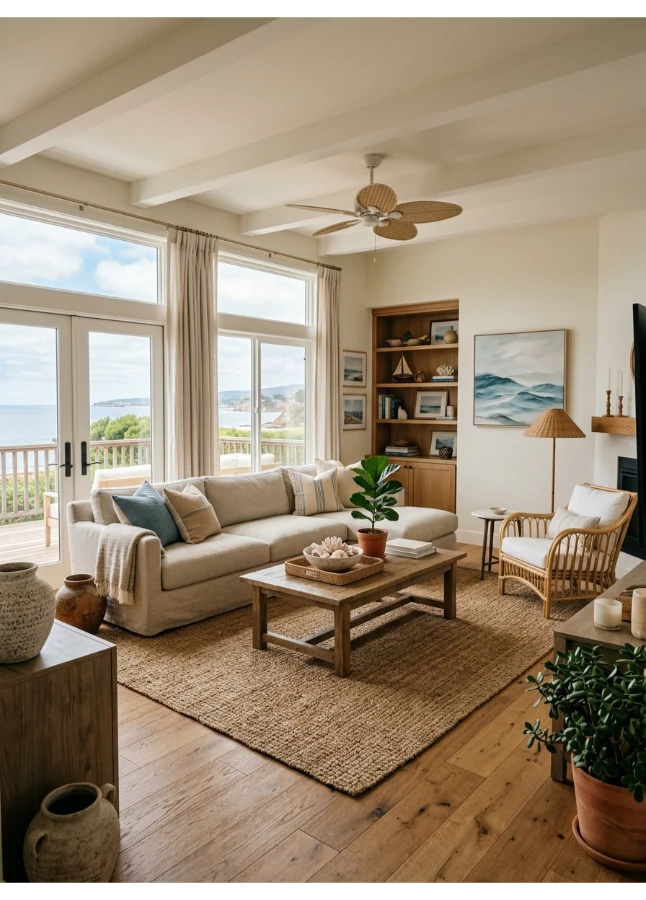
A warm off-white, rather than a stark, brilliant one, creates a more relaxed atmosphere that still reads as bright and airy. This softer tone pairs beautifully with pale timber, linen upholstery, and sandy neutrals without feeling clinical.
Because natural light shifts throughout the day, it’s worth testing a sample directly on your walls before committing to a full room.
2. Muted blue and sand accents
The classic coastal palette still works, just in a more subdued version.
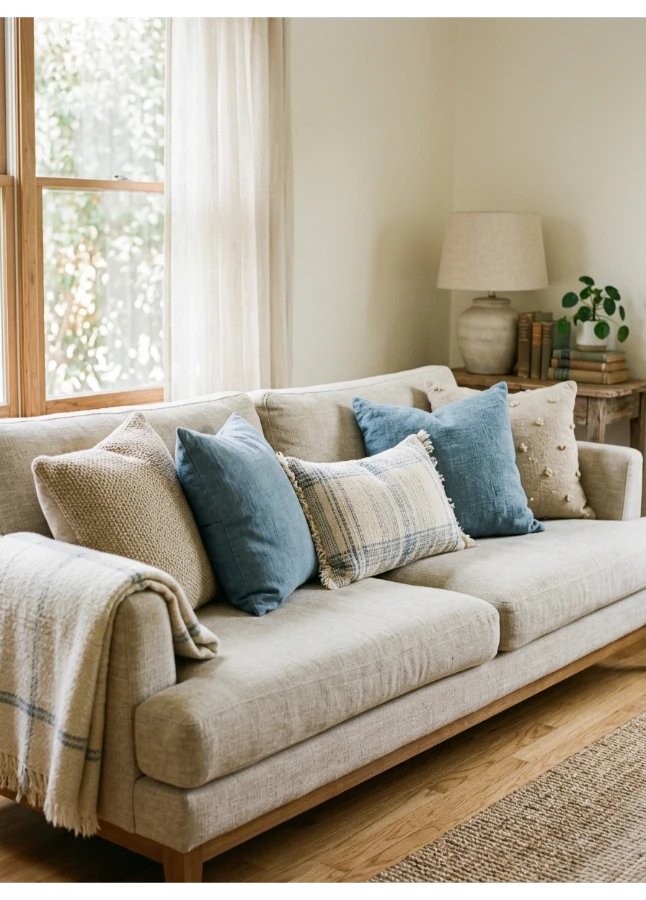
Soft, muted blues layered against sandy beige and warm neutrals capture the feel of the coast without leaning on the bright, saturated blue-and-white combination of older coastal design. This gentler palette works whether the room actually overlooks water or not.
Keeping the wall color neutral and letting the blue live in pillows, throws, and smaller accents makes the palette easy to update later.
3. A single accent wall in seafoam or muted green
One wall of color adds depth without overwhelming the room.
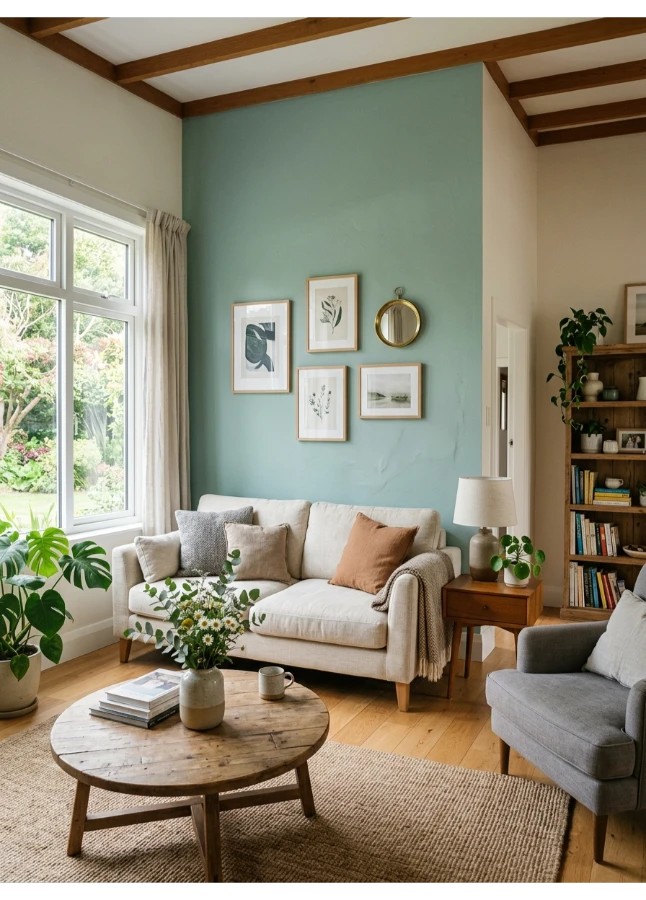
A single wall painted in a muted seafoam or sage green brings a genuine nod to sea glass and coastal greenery, while the remaining walls stay in that same warm, soft white palette. This is a lower-commitment way to add color than painting the whole room.
This works particularly well behind a sofa or fireplace, where the color becomes a natural backdrop rather than competing for attention.
4. Billowing linen curtains
Window treatments do a surprising amount of work in setting the coastal mood.
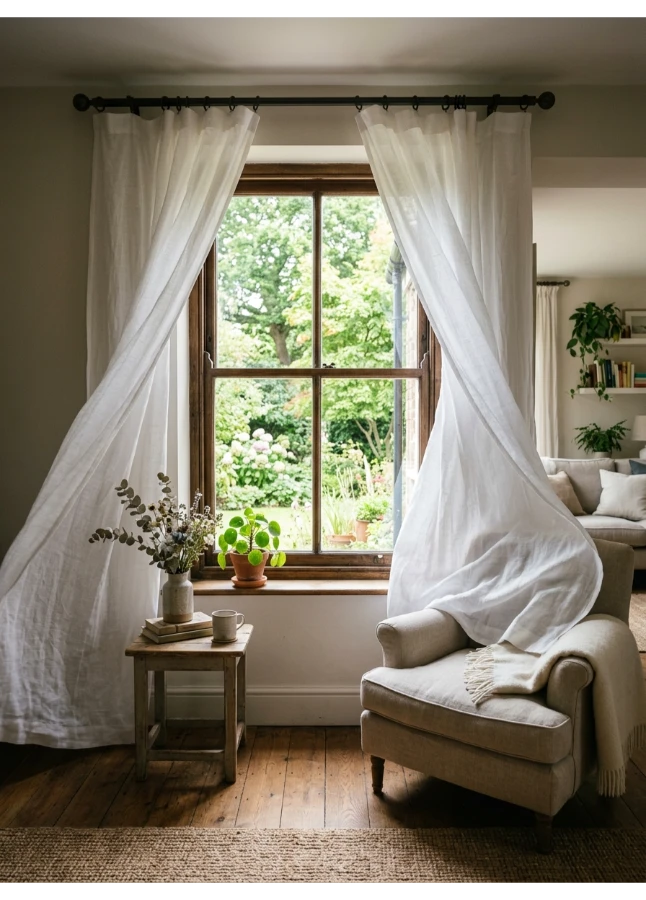
Sheer, lightweight linen curtains in a soft neutral let daylight pour through while adding a relaxed, gently billowing quality that heavier drapes never achieve. This detail is often described as the essence of a coastal, or “coastal grandma,” aesthetic.
Hanging the curtain rod slightly higher than the window frame makes the ceiling feel taller and lets more light in overall.
Furniture and Seating
5. A white slipcovered sofa
This single piece has become the anchor of modern coastal design.
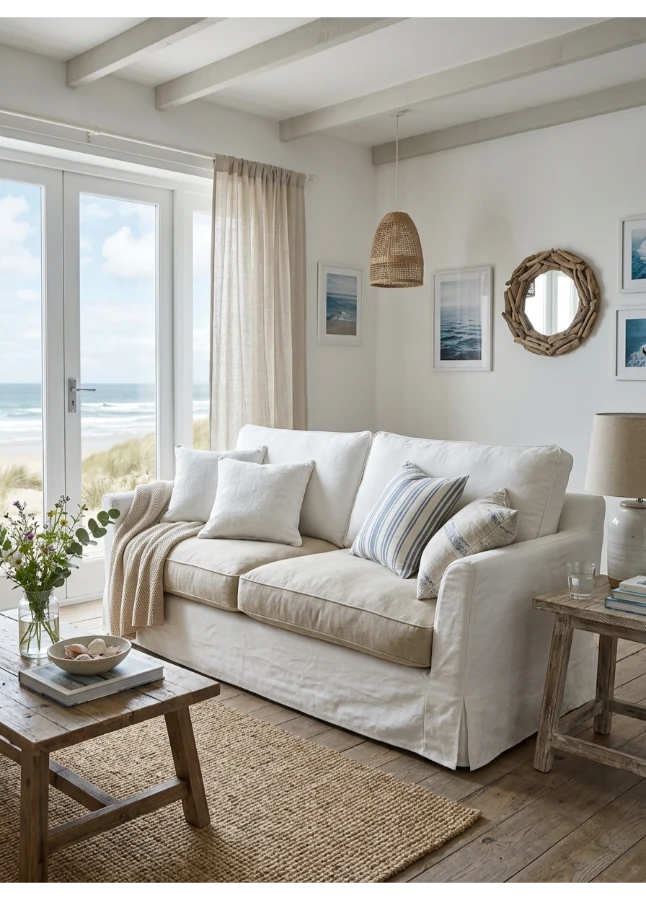
A slipcovered sofa in soft white or cream is one of the most forgiving choices for a family home, since the covers come off and wash easily after sandy feet, spilled drinks, or a muddy dog. This practicality is a big part of why the style has stayed popular decade after decade.
Choosing a slightly relaxed, slouchy silhouette over a stiff, tailored one reinforces the easygoing feel the whole room is built around.
6. Blue upholstered armchairs
A pop of color that still stays within the coastal family.
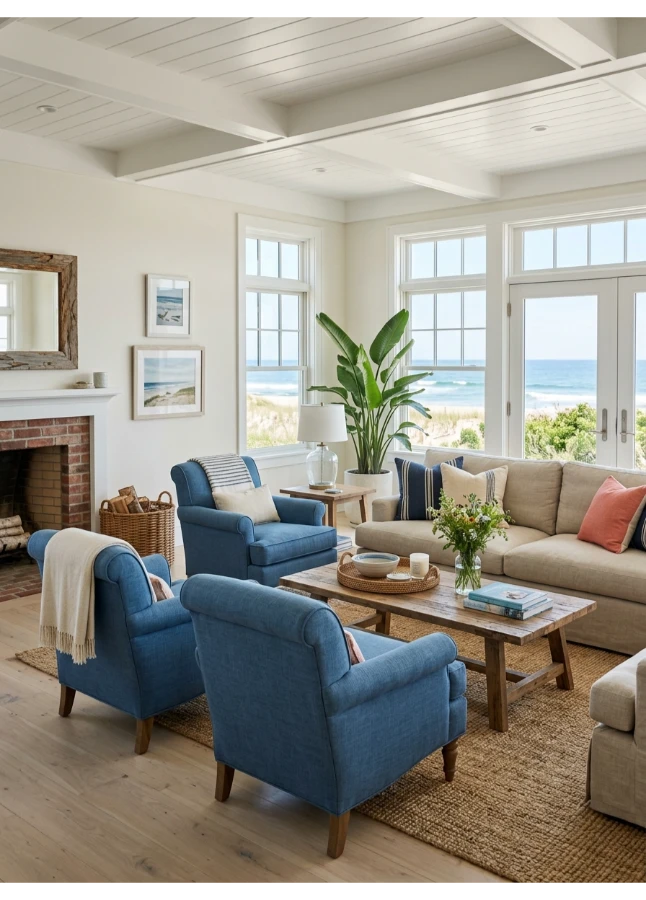
A pair of armchairs upholstered in a soft or deeper blue adds visual interest and color to the seating area while staying firmly within the coastal palette. Pairing them with natural wood legs or a wood side table keeps the look grounded rather than too crisp.
This works particularly well angled toward the main sofa, creating a genuine conversation area rather than everything facing a television.
7. A driftwood or reclaimed wood coffee table
Texture matters more than a polished finish in this style.
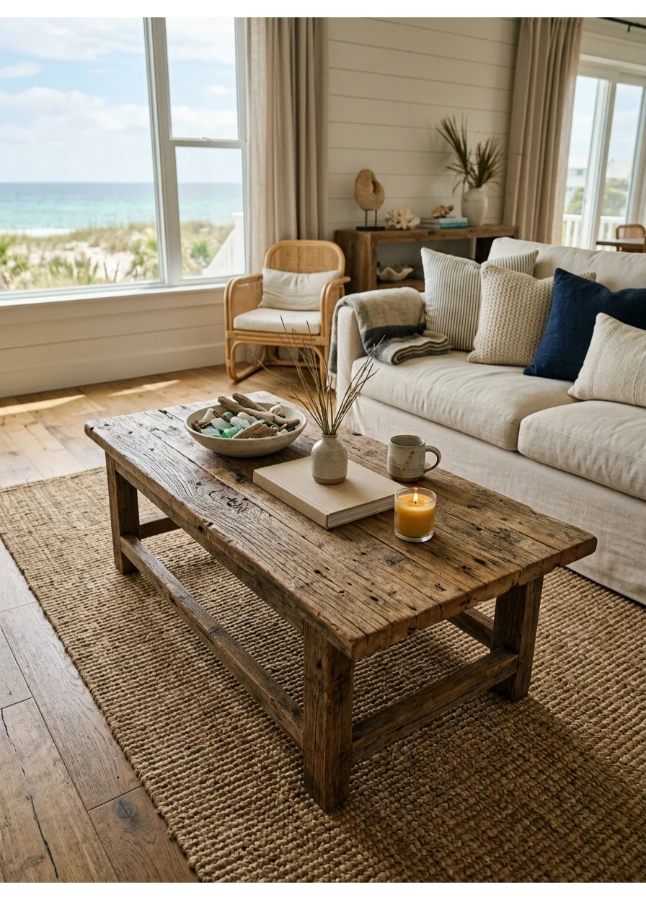
A coffee table built from reclaimed or driftwood-style timber, left with visible grain and a slightly weathered finish, brings genuine texture that a perfectly smooth, factory-finished table can’t replicate. Coastal interiors don’t need pristine wood to feel considered, in fact, the opposite is often true.
This piece pairs well styled the same way you’d approach a coffee table tray display elsewhere, keeping the items on top simple and restrained.
8. An L-shaped sofa for a relaxed, family-friendly layout
Coastal living rooms are built for lounging, not formal seating.
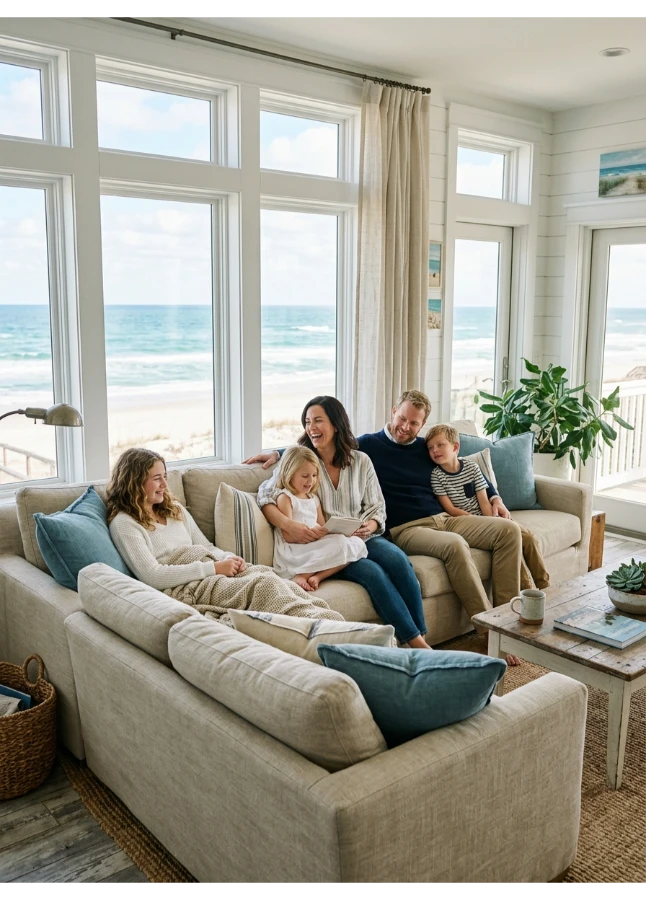
An L-shaped sofa, upholstered in a durable linen or cotton blend, gives a coastal living room enough relaxed seating for a full family without needing several separate pieces of furniture. The same principles that apply to any L-shaped sofa arrangement carry over well here, just filtered through a softer, beachier palette.
Layering the sofa with plenty of throw pillows and a woven throw blanket adds the cozy comfort this style depends on.
Natural Materials and Texture
9. A natural jute or sisal rug
Underfoot texture ties the whole coastal look together.
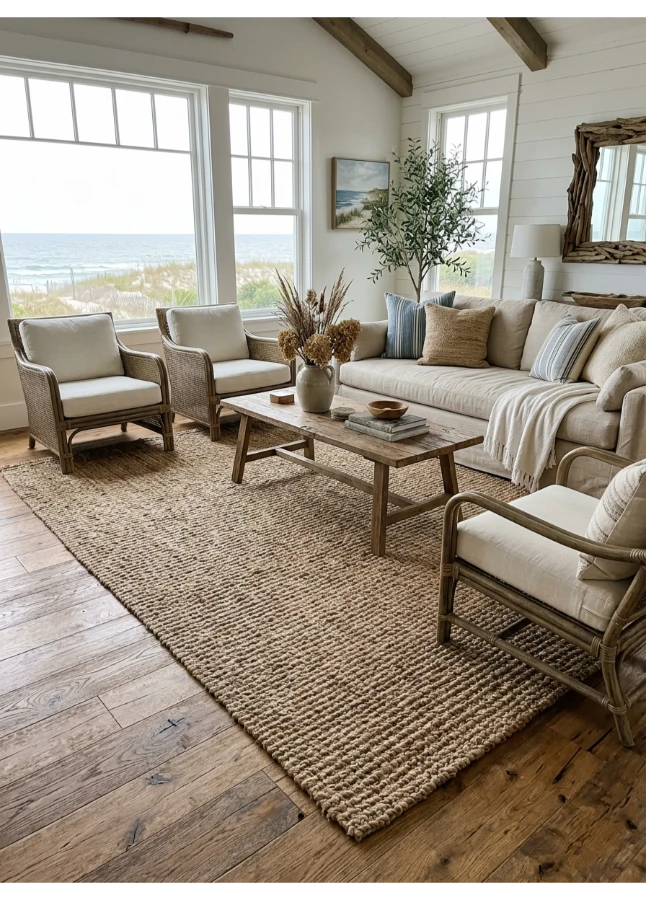
A jute or sisal rug brings genuine natural texture to the floor while hiding sand and everyday wear far better than a delicate wool or silk rug would. This practicality, paired with the organic look, is exactly why natural fiber rugs remain a defining feature of the style.
Layering a smaller, softer rug on top near the main seating area adds comfort without losing the jute’s texture underneath.
10. Rattan and woven accent pieces
Woven texture adds warmth without adding color.
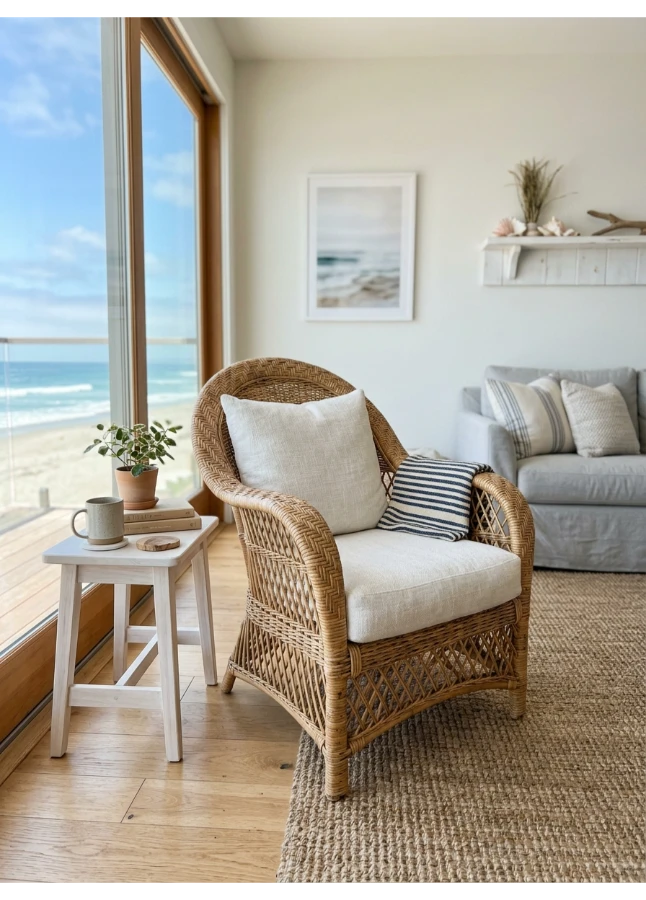
Rattan chairs, baskets, or pendant light fixtures bring genuine warmth and texture to a room that could otherwise feel a little too crisp and white. This material choice is one of the fastest ways to soften an all-neutral color scheme.
Mixing rattan with the reclaimed wood elsewhere in the room ties the natural materials together into one cohesive story.
11. A vintage stool or dough bowl as a side table
Unexpected, functional pieces add real character.
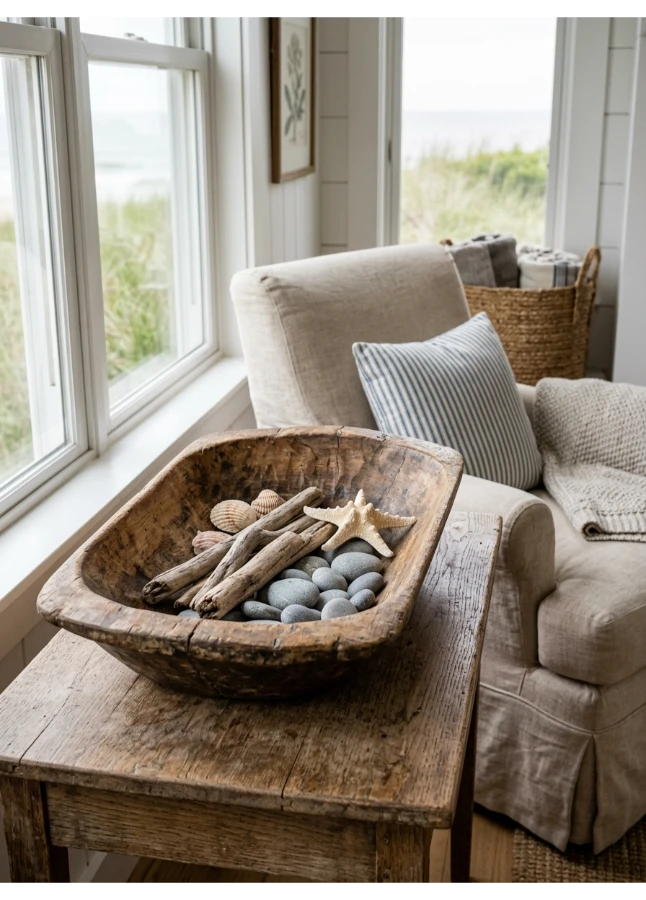
A vintage wood stool used as a small side table, or a dough bowl styled with a few natural accents, brings a collected, lived-in quality that new furniture alone doesn’t provide. Wooden oars and other found nautical pieces work the same way when used sparingly.
These pieces work best when they look like they were genuinely found rather than bought specifically to look coastal.
12. Weathered wood paneling or accent trim
Texture on the walls, not just the furniture, deepens the room.
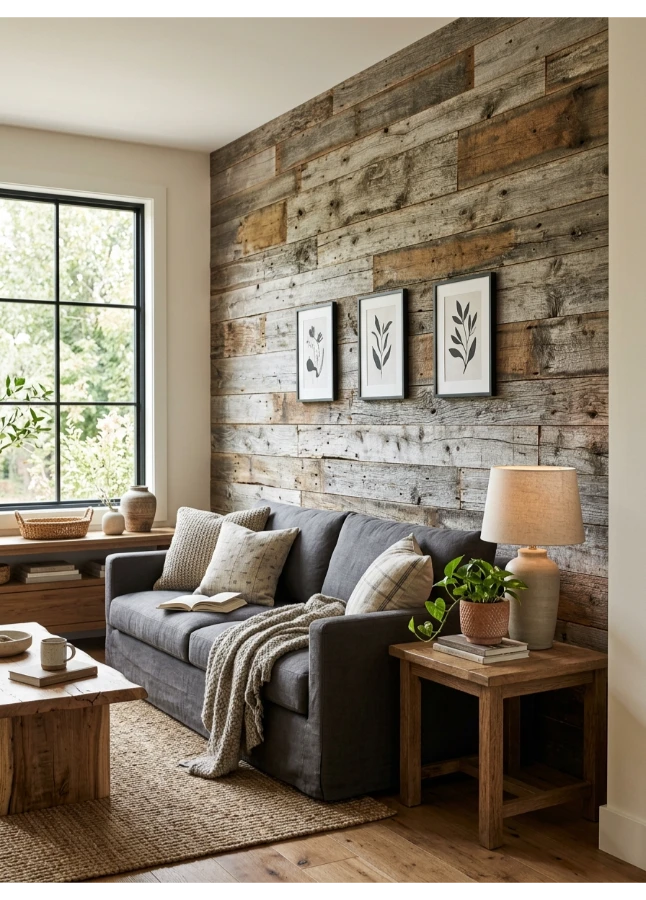
A section of weathered or reclaimed wood paneling, whether behind the sofa or along a single wall, breaks up an all-white room and ties in the same organic texture found in the furniture. This is a bigger project than most on this list, but it adds real architectural interest.
Pairing this wall treatment with spotted gum or a similar timber flooring creates a more complete, cohesive material story throughout the room.
13. Real greenery, especially palms and fiddle leaf figs
Plants bring the coastal landscape indoors in the most literal way.
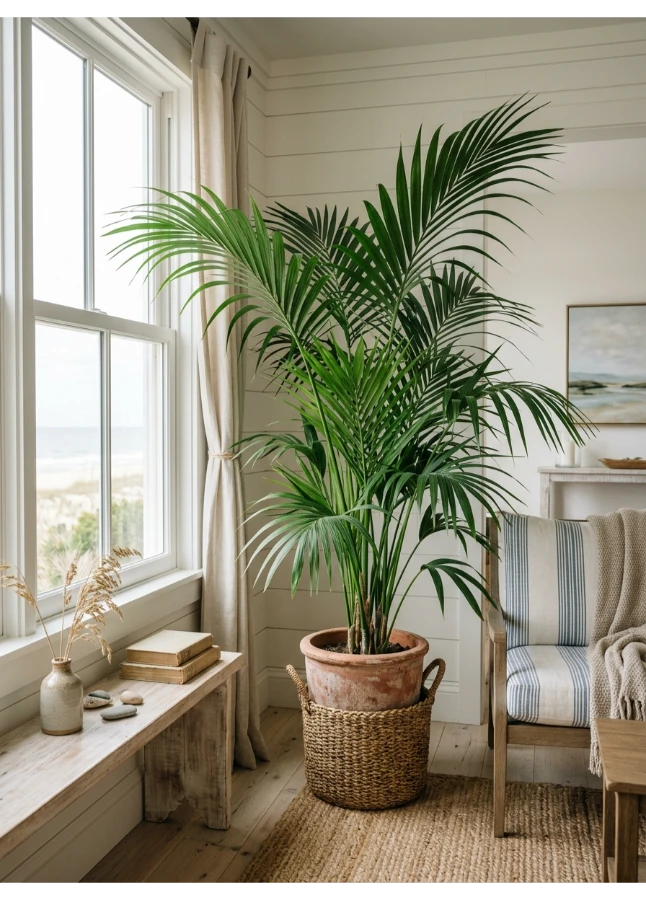
A palm, fiddle leaf fig, or a cluster of succulents brings genuine life and a coastal-adjacent plant variety into the room, working especially well near a bright window. These plants suit indoor light conditions well while echoing the kind of greenery you’d find near an actual coastline.
A simple woven or ceramic pot keeps the plant in line with the room’s overall natural material palette.
Coastal Accents Done Right
14. One well-chosen shell piece
Shells are back, but the trick is restraint.
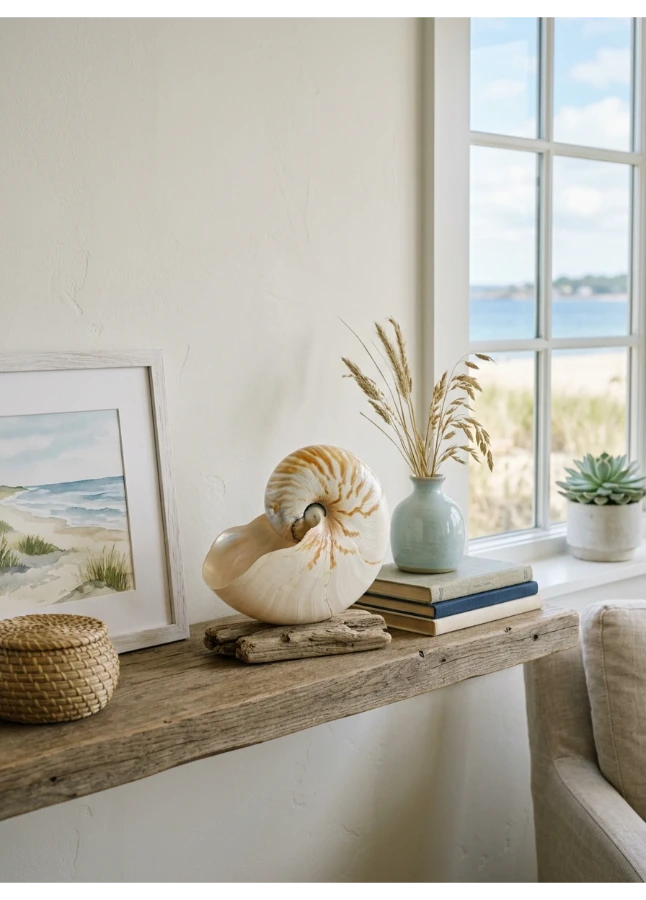
A single striking shell object, whether a scalloped-edge bowl or a bold shell print on one cushion, brings the resurgence of shell motifs into the room without tipping into a beach gift shop look. The key is picking one strong piece rather than scattering several small shells around.
A scalloped-edge piece of furniture, like an accent chair or a mirror frame, works the same way as a subtle nod to the trend.
15. A ticking stripe fabric detail
A subtle pattern that reads as coastal without being literal.
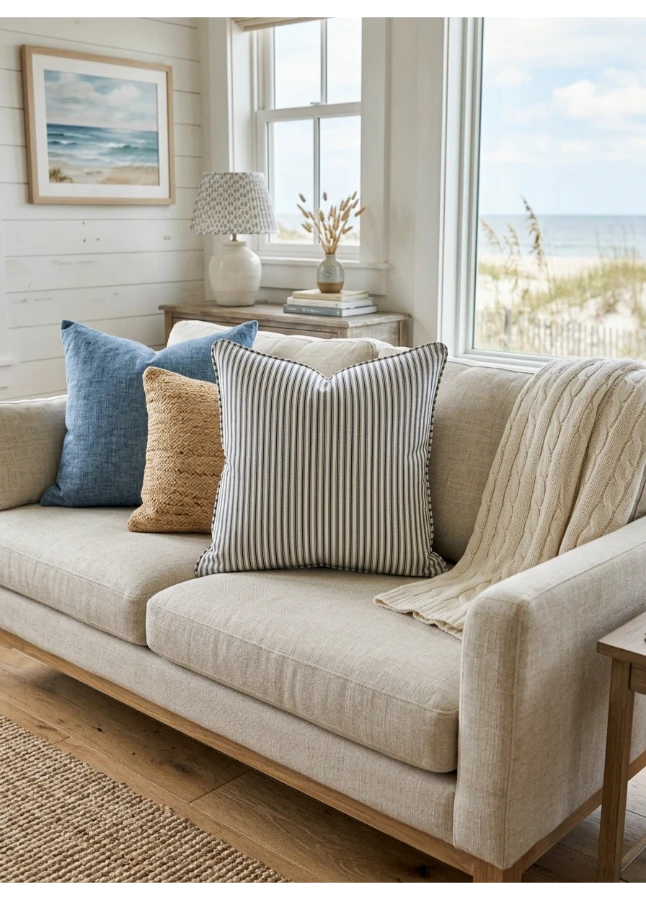
A classic ticking stripe, in navy or soft blue against a cream background, brings pattern into the room in a way that feels timeless rather than themed. This fabric detail shows up frequently in current coastal design specifically because it’s subtle enough to work in almost any room.
Using it sparingly, on one or two pillows rather than a full upholstered piece, keeps the pattern feeling intentional.
16. Sea glass or coral-inspired glassware
Small colored glass pieces catch light beautifully.
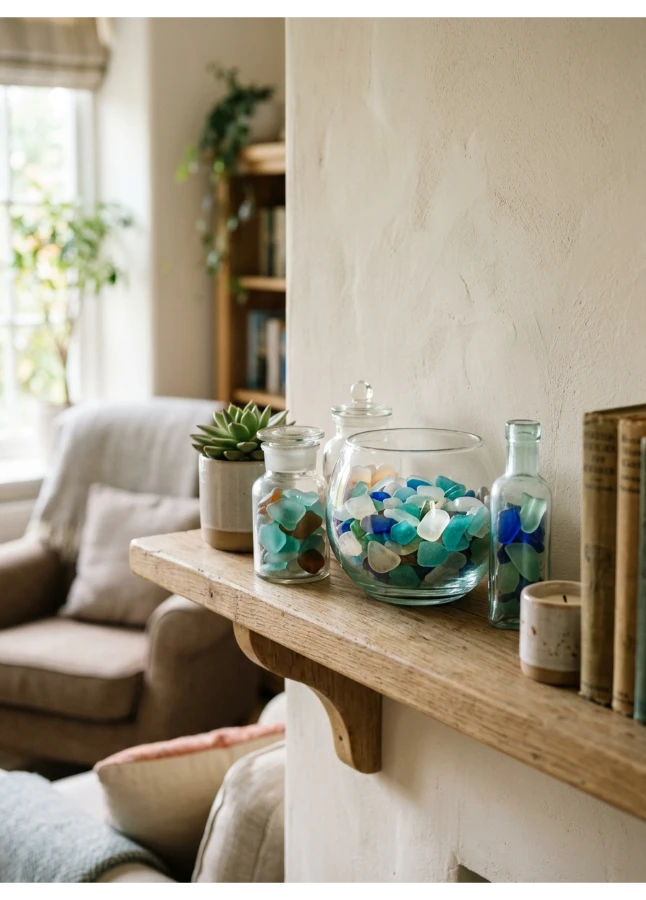
A few pieces of sea glass colored glassware, in soft aqua or green tones, scattered across a shelf or coffee table, catch and scatter light the way real sea glass does. This is a low-cost, subtle way to bring color into an otherwise neutral room.
Keeping this to a small grouping rather than a full display case is what keeps it reading as elegant rather than kitschy.
17. A striped upholstered coffee table or bench
An unexpected piece that adds both function and pattern.
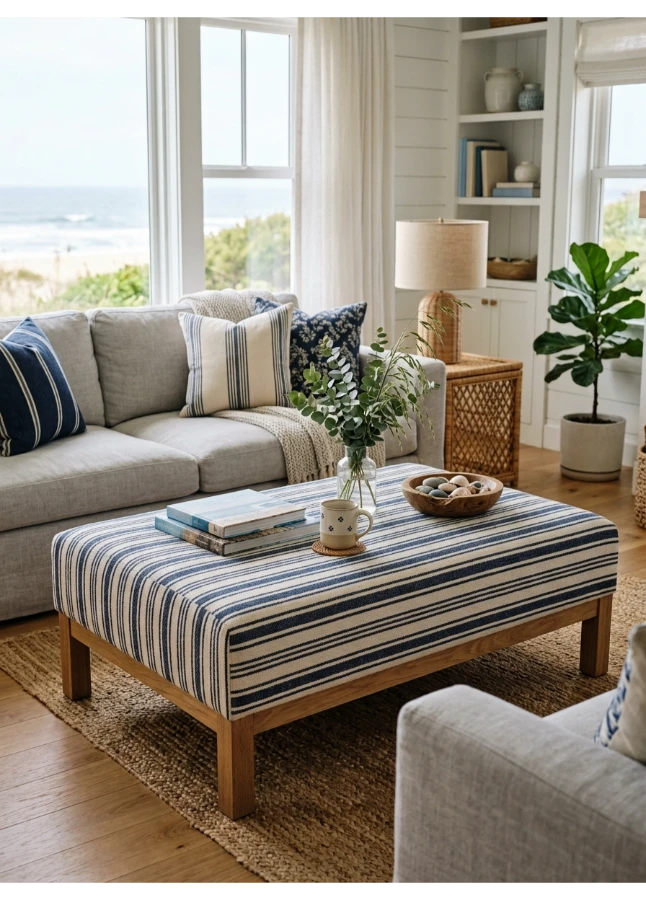
An upholstered coffee table or bench in a soft blue stripe adds a soft, tactile surface to the seating area while introducing pattern in an unexpected spot. This is a bolder choice than most items on this list, but it works well in a room that’s otherwise kept fairly neutral.
Pairing it with plain, solid-colored seating keeps the pattern from feeling like too much all at once.
Lighting and Finishing Touches
18. A woven rattan pendant light
Lighting fixtures carry the natural material theme up to the ceiling.
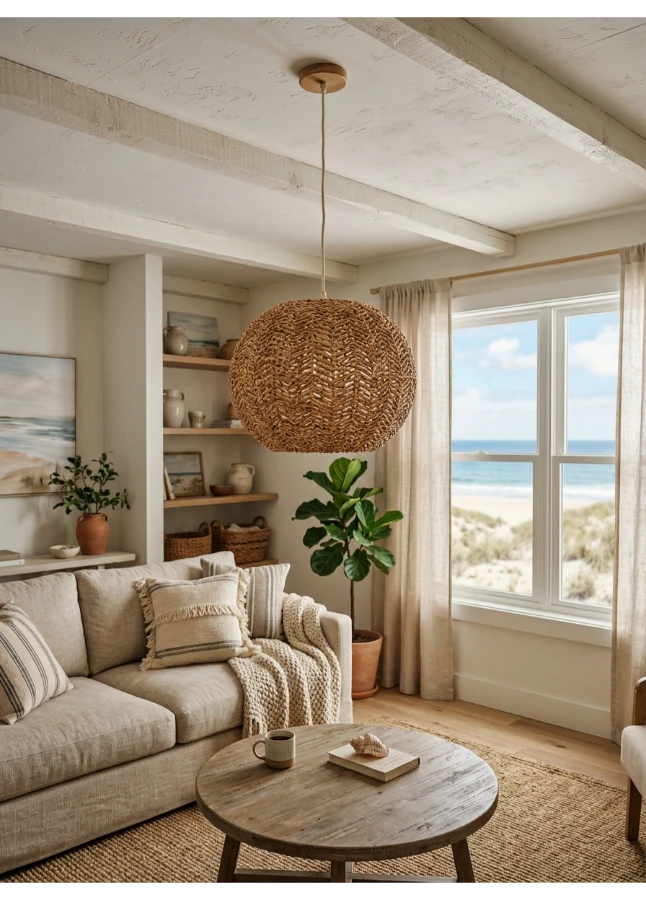
A rattan or woven pendant fixture adds texture and warm shadow play, doing more for the room’s overall feel than a plain glass or metal fixture would. This detail ties the ceiling back into the same natural material story running through the furniture below.
Choosing a warm bulb temperature keeps the light feeling soft rather than clinical in the evening.
19. A large glass or capiz shell chandelier
For a more elevated look, a statement fixture makes a real impact.
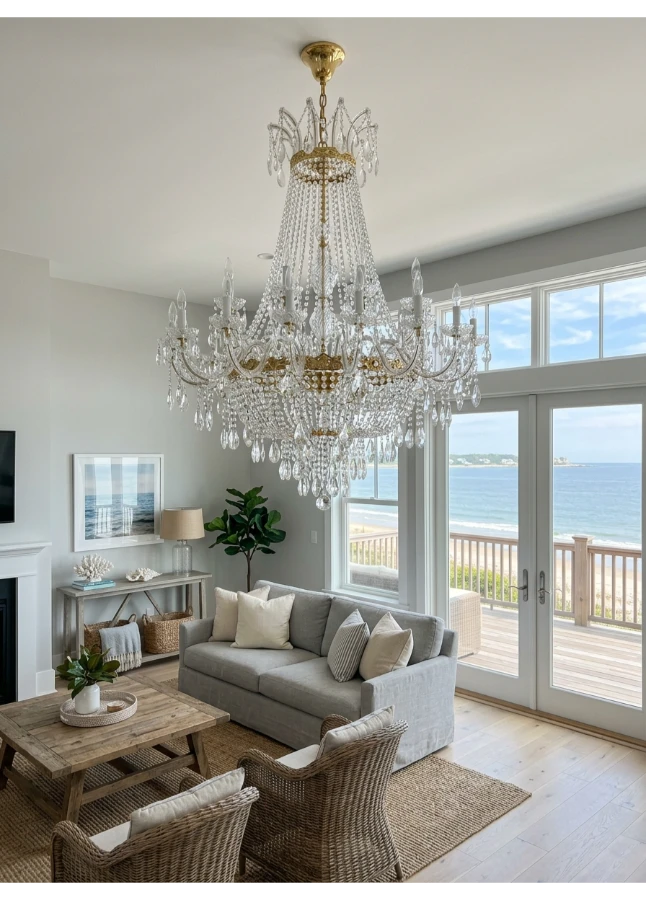
A larger glass chandelier, or one made from capiz shell panels, brings genuine elegance to a coastal living room without needing to look overtly beach-themed. This piece works especially well in a room with higher ceilings, where it can hang with real presence.
Pairing it with simpler, more casual furniture below keeps the room from feeling too formal overall.
20. Layered throw blankets and pillows
Comfort, more than any single object, defines this style.
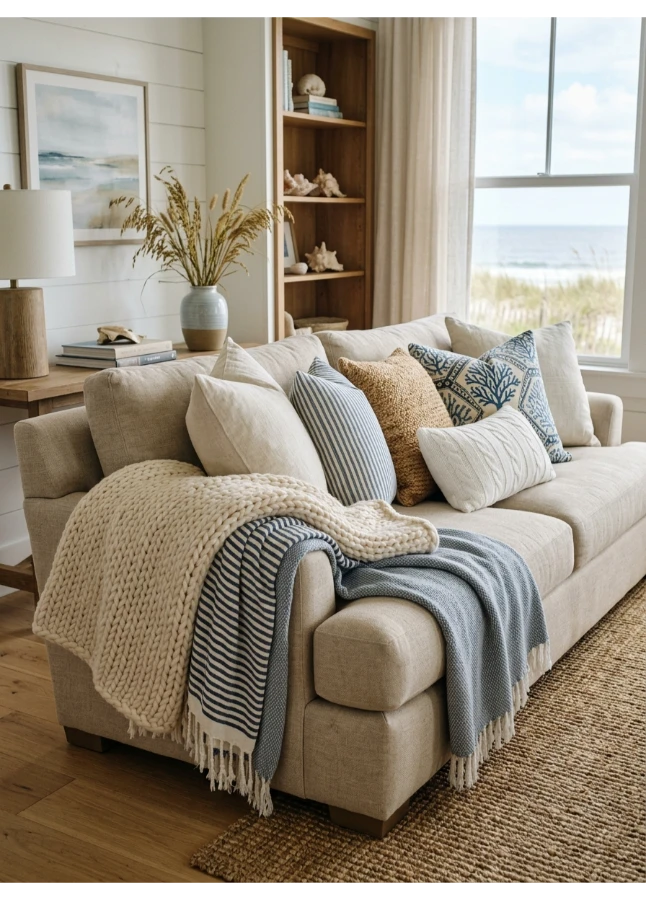
Several throw pillows and a couple of soft blankets, layered across the sofa in varying but coordinated tones, add the cozy, welcoming comfort coastal design is genuinely built around. This layering is what separates a lived-in, comfortable room from one that looks staged for a photo.
Mixing linen, cotton, and one slightly textured knit throw adds variety without introducing any new colors.
21. Books styled with natural accents
A shelf can carry the coastal theme just as well as a mantel.
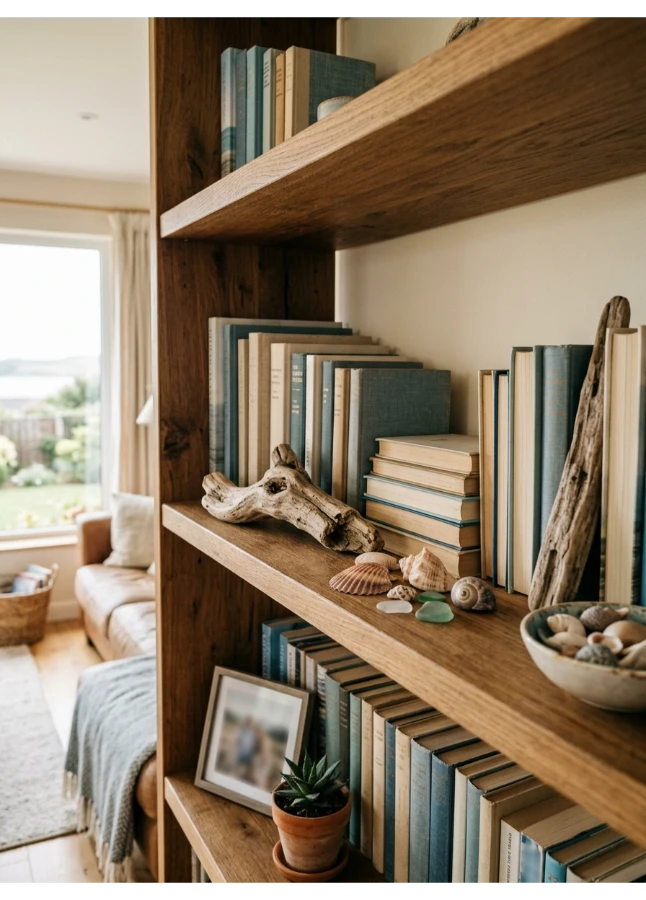
Styling a bookshelf with a mix of books, a small piece of driftwood, and one shell or coral accent creates a curated, collected look rather than a purely decorative display. This works well alongside the same principles covered in styling any bookshelf as real decor, just filtered through the coastal palette.
Leaving visible negative space between objects keeps the shelf feeling calm rather than cluttered.
22. A weathered mirror to reflect natural light
Mirrors amplify the light this whole style depends on.
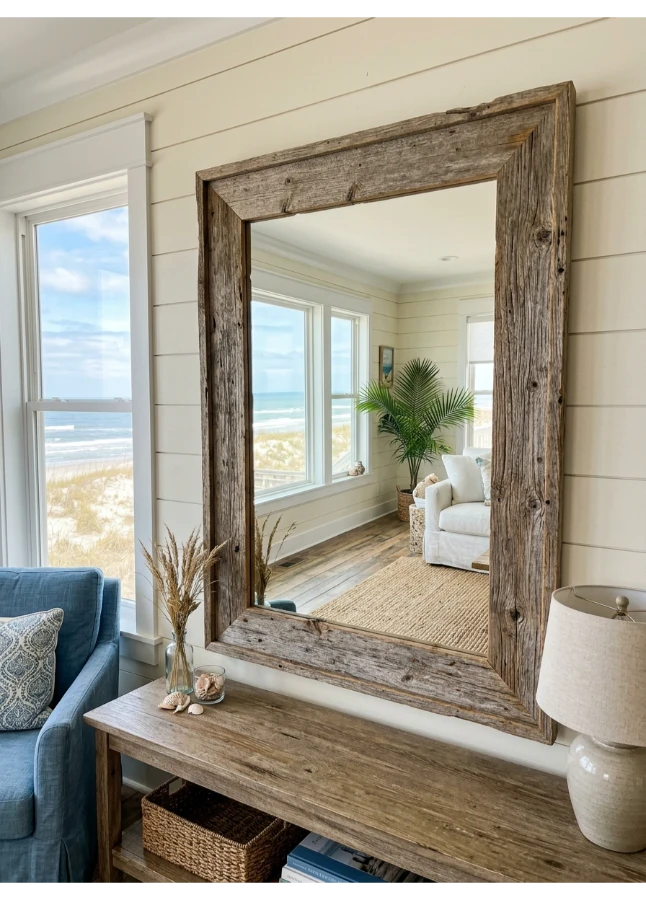
A mirror in a weathered or driftwood-style frame, positioned to reflect a window, bounces natural light back into the room while adding one more piece of textured, natural material. This detail is especially valuable in a room without a huge amount of direct sunlight.
Choosing an organically shaped or slightly irregular frame over a perfectly geometric one keeps it in line with the room’s relaxed, weathered feel.
Common Mistakes to Avoid
- Leaning too hard into nautical cliches like anchors and rope trim, which reads as themed rather than genuinely coastal.
- Choosing stark, bright white over the warmer, softer tones that actually define the current look.
- Skipping durable, washable fabrics in favor of delicate upholstery that won’t hold up to real family life.
- Displaying too many shells or beach souvenirs at once instead of choosing one or two strong pieces.
Frequently Asked Questions
What colors define coastal living room design in 2026?
Warm, soft whites, muted blues, and sandy neutrals, layered in subtle tonal variations rather than one flat color across every surface.
Do I need to live near the beach for a coastal living room to work?
No, the style relies on natural materials, soft light, and a relaxed color palette that works in any home, regardless of location.
How do I avoid a coastal room looking too themed or kitschy?
Keep beach-specific accents like shells or coral to just one or two strong pieces, and let natural materials and color do most of the work instead.
Conclusion
The coastal living rooms that actually feel like a genuine beach retreat lean on real materials, reclaimed wood, natural fiber rugs, woven textures, and a soft, layered color palette rather than a room full of nautical props. Start with a washable slipcovered sofa and a jute rug as your foundation, then add just one or two subtle coastal accents to finish the look without tipping into theme-park territory.