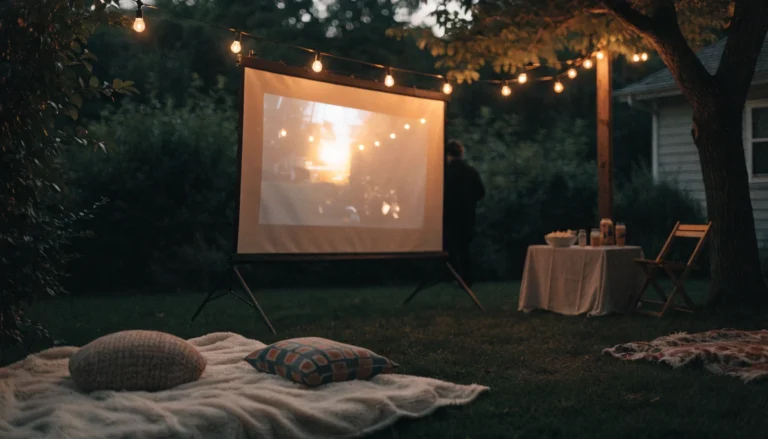
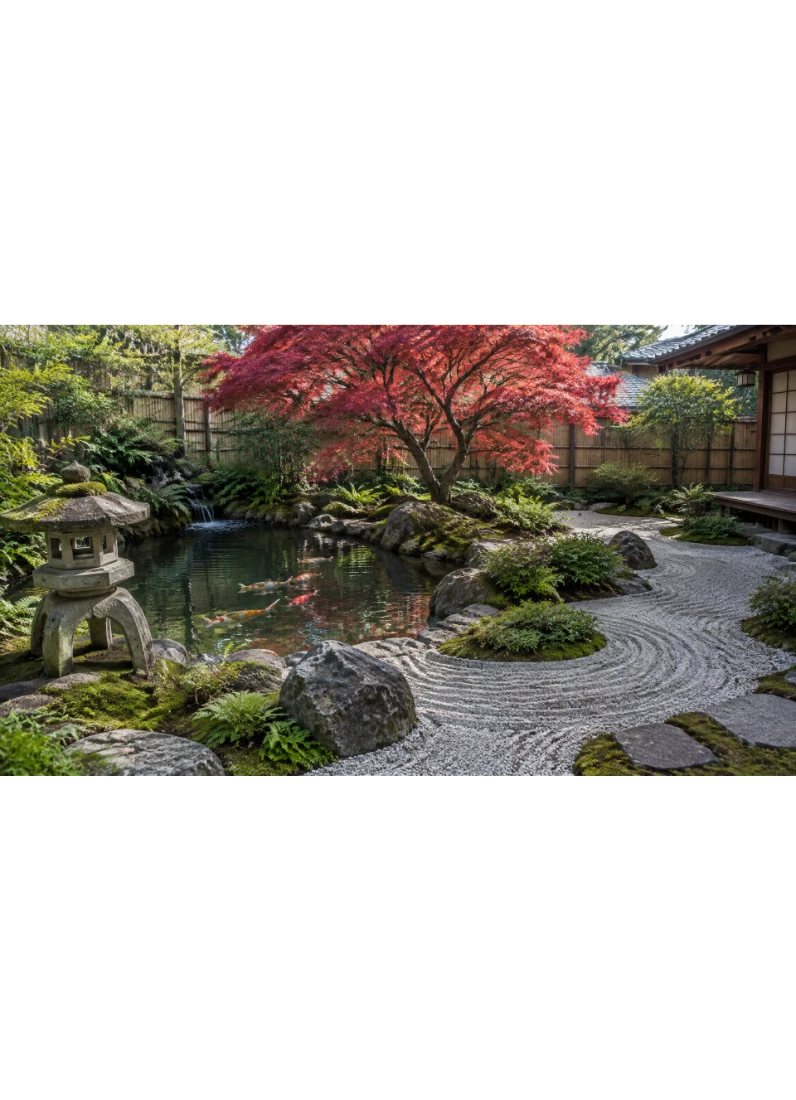
A Japanese garden isn’t built by adding more decoration, it’s built by taking most of it away. Every rock, plant, and path is placed with real intention, which is exactly what gives these spaces their sense of calm.
You don’t need acres of land or a lifetime of training to bring some of that peace into your own backyard. Whether you have a sprawling yard or a small balcony corner, the same core ideas, water, stone, careful plant choices, scale down or up without losing what makes them work. Every idea below is one piece of that larger philosophy.
Quick Picks
- Best focal point: A small pond or water basin
- Best for a compact space: A raked gravel Zen corner
- Best plant choice: A Japanese maple for seasonal color
- Best entrance detail: A simple wood torii gate or arbor
Did You Know?
Japanese gardens are intentionally asymmetrical, not because of a mistake, but because true balance in this design tradition comes from how elements relate to each other, not from mirroring one side against the other. A garden that “grew out of the earth spontaneously,” as one landscape designer puts it, is actually the result of very careful planning.
Before You Start
- Resist the urge to add more. Restraint is the actual design principle here, not a lack of budget.
- Let moss and patina develop naturally. Scrubbing stones and paths clean works against the aged, settled look these gardens are built on.
- Choose a shady spot for sensitive plants. Many traditional Japanese garden plants struggle in intense afternoon sun and need well-draining, slightly acidic soil.
- Plan for asymmetry, not mirrored symmetry. Balance comes from how elements relate, not from matching one side to the other.
- Think in seasons, not just one moment. Choosing plants for spring blossoms, fall color, and winter structure keeps the garden alive year-round.
Water Features
1. A small pond as the garden’s centerpiece
Water is often the very first thing that comes to mind with this style, and for good reason.
**Image prompt:** Wide shot of a small backyard pond surrounded by Japanese maples and stones, natural daylight, realistic tranquil water feature detail, no text.
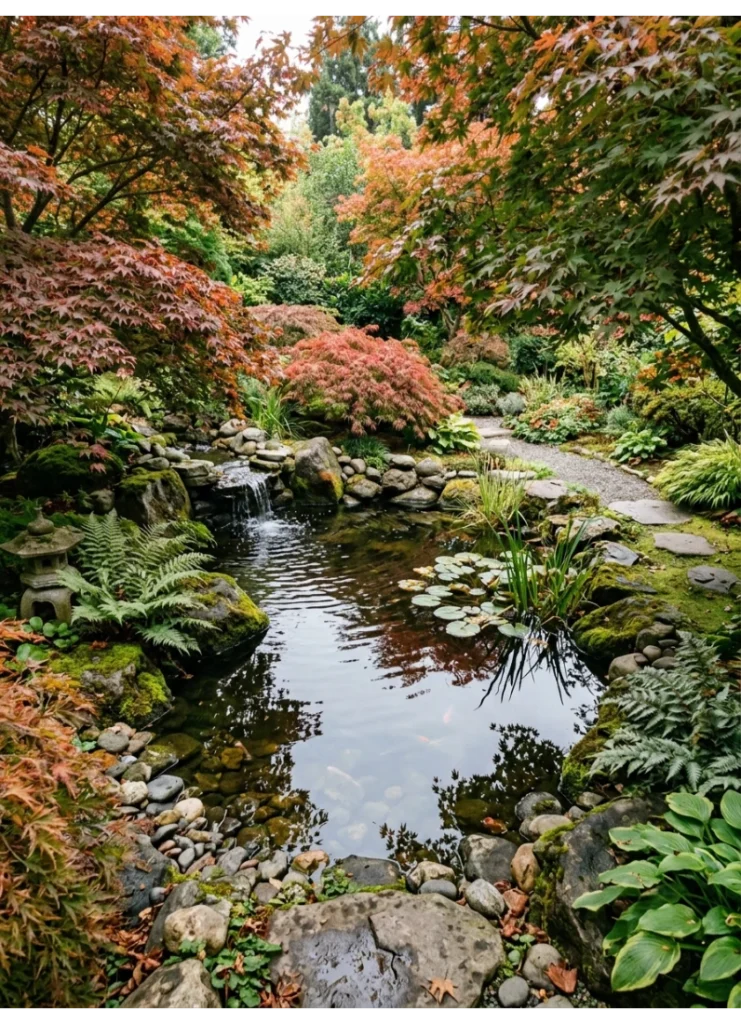
A pond, even a modest one, gives the garden a genuine focal point and a real sense of tranquility that dry landscaping alone can’t fully replicate. The planting directly around it matters just as much as the water itself, since reflections and overhanging branches complete the overall effect.
A weeping willow bending toward the water’s surface, or a Japanese maple reflecting its color across it, extends the pond’s impact well beyond its actual size.
2. A tsukubai stone water basin
A traditional, space-conscious alternative for a smaller yard.
**Image prompt:** Close-up shot of a traditional stone tsukubai water basin with a bamboo spout, natural daylight, realistic authentic ritual water feature detail, no text.
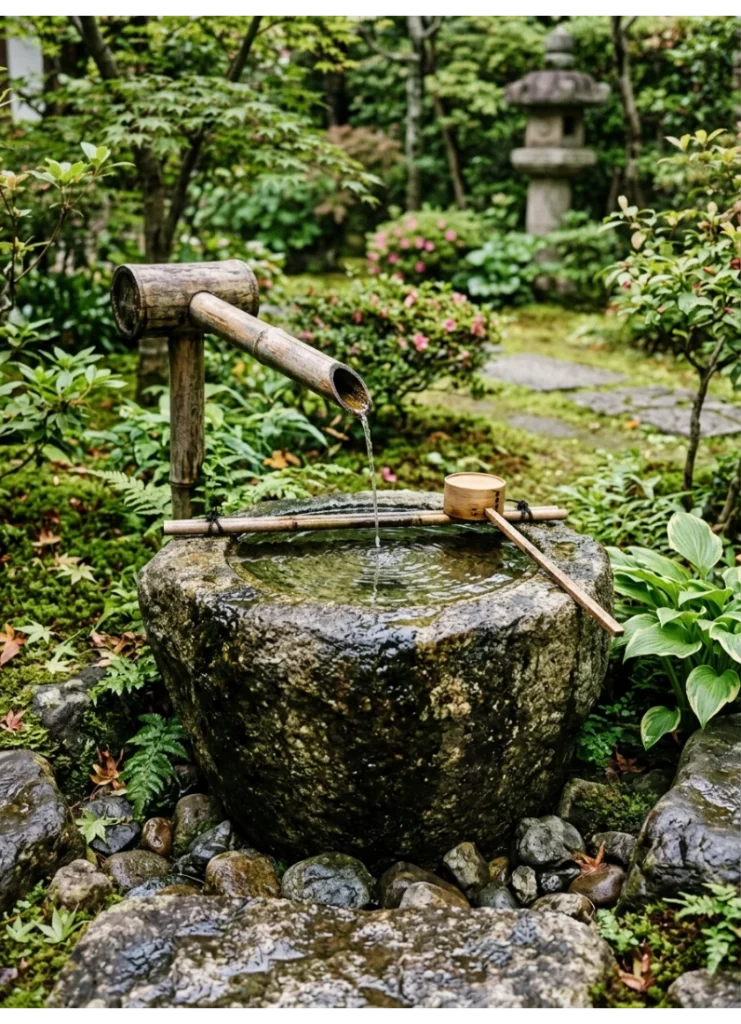
A tsukubai, a low stone basin traditionally used for a purification ritual before tea ceremonies, works beautifully as a small, self-contained water feature in a space too tight for a full pond. The gentle sound of water trickling into it adds ambiance without needing much room at all.
This piece works especially well tucked near a garden entrance or seating area, where its quiet sound carries.
3. A simple recirculating fountain
Quiet water sound, not dramatic spray, is the actual goal here.
**Image prompt:** Close-up shot of a simple stone recirculating fountain in a garden setting, natural daylight, realistic understated water feature detail, no text.
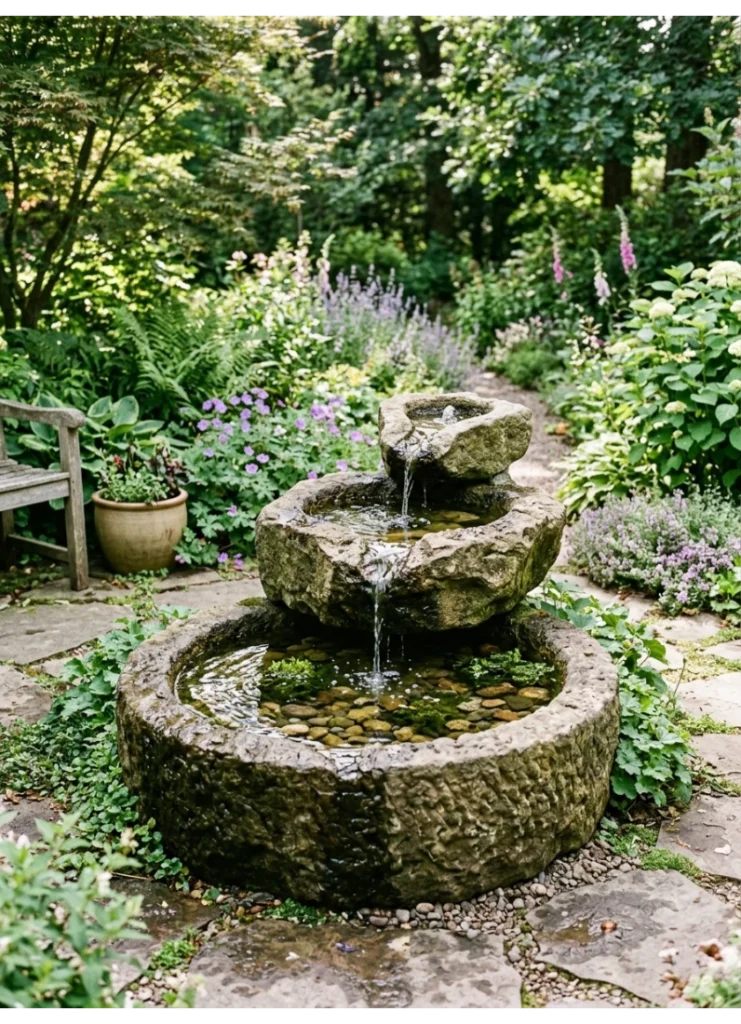
A small, quiet fountain focuses on creating a peaceful trickle of sound rather than a loud, showy spray, which fits the restrained, contemplative feel this style is built on. Landscape designers specifically recommend this kind of understated water feature over anything louder or more elaborate.
Positioning it somewhere visible from a seating area lets you actually enjoy the sound while relaxing outdoors.
4. A koi pond with a bridge crossing
For a larger backyard, this combination becomes a genuine destination.
**Image prompt:** Wide shot of a koi pond with a small wooden bridge crossing it in a backyard Japanese garden, natural daylight, realistic classic destination feature detail, no text.
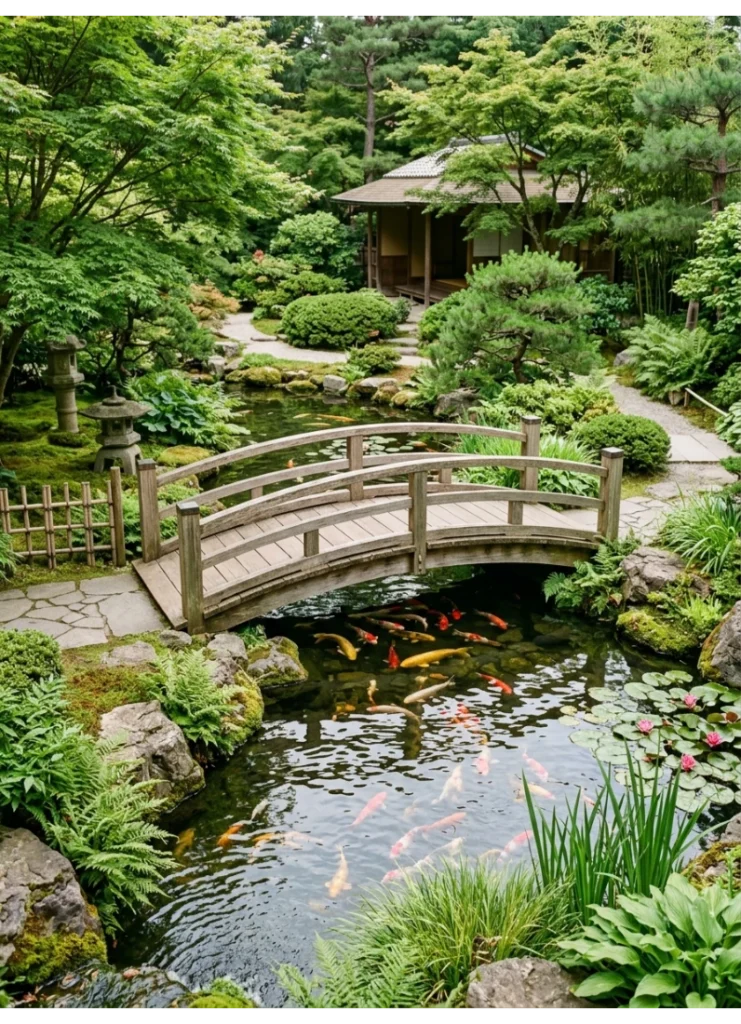
A koi pond, paired with a small arched wooden bridge, gives a larger garden a genuine sense of journey, somewhere to walk toward and pause rather than just a view from a window. The koi themselves add movement and color that a still pond alone doesn’t offer.
This is a bigger investment and requires real upkeep, but it’s one of the most iconic elements associated with this garden style.
Stone and Rock Elements
5. A raked gravel dry landscape
Rock and gravel do the job that water does in a garden without any actual water at all.
**Image prompt:** Overhead shot of a raked gravel dry Zen garden with a few placed stones, natural daylight, realistic minimalist karesansui detail, no text.
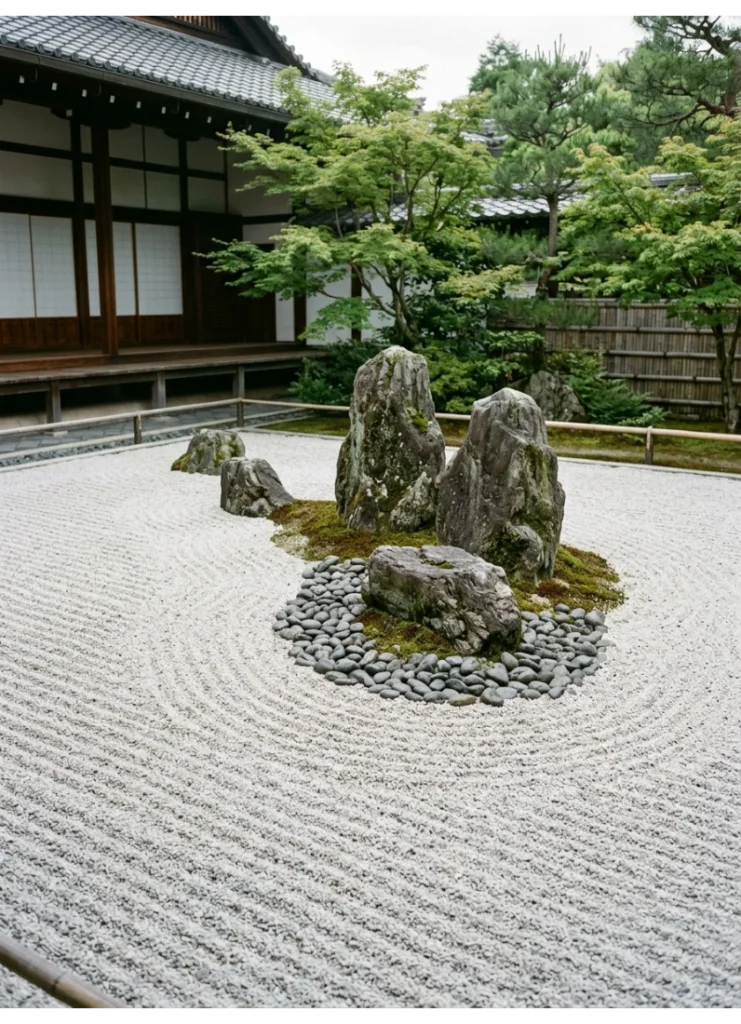
Fine gravel or sand, raked into flowing lines around a few carefully placed stones, represents water and mountains symbolically, a classic dry landscape approach that needs far less maintenance than an actual pond. This works beautifully as a compact, meditative corner in even a small yard or balcony.
Raking the pattern yourself becomes part of the garden’s ongoing ritual, not just a one-time setup task.
6. Traditional stone lanterns
A defining decorative element that also serves a genuine function after dark.
**Image prompt:** Close-up shot of a traditional Japanese stone lantern positioned along a garden path, natural daylight, realistic classic decorative feature detail, no text.
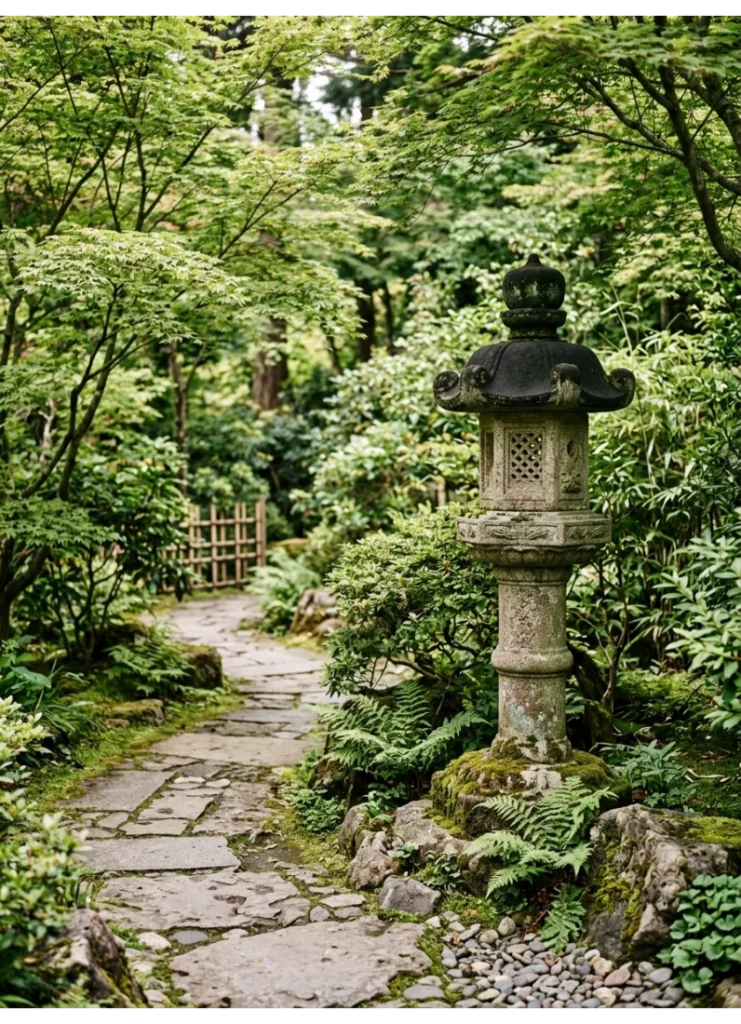
A stone lantern, placed near a path or beside water, is one of the most recognizable elements of this garden style, adding both visual weight and, if fitted with a candle or small light, genuine illumination in the evening. Choosing just one or two rather than several scattered throughout keeps the placement feeling intentional.
Positioning it at a slight angle rather than dead center reinforces the asymmetry this style depends on.
7. Carefully placed boulders as focal stones
Rock arrangement is treated as real artistry in this tradition, not just landscaping filler.
**Image prompt:** Close-up shot of a few large boulders arranged asymmetrically in a garden bed, natural daylight, realistic deliberate rock placement detail, no text.
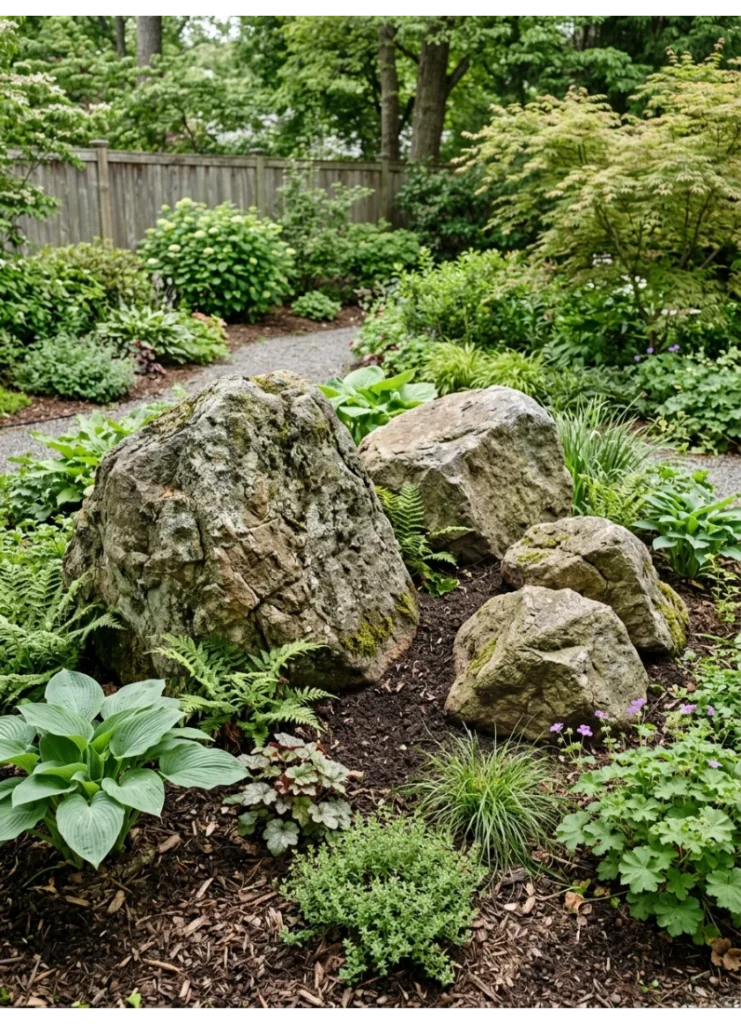
A small grouping of boulders, in odd numbers and varying sizes, arranged to look as though they settled there naturally, represents mountains and gives the garden real structural weight. This kind of stone arrangement is one of the most studied aspects of traditional Japanese garden design.
Leaving the stones’ natural texture and any moss growth undisturbed adds to their sense of age and permanence.
8. Preserved moss instead of manicured lawn
Letting nature take over is a genuine design choice, not neglect.
**Image prompt:** Close-up shot of a lush moss garden covering the ground in a shaded backyard area, natural daylight, realistic soft green groundcover detail, no text.
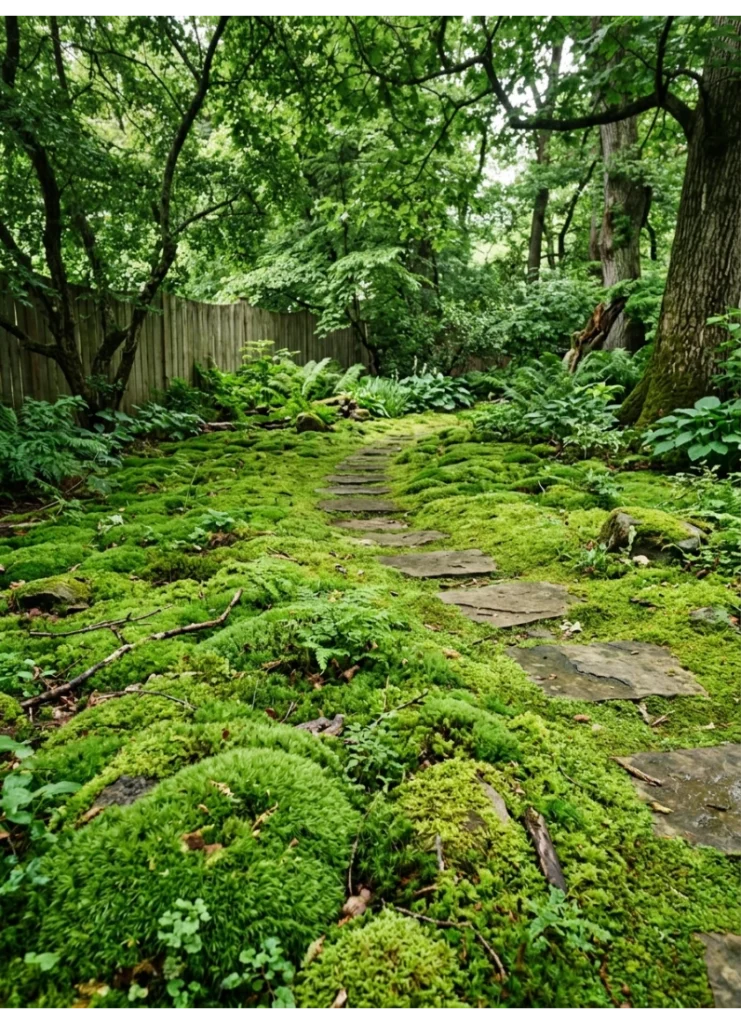
A moss garden, left to grow over stones and pathways rather than scrubbed clean, has become a favored solution for a shady yard where grass struggles to thrive anyway. The soft green carpet reads as considerably more serene than a patchy, sun-starved lawn.
This approach also requires far less mowing and maintenance than traditional turf grass once it’s established.
9. Stepping stones through a garden bed
A path made of individual stones slows the pace of walking through the space.
**Image prompt:** Close-up shot of natural stone stepping stones set through a moss and gravel garden bed, natural daylight, realistic deliberate walking path detail, no text.
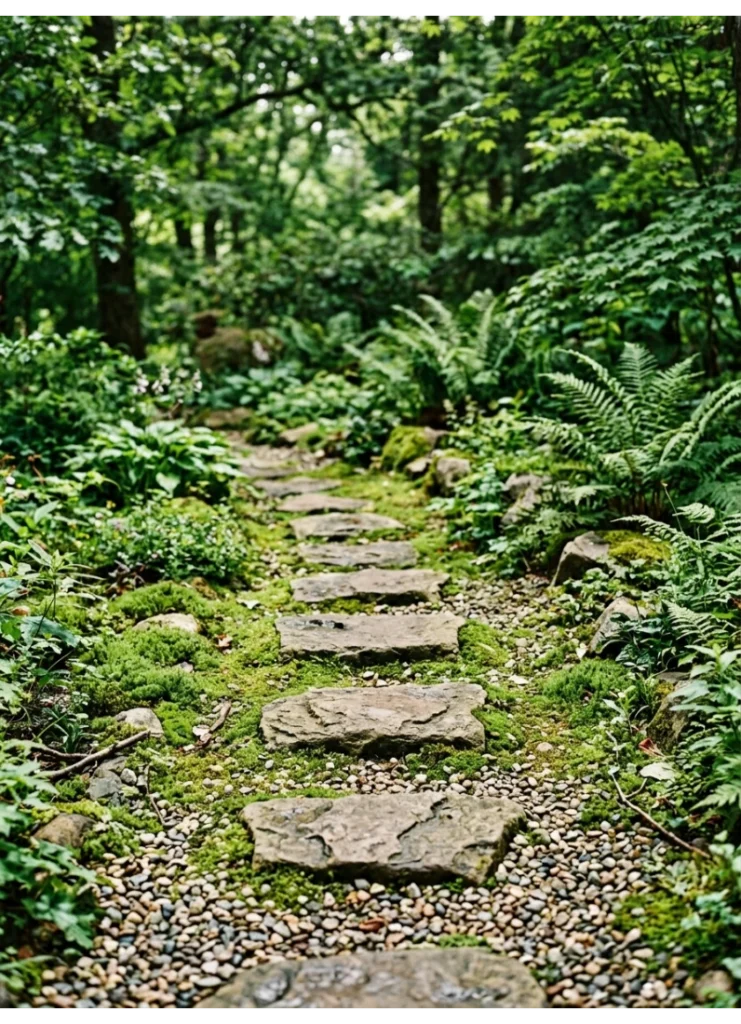
Irregularly shaped stepping stones, spaced slightly apart, force a slower, more deliberate walking pace through the garden, which is exactly the kind of mindful movement this design style is meant to encourage. This works well leading toward a pond, a bench, or a garden’s quiet far corner.
Choosing stones with varied natural shapes rather than uniform pavers keeps the path feeling organic.
Plants and Trees
10. A Japanese maple for seasonal color
Few trees do more work for this garden style in every season.
**Image prompt:** Close-up shot of a Japanese maple tree with red autumn foliage in a backyard garden, natural daylight, realistic vibrant seasonal color detail, no text.
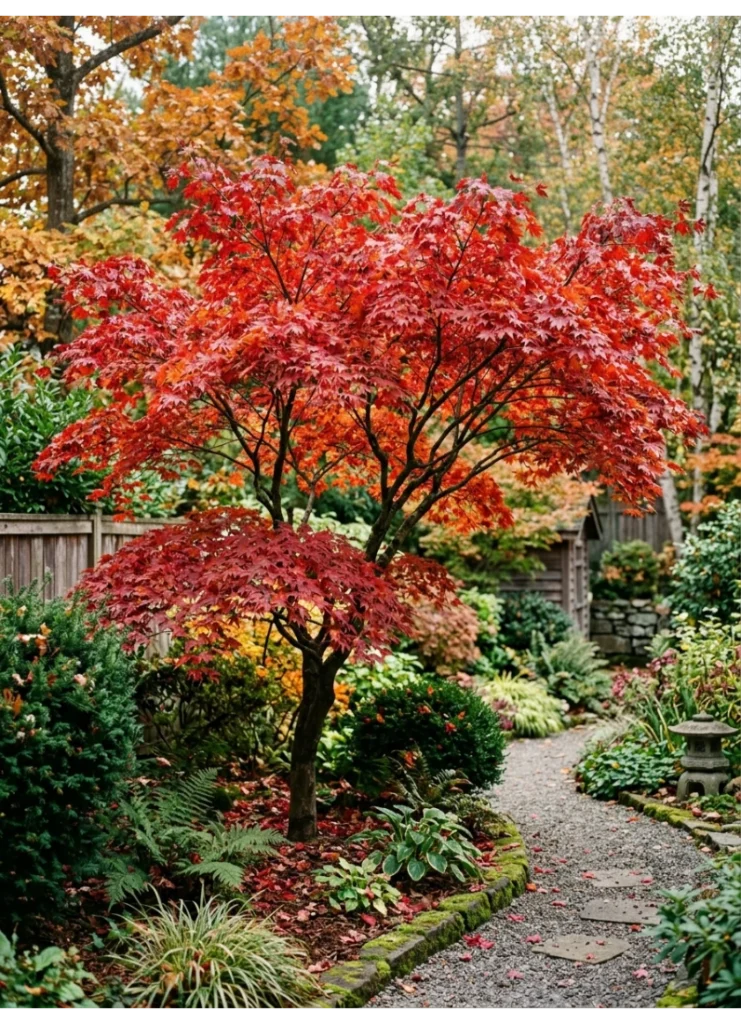
A Japanese maple brings fire-colored gold and red foliage in fall, delicate structure in winter, and fresh green growth in spring, making it one of the most valuable single plants in this whole style. Its branches also cast beautiful, shifting shadows across gravel or stone throughout the day.
Placing it near water lets the tree’s color reflect across the surface, doubling its visual impact.
11. Cloud-pruned shrubs
A pruning technique that turns ordinary shrubs into living sculpture.
**Image prompt:** Close-up shot of a cloud-pruned shrub shaped into rounded tiers in a Japanese garden, natural daylight, realistic sculptural pruned detail, no text.
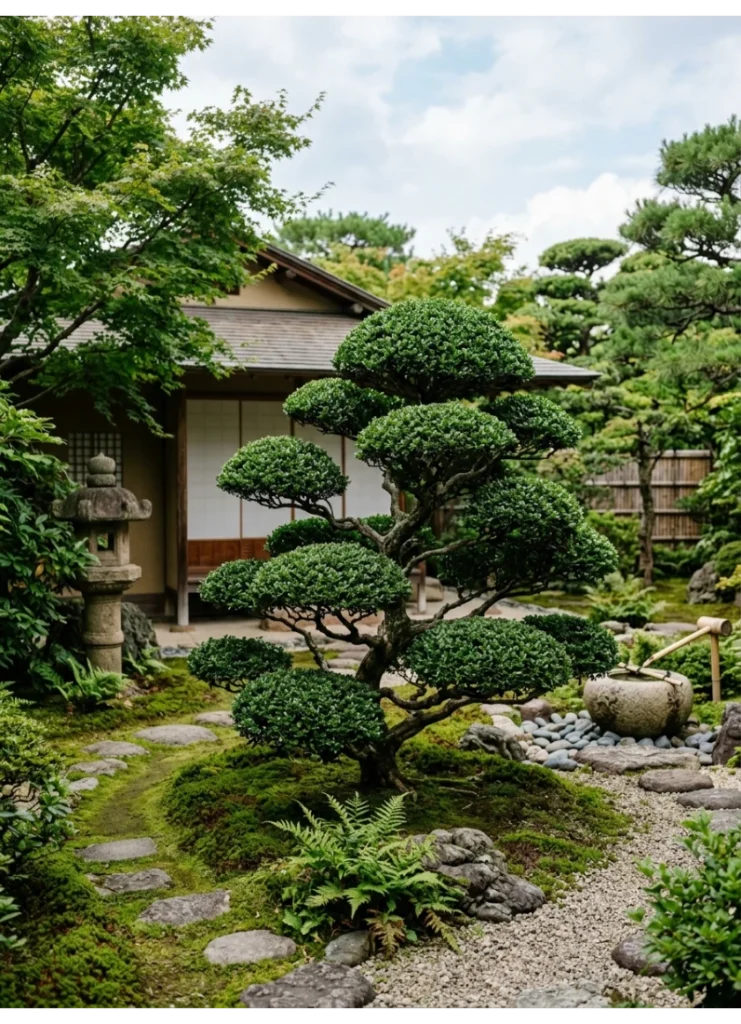
Cloud pruning, shaping a shrub’s foliage into rounded, floating clusters along its branches, transforms an ordinary bush into a genuine piece of living art. This technique takes real patience and regular upkeep, but the result is unmistakably tied to this garden tradition.
Starting with a naturally suitable species, like boxwood or juniper, makes the pruning process considerably more manageable.
12. A potted bonsai as a focal accent
A single, carefully tended tree can carry as much presence as an entire bed of plants.
**Image prompt:** Close-up shot of a bonsai tree displayed on a wooden stand in a garden, natural daylight, realistic miniature focal accent detail, no text.
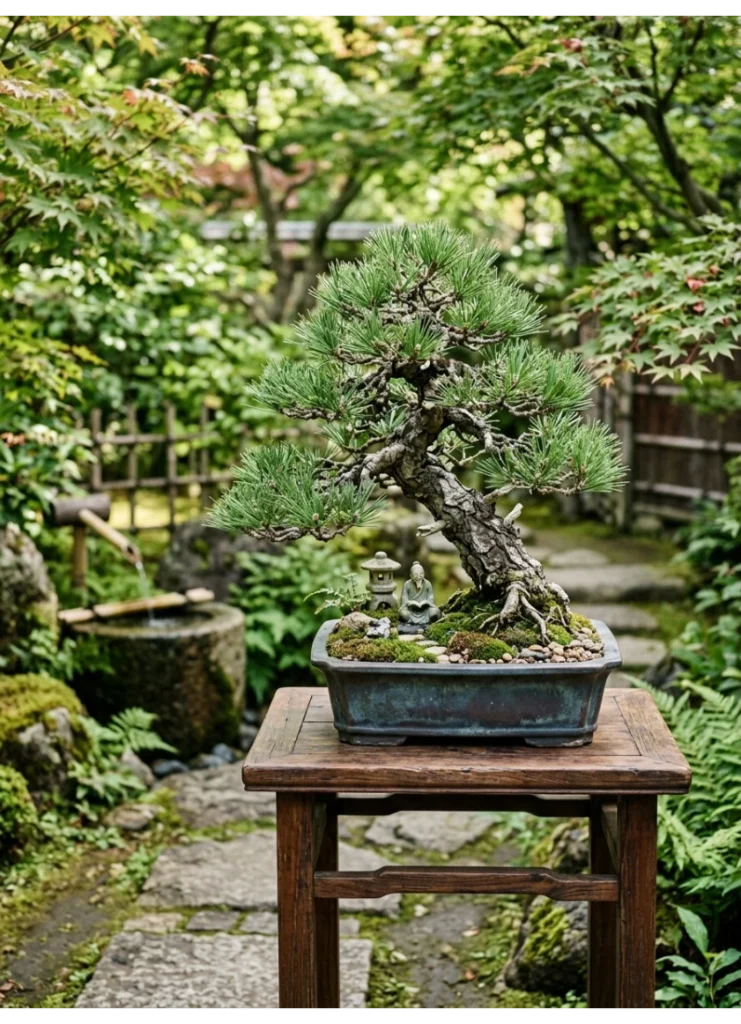
A bonsai, displayed on its own dedicated stand near an entrance or seating area, brings the patient, miniaturized artistry central to this style into a single, portable piece. This is a strong option for anyone without the space or climate for larger specimen trees.
Bonsai care does require genuine ongoing attention, so it suits someone willing to treat the practice as an actual hobby.
13. Shade-loving plants for a north-facing garden
Many traditional plants for this style genuinely prefer to avoid harsh afternoon sun.
**Image prompt:** Close-up shot of shade-loving ferns and azaleas planted under large trees in a garden, natural daylight, realistic cool shaded planting detail, no text.
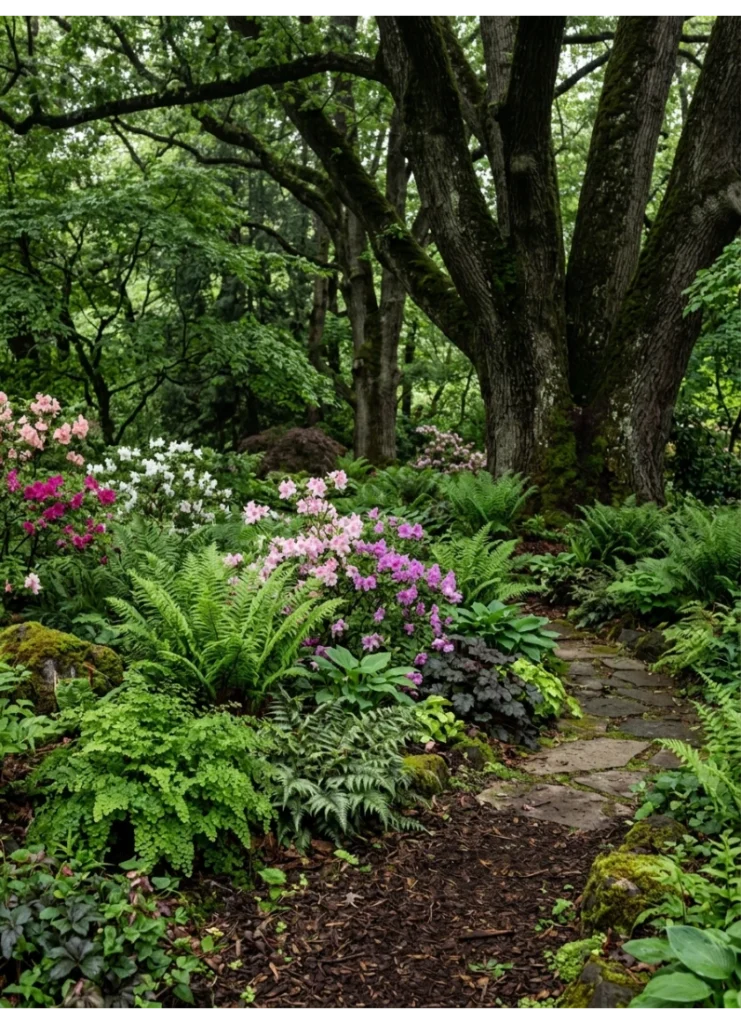
Ferns, azaleas, and other shade-tolerant plants thrive in a north-facing garden or beneath large existing trees, since many classic Japanese garden species are sensitive to intense summer heat. These plants also generally prefer more acidic, well-draining soil, so amending with an azalea mix can help them establish.
This is worth planning for from the start, since fighting a sunny yard’s natural conditions leads to far more ongoing maintenance.
14. Bamboo for natural screening
A fast-growing plant that provides both privacy and an authentic visual texture.
**Image prompt:** Close-up shot of a bamboo grove used as a natural privacy screen in a backyard garden, natural daylight, realistic tall textured screening detail, no text.
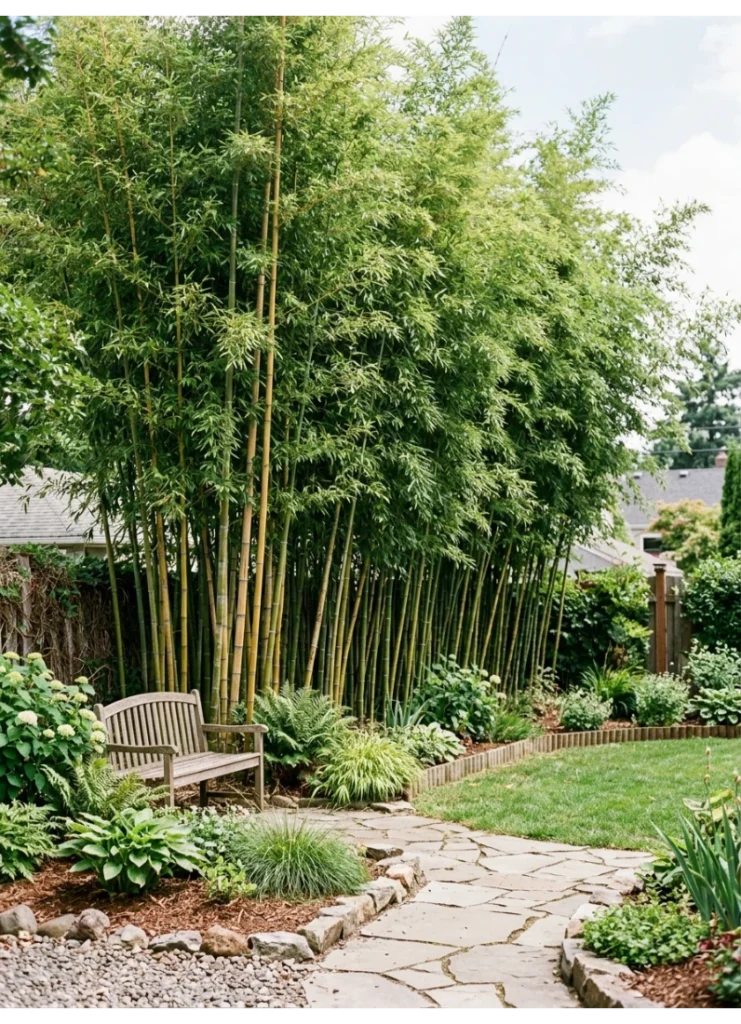
A clumping bamboo variety, planted along a fence line or property edge, provides natural privacy while adding the tall, rustling texture strongly associated with this garden style. Choosing a clumping rather than running variety matters, since running bamboo can spread aggressively and take over neighboring beds.
The sound bamboo makes in a light breeze adds another sensory layer to the garden beyond just its visual appeal.
Structures and Pathways
15. A wooden torii gate at the entrance
A simple structure that signals the transition into a different kind of space.
**Image prompt:** Close-up shot of a wooden torii gate marking the entrance to a backyard Japanese garden, natural daylight, realistic symbolic entrance detail, no text.
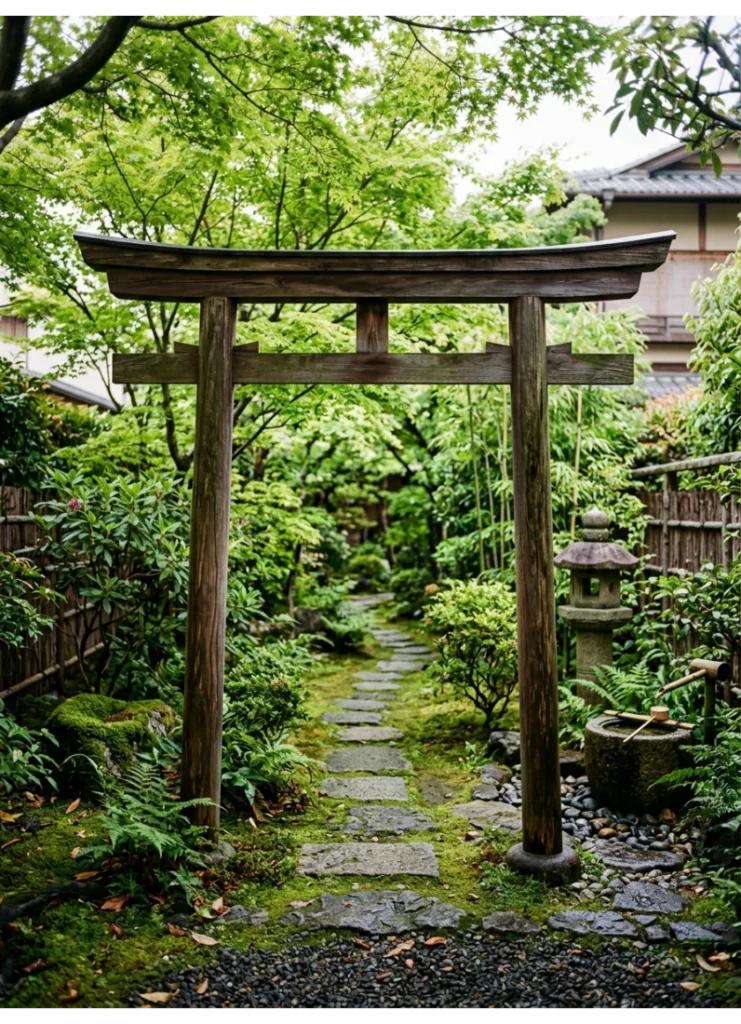
A simple wooden torii gate, painted in a traditional red or left in natural wood, marks the entrance to the garden and signals a shift from the rest of the yard into a more contemplative space. This structure doesn’t need to be elaborate to make a real impact.
Positioning it at the start of a path, rather than in the middle of an open lawn, gives it a clearer purpose within the layout.
16. A simple wood arbor with climbing vines
A softer, less formal alternative to a full gate.
**Image prompt:** Close-up shot of a wooden arbor with climbing vines at a garden entrance, natural daylight, realistic soft natural entrance detail, no text.
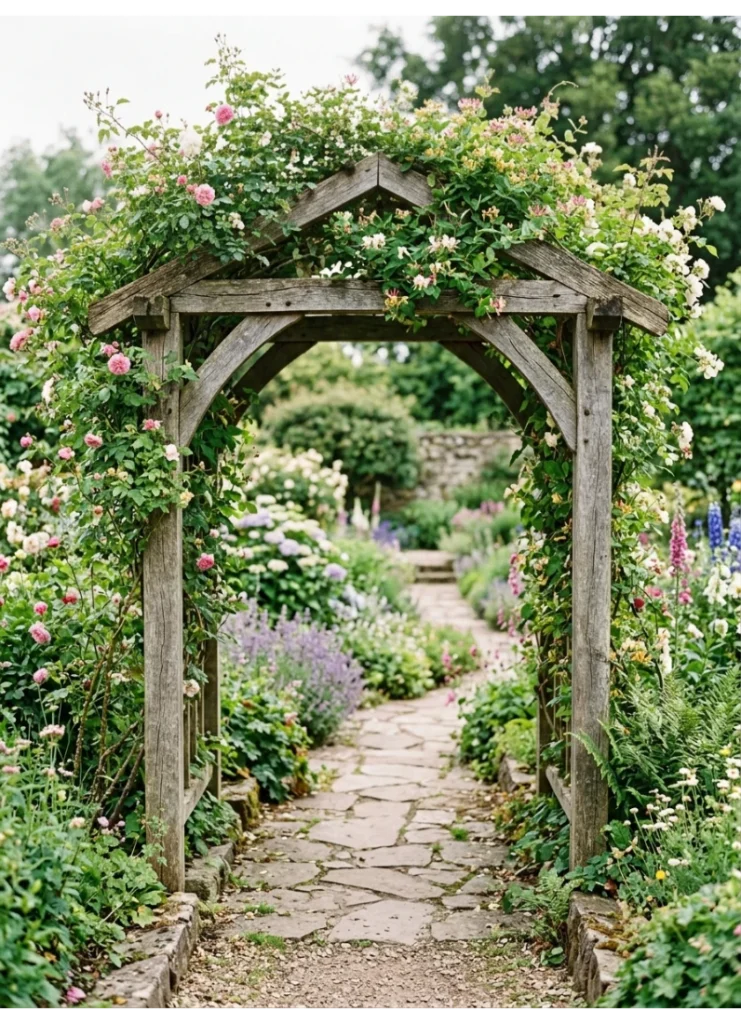
A simple wood arbor, with a climbing vine like wisteria trained across the top, creates a welcoming, softer entrance than a formal gate would, while still marking a clear transition into the garden. This works especially well for a garden with a more casual, cottage-adjacent feel elsewhere in the yard.
Wisteria specifically ties in a genuinely traditional plant choice, since it’s associated with Japanese garden design historically.
17. A small tea house or pavilion
For a larger backyard, a dedicated structure becomes the garden’s ultimate destination.
**Image prompt:** Wide shot of a small wooden tea house pavilion in a backyard Japanese garden, natural daylight, realistic peaceful destination structure detail, no text.
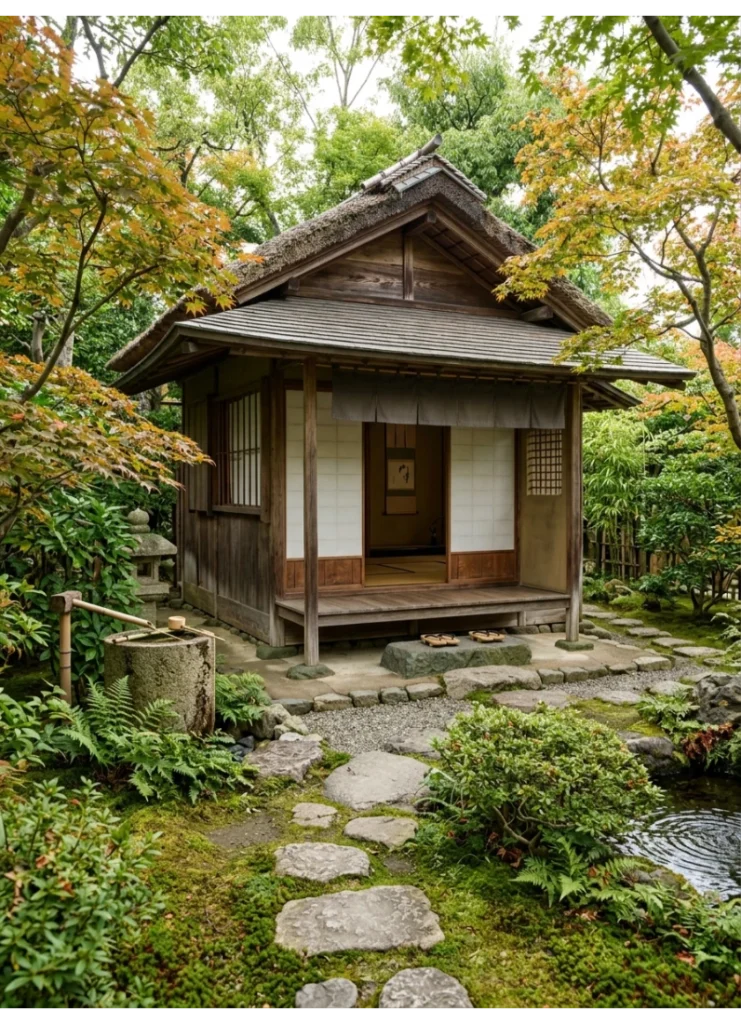
A small tea house or open pavilion gives the garden a genuine place to sit and be still, rather than just a space to walk through and observe. This is one of the more ambitious additions on this list, but it transforms the garden from purely visual into something genuinely used.
Positioning it to face the pond or the garden’s best view maximizes the payoff of building it in the first place.
18. A bamboo fence for a natural boundary
Fencing material matters just as much as any single decorative piece.
**Image prompt:** Close-up shot of a woven bamboo fence bordering a Japanese garden, natural daylight, realistic authentic boundary material detail, no text.
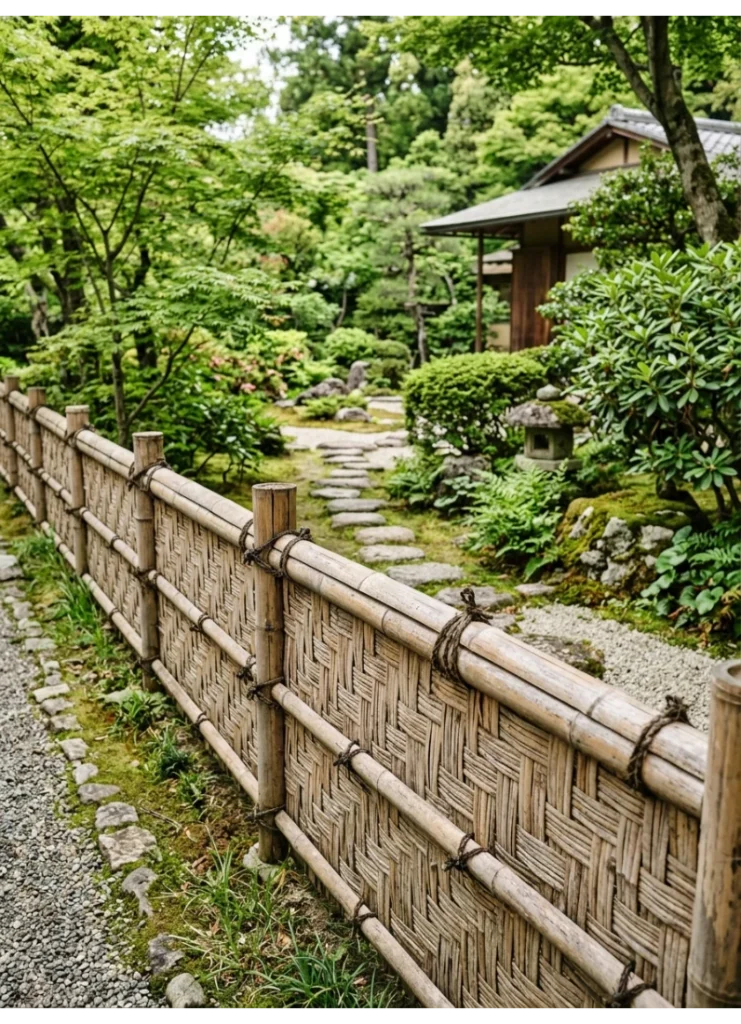
A woven or slatted bamboo fence, rather than a standard wood privacy fence, extends the garden’s material language right to its edges instead of stopping abruptly at a mismatched boundary. This detail is easy to overlook but genuinely affects how cohesive the whole space feels.
Choosing a natural, unpainted finish keeps the fence in line with the garden’s overall aged, understated aesthetic.
Small Space and Finishing Touches
19. A miniature Zen corner for a balcony
This entire design philosophy scales down beautifully.
**Image prompt:** Close-up shot of a miniature Zen garden corner with sand, small stones, and a bonsai on a balcony, natural daylight, realistic compact peaceful corner detail, no text.
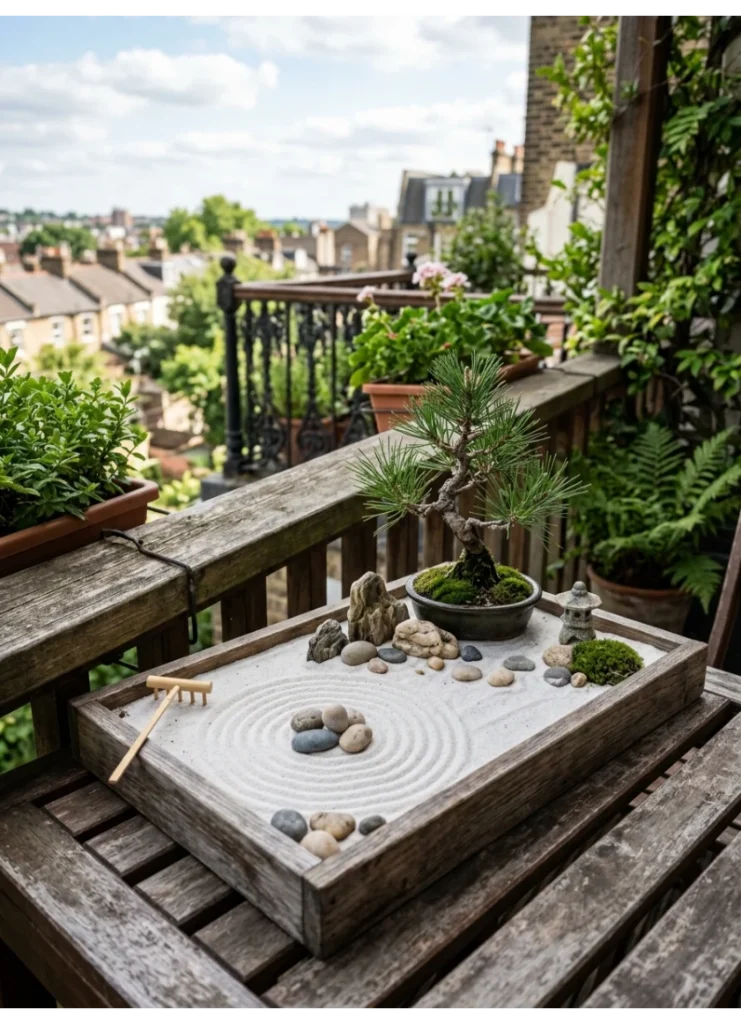
A small tray of sand, a few carefully placed stones, and a single potted bonsai bring the same principles of balance and restraint to a balcony too small for a full garden. This is proof that the style adapts to almost any scale, from a sprawling estate down to a single tabletop.
The same discipline that shapes a broader small patio setup applies well here too, choosing fewer, more intentional pieces over filling every inch.
20. A single meaningful sculpture or statue
One quiet piece says more than several scattered ornaments.
**Image prompt:** Close-up shot of a single stone Buddha statue positioned in a garden bed, natural daylight, realistic quiet contemplative detail, no text.
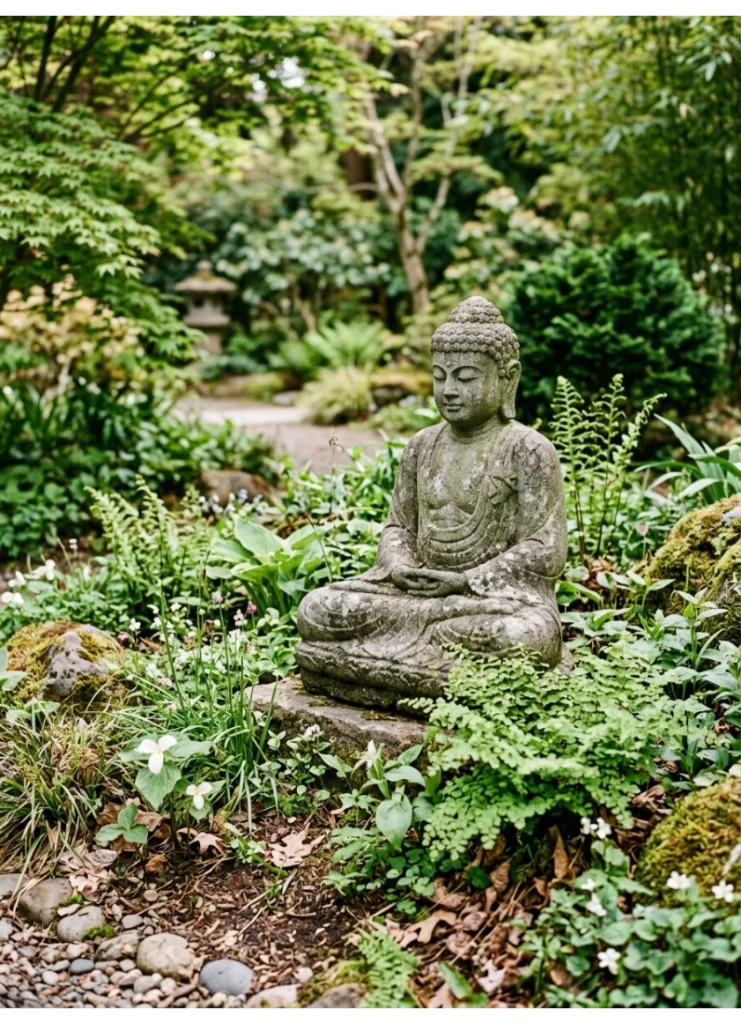
A single stone statue, positioned thoughtfully among plants rather than front and center, adds a contemplative focal point without disrupting the garden’s overall sense of restraint. This is a strong choice for anyone who wants one meaningful object rather than several decorative pieces competing for attention.
Choosing a weathered stone or bronze finish, rather than anything glossy, keeps the piece feeling settled into its surroundings.
21. Seasonal planting for year-round interest
The garden’s appearance shouldn’t peak once and fade for the rest of the year.
**Image prompt:** Wide shot of a Japanese garden showing spring blossoms, natural daylight, realistic seasonal year-round interest detail, no text.
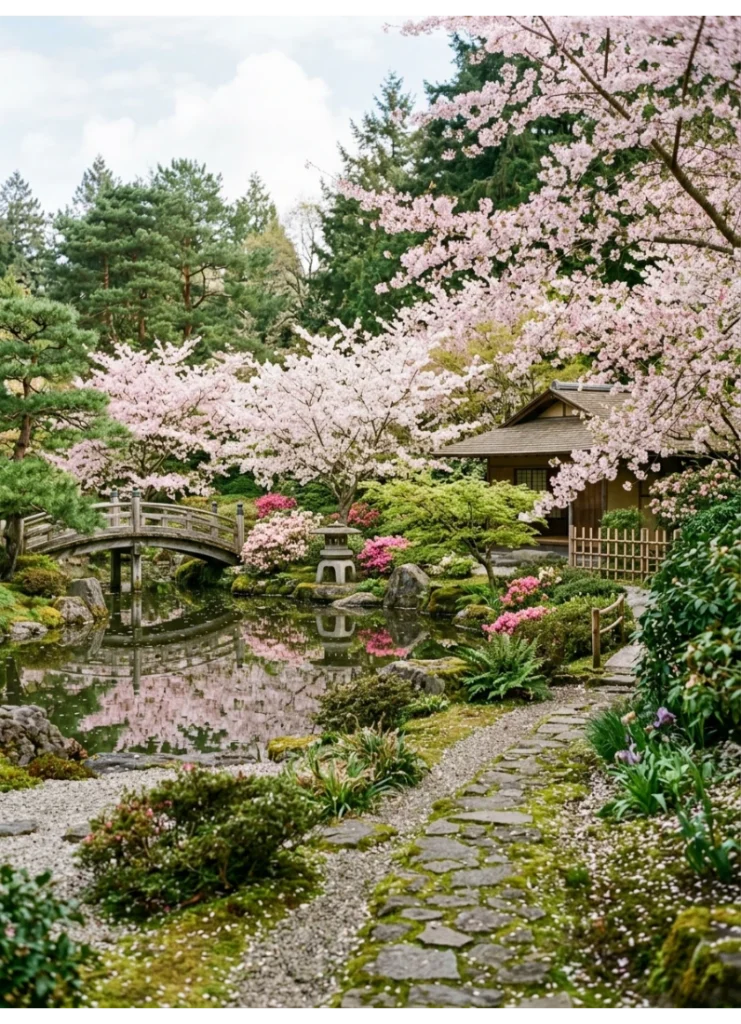
Choosing plants for spring blossoms, summer greenery, fall foliage, and evergreen winter structure keeps the garden genuinely engaging throughout the entire year rather than only during one peak season. This kind of seasonal planning is part of what gives these gardens their lasting, evolving character.
An evergreen pine or shrub anchors the space during winter months when deciduous trees are bare.
22. A quiet bench facing the garden’s best view
The whole point of building this kind of space is having somewhere to actually sit and experience it.
**Image prompt:** Close-up shot of a simple wooden bench facing a pond and garden view, natural daylight, realistic peaceful seating detail, no text.
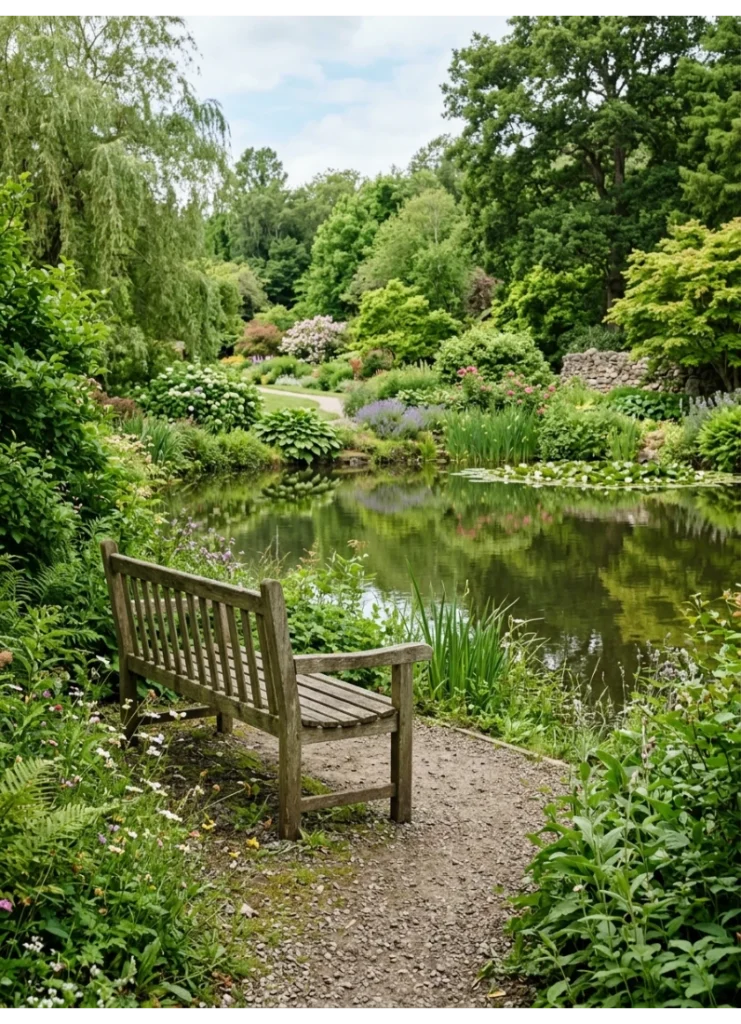
A single, simple bench, positioned facing the pond, the maple tree, or wherever the garden’s view is strongest, gives the whole space a genuine purpose beyond just looking nice from a window. This final detail is easy to skip, but it’s what actually turns a garden into a retreat.
Choosing plain, unfinished wood keeps the bench from competing visually with anything else in the space.
Common Mistakes to Avoid
- Adding too many decorative elements at once instead of letting a few carefully chosen pieces do the work.
- Scrubbing stones and paths clean, which works against the aged patina these gardens rely on for their character.
- Planting sun-sensitive species in full, harsh afternoon sun without checking their actual light needs first.
- Forcing perfect symmetry, when true balance in this style comes from asymmetrical, natural-feeling placement.
Frequently Asked Questions
Do I need a lot of space for a Japanese garden?
No, the same principles of balance and restraint scale down easily to a small balcony corner using a bonsai, a few stones, and a small tray of sand.
Should Japanese garden stones and paths be kept clean?
No, letting moss and patina develop naturally over stones and pathways is part of the traditional aesthetic, not a sign of neglect.
What’s the most important element in a Japanese garden?
Water is often considered the most essential element, whether that’s a full pond, a small stone basin, or a simple recirculating fountain.
Conclusion
A Japanese garden isn’t defined by how much you add, it’s defined by how carefully you choose what stays: one water feature, a few well-placed stones, a single meaningful tree. Start with whichever element speaks to you most, water for sound, stone for structure, or a maple for seasonal color, and build outward slowly, the same patient way these gardens have always been made.