Backyard movie night ideas always sound simple until you actually try building one, since the gap between a sheet and a projector and a genuinely great outdoor cinema comes down to a handful of details most people skip. Getting the screen, sound, and timing right matters more than any amount of decorative styling on top.
What separates a backyard movie night that actually works from one where everyone squints at a washed out image is respecting a few realities. Darkness, sound, and comfort all take more planning outdoors than they do inside, and every idea below solves one specific piece of that.
Quick Picks
- Best for a tight budget: A PVC pipe frame with a plain bedsheet
- Best picture quality: An inflatable screen paired with a 2,500+ lumen projector
- Best for a large group: Staggered lounge chair rows with external speakers
- Best low effort setup: Projecting straight onto a smooth exterior wall
Before You Start
- Start 30 to 45 minutes after sunset. Starting too early washes out the image no matter how good the projector is.
- Get at least 2,000 ANSI lumens. Anything dimmer struggles the moment there is ambient light nearby.
- Plan for outdoor sound separately. Built in projector speakers rarely cut it once you are outside.
- Test the full setup in daylight. Fix focus, sound sync, and cable routing before guests arrive, not after dark.
- Check the weather two days out, not just the morning of. Backyard plans need a real backup option.
Screen and Projector Setup
1. An inflatable projector screen for a flat, bright image
An inflatable screen solves the single biggest picture quality problem in a backyard setup.
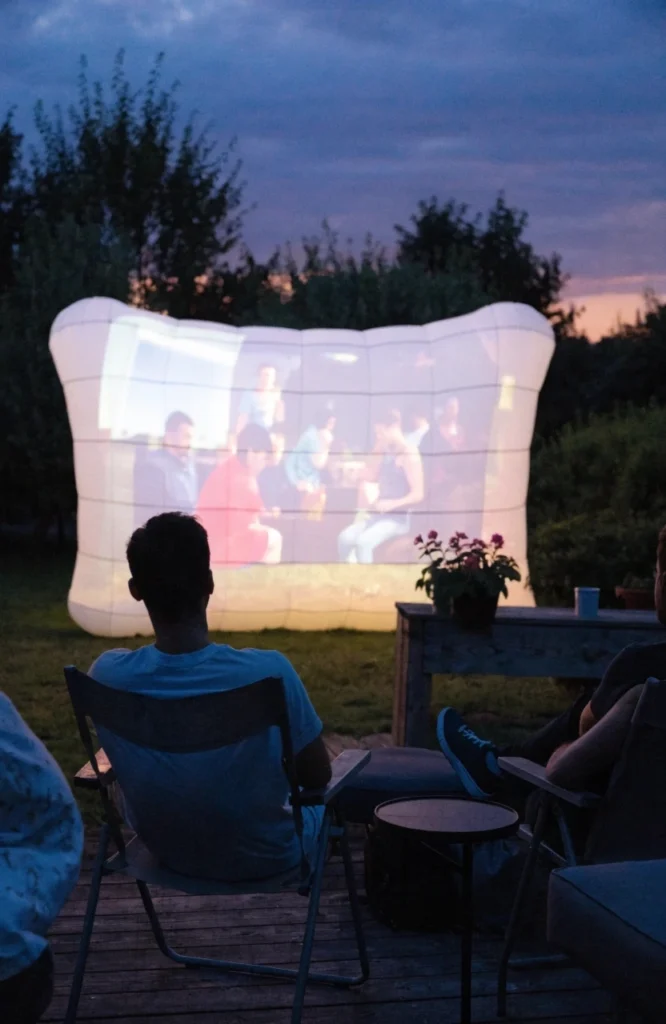
A self inflating outdoor screen, usually 100 to 200 inches, gives a genuinely flat surface that avoids the wrinkles a hung sheet always has.
It is a bigger investment than a DIY option, but the image quality difference is immediately obvious once it is lit up.
2. A PVC pipe frame for a budget screen
This is the classic low cost DIY version, and it still works genuinely well.
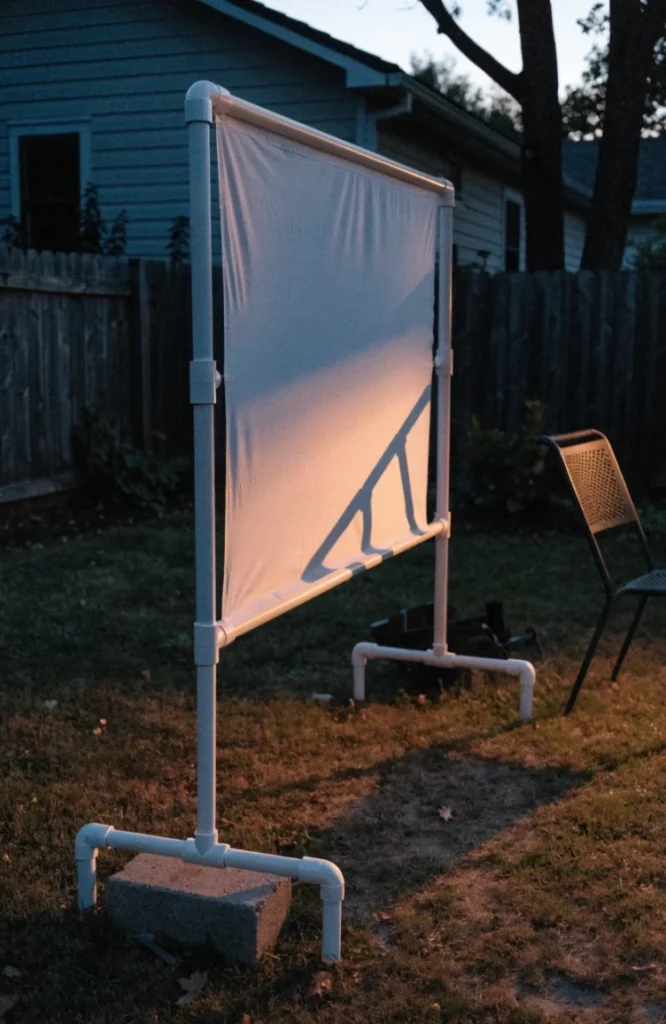
A frame built from PVC pipes and a plain white bedsheet or blackout fabric, stretched taut and clipped at the corners, costs under 40 dollars total.
It folds down flat for storage, which makes it the most practical option for anyone without a permanent outdoor setup.
3. Projecting onto a smooth exterior wall instead of a screen
If there is a flat, light colored wall available, this skips the screen entirely.
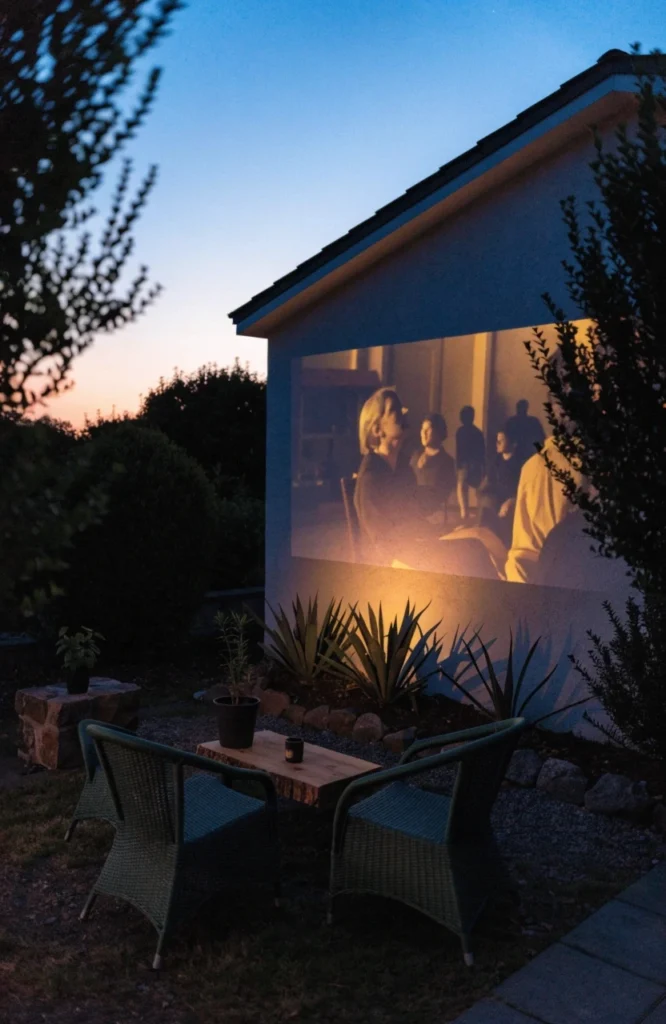
A garage or house wall painted a neutral white or light gray works as a serviceable screen for a projector rated 2,500 lumens or higher.
It is the fastest option to set up since there is no frame to build or store afterward.
4. A projector rated for at least 2,000 ANSI lumens
Brightness is the one spec that actually determines whether the picture holds up outdoors.
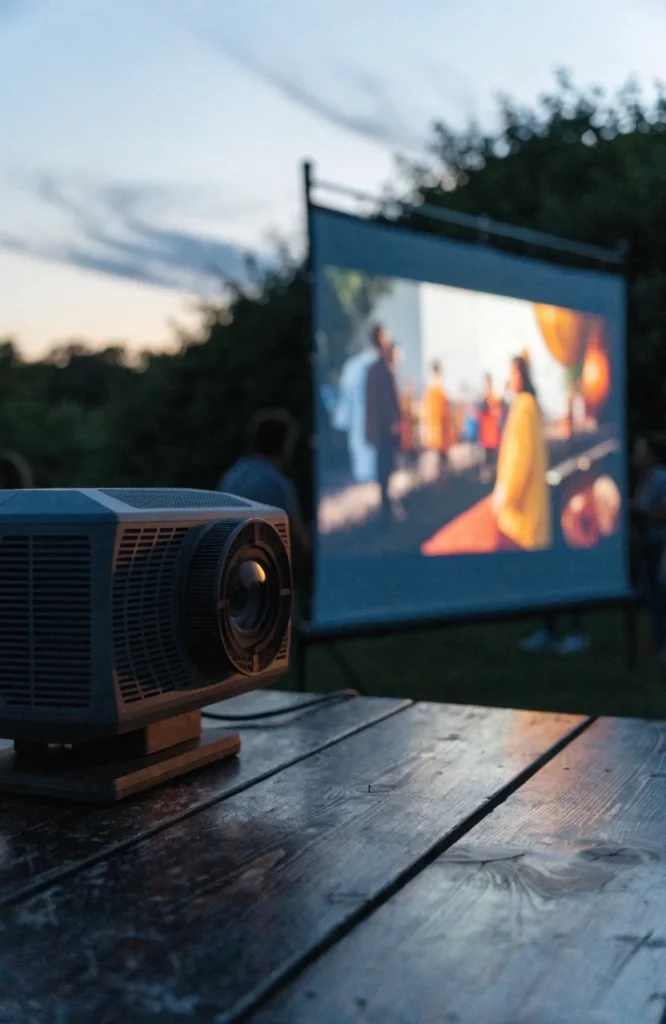
A projector rated 2,000 to 3,000 ANSI lumens stays watchable even with some ambient light from a porch or streetlamp nearby.
Anything dimmer forces you to wait for near total darkness, which shortens the usable evening considerably.
5. A keystone corrected setup for a square image
A distorted, trapezoid shaped image is one of the most common backyard projector complaints.
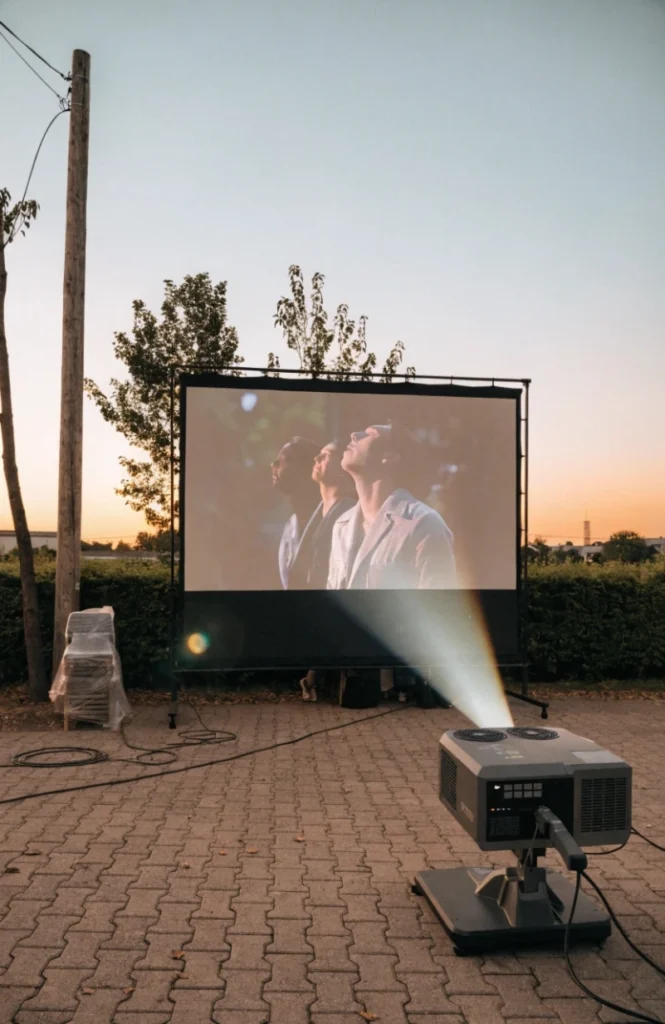
Using the projector’s built in keystone correction or lens shift, adjusted during a daylight test run, squares the image properly before guests ever arrive.
Fixing this in daylight avoids fumbling with settings once it is dark and everyone is already seated.
Sound and Seating
6. External outdoor speakers instead of built in audio
Sound gets lost outdoors far more than most people expect going in.
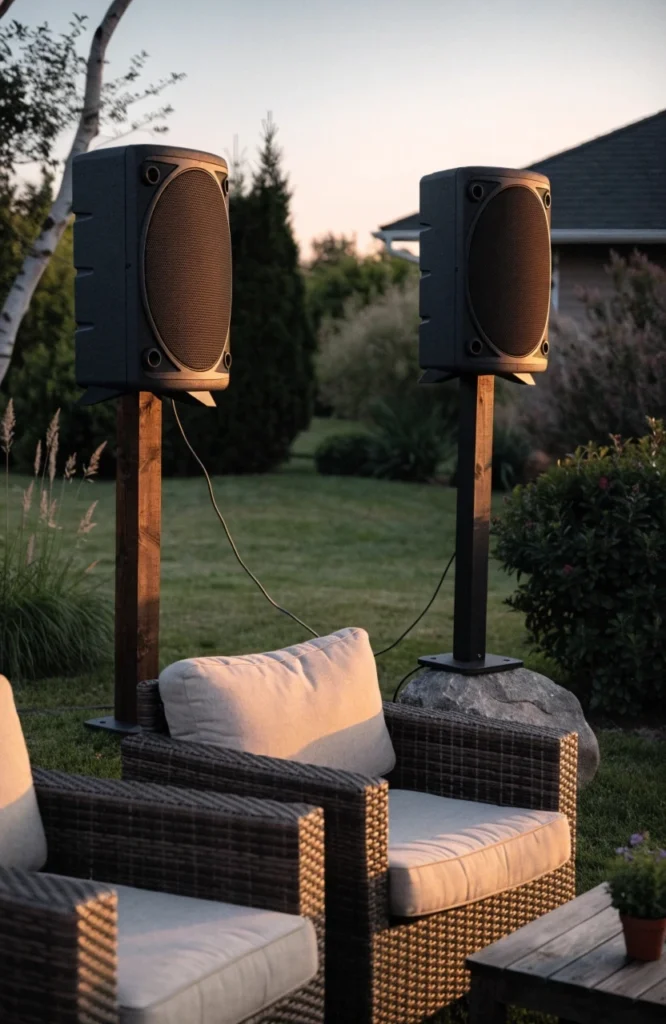
A pair of weatherproof outdoor speakers, connected via Bluetooth or a direct cable, fills a backyard’s open space in a way built in projector speakers simply cannot.
This single upgrade often makes a bigger difference to the experience than the screen or projector does.
7. Floor cushions and blankets for ground seating
Ground level seating keeps a backyard movie night feeling casual and communal.
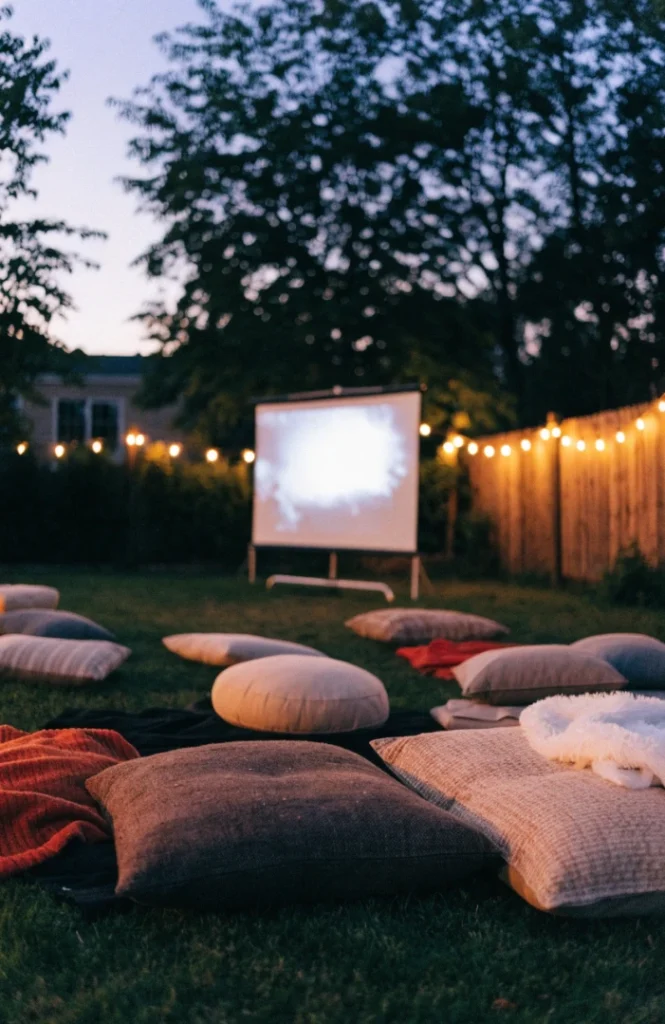
A mix of large floor cushions and layered blankets, spread across a tarp or outdoor rug, gives flexible seating for more people than chairs alone would fit.
It also keeps sightlines to the screen low and unobstructed for everyone seated.
8. Lounge chairs set up in staggered rows
For a more structured setup, staggered rows solve the classic sightline problem.
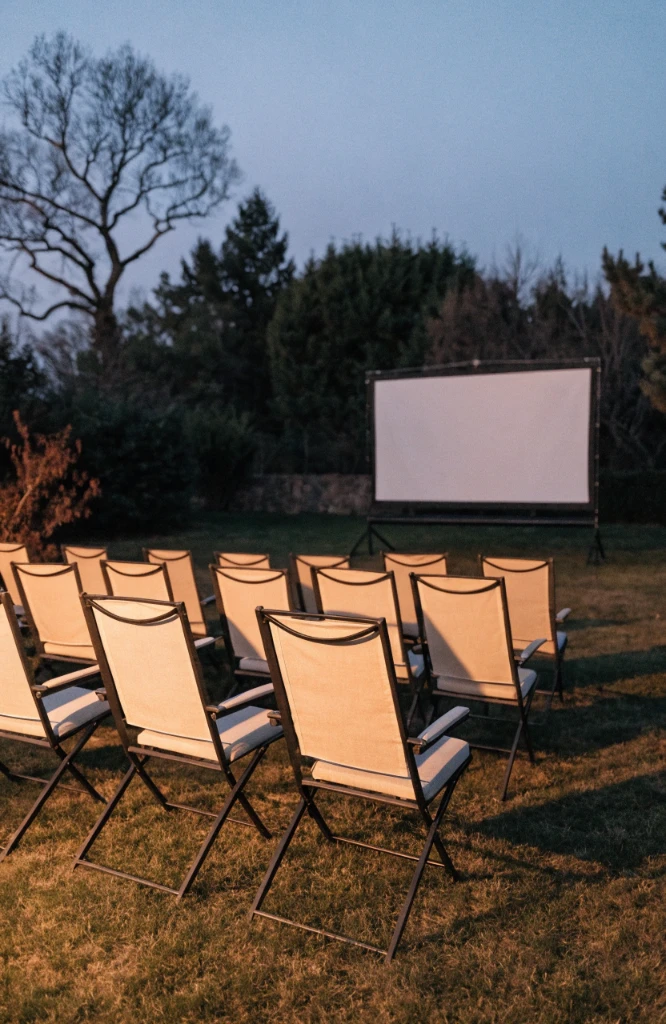
Positioning folding lounge chairs in offset rows, rather than straight lines, keeps every seat’s view of the screen clear of the person in front.
This works especially well for a larger group where ground seating alone would not fit everyone comfortably.
9. Hammocks or hanging chairs for a few lucky spots
A playful seating option for anyone with the right trees or a sturdy frame.
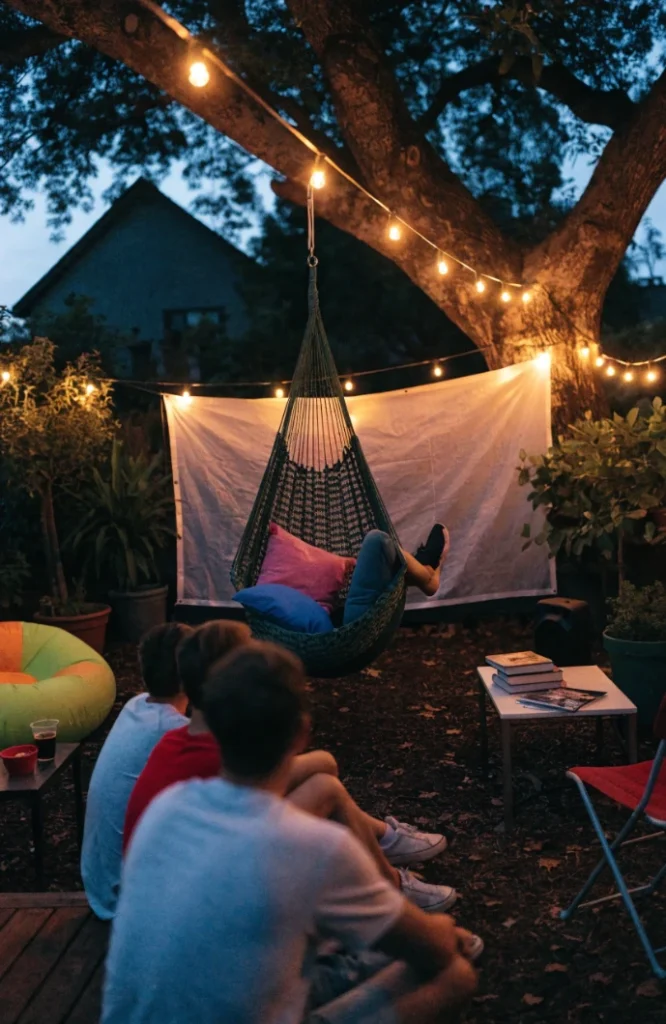
One or two hammocks or hanging egg chairs, positioned toward the back where a gentle sway will not block anyone else’s view, add a genuinely fun seating variation.
They are a strong pick for a smaller, more intimate movie night rather than a large group gathering.
10. A stack of extra blankets for cooler nights
A simple addition that keeps guests comfortable once the temperature drops after sunset.
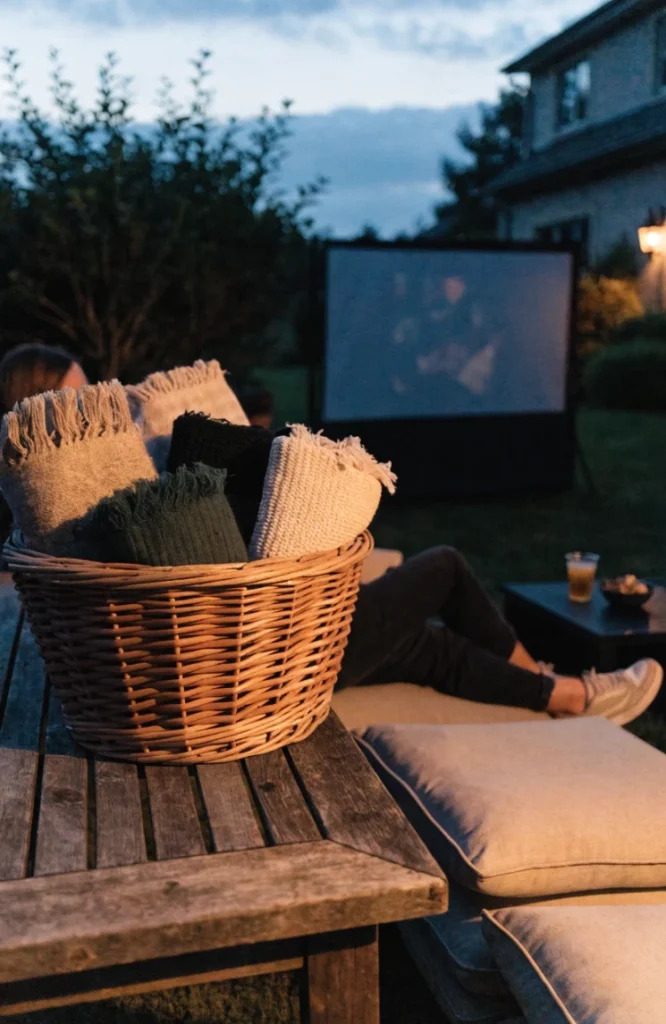
A basket or crate of extra folded blankets, placed near the seating area, means nobody has to leave partway through the movie because they got cold.
It is a small, low cost detail that guests genuinely notice and appreciate.
Lighting and Ambiance
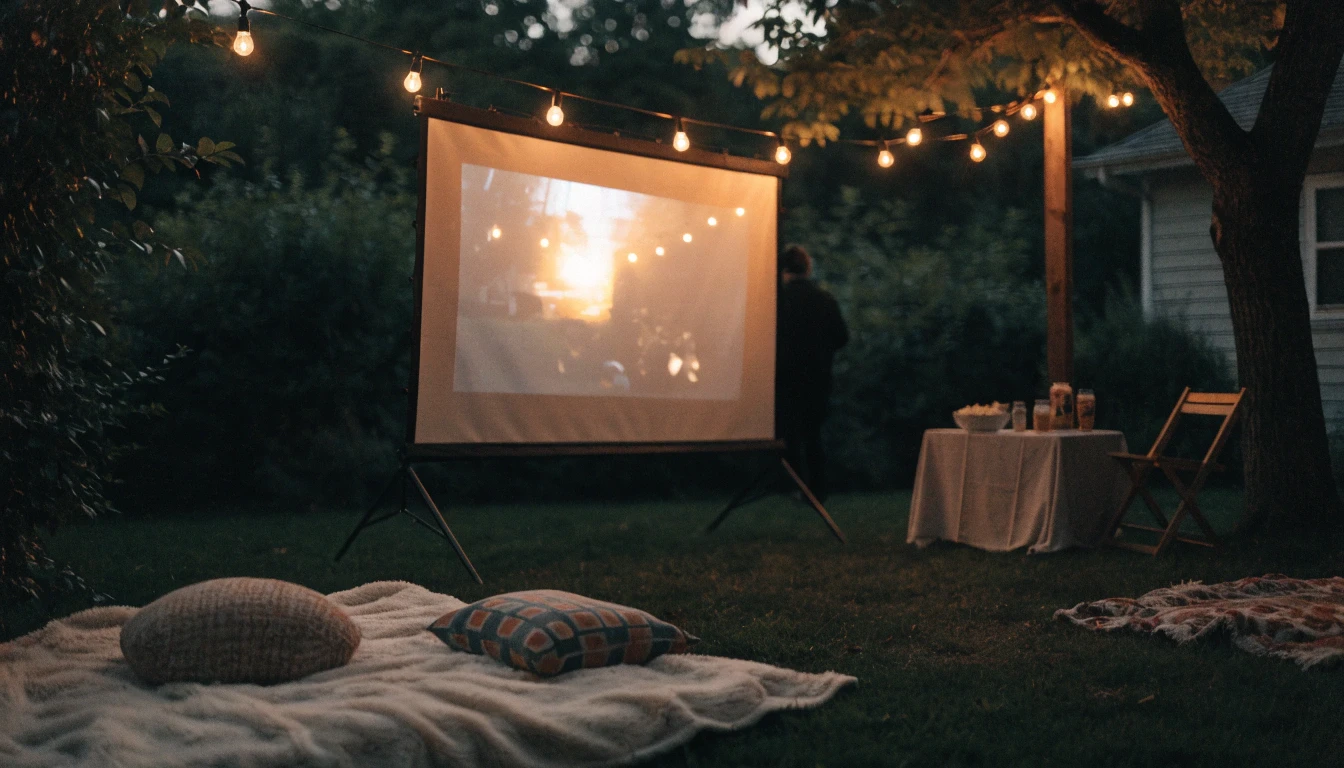
11. Warm white lights strung around the seating perimeter
Lighting the space around the screen, not the screen itself, is the detail most people get wrong.
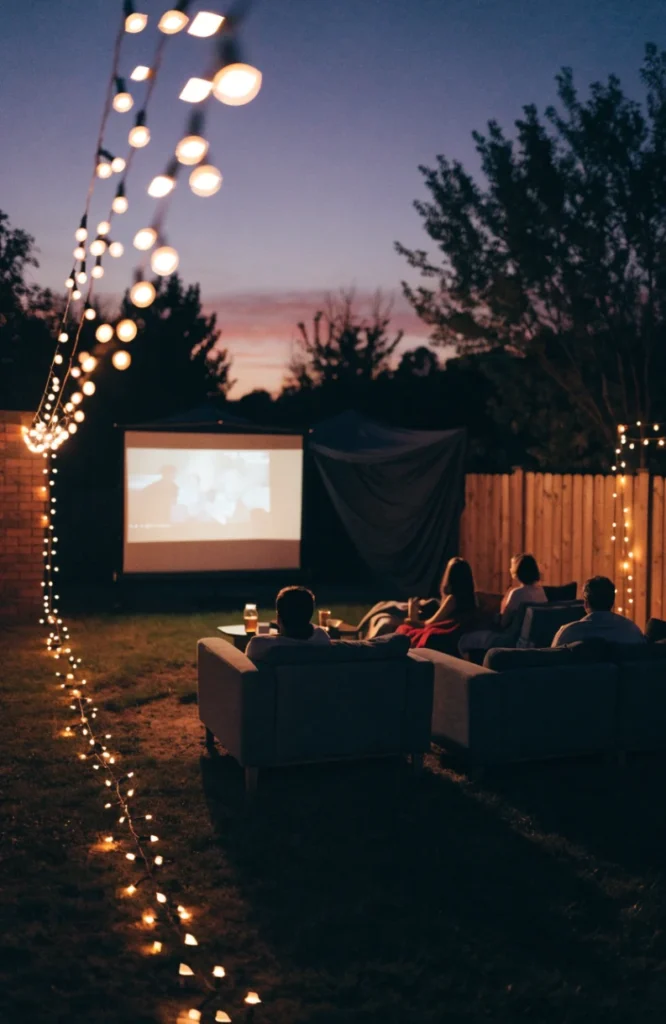
Warm white string lights hung around the seating area’s edges add ambiance without spilling light onto the screen or washing out the projected image.
Keeping the lights low and to the sides is what protects the picture quality while still lighting the space.
12. Solar path lights guiding guests to their seats
A practical lighting detail for the walk from the house to the viewing area.
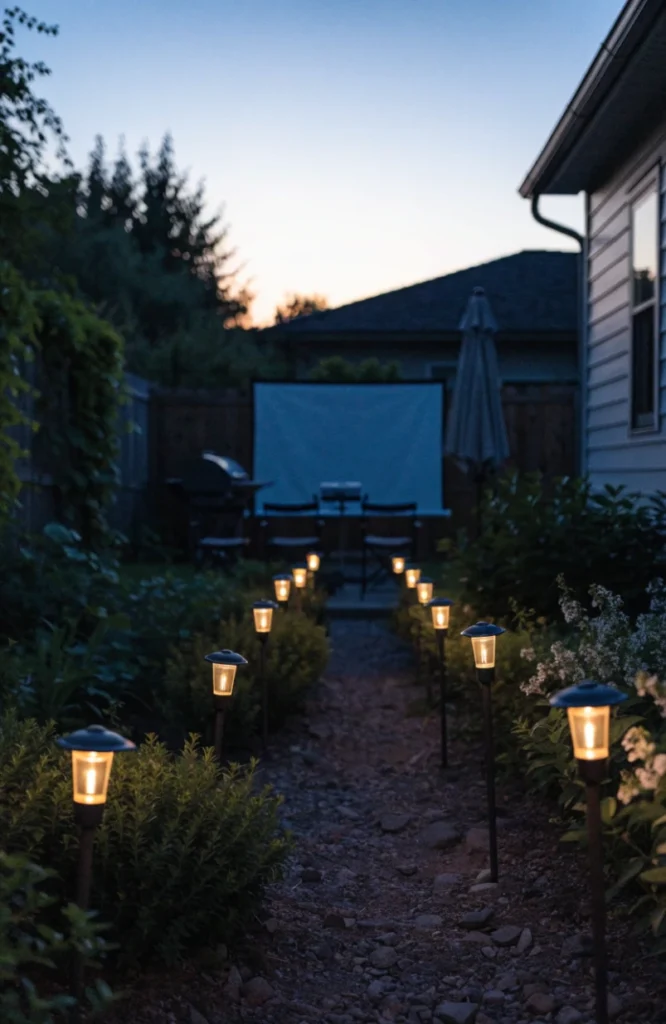
Solar path lights lining the route from the door to the seating area help guests navigate safely once it is dark without needing a flashlight.
It is a small, low cost touch that solves a real safety concern for any evening gathering.
13. Citronella candles or torches for light and bug control together
This idea solves two backyard movie night problems in a single item.
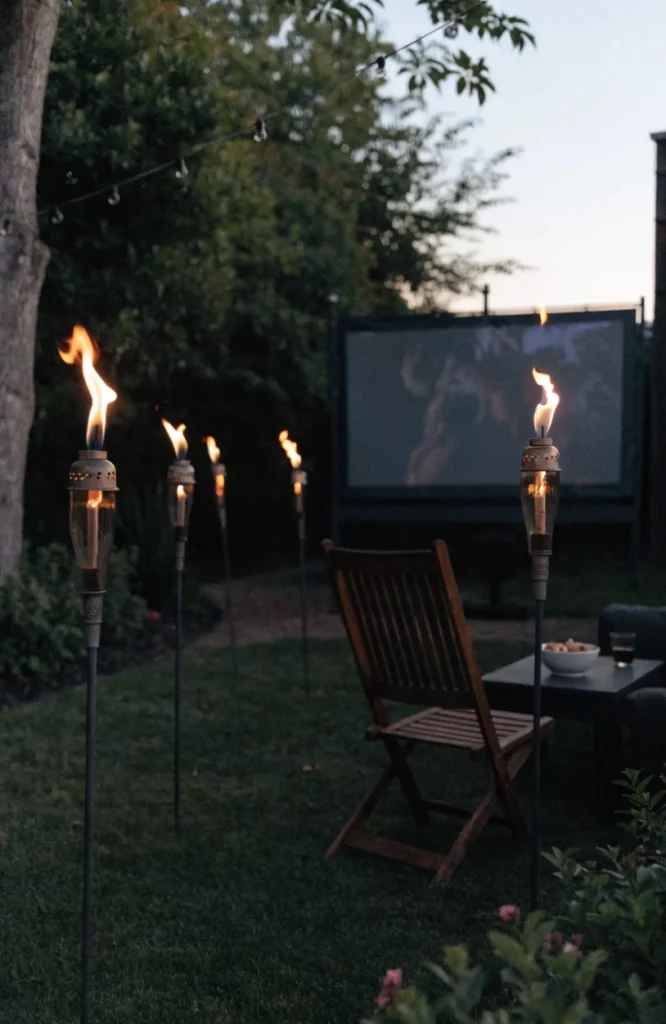
Citronella candles or tiki torches placed around the perimeter add both ambient light and a genuine bug deterrent for a warm weather screening.
Positioning them well back from the screen keeps the flicker from interfering with the projected image.
14. Dimming or covering nearby porch and house lights
An easy fix that is often the actual reason a picture looks washed out.
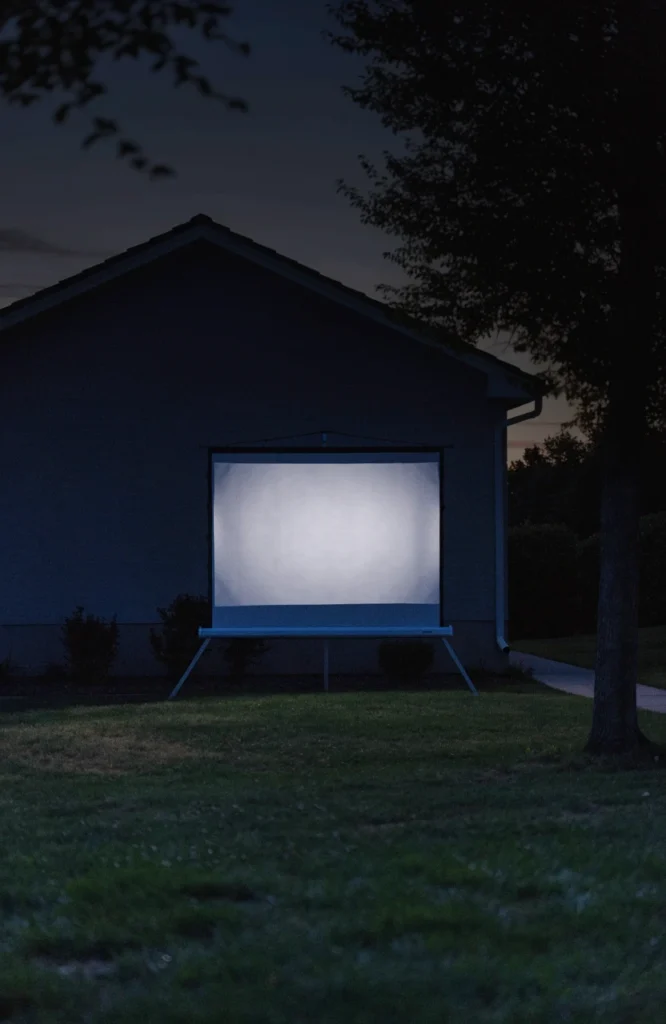
Turning off or covering any porch, house, or motion sensor lights within view of the screen removes the ambient light that competes with the projector.
This costs nothing and often improves picture quality more than any equipment upgrade would.
Snacks and Styling
15. A DIY popcorn bar with mix in toppings
A popcorn bar turns a simple snack into an actual activity for guests.
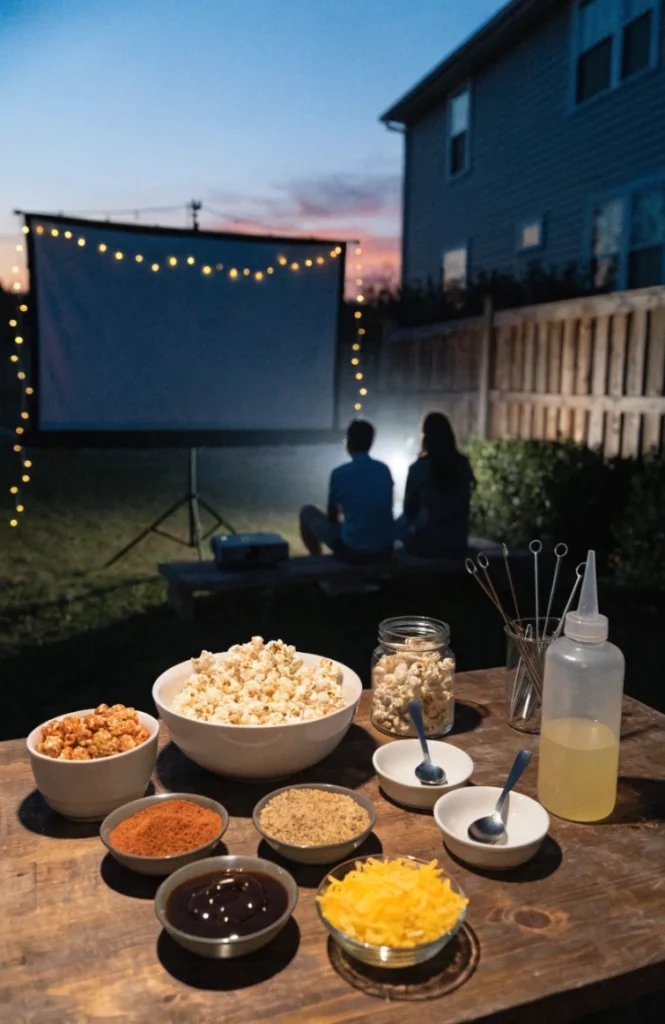
A large bowl of plain popcorn paired with small bowls of toppings, like caramel bits, chocolate chips, and seasoning blends, lets everyone build their own bag.
It is a low cost centerpiece that gives the snack table real visual presence.
16. A vintage style popcorn cart or machine
For a more elevated, drive in feel, a popcorn machine adds real atmosphere.
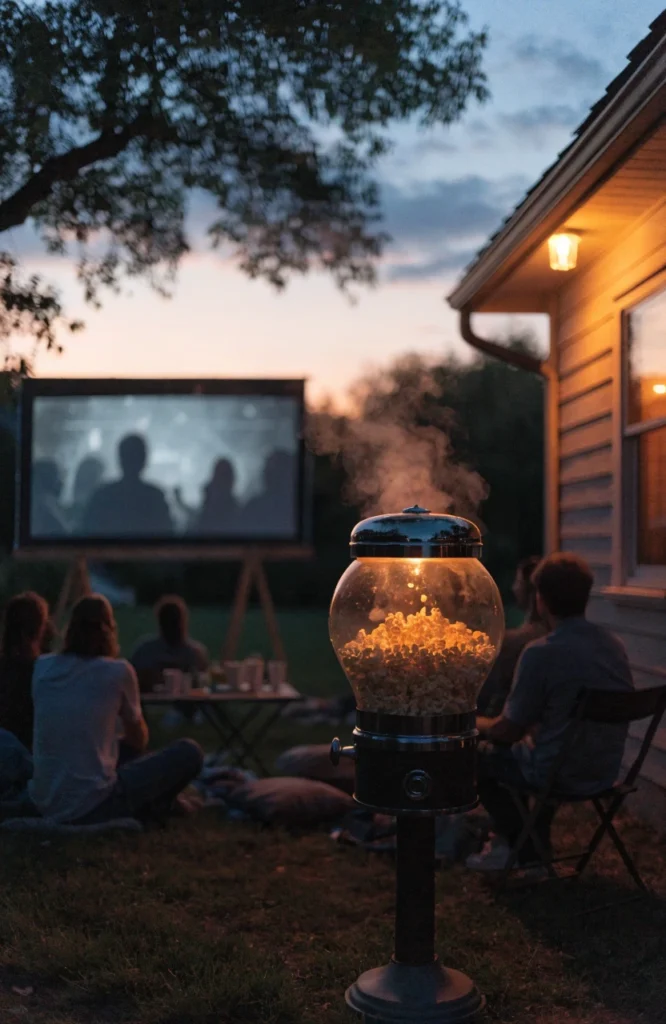
A tabletop or standing popcorn machine, either rented or purchased, brings fresh, warm popcorn and a genuinely nostalgic visual centerpiece to the setup.
It is a bigger investment than a bowl and toppings, but it turns snack time into part of the show itself.
17. A cooler styled like a concession stand
A styled drink station makes the snack area feel like part of the theme, not an afterthought.
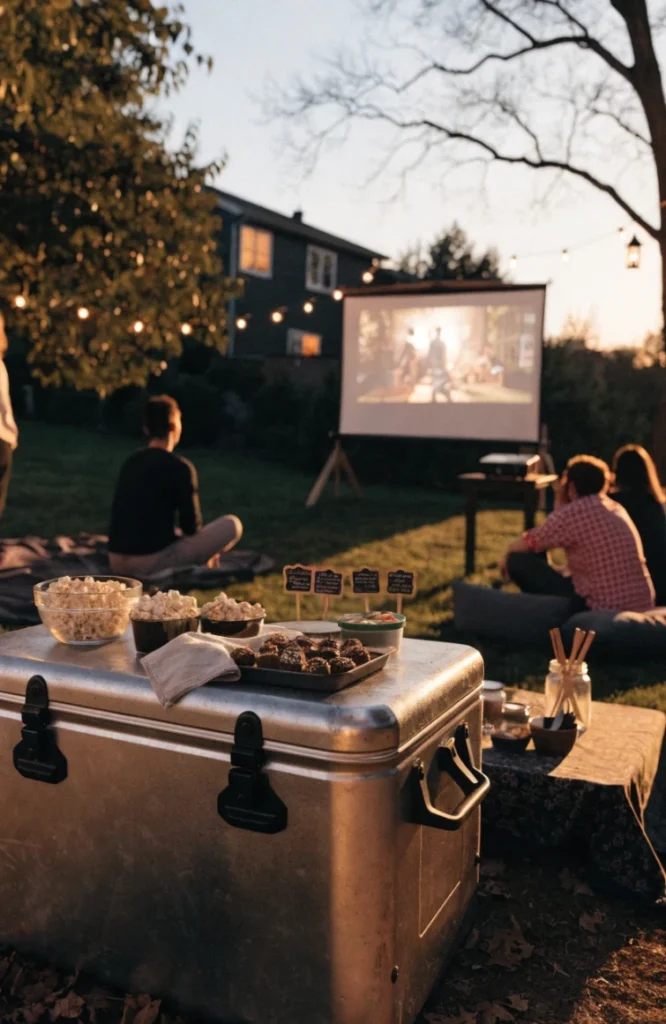
A cooler filled with canned drinks, labeled with small chalkboard signs, styled to look like a concession stand adds a playful detail guests notice right away.
It also keeps drinks cold and self serve, so hosting duties stay minimal during the movie.
18. A chalkboard sign announcing the movie title
A small styling detail that makes the setup feel like a real event.
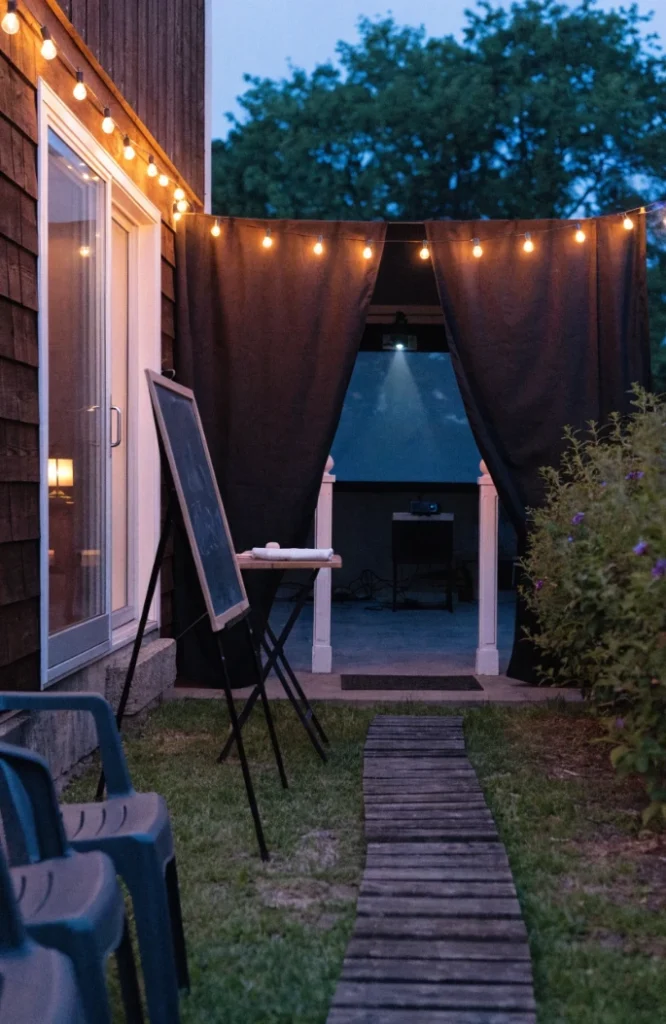
A chalkboard easel near the entrance, hand lettered with the movie title and start time, sets the tone before guests even sit down.
It is a five minute addition that photographs well and adds a genuine sense of occasion.
19. Printed movie tickets handed out at the door
A playful, low cost detail that makes guests feel like they are arriving at an actual theater.
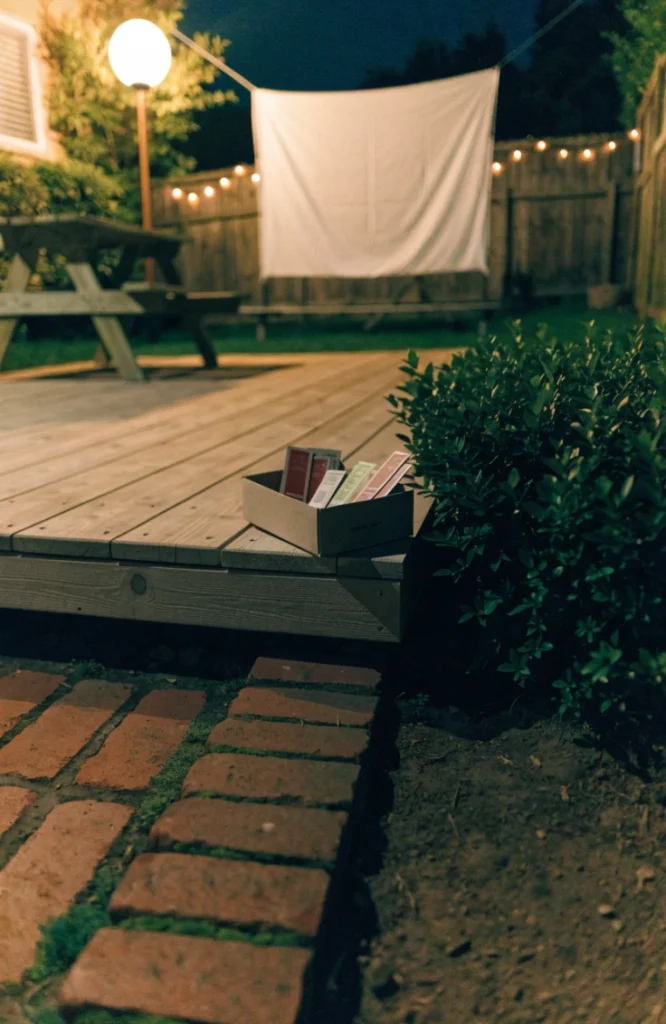
It is a small detail, but it is often the one guests mention as their favorite part of the setup.
20. Snacks and decor themed around the movie being shown
Tying the whole setup to the specific film adds a layer guests genuinely notice.
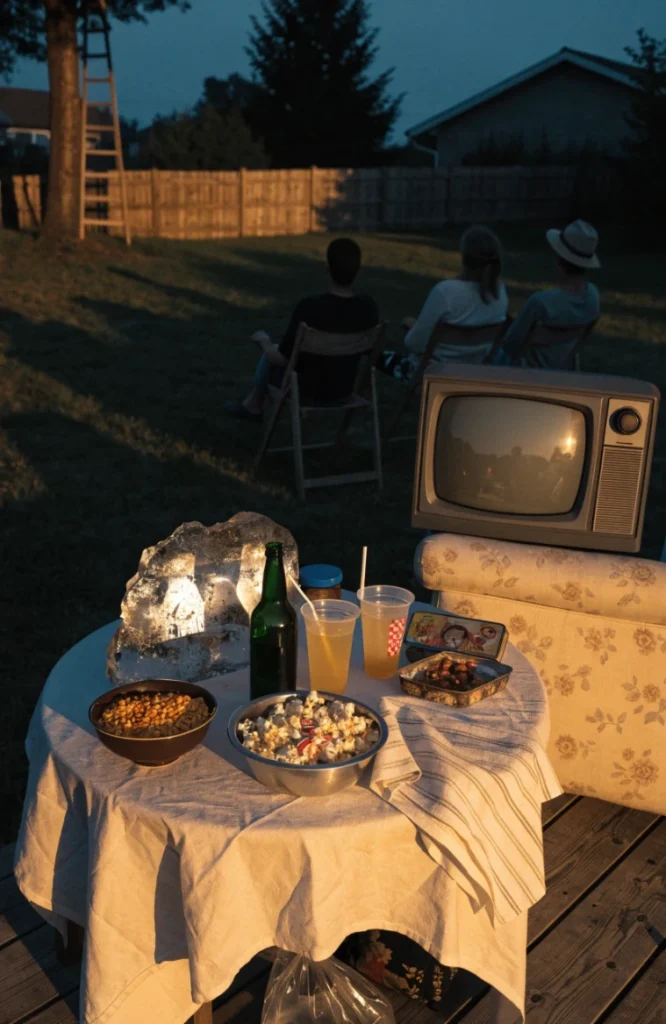
Matching snack colors, decor accents, or a printed sign to the movie’s theme, a beach film with tropical drinks, for example, ties the whole evening together.
It is a detail that takes a little extra planning but makes the night feel curated rather than generic.
Common Mistakes to Avoid
- Starting the movie before it is genuinely dark, which washes out the picture no matter how good the projector is.
- Relying on a projector’s built in speakers instead of real outdoor sound.
- Skipping a daylight test run, which leaves focus, keystone, and audio sync issues to solve in the dark.
- Placing seating too close to the screen, which forces an awkward, neck craning viewing angle.
Frequently Asked Questions
How bright does a projector need to be for outdoor use?
At least 2,000 ANSI lumens for after dark viewing, and 2,500 to 3,000 or higher if there is any ambient light nearby.
What time should a backyard movie night start?
Around 30 to 45 minutes after sunset, once it is dark enough for the picture to look bright and clear.
Do I need a real screen, or can I project onto a wall?
A smooth, light colored exterior wall works well as a budget alternative, though a dedicated screen gives a flatter, brighter image.
Conclusion
The backyard movie nights that actually feel like a real outdoor cinema come down to getting the fundamentals right before touching any styling at all, a bright enough projector, real outdoor sound, and starting after it is genuinely dark. Once those three things are solid, seating comfort and a few lighting and snack details are what turn a functional setup into a night people remember