A pool day always ends the same way. Wet towels pile up on a chair, half-deflated floats roll across the patio, and by evening the whole area looks like a yard sale. None of that mess means your setup is broken, it just means nothing has an actual home yet.
The best pool storage does two things at once. It keeps gear out of the way, and it lets everything dry properly so mildew and mold never get a chance to start. Every idea below solves one part of that problem, whether it’s a big bin for floats or a simple hook for a towel.
Quick Picks
- Best for floats: A rolling mesh storage bin with quick-dry sides
- Best for towels: A wall-mounted hook rack near the pool exit
- Best hidden option: A storage bench that doubles as poolside seating
- Best for windy yards: A weighted metal rack you can fill with sand or water
Did You Know?
Pool storage bins with mesh sides aren’t just about looks. The open weave lets air move through, so wet noodles, floats, and towels actually dry instead of sitting in a damp pile. A sealed plastic bin traps moisture instead, which is exactly what makes mold and mildew take hold so fast.
Before You Start
- Pick mesh or open designs for anything holding wet gear. Solid, sealed bins trap moisture and lead to mildew fast.
- Put storage close to the pool exit. If it’s too far away, towels and floats end up dumped on the nearest chair instead.
- Weigh down anything freestanding. A light rack or bin can tip or blow over in a strong wind.
- Label bins by activity, not just item type. A “pool day” bin with sunscreen, towels, and goggles together gets used more than several single-purpose ones.
- Deflate floats fully before storing them. A half-inflated float takes up triple the space and is more likely to develop a slow leak over time.
Rolling Carts and Bins
1. A rolling mesh storage bin for floats
This is the single most popular fix for pool clutter, and it earns that reputation.
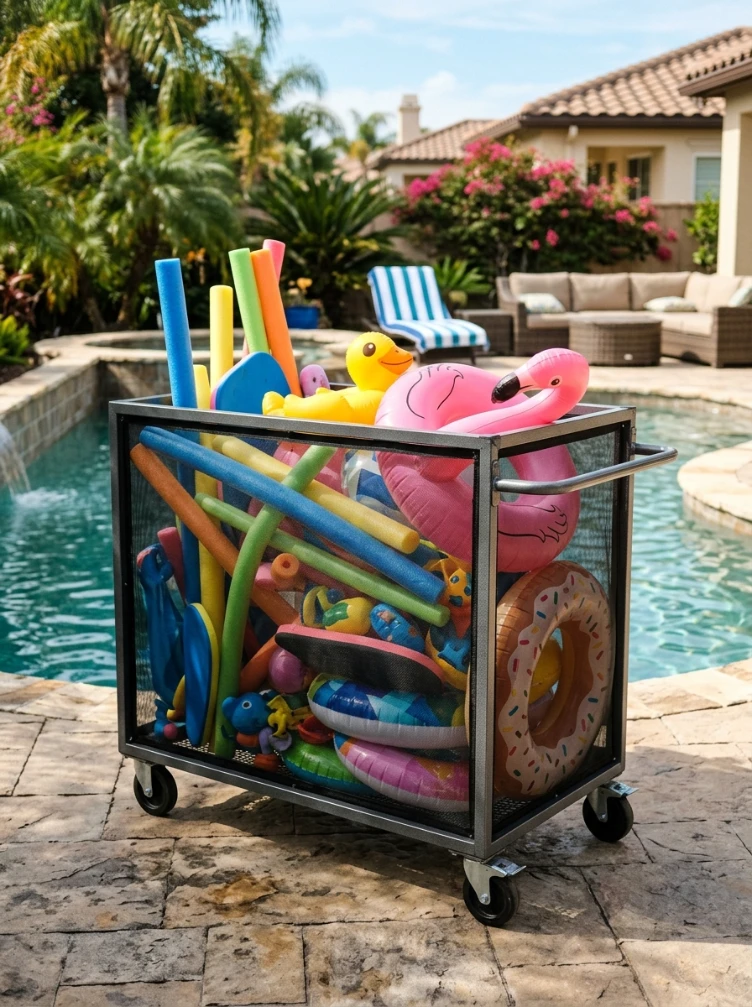
A large mesh bin on wheels holds noodles, rafts, and floats in one spot, and the breathable sides let water drain and air circulate so everything dries between uses. Locking wheels keep it from rolling away once you’ve parked it where you want it.
Most of these bins come in extra-large sizes, some over 200 gallons, which means one bin can genuinely replace the pile of loose floats that usually ends up scattered around the pool deck.
2. A rolling rattan-style cart with towel bars
A storage piece that looks like real patio furniture instead of a plastic bin.
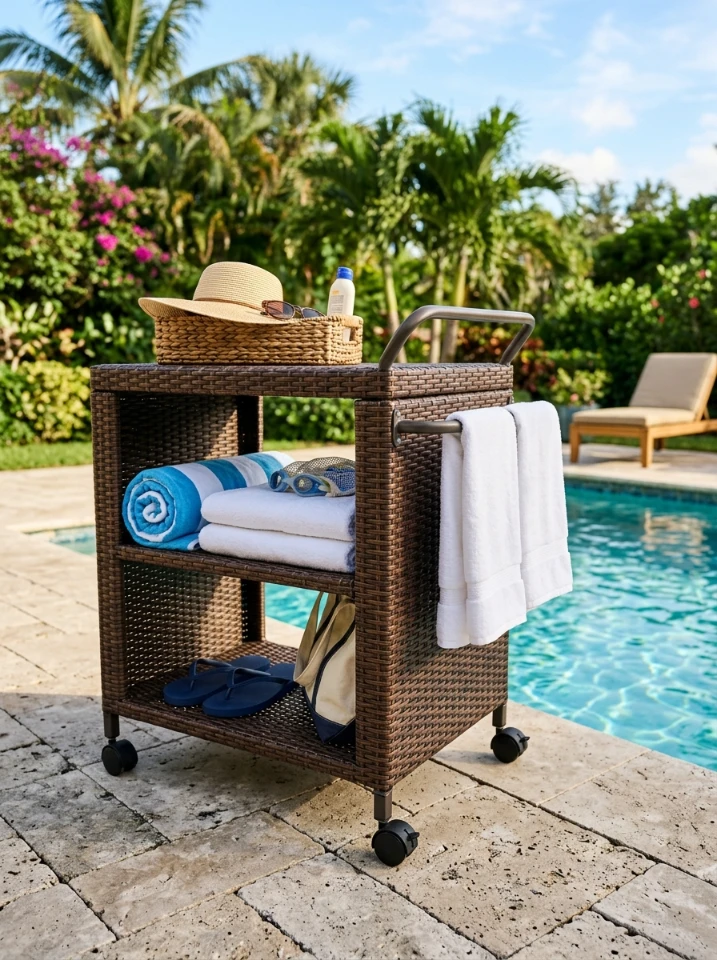
A rolling cart built from weather-resistant PE rattan combines open compartments for floats with a side bar for hanging towels, so two storage problems get solved by one piece. The woven look blends into a patio setup far better than a plain plastic tote would.
Because it’s on wheels, this cart also works well for anyone who wants to store gear in a shed or garage overnight and roll it back out the next morning.
3. An elevated cart that keeps everything off the ground
Getting float storage up off the concrete solves a moisture problem before it starts.
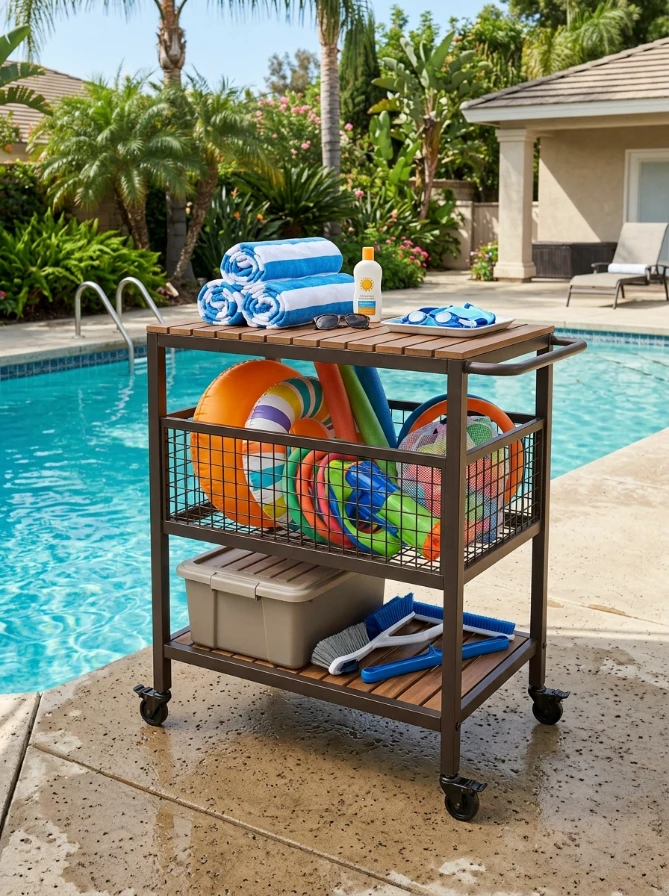
A cart with a raised base, rather than one that sits flush on the patio, keeps stored floats and towels away from puddles or residual pool water on the ground. This small design detail makes a real difference in how fast everything actually dries.
It’s a smart pick for a patio that tends to stay damp for a while after pool use, since ground-level storage in that kind of spot rarely dries out fully between swims.
4. A two-tier bin for separating wet and dry items
Not everything needs to dry the same way, and a tiered bin makes that easy to manage.
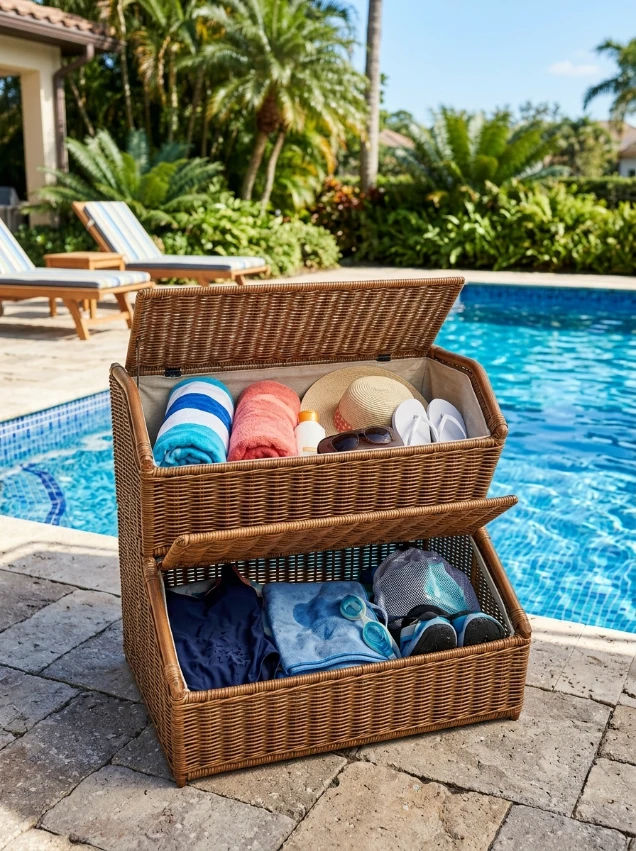
A bin with two separate levels lets you keep freshly used, still-wet gear on one tier while dry, ready-to-use items sit on the other. This stops a clean towel from getting soaked just from sitting next to a wet float.
It’s a particularly good setup for a household that swims daily, where the same bin gets used, emptied, and refilled constantly throughout the week.
Wall-Mounted and Hanging Solutions
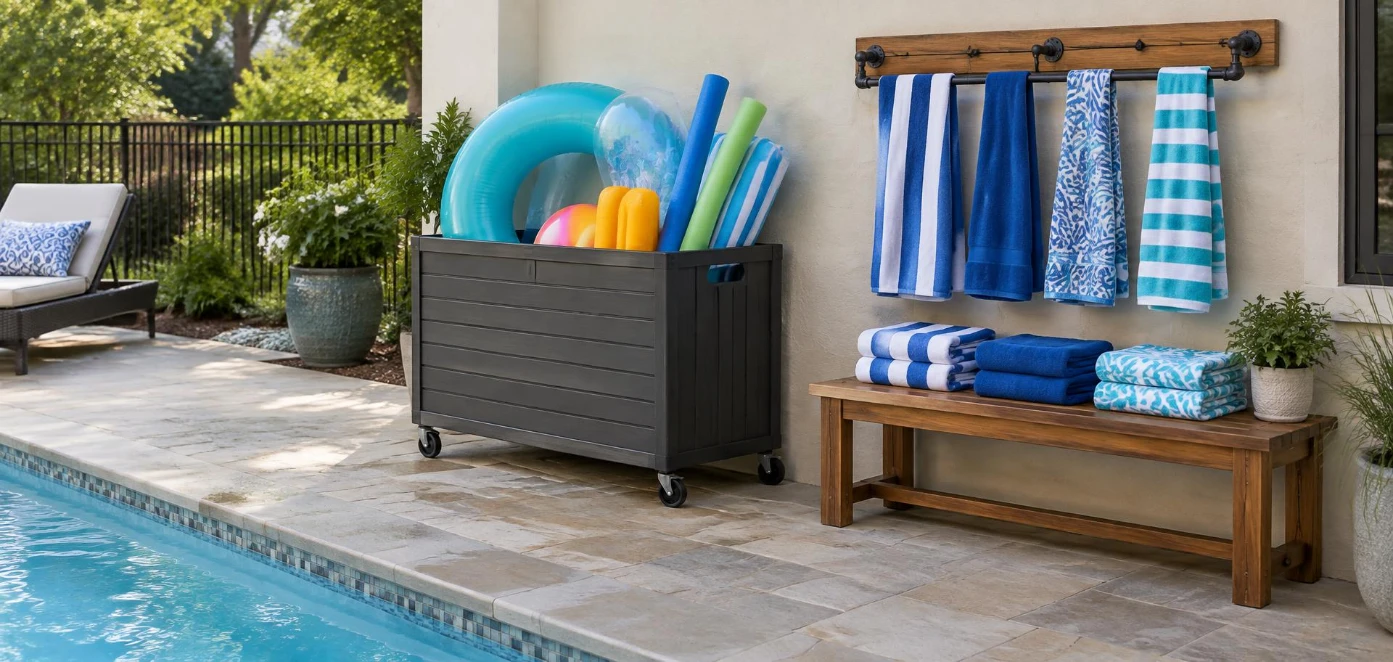
5. A wall-mounted hook rack near the pool exit
Putting hooks exactly where people climb out of the pool solves the towel pile-up before it starts.
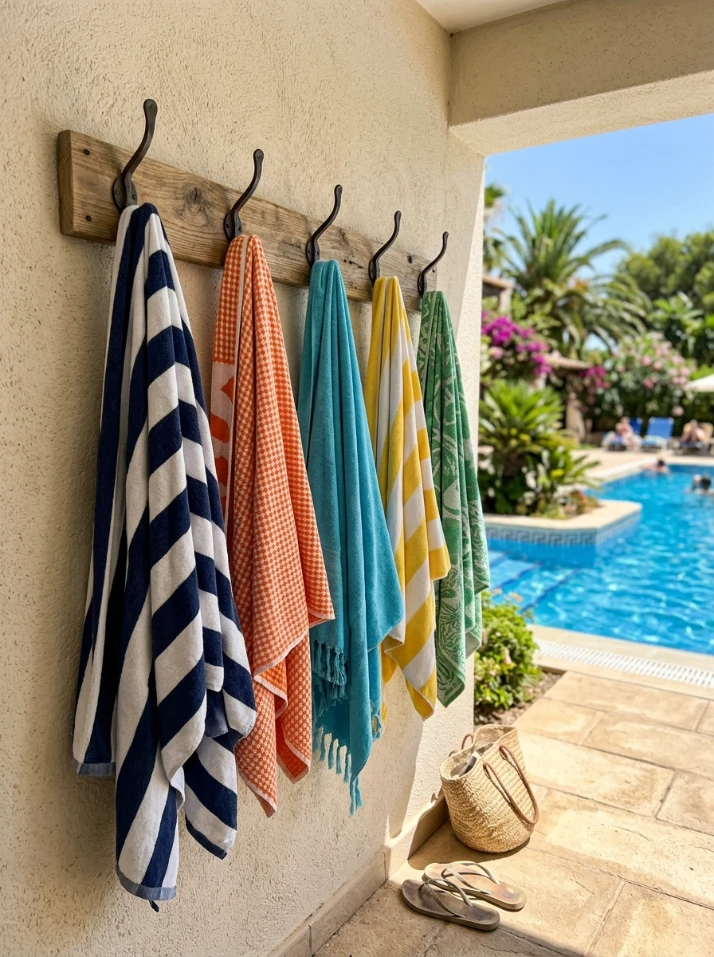
A row of sturdy hooks, mounted at the exact spot where swimmers get out of the pool, gives everyone an obvious place to hang a towel instead of tossing it on the nearest chair. Location matters more than the hook style here, since convenience is what actually gets a towel hung up instead of dropped.
Weatherproof metal or resin hooks hold up far better outdoors than anything meant for indoor use, so it’s worth choosing hardware rated for sun and rain exposure.
6. A fence-mounted float rack
Vertical fence space is almost always sitting empty, and it’s a great spot for float storage.
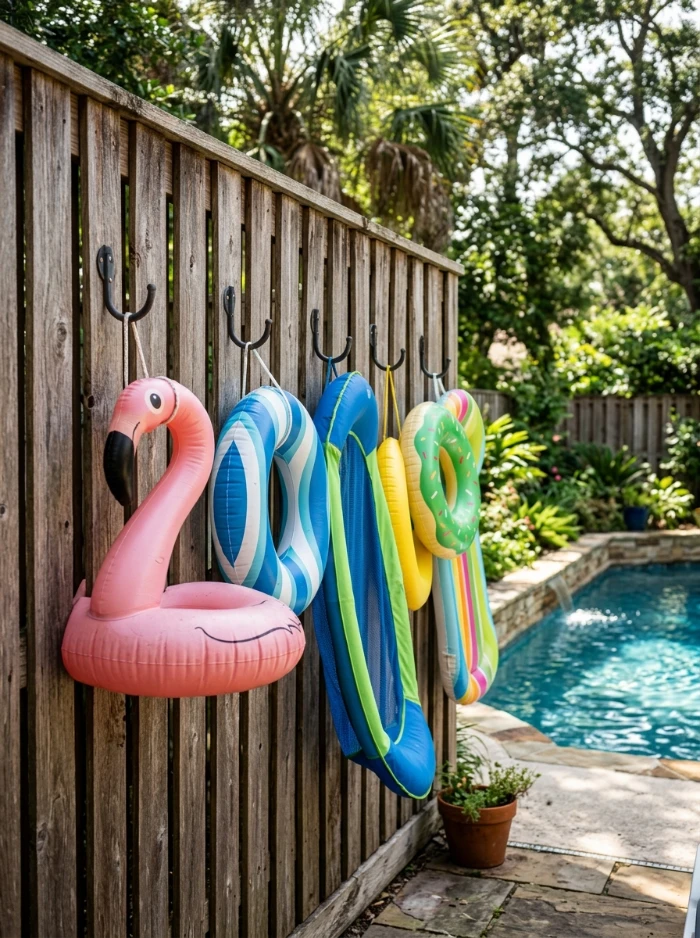
Large hooks or a simple rack mounted along a fence line holds deflated or partially deflated floats upright, keeping them off the ground and out of the main walking area entirely. This works especially well for larger rafts and tubes that don’t fit neatly into a standard bin.
Mounting the hooks at a height where floats hang freely, without dragging on the ground, helps them dry fully and keeps grass or dirt from getting trapped underneath.
7. A metal towel rack with a water-fillable base
Wind is the real enemy of any freestanding poolside storage.
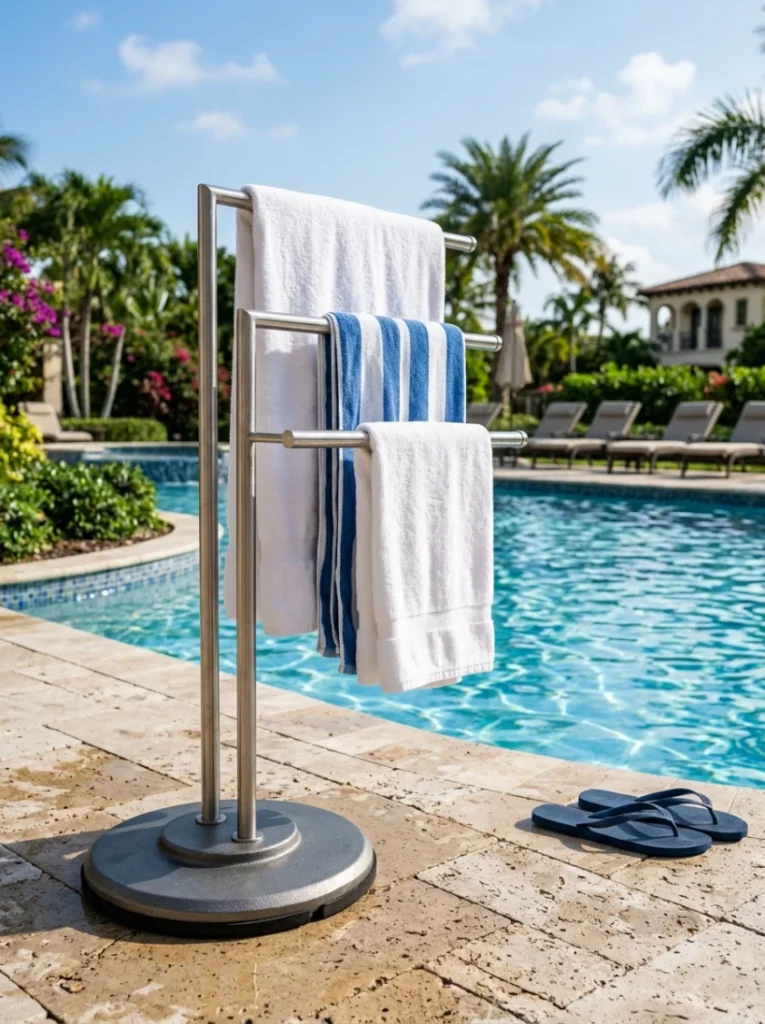
A metal towel rack with a base that fills with sand or water stays put even on a breezy day, which matters far more at a pool than in most other outdoor settings. Lightweight racks without this feature tend to tip over the moment a gust catches a hanging towel.
This is a low-cost fix, and it solves one of the most common complaints people have with freestanding outdoor towel storage.
8. A retractable clothesline for quick towel drying
Sometimes the fastest way to dry a towel is still the simplest one.
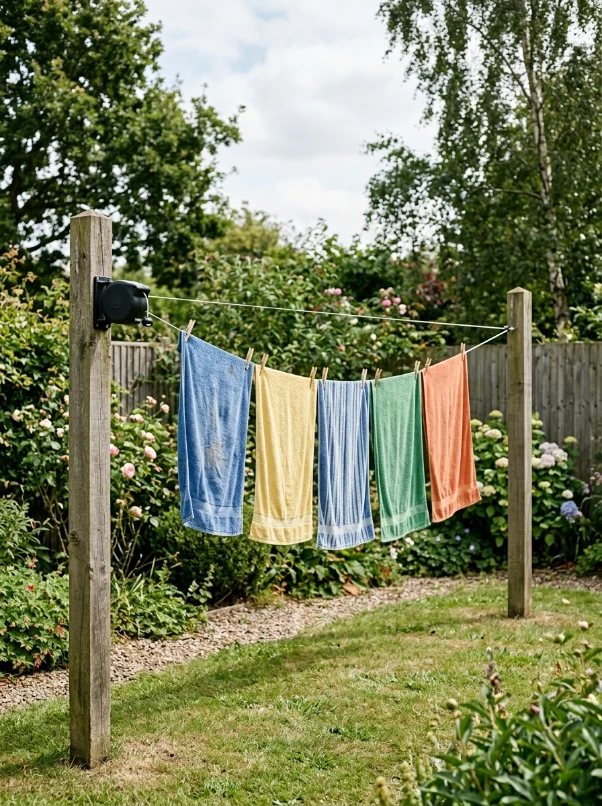
A retractable clothesline, mounted between two posts or a post and the house, gives towels direct sun and airflow, which dries them faster than piling them into a bin ever could. Retracting the line when it’s not in use keeps the yard from looking cluttered between pool days.
This is one of the cheapest ideas on this entire list, and it’s especially useful for a household that goes through several towels a day during summer.
Built-In and Furniture-Based Storage
9. A storage bench that doubles as seating
One piece of furniture doing two jobs is exactly what a poolside area needs.
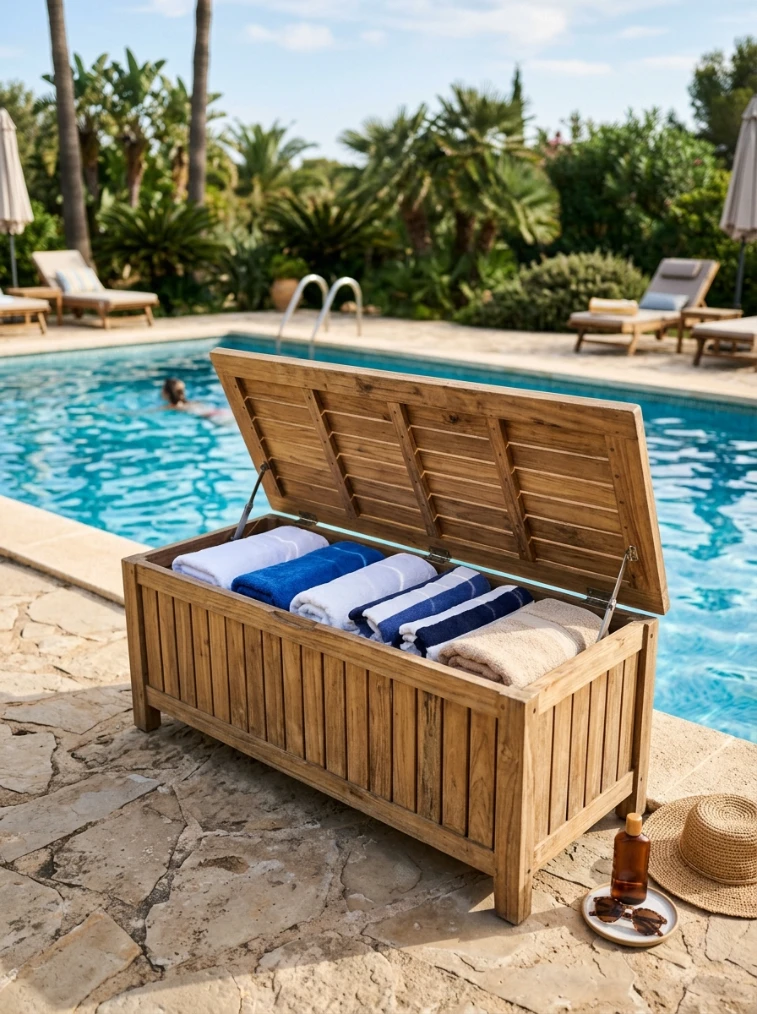
A bench with a lift-up lid provides seating for guests while hiding dry towels, sunscreen, and pool toys out of sight underneath. This is one of the most efficient storage pieces on this list relative to the space it actually takes up on the patio.
Choosing a bench built specifically for outdoor use, rather than an indoor piece moved outside, matters here, since sun and moisture exposure will wear down non-weatherproof materials fast.
10. A built-in deck box along the pool fence
A larger, more permanent storage solution for a pool area used constantly through the season.
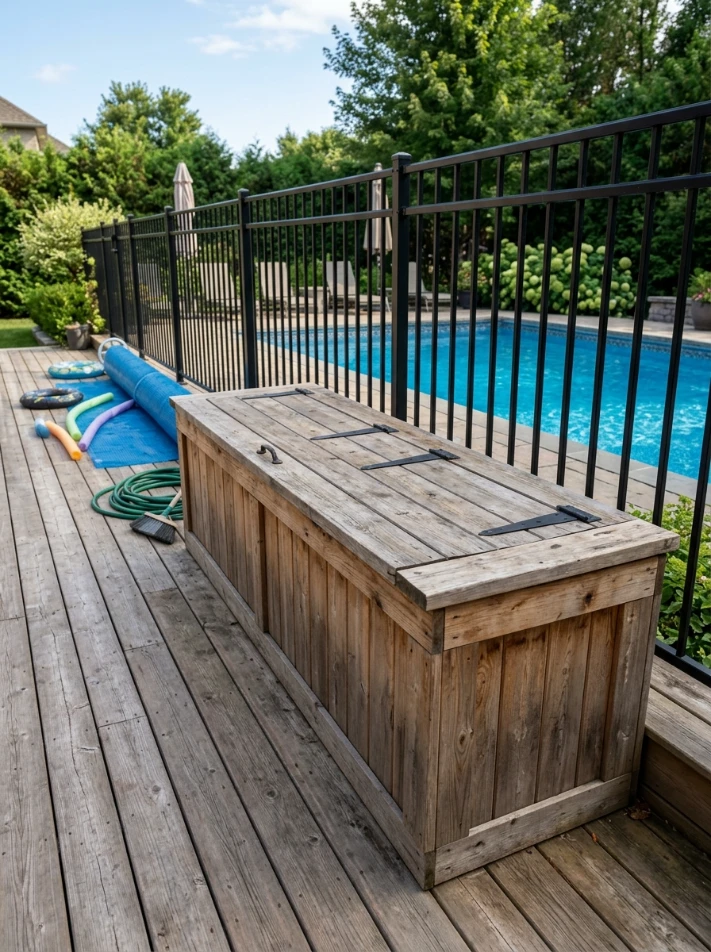
A deck box, built into or placed along the fence line, holds pool noodles, life vests, and deflated floats in one weatherproof space that’s considerably larger than a standard bin. This is a strong investment for a family that hosts pool parties often, since it can store enough gear for a full group.
Look for a deck box with small drainage holes in the bottom, since even a sealed box will collect some condensation from stored wet gear over time.
11. A cabana or shed dedicated to pool gear
For a genuinely large collection of pool equipment, a small dedicated structure solves the problem completely.
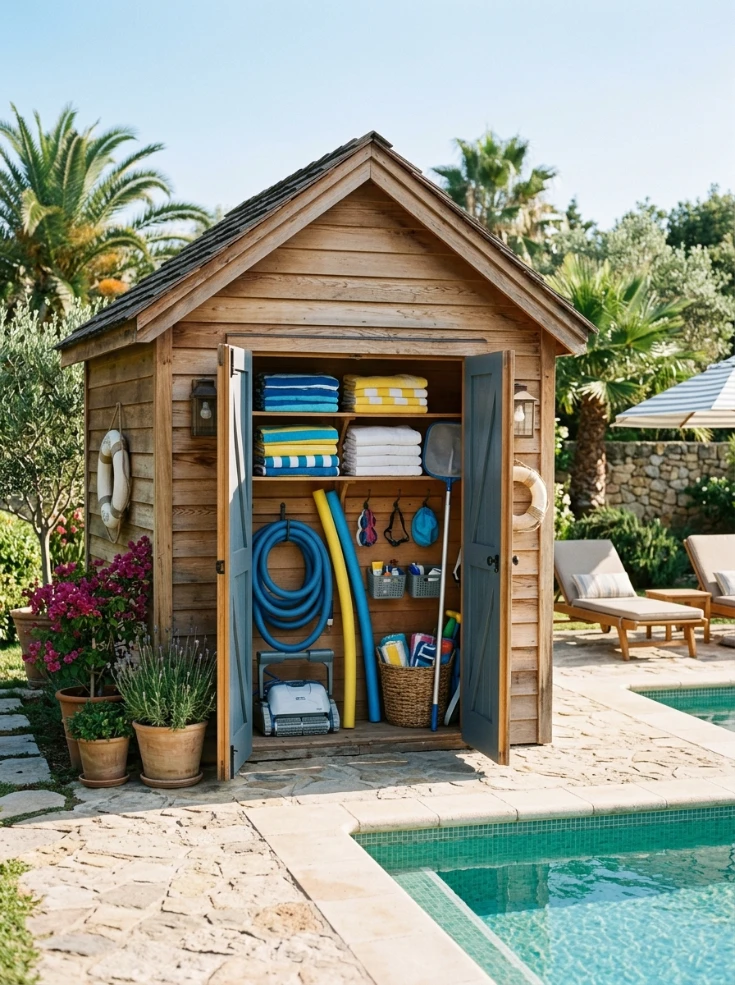
A small cabana or storage shed near the pool holds everything from pumps and cleaning equipment to towels and floats in one central, weatherproof space. This is a bigger investment than most ideas on this list, but it’s worth considering for a pool that gets heavy daily use across a whole season.
Adding a few shelves and hooks inside turns a basic shed into genuinely organized storage rather than just a bigger version of the clutter problem.
12. A poolside cabinet with slatted doors
Slats let air through while still keeping gear out of direct view.
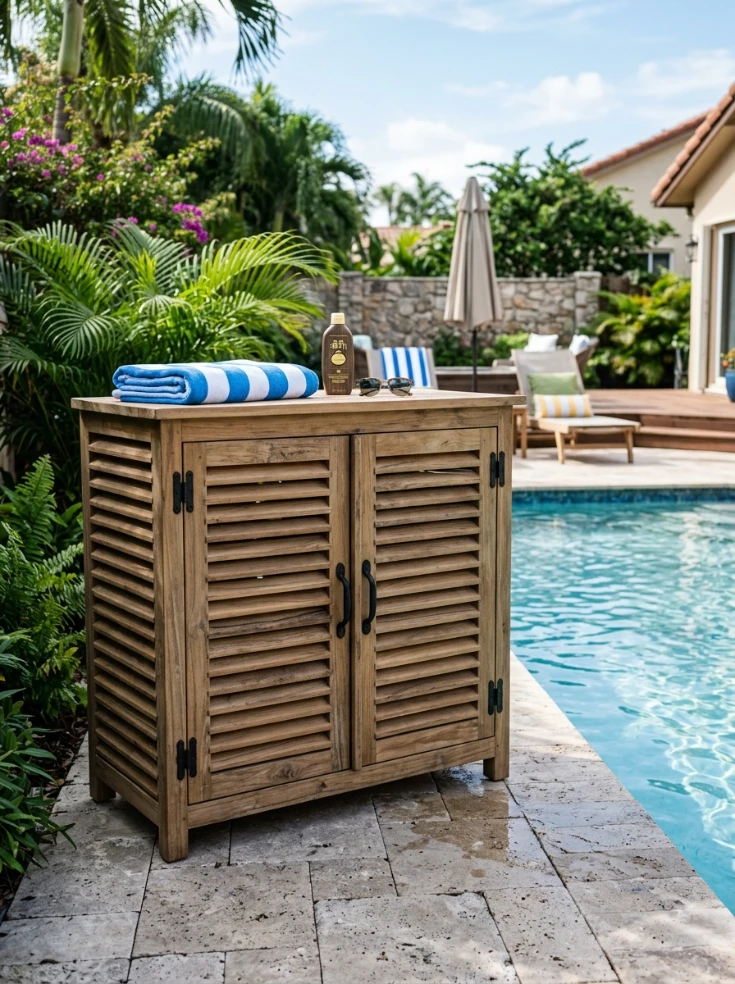
A cabinet with slatted or louvered doors hides stored gear from view while still allowing airflow through the gaps, which helps wet items dry even behind closed doors. This is a smart middle ground between a fully open bin and a completely sealed cabinet that traps moisture inside.
This style also tends to look more like real furniture than a plastic storage bin, which matters if the piece sits somewhere visible from the main patio seating area.
Drying and Quick-Dry Solutions
13. A mesh laundry hamper for wet towels
A hamper built for wet items, not just laundry, solves the “damp towel pile” problem directly.
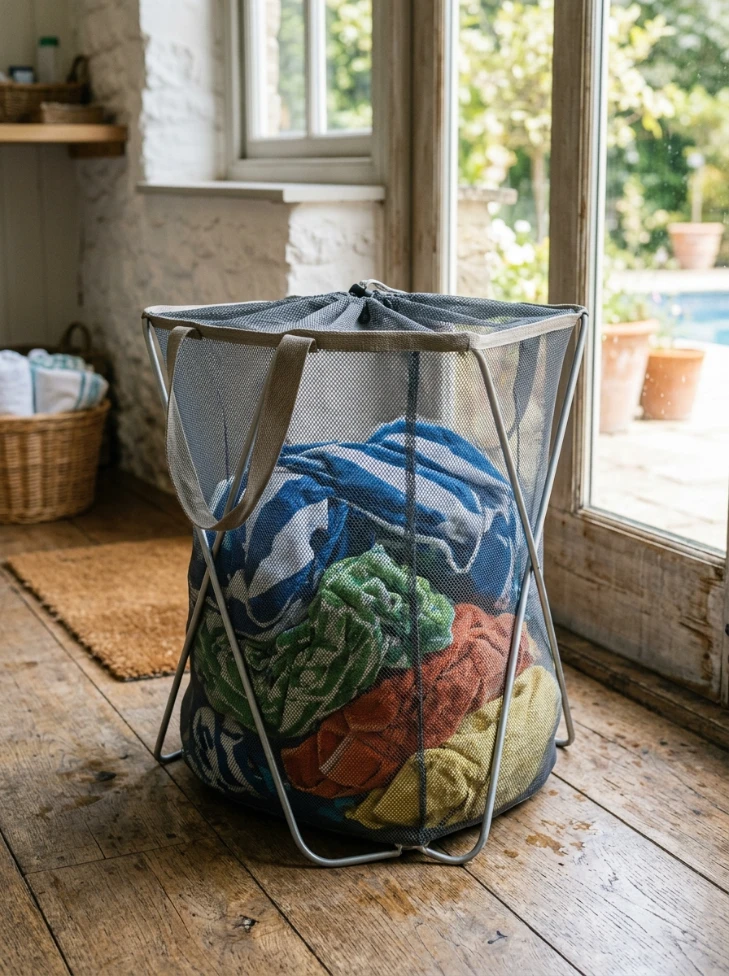
A collapsible mesh hamper, kept just outside the pool area, gives wet towels somewhere to go besides a chair, while the breathable fabric still lets some air through until laundry day. It collapses flat for storage when the pool season winds down, which a rigid bin can’t do.
This is one of the simplest fixes on this list, and it solves the exact problem most households run into first: too many wet towels, nowhere obvious to put them.
14. A drying rack specifically for swimsuits
Swimsuits dry differently than towels, and a dedicated rack respects that.
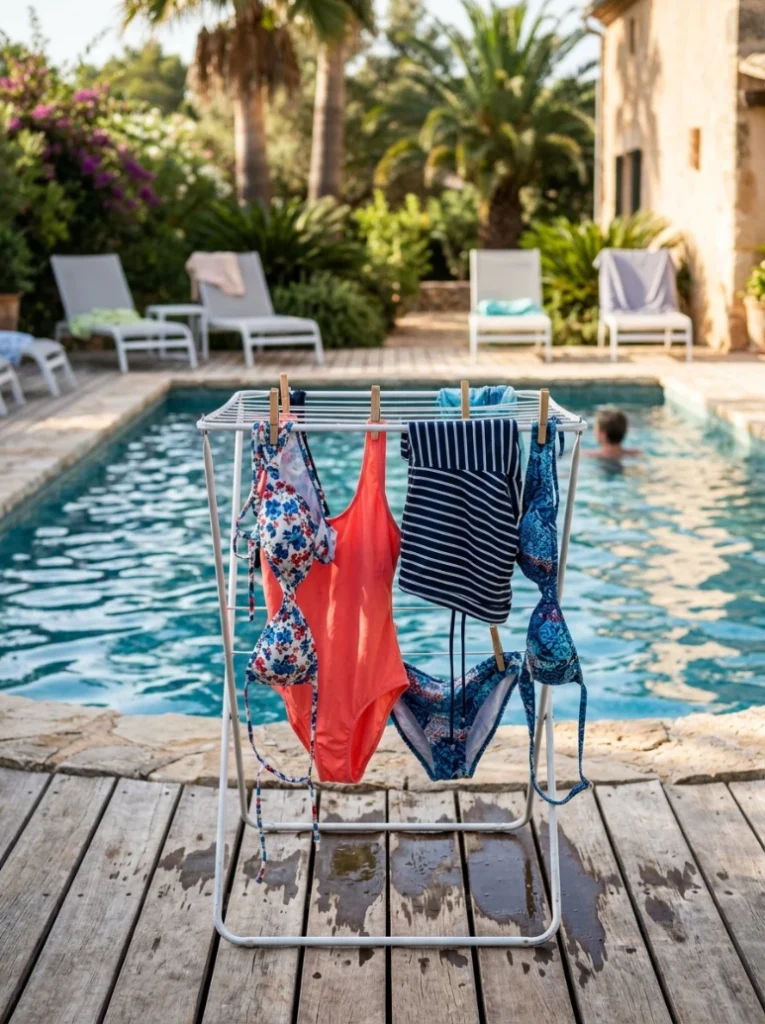
A small, dedicated rack for hanging wet swimsuits keeps them from getting balled up inside a towel pile, where they take much longer to dry and can start smelling musty. Clips or small hangers designed specifically for swimwear also prevent stretching out the fabric over time.
This is a small addition, but it solves a specific problem that a general towel rack or bin doesn’t address well on its own.
15. A shaded drying zone away from direct sun
Direct sun dries towels fast, but it also fades colors and weakens fabric over time.
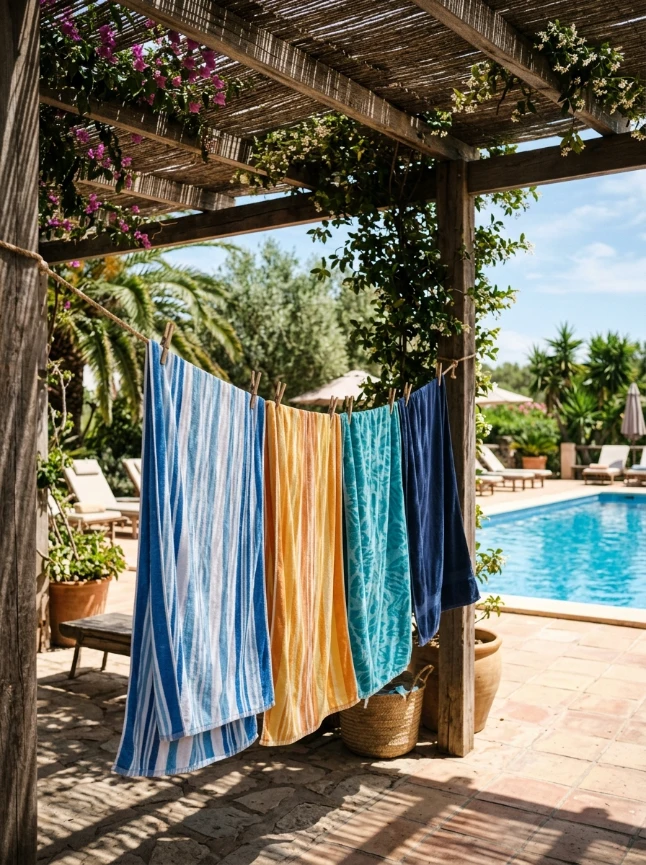
Setting up a drying spot under a pergola or shade sail, rather than in full sun, still lets towels dry through natural airflow while protecting the fabric from harsh UV exposure. This extends the life of towels considerably compared to daily full-sun drying.
This is a good detail to plan into a pool area’s overall layout, especially if you’ve already got shade structures set up for seating.
16. Slatted shelving for airflow underneath
Solid shelves trap moisture, but slatted ones let it pass right through.
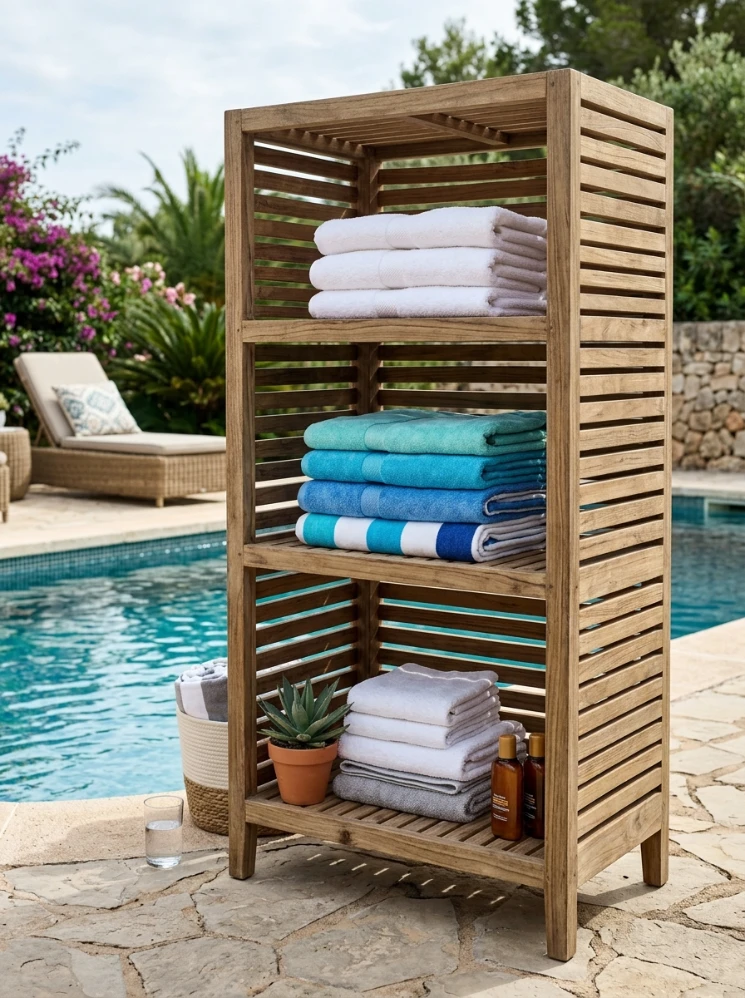
A shelf built from slats, rather than a single solid board, lets air circulate both above and below stored towels, helping them dry evenly rather than staying damp on the bottom fold. This small design detail makes a real difference for anything stacked and stored outdoors.
This works well built into a cabana, a shed, or even a simple standalone shelving unit near the pool.
Organization and Labeling Details
17. Labeled bins by family member
Assigning ownership cuts down on towels ending up in a shared, tangled pile.
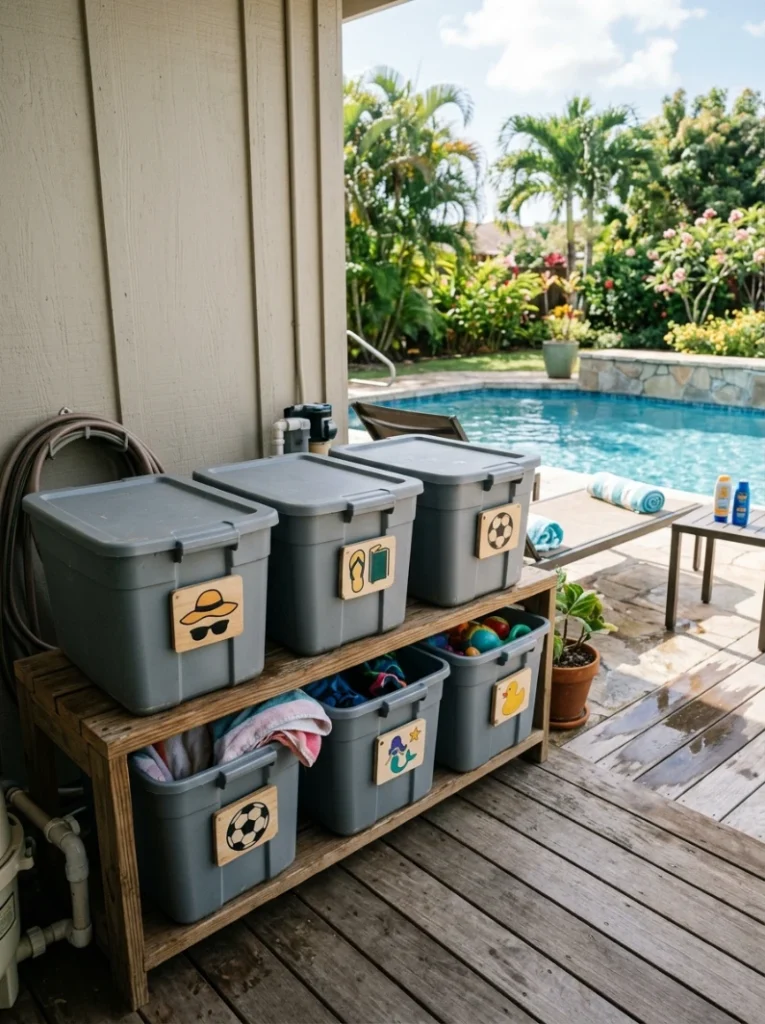
Giving each family member their own labeled bin or hook for towels and gear cuts down on the daily scramble to find whose towel belongs to whom. This works especially well for a larger household or one that hosts friends and cousins throughout the summer.
It also makes cleanup faster, since everyone already knows exactly where their own stuff is supposed to go.
18. A “pool day” grab-and-go bin
Grouping supplies by activity, not category, makes them faster to actually use.
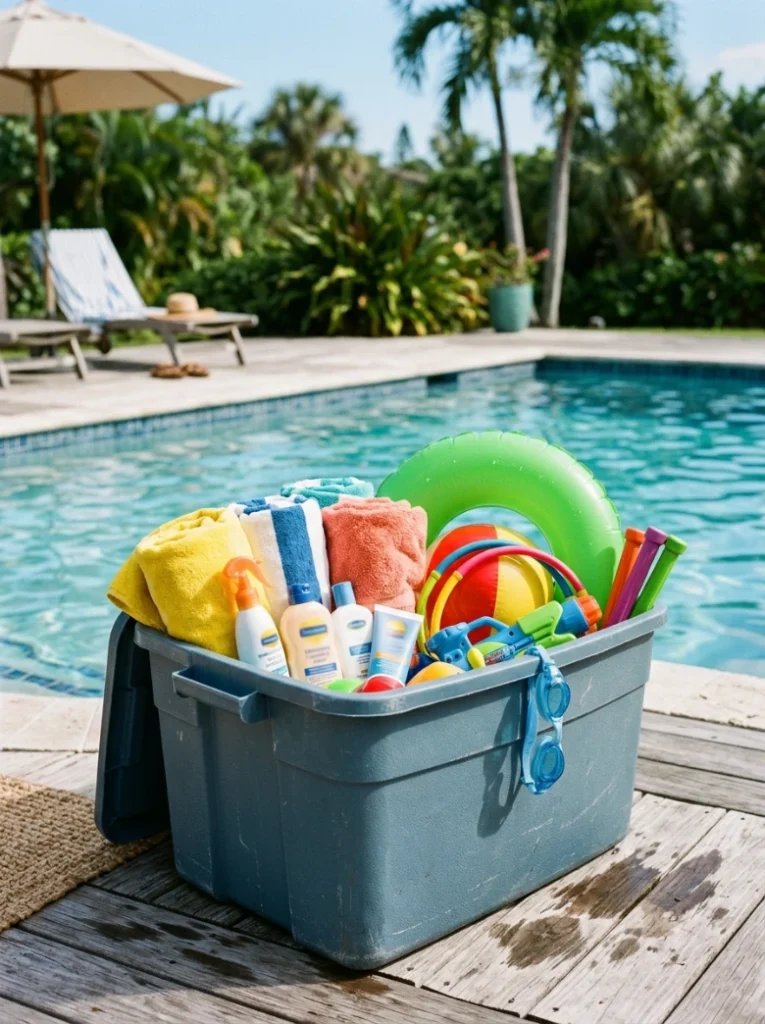
A single bin stocked with sunscreen, goggles, a spare towel, and a pool toy or two lets anyone grab everything needed for a pool day in one trip, rather than gathering items from five different spots. This kind of task-based organizing, similar to how a kitchen cabinet works best grouped by use, saves real time on a busy summer afternoon.
Restocking this bin after each use keeps it ready to grab the next time someone wants to swim.
19. Clear bins for small pool accessories
Goggles, dive rings, and pool toys are easy to lose track of without a defined home.
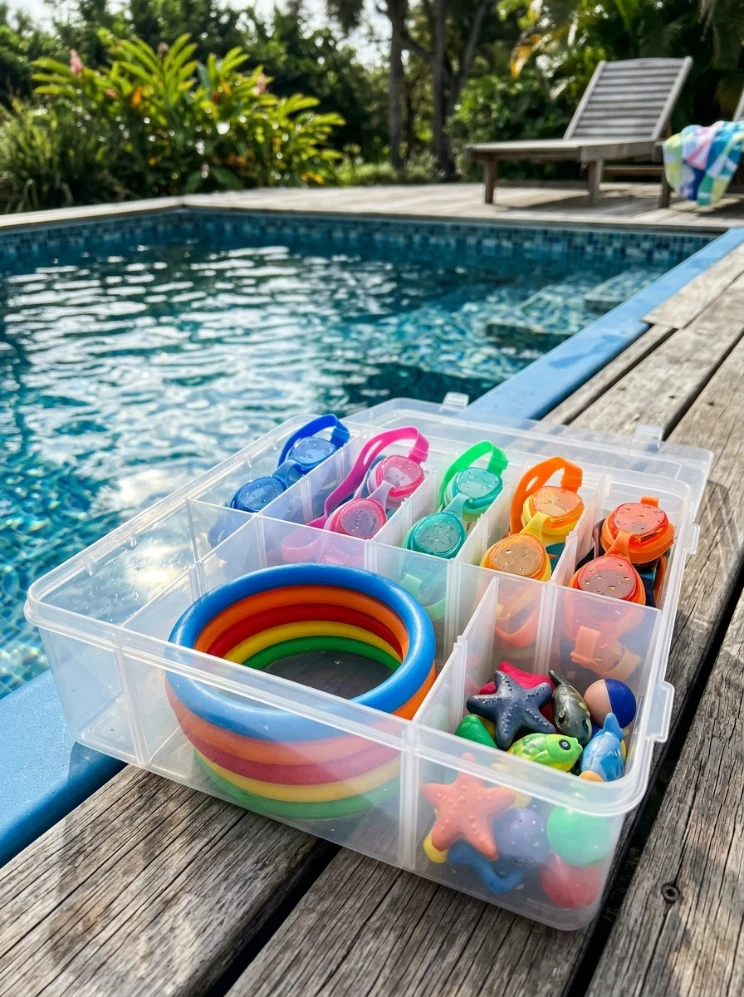
Clear bins keep small items like goggles, dive rings, and pool toys visible at a glance, so nobody has to dig through an opaque box to find what they’re looking for. This is a small, low-cost fix that keeps the smallest, easiest-to-lose items from scattering across the yard.
Labeling each bin, even with something as simple as masking tape, adds one more layer of order once the collection of accessories grows.
20. A sunscreen and first aid caddy
Keeping safety essentials in one visible spot means they actually get used.
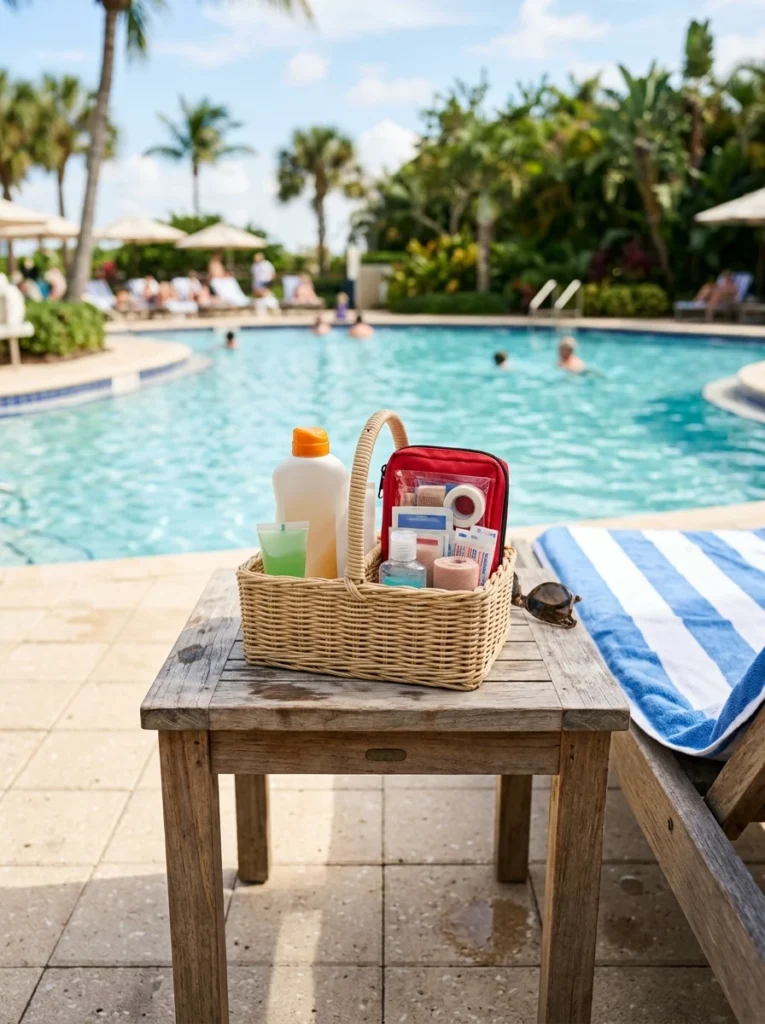
A small caddy or basket, stocked with sunscreen, bandages, and bug spray, kept in a shaded spot near the pool, means these essentials are actually within reach when someone needs them. This is worth prioritizing above purely decorative storage, since it solves a genuine safety need.
Checking and restocking this caddy at the start of each season keeps everything inside from expiring unnoticed.
21. A chalkboard or laminated checklist by the door
A simple visual reminder keeps the whole storage system from sliding back into chaos.
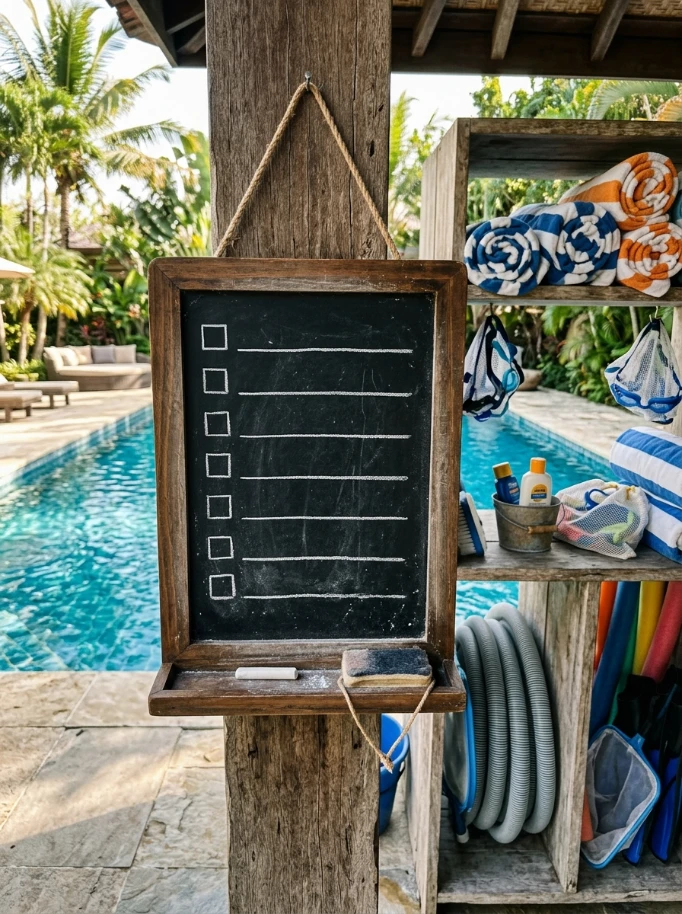
A small chalkboard or laminated card listing where each item belongs, towels here, floats there, helps guests and kids put things back correctly without needing to be told every single time. This is a particularly useful detail for a pool area that gets used by more than just the immediate household.
It costs almost nothing to set up, and it reinforces the whole system without anyone needing to police it constantly.
22. A weekly reset routine for the whole pool area
The habit that keeps every other idea on this list actually working over time.
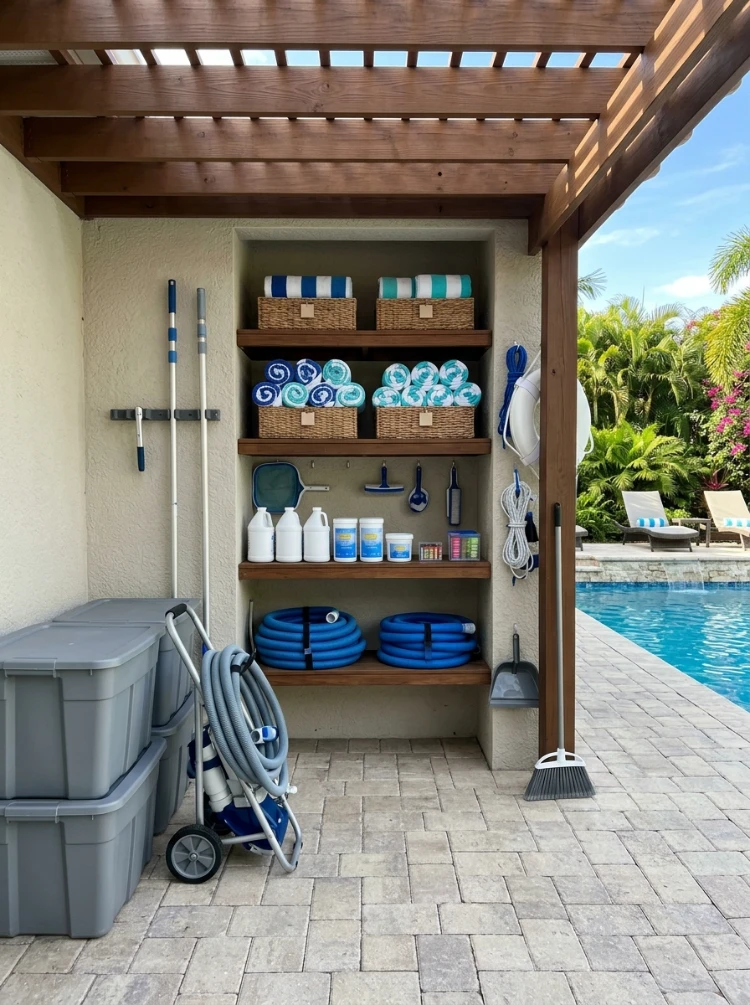
A ten-minute weekly check, putting drifted towels back on their hooks and floats back in their bin, prevents the slow buildup that eventually undoes even the best-organized pool area. This is the least exciting idea on the whole list, but it’s the one that determines whether everything else actually holds up through a full summer.
Doing this reset on the same day each week, like right before the weekend rush, makes it easier to remember and stick with.
Common Mistakes to Avoid
- Using sealed, solid bins for wet gear, which traps moisture and leads to mildew fast.
- Placing towel storage too far from the pool exit, so towels end up dumped on the nearest chair instead.
- Skipping a weighted base on freestanding racks, risking a tip-over on a windy day.
- Storing floats while they’re still partially inflated, which wastes space and stresses the material over time.
Frequently Asked Questions
How do I keep pool towels from getting moldy in storage?
Use mesh or slatted storage that allows airflow, and make sure towels are fully dry before they go into any closed bin or cabinet.
What’s the best way to store large pool floats?
Fully deflate them first, then store them in a large mesh bin or hang them from fence-mounted hooks so they don’t take up more space than necessary.
Where should towel storage go for the best results?
As close to the pool exit as possible. Storage that requires an extra walk rarely gets used consistently, no matter how well designed it is.
Conclusion
The pool areas that stay organized all summer aren’t the ones with the fanciest storage, they’re the ones where every item has an obvious, convenient home. Start with a rolling bin for floats and a hook rack for towels near the exit, then round it out with labeled bins and a quick weekly reset. The same principle that keeps a small patio feeling open and usable, giving every piece a clear job, works just as well poolside.