Every guest’s eye lands on your front door within the first second of walking up to your home. It’s the single most noticed spot on the whole exterior, yet it’s often the last thing anyone actually decorates on purpose.
Curb appeal in 2026 has gotten personal. Homeowners aren’t chasing a perfect, resale-ready look anymore, they’re using color, plants, and small symbolic touches to make the entrance feel genuinely theirs. Every idea below works toward that same goal, whether you’re painting the whole door or just swapping the hardware.
Quick Picks
- Best fast upgrade: A fresh coat of paint in a bold color
- Best for symmetry: Matching planters on either side of the door
- Best small detail: Oversized, easy-to-read house numbers
- Best finishing touch: New hardware in a warm brass or matte black finish
Did You Know?
Front door and porch upgrades consistently rank at the top of curb appeal return on investment, mainly because the cost stays low while the visual impact is huge. Repainting a door and swapping the hardware and planters typically runs a few hundred dollars, but it’s often the single detail a buyer or guest remembers most.
Before You Start
- Test paint colors before committing. A peel-and-stick sample on the actual door shows how a color looks in your specific light, not just on a screen.
- Consider your home’s architecture first. A color or style that fits a craftsman home might look out of place on a colonial one.
- Keep the entry simple if you’re going bold elsewhere. A bright door color pairs best with a clutter-free porch, not a dozen competing decorations.
- Choose hardware finishes that match throughout. Mixing brass, black, and chrome on the same door reads as unplanned rather than eclectic.
- Plan for both day and night. A door that looks great at noon should still be inviting once the sun goes down and the lights come on.
Color and Paint
1. A bold, saturated door color
Paint remains the fastest, cheapest way to transform a front door completely.
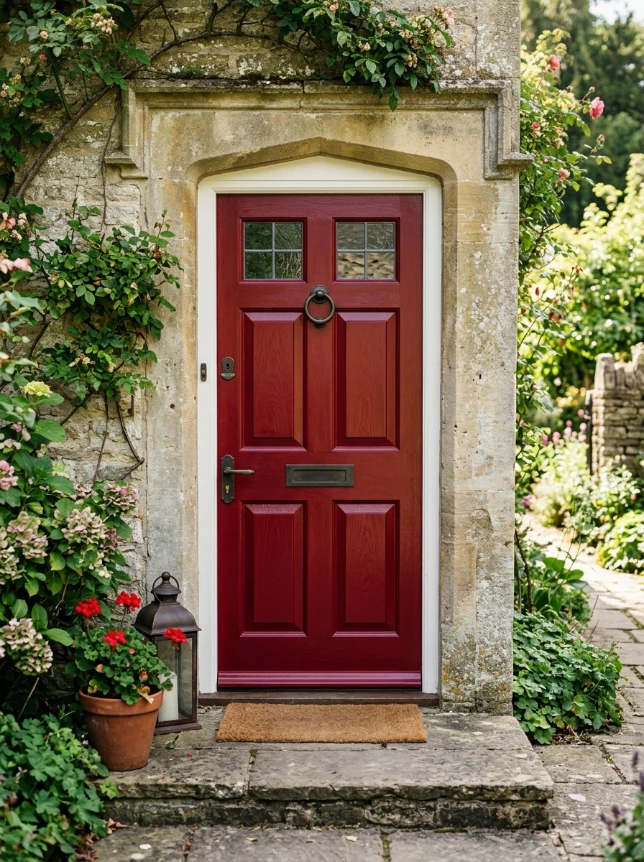
A rich color like cherry red, royal blue, or deep purple adds real personality to a traditionally styled home and instantly changes the whole feel of the entrance. This is one of the highest-impact, lowest-cost upgrades on this entire list, since a single weekend and a can of exterior paint is often all it takes.
Testing your chosen shade with a peel-and-stick sample directly on the door helps you see how the color actually reads in your home’s specific light before committing to it.
2. Deep, moody black or navy
The classic white door has real competition this year.
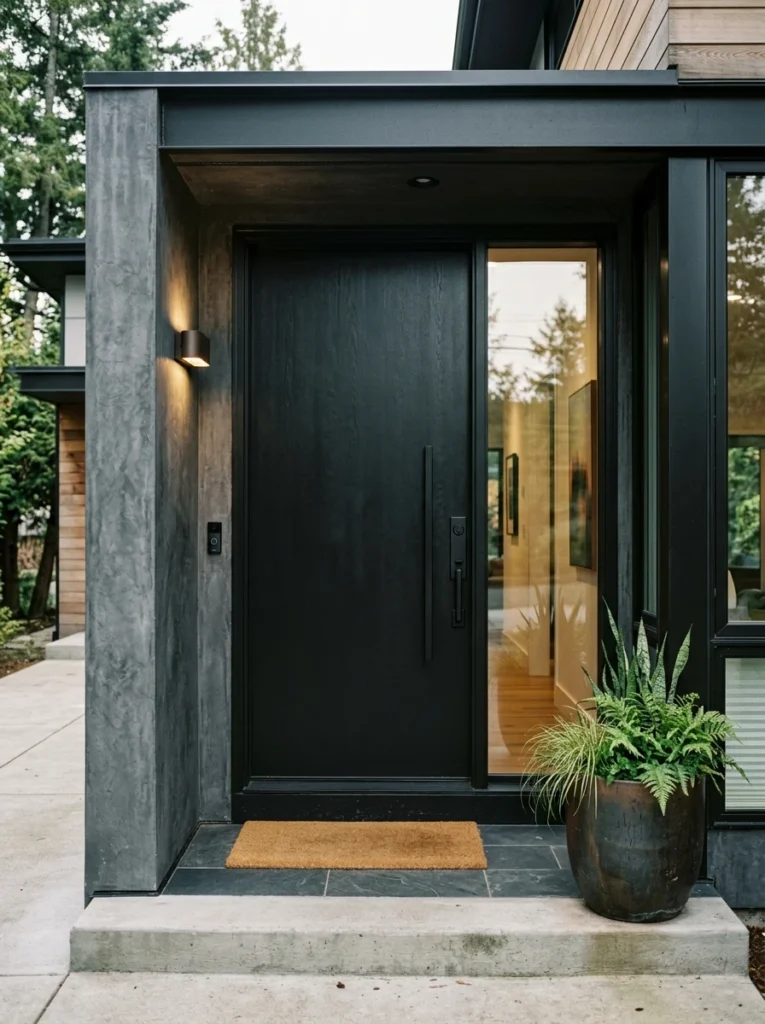
A door painted in matte black or deep navy brings a modern, moody edge that contrasts beautifully against lighter siding, replacing the classic white-picket-fence look with something considerably more current. This color choice photographs especially well against brick, stucco, or a lighter painted exterior.
Pairing dark paint with warm brass hardware keeps the look from feeling too stark or cold.
3. A color that matches your home’s mood
Color isn’t just decoration anymore, it’s how people are choosing to express personality outside.
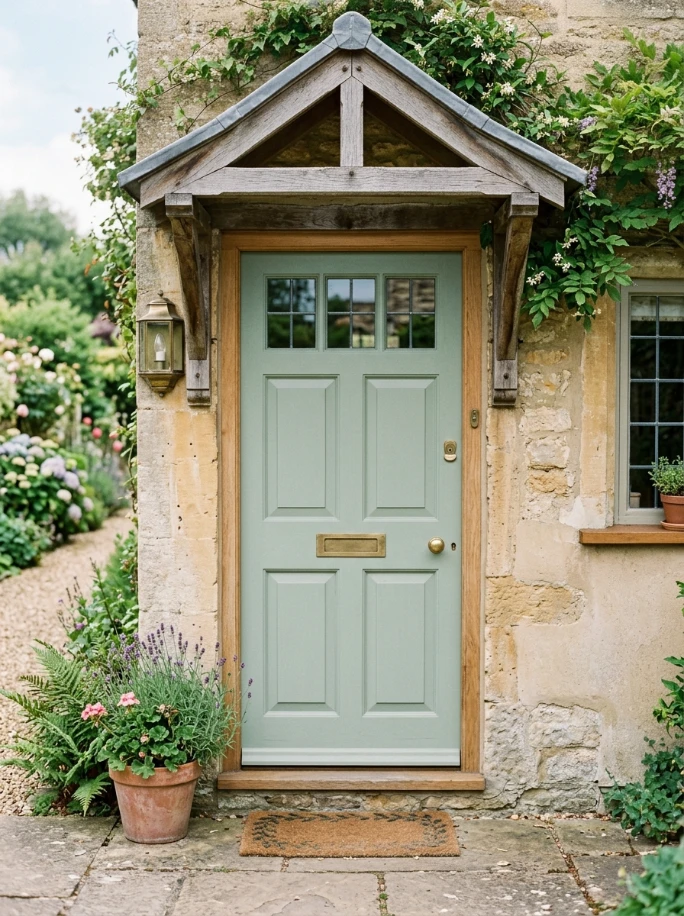
A soft sage green for a calm, grounded feel or a cheerful yellow for something more energetic lets the door color reflect an actual mood rather than just following a trend. A significant number of homeowners are now choosing exterior colors specifically to create a certain atmosphere, not simply to match the siding.
Thinking about how you want a guest to feel approaching the door, calm, cheerful, dramatic, is a genuinely useful starting point for narrowing down a shade.
4. A glossy finish for extra shine
The sheen of the paint changes the whole look just as much as the color itself.
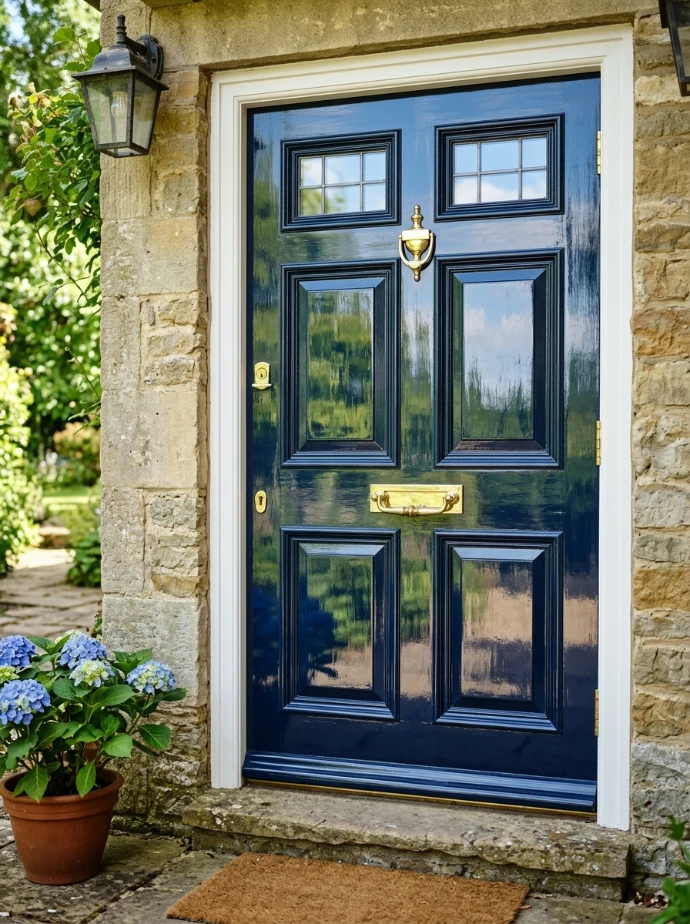
A high-gloss finish, rather than the more common satin or matte, gives a front door a polished, almost lacquered look that catches light beautifully throughout the day. This works especially well on a solid color door where the added shine really shows.
Glossy finishes do show fingerprints and dirt a little more easily, so they need slightly more frequent cleaning than a matte option.
Hardware and Fixtures
5. Warm brass hardware
Small metal details do a surprising amount of work on a front door.
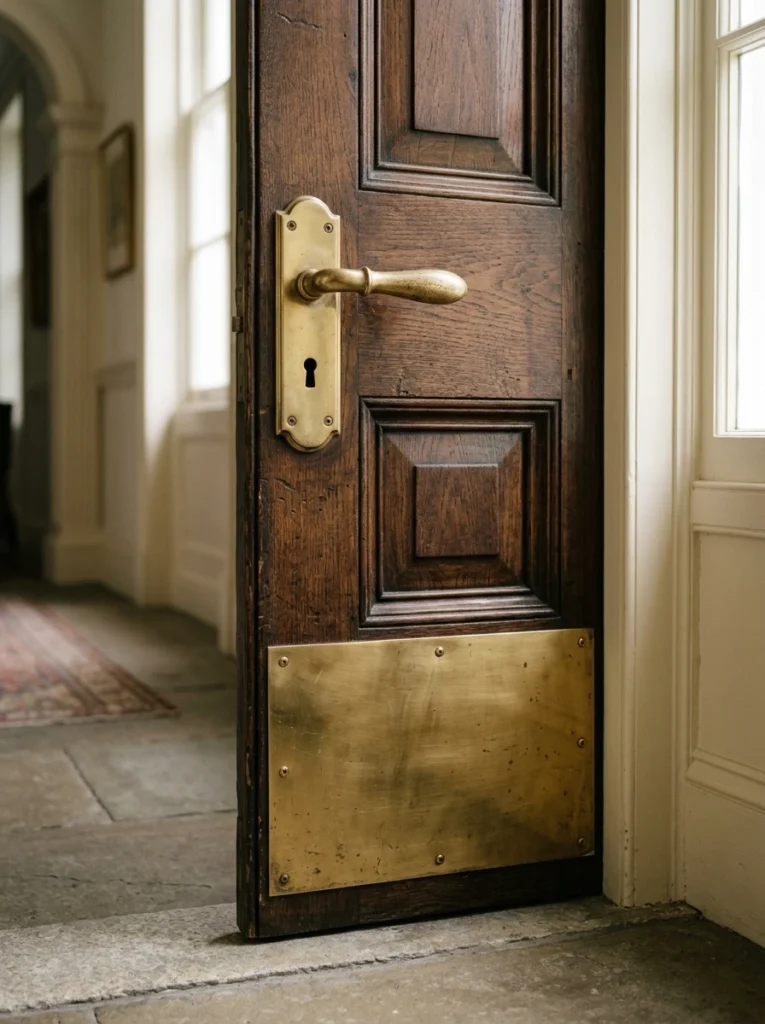
Swapping dated hardware for a warm brass handle, kickplate, and hinges gives the whole door a more elevated, intentional look, especially when paired with a bold or dark paint color. Brass has become a favorite finish precisely because it reads as warm and classic rather than cold or overly modern.
This is one of the cheapest updates on this whole list relative to how much it changes the door’s overall polish.
6. Matte black fixtures for a modern edge
For a more contemporary home, black hardware pairs beautifully with almost any door color.
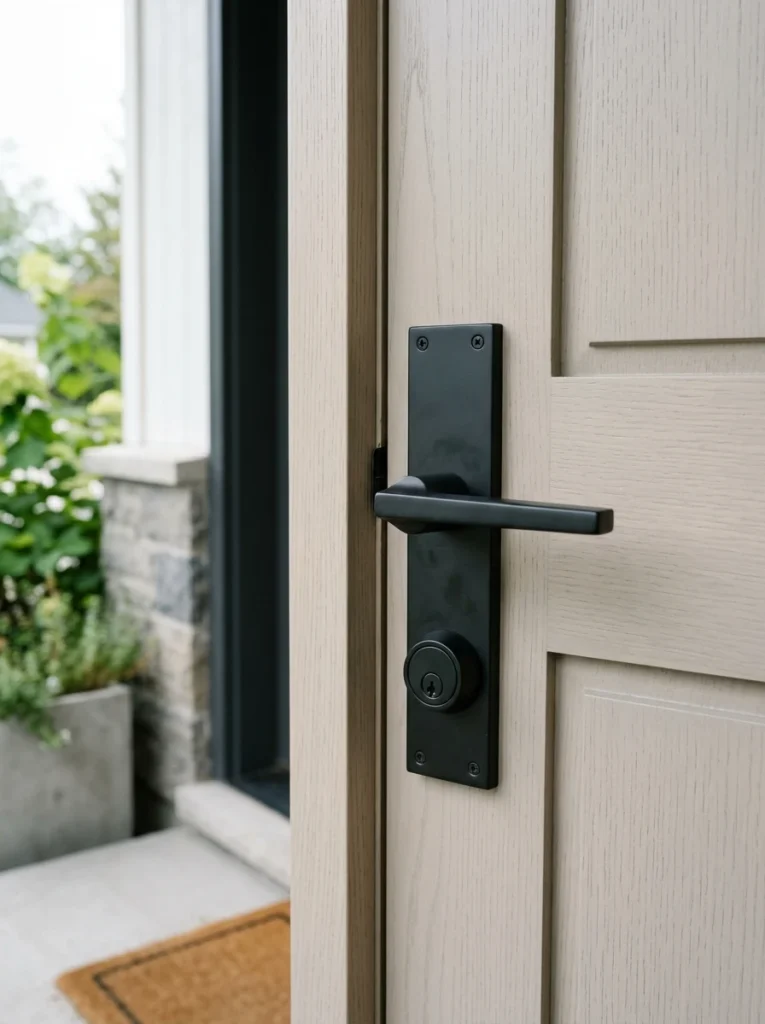
Matte black hardware creates strong contrast against a lighter door, giving the entrance a clean, modern edge that fits a contemporary or transitional home especially well. This finish also tends to hide fingerprints and wear better than shinier metals.
Keeping every visible fixture, handle, hinges, mail slot, in the same black finish ties the whole door together.
7. A statement door knocker
A single well-chosen accessory can carry a lot of personality.
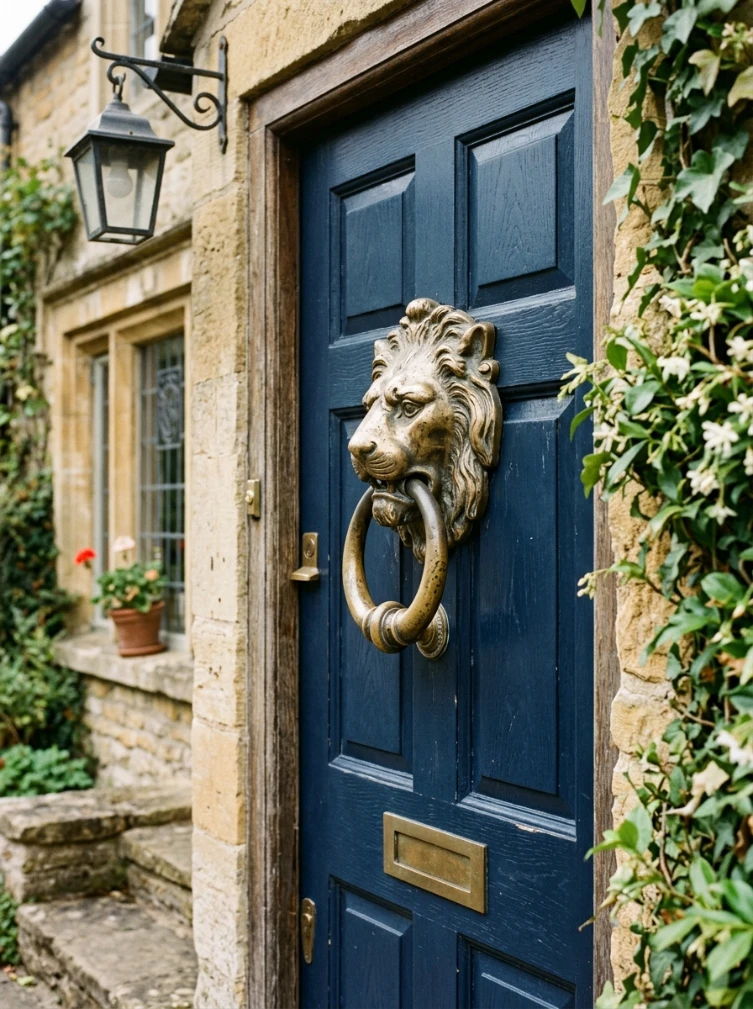
A substantial, decorative door knocker, whether classic or more sculptural, gives the door a focal point beyond just the handle and adds a functional, old-world touch that many newer homes are missing. This is a small purchase with a genuinely noticeable payoff.
Choosing one that matches your other hardware keeps the whole look cohesive rather than randomly assembled.
8. Glass panel inserts for natural light
Letting light through the door itself is a real design trend, not just a functional choice.
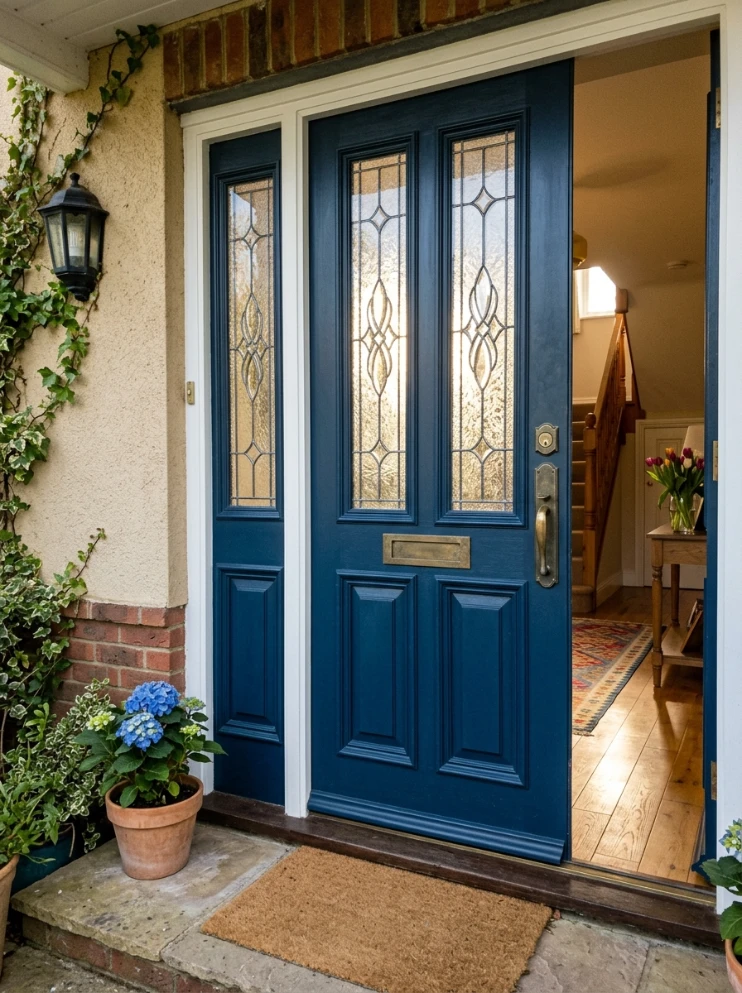
A door with glass panes, or sidelights framing the door itself, lets natural light spill into the entryway while adding real visual dimension from the outside. This works particularly well on a craftsman or contemporary style home where glass detailing is already part of the architecture.
Frosted or textured glass offers this same effect while keeping more privacy than clear panels would.
Plants and Greenery
9. Symmetrical potted plants
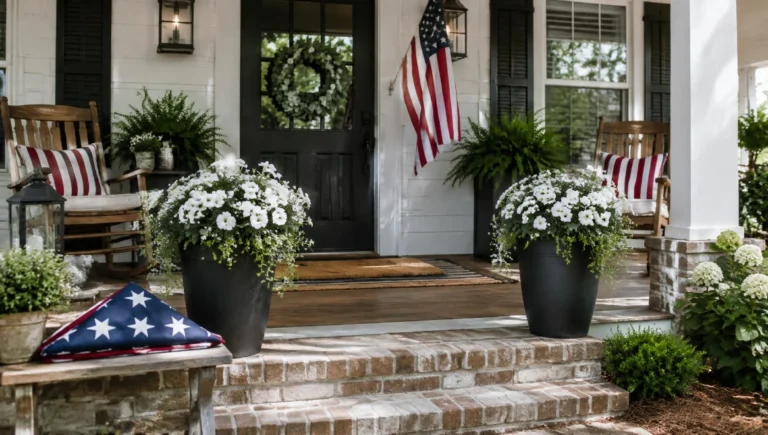
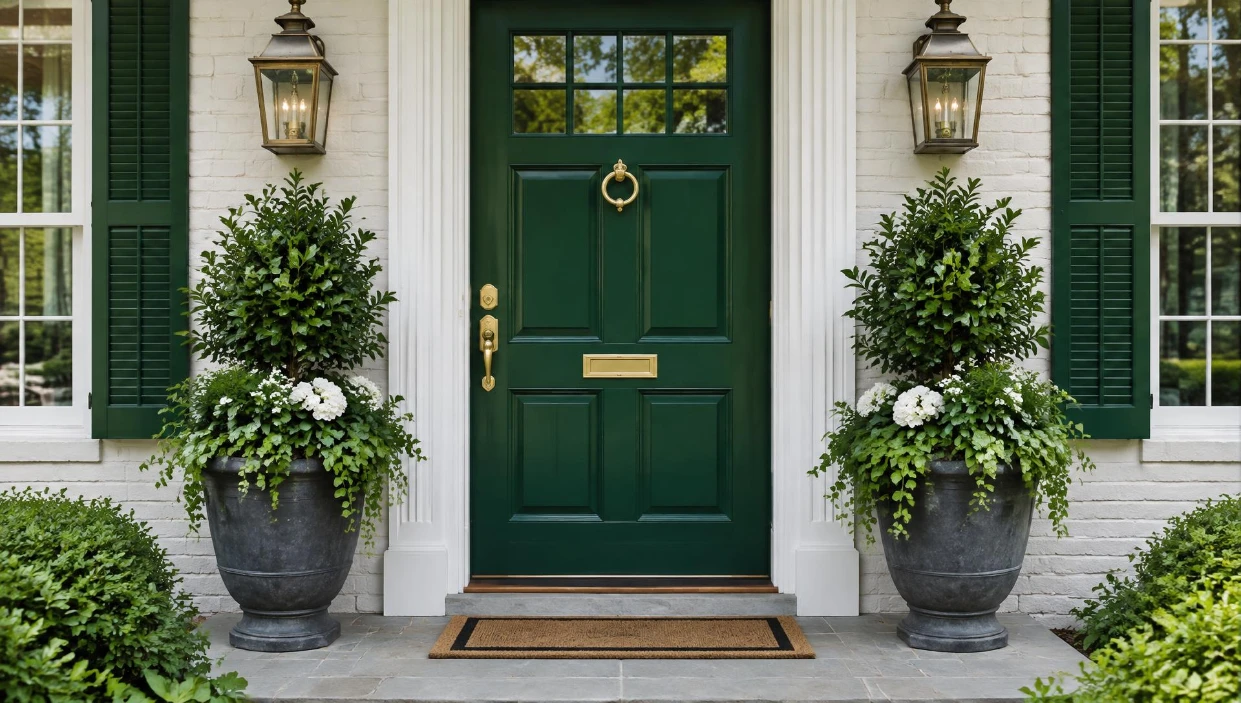
Matching planters on either side of the door is one of the most reliable curb appeal moves there is.
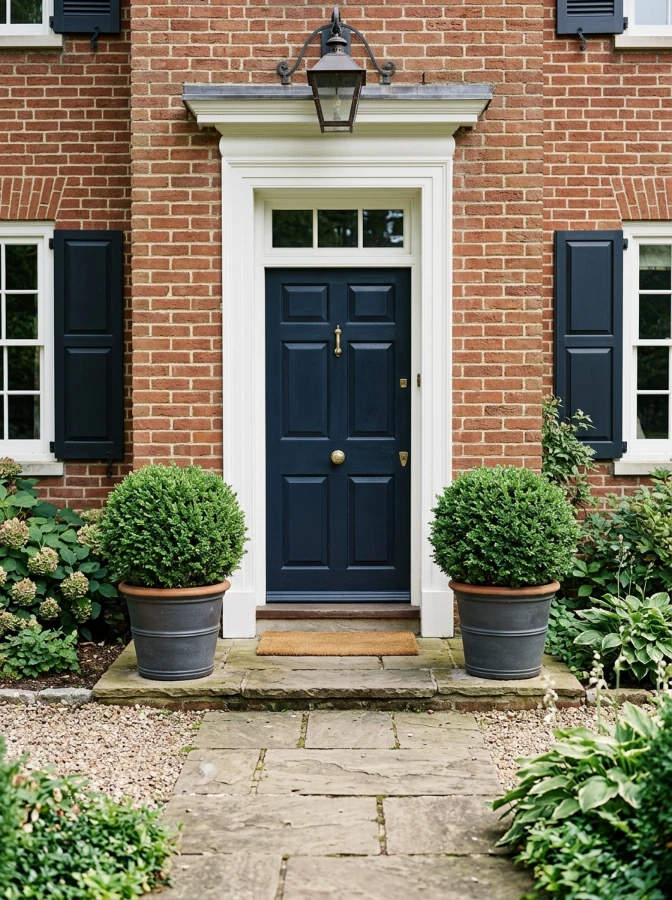
Two identical planters, filled with the same greenery or flowers, frame the entrance and create an instantly classic, put-together look for both small and large porches alike. This works for almost any home style, from a modern build to a traditional colonial.
Choosing pots large enough to feel substantial, rather than small and easily overlooked, makes a real difference in how finished the whole entrance looks.
10. Tall statement planters
Height adds drama that ground-level pots alone can’t achieve.
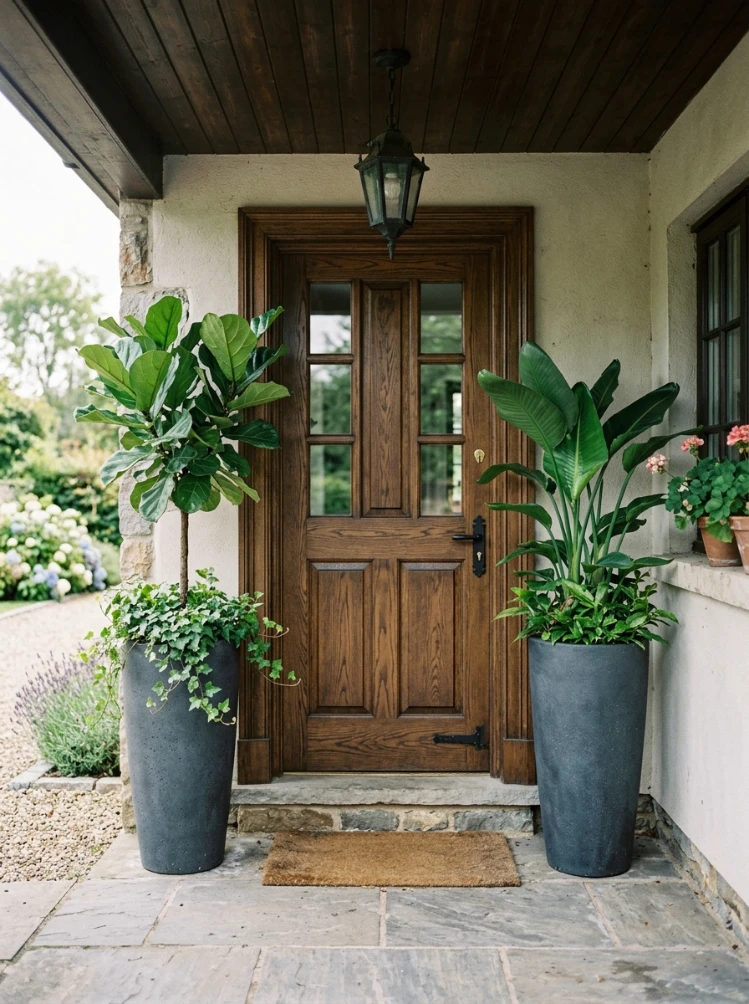
Tall planters, filled with an upright plant like a small tree or ornamental grass, add vertical interest that draws the eye upward toward the whole entrance rather than just the ground level. This works especially well framing a taller doorway or an arched entry.
Just make sure the planters don’t block the door’s swing path or any windows nearby.
11. A smart, self-watering planter
Technology has genuinely improved how easy it is to keep entrance plants alive.
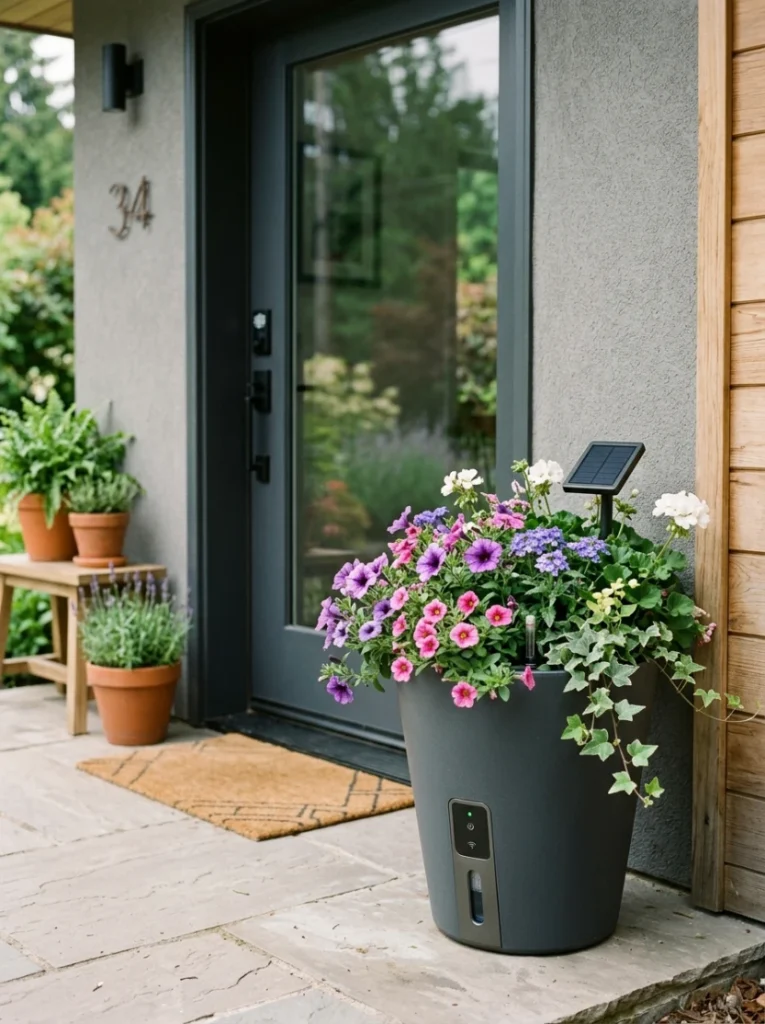
A self-watering planter with a built-in moisture sensor takes the guesswork out of keeping entrance plants healthy, which matters since a wilted or dead plant right by the door undercuts every other decor choice you’ve made. This is a worthwhile investment for anyone who’s struggled to keep entrance greenery alive in the past.
These planters typically hold enough water to go a week or more between refills, depending on the plant and climate.
12. A mix of textures and heights
Variety, done with intention, reads as considerably more curated than a single plant type alone.
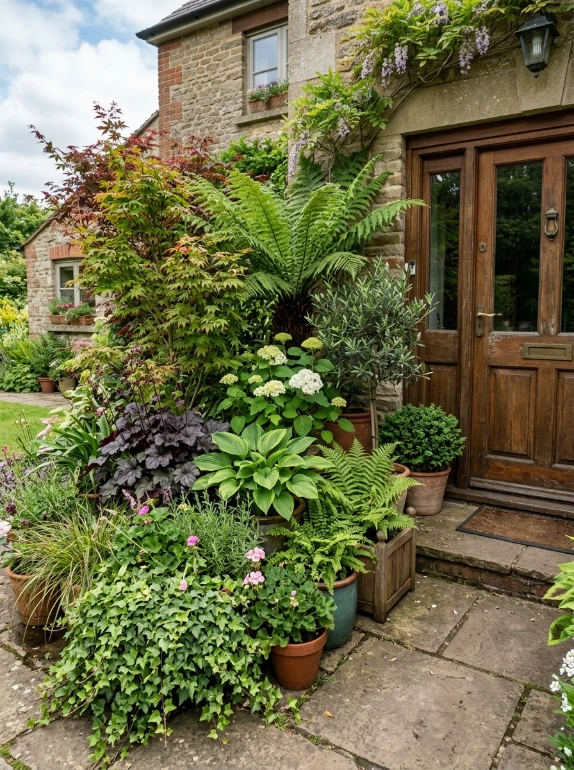
Combining a fern, a flowering plant, and something structural like a small evergreen creates real depth and interest, rather than a single flat row of identical pots. This layered approach works particularly well for a wider porch with room to spread the arrangement out.
Keeping the pots themselves in a matching material or color ties the mixed plant varieties together visually.
Lighting and House Numbers
13. Oversized house numbers
Bigger numbers aren’t just a style choice, they genuinely help people find your home.
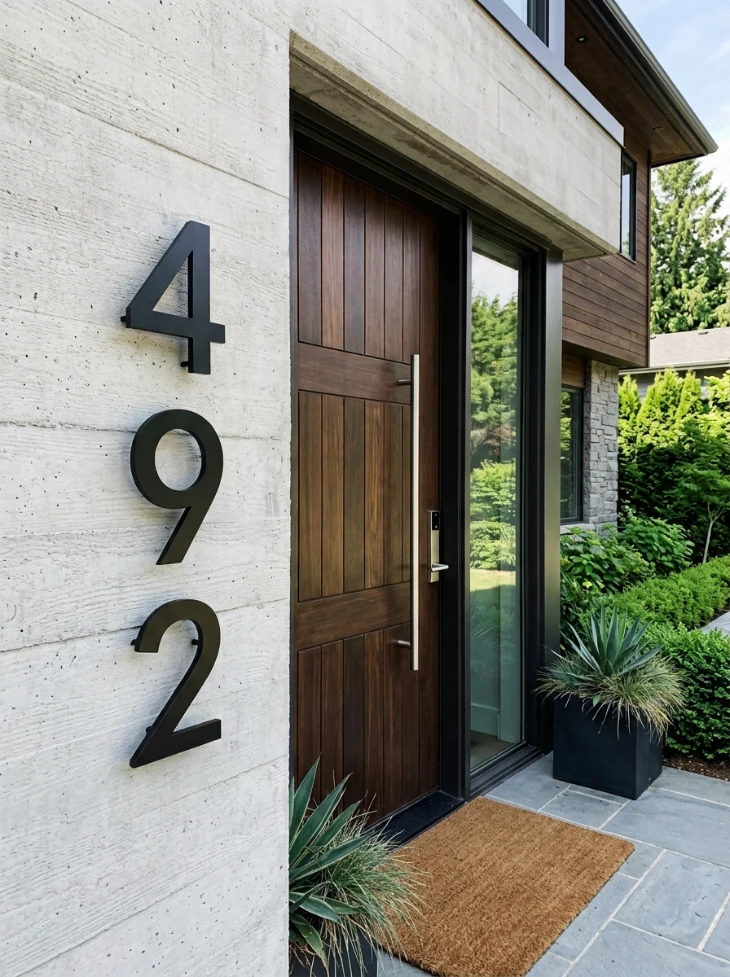
Large, modern house numbers, mounted in a finish that matches your hardware, make it considerably easier for guests, delivery drivers, and even emergency responders to find your home quickly. This detail is both stylish and genuinely practical, which is a rare combination among purely decorative choices.
Choosing a font and finish that fits your home’s overall style keeps this functional detail from looking like an afterthought.
14. A statement pendant light
Overhead lighting sets the tone the moment someone steps onto the porch.
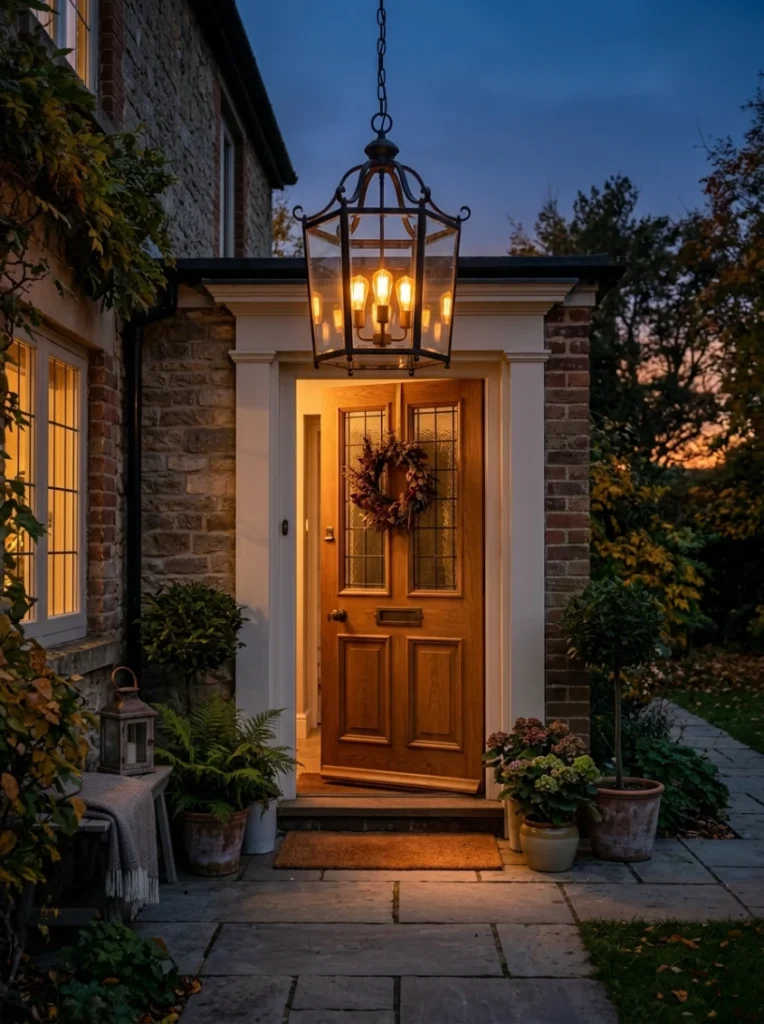
A pendant or lantern-style fixture, hung directly above the door, adds warmth and visual interest that a plain flush-mount light never achieves. This is worth prioritizing if your current fixture is small, dated, or barely visible during the day.
Choosing a warm bulb temperature over a cool white one makes the entrance feel considerably more welcoming after dark.
15. Sconces flanking the door
Symmetrical lighting mirrors the same balanced effect as matching planters.
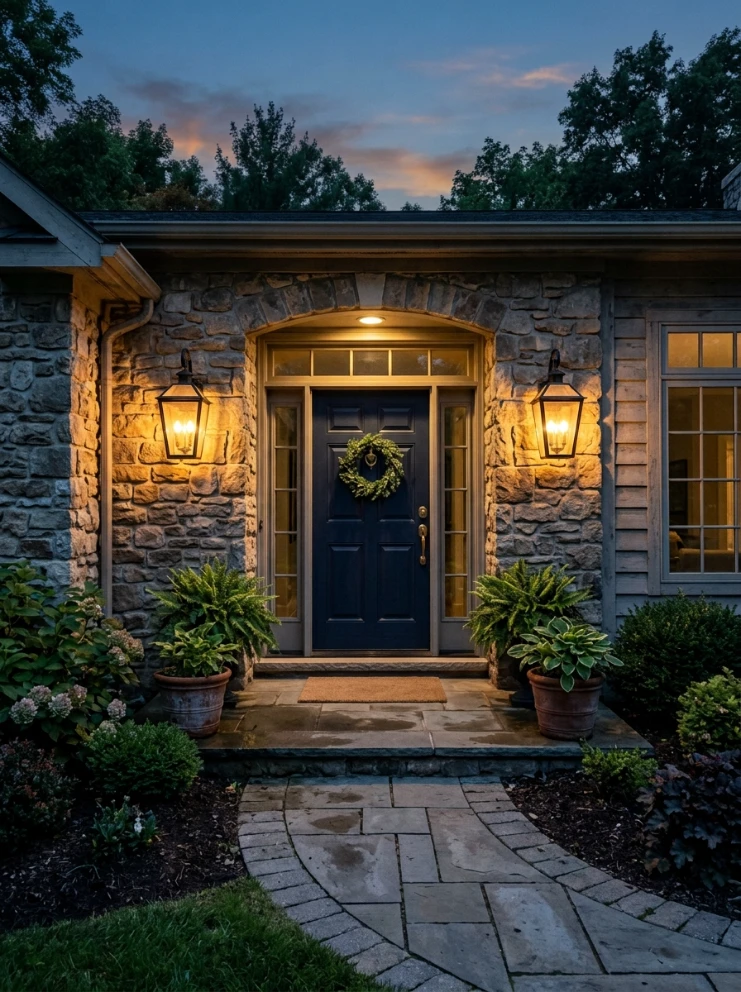
Two matching sconces, mounted at eye level on either side of the door, light the entrance evenly and create a classic, symmetrical look that works well with almost any architectural style. This is a strong pairing with the symmetrical planter idea covered earlier, doubling down on that balanced first impression.
Solar-powered sconces are a good option if running new wiring to the entrance isn’t practical.
16. Uplighting for architectural drama
Lighting from below creates a completely different mood than a standard overhead fixture.
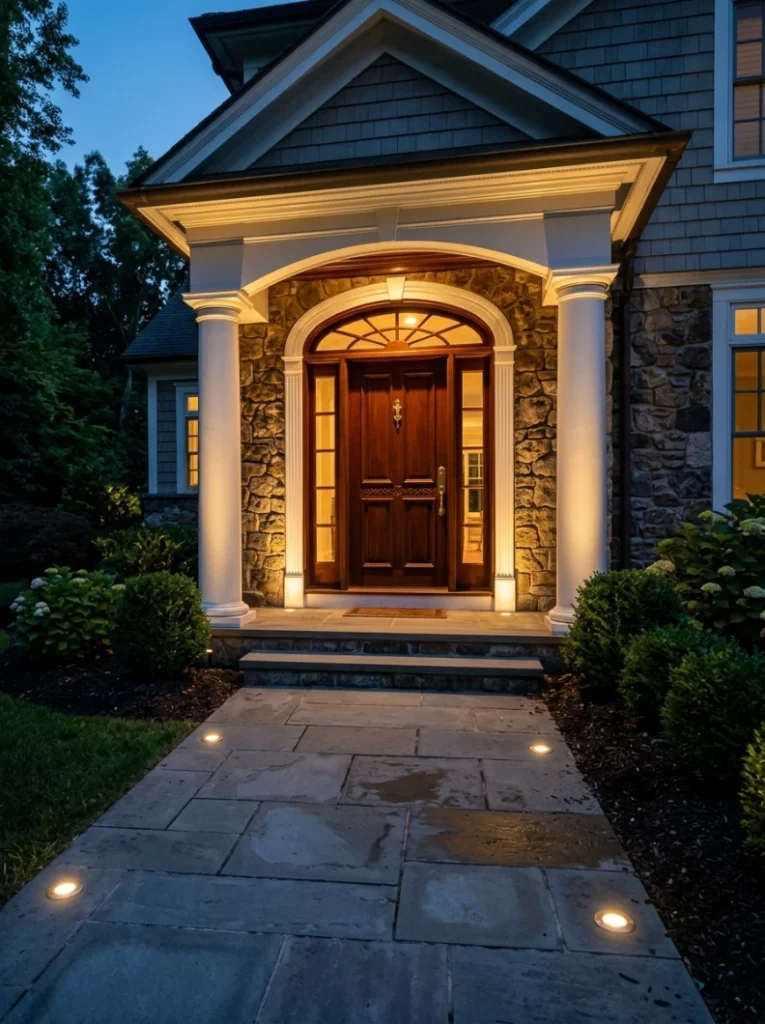
Small ground-mounted uplights, aimed at an arched doorway or textured siding, cast dramatic shadows that highlight architectural details a flat overhead light would otherwise flatten out. This works especially well for a home with real character in its trim, columns, or door shape.
This lighting style is subtle during the day but transforms the entrance dramatically once the sun goes down.
Personal Touches and Layering
17. A flag or symbolic decor piece
Homeowners are increasingly using their front entrance to express something personal, not just decorate.
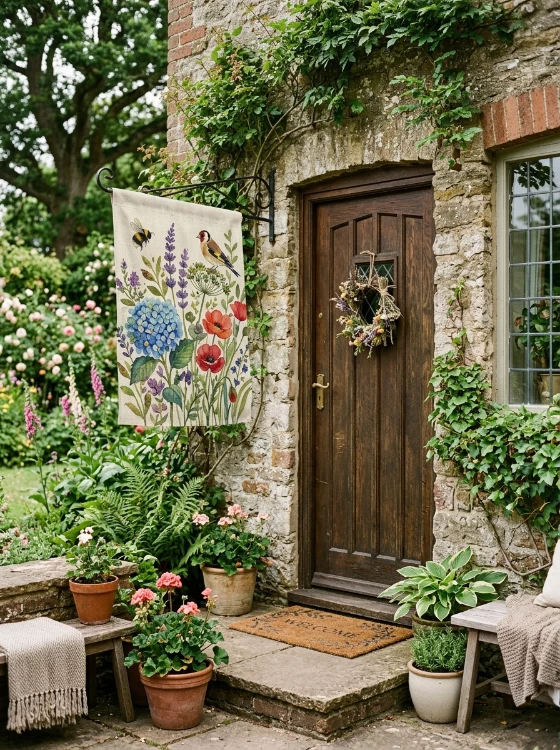
A flag, a meaningful symbol, or a piece tied to a hobby or heritage gives the entrance a genuine personal statement rather than a generic, resale-ready look. A real share of homeowners are now decorating their outdoor spaces specifically to reflect their own values and personality this way.
This kind of detail works well rotated seasonally too, the same way a Memorial Day porch display might swap in flags and symbolic touches for that specific holiday.
18. A welcome mat with real personality
The smallest detail at ground level still gets noticed.
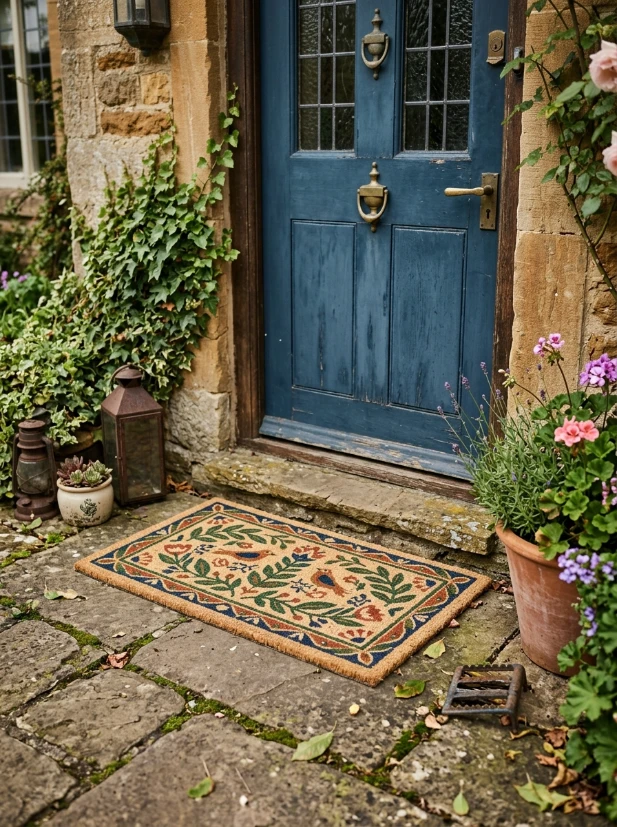
A welcome mat with a bit of humor, pattern, or personality does more for the entrance than a plain beige one ever could, and it’s one of the easiest, cheapest swaps on this entire list. Choosing a durable, weather-resistant material keeps it looking sharp through rain and regular foot traffic.
This is a small detail worth updating seasonally if you enjoy refreshing the entrance throughout the year.
19. A seasonal wreath
The classic front door accessory still earns its spot every year.
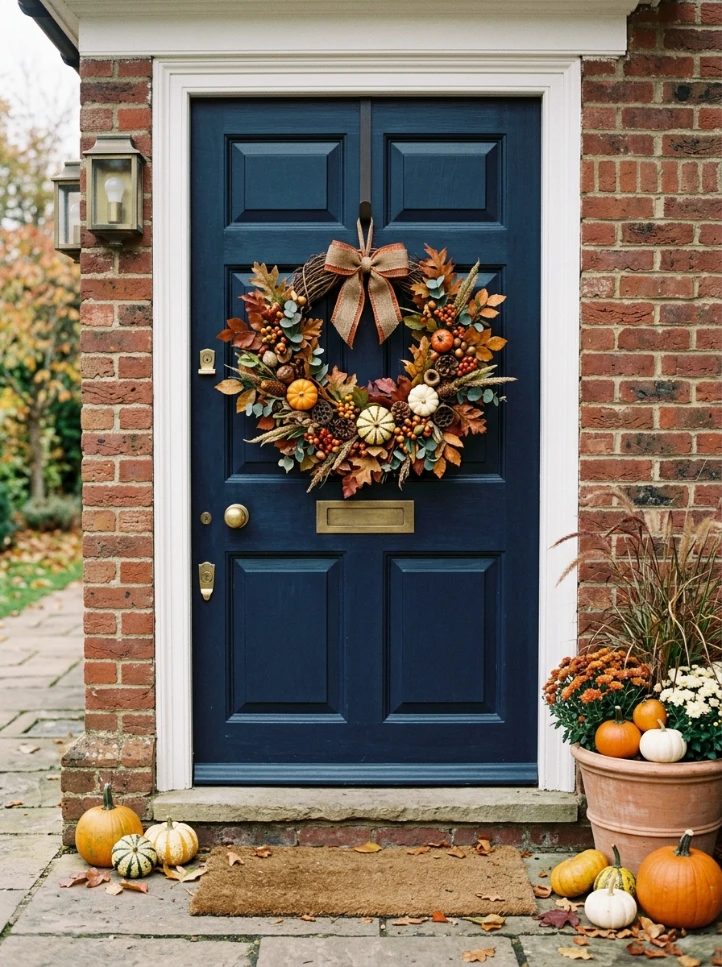
A wreath, swapped seasonally, keeps the door feeling current throughout the year without needing to repaint or replace anything permanent. This remains one of the most reliable, low-effort ways to keep an entrance feeling fresh season after season.
Choosing a wreath in a tone that complements, rather than clashes with, your door color keeps the whole look cohesive.
20. Keeping the entry clutter-free
Sometimes the boldest move is restraint.
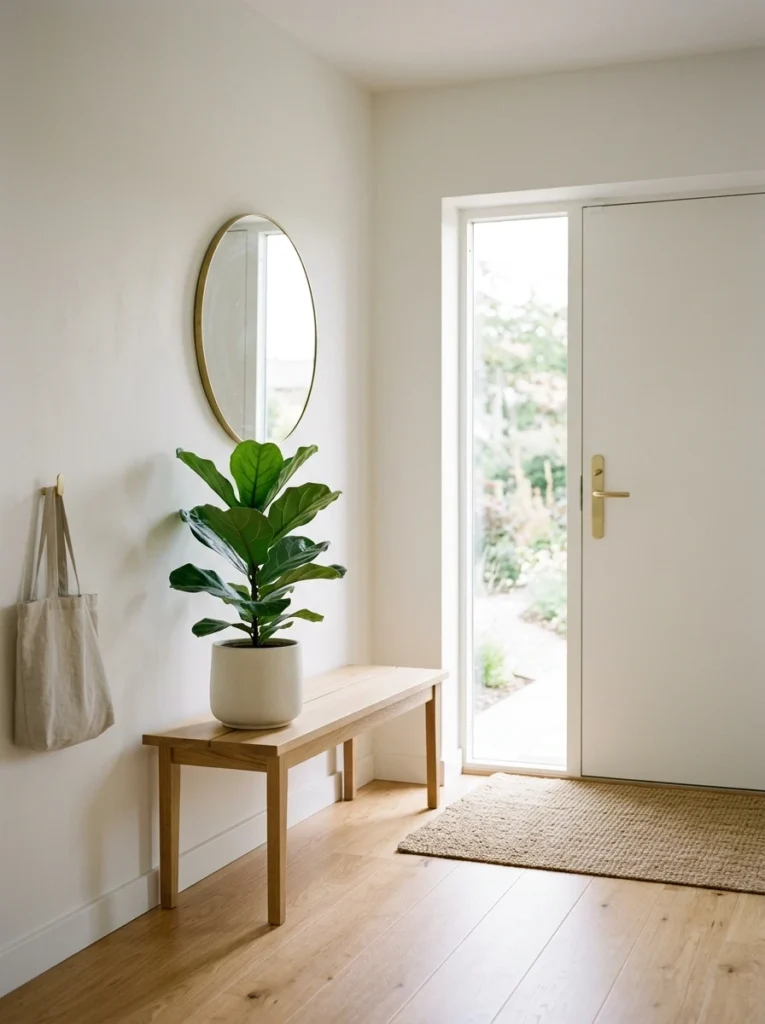
A clean, uncluttered entry, just a door, one plant, and simple hardware, lets a bold paint color or striking architectural detail actually stand out instead of competing with a dozen small decorations. Minimalism at the entrance has become a real style choice, not just a lack of decorating.
This approach works especially well for a modern or contemporary home, where visual noise can undercut an otherwise sleek design.
21. A window box below a nearby window
Extending the color and greenery beyond just the door ties the whole facade together.
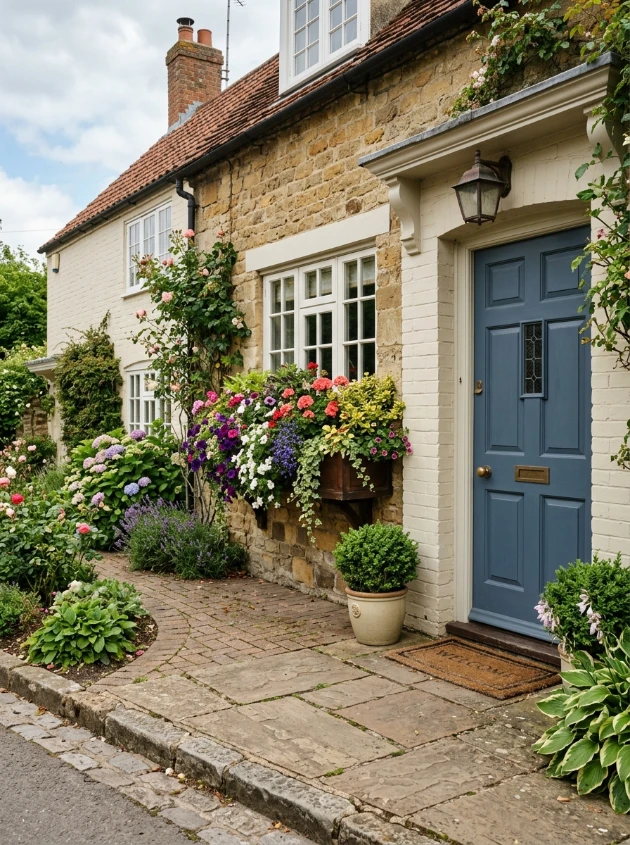
A window box, planted with flowers that echo the door’s color or the surrounding landscaping, extends the entrance’s curb appeal beyond just the door itself. This pairs naturally with a look at broader window box flower combinations if you want the whole front of the house working together.
Positioning it on a window visible from the front walkway keeps it part of the overall first impression, not just an isolated detail.
22. A small entryway table just inside the door
The first impression doesn’t have to end the moment someone steps inside.
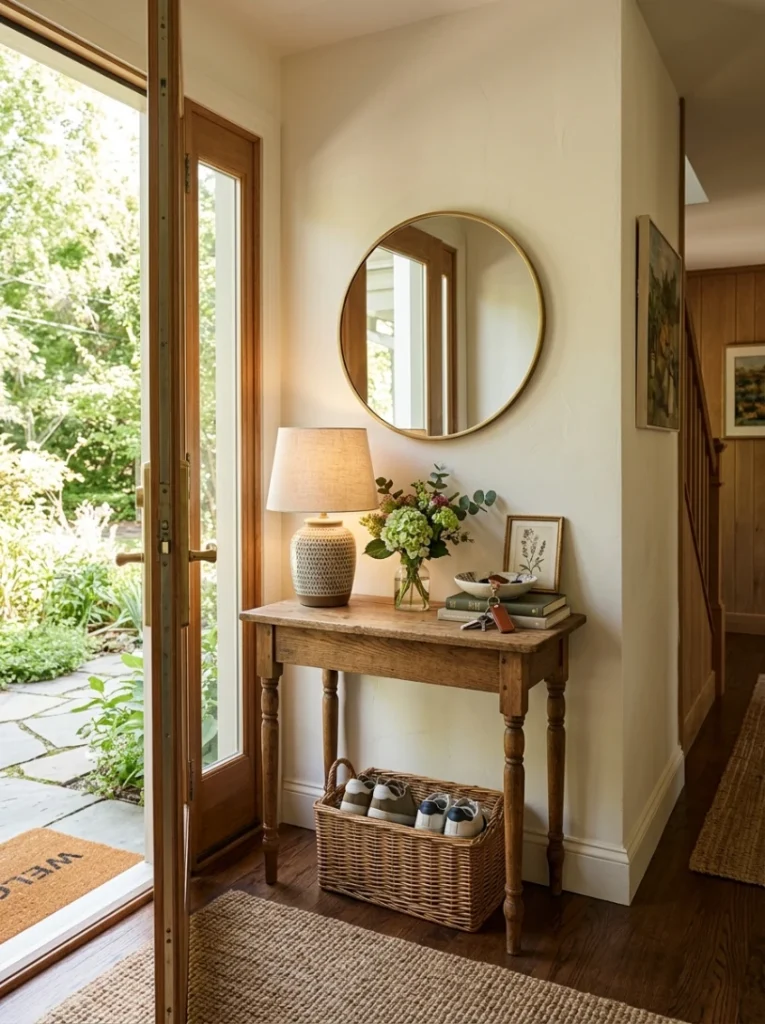
A small table just inside the door, styled simply with a lamp, a tray, or a small plant, carries the same considered feeling from the exterior into the home itself. This idea works well alongside a broader look at entryway table styling, since the two spaces genuinely work best when they feel connected.
Keeping the indoor styling in a similar tone or material to what’s outside makes the whole transition feel intentional rather than disjointed.
Common Mistakes to Avoid
- Choosing a door color or style that clashes with your home’s actual architecture instead of complementing it.
- Mixing multiple hardware finishes on the same door, which reads as unplanned rather than eclectic.
- Letting entrance plants go neglected, since a wilted plant undercuts every other decor choice around it.
- Overcrowding a small porch with decorations instead of choosing one or two strong focal points.
Frequently Asked Questions
What’s the fastest way to update a front door’s curb appeal?
A fresh coat of paint, combined with new hardware, is the quickest and most affordable transformation, often costing only a few hundred dollars total.
What door colors are trending for 2026?
Bold, personal colors are leading the way, from rich jewel tones to deep, moody black and navy shades that replace the classic all-white look.
Should front door hardware match exactly?
Keeping the handle, hinges, and any other visible hardware in the same finish, whether brass or matte black, gives the door a considerably more cohesive, intentional look.
Conclusion
A front door that makes a real first impression doesn’t need a full renovation, it needs a few intentional choices working together: a color that reflects your home’s personality, hardware that matches, and greenery that’s actually alive and well cared for. Start with paint if your budget is tight, then layer in lighting, plants, and one personal touch until the entrance genuinely feels like your own.