My entryway table sat empty for the first year in our house because I couldn’t decide what belonged there, and an empty table right inside the front door ended up making the whole entrance feel unfinished. What actually works is layering, height variation, a mirror or art above it, a catchall for daily items, so the table earns its keep functionally while still being the first thing that sets the tone for the whole home.
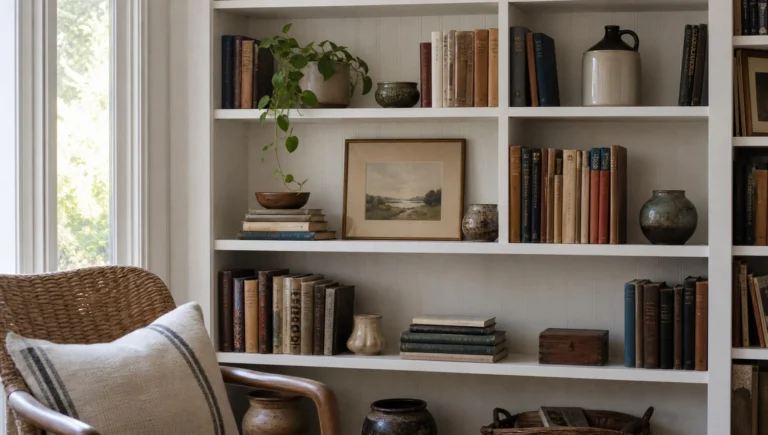
The ideas below are grouped by what they solve, layout basics first, then mirrors and wall elements, lighting, storage and function, and the styling accents that finish the look. The same layering principles used in these bookshelf styling ideas apply directly to an entryway table too, vary height, group in odd numbers, and leave a little breathing room so the surface doesn’t look overloaded.
Before You Start
- Measure the space before buying a table, most entryways need something narrow, 12 to 16 inches deep, to avoid blocking foot traffic.
- Balance form and function, an entryway table gets used daily for keys and mail, so include at least one practical storage element.
- Leave at least a third of the surface empty, a table styled edge to edge reads as cluttered rather than welcoming.
- Add lighting if the entry doesn’t get much natural light, a dim entryway undersells even a well-styled table.
Foundational Layout
1. Choose a Table Scaled to the Space
My first entryway table was too deep for the hallway and made the whole space feel narrower than it actually was.
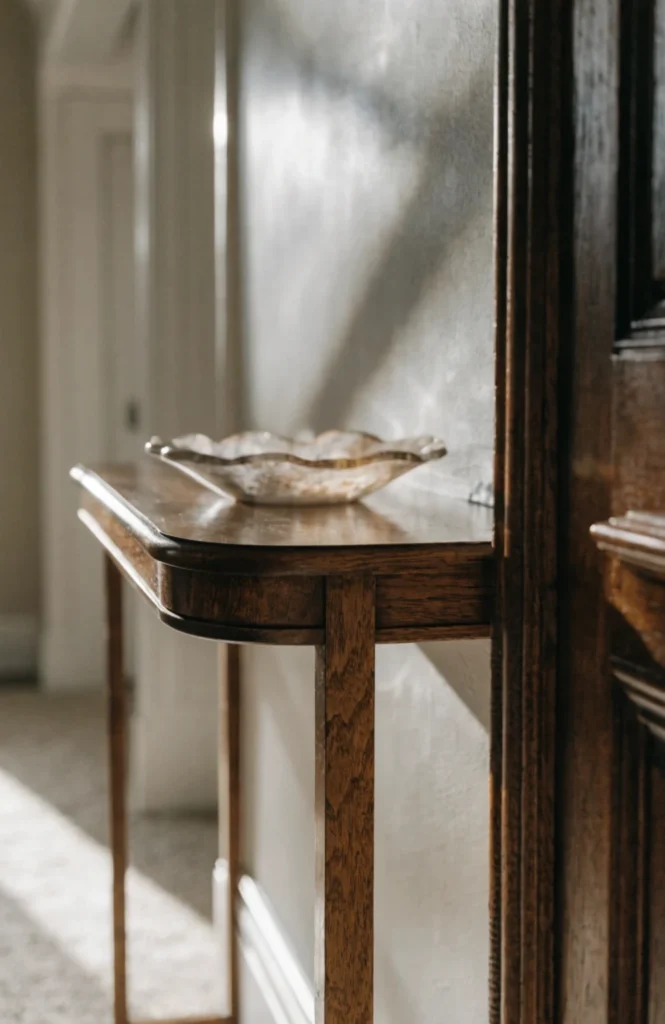
A narrow console table sized for a hallway runs $100 to $250 depending on material, and one under 16 inches deep works well in most standard entryways.
It works because a properly scaled table keeps the walkway clear, which matters more in an entryway than almost any other room in the house.
2. Layer Height with a Lamp, Bowl, and Art
Grouping a tall lamp, a mid-height bowl, and flat wall art above gave the whole vignette a rhythm my first flat arrangement never had.
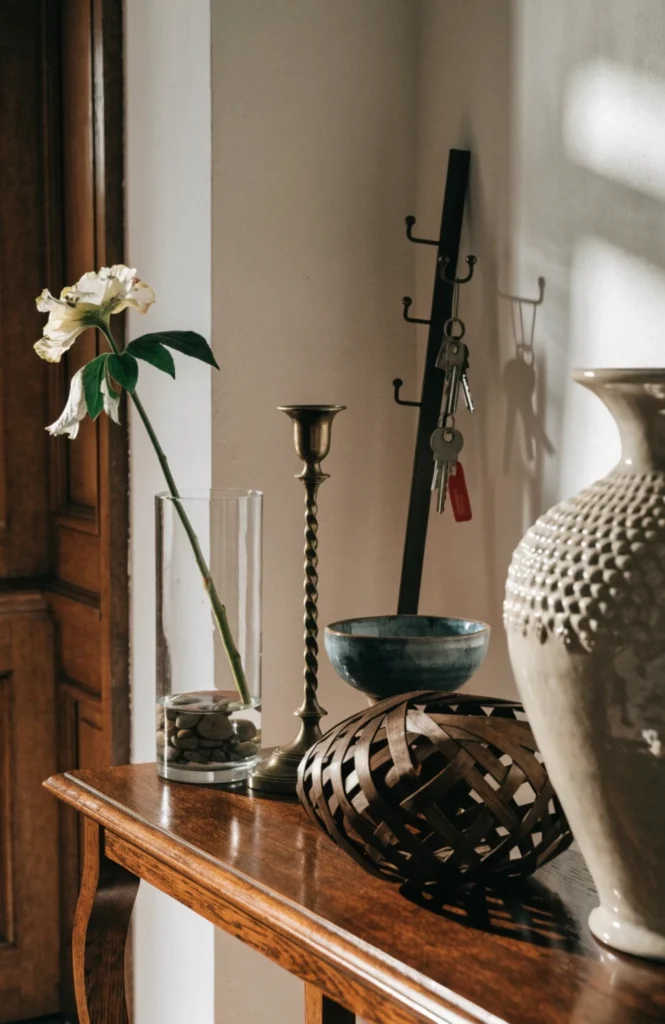
This uses items you likely already own or can source for $20 to $60 total, it’s mostly a matter of arranging existing pieces at different heights.
It works because varied height gives the eye a path to follow across the table instead of a flat row of same-sized objects.
3. Anchor with a Large Mirror or Art Piece
Hanging one large mirror above the table gave the whole entryway a focal point that smaller framed pieces never achieved.
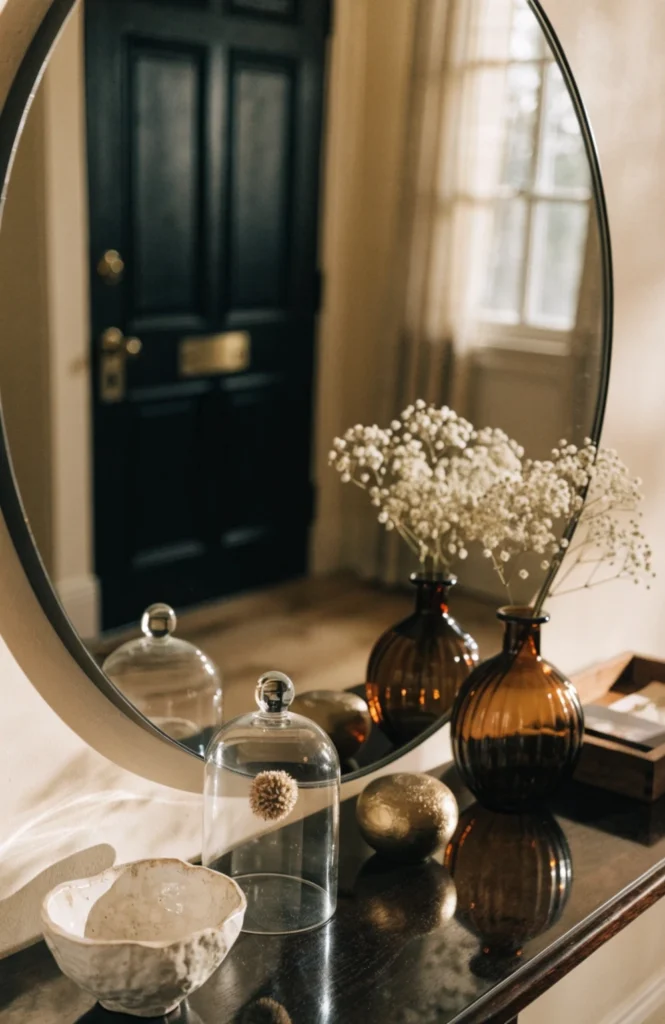
A large mirror or statement art piece runs $80 to $200 depending on size and style, and sizing it close to two-thirds the width of the table below keeps proportions balanced.
It works because a single large piece gives the eye a clear starting point, and everything on the table can be arranged to support it.
4. Leave Breathing Room, Don’t Overfill the Surface
Pulling back two items I’d originally planned to add made the remaining pieces stand out more, not less.
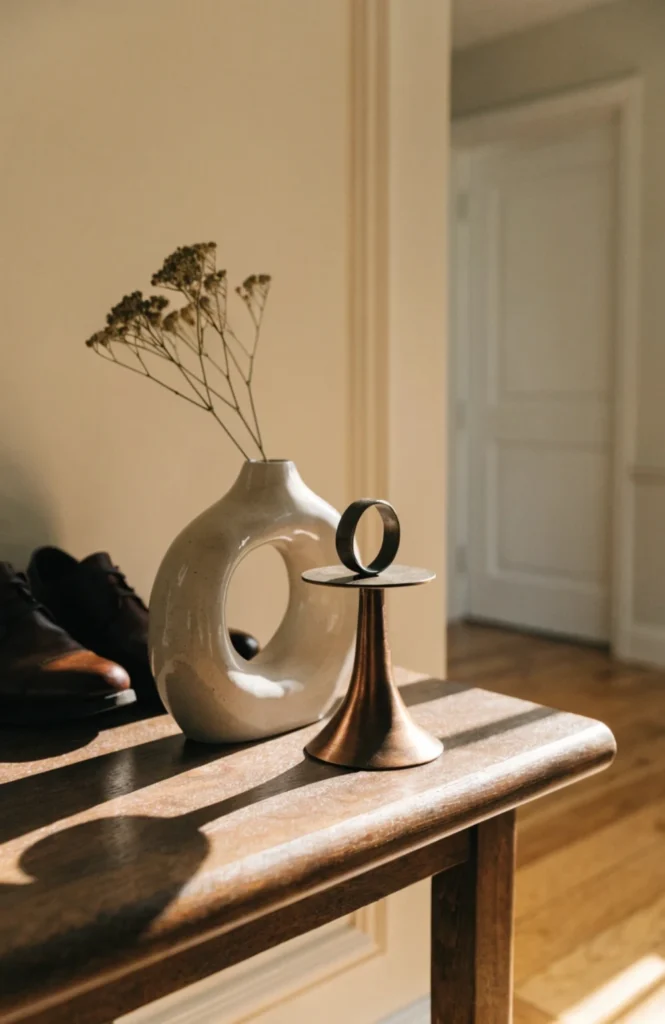
This is purely an editing decision and costs nothing, though it often means storing a few decorative pieces for a later rotation.
It works because empty space around a grouping gives the eye somewhere to rest, which is what separates a styled table from a cluttered one.
Mirrors and Wall Elements
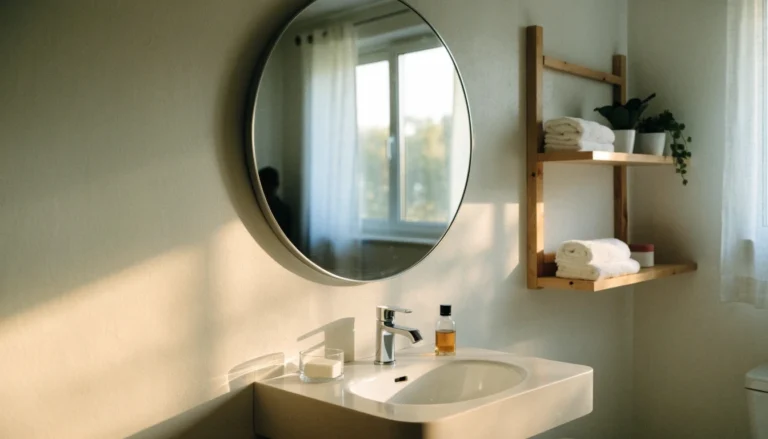
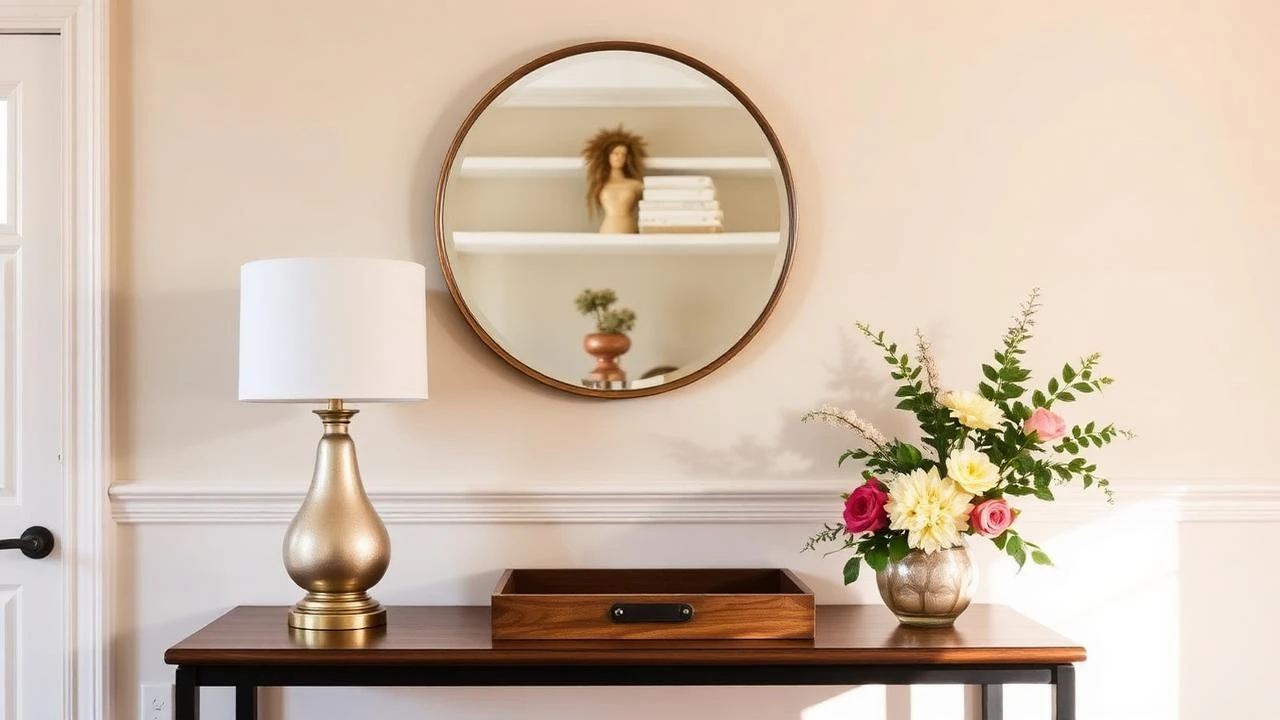
5. Hang an Oversized Round Mirror
A large round mirror softened all the straight lines of the table and frame below it while doubling the light in a dim hallway.
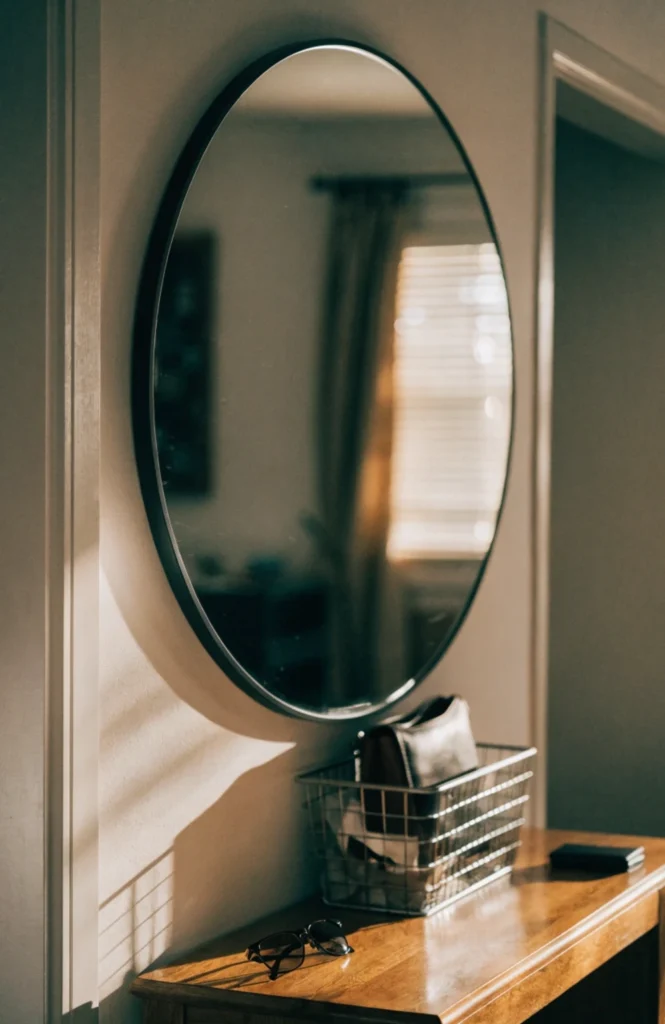
An oversized round mirror runs $90 to $220 depending on frame material and size.
It works because a round shape contrasts nicely against a rectangular table, and mirrors reflect available light back into what’s often a darker part of the home.
6. Add a Gallery Wall Above the Table
A small gallery wall of mismatched frames gave the entryway more personality than a single piece of art managed alone.
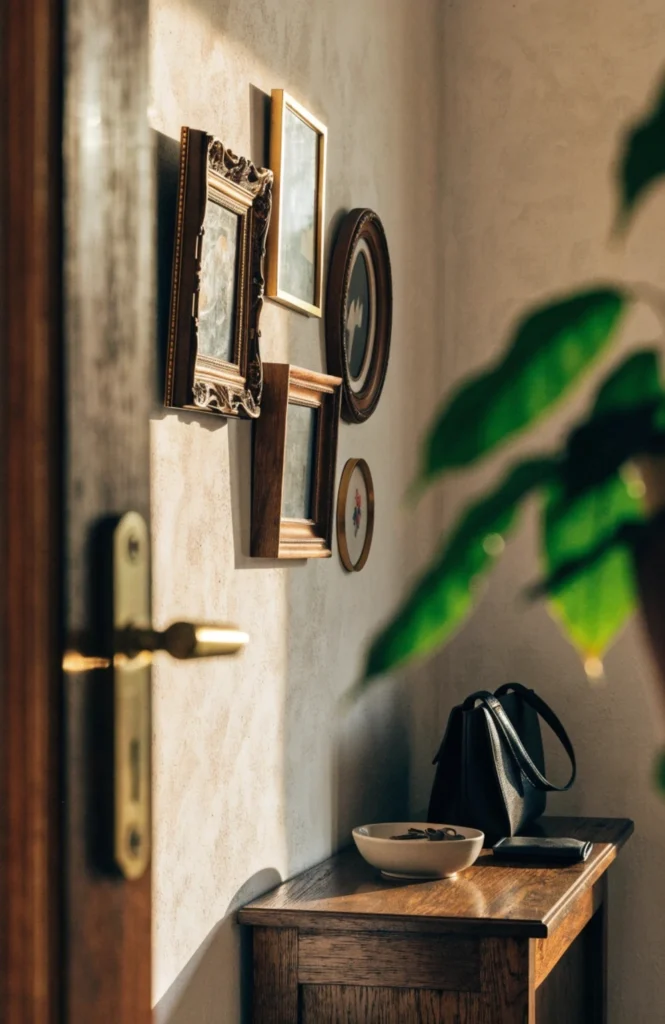
A set of five to seven mismatched frames runs $60 to $150 total depending on size and style.
It works because mismatched frames look collected over time, which suits an entryway meant to feel personal rather than showroom-styled.
7. Include a Statement Piece of Art
One bold framed print above the table became the first thing guests noticed walking through the door.
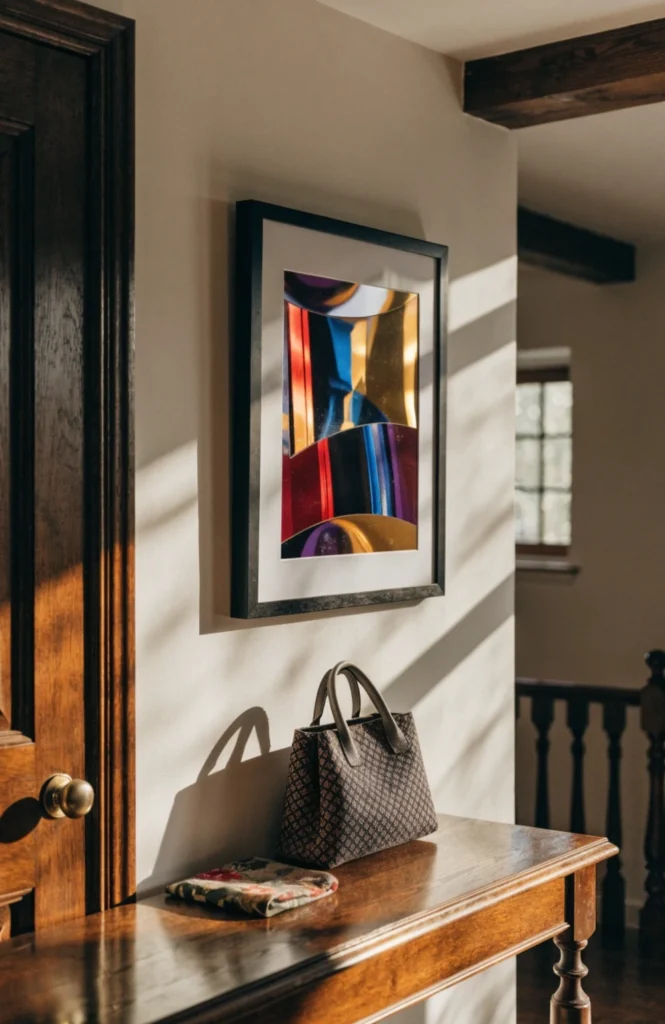
A statement art print in a simple frame runs $50 to $150 depending on size and framing.
It works because a single bold piece sets the tone for the whole home’s style before anyone even steps further inside.
8. Use a Woven Wall Hanging for Texture
A woven macrame piece added texture to the wall that no flat framed art could replicate.
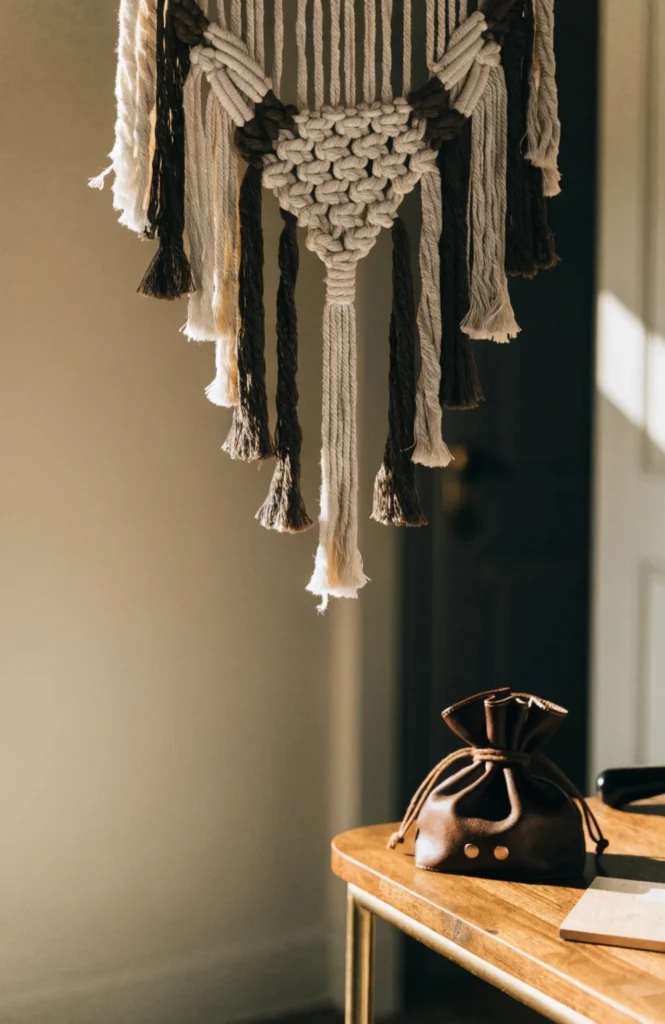
A woven wall hanging runs $30 to $70 depending on size and complexity.
It works because textured wall pieces add dimension that flat art doesn’t, giving the entryway a tactile, layered feel.
Lighting
9. Add a Table Lamp for Warm Light
A small table lamp turned the entryway into a warm welcome instead of a dim pass-through space after dark.
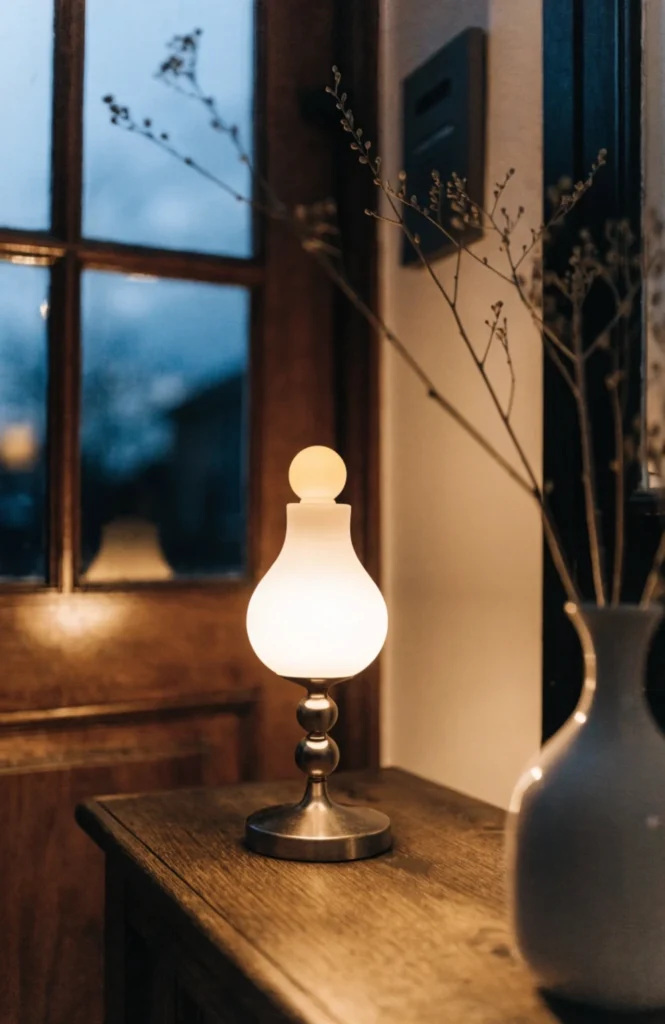
A small table lamp with a linen shade runs $40 to $90 depending on base material.
It works because warm lamp light is more inviting than a harsh overhead fixture, especially for anyone arriving home after dark.
10. Include a Pendant Light Overhead
A single pendant above the table gave the entryway dedicated lighting instead of relying on a hallway fixture down the hall.
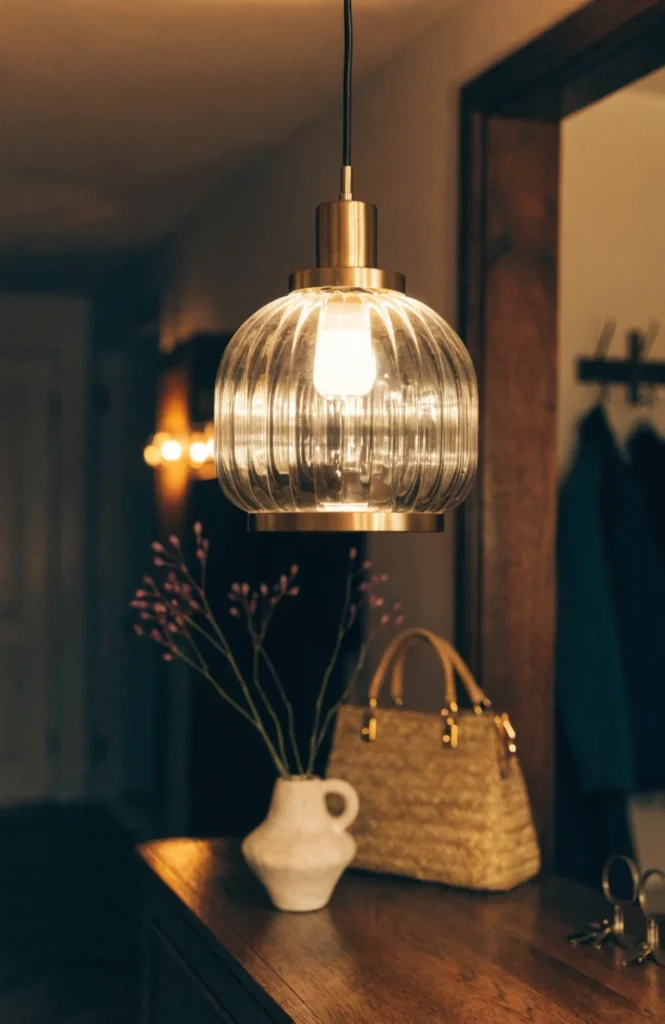
A small pendant light runs $60 to $140 including basic installation.
It works because dedicated overhead lighting makes the entryway read as its own defined space rather than just a stretch of hallway.
11. Use Battery Candles for a Flicker Effect
A couple of flameless candles added a soft flicker without needing to worry about an open flame near mail and keys.
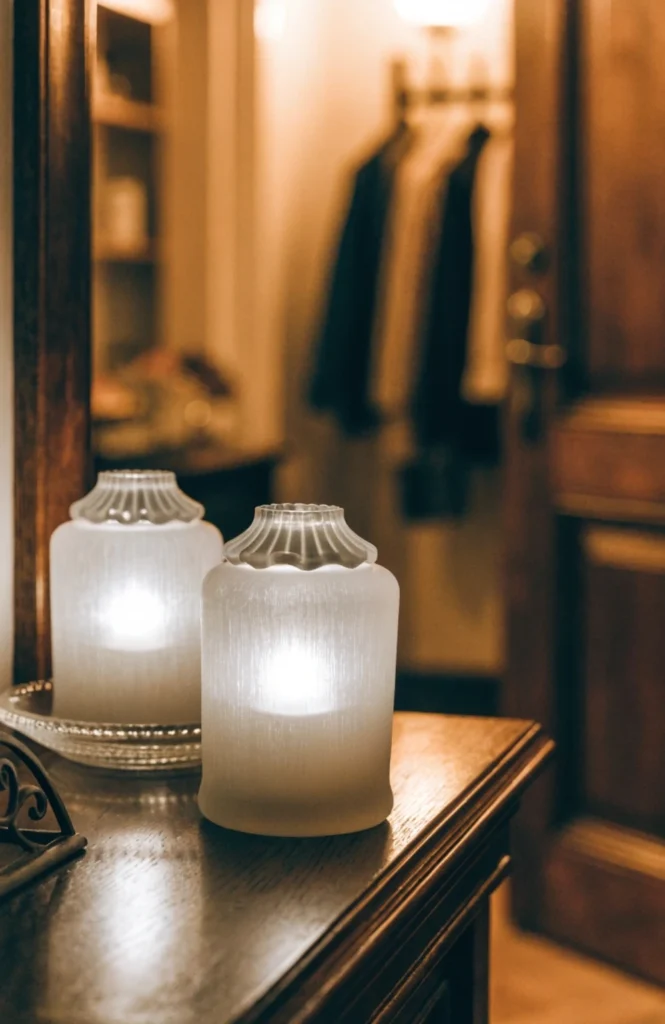
A set of flameless LED candles runs $20 to $35 and typically includes a timer for automatic evening use.
It works because it adds warm, flickering light safely in a high-traffic spot where an open flame isn’t practical.
Storage and Function
12. Add a Catchall Tray for Keys and Mail
A simple tray corralled the daily pile of keys and mail that used to just accumulate loose across the table.
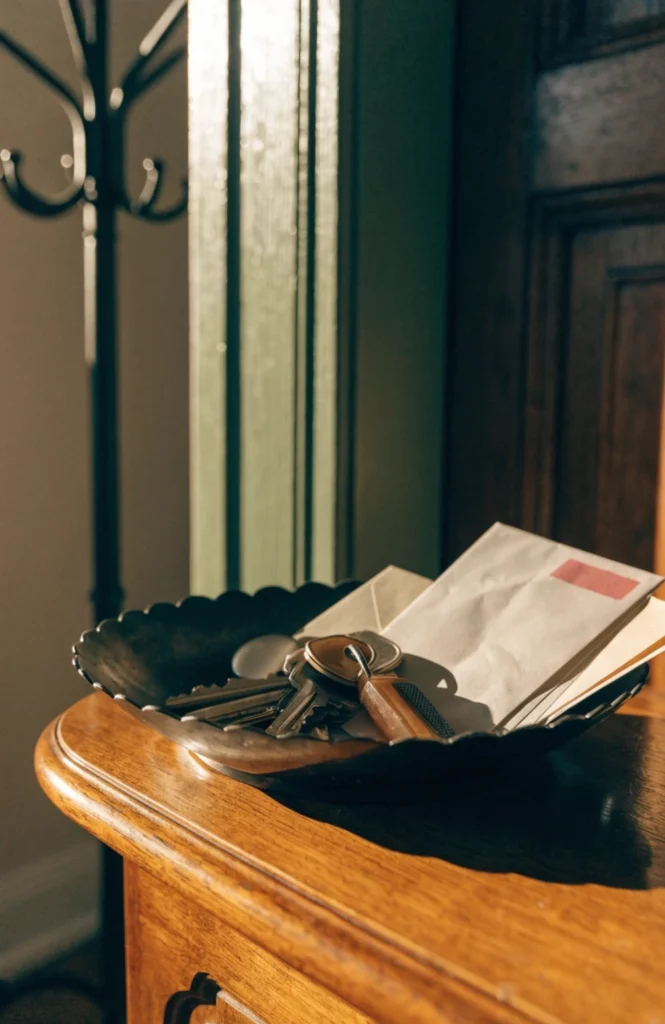
A decorative catchall tray runs $15 to $35 depending on material.
It works because it contains daily clutter in one defined spot, keeping the rest of the table’s styling from getting buried under mail.
13. Include a Drawer for Hidden Storage
Choosing a console table with a drawer meant the everyday clutter had somewhere to disappear entirely instead of sitting out.
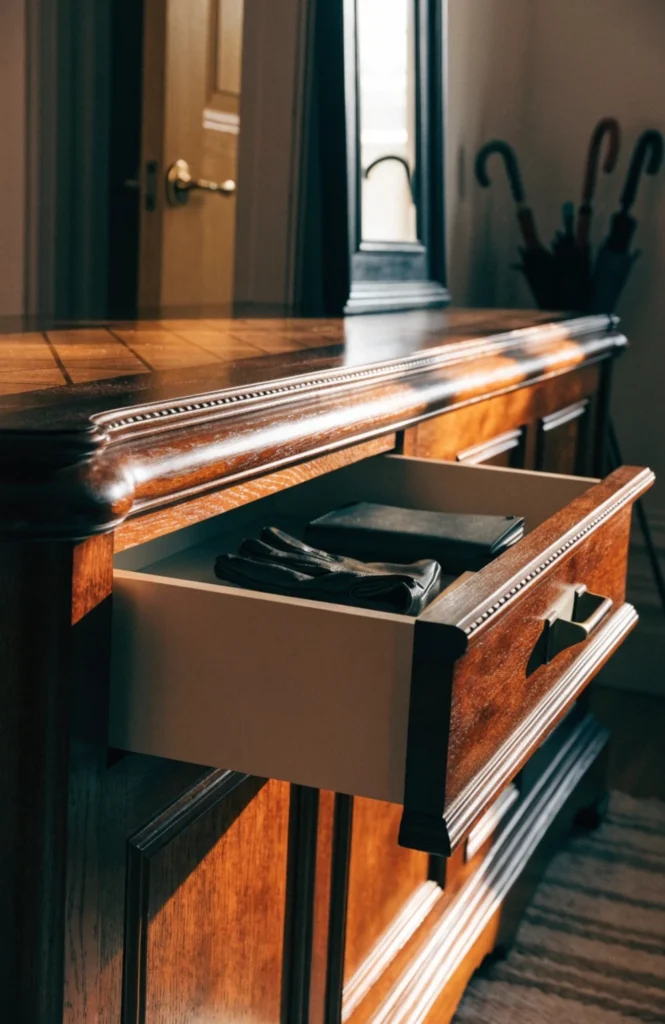
A console table with one or two drawers runs $150 to $300, more than a table without storage but worth it for hiding daily items.
It works because it gives less attractive daily items, chargers, spare change, a place to live out of sight completely.
14. Add Hooks Nearby for Bags and Coats
A row of hooks beside the table gave coats and bags a home instead of them ending up draped over the table itself.
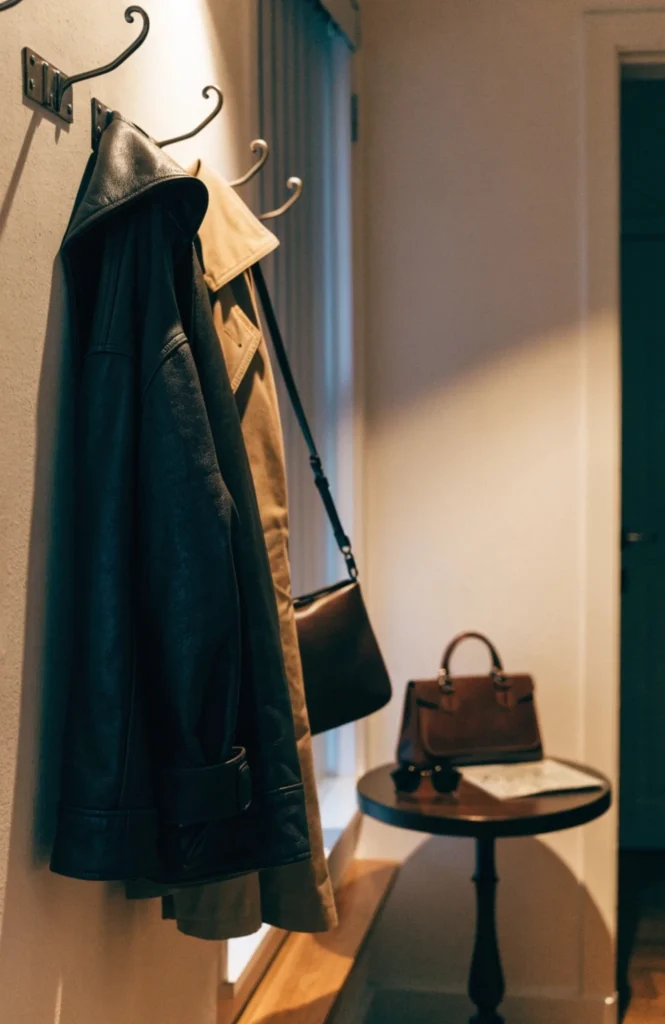
A set of wall-mounted hooks runs $20 to $45 depending on style and finish.
It works because it keeps bulky items off the table surface entirely, protecting the styled vignette from getting buried under coats.
15. Use a Small Basket for Shoes or Extras
A woven basket underneath the table caught the shoes that used to pile up loose by the front door.
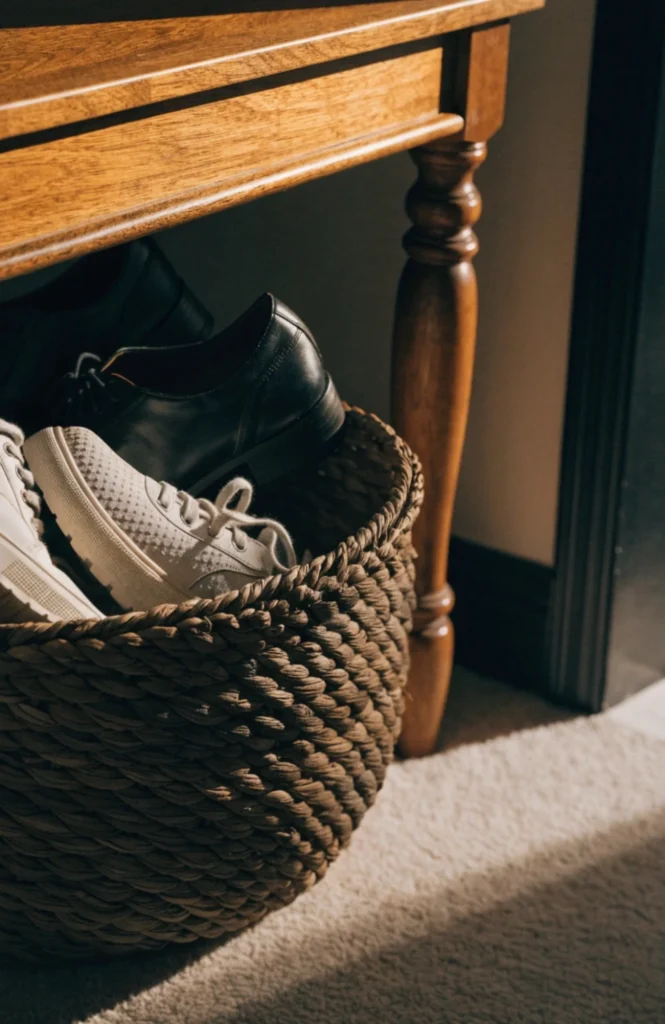
A small woven basket runs $20 to $45 depending on size.
It works because it uses the otherwise empty space under the table, giving loose shoes or extras a defined, contained spot.
Styling Accents
16. Add a Fresh or Faux Floral Arrangement
A simple floral arrangement made the entryway feel welcoming the moment anyone walked through the door.
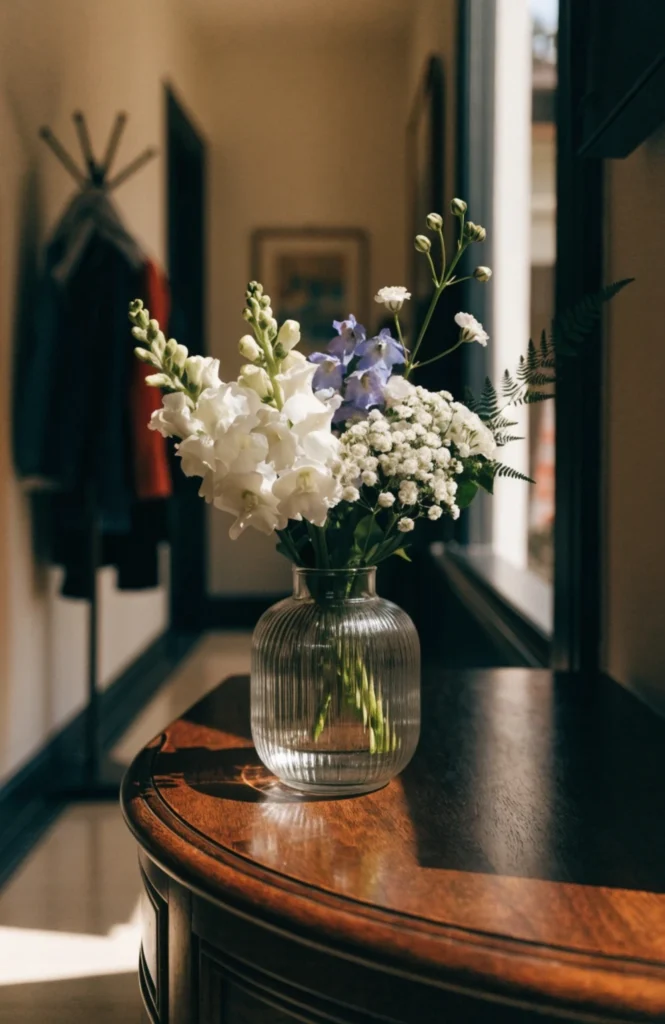
A fresh seasonal bunch runs $15 to $30, or a quality faux arrangement runs $25 to $50 as a one-time purchase.
It works because flowers are one of the most reliable ways to make a space feel cared for and current, right where guests first arrive.
17. Include a Stack of Books as a Riser
Stacking a few books under a small object gave that corner of the table height without needing to buy an actual riser.
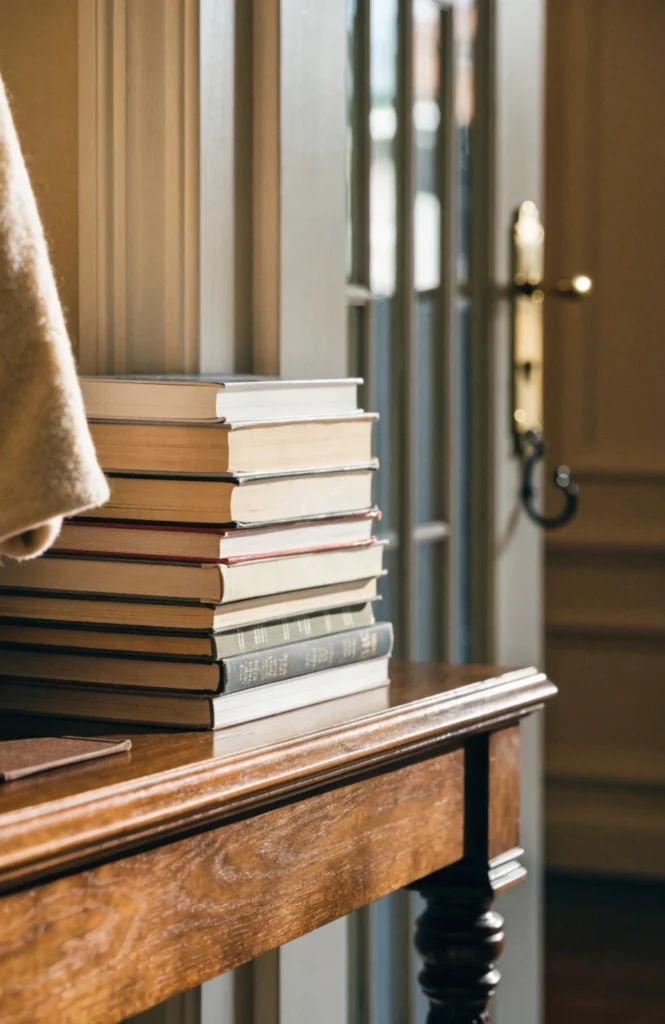
This costs nothing if using books you already own, one of the cheapest styling tricks on this list.
It works because books add both height and color depending on their spines, doing double duty as both function and decor.
18. Add a Decorative Bowl for Small Items
A ceramic bowl gave sunglasses and loose change a proper spot instead of scattering across the table surface.
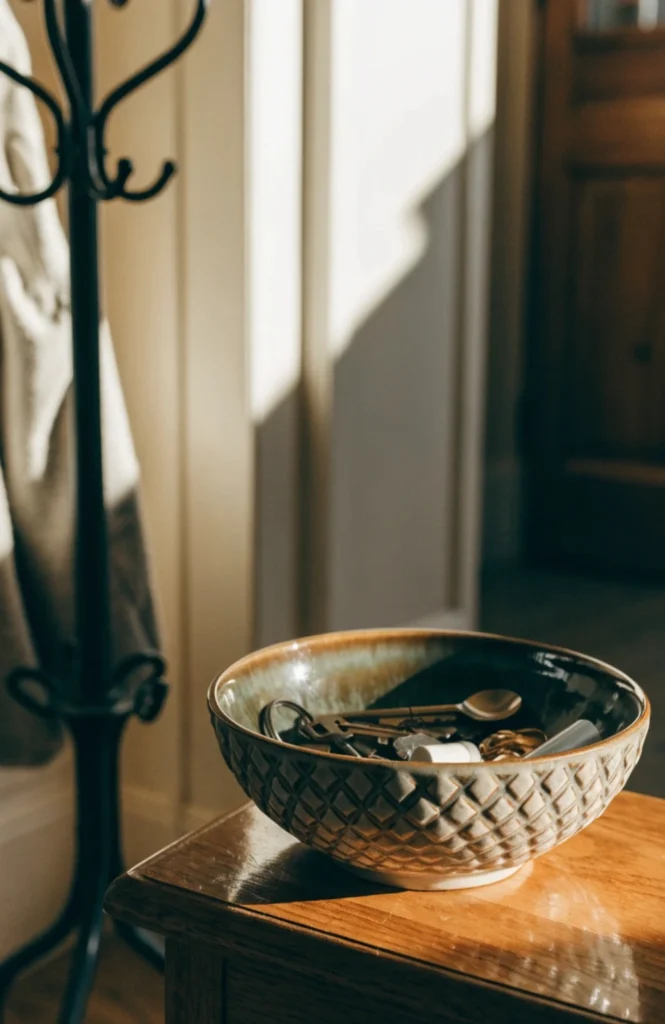
A decorative ceramic or wood bowl runs $15 to $35 depending on size and material.
It works because it contains small daily items in one spot, the same principle that keeps any styled surface from looking scattered.
19. Include a Framed Family Photo
A small framed family photo added a personal touch that made the entryway feel like it belonged to us specifically.
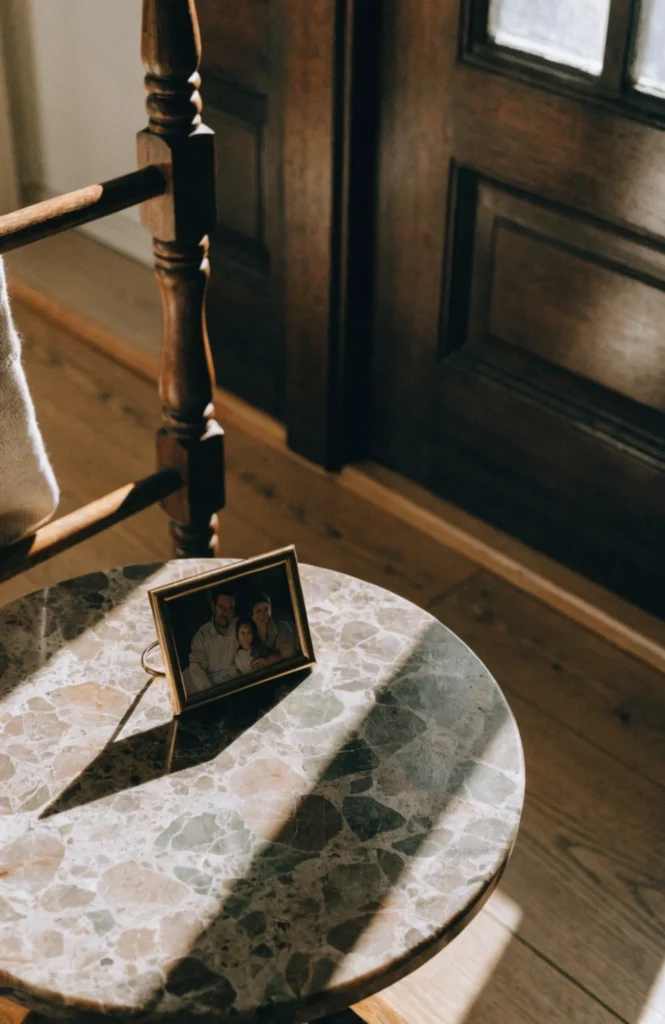
A small photo frame runs $10 to $25 and gives the table a personal, non-purchased element among the styled pieces.
It works because a personal photo grounds the whole display in something specific to your own home rather than a generic showroom look.
20. Add a Scented Candle or Diffuser
A reed diffuser on the table meant the entryway smelled welcoming the second anyone stepped through the front door.
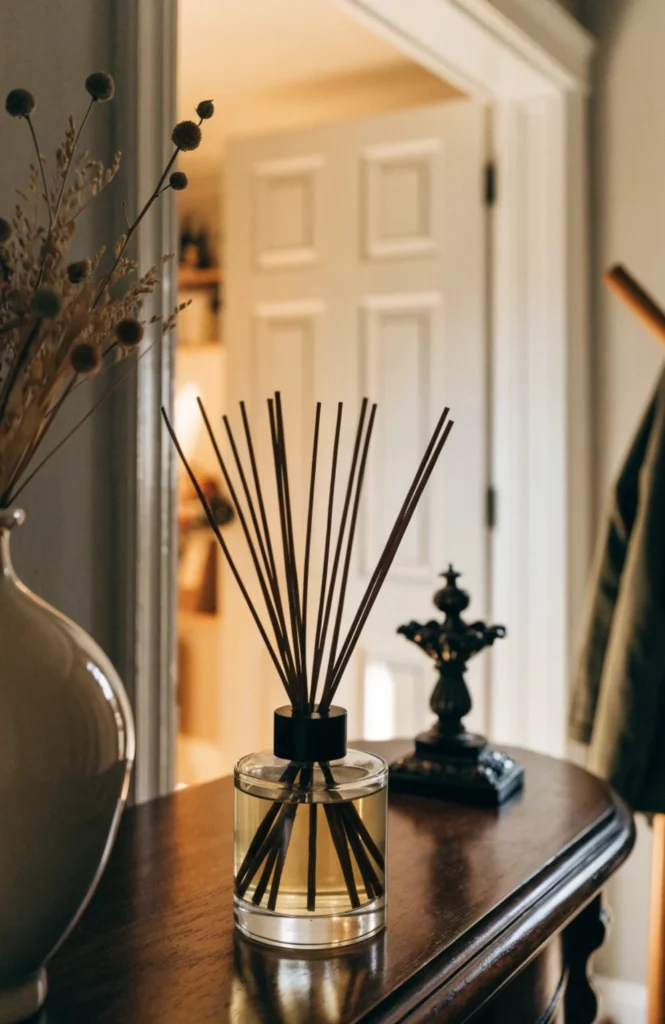
A reed diffuser runs $15 to $30 and typically lasts two to three months.
It works because scent is the sensory layer most entryway styling skips, and it’s one of the first impressions guests actually notice.
Conclusion
If you’re starting with a bare table, a mirror above it and a catchall tray on top cover the two things that matter most, visual anchor and daily function, before you add anything else. Layer in a lamp and florals next, then finish with the smaller personal touches, a framed photo, a scented diffuser, once the basics are working. The entryway tables that make the best first impression aren’t the most elaborately styled ones, they’re the ones that look good and still make sense to actually use every single day.
FAQ
How deep should an entryway table be?
Most entryway tables work best under 16 inches deep, narrow enough to avoid blocking foot traffic in a typical hallway or entrance.
What’s the most important item to include on an entryway table?
A catchall tray for keys and mail is the most functional addition, since it keeps daily clutter contained rather than scattered across the table.
Do I need a mirror above my entryway table?
It’s not required, but a large mirror or piece of art gives the table a clear focal point and helps reflect light into what’s often a dimmer part of the home.