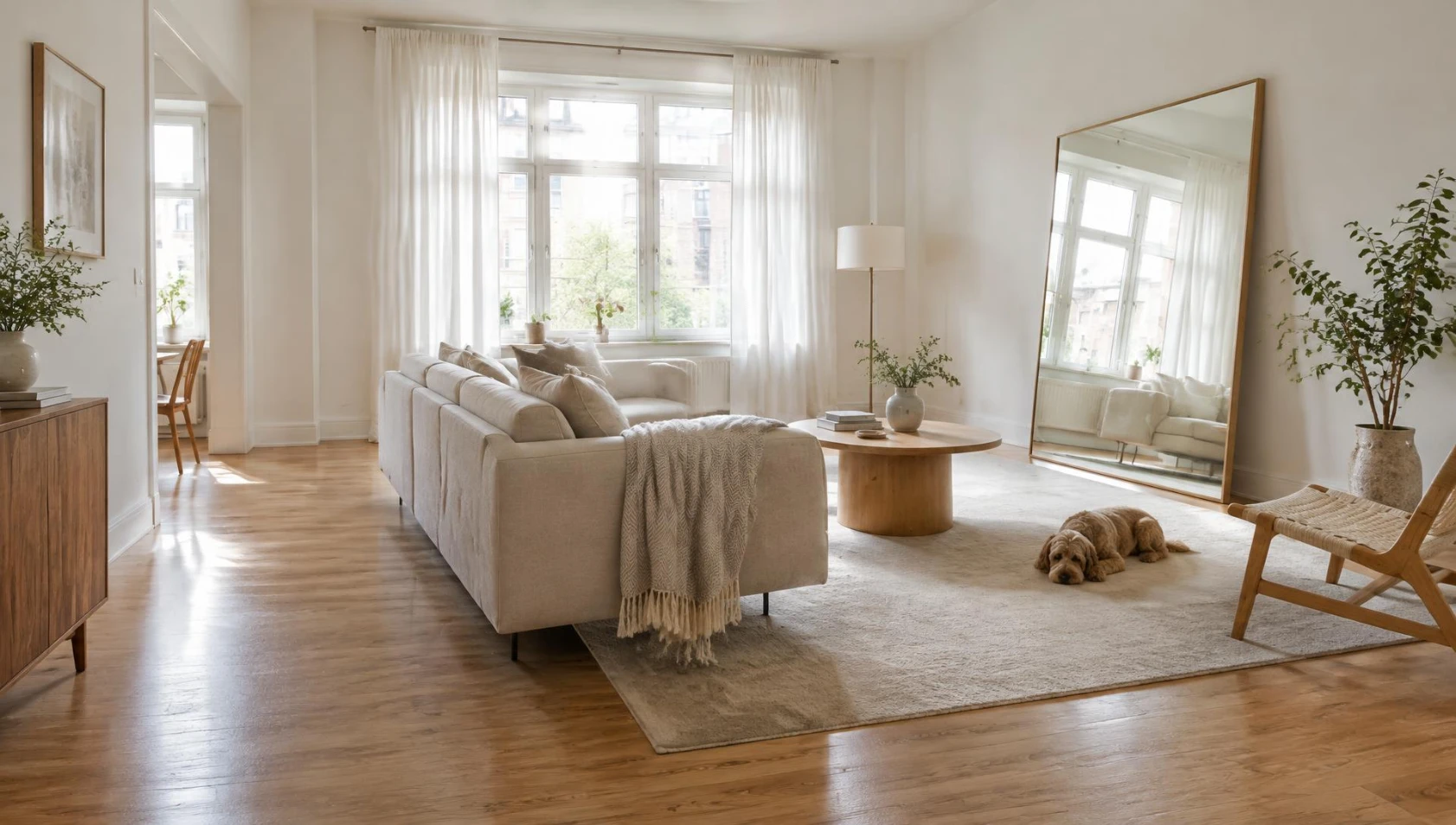
Very small living room ideas usually get pitched as a hunt for smaller furniture, but the real fix is almost always fewer pieces, positioned to open up one real sightline across the room. A tiny living room that feels cramped is rarely a size problem, it is a layout and clutter problem.
Nearly half of people in small urban apartments now prioritize multifunctional furniture specifically because it saves space without cutting comfort, and that single shift, function over quantity, is the thread running through every idea below.
Quick Picks
- Fastest fix: Pull the sofa a few inches off the wall
- Best single purchase: A large mirror opposite the main window
- Best for storage: An ottoman that opens for hidden storage
- Best lighting move: Swap one overhead bulb for two warm floor lamps
Did You Know? A National Association of Home Builders study found that occupants of small homes rated deliberately minimalist spaces about 30 percent more livable than cluttered ones of the same actual square footage. The size doesn’t change, only what’s competing for attention in it.
Before You Start
- Pick one focal point first. A fireplace, window, or piece of art gives the whole layout a reason to exist.
- Measure before you buy. Furniture sized for a showroom is the most common reason a small room still feels tight.
- Leave one clear walking path. A room you have to shuffle around will always feel smaller than its real square footage.
- Choose function over quantity. One good piece that does two jobs beats two separate pieces every time.
- Let light reach every corner. Layered lighting does more for a small room than any single bright fixture.
Layout and Furniture Placement
1. Float the sofa instead of pushing it flush to the wall
This feels backwards the first time you try it, but it works.
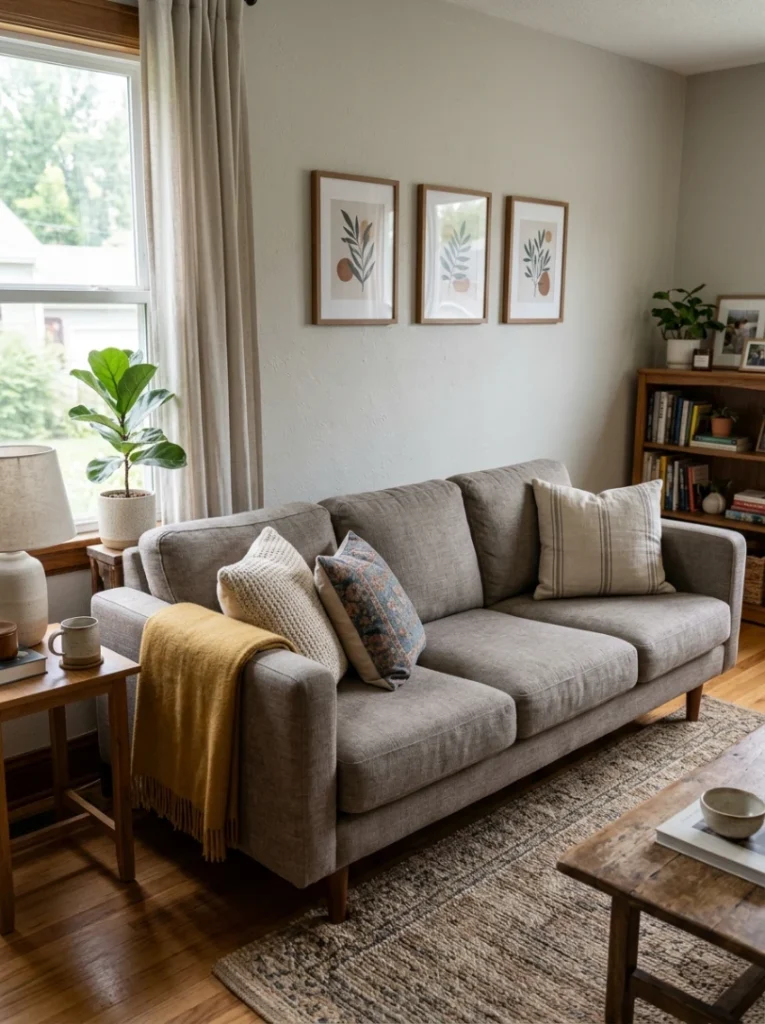
Pulling the sofa just a few inches away from the wall creates a sense of depth that flush placement never achieves, since the eye reads that small gap as usable space rather than dead space.
It costs nothing to try, and it is often the single fastest way to make a small room feel less boxed in.
2. Build the room around one clear focal point
A room without a focal point tends to scatter furniture with no real logic behind the layout.
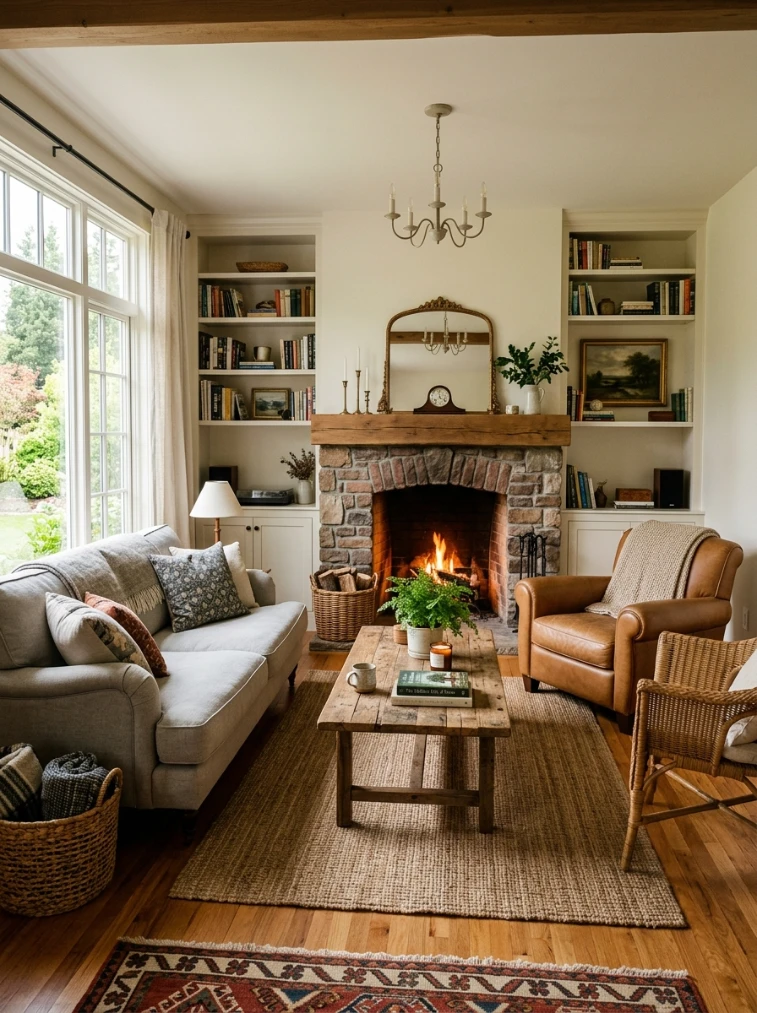
Choosing a fireplace, a window, or a piece of art as the room’s anchor gives every other placement decision a reason behind it, rather than furniture just filling whatever space is left.
This single decision usually resolves several smaller layout questions at once.
3. Angle seating toward the room’s longest sightline
Where a sofa faces matters as much as where it sits.
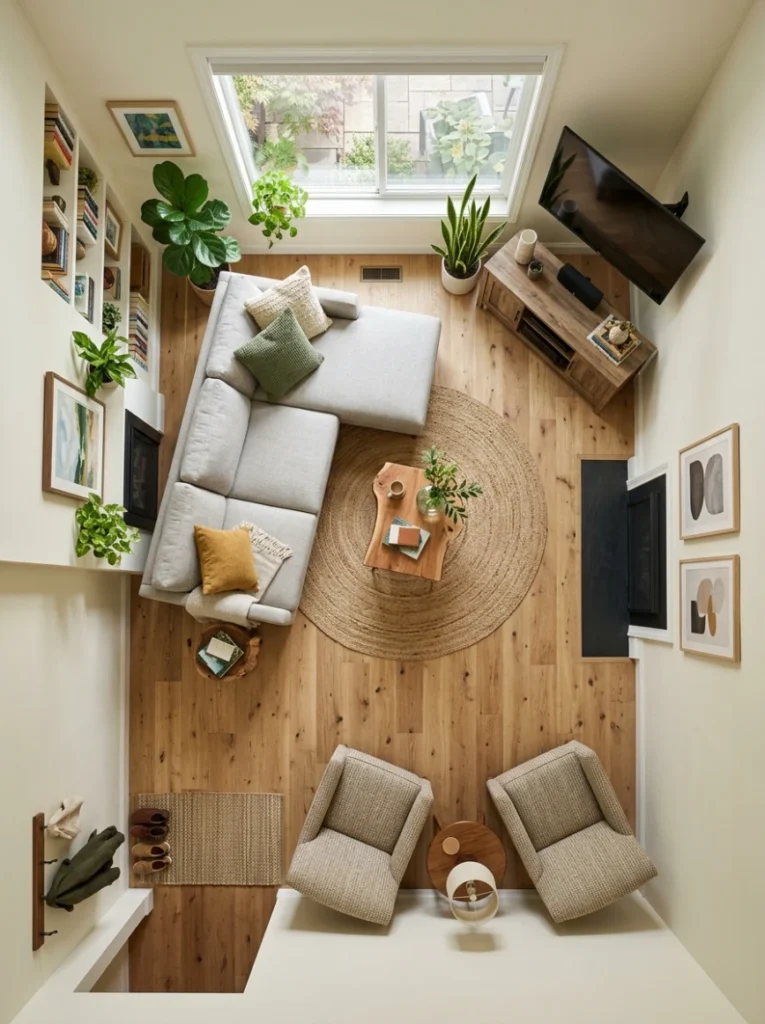
Facing the main seating toward the farthest wall in the room, rather than the nearest one, stretches how far the eye travels in a single glance across the space.
This is a free adjustment for anyone who already owns their furniture and just needs to rearrange it.
4. Leave one true walking path through the room
A room feels smaller the moment you have to plan a route to cross it.
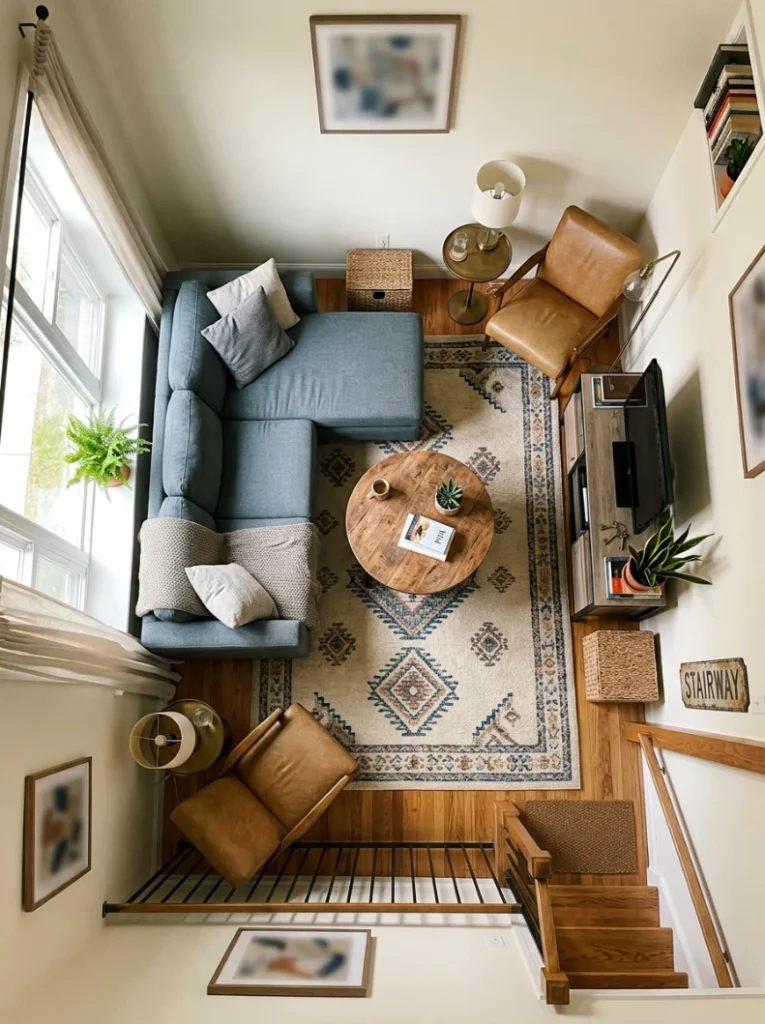
Keeping at least 24 to 30 inches of clear floor between major furniture pieces preserves an obvious, unobstructed path from one side of the room to the other.
This matters more in a tiny room than almost any style decision, since a blocked path is the fastest way to make square footage feel smaller than it is.
5. Size the rug to reach every front furniture leg
An undersized rug is one of the most common small living room mistakes.
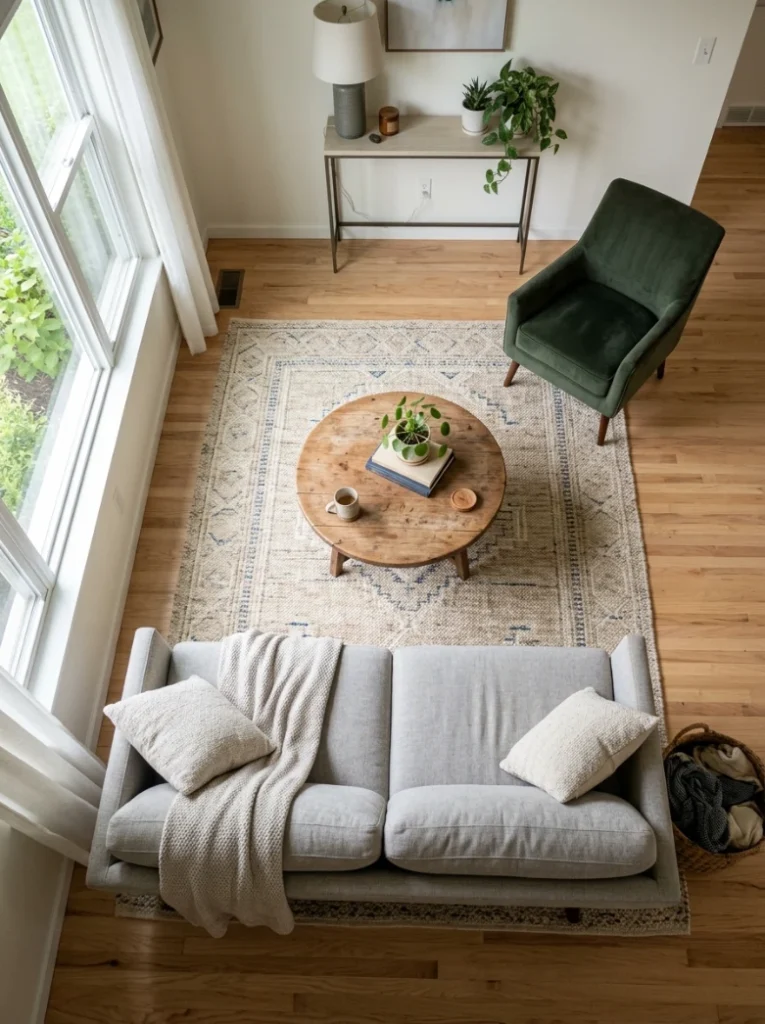
A rug that only reaches the front edge of the sofa visually cuts the room in half, while one that extends under all the front furniture legs reads as one continuous, larger space.
This is worth measuring properly, since it is one detail that consistently separates a considered small room from an accidental one, the same rule that applies whether you’re working around a standard sofa or an L-shaped sectional in a tighter footprint.
Pro Tip: Before rearranging anything, stand in the doorway and notice what your eye lands on first. If it’s a cluttered surface or a wall of furniture, that’s the first thing to fix, since first sightlines shape how big a room feels more than its actual dimensions do.
Furniture That Pulls Double Duty
6. Choose an ottoman with hidden storage
One piece, three jobs, which is exactly the math a small room needs.
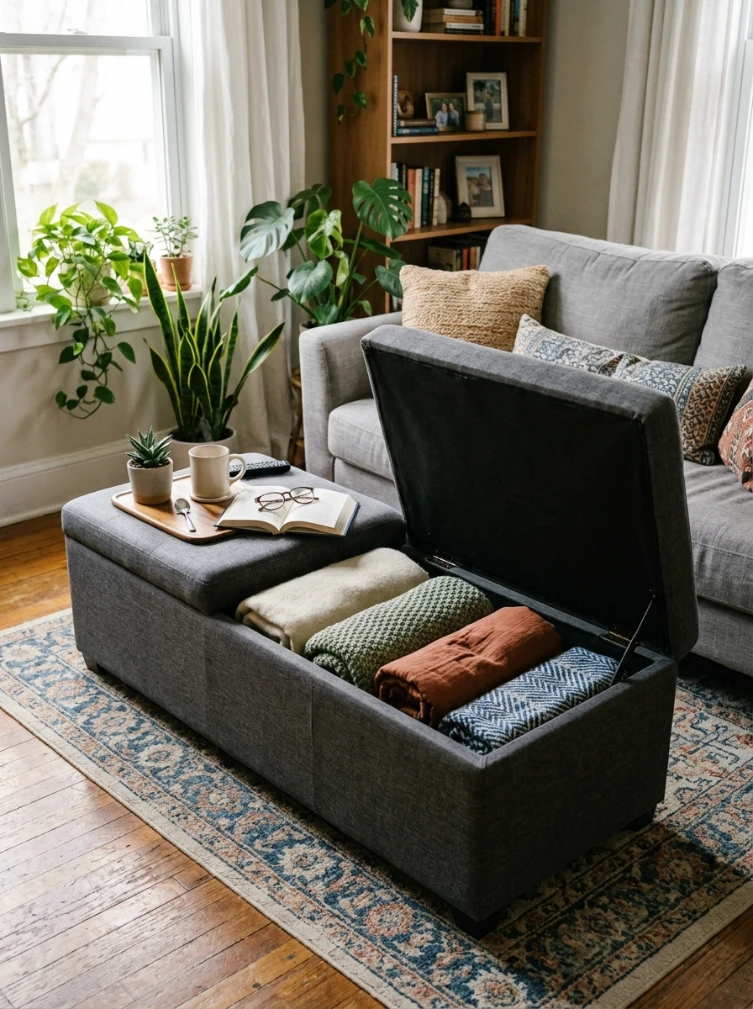
An ottoman with a lift up lid works as a coffee table, extra seating when guests arrive, and hidden storage for blankets or remotes, all inside the same footprint a plain coffee table would take.
This is one of the highest value single purchases on this entire list relative to the floor space it actually uses.
7. Pick furniture with slim, exposed legs
What’s visible underneath a piece of furniture matters as much as the piece itself.
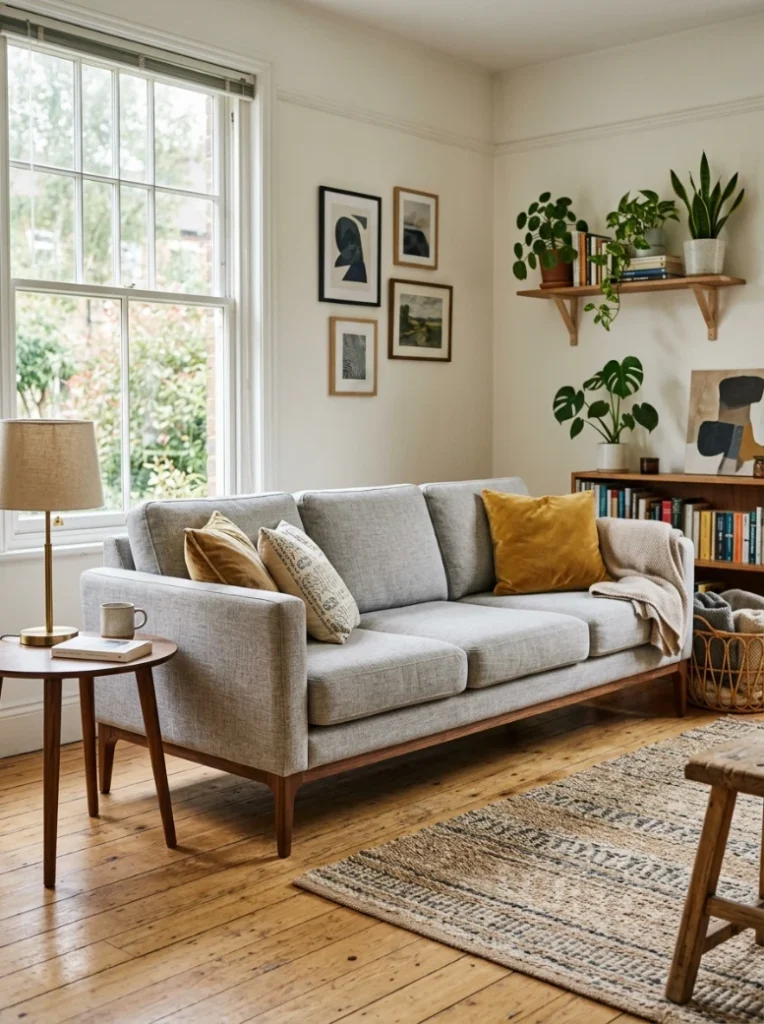
A sofa or chair with visible floor space underneath reads as lighter and less bulky than the same piece with a solid skirted base, even at an identical actual size.
This small detail is worth prioritizing when shopping specifically for a small room, since it changes how the piece is perceived more than its dimensions do.
8. Use nesting tables instead of one large coffee table
Nesting furniture solves the problem of needing surface area only sometimes.
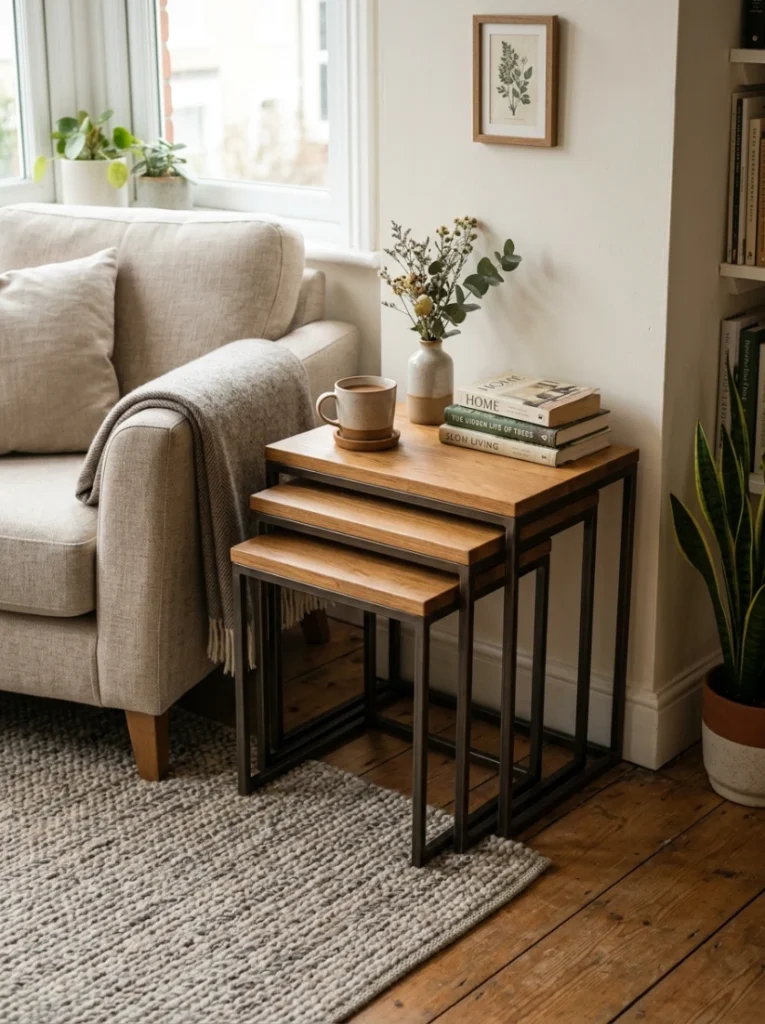
A set of two or three nesting tables tucks completely away under the largest one when not needed, then pulls apart to provide extra surface space the moment guests arrive.
It solves the exact tension a single coffee table creates, useful surface area versus floor space, without forcing a choice between them.
9. Mount the television instead of using a stand
A media stand is one of the bulkiest, least flexible pieces in most living rooms.
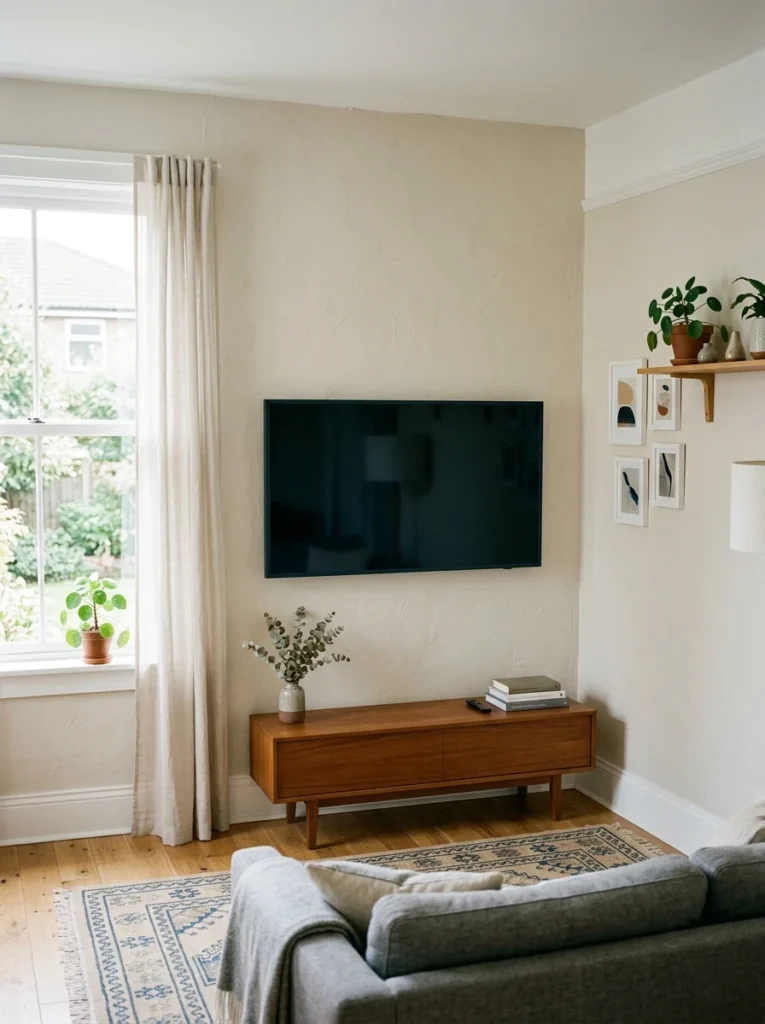
Mounting the television directly to the wall frees up an entire piece of furniture’s worth of floor space that a stand would otherwise occupy permanently.
Concealing the cords in a simple channel keeps this upgrade looking finished rather than like an unfinished install.
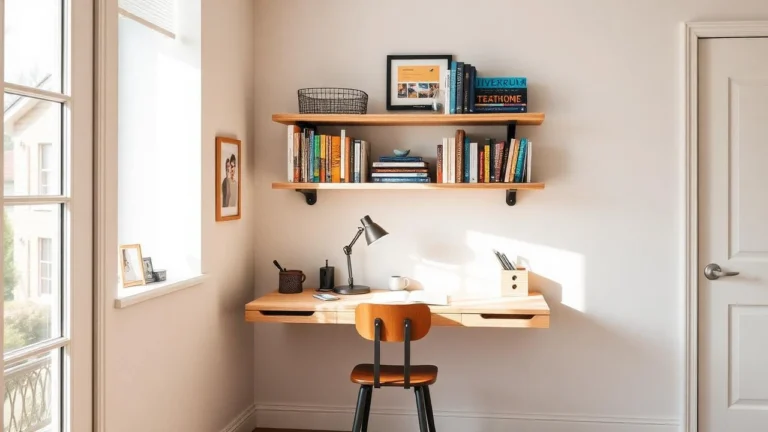
10. Add a fold-down wall desk for a multi-purpose room
This solves the specific problem of a living room that also has to work as an office.
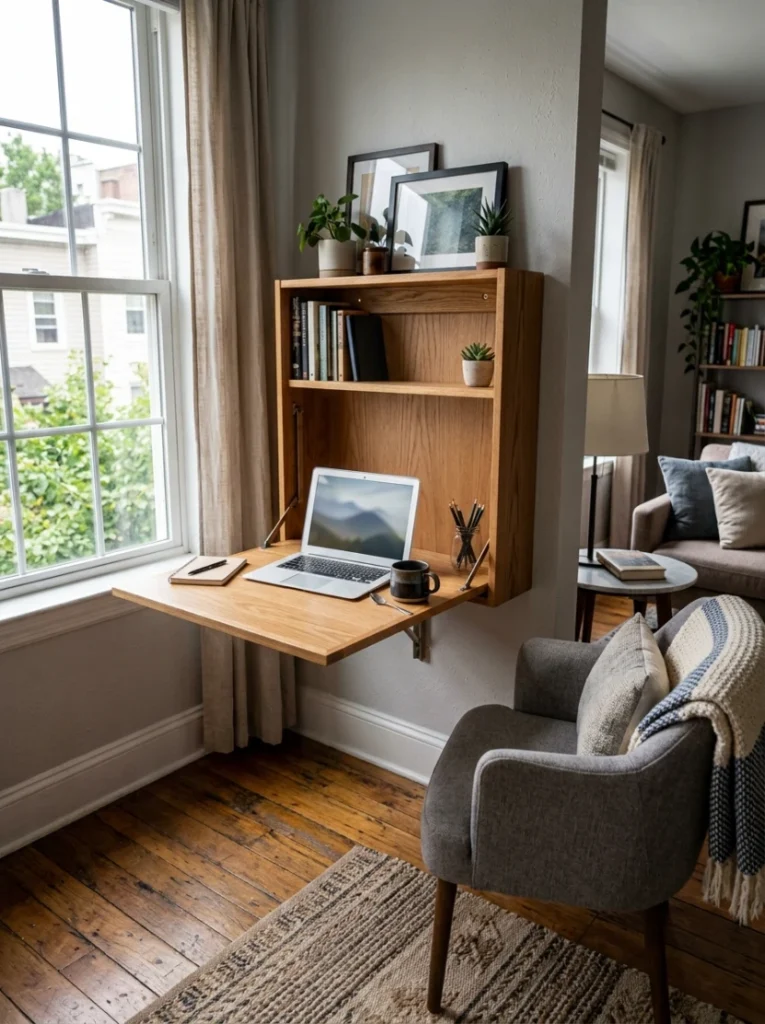
A hinged desk that folds flat against the wall disappears completely when it is not in use, which no freestanding desk, however small, is ever able to do.
It is a strong option for anyone whose living room needs to double as a workspace without permanently sacrificing floor space to it.
Pro Tip: Before buying any multi-use furniture, list the two specific jobs you need it to do. A piece bought because it’s generically “multifunctional” often does neither job particularly well, while one chosen for your two actual needs almost always earns its space.
Color, Light, and Visual Tricks
11. Hang a large mirror across from the main window
This is the single most repeated trick for a reason, it genuinely works.
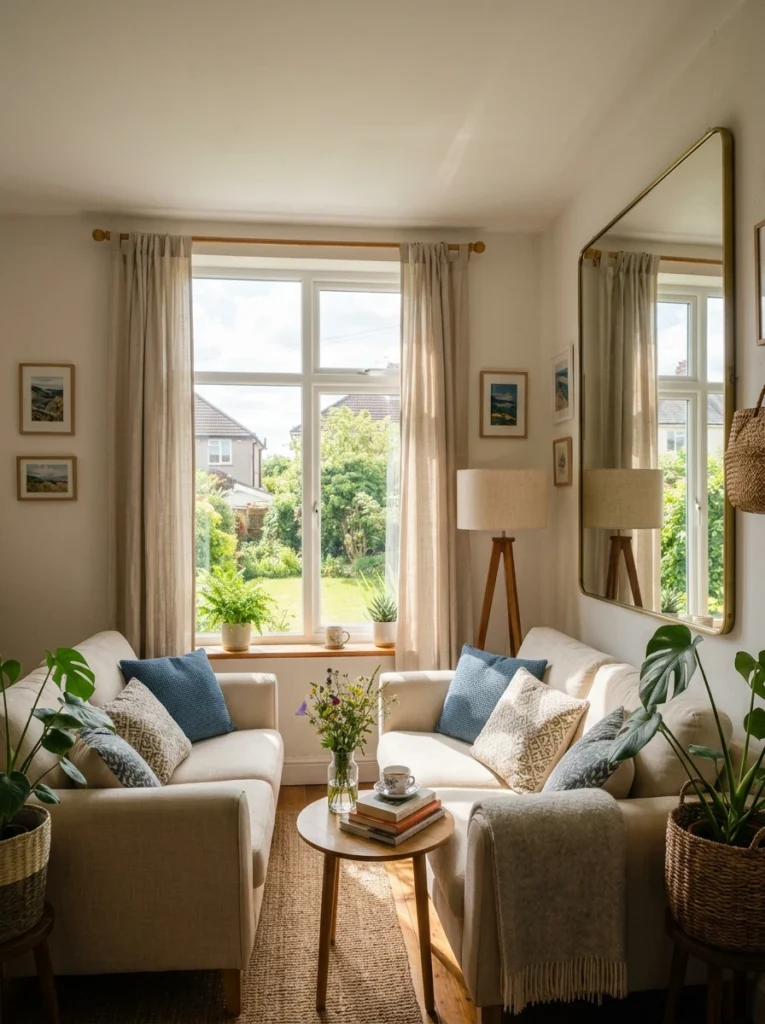
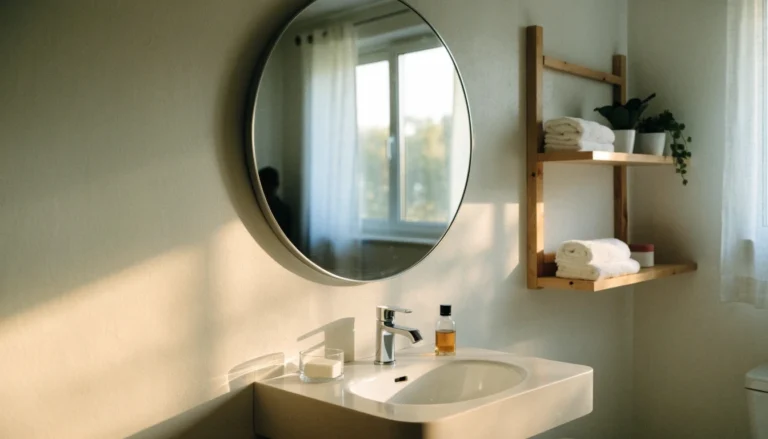
A mirror placed directly opposite a window bounces daylight back across the entire room, which visually doubles the sense of openness without adding a single fixture.
Sizing the mirror generously, rather than choosing something small and decorative, is what makes this trick actually deliver on its reputation.
12. Paint the walls and ceiling the same light color
Removing one visual line can make more difference than repainting the whole room a different shade.
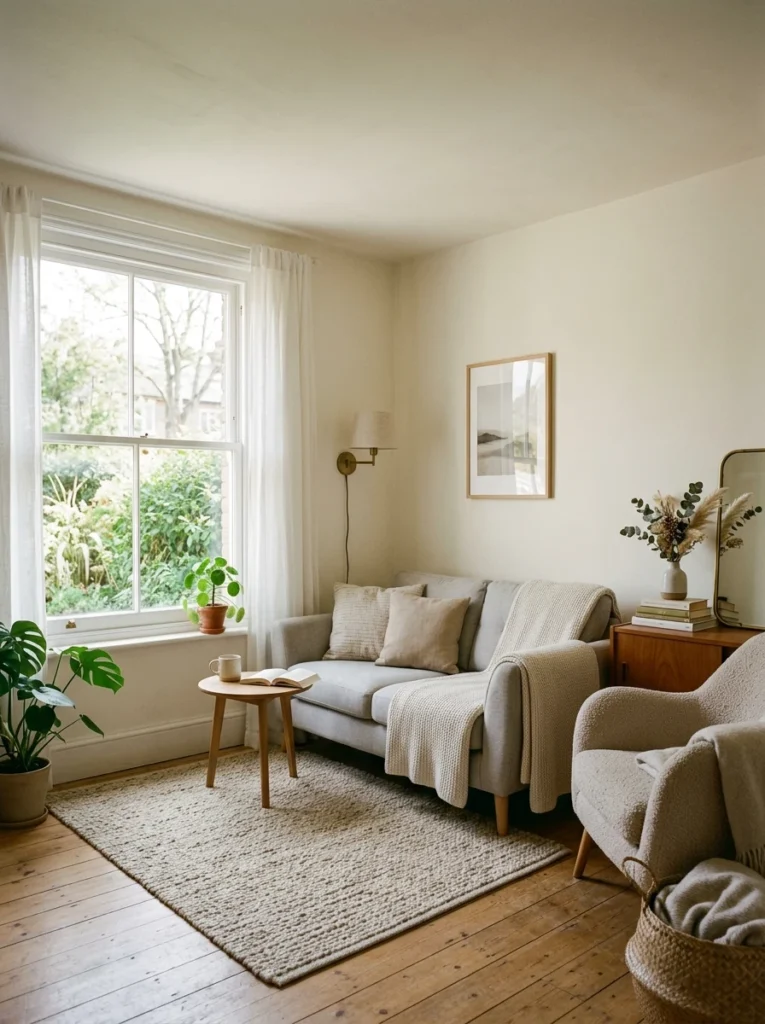
Carrying the same light, soft color from the walls up onto the ceiling removes the visual stopping point where one meets the other, which makes the room read as taller than its actual ceiling height.
This works in almost any color family, as long as the wall and ceiling shades stay close enough to blur that line.
13. Swap heavy curtains for light linen or blinds
Window treatments take up more visual and physical space than most people account for.
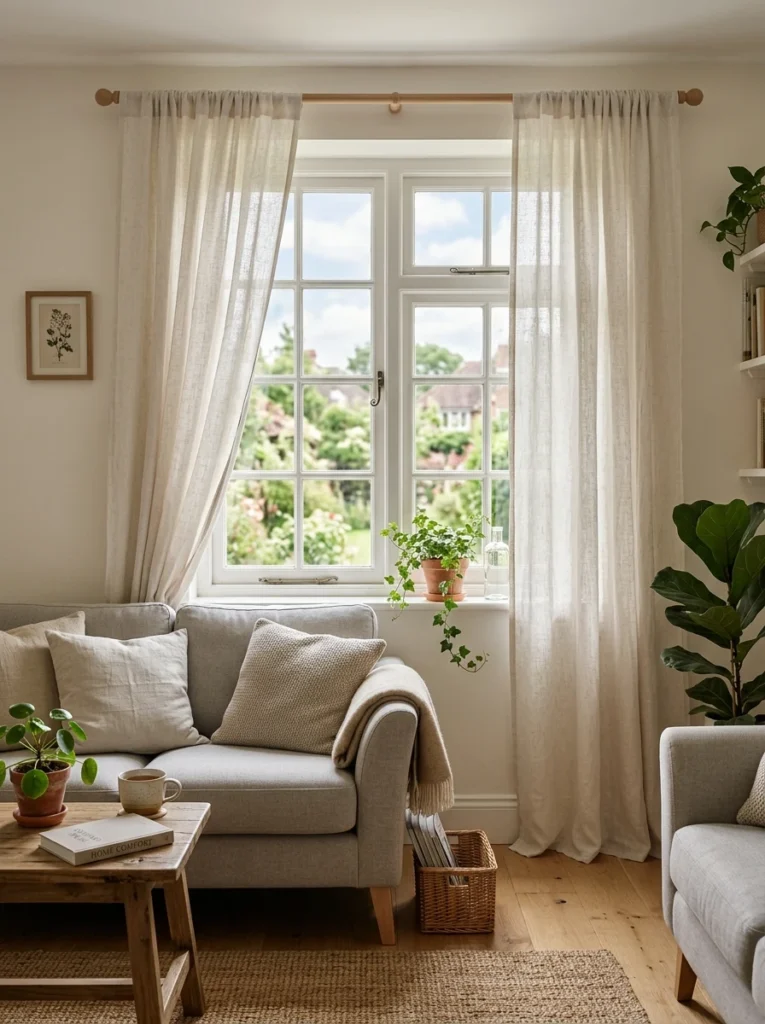
Bulky drapes block real light and visually shrink the wall space around a window, while sheer linen or simple blinds let both light and sightlines travel further into the room.
This swap costs relatively little and pays off every single day the room gets natural light.
14. Layer lighting instead of relying on one overhead fixture
A single bright bulb creates flat, unflattering light that makes a small room feel more exposed, not bigger.
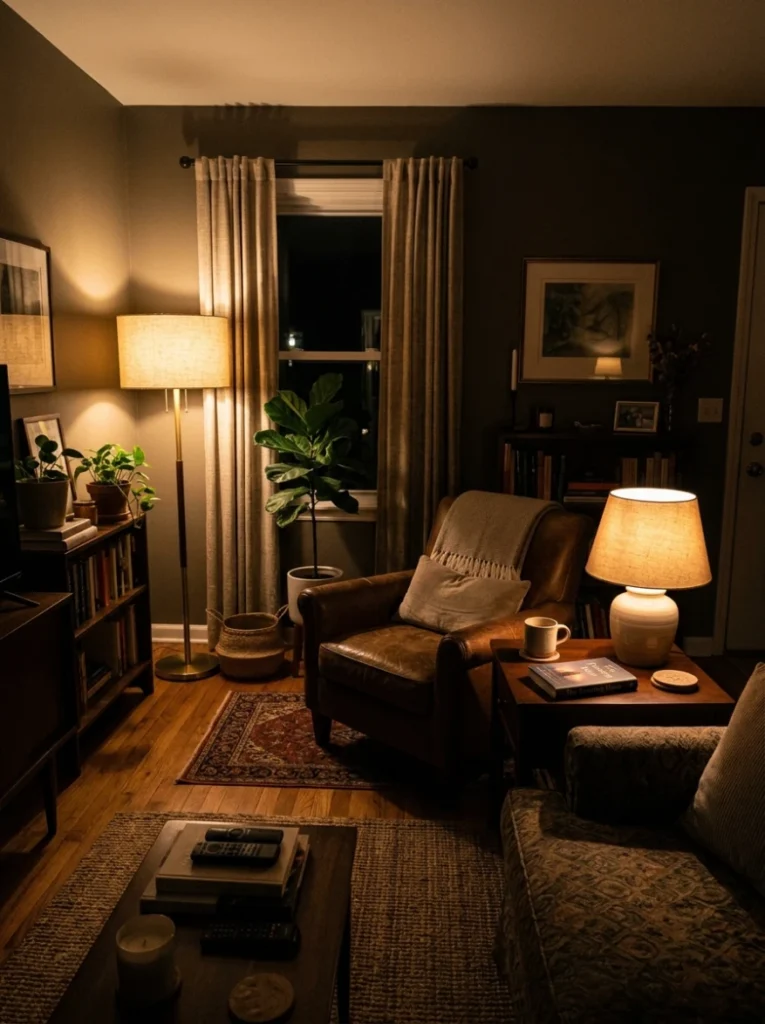
A floor lamp and a table lamp, positioned at different heights around the room, cast light in layers that read as considerably more spacious than one flat source from directly above.
This is one of the cheapest upgrades on this entire list relative to how much it changes the room’s evening feel.
15. Choose furniture in a color close to the walls
High contrast furniture draws a hard visual stop the eye can’t travel past.
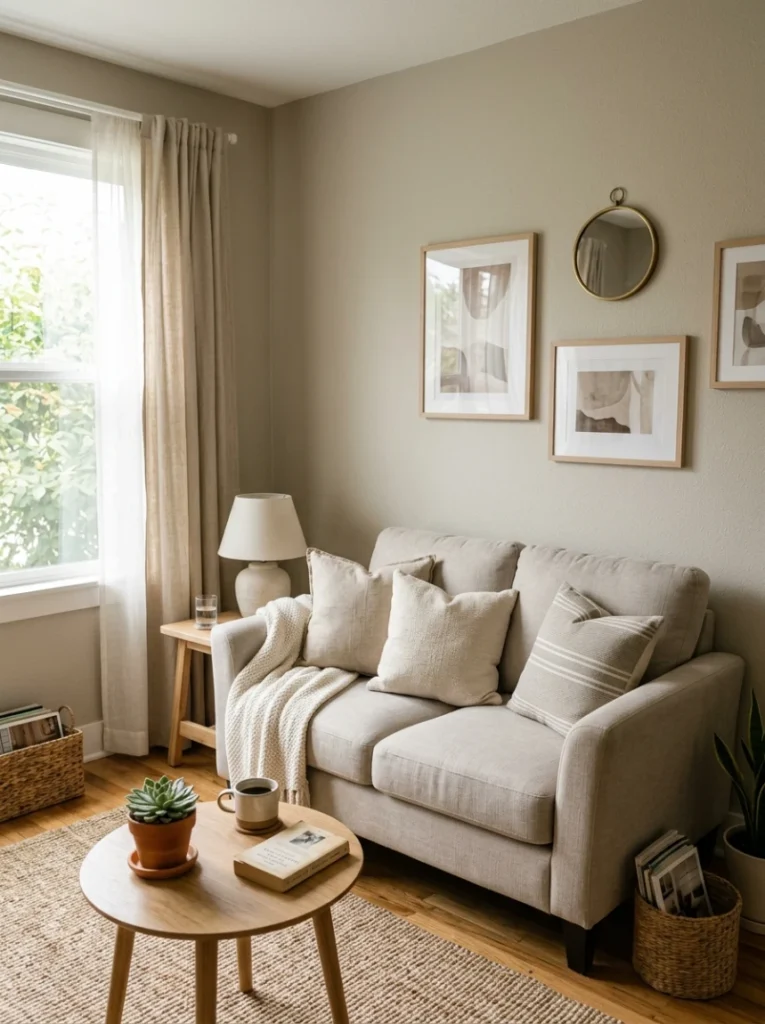
A sofa or chair chosen in a tone close to the surrounding walls lets the eye move past its edges rather than stopping short, which makes the furniture feel like it takes up less visual space than it actually does.
This doesn’t mean matching exactly, just staying within the same general tone family.
Pro Tip: Test any new wall or furniture color at different times of day before committing. A shade that looks airy at noon can read as dim and shrink the room by evening, especially in a space with limited natural light to begin with.
Storage and Display Without Clutter
16. Go vertical with floating shelves instead of a bookcase
Wall space is almost always more available than floor space in a small room.
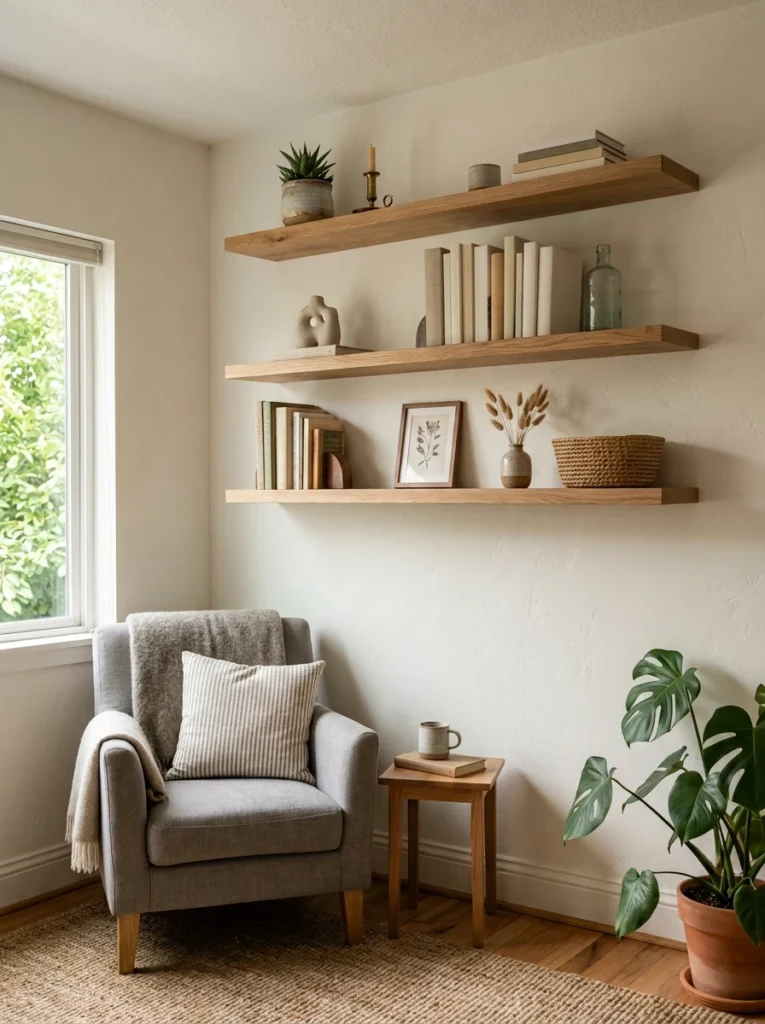
Floating shelves mounted higher up use wall space a floor standing bookcase never reaches, while keeping the actual floor completely clear underneath them.
Styling them with restraint, the same way you would any bookshelf built to double as decor, keeps the display from tipping into clutter once it’s up.
17. Add a slim console behind a floating sofa
If the sofa isn’t against the wall, that gap behind it is real usable space.
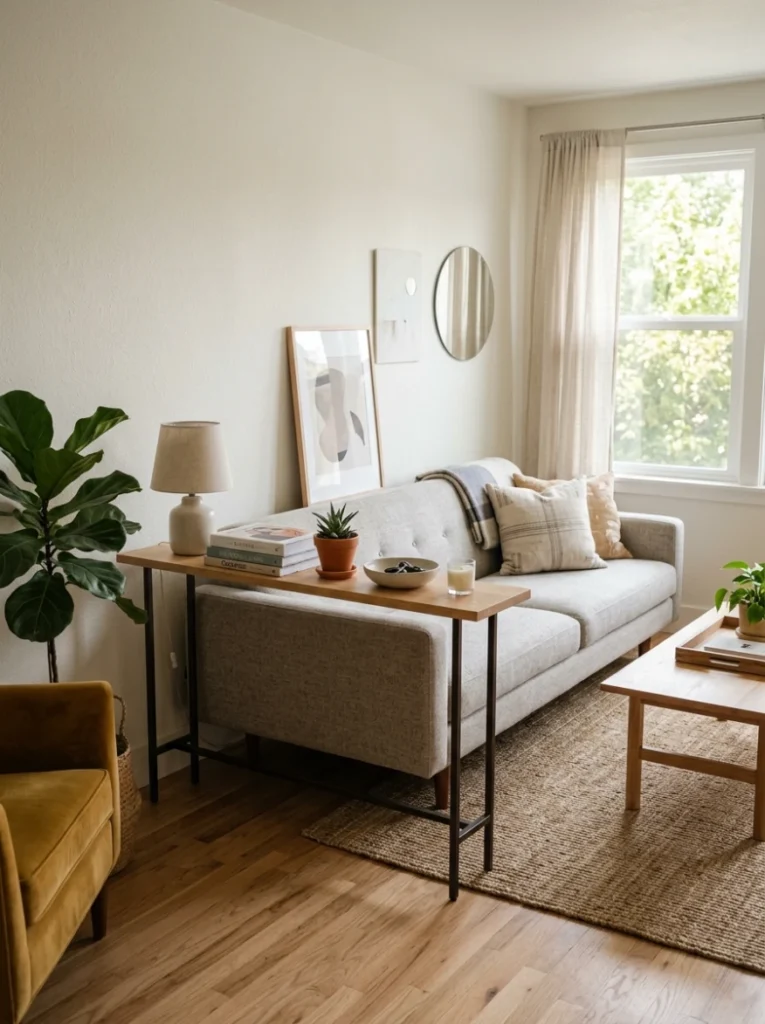
A narrow console placed in the gap behind a floated sofa adds a display and storage surface without needing a separate side table anywhere else in the room.
Styling the top with just one or two pieces, the same restraint that works well on a coffee table tray, keeps this surface from becoming a catch-all.
18. Limit decor to a few meaningful pieces
More small objects almost always reads as more clutter, not more personality.
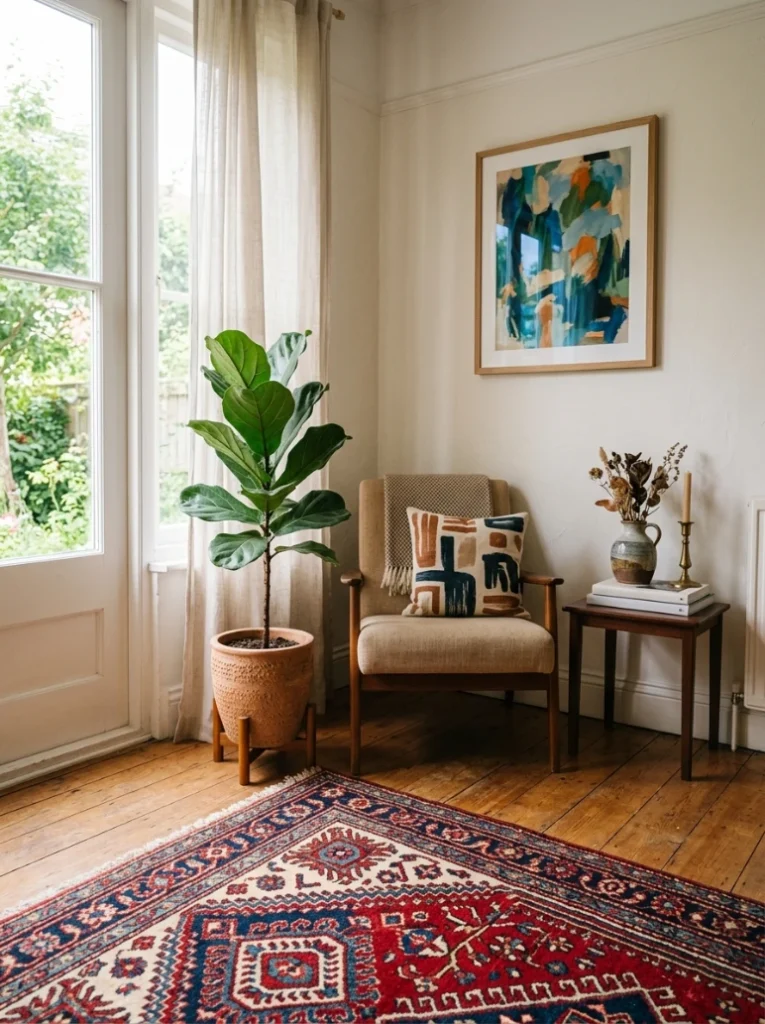
A bold rug, one substantial plant, and a single strong piece of art do more for a small room’s personality than a shelf crowded with a dozen small knickknacks ever could.
This kind of editing is really the same principle behind a broader minimalist living room approach, just applied specifically to a room with limited square footage to begin with.
19. Choose one hanging or wall-mounted light fixture
A pendant does the job of a lamp without taking up any table space at all.
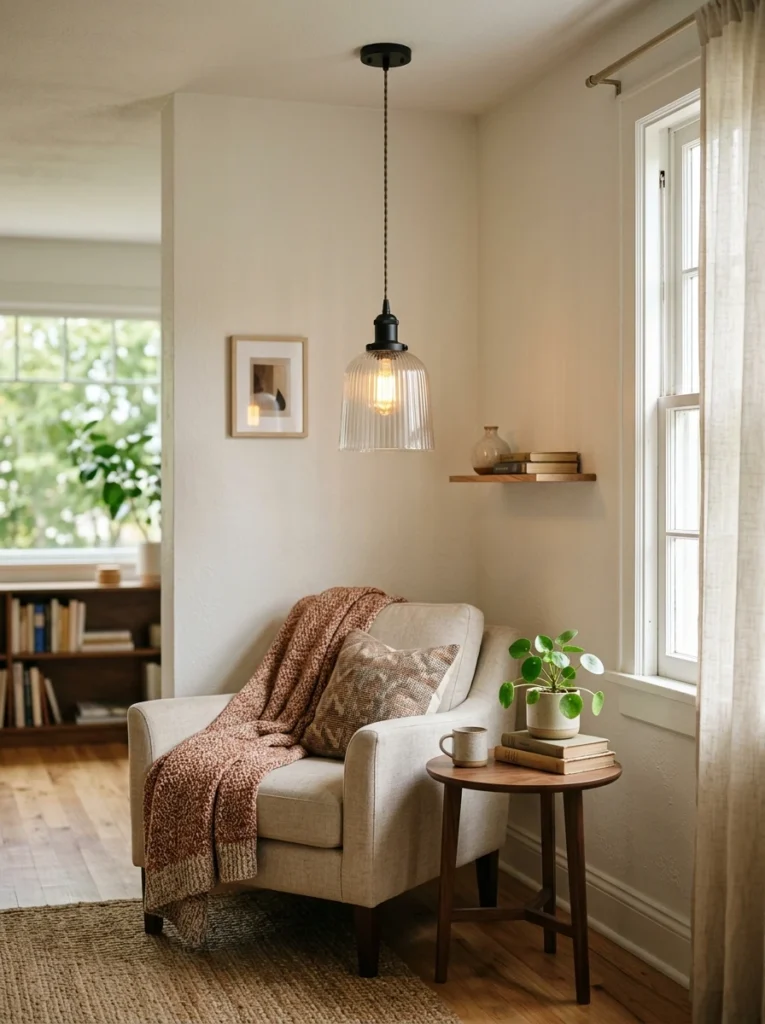
A pendant or wall mounted sconce frees up the exact table surface a lamp would otherwise claim, which matters in a room where every surface is already doing double duty.
This is a particularly strong choice for a reading corner that doesn’t have room for a side table at all.
20. Use a bench instead of bulky armchairs for extra seating
A bench slides in and out of a layout in a way a chair never quite manages.
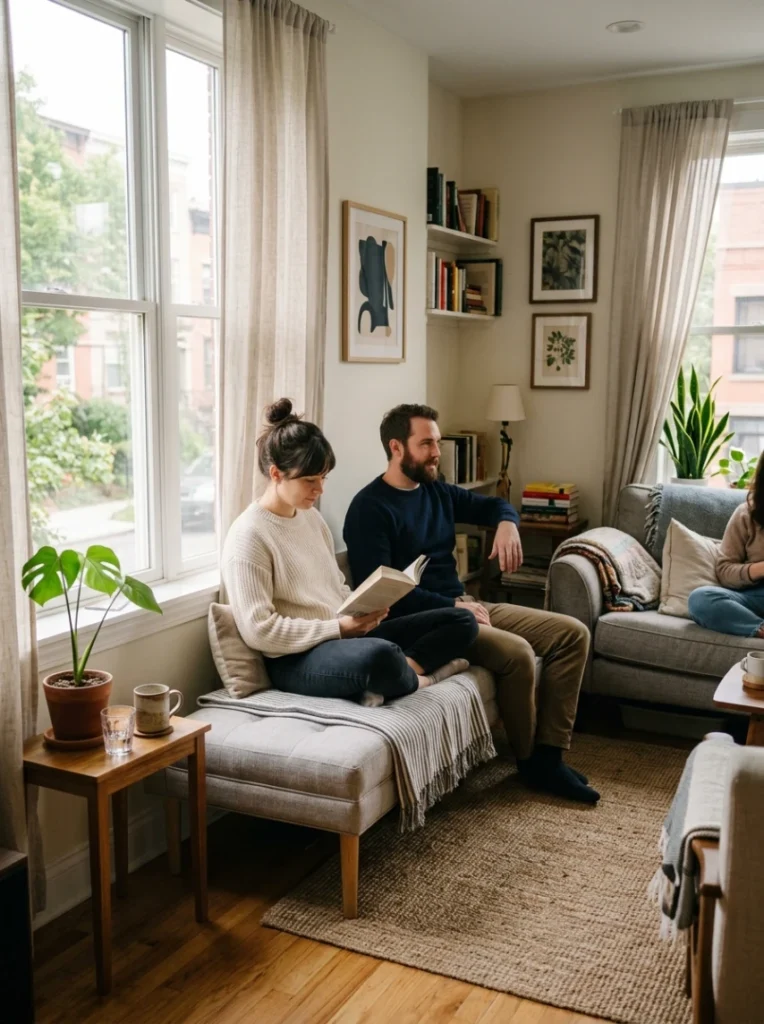
A slim upholstered bench seats two people in roughly the footprint one armchair would need, and it tucks against a wall completely out of the main walking path when it’s not in use.
It is a strong pick for a room that needs occasional extra seating without permanently committing floor space to it.
21. Keep at least one surface completely empty
The smallest, cheapest idea on this whole list might matter the most.
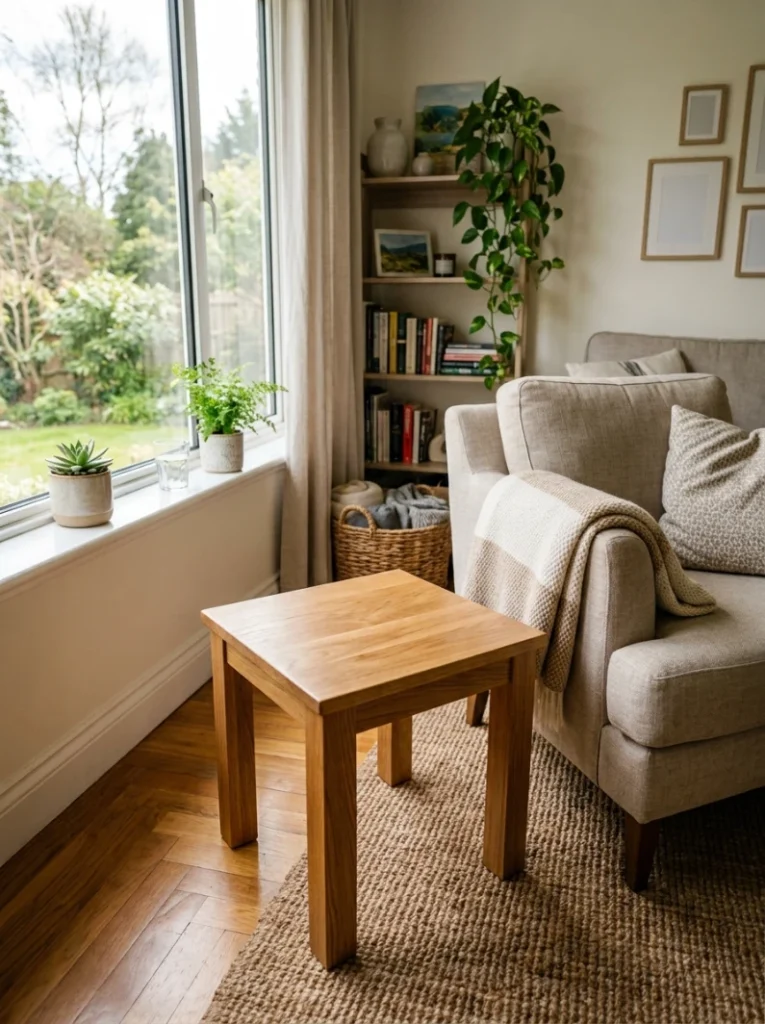
Deliberately leaving one table or shelf completely bare gives the eye a place to rest, which does more for a room’s sense of calm than any single decor purchase.
This costs nothing and is worth protecting even as the rest of the room fills in over time.
Pro Tip: Do a five minute walkthrough once a week and remove anything that’s landed on a surface without a real home. Small rooms show clutter faster than large ones, so a quick, regular reset keeps every other idea on this list from slowly undoing itself.
Common Mistakes to Avoid
- Pushing every piece of furniture against the walls, which tends to leave the center feeling hollow rather than open.
- Buying furniture sized for a showroom instead of measured against your actual room dimensions.
- Choosing a rug too small to reach the front furniture legs, which visually cuts the room in half.
- Filling every shelf and surface completely, which erases any sense of breathing room the space has left.
Frequently Asked Questions
What is the fastest way to make a small living room feel bigger?
Pulling the sofa a few inches off the wall and hanging a large mirror opposite the main window are the two quickest, lowest cost changes with the most noticeable impact.
Should furniture in a small living room match the wall color?
It doesn’t need to match exactly, but staying within the same general tone family helps the eye move past furniture edges instead of stopping short at them.
Is it better to use a loveseat or a full sofa in a small living room?
A loveseat often seats nearly as many people while leaving considerably more walking space, making it the better choice once a room drops below a certain footprint.
Conclusion
A very small living room doesn’t need a renovation to feel bigger, it needs fewer, smarter decisions: one clear focal point, furniture that pulls real double duty, and light that reaches every corner instead of pooling in one spot. Start with whichever idea above solves your room’s most annoying daily friction, whether that’s a blocked walking path or a dark corner, and build outward from there.