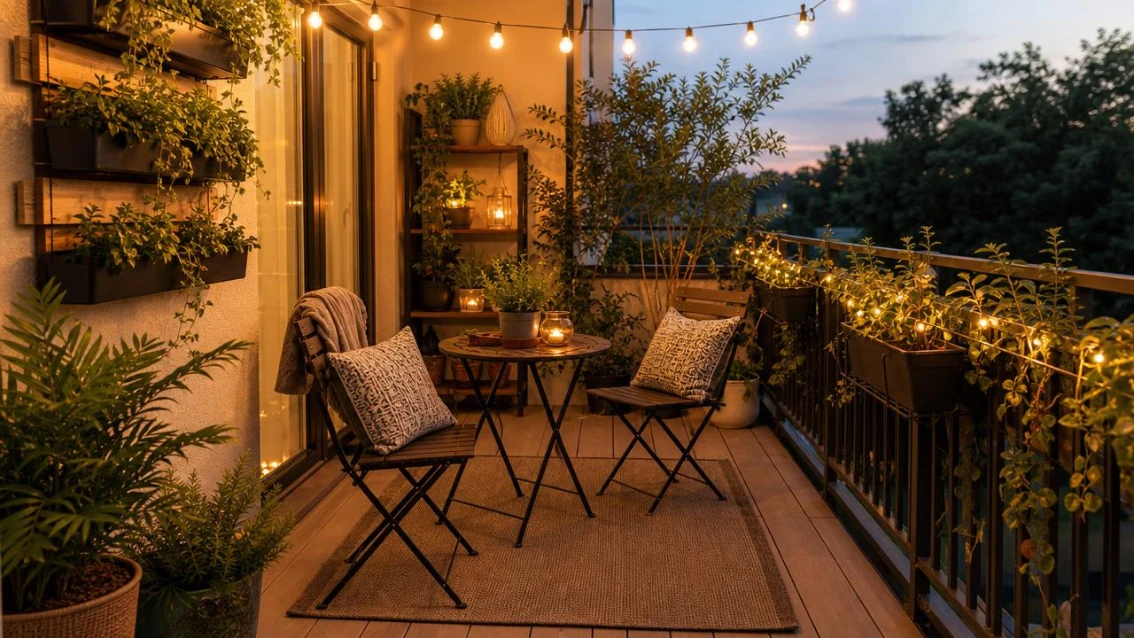
A small patio doesn’t need less styling than a big one. If anything, it needs more intention, because every single piece is doing double duty whether you plan for it or not.
What I’ve learned styling tiny outdoor spaces is that the mistake almost everyone makes is filling every inch. The spaces that actually feel bigger are the ones that use height, layering, and a tight color palette instead of just more furniture.
I’ve grouped these into four directions: furniture and layout, plants and greenery, lighting and ambiance, and storage and finishing touches, so you can pull from whichever area your patio actually needs help with. The same small-space thinking shows up in these homework station ideas for small spaces, where making every inch multitask matters just as much as it does out here.
Before You Start: Quick Styling Tips
- Go vertical before you go wider. A small patio has more usable wall and railing space than floor space, so use it first.
- Pick furniture that folds or nests. A patio that needs to double as a walkway needs pieces that can disappear when you need the space back.
- One rug, one color story. A patchwork of colors makes a small space feel more cluttered. One cohesive palette makes it feel intentional.
- Measure before you buy anything. A single oversized piece can make an 8×8 patio feel unusable. Scale matters more here than anywhere else in the house.
- Weatherproof materials aren’t optional. In a small space, one ruined cushion or rusted piece is far more visible than it would be in a larger yard.
Furniture and Layout
1. Swap a full table for a fold-down wall-mounted one
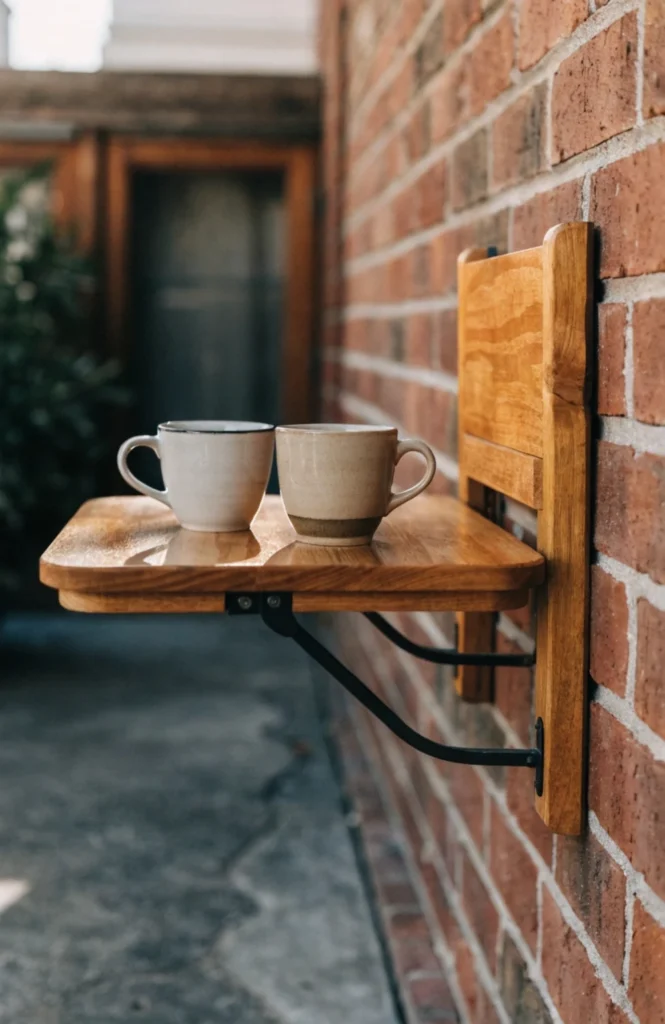
I’m always surprised how much floor space this one gives back.
A fold-down table mounted to an exterior wall, around 24 to 30 inches wide when open, folds flat against the wall when you’re not using it, so the patio can go back to being a walkway or lounge space in seconds.
It’s the single best move for a patio that has to serve more than one purpose in the same footprint.
2. Choose two chairs that stack, not four that don’t
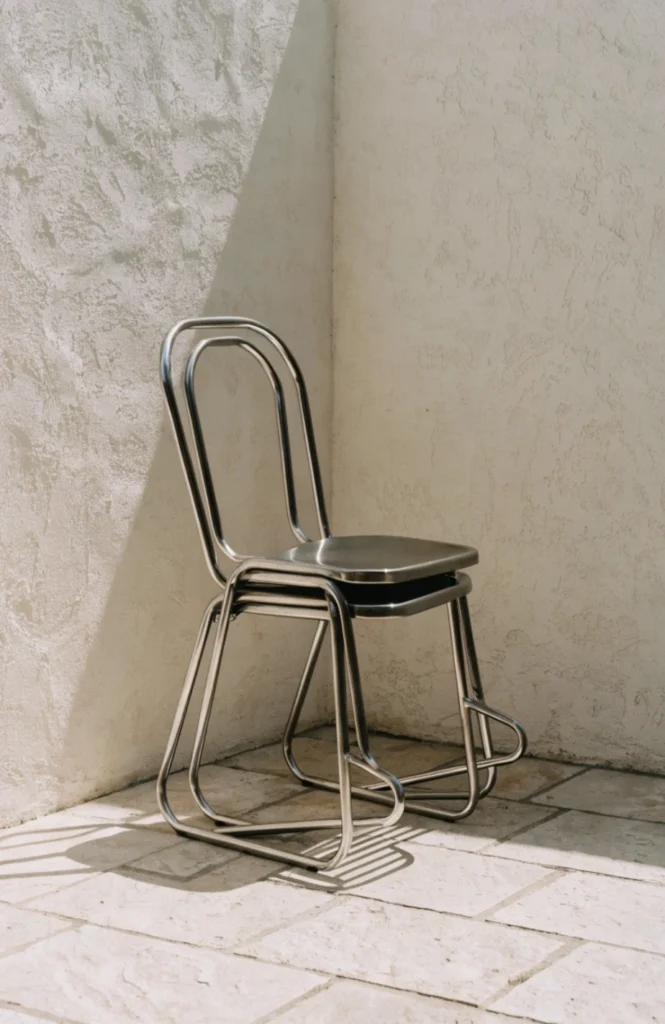
This is such an easy fix that people overlook constantly.
Two lightweight, stackable bistro chairs take up a fraction of the storage space that four bulky chairs do, and you can pull out extras from inside only when you actually have guests over.
It also means the patio reads as tidy by default instead of looking cluttered the second nobody’s sitting in them.
3. Use a round table instead of a square one
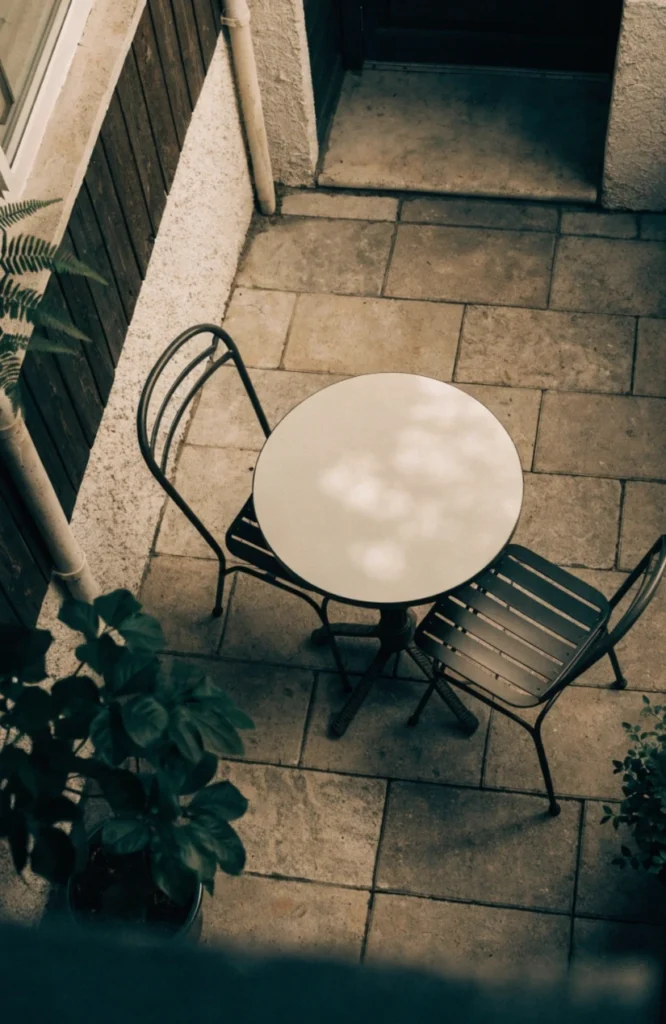
I switched to round on my own patio and immediately noticed the difference.
A round table with no hard corners lets you walk closer to it on every side without banging a hip, which matters enormously once a patio drops under roughly 80 square feet.
It’s a small geometry change, but it’s the difference between a space that feels tight and one that feels workable.
4. Build a bench with hidden storage underneath
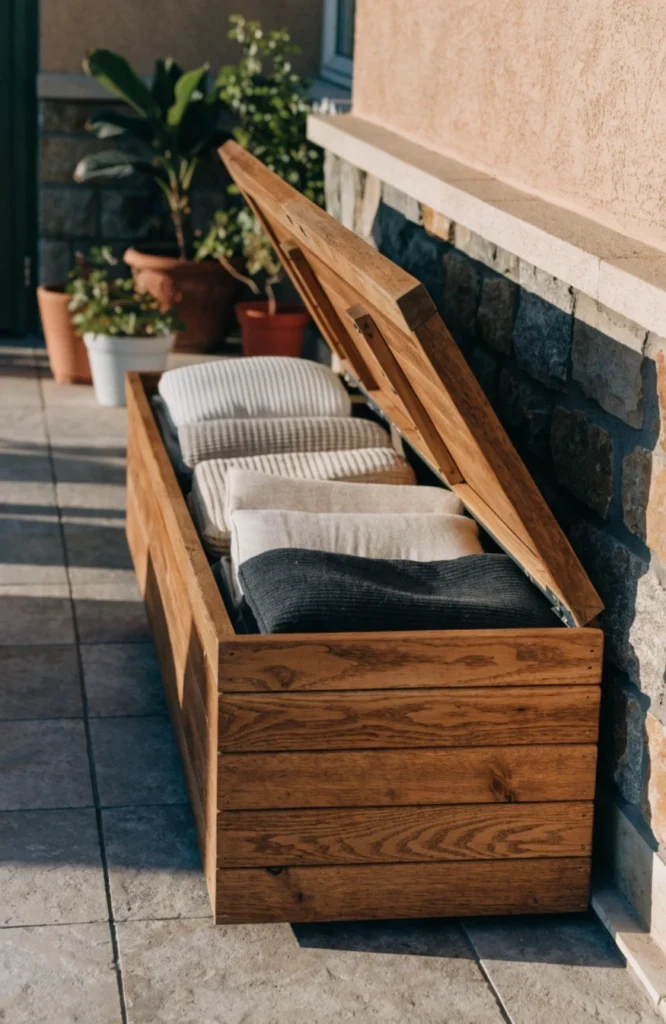
This is the multitasker I’d recommend to almost anyone with a tiny patio.
A storage bench along one wall, roughly 40 to 48 inches long, gives you seating for two to three people while hiding cushions, gardening tools, or extra blankets underneath the lid.
It replaces both a bench and a storage bin in the same footprint, which on a small patio is exactly the kind of trade that’s worth making.
5. Anchor the space with one rug instead of furniture placement alone
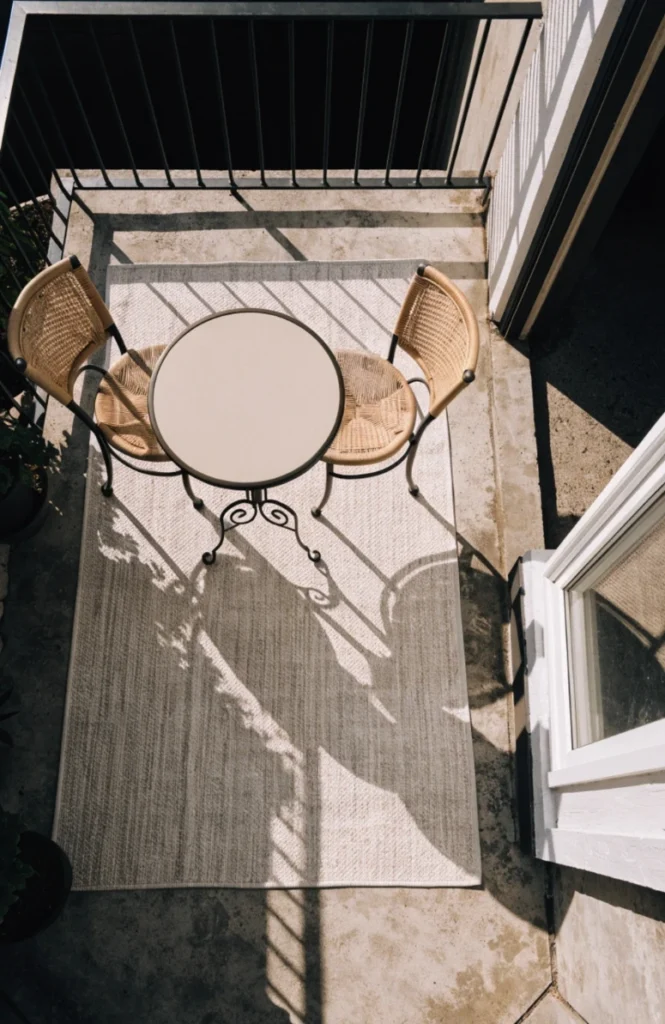
A rug does more to define a small patio than people expect.
Laying one outdoor rug that’s slightly smaller than the full patio footprint, leaving a few inches of floor visible around the edges, visually anchors the seating area without making the whole space feel boxed in.
It’s the cheapest way to make a patio look finished rather than like furniture was just set down on bare concrete.
6. Push seating to the perimeter, not the center
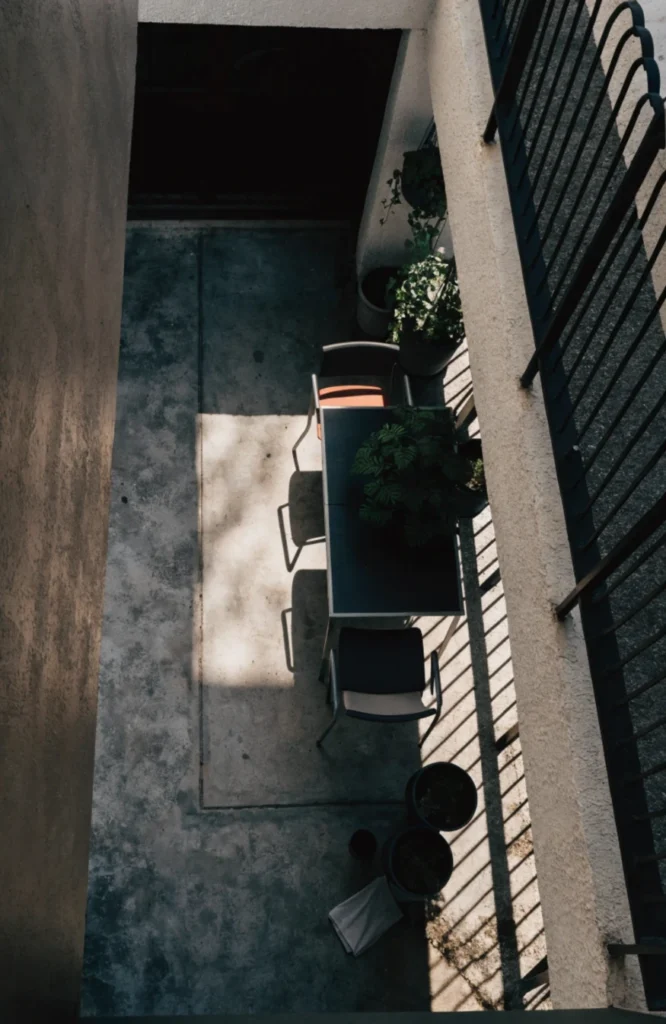
This one small layout change opens up more room than it seems like it should.
Pushing your table and chairs against the wall or railing rather than centering them in the middle of the patio leaves an actual open walking path down the center.
It sounds obvious once you’ve done it, but almost every small patio I’ve seen styled wrong has furniture floating in the middle instead.
Plants and Greenery
7. Hang plants from the railing instead of setting pots on the floor
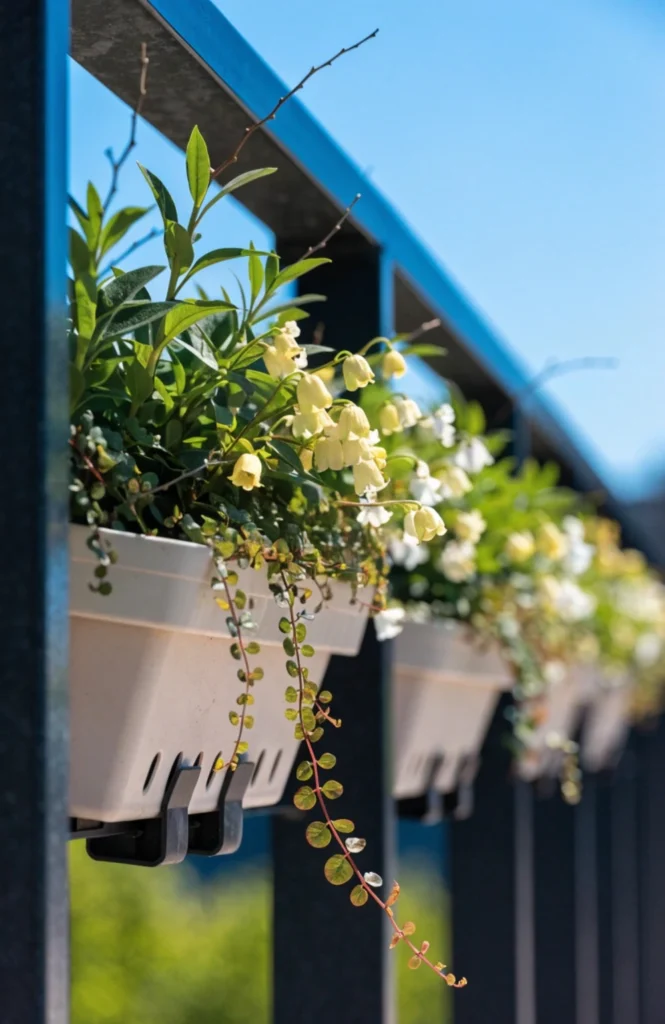
This is the first move I make on every small patio I style.
Railing planters that clip directly onto the top rail keep every plant off the floor entirely, freeing up walking and seating space you’d otherwise lose to a row of floor pots.
It also puts the greenery at eye level, which reads as more lush in photos than the same plants would sitting down at ankle height.
8. Use a vertical planter wall for herbs
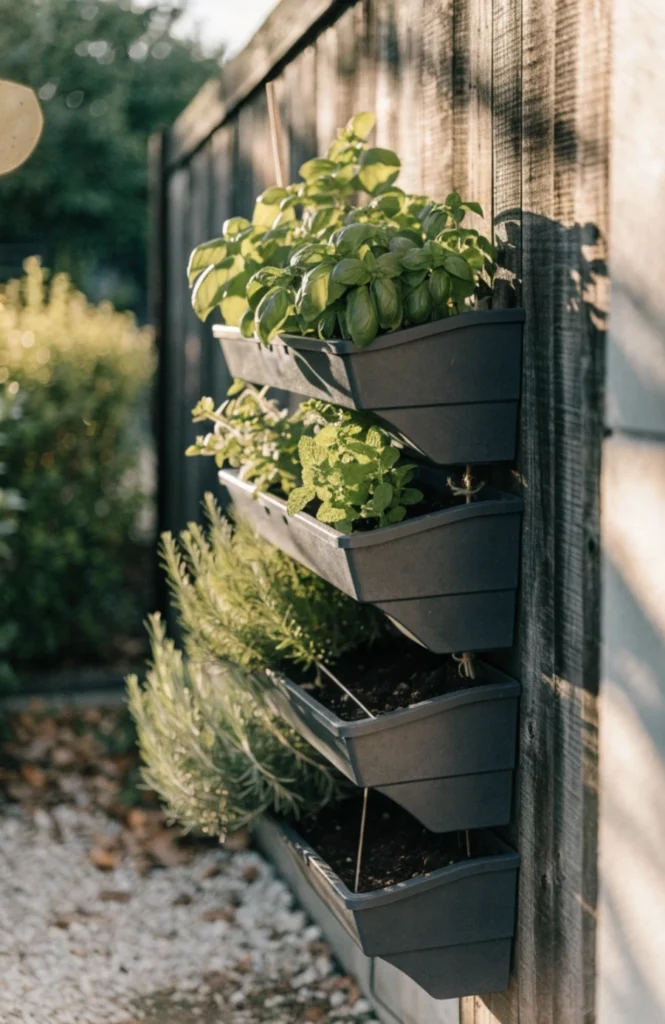
Such a good move if floor space is genuinely at zero.
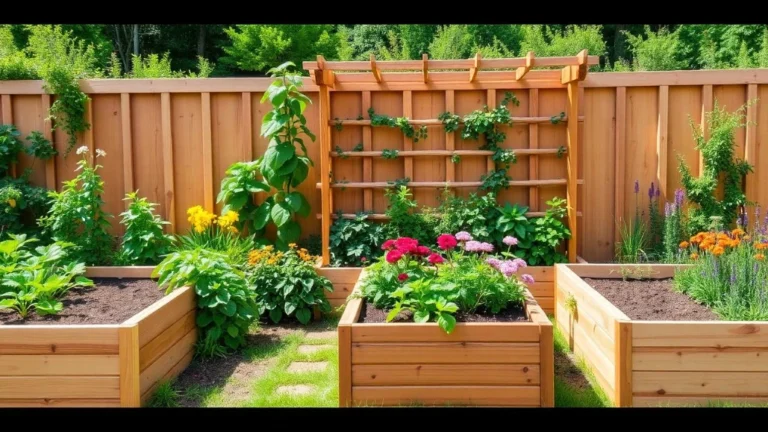
A tiered vertical planter, either wall-mounted or freestanding against a fence, lets you grow six to eight herbs or small plants in the same footprint one floor pot would take up.
It’s also just practical, since the herbs are right there at hand height when you’re actually cooking.
9. Pick one statement plant instead of many small ones
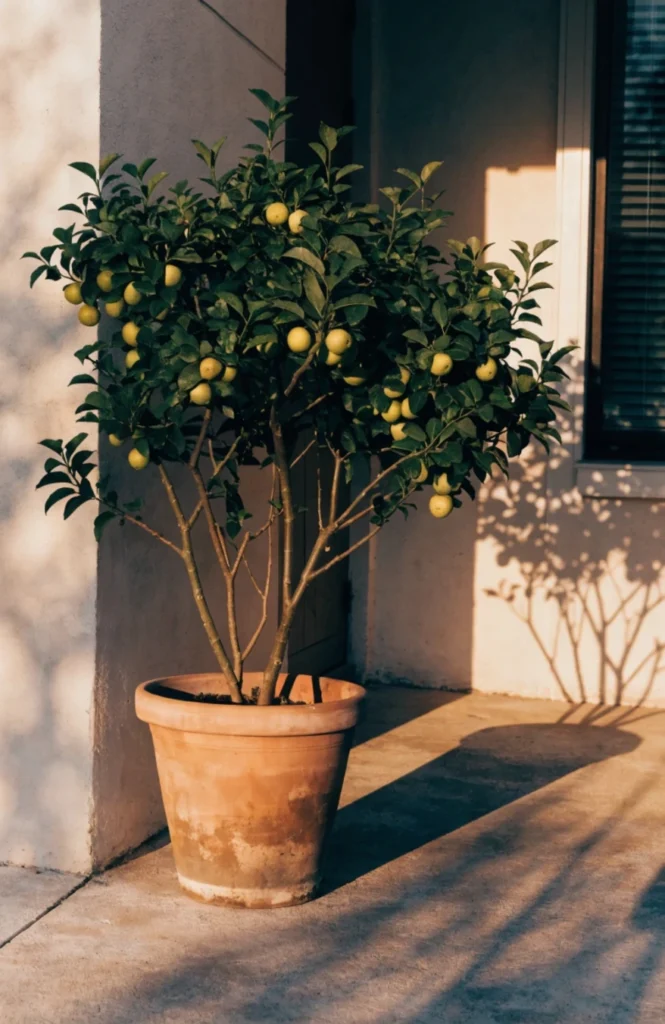
I learned this one the hard way after over filling my own patio with tiny pots.
One larger potted plant, like a dwarf citrus tree or a tall olive tree in a patio-sized container, reads as more intentional and less cluttered than eight small pots scattered around.
It also means you’re only maintaining one plant’s watering schedule instead of juggling several different needs in a tight space.
10. Use trailing plants to soften a railing or fence line
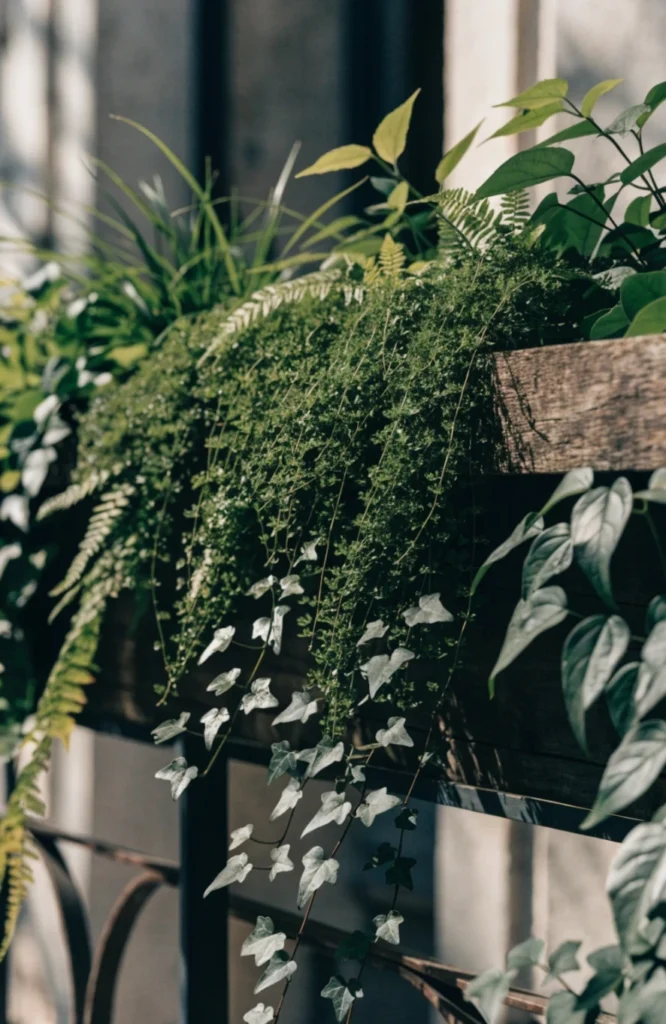
This is the detail that makes a patio feel grown in instead of freshly moved into.
Trailing plants like string of pearls or creeping jenny, planted in railing boxes or hanging baskets, soften the hard line of a railing or fence over just a few weeks of growth.
It’s a slow-building effect, but it’s one of the few things on this list that actually improves the longer you leave it alone.
11. Group pots in odd numbers at varying heights
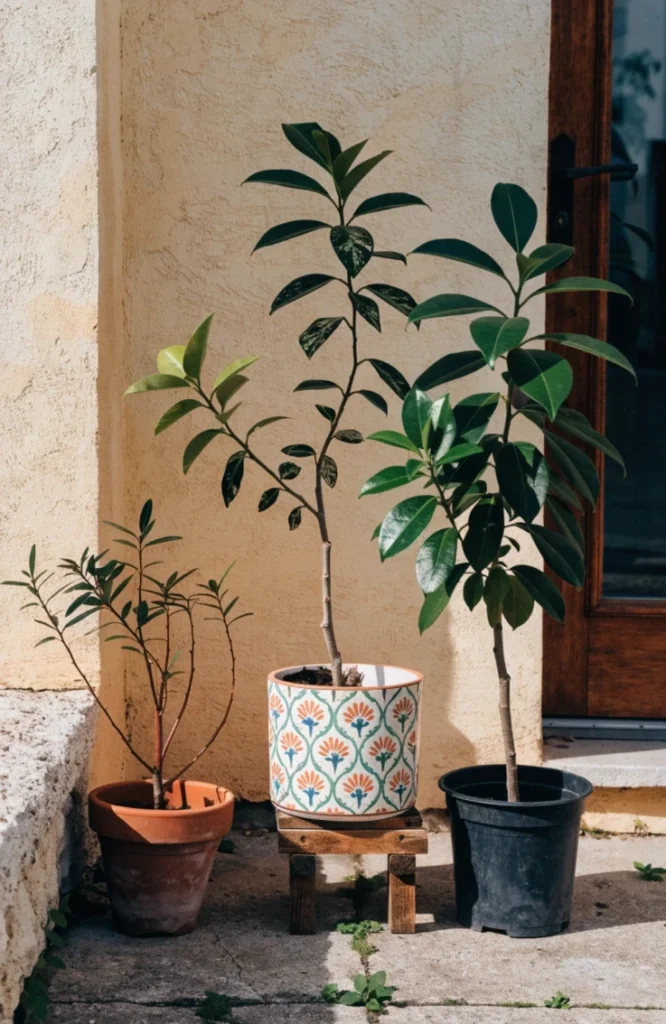
A small styling rule that makes a real visual difference.
Grouping three potted plants together at different heights, using a small stand or upside-down crate to lift one of them, reads as a deliberate arrangement rather than pots that got set down randomly.
Odd numbers specifically tend to look more natural than pairs, which can start to feel a little too matched and stiff. It’s the same grouping logic behind these bookshelf styling ideas, just applied to pots instead of books.
12. Choose a single pot color family throughout
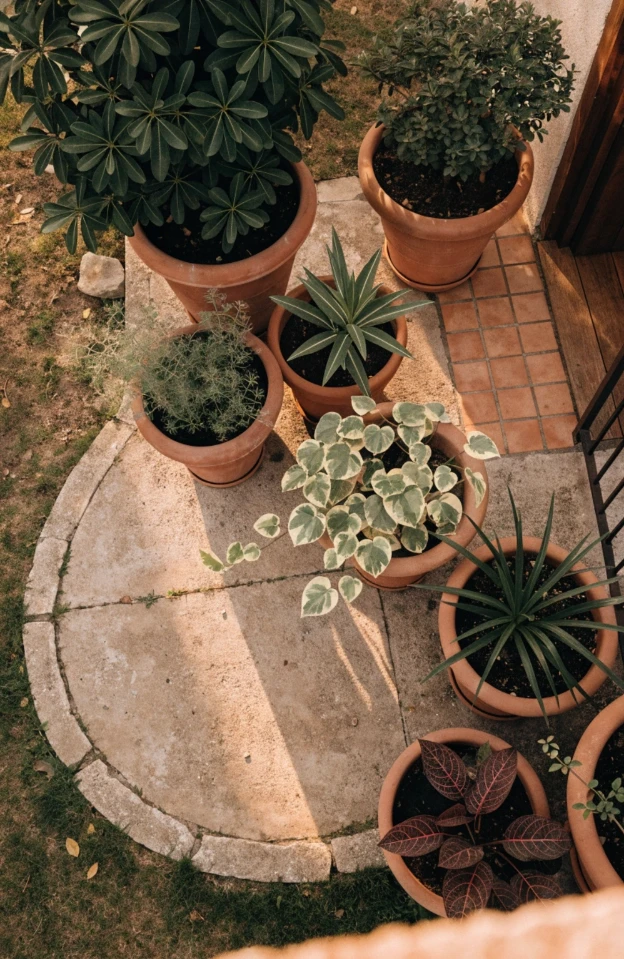
This is such an easy way to make a mismatched plant collection look pulled together.
Sticking to one pot material and color family, like all terracotta or all matte charcoal, across every plant on the patio ties the whole space together even if the plants themselves are completely different types.
It’s a five-minute decision that pays off every single time someone looks at the space.
Lighting and Ambiance
13. String warm-white lights along the railing or overhead beam
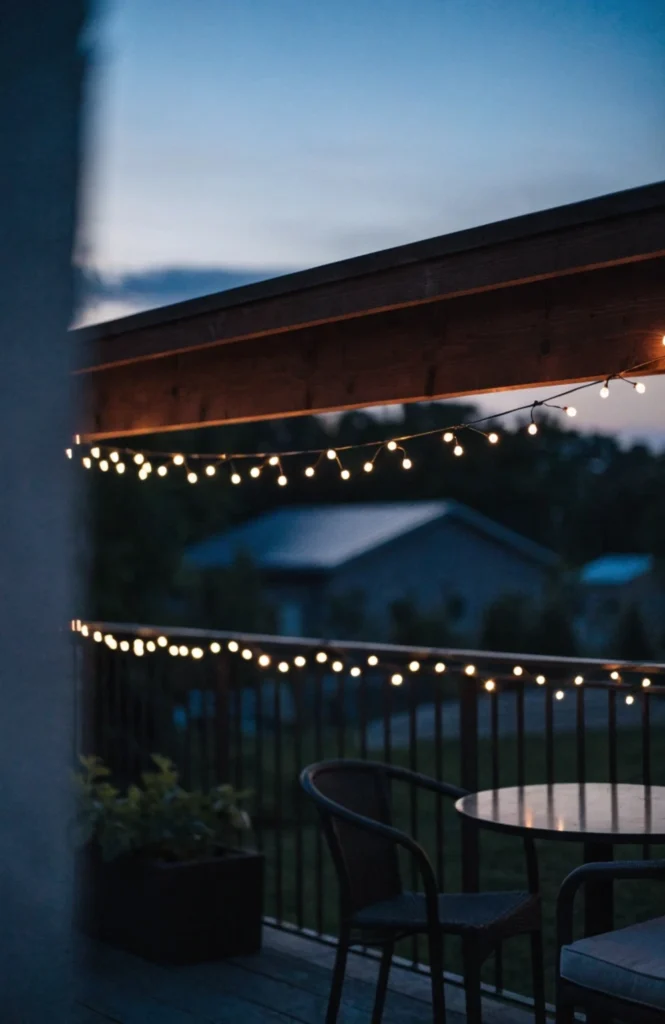
I would never style a patio, small or large, without this.
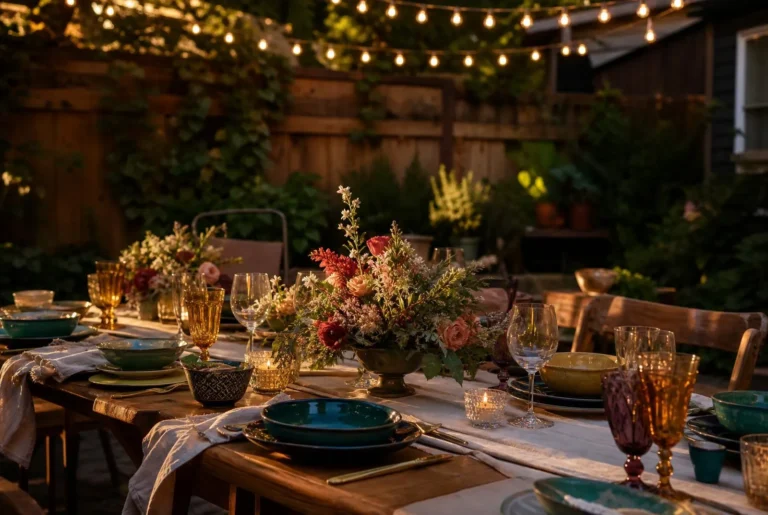
Warm-white string lights run along the top of a railing or across an overhead beam extend how usable the patio feels well past sunset, and warm white specifically avoids the harsh, clinical look cool-white bulbs give outdoors.
On a small patio especially, this single addition often does more than any piece of furniture would.
14. Add a small solar lantern instead of relying on overhead light alone
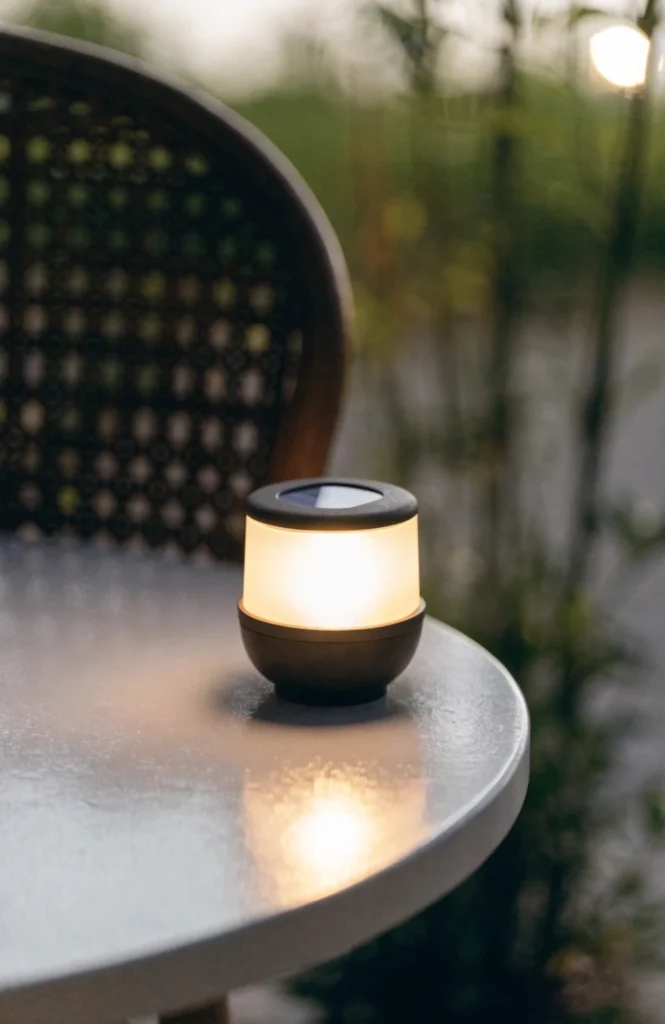
This fills in the shadows string lights alone tend to miss.
A single solar lantern placed on the table or floor adds a warm secondary light source at table height, which fills in the shadows that overhead string lights alone tend to leave behind.
It also means you’ve got usable light even on a night the overhead lights aren’t plugged in or charged.
15. Use a dimmable LED candle instead of real flame in tight quarters
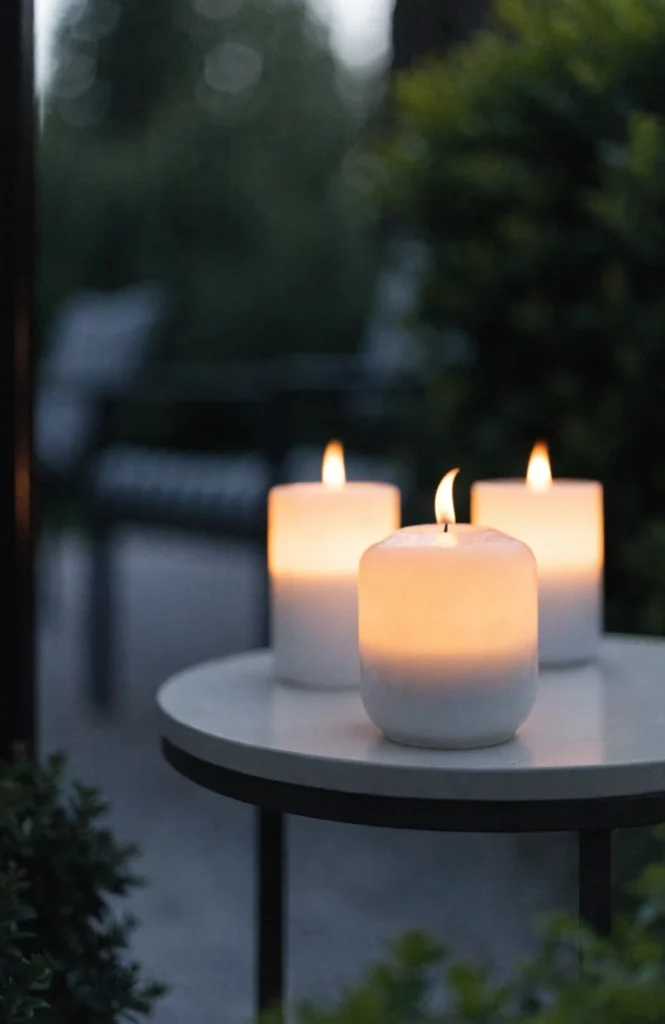
A practical swap that matters more on a small patio than a large one.
Battery-powered LED candles with a flicker effect give you the same warm ambiance as real candles without the fire risk that comes with an open flame in a tight, furniture-dense space.
They’re also just less hassle, since there’s no relighting after a gust of wind knocks them out mid-evening.
16. Mount a wall sconce to free up table space
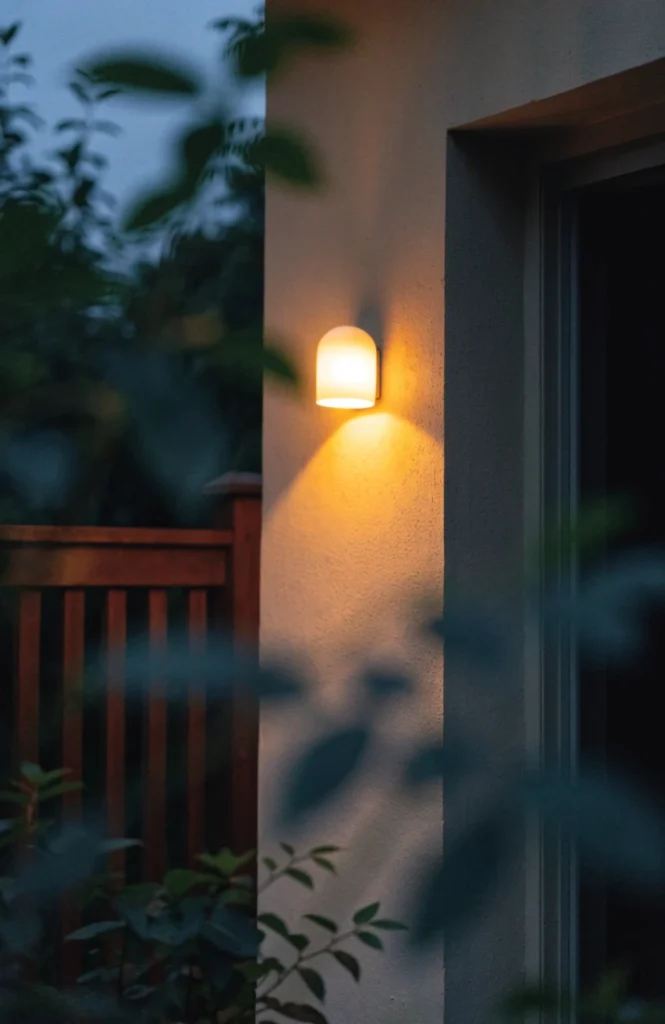
This is an upgrade I’d recommend once the string lights and lanterns feel like enough clutter already.
A single solar or battery-powered wall sconce mounted at eye level adds ambient light without taking up any table or floor space at all, which matters once every surface on a small patio is already working double duty.
It’s a slightly bigger investment than a lantern, but it reads as more finished, almost like an indoor fixture.
17. Let the lighting follow one warm color temperature throughout
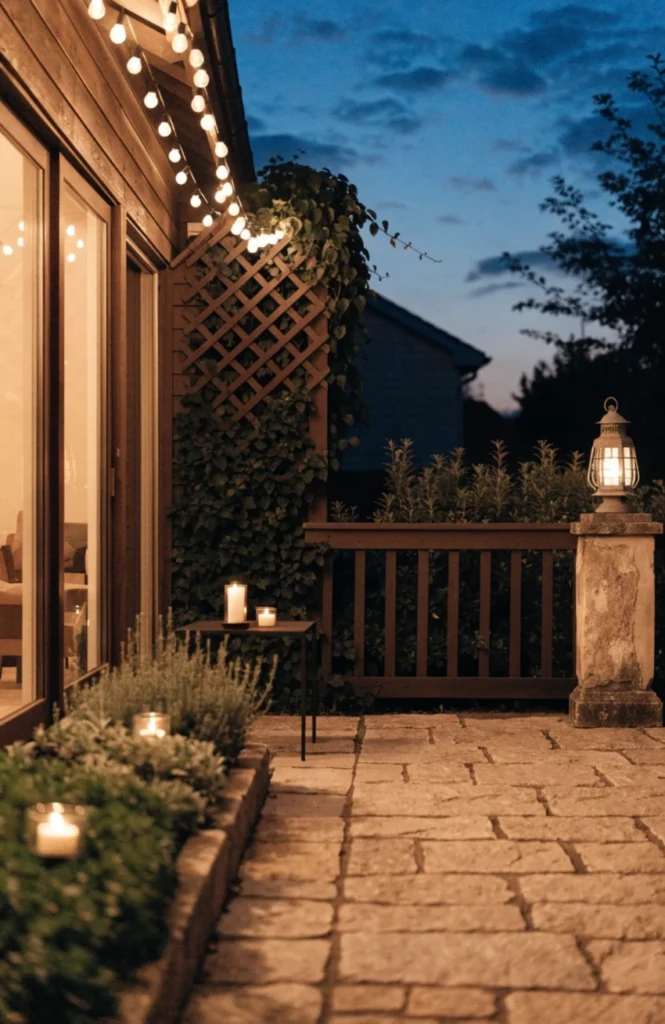
This is the detail that ties every other lighting choice together.
Keeping every light source, whether string lights, lanterns, or candles, in the same warm color temperature keeps the whole patio feeling cohesive after dark, instead of looking like mismatched fixtures competing with each other.
It’s free to plan for and it’s the single biggest reason some small patios photograph so much better at night than others.
Storage and Finishing Touches
18. Use a slim vertical shelf instead of a wide console
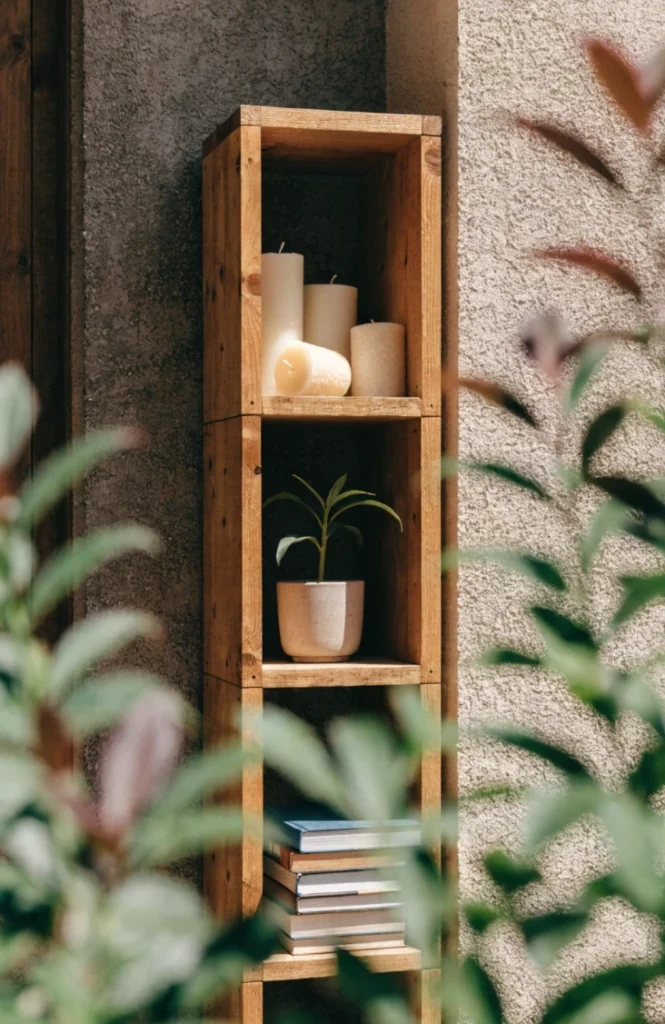
Every inch counts here, and this is where you get some back.
A narrow vertical shelf unit, roughly 12 to 16 inches wide, fits into a corner a wider console never could, while still giving you a few shelves for candles, small plants, or drinkware.
It’s proof that you don’t need a wide footprint to get real storage and display space on a small patio.
19. Hide the essentials in a weatherproof storage box
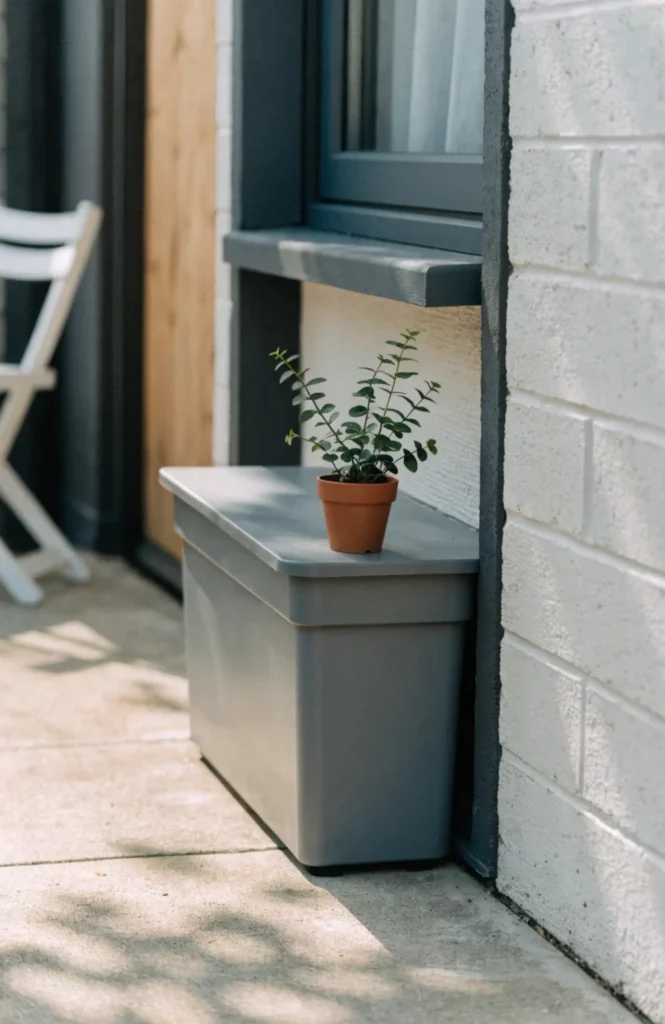
This one keeps the whole space looking finished even mid-use.
A slim weatherproof storage box, tucked under the bench or against a wall, holds cushions, a throw blanket, or gardening tools out of sight without eating into your actual seating or walking space.
It’s the difference between a patio that looks styled and one that looks like a storage overflow area, the same principle behind hiding clutter in these small kitchen cabinet organization ideas.
20. Add one oversized outdoor pillow instead of several small ones
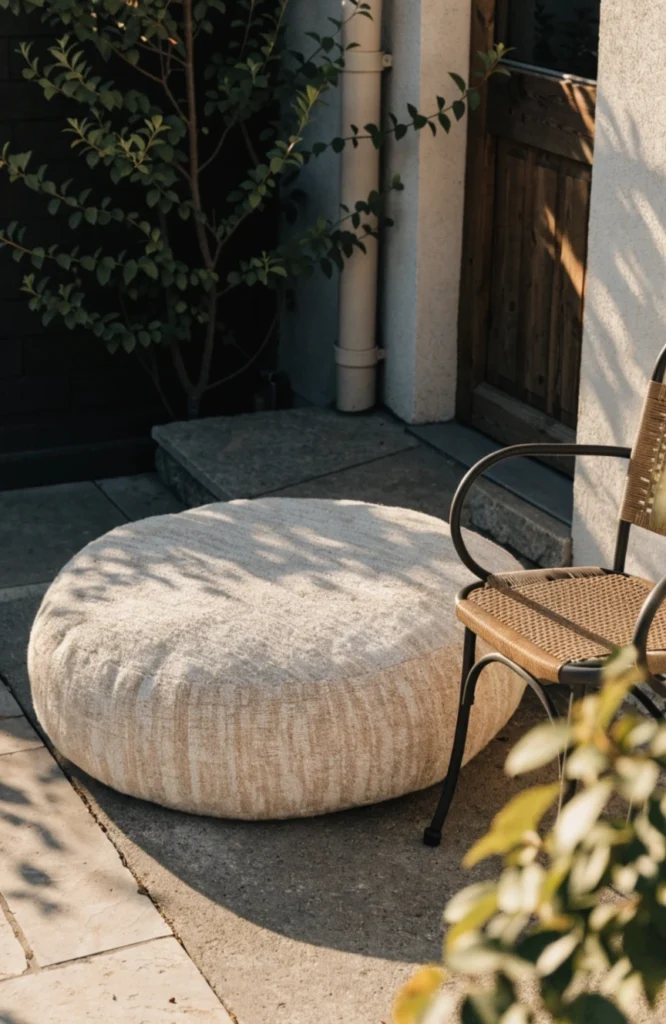
A small swap, but it changes how the whole seating area reads.
One large floor pillow or oversized outdoor cushion takes up the same storage space as two or three smaller ones, while giving you actual usable extra seating when guests come over.
It also just photographs better: one bold, cozy piece instead of a scattered pile of small ones.
21. Add a small wall-mounted mirror to visually extend the space
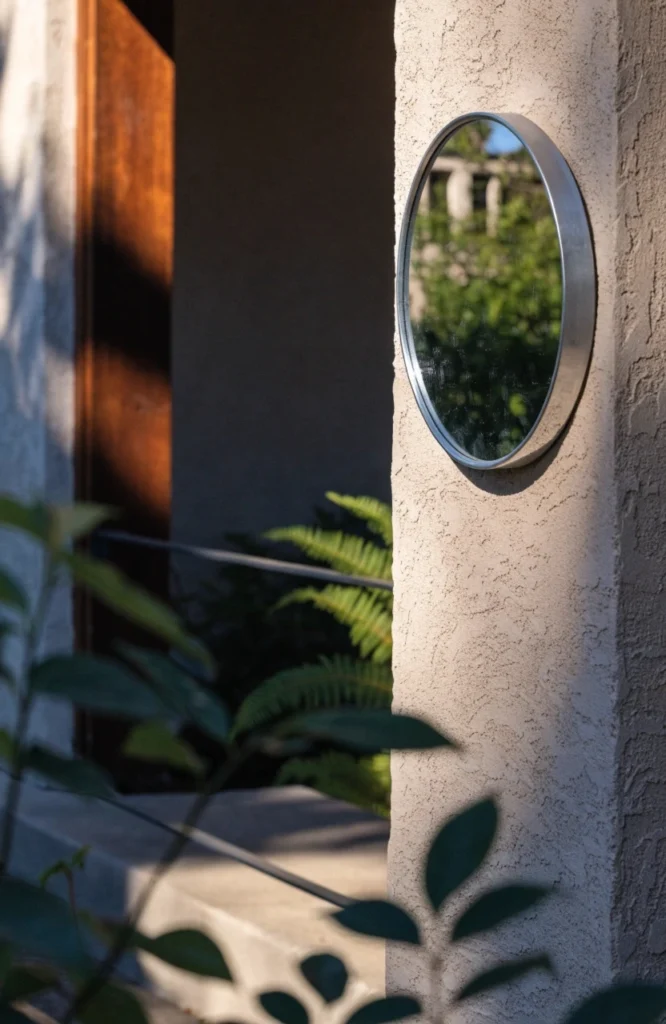
This trick genuinely works, not just as a decorating myth.
A weatherproof mirror mounted on an exterior wall reflects greenery and light back into the patio, which visually pushes the boundary of the space out further than it actually goes.
It’s one of the only tricks on this list that changes how big the whole patio feels rather than just how styled it looks.
22. Finish the look with a single scented candle or diffuser
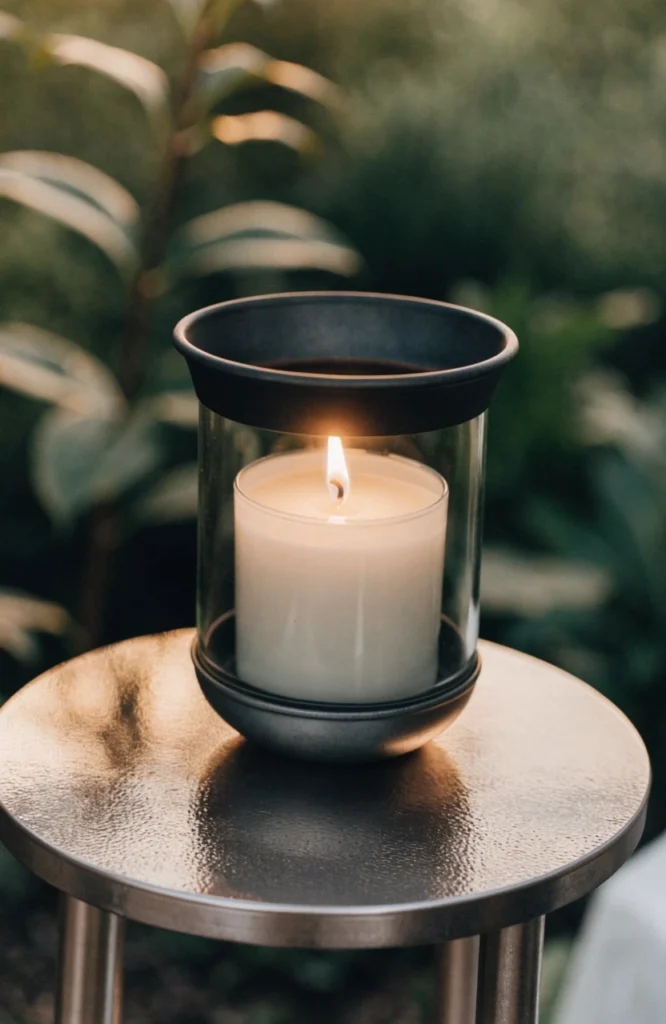
The smallest detail on this list, and one of the most noticed.
One weather-safe scented candle or outdoor diffuser adds a sensory layer to the space that pure visual styling can’t, and it’s often the thing guests comment on without being able to say exactly why the patio feels so finished.
It’s a two-dollar detail with a completely disproportionate payoff.
Conclusion
The smallest patios are almost always the ones where every single piece has to earn its spot. There’s no room for anything that’s just taking up space without adding something back. If I had to start somewhere on a blank small patio, I’d start with the rug and the lighting before touching furniture at all, since those two things define how the space feels before a single chair goes down. From there, go vertical with plants before you go wide with furniture, and keep every color and light temperature in the same family throughout. That’s the difference between a small patio that feels cramped and one that feels like the most intentional room in the house.