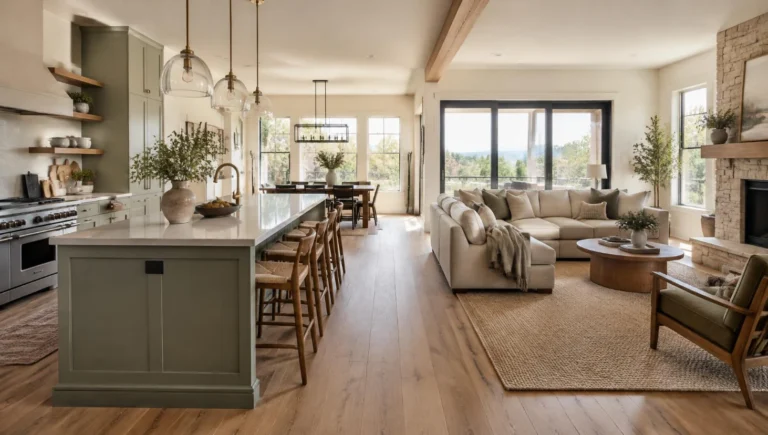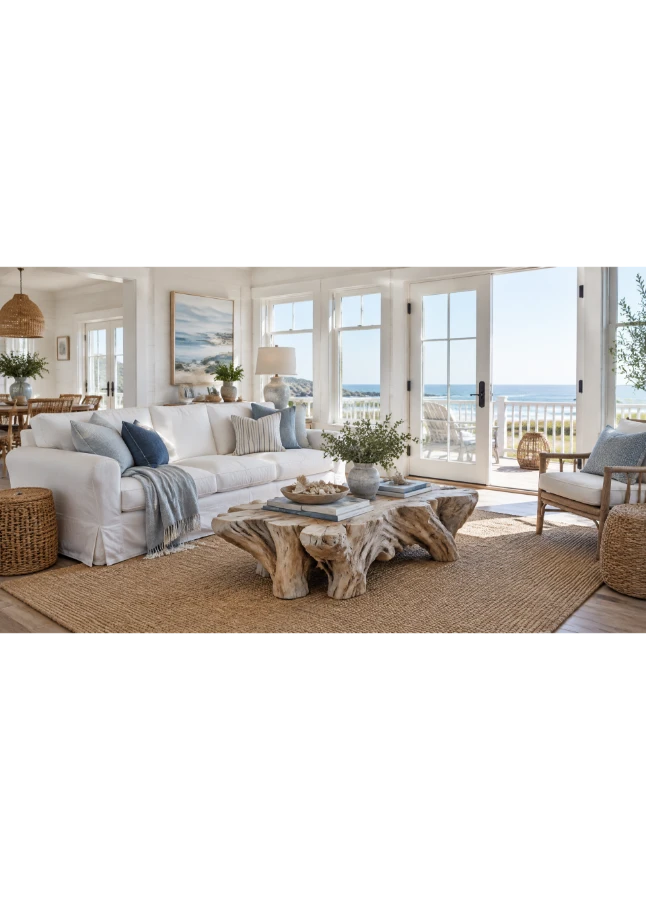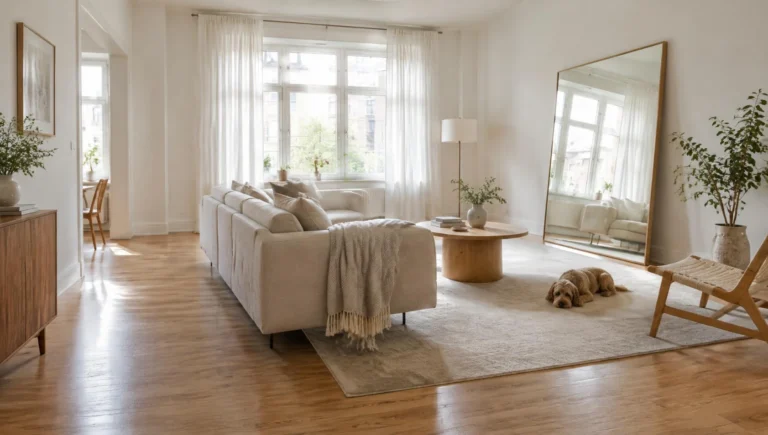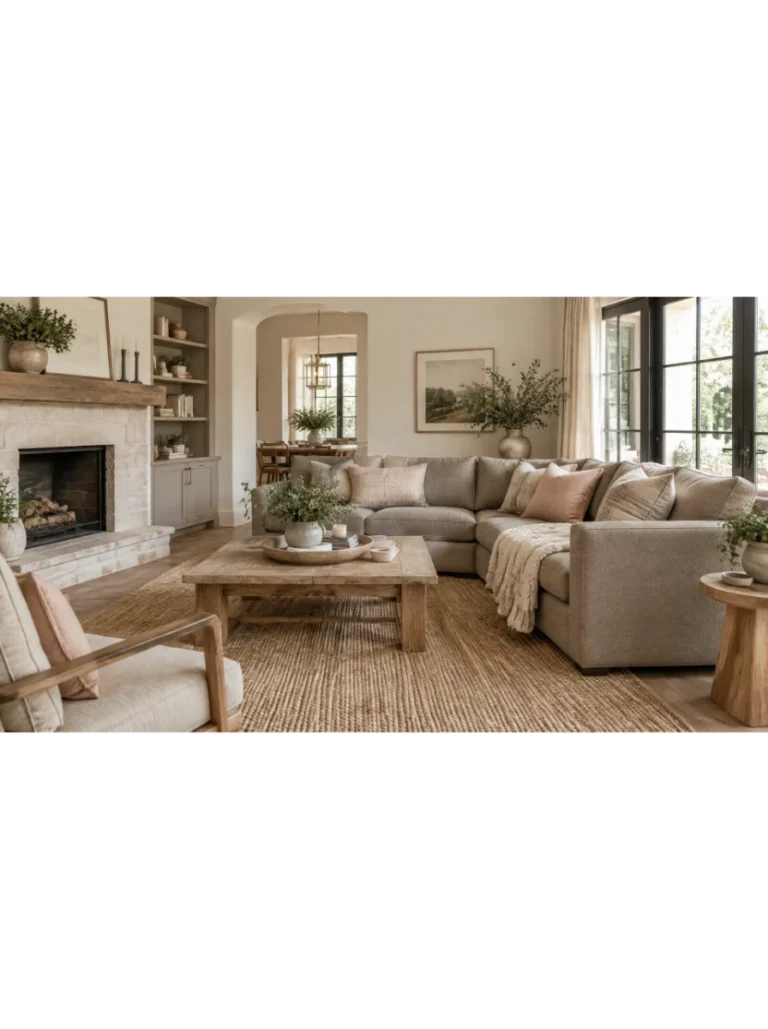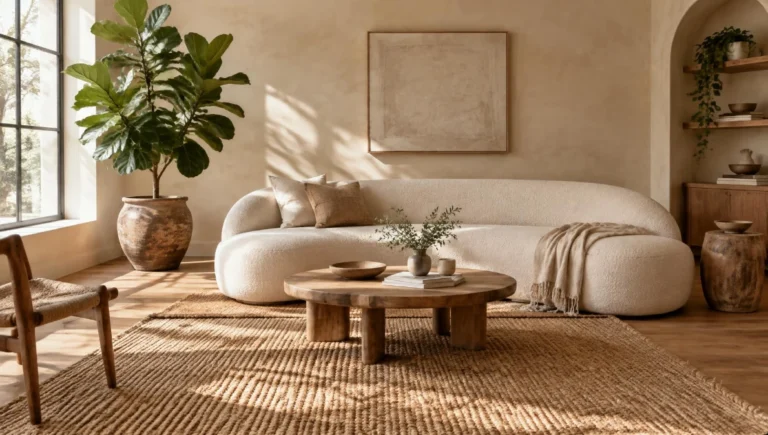
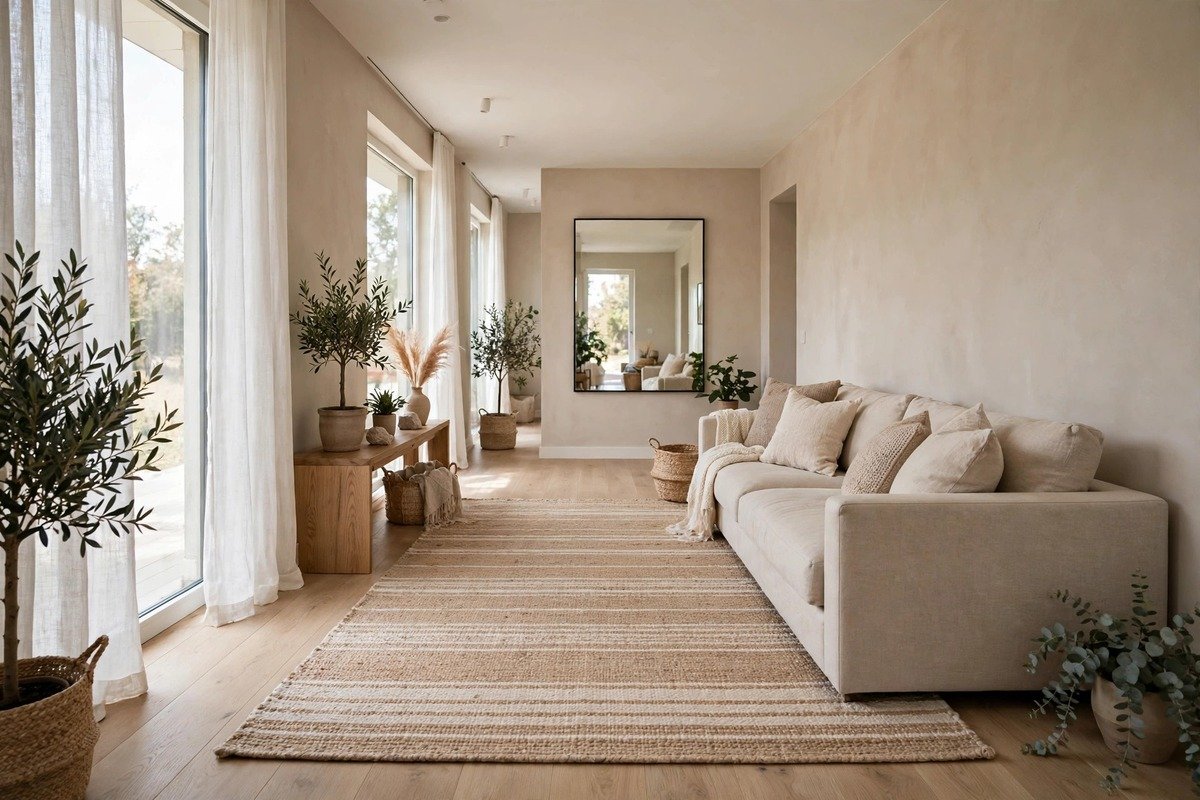
A narrow living room can feel like a hallway with a sofa in it. The room is long and thin, so a normal furniture plan does not fit. You walk in one end and out the other, and the middle never feels like a place to sit.
The fix is not a bigger room. It is a plan that works with the long shape. These 26 narrow living room ideas cover layout, slim furniture, color, light, and storage. For a softer take, see our cozy living room ideas as a second guide.
Quick Picks
- Start with the sofa on the longest wall and keep one walkway clear.
- Split a long room into two zones with rugs, not walls.
- Lay rugs across the width of the room, not along its length.
- Use slim, low furniture with visible legs.
- Hang one large mirror on a short end wall to break the tunnel feel.
Did You Know?
If a room is more than about two and a half times as long as it is wide, your eye reads it as a corridor. A room 10 feet wide and 24 feet long is one of them. That is why it can feel cramped even with enough floor area. The ideas below fix the shape first, and style second.
Before You Start
- Measure the width and length, and mark the doors and windows on a sketch.
- Tape a 30 inch walkway on the floor before you move furniture.
- Pick your largest piece first, then fit the rest around it.
- Keep one style and color story for the whole room.
- Test paint colors in daylight and at night.
Layout First
1. Put the Sofa on the Long Wall
The sofa belongs on the longest wall in a narrow room. This one move opens the center and clears a path from one end to the other. A sofa across the width blocks the walkway.
Pro tip: Measure your wall first. A standard three seat sofa runs 84 to 90 inches long. If your wall is shorter, a 72 inch apartment sofa costs about 400 to 900 dollars.
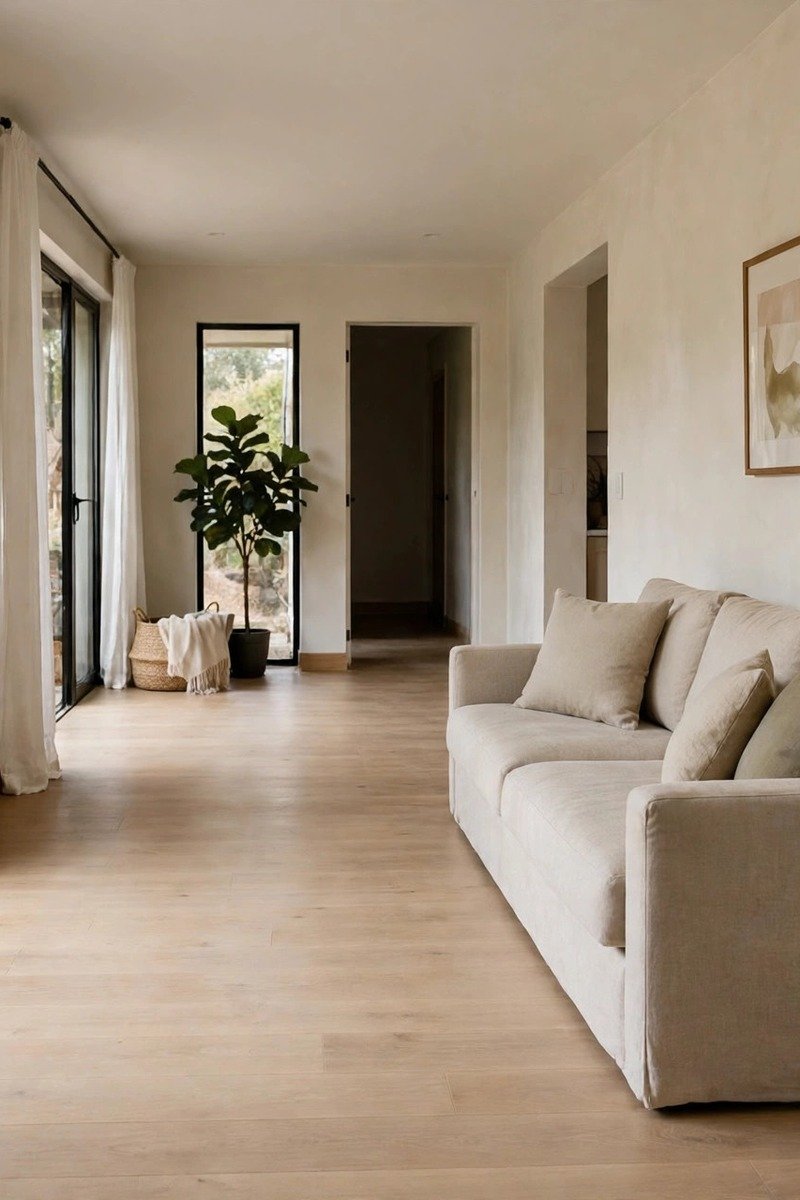
2. Keep One Clear Walkway 30 to 36 Inches Wide
Every narrow room needs one path you can walk without turning sideways. Pick one side of the room for that path and protect it.
Pro tip: Mark the walkway with painter tape on the floor. Walk it with a laundry basket. If you bump anything, move it. Tape costs about 5 dollars.
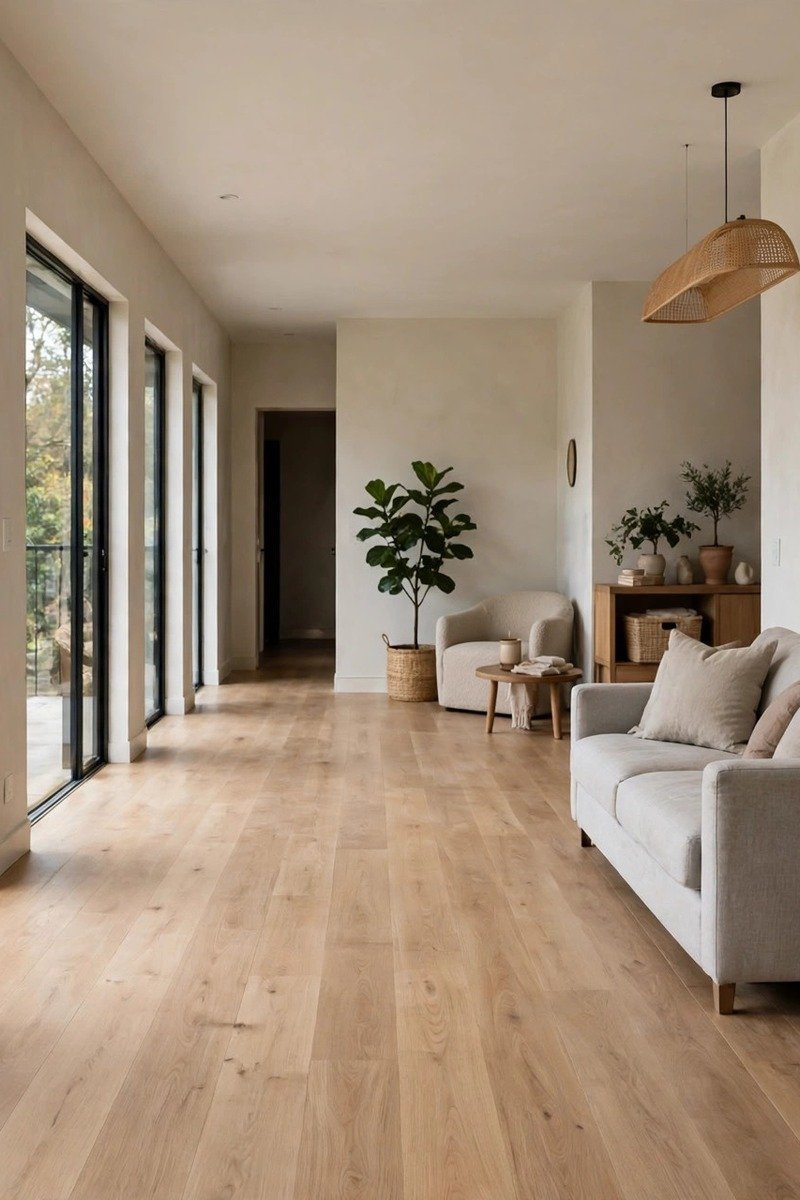
3. Split the Room Into Two Zones
A long room feels less like a tunnel with two clear jobs. Put the main seating at one end and a second use at the other end. A reading nook, a small desk, or a dining spot all work. For rooms that are narrow and tiny, our very small living room ideas cover more space saving tricks.
Pro tip: Use two rugs of the same style, such as a 5 by 8 foot rug and a 4 by 6 foot rug. Matching rugs cost about 150 to 300 dollars each.

4. Float the Sofa a Few Inches Off the Wall
Pushing every piece hard against the wall makes a narrow room feel longer and more like a hallway. A small gap behind the sofa breaks that line. It also hides cords and fits a slim console.
Pro tip: Float the sofa 4 to 6 inches off the wall. A slim console table 10 to 12 inches deep fits in the gap and costs about 80 to 200 dollars.

5. Use a Slim Console Behind the Sofa
A console behind the sofa marks the end of the seating zone without adding a wall. It gives you a place for a lamp, a drink, or a stack of books.
Pro tip: Pick a console with open legs and no back panel. Light passes under it, so the room feels airy. A simple wood console costs about 100 to 250 dollars.
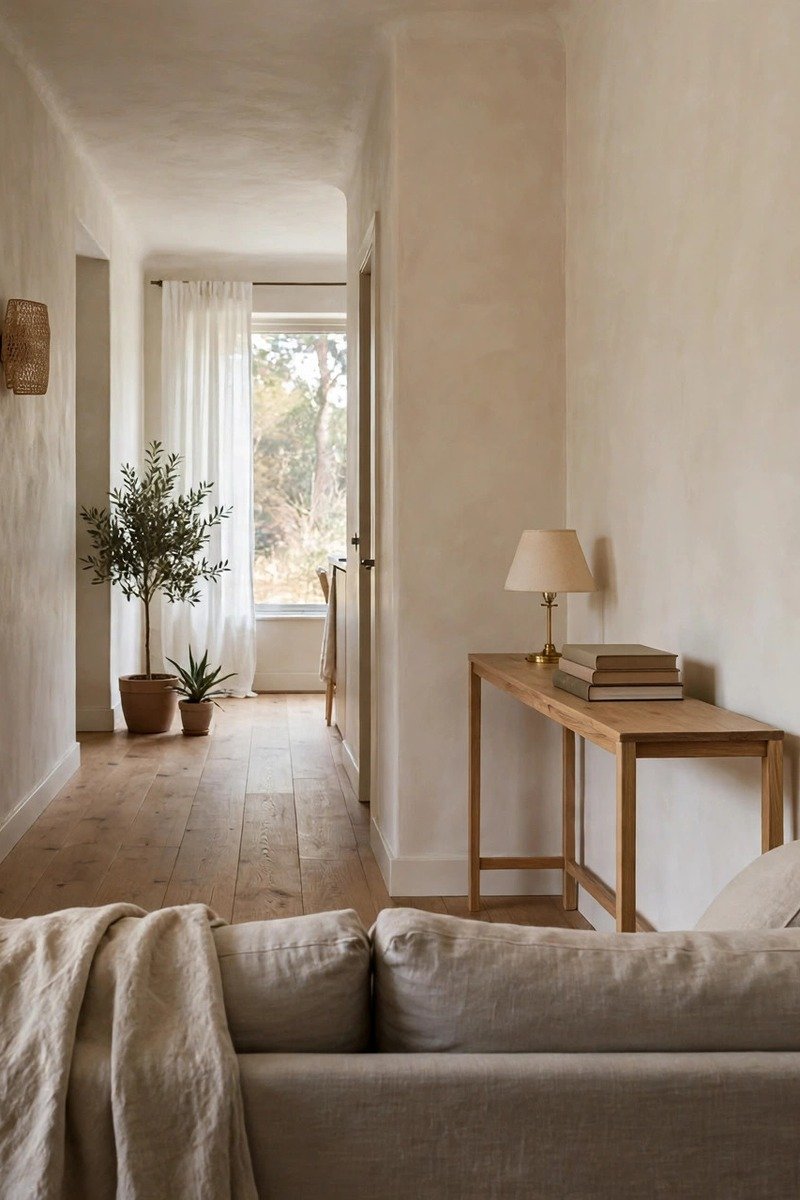
6. Angle One Chair at 45 Degrees
When every piece sits at a hard right angle, a narrow room looks stiff. One angled chair breaks the grid and gives the eye a new line to follow.
Pro tip: A swivel accent chair works best here. You can turn it toward the sofa or toward the window. Swivel chairs cost about 250 to 600 dollars.
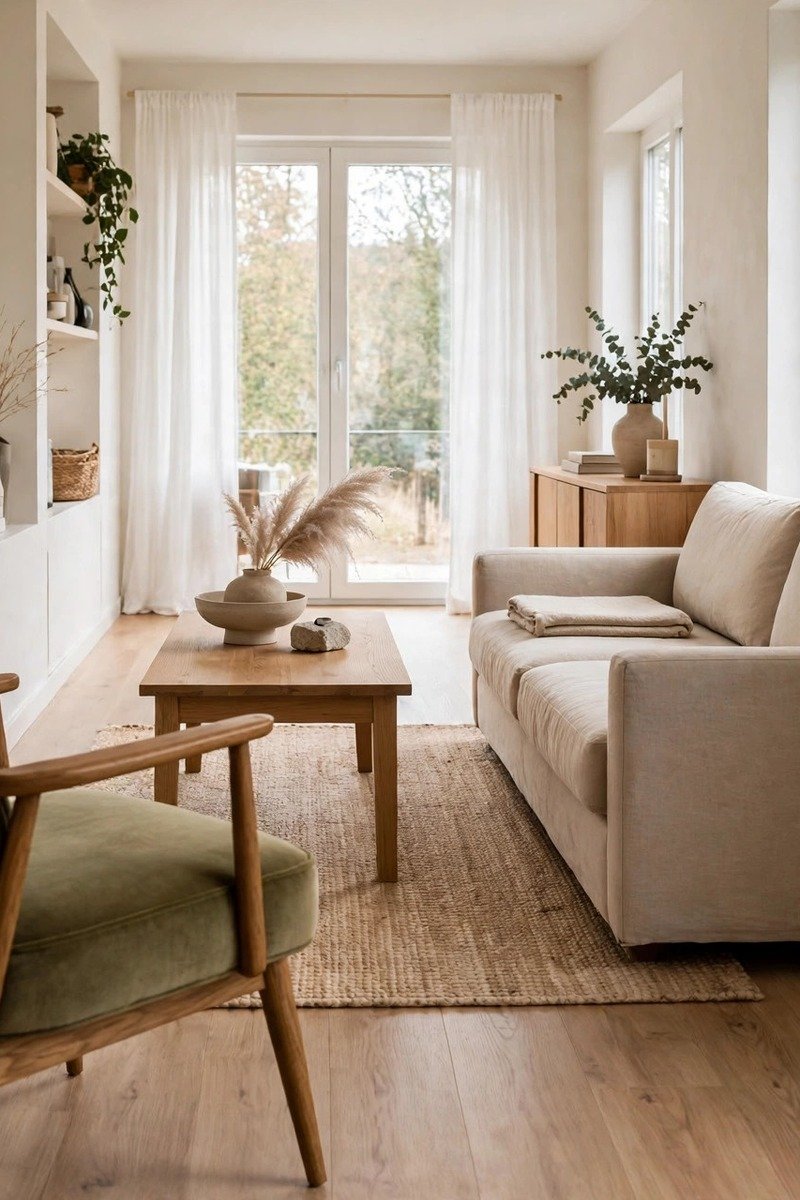
7. Put the TV on the Short End Wall
The TV often decides the whole layout in a narrow room. Put it on a short end wall and face the seating toward it.
Pro tip: Sit 1.5 to 2.5 times the screen size away from the TV. For a 50 inch TV, that is about 6 to 10 feet. A wall mount costs about 30 to 60 dollars.
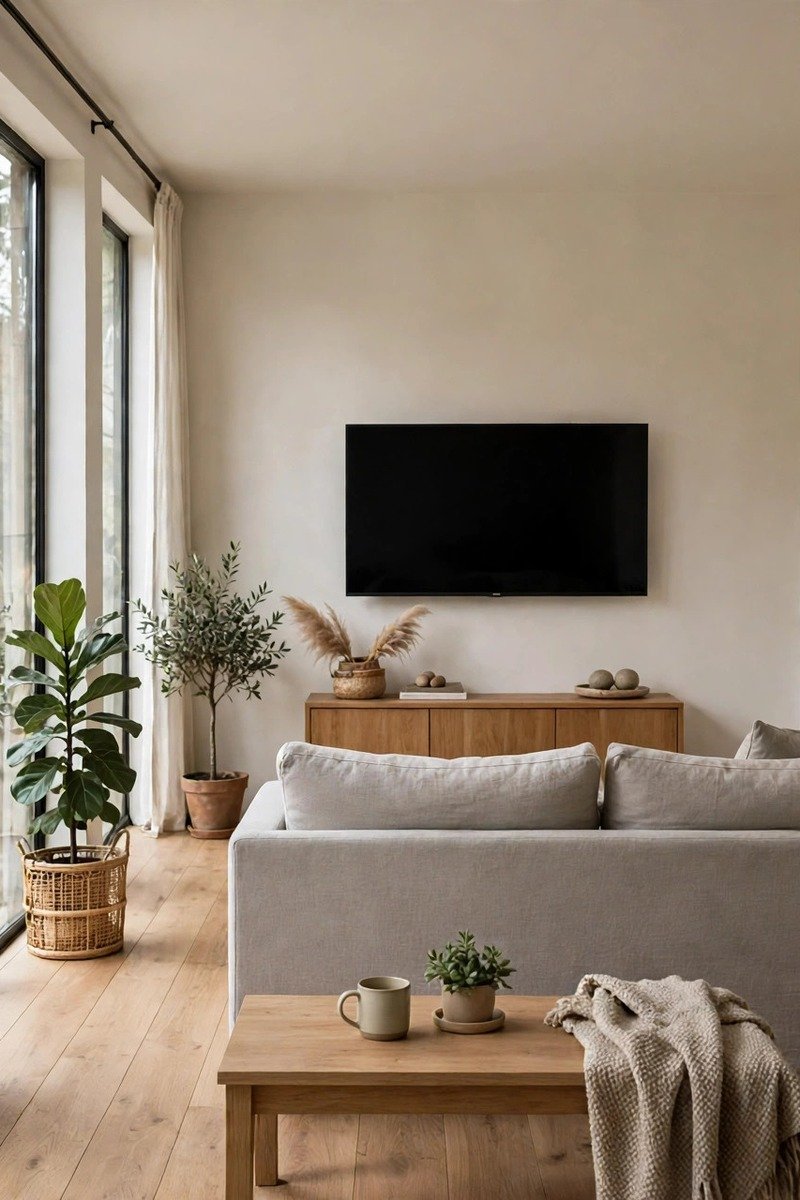
Furniture That Fits the Width
8. Pick a Slim Sofa, Not a Deep One
A deep sofa eats the width of a narrow room. A sofa that is 40 inches deep leaves little room to walk past it. A slim sofa at 34 to 36 inches deep gives you the same seats.
Pro tip: Look for thin arms and a low back. Thin arms save 4 to 6 inches of width. Apartment sofas cost about 400 to 900 dollars.
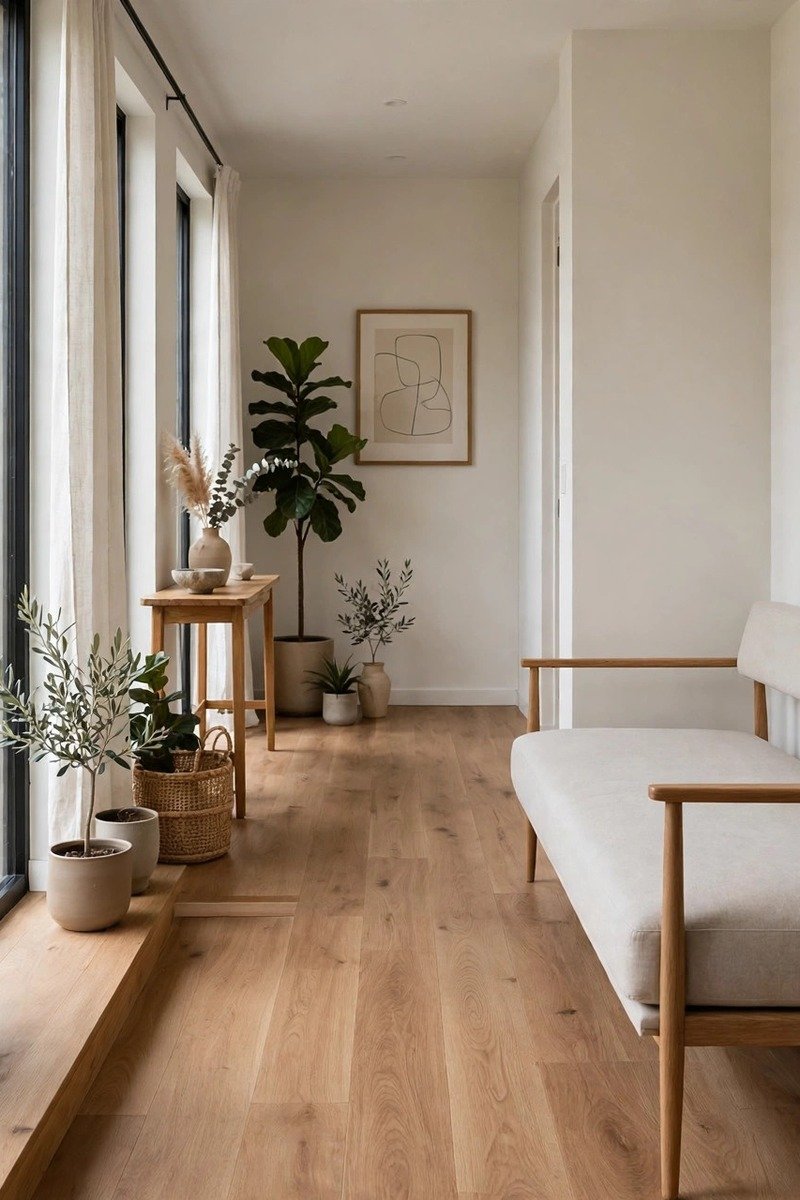
9. Try Two Loveseats Instead of One Big Sofa
Two short loveseats can sit across the width of a narrow room and push the walls outward. Each one seats two people, and together they seat four.
Pro tip: Loveseats run about 52 to 60 inches long. Two of them cost about 700 to 1,400 dollars together.
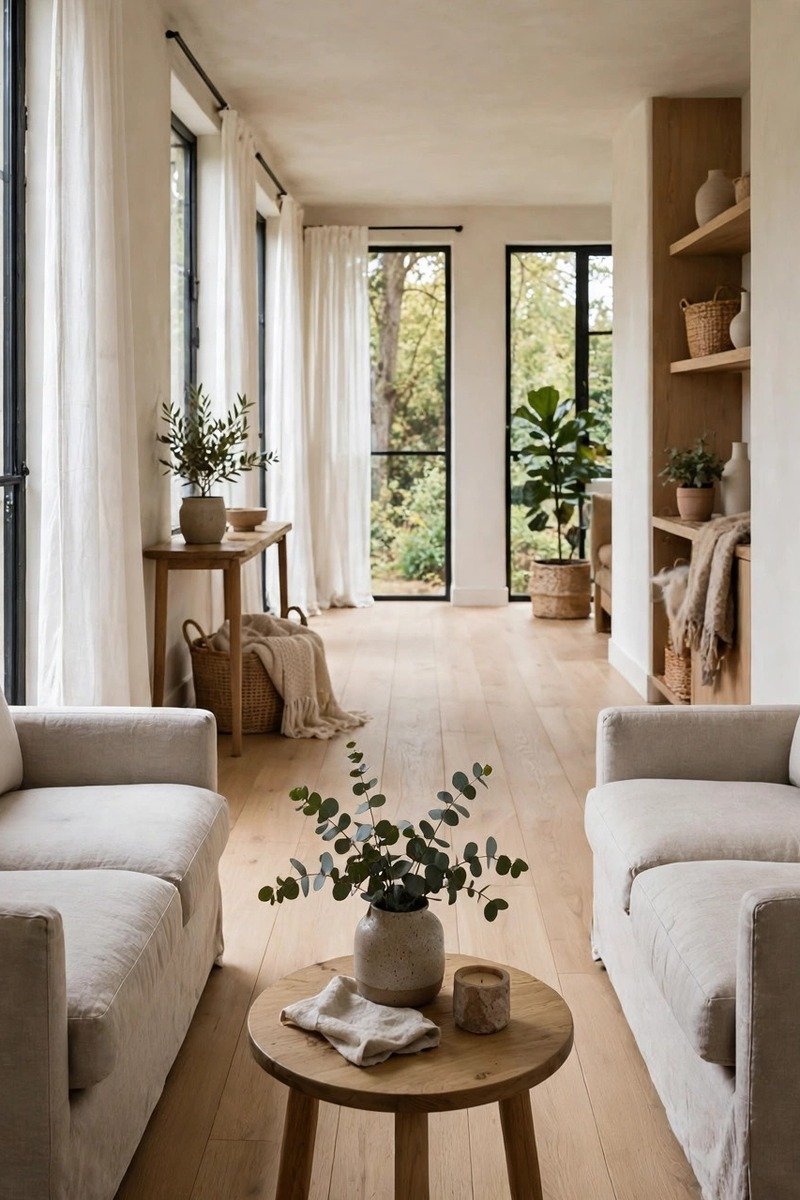
10. Use a Low L-Shaped Sectional Only If the Room Is Wide Enough
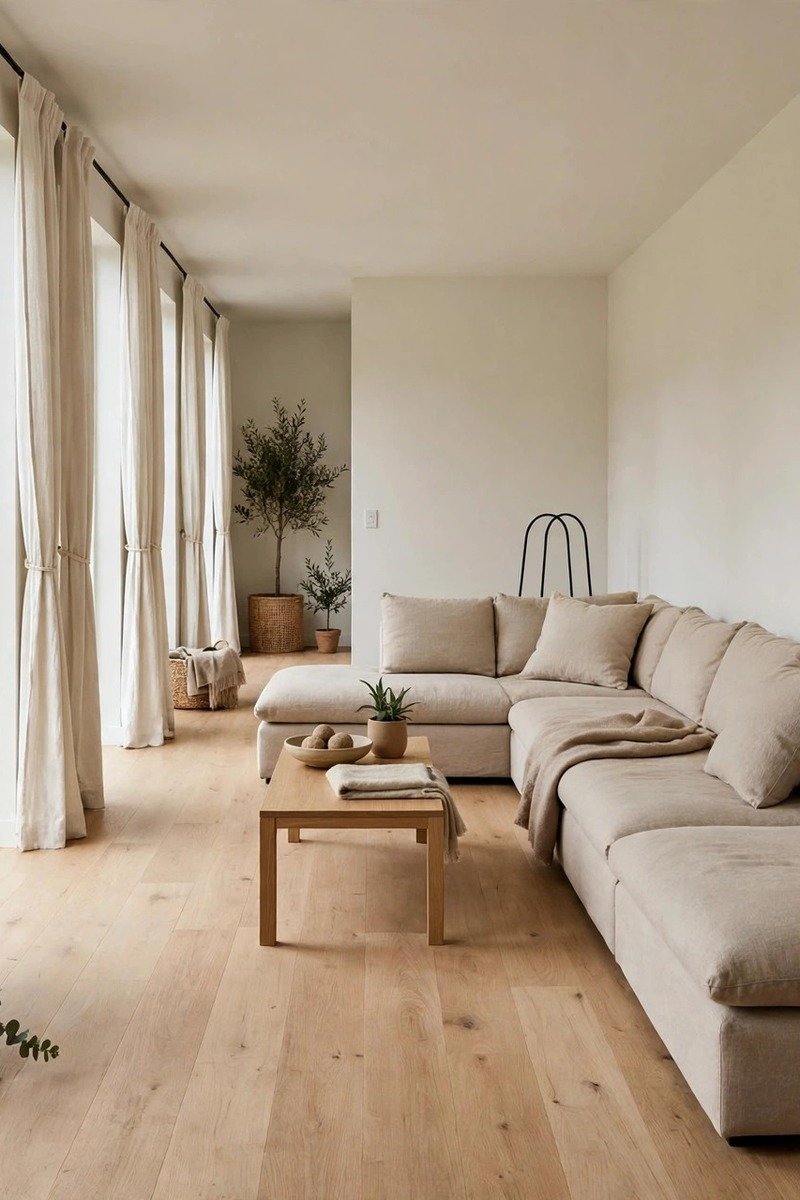
A sectional can work in a narrow room, but only when the room is wide enough. The chaise end must run along the long wall, never out into the walkway. A full L shape in a 9 foot wide room leaves no room to move. See our guide to an L-shaped sofa in your living room for more on this shape.
Pro tip: A sectional needs at least 11 to 12 feet of room width. Measure the chaise depth and add 30 inches for the walkway. If the total is more than your room width, pick a sofa and a chair instead.
11. Swap the Coffee Table for Nesting Tables
A wide coffee table often sits in the middle of the walkway and forces everyone to walk around it. Nesting tables give you the same surface when you need it and vanish when you do not.
Pro tip: A set of two or three nesting tables costs about 120 to 250 dollars. Pick tables 18 to 22 inches deep so they slide under the sofa arm.

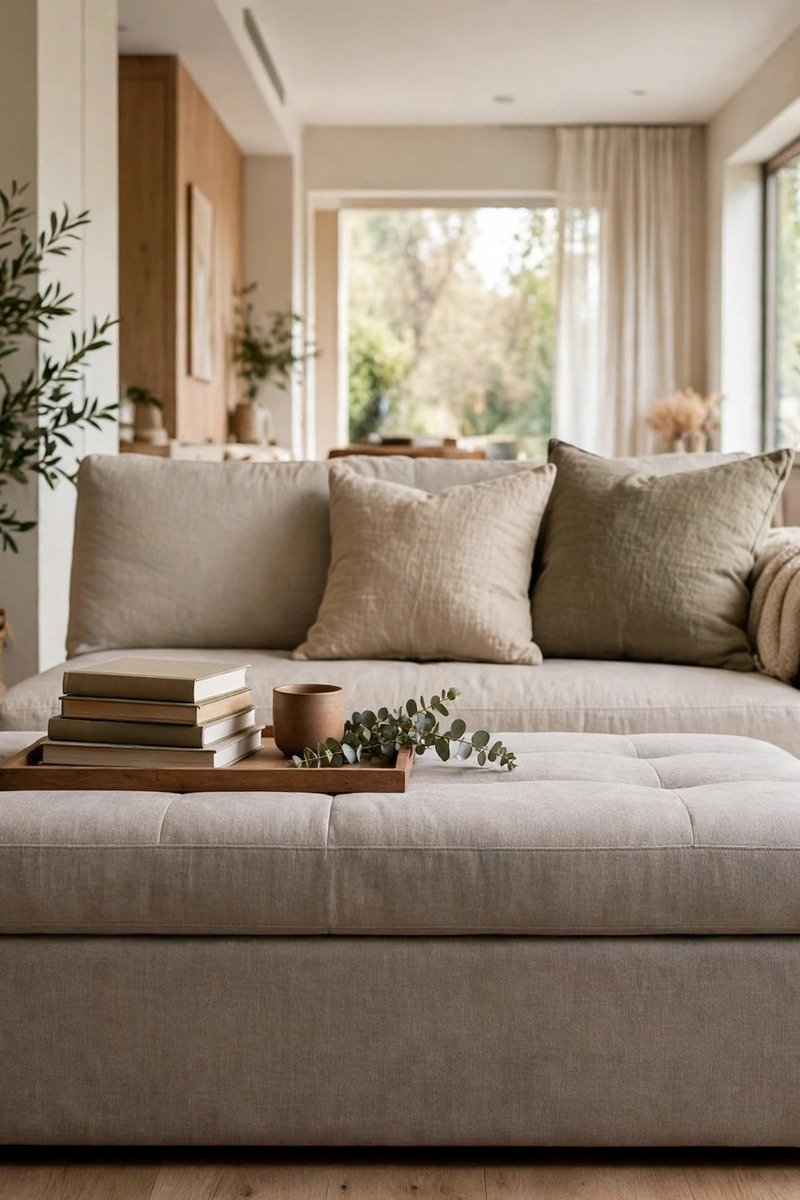
12. Use a Storage Ottoman Instead of a Table
An ottoman does two jobs in a narrow room. It holds blankets, games, and remotes inside, and it works as a coffee table, a footrest, or an extra seat.
Pro tip: A storage ottoman 30 to 36 inches long costs about 120 to 350 dollars.
13. Choose Chairs With Visible Legs
Furniture that touches the floor looks heavy in a narrow room. Chairs with visible legs let light pass under them, and the floor shows through.
Pro tip: Look for wooden or metal legs at least 4 inches tall. A pair of leggy accent chairs costs about 300 to 800 dollars.

Visual Tricks That Widen the Room
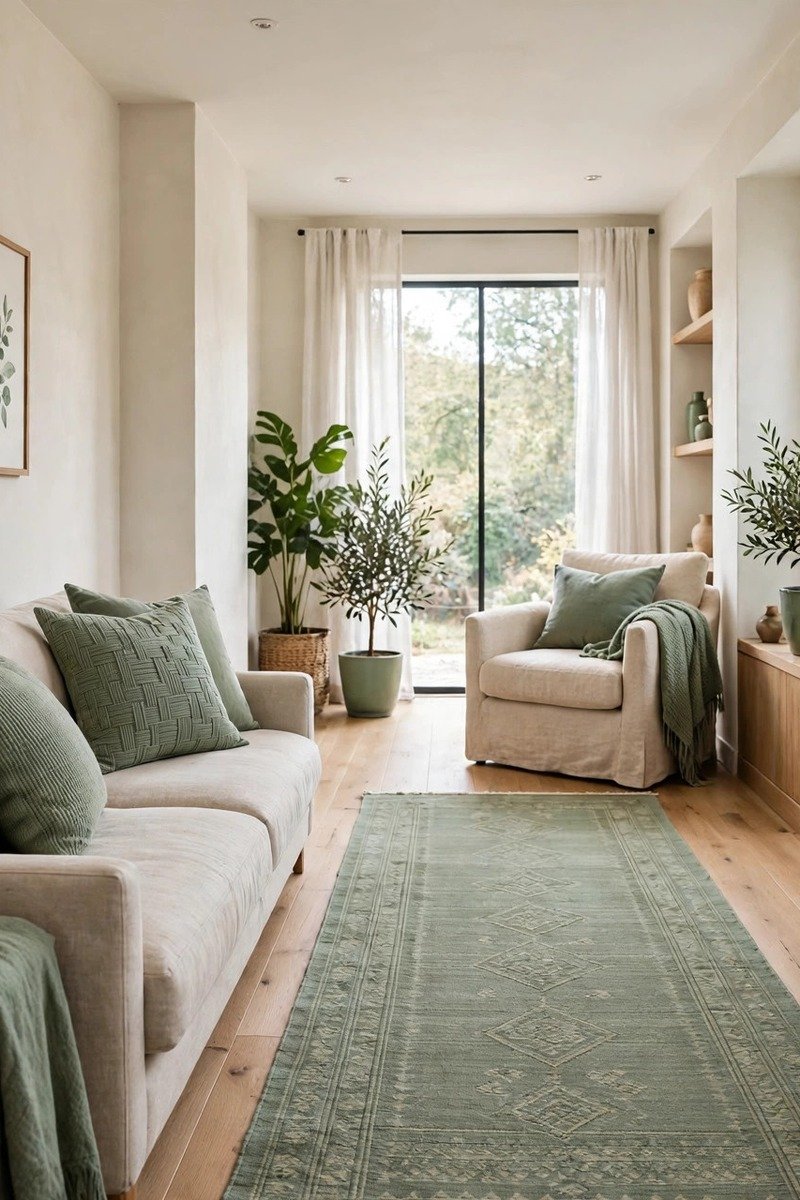
14. Lay the Rug Across the Width, Not the Length
A rug laid along the length of a narrow room makes the tunnel feel longer. The same rug laid across the width pulls the eye sideways. The floor looks wider at once.
Pro tip: A 5 by 8 foot rug works in most narrow rooms. Lay the 8 foot side across the room width. Washable rugs cost about 200 to 300 dollars.

15. Use Two Small Rugs Instead of One Long Runner
One long runner down the middle of a narrow room looks like a hallway carpet. Two smaller rugs break the length into two zones.
Pro tip: Two 4 by 6 foot rugs cost about the same as one large rug, around 150 to 300 dollars each.

16. Hang a Large Mirror on the Short End Wall
A large mirror on the short end wall is the fastest way to break the tunnel feel. It bounces light down the full length of the room and gives the eye a place to stop.
Pro tip: A 36 by 48 inch framed mirror costs about 60 to 250 dollars. Hang it with wall anchors rated for its weight, centered about 57 inches from the floor.

17. Paint the Walls a Light Warm Neutral
Light walls reflect more light, and a narrow room needs all of it. Warm neutrals like pale oak, warm white, and soft greige keep the room bright without feeling cold.
Pro tip: A gallon of paint costs about 40 to 70 dollars. A narrow living room needs about 2 gallons for two coats.
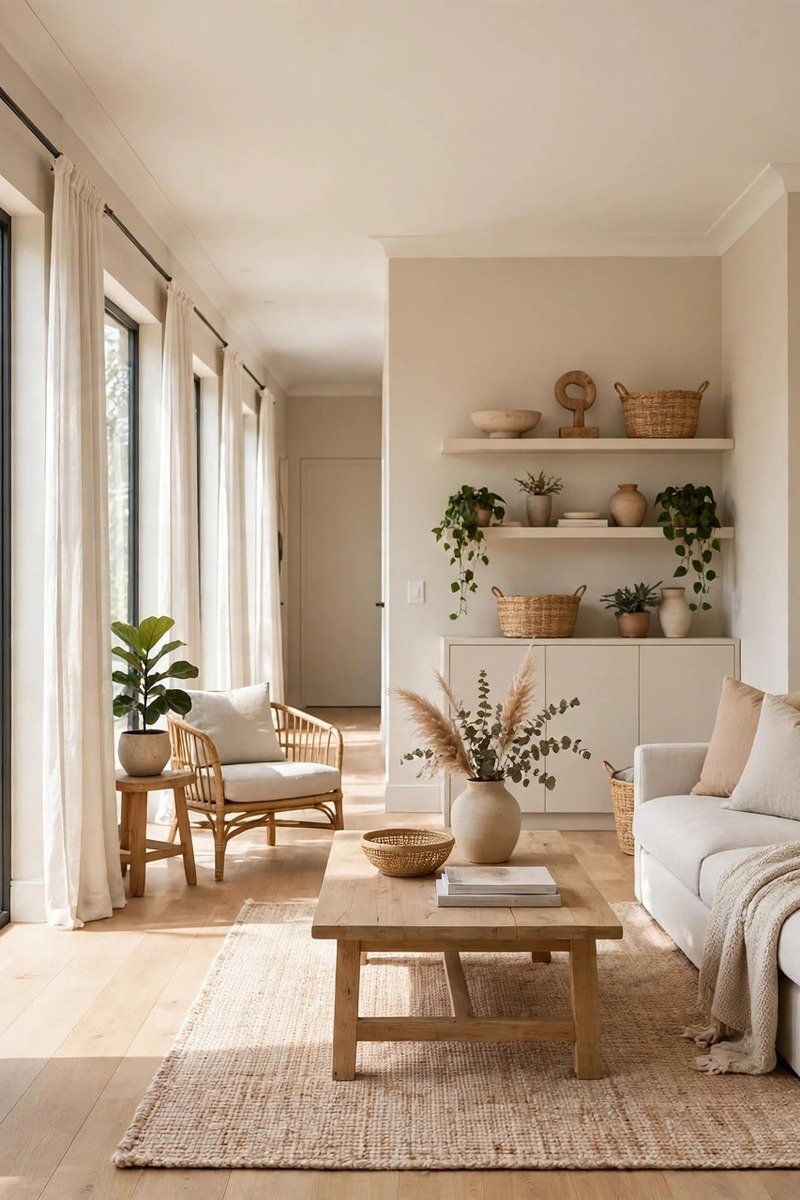
18. Hang Curtains High and Wide
Curtains hung low and tight around a window make the wall look small. A rod hung close to the ceiling and extended past the window frame makes the same window look much wider.
Pro tip: Mount the rod 4 to 6 inches above the window frame and 6 to 10 inches past each side. A rod and a pair of panels cost about 60 to 150 dollars.
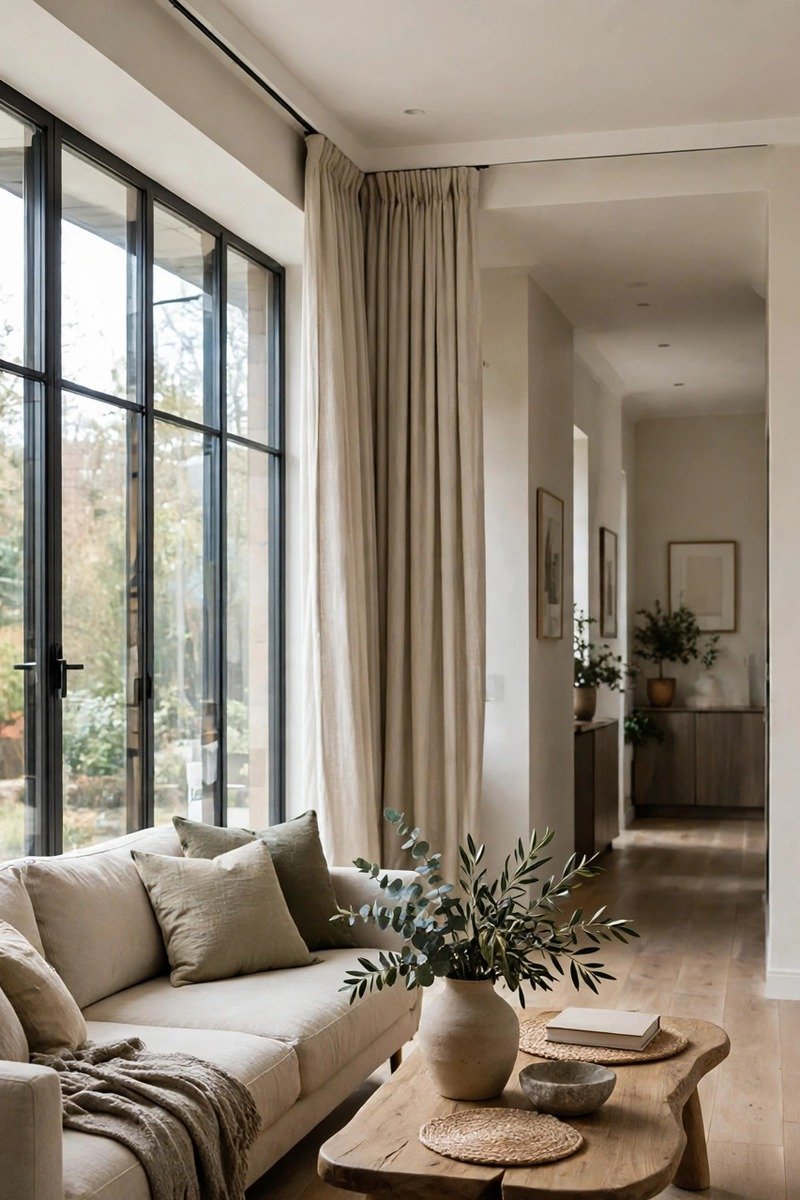
19. Repeat One Color Through the Whole Room
A narrow room with a different color in every zone looks chopped up. One color repeated in the rug, the cushions, and the art ties the zones together.
Pro tip: Carry a fabric swatch when you shop. It stops you from buying a cushion that is almost the right color but not quite.
Storage, Light, and Finishing Touches
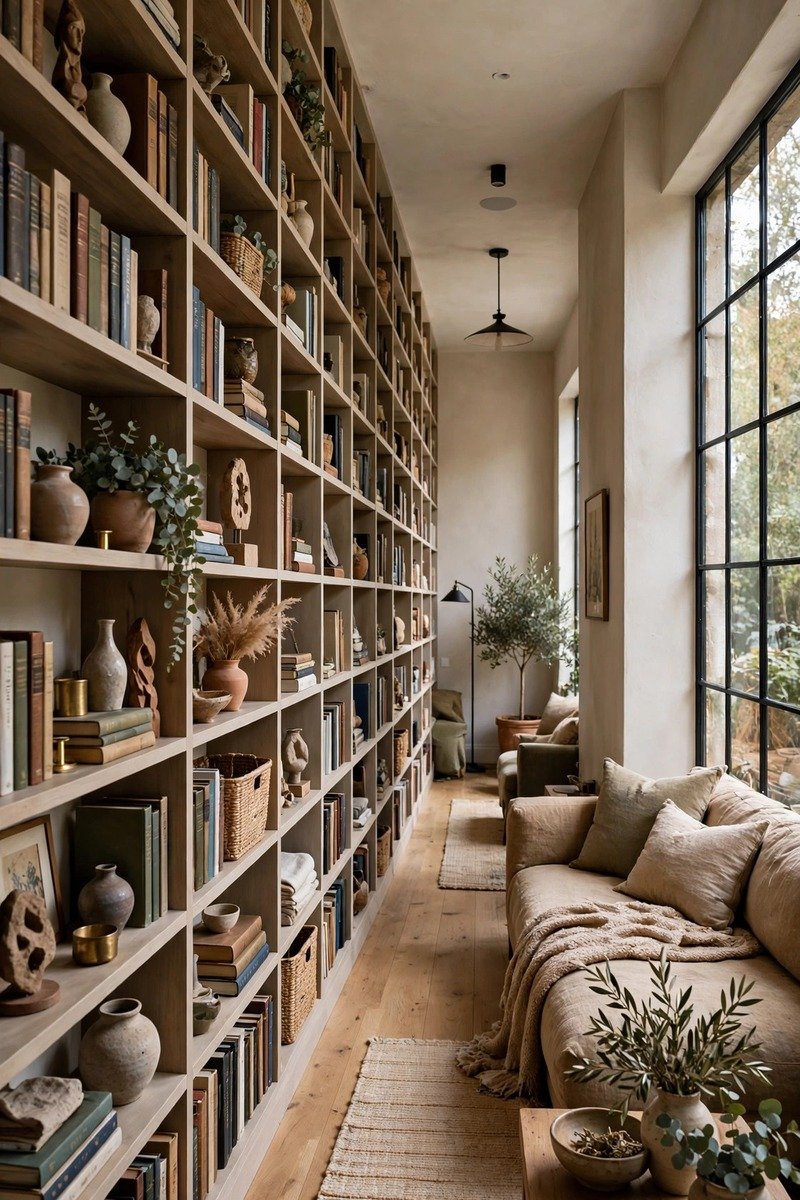
20. Build Floor to Ceiling Shelves on One Wall
A narrow room has little floor space for storage, but it usually has tall walls. Floor to ceiling shelves use that height.
Pro tip: Build the shelves on one long wall only. A tall bookcase with a height extension costs about 120 to 160 dollars.
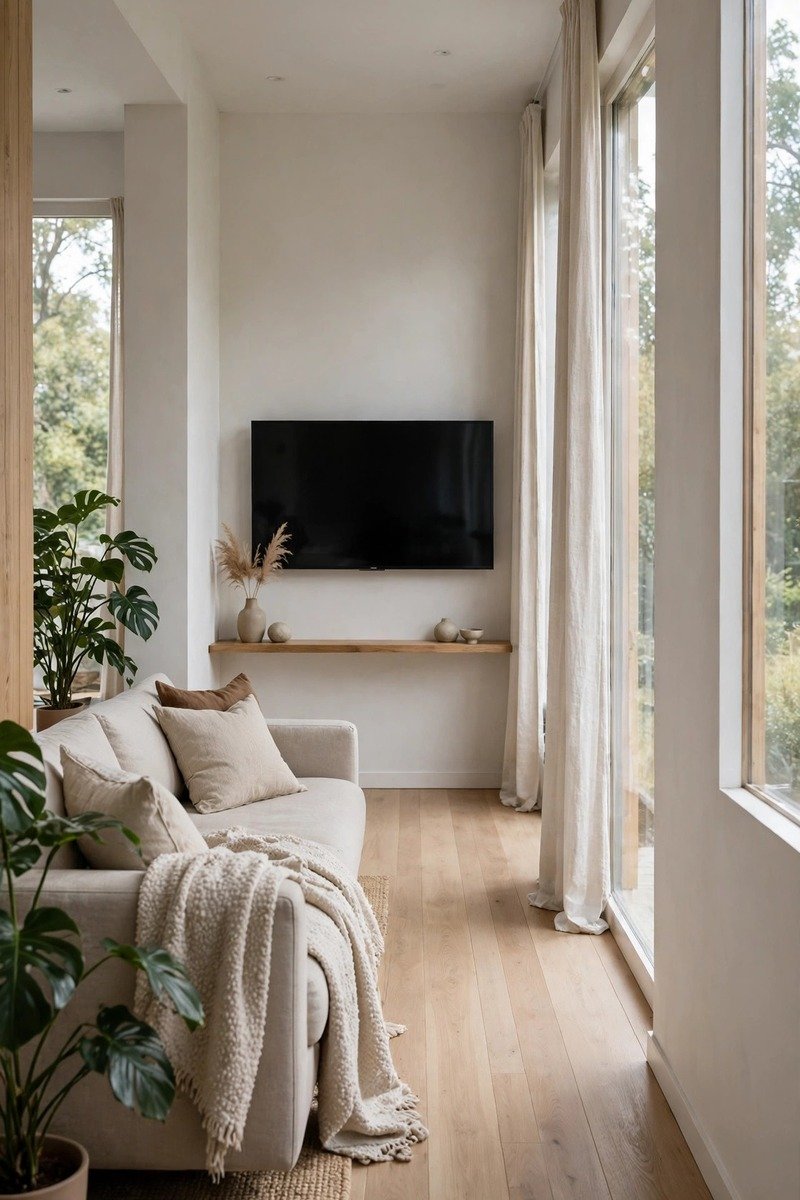
21. Mount the TV and Skip the Wide Console
A low wide TV console runs the length of the wall and drops the ceiling height in the eye. A wall mounted TV with a slim shelf below it does the same job with far less bulk.
Pro tip: A wall mount costs about 30 to 60 dollars, and a cord cover kit costs about 15 dollars. Mount the screen so its center sits about 42 inches from the floor.
22. Layer Light at Both Ends of the Room
One ceiling light in the middle of a long room makes the ends look dark. Light at both ends pulls the eye down the room and makes the whole space feel used.
Pro tip: Use a floor lamp at one end and a table lamp at the other. A floor lamp costs about 60 to 150 dollars.

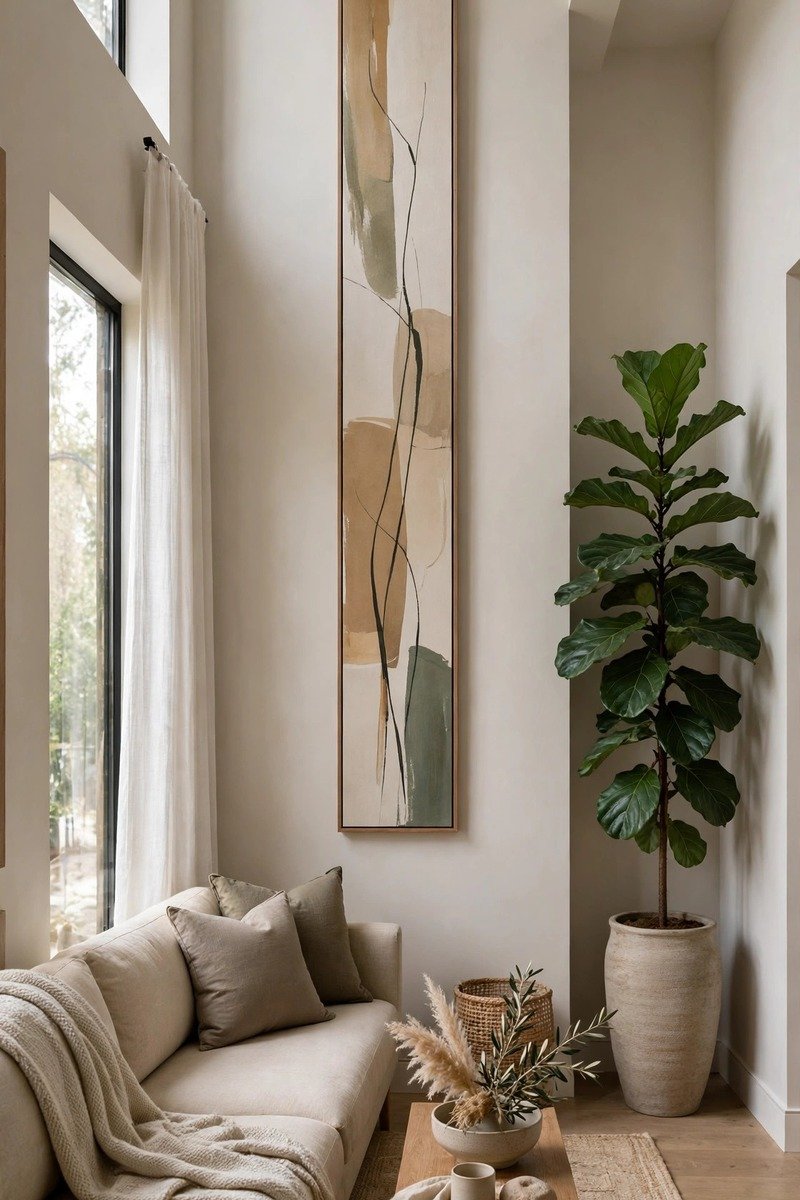
23. Add Tall Plants or Art to Draw the Eye Up
A narrow room pulls the eye along its length. Tall plants and tall art pull the eye up instead. The ceiling feels higher, and the room feels less like a corridor.
Pro tip: A fiddle leaf fig or a snake plant in a tall pot costs about 40 to 120 dollars. Check the light in that corner first. Snake plants need water only every 2 to 3 weeks.
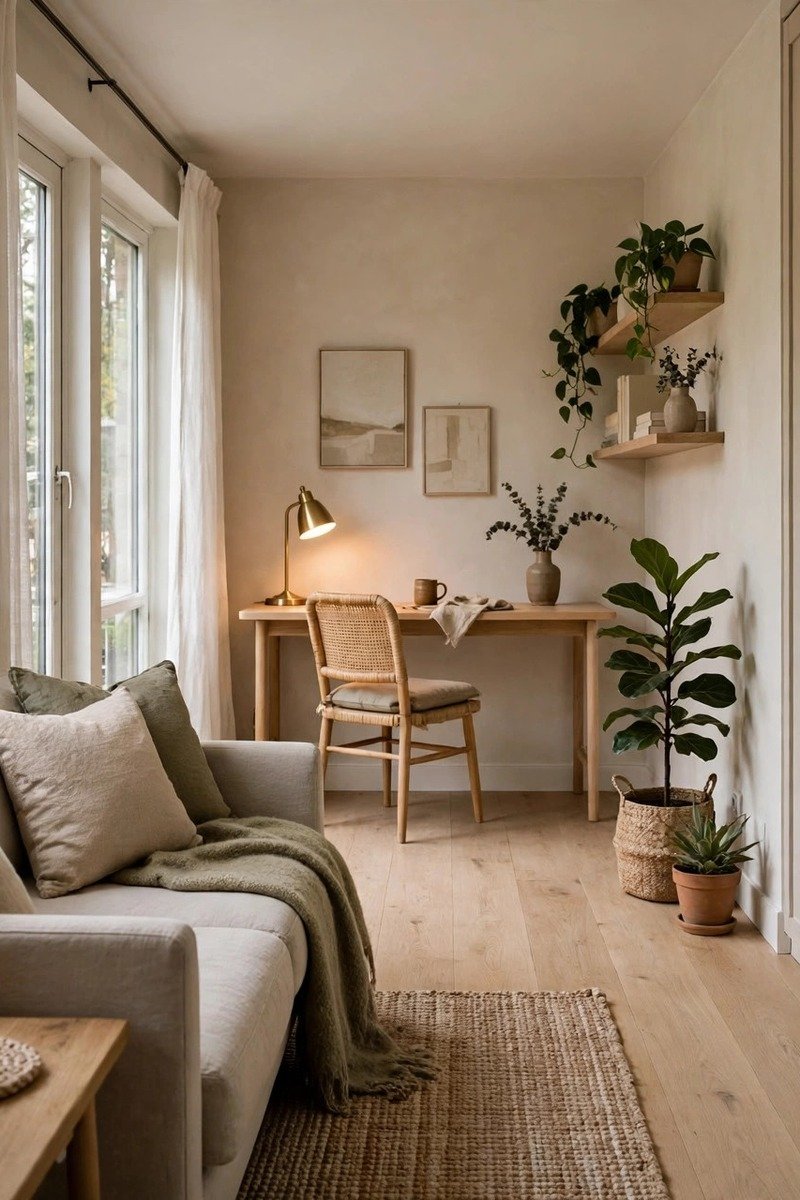
24. Put a Slim Desk or Reading Nook at the Far End
The far end of a narrow room often sits empty, and empty space reads as wasted space. A slim desk or a reading chair with a small lamp turns that end into a second zone.
Pro tip: Keep the desk no more than 20 inches deep. A slim writing desk costs about 120 to 300 dollars.
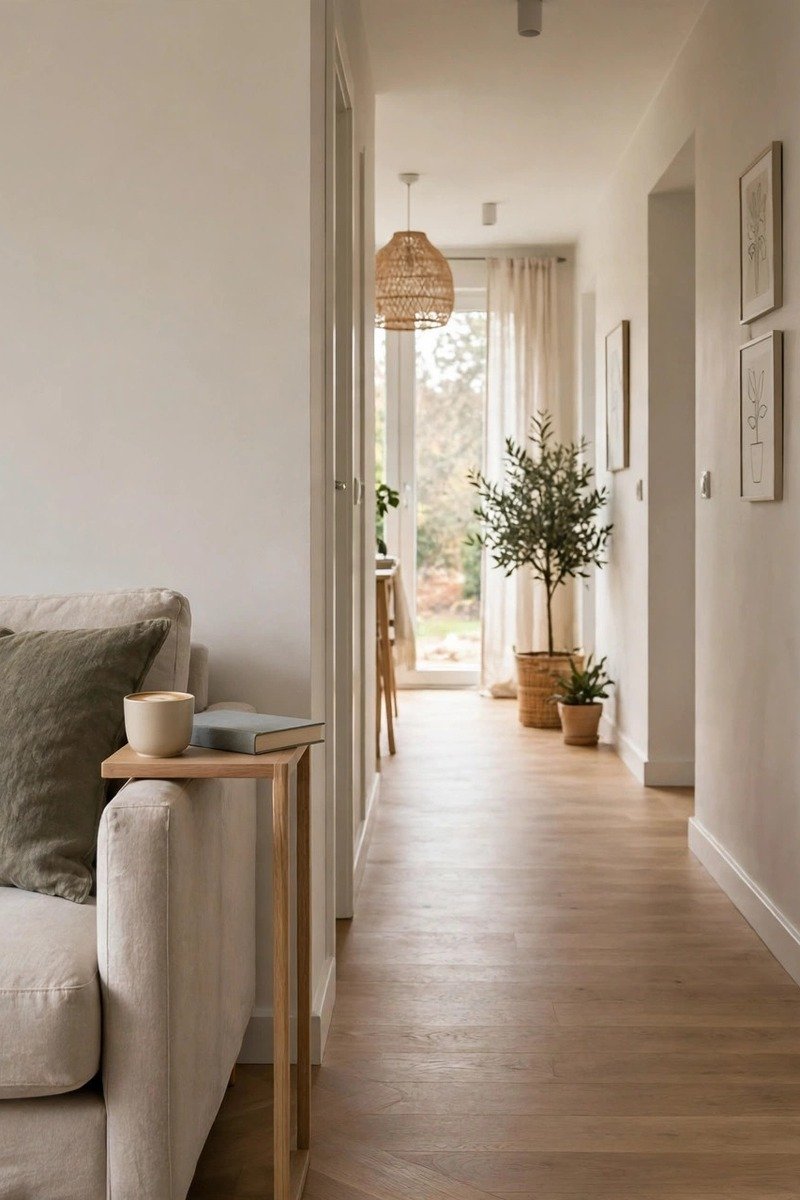
25. Keep Side Tables Narrow and Close to Seats
A side table should sit within easy reach of a seat, not in the middle of the walkway. Narrow tables 10 to 12 inches wide hold a cup and a book without blocking the path.
Pro tip: A slim C shaped side table slides over the sofa arm and costs about 40 to 100 dollars.
26. Leave the Middle of the Room Empty
The hardest idea in a narrow room is the simplest. Leave the middle empty. No chair, no plant stand, no stack of books in the center. An empty middle reads as space.
Pro tip: Try it for one week before you buy anything new. Move one piece out of the middle each day until the path is clear.

Walkway Width and Furniture Fit
A narrow living room is a corridor with a sofa in it, so the walkway comes first. Keep at least 30 inches of clear walking width along one side of the room, from the door to the far end, because a narrower path forces people to turn sideways. Measure the room width, then subtract the walkway, and what is left is the furniture zone. A room 10 feet wide leaves about 7 feet for furniture, which fits a sofa 32 inches deep and a coffee table 18 inches deep, with room to walk around. Narrow living room ideas work best when the measurements come before the shopping, because a sofa that is 4 inches too deep steals the walkway, and a room without a walkway is not used.
Sofa and Chair Sizes for a Narrow Room
Choose a sofa by its depth, not its length. A sofa 32 to 36 inches deep suits a narrow room, while a deep sofa at 40 inches or more eats the walkway. Pick a sofa with slim arms, about 4 to 6 inches wide, instead of rolled arms at 10 inches, because slim arms save a foot of width across the sofa. Use one armchair, not two, and place it at an angle in a corner, because two chairs facing the sofa block the path. A loveseat about 60 inches wide suits a narrow room better than a full sofa, and it leaves room for a side table. Measure the doorways too, because a sofa that fits the room but not the door is a delivery problem.
Mirrors, Light and Paint Tricks That Widen the Room
A narrow room can be made to feel wider without moving a wall. Hang a mirror on the long wall, about 24 by 36 inches, opposite a window, because it reflects light across the room and doubles the sense of width. Paint the long walls a light colour and the short end wall a slightly darker colour, because a darker end wall pulls the eye forward and makes the room feel shorter and wider. Use one long, low piece of furniture along the wall, such as a console 10 to 12 inches deep, instead of several small pieces, because one long line calms the room. Keep the ceiling light bright and the floor clear, because a dark ceiling and a cluttered floor close the room in.
Storage That Fits a Narrow Wall
Storage in a narrow room must be shallow, or it blocks the walkway. Use floating shelves 8 to 10 inches deep, because they hold books and plants without taking floor space. Use a slim console table, about 10 inches deep, behind the sofa for remotes and chargers, instead of a side table that sticks out. Hang hooks on the wall by the door for coats and bags, about 60 inches from the floor, so they are in reach but out of the walkway. As a typical range, a pair of floating shelves costs about 25 to 60 dollars, and a slim console costs about 60 to 150 dollars. Buy the shelves first, because wall storage frees the floor, and a free floor is what makes a narrow room usable.
Common Mistakes to Avoid
- Placing the sofa across the width of the room, which blocks the walkway.
- Buying a deep sectional for a room under 11 feet wide.
- Laying one long runner rug down the middle, which makes the room look like a hallway.
- Painting the short end walls dark, which closes the room down.
- Filling every wall with furniture and leaving no empty space.
- Using one ceiling light only, which leaves both ends of the room dark.