A hallway gets walked through many times a day, but it rarely gets the same care as a living room or a bedroom. It is narrow, it often has no window, and it fills up fast with shoes, bags, and coats. The hallway links every room in the home, so a small change there changes how the whole house feels.
This guide gives you 26 hallway decor ideas that work in real corridors, not just in photos. Every idea respects the walkway, the doors, and the light you actually have. Pick one change first, live with it for a week, then add the next. For colour flow between rooms, see our cozy living room ideas as a related guide.
Quick Picks
- Start with light and a mirror. These two cost the least and make the biggest difference in a dark corridor.
- Keep one wall clear. Decorate one side and leave the other side calm so the passage stays easy to walk through.
- Measure before you buy. Check width, door swing, and walkway space first.
- Choose slim pieces only. Anything deeper than 30 cm will pinch the walkway in most halls.
- Repeat one colour. One colour from the rooms at each end ties the hallway to the home.
Did You Know?
A hallway is one of the best places in a home to use a bold paint colour. The space is small, so a deep green or navy wall feels rich instead of heavy. Seen through a doorway, the colour reads like a picture on the wall.
Before You Start
- Measure the hallway width, length, and ceiling height, and note every door swing and light switch.
- Walk the route carrying a laundry basket to check the clear width.
- Check the light at night, since a hallway that looks fine by day can be very dark after sunset.
- Pick your main colour before you shop, so paint, runner, and art all pull in the same direction.
- Use washable paint, because hands and bags touch hallway walls every day.
Colour and Walls
1. Paint the Hallway a Confident Colour
A deep blue, olive, or clay colour gives a plain corridor real character. Keep the ceiling white so the space still feels open.
Pro tip: Test three large samples and check them morning and night. One litre covers about 10 square metres.
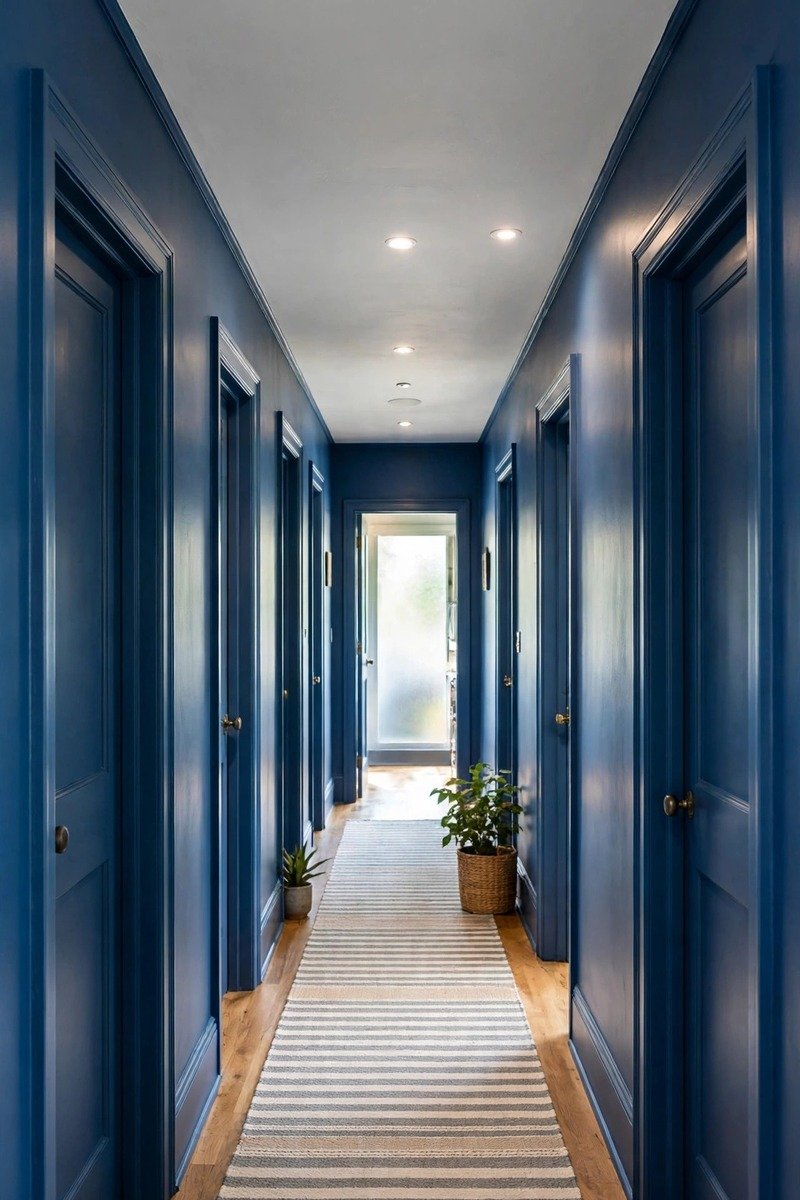
2. Colour Drench the Walls, Trim, and Doors
Painting the walls, baseboards, and doors in one related colour calms a hallway full of doors and breaks. The single colour hides the choppy lines.
Pro tip: Use eggshell on walls and satin on trim. Allow 4 hours of drying time between coats.
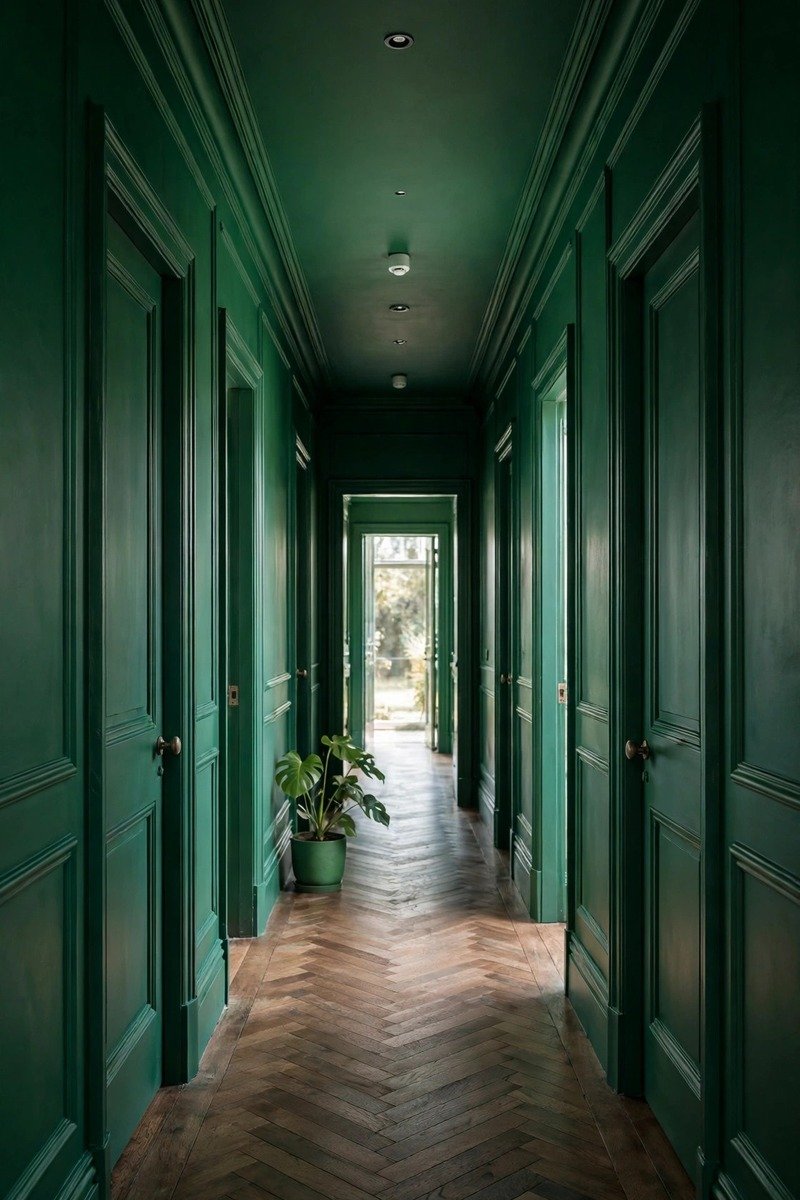
3. Add Half Height Paneling
Half height paneling gives a plain hallway shape and protects the lower wall where bags and shoes leave marks. Paint it a shade deeper than the wall above.
Pro tip: Set the top rail at about 90 cm. Panel kits cost about 40 to 80 dollars per 3 metre run.
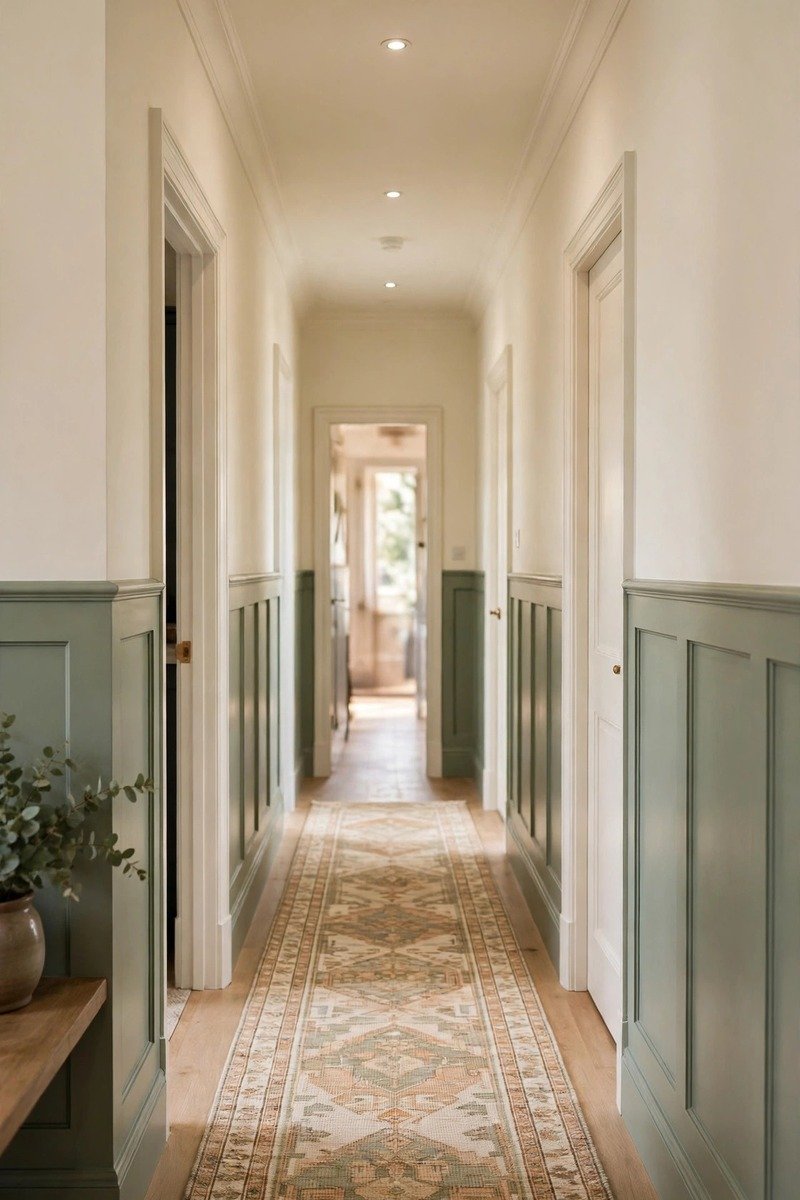
4. Paint the End Wall a Darker Shade
A long hallway feels endless when every wall is the same pale colour. Painting only the far end wall a shade darker pulls that wall closer and makes the corridor feel shorter.
Pro tip: Pick a colour two shades darker than the side walls. One litre is usually enough for one end wall.
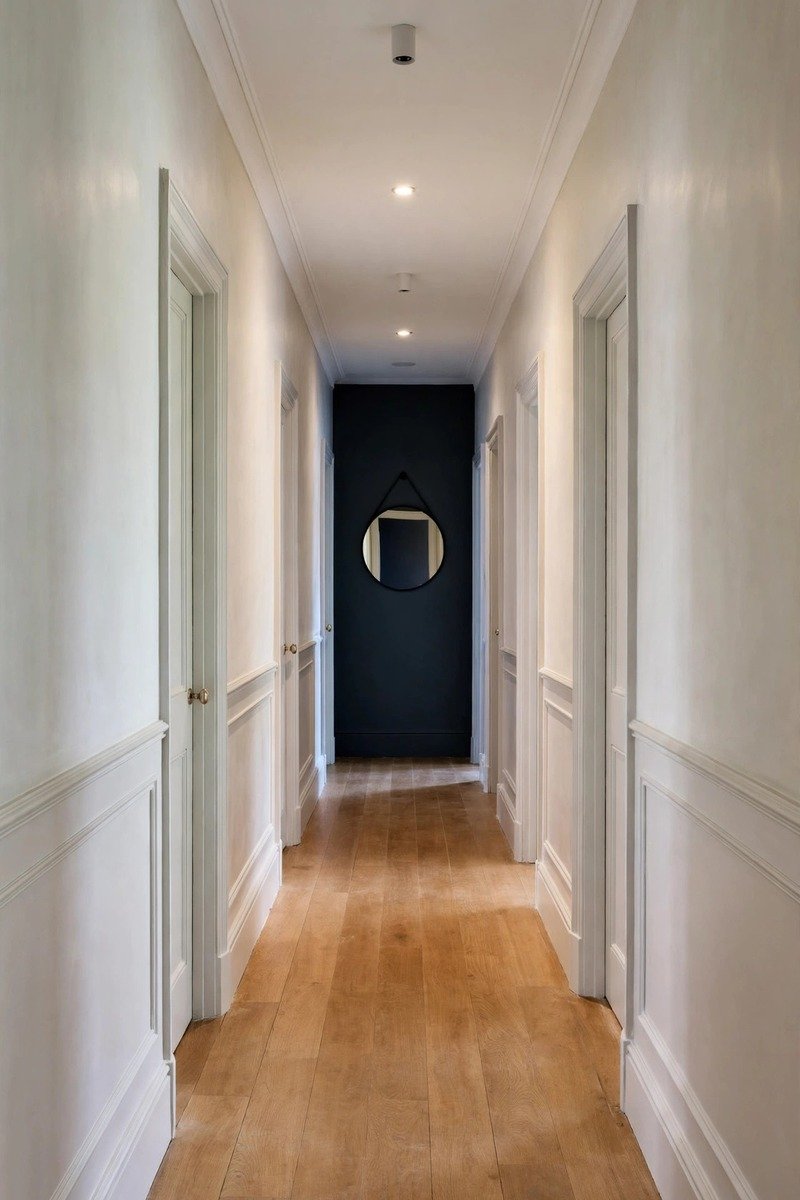
5. Paint a Simple Mural or Oversized Shape
One large painted arch, curve, or colour block adds art to a hallway without adding any object to the walkway. Broad shapes look calm in a narrow space.
Pro tip: Sketch the shape on paper first. A sample pot costs about 8 to 12 dollars.
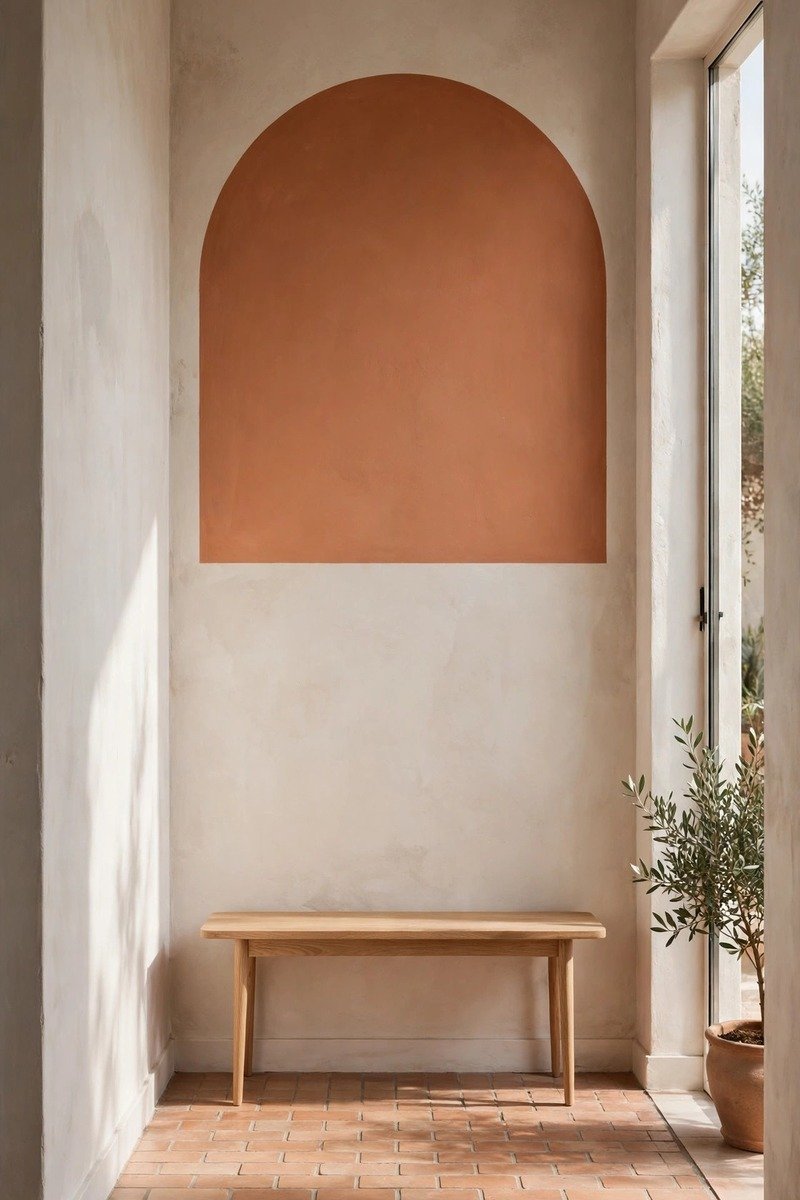
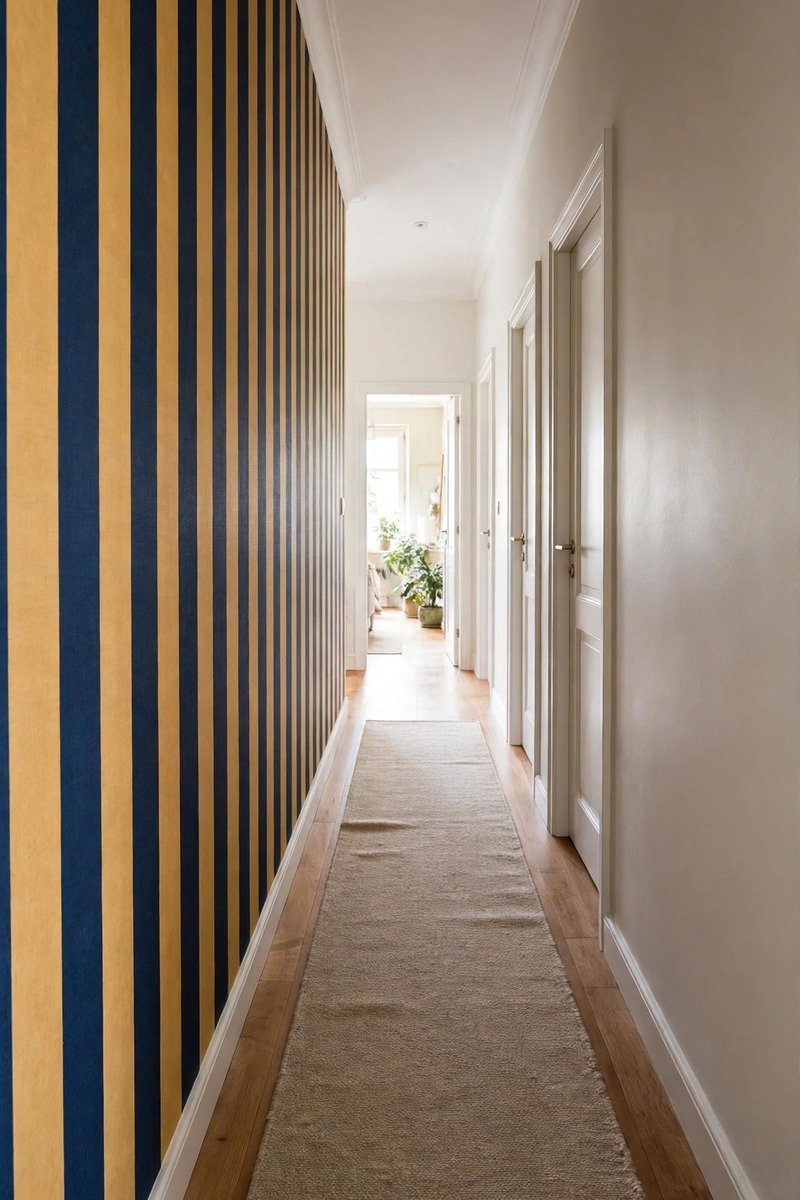
6. Hang Bold Patterned Wallpaper on One Wall
Patterned wallpaper on one hallway wall adds texture and colour in a single step. A vertical stripe suits a low ceiling, while a large floral print suits a short hall with a plain runner.
Pro tip: Use paste the wall wallpaper. One roll covers about 5 square metres.
Art and Mirrors
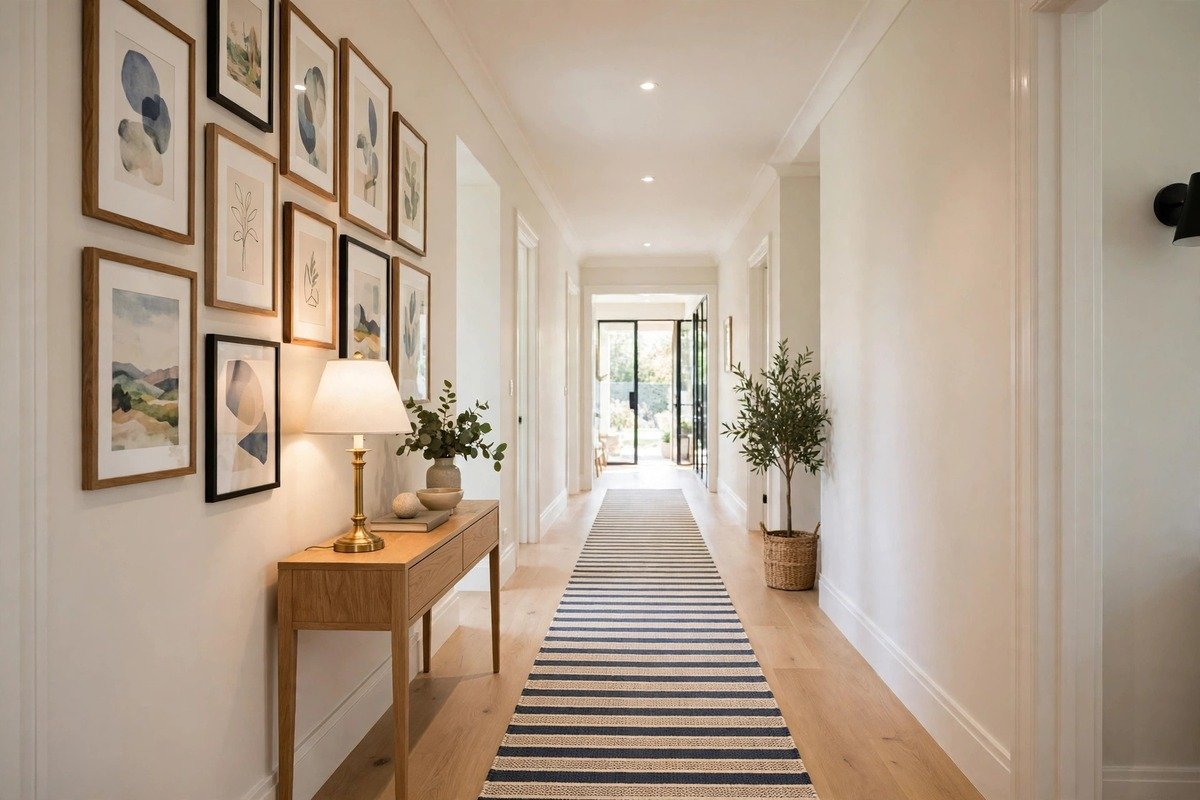
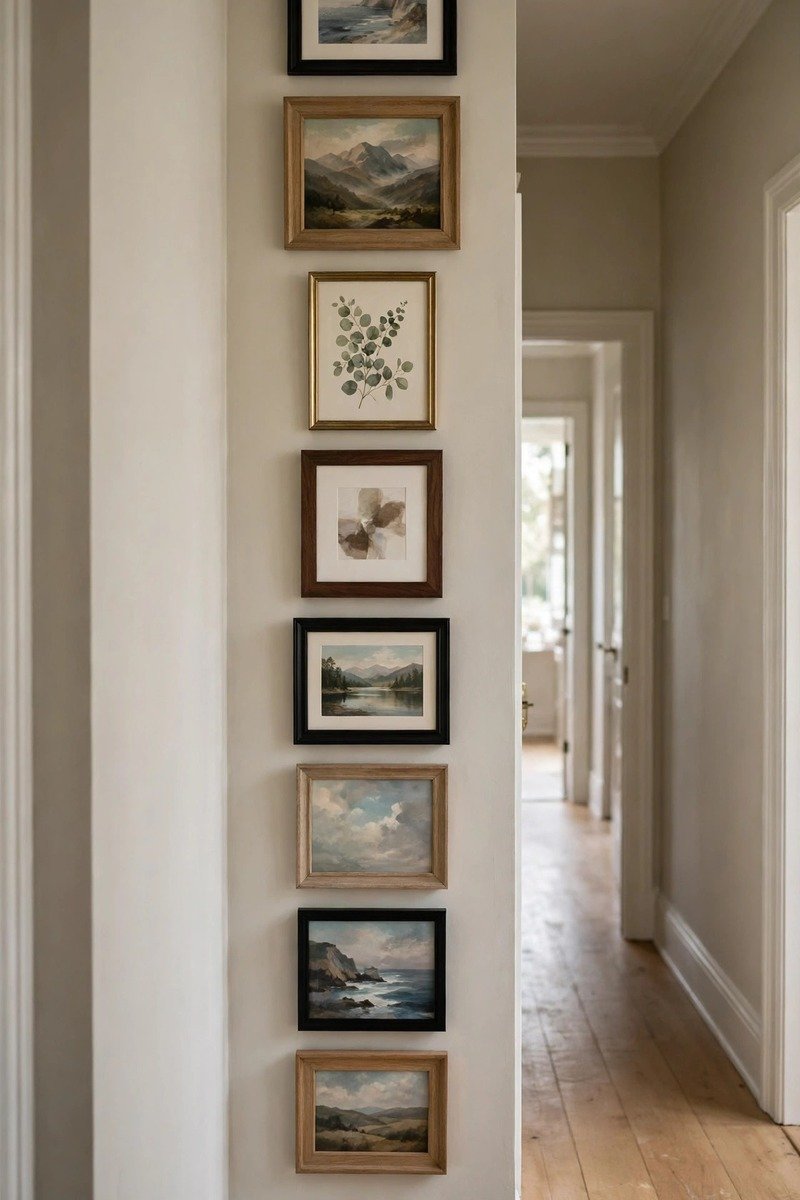
7. Build a Gallery Wall Along One Line
A gallery wall works in a narrow hallway when every frame shares one centre line. Mixed sizes of family photos feel connected, even when the frames differ.
Pro tip: Lay the frames on the floor first and mark the centre line at 145 cm. Keep 5 to 8 cm between frames. For more gallery ideas, see our bathroom gallery wall ideas as a related guide.
8. Hang One Oversized Artwork
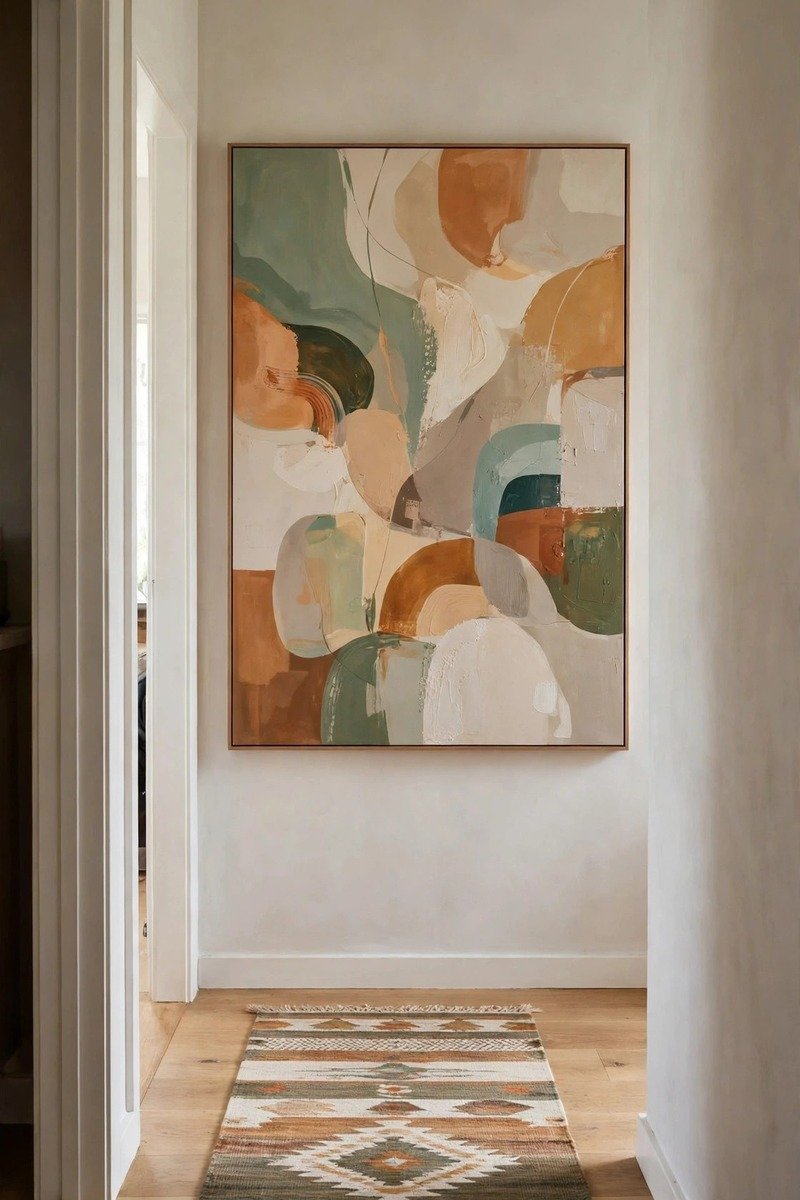
One large piece of art can make a short hallway feel planned instead of empty. A big abstract print or a calm landscape with plenty of plain space gives the passage a focal point with no clutter.
Pro tip: Choose art at least 80 cm wide for a wall over 2 metres long, hung with two anchors rated for its weight.
9. Turn the End Wall Into a Focal Point
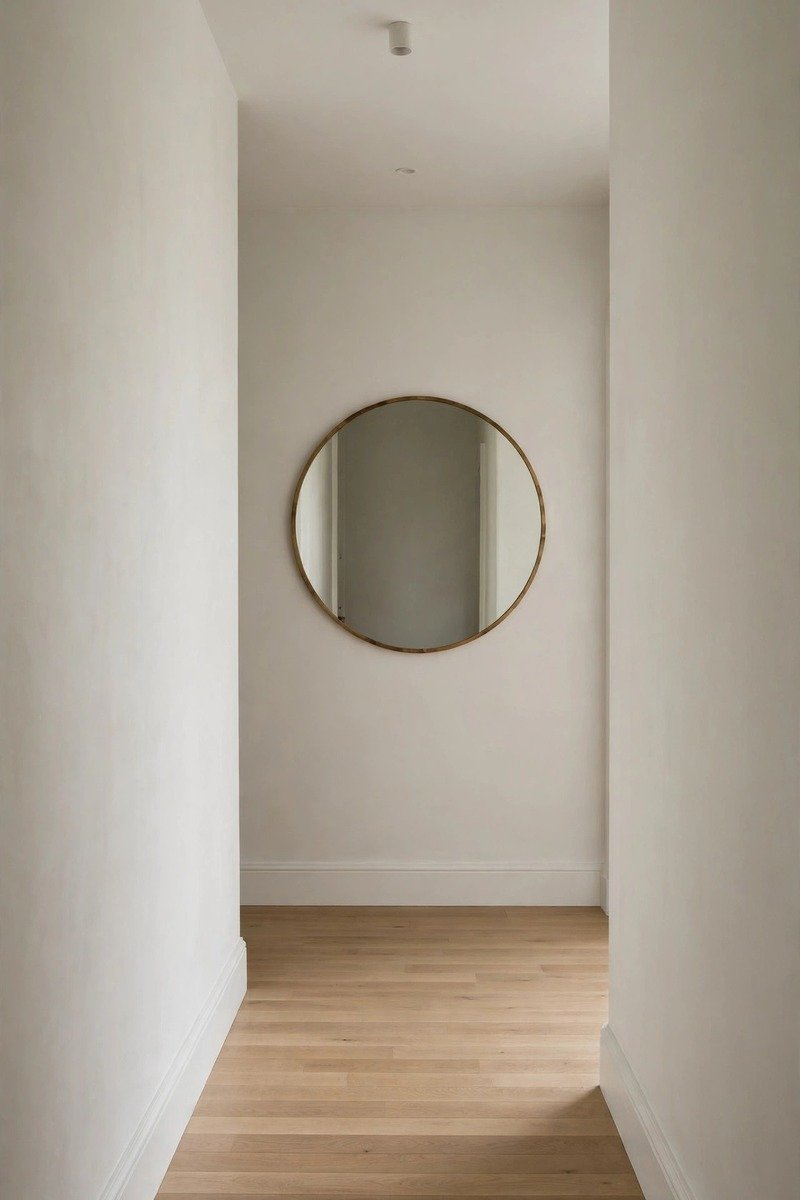
The wall at the end of a hallway draws the eye every time you walk toward it. One strong feature there, like a large painting, a bold mirror, or a shallow console, gives the corridor a clear destination.
Pro tip: Keep the side walls quiet so the focal point stands out. A 90 cm round mirror costs about 60 to 120 dollars.
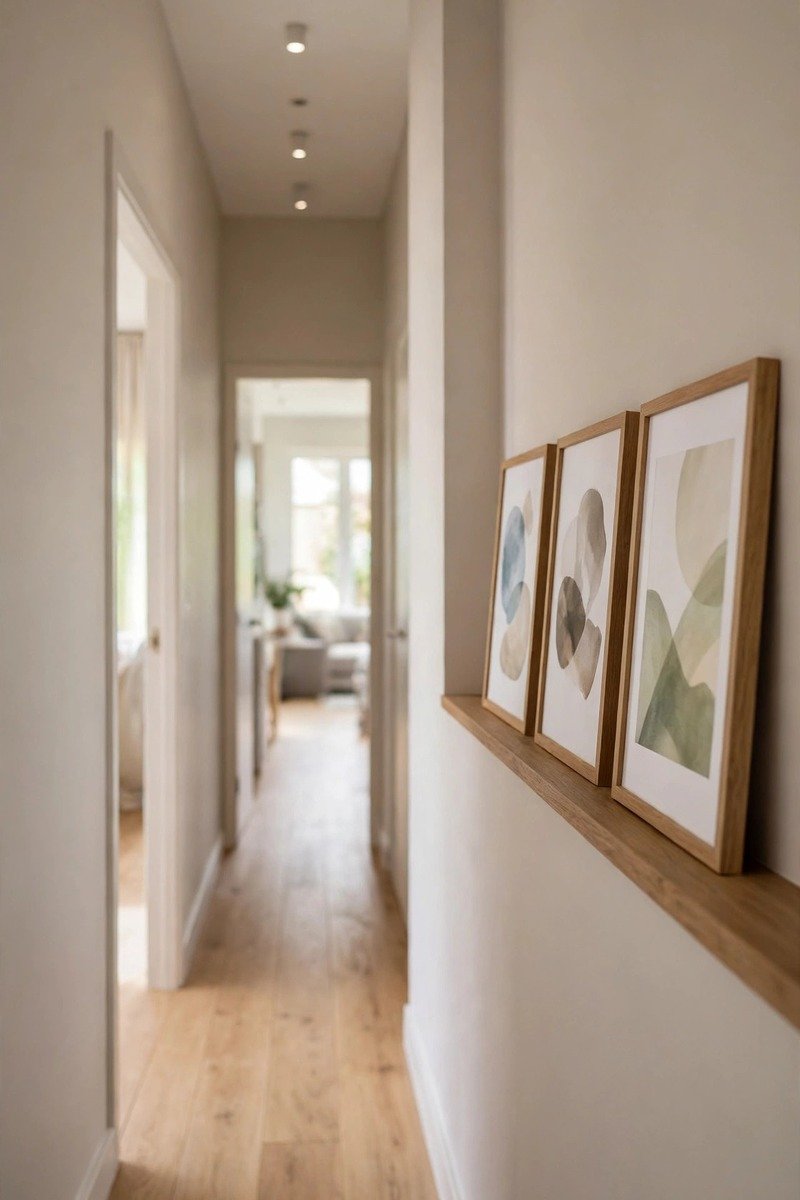
10. Add a Shallow Picture Ledge
A picture ledge lets you swap art without new holes in the wall. Three overlapping frames on a slim ledge add depth, and seasonal changes take minutes because nothing needs rehanging.
Pro tip: Mount the ledge at 150 cm so shoulders pass below the frames. A 120 cm ledge costs about 25 to 45 dollars.
11. Hang a Large Mirror to Double the Light
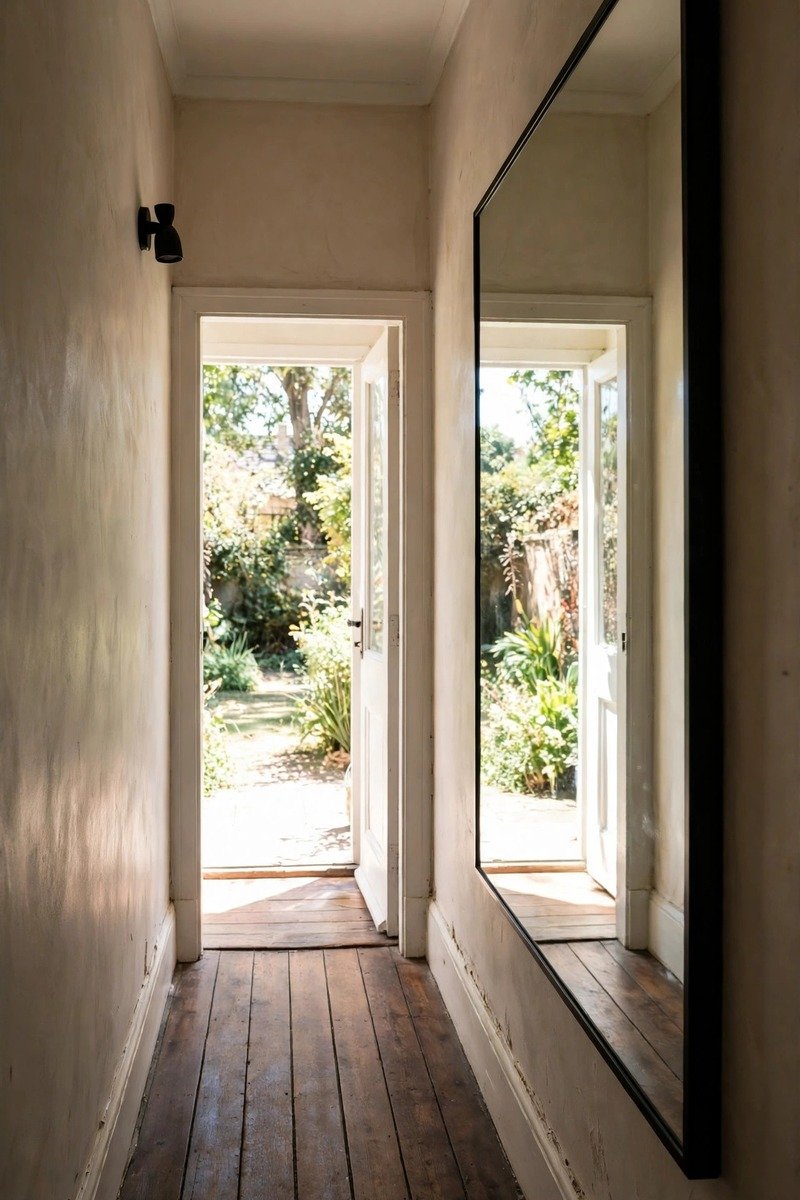
A large mirror is the fastest way to brighten a dark hallway. It bounces light from nearby rooms, and it makes a narrow passage look wider without changing the floor plan.
Pro tip: Hang the mirror opposite a doorway, with its centre at 145 cm. A 120 by 60 cm mirror costs about 50 to 100 dollars.
Light
12. Install a Row of Matching Wall Sconces
Matching sconces spaced along a long hallway give the passage rhythm and even light. A shallow fixture with a soft glow beats an exposed bulb at eye level.
Pro tip: Space sconces 2 to 3 metres apart at 170 cm high. A pair costs about 60 to 120 dollars.

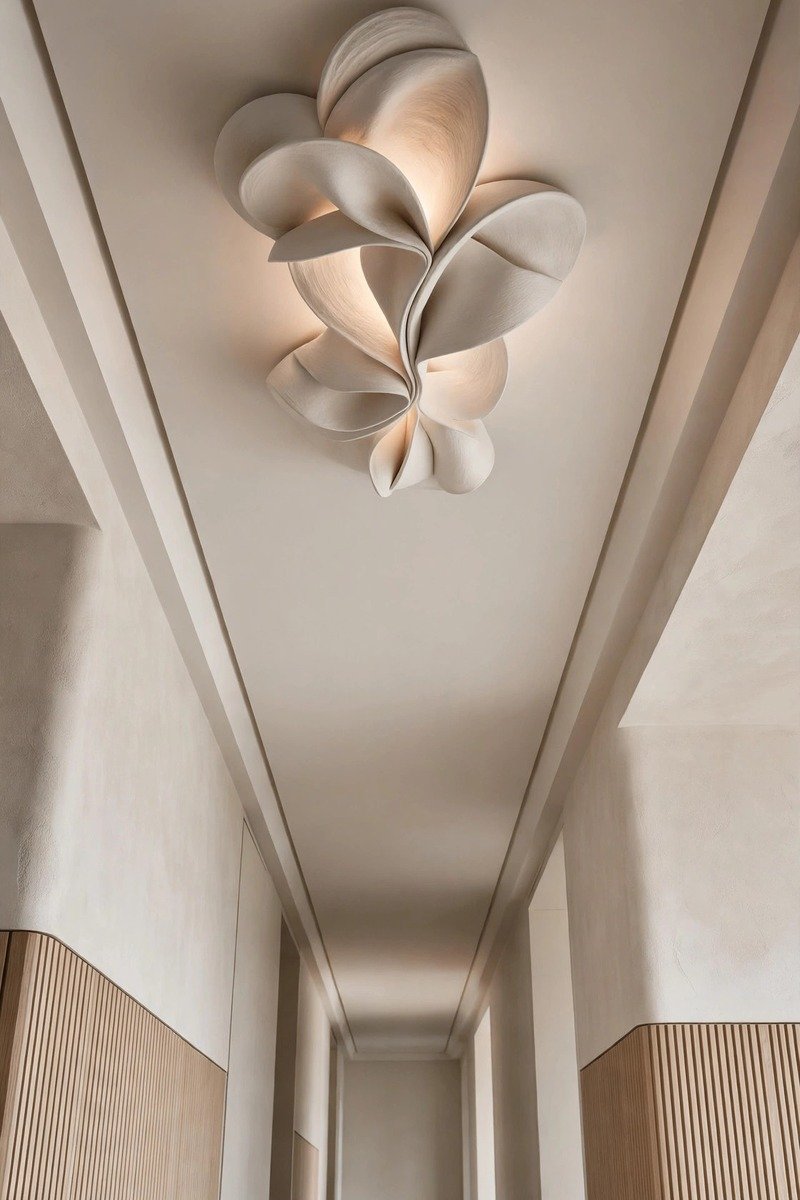
13. Replace the Ceiling Fixture With a Statement Piece
The ceiling light sits in the sightline of every person who walks the hall, so a plain fitting wastes a good spot. A lantern or a sculptural flush mount turns a basic light into a feature.
Pro tip: Keep at least 210 cm of head clearance. A flush mount costs about 40 to 90 dollars.
14. Add Warm LED Strip Light Along the Skirting
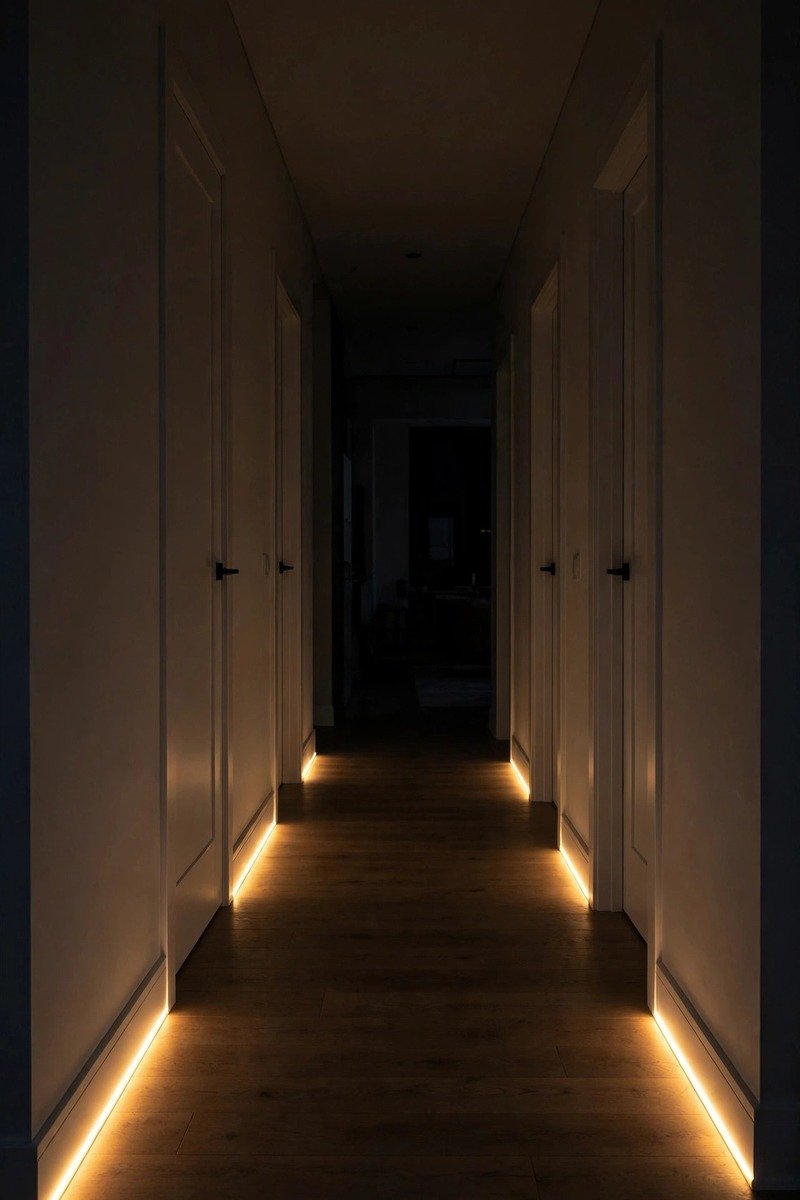
A slim LED strip along the skirting or under a ledge gives a hallway soft light at night. It guides the way to the bathroom or kitchen without switching on a bright ceiling light.
Pro tip: Use warm white strips at 2700K with a motion sensor. A 5 metre strip kit costs about 20 to 35 dollars.
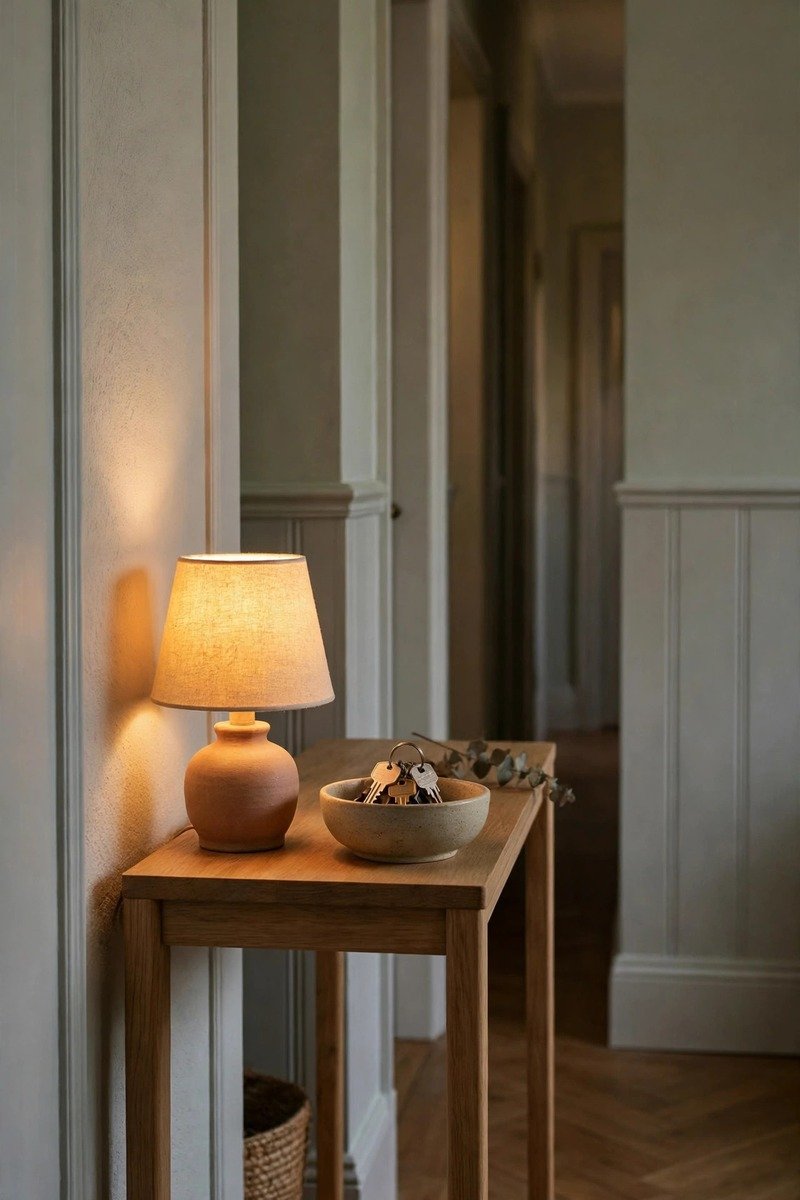
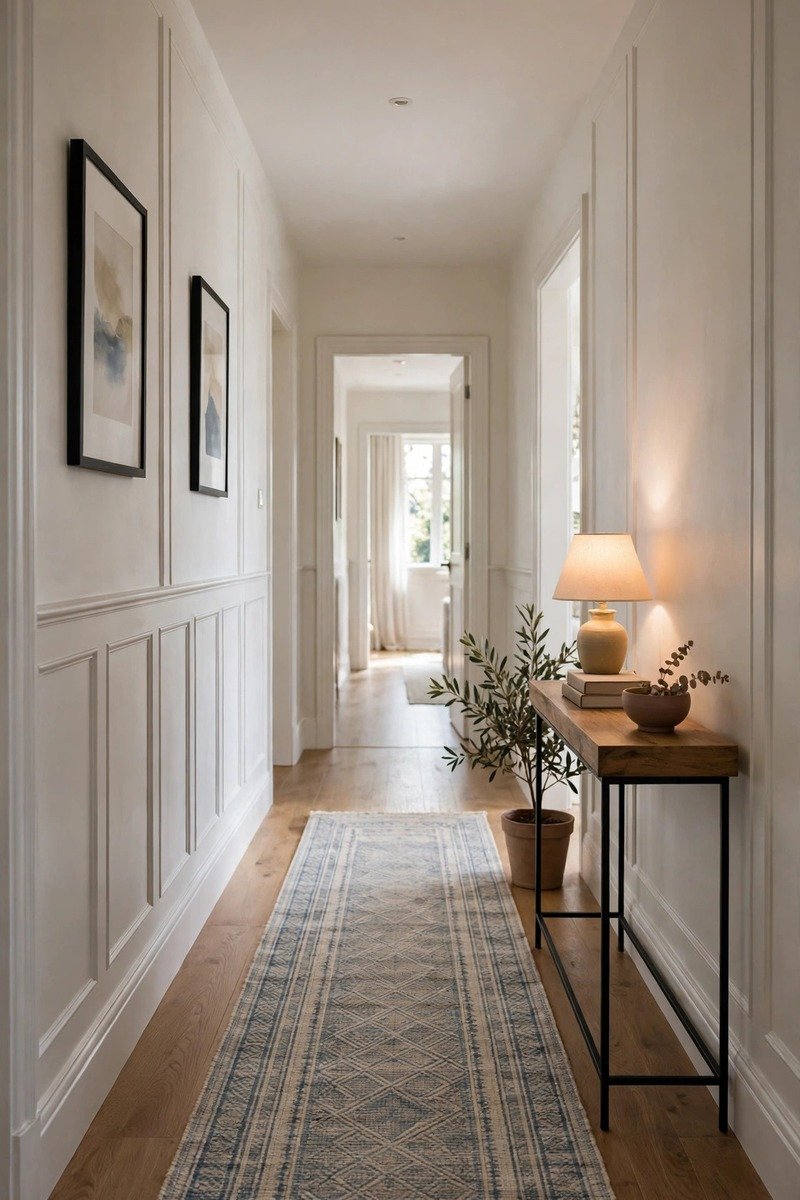
15. Layer a Small Lamp on the Console
A small lamp on a slim console adds a pool of warm light at hand height. It softens the hallway in the evening and makes the console feel like a piece of furniture, not a shelf.
Pro tip: Pick a lamp under 40 cm tall. A small ceramic lamp costs about 25 to 50 dollars.
Floors and Runners
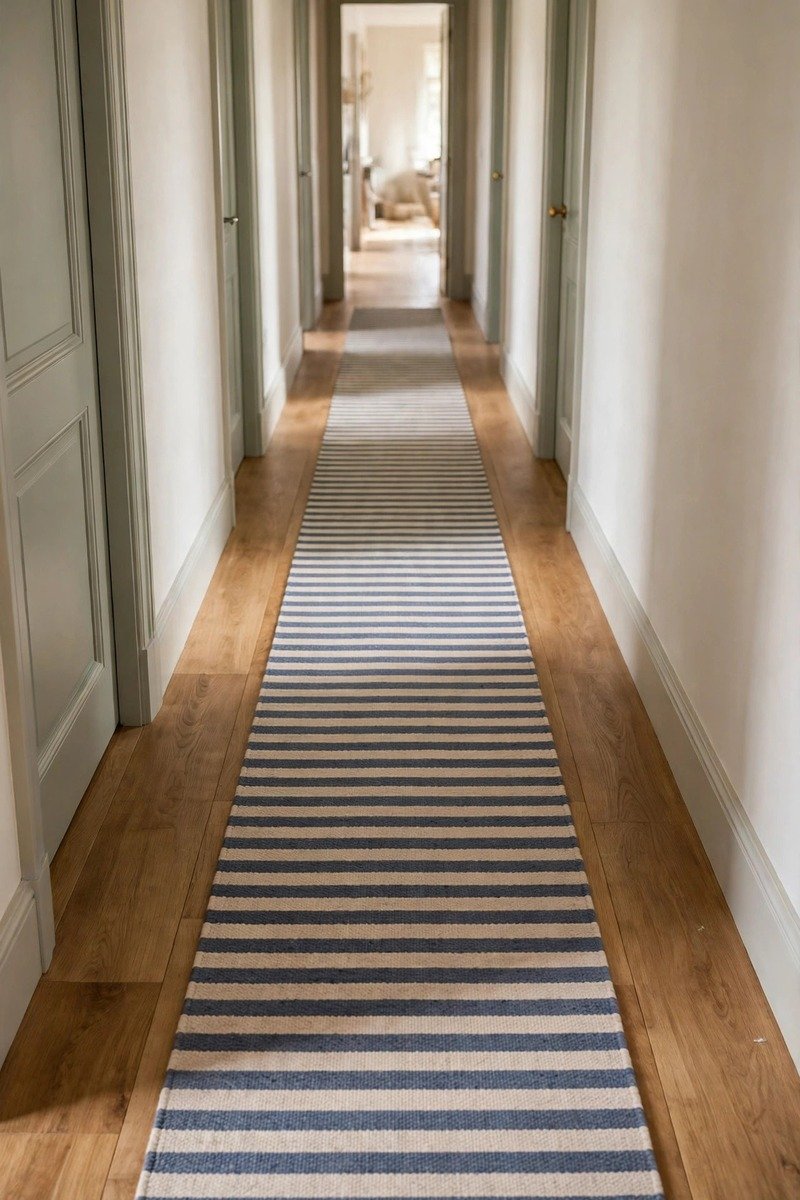
16. Roll Out a Striped Runner
A striped runner pulls the eye along the hallway and makes the floor feel like part of the design. Lengthwise stripes suit a long corridor.
Pro tip: Leave 10 to 15 cm of floor showing on each side. A low pile runner costs about 40 to 90 dollars for a 3 metre length.
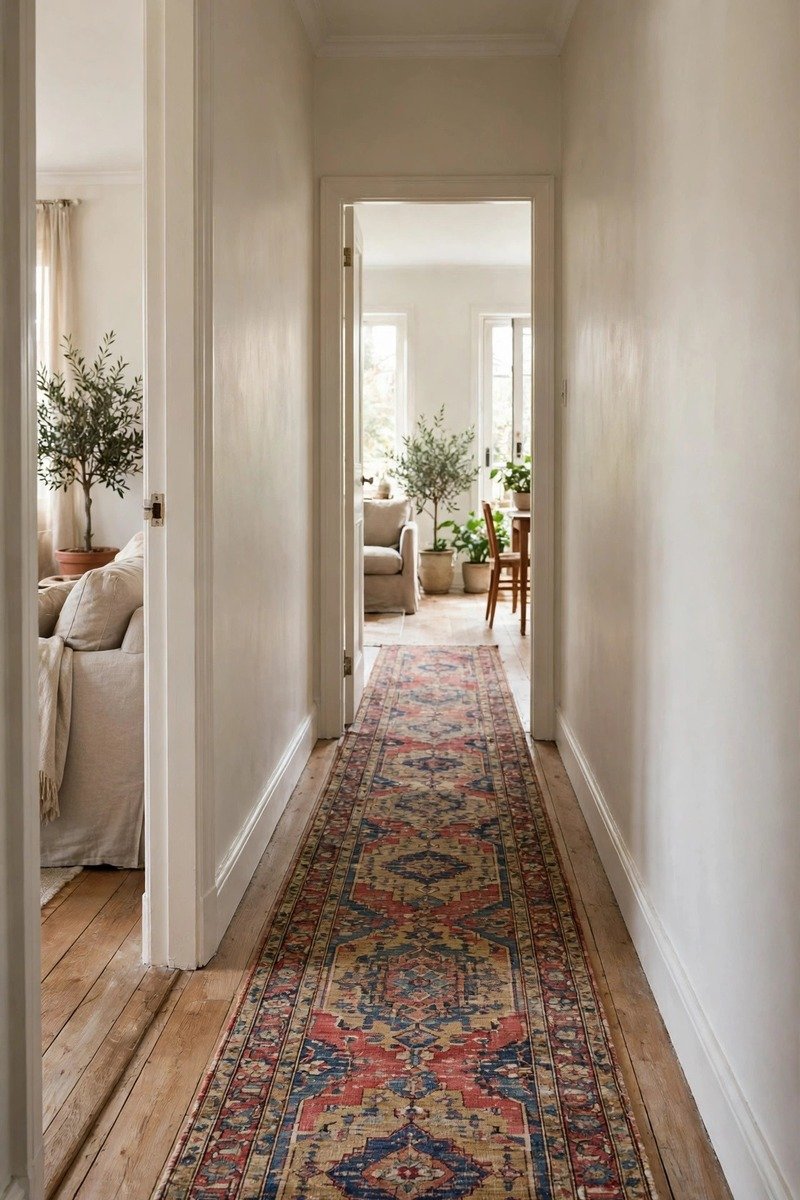
17. Use a Patterned Runner to Tie Rooms Together
A patterned runner can carry colours from the rooms at each end of the hallway into the middle. A simple geometric or vintage pattern adds interest, while the plain walls around it keep the look calm.
Pro tip: Repeat two colours from the runner in art or a cushion. Washable flatweave runners cost about 50 to 120 dollars.
18. Lay Large Floor Tiles for a Wider Feel
Large floor tiles with few grout lines make a narrow hallway look wider. A pale stone look tile reflects light.
Pro tip: Use tiles at least 60 by 60 cm, laid straight along the hall. Tile and fitting for 10 square metres costs about 300 to 600 dollars.
Slim Storage and Furniture
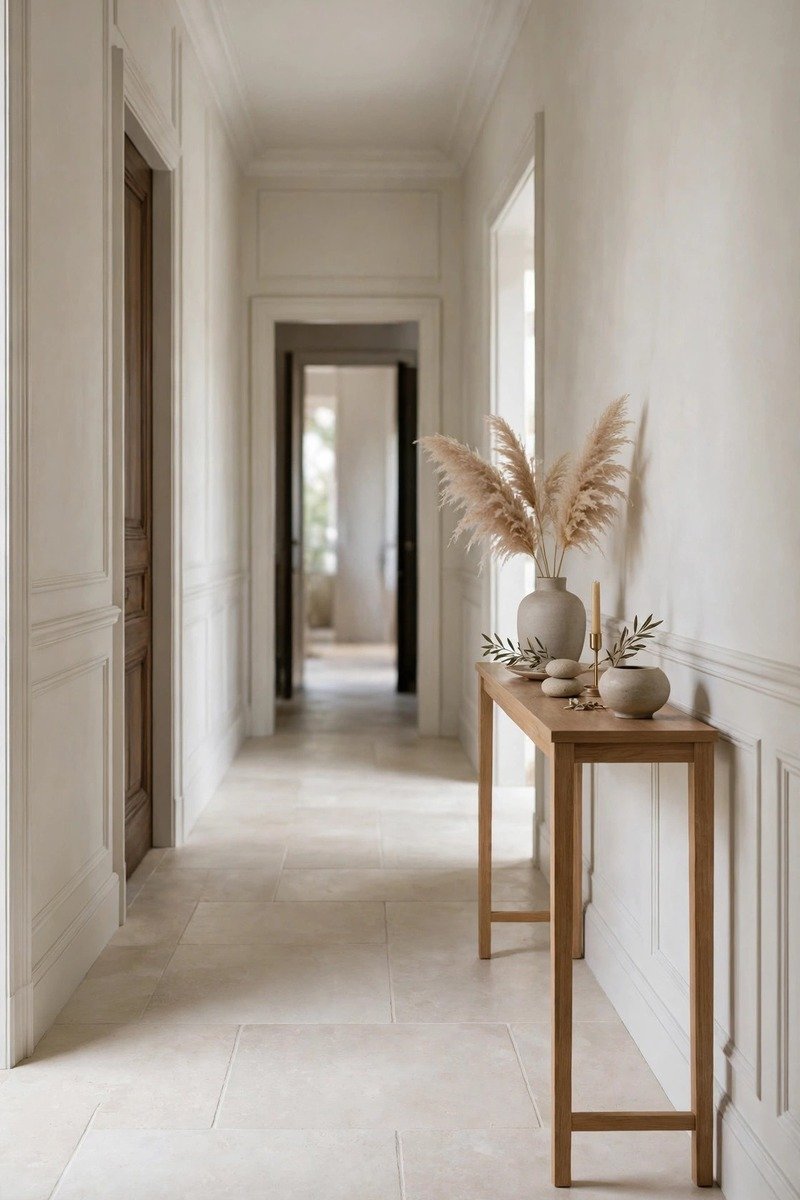
19. Place a Slim Console at a Wide Point
A slim console at the widest point of a hallway gives you a landing spot for keys, mail, and a lamp. A table no deeper than 30 cm with rounded corners stays out of the walkway.
Pro tip: Mark the footprint with tape and walk past it carrying bags before you buy. A slim console costs about 80 to 180 dollars.
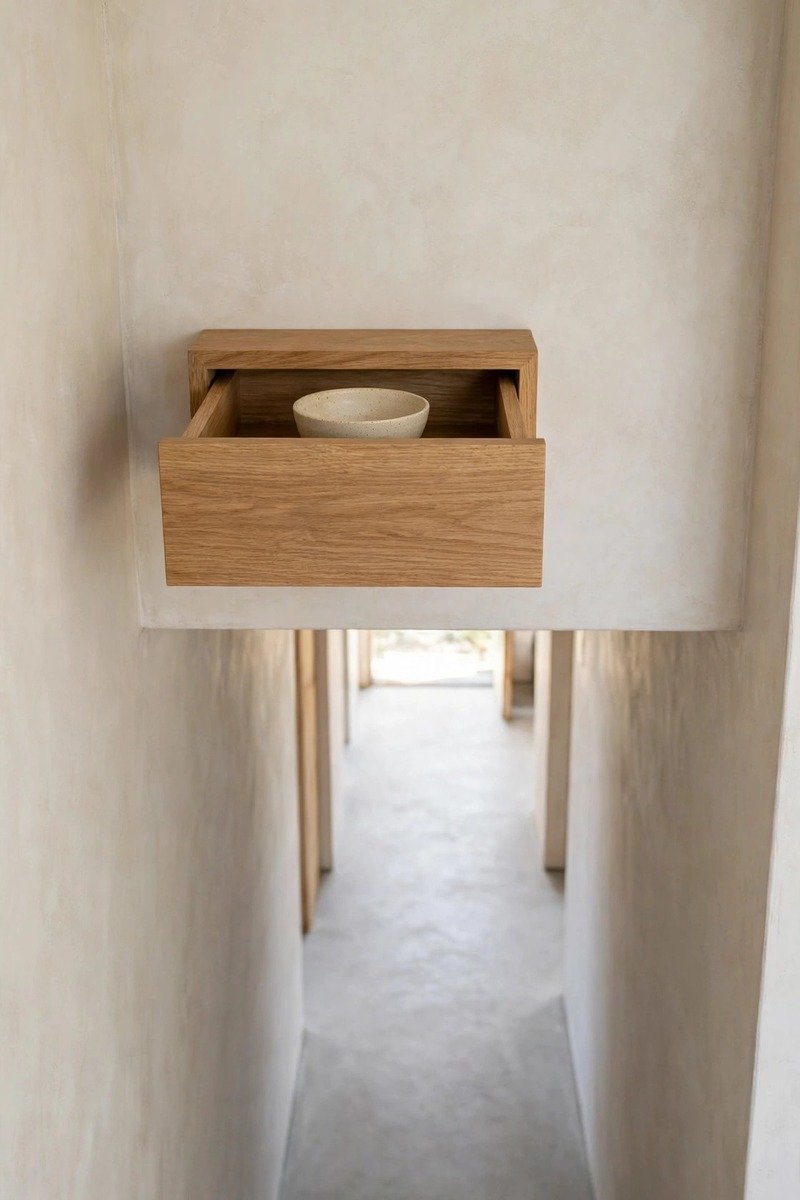
20. Fit a Floating Drawer Instead of a Table
A wall mounted drawer gives you a small landing surface with no legs on the floor. It holds keys and mail near the door, and the floor below stays completely clear for feet and cleaning.
Pro tip: Fix the unit into studs or anchors rated for at least 15 kg. A floating drawer costs about 60 to 120 dollars.
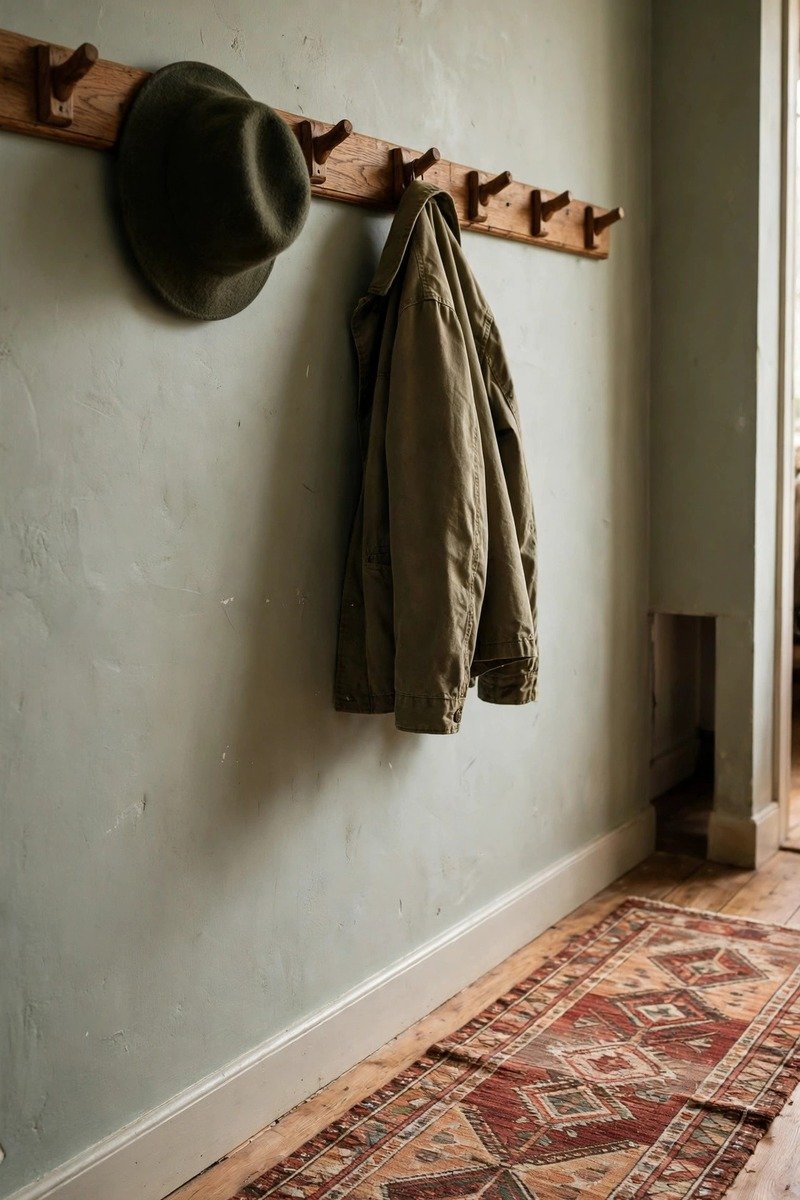
21. Add a Peg Rail for Coats and Bags
A wooden peg rail adds storage and a clean horizontal line to a hallway wall. It holds a light jacket, a hat, or a market basket, and it brings detail even when several pegs stay empty.
Pro tip: Mount the rail at 170 cm and fix it into studs. A 90 cm peg rail costs about 20 to 40 dollars.
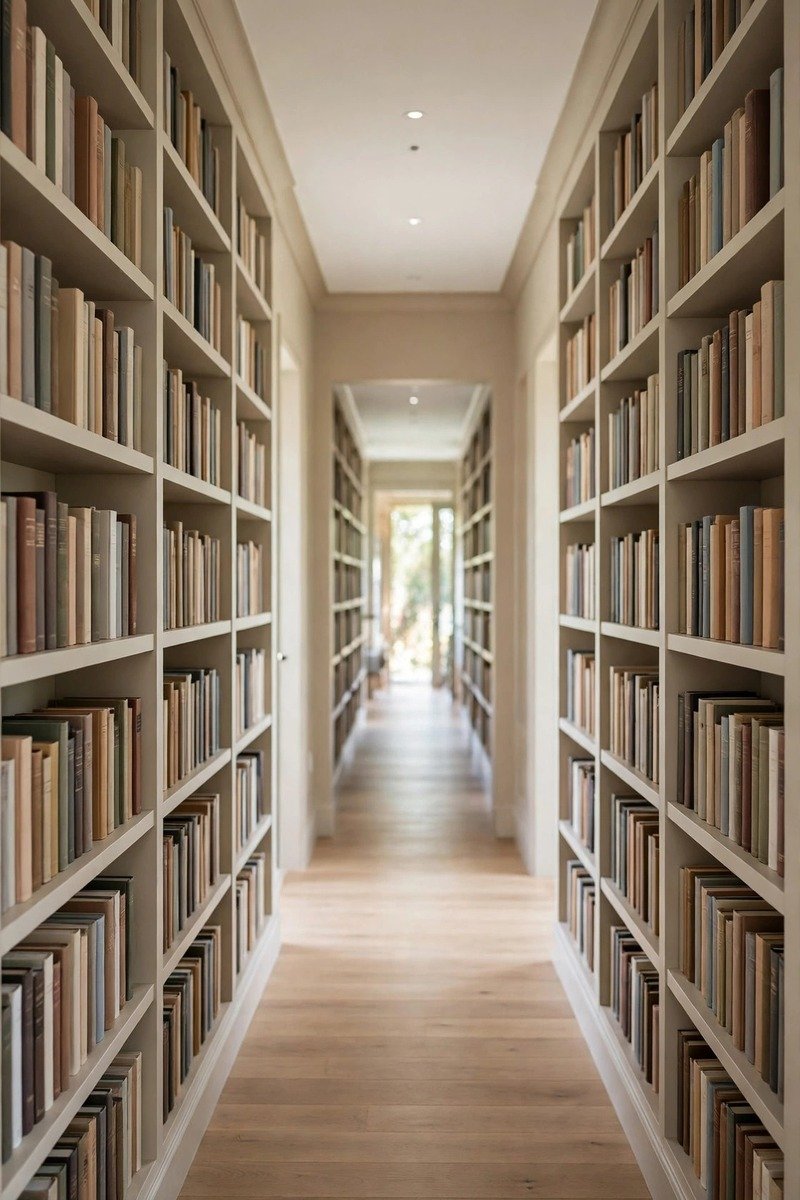
22. Build a Hallway Library on One Wall
Shallow shelves sized for books can turn a wide hallway into a small library. Painted the same colour as the wall, the shelves feel built in.
Pro tip: Keep shelves no deeper than 20 cm. A 2 metre run costs about 100 to 200 dollars. For shelf styling ideas, see our bookshelf ideas that turn books into beautiful decor as a related guide.
Plants and Personal Touches
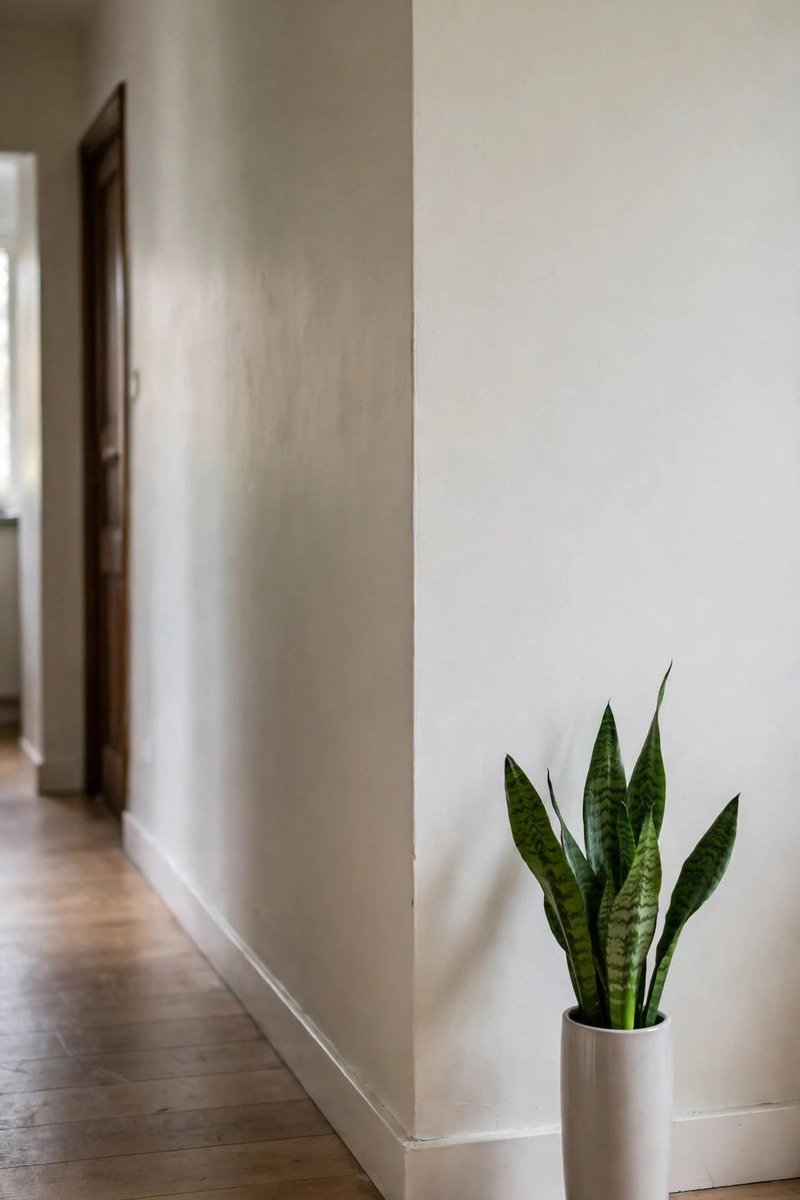
23. Add One Plant That Suits Low Light
One plant softens a hallway full of hard walls and floors. A snake plant or a pothos copes with low light, and a slim pot on the floor or a hanging planter keeps the walkway clear.
Pro tip: Pick a pot no wider than 25 cm, and water only when the top 3 cm of soil feels dry. A snake plant in a ceramic pot costs about 20 to 40 dollars.
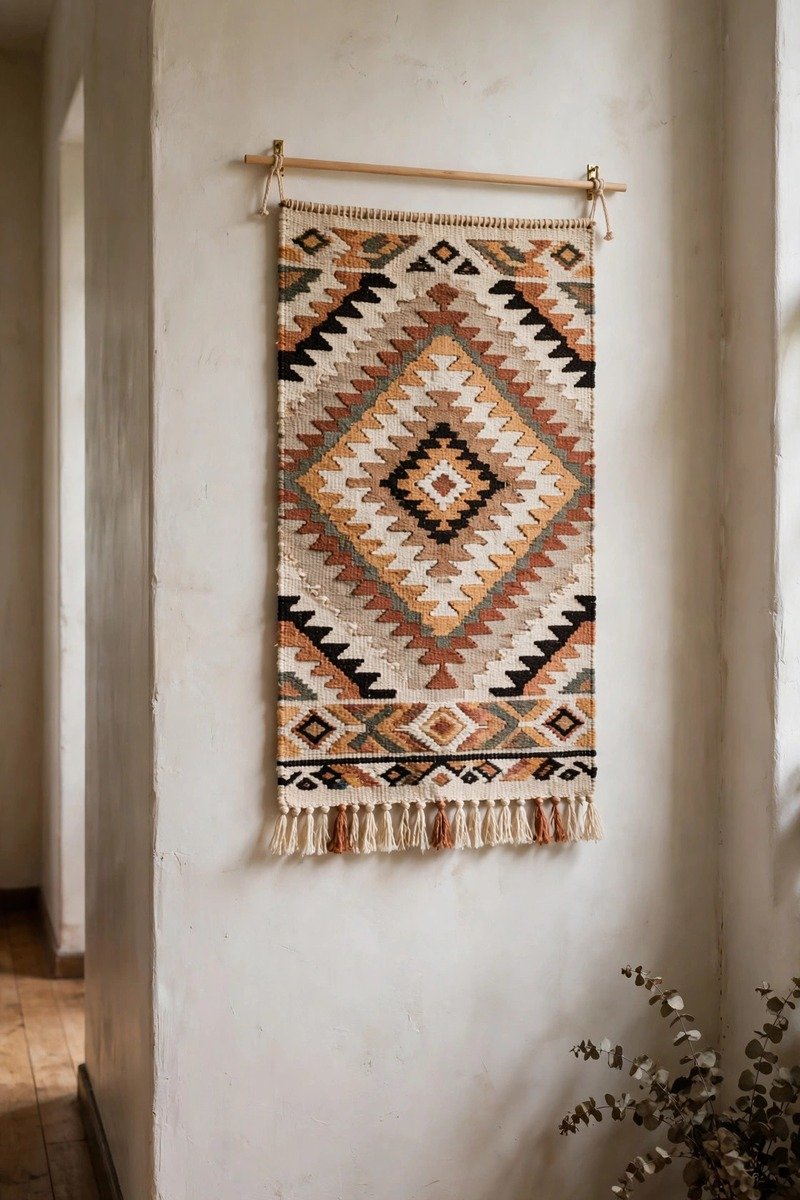
24. Hang a Textile as Wall Art
A flat woven textile softens a hallway and adds pattern without a deep frame. A narrow rug or an embroidered panel brings colour and absorbs a little sound.
Pro tip: Hang the textile from a slim wooden rod with clips. A 90 by 60 cm woven piece costs about 30 to 70 dollars.
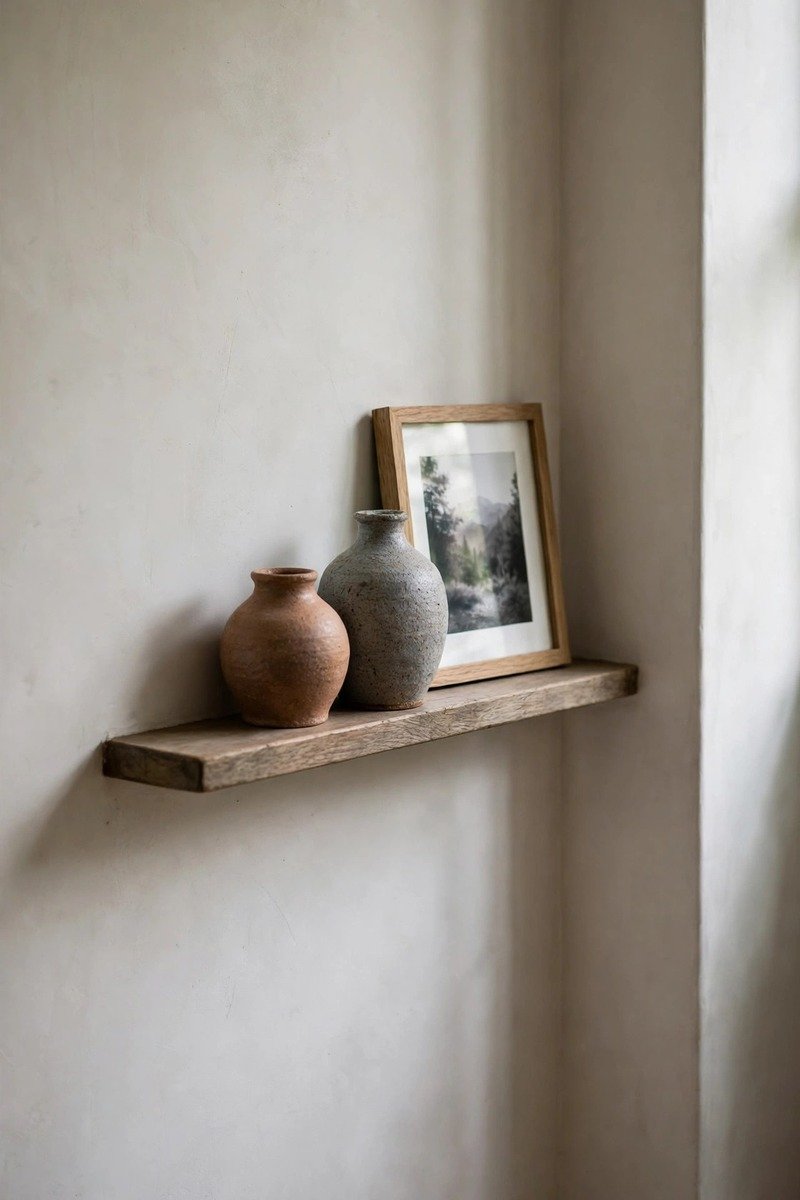
25. Display a Small Collection on a Ledge
A small collection of pottery, framed photos, or travel finds gives a hallway a personal feel. Three to five pieces on a shallow ledge read as a display, while a crowded shelf reads as clutter.
Pro tip: Group pieces in odd numbers. A 90 cm floating ledge costs about 25 to 40 dollars.
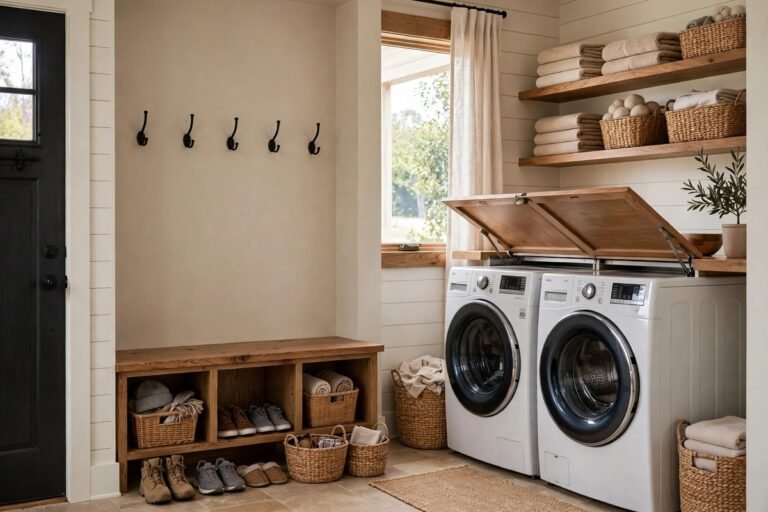
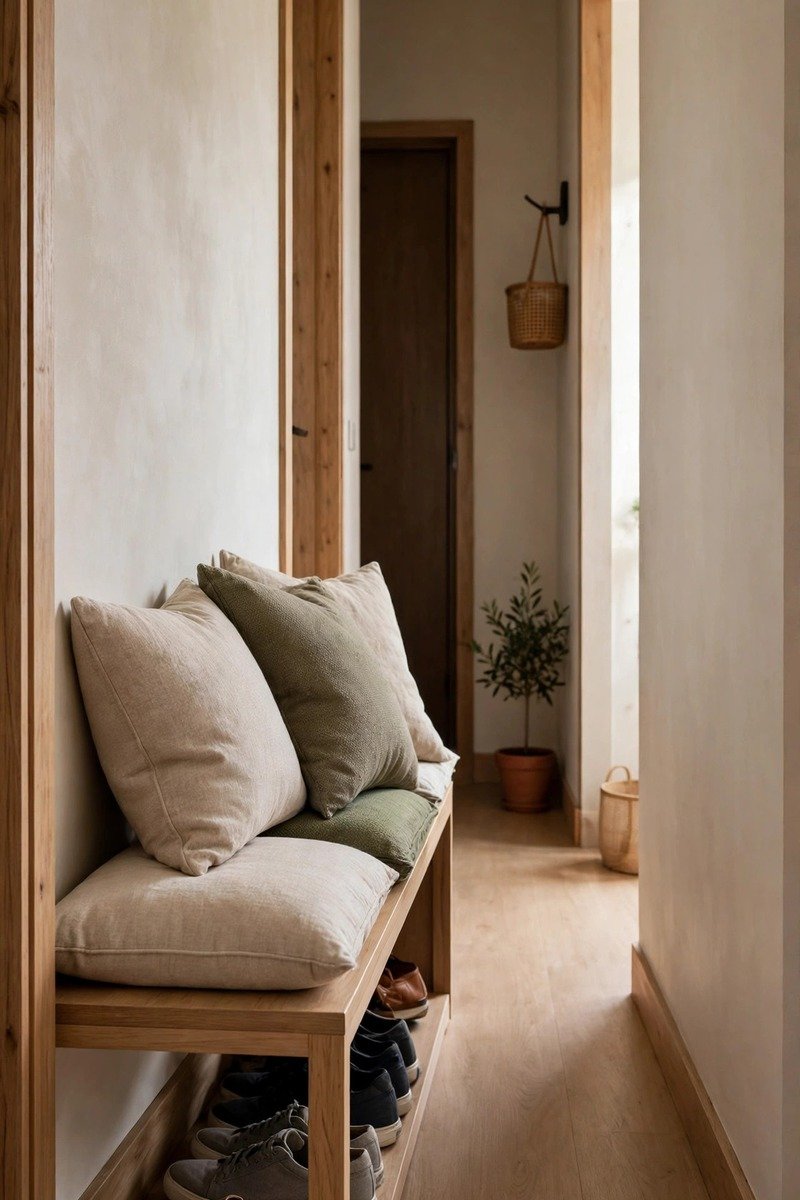
26. Add a Bench With Hidden Storage
A bench with a lift up seat or drawers gives a hallway a place to sit and a place to hide shoes. It works best near bedrooms, and it should leave most of the seat free.
Pro tip: Choose a bench no deeper than 35 cm. A storage bench costs about 90 to 180 dollars.
Measure the Hallway: Width, Doors and Walkway
A hallway is a walkway first and a display second. Measure the width at the narrowest point, usually at a door frame, and keep at least 36 inches of clear walking width at all times. A hallway under 42 inches wide suits flat decor only, such as art and mirrors, because anything deeper blocks the path. Note every door swing, because a console table in a door swing gets hit daily. Hallway decor ideas work best when the walkway comes first. A beautiful hallway that forces people to turn sideways is a corridor, not a welcome.
Mirror and Art Placement in a Narrow Hall
A mirror makes a narrow hallway feel wider, but only if it is placed right. Hang a mirror on the wall opposite a window or a light source, so it reflects light down the hall, not on a wall facing a blank wall, because a mirror facing a blank wall doubles the blankness. Hang the centre of the mirror at eye level, about 60 inches from the floor, and keep it at least 6 inches from any door frame. Hang art in a single row at the same height, with 2 to 3 inches between frames, because a row at one height makes a long hallway feel calm. Use one large piece, about 24 by 36 inches, instead of many small ones, because one large piece reads better in a narrow space than a cluster of small frames.
Runner and Floor Care
A runner protects the floor and softens the sound of footsteps, but it must fit. Choose a runner 12 inches narrower than the hallway, so 6 inches of floor shows on each side, and keep it at least 6 inches short of each doorway, so it does not curl under a door. Use a rug pad under the runner, because a runner that slides is a trip risk, and tape the corners down if the hallway gets wet. Vacuum the runner twice a week, because a hallway carries more dirt than any other room. As a typical range, a hallway runner costs about 30 to 80 dollars, and a rug pad costs about 10 to 25 dollars. Buy the pad first, because a runner without a pad moves every day and wears out faster.
Light a Dark Hallway
Most hallways have no window, so light is the decoration. Use warm bulbs around 2700 Kelvin, because cool white light makes a narrow hallway feel like a corridor in an office. Place one light every 8 to 10 feet along the hall, and use a dimmer if you can, because a dimmed light at night is enough to walk by and it saves energy. Add a small table lamp on a console table, because a low light source makes a hallway feel like a room, not a passage. Keep the light switches at both ends of the hallway, so no one walks a dark hall to find a switch. If the hallway is long, add a motion sensor light near the floor, because it lights the path without waking the house at night.
Common Mistakes to Avoid
- Blocking the walkway. Deep furniture shrinks a hallway fast, so keep at least 75 cm clear.
- Painting every wall dark. Dark walls all round turn a corridor into a tunnel, so keep the ceiling white.
- Hanging art at mixed heights. Frames at mixed heights look messy, so set one centre line at 145 cm.
- Using a runner that is too short. A short runner chops the floor in half, so cover most of the hallway length.
- Filling both walls. Decor on both sides closes a hallway in, so decorate one wall and leave the other calm.
- Forgetting the night light. A hallway used after dark needs warm, even light, so check it at night.