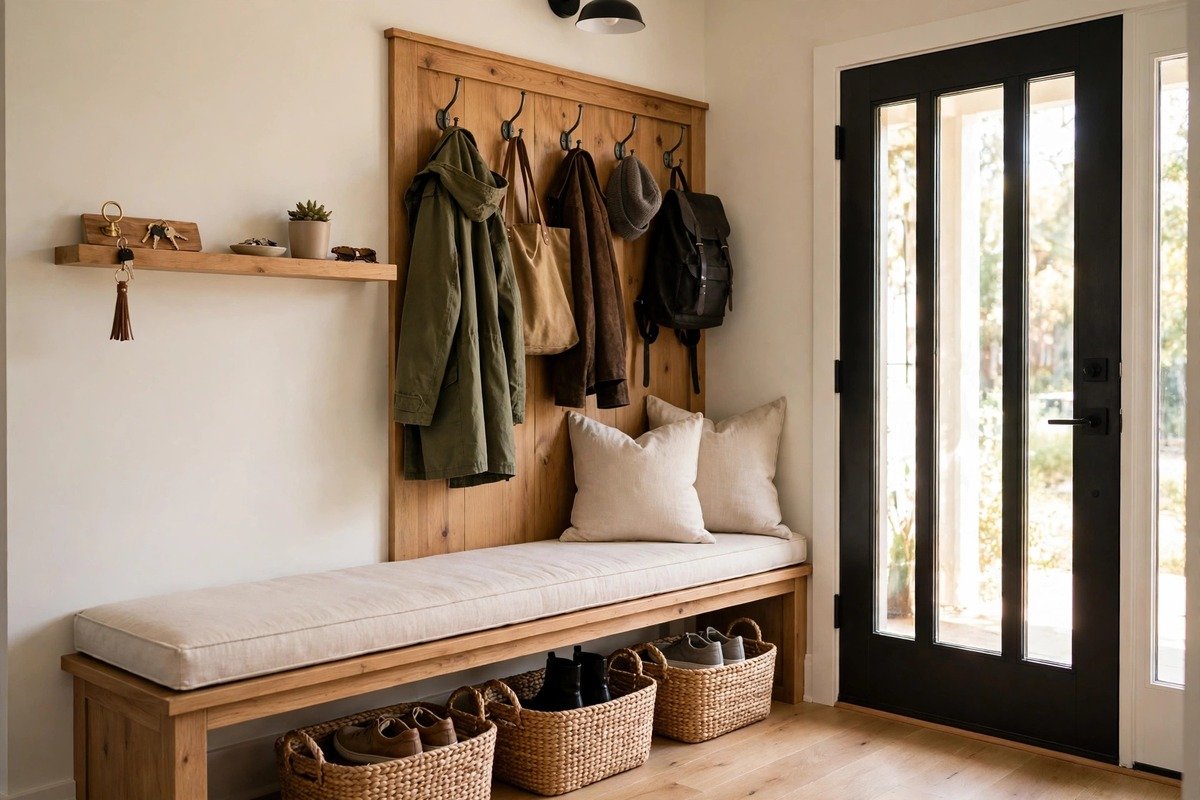
You walk in with your hands full. Keys, bag, mail, shoes, and a jacket all need a place to go. Without a plan, they land on the nearest chair, the kitchen counter, or the floor. By morning, you cannot find your keys, and the pile by the door has grown again.
A drop zone fixes this. It is one small spot by the door where everyday things land when you come in and wait for you when you go out. It does not need a full mudroom or a big remodel. A few hooks, a tray, and a bench can do the job. Here are 25 drop zone ideas that fit real homes, small entries, and busy families.
Quick Picks
- Start with keys, bag, and shoes. These three cause most door clutter, so give each one a home first.
- Use the door you actually use. Build the zone by the door your family walks through every day.
- Keep it open and easy. Open hooks and trays work better than closed boxes, because people use them without thinking.
- Give each person one spot. One hook and one basket per person stops the pile from becoming a mix.
- Leave room to walk. The walkway comes first.
Did You Know?
A drop zone is not the same as a mudroom. A mudroom is a room or a built in entry area. A drop zone is a landing spot, and it can fit on one wall, one shelf, or even one tray.
Before You Start
- Watch your family for three days and note what actually lands by the door.
- Measure the wall and floor space, and open the door fully to check the swing.
- Count how many people use the door, including kids and regular guests.
- Pick your three must have spots first: keys, bags, and shoes.
- Keep the walking path at least 90 cm wide so nobody has to squeeze past.
Catch the Small Stuff First
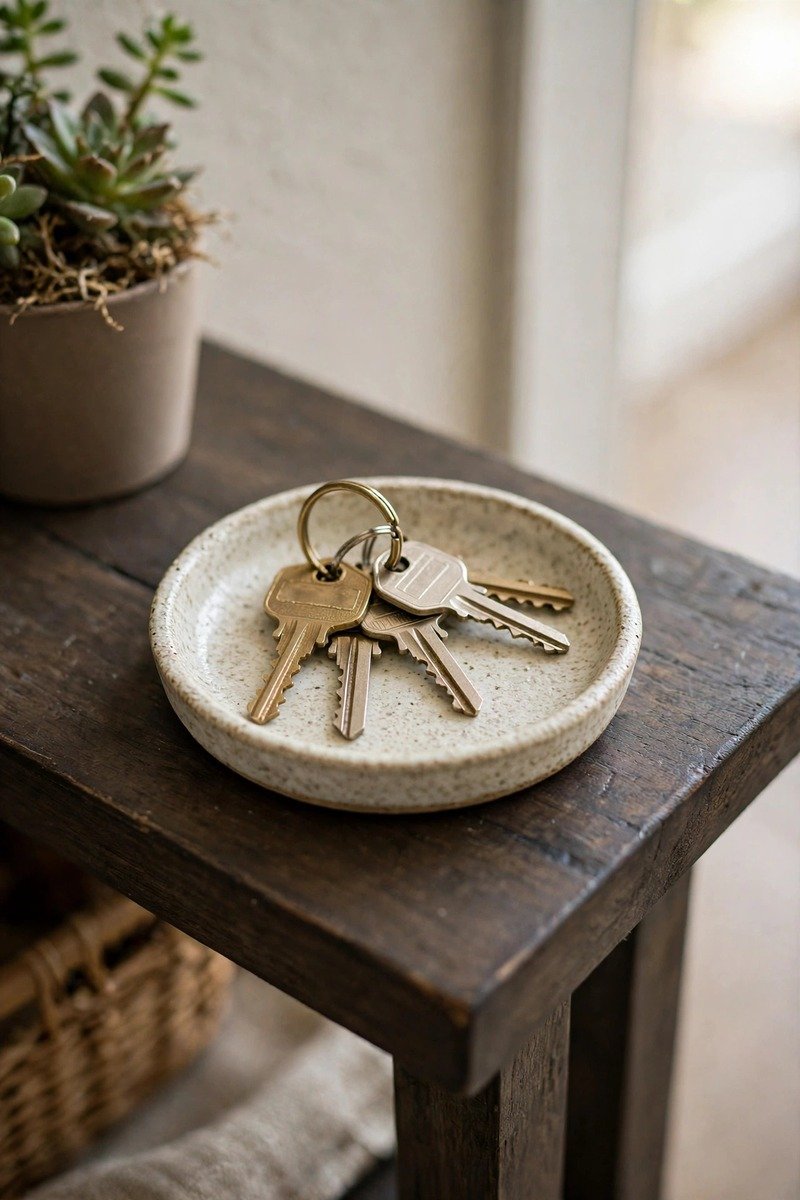
1. Set a Key Tray by the Door
A small tray by the door ends the daily key hunt. Keys go in the tray the second you walk in, and they are there when you leave.
Pro tip: Pick a tray about 20 cm wide with a raised edge so keys cannot slide off. A ceramic or wooden tray costs about 10 to 20 dollars.
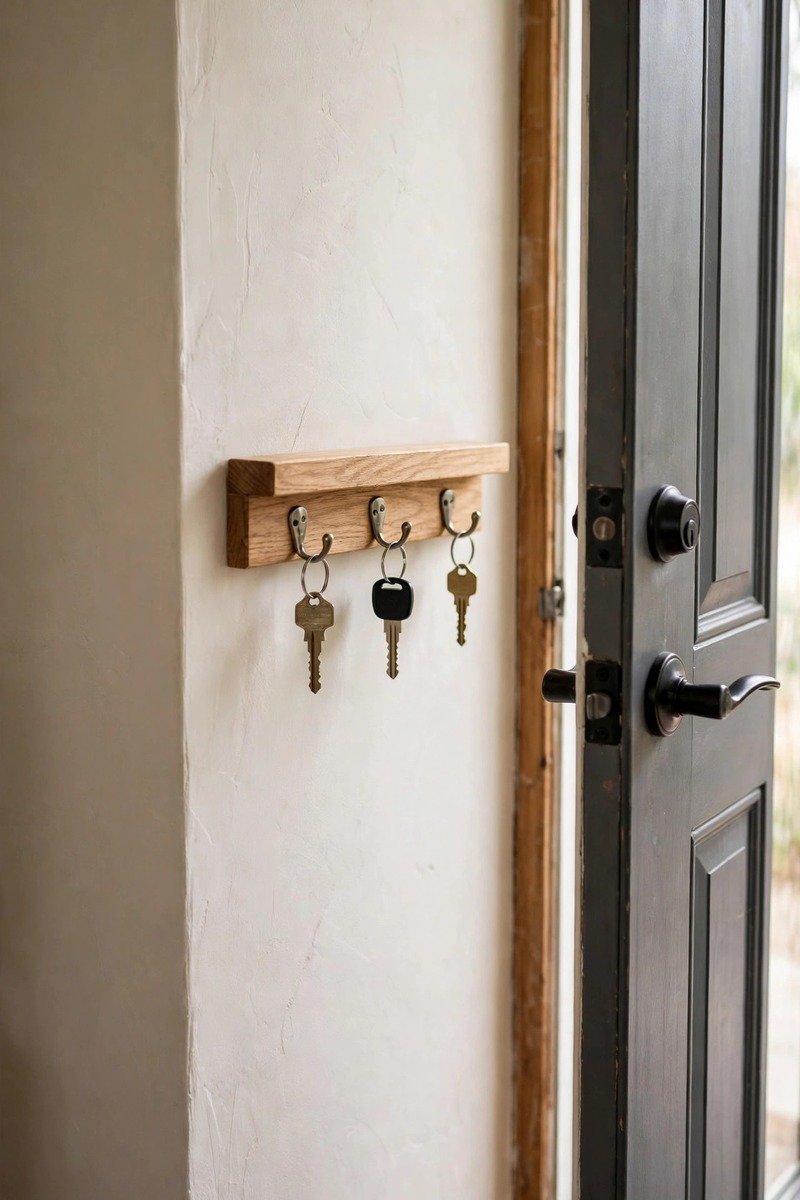
2. Hang a Key Hook Rail
A short rail with hooks keeps keys off the counter and in plain sight. Each person gets one hook, so nobody has to dig through a pile.
Pro tip: Mount the rail at about 150 cm high so adults and older kids can reach it. A 3 hook rail costs about 12 to 25 dollars, and fitting takes about 20 minutes.
3. Add a Small Dish for Sunglasses and Earbuds
Sunglasses and earbuds are small, pricey, and easy to lose. A small dish inside the key tray gives them a safe spot away from keys that can scratch them.
Pro tip: Use a dish about 10 cm wide with a soft lining, like felt or cork. A lined dish costs about 5 to 12 dollars.

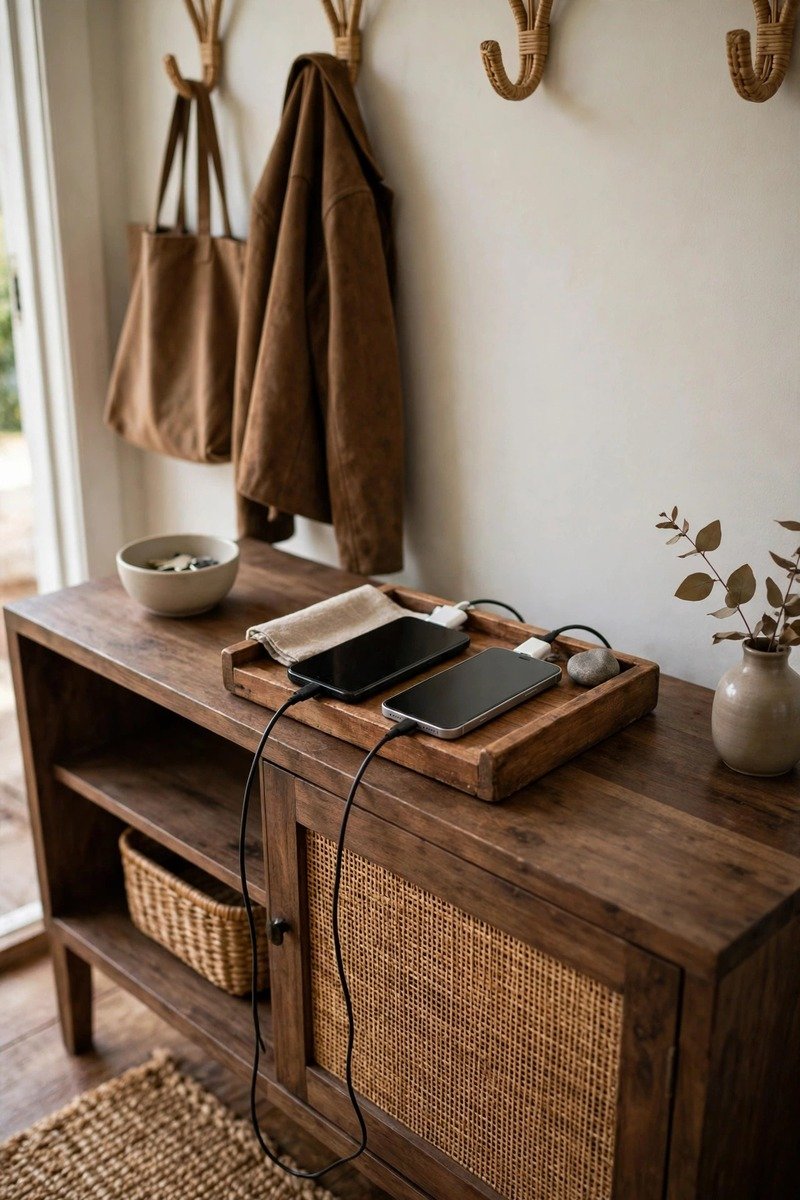
4. Make a Charging Tray for Phones
Phones land by the door too, so give them a charging spot there.
Pro tip: Use a 2 port USB charger and cables about 60 cm long so they do not tangle. A simple charging tray setup costs about 20 to 35 dollars.
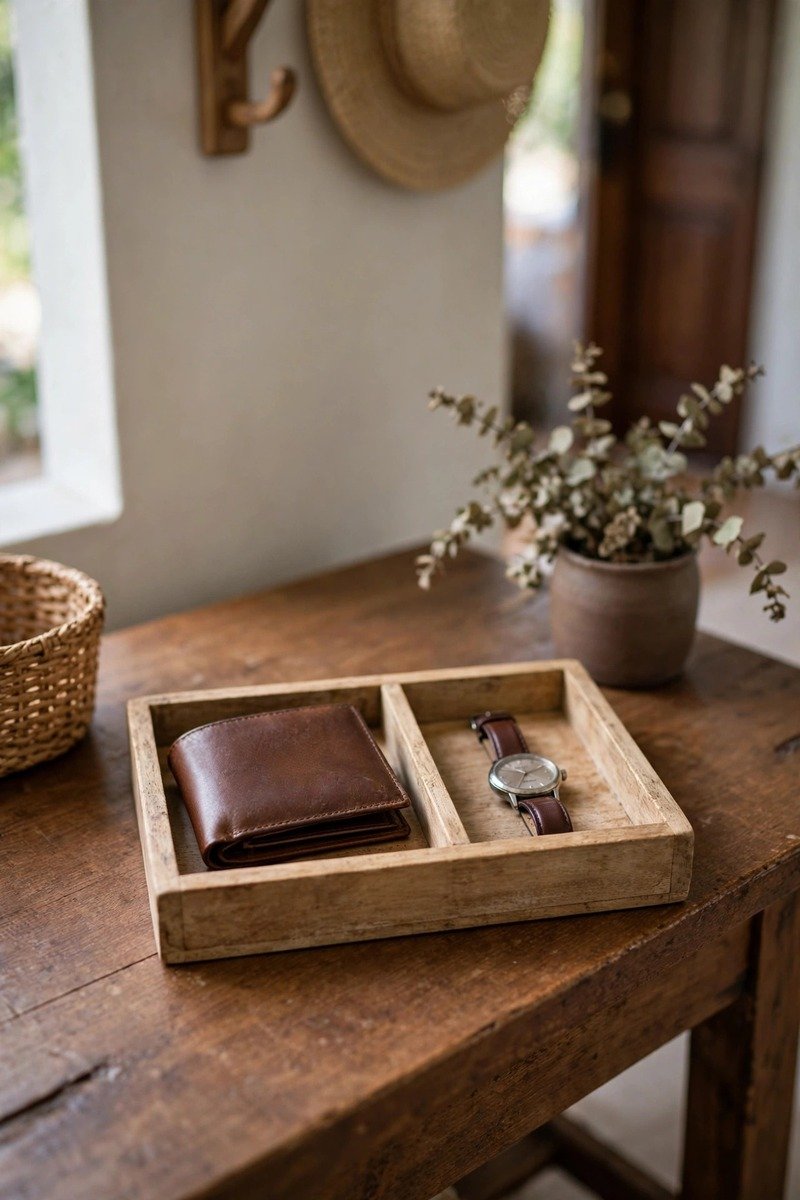
5. Keep a Wallet and Watch Spot
Wallets and watches need a home just like keys do. A small divided tray next to the keys keeps them together.
Pro tip: Pick a tray with two or three sections so each item has its own space. A divided tray costs about 12 to 20 dollars.
Give Bags and Coats a Home
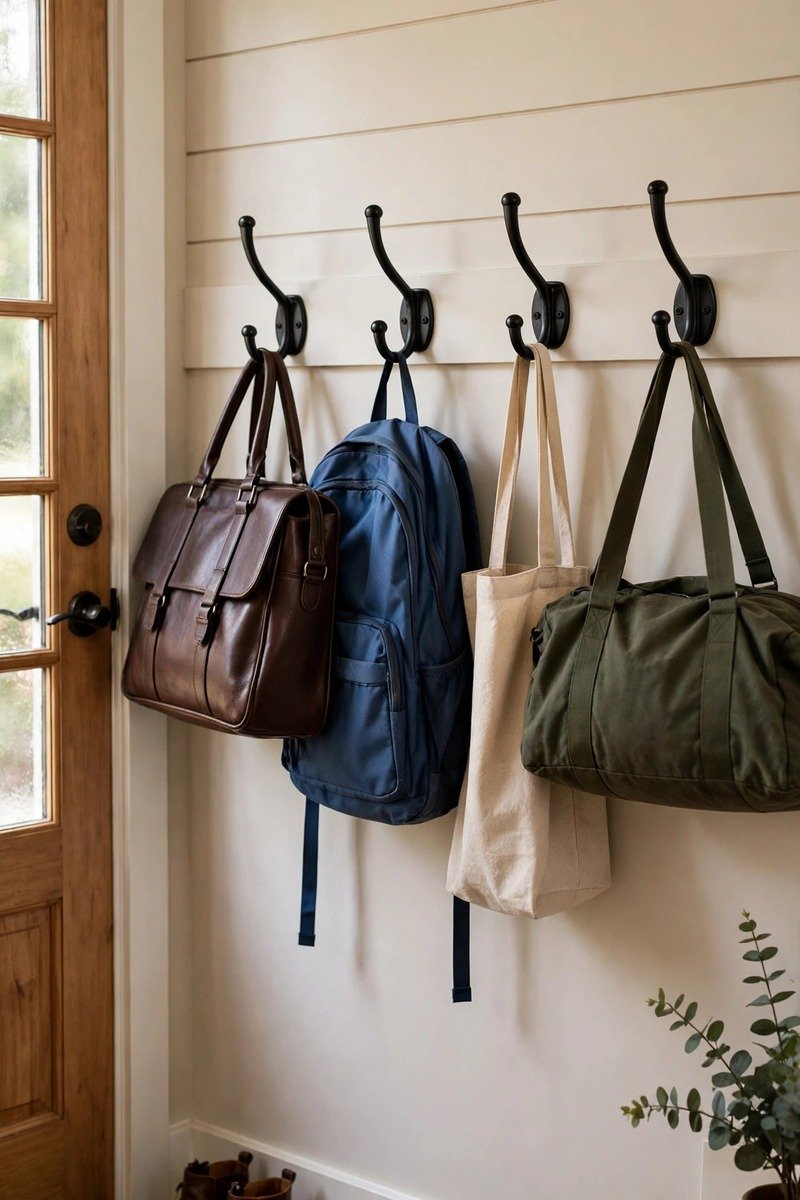
6. Give Each Person One Bag Hook
One hook per person is the simplest rule in this guide. Bags hang up instead of sliding off chairs, and everyone knows which hook is theirs.
Pro tip: Use hooks rated for at least 5 kg each, because a full work bag or school bag is heavy. A set of 4 sturdy hooks costs about 15 to 30 dollars.
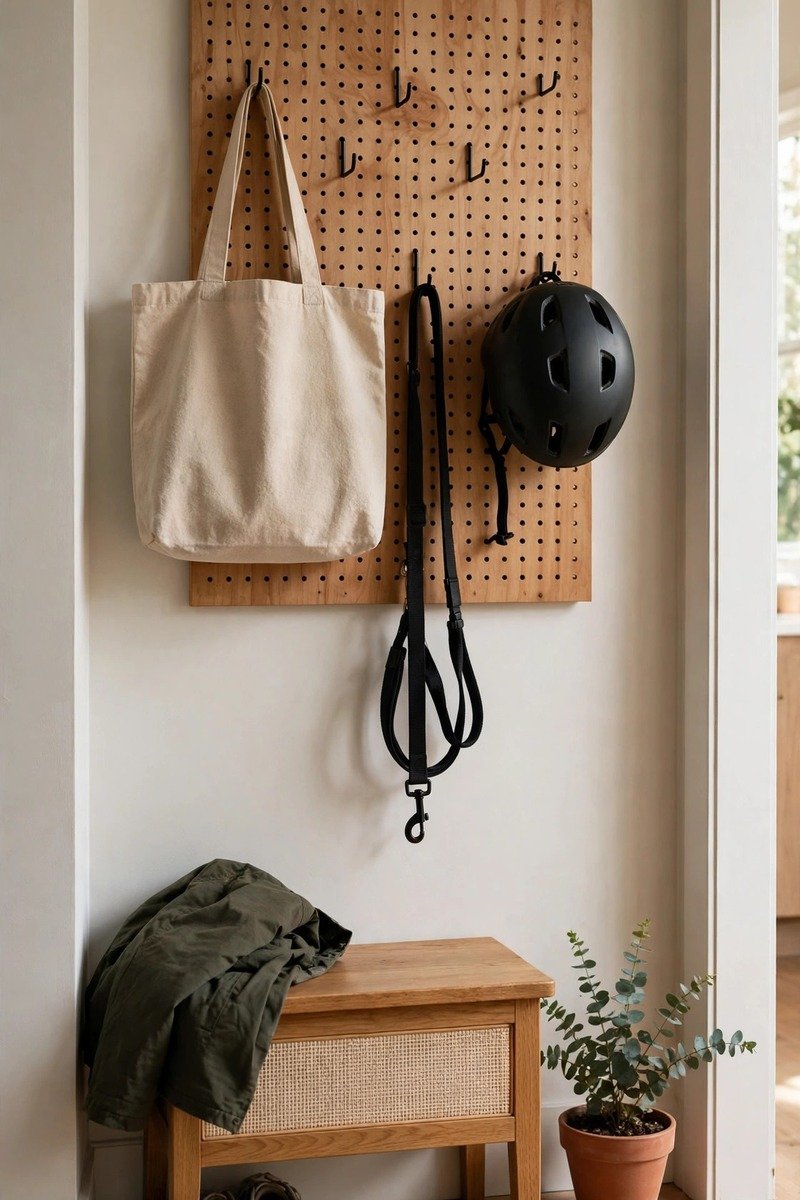
7. Mount a Pegboard for Changing Needs
A pegboard changes as your life changes. Move hooks around when a new bag, a dog leash, or a bike helmet joins the routine.
Pro tip: Leave a 2 cm gap behind the board with spacers so hooks sit right. A pegboard about 60 cm by 90 cm costs about 25 to 45 dollars.
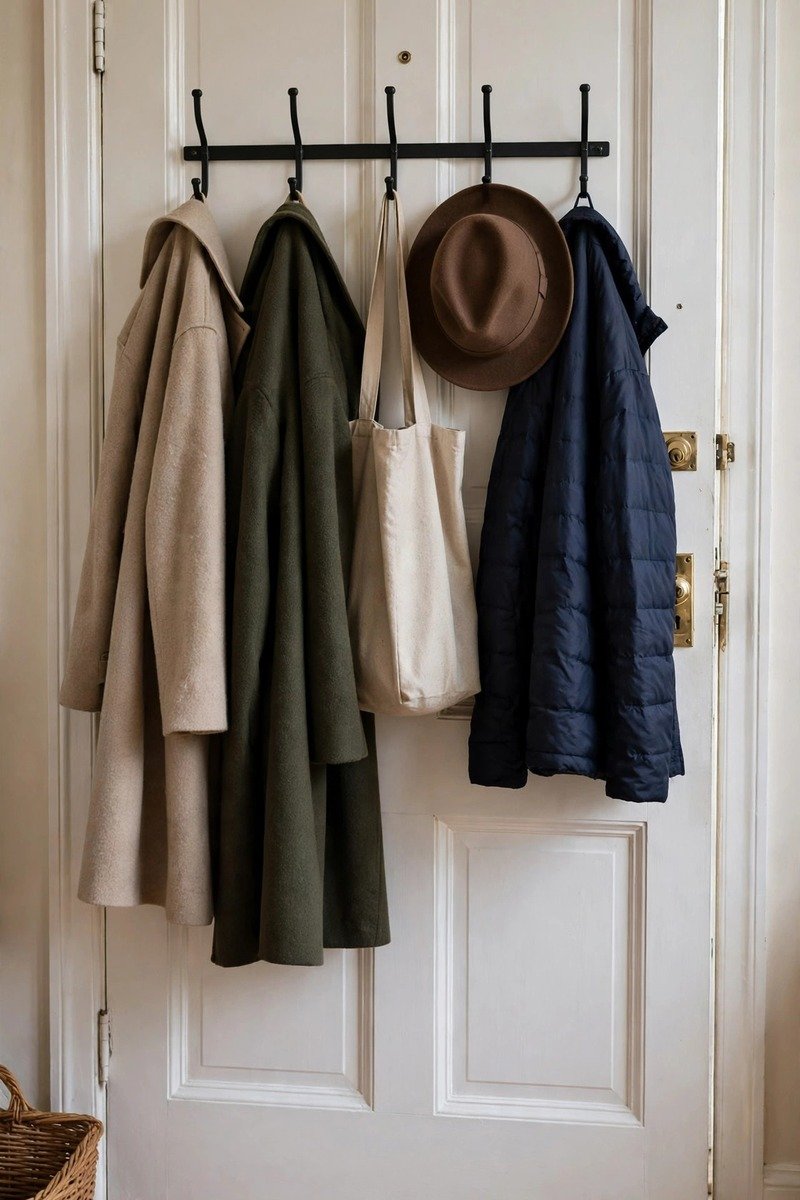
8. Use an Over the Door Rack
When wall space is taken, the door itself can help. An over the door rack holds coats, bags, and hats without a single hole in the wall.
Pro tip: Keep the load light so the door still closes and latches fully. A 5 hook rack costs about 15 to 25 dollars, and felt pads stop rattling.
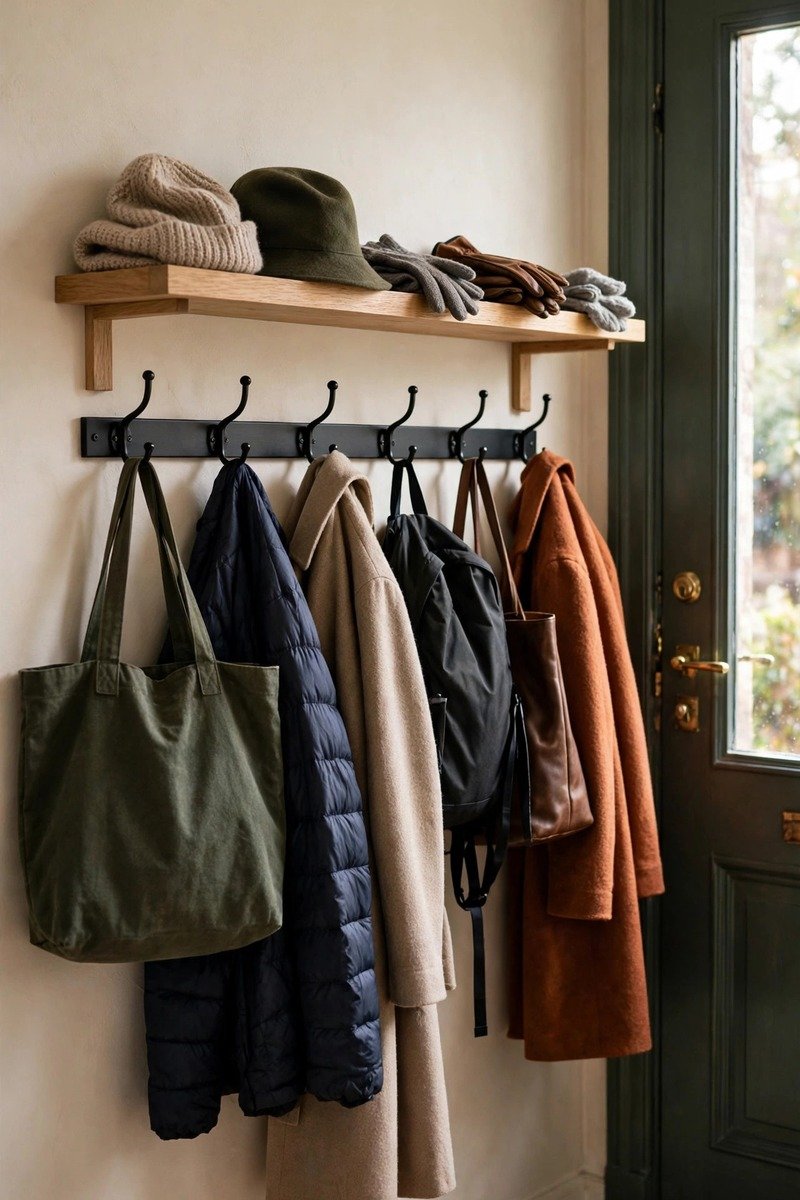
9. Add a Coat Hook Rail With a Shelf
A rail with a shelf on top does two jobs at once. Coats and bags hang below, and hats, gloves, and sunglasses sit on the shelf above.
Pro tip: Mount the rail at about 170 cm high with the shelf just above it. A rail with a shelf about 90 cm wide costs about 30 to 50 dollars.
Shoes, Boots, and Wet Days
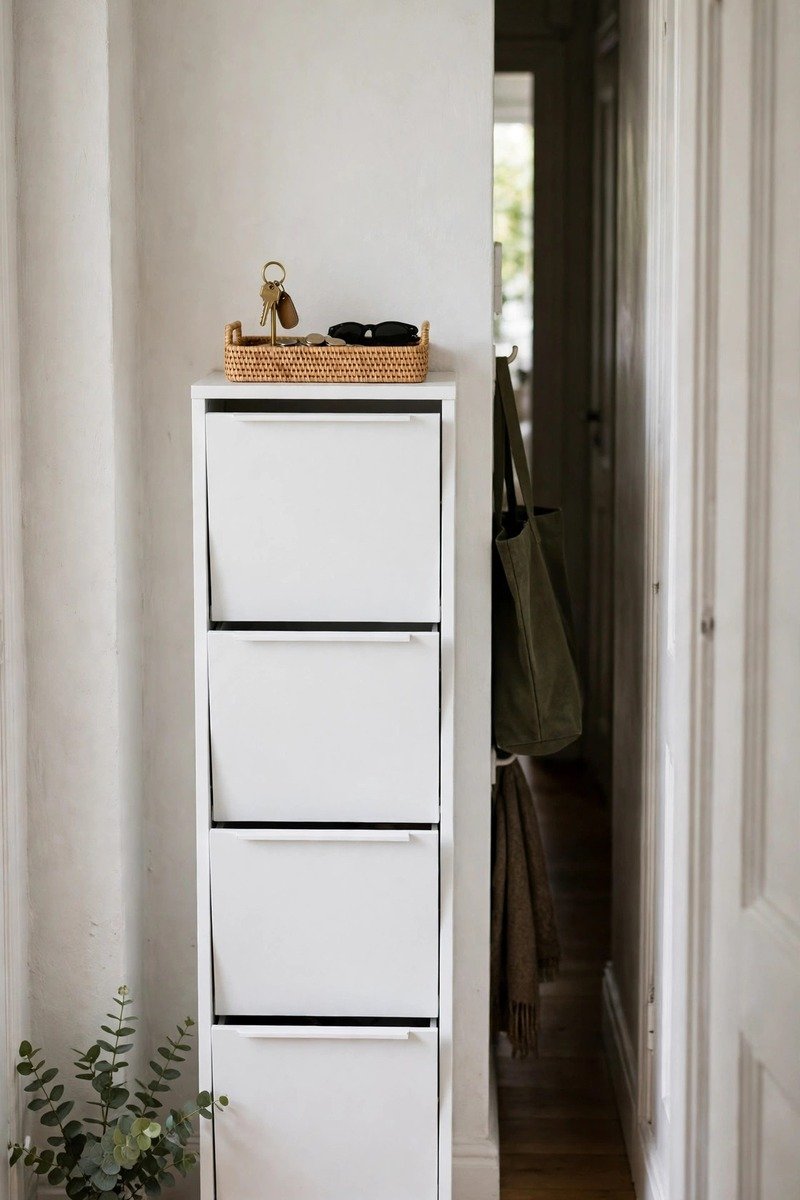
10. Add a Slim Shoe Cabinet
A slim shoe cabinet hides shoes behind closed doors and gives you a top surface for a key tray.
Pro tip: Pick a tilt out cabinet about 15 to 25 cm deep so it does not block the walkway. A 2 tier cabinet costs about 60 to 120 dollars, and anchor it to the wall.
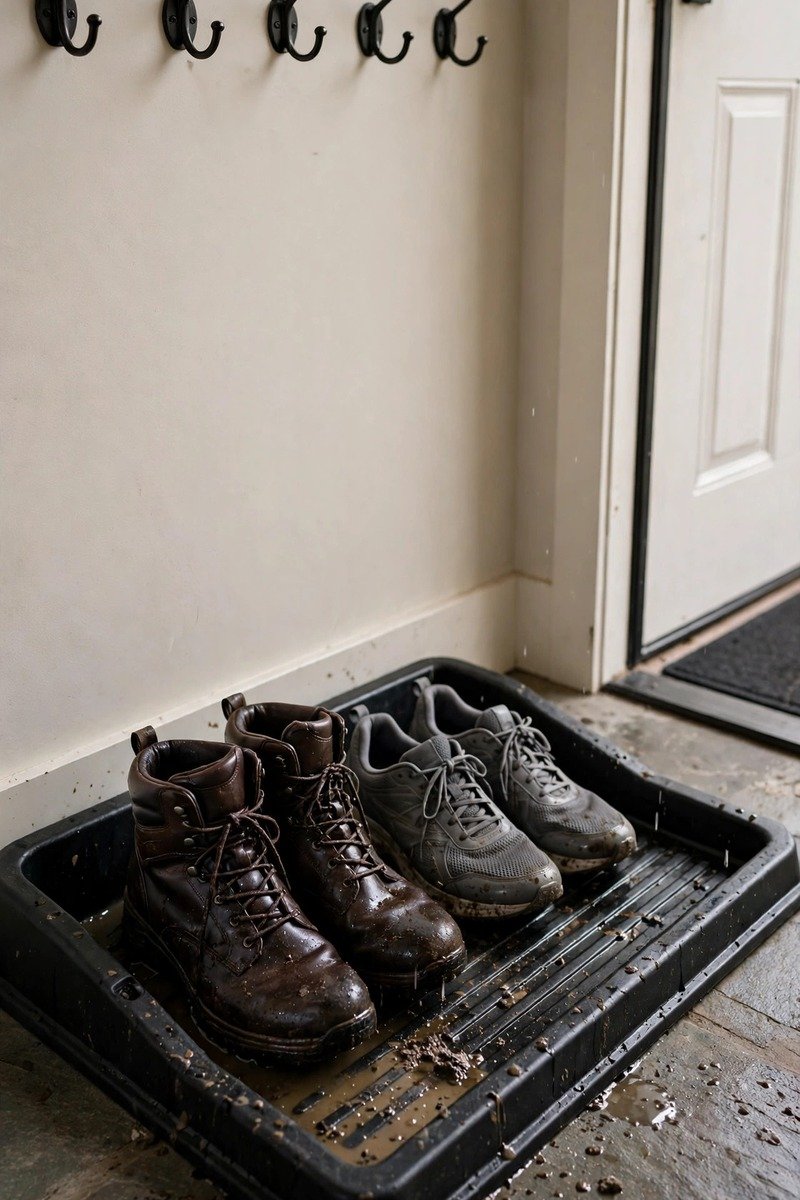
11. Put a Boot Tray Under the Zone
A boot tray catches rain, mud, and snow before they reach your floors. Wet shoes dry in the tray, and the mess stays in one spot.
Pro tip: Pick a tray with a raised edge at least 3 cm high that fits 2 pairs of shoes, about 75 cm by 35 cm. A rubber or metal tray costs about 15 to 30 dollars.
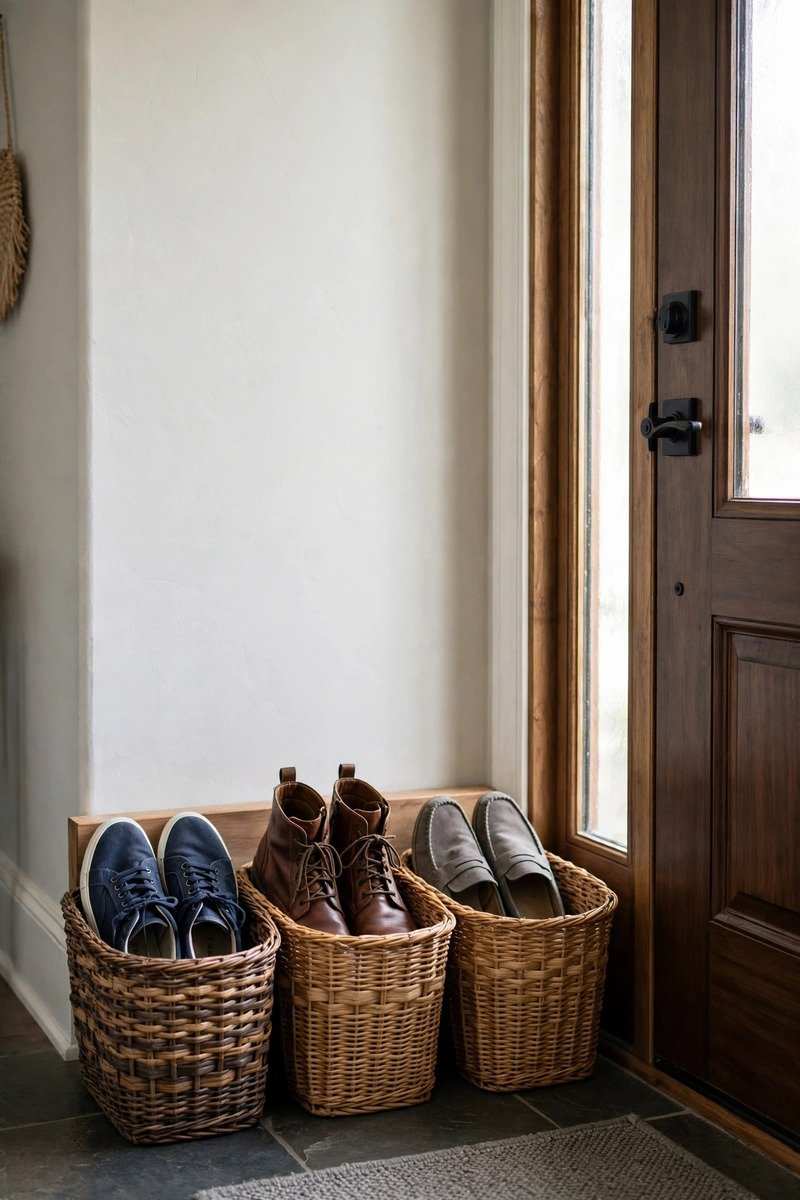
12. Use One Shoe Basket Per Person
One basket per person stops shoes from mixing into one big pile. Each basket holds only the shoes worn this week, and the rest stay in the closet.
Pro tip: Use baskets about 35 cm wide and 25 cm deep, one per person. A set of 3 baskets costs about 20 to 35 dollars, and labels take 5 minutes to add.
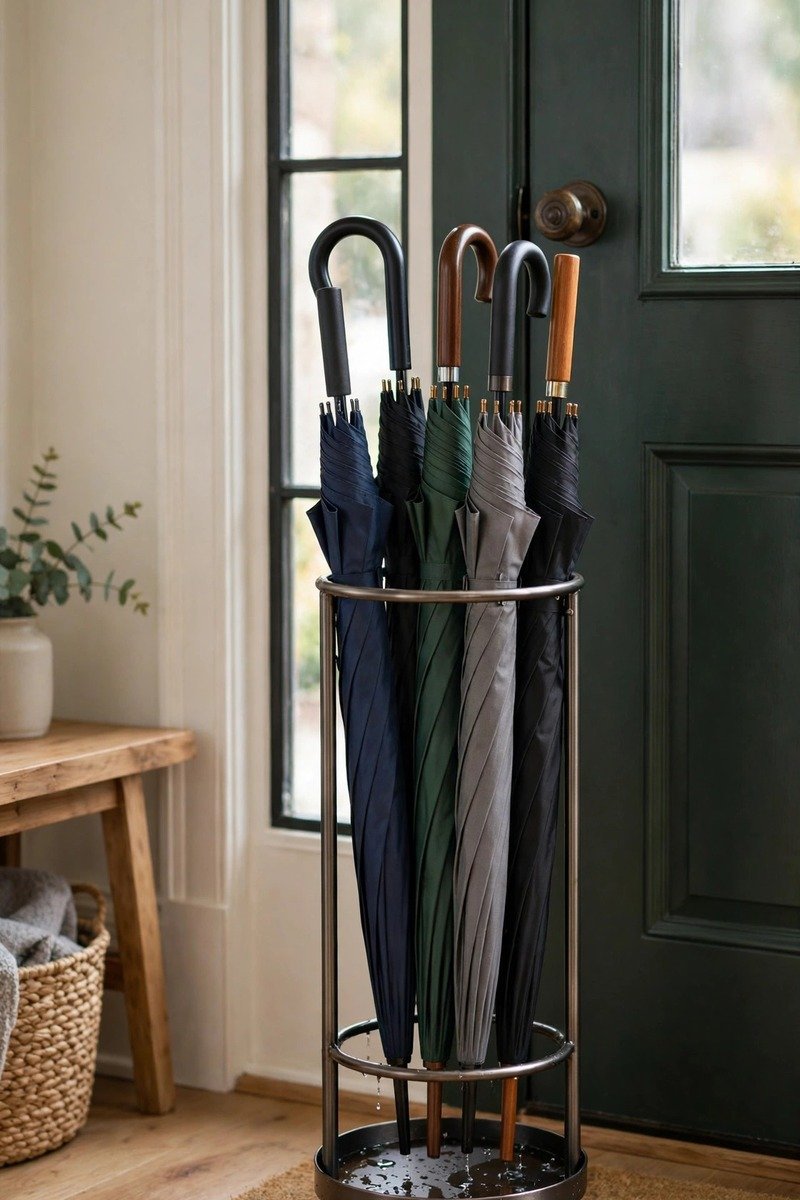
13. Set Up an Umbrella Stand by the Door
An umbrella stand keeps wet umbrellas off the floor and always within reach. You grab one on a rainy morning without hunting through a closet.
Pro tip: Pick a stand about 20 cm wide with a removable drip tray you can empty and wipe. A metal or ceramic stand costs about 20 to 40 dollars.
Mail, Papers, and Family Life
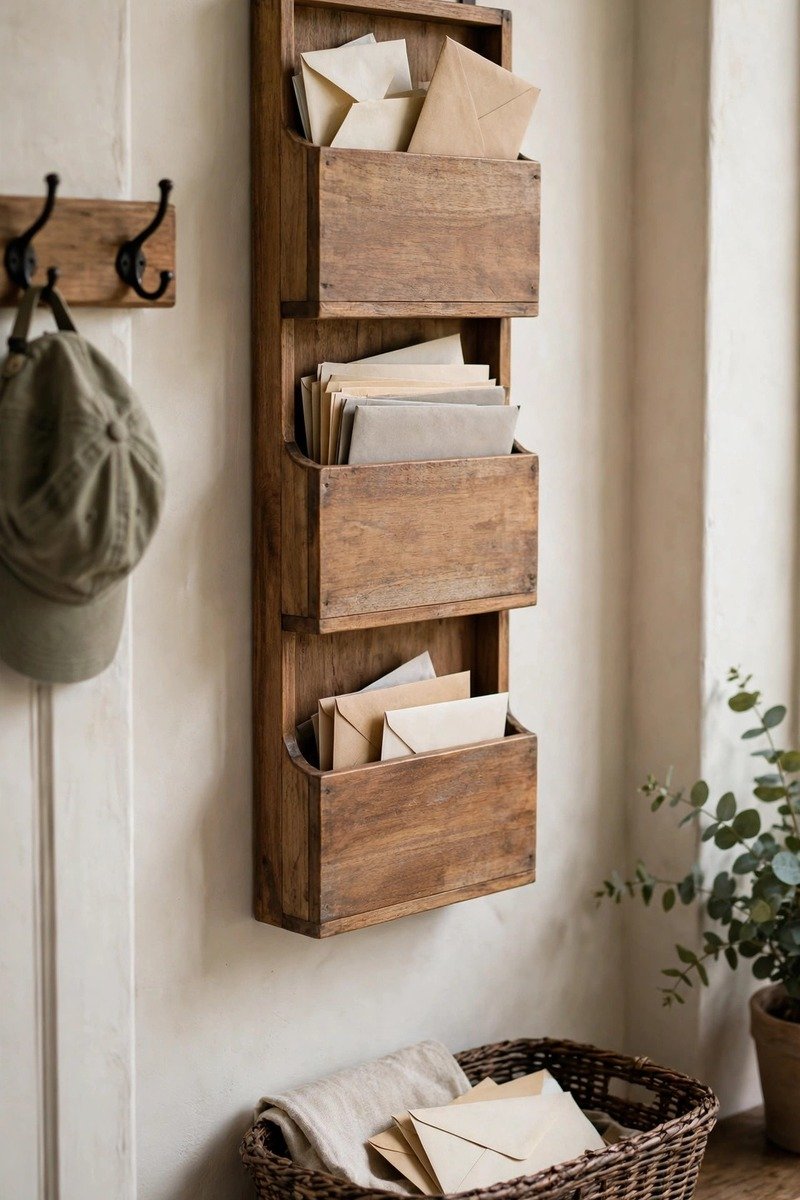
14. Sort Mail in a Wall Pocket
A wall pocket sorts mail the moment it comes in. One pocket holds letters to open, one holds bills to pay, and junk goes straight to recycling.
Pro tip: Use a 3 pocket wall sorter about 30 cm wide, mounted at eye level near the door. A wooden or metal sorter costs about 20 to 35 dollars.
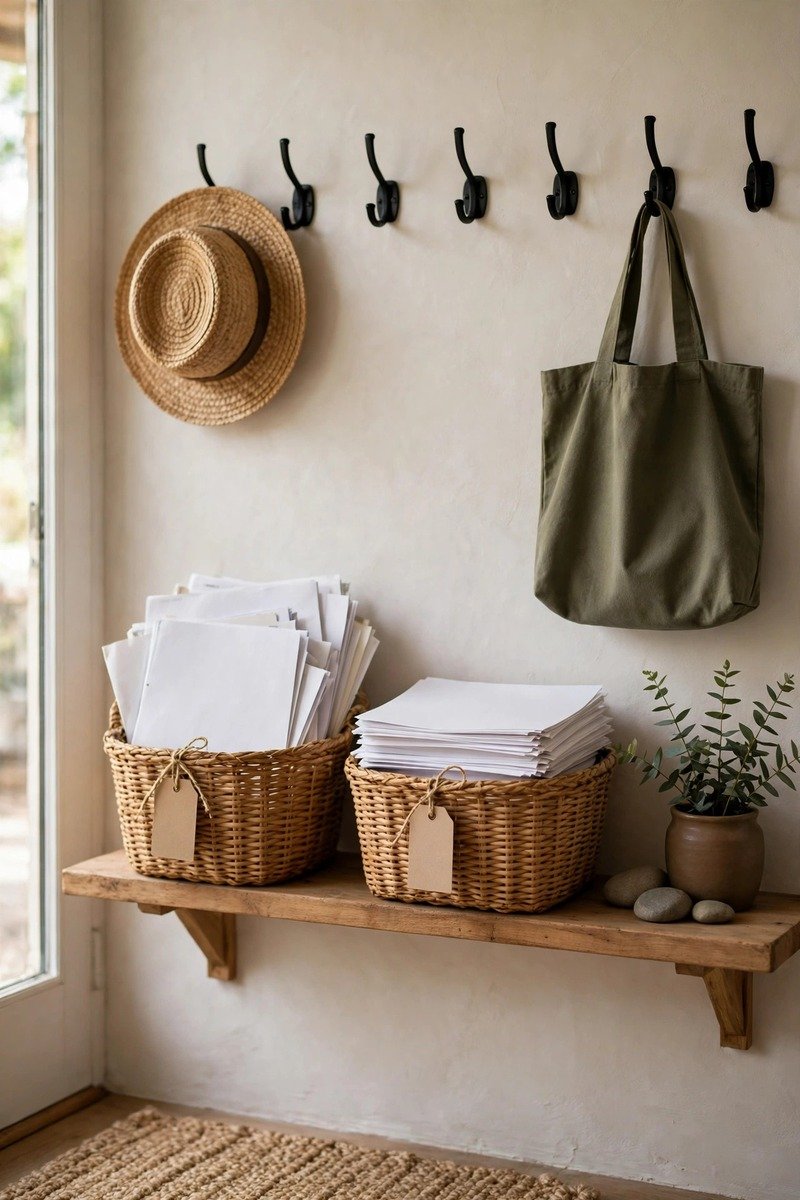
15. Add a Two Basket Paper System
Two baskets handle school and home papers with no fuss. One basket holds papers that need action, like permission slips and forms. The other holds papers to file or keep.
Pro tip: Label the baskets “Action” and “Keep” so kids and adults use them the same way. Two small baskets cost about 10 to 18 dollars.
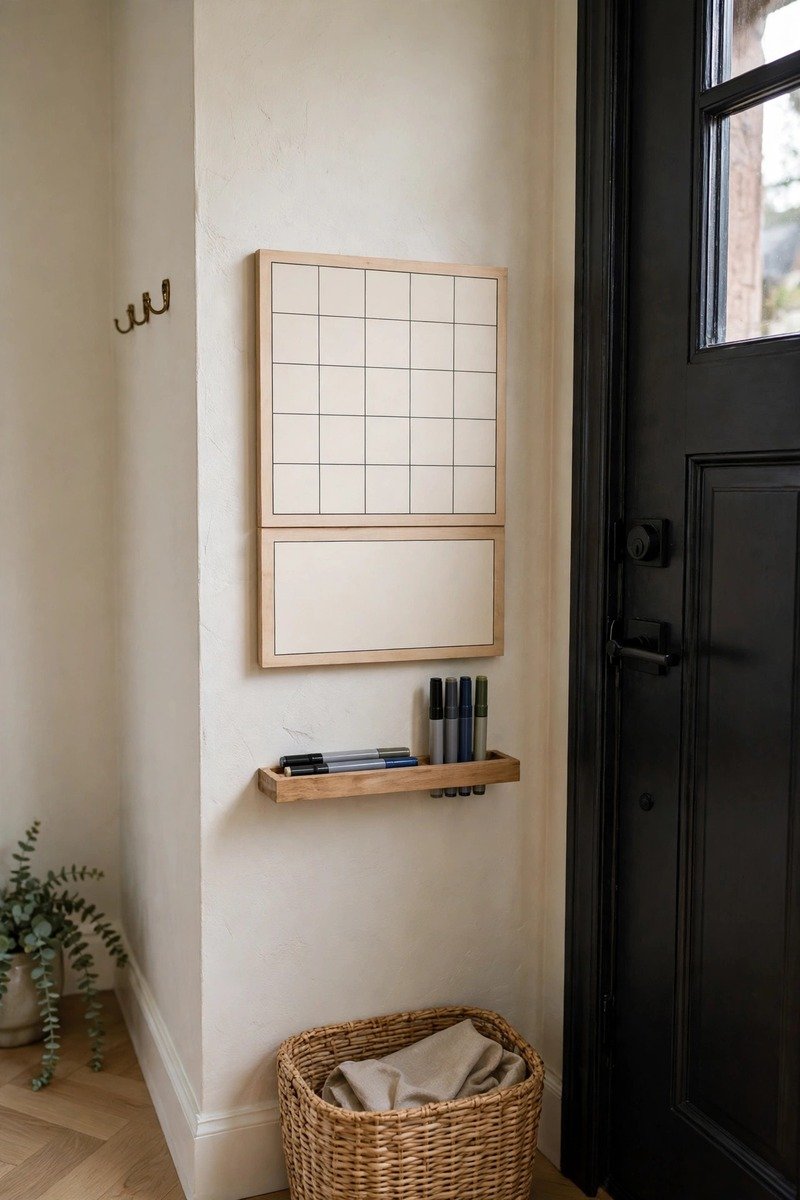
16. Build a Family Command Board
A small board by the door holds the calendar, the weekly plan, and short notes. Everyone checks the same board before leaving, so fewer things get forgotten.
Pro tip: Keep the board about 45 cm by 60 cm so it fits the drop zone wall without taking over. A board with a small shelf for markers costs about 20 to 40 dollars.
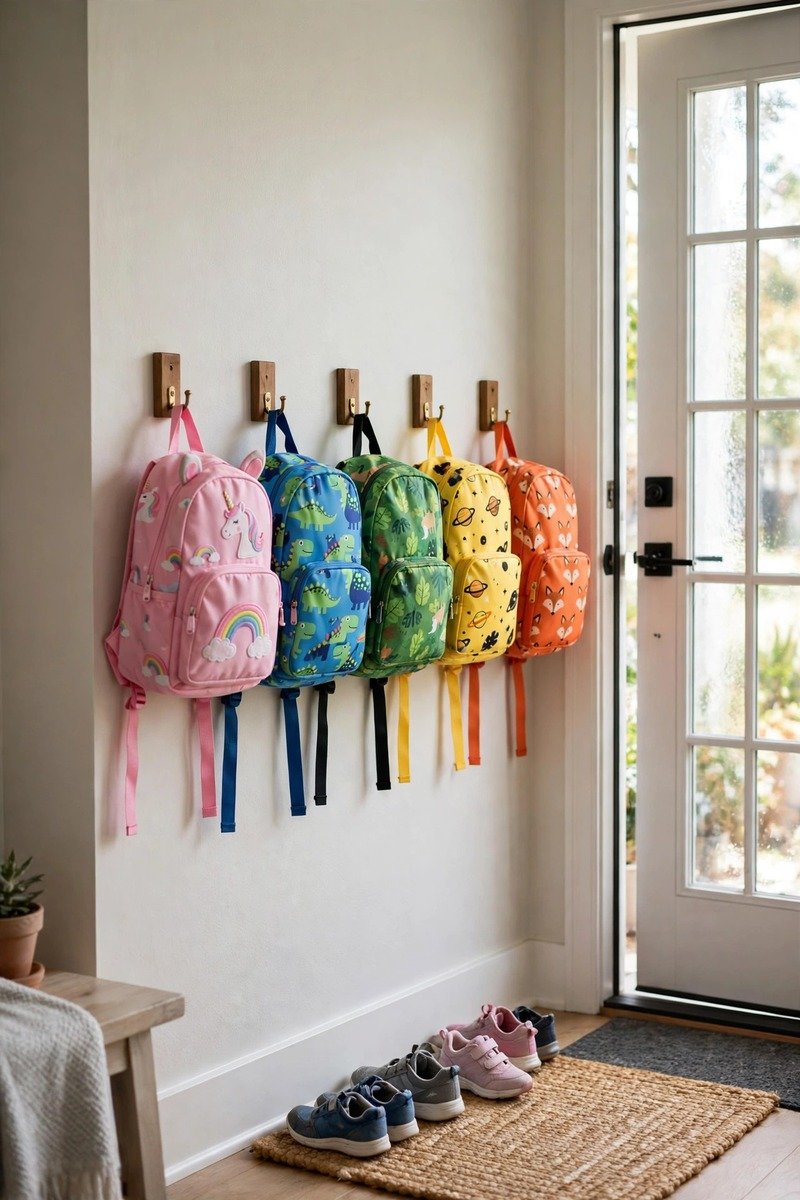
17. Hang Backpack Hooks at Kid Height
Kids use hooks they can actually reach. Mount backpack hooks at about 110 cm high for younger kids and 130 cm for older ones.
Pro tip: Use one hook per child plus one spare for a friend or a lunch bag. Sturdy hooks cost about 3 to 6 dollars each, and test each one with a full bag.
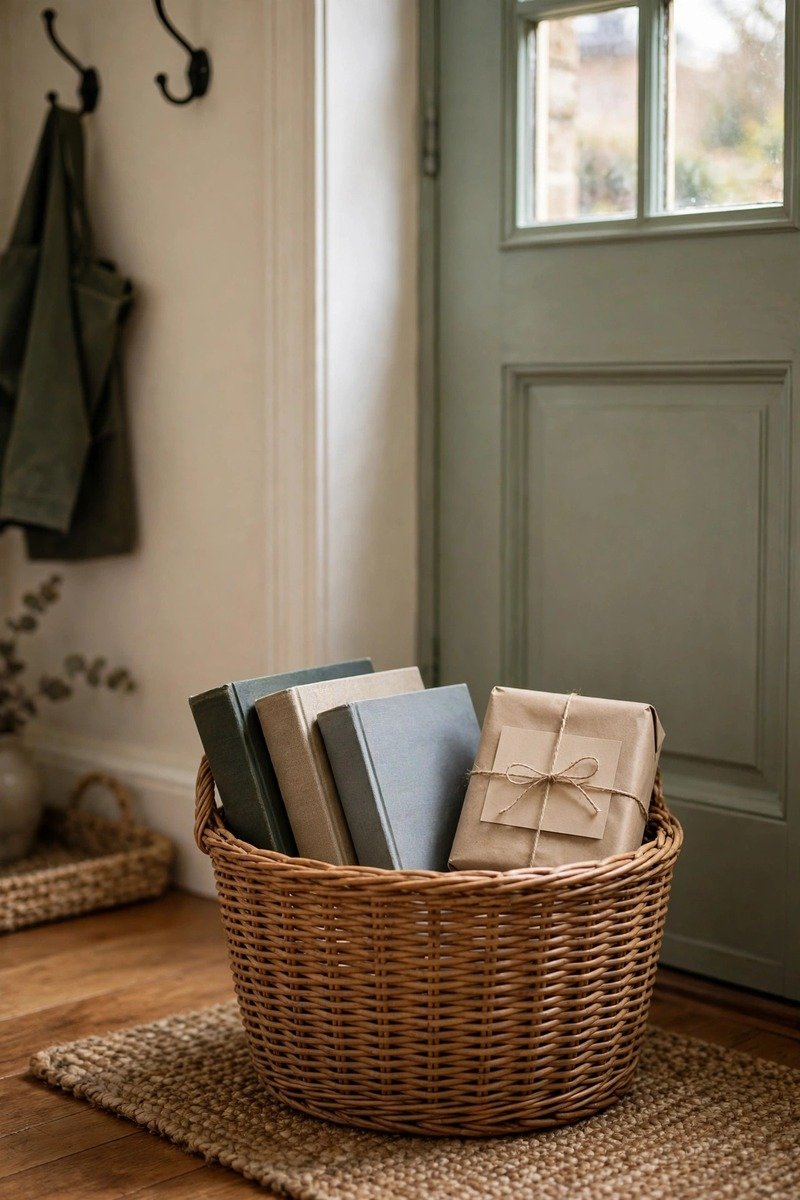
18. Keep an Outgoing Basket by the Door
An outgoing basket holds things that need to leave the house: returns, library books, borrowed items, and parcels to post.
Pro tip: Use a basket about 30 cm wide and label it “Out” so the whole family knows its job. A basket costs about 8 to 15 dollars.
Small Spaces and Renters
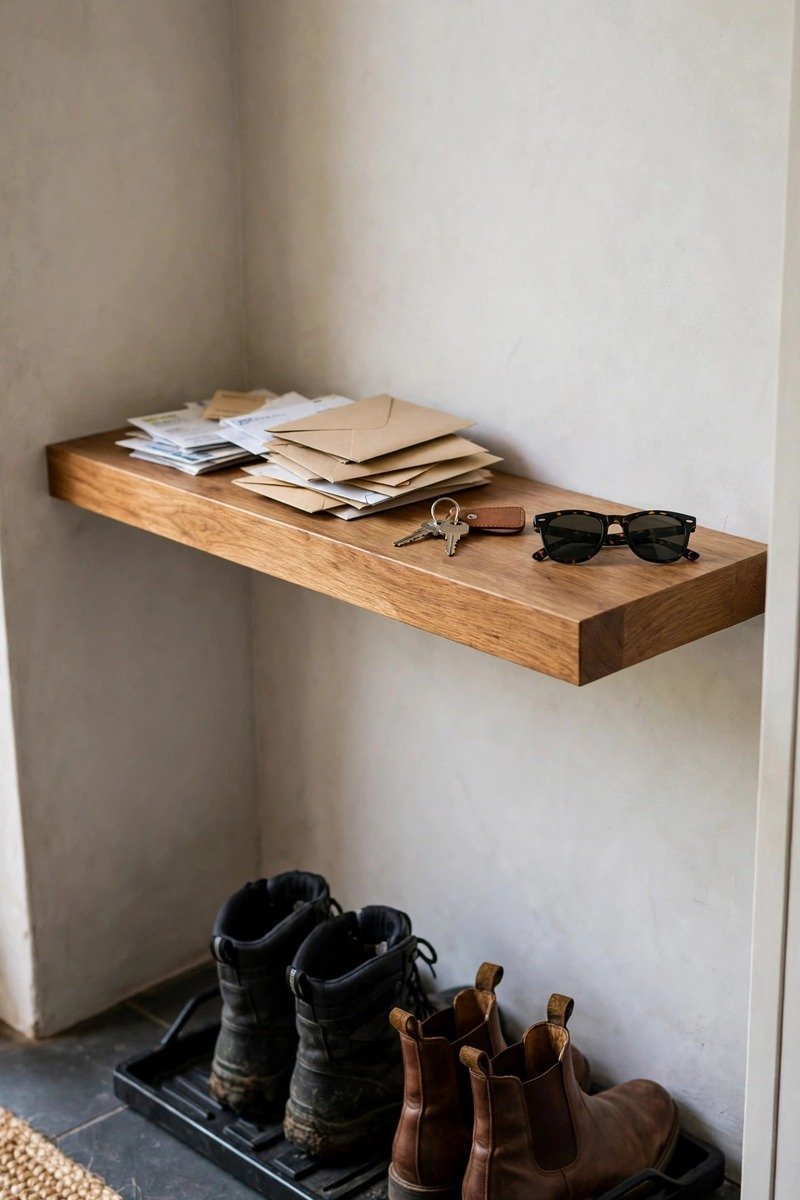
19. Fit a Floating Console Shelf
A floating shelf gives you a landing surface without legs that eat floor space. Keys, mail, and sunglasses sit on the shelf, and a boot tray fits underneath.
Pro tip: Hang the shelf at 75 to 90 cm high, a natural drop height for most adults. A floating shelf about 60 cm wide costs about 25 to 50 dollars.
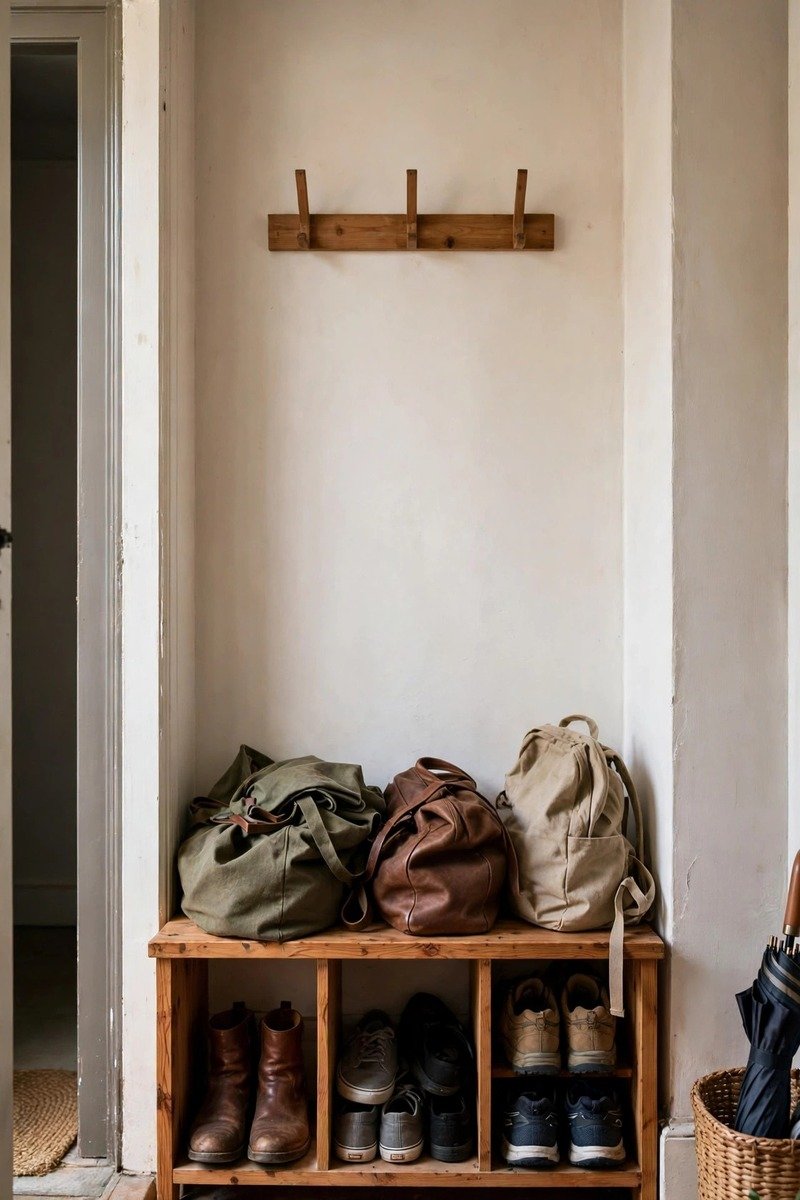
20. Use a Narrow Bench With Storage
A narrow bench gives you a seat to change shoes and storage underneath them. Shoes slide into cubbies or baskets below, and bags sit on top while you get ready.
Pro tip: Pick a bench about 30 cm deep and 90 cm wide so it fits a small entry without blocking the path. A bench with 2 or 3 cubbies costs about 70 to 140 dollars.
21. Choose a Mirror With Hidden Storage
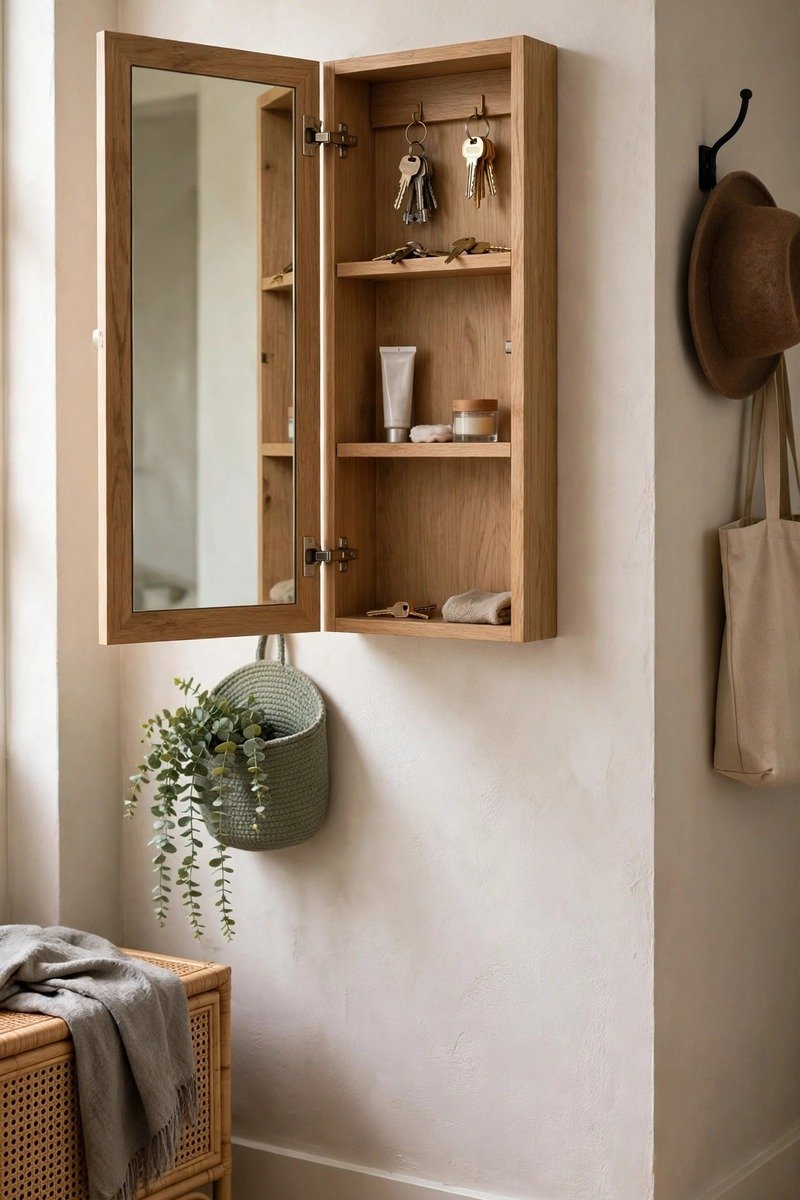
A mirror with storage behind it does two jobs in a small entry. You get a last look before you leave, and hidden shelves hold spare keys, a fob, hand cream, and a lint roller.
Pro tip: Pick a mirror cabinet about 40 cm wide and 60 cm tall with at least 2 shelves inside. A mirror cabinet costs about 40 to 90 dollars.
22. Turn a Closet Door Into a Drop Zone
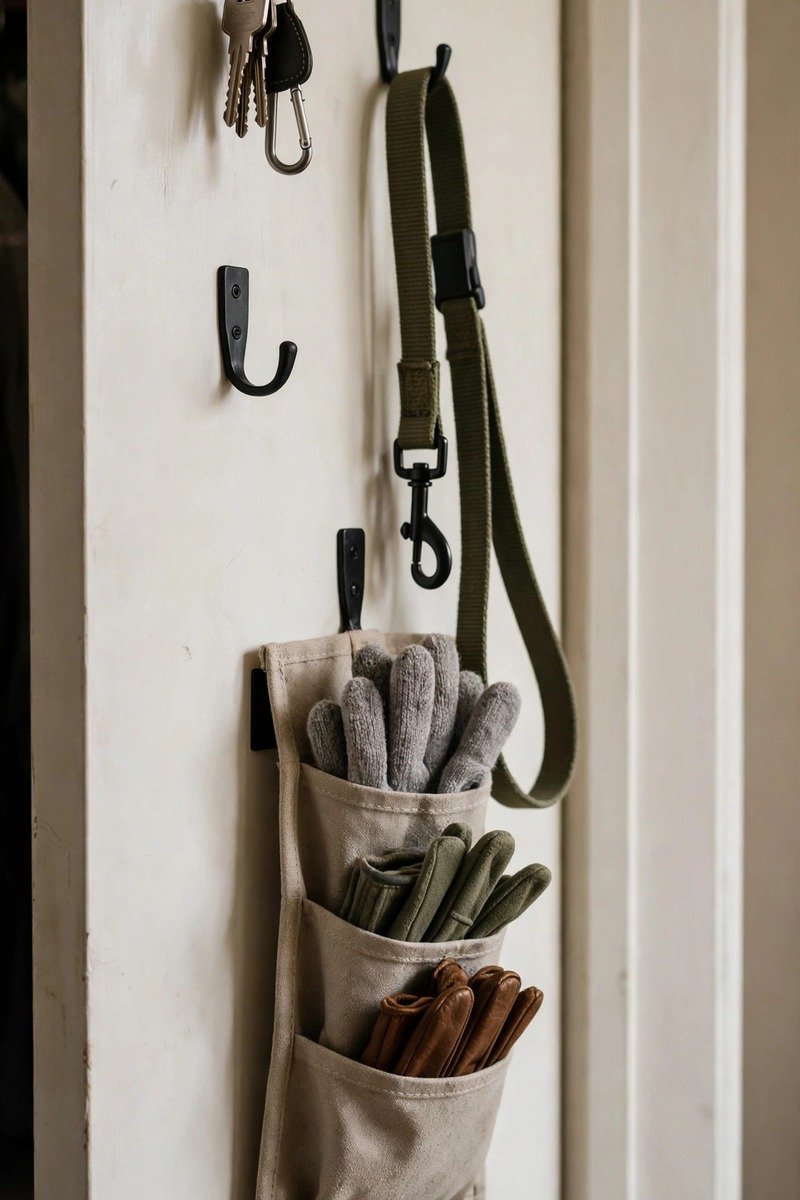
If you have no free wall, use the inside of a coat closet door. Adhesive hooks hold keys and leashes, and a small pocket organizer holds gloves, sunscreen, and dog bags.
Pro tip: Use removable hooks rated for light items only, and keep heavy bags off the door. A pocket organizer costs about 12 to 20 dollars.
Keep It Working Every Day
23. Make a Pet Gear Station
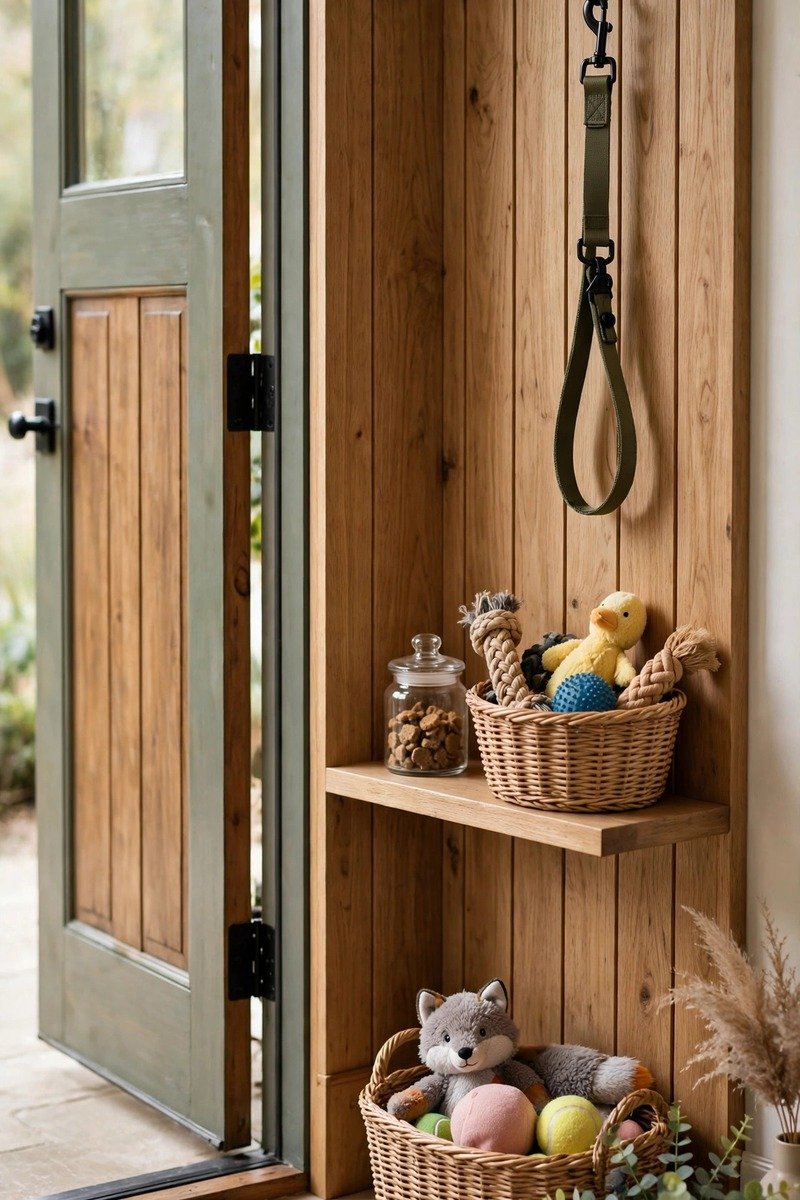
Leashes, treat bags, and poop bags need one spot by the door, or walks start with a hunt. A hook for the leash, a small jar for treats, and a basket for toys keep pet gear ready.
Pro tip: Hang the leash hook at about 120 cm high so it is easy to grab on the way out. A hook, a jar, and a small basket together cost about 15 to 30 dollars.
24. Hang a Reusable Bag Hook
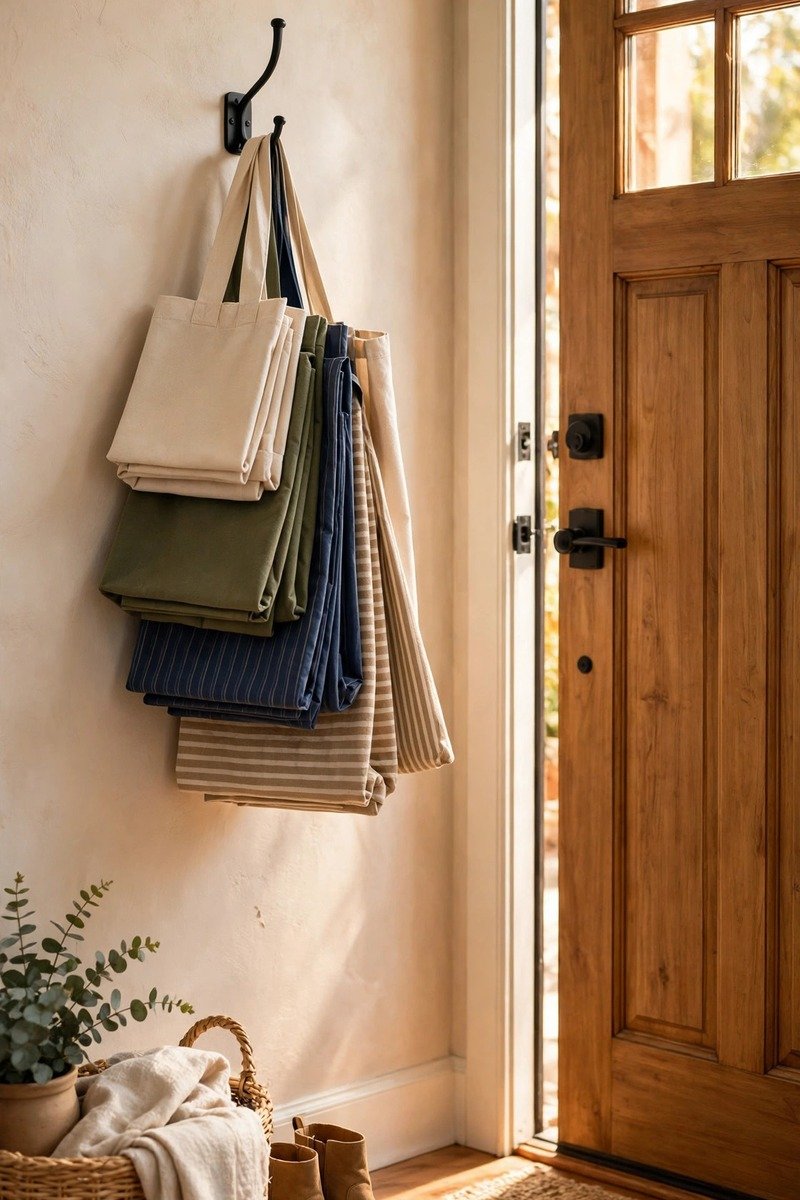
Reusable bags only help if you take them with you. One hook by the door holds 3 or 4 folded bags, so you grab them on the way to the shops.
Pro tip: Fold each bag the same way so 4 bags fit on one hook without slipping off. A strong hook costs about 4 to 8 dollars.
25. Set a Seasonal Swap Bin
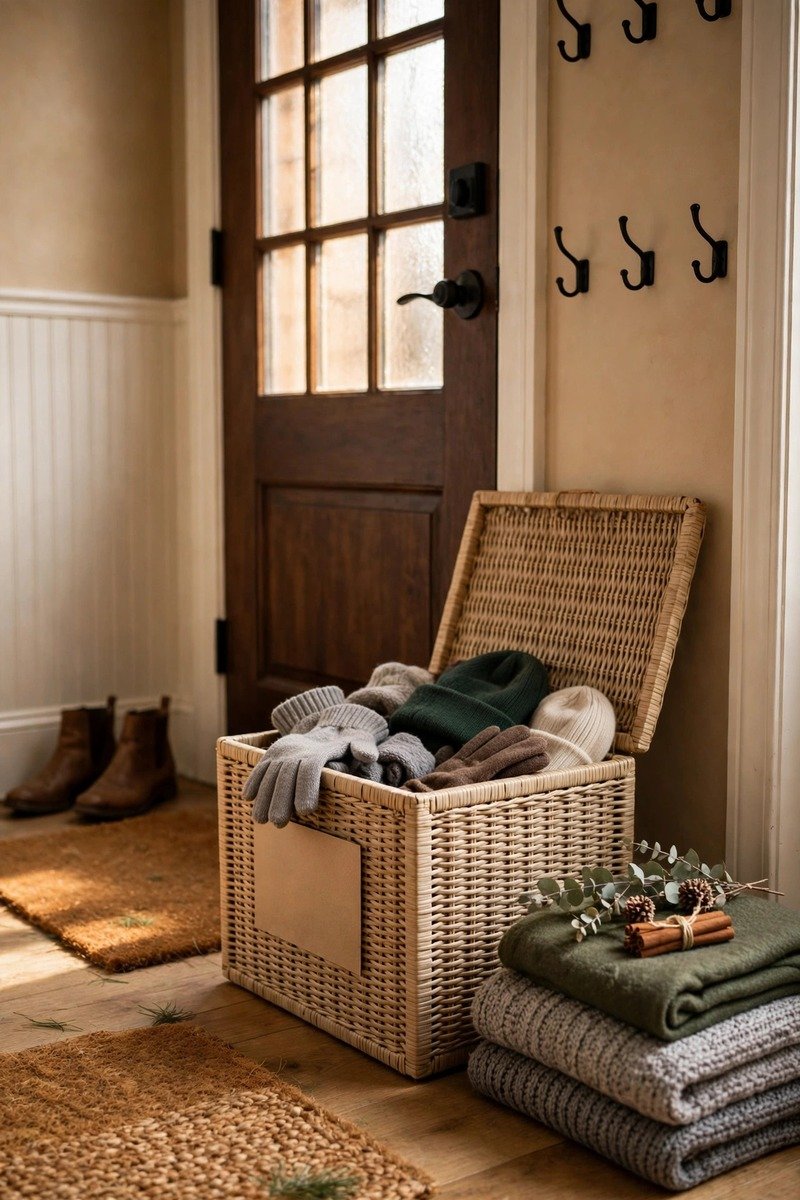
A drop zone needs a seasonal swap, or it fills up with out of season gear. Keep one bin nearby for the current season: gloves and hats in winter, sunscreen and caps in summer.
Pro tip: Use a bin about 35 cm wide and label it with the season so the swap is obvious. A lidded bin costs about 10 to 18 dollars, and the swap takes about 15 minutes twice a year. For more small space storage ideas, see our entryway organization ideas for small spaces, and for styling the surface, see our entryway table decor ideas. If your door opens onto a tiny porch, our small front porch ideas can help the outside match the inside.
Measure the Entry First: Hooks, Bench and Clearance
A drop zone is the first thing you use when you come home, so measure the entry before you buy anything. Note the width of the wall, the door swing, and the space in front of it. A bench needs about 18 inches of depth, and a person sitting on it needs 24 inches of clear floor in front, so a narrow entry under 36 inches wide suits hooks and a wall shelf, not a bench. Hang hooks at two heights, about 60 inches for adults and 48 inches for children, because hooks at one height are used by one person only. Leave at least 12 inches between hooks, so coats do not bunch up. Drop zone ideas work best when the zone fits the entry, because a bench that blocks the door is moved within a week, and a zone that is moved is a zone that is never used.
The Five Minute Drop Off Routine
- Hang the coat on its hook as soon as you come in, not on a chair.
- Put shoes on the tray or the rack, pairs together, not scattered.
- Drop keys and wallet in one bowl by the door, the same bowl every day.
- Sort the mail at the door: keep what matters, recycle the rest at once.
- Hang the bag on its hook, and check it is packed for tomorrow before you walk away.
Hooks, Baskets and Labels by Family Member
Give every person one hook, one basket and one shelf, because a shared hook is a hook nobody uses. Label each basket with a name, and keep the labels at eye level for children, about 48 inches from the floor, so they can read them. Use one basket per person for the small things, about 10 by 12 inches, such as gloves, hats and chargers. Keep a separate basket for shared items, such as the dog lead and the shopping bags, by the door, because shared items left on a personal hook get lost. Check the hooks once a month, and tighten any that wobble, because a hook that pulls out of the wall drops everything on the floor.
Budget for a Drop Zone by Entry Size
Under 30 dollars: three hooks, one basket and a small tray for keys. From 30 to 100 dollars: add a wall shelf, a shoe tray and a labelled basket per person. Over 100 dollars: add a bench with storage, a mirror and a set of matching baskets. As a typical range, a wall mounted coat rack costs about 20 to 50 dollars, and a storage bench costs about 60 to 150 dollars. Buy the hooks first, because hooks are used every day, and a bench without hooks is just a seat. Keep the floor clear every night, because a drop zone that is reset daily stays useful, and one that is never reset becomes a pile by the door.
Common Mistakes to Avoid
- Building at the wrong door. A drop zone at a door nobody uses will stay empty while clutter piles up at the real door.
- Adding too many categories. Keys, bags, shoes, and mail are enough. Every extra category makes the zone harder to keep tidy.
- Blocking the walkway. Deep furniture in a narrow entry turns the drop zone into an obstacle, so measure first and keep the path clear.
- Using closed storage for daily items. A drawer or a lidded box only works if people open it, so keep daily items open and easy to grab.
- Skipping the weekly reset. Five minutes a week to clear junk mail, return extra shoes, and empty bags keeps the zone from sliding back into clutter.
- Letting one person own the system. Give each person one hook and one job.