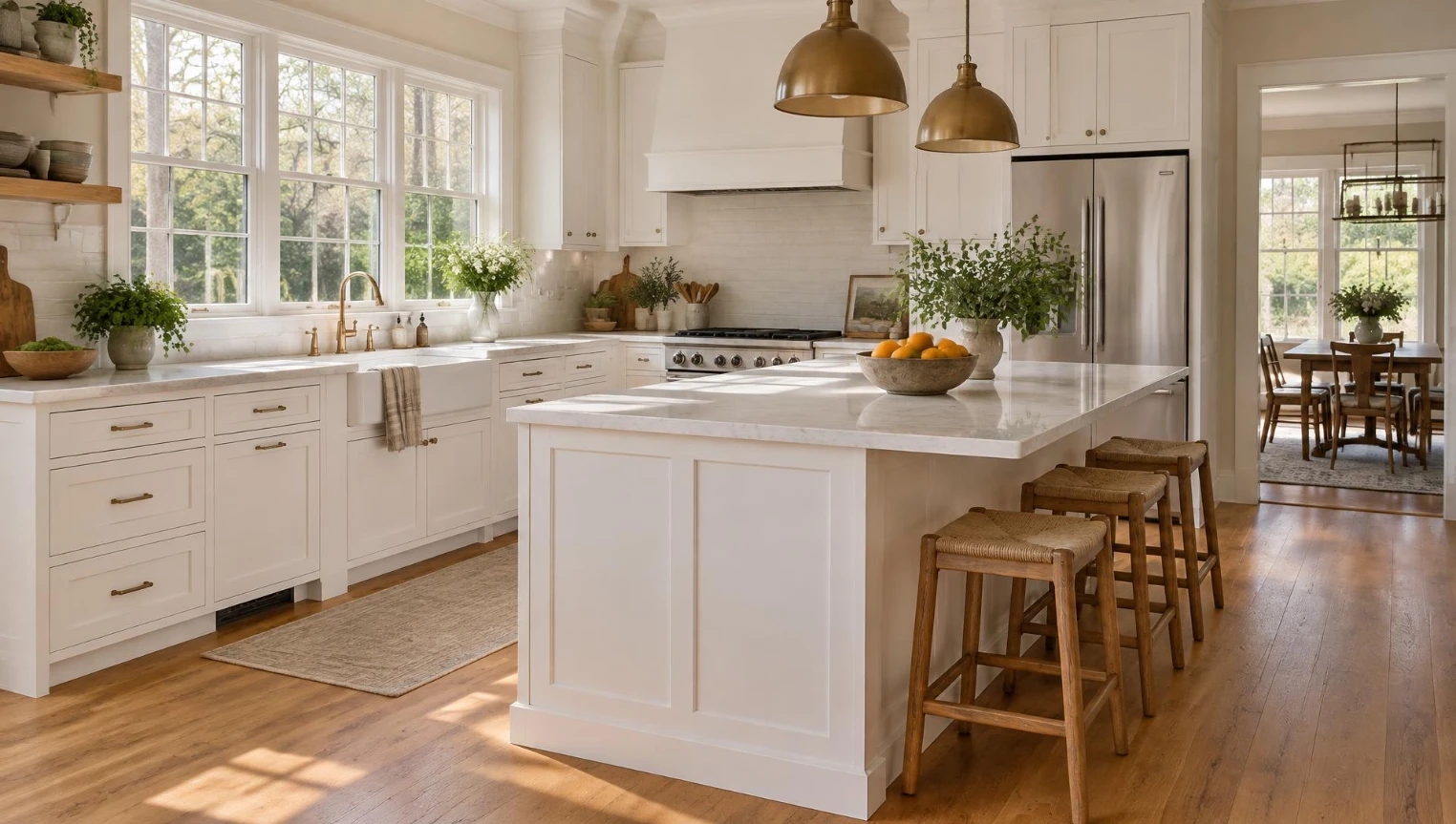
White cabinets are forgiving, they pair with almost any floor, which is exactly why choosing one feels harder, not easier. The real question isn’t what technically works, it’s what mood you want the floor to add, since the cabinets themselves aren’t going to tell you.
The clearest shift in flooring for white kitchens right now is warmth. Cool grays and stark white floors are giving way to warm tans, honey toned wood, and earthy neutrals, since a white kitchen with a cool floor can start to feel clinical rather than inviting.
Quick Picks
- Best overall pick: Warm wide-plank hardwood
- Best budget option: Luxury vinyl plank in a wood look
- Best for a bold statement: Deep navy or charcoal tile
- Best for a modern, industrial feel: Polished concrete
Did You Know? Roughly 70 percent of kitchen cabinets sold are white, which is exactly why so much flooring innovation right now is happening around this one pairing, designers are working hard to make the most common kitchen combination feel less predictable.
Before You Start
- Decide warm or cool first. This one choice narrows almost every other decision that follows it.
- Think about maintenance, not just looks. A busy kitchen floor needs to handle spills and daily traffic, not just photograph well.
- Sample the floor in your actual kitchen light. Undertones shift dramatically between store lighting and your own windows.
- Consider the whole room, not just the floor. Countertops, backsplash, and hardware all need to work with whatever you choose.
- Don’t rule out bold. A white kitchen has enough visual quiet built in to handle a genuinely bold floor.
Hardwood and Wood-Look Options
1. Warm wide-plank hardwood
This is the pairing designers keep coming back to for a reason.
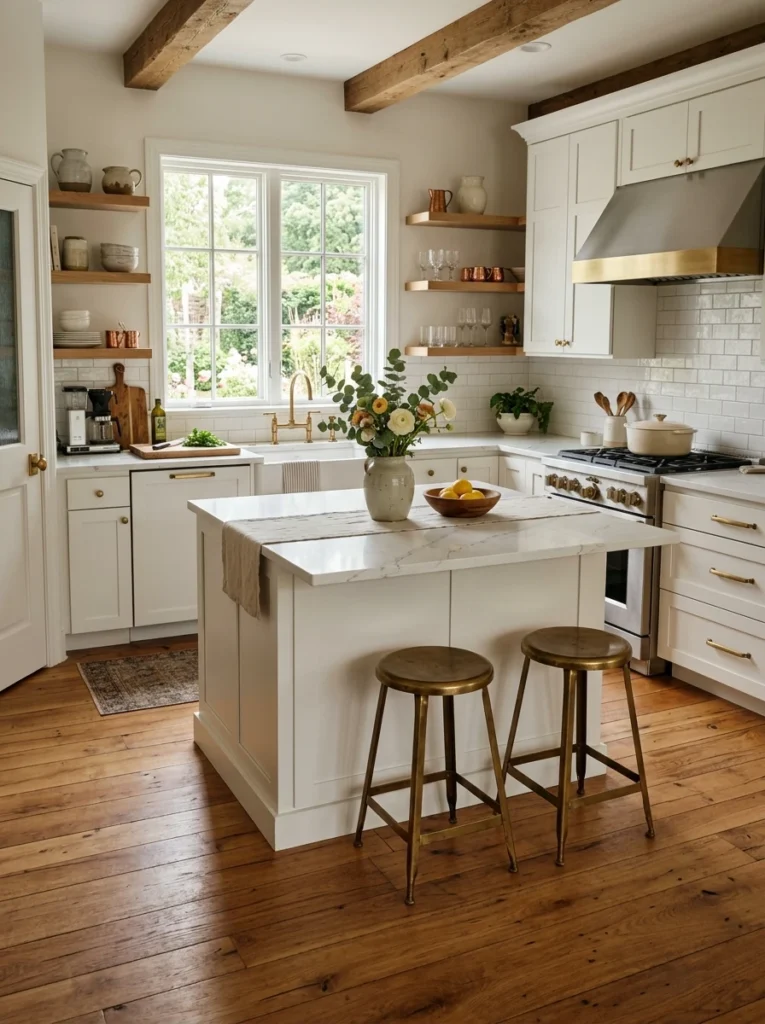
Wide planks in a warm honey or golden oak tone bring genuine visual and physical warmth against white cabinetry, and hardwood specifically feels warmer underfoot than tile, which matters in a room you stand in daily.
This combination works across nearly every kitchen style, from farmhouse to modern, since the wood tone does the adapting rather than the cabinets.
2. Whitewashed or bleached oak
A lighter wood option for anyone who wants warmth without much color contrast.
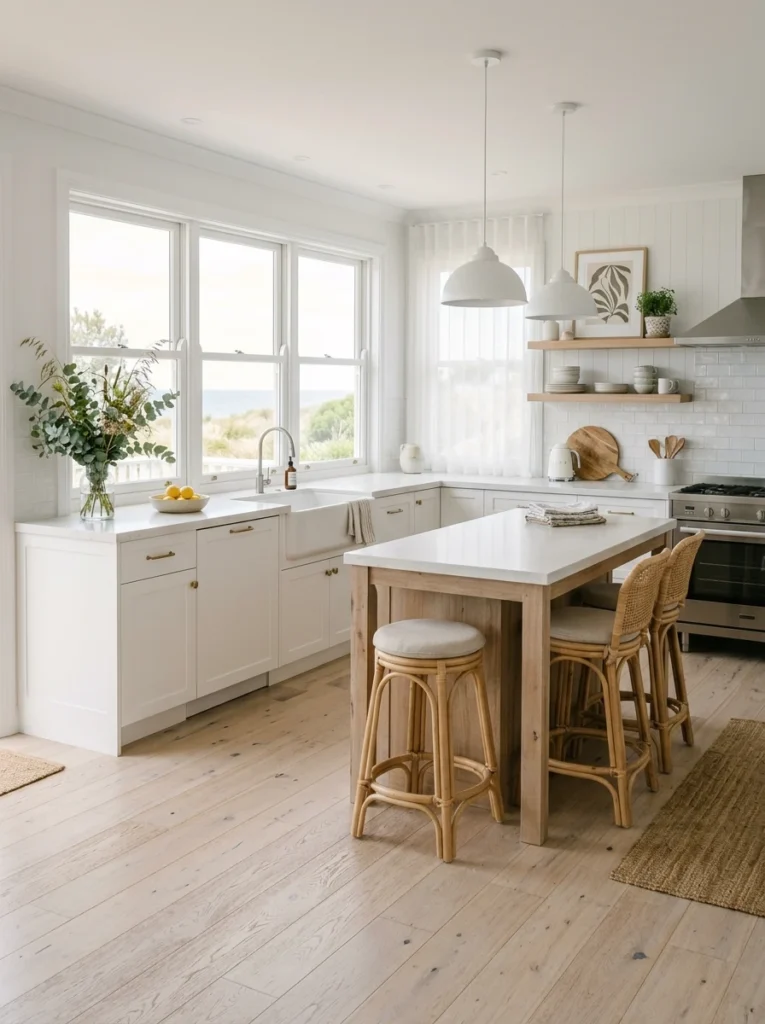
Whitewashed oak keeps the wood grain and texture visible while staying close in tone to the cabinets above it, creating a soft, almost monochromatic look rather than a strong contrast.
This pairing suits a coastal or Scandinavian style kitchen particularly well, where the goal is a light, airy feel throughout.
3. Dark walnut for dramatic contrast
The opposite approach, and an increasingly popular one.
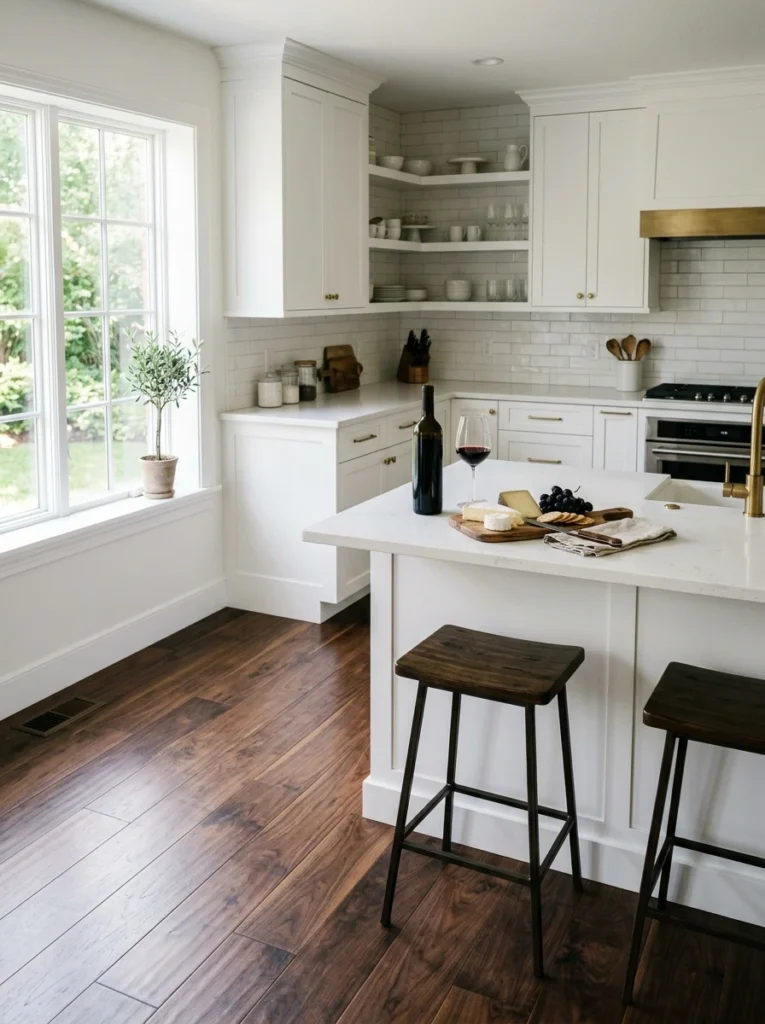
Deep walnut or espresso toned wood creates real drama against white cabinets, grounding a room that could otherwise feel entirely too light and undefined.
This is a strong choice for a larger kitchen that can handle the visual weight without feeling closed in.
4. Wood-look porcelain tile
All the warmth of wood, none of the water sensitivity.
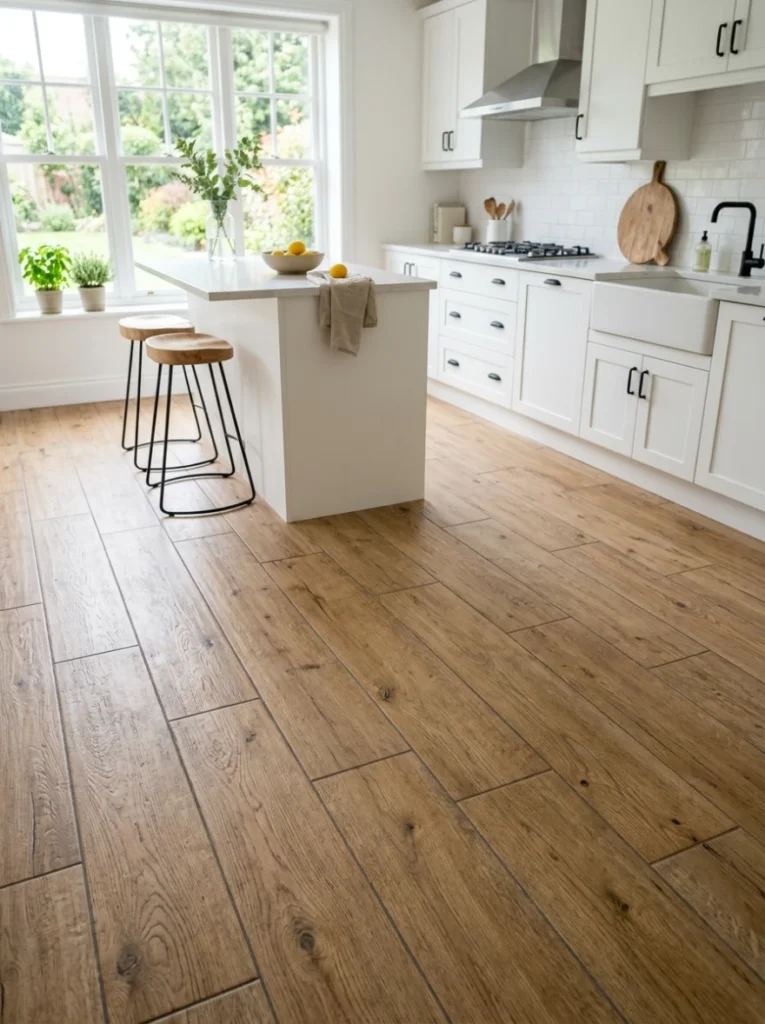
Modern wood-look porcelain has closed the visual gap with real hardwood significantly, while standing up to spills, humidity, and heavy foot traffic in a way solid wood never fully can.
It’s a strong pick for anyone who loves the hardwood look but wants a genuinely low-maintenance kitchen floor underneath it.
5. Reclaimed or barnwood-style flooring
A textured, rustic option that leans into imperfection.
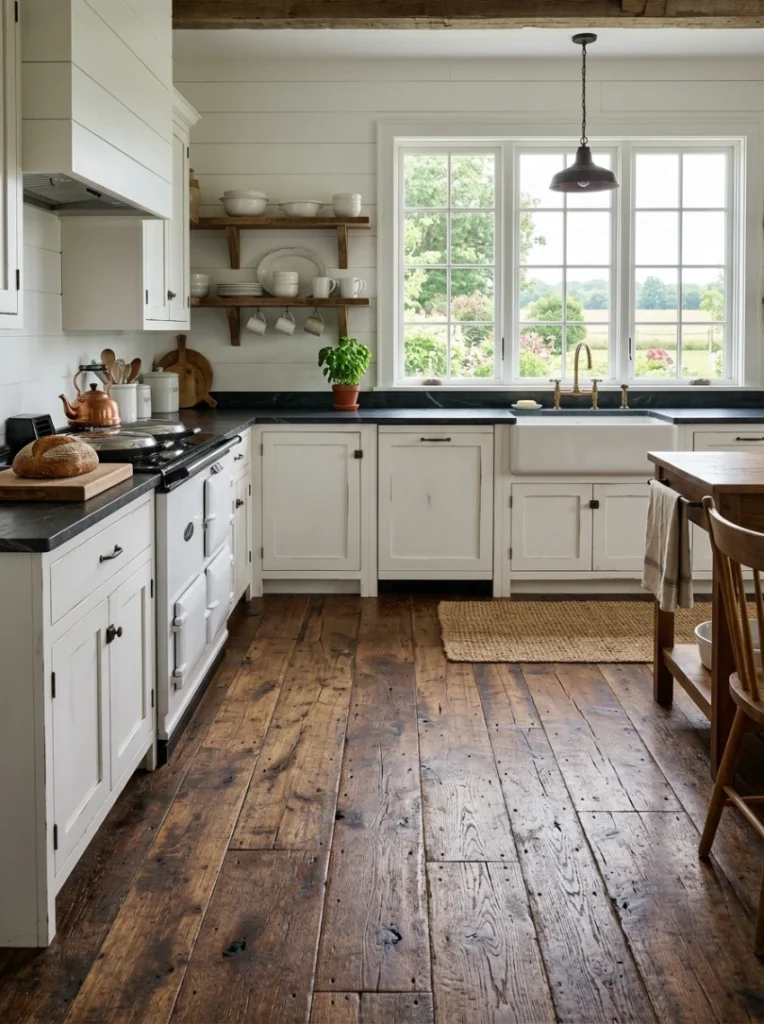
Reclaimed wood, or a reclaimed-look engineered plank, brings visible knots, saw marks, and color variation that pairs especially well with a farmhouse leaning white kitchen.
Layering in vintage accessories and soft textiles on top of this floor completes a cohesive, collected farmhouse feel rather than a purely styled one.
Pro Tip: If you’re torn between real hardwood and a wood-look alternative, think about how the room is actually used. A kitchen with kids, pets, or frequent spills usually does better long-term with porcelain or engineered options, even if solid hardwood looks slightly richer on day one.
Tile Options
6. Classic gray subway or hex tile
A safe, timeless choice that rarely goes out of style.
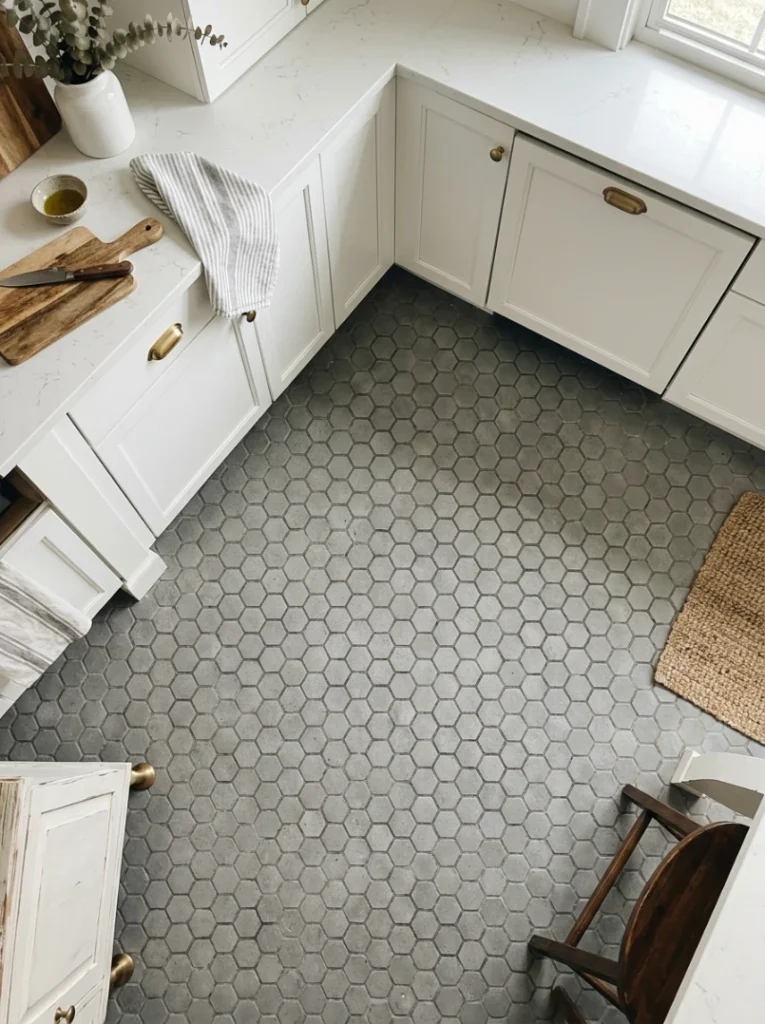
Gray tile in a hexagon or classic subway pattern reads as clean and timeless against white cabinets, and it hides everyday scuffs better than either pure white or very dark flooring.
This is a dependable pick for a kitchen that needs to photograph well now and still feel current in a decade.
7. Marble-look tile for a glam finish
Real marble’s look, without real marble’s maintenance demands.
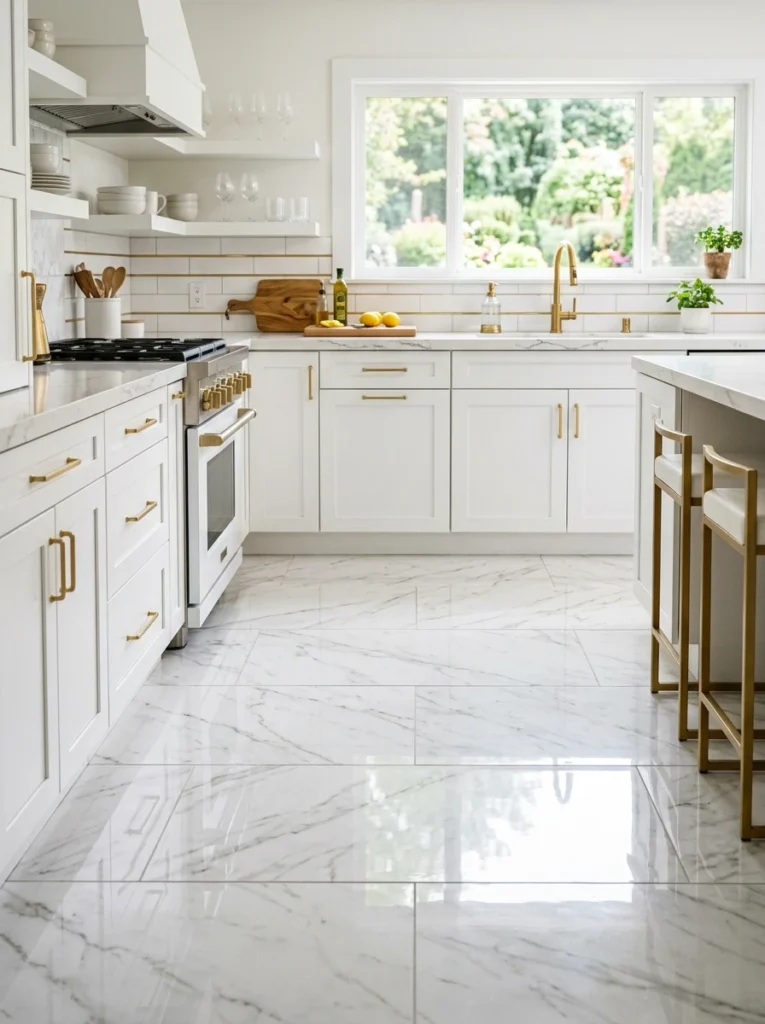
Large format marble-look porcelain tile, especially in a Calacatta or Bellagio style vein pattern, creates a genuinely glamorous look when paired with white cabinetry and gold or brass accents.
This combination has real staying power specifically because it avoids the staining and sealing that real marble would demand in a working kitchen.
8. Earthy terracotta or wood-look tile
A warm, rustic tile choice that’s having a real resurgence.
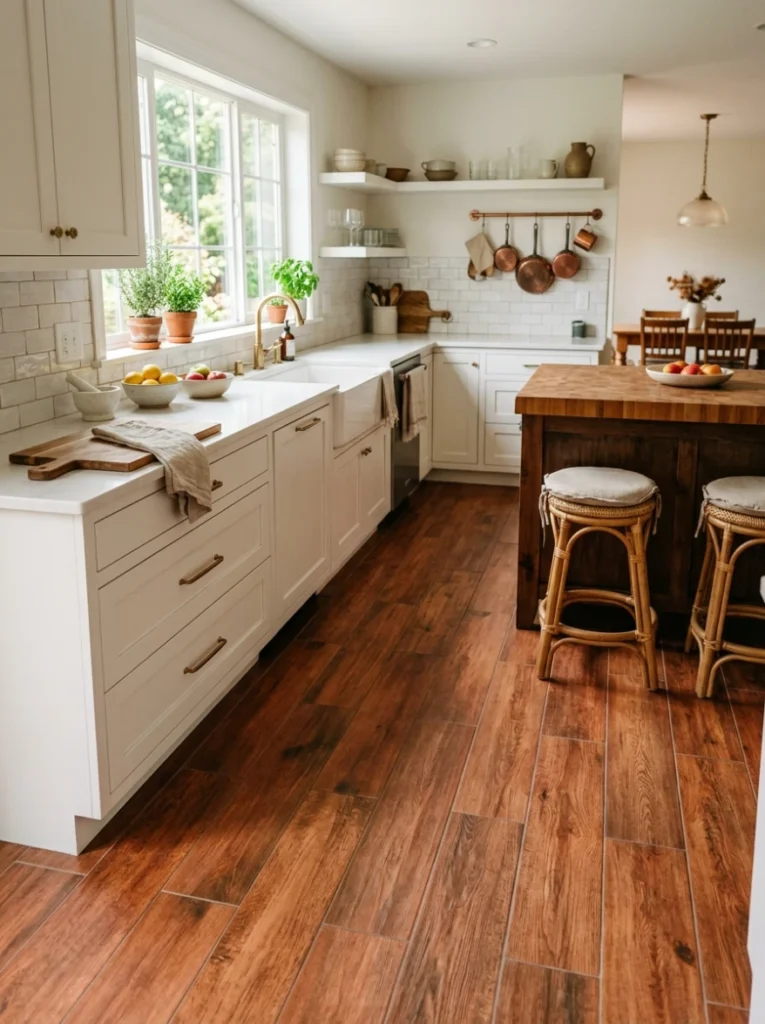
Tans, burnt oranges, and terracotta toned tile bring a warming glow to a white kitchen that cooler tile options simply can’t replicate.
These earthy tones pair especially well with thick timber countertops or warm brass fixtures, tying the whole room into one cohesive, sun-warmed palette.
9. Bold navy or charcoal tile
A statement floor for anyone ready to commit to real contrast.
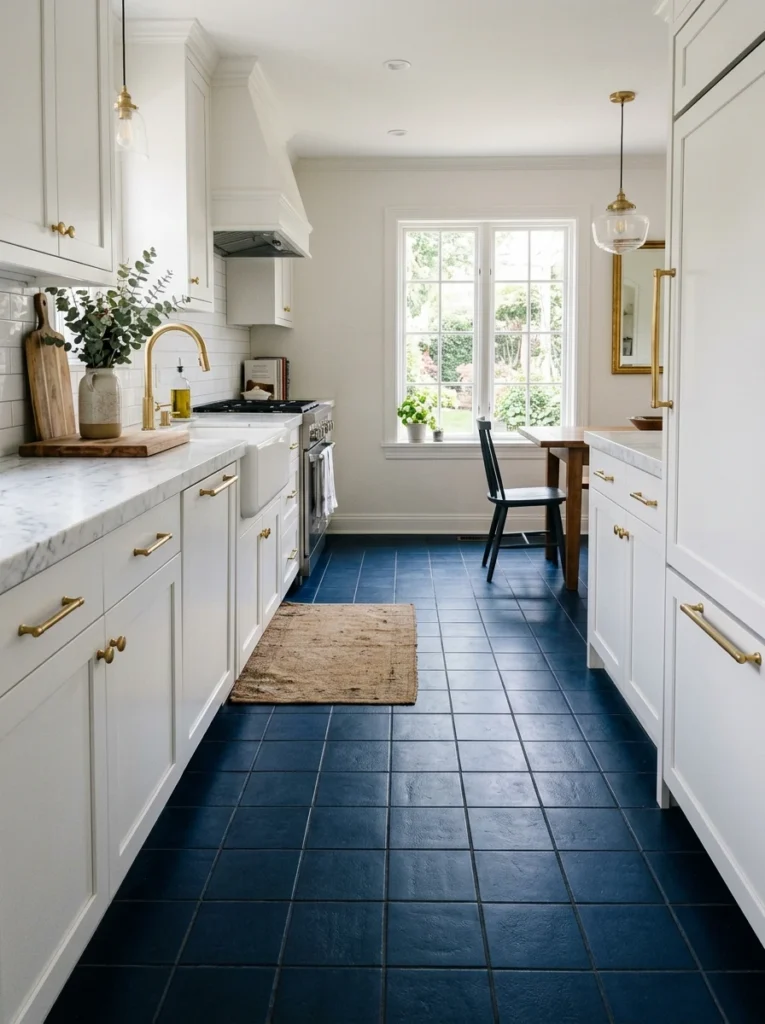
A deep royal blue or charcoal tile makes an unmistakable statement against white cabinets, and this particular pairing has proven to be more than a passing trend.
Gold or brass hardware throughout the kitchen ties the bold floor color back into the rest of the space rather than letting it feel disconnected.
10. Patterned encaustic-style tile
A graphic, high-personality option for a kitchen with real character.
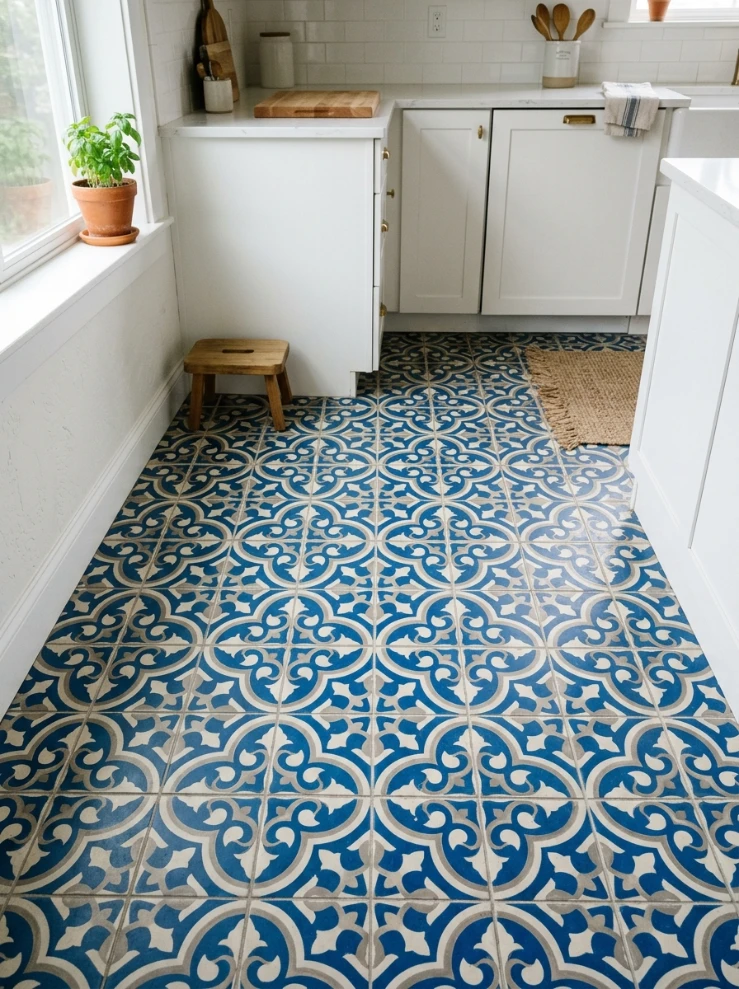
Patterned cement-look tile, in black and white or a soft color palette, gives a white kitchen a genuinely graphic focal point that plain flooring never could.
This works best as the kitchen’s one bold design element, with countertops, backsplash, and hardware all kept intentionally simple around it.
Pro Tip: Large format tile, anything over 12×24 inches, actually makes a small kitchen feel bigger because it needs fewer grout lines to cover the same floor area. If your kitchen is on the smaller side, skip the small mosaic tiles and go larger than you’d expect.
Vinyl and Practical Options
11. Luxury vinyl plank in a wood look
The budget-conscious pick that no longer looks like a compromise.
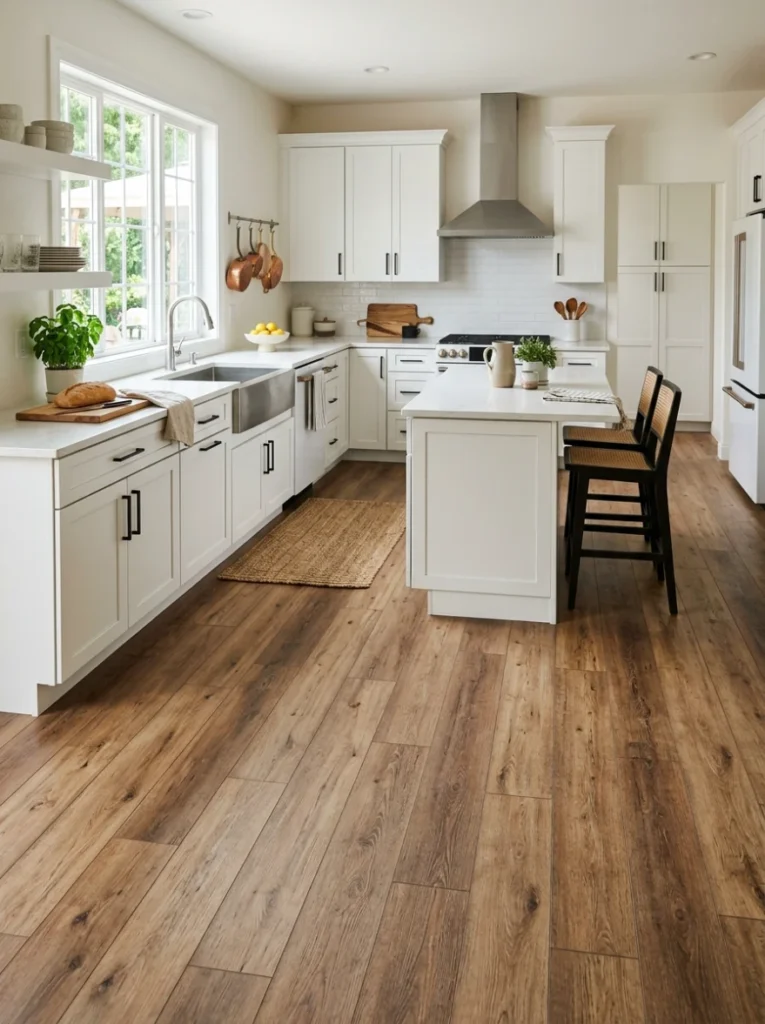
Modern luxury vinyl plank convincingly mimics hardwood grain and warmth at a fraction of the cost, while standing up to water and heavy use far better than real wood.
It’s genuinely one of the easiest floors to clean and maintain, which matters enormously in the kitchen specifically.
12. Vinyl tile in a stone or marble look
The same budget logic, applied to a tile aesthetic instead.
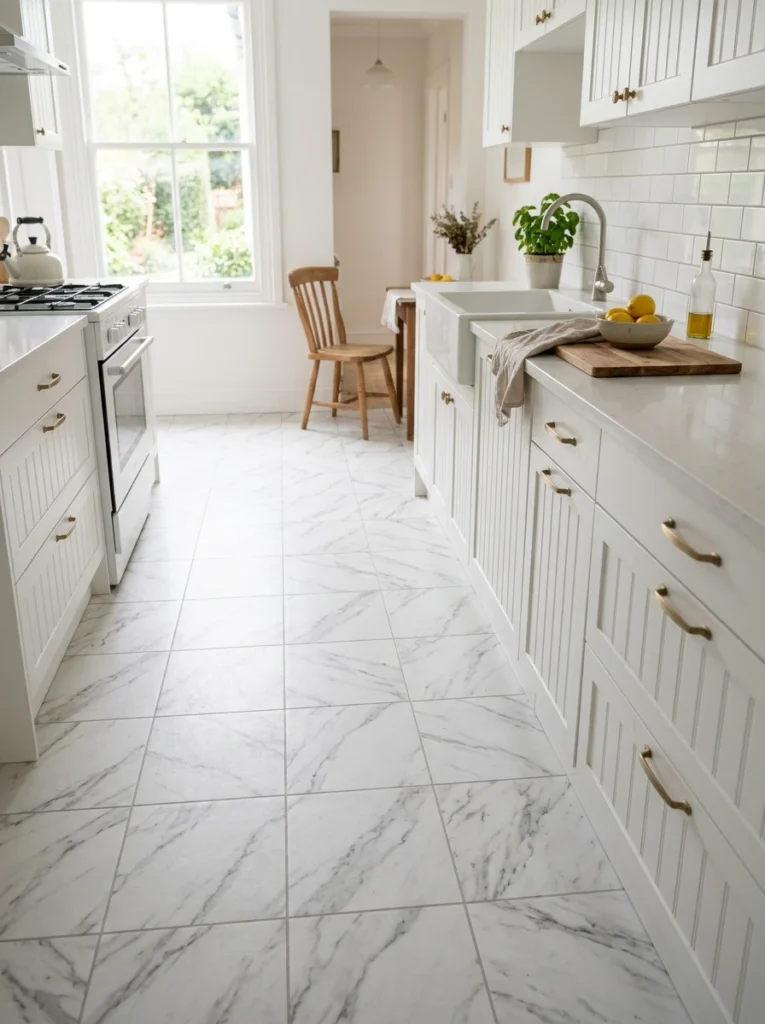
Vinyl tile printed in a marble or stone pattern delivers a similar upscale look to genuine stone tile, without the sealing and staining concerns that come with the real material.
This is a strong option for a rental kitchen or a full renovation on a tighter budget.
13. Cork flooring for warmth and comfort
An underrated option that solves a real everyday problem.
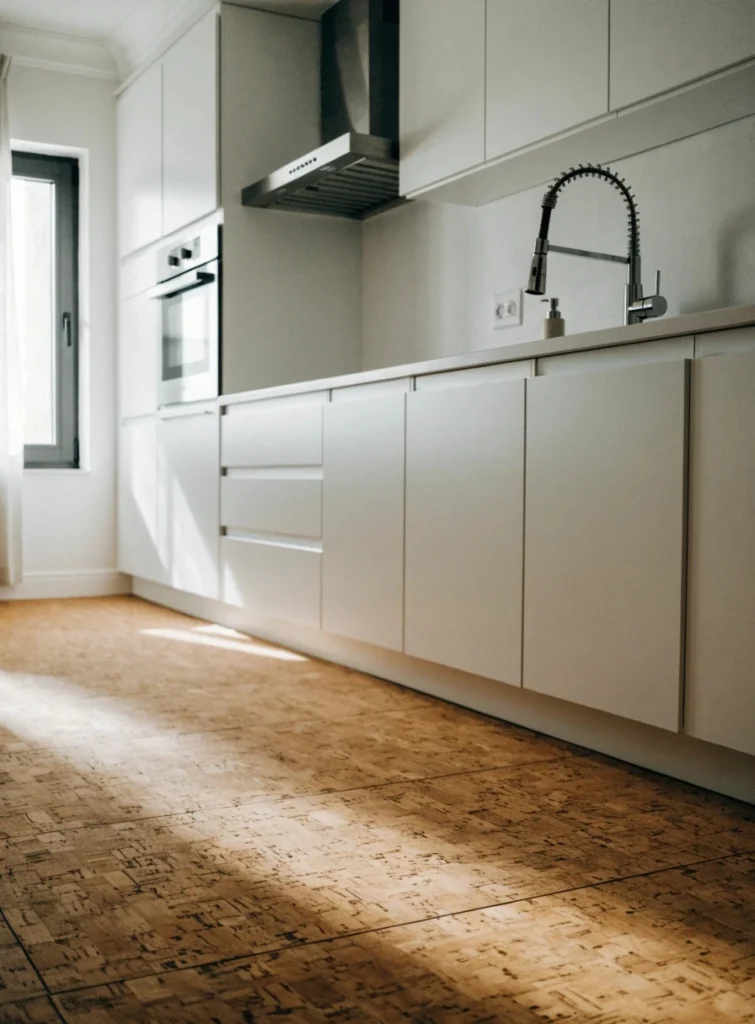
Cork brings genuine cushion underfoot, which matters considerably during long stretches of cooking or standing, while its natural warm tone pairs easily with white cabinetry.
It’s also a renewable material, which appeals to anyone leaning toward more sustainable choices in a full kitchen remodel.
14. Linoleum in a warm, updated tone
The material people forget has come a long way since the 1980s.
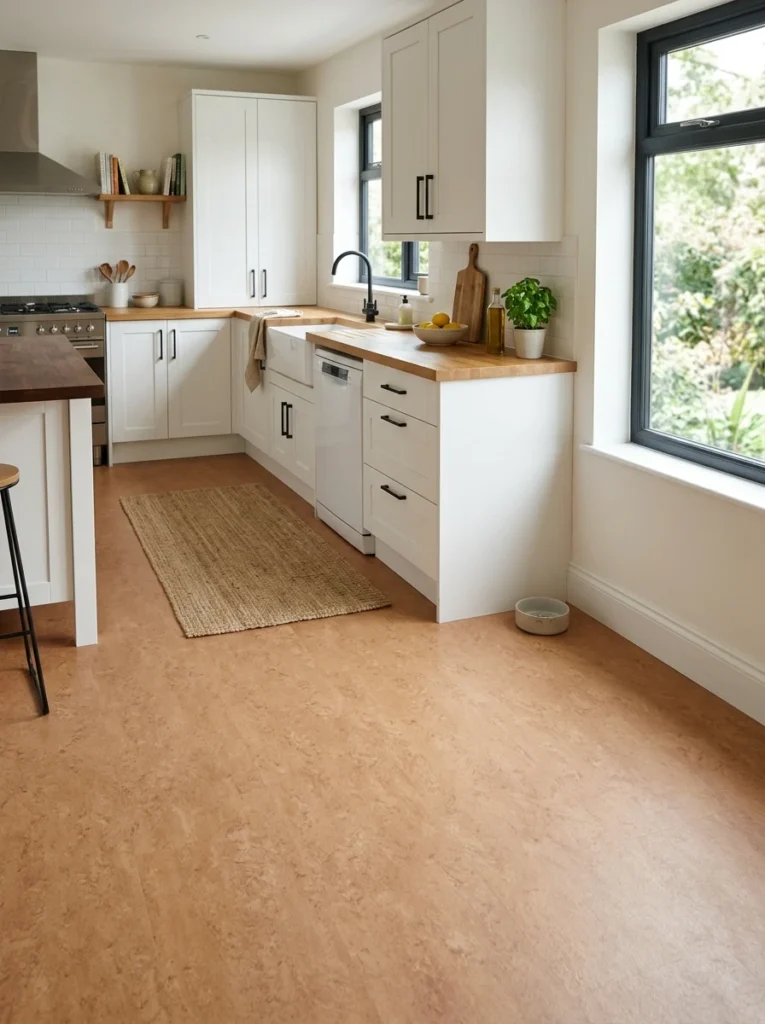
Modern linoleum, distinct from vinyl, is genuinely biodegradable and comes in updated warm tones that avoid the dated look most people still associate with the material.
It’s worth a second look for anyone prioritizing an eco-conscious floor without sacrificing a warm, welcoming color against white cabinets.
Pro Tip: Vinyl and linoleum both photograph almost identically to their higher-cost counterparts in most lighting, the real difference shows up underfoot and over years of wear. Walk on a sample barefoot before deciding, not just look at it under a showroom light.
Stone, Concrete, and Bold Choices
15. Polished concrete for an industrial edge
A bold, architectural choice that suits a modern kitchen especially well.
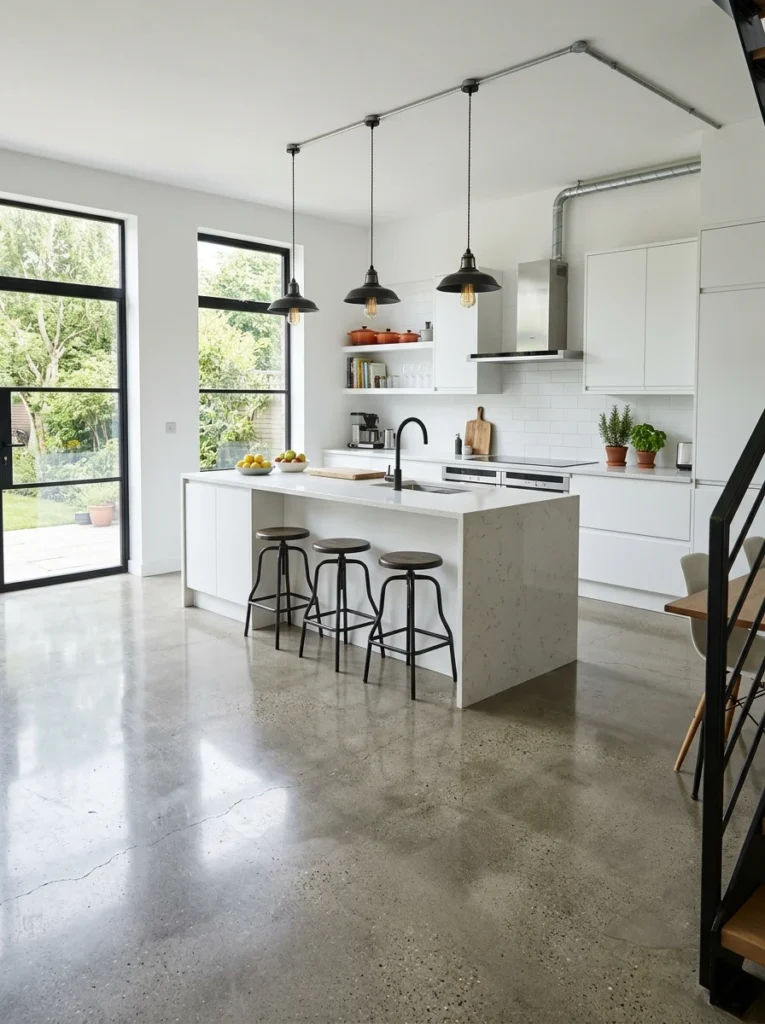
Polished concrete reflects light beautifully against white cabinets, creating an airy, modern feel while standing up to heavy daily traffic better than almost any other option on this list.
It can also be stained or dyed to introduce subtle color, giving a genuinely custom look that few other flooring types can match.
16. Natural stone in a warm travertine tone
A classic, textured stone option with real warmth built in.
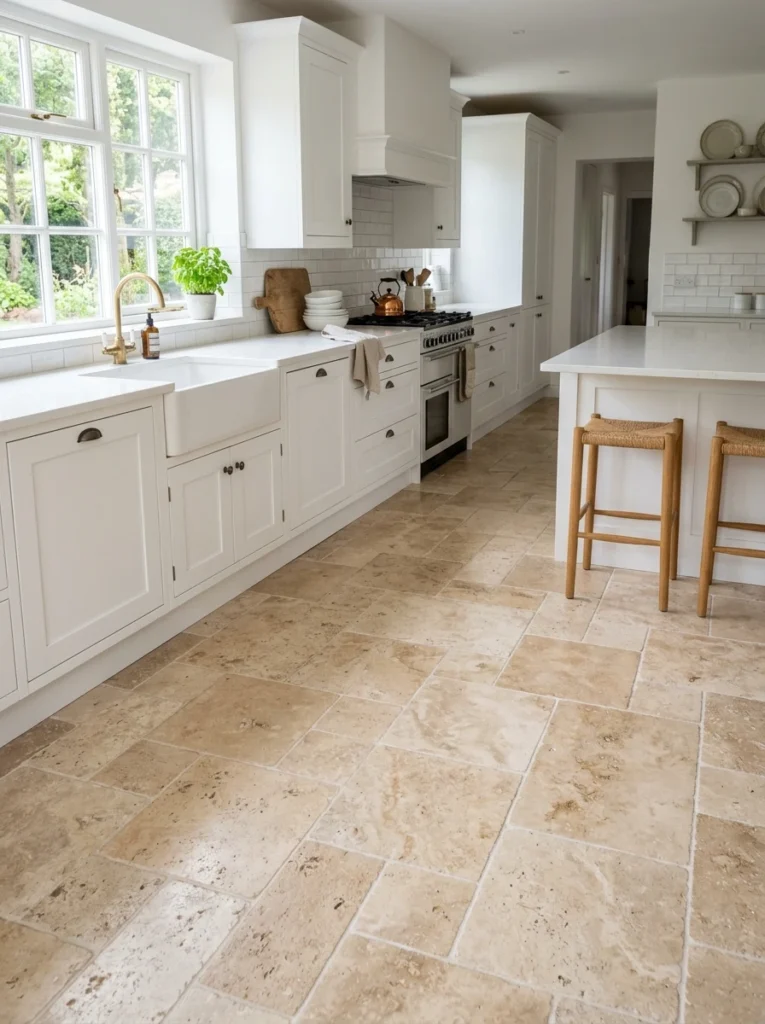
Travertine’s naturally warm, sandy tones and subtle texture pair well with white cabinetry without tipping into the coolness that some other stone options carry.
Sealing it properly is essential in a kitchen setting, since natural stone is more porous and spill-sensitive than tile or vinyl alternatives.
17. Checkerboard tile for a retro statement
A playful, graphic pattern that’s genuinely having a moment again.
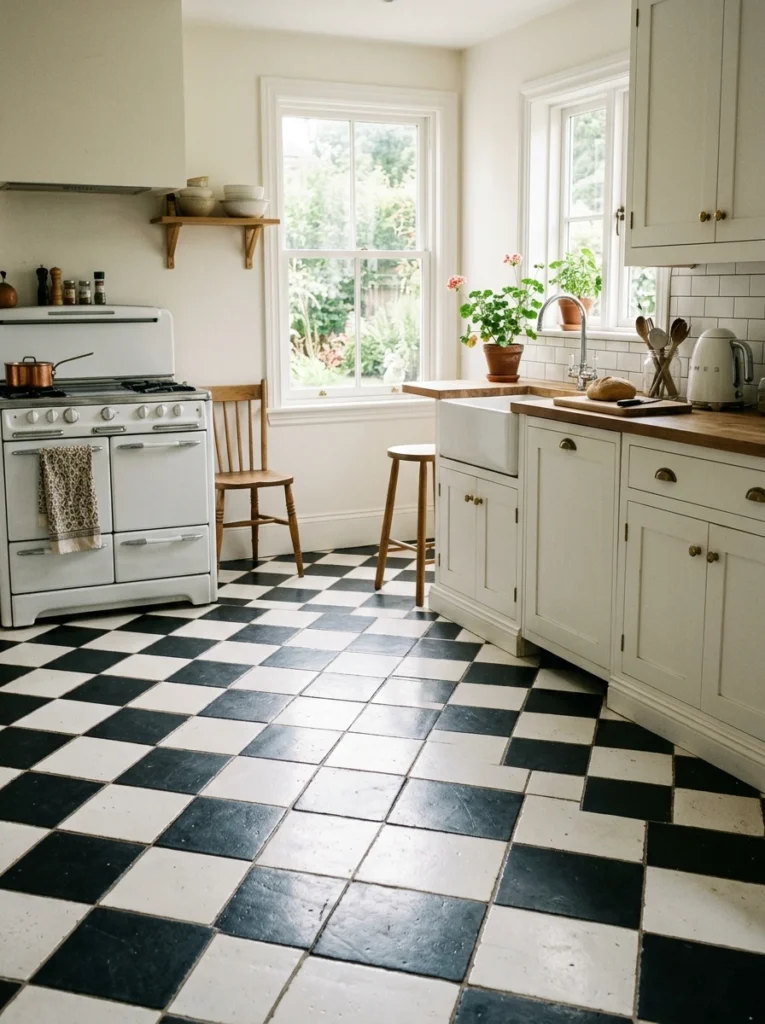
Black and white checkerboard tile brings unmistakable personality and a slightly retro edge, working particularly well in a kitchen that already leans traditional or vintage in its other details.
This is a strong pick for anyone who wants their floor to be a genuine conversation piece rather than a quiet backdrop.
18. Terrazzo for a modern, speckled look
A resurging material with genuine mid-century roots.
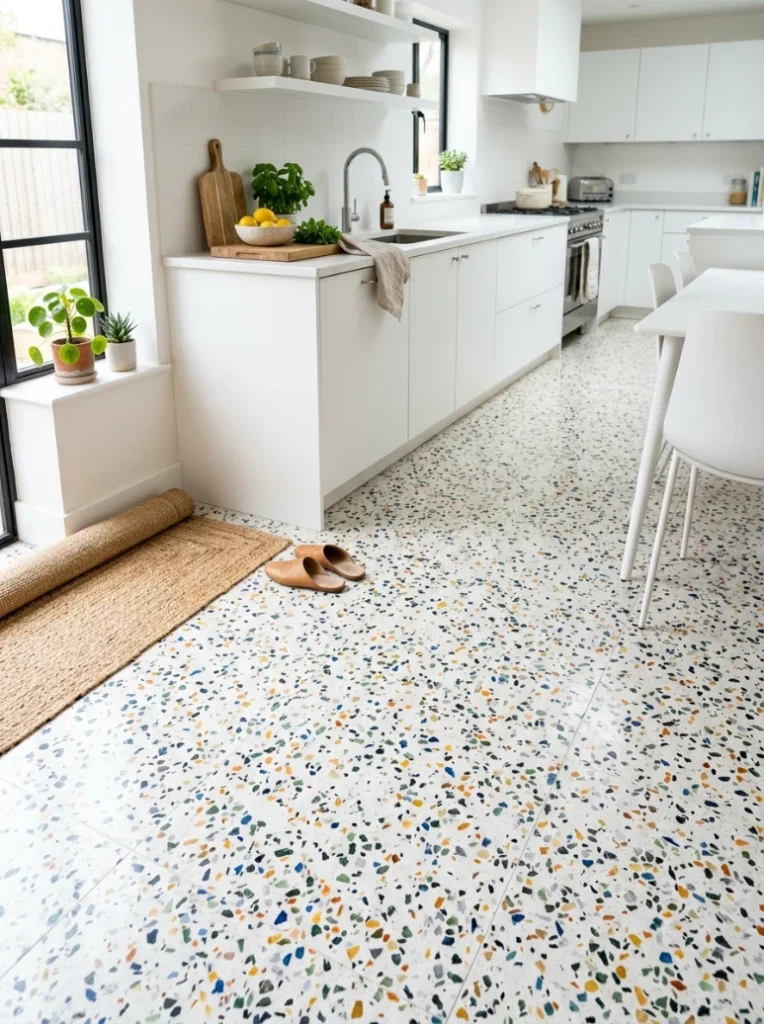
Terrazzo’s speckled, flecked surface adds subtle color and movement against plain white cabinets without overwhelming the room the way a solid bold color floor might.
It works especially well in a kitchen that wants a playful, collected feel without committing to a single strong accent color.
Pro Tip: Bold or patterned floors age better when the rest of the kitchen stays quiet. If you’re drawn to checkerboard, terrazzo, or a bold color tile, keep countertops, backsplash, and hardware simple so the floor doesn’t compete with several other statement elements at once.
Layering and Finishing Touches
19. A runner rug to add warmth on hard flooring
A simple textile fix for any hard, cool-feeling floor choice.
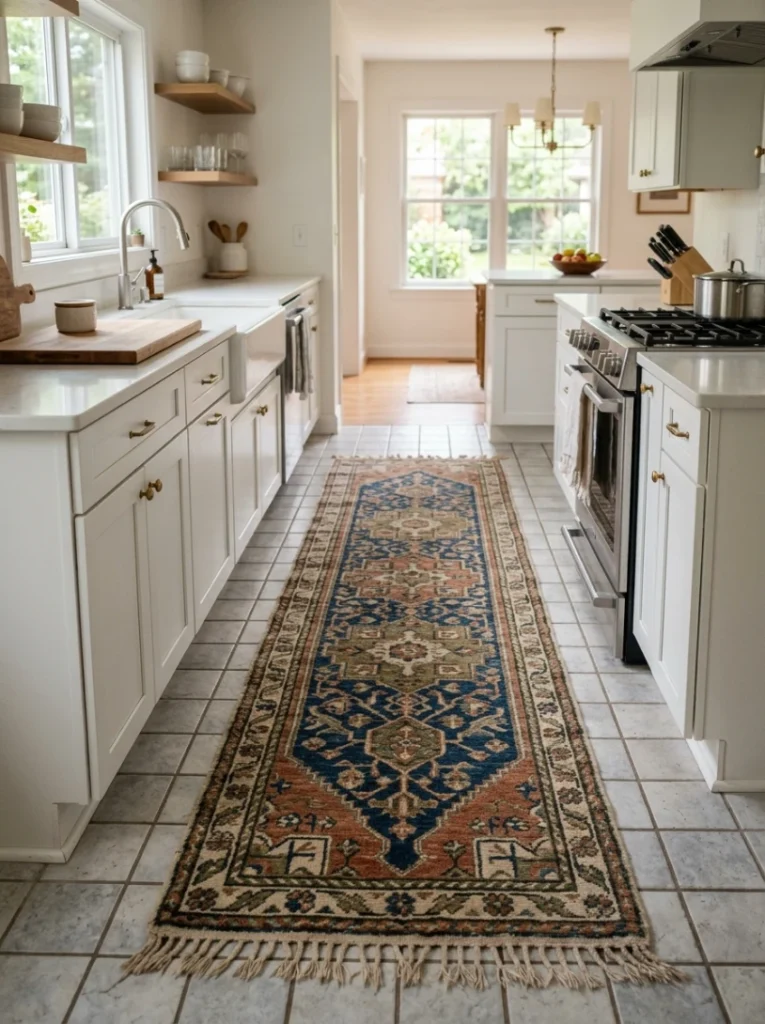
A runner rug in front of the sink or stove softens any harder flooring choice, adds a layer of pattern or color, and gives tired feet a break during long cooking sessions.
This is a low-commitment way to test a bolder color or pattern before deciding whether to commit to it in the flooring itself.
20. Matching flooring undertones to your countertop
The detail that ties the whole white kitchen together.
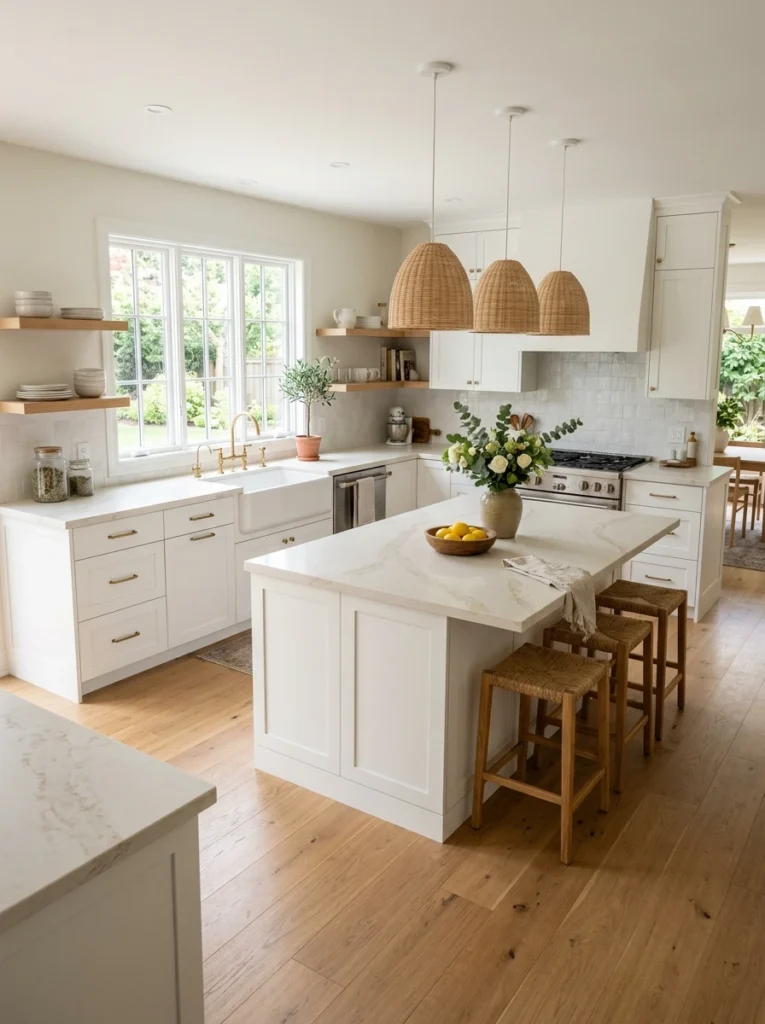
Whether your floor is warm or cool, matching that same undertone in your countertop material keeps the whole kitchen feeling like one considered decision rather than several unrelated ones.
This single detail is often the difference between a white kitchen that feels cohesive and one that feels like the floor and counters were chosen at two separate times.
Common Mistakes to Avoid
- Choosing a floor sample under store lighting without checking it against your own kitchen’s natural light.
- Pairing cool-toned flooring with warm-toned countertops or cabinets, creating an undertone clash.
- Picking a high-maintenance material, like unsealed natural stone, without accounting for real daily kitchen use.
- Going bold on the floor and every other surface at once, which competes rather than complements.
Frequently Asked Questions
What color floor goes best with white kitchen cabinets?
Warm tones, honey oak, tan, or terracotta, are trending strongest right now, though cool grays and bold navy or charcoal remain solid choices for a more dramatic look.
Is hardwood or tile better for a white kitchen?
Hardwood feels warmer underfoot and pairs beautifully with white cabinets, while tile handles water and heavy traffic better, the right choice depends on how the kitchen is actually used day to day.
Can I pair white cabinets with a bold colored floor?
Yes, white cabinets are neutral enough to handle a genuinely bold floor like navy tile or checkerboard, as long as the rest of the kitchen’s finishes stay simple.
Conclusion
White cabinets genuinely pair with almost any flooring choice, so the real decision comes down to warmth versus cool, and how bold you want the floor itself to be. Start by deciding whether you want the floor to recede quietly into the background or become the room’s real statement, then choose the material that matches how the kitchen actually gets used every day.