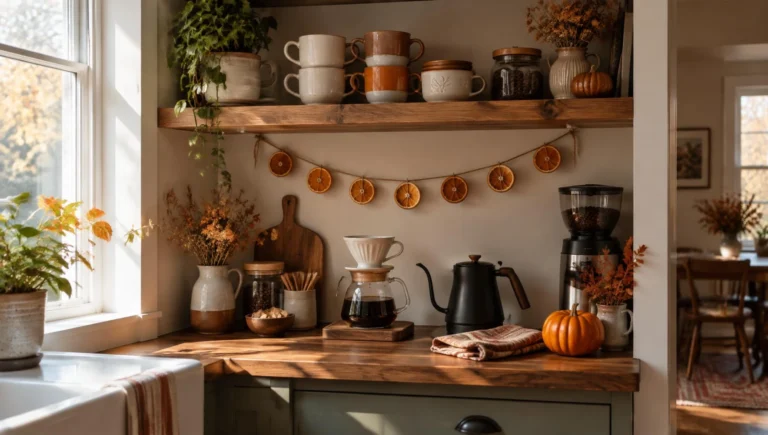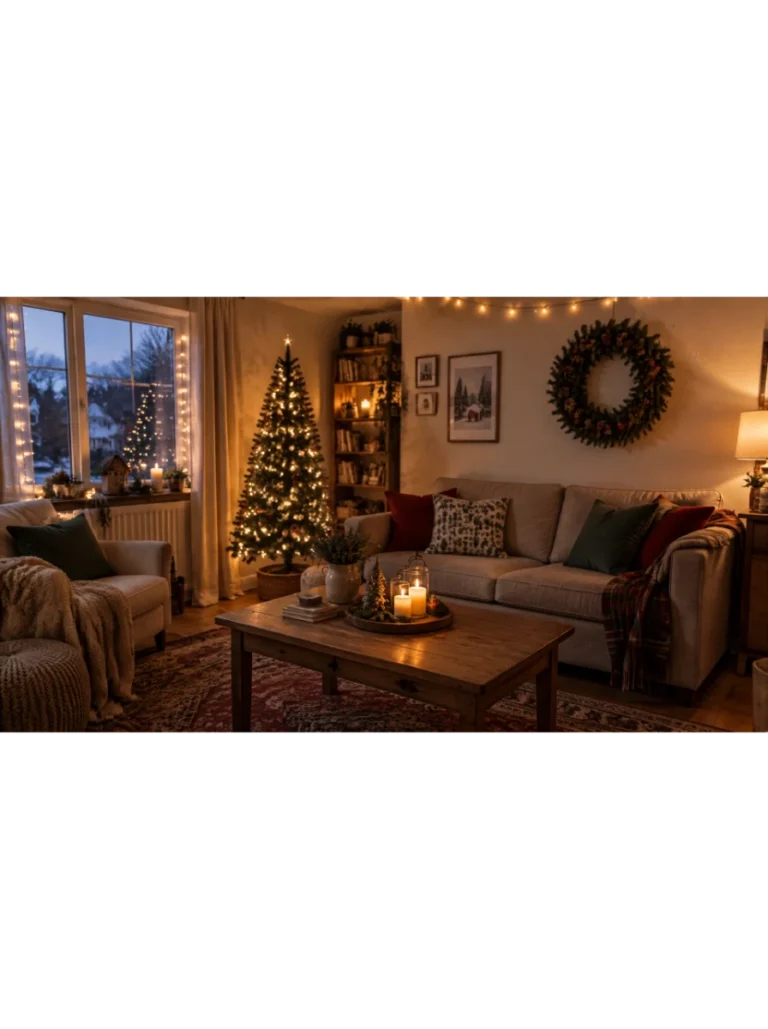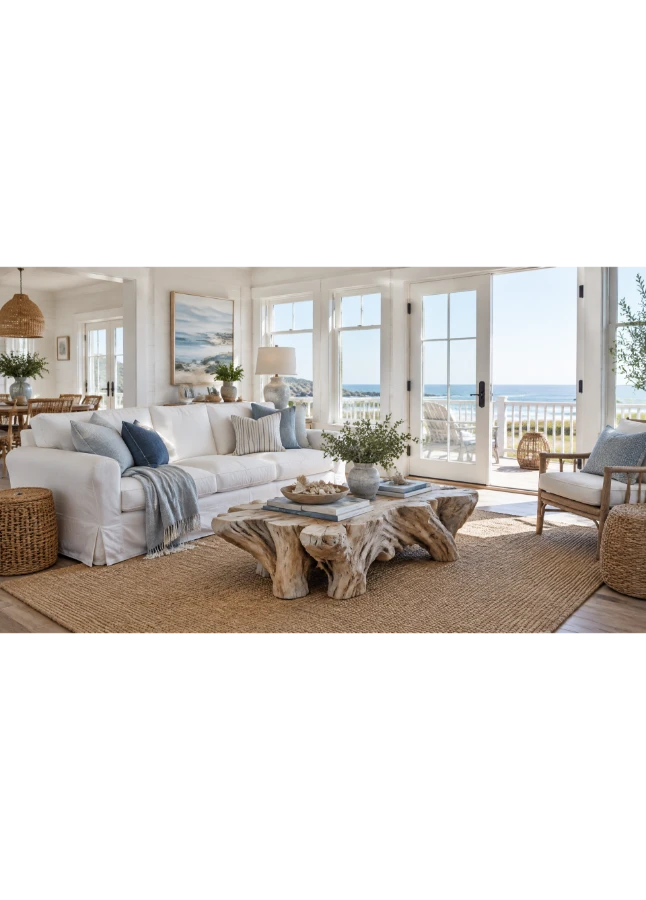
My fall decorating used to mean pulling out every orange and burgundy item I owned every October, and by November it all felt like clutter I had to pack away again. Switching to a neutral fall palette, warm creams, soft wood tones, natural textures, changed that completely. It doesn’t scream “fall,” but it feels cozy from September straight through winter, and none of it needs to be boxed up the moment the leaves are gone.
The ideas below are grouped by what they change, color and walls first, then textiles, natural elements, furniture, lighting, and the small finishing touches that pull a neutral room together. Once the bones of the room are set, styling neutral objects on open shelving, the same approach covered in these bookshelf styling ideas, is one of the easiest ways to keep refreshing the look through the whole season.
Before You Start
- Stick to a tight palette of warm creams, tans, and soft browns, and let texture, not color, do most of the seasonal work.
- Mix at least three different textures in any one seating area, knit, woven, smooth wood, so the neutral palette doesn’t read as flat.
- Favor dried and preserved natural elements over fresh ones for anything meant to last the whole season without maintenance.
- Swap bulbs to a warmer color temperature before adding anything else, it’s the cheapest change that affects how every other neutral tone in the room reads.
Color and Walls
1. Choose a Warm Greige as Your Base Wall Color
Repainting from a cool gray to a warmer greige changed how every other neutral piece in the room read against the walls.
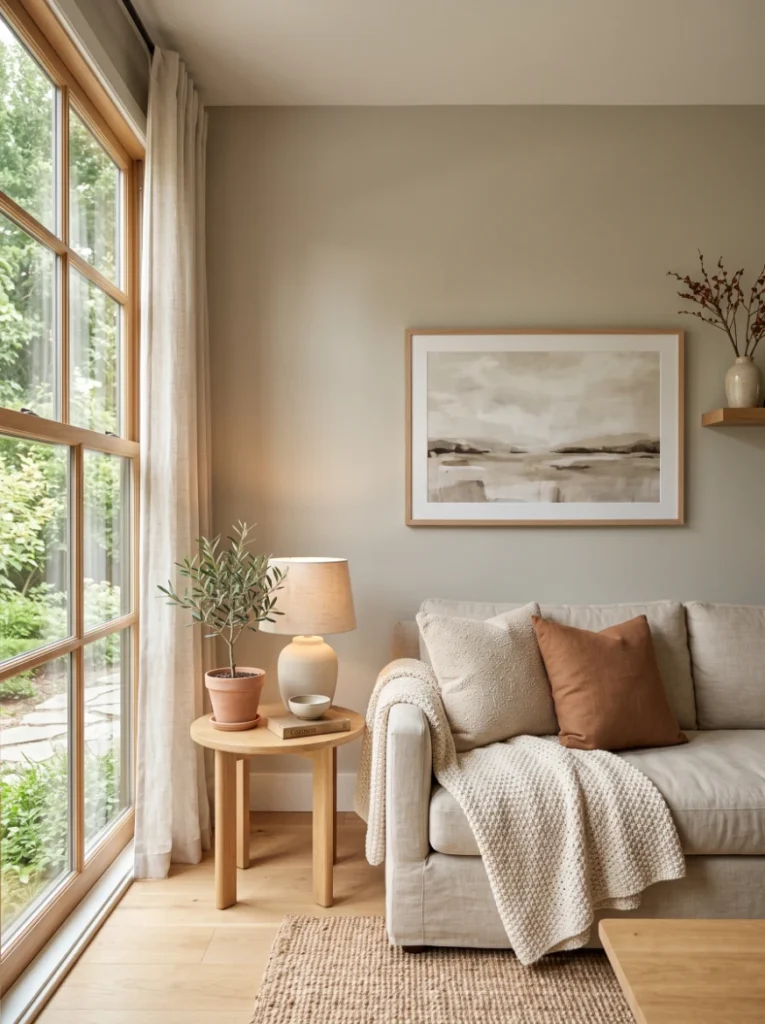
A quart of warm greige paint runs $18 to $30, and most rooms need one to two gallons depending on size and existing wall color.
It works because a warm undertone keeps neutral rooms from feeling cold or clinical, which is the most common mistake when styling an all-neutral palette.
2. Add a Cream Wool Throw as a Wall Accent
Hanging a folded wool throw as a textile wall piece filled an empty spot without needing to hang more art.
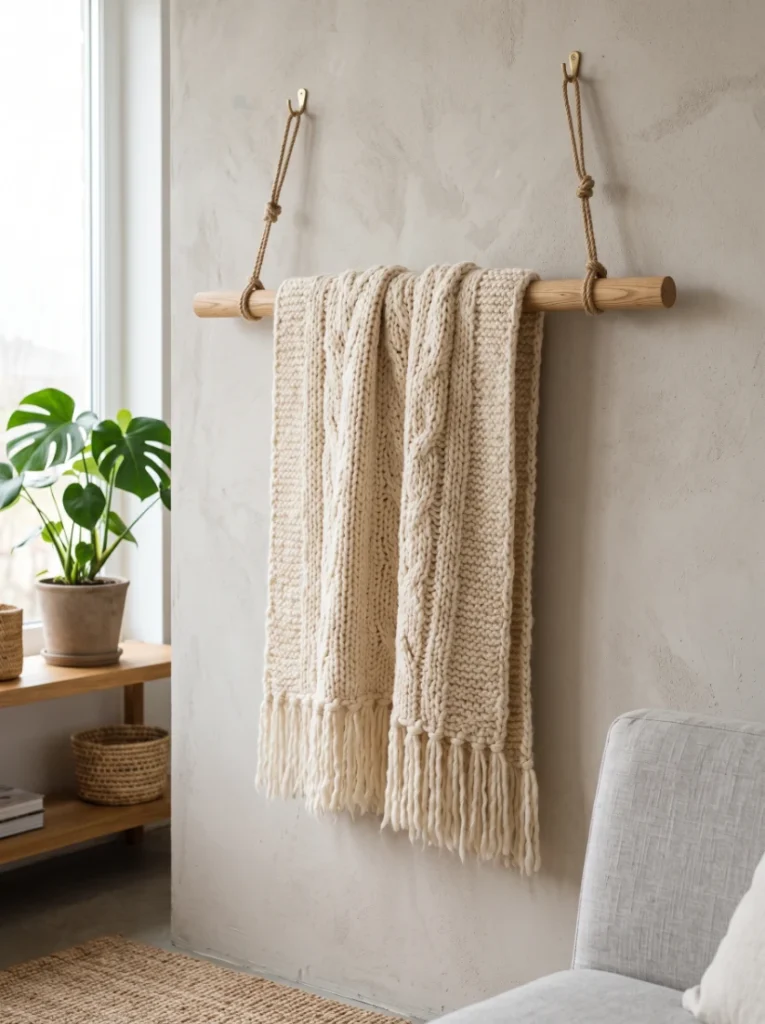
A cream wool throw with a simple wooden dowel to hang it runs $30 to $60 total, a low-cost alternative to a framed piece of art.
It works because textile wall pieces add texture and warmth in a way flat framed art doesn’t, and it’s easy to swap out or take down when the season changes.
3. Swap Bright White Trim for a Soft Off-White
Repainting the trim to a warmer off-white instead of stark white softened the contrast between the walls and the woodwork.
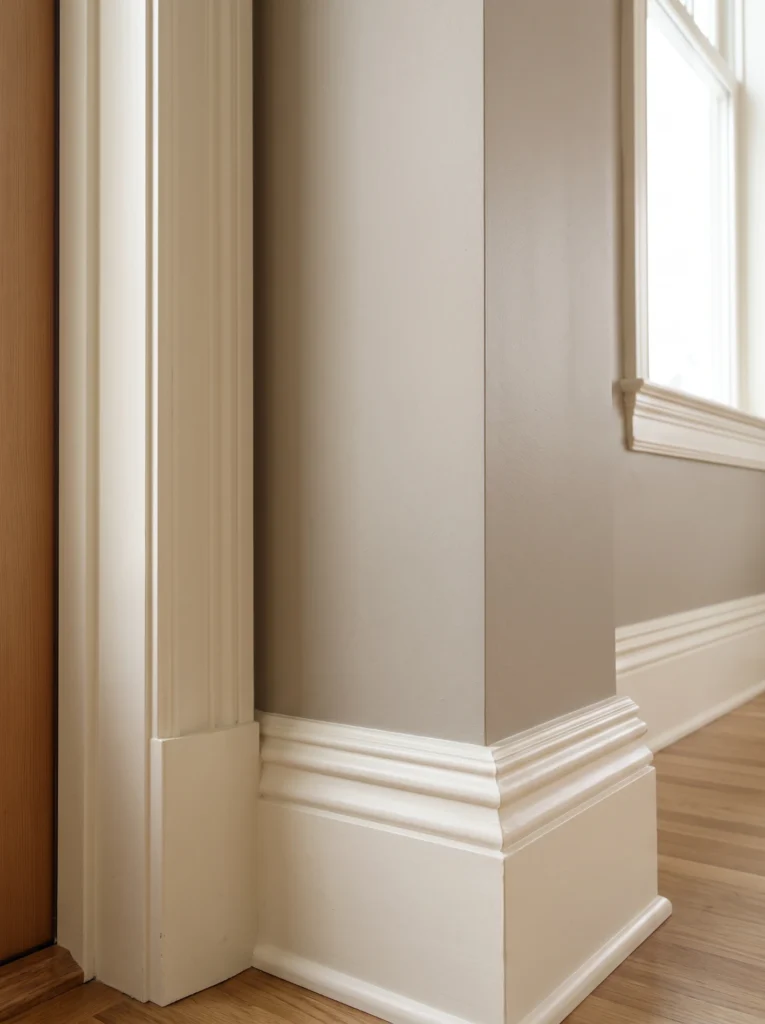
A quart of trim paint in a soft off-white runs $20 to $32, and trim typically needs less paint volume than full walls.
It works because stark white trim next to warm walls can look mismatched, while a softer off-white keeps the whole room’s undertones consistent.
4. Use a Textured Plaster Finish on One Wall
A textured limewash finish on one accent wall added depth that flat paint alone never gave the room.
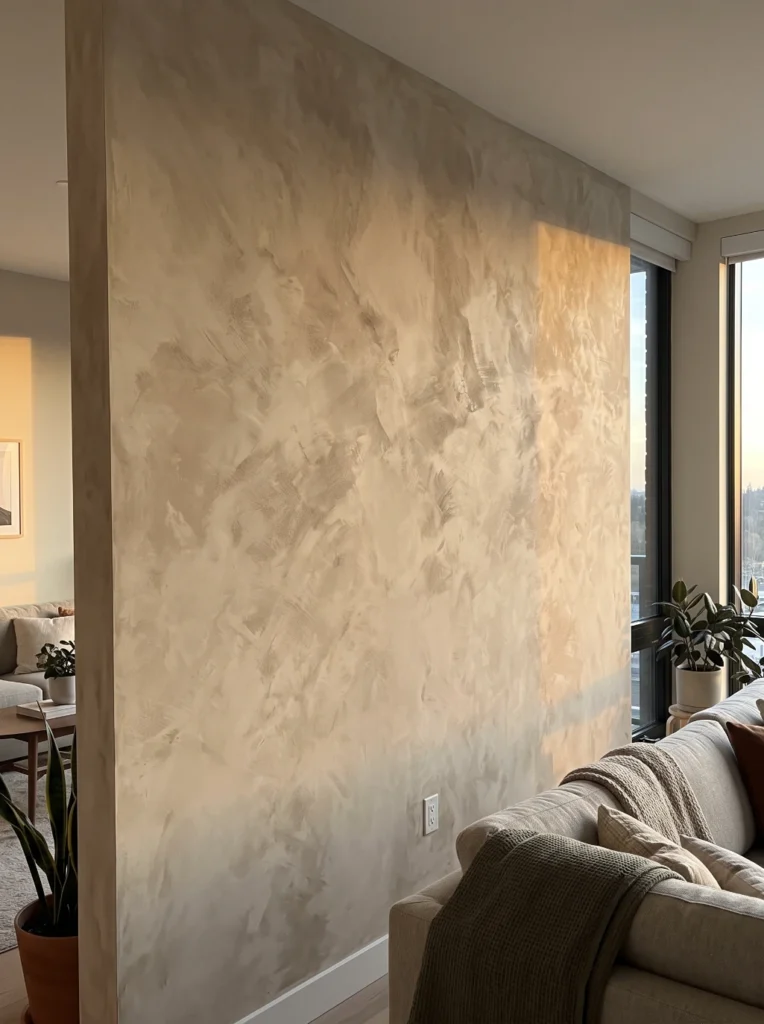
A limewash or textured plaster paint kit runs $50 to $100 for enough to cover one accent wall, more than standard paint but with a noticeably different finish.
It works because texture catches light differently throughout the day, giving a single-color wall more visual depth than flat paint alone provides.
Textiles and Layers
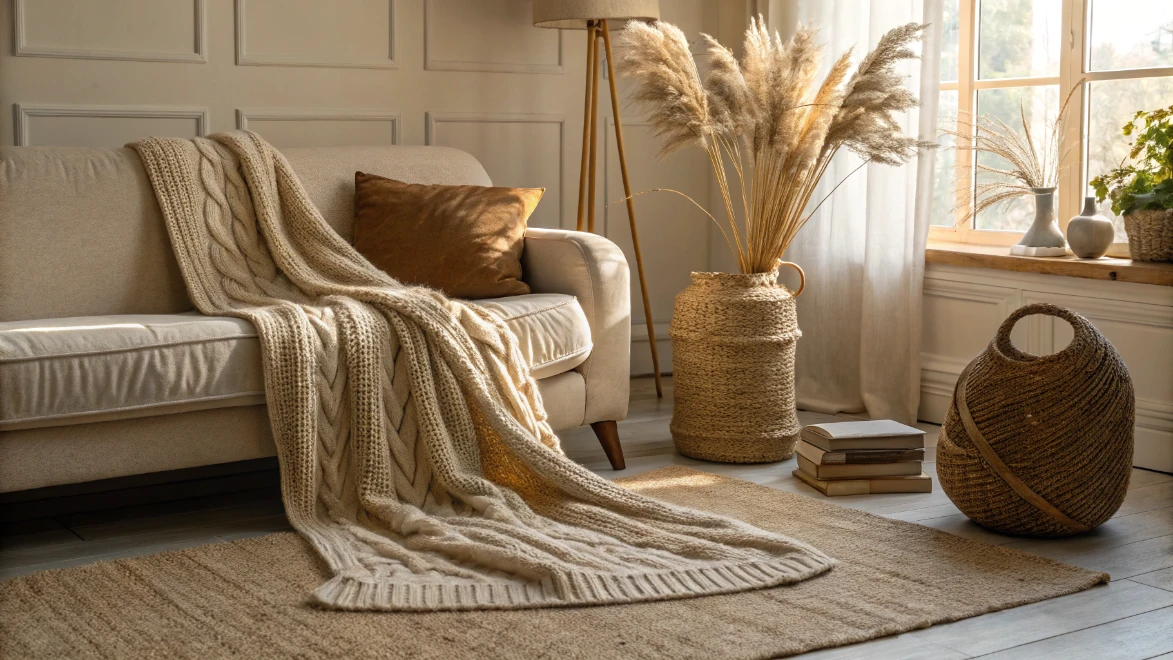
5. Layer a Chunky Knit Throw Over a Linen Sofa
Draping a chunky cream throw over the arm of the sofa was the single fastest way to make the room feel like fall without changing anything structural.
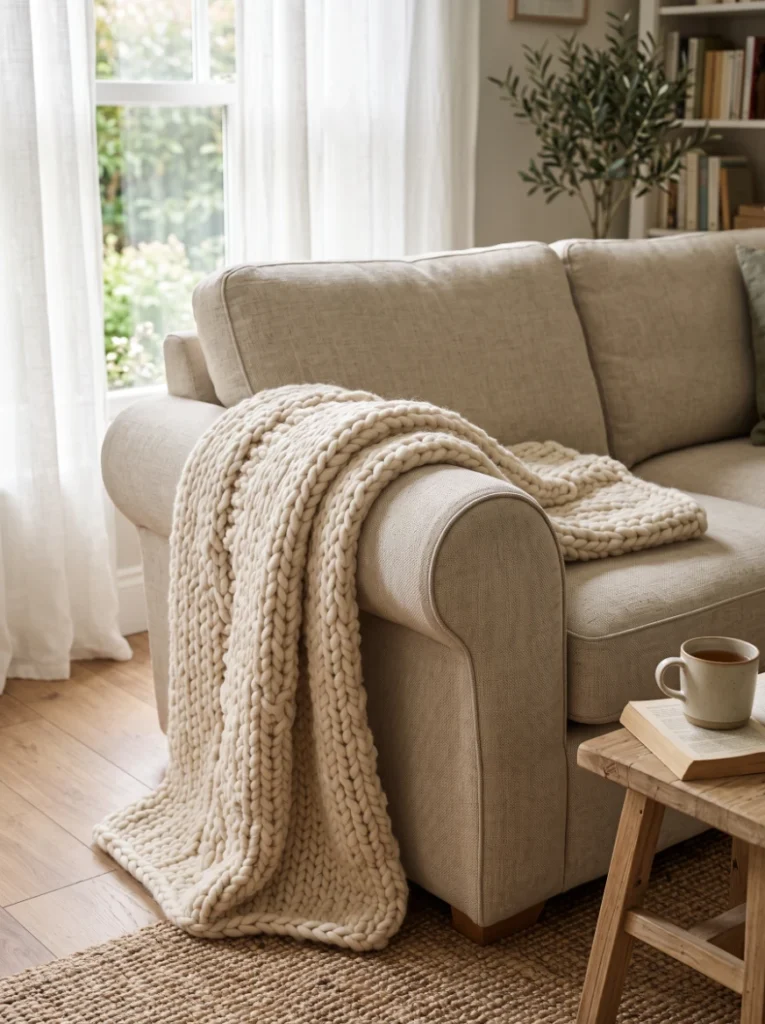
A chunky knit throw runs $30 to $55, and draping it loosely rather than folding it flat adds more visual texture.
It works because the contrast in texture between a smooth linen sofa and a chunky knit throw adds visual interest without adding any new color to the room.
6. Add Neutral Striped Pillow Covers
Swapping in subtly striped pillow covers gave the sofa some pattern without breaking from the neutral palette at all.
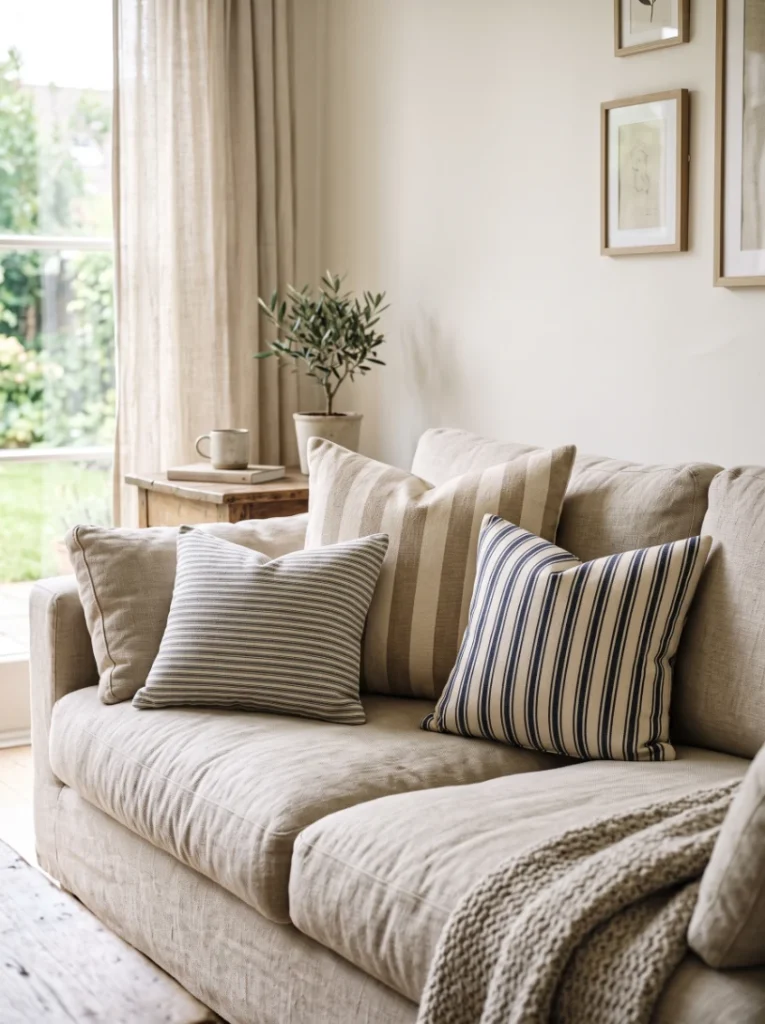
A pair of neutral striped pillow covers runs $20 to $40, and mixing a striped cover with a solid textured one usually reads better than two matching prints.
It works because subtle pattern in the same tonal family adds interest without introducing a competing color, keeping the whole palette cohesive.
7. Swap in a Jute or Sisal Area Rug
A natural jute rug grounded the seating area and added exactly the kind of texture a flat neutral palette needed underfoot.
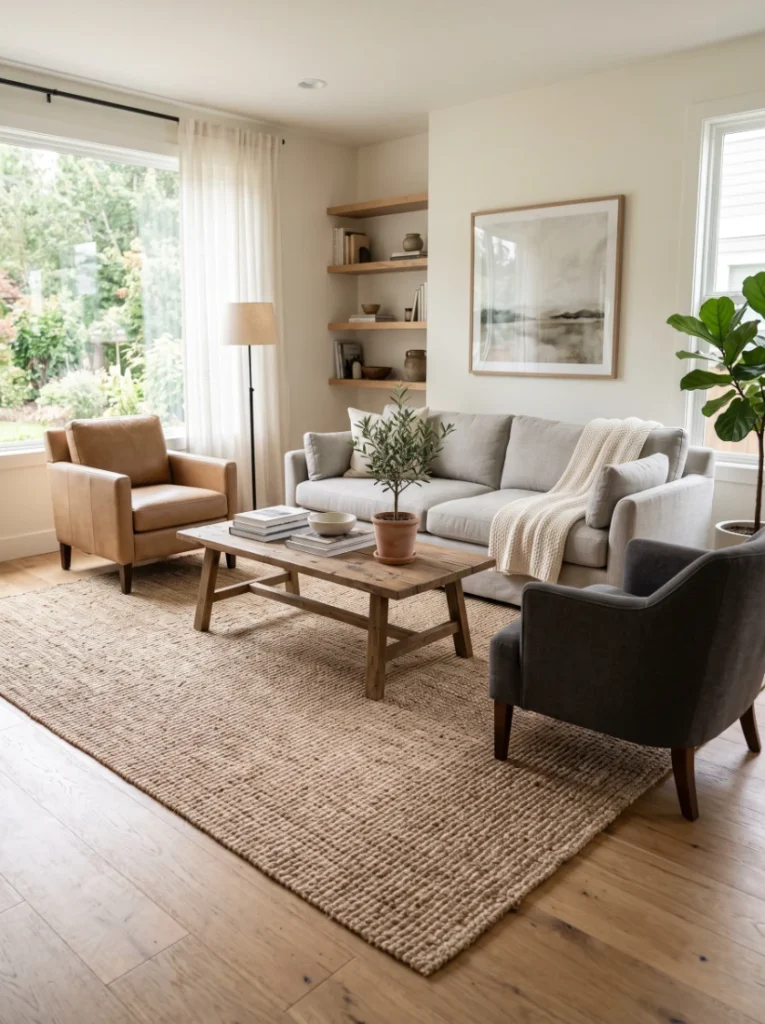
A jute or sisal area rug in an 8×10 size runs $150 to $300, and layering a smaller patterned rug on top adds more visual interest if desired.
It works because natural woven fibers bring an organic texture underfoot that a flat synthetic rug can’t replicate, anchoring the neutral palette with warmth.
8. Use Linen Curtains in an Oatmeal Tone
Swapping in linen curtains softened the light coming through the windows and added texture to a part of the room I’d otherwise ignored.
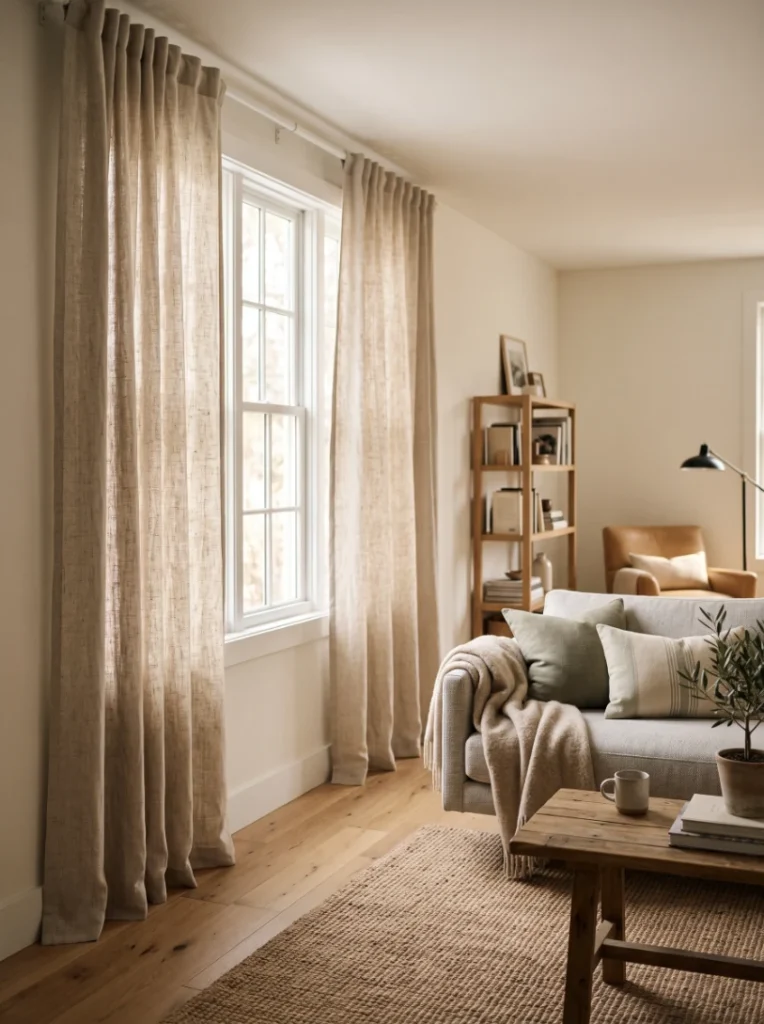
A pair of linen curtain panels in a warm oatmeal tone runs $40 to $80, depending on length and fabric weight.
It works because linen’s natural texture and the way it filters light both add warmth to a room, unlike flat synthetic curtain fabric.
9. Add a Wool Pouf as Extra Seating
A round wool pouf tucked beside the sofa added extra seating and a soft, sculptural shape the room was missing.
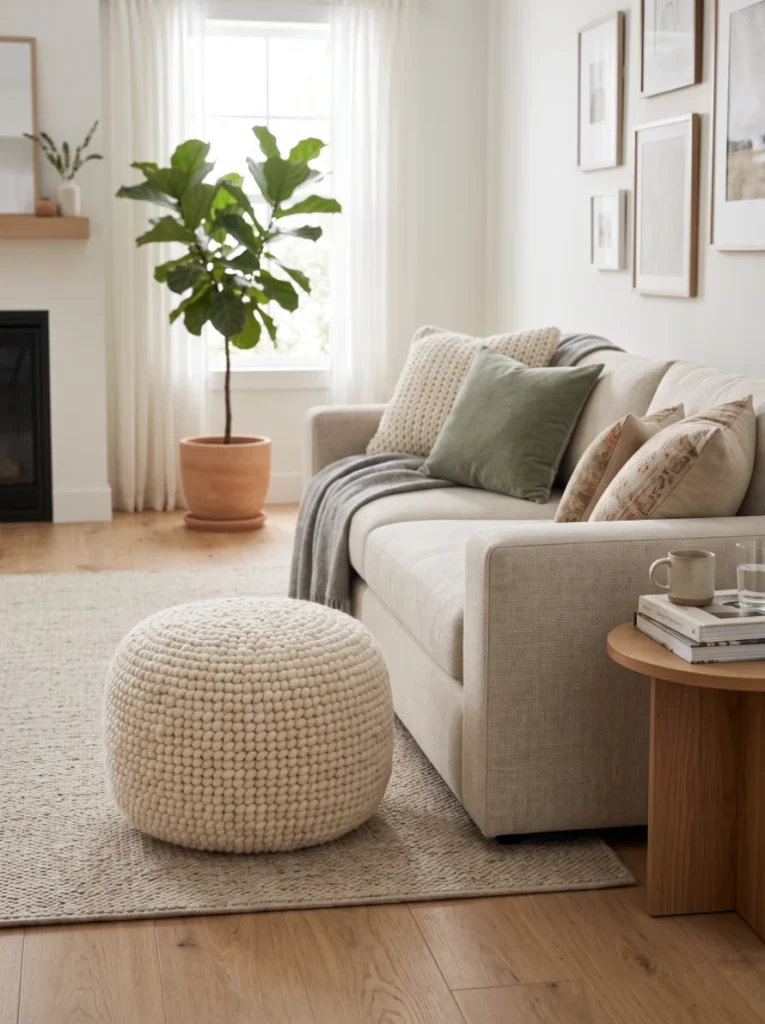
A wool or wool-blend pouf runs $60 to $120, and it also works as a footrest or an extra side table surface when topped with a tray.
It works because it adds a soft, rounded shape to a room otherwise full of straight lines and hard edges, breaking up the layout visually.
Natural Elements and Greenery
10. Fill a Basket with Dried Pampas Grass
A tall basket of pampas grass in the living room corner filled empty floor space and lasted the entire season without any upkeep.
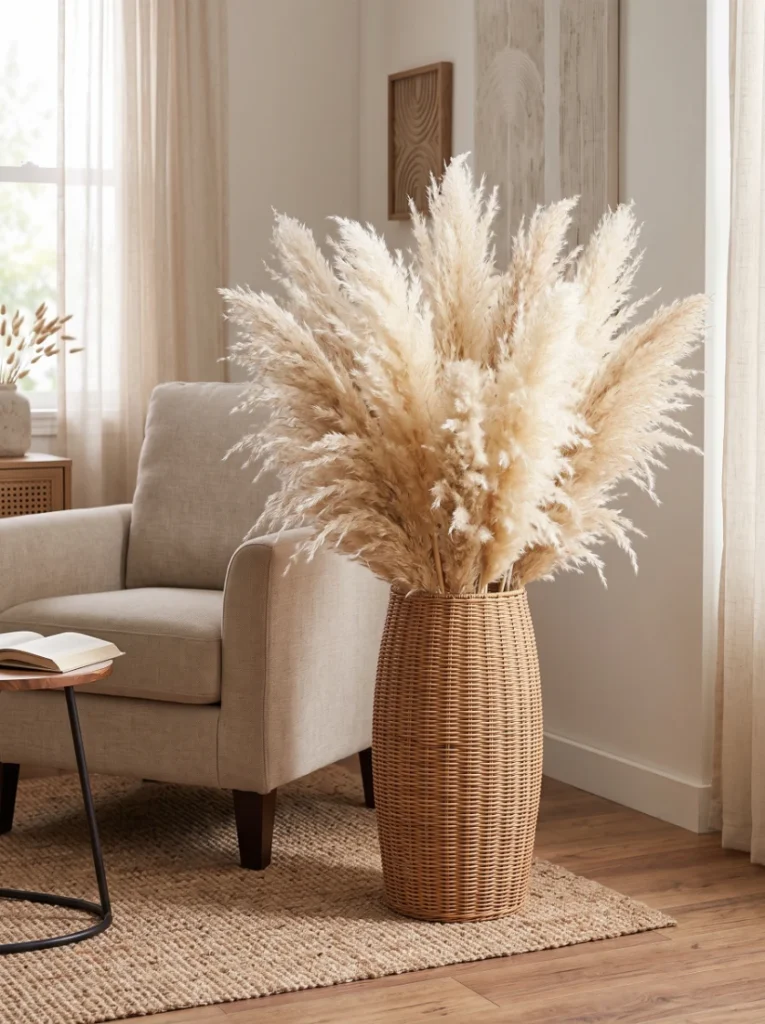
Dried pampas grass stems run $8 to $15 each, and a bundle of five to seven stems in a floor basket or tall vase runs $50 to $80 total.
It works because it adds height and organic texture without needing water or maintenance, and it holds its look for months rather than days.
11. Add a Bowl of Natural Wood Spheres
A wide wooden bowl filled with plain wood spheres became the coffee table centerpiece I kept out year-round, not just for fall.
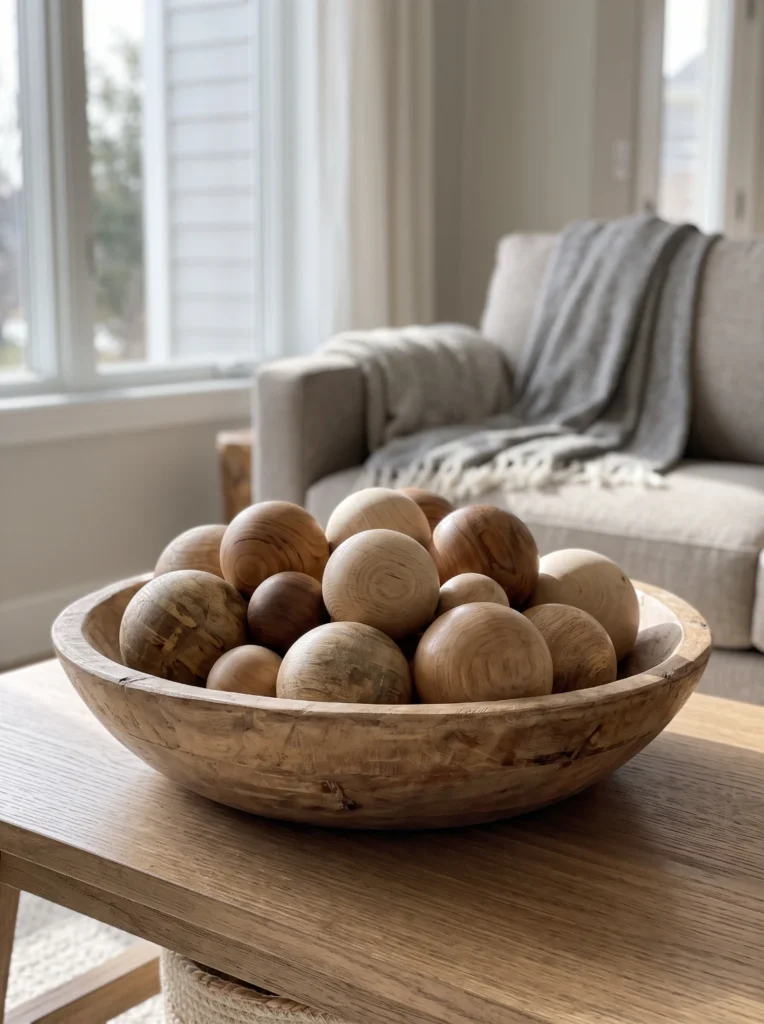
A wide decorative bowl runs $15 to $35, and a set of natural wood spheres to fill it costs another $15 to $25.
It works because it’s a simple, low-maintenance centerpiece that fits a neutral palette without leaning into any specific seasonal theme, so it works well past fall too.
12. Bring in a Fiddle Leaf Fig for Height
A tall fiddle leaf fig in the corner added the kind of living greenery a room full of dried and natural materials still needed.
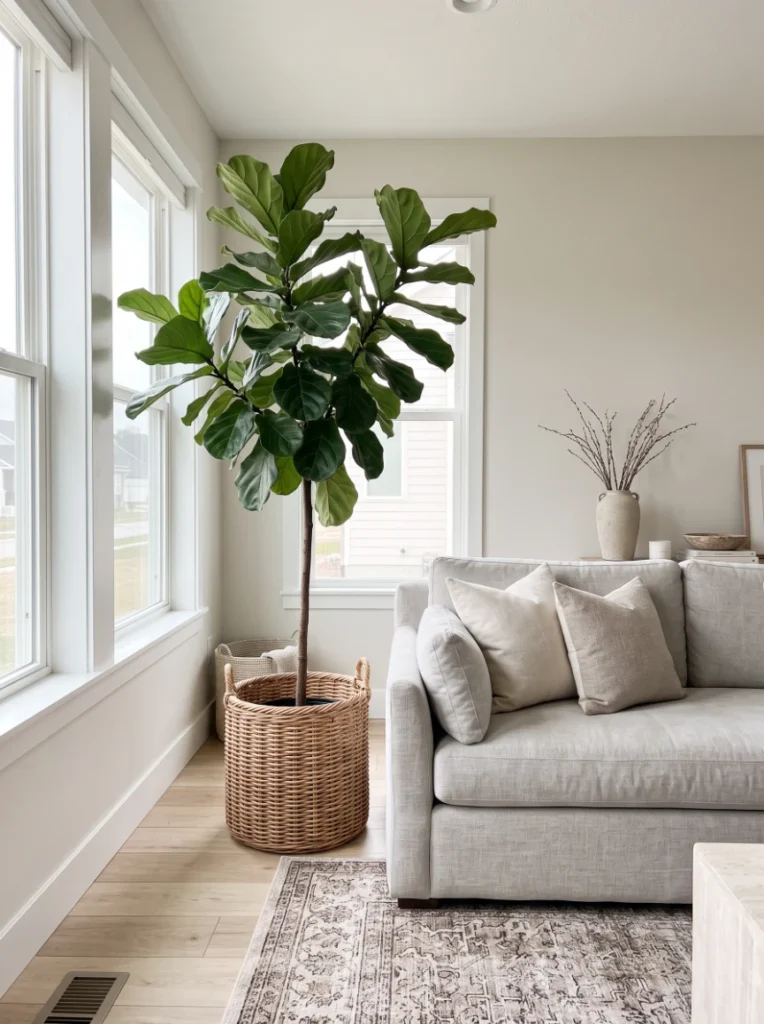
A fiddle leaf fig in a 10 to 14 inch pot runs $40 to $100 depending on height, and a woven or terracotta planter adds another $20 to $40.
It works because living greenery adds a different kind of texture and life than dried elements alone, balancing out an otherwise fully static neutral display.
13. Use Dried Wheat Stalks in a Ceramic Vase
A small bundle of dried wheat in a simple ceramic vase brought in a subtle, low-key nod to the season without a single pumpkin in sight.
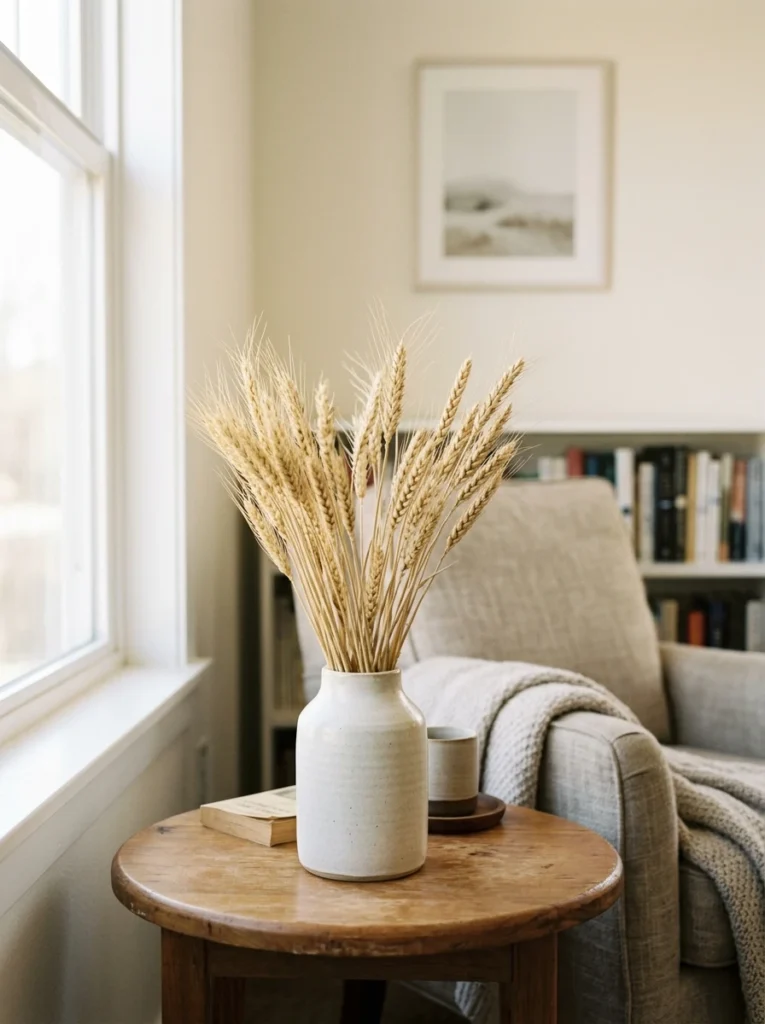
Dried wheat stalks run $8 to $15 for a bundle, and a plain stoneware or ceramic vase to hold them costs another $15 to $30.
It works because wheat reads as a subtle harvest nod without being an obvious seasonal cliché, fitting the timeless, understated tone of the rest of the room.
Furniture and Layout
14. Add a Wood and Rattan Coffee Table
Replacing a glass coffee table with one mixing wood and rattan added exactly the kind of warmth the seating area was missing.
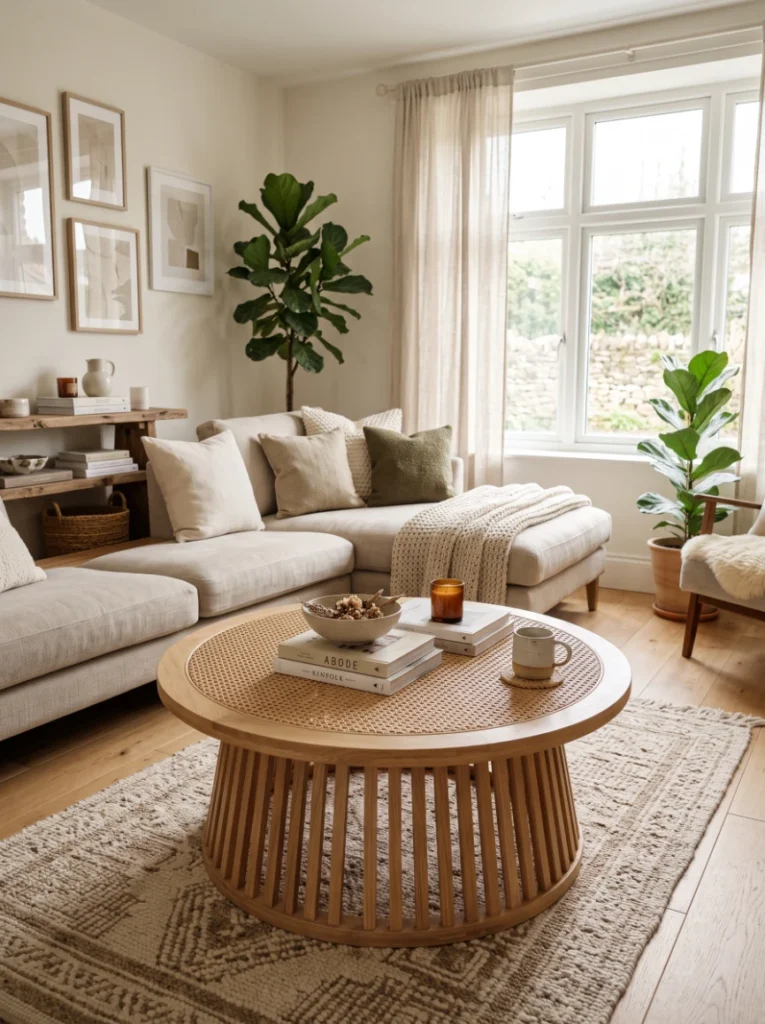
A wood and rattan coffee table runs $150 to $350 depending on size and construction quality.
It works because natural materials like wood and rattan bring warmth that glass and metal surfaces don’t, and it becomes the anchor piece the rest of the seating area builds around.
15. Choose a Slipcovered Linen Sofa
A slipcovered linen sofa in a warm oatmeal tone became the foundation the rest of the neutral palette was built around.
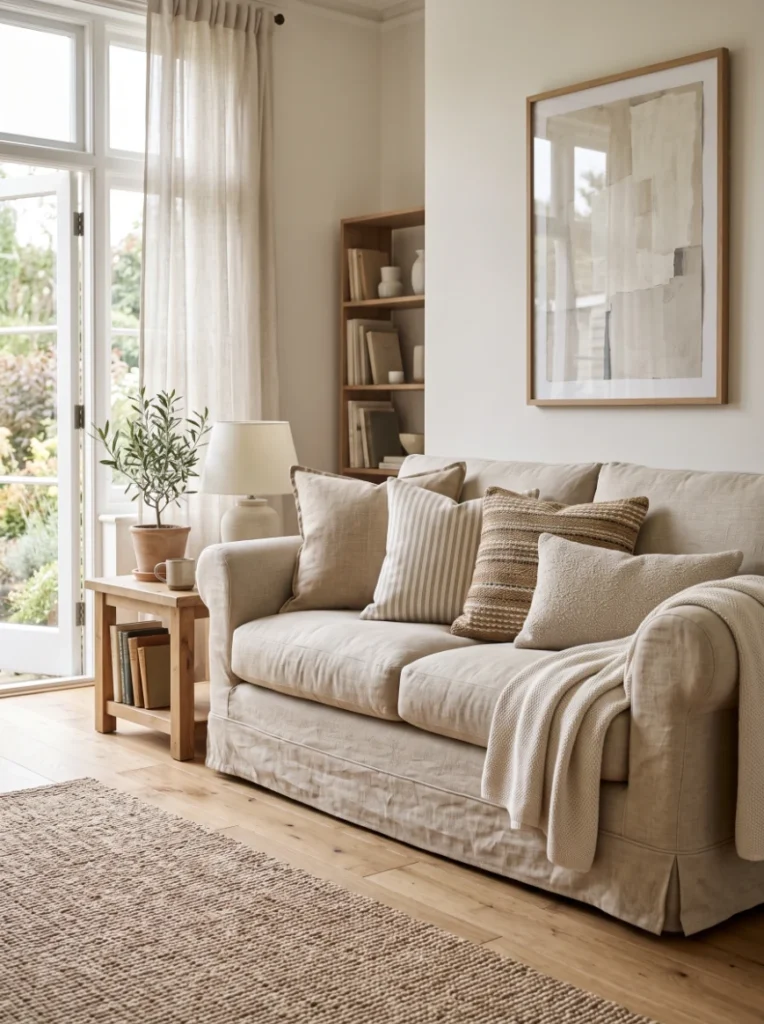
A slipcovered linen sofa runs $700 to $1,500 depending on size and brand, a bigger investment but one that anchors the entire room’s palette and texture.
It works because a slipcover is removable and washable, which matters for a light-colored fabric that sees daily use, and linen’s texture fits the overall neutral, natural theme.
16. Add a Vintage Wood Bench in the Entry
A weathered wood bench by the front door became a practical spot to sit and take off shoes, and it set the tone for the whole home’s palette right at the entrance.
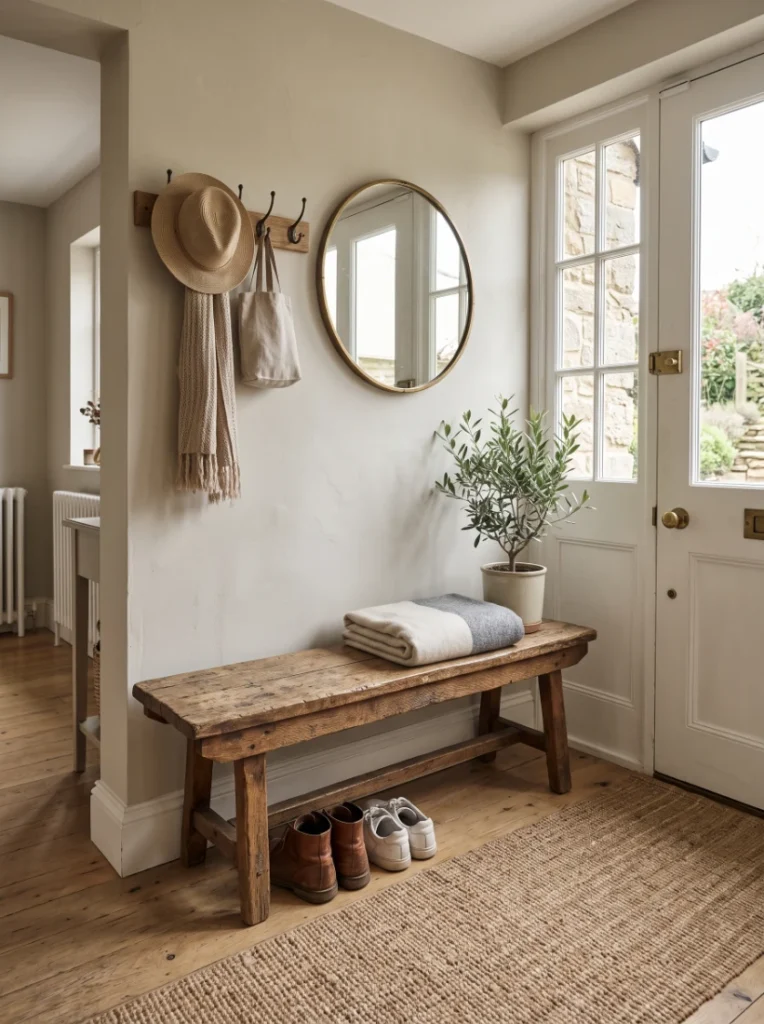
A vintage or vintage-style wood bench runs $80 to $200 depending on size and wood type.
It works because the entryway is the first thing guests see, and a warm wood piece there immediately signals the tone for the rest of the home.
17. Arrange Seating to Face the Fireplace or Focal Point
Reorienting the sofa to actually face the fireplace instead of the TV made the whole room feel more purpose-built for the cozy season ahead.
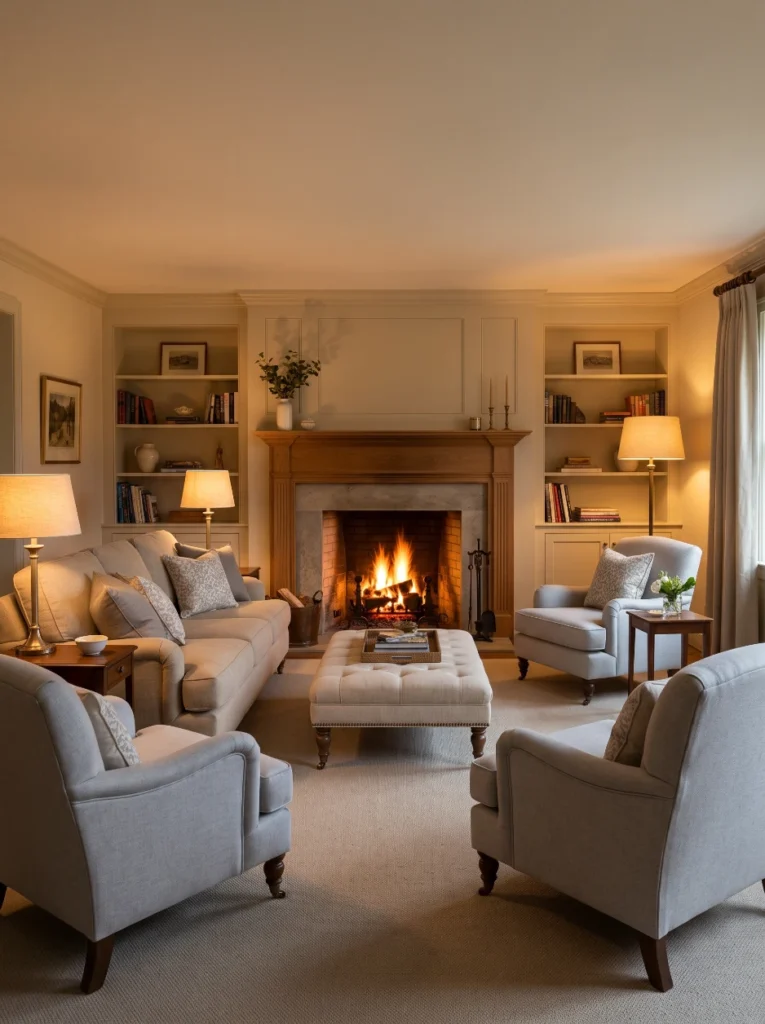
This is a layout change rather than a purchase, and it’s worth planning around the same principles covered in these tips on arranging an L-shaped sofa if your seating includes a sectional.
It works because orienting seating toward a genuine focal point, a fireplace, a window view, makes the room feel more intentional than one arranged purely around a television.
Lighting and Ambiance
18. Add a Warm Wood Table Lamp
Swapping a black metal lamp for a warm wood base one small change made the whole side table area feel warmer at night.
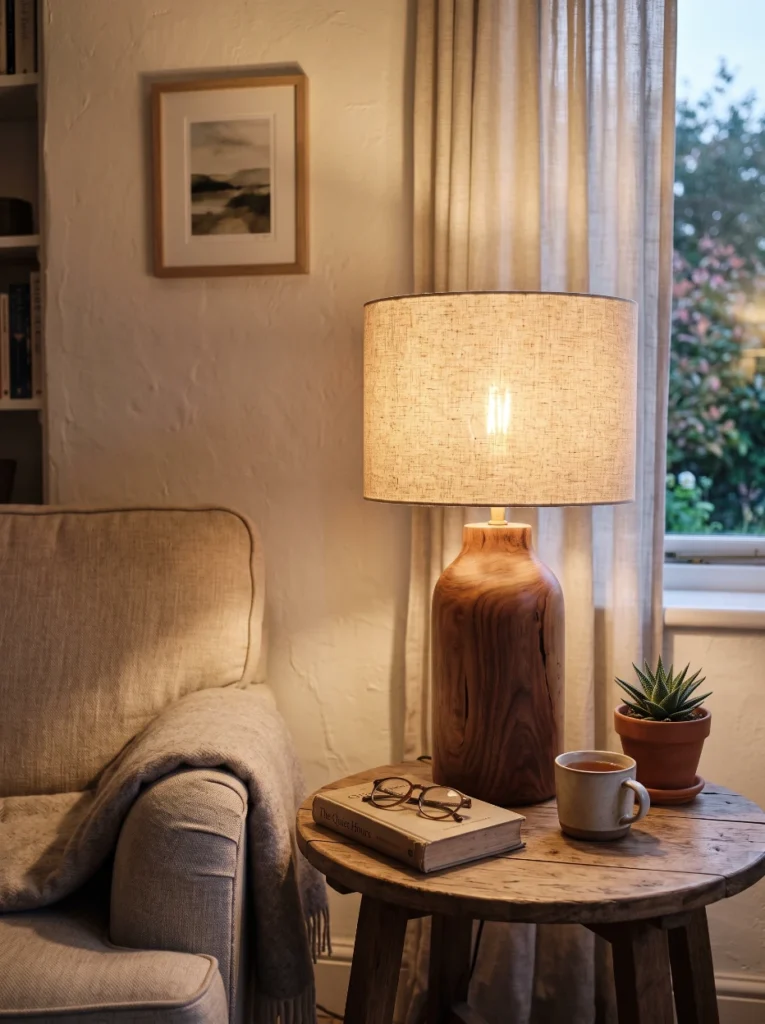
A wood-base table lamp with a linen shade runs $50 to $110, and a warm-toned bulb enhances the effect further.
It works because wood tones and warm light reinforce each other, while a black metal lamp can read as colder even with the same warm bulb inside it.
19. Use Unscented Candles in Neutral Vessels
Grouping plain candles in stoneware vessels gave the coffee table a soft glow without competing with anything else in the room.
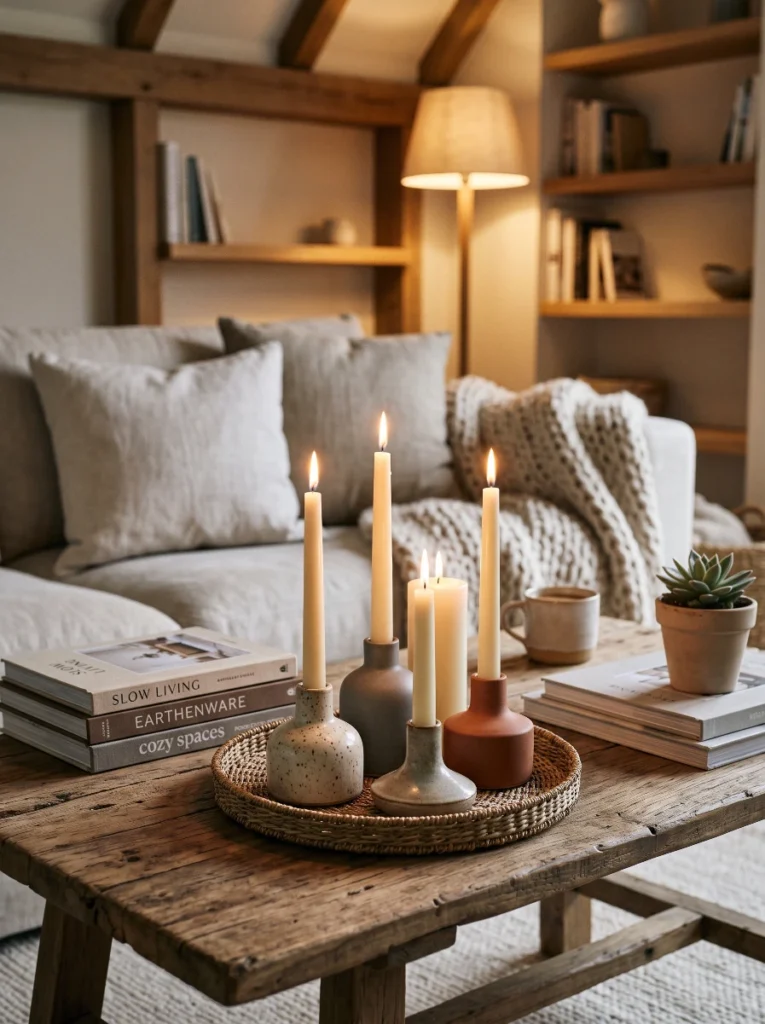
A set of unscented pillar candles in ceramic or stoneware holders runs $20 to $40 for a grouped set of three.
It works because unscented candles in neutral vessels add warmth without introducing a strong scent or a competing color, keeping the whole vignette cohesive.
20. Swap Cool White Bulbs for Warm White
Changing every bulb in the living room to a warmer color temperature affected how every neutral surface in the room read, more than any single decor item did.
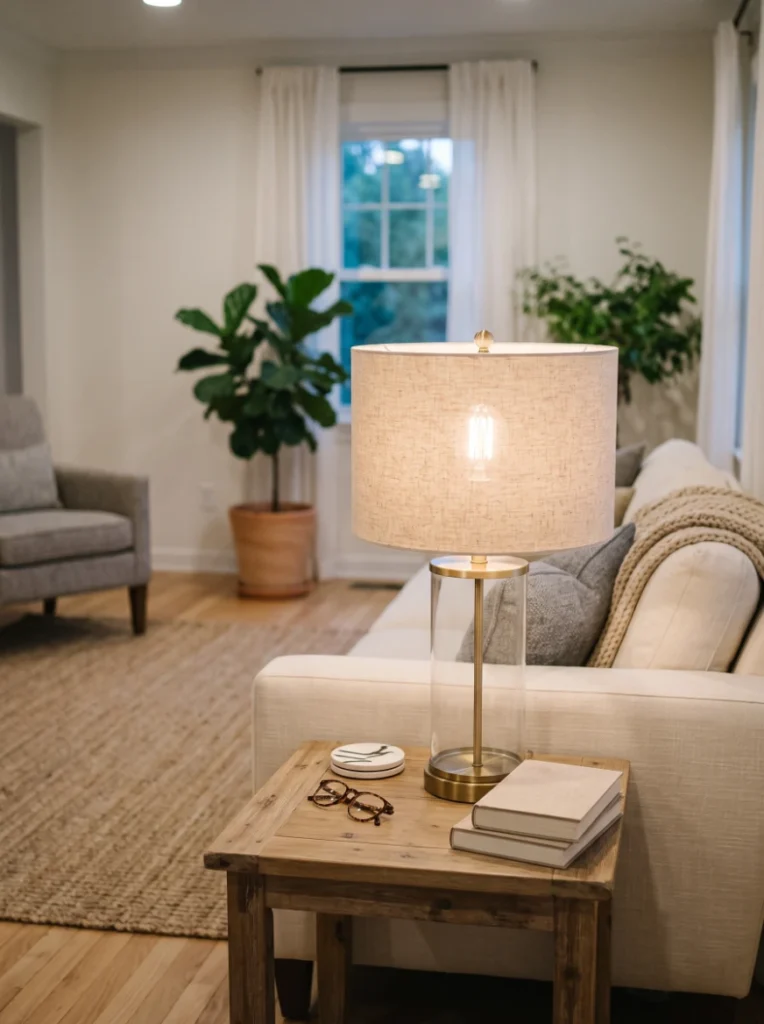
Warm white LED bulbs run $3 to $8 each, and swapping a whole room typically costs $20 to $40 total for four to six bulbs.
It works because cool white light can make a neutral palette read as sterile, while warm white light brings out the cream and tan undertones in everything else in the room.
21. Add a Woven Pendant Light
Swapping a plain overhead fixture for a woven rattan pendant added texture to the ceiling, an area most rooms leave completely plain.
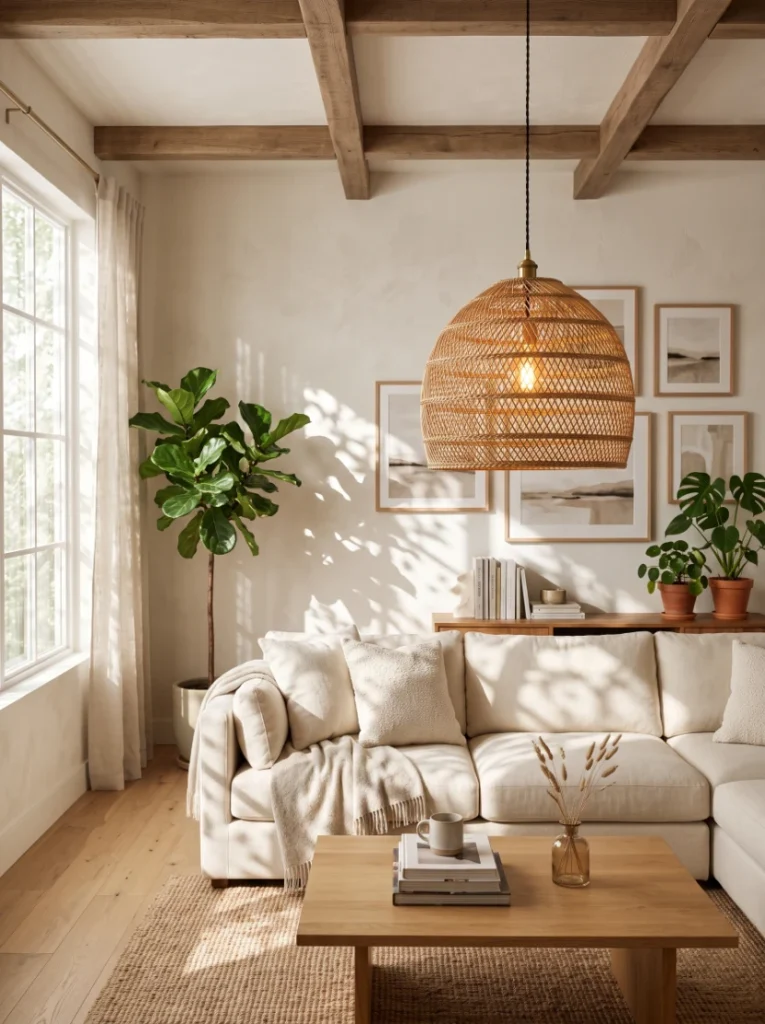
A woven rattan or seagrass pendant light runs $60 to $150 including basic installation if done by an electrician.
It works because it adds natural texture to the ceiling, an area most rooms leave completely flat, while also casting a warm, dappled light through the woven material.
Finishing Touches and Accents
22. Style Neutral Books and Ceramics on Open Shelving
Grouping cream and tan book spines with a few stoneware pieces on the open shelves finally made them look styled instead of just stocked.
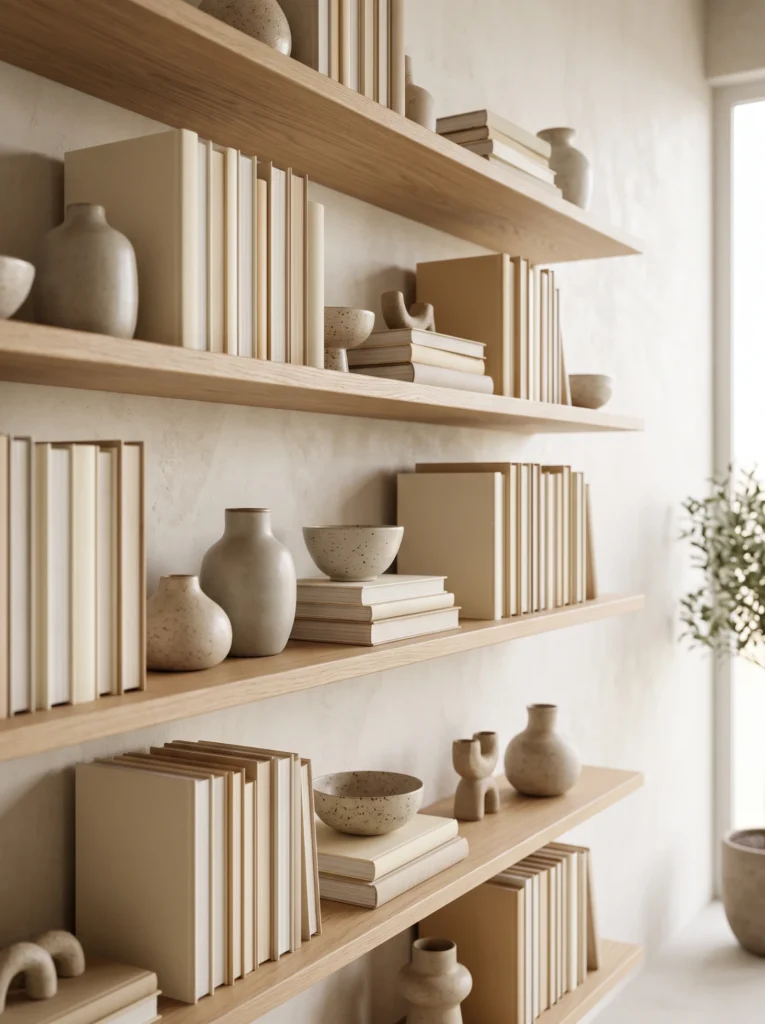
This is mostly a styling exercise using items you likely already own, though a few additional neutral ceramic pieces run $15 to $30 each if you need to round out the display.
It works because grouping by color rather than subject creates a cohesive visual block, the same principle behind why color-grouped shelves consistently photograph better than mixed ones.
23. Add a Stack of Linen Napkins on the Table
A folded stack of linen napkins left out on the dining table added texture even when no one was actually eating there.
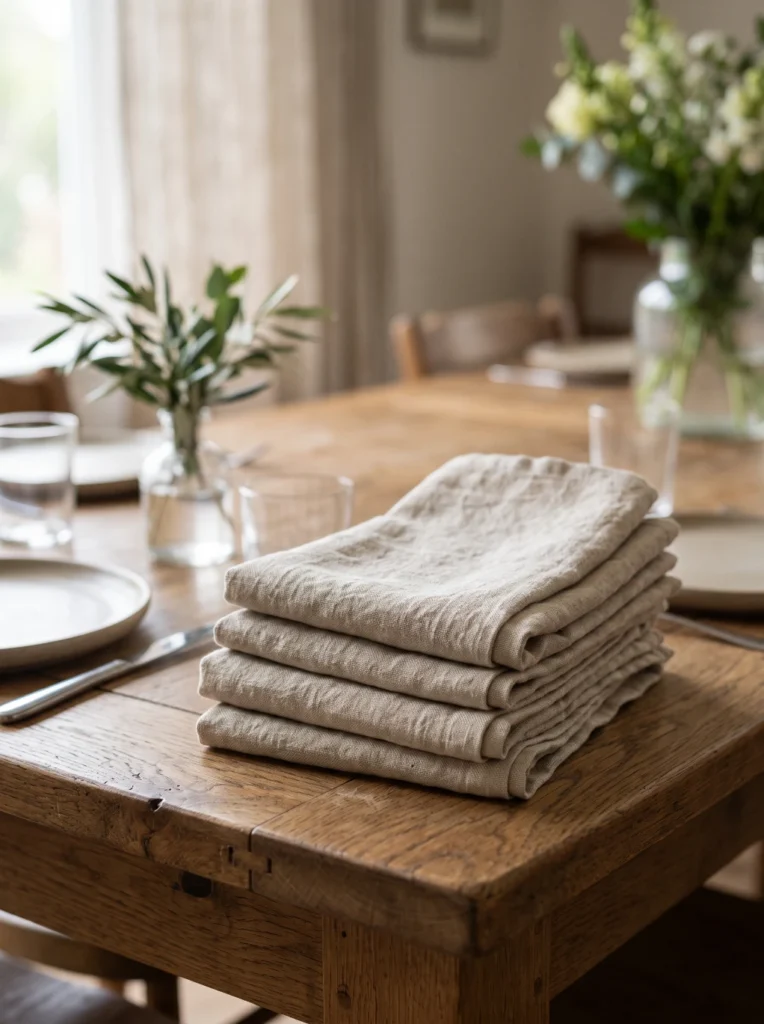
A set of linen napkins runs $20 to $35, and leaving a folded stack out as a styling detail costs nothing beyond the initial purchase.
It works because it’s a low-cost way to add texture to a dining table even between meals, keeping the space from feeling bare when it’s not actively in use.
24. Display a Cluster of Small Stoneware Vases
A small cluster of varying-height stoneware vases on the mantel became the one styling detail I never bothered swapping out, season to season.
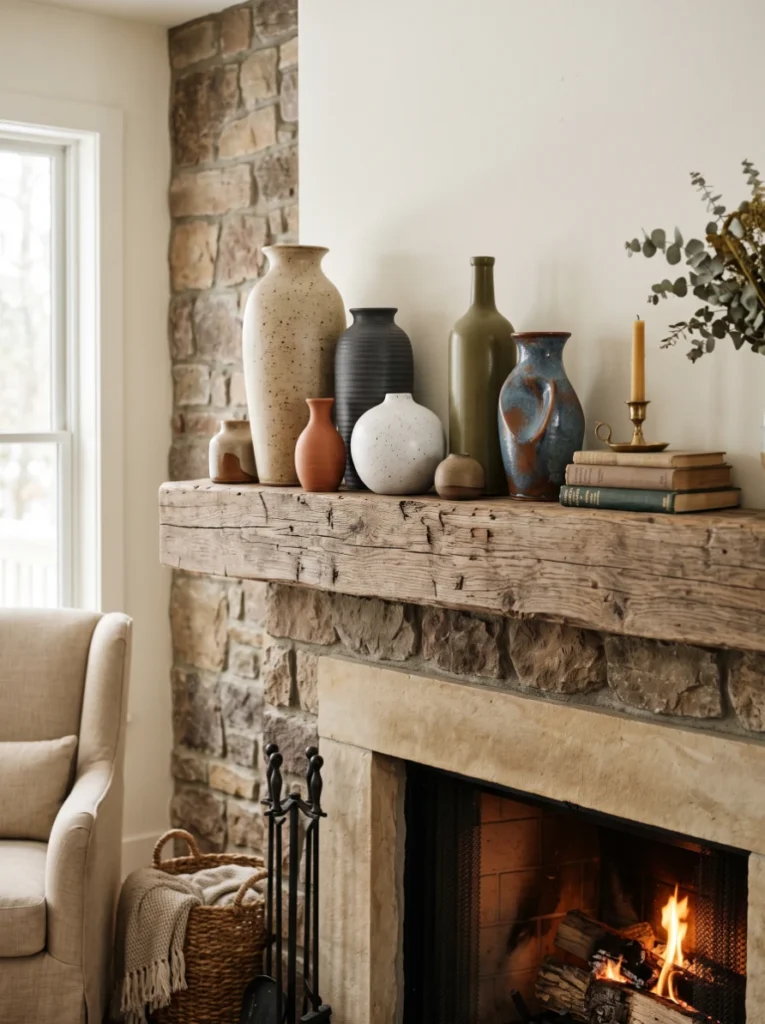
Individual stoneware vases run $10 to $25 each, and grouping three to five at varying heights gives more visual interest than a single large one alone.
It works because grouped varying heights create the same layered effect used throughout this list, and stoneware’s earthy texture fits the neutral palette without needing anything inside the vases at all.
Conclusion
If you’re starting from scratch, warm up the lighting and add one chunky knit throw first, that combination alone shifts the whole feel of a room for under $50. From there, build out texture with a jute rug and linen curtains, then layer in the natural elements and finishing touches as you find pieces you actually like. The advantage of a neutral fall palette is that none of it needs to come down in December, it just keeps working as a cozy, timeless base for whatever season comes next.
FAQ
How do I add fall warmth without using orange or burgundy?
Lean on texture instead of color, chunky knits, jute, dried natural elements, and warm lighting all read as cozy and seasonal without needing a single traditional fall color.
Does neutral decor feel too plain or cold?
It shouldn’t, as long as you mix in enough texture and warm lighting, an all-neutral room with flat surfaces and cool bulbs is what reads as cold, not the color palette itself.
What’s the easiest neutral fall update if I only have a small budget?
Swap your bulbs to warm white and add a chunky knit throw, both changes together typically cost under $50 and noticeably shift how the whole room feels.