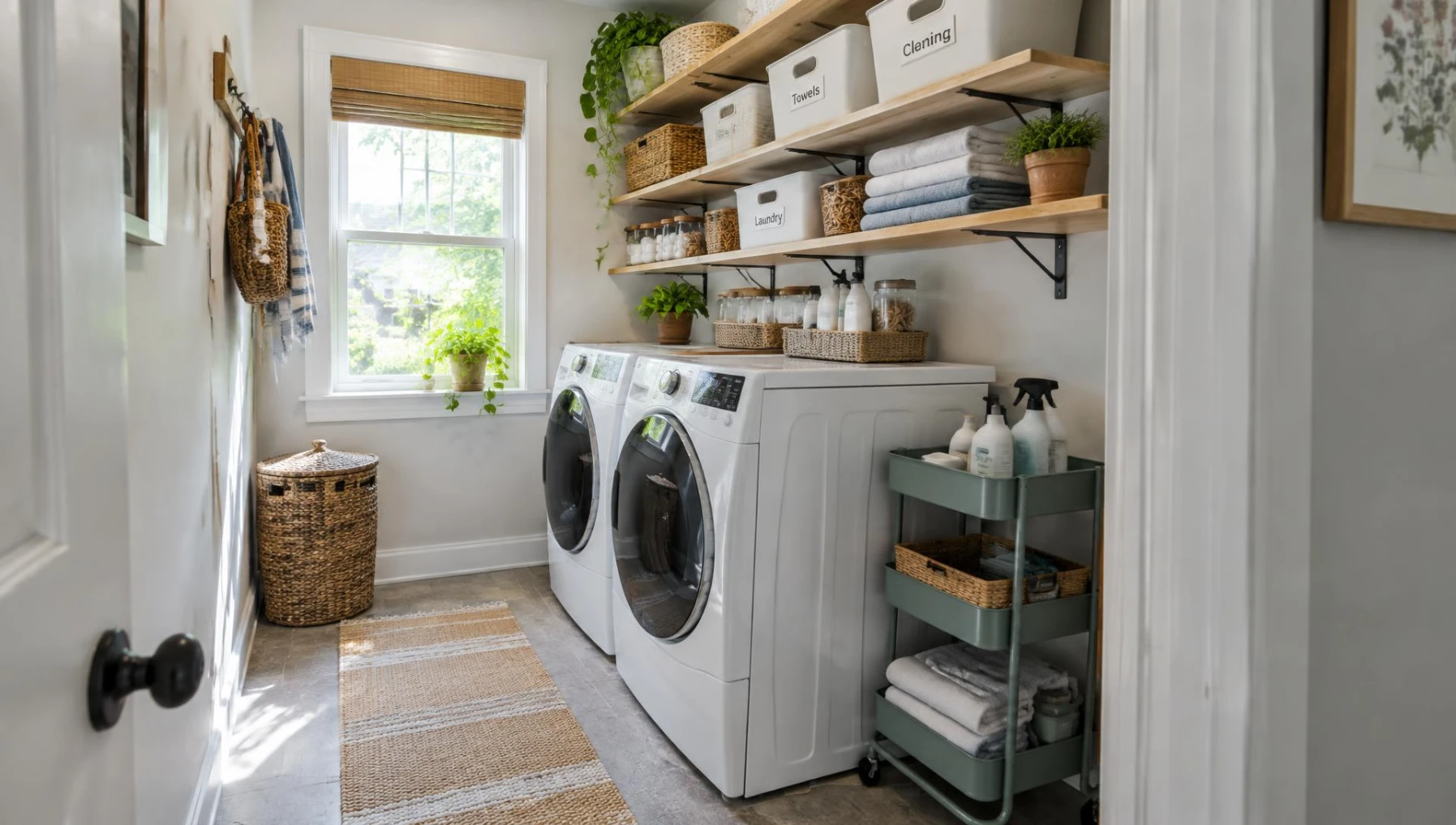
A narrow laundry room usually gets written off as a space that just has to be lived with, too tight for real storage, too awkward for anything beyond the washer and dryer themselves. But most of the wasted potential in these rooms isn’t the floor space, it’s the vertical walls and the narrow gaps nobody thinks to use.
The laundry rooms that actually function well in a tight footprint share one habit: every single surface, walls, doors, and the gap between appliances, gets assigned a job instead of sitting empty. Every idea below builds on that same principle.
Quick Picks
- Best for a tight budget: Wall hooks and a shelf above the machines
- Best hidden storage: A floor-to-ceiling built-in cabinet
- Best for the gap between appliances: A slim 3-tier rolling cart
- Best space-saving door swap: Sliding barn doors instead of a swinging door
Did You Know? The narrow gap between a washer and dryer, usually written off as wasted space, is wide enough for a slim rolling cart sized specifically for that exact gap, turning what most people assume is unusable space into genuine storage.
Before You Start
- Clear everything out before organizing. You can’t assign a home to anything while it’s still buried in a pile.
- Measure the gap between your appliances. It’s often wider than people assume and can fit real storage.
- Keep detergent and supplies near where you actually use them. A beautiful shelf across the room still creates daily friction if it’s inconvenient.
- Go vertical before you rule out storage entirely. Wall space above the machines is almost always available and underused.
- Assign a home for every item, then reset weekly. A five minute tidy prevents the room from sliding back into chaos.
Vertical Storage Solutions
1. Shelves mounted above the washer and dryer
This is the single most repeated fix for a narrow laundry room, and it works because the space is almost always sitting empty.
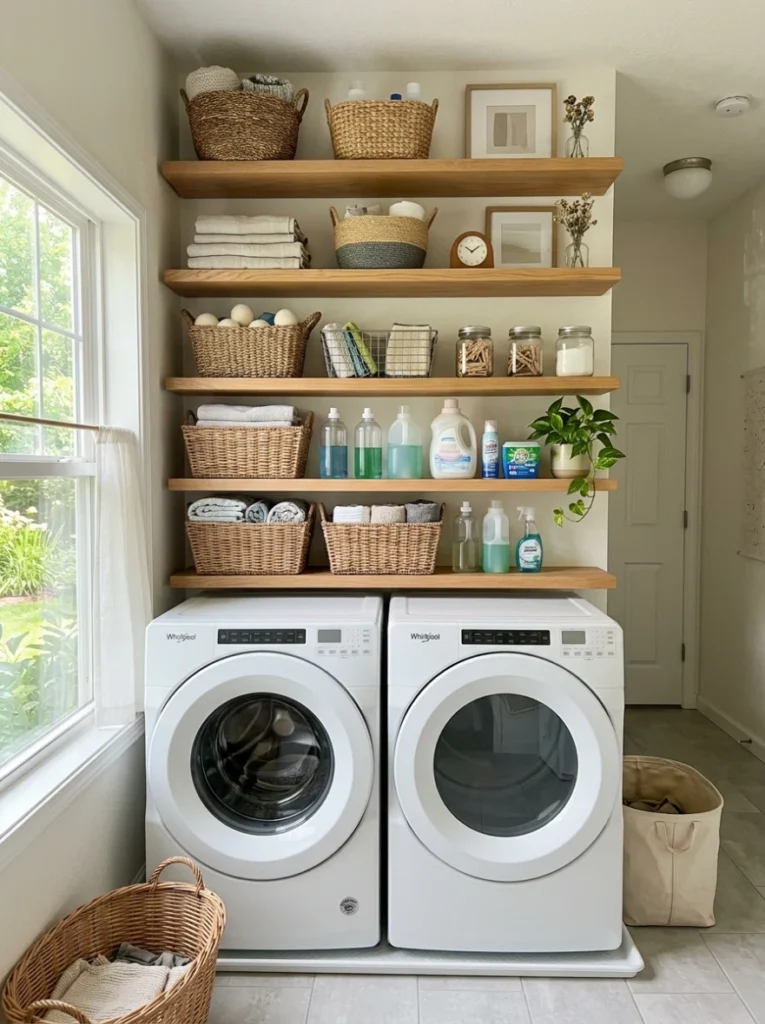
A simple shelf or two mounted above the machines holds detergent, dryer sheets, and baskets out of the way while keeping everything visible and within reach.
This is usually the first upgrade worth making in any narrow laundry room, since the wall space above the appliances rarely gets used for anything otherwise.
2. A pegboard for hooks, baskets, and small shelves
A fully customizable wall system that adapts as your storage needs change.
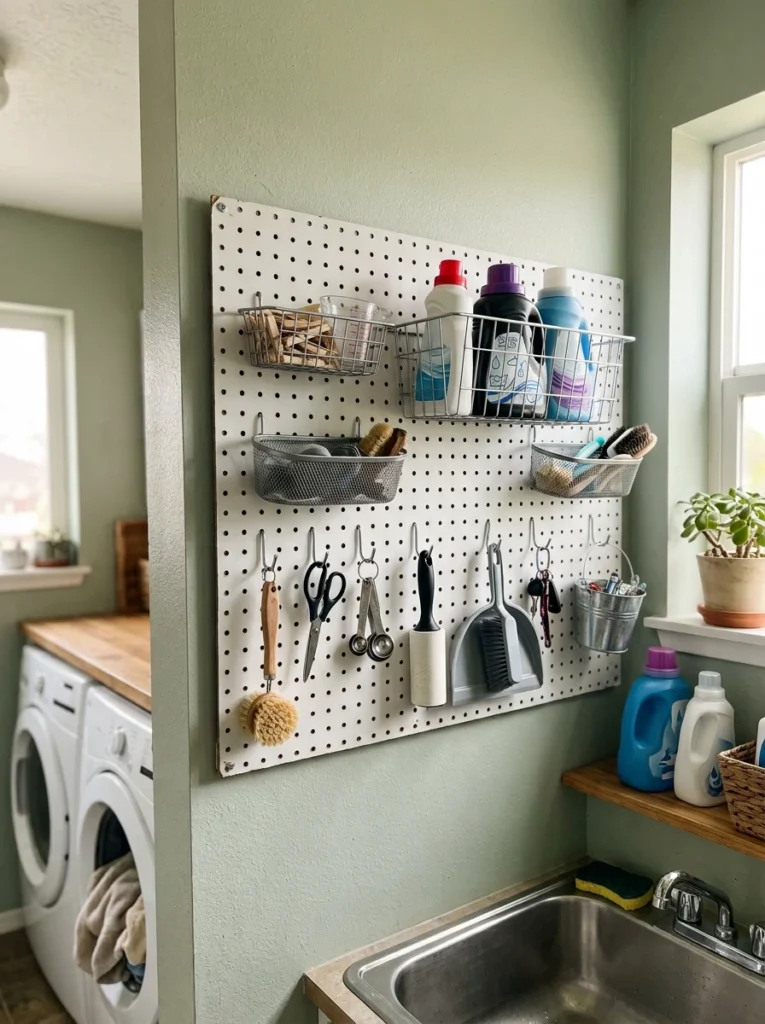
A pegboard panel lets you hang small baskets, hooks, and shelves for frequently used items, and rearranging the whole layout later takes minutes rather than a full renovation.
This is one of the most flexible ideas on this entire list, since it grows and shifts with whatever the room actually needs over time.
3. A floor-to-ceiling built-in cabinet
The most polished, hidden storage solution on this list.
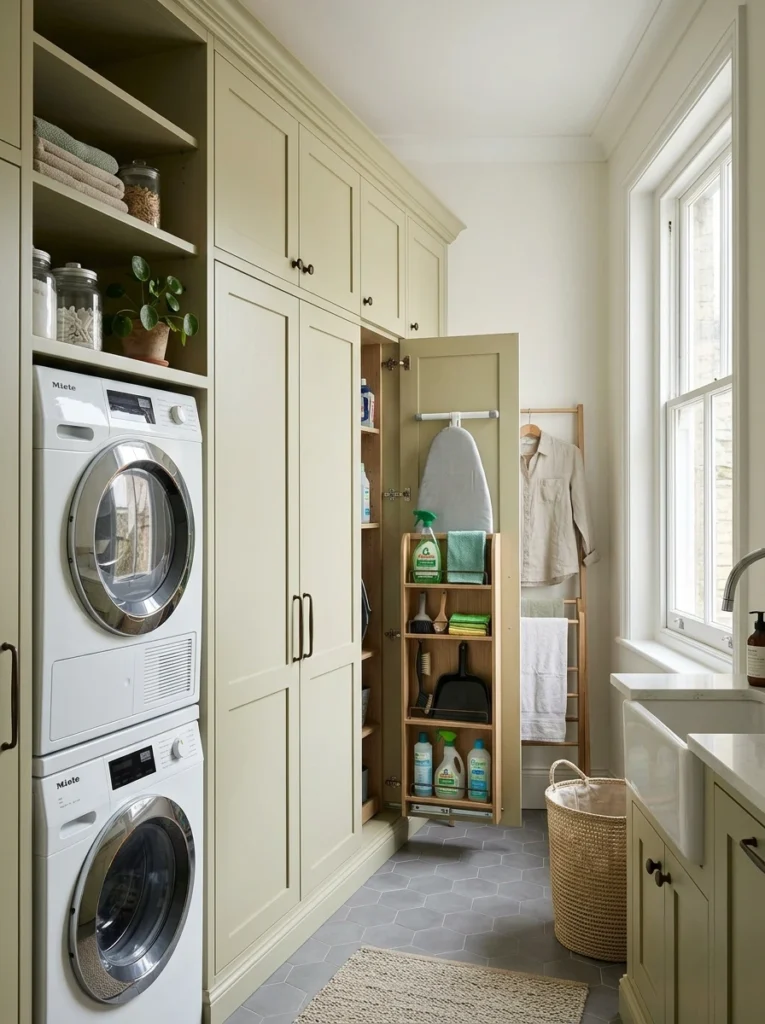
A built-in cabinet running the full height of the wall hides laundry baskets, bins, and supplies behind closed doors, keeping a narrow room looking clean even when it’s genuinely full.
This is a bigger investment than most ideas on this list, but it delivers the most storage relative to the narrow footprint it occupies.
4. Wall hooks for hangers and mesh bags
One of the cheapest, fastest wins in a small laundry room.
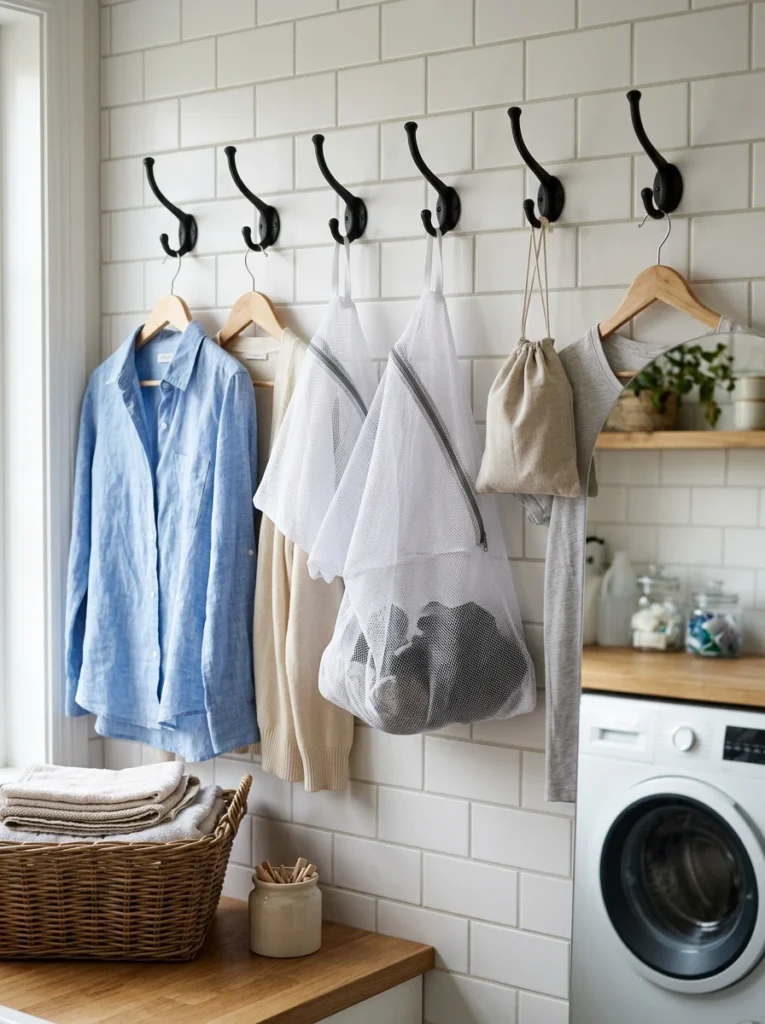
A row of simple hooks gives hangers, delicate mesh bags, and cleaning tools a genuine home on the wall instead of piling up on top of the machines.
This idea costs almost nothing and solves one of the most common sources of daily clutter in a narrow room.
5. Under-shelf hanging baskets
A trick that doubles the storage of a shelf you already have.
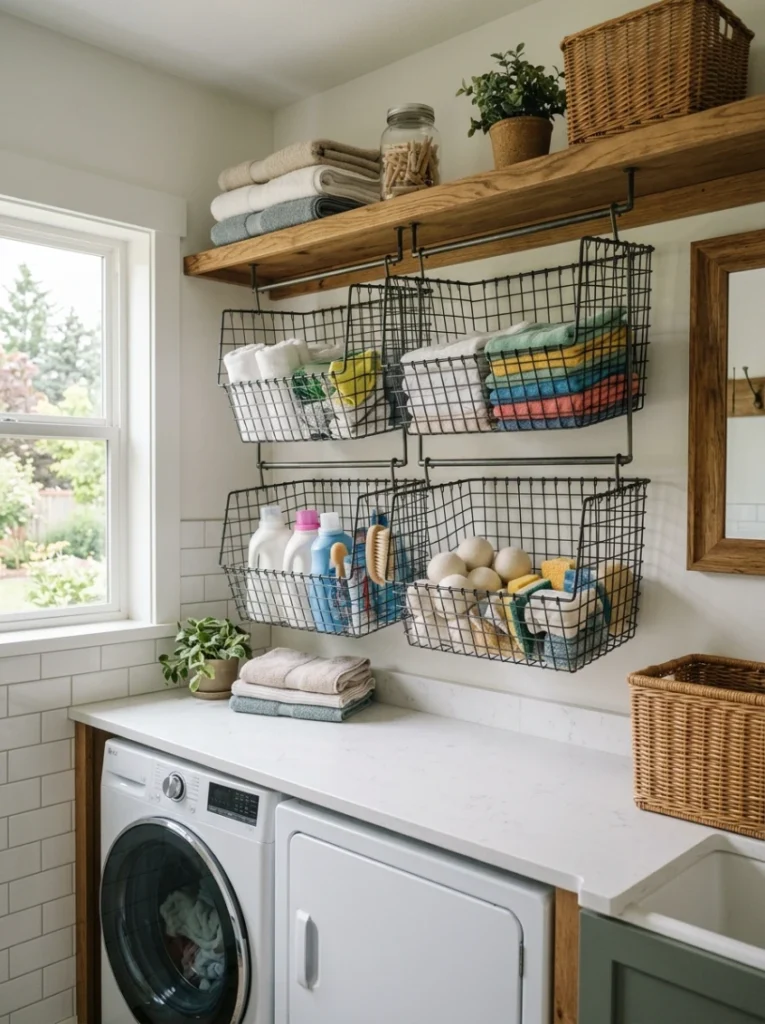
Wire baskets that clip onto the underside of an existing shelf add a second layer of storage in the exact same wall space, without needing to mount anything new.
This is a smart add-on for any shelf that’s already installed above the washer and dryer, since it multiplies the storage without multiplying the footprint.
Pro Tip: Before buying any wall-mounted storage, check what’s actually behind the drywall. Studs, pipes, or electrical can limit exactly where shelves or a pegboard can be safely anchored, and it’s worth knowing before you’ve already picked out the piece.
Using the Gaps Between Appliances
6. A slim 3-tier rolling cart
This is the idea that surprises people most, since the gap between machines usually gets written off entirely.
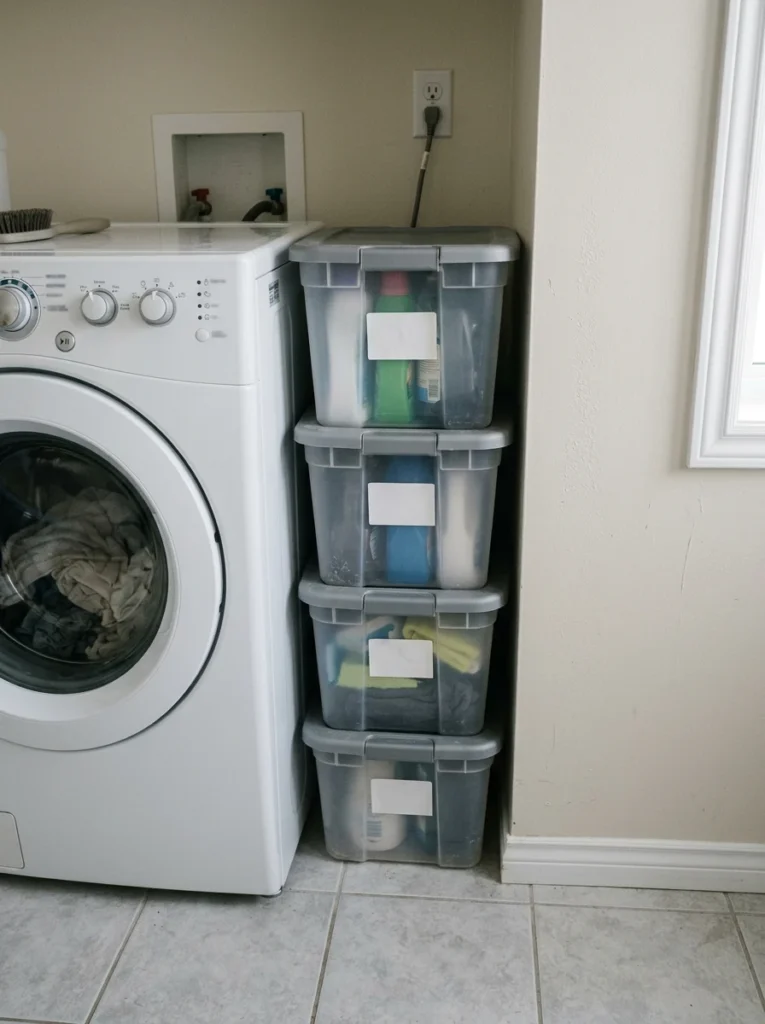
A narrow rolling cart, sized specifically to slide into the gap between the washer and dryer, holds detergent pods, stain sticks, and dryer balls in a spot most people assume is wasted space.
Wheels make it easy to pull the whole cart out for cleaning, then tuck it right back into place.
7. Stacked bins wedged between the wall and machine
A no-cost solution using containers you likely already own.
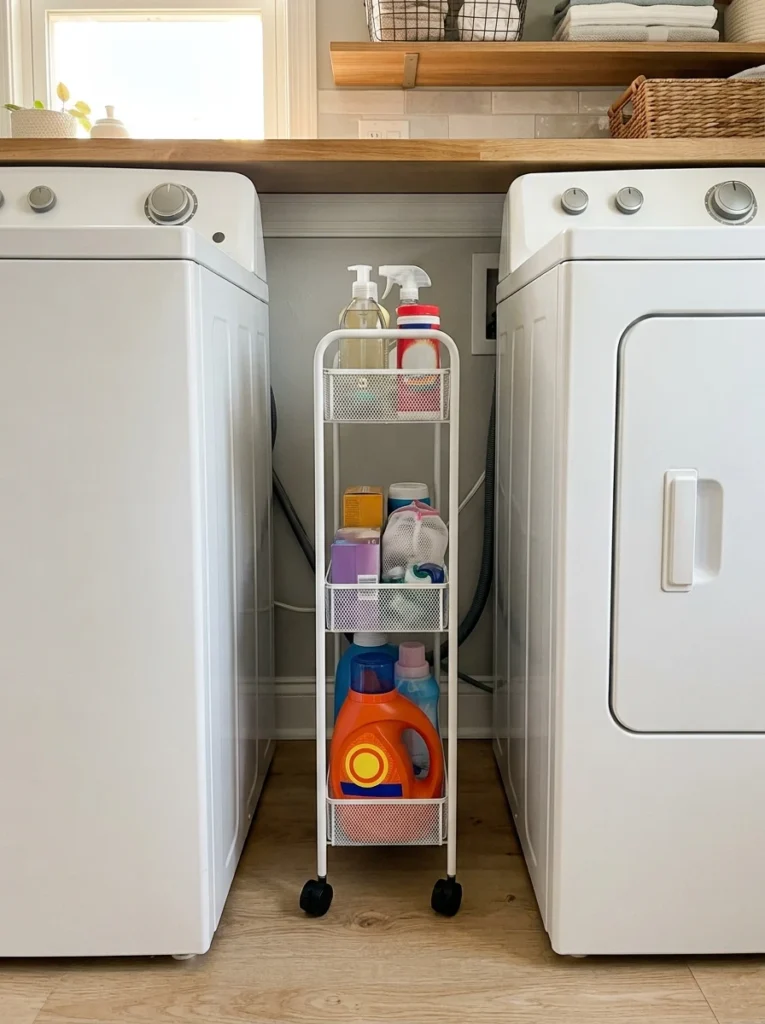
Large stackable bins, placed in the narrow gap between the machine and the wall, hold both clean and dirty laundry without needing any separate hamper taking up floor space elsewhere.
This is one of the simplest ideas on this entire list, since it likely only requires containers you already have on hand.
8. Slim pull-out storage between wall studs
A more custom solution for anyone renovating the space from scratch.
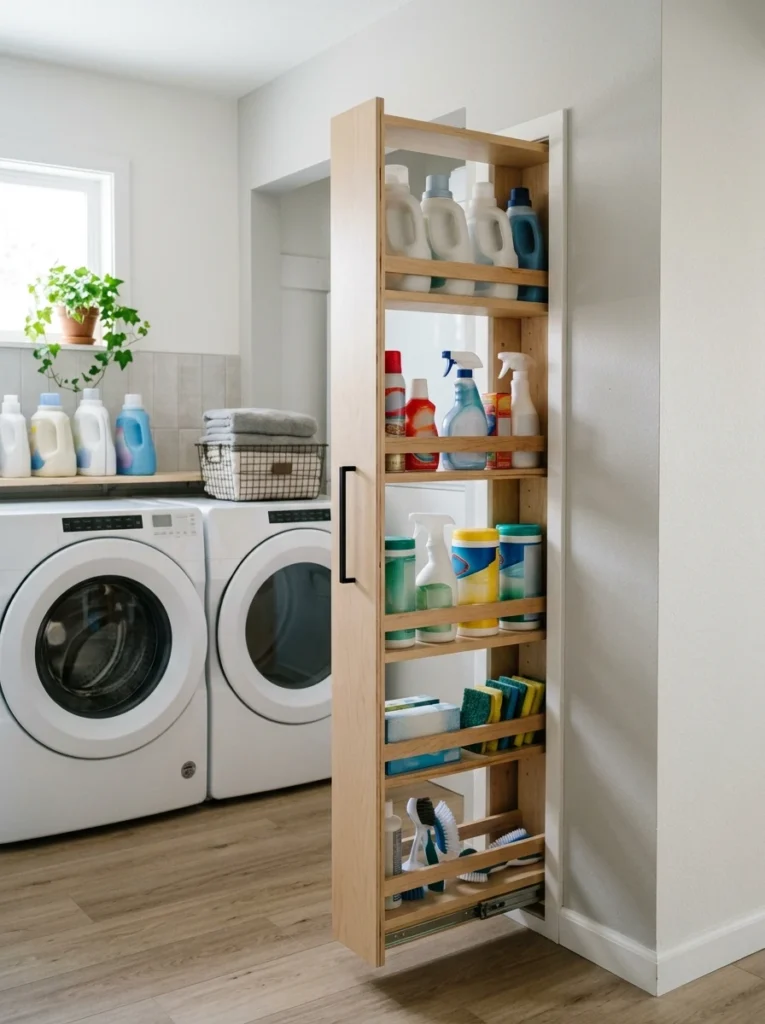
A narrow pull-out unit, built to fit the standard width between wall studs, adds purpose-specific storage exactly where floor space is at its most limited.
Ready-made metal pantry units, sized to match standard cabinet widths, are a more affordable alternative to a fully custom build if the budget doesn’t stretch that far.
9. A lazy Susan for detergent bottles
A trick borrowed directly from kitchen cabinet organization.
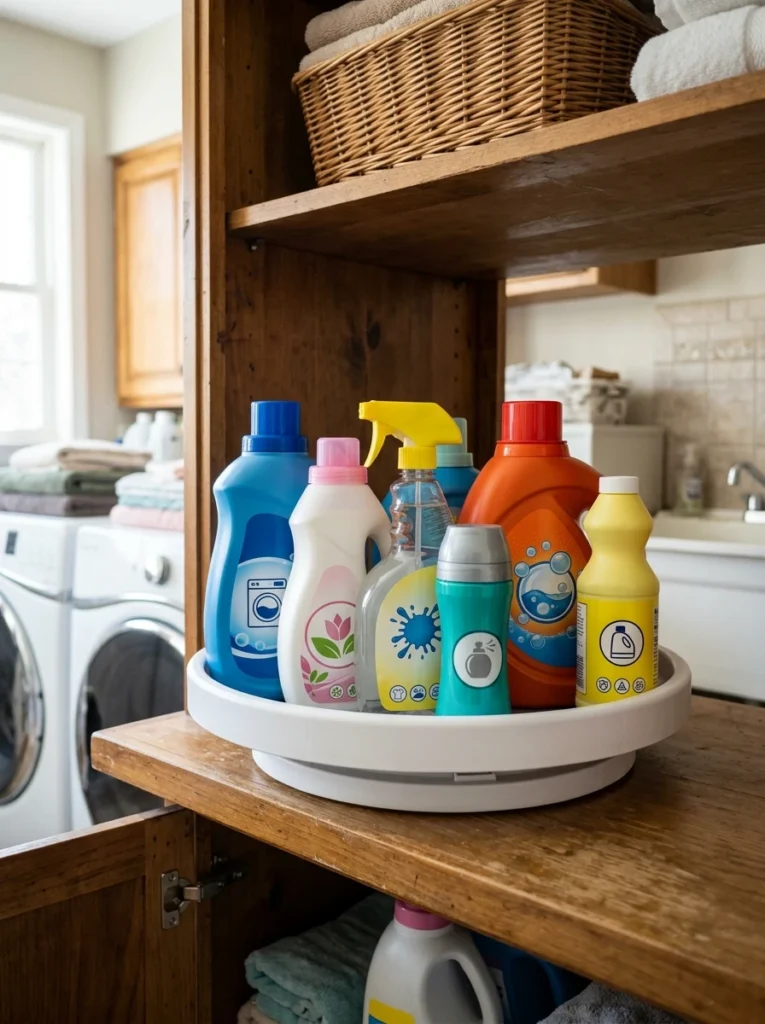
A rotating lazy Susan inside a laundry cabinet lets every bottle spin into view instead of getting pushed to the back and forgotten, the same logic that makes it work so well in a small kitchen cabinet.
This is a small, inexpensive addition that solves a genuinely common frustration in a narrow laundry closet.
Pro Tip: Measure the gap between your washer and dryer before assuming nothing will fit. Most narrow rolling carts are designed specifically for gaps as tight as 6 to 8 inches, which is wider than most people expect their appliance spacing to actually be.
Folding and Sorting Stations
10. A wall-mounted fold-down folding table
Solves the single biggest daily annoyance in a narrow laundry room.
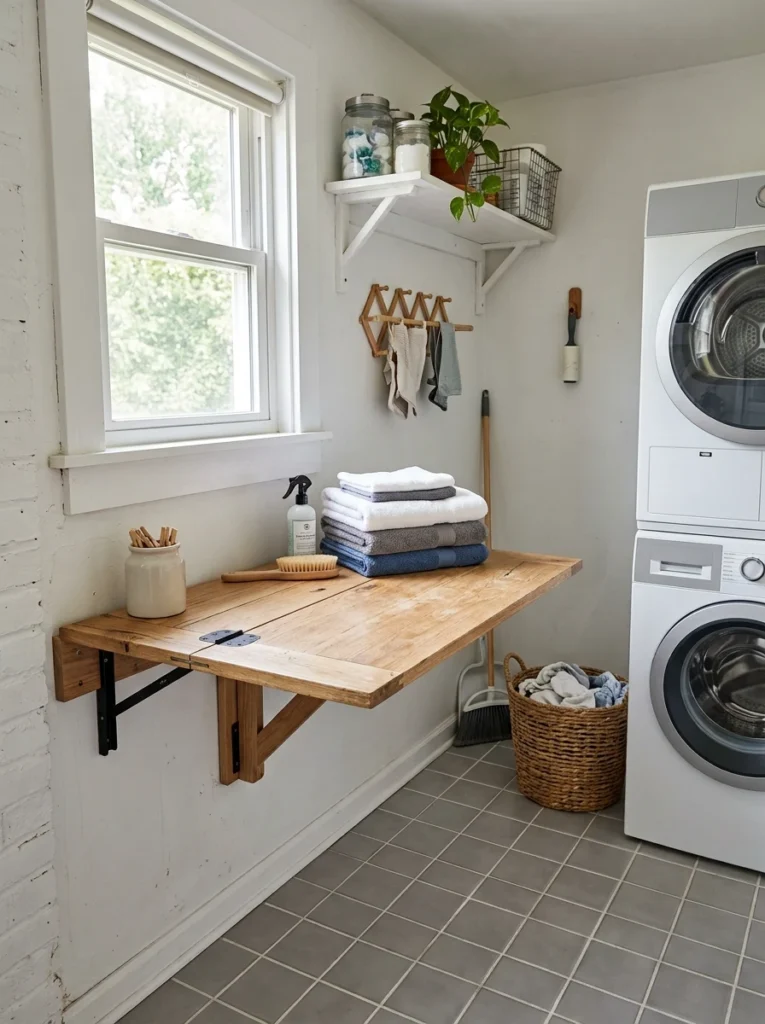
A hinged folding table mounts flat to the wall and drops down only when needed, giving a narrow room a genuine folding surface without permanently sacrificing floor space to it.
This single addition solves the most common complaint about tight laundry rooms, having nowhere to actually fold clothes.
11. A countertop over the washer and dryer
For a side-by-side appliance setup, this adds a surface that wasn’t there before.
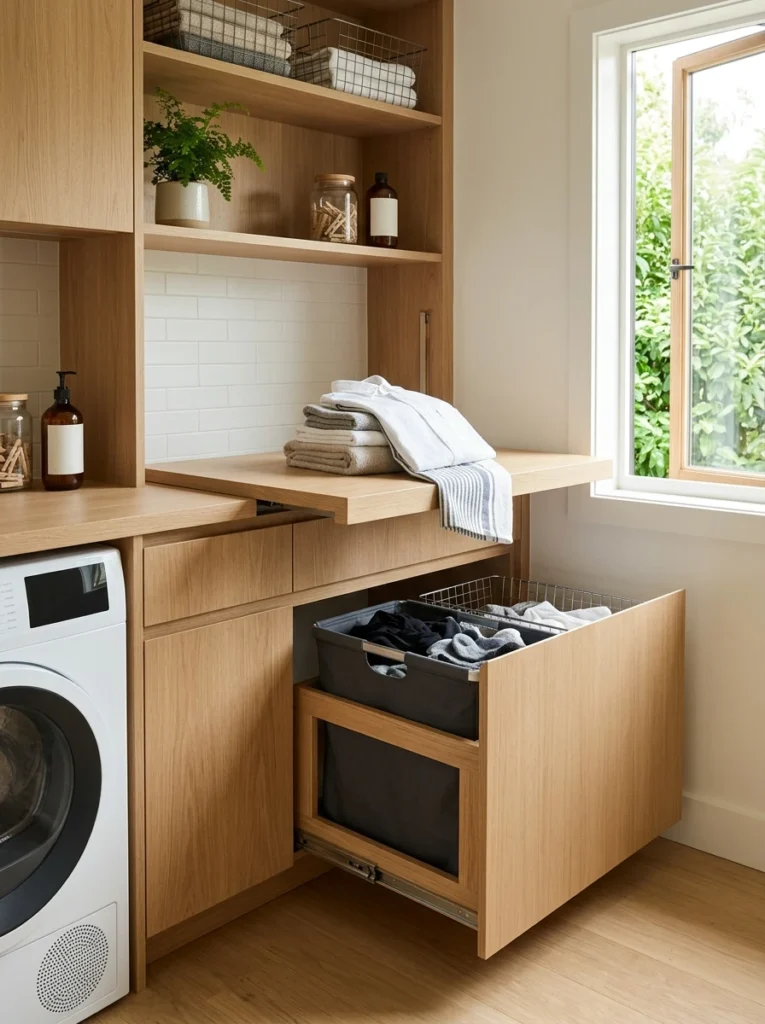
A slim countertop built over side-by-side machines creates a genuine folding and sorting surface, turning otherwise unused space directly above the appliances into something functional.
This works particularly well paired with the shelving idea above it, building a full wall of function rather than just one isolated fix.
12. A built-in folding station with a hidden hamper
A more integrated solution for anyone planning a fuller renovation.
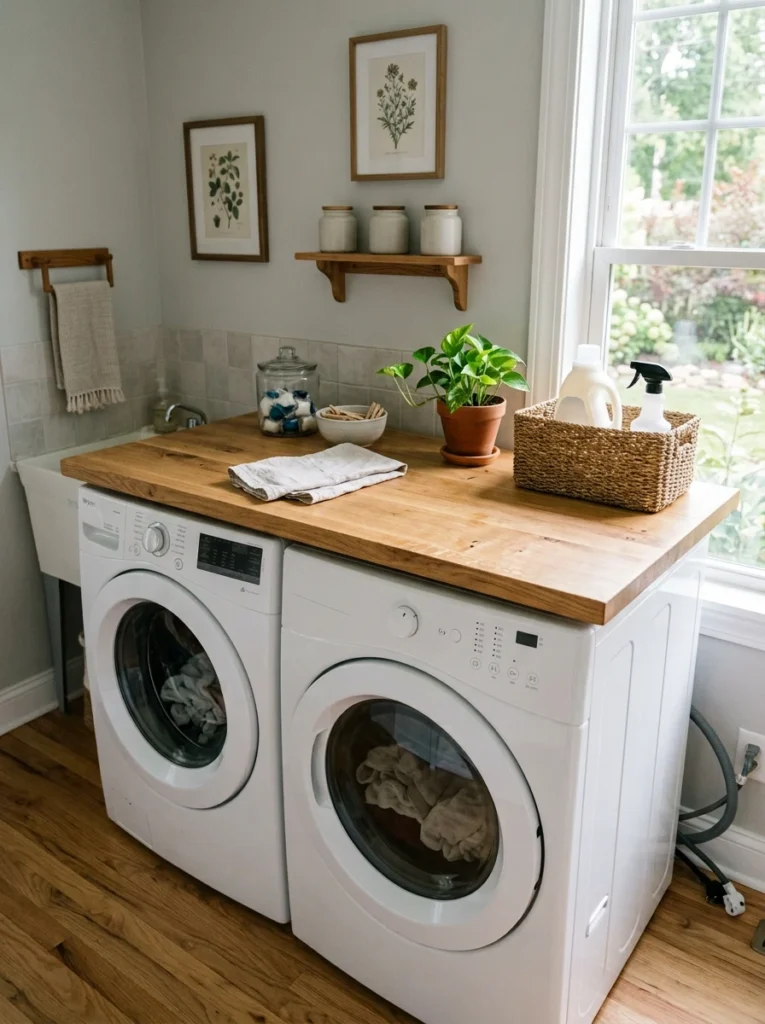
Combining a folding surface with a concealed pull-out hamper underneath keeps dirty laundry out of sight while still providing a genuine place to fold and sort.
This is a more involved project, but it solves two separate space problems, folding and hamper storage, in one built piece.
13. A slim, wheeled laundry hamper
A hamper that tucks away instead of permanently claiming floor space.
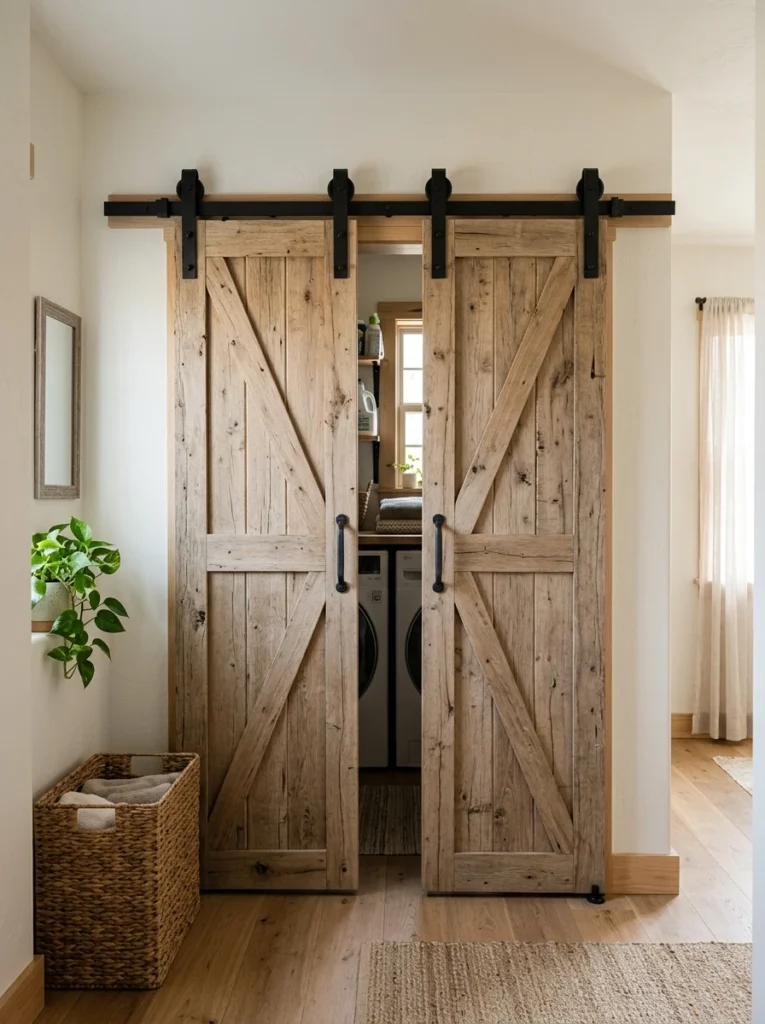
A narrow hamper on wheels slides into a tight corner or gap and rolls easily from room to room, avoiding the bulk a standard square hamper would take up.
This small swap makes a real difference in a narrow room, where a bulky hamper often ends up blocking the exact path you need to walk through.
Pro Tip: If a wall-mounted folding table isn’t an option, a rolling cart with a flat top surface can serve the same purpose and pulls out only when you actually need to fold. It’s a lower-cost, no-installation alternative that solves the same daily problem.
Doors and Visual Space Tricks
14. Sliding barn doors instead of a swinging door
A swap that adds an illusion of space a standard door never provides.
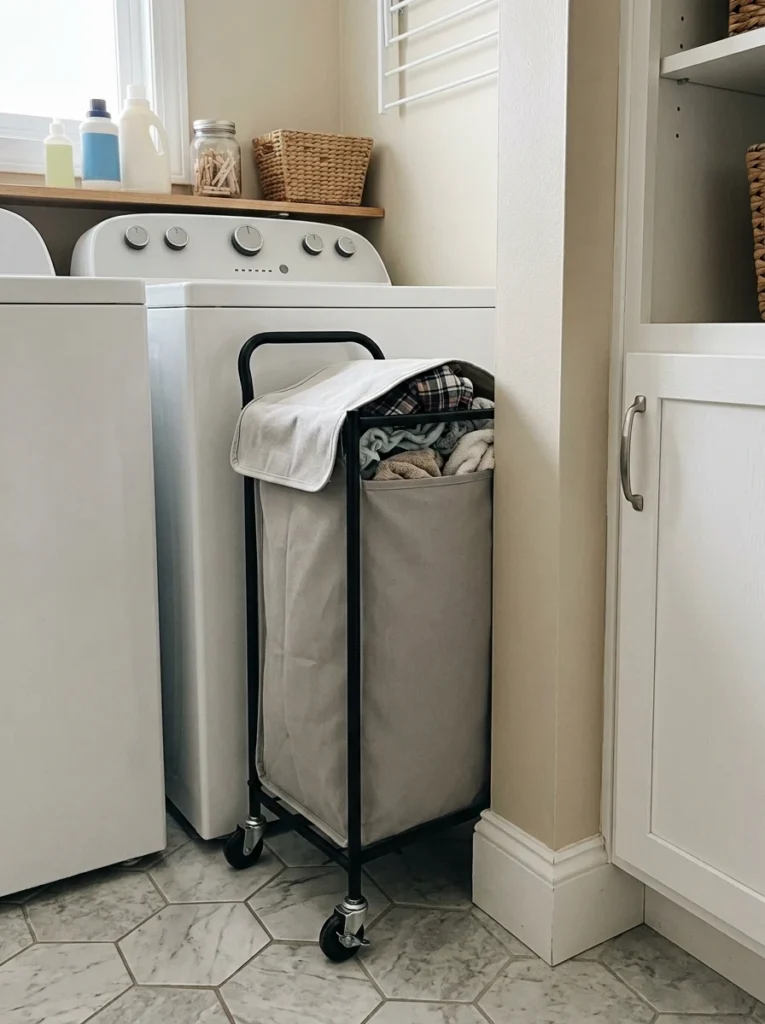
Sliding barn doors eliminate the swing radius a traditional door requires, freeing up floor space that would otherwise need to stay clear just for the door to open.
This swap also adds real character to a narrow laundry room, doing double duty as both a functional and a styling upgrade.
15. An over-the-door organizer
Storage that requires zero wall drilling or installation at all.
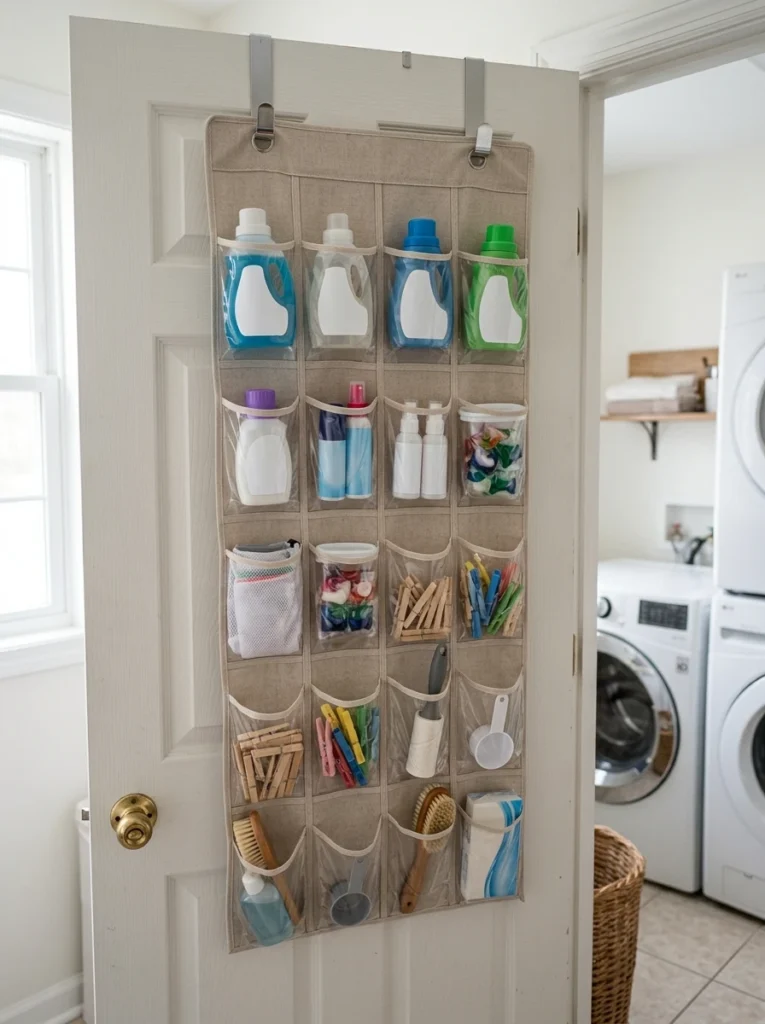
A simple over-the-door organizer holds small items like lint rollers, stain sticks, and clothespins, using the one surface in a narrow room that almost never gets any storage attention at all.
This is one of the easiest ideas on this entire list to install, since it needs no drilling and can move to a different door entirely if your needs change.
16. A mirror on the back of the door
A small trick that makes a genuinely narrow room feel less closed in.
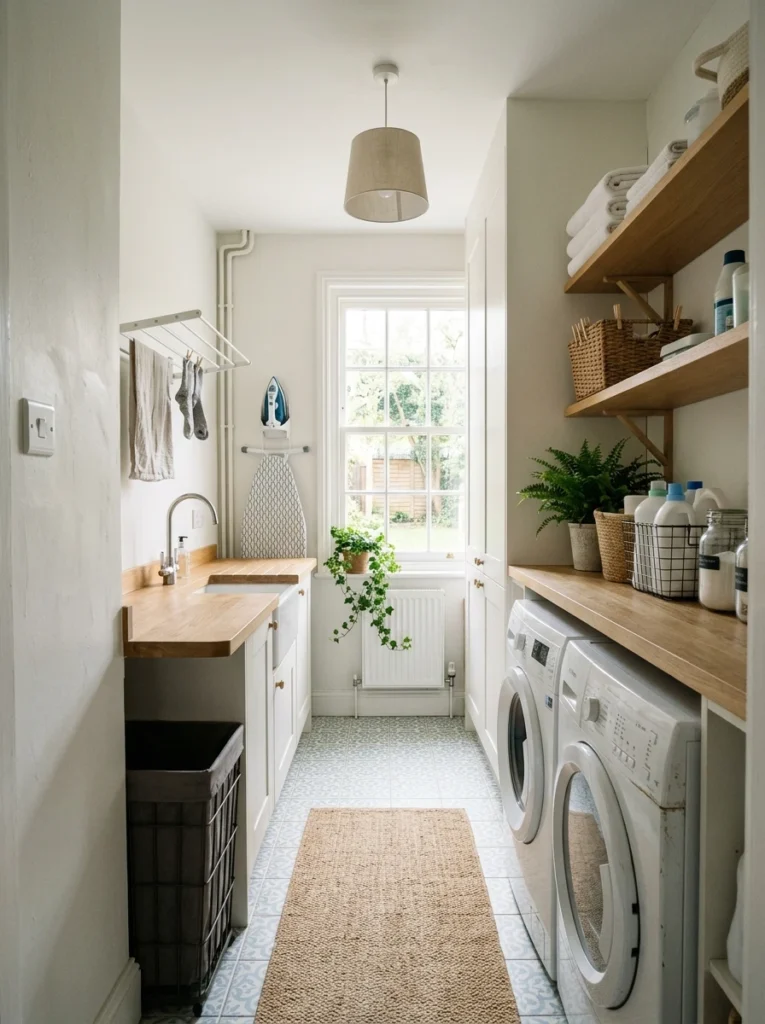
A mirror mounted on the door’s interior reflects light and adds visual depth to a narrow room, all while doubling as a quick outfit check on the way out.
This costs very little and adds a genuine sense of openness to a room that’s otherwise working with very little square footage.
17. Light, reflective wall paint
The cheapest visual space trick on this entire list.
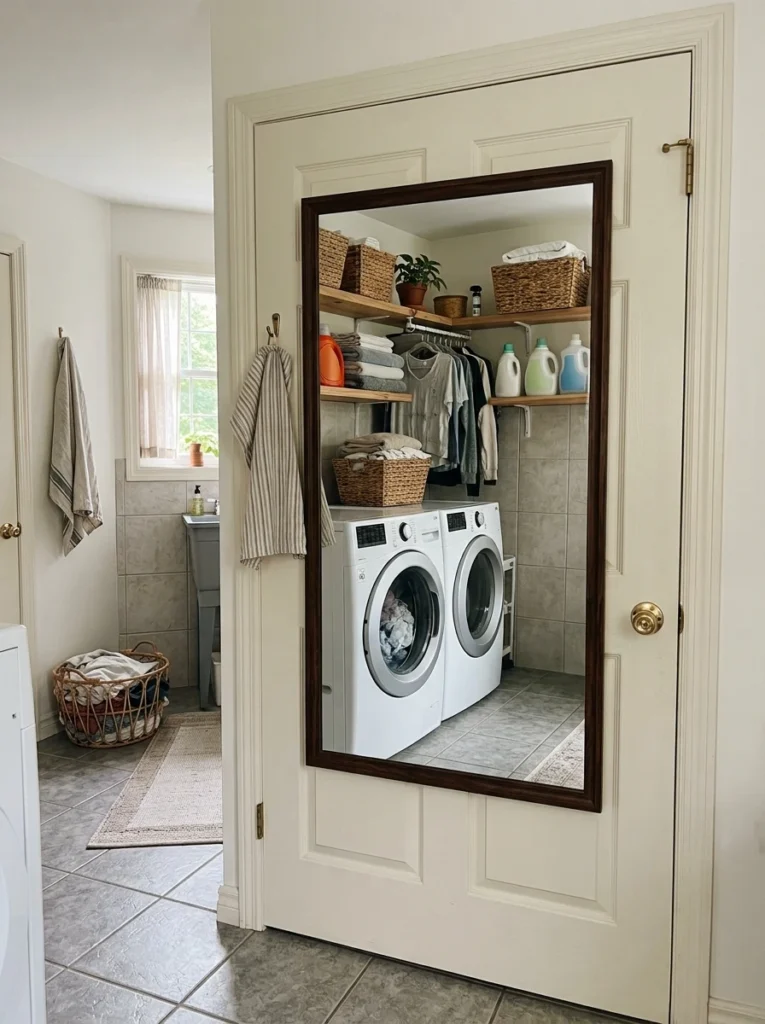
A light, bright wall color reflects more available light around a narrow room than a dark shade would, making the space feel less closed in without touching a single piece of furniture.
This pairs particularly well with the mirror idea above it, since both work toward the same goal of visually opening up a tight space.
Pro Tip: If a full barn door swap isn’t in the budget, even removing a solid door in favor of a curtain or a slim pocket door achieves a similar space-saving effect for a fraction of the cost.
Organization and Containers
18. Matching clear, labeled bins
A visual consistency trick that makes a small space look considerably more put together.
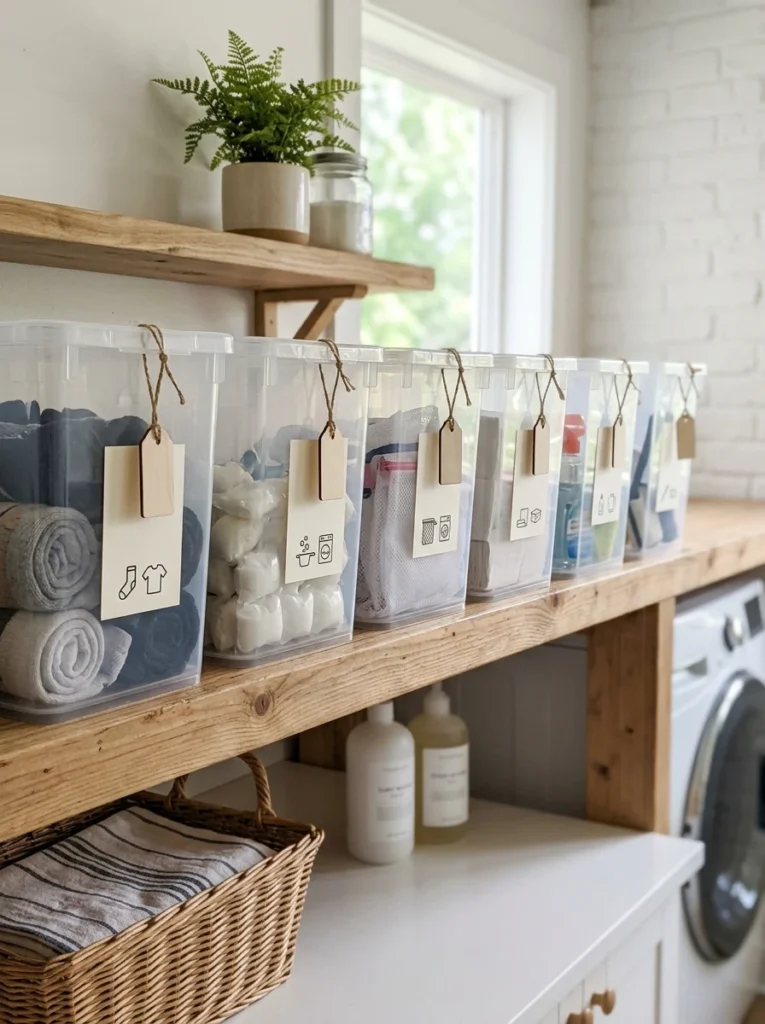
Clear bins with simple labels let you find supplies at a glance while keeping a whole shelf looking uniform, rather than a mismatched collection of random containers.
This is one of the fastest upgrades on this list purely in terms of visual impact relative to the actual cost involved.
19. A labeled supply tray for small essentials
Corralling the smallest items prevents them from scattering across every surface.
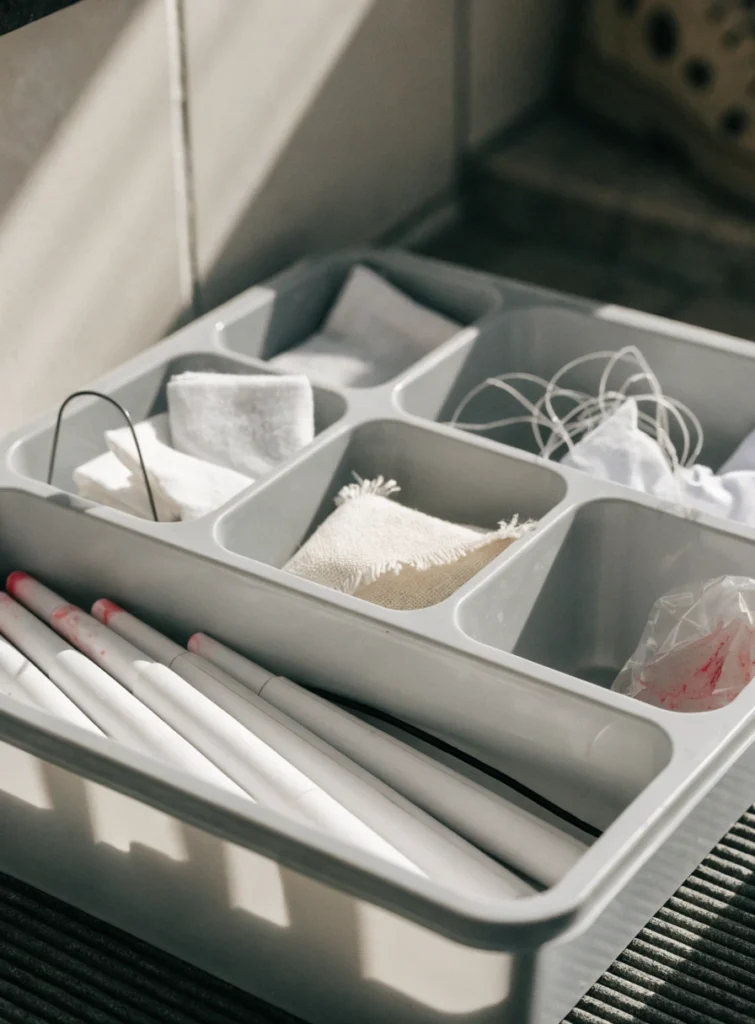
A single tray, labeled and placed on a shelf or counter, keeps stain treatments, lint rollers, and other small essentials from spreading loosely across every available surface.
This small habit alone prevents a lot of the daily clutter that builds up in a room this size.
20. Collapsible clothes hangers
A genuinely clever fix for a room without much wall space to spare.
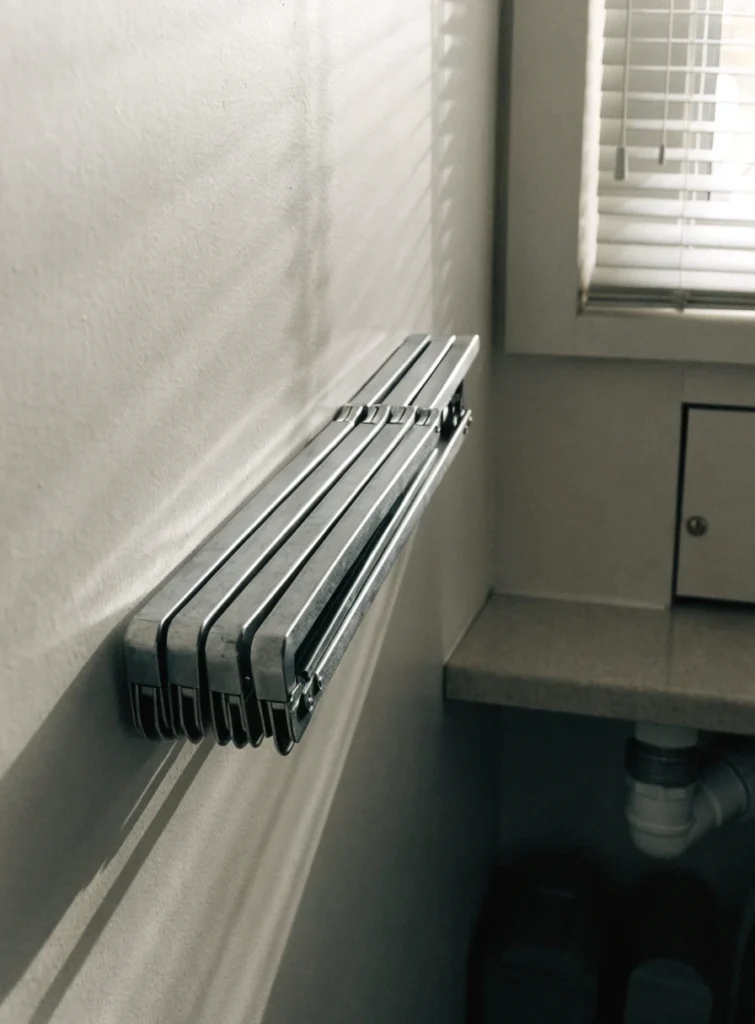
Metal hangers that fold flat against the wall when not in use hold a surprising number of garments while barely projecting into the room at all.
This is a smart option for a laundry room too narrow to fit a standard hanging rod anywhere at all.
21. A designated dirty laundry zone
The simplest organizational habit on this entire list, and one of the most effective.
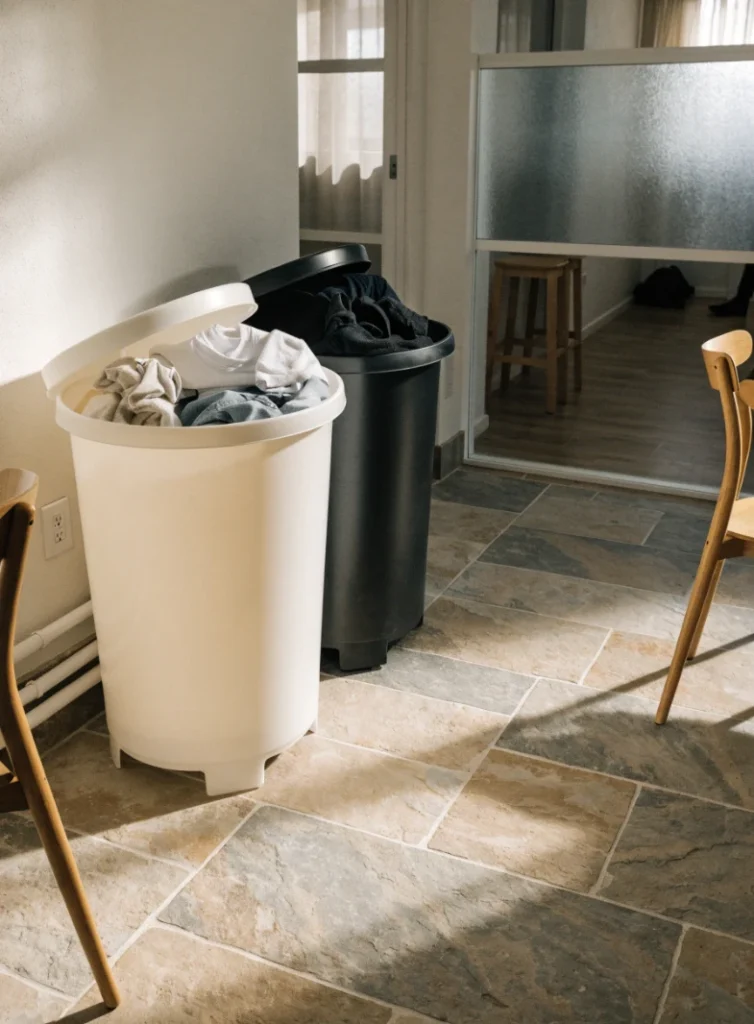
Assigning one specific spot, even just a labeled bin, for dirty clothes prevents laundry from ending up scattered across the floor in a room where floor space is already scarce.
This costs nothing beyond the decision itself, and it’s the single habit most likely to keep every other idea on this list actually working long term.
22. Weekly reset routine for the whole room
The habit that keeps a small, organized room from sliding back into chaos.
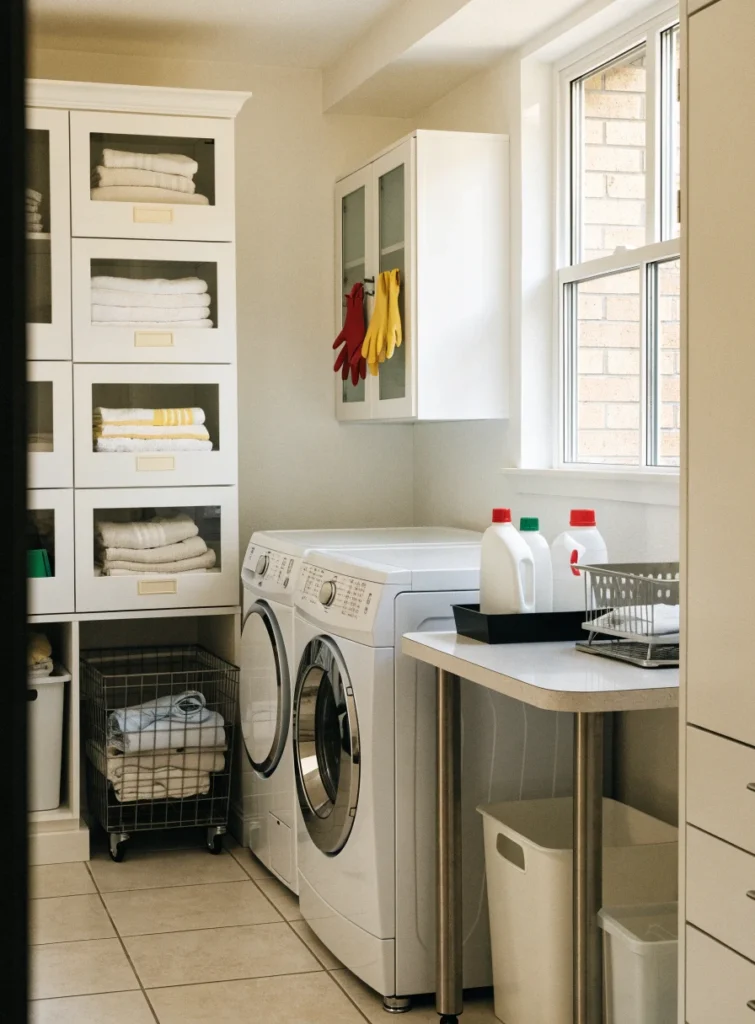
A five to ten minute weekly reset, putting anything that’s drifted from its spot back where it belongs, prevents the slow buildup that eventually undoes even the best organized narrow room.
This is the least glamorous idea on the list, but it’s genuinely the one that determines whether everything else here holds up past the first month.
Common Mistakes to Avoid
- Assuming the gap between appliances is unusable space instead of measuring it for a slim cart or pull-out.
- Choosing a bulky hamper that blocks the room’s main walking path.
- Skipping vertical storage entirely, when wall space above the machines is almost always available.
- Organizing once without a weekly reset habit, which lets clutter creep back within a few weeks.
Frequently Asked Questions
What’s the best storage solution for a really narrow laundry room?
Vertical storage, shelves and hooks above the machines, combined with a slim rolling cart sized for the gap between appliances, typically delivers the most function relative to the space available.
Can I add a folding surface in a laundry room with no extra floor space?
Yes, a wall-mounted fold-down table or a countertop installed over side-by-side machines both add a folding surface without permanently using any floor space.
How do I make a narrow laundry room feel less cramped?
Light wall paint, a mirror on the door, and swapping a swinging door for a sliding barn door all help a tight room feel more open without any structural changes.
Conclusion
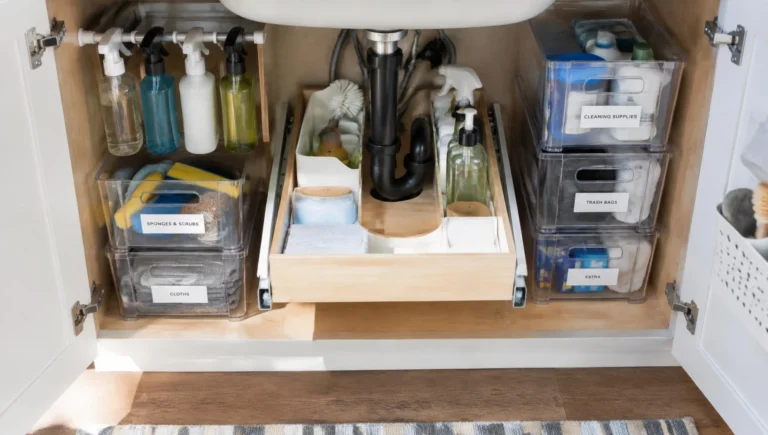
A small, narrow laundry room isn’t actually working with less space than it seems, it’s working with unclaimed space most people never think to use, the wall above the machines, the gap between them, and the back of the door. Start with one or two ideas that solve your room’s biggest daily friction point, whether that’s folding, sorting, or simply finding the detergent, and build outward from there. The same organizing logic that works in a tight kitchen space, keeping everything visible and assigned a home the way it does in an under-sink cabinet, holds up just as well here.