
A mudroom and a laundry room do the same kind of work. Both deal with dirt, wet coats, muddy shoes, and piles of clothes. When you put them in one room, the mess has one place to go, and the clean laundry stays close to where it gets washed.
A mudroom laundry room combo works best when each side has a clear job. The door side handles coats, shoes, and bags. The laundry side handles washing, drying, and folding. This guide gives you 26 mudroom laundry room combo ideas that keep both sides working well in one room. For a laundry only take on a tight space, see our small narrow laundry room ideas as a different guide.
Quick Picks
- Start with zones. Put the entry side by the door and the laundry side by the plumbing wall.
- Use height. Shelves, hooks, and cabinets above the machines add storage.
- Pick washable surfaces. Tile floors and washable paint stand up to mud, water, and detergent spills.
- Give each person a spot. One hook, one basket, and one cubby per person stops piles by the door.
- Keep clean and dirty apart. Wet coats stay near the door, and clean laundry stays near the machines.
A combo room saves more than floor space. Dirty sports clothes go straight from the door into a hamper, and clean clothes go straight from the dryer onto the folding counter.
Before You Start
- Measure the room, the door swing, and the machines before you order cabinets or a bench.
- Keep a walkway at least 36 inches wide with the machine doors closed.
- Check where the water pipes, drain, and dryer vent sit, since those spots are hard to move.
- Pick one floor that works for both sides, such as tile that handles water and mud.
- Plan storage for coats, shoes, detergent, and cleaning supplies before you buy anything.
Layout and Zones
1. Split the Room Into Three Zones
Three zones keep a combo room from turning into one big pile. The drop zone by the door holds shoes, coats, and bags.
Pro tip: Mark each zone on the floor with painter tape, then walk through with a full basket.

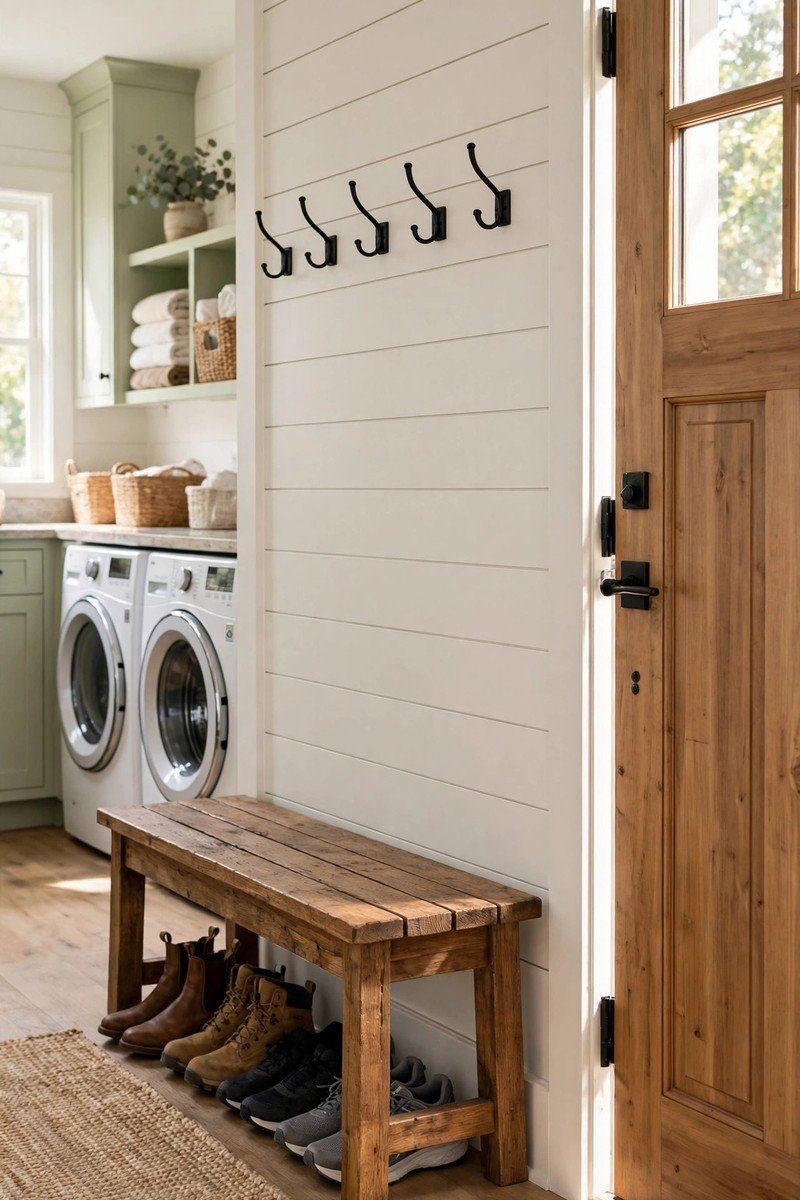
2. Put the Bench Right by the Door
A bench by the door gives everyone a place to sit and pull off shoes. It also marks the entry side of the room, so the laundry side stays clear.
Pro tip: Build the bench 15 to 18 inches deep and about 18 inches high. A bench 48 inches wide seats two people at once.
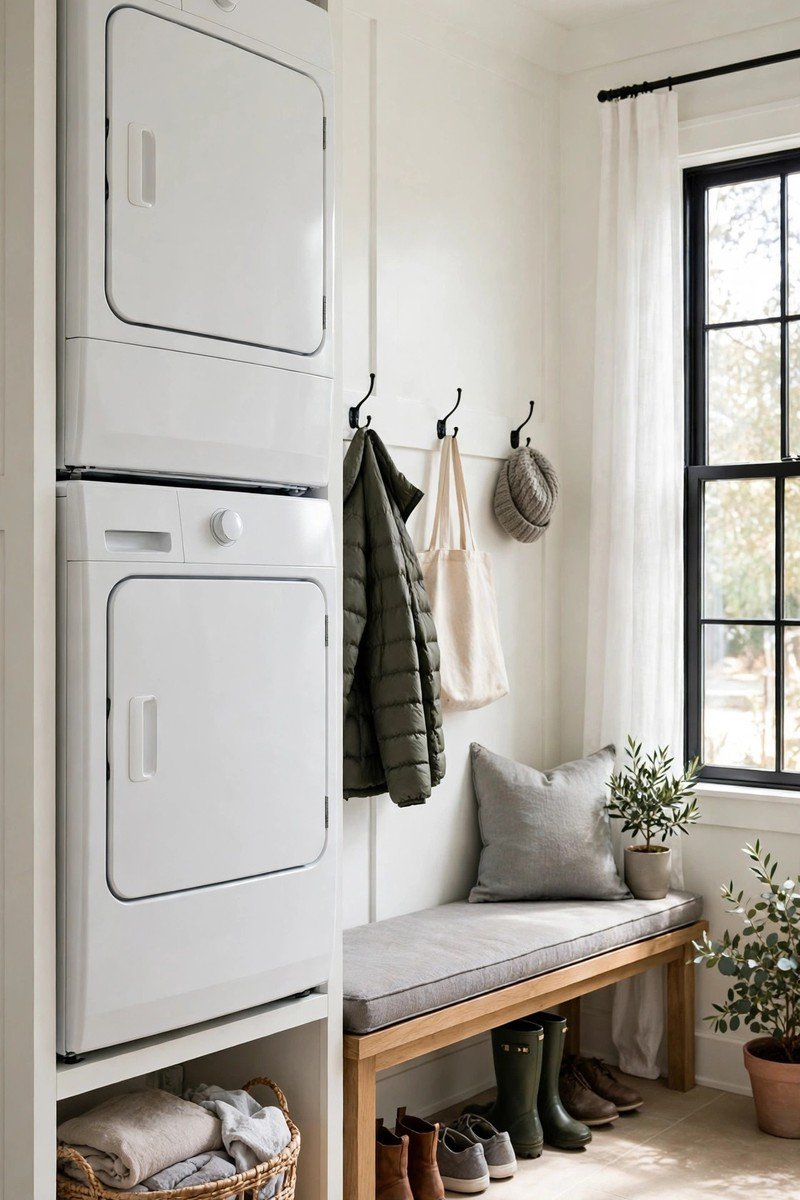
3. Stack the Washer and Dryer
Stacked machines free up floor space for a bench, a folding counter, or a hamper. The combo works well in narrow rooms where side by side machines would block the walkway.
Pro tip: A stacking kit costs about 30 to 60 dollars and takes about 30 minutes to install.
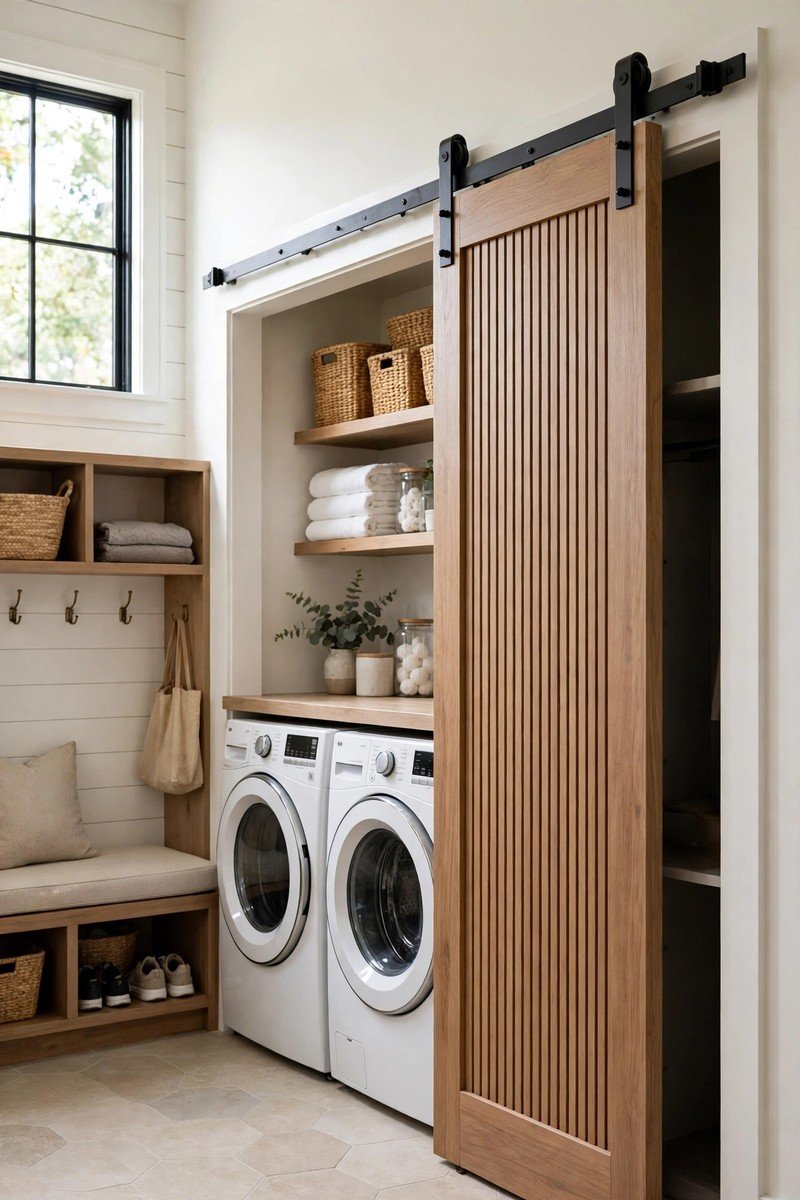
4. Add a Pocket Door to Save Swing Space
A pocket door slides into the wall, so it never blocks the bench or the machines. That extra swing space matters in a small combo room.
Pro tip: A pocket door kit costs about 150 to 300 dollars, and the job takes about 4 to 6 hours.
5. Use a One Wall Layout in a Narrow Room
A one wall layout puts the machines, sink, and counter along one long wall. The other side stays open for a shallow bench and shoe storage.
Pro tip: Keep the bench side no deeper than 12 inches in a room under 6 feet wide. A shoe cabinet 10 to 12 inches deep holds shoes without eating the walkway.

Storage and Cubbies
6. Build One Wall of Cubbies
Cubbies give every item a home without using floor space. Coats hang above, shoes sit below, and baskets hold hats, gloves, and laundry supplies.
Pro tip: Make cubbies about 14 inches wide and 12 inches deep, which fits most baskets and shoe pairs. A set of four from stock cabinets costs about 200 to 400 dollars.

7. Give Each Person a Hook and a Basket
One hook and one basket per person ends the daily pile by the door. Coats go on the hook, and the basket holds gloves, hats, and small items.
Pro tip: Hang kid hooks at 48 inches and adult hooks at 66 inches. Sturdy metal hooks cost about 5 to 12 dollars each and should hold at least 5 pounds.

8. Add Pull Out Hampers Under the Bench
Pull out hampers hide dirty clothes until wash day. Each hamper slides out on its own, so you can carry one load to the machine without sorting a big pile.
Pro tip: A pull out hamper unit costs about 80 to 150 dollars, and each hamper holds about one full load. Use canvas liners that lift out and go straight into the washer.

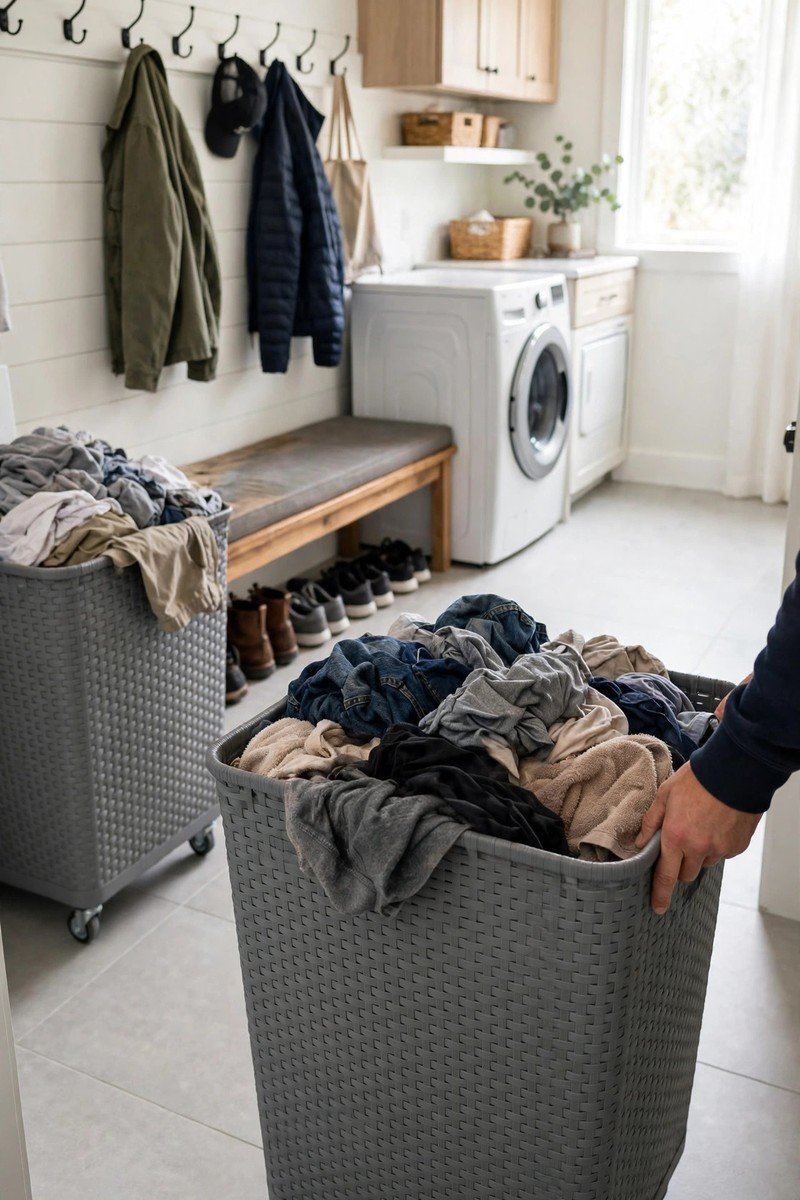
9. Use Rolling Bins for Dirty Laundry
Rolling bins move from the door to the machine with no lifting. One bin can hold two to three loads, and wheels let you roll it out of the way when guests arrive.
Pro tip: An industrial rolling bin costs about 40 to 80 dollars, and a bin about 20 inches wide fits through most doorways.
10. Add a Sorting Station With Three Bins
Three bins labeled whites, colors, and delicates make sorting part of the routine. Family members drop clothes in the right bin, so wash day starts with no sorting.
Pro tip: A three bin rolling cart costs about 60 to 100 dollars, and each bin holds about 10 to 12 pounds of clothes. Label the bins with simple tags so kids can sort too.

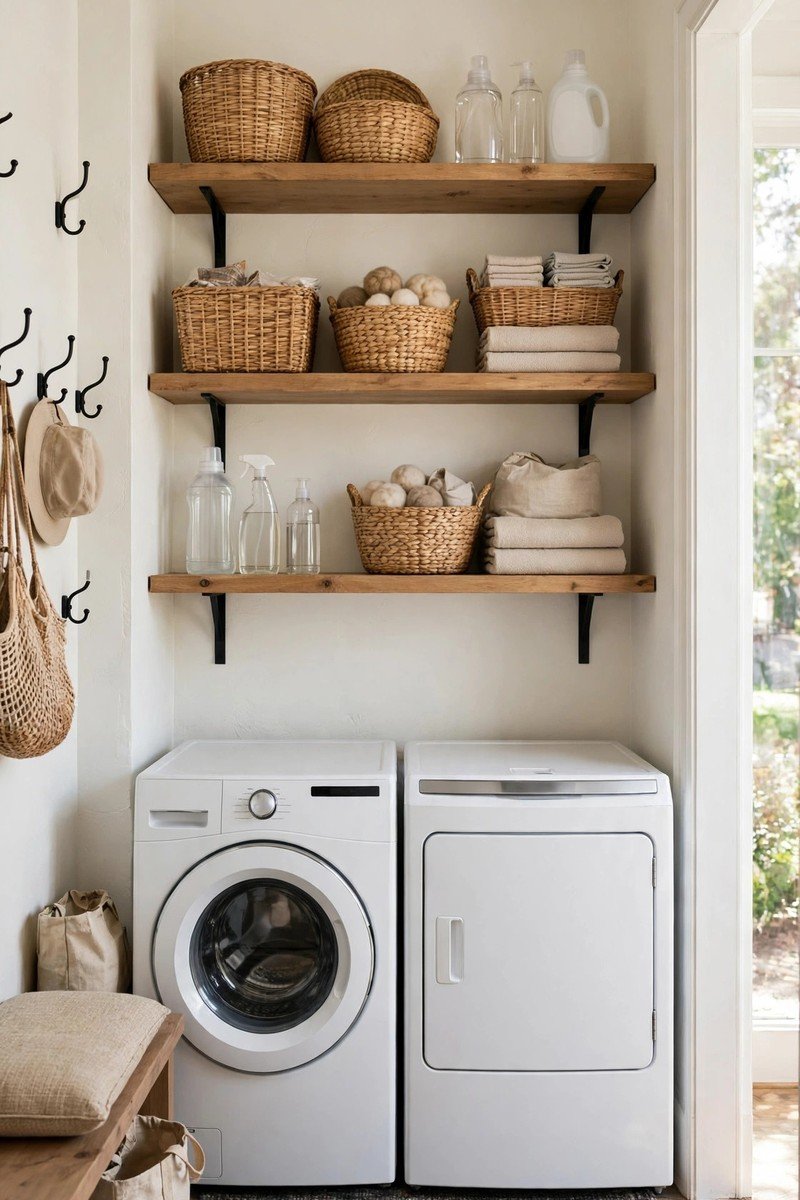
11. Use Open Shelves Above the Machines
Open shelves above the washer and dryer put detergent and supplies within reach. You can see everything at a glance, and baskets on the shelves hide small items.
Pro tip: Hang shelves 12 to 15 inches deep above the machines, high enough to clear the lids. A pair of wood shelves costs about 50 to 90 dollars, and brackets should hold at least 20 pounds each.
12. Hide Supplies Behind Closed Cabinets
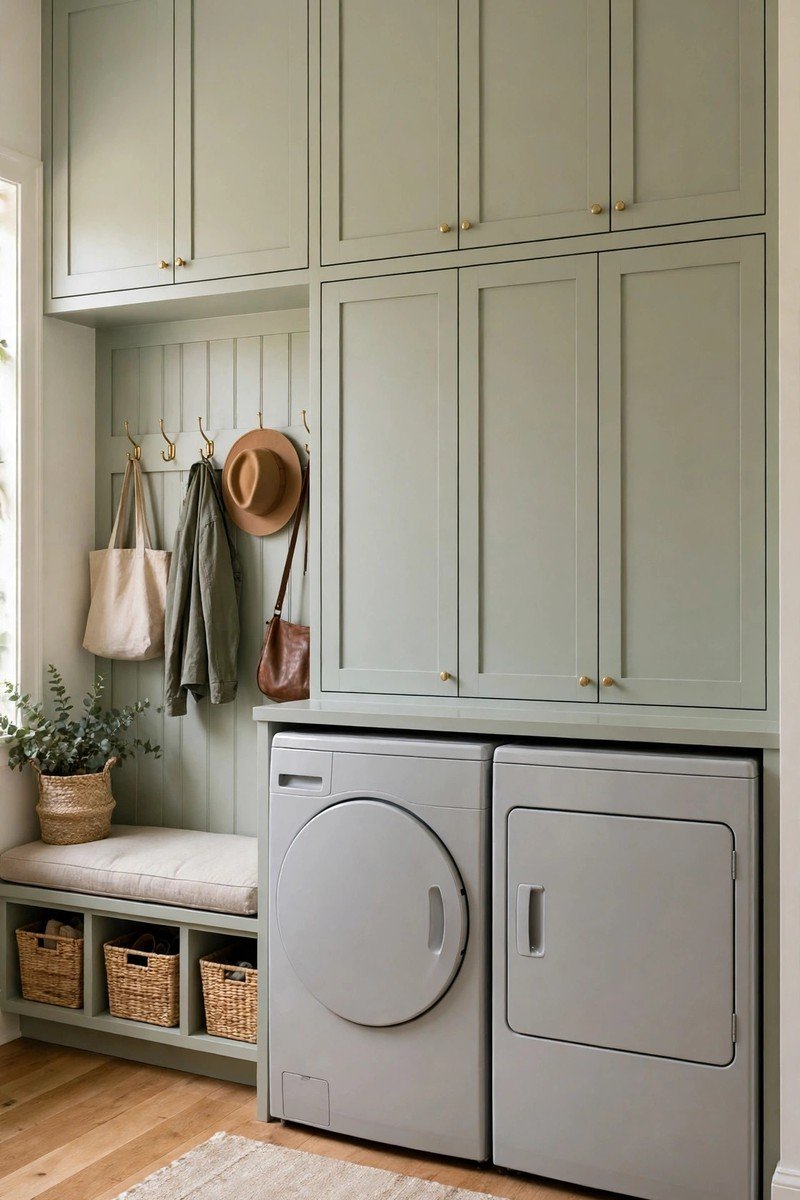
Closed cabinets make a busy combo room look calm. Detergent, stain spray, and cleaning supplies sit behind matching doors, and coats hide in tall cabinets.
Pro tip: Use stock cabinets about 12 inches deep above the machines, which hold detergent bottles with room to spare. Soft close hinges cost about 3 to 6 dollars each and keep the room quiet.
Laundry Work Areas
13. Add a Folding Counter Over Front Load Machines
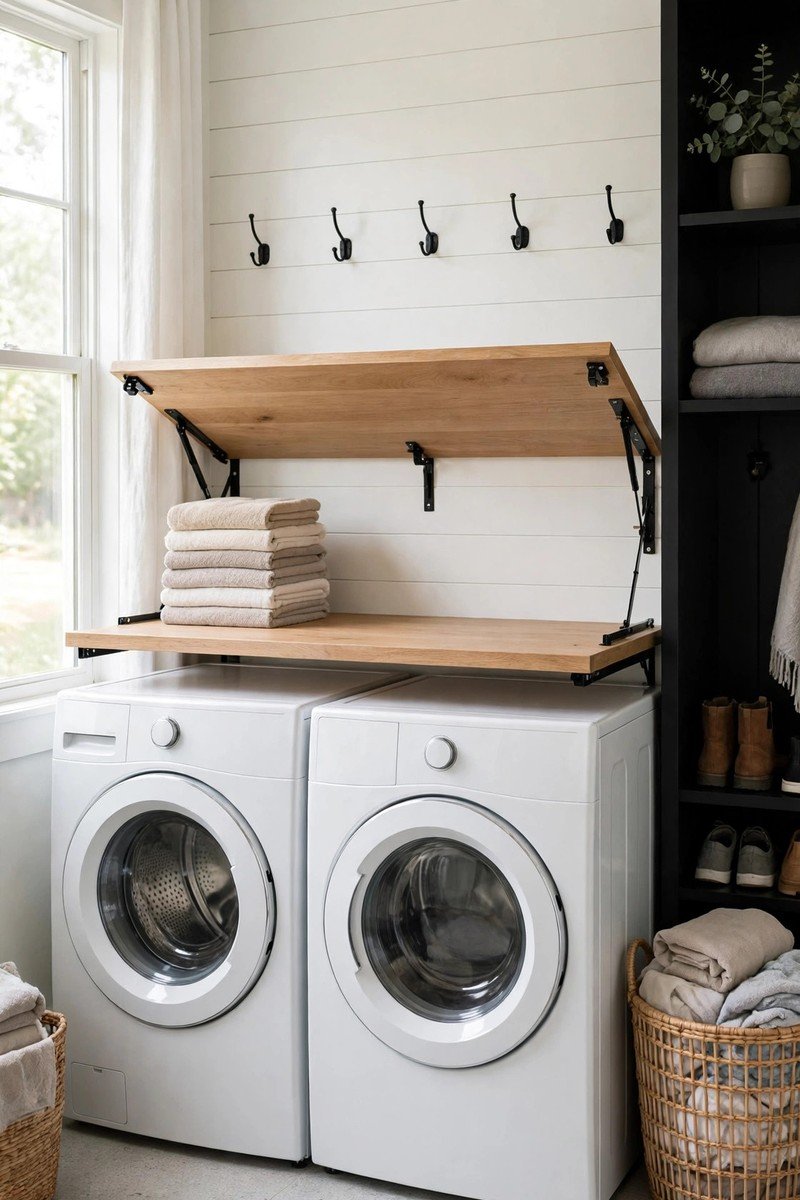
A folding counter over front load machines gives you a clean surface for every load. Clothes come out of the dryer and get folded right there, so they never pile up on the bench.
Pro tip: Make the counter at least 24 inches deep and 48 inches wide, which fits a full load. A wood or laminate counter costs about 80 to 150 dollars.
14. Add a Utility Sink for Muddy Boots
A utility sink handles muddy boots, dirty sports gear, and hand washing in one spot. The sink sits near the door side, so dirty items never reach the kitchen sink.
Pro tip: A utility sink 18 to 24 inches wide fits most combo rooms, and a basic model costs about 150 to 300 dollars. Add a handheld sprayer for about 25 dollars to rinse boots fast.

15. Hang a Fold Away Drying Rack
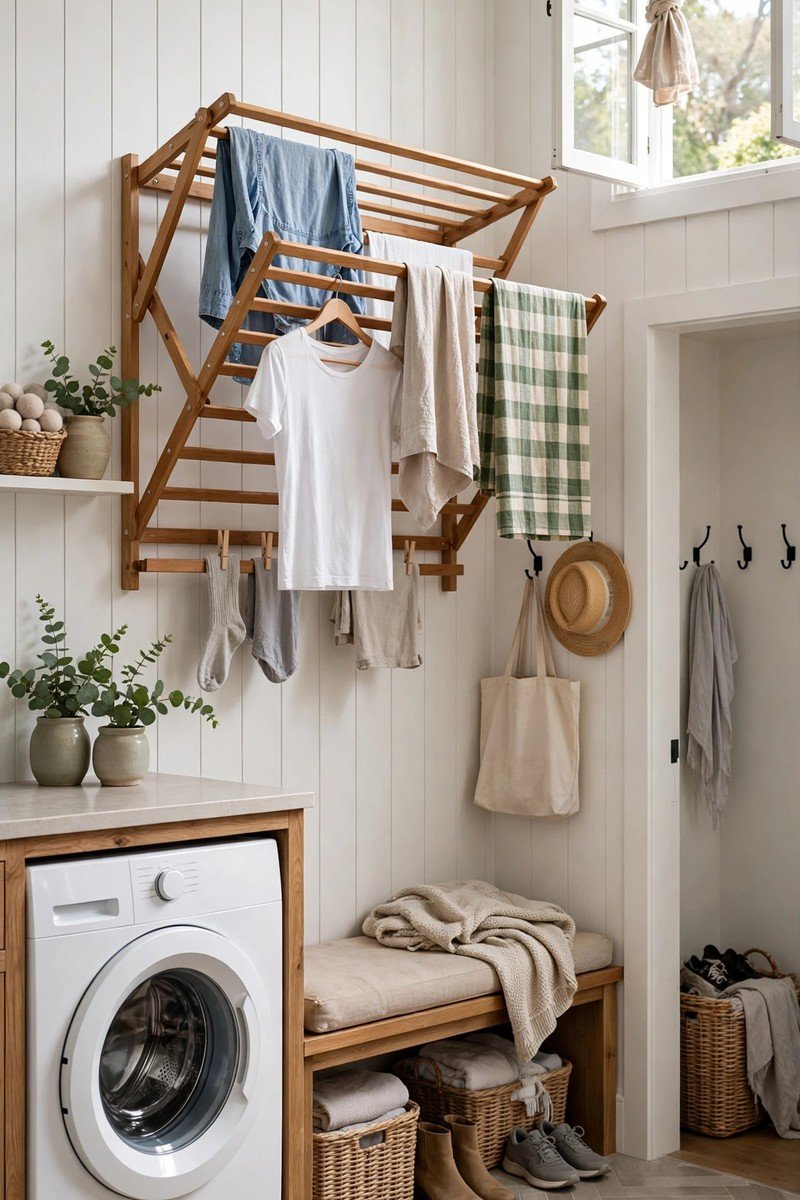
A fold away drying rack gives you drying space with no floor rack to trip over. The rack folds flat against the wall when you finish, so the walkway stays clear.
Pro tip: A wall rack with 10 to 15 feet of drying space costs about 30 to 60 dollars, and most hold 40 to 60 pounds.
16. Hang a Pegboard Above the Washer
A pegboard above the washer turns a blank wall into a tool wall. Spray bottles, brushes, and stain sticks hang on hooks where you can see them.
Pro tip: A pegboard 24 by 36 inches costs about 20 to 35 dollars, and a set of hooks costs about 10 dollars. Leave a 1 inch gap behind the board so hooks fit with ease.

17. Add Task Lighting Over the Folding Counter
Task lighting over the folding counter helps you spot stains and read care labels. Under cabinet LED strips light the whole counter with no shadows.
Pro tip: LED strips cost about 20 to 40 dollars for a 48 inch run, and they use very little power.
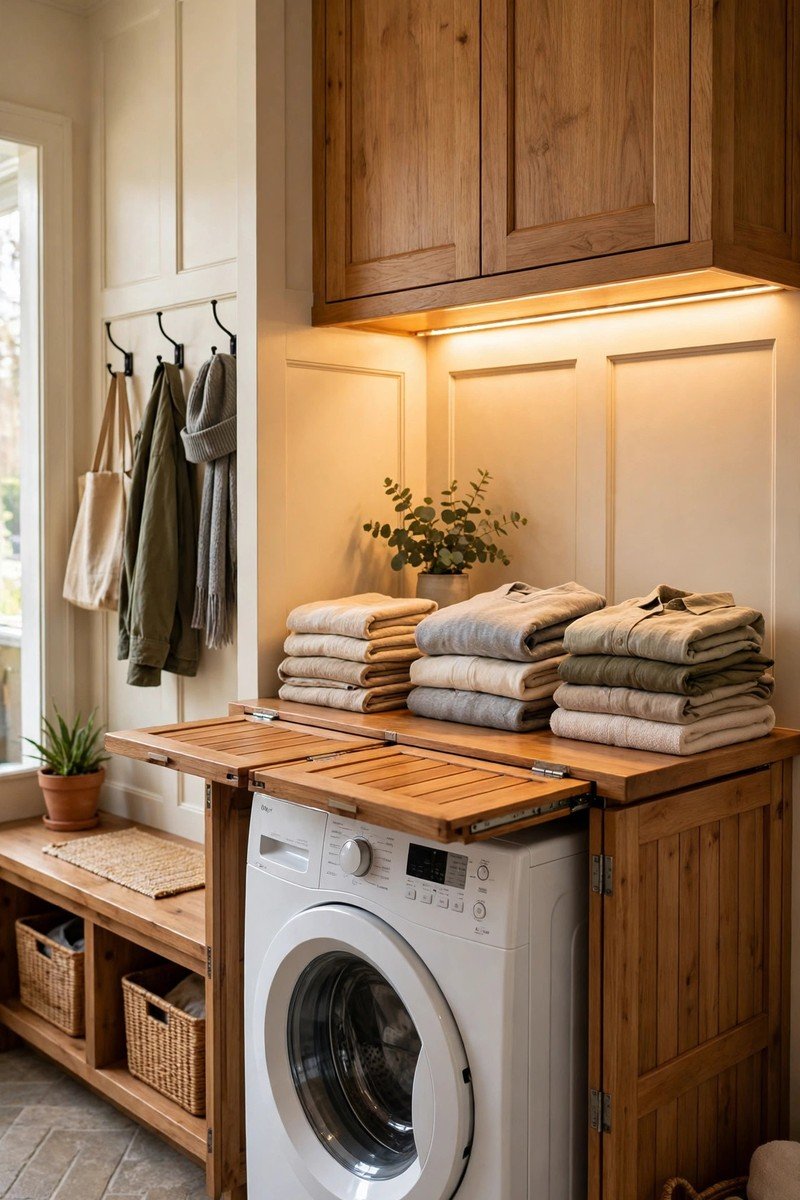
18. Add a Central Island for Folding
A central island gives a wider combo room a second work surface. The top works for folding, and the base holds baskets, detergent, and shoes.
Pro tip: An island about 36 by 24 inches fits most rooms, and a basic rolling island costs about 150 to 300 dollars. Leave at least 36 inches of walkway on each side.

Floors, Walls and Finishes
19. Use Washable Tile on the Floor
Tile floors handle wet boots, detergent spills, and muddy paws with ease. Porcelain tile resists water and wipes clean in seconds, so the floor looks good after a busy day.
Pro tip: Porcelain tile costs about 3 to 7 dollars per square foot, and a small room needs about 40 to 60 square feet.

20. Paint With Washable Paint
Washable paint stands up to muddy handprints, backpack bumps, and detergent splashes. You can wipe the walls clean without marks or damage.
Pro tip: A gallon of washable paint costs about 35 to 55 dollars and covers about 350 square feet. Use a satin or semi gloss finish, which wipes clean far better than flat paint.
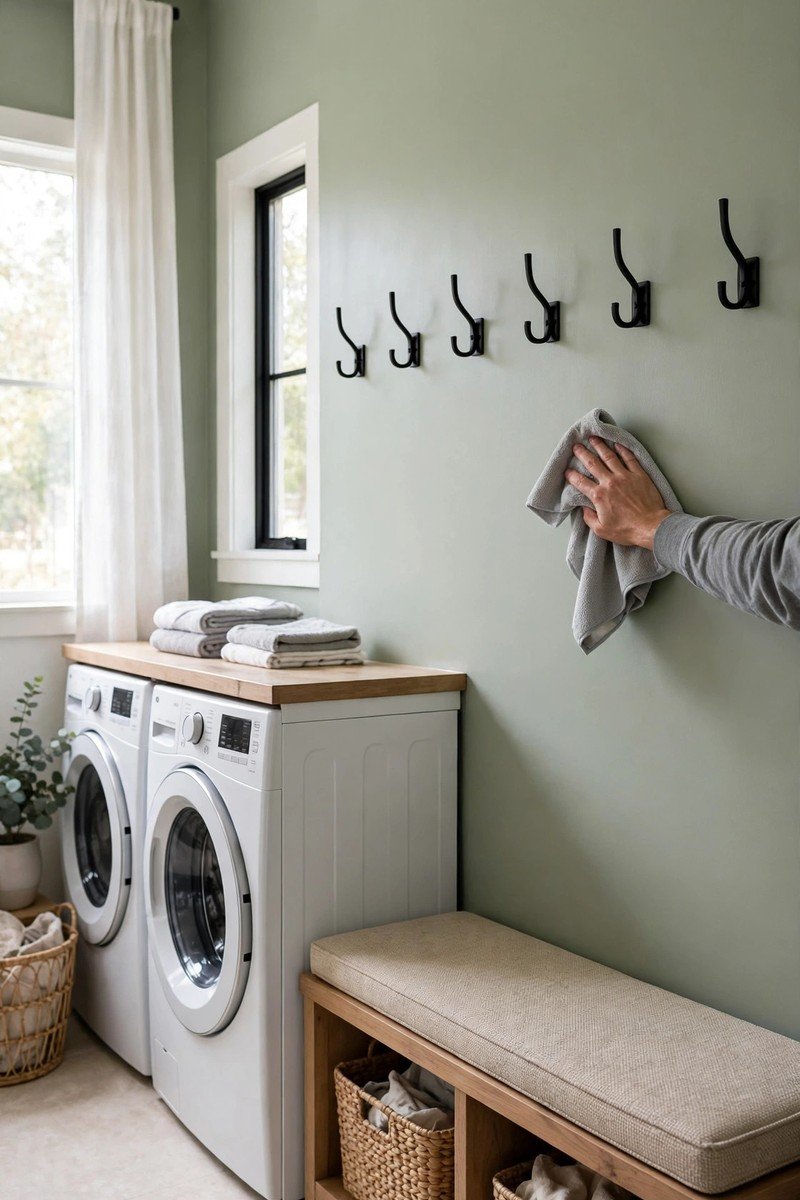
21. Use Large Format Tile to Make the Room Look Bigger
Large format tile with fewer grout lines makes a small combo room look wider. Tiles 24 to 36 inches long stretch the eye across the floor, and the room feels less busy.
Pro tip: Large tiles cost about 5 to 10 dollars per square foot, and you need about 10 percent extra for cuts. Hire a pro if the floor is uneven, since large tiles show lippage fast.
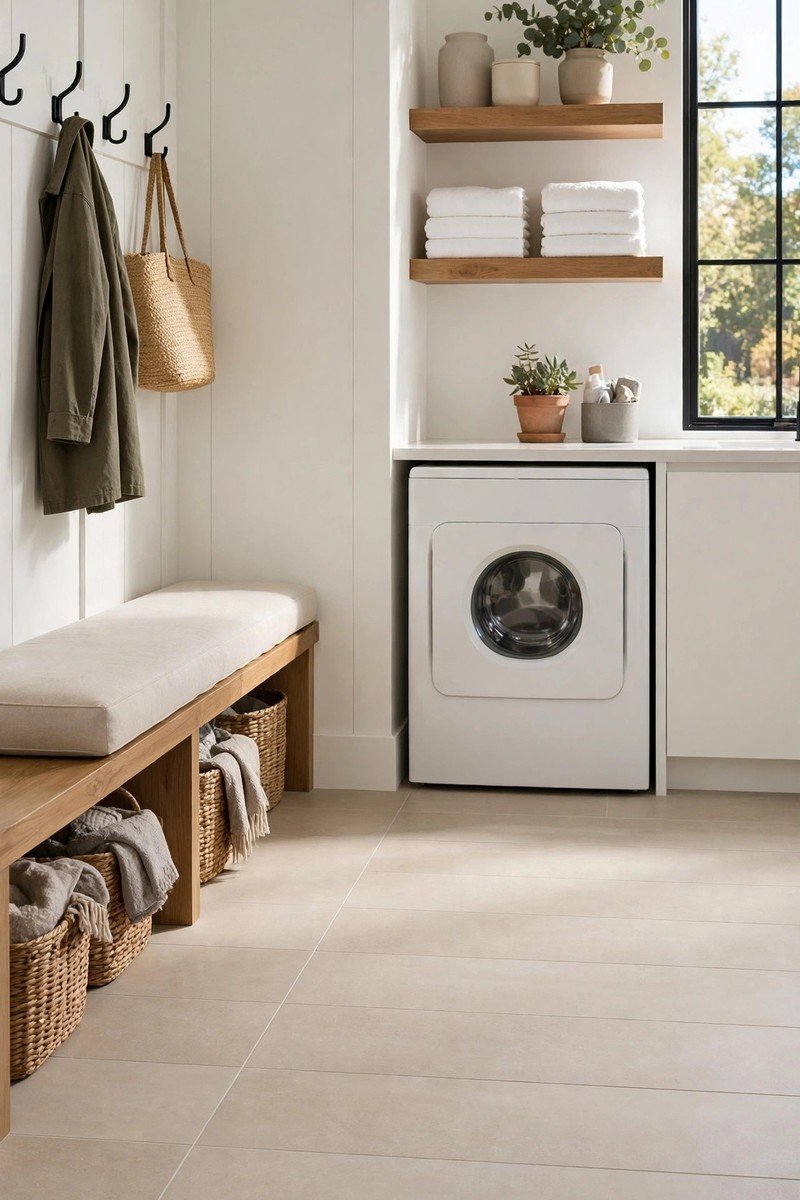
22. Use Colorful Baskets for a Quick Update
Colorful baskets add life to a neutral combo room with no paint or building work. Pink, blue, or green baskets on open shelves hold supplies and look cheerful.
Pro tip: A set of four baskets costs about 25 to 45 dollars, and baskets about 12 inches wide fit most cubbies. Pick washable fabric or plastic for baskets near the door.

23. Add Heated Floors Under the Tile
Heated floors warm a tile floor on cold mornings, which makes the room far more pleasant. The heat runs quietly underfoot and dries wet spots faster.
Pro tip: Electric floor heat costs about 10 to 15 dollars per square foot, and a small room runs about 500 to 800 dollars with a thermostat. Install it when you replace the floor to save on labor.

Family, Pets and Finishing Touches
24. Add a Dog Wash in the Corner
A dog wash in the corner uses plumbing that is already in the room. A raised basin with a handheld sprayer lets you rinse muddy paws before the dog tracks dirt inside.
Pro tip: A corner dog wash setup costs about 200 to 500 dollars, and a basin about 24 inches wide fits most dogs.
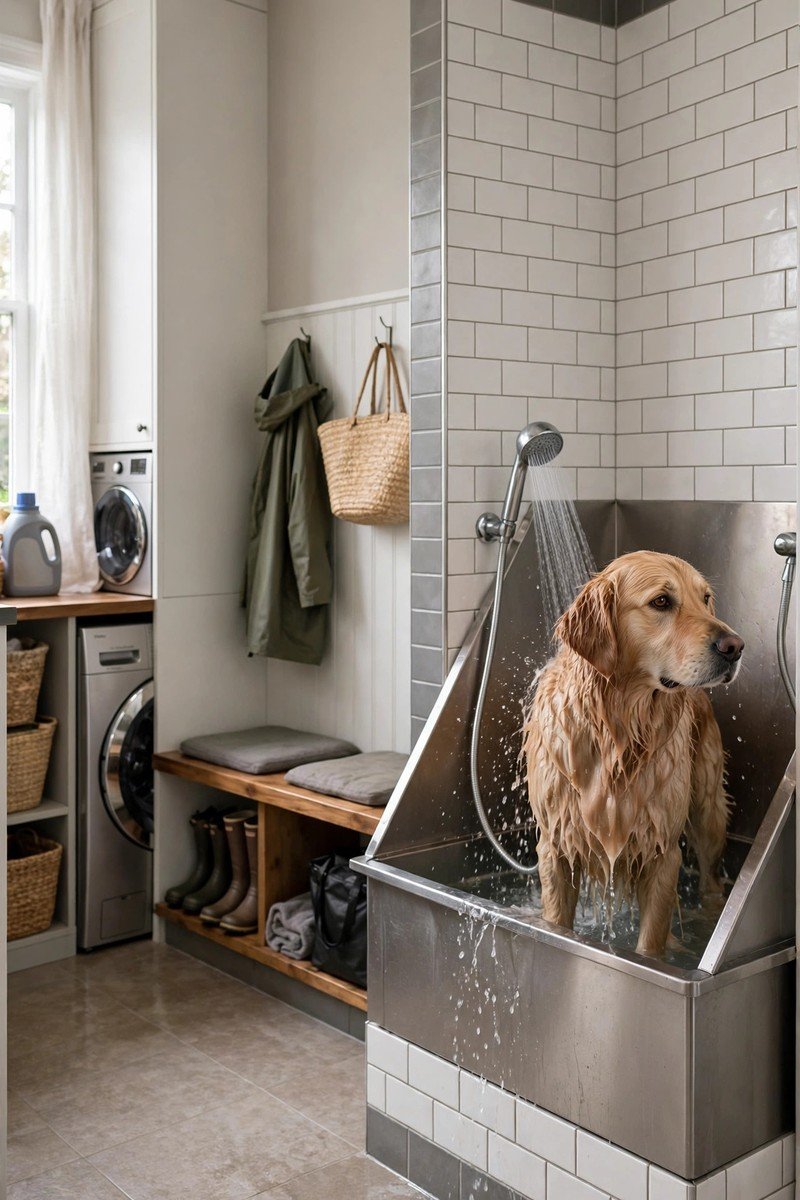
25. Add a Boot Tray and a Shoe Shelf
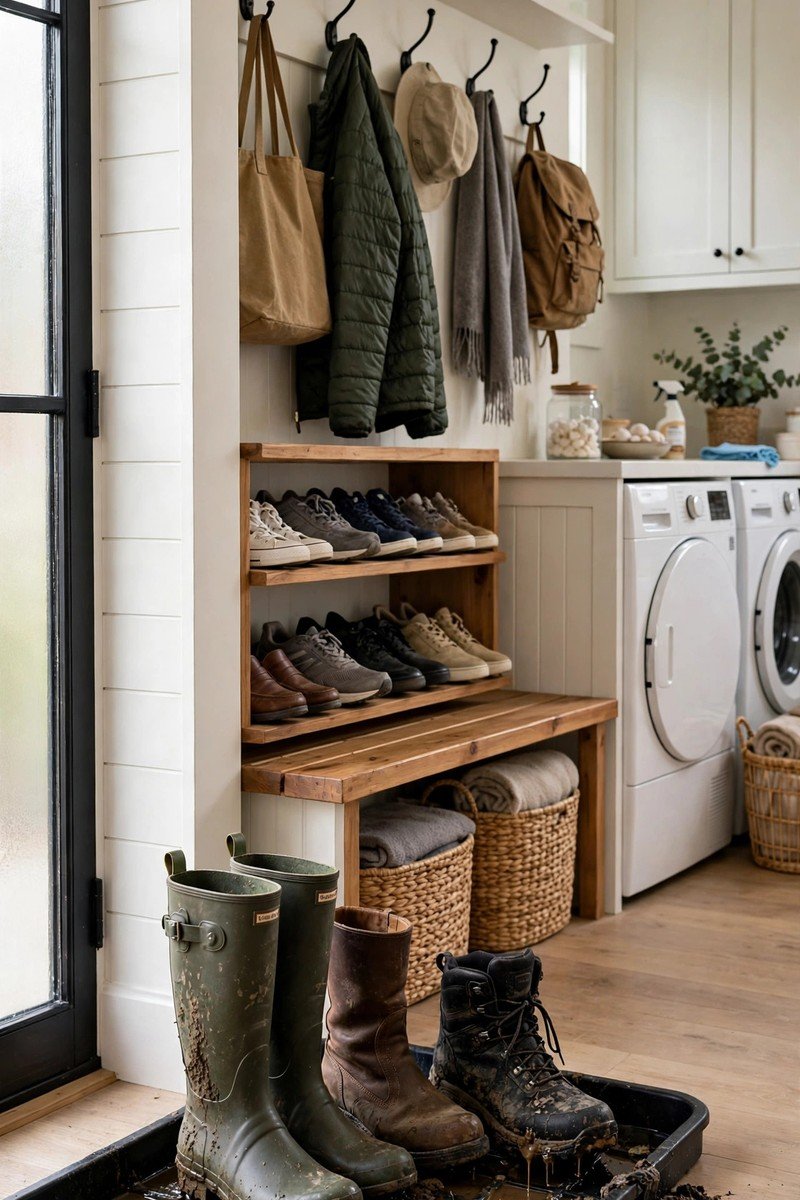
A boot tray by the door catches mud and water before it reaches the floor. A shoe shelf above it holds dry shoes in neat rows.
Pro tip: A boot tray 30 inches wide costs about 20 to 35 dollars, and it holds about four pairs of boots. Empty the tray once a week so water does not sit and smell.
26. Add a Message Board by the Door
A message board by the door turns the combo room into the family hub. Notes about practice, keys, and mail sit where everyone pauses on the way out. For more entry storage ideas, see our entryway organization ideas for small spaces as a different guide.
Pro tip: A chalkboard 18 by 24 inches costs about 20 to 35 dollars, and it takes about 15 minutes to hang. Keep chalk or markers in a small cup beside the board so the family uses it.

Split the Room Into Wet and Dry Halves
A mudroom laundry combo holds two messy jobs, so split it in half before you decorate. Put the wet half by the door, with the shoe rack, the coat hooks and a washable mat, because mud and rain stay in that half. Put the dry half by the machines, with the folding counter and the clean laundry baskets, because clean clothes must never touch the muddy half. Leave a gap of at least 24 inches between the two halves, or use a change in flooring, such as tile for the wet half and wood for the dry half, to mark the split. Mudroom laundry combo ideas work best when the split is clear, because a room where mud and clean laundry mix is a room where laundry is washed twice.
Machine Fit and Plumbing Clearances
Measure the machines before you build anything around them. A standard washer and dryer are each about 27 inches wide and 27 inches deep, so a pair side by side needs at least 60 inches of width, including gaps for hoses. Leave at least 4 inches behind each machine for hoses and vents, and at least 1 inch on each side for vibration, because a machine that shakes against a wall is loud and wears out faster. A stacked pair needs about 30 inches of width and 76 inches of height, and the ceiling must clear the top by at least 6 inches. Check the drain and the vent before you move a machine, because moving plumbing costs far more than moving a shelf. Keep the water shut off valves within reach, not behind the machine, so a leak can be stopped in seconds.
Floors and Walls That Survive Mud and Water
A mudroom laundry floor gets wet every day, so choose materials that do not mind water. Use porcelain tile or vinyl plank on the floor, because both wipe clean and do not swell when wet. Avoid carpet and untreated wood, because carpet holds mud and wood warps in a damp room. Paint the walls with a washable finish, and use a washable paint in a mid tone, because white walls show every mark and dark walls show every splash. Add a baseboard at least 4 inches high in a waterproof material, because the bottom of the wall is where mud splashes land. Wipe the floor once a day in wet weather, because dried mud is harder to clean than wet mud, and a floor that is cleaned daily lasts twice as long.
Budget for a Mudroom Laundry Combo
Under 100 dollars: hooks, a washable mat, and a set of baskets for the muddy half. From 100 to 400 dollars: add a folding counter, a drying rack, and a shoe rack with a tray. Over 400 dollars: add built in cubbies, a bench with storage, and a new set of matching baskets. As a typical range, a folding counter costs about 80 to 200 dollars, and a set of cubbies costs about 150 to 400 dollars. Buy the mat and the hooks first, because they are used every day, and the rest of the room can wait. Keep one basket empty, because an empty basket is ready for the next load, and a room with no empty basket fills up in a day.
Common Mistakes to Avoid
- Mixing clean and dirty zones. Wet coats over clean laundry undo the whole point, so keep the two sides apart.
- Blocking the walkway. A bench or basket that narrows the path below 30 inches makes every load harder.
- Skipping washable finishes. Flat paint and wood floors wear fast with mud and water, so pick tile and washable paint.
- Forgetting the dryer vent and drain. Machines placed far from pipes and vents cost far more to install, so plan around them first.
- Using open storage for everything. Shoes and supplies look messy in the open, so use closed cabinets low.
- Leaving no folding space. A room with machines but no counter means clean clothes pile up.