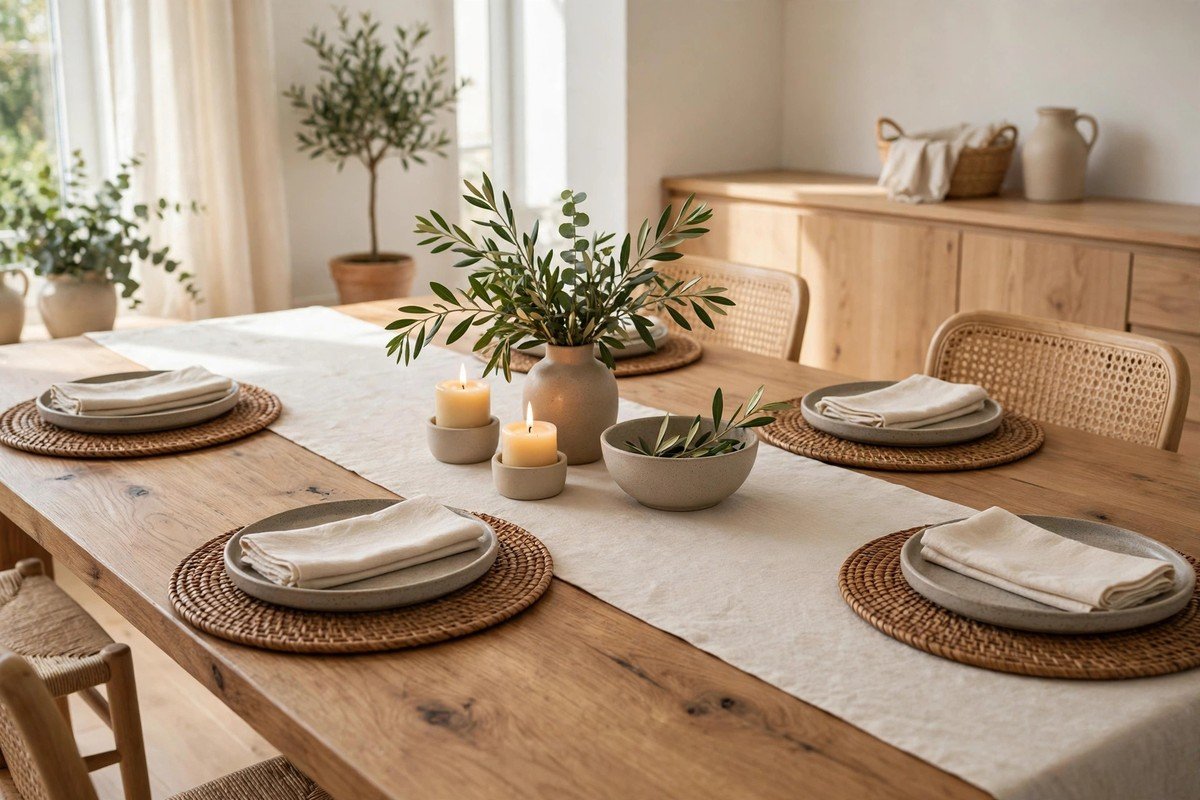
A dining table is the most used surface in many homes. Breakfast lands on it, homework spreads across it, and dinner brings the family back to it. Yet many tables sit bare between meals, or they hold a pile of mail, keys, and chargers. A little daily styling changes that. It makes the room feel finished, and it makes every meal feel a bit more cared for.
This guide gives you 22 dining table decor ideas for everyday elegance. Every idea works for daily life, not just for parties. Nothing here needs a full reset before you eat. Most ideas cost little and take minutes to set up.
Quick Picks
- Start with a runner. A simple linen runner defines the middle of the table and gives your centerpiece a home.
- Keep the centerpiece low. Nothing on the table should block the view across it. Aim for 12 inches or less.
- Use a tray. A tray holds small items together and lifts off in seconds.
- Repeat one color. One calm color in the runner, napkins, and vase ties the whole table together.
- Leave room to eat. Each person needs about 24 inches of width.
Did You Know?
Designers often use a simple rule for dining tables. They group three objects of different heights in the center. A medium vase, one candle, and one low bowl is the classic mix. Three items look styled on purpose. One item can look lost, and five items can look crowded. The same rule works on round tables and long tables alike.
Before You Start
- Measure your table before you buy a runner, cloth, or tray. Most dining tables are 36 to 40 inches wide, and a runner should be 12 to 18 inches wide.
- Check the sightline. Sit down and look across the table. The centerpiece should stay below eye level.
- Pick pieces you can move fast. If you cannot clear the table in under a minute, the styling will get in the way of daily meals.
- Choose washable fabrics. Linen and cotton runners wash well, and woven placemats brush clean.
- Count your seats first. Buy placemats and napkins for every seat, plus two spares for guests.
The Base: Runners, Cloths, and Placemats
1. Lay a Linen Runner Down the Middle
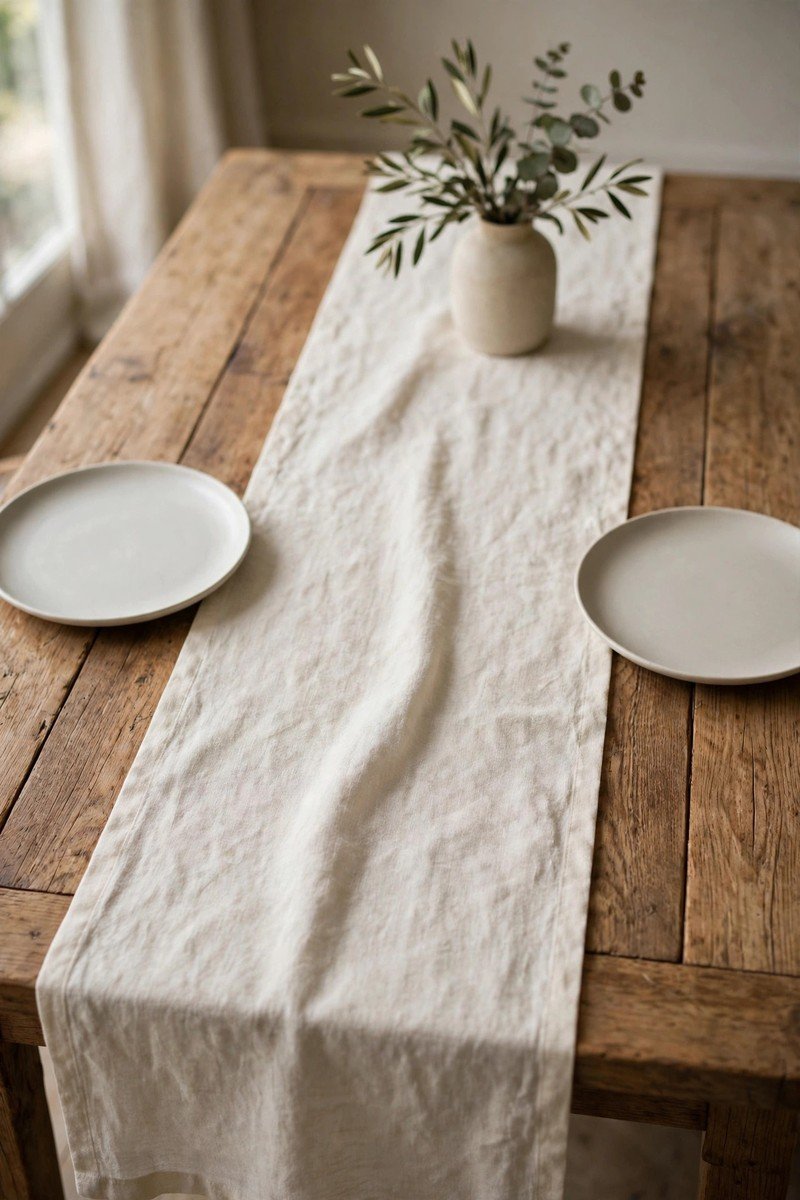
A linen runner is the easiest way to dress a dining table for daily use. It runs down the center, protects the wood, and gives the eye a clear line to follow. A plain runner in cream, soft sage, or light grey works all year.
Pro tip: Pick a runner 12 to 18 inches wide for a standard table, with 12 inches of overhang at each end. A cotton linen mix runner costs about 15 to 35 dollars and washes in a normal cycle.
2. Use Woven Placemats Every Day
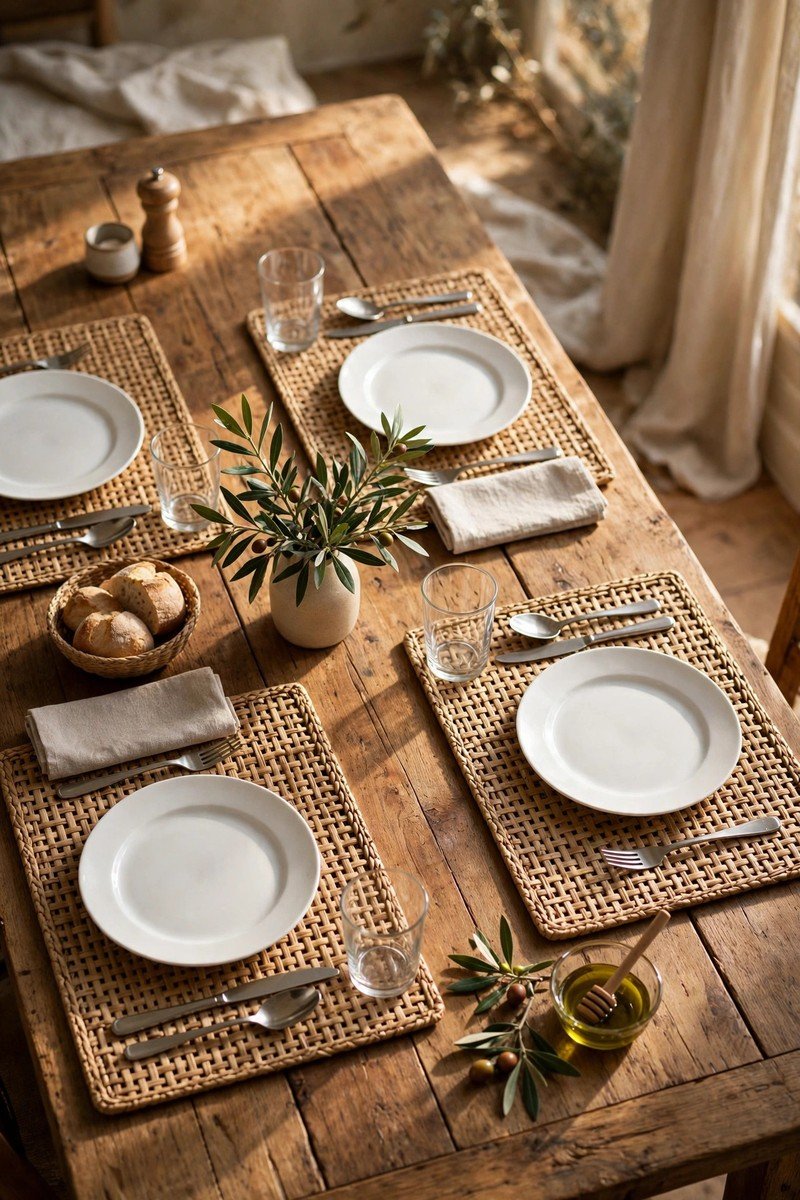
Woven placemats make even a plain weeknight dinner look put together. They protect the table from hot plates and mark each place without a full tablecloth.
Pro tip: Buy a set of six placemats for about 20 to 40 dollars. Shake them out after meals and wipe them weekly.
3. Leave the Wood Bare with a Clear Mat
A good wood table does not need to be covered. The grain itself is the decor. A clear vinyl mat protects the surface while the wood stays visible.
Pro tip: A clear table protector cut to size costs about 25 to 50 dollars. Measure the top first and leave a half inch gap at the edge.

4. Add a Washable Tablecloth for Busy Weeks
A washable tablecloth is a smart choice when the table sees crafts, homework, and messy meals. It gives the room a soft, finished look and goes straight into the wash when it gets stained. Choose a plain color so it works with any centerpiece.
Pro tip: A washable cloth costs about 20 to 45 dollars. Pick one that drops 8 to 10 inches over each edge, and keep a spare for wash day.
5. Layer a Runner Over a Cloth
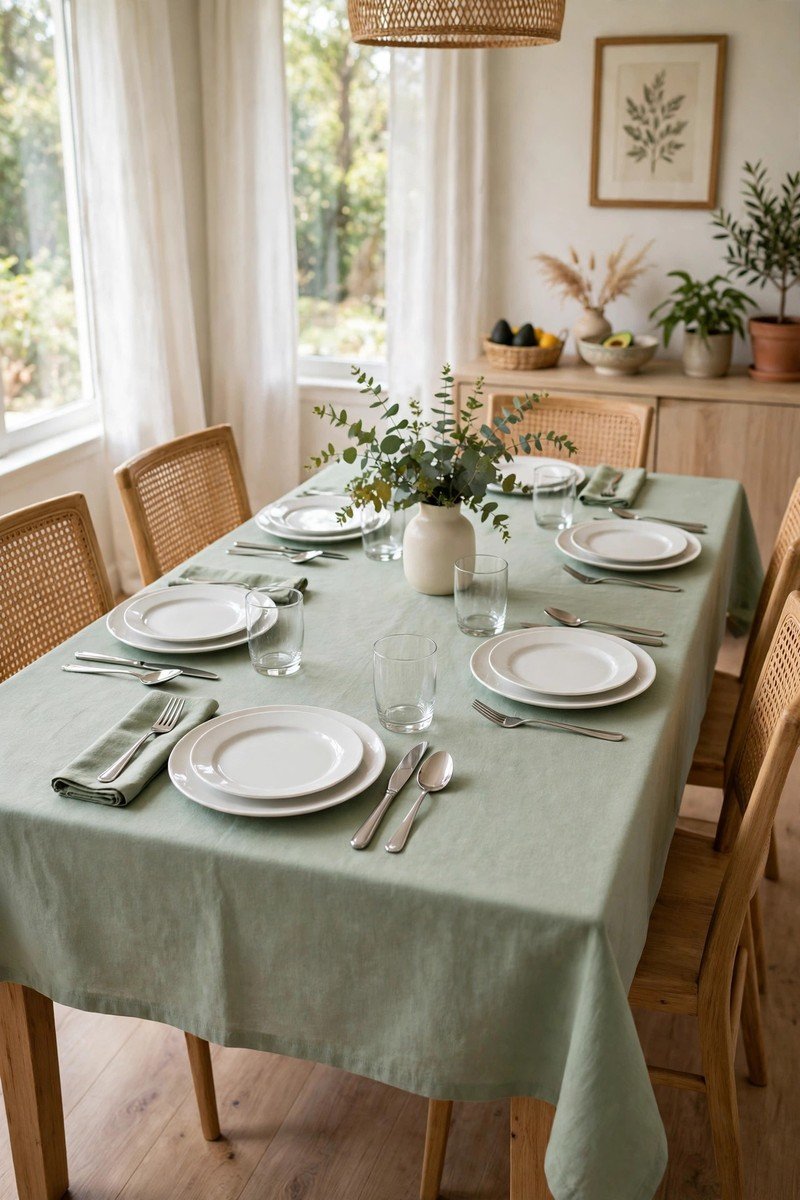
Layering a runner over a tablecloth adds depth without much effort. The cloth gives a soft base, and the runner adds a stripe of color or pattern down the middle. This keeps the table dressed but still easy to clear.
Pro tip: Use a plain cloth with a patterned runner, or the reverse. Never pair two strong patterns.

Centerpieces That Stay Put
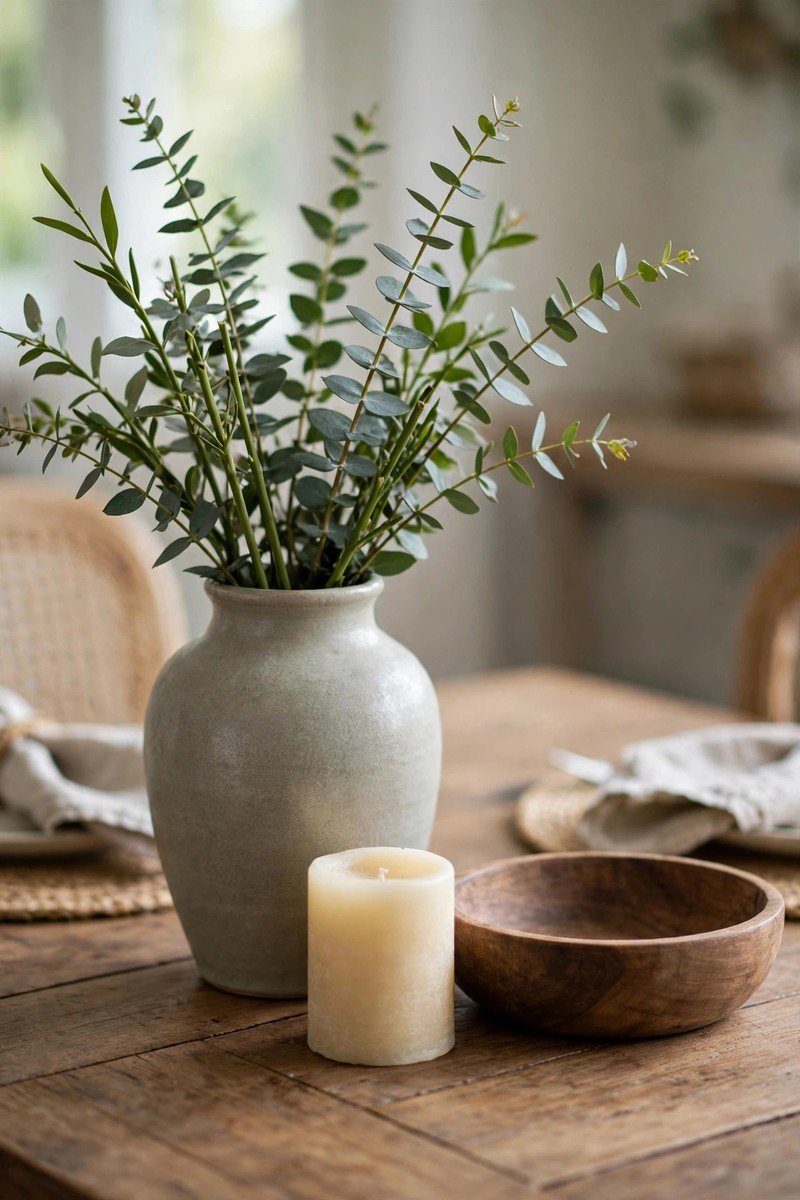
6. Use the Three Item Centerpiece Rule
Three objects of different heights make a centerpiece that looks planned. Try a medium vase, a short candle, and a low bowl. The group reads as one display, not three random items.
Pro tip: Keep the tallest piece under 14 inches so talk flows across the table. A vase, candle, and bowl set costs about 30 to 60 dollars.
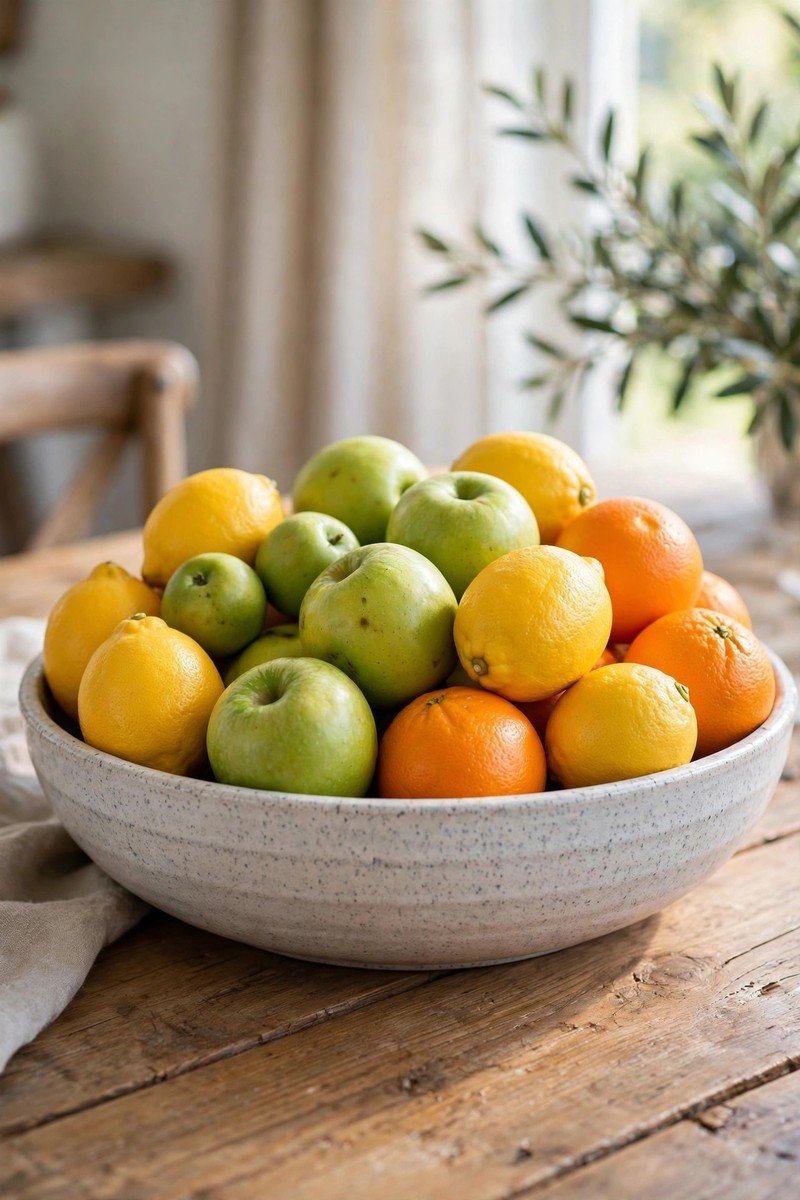
7. Keep a Low Fruit Bowl on the Table
A low, wide bowl of fresh fruit is the classic everyday centerpiece. It adds color, it is useful, and it never looks staged. Lemons, green apples, and oranges bring bright color to a plain wood table.
Pro tip: Pick a bowl 10 to 14 inches across. Refill it once a week. A ceramic or wood bowl costs about 15 to 30 dollars.
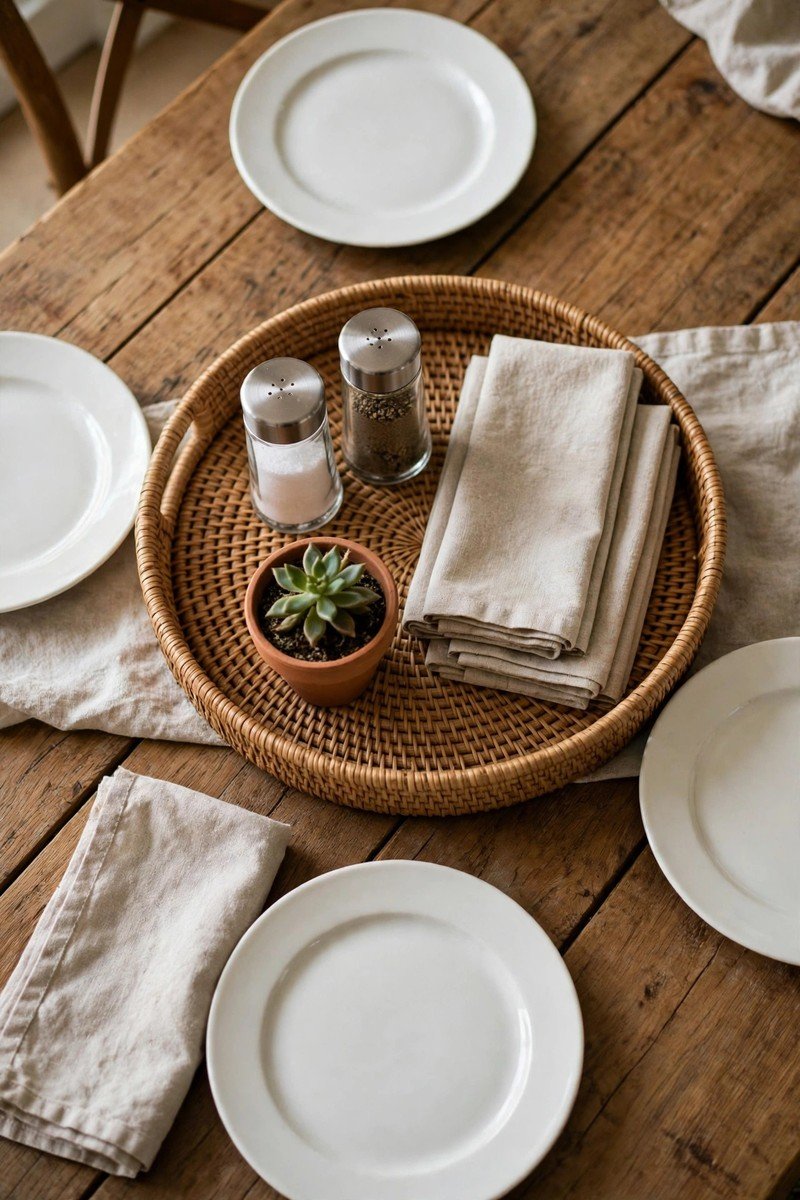
8. Set a Tray That Lifts Off in Seconds
A tray is the best friend of a busy dining table. Salt, pepper, napkins, and a small plant sit on one tray, and it lifts off when you serve dinner.
Pro tip: Use a tray about 16 inches across for a four seat table and 20 inches for a six seat table. A wood or rattan tray costs about 20 to 40 dollars. For more tray styling, see our coffee table tray decor ideas.
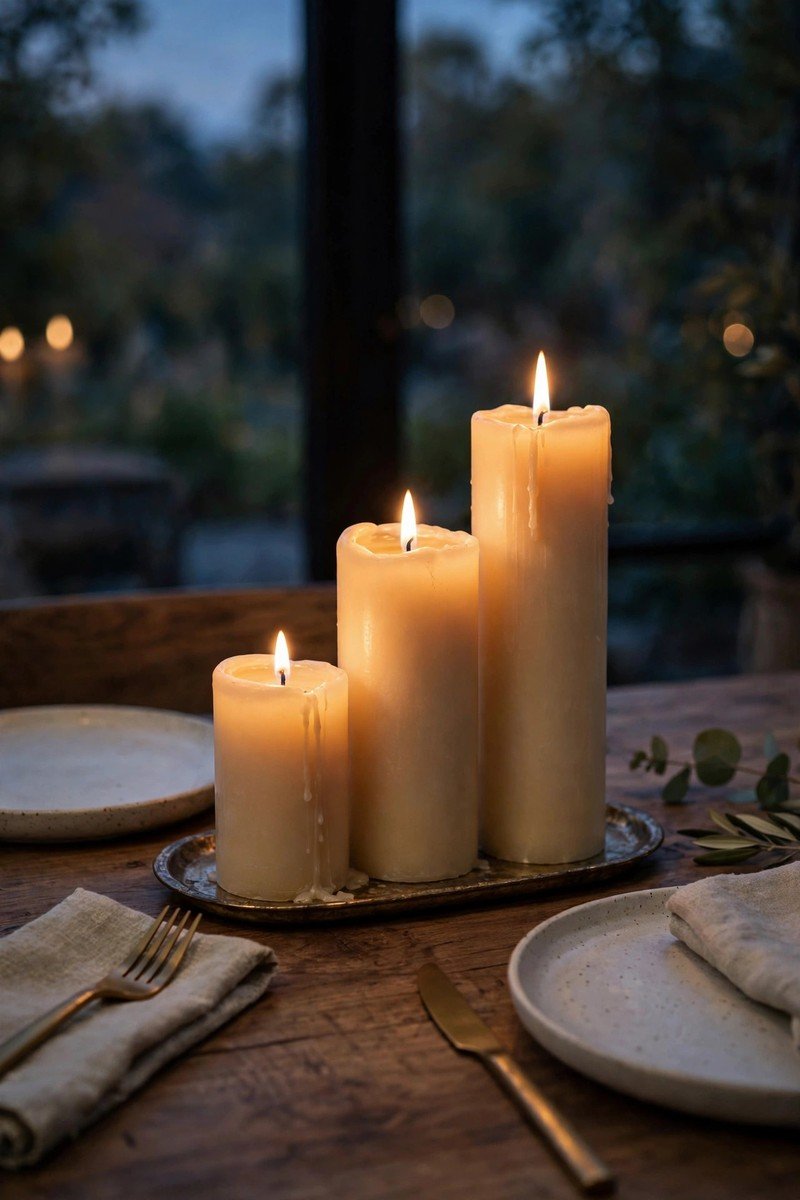
9. Group Three Candles of Different Heights
Three candles of different heights bring warm light to evening meals. Group them on a small tray so wax stays off the table. The glow makes a plain dinner feel calm.
Pro tip: Use pillar candles of 4, 6, and 8 inches. A set of three costs about 12 to 25 dollars. Trim wicks to a quarter inch before each use.
10. Use a Low Vase with Fresh or Faux Stems
A low vase with stems is a simple centerpiece that works every day. Fresh flowers last about a week, while good faux stems last for years.
Pro tip: Keep the vase under 12 inches tall. A ceramic vase costs about 15 to 35 dollars, and faux eucalyptus costs about 10 to 20 dollars.

Place Settings for Daily Meals
11. Keep Matching Everyday Plates on Display
Matching plates make a table look calm even before food arrives. You do not need fine china. A simple white or cream stoneware set works with any runner and stacks neatly.
Pro tip: A set of four stoneware dinner plates costs about 30 to 50 dollars. Keep the set to one color so you can mix in a patterned salad plate without a clash.
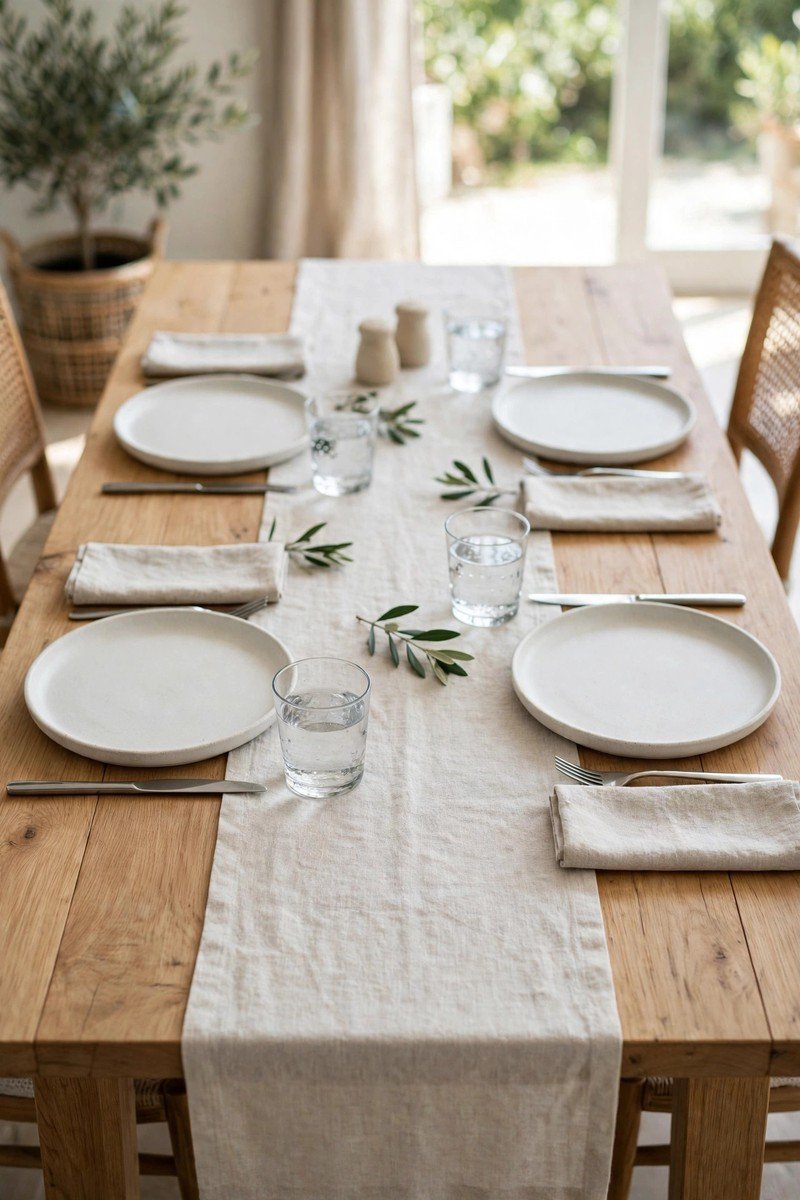
12. Fold Cloth Napkins in a Simple Roll
Cloth napkins lift a daily table more than paper napkins ever will. A simple roll tied with twine or slipped through a plain ring looks neat and costs almost nothing. They also wash and reuse, so they save money over time.
Pro tip: Buy eight cotton napkins for about 15 to 25 dollars. Roll them while slightly damp so they hold their shape.

13. Choose a Pretty Salt and Pepper Set
Salt and pepper shakers sit on the table every day, so they should look good. A ceramic, wood, or brass set turns a plain item into part of the decor.
Pro tip: A good salt and pepper set costs about 10 to 25 dollars. Fill them once a month and wipe the tops weekly.

14. Use Glassware in One Color Family
Glassware in one color family makes the table feel planned. A soft green or amber tint adds warmth. Keep the shape simple so the glasses fit in the dishwasher.
Pro tip: A set of four tinted tumblers costs about 20 to 35 dollars. Use the same glasses every day so the table always looks matched.

Light, Color, and Texture
15. Hang the Pendant at the Right Height
The light above the table is part of the decor. A pendant hung 30 to 36 inches above the table surface feels close and warm, but it stays high enough to see under. Warm bulbs near 2700K flatter food and faces.
Pro tip: If your light has no dimmer, add one for about 15 to 30 dollars, or use a smart bulb. A pendant shade costs about 40 to 90 dollars.

16. Add a Small Herb Pot to the Table
A small herb pot brings life and scent to the dining table. Basil, mint, and rosemary grow well in a bright dining room, and you can snip leaves straight into dinner.
Pro tip: Use a pot 4 to 6 inches wide with a saucer underneath. A potted herb costs about 5 to 10 dollars. Water it twice a week.

17. Add One Metal Accent for Shine
One metal accent adds shine without making the table feel formal. Brass candlesticks or a small copper vase catch the light. One metal is enough, as mixed metals can look messy.
Pro tip: Pick brass for a warm room and chrome for a cool room. A pair of brass candlesticks costs about 20 to 40 dollars.

18. Mix Wood, Linen, Ceramic, and Glass
A table styled with one texture can look flat. Mix wood, linen, ceramic, and glass, and the table gains depth. Together they look rich without any extra decor.
Pro tip: Stick to three or four textures at most. Add them in small pieces first, then check the mix before you buy more.

Small Tables and Busy Homes
19. Go Slim on a Small Round Table
A small round table needs a light touch. One slim bud vase with a single stem, or one low bowl, is enough. A big centerpiece eats the whole surface and leaves no room for plates, so keep the decor to the center third of the table.
Pro tip: For a table under 42 inches wide, use a vase no more than 4 inches across. A bud vase costs about 8 to 15 dollars.

20. Keep a Basket for Napkins and Cutlery
A small basket in the center of the table holds napkins and cutlery where everyone can reach them. It saves trips to the kitchen and doubles as decor.
Pro tip: Use a basket about 6 to 8 inches wide so it leaves room for plates. A woven basket costs about 10 to 20 dollars.

21. Leave a Clear Zone at Each End for Serving
Serving dishes need a home on the table too. Leave a clear zone of about 12 inches at each end of the table for bowls and platters. This keeps meals smooth and stops things getting knocked over.
Pro tip: Mark the zones with your placemats first, then place the centerpiece between them. If the table is short, serve from a sideboard instead. Our kitchen counter decor ideas show how to style that serving spot.
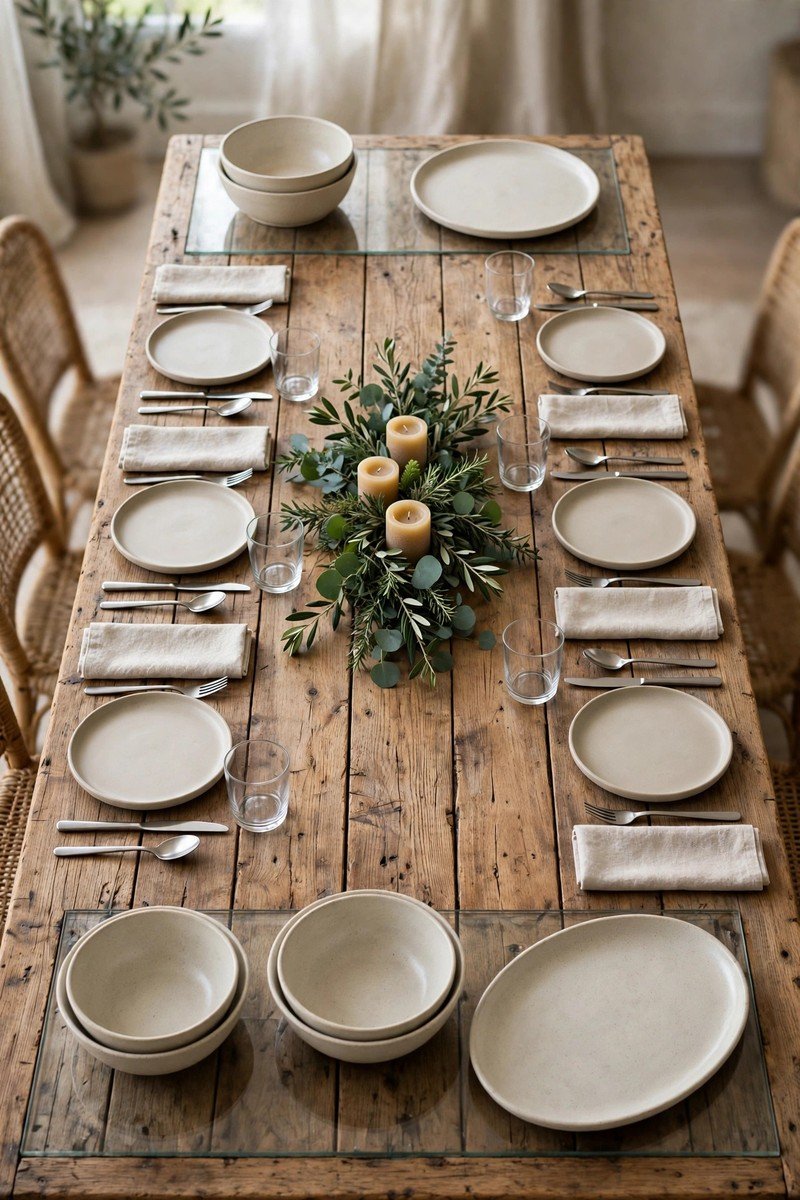
22. Swap One Small Item Each Month
A table that never changes can start to feel dull, even when it looks good. Swap one small item each month to keep it fresh. Change the fruit in the bowl, the stems in the vase, or the color of the napkins. One small change is enough, and it costs almost nothing.
Pro tip: Set a monthly budget of about 10 to 15 dollars for the swap. Buy the new item first, then remove the old one. For a dressed up version, see our fall table setting ideas for guest meals.
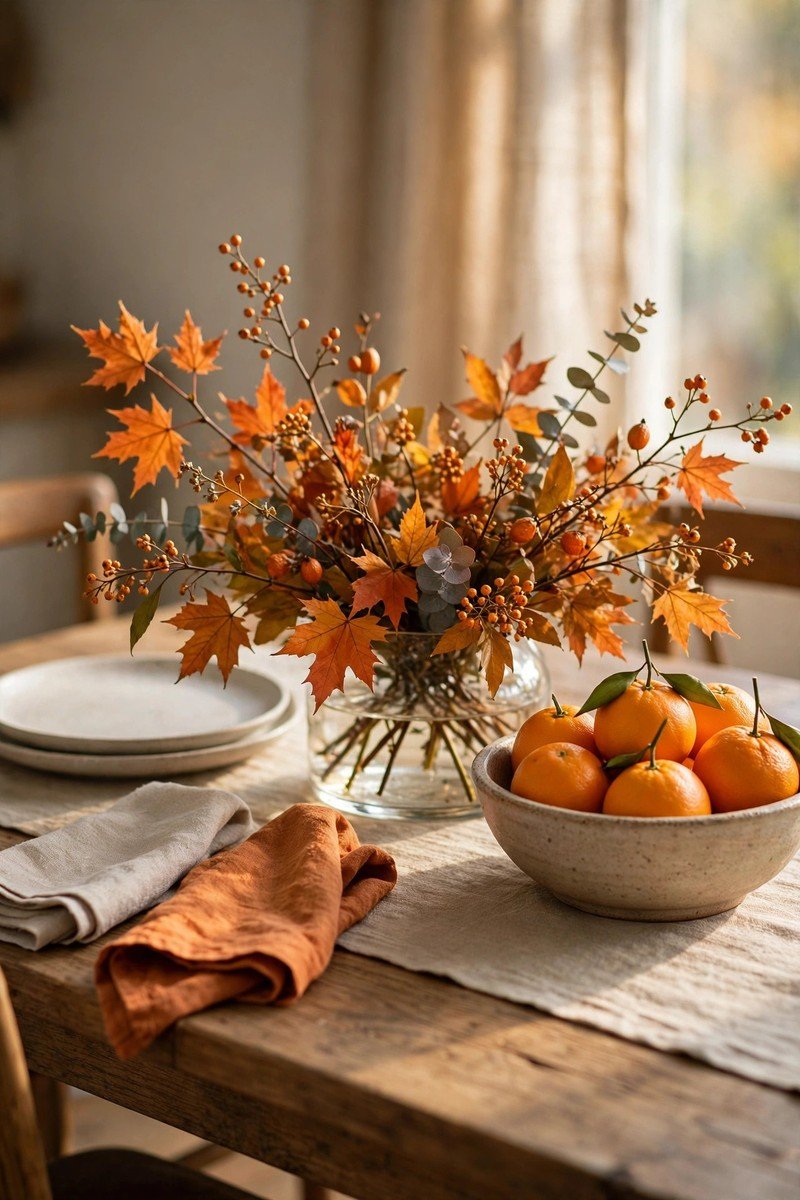
The Everyday Base: Runner, Cloth or Bare Wood
An everyday dining table needs a base that survives meals, not one that only looks good in a photo. A bare wood table suits daily use, because it wipes clean in seconds, but it needs placemats to stop heat rings and scratches. A runner suits a long table, because it protects the centre and can be removed for washing, and it should run about 12 inches past each end of the table. A full tablecloth suits a formal dinner, not a weekday meal, because it must be washed after every spill. Dining table decor ideas work best when the base matches real life. Choose a washable runner in a dark or patterned fabric, because a light runner shows every stain by Friday.
Centrepieces That Survive Daily Meals
A daily centrepiece must move, because the table is cleared three times a day. Keep it low, under 10 inches high, and keep it in one tray or on one board, so it lifts off the table in one move. Use items that wipe clean, such as a ceramic vase, a wooden bowl, or a glass lantern, and avoid dried flowers on a daily table, because they shed and break. Keep the centrepiece to one third of the table length, so plates and serving dishes still fit. Put the centrepiece back in the same place after every meal, because a centrepiece that wanders ends up on a sideboard and never returns. As a typical range, a wooden tray costs about 15 to 35 dollars, and a ceramic vase costs about 10 to 25 dollars. Buy the tray first, because a tray makes any centrepiece portable.
Place Settings for Weekday Dinners
Weekday place settings should be fast to set and fast to clear. Keep one set of everyday plates, bowls, and glasses per person, plus two spare sets, and store them within arm’s reach of the table, not in a high cabinet. Stack plates no more than 8 high, because a tall stack chips the bottom plates. Use the same placemats every day, and keep a second set clean for guests, so the table always looks finished. Set the table the same way each night, with the fork on the left and the knife on the right, because a habit is faster than a decision. Clear the table fully after each meal, and wipe it down before the next one, because a table left half cleared stays messy all day.
Keep the Table Clear Between Meals
A dining table that holds homework, mail, and laptops is not a dining table. Give every non meal item a home somewhere else, such as a basket by the door for mail and a shelf for school books. Clear the table after breakfast, lunch, and dinner, and keep only the centrepiece on it between meals. If the table is also a work surface, use a large tray to hold work items, so they lift off in one move when dinner is ready. Teach the household the rule: nothing stays on the table overnight except the centrepiece. A clear table invites people to sit down together, and a cluttered table pushes them to eat standing up or in another room.
Common Mistakes to Avoid
- Using a centerpiece that is too tall. Anything over 14 inches blocks faces and kills talk across the table.
- Covering the whole table with decor. Leave room for plates, glasses, and serving dishes, or the table will feel crowded.
- Mixing too many colors. Pick one main color and one neutral, then repeat them, or the table will look messy.
- Choosing pieces that are hard to move. If you cannot clear the table in under a minute, the styling fights daily meals.
- Skipping washable fabrics. Daily tables get spills. Linen and cotton wash well, while dry clean only fabrics do not last.
- Forgetting the light. Aim for 30 to 36 inches above the table, not too high or too low.