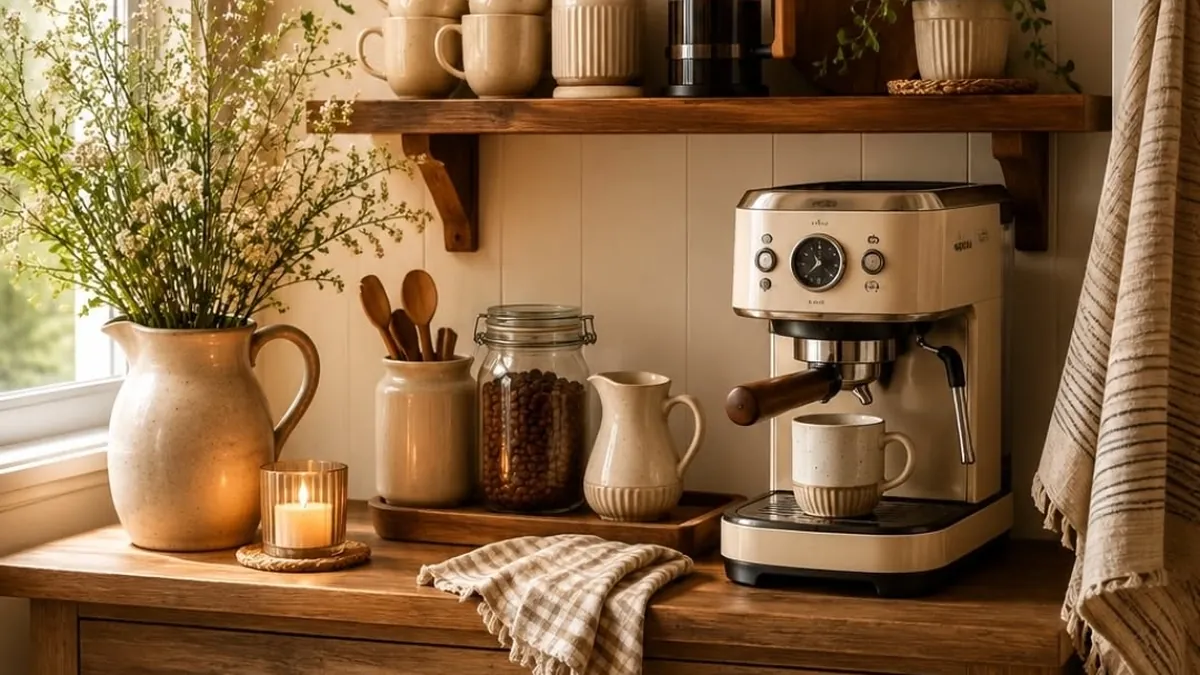
There is something about having one small corner of your kitchen that belongs to your morning. Not the whole counter, just one spot where the coffee lives, the mugs hang, and everything you need sits within reach.
You do not need a new kitchen or a pricey espresso machine to make it happen. A tray on the counter, a cart in the corner, or two shelves on the wall can hold everything.
Each idea lists what you actually need and what it costs, plus why it works so well. Pick the one that fits your space and your budget, then make your mornings a little easier.
Quick Picks
- Smallest budget: a two tier tray on the counter holds a maker, mugs, and sugar for under 30 dollars.
- Best for renters: a rolling bar cart needs no drilling and moves wherever you want it.
- Best for tiny kitchens: under shelf mug hooks and a wall shelf use almost no counter space.
- Easiest upgrade: matching glass canisters and a small tray make any setup look pulled together.
Before You Start
- Measure your spot. Write down the width and depth so shelves, carts, and trays actually fit.
- Check your outlets. Coffee makers need a plug nearby, and cords stretched across the counter get annoying fast.
- Pick your brew method first. Drip, single serve, pour over, or espresso decides how much room you need.
- Count your daily mugs. Keep two to four within reach and store the rest in a cabinet.
- Set a budget. Most of these setups land between 25 and 150 dollars, and knowing your number keeps spending in check.
Countertop Coffee Stations
1. Simple Corner Counter Setup
This is the easiest place to start. Pick one corner of your counter and give every coffee item a home there.
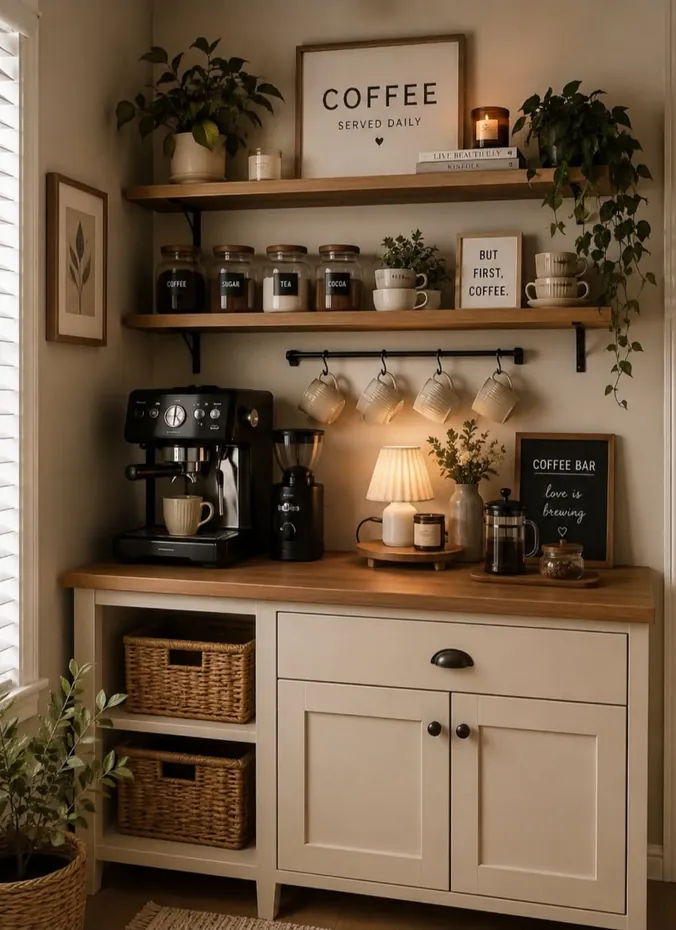
Place your coffee maker in the back corner, then add a small tray or wooden board in front for mugs, sugar, and spoons. Two short wall shelves above hold extra mugs and canisters.
It works because everything stays in one zone. You stop walking across the kitchen for sugar or a spoon, and the corner that used to collect clutter now looks intentional. Guests can even help themselves without asking where things are.
2. Rolling Coffee Bar Cart
A bar cart on wheels is the most flexible coffee station you can own. Roll it where you need it, then tuck it away.

Use the top shelf for the coffee maker and daily mugs, the middle shelf for beans, filters, and sugar, and the bottom for extra cups or a small trash bin. A sturdy three tier cart costs 50 to 90 dollars, and you can find them at most big box stores or secondhand for half that.
It works because nothing is permanent. Renters love it since there is no drilling, and when you host brunch you can roll the whole cart to the table.
3. Two Tier Tray Station
If your counter space is tight, go up instead of out. A two tier tray stacks everything in one small footprint.
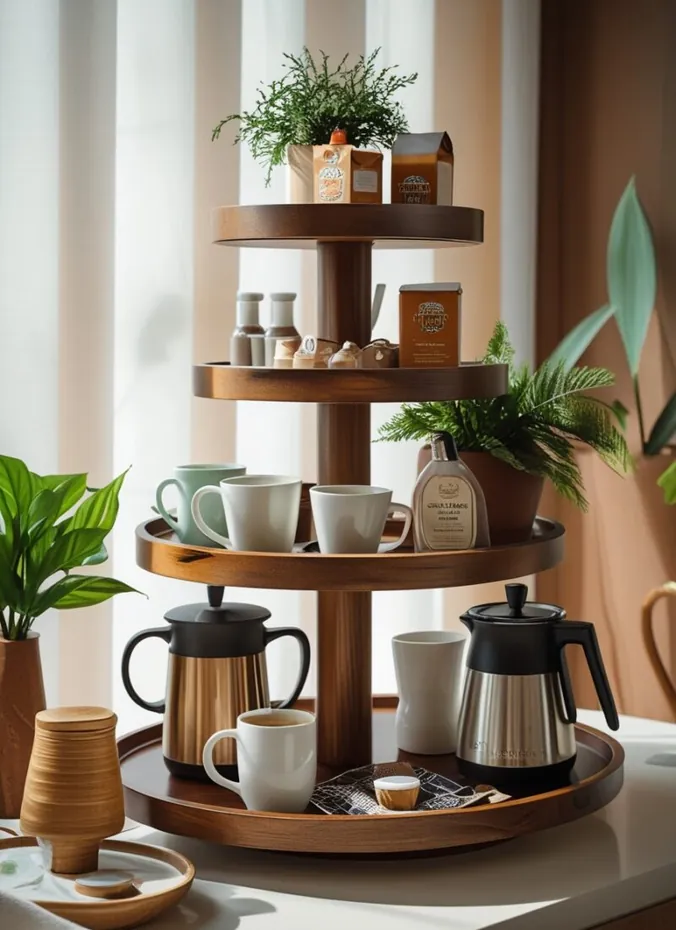
Set the tray next to your coffee maker and load it with mugs on the bottom and cream, sugar, and stirrers on top. Wood or metal tiered trays run 20 to 40 dollars, and round ones fit nicely in corners.
It works because it turns a messy pile into a display. Everything is visible and grabbable, and when you need the counter for cooking, you lift one tray and the whole station moves.
4. Floating Shelf Coffee Nook
Two floating shelves above a short stretch of counter create a full coffee nook without any bulky furniture.

Mount the shelves 12 to 18 inches apart, with the lower one high enough to clear your coffee maker. Mugs go on hooks under the shelf, canisters and decor sit on top.
It works because the wall does the storing while the counter stays open. You get display space for pretty mugs and jars, and the whole nook takes up zero floor space, which small kitchens really need.
5. Single Serve Maker and Pod Drawer Combo
Single serve fans can keep the whole routine in one neat stack: maker on top, pods in a drawer underneath.

Pod storage drawers made to sit under single serve machines hold 24 to 36 pods and cost 15 to 30 dollars. Set your machine on top, roll the drawer out to pick a flavor, and keep one mug beside it.
It works because the pod hunt disappears. No more digging through a box or a cabinet every morning. The stack is compact enough for an office corner or a dorm style setup too.
Small Space Coffee Stations
6. Hidden Cabinet Coffee Nook
Turn an unused cabinet or armoire into a coffee station that closes away when you are done.
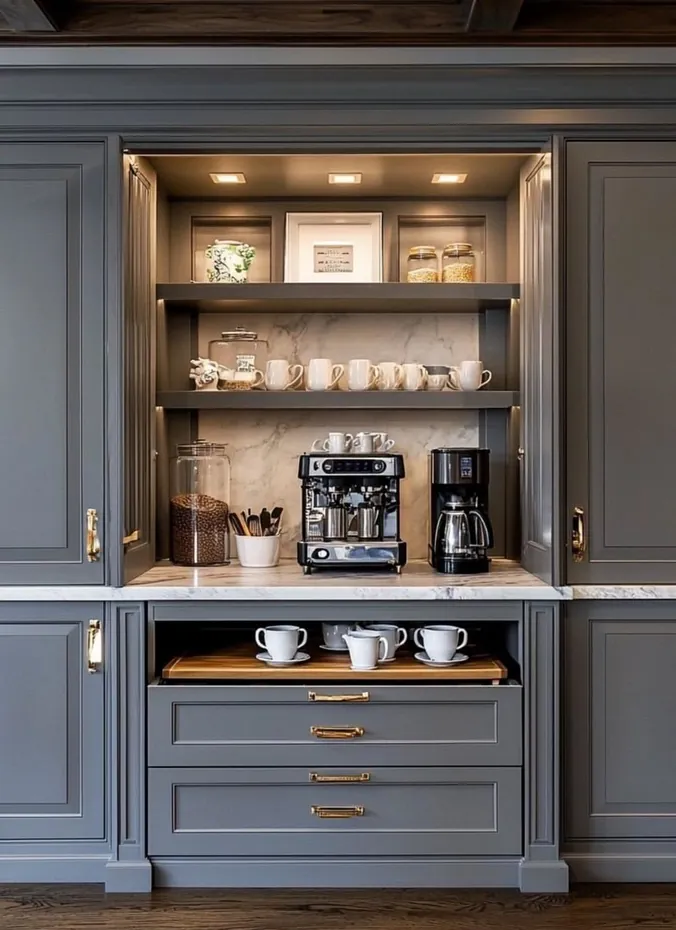
Clear one cabinet, add a power strip inside, and set up the maker on the shelf. Small hooks on the inside of the doors hold mugs.
It works because the mess vanishes. Close the doors and the kitchen looks spotless, which matters in open plan homes where the kitchen is always visible.
7. Under Shelf Mug Hooks
Mugs are the bulkiest part of a coffee station. Hang them under a shelf and they take up no counter at all.

Screw in cup hooks cost a few dollars for a pack of ten. Space them so mugs do not knock together, about 3 inches apart. This works under wall shelves or inside cabinets right above your maker.
It works because it uses dead space. The area under a shelf usually holds nothing, and hanging mugs there keeps your prettiest cups on display while freeing the counter for the maker and jars.
8. Narrow Console Table Station
A slim console table, about 10 to 12 inches deep, fits in hallways, dining rooms, or any wall with a spare outlet.
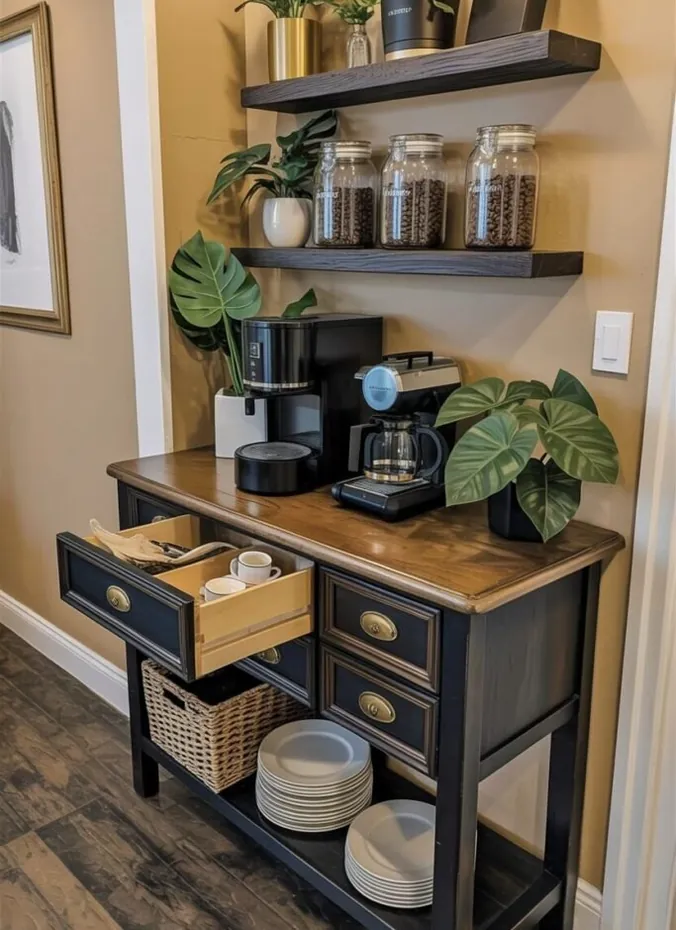
Place the maker on top and baskets on the lower shelf for pods and filters. Narrow consoles cost 60 to 120 dollars new, and thrift stores are full of them for 20 to 40 dollars.
It works because it puts the station outside the kitchen entirely. If your counters are full, a hallway or dining room wall becomes the morning spot, and it doubles as decor the rest of the day.
9. Wall Mounted Fold Down Table
For truly tiny spaces, a table that folds flat against the wall gives you a station only when you need it.
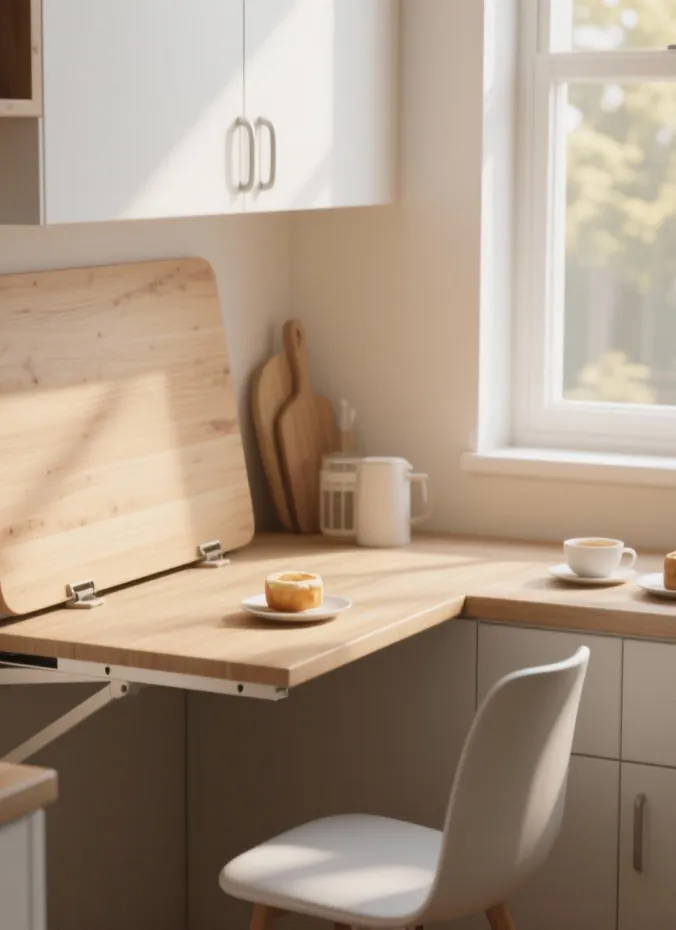
Mount a drop leaf or fold down table at counter height near an outlet. Fold it up to brew, fold it down after. These run 40 to 80 dollars, and you will want wall anchors rated for the weight of your maker plus a full carafe.
It works because the footprint is zero when folded. Studio apartments and galley kitchens gain a real coffee spot without losing walkway space, which is the whole battle in a small home.
Style Forward Coffee Stations
10. Rustic Wood Crate Station
Stacked wood crates give you a coffee bar with real farmhouse character for very little money.
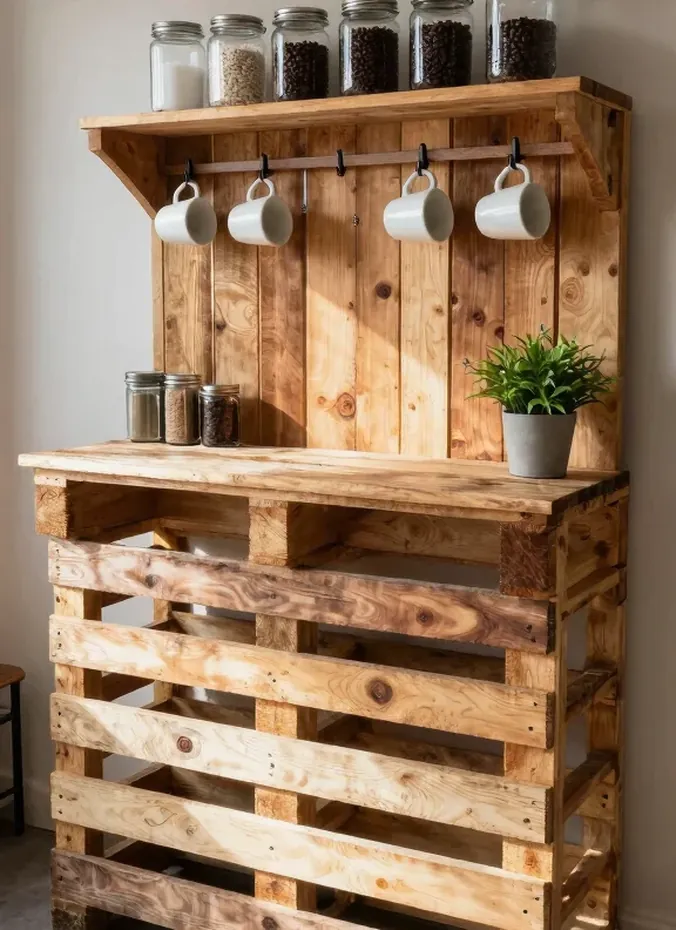
Stand two or three crates upright or stack them sideways to make shelves. The maker sits on top, mugs hang from small hooks screwed into the crate edges, and jars fill the cubbies. Wood crates cost 10 to 20 dollars each at craft stores, less at flea markets.
It works because the texture does the decorating. Rough wood, glass jars, and white mugs look styled with zero effort, and you can restack the crates into a new shape whenever you want a change.
11. Modern Black and White Station
Keep every item black, white, or wood and the station looks calm and modern even with daily use.

Choose a black pour over set or a white drip maker, black mugs, and one wood tray to warm it up. A pour over dripper and kettle cost 30 to 60 dollars together.
It works because limiting the colors hides the clutter. Random boxes and bright labels are what make stations look messy, and a two color rule fixes that without any organizing bins.
12. Cozy Farmhouse Station
Warm wood, soft white dishes, and a few vintage touches make a coffee corner feel like the heart of the home.

Start with a white or wood hutch or sideboard, add wire baskets for pods, glass canisters for beans, and one small sign. Thrifted hutches run 40 to 100 dollars. For more styling ideas, browse our farmhouse coffee bar ideas to layer in the details that make this look work.
It works because farmhouse style is forgiving. Mixed woods, baskets, and well worn pieces all belong together, so the station looks better the more lived in it gets.
13. Boho Rattan Station
Rattan and warm light turn a coffee corner into the coziest seat in the house.
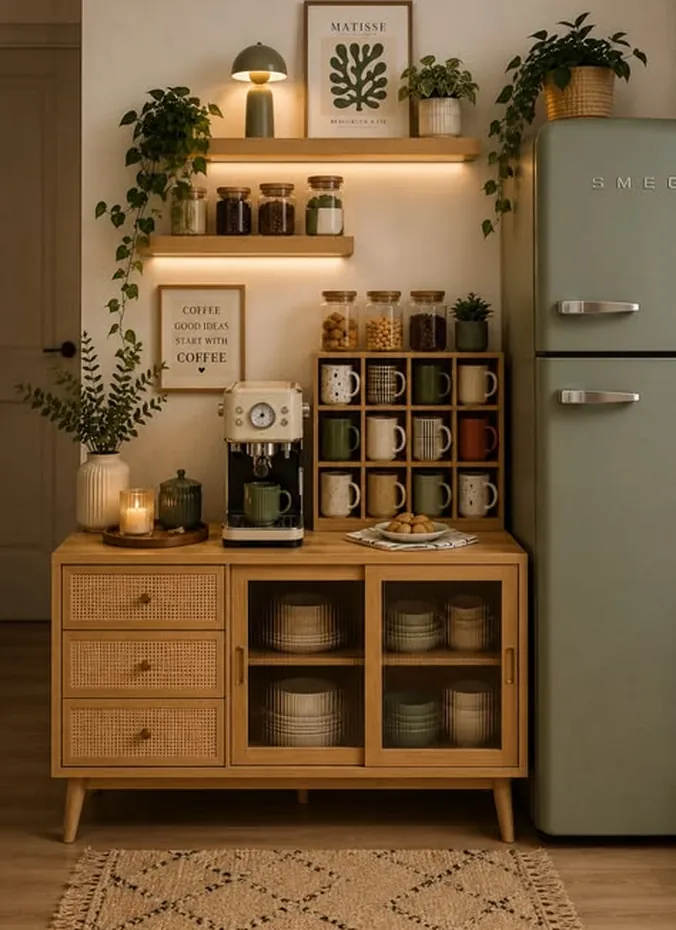
Use a rattan front cabinet or a simple wood table with a woven tray. Add a small lamp or string lights, a plant, and mugs in earthy tones.
It works because texture and light change the mood. The same coffee tastes better in a corner that feels warm, and the lamp makes early mornings much gentler than overhead lighting.
14. Vintage Thrifted Coffee Bar
Build the whole station from secondhand finds and every piece has a story.

Hunt for a small dresser or dry sink, old glass canisters, and mismatched china mugs. Most pieces cost 5 to 25 dollars each at thrift stores. Clean everything well and the mix of eras becomes the charm.
It works because nothing matches on purpose. Vintage pieces have weight and detail that new budget furniture lacks, and a thrifted bar often costs less than one new cart while looking far more interesting.
Seasonal and Themed Coffee Stations
15. Fall Spice Station
When the weather cools, dress your coffee station for the season with warm spices and autumn color.
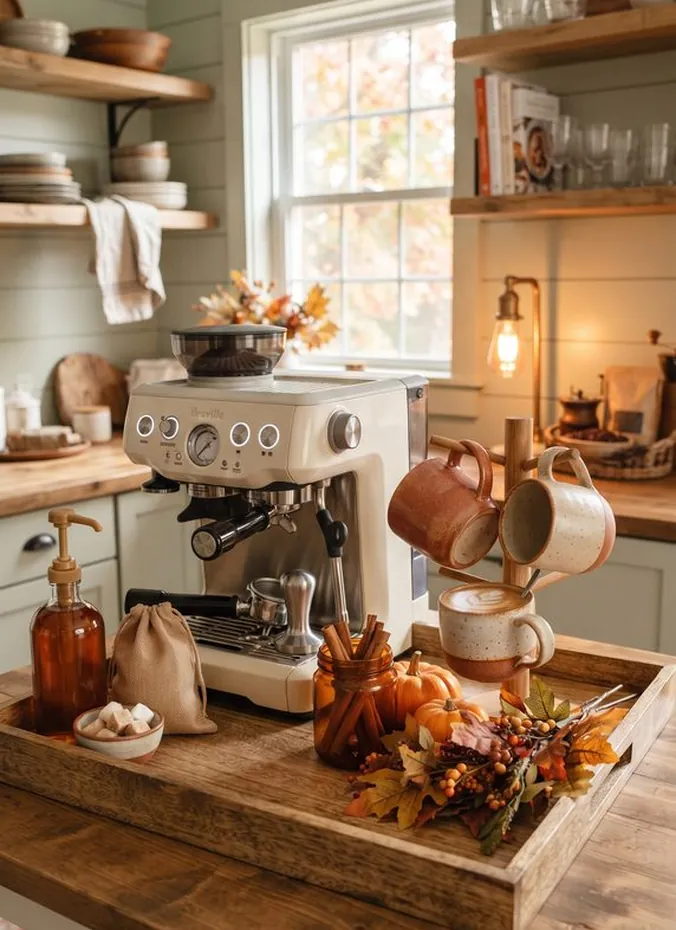
Add small pumpkins, a jar of cinnamon sticks, and pumpkin spice syrup to your usual setup. A mini pumpkin costs a dollar or two, and a bottle of seasonal syrup runs 5 to 8 dollars. Swap the decor out after Thanksgiving.
It works because small seasonal touches make the daily routine feel fresh. You are not rebuilding the station, just adding a few fall pieces, and the cinnamon and pumpkin scents do half the work.
16. Holiday Hot Cocoa Combo Bar
In December, let the coffee station share space with a hot cocoa bar the whole family can use.

Add jars of cocoa mix, marshmallows, and candy canes beside the coffee maker, plus a small chalkboard sign. Most of the extras cost under 20 dollars total. Our hot cocoa bar ideas have more ways to style a winter drink corner if you want to go bigger.
It works because one station serves everyone. Coffee drinkers get their morning cup, kids and guests get cocoa, and the holiday styling makes the kitchen feel festive without a big decorating project.
17. Iced Coffee Summer Setup
Hot weather calls for a cold brew corner. Set up a small iced coffee station for the summer months.

You need a cold brew pitcher or a jar for overnight steeping, tall glasses, ice cube trays, and two or three syrups. A cold brew maker costs 20 to 35 dollars, and syrups run 5 to 8 dollars each.
It works because homemade iced coffee costs a fraction of coffee shop prices. A summer of daily cold brew from this setup saves real money, and guests love mixing their own flavors.
18. Winter Warm Up Station
Dark winter mornings are easier with a station built for comfort: warm light, warm drinks, warm colors.

Add a small candle or plug in warmer, keep a soft throw nearby, and stock chai or flavored coffee for variety. A candle warmer costs 12 to 20 dollars and is safer than an open flame near paper filters. Deep colored mugs complete the mood.
It works because winter mornings are about comfort, not speed. A warm glowing corner makes getting out of bed easier, and the scent of a candle plus fresh coffee is hard to beat.
Organization and Storage Ideas
19. Glass Canister Bean Display
Decant beans, sugar, and tea into matching glass canisters and the station instantly looks tidy.
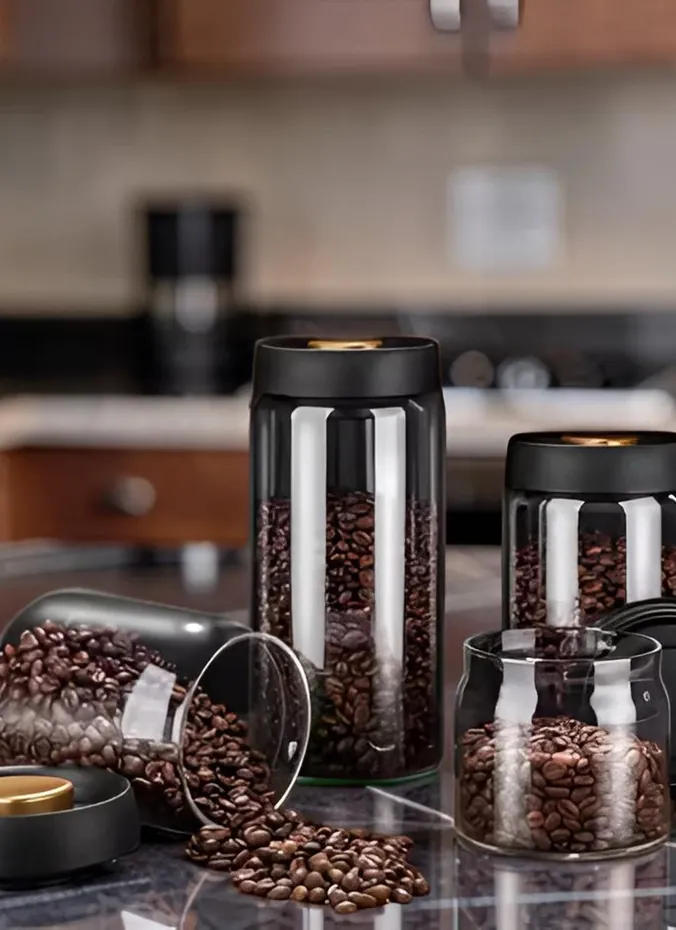
A set of three airtight glass canisters costs 20 to 35 dollars. Choose ones with bamboo or metal lids that seal well, since beans stay fresh longer away from air and light.
It works because matching containers hide visual noise. Bags with bright logos and clips look cluttered, while uniform glass jars turn supplies into decor and keep everything fresher.
20. Syrup and Stirrer Organizer
Syrup bottles multiply fast. Give them a rack so they stand upright and pour cleanly.

A countertop syrup rack or a small two tier stand costs 15 to 30 dollars. Add pump tops, about 2 dollars each, so one press flavors a whole cup.
It works because it stops the sticky bottle shuffle. Pumps measure consistently, bottles do not tip over, and the little rack looks like a real cafe setup, which makes weekday coffee feel like a treat.
21. Pull Out Drawer Organizer
Dedicate one kitchen drawer to coffee supplies with dividers for pods, filters, and tea bags.
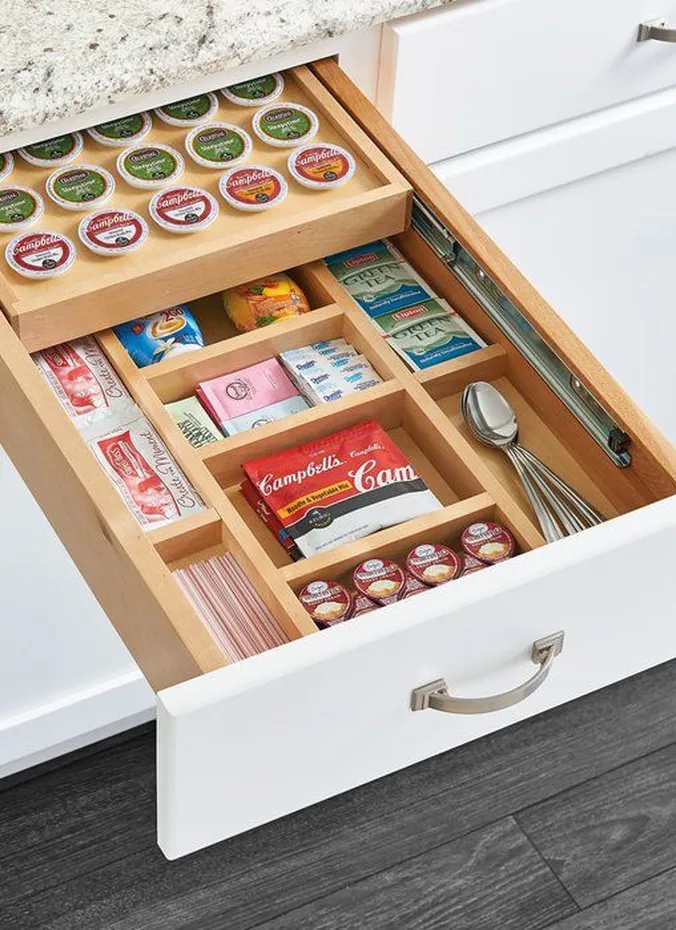
Bamboo drawer dividers cost 15 to 25 dollars and fit most standard drawers. Sort pods by flavor, keep filters and sweeteners in their own sections, and leave one slot for a small scoop. If your whole kitchen needs the same treatment, see our small kitchen cabinet organization ideas for more systems that work.
It works because the counter stays clear. Everything lives one drawer pull away, and dividers stop the slow drift into a junk drawer. Mornings get faster when every item has a marked spot.
22. Grinder and Fresh Bean Showcase
Whole beans ground fresh taste better, and a grinder on display invites you to actually use it.

A good burr grinder costs 40 to 80 dollars, and a bag of whole beans runs about the same as pre ground. Place the grinder next to the maker with a small bowl of beans and a scoop.
It works because fresh grinding is the single biggest flavor upgrade most people can make. The station also looks serious in the best way, like a corner that takes coffee seriously without taking itself too seriously.
23. Chalkboard Menu Coffee Corner
A small chalkboard menu above the station adds cafe charm and keeps recipes where you can see them.
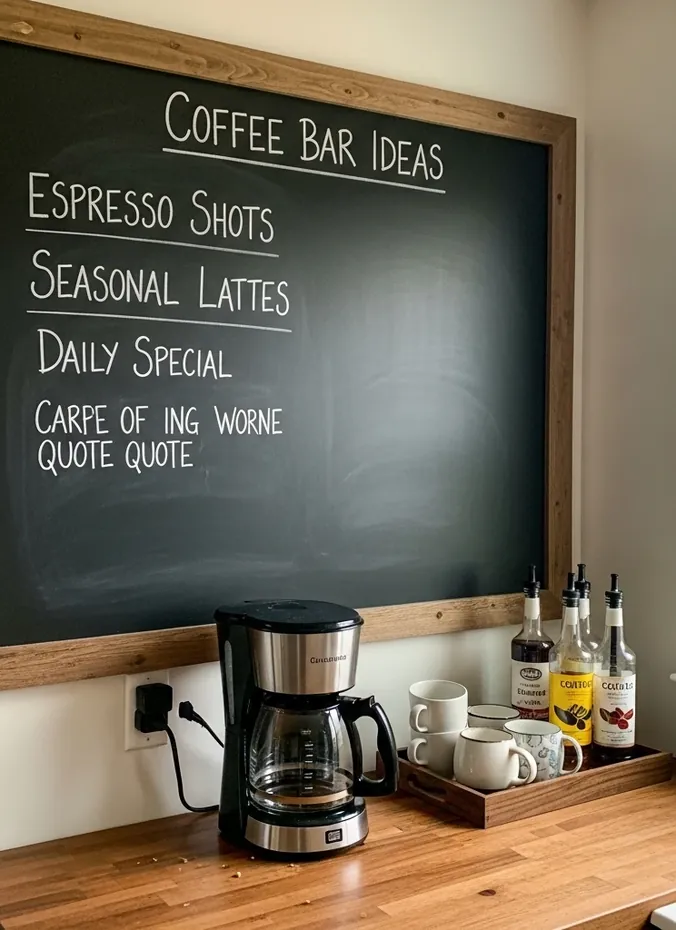
Chalkboards cost 10 to 25 dollars depending on size. Write your three favorite drinks with their ratios, like one shot plus six ounces of milk for a latte. Use chalk markers so it wipes clean when you change the menu.
It works because it turns the corner into a destination. Guests read the menu and order like they are at a cafe, kids love picking from a board, and you finally remember that iced recipe you keep looking up.
Budget Tips
- Start with a tray. A 15 dollar tray groups what you already own into a station with no other purchases.
- Thrift the furniture. Carts, consoles, and hutches cost a third of retail at secondhand stores.
- Buy canisters once. One matching set replaces years of mismatched bags and boxes.
- Use hooks before shelves. Ten cup hooks cost less than one shelf and free up real counter space.
- Skip the matching set. Mismatched mugs from thrift stores look charming and cost a dollar each.
- Make your own syrups. Sugar, water, and vanilla cost pennies per bottle versus 8 dollars store bought.
- Add one piece at a time. A station built over months feels richer than one bought in a single cart.
Common Mistakes to Avoid
- Blocking the outlet. Plan the layout around the plug, not the other way around.
- Keeping every mug. Four daily mugs at the station beat twenty crowded ones.
- Storing beans in the bag. Air and light stale them fast, so decant into a sealed canister.
- Forgetting water access. Keep a filled carafe or a nearby sink in mind for easy refills.
- Over decorating. A station needs room to brew, so leave clear space around the maker.
Frequently Asked Questions
How much counter space does a coffee station need?
About two feet of width is enough for most setups. A single serve maker plus a small tray fits in 18 inches, while a drip maker with canisters and mugs wants a full 24 inches. Going vertical with shelves or hooks shrinks the footprint further.
What is the cheapest way to set up a coffee station?
Use what you own and add a tray. Group your current maker, mugs, and sugar on a tray or cutting board you already have, and you have a station for zero dollars.
Where should I put a coffee station in a small kitchen?
Claim one corner of counter near an outlet, or move it out of the kitchen entirely. A narrow console in a hallway or dining room works well, and a rolling cart can live in a closet and roll out each morning.
How do I keep a coffee station from looking cluttered?
Limit what lives there to daily items and hide the rest. Matching canisters, a tray to group small things, and a strict four mug rule keep it tidy.
Do I need an espresso machine for a good coffee station?
No. A station is about organization, not equipment. Drip, pour over, French press, and single serve makers all make great stations. Spend on fresh beans and a grinder before a fancier machine.
Conclusion
A coffee station is one of the smallest projects with the biggest daily payoff. Every idea above fits a real budget and a real kitchen, from a tray on the counter to a full farmhouse bar. The best one is simply the one you will use every morning.
Start with the version that matches your space today. You can add shelves, swap in matching canisters, or dress it for the seasons later.
Tomorrow morning, notice how it feels to walk to one spot and have everything ready. That small moment of calm is the whole point, and it costs less than a week of coffee shop runs.