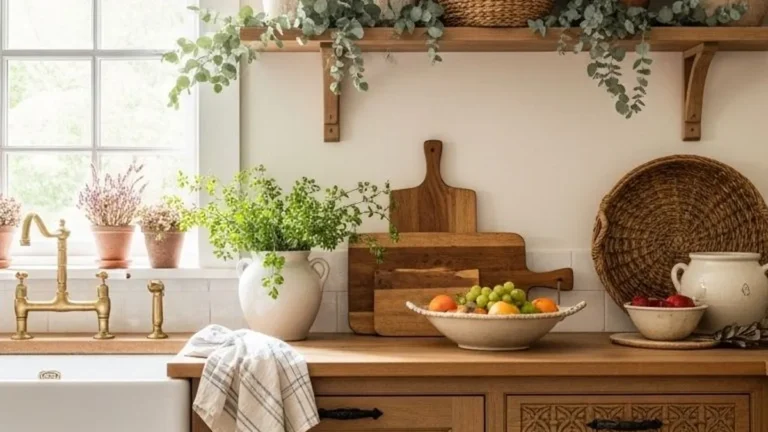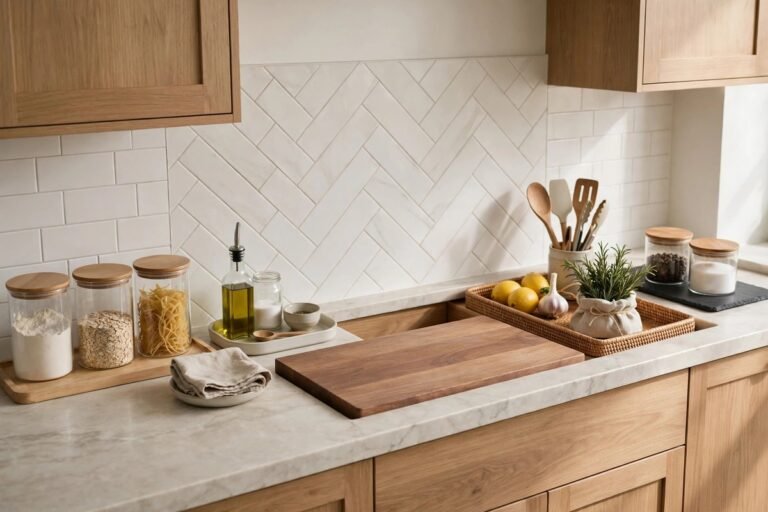
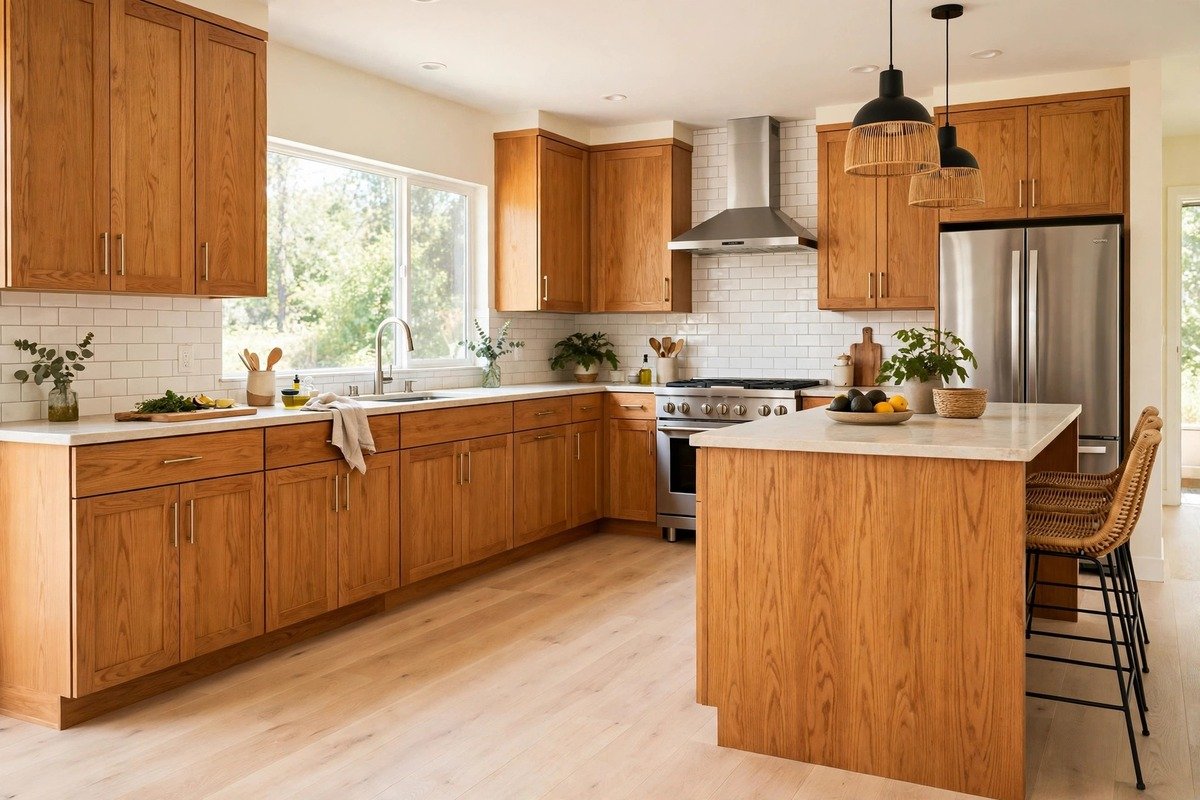
Oak cabinets bring warmth to a kitchen. The floor under them decides how fresh or how dated the whole room looks. The right floor can make the same cabinets look calm, bright, and current.
This guide gives you 20 kitchen flooring ideas with oak cabinets that pair perfectly. Each idea works with the warm tone of oak instead of fighting it. You will find light floors, dark floors, tile, stone, wood, and budget friendly options. For a lighter kitchen look, see our flooring ideas for a white kitchen as a different guide.
Quick Picks
- Go lighter or darker than the cabinets. A floor two or three shades lighter or darker than the oak looks fresh.
- Check the undertone first. Honey oak is golden, red oak is pink, and white oak is pale. Match the floor to that undertone.
- Use warm neutrals with honey oak. Greige, beige, and warm cream soften the gold without making the room look cold.
- Keep busy patterns in one place. If the floor has a strong pattern, keep the countertop and backsplash plain.
- Test samples at home. Lay samples next to the cabinets in daylight and at night before you order.
Did You Know?
Flooring covers about 30 to 40 percent of what you see in a kitchen, while cabinets cover about 20 percent. That is why a floor change can update oak cabinets without replacing them.
Before You Start
- Find your oak type. Honey oak is golden, red oak has a pink cast, and white oak is pale with gray tones.
- Measure the full floor area, then add 10 percent extra for cuts and waste.
- Bring home three or four samples and lay them flat next to the cabinet base.
- Look at the samples with your countertop.
- Check water resistance. Kitchens need floors that handle spills, steam, and dropped pans.
Light and Bright Floors
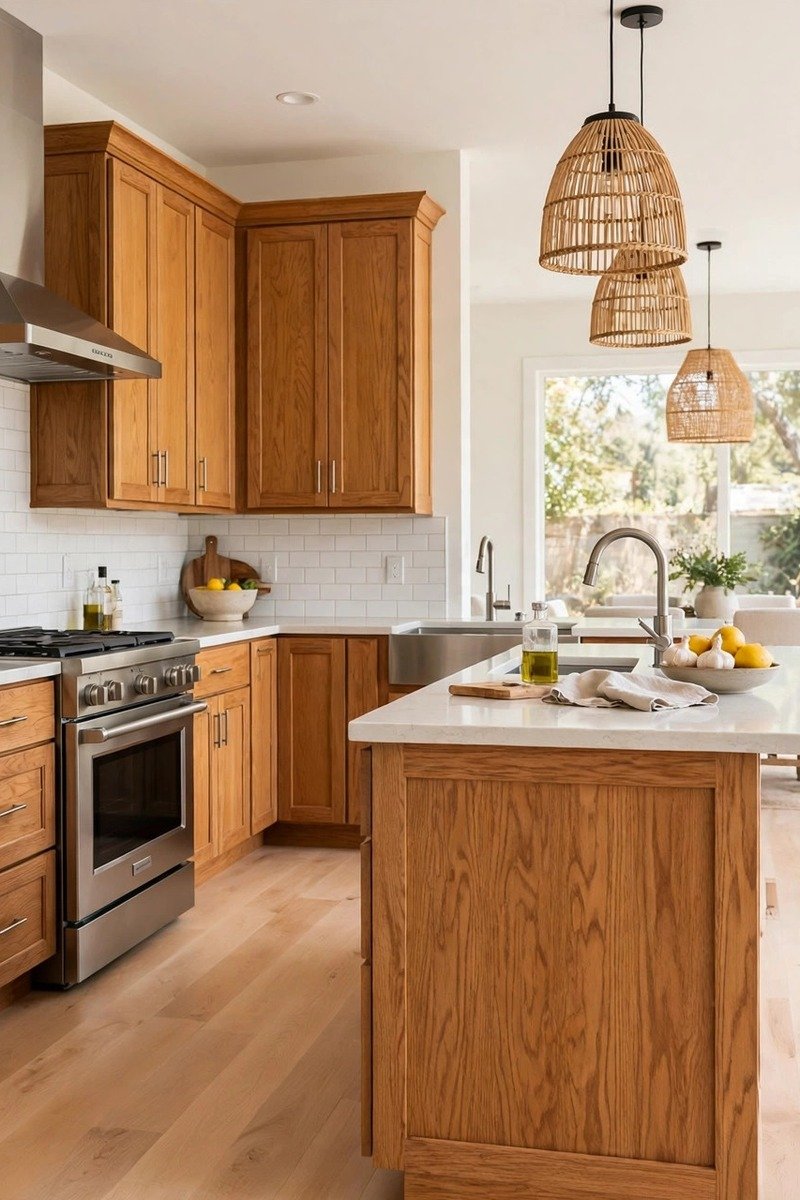
1. Light Maple Hardwood
Light maple hardwood gives honey oak cabinets a clean and open backdrop. The pale wood is soft and smooth, so it brightens the room without adding more gold.
Pro tip: Choose planks 12 to 18 cm wide with a matte finish. Solid maple costs about 8 to 14 dollars per square foot installed, and a 15 square meter kitchen takes about 2 to 3 days to fit.
2. Whitewashed Wood Planks
Whitewashed wood planks soften the strong gold of honey oak. The pale wash keeps the wood grain visible but tones down the yellow. The result feels fresh and calm, and it suits a farmhouse or coastal kitchen.
Pro tip: Pick engineered planks with a whitewash stain and a low gloss seal. Expect about 6 to 11 dollars per square foot installed, and seal the floor again after 3 to 5 years in a busy kitchen.

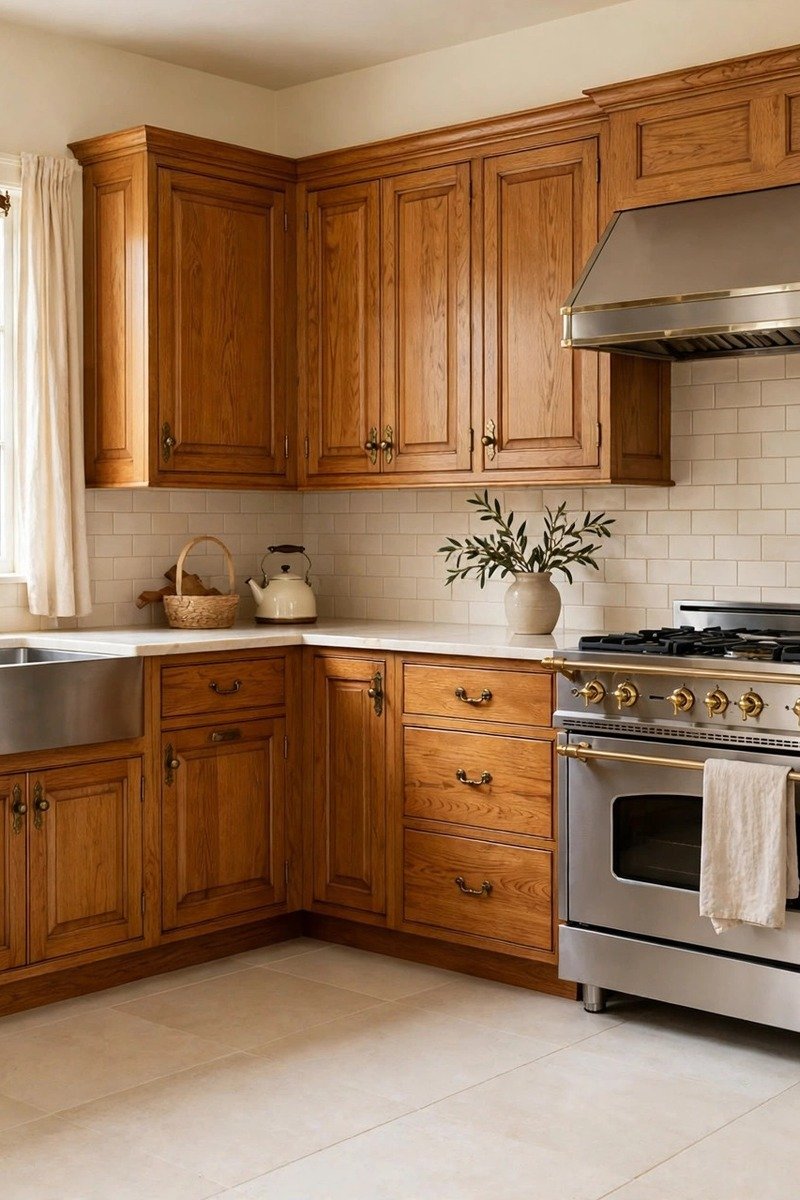
3. Cream Porcelain Tile
Cream porcelain tile gives oak cabinets a light and classic base. The soft cream color lets the warm wood stand out without adding more color.
Pro tip: Use large tiles of 60 by 60 cm with a light grout. Porcelain costs about 5 to 10 dollars per square foot installed, and a 15 square meter floor takes about 2 days to lay.
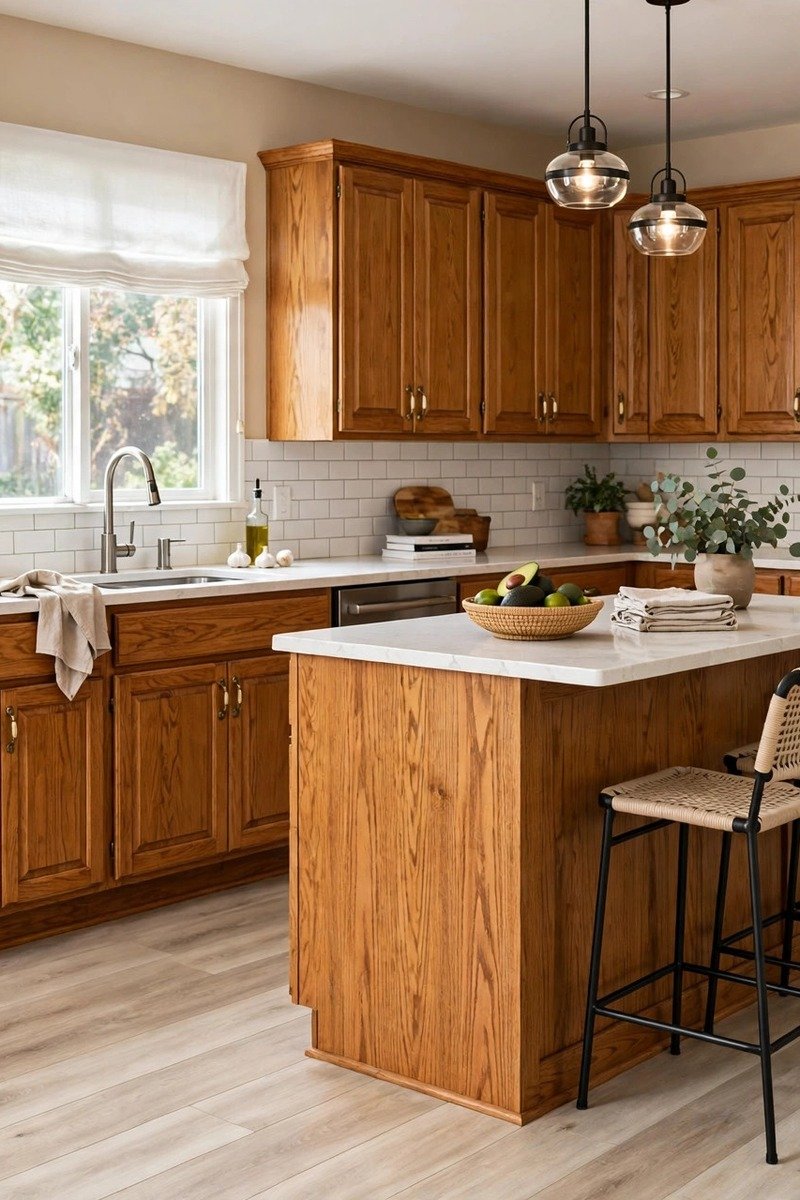
4. Light Greige Luxury Vinyl Plank
Light greige luxury vinyl plank blends beige and gray in one warm neutral. It calms the orange tone in honey oak and still feels warm underfoot. It is waterproof, soft to walk on, and it suits homes with kids and pets.
Pro tip: Choose planks at least 18 cm wide with a 20 mil wear layer. Greige vinyl plank costs about 3 to 6 dollars per square foot installed, and a small kitchen can be fitted in 1 day.
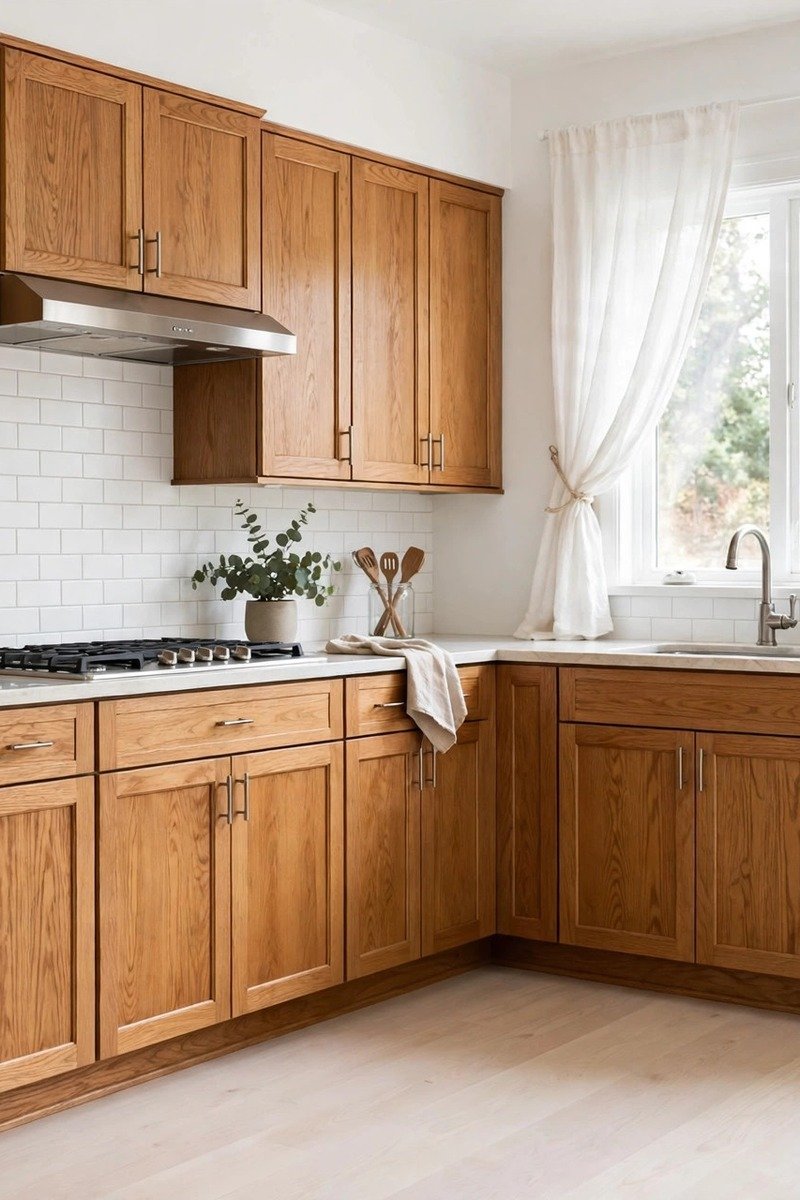
5. Pale Birch Wood Flooring
Pale birch wood flooring stays neutral next to oak cabinets. It has a fine grain and a light tone, so it does not compete with the strong grain of the oak. It makes the kitchen feel airy and it pairs well with white or cream walls.
Pro tip: Use a clear matte oil finish to keep the pale tone. Birch flooring costs about 7 to 12 dollars per square foot installed, and you should let the boards sit in the room for 48 hours before fitting.
Dark and Bold Floors
6. Dark Walnut Hardwood
Dark walnut hardwood adds rich contrast under honey oak cabinets. The deep brown floor makes the golden oak look brighter and more defined.
Pro tip: Choose wide planks of 15 to 20 cm with a satin finish. Walnut costs about 10 to 16 dollars per square foot installed, and you should sweep it daily since dust shows more on dark wood.

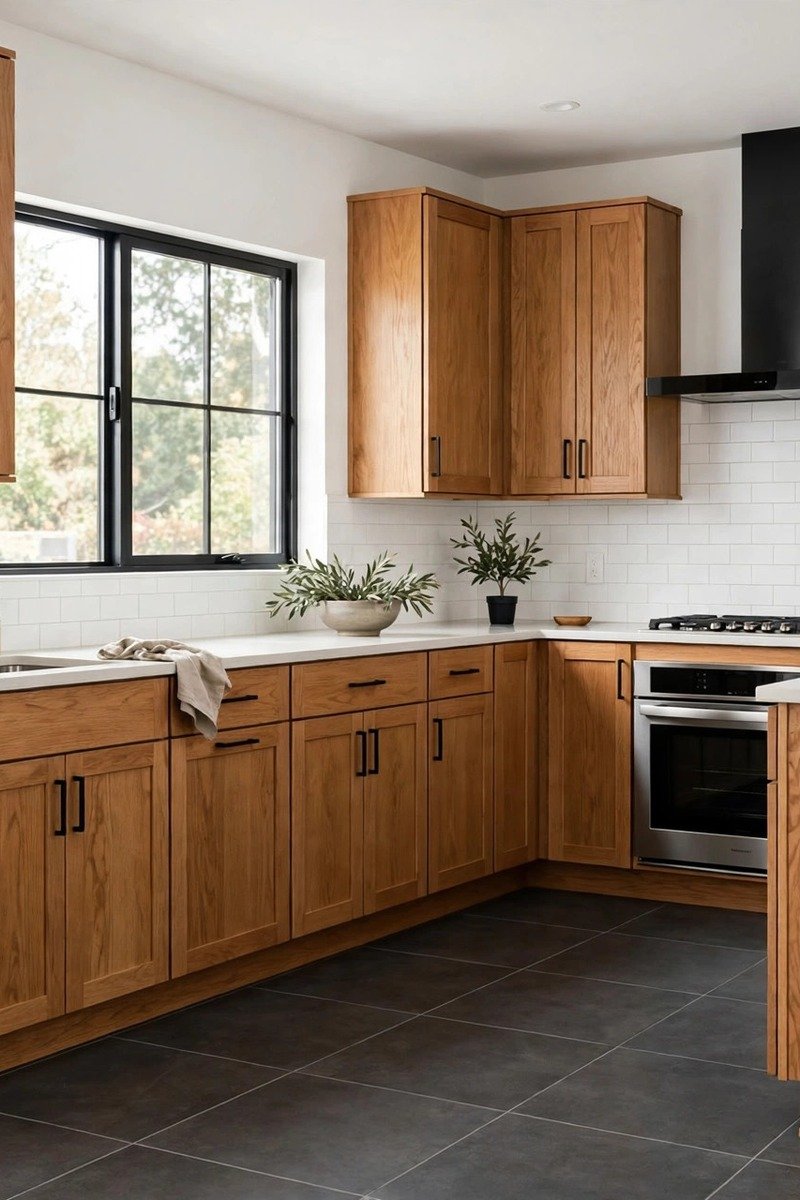
7. Charcoal Porcelain Tile
Charcoal porcelain tile grounds honey oak cabinets with a strong modern edge. The dark gray floor balances the warmth of the oak and makes the room look current. Large tiles keep the look clean and reduce grout lines.
Pro tip: Use 60 by 120 cm tiles with a dark gray grout. Charcoal porcelain costs about 6 to 11 dollars per square foot installed, and a light grout line of 3 mm keeps the pattern neat.
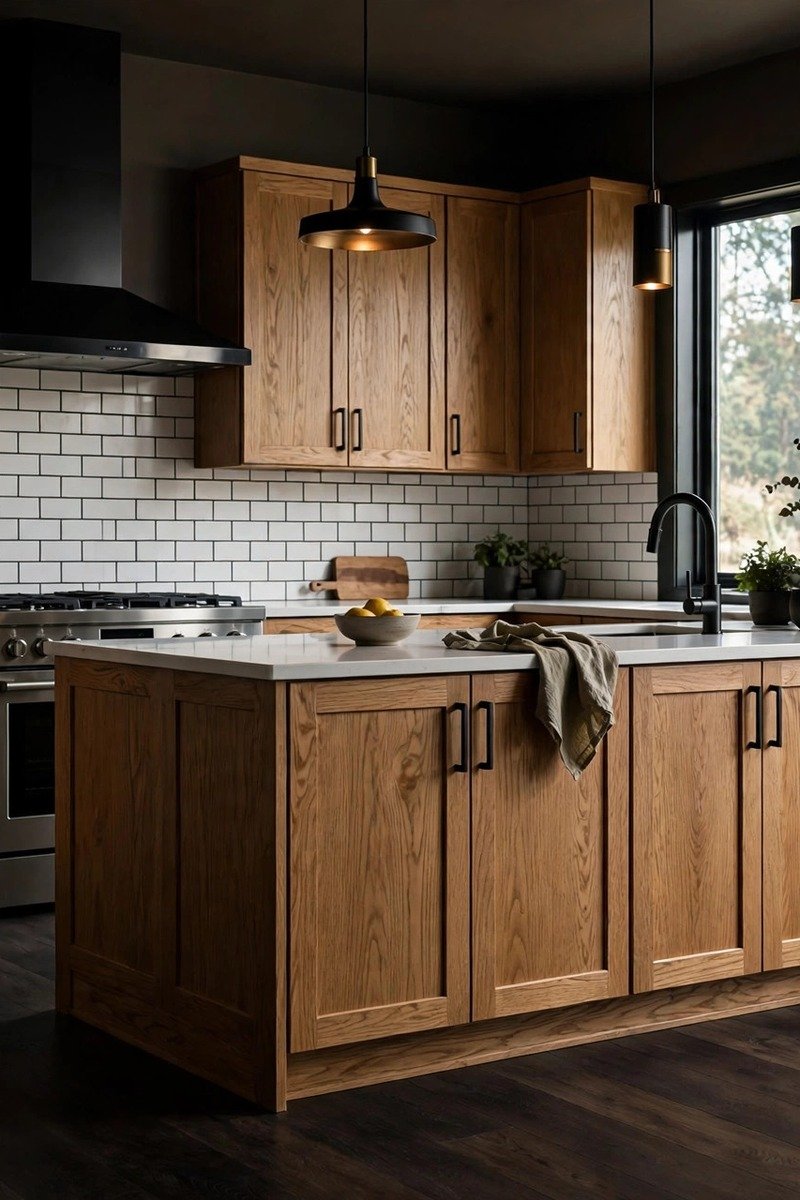
8. Espresso Engineered Wood
Espresso engineered wood gives oak cabinets a deep and steady base. The near black brown tone adds drama without the cost of solid walnut. It suits a modern kitchen and it hides small marks better than a mid tone floor.
Pro tip: Pick engineered boards 18 cm wide with a scratch resistant top layer. Espresso engineered wood costs about 7 to 12 dollars per square foot installed, and the boards click together in about 2 days for a 15 square meter room.
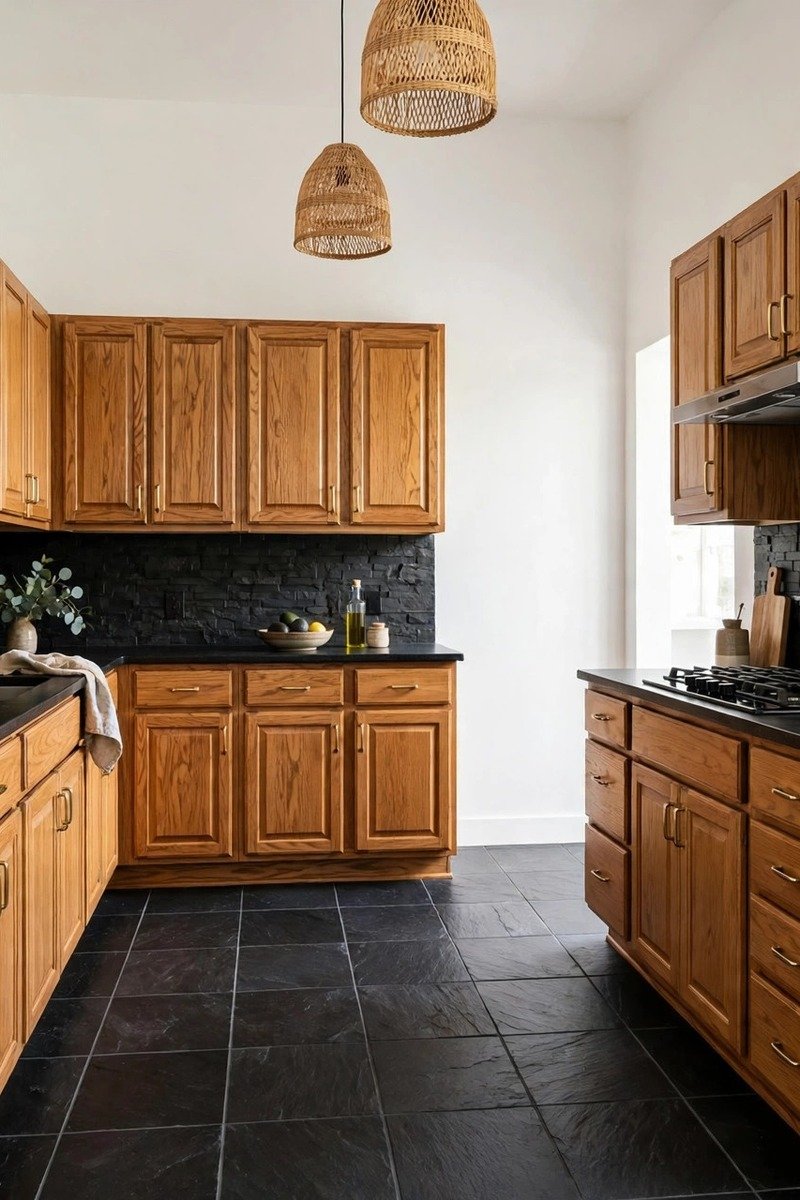
9. Black Slate Look Tile
Black slate look tile adds texture and depth under oak cabinets. The dark stone pattern breaks up the smooth wood and gives the kitchen a natural and grounded feel. It works well with plain white walls and simple steel handles.
Pro tip: Choose a matte porcelain tile with a slate print and a slip resistant surface. Slate look tile costs about 5 to 9 dollars per square foot installed, and you should seal the grout once a year.
Tile and Stone Floors
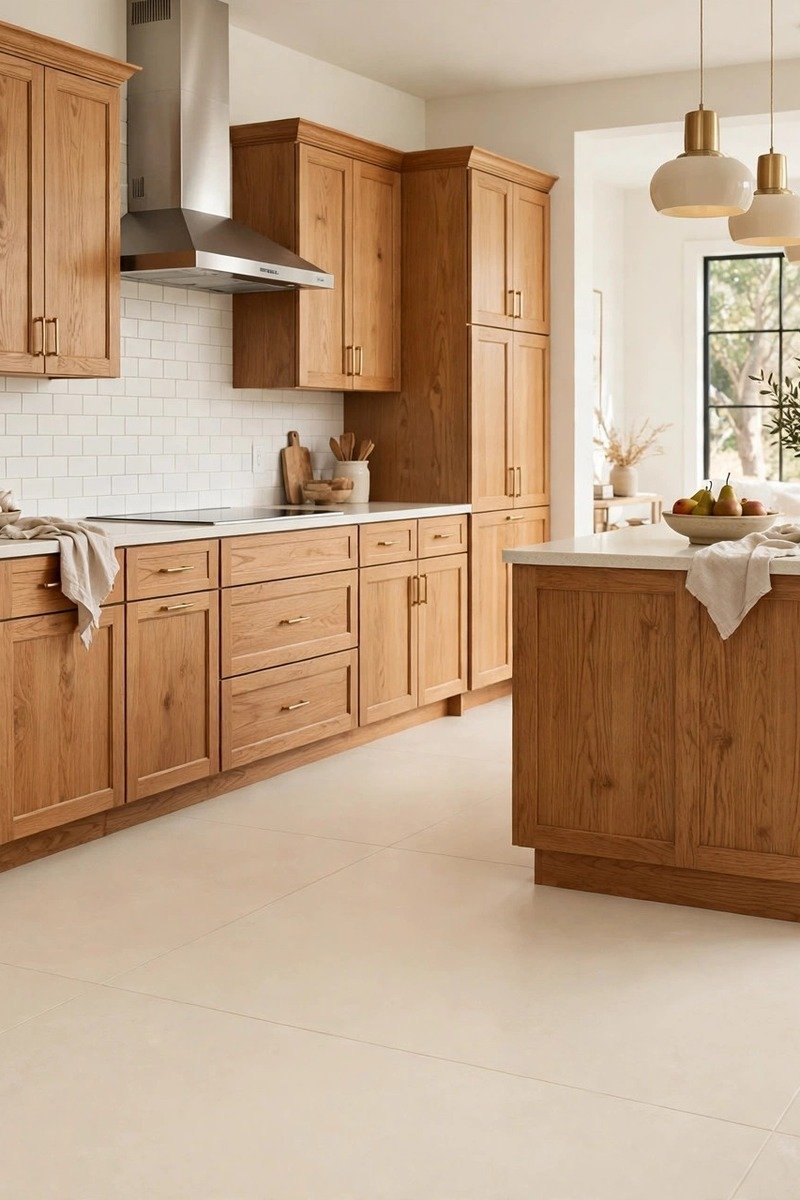
10. Large Format Cream Tile
Large format cream tile keeps the kitchen bright and calm under oak cabinets. The big tiles have fewer grout lines, so the floor looks smooth and open.
Pro tip: Use 60 by 60 cm or larger tiles with a 2 mm grout joint. Large format tile costs about 6 to 10 dollars per square foot installed, and you need a flat subfloor within 3 mm over 3 meters.
11. Natural Travertine Stone
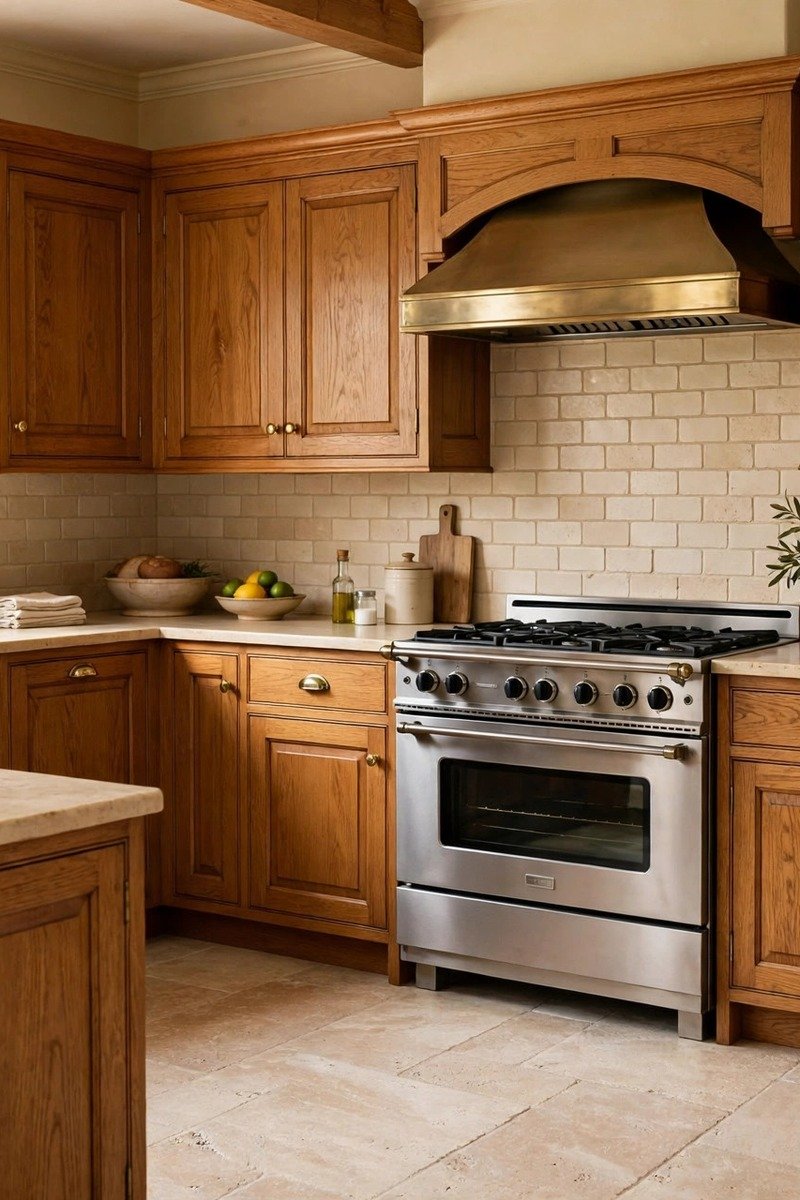
Natural travertine stone pairs well with oak because both materials are warm and earthy. The soft beige stone has gentle veins that echo the wood grain. It gives the kitchen a calm and timeless feel that suits a traditional home.
Pro tip: Choose honed travertine tiles of 40 by 60 cm and seal them before use. Travertine costs about 9 to 15 dollars per square foot installed, and you should reseal the stone every 12 months.
12. Warm Terracotta Tile
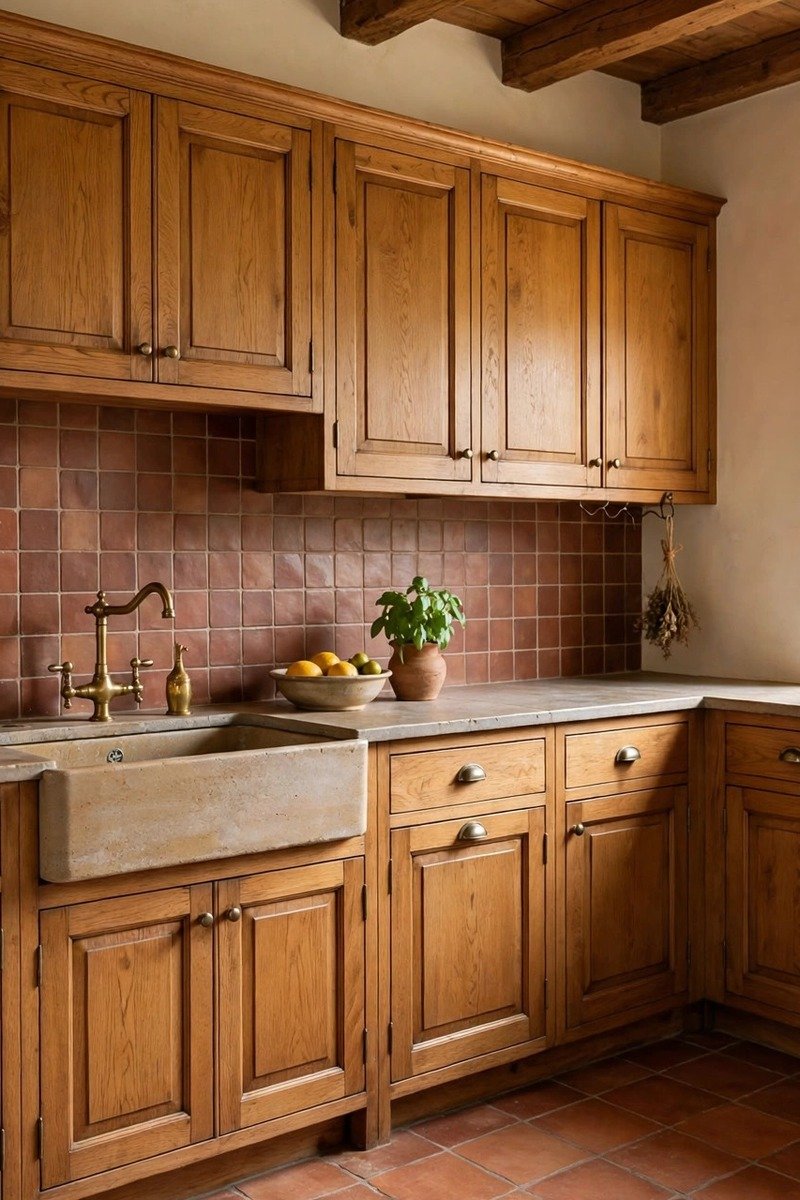
Warm terracotta tile brings an earthy red brown tone under oak cabinets. It blends with the warmth of the wood instead of cooling it down. The look feels relaxed and old world, and it suits a kitchen with cream walls and wood beams.
Pro tip: Use 30 by 30 cm terracotta tiles with a matte seal. Terracotta costs about 4 to 8 dollars per square foot installed, and you should seal the tiles twice in the first year.
13. Hexagon Patterned Tile
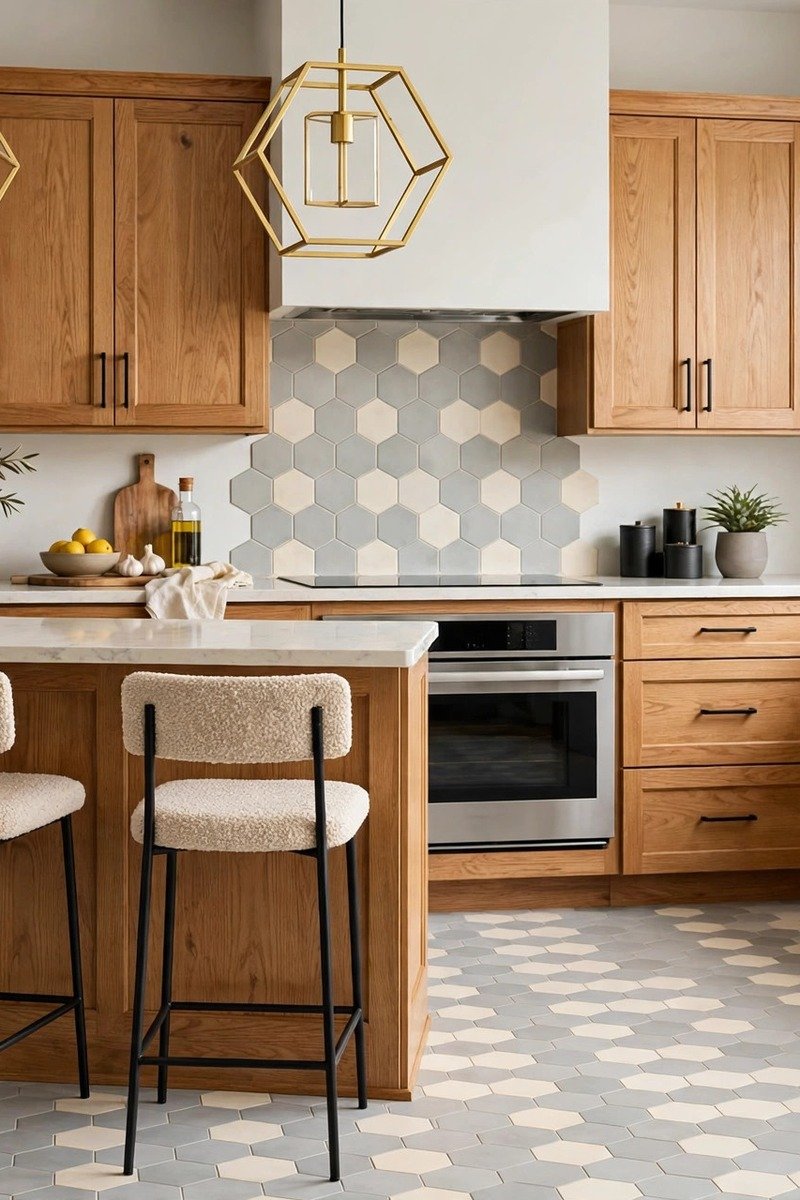
Hexagon patterned tile adds shape and interest to the floor without a loud color. The hex shape breaks up the long lines of the cabinets and adds a modern touch. A soft gray or cream hex pattern works best with honey oak.
Pro tip: Use hex tiles of 15 to 20 cm across with a light grout. Patterned hex tile costs about 7 to 12 dollars per square foot installed, and you should dry lay one row first to plan the cuts at the edges. For styling ideas above the floor, see our kitchen counter decor ideas as a different guide.
Wood and Wood Look Floors
14. Wide Plank White Oak
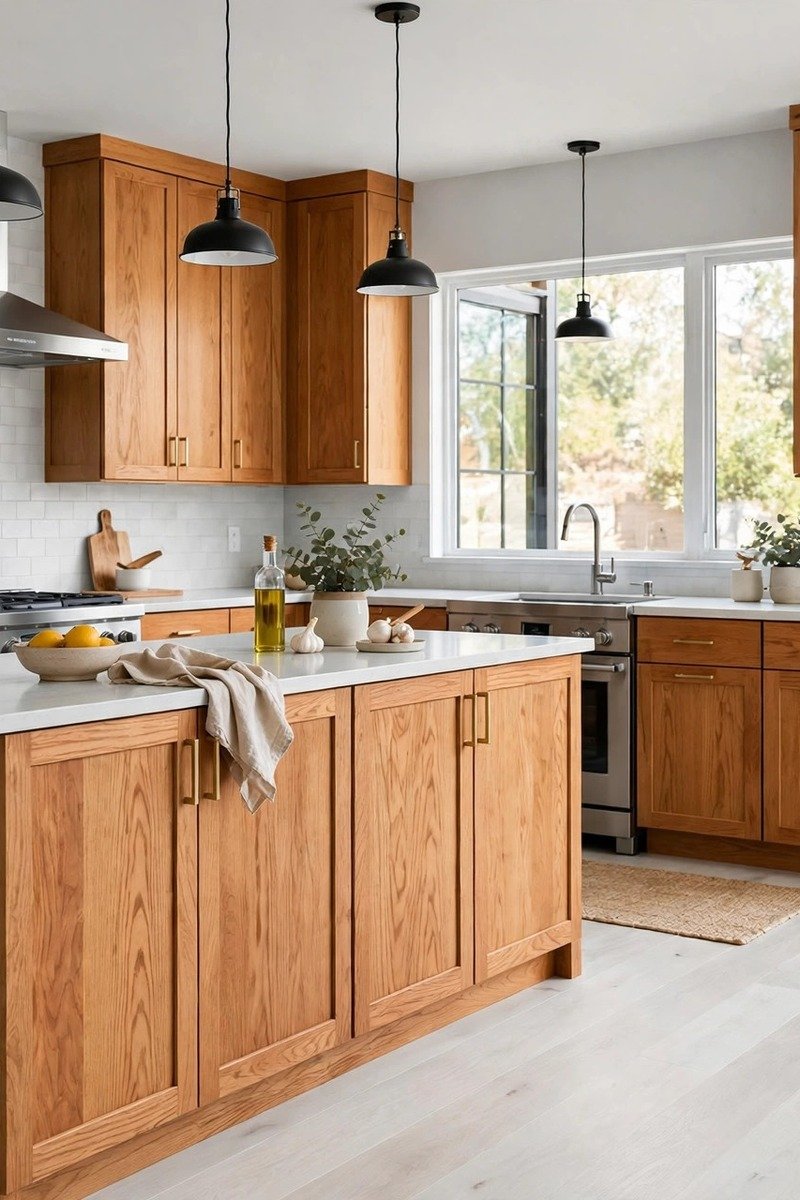
Wide plank white oak flooring gives the kitchen a modern and clean wood look. The pale white oak is cooler than honey oak, so it creates a clear contrast with the cabinets.
Pro tip: Choose planks 18 to 25 cm wide with a natural matte finish. Wide plank white oak costs about 9 to 15 dollars per square foot installed, and you should keep the room humidity between 35 and 55 percent.
15. Medium Brown Engineered Wood
Medium brown engineered wood sits between the light floor and the dark floor. It is darker than honey oak by two shades, so the cabinets still stand out. It suits a traditional kitchen and it is more stable than solid wood in a room with changing heat.
Pro tip: Pick boards 15 cm wide with a 3 mm wear layer so you can refinish once later. Medium brown engineered wood costs about 6 to 11 dollars per square foot installed, and a 15 square meter floor takes about 2 days to fit.
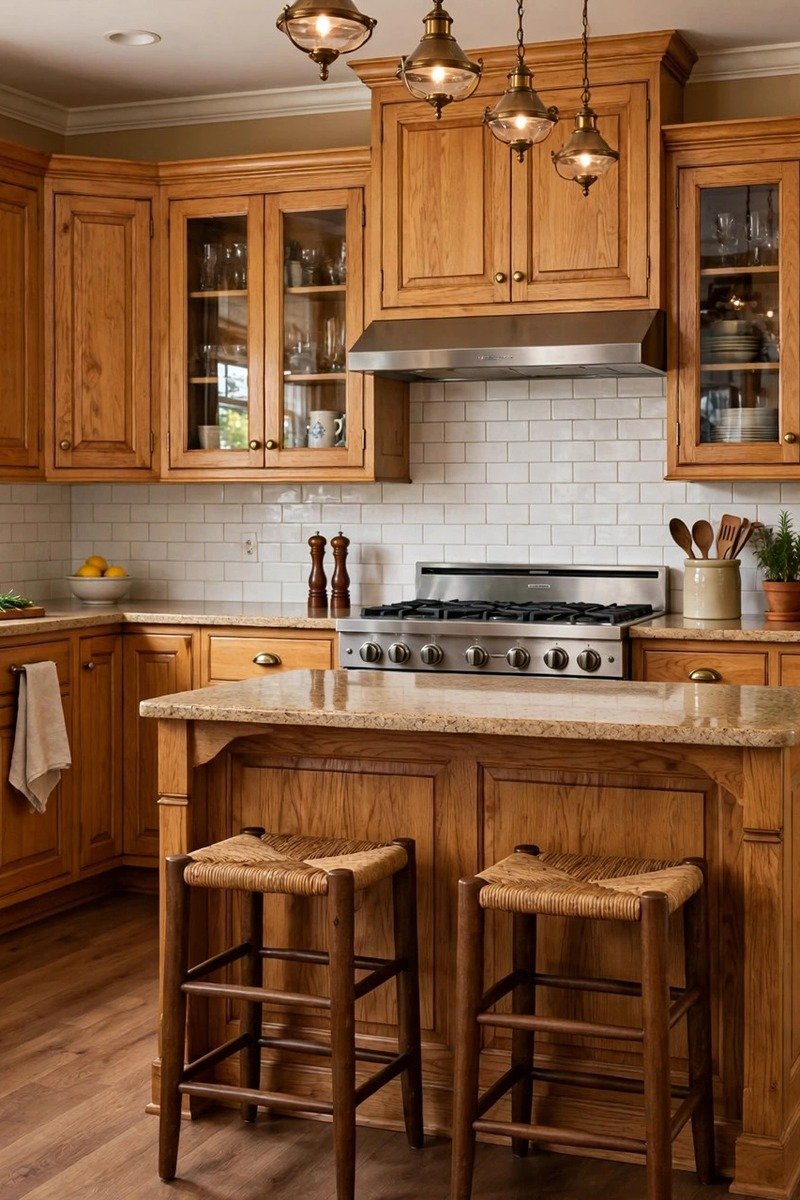
16. Hand Scraped Hardwood
Hand scraped hardwood adds texture that softens the smooth look of oak cabinets. The scraped surface catches light in small waves and hides small dents and marks. It works well in a rustic kitchen and in a home with pets.
Pro tip: Choose a medium tone with a hand scraped texture and a matte seal. Hand scraped hardwood costs about 8 to 13 dollars per square foot installed, and you should use felt pads under chairs and tables.
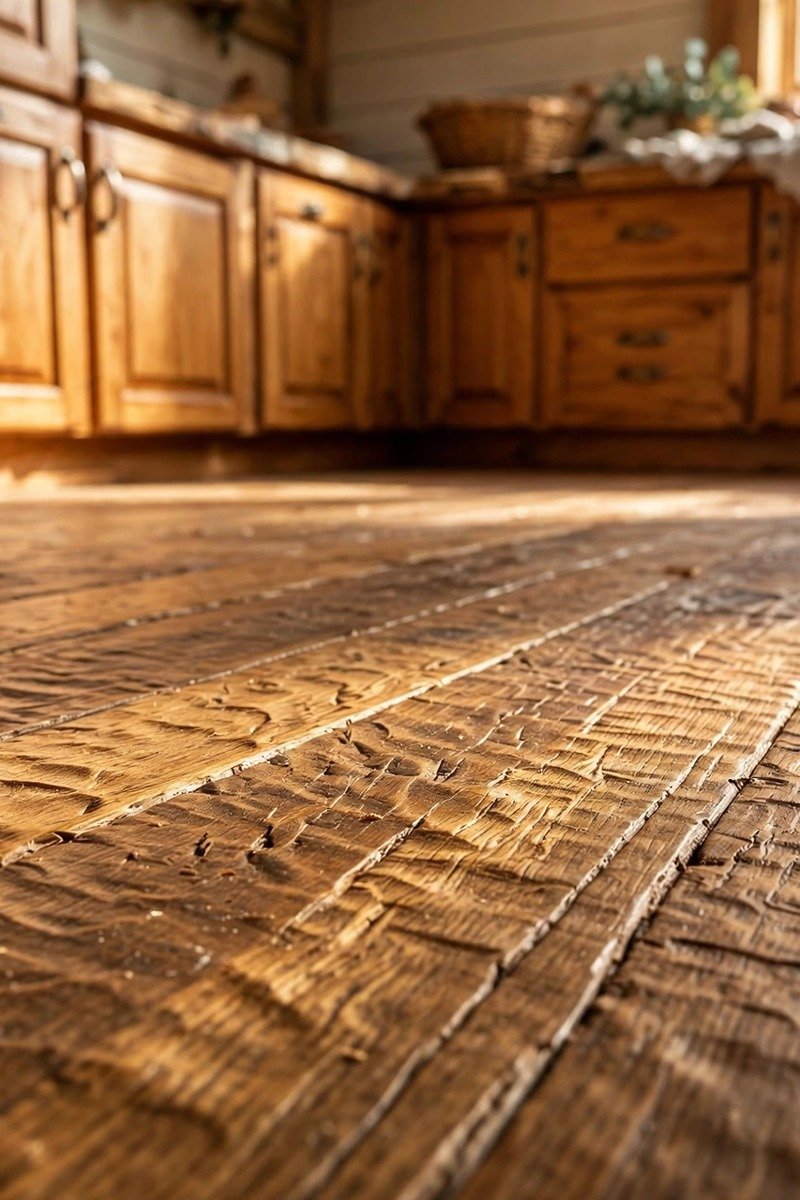
17. Honey Toned Bamboo Flooring
Honey toned bamboo flooring blends with oak cabinets in a soft and natural way. The tone is close to honey oak but the grain is finer, so the two woods do not look like a match.
Pro tip: Choose strand woven bamboo with a hardness rating above 3000 on the Janka scale. Bamboo costs about 5 to 9 dollars per square foot installed, and you should wipe spills at once since bamboo can swell with standing water.

Budget Friendly and Patterned Floors
18. Warm Greige Laminate
Warm greige laminate gives you the look of wood for less money. The greige tone softens honey oak and works with most wall colors. It is easy to clean, it resists stains, and it suits a rental or a first kitchen update.
Pro tip: Choose laminate planks 20 cm wide with an AC4 wear rating for kitchens. Greige laminate costs about 2 to 5 dollars per square foot installed, and a 15 square meter room can be fitted in 1 day. For keeping the rest of the kitchen tidy, see our kitchen counter organization ideas as a different guide.

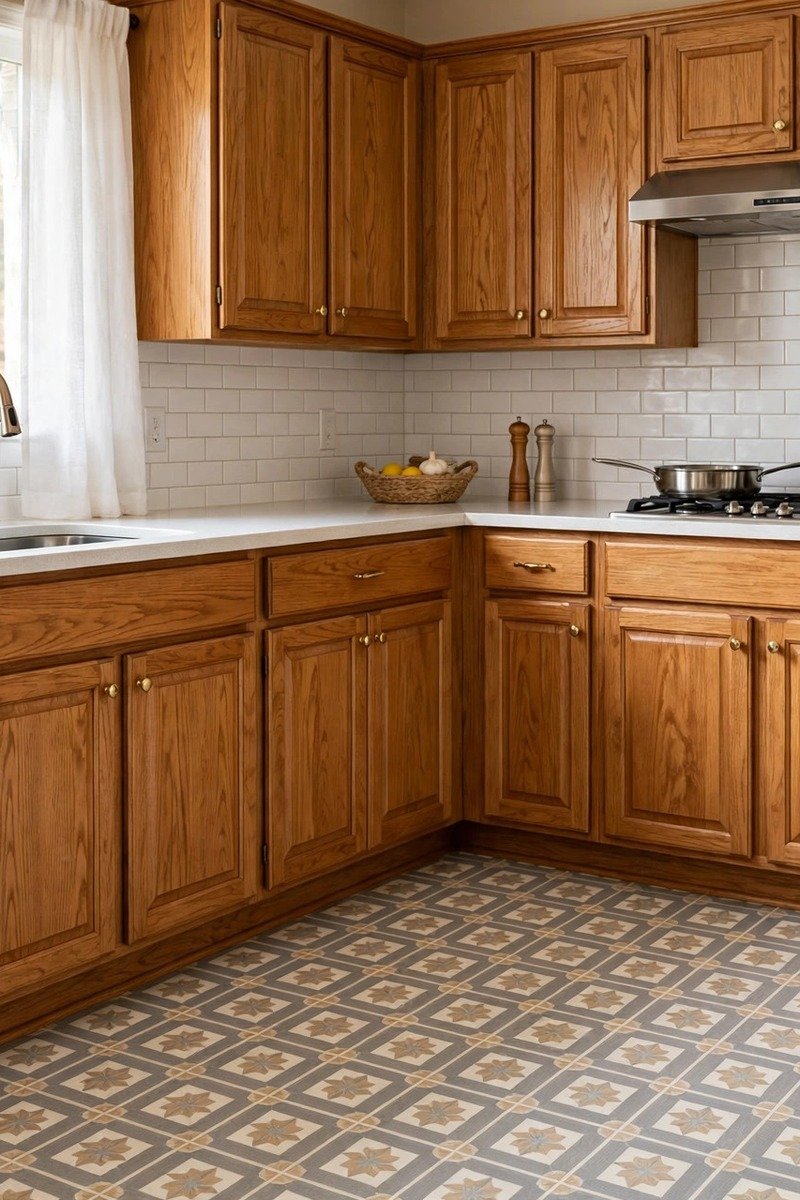
19. Patterned Vinyl Tile
Patterned vinyl tile adds a soft pattern under oak cabinets without a high cost. A gray or beige pattern in a simple shape adds interest while the cabinets stay the focus. Vinyl tile is waterproof and easy to replace if one tile gets damaged.
Pro tip: Use 30 by 30 cm vinyl tiles with a 12 mil wear layer. Patterned vinyl tile costs about 2 to 4 dollars per square foot installed, and you can replace a single tile in about 15 minutes.
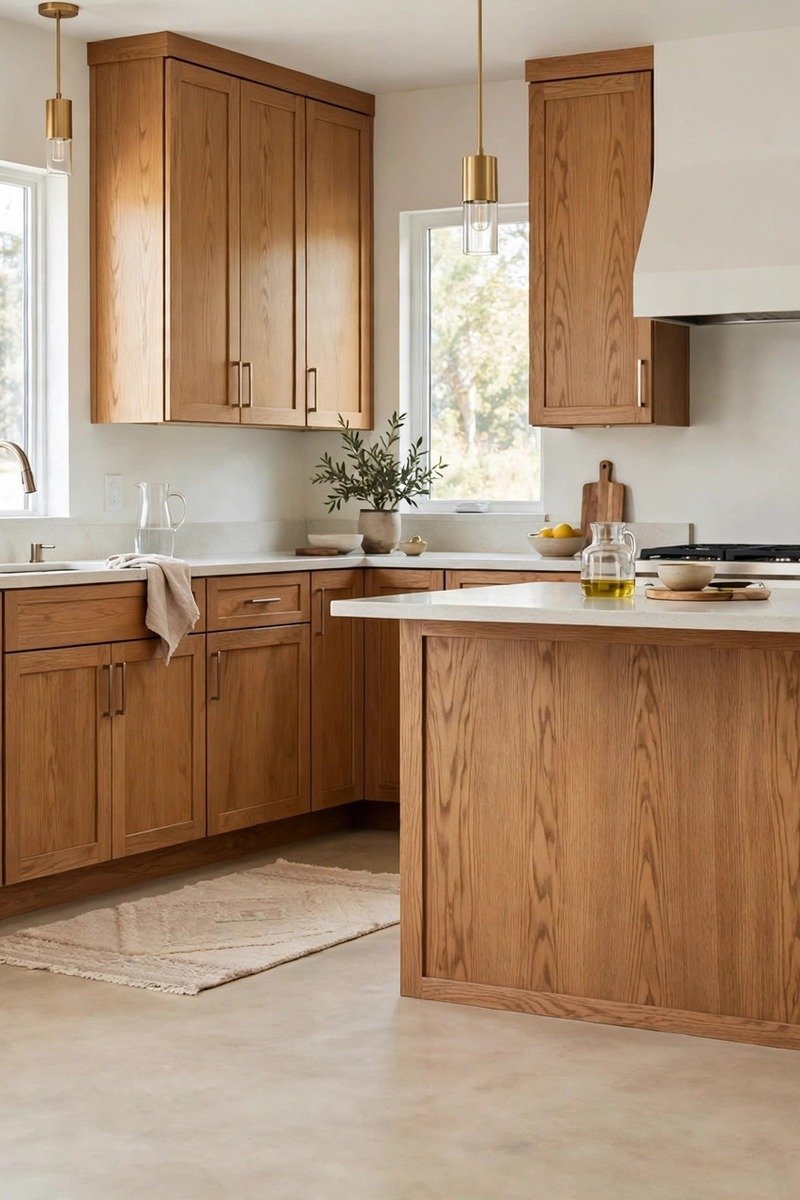
20. Sand Colored Concrete Look Floor
Sand colored concrete look flooring gives oak cabinets a clean and modern base. The pale sand tone is warm enough to match the oak but plain enough to let the wood shine.
Pro tip: Choose a polished concrete look vinyl or tile in a sand tone with a matte finish. Concrete look flooring costs about 3 to 7 dollars per square foot installed, and you should add a soft rug at the sink to ease tired feet.
Measure the Kitchen Floor Before You Order
Measure the floor in square feet before you look at samples. Multiply the length by the width of each section of the kitchen, then add the sections together. Add 10 percent for cuts and waste, and add 15 percent if the room is not a simple rectangle, because angled cuts waste more material. Measure around the island separately, because the floor under the island is not seen but still needs covering if the island ever moves. Note the height of the floor against the door thresholds, because a new floor that is half an inch higher can stop a door from closing. Kitchen flooring with oak cabinets only pairs well when the order is right, because a short order stops the job halfway through the room.
Flooring That Stands Up to Water and Drops
A kitchen floor gets wet and takes hard knocks, so durability comes before looks. Porcelain tile and luxury vinyl plank handle standing water well, and they do not swell when a spill sits for an hour. Solid hardwood can work, but it needs wiping up fast, because water left on wood leaves marks and can lift the boards over time. Laminate sits in the middle: it handles light splashes but not a leak under the sink. Check the wear layer on vinyl plank, and pick a wear layer at least 12 mil thick for a busy kitchen, because a thin wear layer scratches in the first year. Put felt pads under chairs and stools, because dragged chairs scratch any floor.
Match Floor Tone to Oak Without Clashing
Oak cabinets have a warm orange tone, so the floor tone decides whether the room feels balanced. Light floors, such as pale maple or cream tile, lighten the room and let the oak stand out. Medium floors in the same tone as the oak can match too closely, and the room can look flat, so pick a floor at least two shades lighter or darker than the cabinets. Dark floors, such as walnut or charcoal tile, give contrast, but they show dust and crumbs more, so they need sweeping daily. Bring a cabinet door sample or a photo to the shop, and lay the flooring sample next to it in daylight, because shop lighting hides clashes that daylight shows. Avoid a floor with a strong red tone, because red floors fight with orange oak.
Flooring Costs by Material for an Oak Kitchen
Under 5 dollars per square foot: laminate and sheet vinyl, plus basic fitting. From 5 to 10 dollars per square foot: luxury vinyl plank and large format porcelain tile, plus fitting. Over 10 dollars per square foot: solid hardwood, engineered wood and natural stone, plus fitting. As a typical range, fitting adds about 3 to 7 dollars per square foot on top of the material. For a kitchen of 150 square feet, that puts a full job at about 1200 to 2500 dollars for mid range materials. Get the fitting cost in writing before you order, because fitting is where most kitchen floor budgets slip.
Common Mistakes to Avoid
- Matching the floor to the cabinets too closely. A floor that is almost the same gold as honey oak makes the room look heavy and dated. Go two or three shades lighter or darker.
- Using cool blue gray floors with honey oak. A cold gray floor can make the gold in the oak look more orange. Pick a warm gray or greige instead.
- Picking a busy floor and a busy countertop. Two strong patterns fight each other. Keep one plain and let the other lead.
- Skipping samples. A floor that looks right in a shop can look wrong next to your cabinets. Test samples in your own light first.
- Ignoring water resistance. Kitchens get spills every day. A floor that swells or stains will cost more to fix than a waterproof floor costs to buy.
- Forgetting the grout color. A dark grout on a light tile can look messy, and a light grout on a dark tile can look stark. Match the grout to the tile tone.