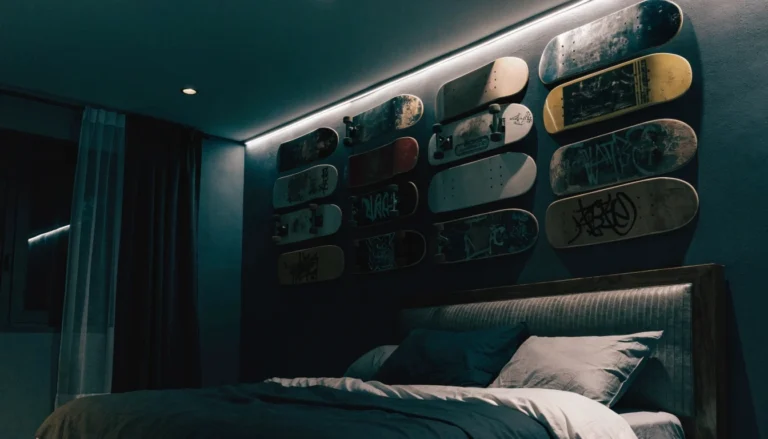

A moody bedroom does not have to feel cold or hard to live in. It should feel calm at night and still work in the morning. Dark walls, warm lamps and soft bedding can do that job if you pick one main color and keep the rest simple.
This list sticks to that plan, with dark paint, velvet, dark wood, low warm light, and real prices and sizes. If you want the loose, eclectic take, see our dark boho bedroom ideas. This article stays with a cleaner, darker, romantic look instead.
Quick Picks
- Start with one dark color: charcoal is easiest, navy feels romantic, forest green feels warm.
- Use warm light only: lamps at 2700K, dimmers, and candles beat one bright ceiling light.
- Layer three textures: velvet, cotton or linen, and dark wood stop a dark room looking flat.
- Keep one light break: cream bedding, a pale rug, or light art stops the room feeling closed in.
- Test paint first: paint a large test board and check it in daylight and at night.
Did You Know?
Dark paint absorbs light instead of bouncing it back, so a dark room needs more lamps at different heights than a white room.
Before You Start
- Pick a main color and repeat it in two places.
- Paint test patches on two walls, not one, because light changes across the room.
- Live with a dark duvet for two nights before dark paint.
- Measure the headboard wall before buying panels or wallpaper.
- Budget for lighting first.
Dark Walls and Color
1. Color Drench a Room in Charcoal
Charcoal is the safest dark color for a first moody bedroom. It reads as soft black, and it works with cream bedding, walnut wood, and brass lamps.
Paint walls and trim the same charcoal. Keep the ceiling warm white in a small room, and add a cream rug at least 5 by 8 feet under the bed.
Pro tip: Good paint costs about 45 to 65 dollars a gallon. A 12 by 14 foot room often needs two gallons for two coats.

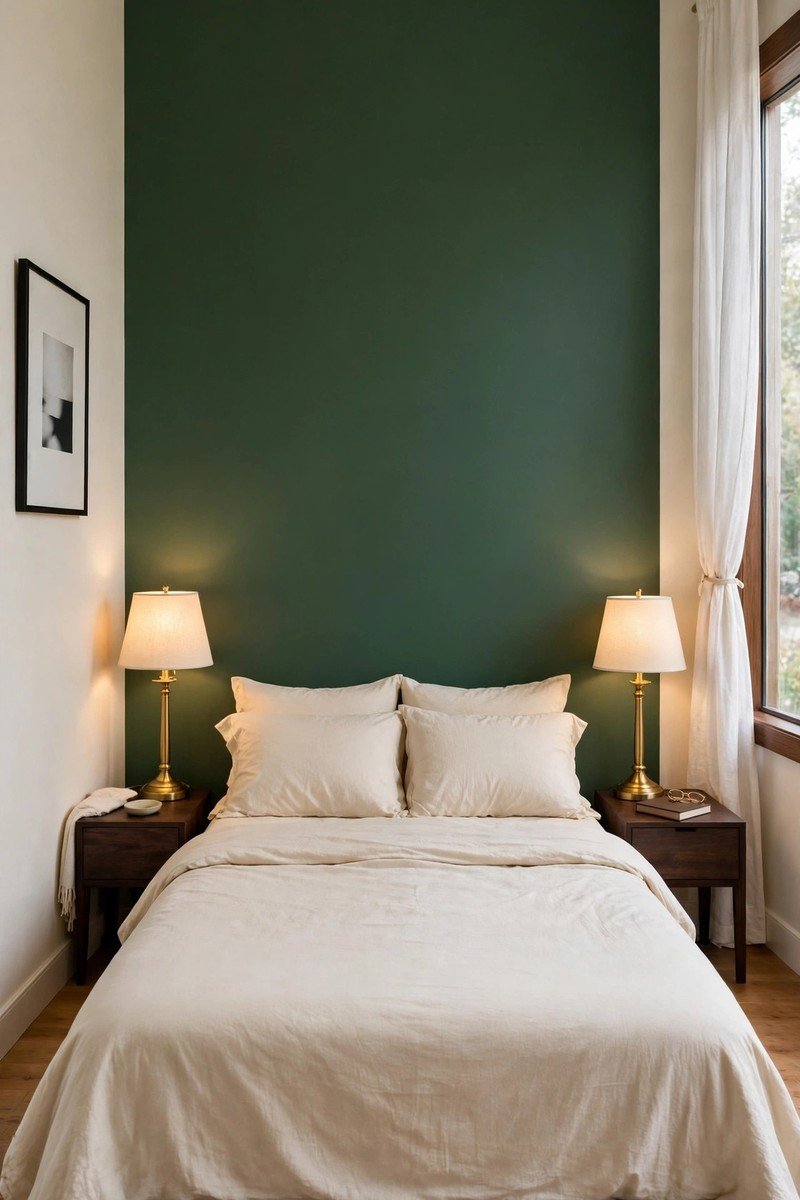
2. Paint One Wall Forest Green
Forest green gives a bedroom a warm, wooded feel without going too dark. It pairs well with cream sheets, dark wood nightstands, and brass lamps.
If full green walls feel like too much, paint only the wall behind the bed. Use matte paint, because shine shows every bump and matte keeps green soft.
Pro tip: Leave at least 18 inches of bare wall on each side of the bed, so the color does not crowd the bed.
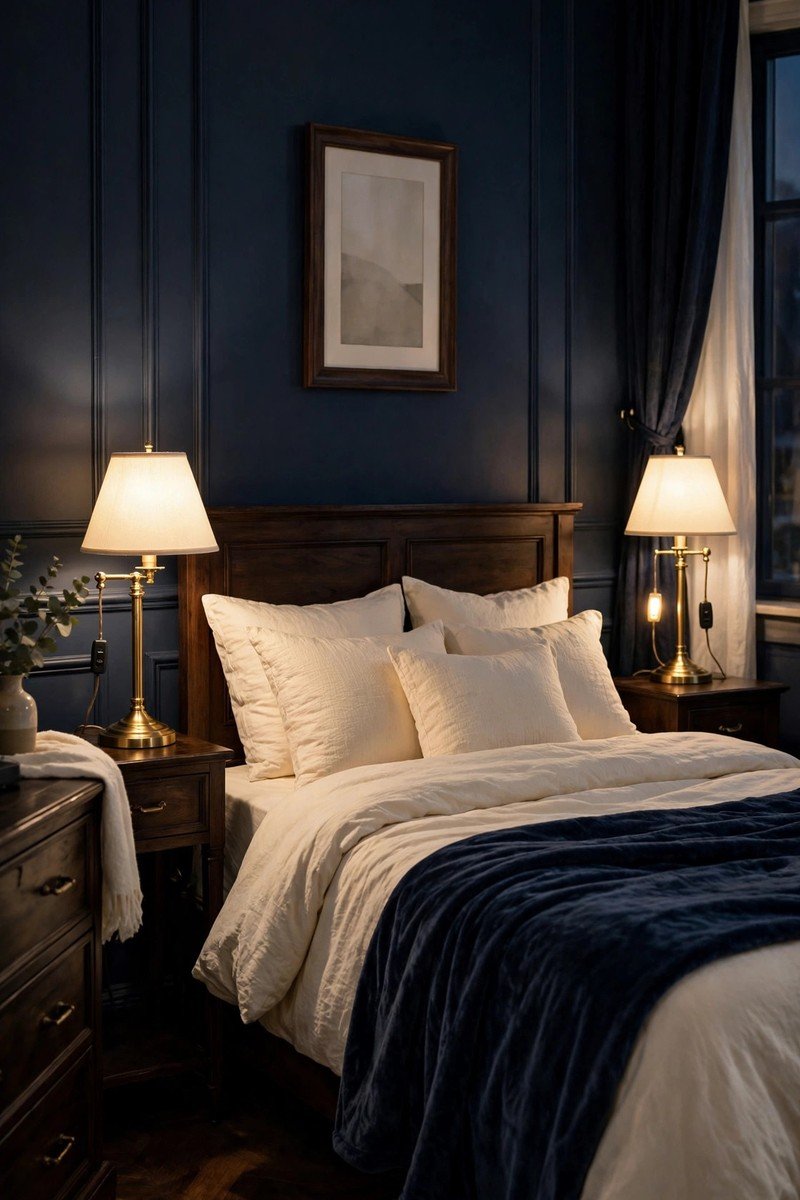
3. Pair Navy Walls With Brass
Navy is a classic romantic color. It looks rich with brass, cream, and dark wood, and it works in old and new homes.
Keep bedding in cream or soft white. White bedding gives the eye a rest, and a navy velvet throw at the foot of the bed adds color without clutter.
Pro tip: Brass table lamps cost about 40 to 90 dollars each. Put them on dimmers so you can lower light to a soft glow at night.
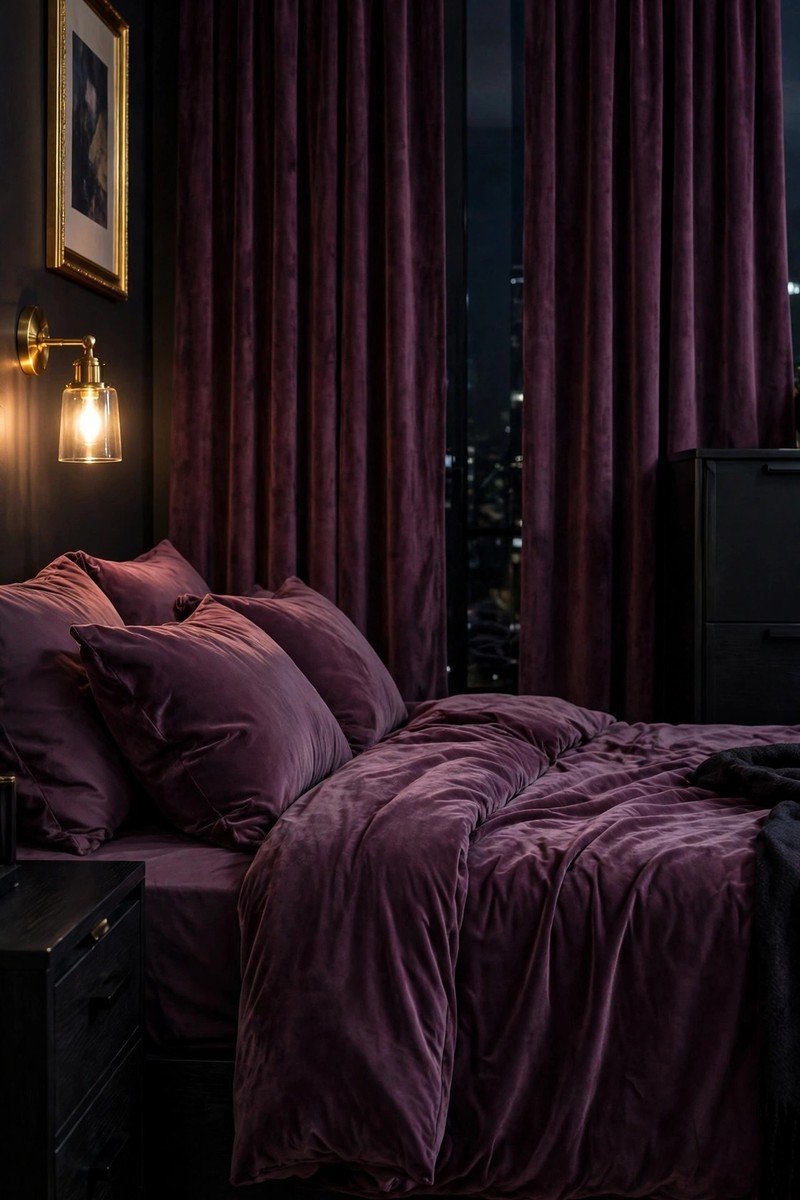
4. Use Plum and Black for a Late Night Look
Plum works best when it stays deep. Use aubergine or deep plum, not light purple, with black furniture and brass light.
Put plum on bedding or curtains first if black walls feel too strong. A plum velvet duvet set changes the room without paint, and one gold framed picture warms the wall.
Pro tip: A plum velvet duvet cover set costs about 60 to 120 dollars. Keep every purple deep, and check pillow colors in lamplight before you buy.
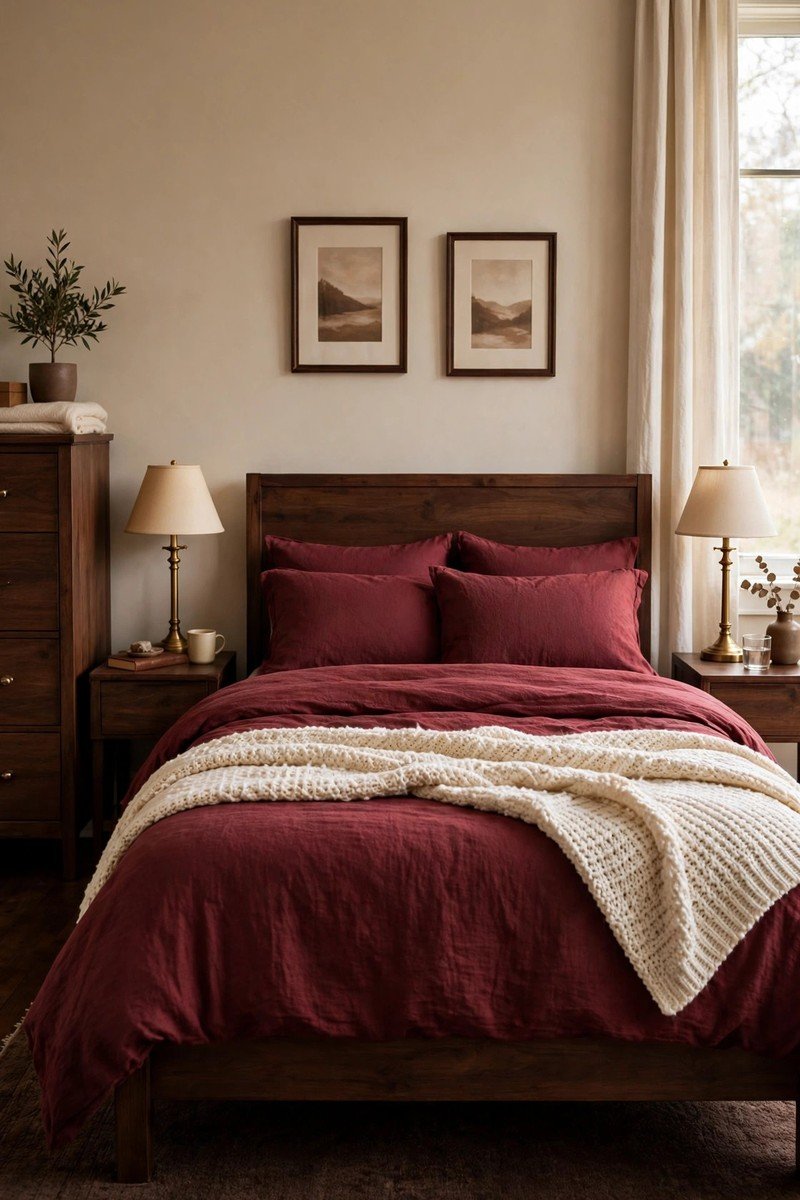
5. Warm the Room With Burgundy and Chocolate
Burgundy and chocolate make a bedroom feel warm instead of cool. This pair suits people who find charcoal too gray and navy too blue.
Use burgundy on bedding or one wall, and chocolate on wood furniture and the rug. A cream knit throw at the foot of the bed stops the room looking too heavy.
Pro tip: That throw costs about 25 to 50 dollars. Use burgundy in one large piece and one small piece only, such as the duvet and two pillow covers.
Beds, Bedding and Texture
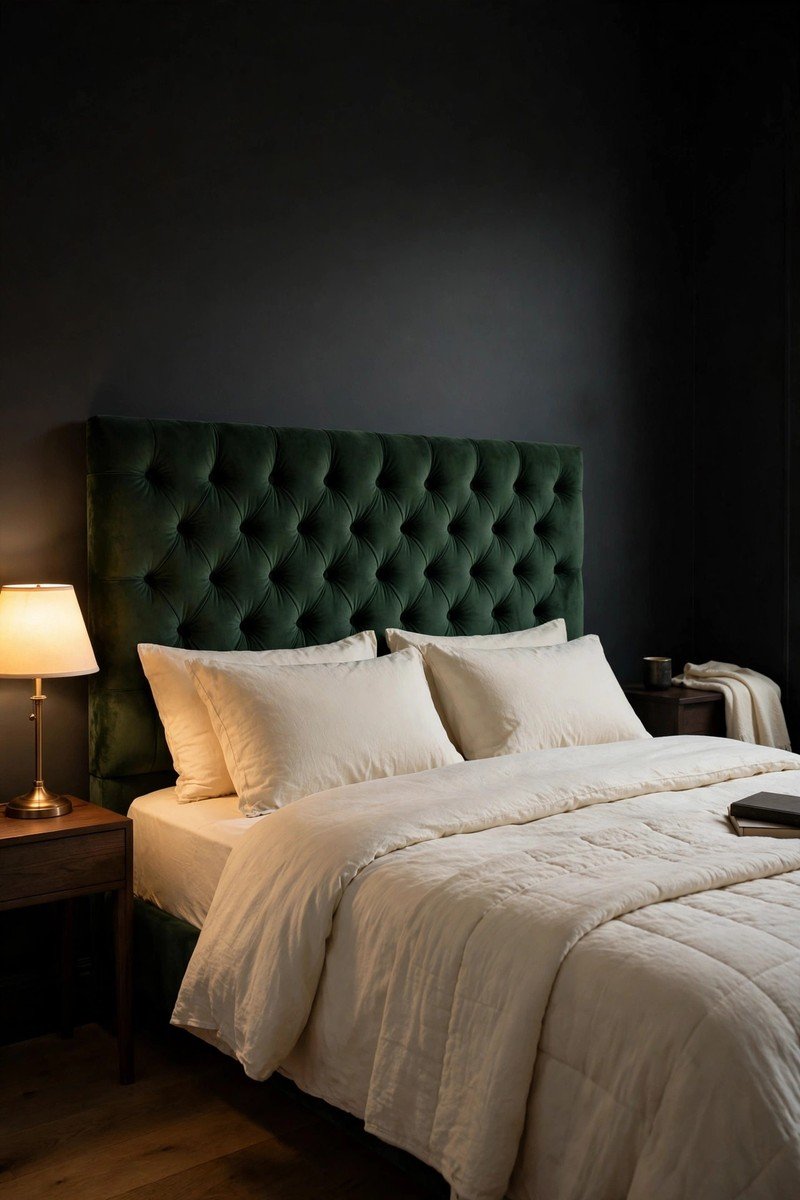
6. Add a Velvet Tufted Headboard
A velvet headboard is the fastest way to make a bed look moody and soft. Deep green, navy, charcoal, or burgundy velvet all work, and the fabric catches lamplight in a gentle way.
Pick a headboard at least as wide as the bed, mounted 24 to 28 inches above the mattress.
Pro tip: A queen velvet headboard costs about 150 to 350 dollars. Vacuum it once a week with a soft brush head to keep dust out.
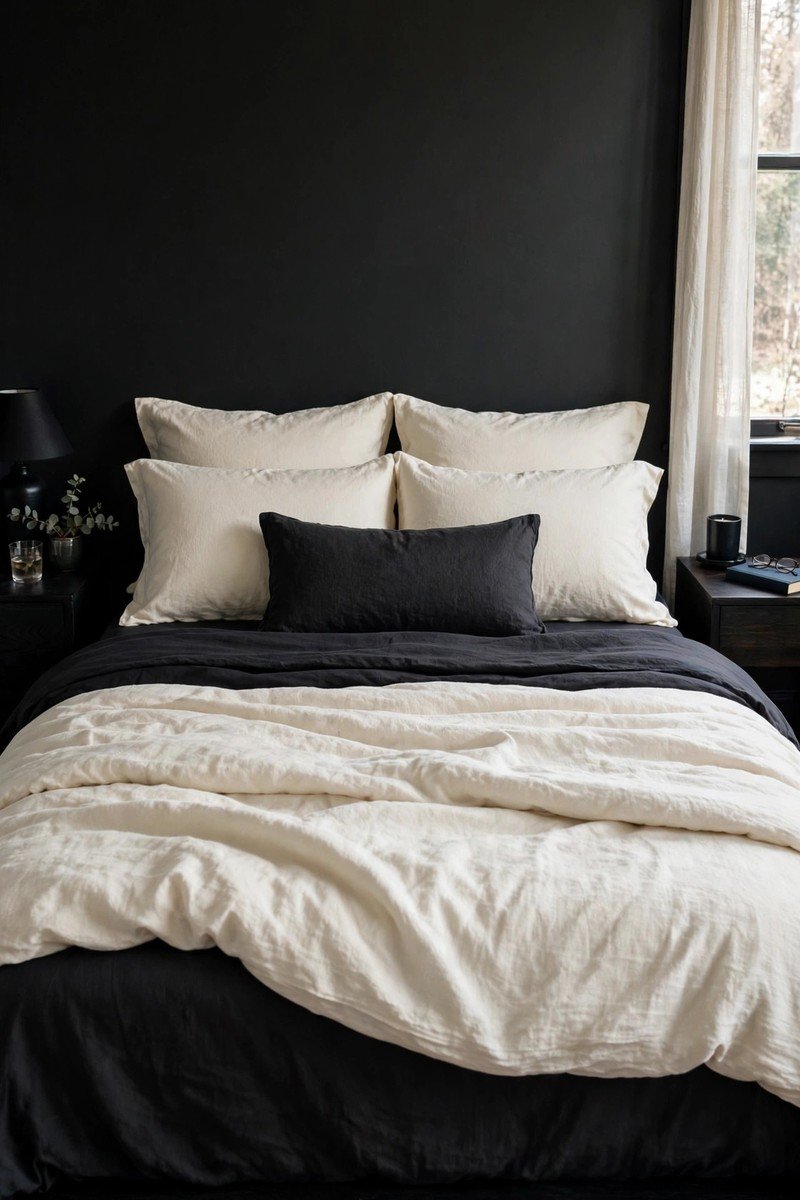
7. Layer Cream Bedding Over Dark Sheets
Dark walls need light bedding to balance them. Start with dark fitted sheets if you like, then add a cream duvet and cream pillow cases.
The light top layer keeps the bed from blending into the wall. Add two sleeping pillows, two in front, and one dark lumbar pillow.
Pro tip: A cotton duvet cover set costs about 50 to 100 dollars. Wash it in cold water so cream stays cream and does not turn gray.
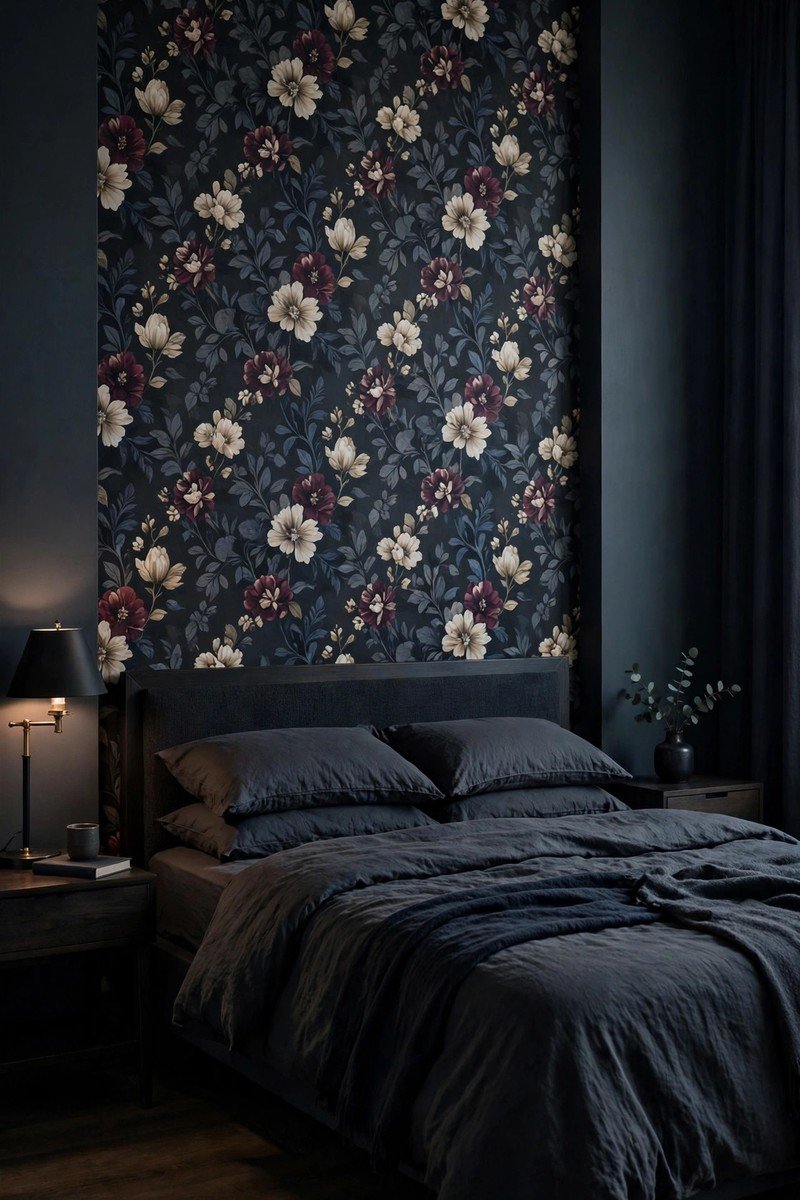
8. Hang Dark Floral Wallpaper on One Wall
Dark floral wallpaper gives a bedroom instant depth. Pick a print with a charcoal or navy base and flowers in burgundy, cream, or muted rose.
One wall is enough, and the wall behind the bed is best. Keep other walls in a plain color pulled from the wallpaper, so the print looks planned, not loud.
Pro tip: Peel and stick wallpaper costs about 25 to 45 dollars per roll. A 10 by 8 foot wall often needs three rolls, so order one extra for pattern matching.
9. Dress a Four Poster Bed in Dark Drapes
A four poster bed makes a moody bedroom feel private and grand. Use a dark wood frame and hang sheer dark drapes in charcoal or deep green from the top rails.
Leave the foot of the bed open so the room still feels easy to walk around. Tie drapes back in the day, and let them fall at night.
Pro tip: A wood four poster queen frame costs about 400 to 900 dollars. You need at least 8 feet of ceiling height for most frames to look right.

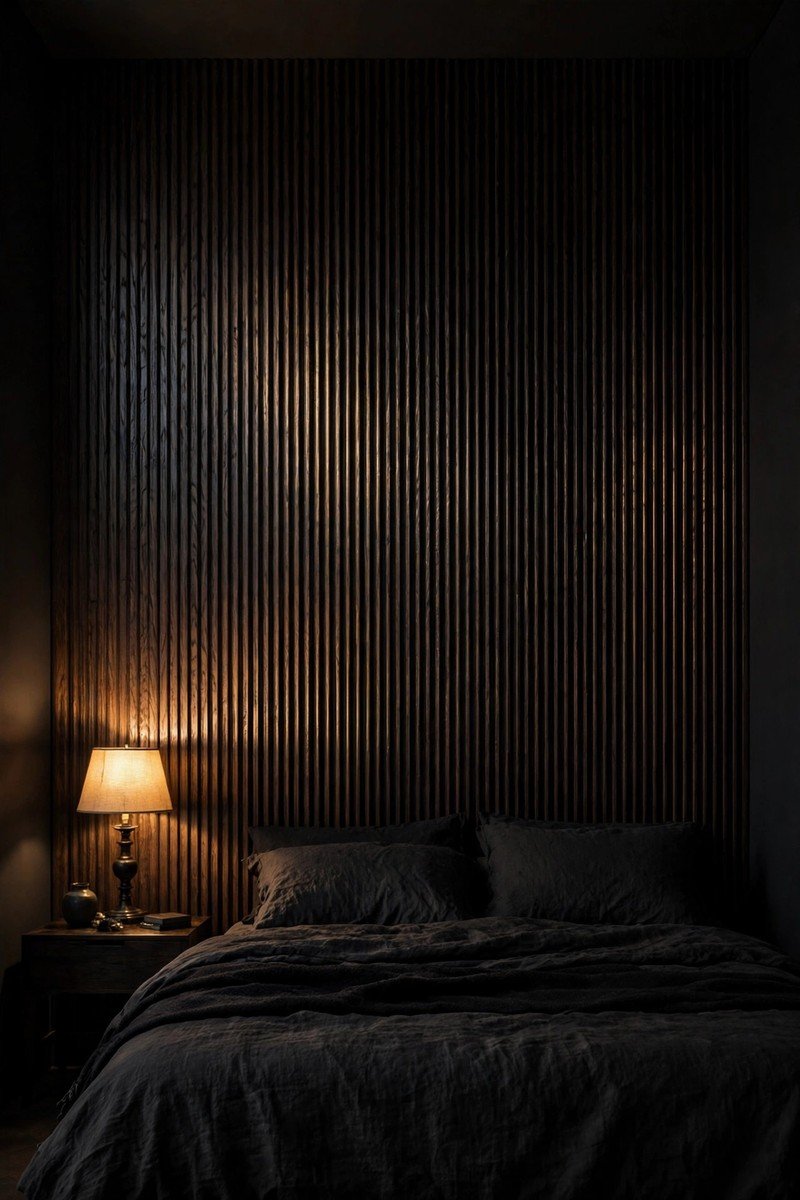
10. Put Fluted Dark Wood Panels Behind the Bed
Fluted wood panels add shape to a flat wall. The narrow ridges catch lamplight and make shadows that change through the evening, so the wall looks alive without art.
Run panels floor to ceiling, stopping at bed width plus 12 inches on each side.
Pro tip: Ready made fluted panels cost about 12 to 25 dollars per panel. Measure the wall in inches first, and buy panels that fit with small cuts at edges.
Light and Small Details
11. Set Warm Lamps at Three Heights
One ceiling light flattens a dark room. Use lamps at three heights instead: bedside lamps for reading, a floor lamp in a corner, and a small lamp or candle on the dresser.
Use warm white bulbs at 2700K, all on dimmers.
Pro tip: A pair of dimmable bedside lamps costs about 60 to 140 dollars. Set them 24 to 28 inches tall, so light falls just above pillow height.

12. Use Candlelight on the Dresser and Nightstand
Candles are the cheapest way to make a dark bedroom feel romantic. Use real candles in glass holders on the dresser, and keep them away from curtains and bedding.
For daily use, battery candles give the same glow with no flame risk. Group them in threes on a tray.
Pro tip: A set of three battery pillar candles costs about 15 to 30 dollars. Put them on a timer for 6 pm to 11 pm each night.

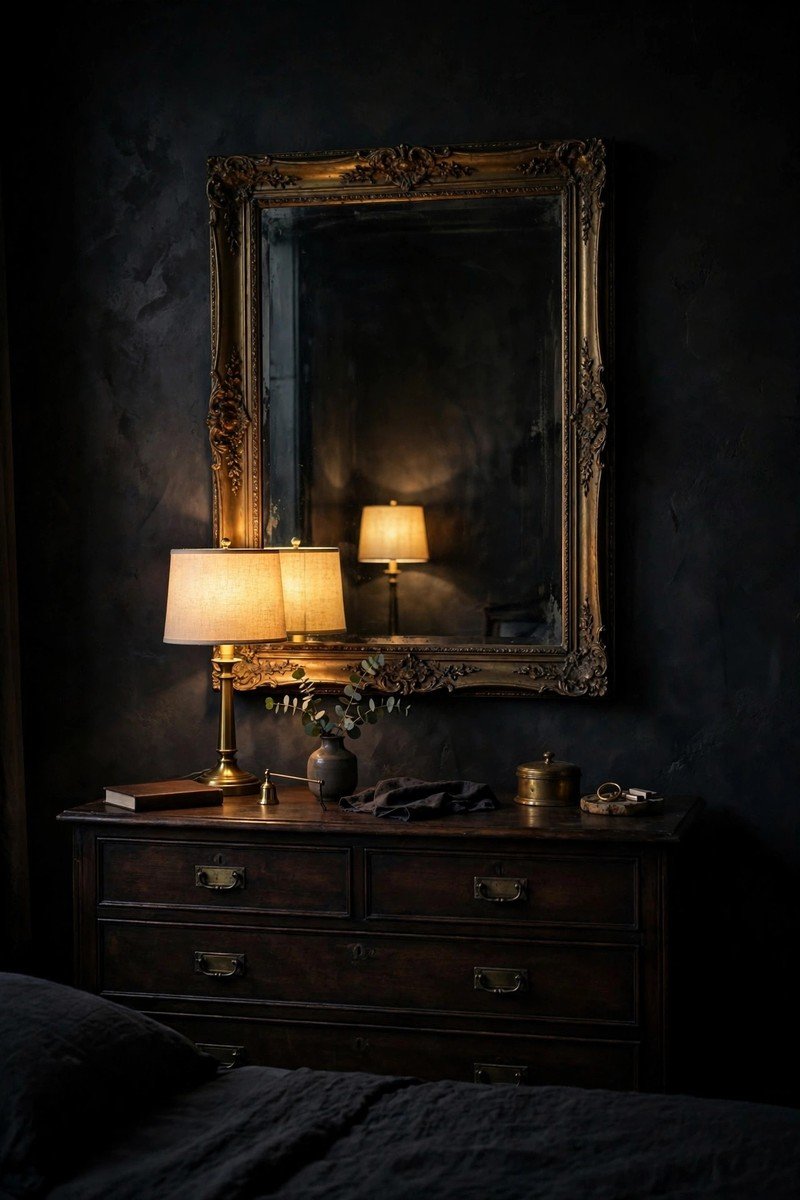
13. Hang an Antique Brass Mirror
A large mirror reflects lamplight and makes a dark room feel bigger. Pick an antique brass or gold frame, and hang it above the dresser or across from a lamp.
Keep it at eye level, usually 60 to 65 inches from floor to center. One large mirror beats three small ones here.
Pro tip: A 24 by 36 inch brass framed mirror costs about 80 to 200 dollars. Hang it with a wall anchor rated for at least twice the mirror weight.
14. Hang Dark Curtains From Ceiling to Floor
Floor to ceiling curtains make windows look taller and add a strong block of dark color. Use charcoal, navy, or deep green curtains in heavy fabric such as velvet or lined cotton.
Hang the rod 4 to 6 inches below the ceiling, with curtains 6 to 10 inches past the window on each side.
Pro tip: A pair of lined velvet curtains for a standard window costs about 50 to 120 dollars. Clean them once a season to keep dust from dulling color.

15. Build a Gallery Wall in Dark Frames
A gallery wall adds personality without bright color. Use black or dark wood frames in one size family, and fill them with art in cream, burgundy, green, or charcoal tones.
Keep frames 2 to 3 inches apart, starting 6 to 8 inches above the headboard, at about the furniture width.
Pro tip: A set of six dark frames costs about 40 to 80 dollars. Lay frames on the floor first and take a photo of the layout before you hang anything.

Furniture and Finishing Touches
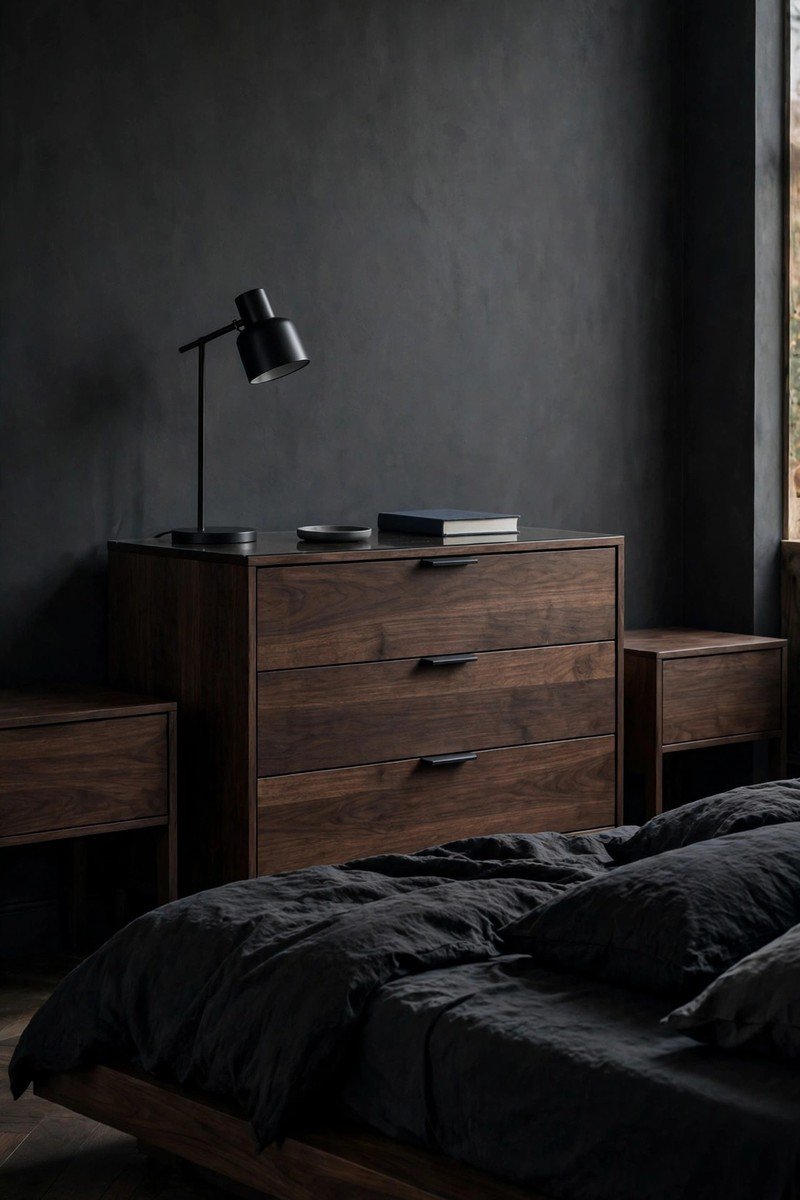
16. Choose Dark Wood for the Dresser and Nightstands
Dark wood furniture grounds a moody bedroom. Walnut, espresso, or mahogany nightstands and a matching dresser give the room weight, and they look good against charcoal and green walls.
Leave tops mostly clear: one lamp, one book, and one small tray per nightstand.
Pro tip: A pair of dark wood nightstands costs about 120 to 300 dollars. Check drawer depth first, because 14 to 16 inch drawers hold books and chargers with ease.
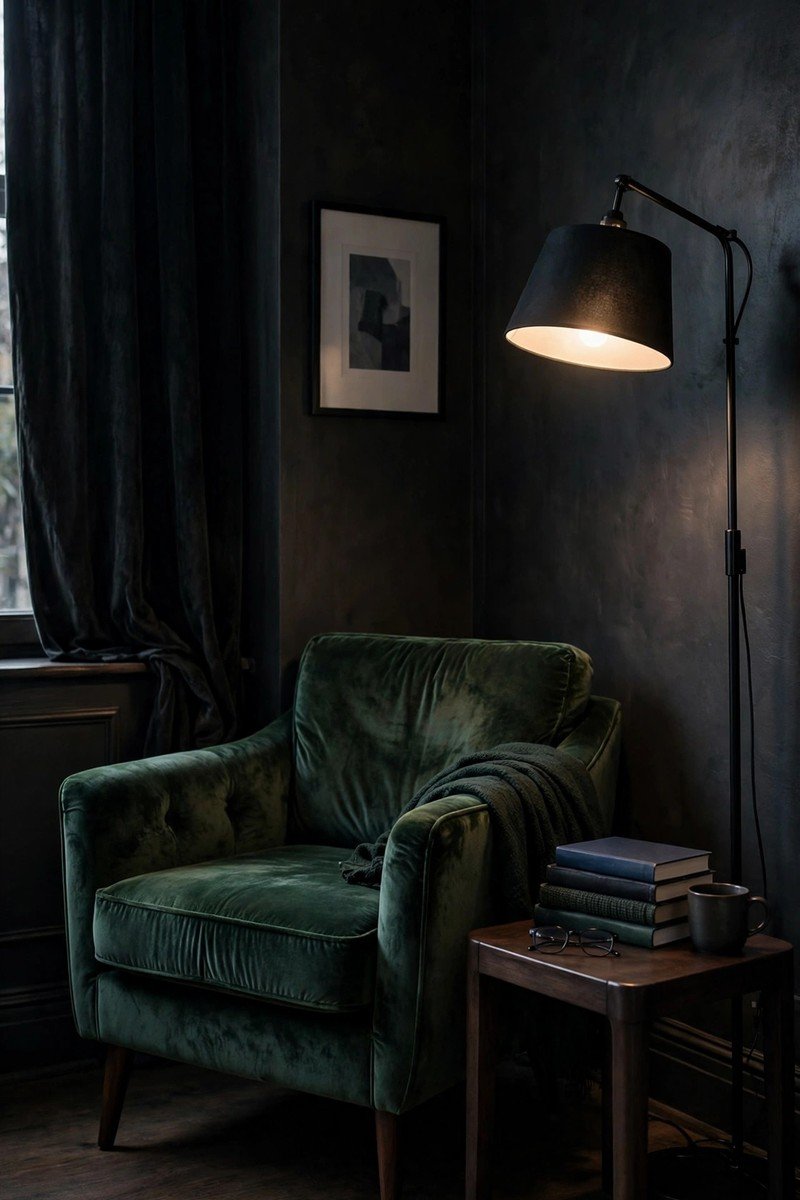
17. Add a Velvet Reading Chair in a Corner
A reading chair gives a moody bedroom a second place to sit. Pick a velvet armchair in charcoal, forest green, or plum, and put it in a corner with a floor lamp and side table.
Keep the chair at least 30 inches wide, with 18 inches in front for leg room.
Pro tip: A velvet armchair costs about 200 to 450 dollars. Test seat depth in a store if you can, because 20 to 22 inches suits most readers.
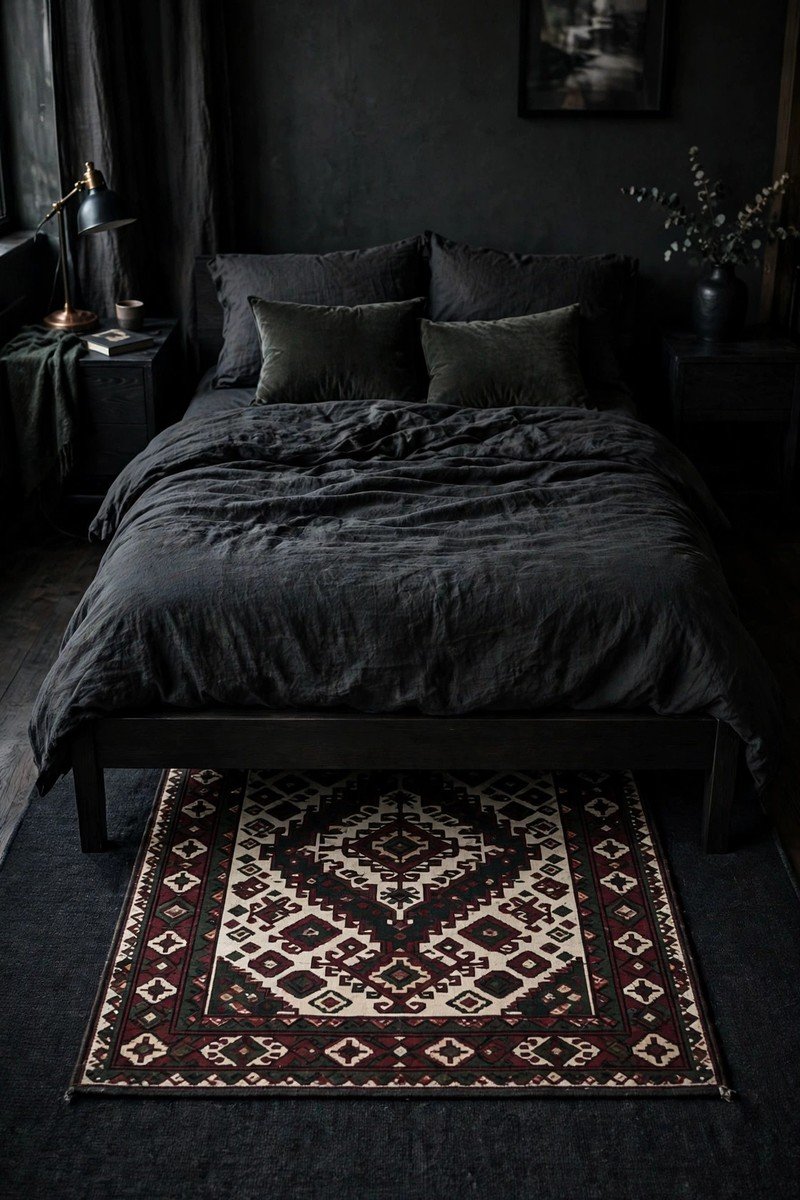
18. Layer Two Rugs in Dark Tones
Two rugs layered under the bed add warmth and pattern without bright color. Start with a large plain rug in charcoal or dark gray, then add a smaller patterned rug in burgundy, cream, and dark green on top.
Let the top rug show 12 to 18 inches past the bed where you step out.
Pro tip: A 5 by 8 foot wool rug costs about 120 to 250 dollars, and a 3 by 5 foot patterned rug costs about 50 to 110 dollars. Use a rug pad under both.
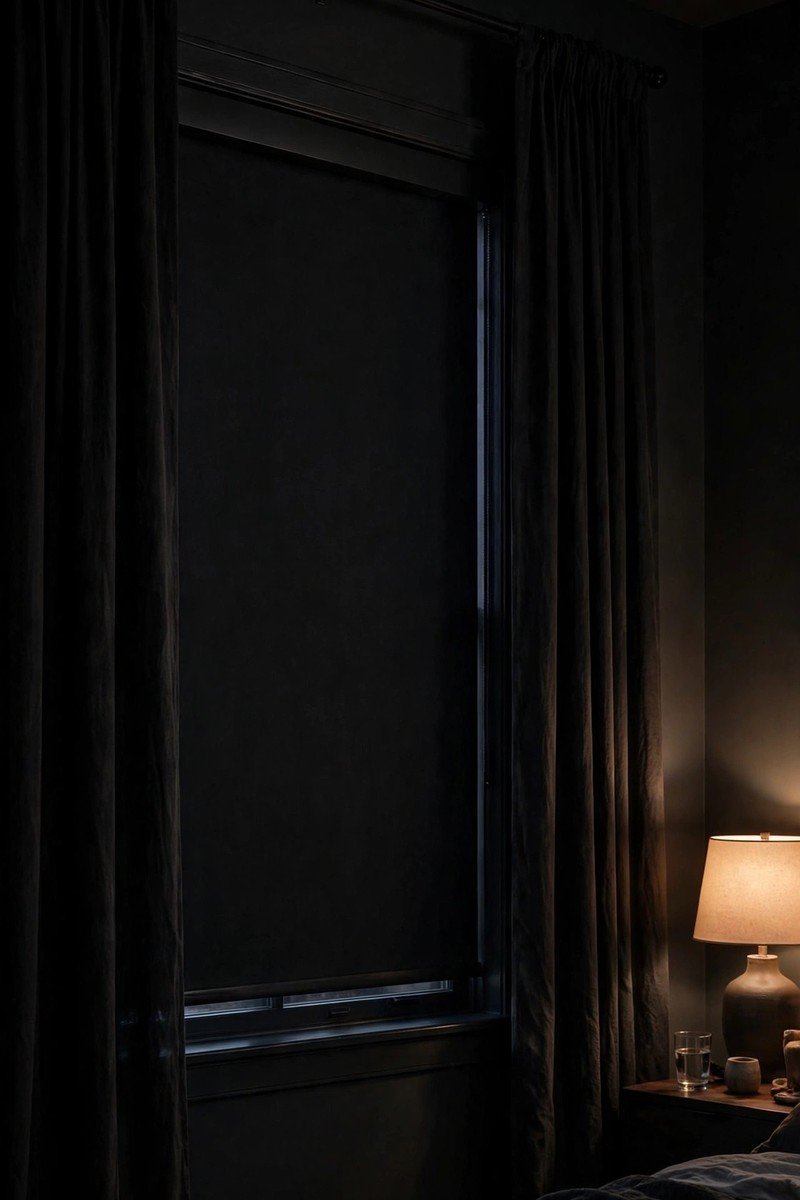
19. Use Blackout Layers for Better Sleep
Dark rooms should also sleep dark. Use blackout lining behind dark curtains, and add a blackout roller shade inside the window frame for full coverage.
Test the room at night with lights off, and fix edge leaks with side channels or wider curtains.
Pro tip: A blackout roller shade costs about 30 to 70 dollars per window. Measure inside the frame in three places and use the smallest width.
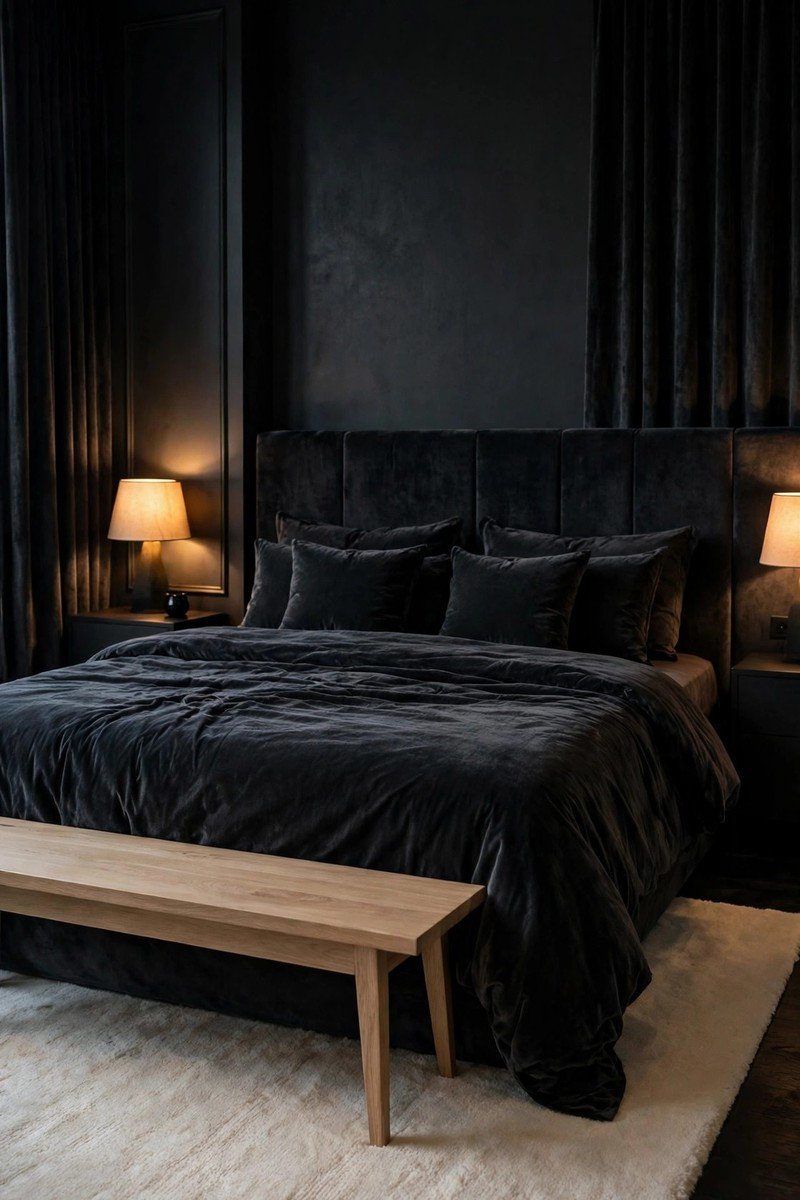
20. Keep One Light Accent in Every Dark Room
Every moody bedroom needs one light break. It can be a cream rug, pale art, light bedding, or a light wood bench at the foot of the bed.
Pick the accent early and do not repeat it in a large way. Our moody living room ideas show dark color outside the bedroom, while fall bedroom ideas give a softer seasonal take.
Pro tip: A light wood bench for a queen bed should be 48 to 54 inches wide and about 18 inches high, so it fits without sticking out past the sides.
Pick the Dark: Paint Sheen and Colour Depth
A moody bedroom starts with the paint, and the sheen matters as much as the colour. Use a matte or eggshell finish on dark walls, because a flat finish soaks up light and makes the colour look deep, while a gloss finish throws glare and shows every mark. Test the colour on the wall, not on a card, and paint a patch at least 2 feet square, because a dark colour looks different at full size. Look at the patch at three times of day, because a charcoal wall looks grey at noon and almost black at night. Paint the ceiling the same colour as the walls if the room is small, because a white ceiling in a dark room looks like a lid. For moody bedroom ideas that feel calm and not heavy, the paint test comes first, because a dark colour chosen in the shop is the most common reason a moody room gets repainted in a month.
Light Control in a Dark Bedroom
A dark bedroom needs control over light, not more light. Fit blackout curtains or a blackout blind, and keep the curtains at least 6 inches wider than the window on each side, so no light leaks around the edges. Use a dimmer on the main light, because a dark room at full brightness looks harsh, and the same room at half brightness looks warm. Place lamps at two heights, one table lamp and one floor lamp, so the light pools in the places you sit and read. Use warm bulbs around 2700 Kelvin, because cool white light fights dark walls and makes the room feel cold. Keep one small light by the bed for reading, with a shade that points the light down, because a shaded light lets one person read while the other sleeps.
Break Up the Dark: Texture and Contrast
A room that is all dark paint looks flat, so break it up with texture and contrast. Mix three textures: one smooth, such as velvet, one soft, such as wool or boucle, and one hard, such as dark wood or brass. Put one light item in the room, such as a cream throw or a pale cushion, because one light accent stops the dark from closing in. Use brass or gold in small amounts, such as a lamp base or a mirror frame, because metal catches the lamplight and lifts the whole room. Keep the bedding lighter than the walls, with cream or pale grey sheets over dark covers, because a bed that is darker than the walls disappears. Step back after each change, because a dark room is judged as a whole, and one light item too many breaks the mood.
Budget for a Moody Bedroom
Under 100 dollars: a tin of dark paint, a pair of warm bulbs, and a cream throw. From 100 to 300 dollars: add a velvet cushion set, a blackout curtain, and a brass lamp. Over 300 dollars: add a velvet headboard, a dark rug, and a full set of dark wood furniture. As a typical range, a tin of quality paint costs about 30 to 60 dollars, and a blackout curtain costs about 25 to 60 dollars. Buy the paint first, because the wall colour decides every other choice in a moody bedroom. Paint one wall first and live with it for a week, because a dark room that is painted in one day is often repainted in a month.
Common Mistakes to Avoid
- Painting every wall black in a small room: start with one wall in charcoal.
- Using only one ceiling light: add lamps at three heights.
- Mixing too many dark colors: pick one main color and one accent only.
- Skipping paint tests: test on two walls in daylight and lamplight.
- Filling every surface: leave tops mostly clear.
- Forgetting blackout layers: add blackout shades if street light comes in.