Walk down any street in October and you’ll see the same wreath on every third door, burlap, a few faux leaves, maybe a plaid bow. There’s nothing wrong with that look, but it’s easy to get lost in a sea of identical doors.
A truly unique fall wreath usually breaks one rule on purpose. It skips the circle shape, swaps the orange for something unexpected, or uses a material nobody else thought to try. Every idea below breaks a different rule, so pick whichever one feels most like you.
Quick Picks
- Best for a bold statement: A rainbow dried flower wreath
- Best non-traditional shape: A square or embroidery hoop wreath
- Best budget DIY: A felt ball wreath
- Best for a modern home: Eucalyptus paired with metallic accents
Did You Know?
A wreath doesn’t have to be round at all. Square wreaths and embroidery hoop wreaths have become genuine alternatives to the classic circle, and the shape change alone is often enough to make a wreath look completely different from every other one on the block.
Before You Start
- Pick your one rule-breaker first. Decide if you’re changing the shape, the color, or the material, then build the rest around that choice.
- Think about your door color. A pastel wreath disappears against a light door, while a bold one gets lost against a dark one.
- Choose weather-resistant materials for the porch. Fresh flowers and paper crafts don’t hold up outdoors as well as dried or faux versions do.
- Don’t be afraid to skip orange entirely. Fall wreaths work in blush, deep purple, or even rainbow tones just as well as the classic autumn palette.
- Save the delicate, handmade wreaths for indoors. A yarn or felt wreath lasts a lot longer above a mantel than it will exposed to rain.
Unexpected Shapes and Bases
1. A square wreath instead of a circle
Sometimes the easiest way to stand out is to skip the round shape everyone expects.
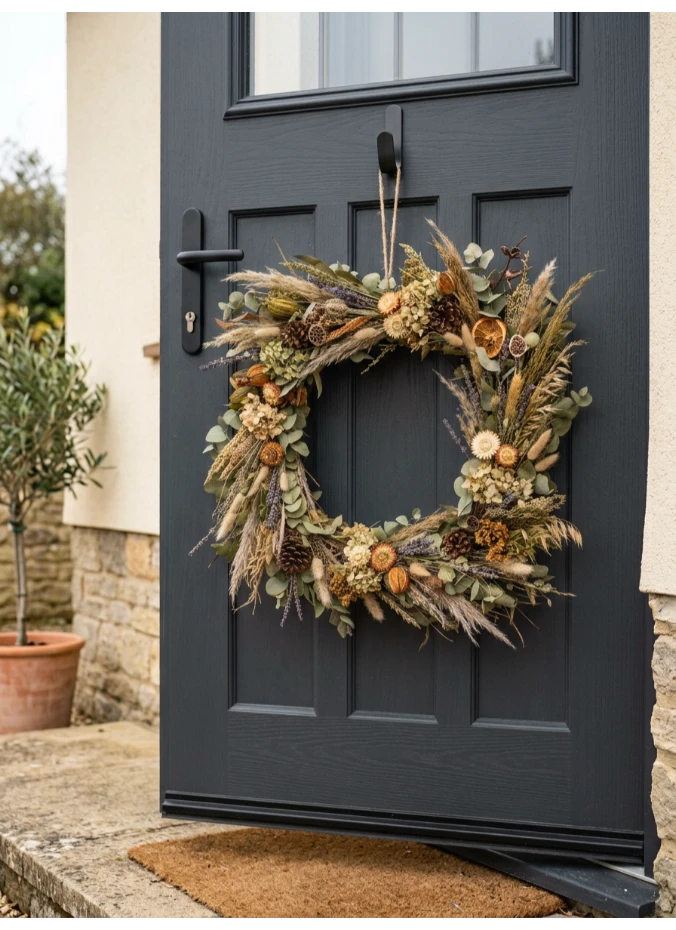
A square wreath frame, built the same way as a round one but with straight corners, gives the whole design a modern, architectural feel that a circle just can’t match. This shape works especially well on a home with clean, contemporary lines, where a traditional round wreath can look slightly out of place.
You can build a square wreath with the same dried florals or greenery you’d use on a round one, so the shape change alone does most of the work without needing any other unusual materials.
2. An embroidery hoop wreath
A craft store hoop makes a genuinely elegant, minimal wreath base.
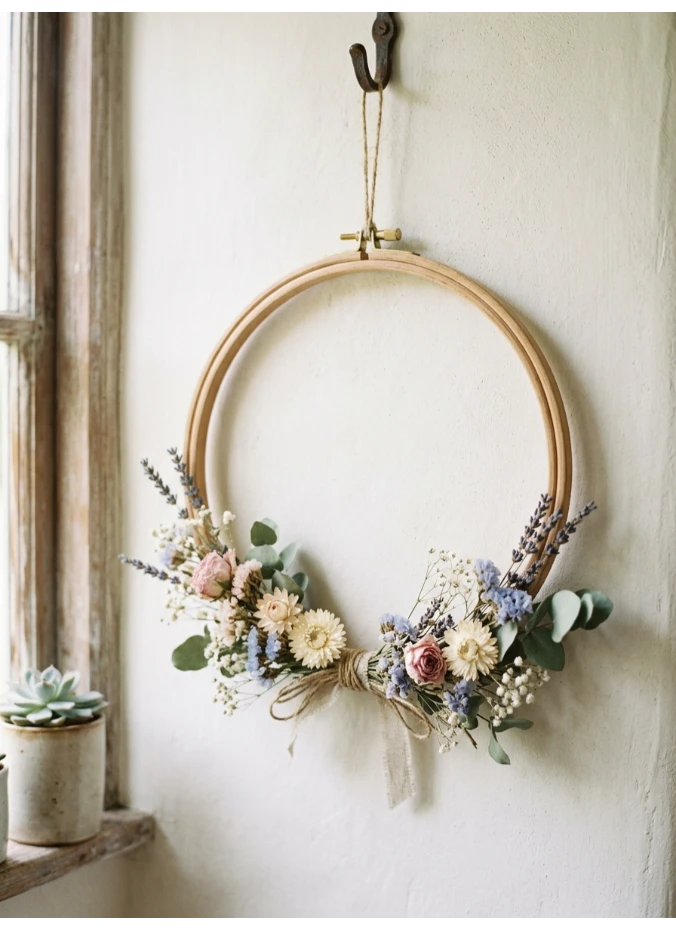
A simple wooden embroidery hoop, wrapped partway in ribbon or twine with a few dried stems attached along one side, creates a much lighter, airier look than a fully covered traditional wreath. This is a strong option for anyone who wants fall decor that feels understated rather than heavy.
Leaving most of the hoop bare, rather than filling the whole circle, is what makes this style read as intentional and modern instead of unfinished.
3. A rake-shaped wreath
An actual garden rake, styled as a wreath, is exactly the kind of surprising detail that gets noticed.
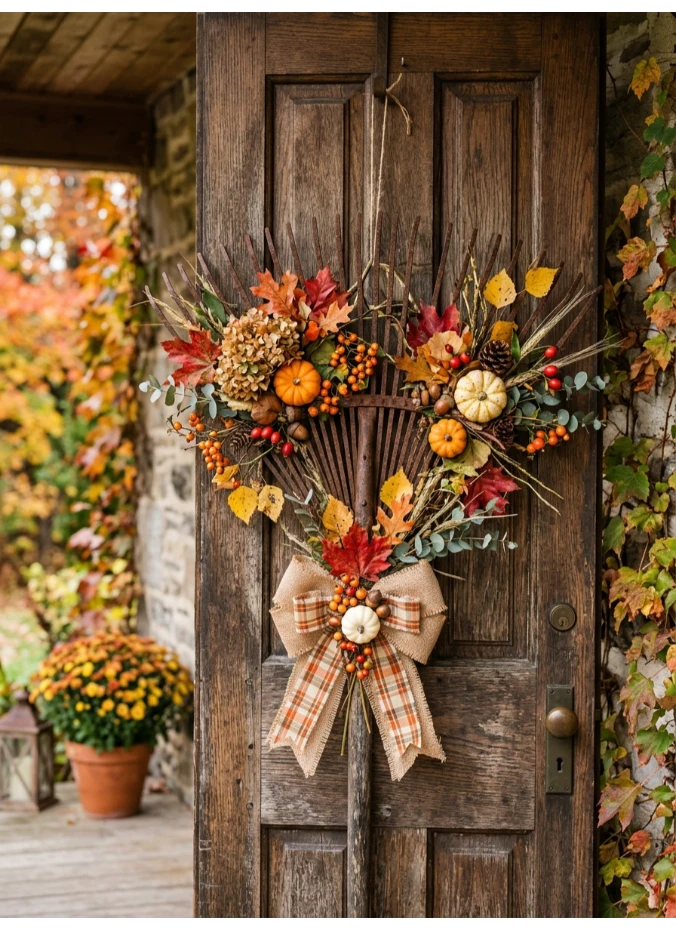
An old metal rake head, hung on the door and decorated with a bundle of dried leaves, wheat, and a plaid bow tied near the handle, replaces the usual circular shape with something genuinely unexpected. It’s a favorite for a farmhouse style home that already leans into vintage, repurposed decor.
This idea works well because it’s cheap to put together if you already have an old rake sitting in the garage, and it instantly becomes a conversation piece for anyone walking up to the door.
4. A cluster of small wreaths instead of one large one
Multiple small wreaths, grouped together, create a different visual rhythm than a single large one.
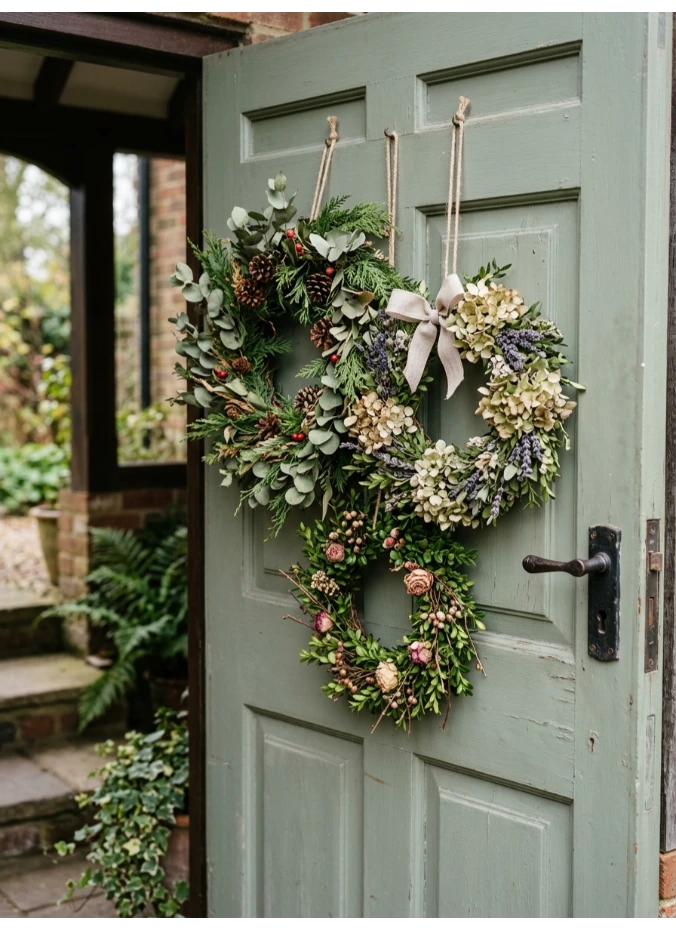
Three small wreaths, slightly different in size and material, arranged in a cluster near the top of the door, create more visual interest than one flat, evenly-filled wreath ever could. Each small wreath can use a different texture, one dried, one grapevine, one fabric, to add real depth to the grouping.
This idea works especially well on a wider door, where a single wreath alone can look small and lonely in the middle of all that space.
Bold and Unexpected Colors
5. A rainbow dried flower wreath
Fall doesn’t have to mean orange and brown, and this wreath proves it.
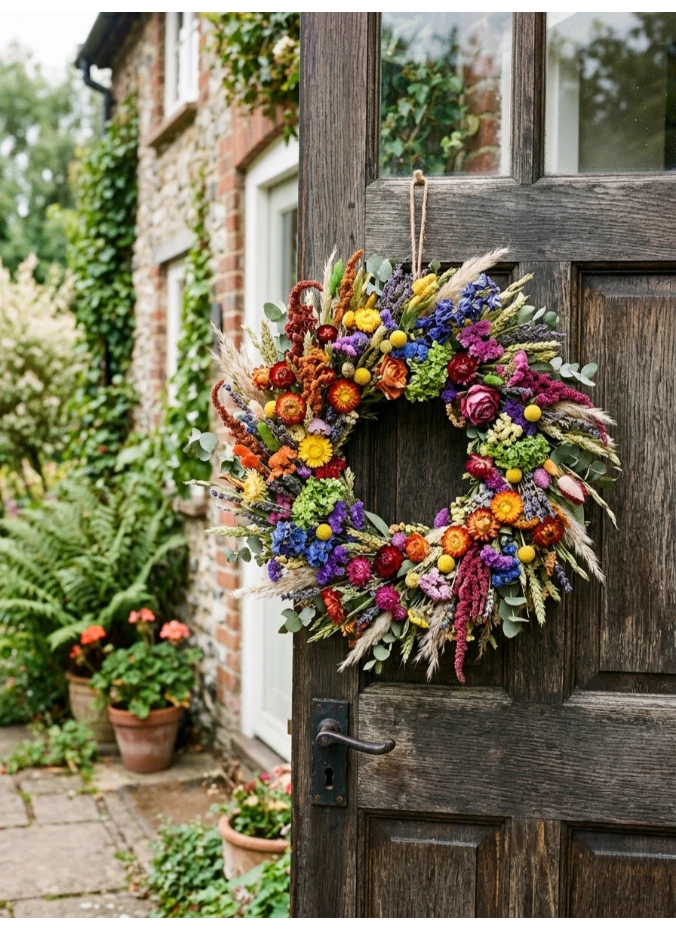
A wreath built from dried flowers in every color, pinks, purples, yellows, and blues alongside the expected oranges, brings genuine personality to a front door that most fall decor completely skips. It’s one of the boldest wreaths on this entire list, and it works best for someone who genuinely loves color over the usual muted autumn palette.
Dried flowers hold their color for months once properly cured, so this wreath stays vibrant well past the first few weeks of the season.
6. A blush and apricot faux sumac wreath
A soft, unexpected color pairing that still feels distinctly like fall.
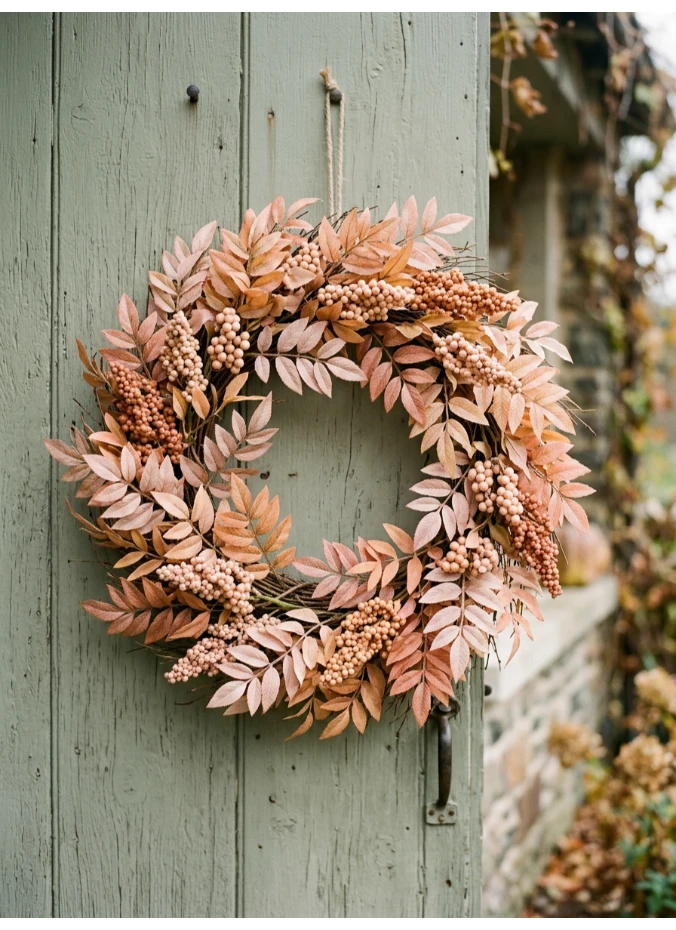
Faux sumac branches, in soft blush and apricot tones rather than deep red or orange, give a wreath a subtle, romantic feel that still clearly reads as autumn. This pairing sits somewhere between traditional fall color and a genuinely fresh take on the season.
It works particularly well for a home with a white or light-colored door, where the muted tones stand out clearly without clashing.
7. A deep plum and burgundy wreath
Rich, jewel-toned colors give a fall wreath a more dramatic, grown-up feel.
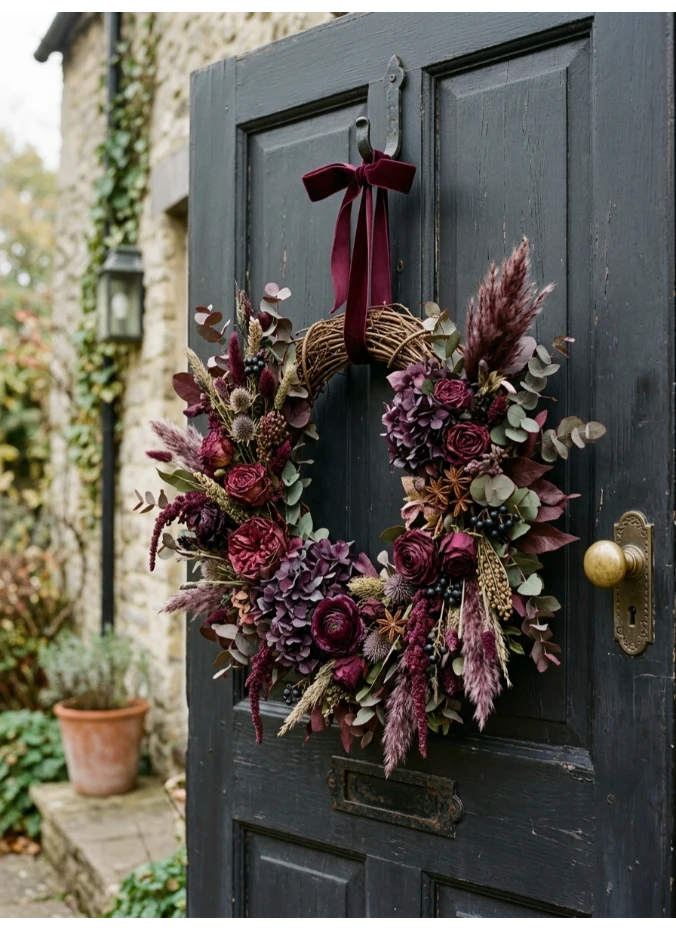
Deep plum, burgundy, and wine-colored dried flowers create a wreath that feels considerably more sophisticated than the usual bright orange and yellow combination. This color story pairs beautifully with a black or deep green front door, where the rich tones really stand out.
It’s also a color palette that transitions smoothly into the winter holidays, so the wreath doesn’t need to come down the moment fall ends.
8. A shabby-chic pastel grapevine wreath
Not every fall wreath needs to lean into warm, saturated color at all.
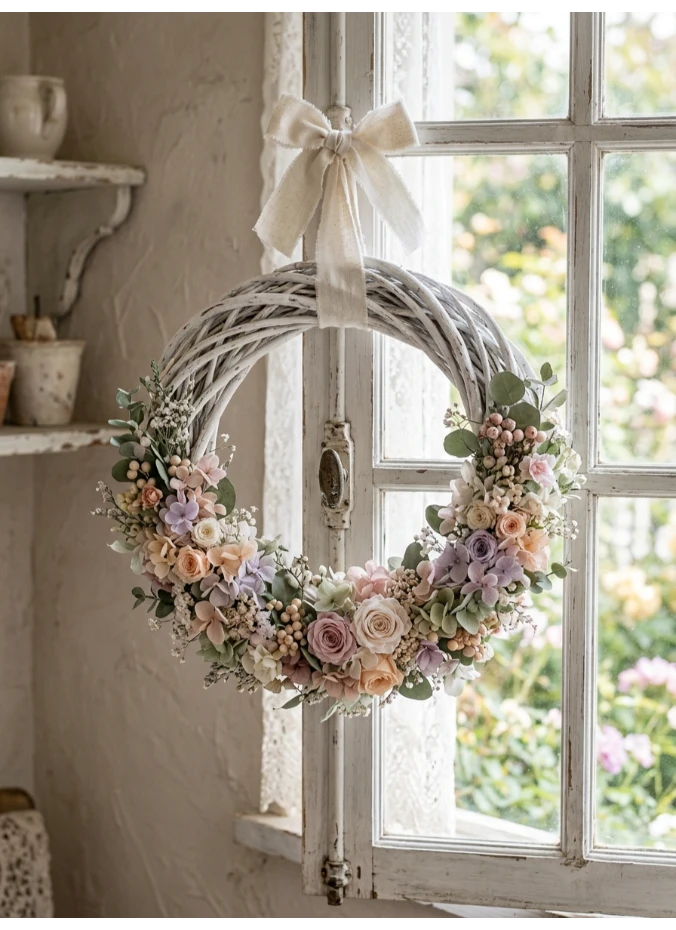
A grapevine base, left mostly natural, with a few soft pastel ribbons or dried flowers added in, creates a delicate, almost vintage wreath that skips the typical deep autumn palette entirely. It’s a strong choice for a cottage-style home or anyone who wants their fall decor to feel light rather than heavy.
This wreath also works beautifully for a fall wedding or event, since the pastel tones read as elegant rather than seasonal-specific.
Textural and Handmade Materials
9. A DIY pom-pom yarn wreath
A colorful, textured wreath built entirely from yarn.
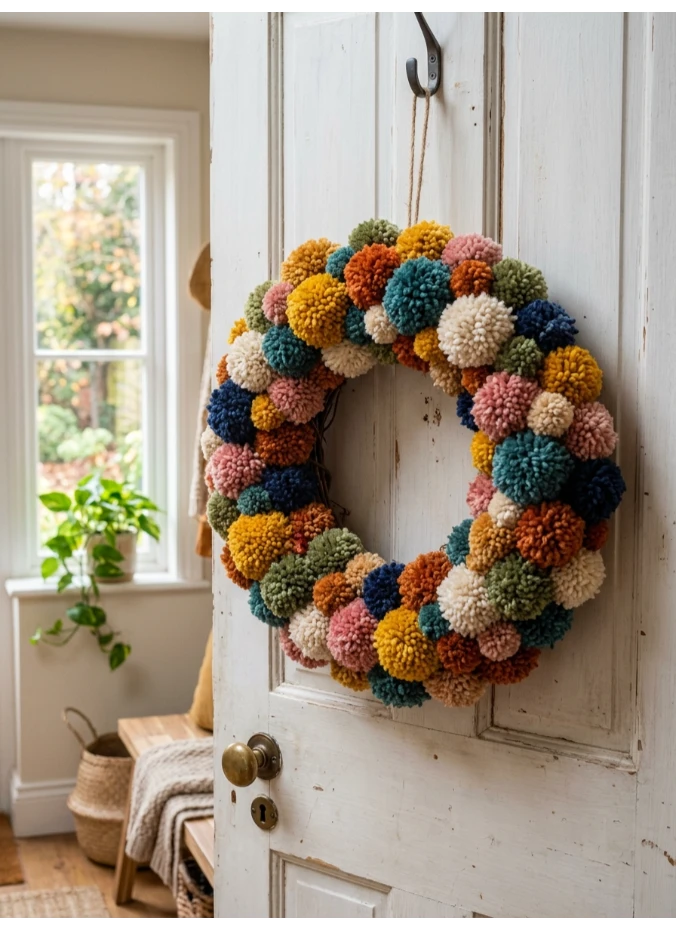
A foam wreath form, covered entirely in yarn pom-poms in a mix of fall colors, creates a soft, textured look unlike anything made from traditional florals or foliage. It takes real time to make, since each pom-pom is tied and attached individually, but the result is genuinely one of a kind.
This wreath also works well into winter, since the yarn material and color palette can carry it straight through the colder months without needing a swap.
10. A felt ball wreath
A quicker, easier version of the textured yarn look.
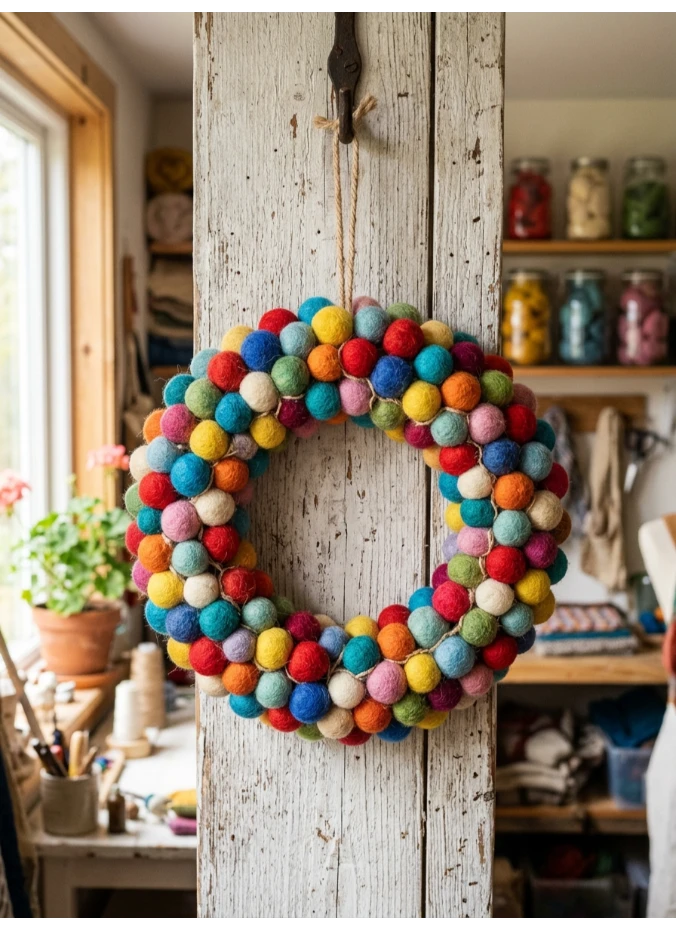
Pre-made felt balls, glued onto a wreath form in a mix of warm autumn colors, give you the same fun, textured look as a pom-pom wreath in a fraction of the time. This is a strong pick for anyone who wants a handmade, colorful wreath without committing an entire weekend to it.
Felt balls come pre-made in bulk, which makes this one of the fastest DIY wreaths on this whole list to actually finish.
11. A cotton boll wreath
A farmhouse favorite that leans into soft, neutral texture.
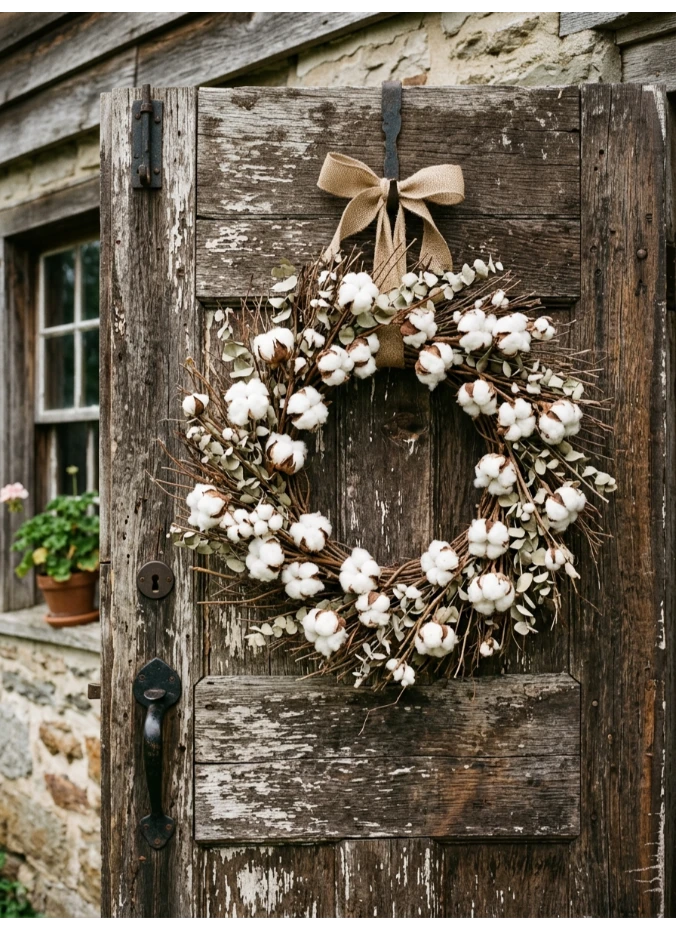
Real or faux cotton bolls, attached to a wreath form and paired with a few white pumpkins, create a soft, neutral wreath that fits a farmhouse aesthetic perfectly. The fluffy, uneven texture of real cotton gives this wreath a genuinely rustic, handmade quality that manufactured materials can’t quite match.
This pairs especially well with a distressed wood door or a home that already leans into a muted, farmhouse color palette elsewhere.
12. A eucalyptus and metallic wreath
A more sophisticated, modern take on greenery.
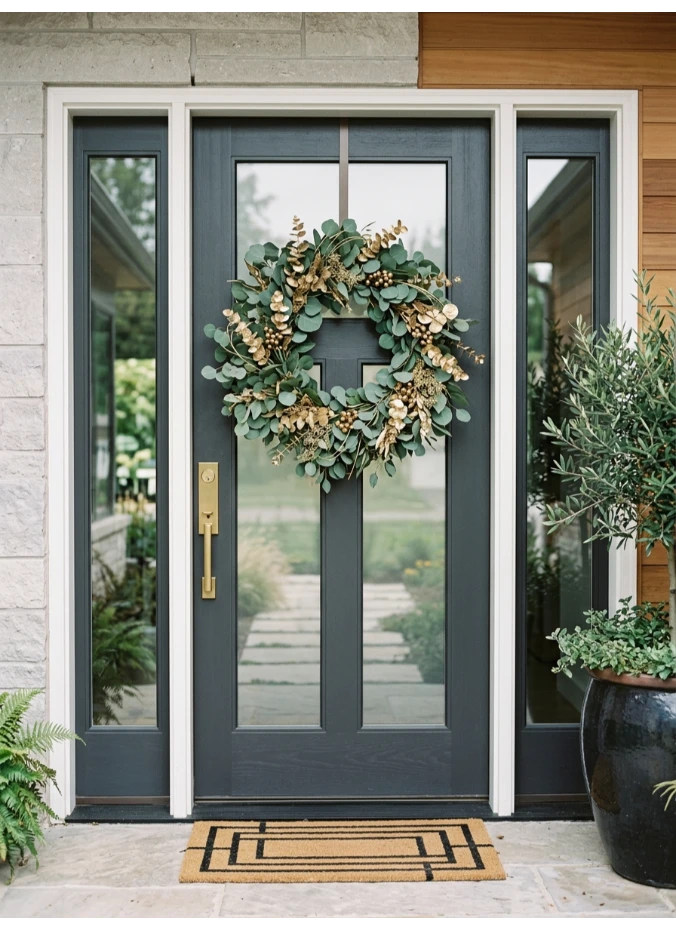
Eucalyptus branches, paired with a few metallic gold or bronze accents woven through, give a wreath a considerably more contemporary feel than the usual leaf-and-pumpkin combination. The muted green and metallic pairing works well against almost any door color, which makes it a genuinely versatile choice.
This style suits a modern or minimalist home especially well, where a traditional harvest wreath might feel a little too rustic for the rest of the exterior.
13. A macrame and dried flower wreath
Combining two textures in one wreath adds real visual depth.
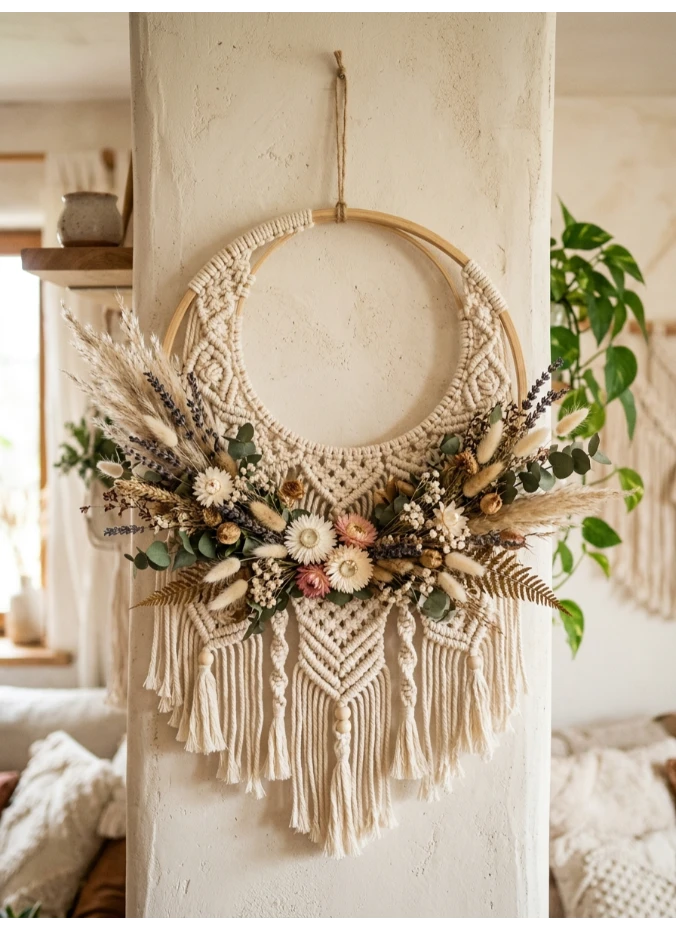
A macrame base, knotted from natural cotton cord, with a few dried flower stems tucked into the knots, blends a boho textile craft with traditional fall florals. This combination gives the wreath a handmade, artistic quality that a purely floral wreath doesn’t have on its own.
It’s a strong pick for a home that already has boho or eclectic touches elsewhere in its exterior styling.
Nature-Forward and Foraged
14. A wreath made from foraged branches
The most budget-friendly wreath on this entire list starts with a walk outside.
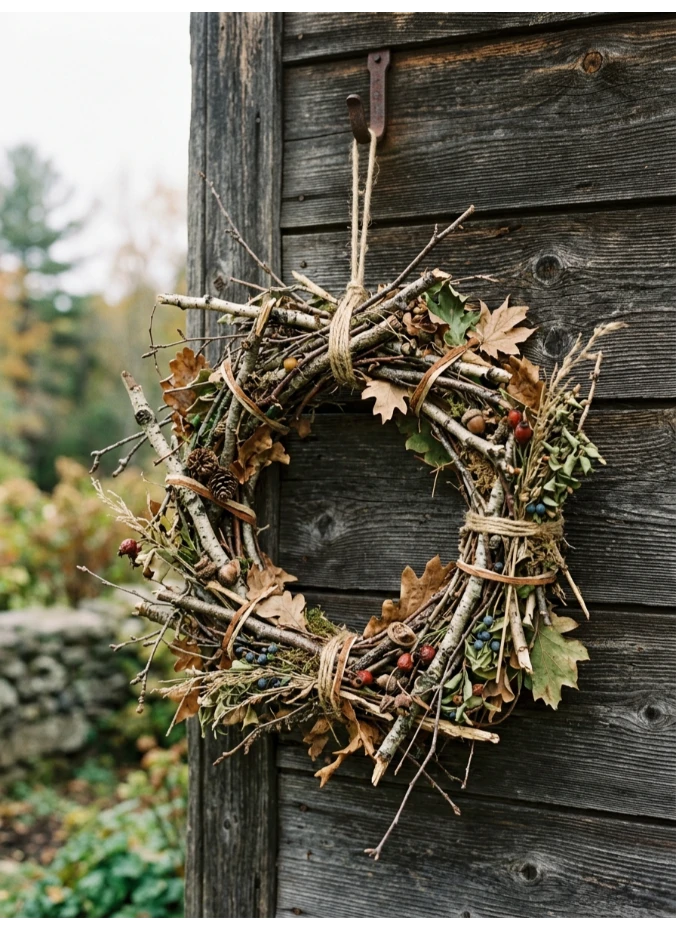
Bent, twisted branches, gathered from your own yard or a nearby park, wired together into a rough circle, create a wreath with real texture and zero cost beyond your time. No two foraged wreaths look exactly alike, which is part of what makes each one genuinely unique.
Adding a few dried leaves or a simple ribbon is optional, since the branches themselves carry plenty of visual interest on their own.
15. A dried hydrangea wreath
One flower type, used generously, makes a genuinely elegant statement.
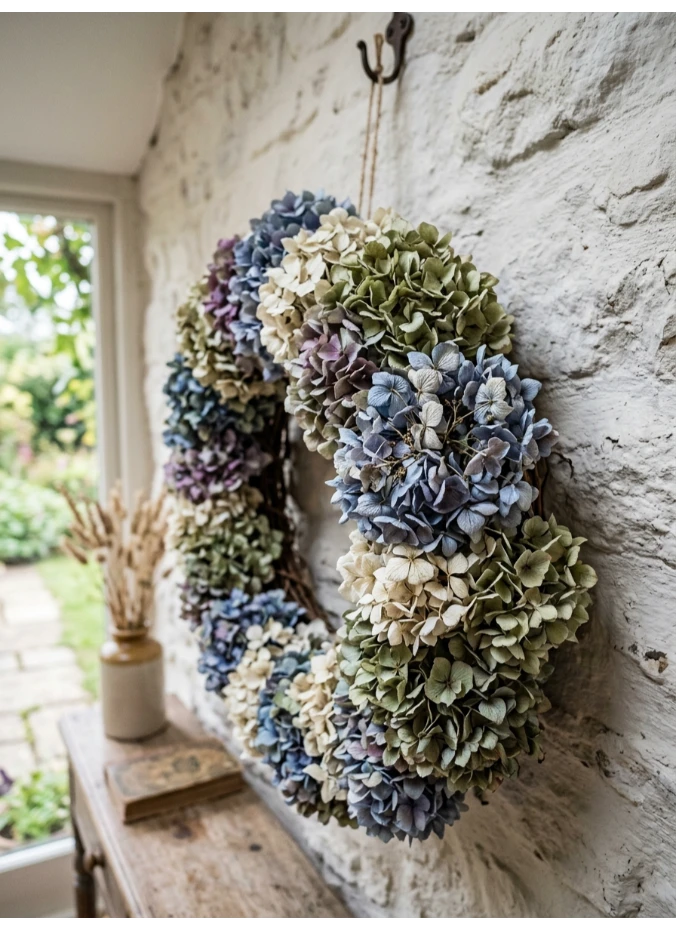
Dried hydrangea blooms, either in their natural faded blue-green or a warmer rust tone, cover an entire wreath form for a lush, single-flower look that feels considerably more refined than a mixed floral wreath. The papery, textured petals hold up well outdoors for weeks without losing their shape.
This is a strong choice for anyone who wants an elegant, almost bridal look rather than a rustic harvest feel.
16. An acorn and pinecone wreath
Nature’s own fall materials, used without any dye or paint at all.
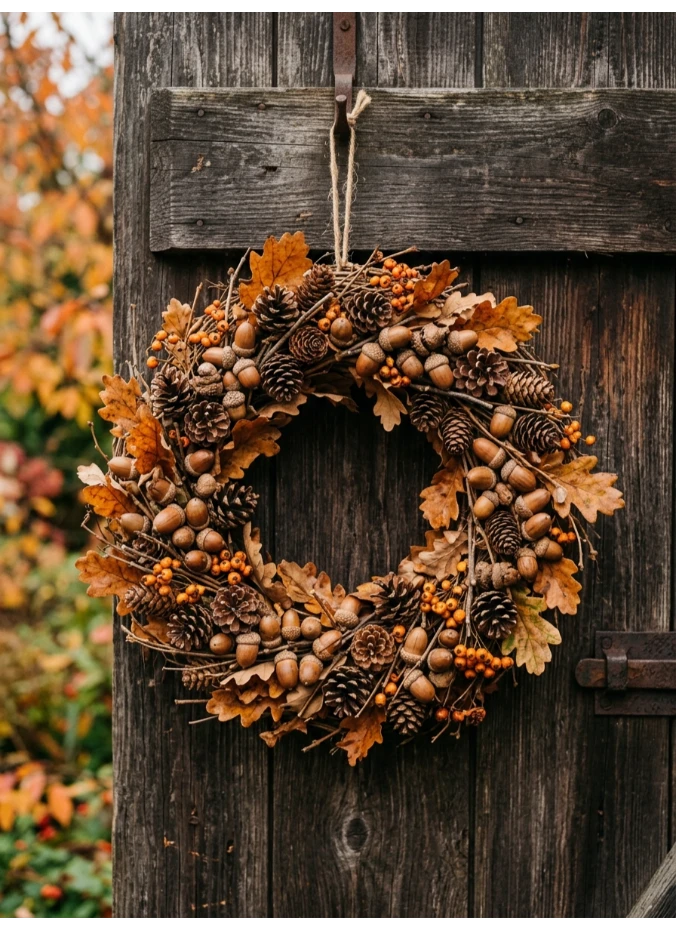
Real acorns and pinecones, wired or glued onto a wreath base, create a genuinely natural, earthy wreath that skips fabric or dyed florals entirely. This one holds up especially well outdoors, since the materials themselves are already weatherproof by nature.
It’s one of the easiest wreaths on this list to gather materials for, since acorns and pinecones are usually free for the taking on a fall walk.
17. A wheat and grain wreath
A simple, neutral wreath that leans into the harvest side of fall.
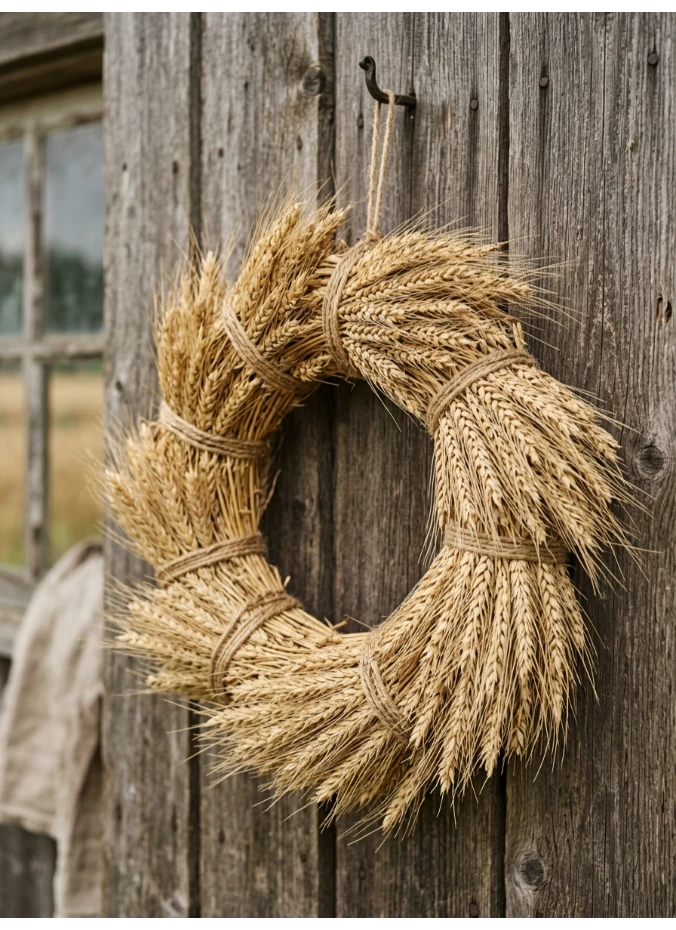
Bundled wheat stalks, wired together into a full circle, create a golden, neutral wreath that feels genuinely tied to the harvest season rather than the more decorative side of fall. Its simple, single-material look stands out precisely because it skips the usual mix of leaves, berries, and pumpkins entirely.
This wreath pairs especially well with a simple burlap or jute ribbon if you want just a touch more detail without adding a second material.
Playful and Whimsical Twists
18. A candy corn striped wreath
A fun, colorful wreath that leans fully into the playful side of the season.
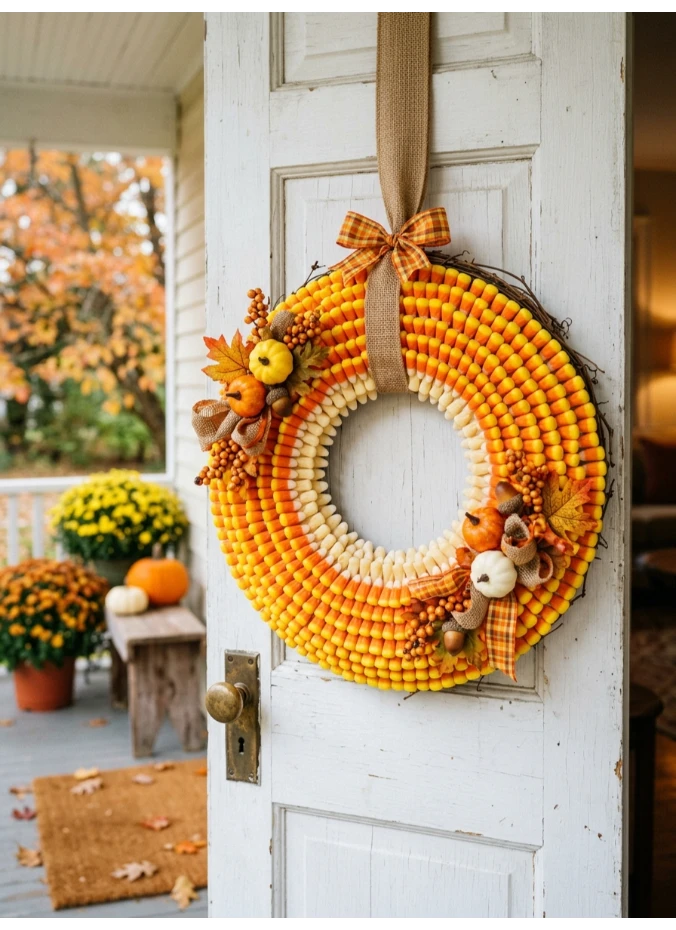
A wreath built in bold bands of yellow, orange, and white, mimicking the classic candy corn stripe pattern, brings a genuinely fun, kid-friendly energy to a front door. This is a strong pick for a household that treats fall decorating as a chance to be playful rather than elegant.
It also works well leading right into Halloween, since the candy corn theme bridges both seasons naturally.
19. A scarecrow-inspired wreath
A character-based wreath that tells a little story on the door.
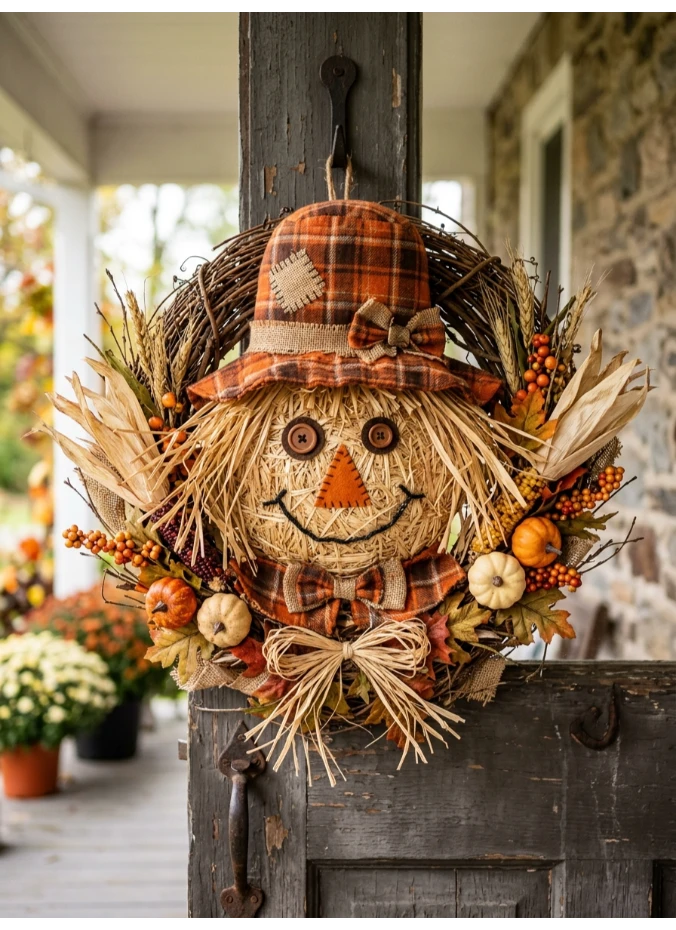
A wreath decorated with straw, a plaid fabric scrap for a shirt, and simple button eyes builds a scarecrow face right onto the front door. This idea works especially well for a family with young kids, since the character element makes it more fun and recognizable than a purely floral design.
It’s also an easy craft to make with kids directly, since most of the pieces just need gluing rather than any complicated technique.
20. A potpourri-filled mesh wreath
A wreath that adds scent along with its look.
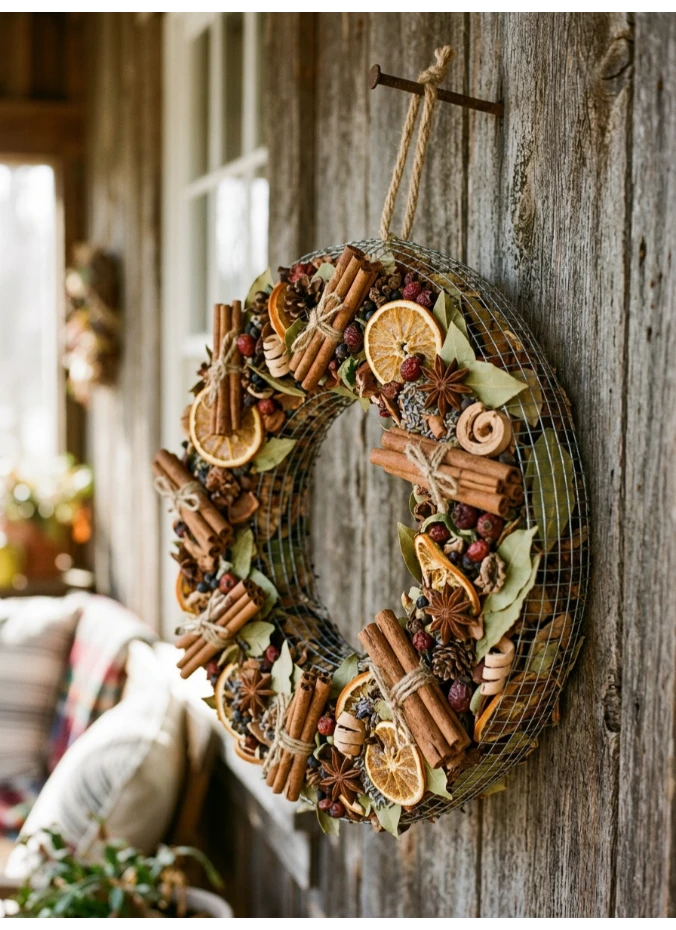
A wire or mesh wreath form, filled with dried potpourri, cinnamon sticks, and small dried orange slices, gives a wreath a genuine scent that pure decor alone can’t offer. This works best in a covered entryway, where a light breeze can actually carry the scent toward anyone approaching the door.
It’s a sensory detail most wreaths skip entirely, and it makes the front door experience feel more complete than sight alone.
21. A felt leaf wreath
A soft, fabric alternative to the usual faux plastic leaves.
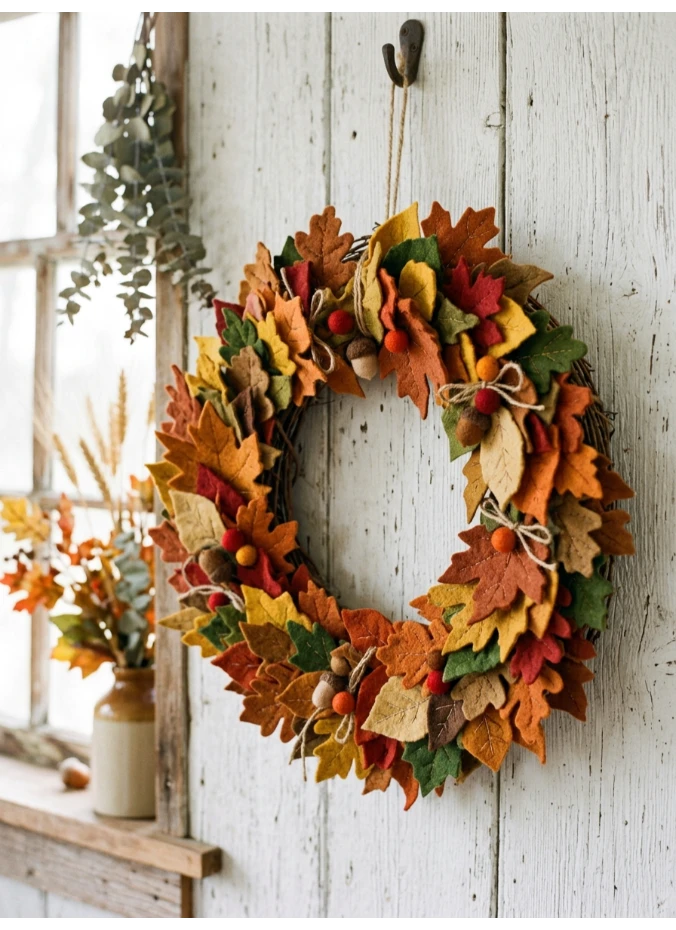
Felt, cut into simple leaf shapes and layered onto a wreath form, gives a softer, more matte look than the shiny plastic leaves most store-bought wreaths use. Felt also holds color better over time than cheaper faux foliage, which tends to fade after a season or two in direct sun.
This is a good weekend project for anyone who enjoys hand-cutting and layering shapes, since no special tools are needed beyond scissors and a hot glue gun.
22. An interchangeable base wreath
One wreath frame that works for every season, not just fall.
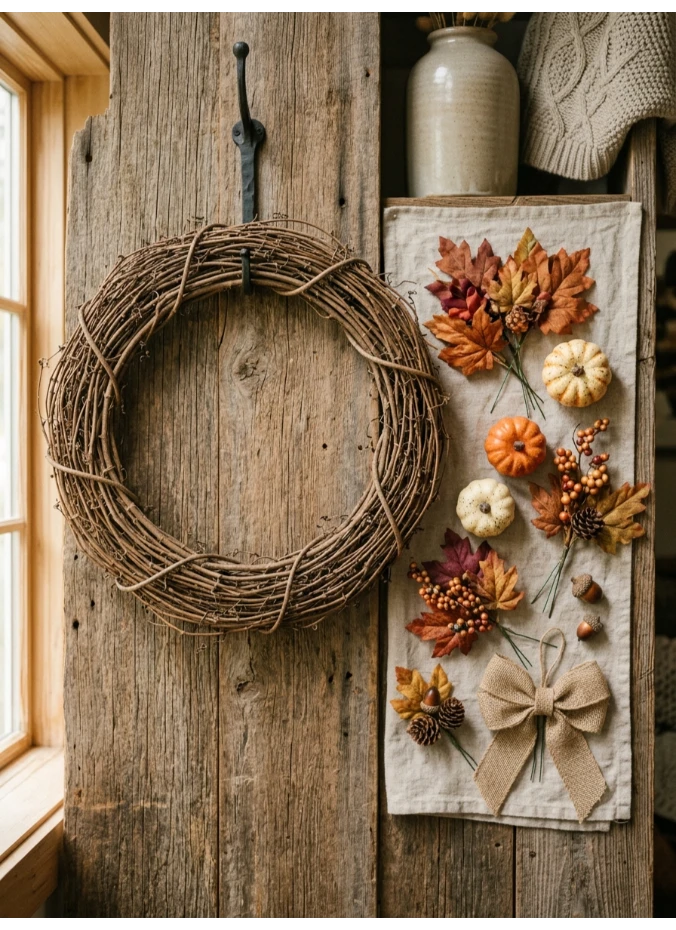
A simple, neutral wreath base, designed with small clips or loops for attaching removable seasonal pieces, lets you swap in fall leaves now and holiday greenery later without buying a whole new wreath each time. This is a practical choice for anyone who likes updating their door regularly but doesn’t want to store several full wreaths.
Over a few years, this option often ends up cheaper than buying a brand-new wreath for every season.
23. A monogrammed embroidered wreath
A personal touch that makes the wreath unmistakably yours.
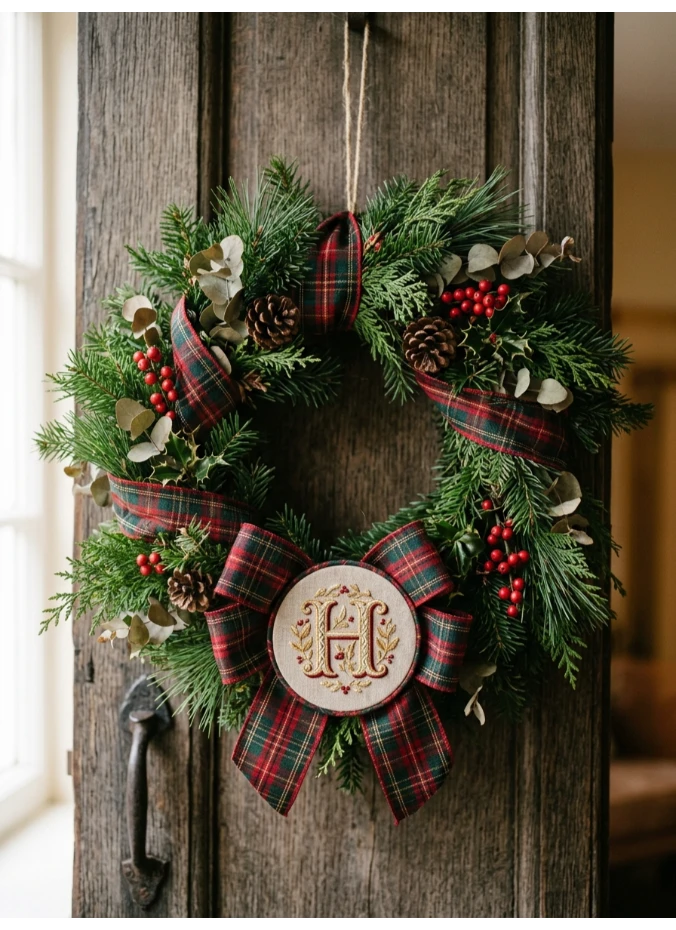
A plaid bow or fabric panel, embroidered with a family initial, adds a personal detail that a generic store-bought wreath simply can’t offer. This small addition turns an otherwise ordinary wreath into something that clearly belongs to your specific home.
It’s a nice option for a housewarming gift too, since a monogrammed wreath feels more thoughtful than a plain one.
24. A dollar store upcycled wreath
Proof that a genuinely unique wreath doesn’t need a big budget.
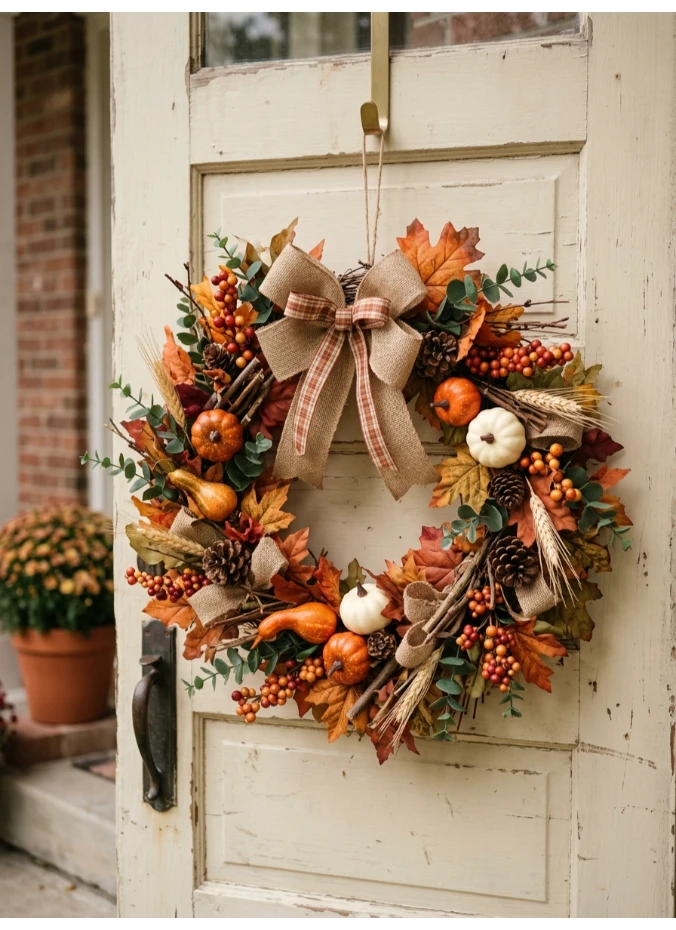
A handful of mismatched dollar store leaves, berries, and small pumpkins, combined onto one wreath form and kept within a single color palette, can look surprisingly cohesive for very little money. The trick is sticking to one or two colors throughout, rather than using every item exactly as it comes packaged.
This proves that a wreath’s uniqueness comes from the combination and care put into it, not necessarily the price tag behind it.
Common Mistakes to Avoid
- Using fresh flowers or paper materials outdoors, where rain and sun will wear them out within days.
- Choosing a wreath color that blends into your door instead of standing out against it.
- Mixing too many unique elements at once, which can make a wreath look cluttered instead of intentional.
- Forgetting to check your wreath’s weight against what your door or hanger can actually support.
Frequently Asked Questions
What makes a fall wreath look unique instead of traditional?
Breaking one expected rule, the shape, the color, or the material, is usually enough to make a wreath stand out from the typical orange and burlap look.
Do unique fall wreaths cost more to make than traditional ones?
Not necessarily, foraged branches, dollar store materials, and felt are all low-cost options that still create a genuinely distinctive look.
Can a fall wreath be used indoors instead of on the front door?
Yes, many unique wreaths, especially handmade ones like yarn or felt, work beautifully above a mantel or mirror instead of facing outdoor weather.
Conclusion
A genuinely unique fall wreath usually comes down to one confident choice, a different shape, an unexpected color, or a material nobody else thought to use. Pick the one idea from this list that feels most like your own style, and let that single choice carry the whole design instead of trying to combine everything at once. Once your door is set, carrying the same idea into your front door’s other fall details or a seasonal vignette elsewhere in the home keeps the whole look feeling intentional from the porch to the entryway.