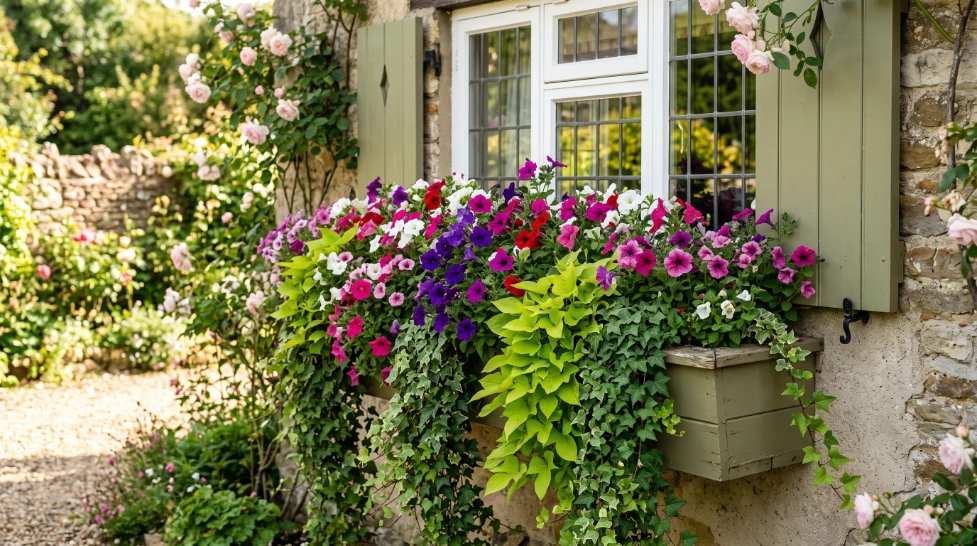
My first window box looked great for about three weeks in June and then turned into a sad, leggy mess by August, because I’d planted only one type of summer annual and had no plan for what came after. What actually keeps a window box blooming from spring through fall is treating it like a rotating display, not a one-time planting, with a mix of thrillers, fillers, and spillers that gets refreshed as the seasons change.
The ideas below are grouped by what they solve, planning and setup first, then plant choices for each season, trailing and filler plants, and the styling and maintenance habits that keep everything blooming. The same seasonal refresh approach mentioned in these summer patio decor ideas applies directly to window boxes too, plan for more than one season instead of just planting once and hoping it lasts.
Before You Start
- Follow the thriller-filler-spiller rule, one tall plant, several mid-height fillers, and trailing plants along the edge, for a box that looks full from every angle.
- Match your plant choices to your window’s actual sun exposure, a box that gets less than four hours of direct sun needs shade-tolerant plants, not sun-loving ones.
- Plan for at least two plantings a year, a spring or summer mix and a fall mix, rather than expecting one planting to bloom for six months straight.
- Check the box’s drainage before planting anything, standing water is the most common reason window box plants fail regardless of which flowers you chose.
Planning and Setup Basics
1. Choose a Window Box with Drainage Holes
My first window box didn’t have drainage holes, and it took a season of soggy, dying roots before I figured out why nothing was thriving.
A window box with pre-drilled drainage holes runs $20 to $50 depending on material and length, and drilling your own holes into a solid box costs almost nothing if you already own one.
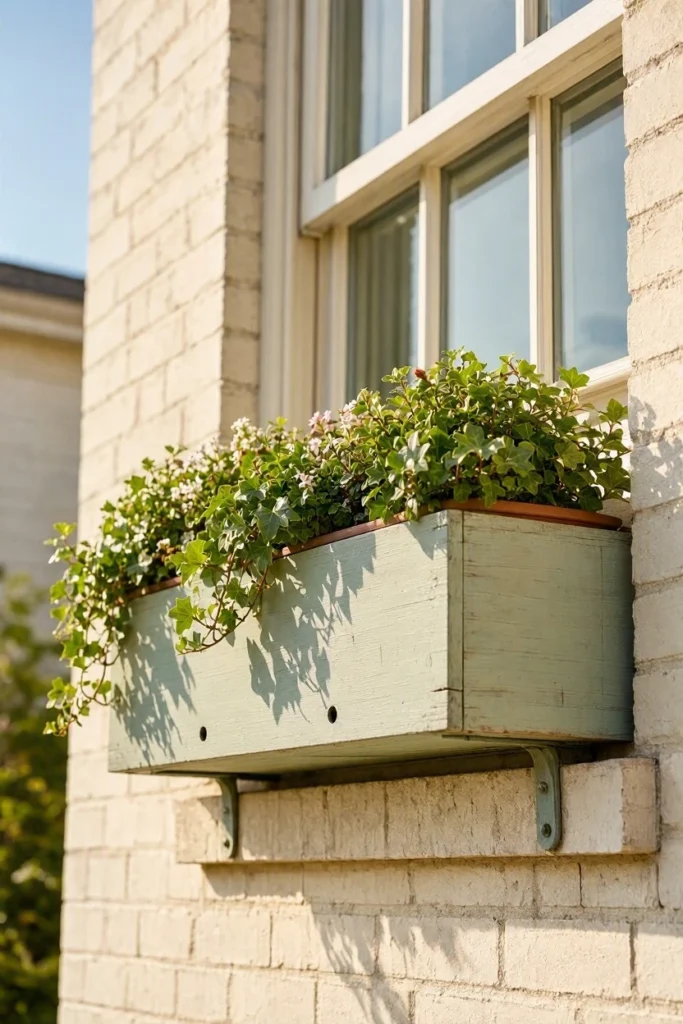
It works because standing water suffocates roots faster than almost any other single mistake, and proper drainage is the foundation everything else on this list depends on.
2. Match Box Length to Window Width
A window box that ran a few inches past the window frame on each side looked far more intentional than my first one, which was noticeably too short.
A properly sized window box, extending two to four inches beyond the window frame on each side, runs $25 to $60 depending on length and material.
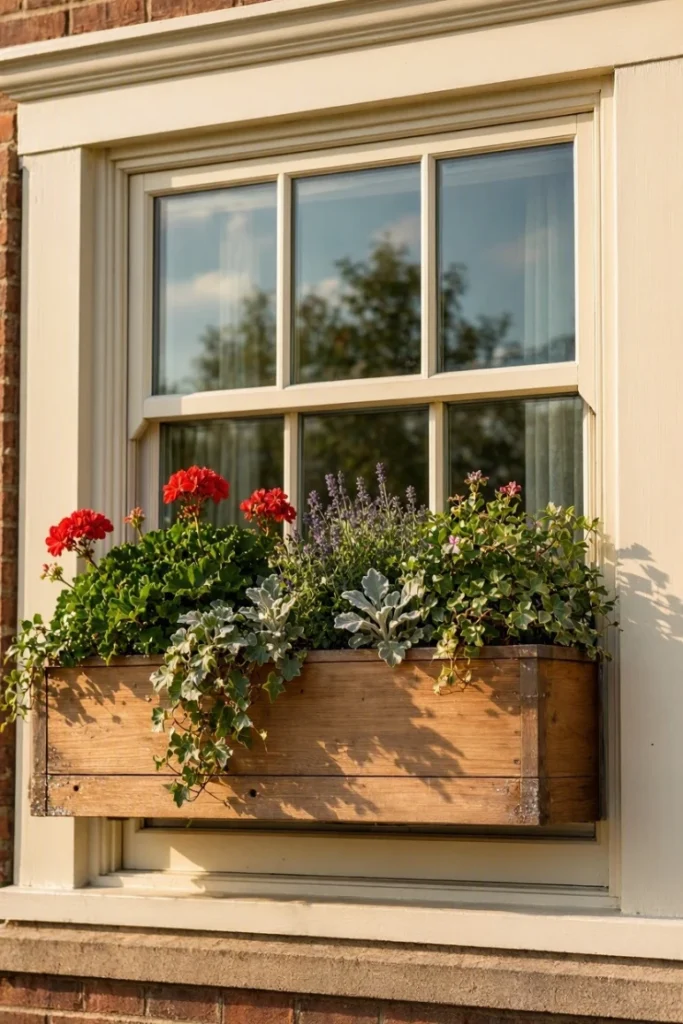
It works because a box sized to slightly overhang the window frame reads as intentional and proportional, while an undersized box looks like an afterthought.
3. Use a Quality Potting Mix, Not Garden Soil
Switching from bagged garden soil to a real potting mix made a bigger difference in plant health than any specific flower choice I made.
A bag of quality potting mix runs $8 to $15 and typically fills one standard-sized window box with some left over.
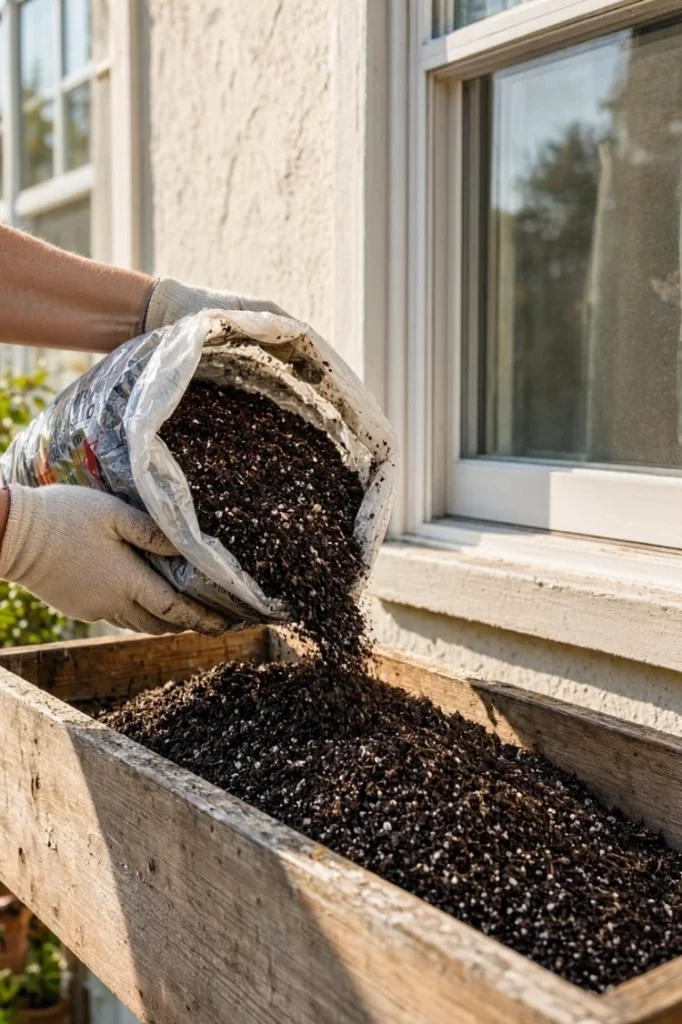
It works because garden soil compacts and drains poorly in a contained box, while potting mix is specifically formulated to stay light and well-draining in that kind of confined space.
4. Consider Sun Exposure Before Choosing Plants
I killed two rounds of sun-loving petunias before realizing my north-facing window just doesn’t get enough direct light for them.
This costs nothing beyond a bit of observation, tracking how many hours of direct sun the window actually gets before choosing plants suited to that light level.
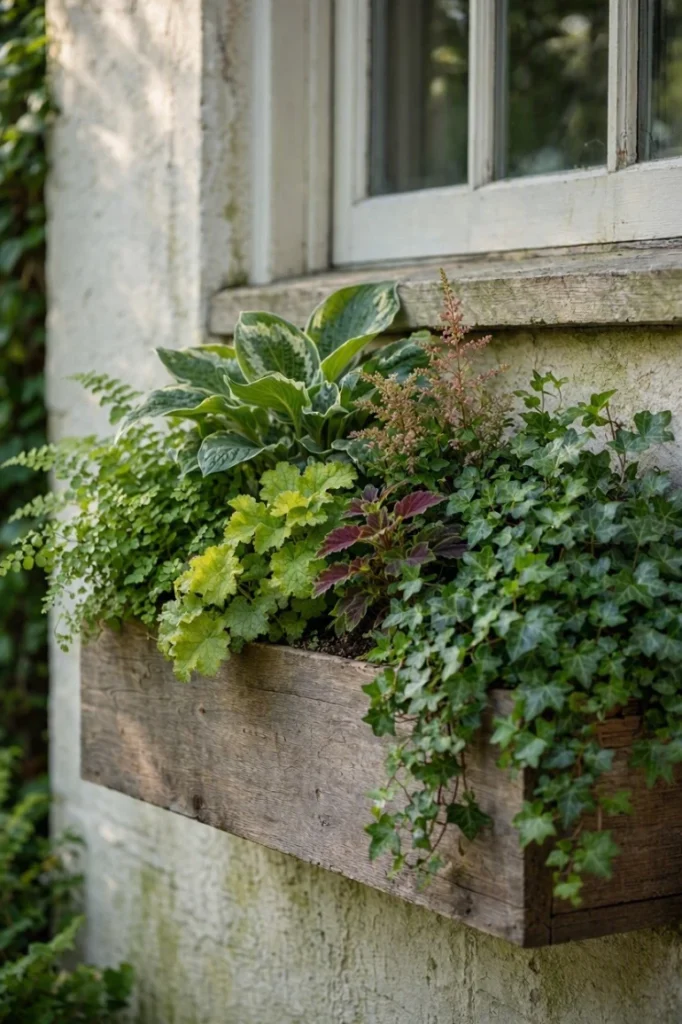
It works because matching plants to actual light conditions is the single biggest factor in whether a window box thrives or struggles all season, regardless of watering or fertilizing.
Spring Bloomers
5. Plant Pansies for Early Season Color
Pansies were the first thing blooming in my window box each year, often while there was still a chill in the air outside.
A six-pack of pansy starts runs $6 to $12, and they tolerate a light frost better than most other flowering annuals.
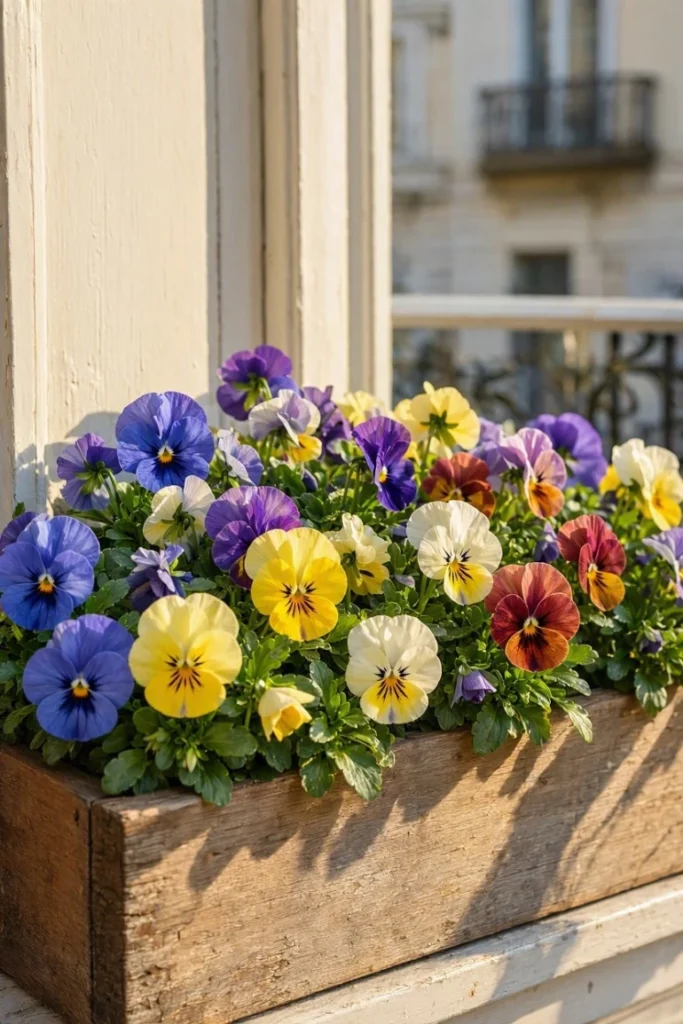
It works because pansies bloom in cooler temperatures than most annuals, filling the gap before summer flowers are ready to be planted outside.
6. Add Ranunculus for Ruffled Texture
Ranunculus added a layered, ruffled bloom that stood out against the flatter petals of everything else in the box.
Ranunculus bulbs or starts run $8 to $18 depending on quantity, and they perform best in the cooler temperatures of early spring.
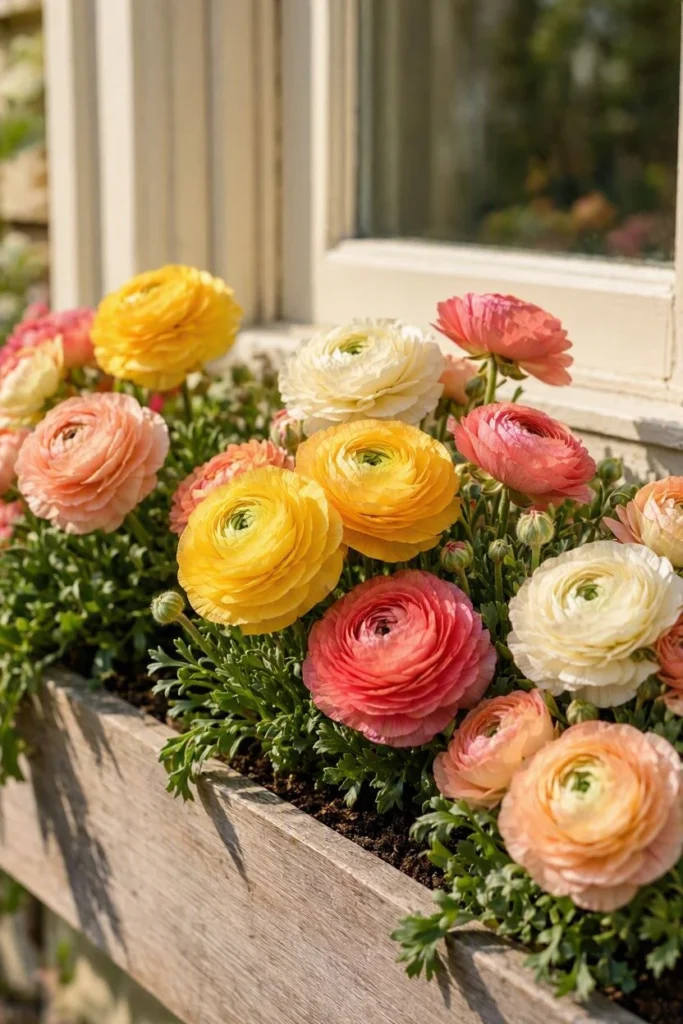
It works because its ruffled, rose-like bloom adds a different texture than the simpler flat petals of most other spring annuals, giving the box more visual variety.
7. Include Sweet Alyssum for a Delicate Border
A low border of sweet alyssum along the front edge softened the harder line where the box met the flowers behind it.
A tray of sweet alyssum starts runs $6 to $10, and it also carries a light honey scent that most other spring annuals don’t offer.
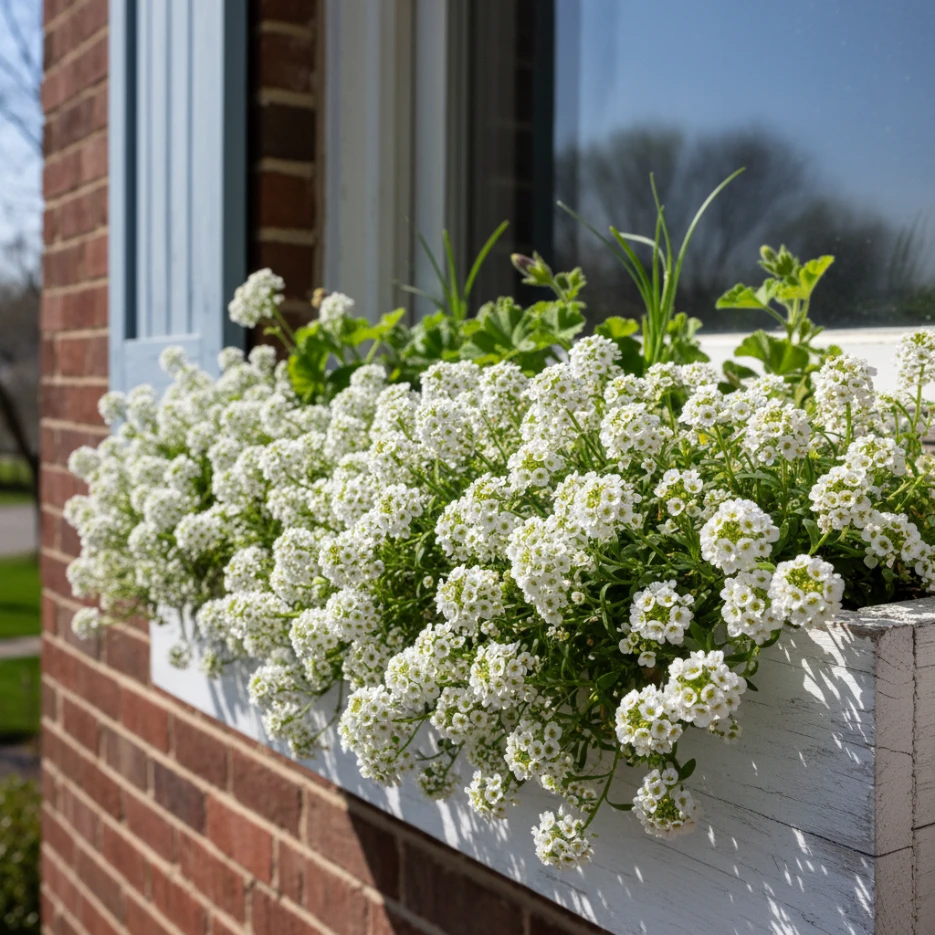
It works because its low, dense growth habit softens the front edge of the box, and it works well as a filler between larger, more upright blooms.
8. Use Snapdragons for Height
A few snapdragons in the back of the box gave the spring arrangement the height it was missing among all the lower, rounder blooms.
A pack of snapdragon starts runs $6 to $14, and they tolerate cooler spring temperatures well before summer heat sets in.
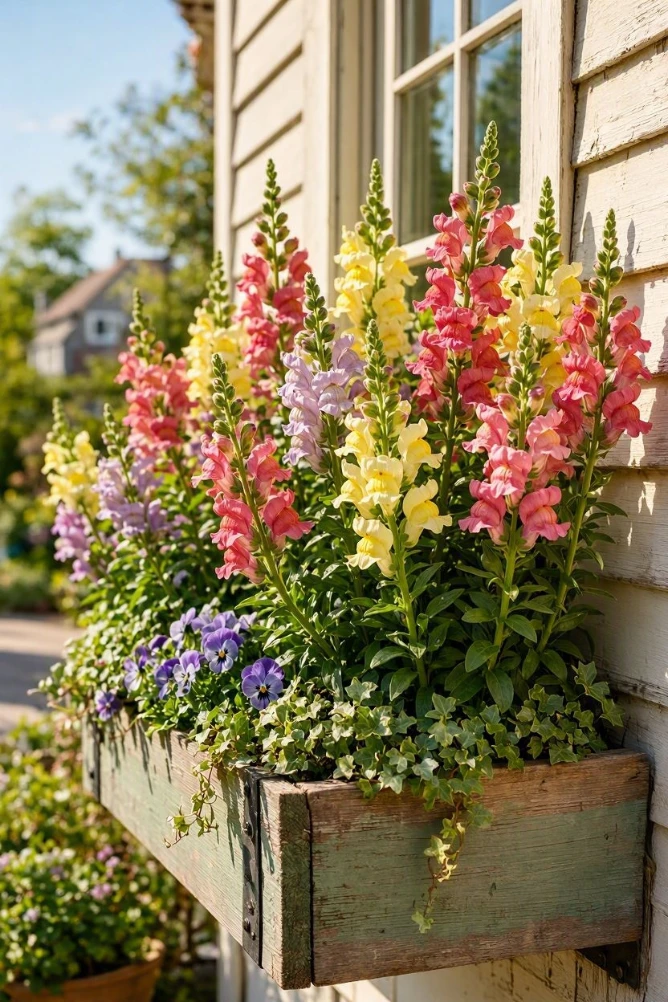
It works because tall spiky blooms like snapdragons give the box the “thriller” element in the thriller-filler-spiller layout, anchoring the back of the arrangement.
Summer Bloomers
9. Add Petunias for Continuous Color
Petunias bloomed nearly nonstop from June through September, more reliably than almost anything else I’ve planted in a window box.
A six-pack of petunia starts runs $6 to $12, and regular deadheading keeps them blooming continuously through the whole summer.
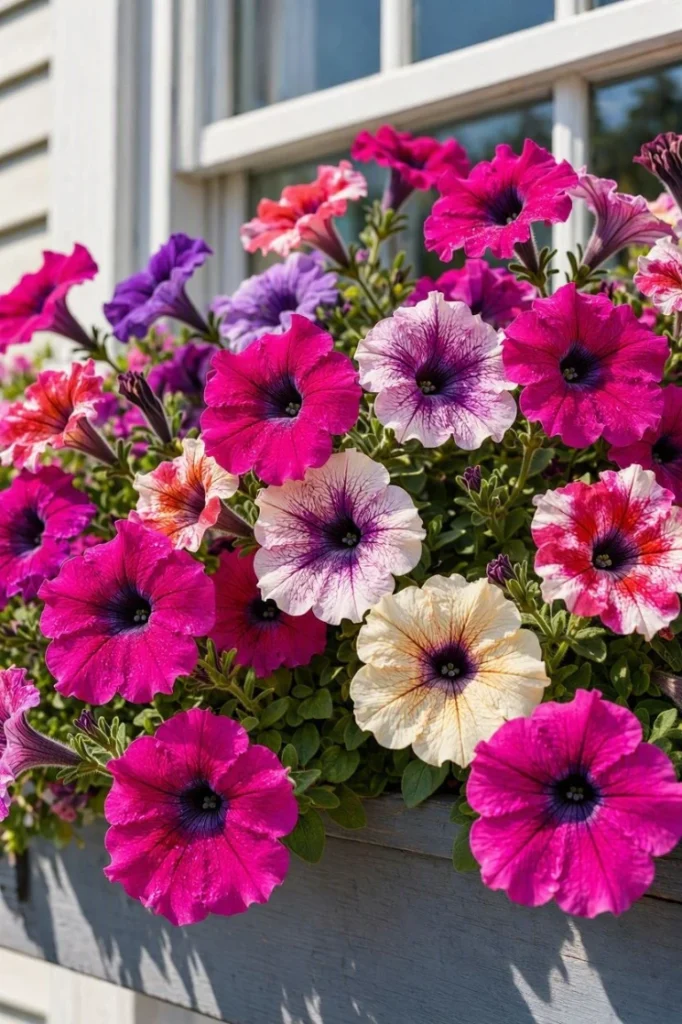
It works because petunias are bred specifically for long, continuous summer blooming, making them one of the most reliable choices for a box that needs to look good for months, not weeks.
10. Include Verbena for Heat Tolerance
Verbena kept blooming through a stretch of 95-degree days that had wilted almost everything else in the box.
A tray of verbena starts runs $8 to $15, and it’s noticeably more heat and drought tolerant than most other flowering summer annuals.
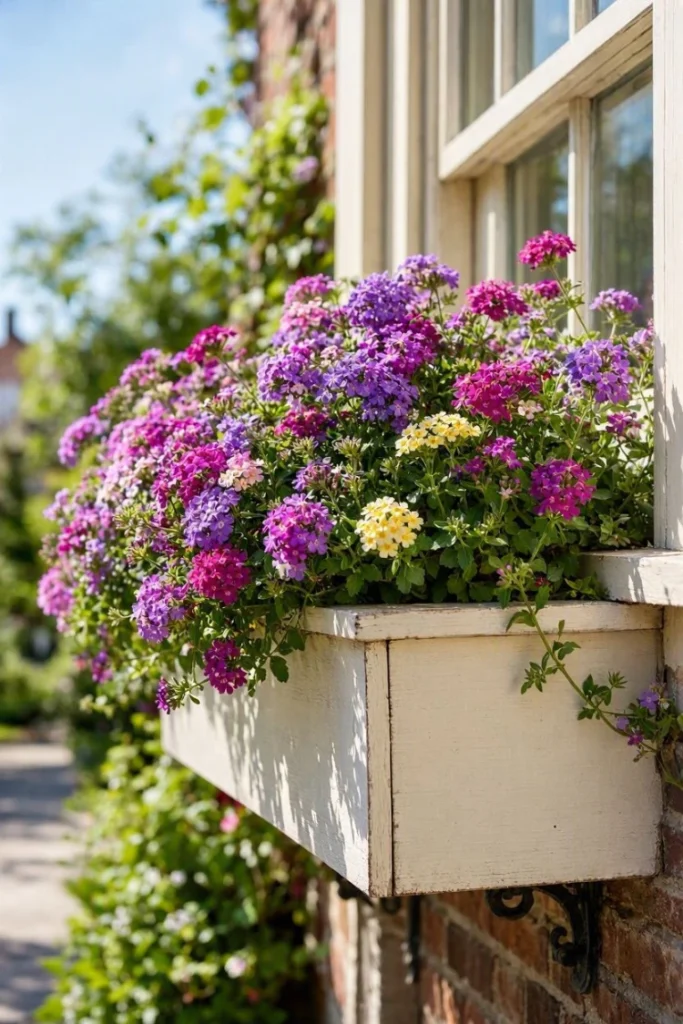
It works because it holds up through peak summer heat better than many other flowering annuals, which matters for a box in full sun during the hottest months.
11. Use Zinnias for Bold Color
A few dwarf zinnias added the boldest, most saturated color of anything else in the box that summer.
A pack of dwarf zinnia starts runs $6 to $12, and choosing a compact variety specifically bred for containers keeps them from outgrowing the box.
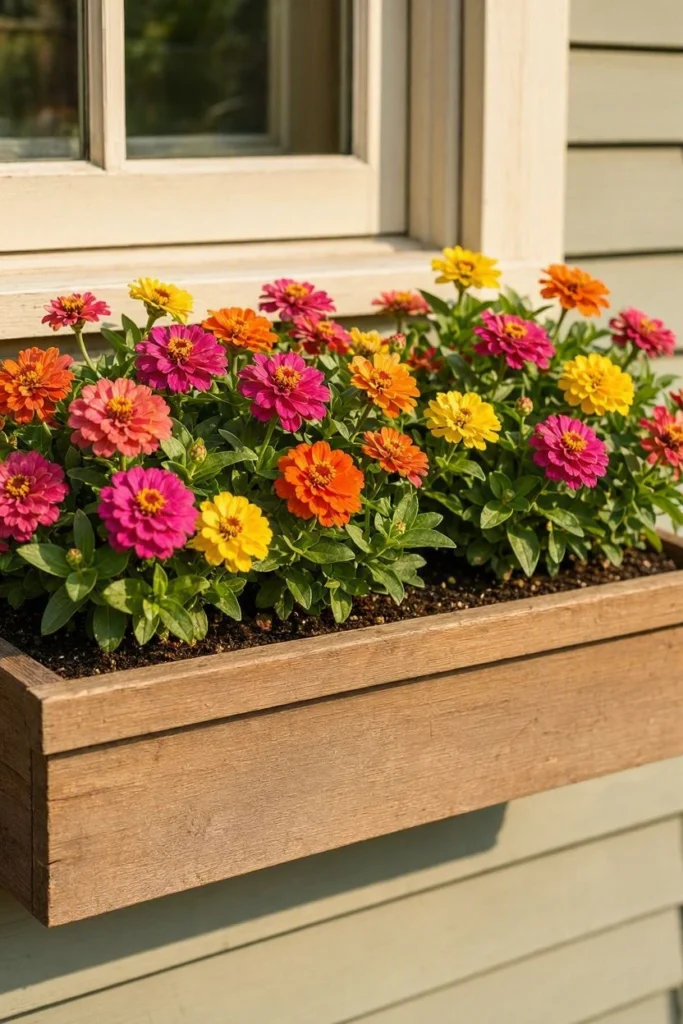
It works because zinnias offer some of the most saturated, vivid colors available in summer annuals, making them a strong choice when you want the box to really stand out.
12. Add Lantana for Pollinator Appeal
Lantana brought more butterflies to my window than any other plant I’ve tried, which turned out to be a genuinely nice bonus.
A lantana start in a small pot runs $8 to $15, and it’s known for being both heat tolerant and a strong draw for butterflies and bees.
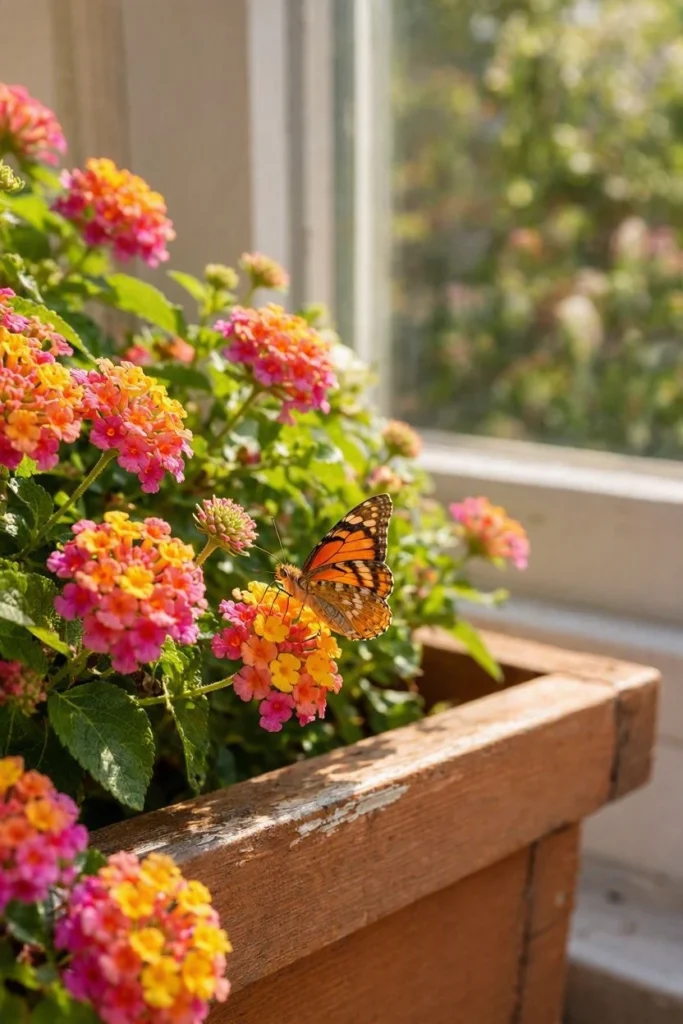
It works because it’s one of the most reliable pollinator-attracting plants for a sunny summer box, adding movement and life beyond just the flowers themselves.
Fall Bloomers
13. Plant Mums for Classic Fall Color
Swapping the summer petunias for mums in September gave the box a completely new look without needing to replant the whole thing from scratch.
A potted mum runs $8 to $18 depending on size, and two to three fit well in a standard window box for a full, layered look.
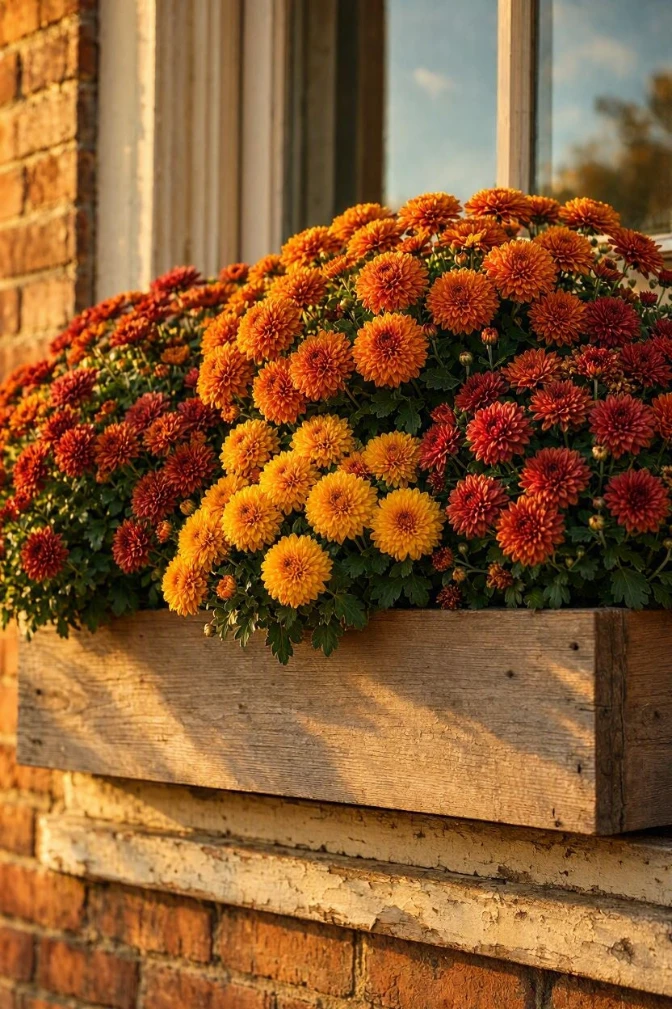
It works because mums are the most classic fall bloomer for a reason, they hold their shape and color well through cooler temperatures and light frosts.
14. Add Ornamental Kale for Texture
Ornamental kale added a completely different leaf texture that made the fall box look styled rather than just a straight swap of summer flowers for fall ones.
Ornamental kale starts run $5 to $10 each, and their ruffled purple and cream leaves hold their color well into cold weather.
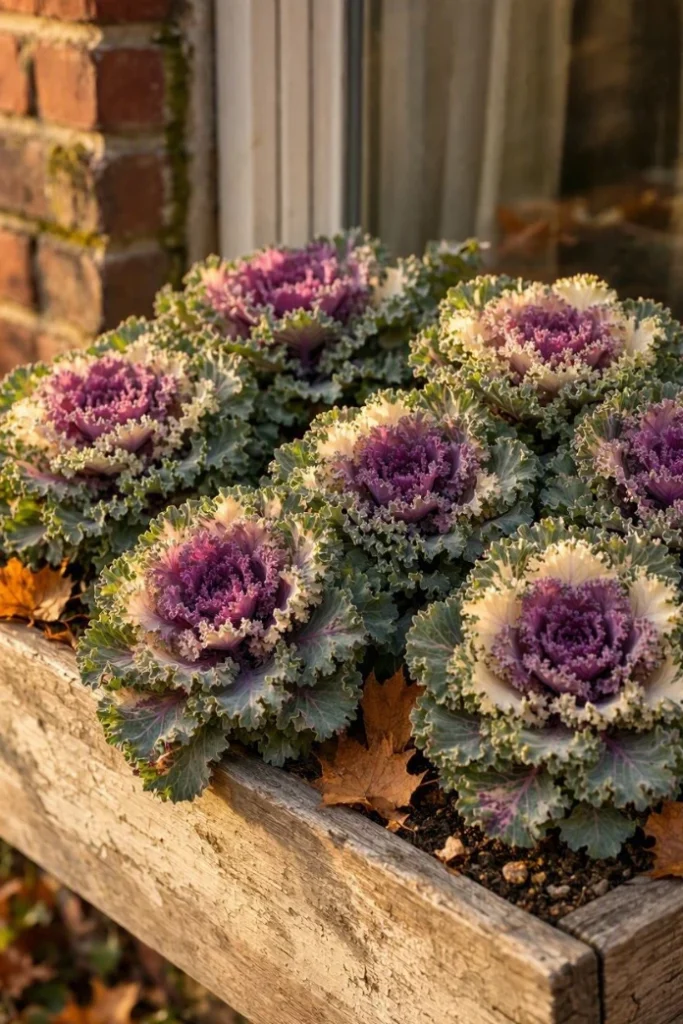
It works because it’s grown for foliage rather than blooms, adding a completely different texture and shape that flowers alone can’t provide in a fall arrangement.
15. Include Pansies Again for a Cool-Season Rebloom
Replanting pansies in the fall meant I got a second round of blooms from the same flower that had opened the season back in spring.
A six-pack of pansy starts runs $6 to $12, the same cost as the spring planting since pansies work well in both cool seasons.
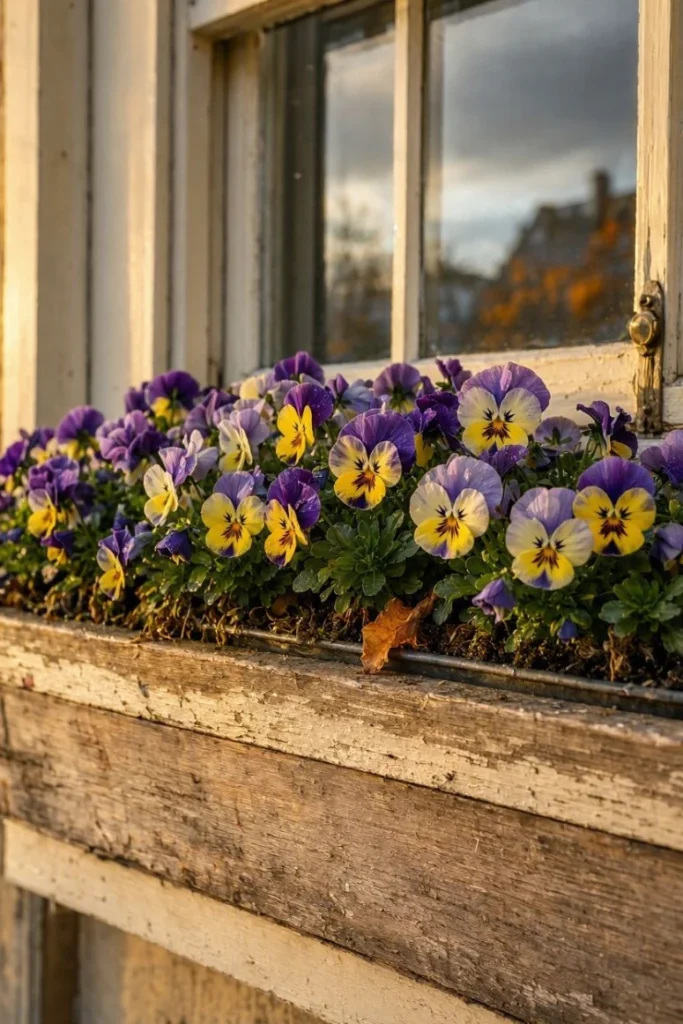
It works because pansies tolerate cool fall temperatures just as well as early spring ones, making them one of the few flowers that can bookend the whole growing season.
16. Use Celosia for Deep Burgundy Tones
Celosia’s deep burgundy plumes added a rich color and unusual texture that instantly signaled fall better than any other single plant I tried.
Celosia starts run $6 to $14, and the plume varieties in particular add an unusual, feathery texture to a fall arrangement.
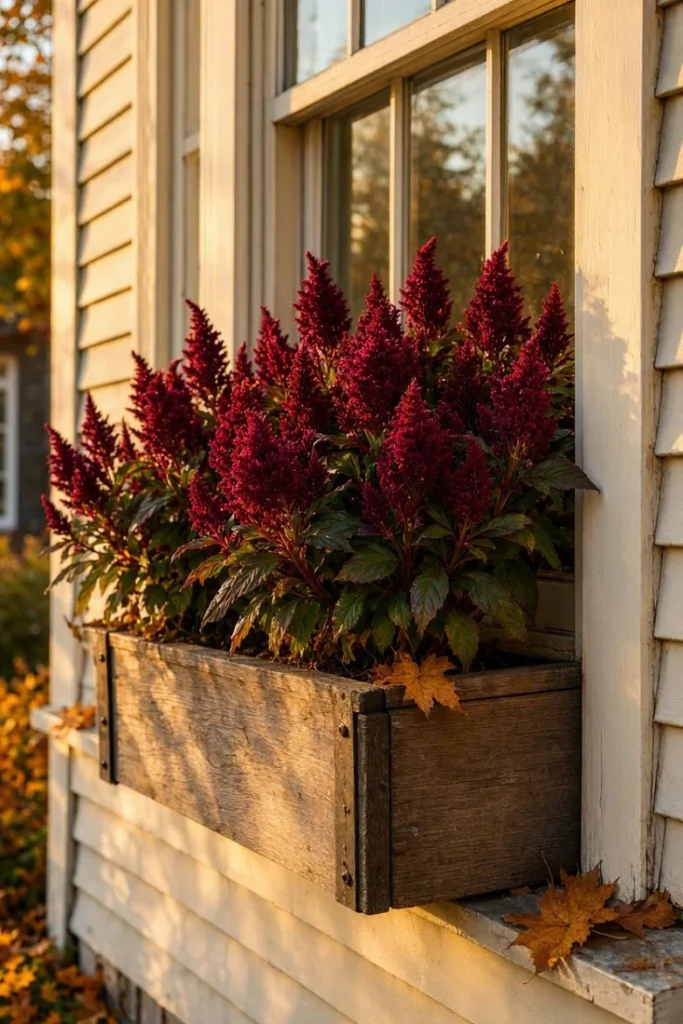
It works because its deep, warm color and unusual plume shape stand out clearly against more common fall choices like mums, adding variety to the seasonal palette.
Trailing and Filler Plants
17. Add Trailing Ivy for Movement
Trailing ivy down the front of the box added the kind of movement and softness that no upright flower alone ever managed.
An ivy start runs $5 to $10, and it works year-round in most climates, unlike the seasonal annuals it’s usually paired with.
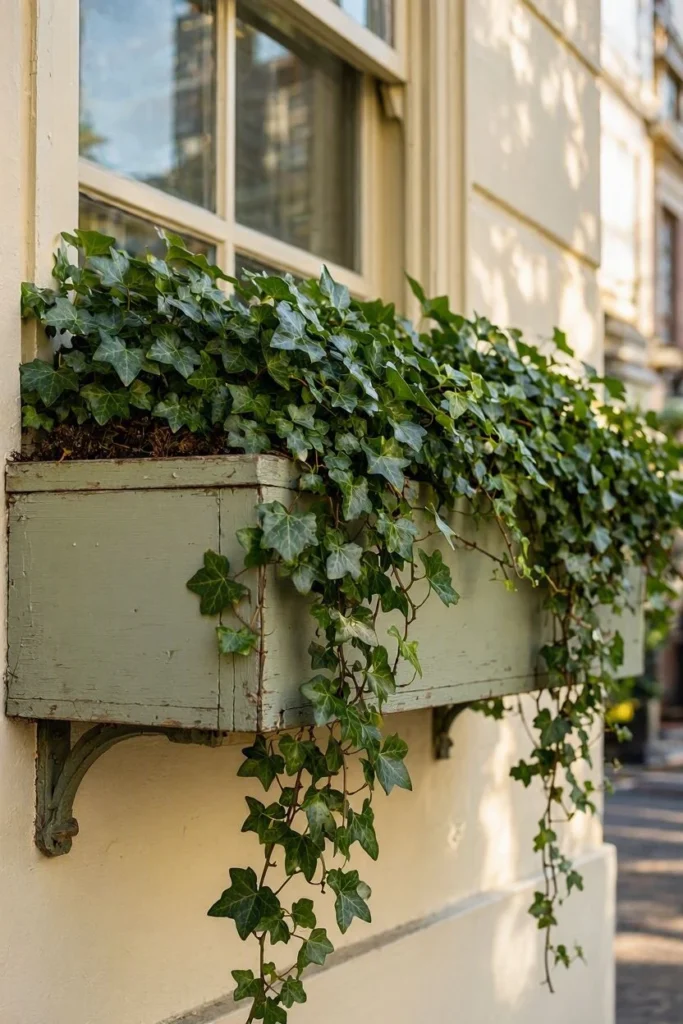
It works because it fulfills the “spiller” role in the classic window box layout, softening the hard edge of the box and adding vertical movement downward.
18. Include Sweet Potato Vine for Bold Foliage
Sweet potato vine’s chartreuse leaves grew so fast they nearly took over the whole box by midsummer, in the best way.
A sweet potato vine start runs $6 to $12, and it grows quickly enough to fill in bare spots within just a few weeks.
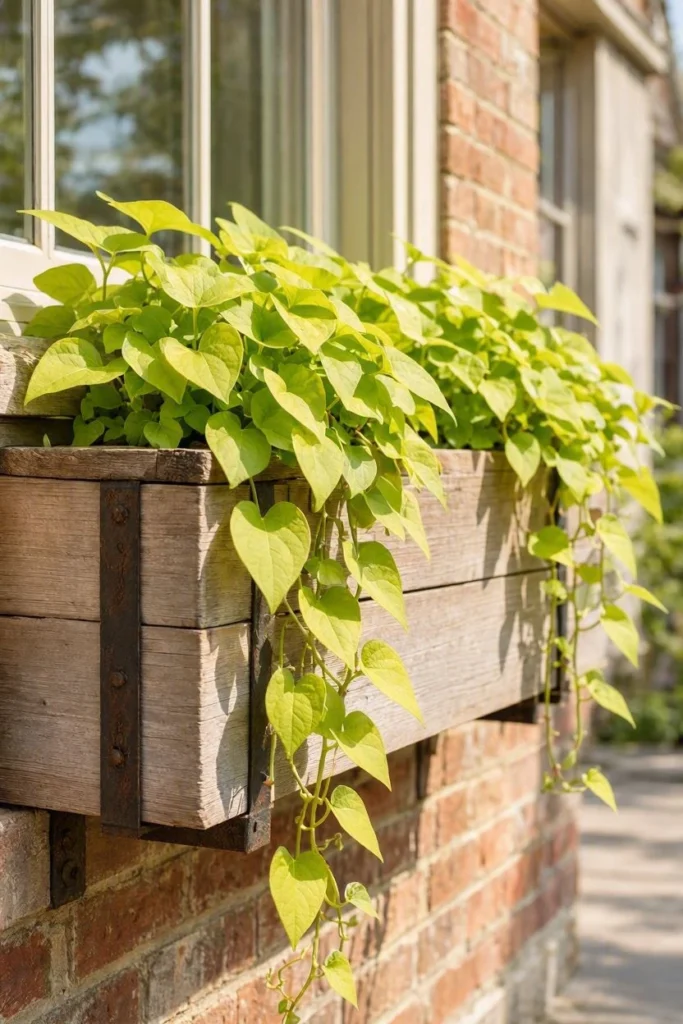
It works because its bold, fast-growing foliage fills space quickly and adds color contrast even before any flowers open, making the box look full sooner.
19. Use Bacopa for Delicate Trailing Blooms
Bacopa’s tiny white flowers added delicate detail along the trailing edge without competing with the bolder blooms in the rest of the box.
A bacopa start runs $5 to $10, and its small, dainty flowers bloom continuously through summer with minimal deadheading required.
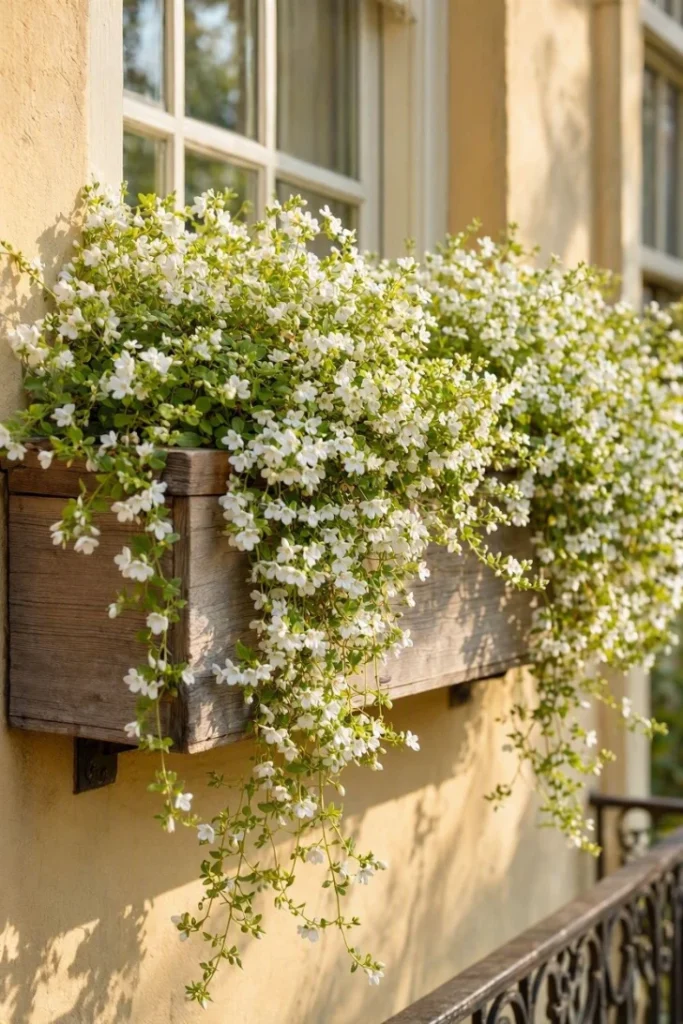
It works because its delicate, small-scale blooms add detail without visually competing with larger, bolder flowers elsewhere in the arrangement.
20. Add Creeping Jenny for Chartreuse Contrast
Creeping Jenny’s bright chartreuse trails gave the box a pop of color even in the spots without any flowers blooming yet.
A creeping Jenny start runs $5 to $10, and it’s a hardy perennial in many climates, meaning it may come back the following year on its own.
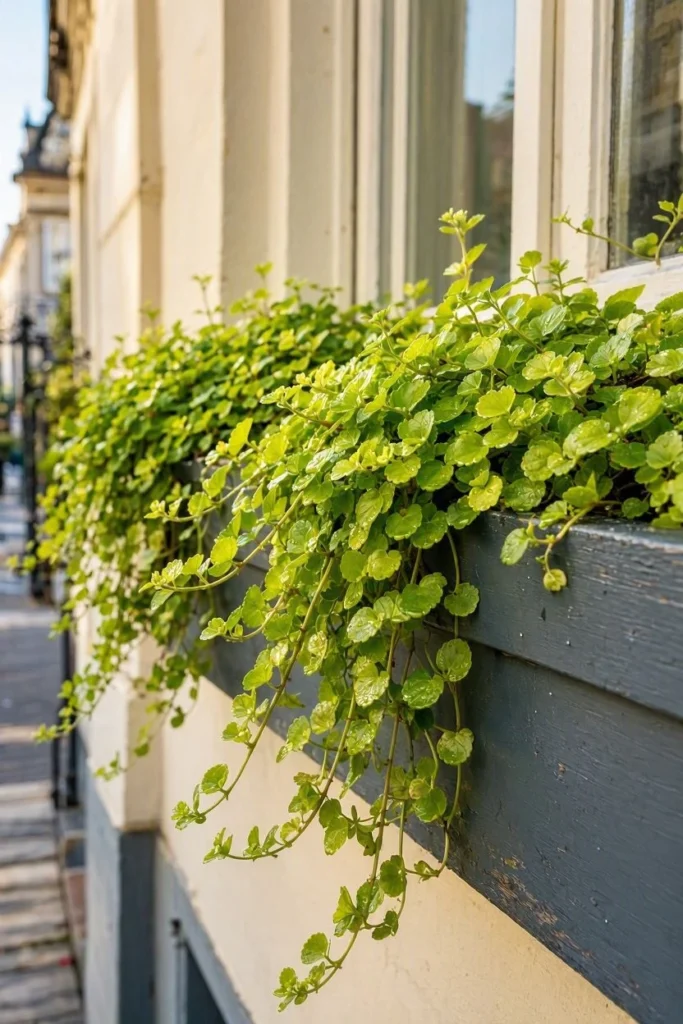
It works because its bright chartreuse color contrasts against most flower colors, and unlike many annuals, it’s a hardy perennial that can return year after year.
Styling and Maintenance
21. Layer Plants by Height Following the Thriller-Filler-Spiller Rule
Once I actually planned around one tall plant, several mid-height fillers, and trailing edges, the box looked professionally arranged instead of randomly planted.
This is a planning principle rather than a purchase, and applying it doesn’t add cost, it just changes how you arrange the plants you’re already buying.
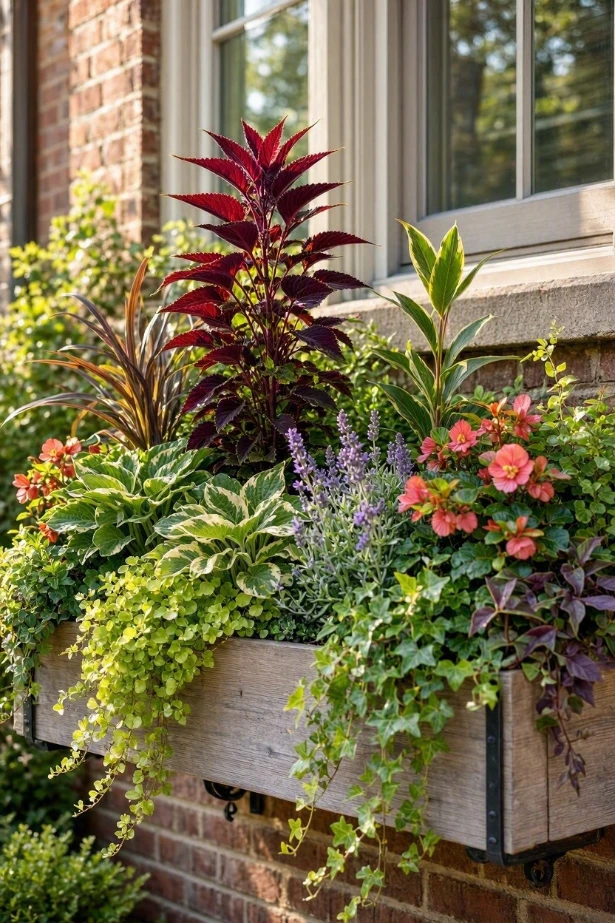
It works because this classic container gardening formula, height in the back, fullness in the middle, movement at the edges, is what separates a styled arrangement from a random cluster of plants.
22. Water Consistently with a Self-Watering Insert
A self-watering insert saved my window box during a week I forgot to check on it while traveling.
A self-watering liner or insert runs $15 to $30 and typically extends the time between waterings by several days.
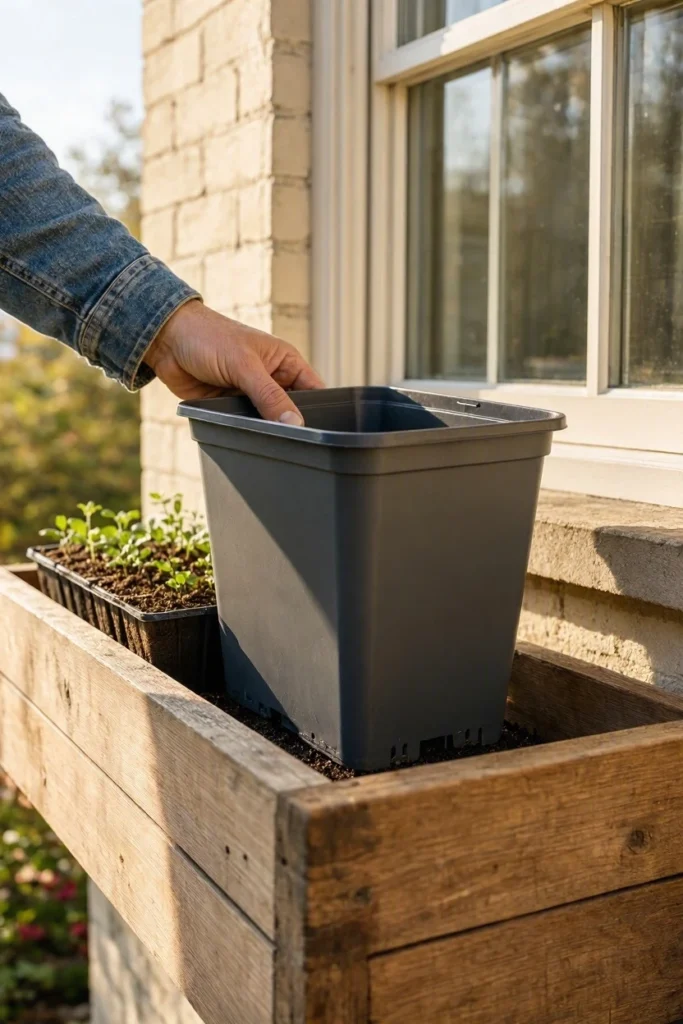
It works because window boxes dry out faster than ground plantings due to their small soil volume and full sun exposure, and a reservoir buys crucial extra time between waterings.
23. Deadhead Spent Blooms Regularly
Ten minutes of deadheading each week kept my petunias blooming continuously all summer instead of petering out by July.
This costs nothing beyond a small pair of scissors or pruning snips, which run $8 to $15 if you don’t already own a pair.
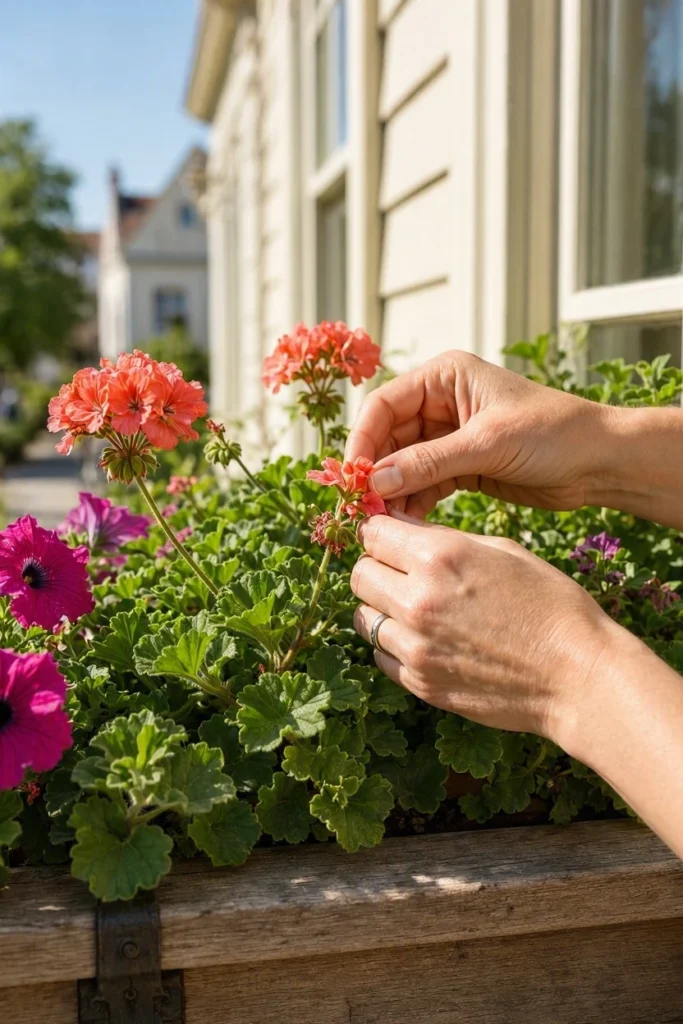
It works because removing spent blooms signals the plant to keep producing new flowers instead of putting energy into seed production, extending the overall bloom time significantly.
24. Feed with a Slow-Release Fertilizer
Mixing in a slow-release fertilizer at planting time meant I didn’t have to remember weekly feeding for the whole season.
A container of slow-release fertilizer granules runs $8 to $18 and typically feeds a window box for two to three months per application.
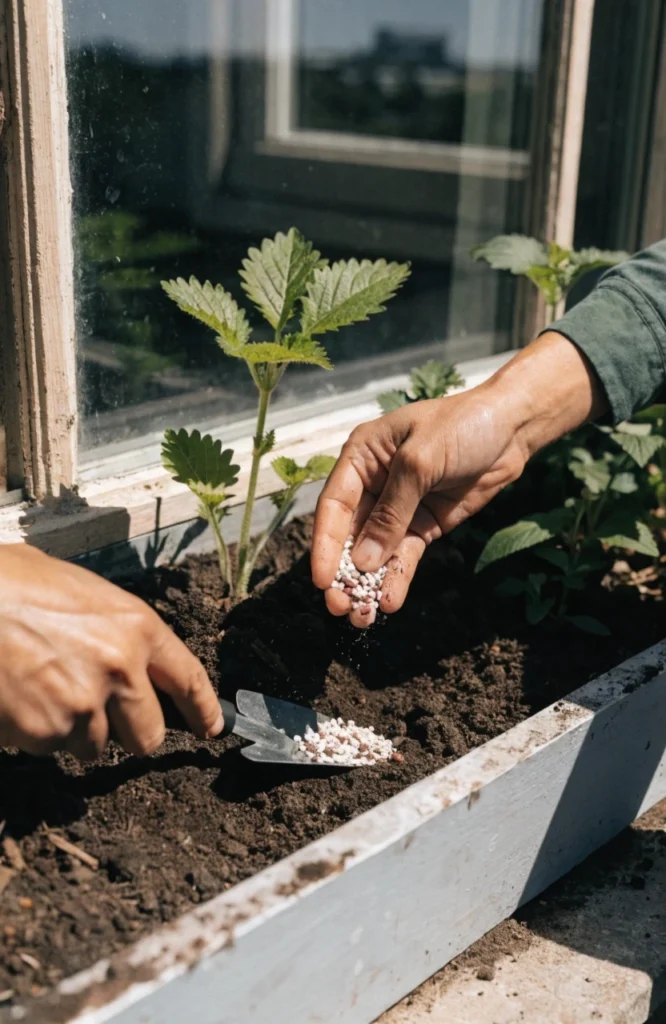
It works because container plants use up available nutrients faster than ground plantings, and a slow-release formula keeps them fed without needing to remember a weekly liquid feeding schedule.
25. Rotate the Box Seasonally Instead of Starting Over
Swapping just the spent annuals for new ones each season, while keeping the trailing ivy and creeping Jenny in place, meant I never had to rebuild the box from scratch.
This saves money over time, since keeping the hardy perennial trailing plants year to year and only replacing the seasonal annuals costs less than a full replant each time.
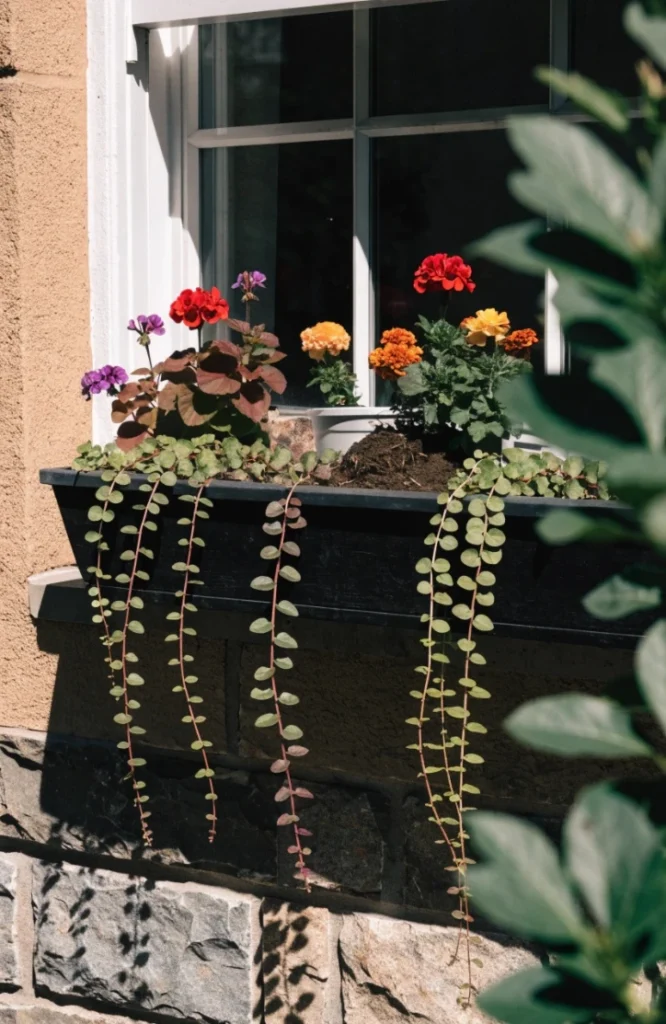
It works because it treats the box as an evolving display rather than a one-time project, which is exactly what keeps it looking good across multiple seasons instead of just one.
Conclusion
If you’re starting from an empty box, good drainage and quality potting mix come first, since no plant choice can make up for poor growing conditions underneath. Plan your planting around the thriller-filler-spiller layout next, and choose at least one hardy trailing plant like ivy or creeping Jenny that can stay in place while you swap the seasonal annuals around it. A window box that blooms all season isn’t planted once and forgotten, it’s planted with the expectation that you’ll refresh it two or three times as the year moves through spring, summer, and fall.
FAQ
How often should I replant a window box?
Most window boxes benefit from two to three seasonal plantings a year, spring, summer, and fall, though hardy trailing plants can often stay in place across multiple seasons.
What flowers bloom the longest in a window box?
Petunias and verbena are among the most reliable continuous bloomers for a full summer season, especially with regular deadheading to encourage new flowers.
How do I stop my window box from drying out too fast?
A self-watering insert and a quality potting mix both help retain moisture longer, and checking soil moisture daily during peak summer heat catches dry spells before plants show stress.