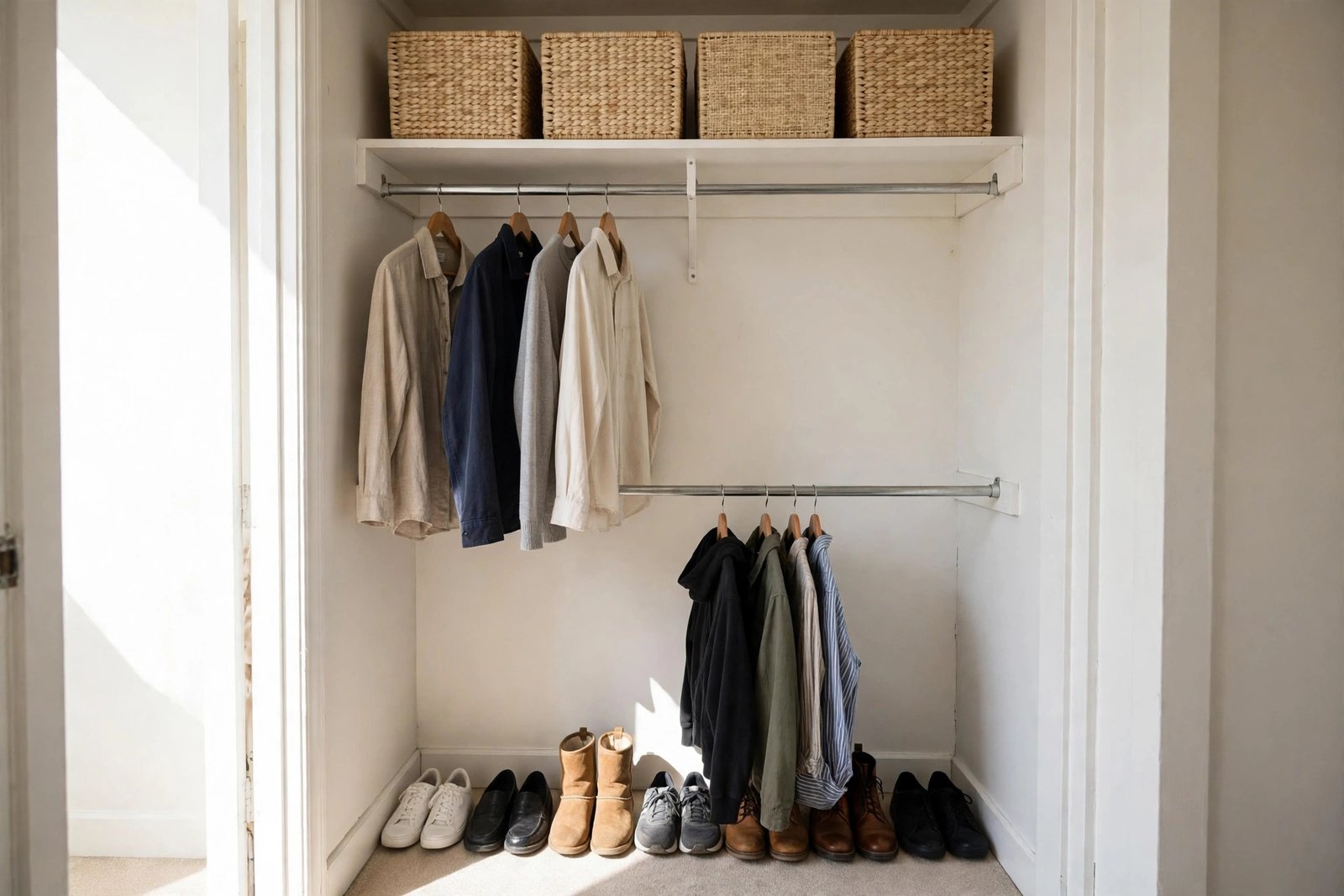
A small closet in a rental can feel full before you put anything in it. One rod, one shelf, and a narrow floor leave little room for error. Clothes pile up, shoes crowd the floor, and the door will not close.
You do not need a new closet system. You need a clear plan for the rod, the shelf, the floor, and the door. Every idea here works with no drilling and no permanent change, so you can take it all with you when you move.
Quick Picks
- Start by emptying it: take everything out, sort it, and only put back what you wear now.
- Double the rod: a hanging rod doubler adds a second level for shirts and pants with no screws.
- Use slim hangers: slim velvet hangers free up rod space and stop clothes from slipping off.
- Use the door: an over the door organizer holds shoes, scarves, and small items in dead space.
- Label every bin: a label stops a tidy shelf from turning into a pile again in a week.
Did You Know?
A standard reach in closet is about 24 inches deep and 3 to 8 feet wide. A single rod sits 60 to 66 inches from the floor, and that leaves 2 to 3 feet of empty space above it in many rentals. A second rod at 40 to 42 inches from the floor can nearly double the hanging space for short clothes.
Before You Start
- Measure the width, the depth, the rod height, and the space from the rod to the top shelf before you buy anything.
- Check the door swing and the clearance in front of the closet so a shoe rack or a drawer can still open.
- Keep your receipt for every organizer until you test the fit, because closet sizes vary a lot between rentals.
- Pick one zone to finish first. The rod gives the fastest win in most small closets.
Start Right
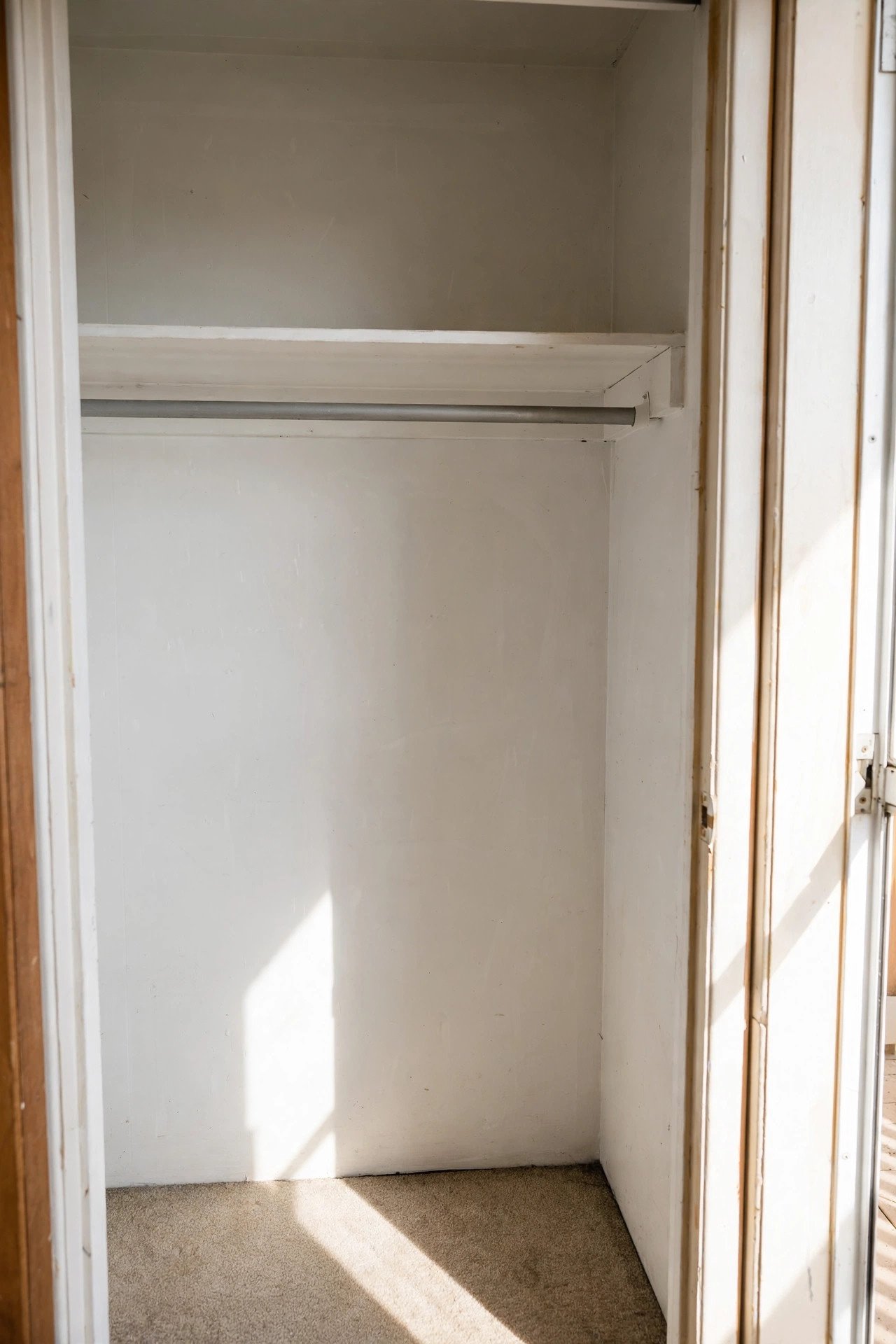
1. Empty the Closet Completely
Take every item out of the closet and lay it on the bed. A closet that looks full often hides clothes you never wear, and you cannot see the real space until it is empty.
Clean the shelf and the rod while it is empty.
Pro tip: Give yourself two hours for this step.
2. Sort Into Four Clear Piles
Sort everything into keep, donate, repair, and store. Keep only clothes that fit now and that you wore in the last year.
Bag the donate pile at once so it leaves the room.
Pro tip: If you feel unsure about an item, put it in the store pile for one season.

3. Measure Every Zone Before You Buy
Measure the rod length, the shelf depth, the floor width, and the height from the floor to the rod. Most closet shelves are 12 to 16 inches deep, and that number decides which bins will fit.
Write the numbers on your phone and take them to the shop.
Pro tip: Measure twice. A second check takes one minute and saves a second trip.

4. Keep a Small Capsule for the Season
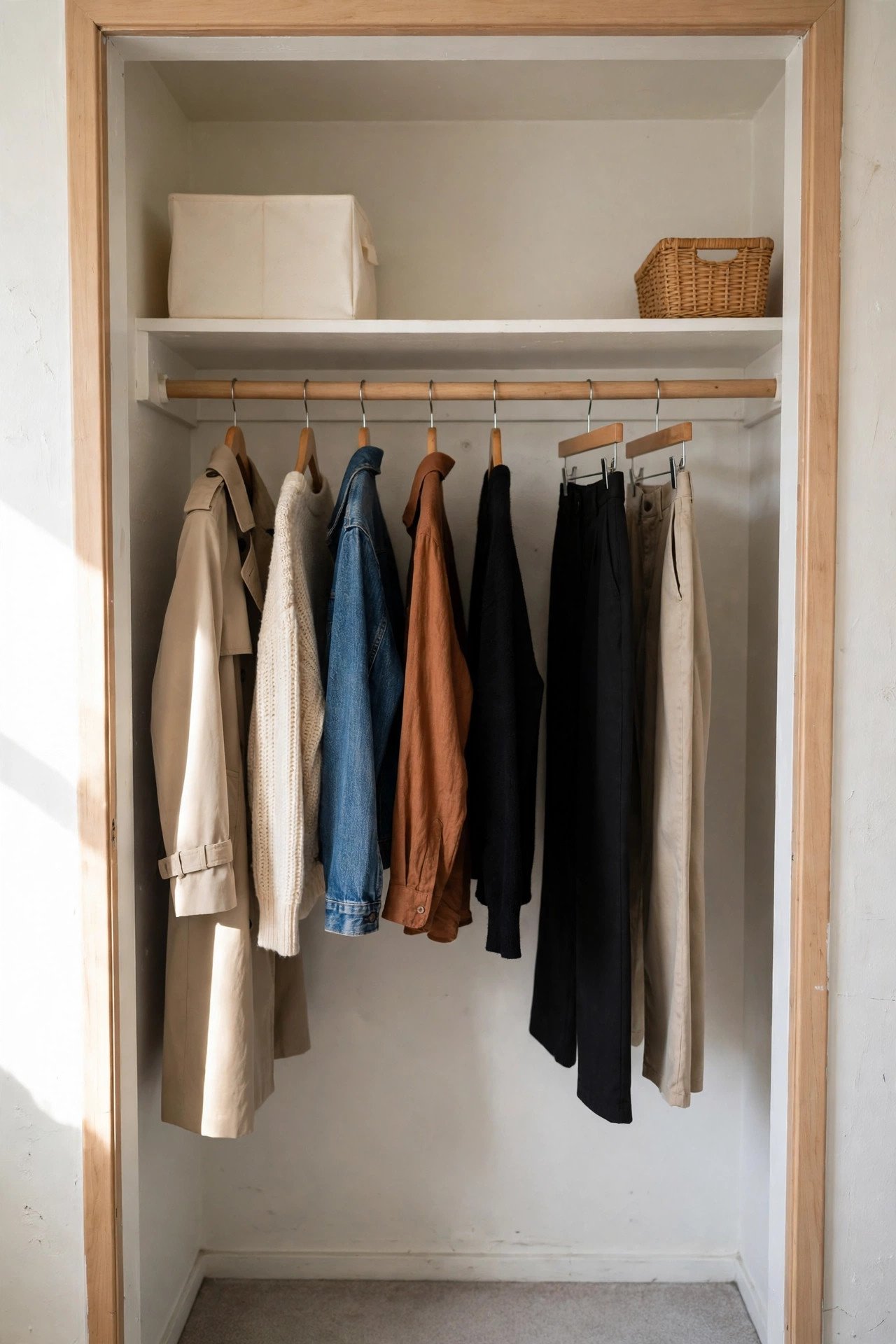
Keep only the clothes for this season in the closet. Move coats and heavy knits out when the weather turns warm, and move light clothes out when it turns cold.
A small capsule makes mornings faster because you see every option at once.
Pro tip: Aim for 30 to 40 pieces for the season. That count fits most small closets with room to spare.
The Rod
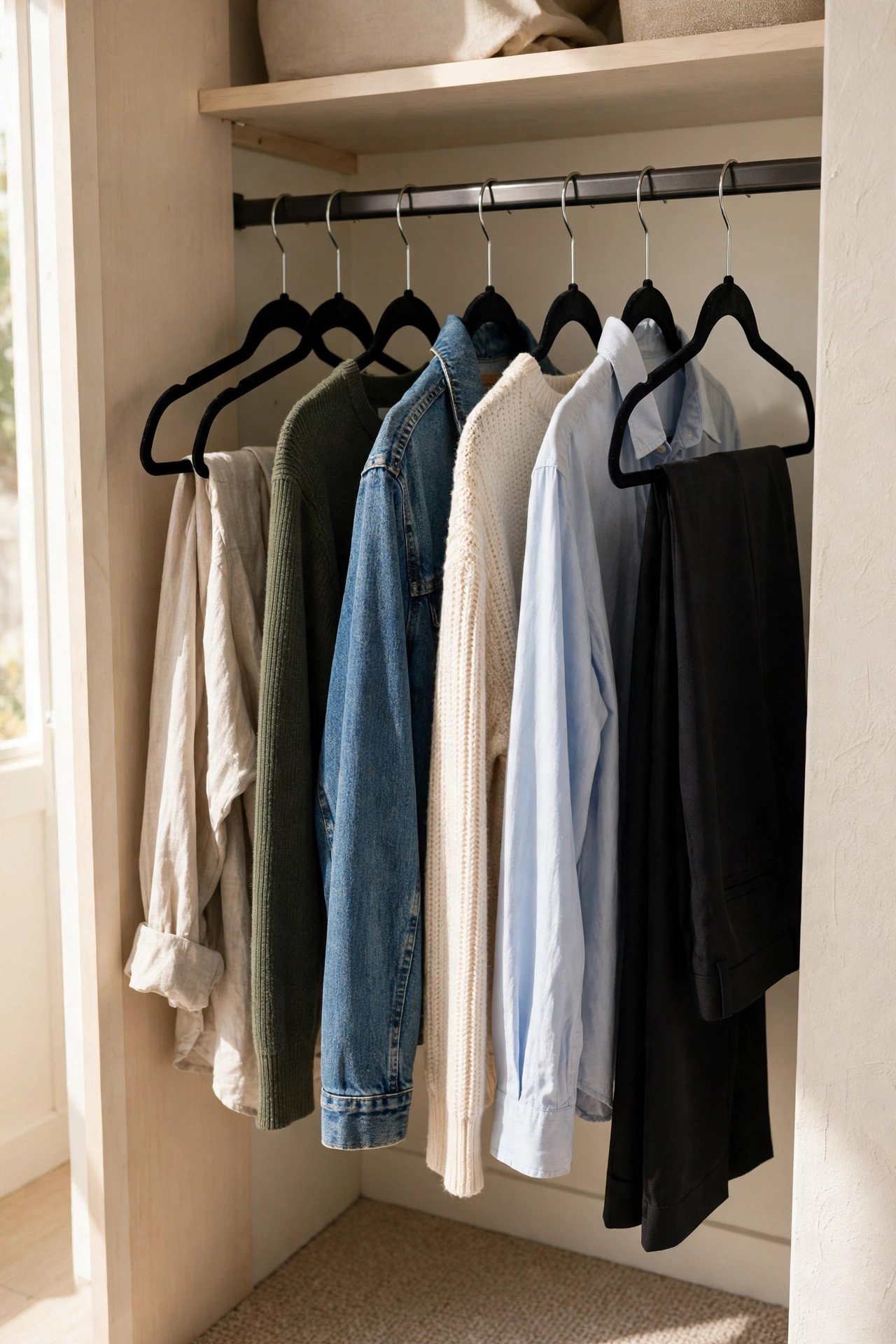
5. Switch to Slim Velvet Hangers
Thick plastic and wood hangers eat rod space. Slim velvet hangers are a fraction of the width, and they can free up to 30 percent more hanging space.
Use one hanger type for the whole rod so it looks calm and stops thin tops from sliding off.
Pro tip: A pack of 50 slim hangers costs about 15 to 30 dollars.
6. Add a Second Rod With No Drilling
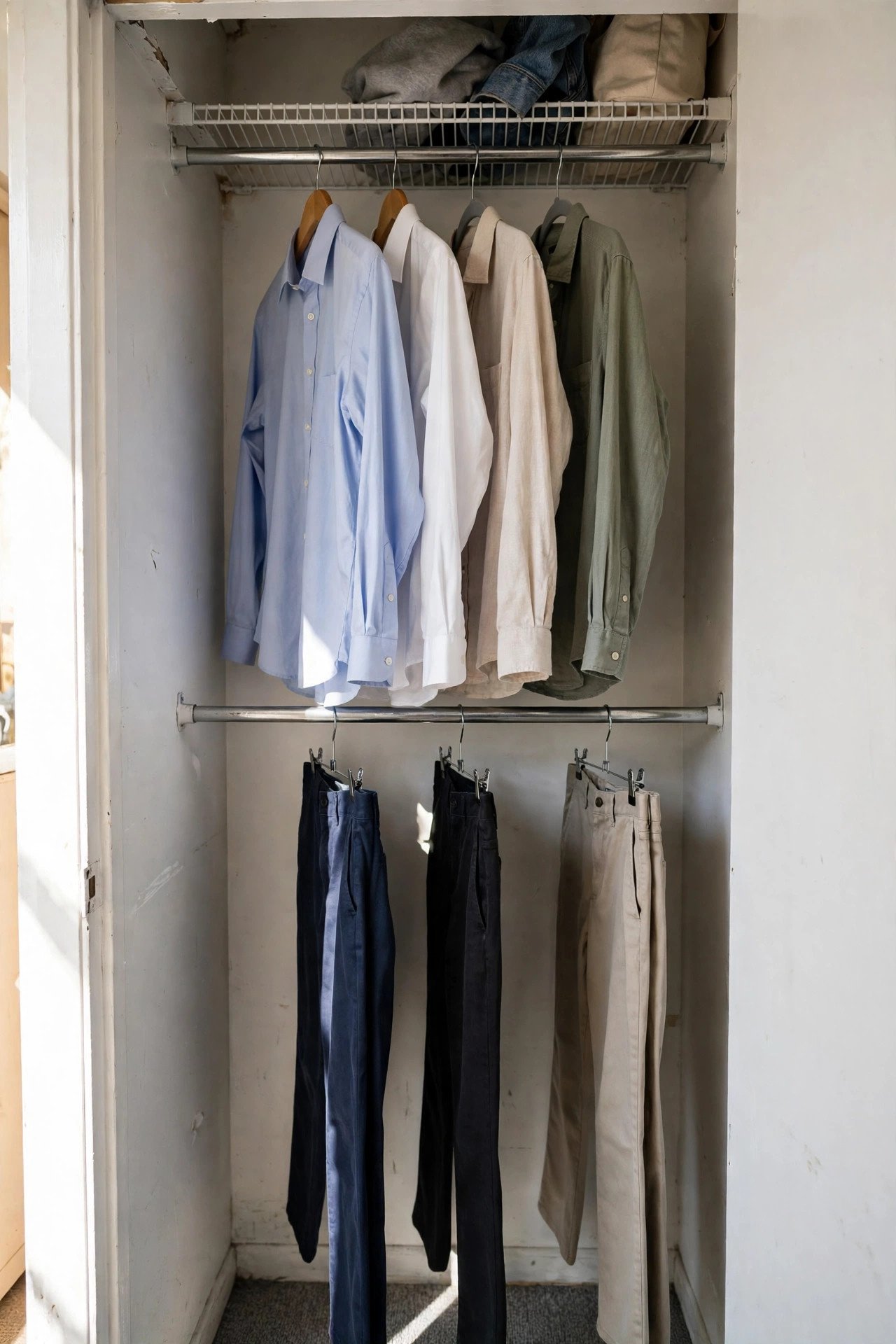
A hanging rod doubler hooks over the rod you already have. It drops a second bar to about 40 inches from the floor for shirts, blouses, and folded pants.
Use the top rod for shirts and the lower rod for pants and skirts. Keep long dresses and coats on the single rod section.
Pro tip: Check for at least 68 inches from the main rod to the floor first.
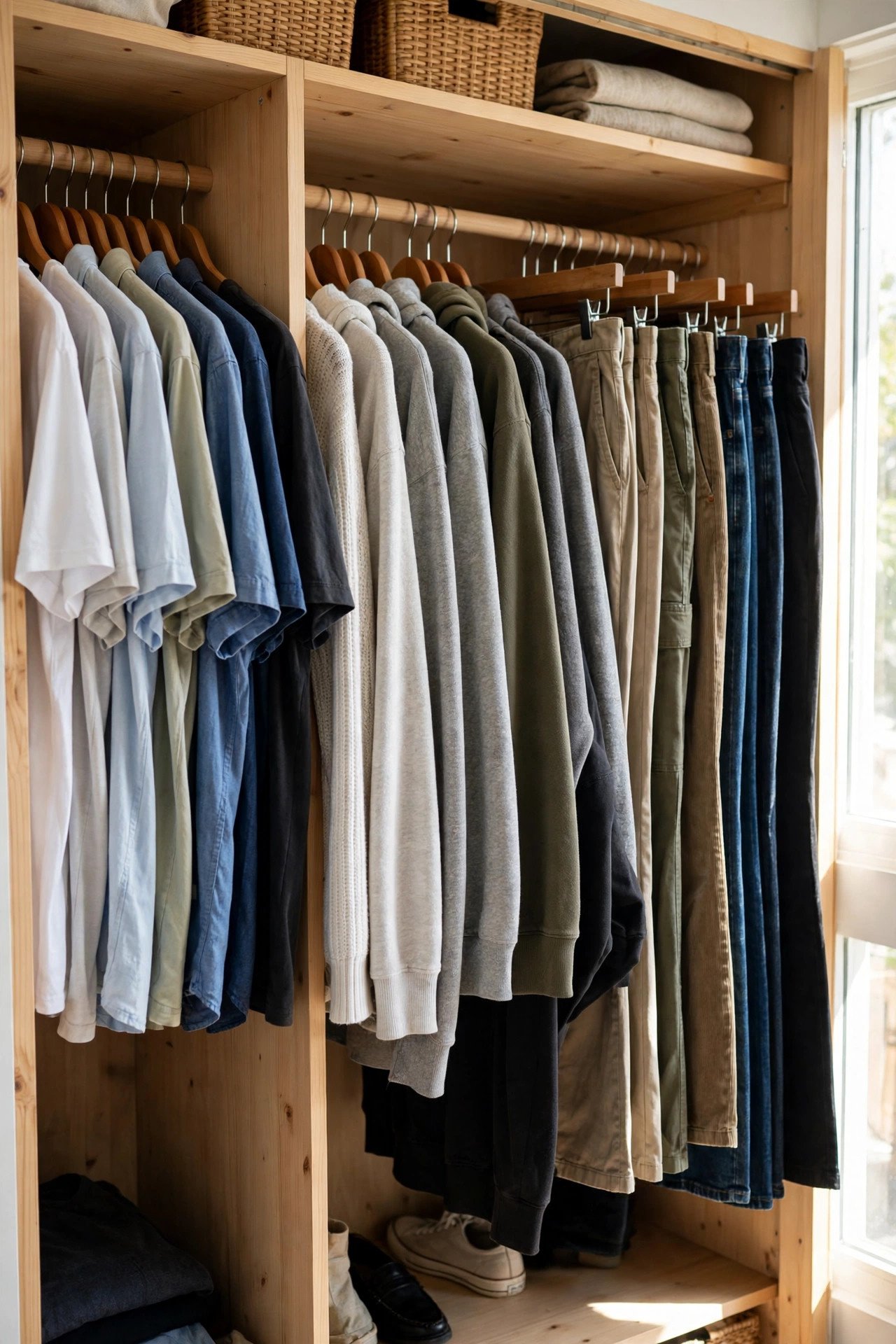
7. Hang Clothes by Type and Colour
Hang shirts together, then pants, then dresses. Inside each group, move from light colours to dark colours so you can find an item in seconds.
This order also shows you what you own too much of.
Pro tip: Face every hanger the same way so you can spot what you wore.
8. Use Cascading Hooks for Sets
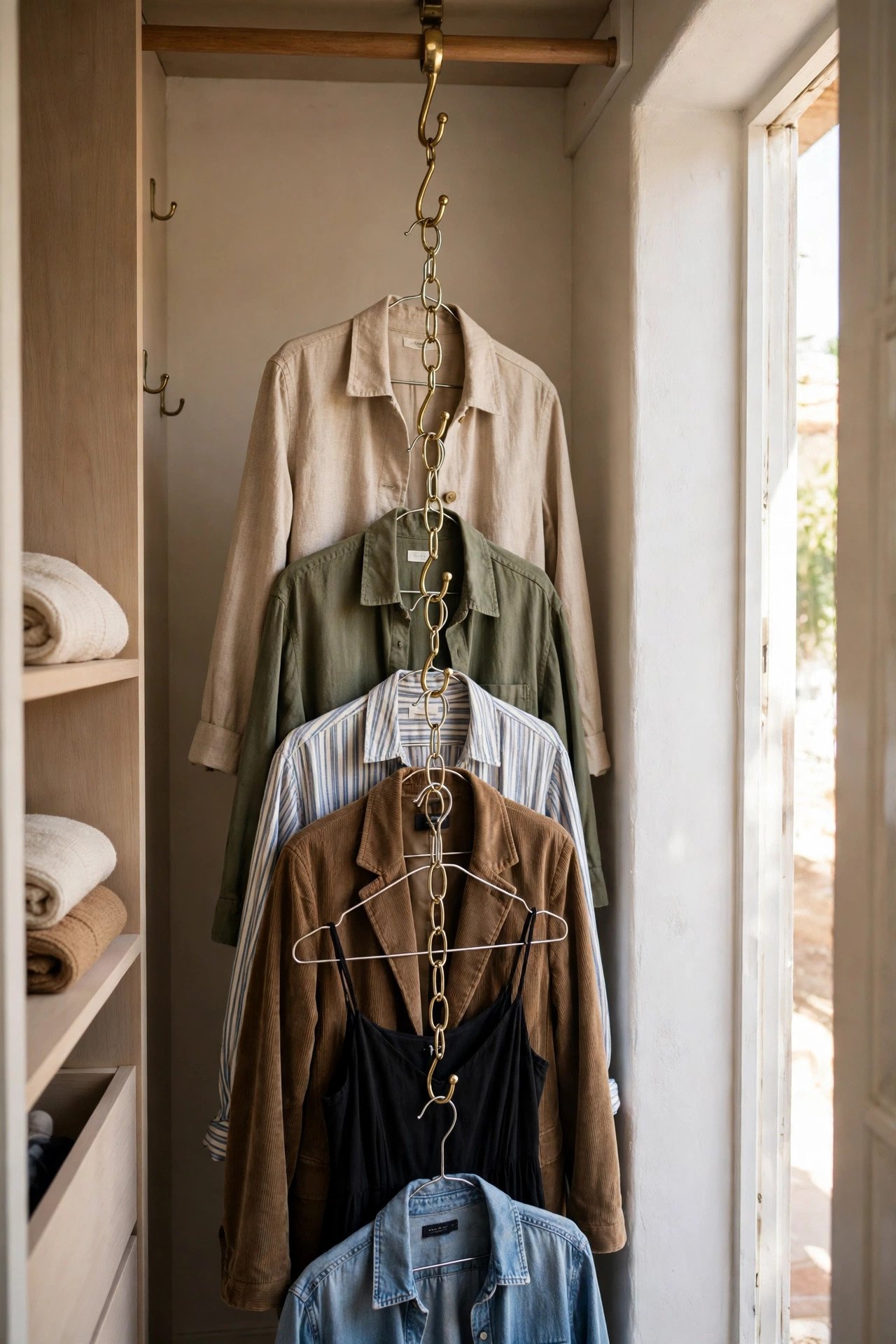
Cascading hooks link hangers in a vertical chain. One hook on the rod can hold four or five hangers, and that frees rod space fast.
Use them for sets you wear together, like a shirt and a jacket. Keep the chain short so clothes do not crush each other.
Pro tip: Use cascading hooks for light items only.
The Top Shelf
9. Add Shelf Dividers on the Top Shelf
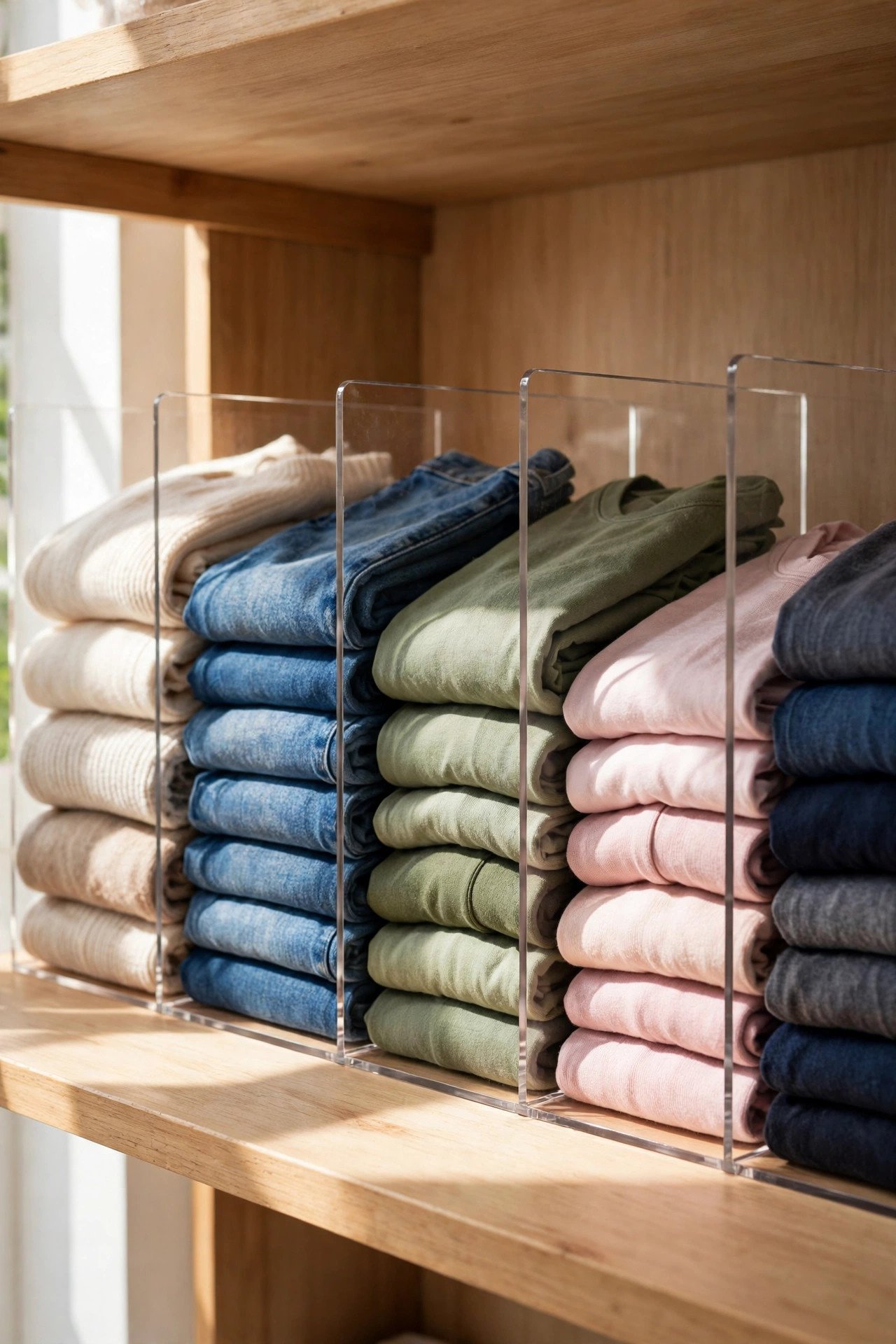
Folded clothes slide and topple without a divider. A slide on shelf divider splits the top shelf into neat stacks that stay upright.
Give each stack a job, one for T shirts, one for knitwear, and one for jeans.
Pro tip: Use dividers that slide on with no screws.
10. Use Labeled Bins Up Top
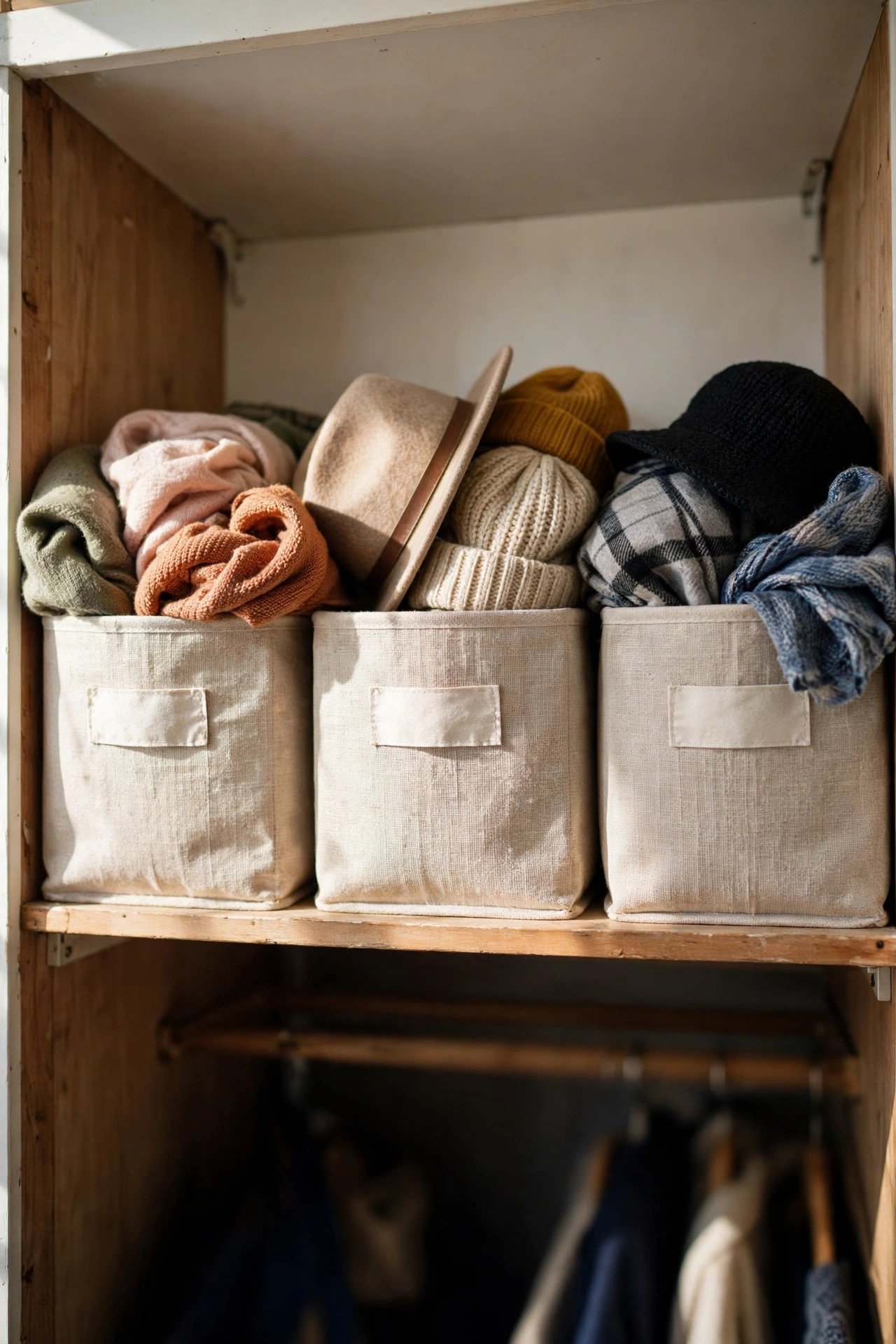
Bins on the top shelf hide clutter. Use one bin for scarves, one for hats, and one for off season accessories.
Label the front of each bin. A label stops you from pulling down three bins to find one scarf. The same bin plan works in a bathroom closet too, so try these bathroom closet organization ideas for towels and toiletries.
Pro tip: Use fabric bins with a stiff front.
11. Store Off Season Clothes in Vacuum Bags
Vacuum bags shrink bulky coats and knitwear to a flat pack. They fit on the top shelf or under the bed, and they keep dust and moths out.
Roll the bag to push air out if you have no vacuum, then write the contents on the front.
Pro tip: Do not store leather or down in a vacuum bag for months.

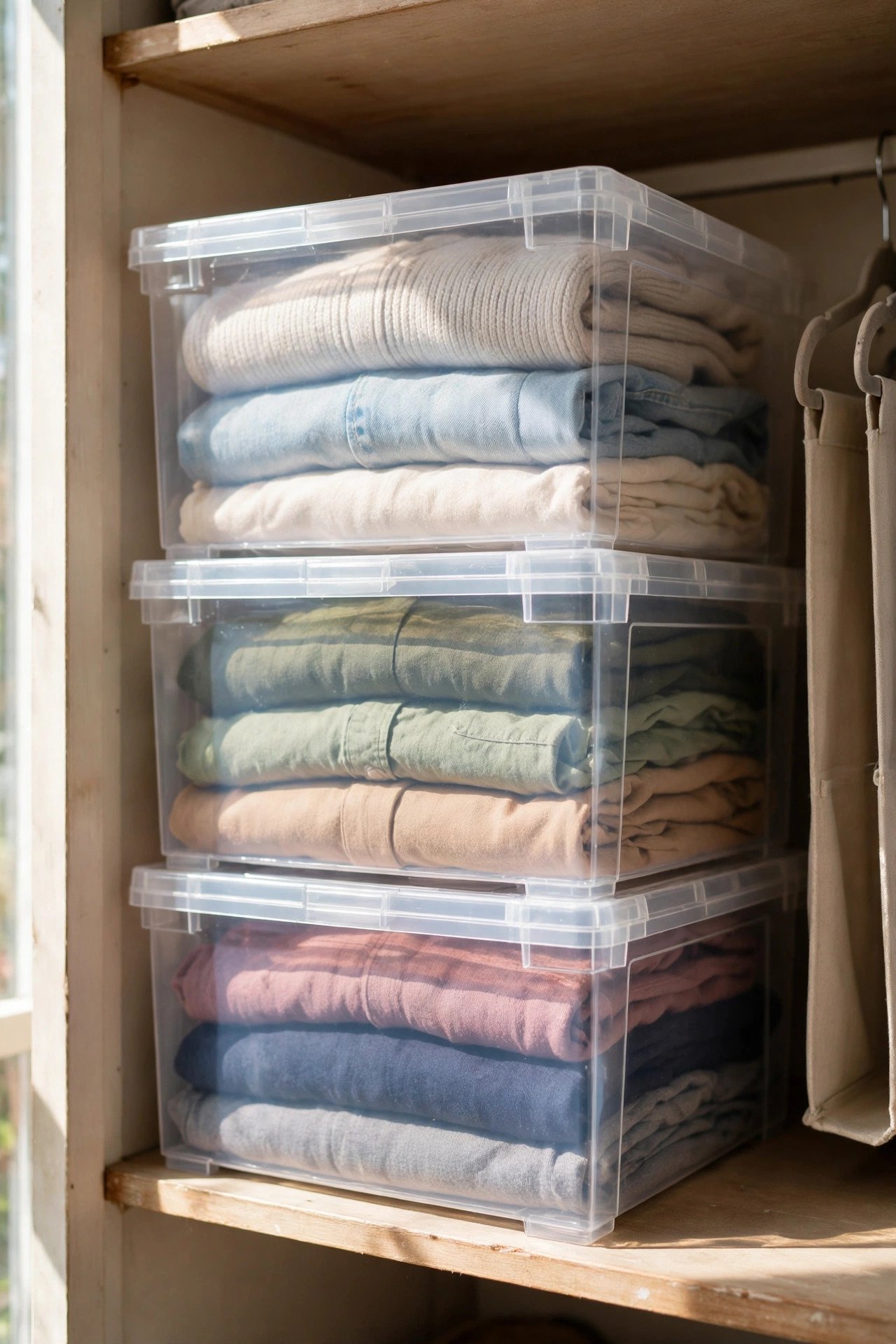
12. Stack Clear Boxes So You Can See Inside
Clear boxes show what is inside without a label check. Stack two boxes on the top shelf for items you need once a month, like swimwear or party shoes.
Keep the heaviest box at the bottom of the stack.
Pro tip: Choose boxes with a lid that clips shut. An open box fills with dust in a few weeks.
The Floor
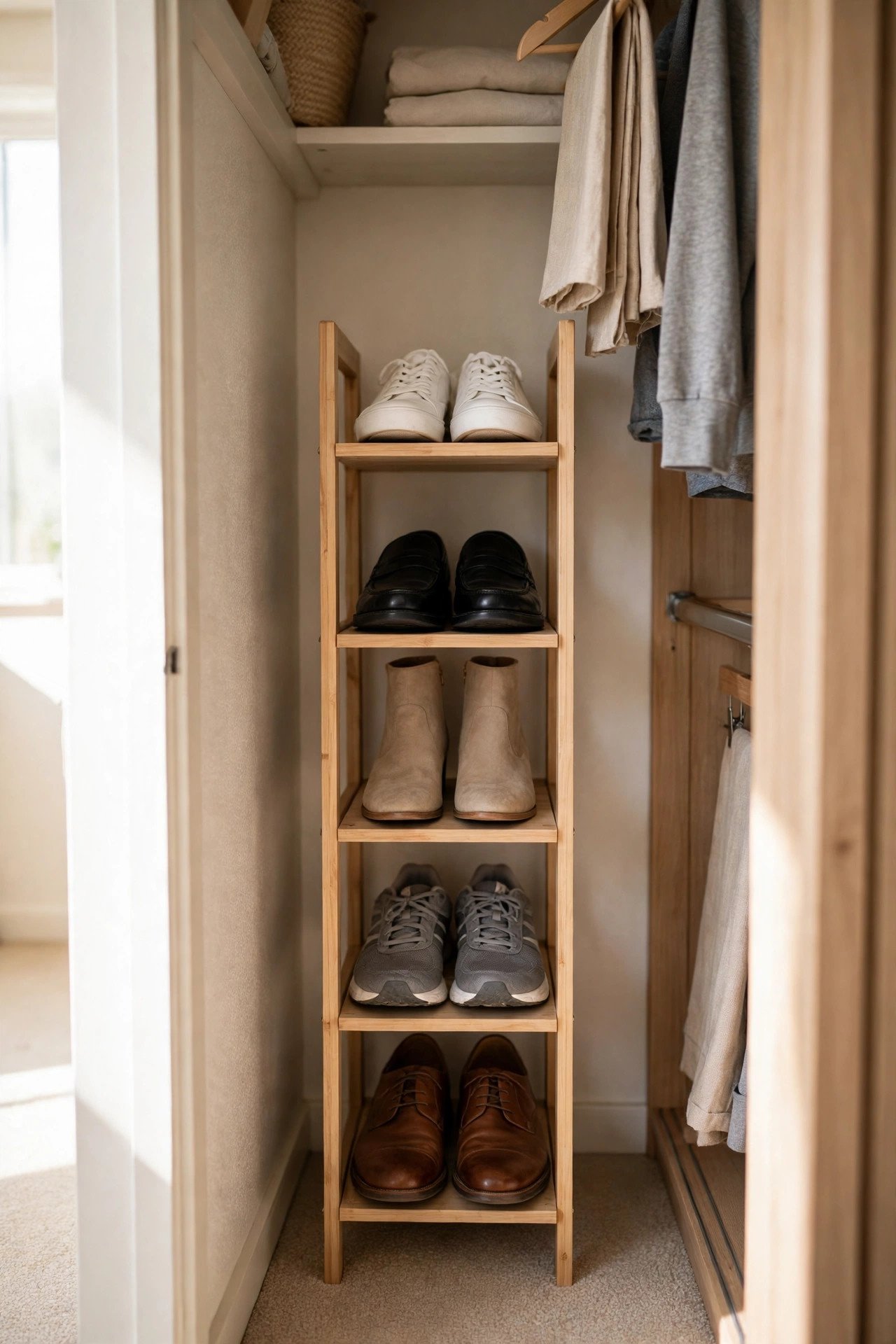
13. Put a Slim Shoe Rack on the Floor
Shoes on the floor turn into a pile in days. A slim tiered rack lines shoes up in pairs and keeps them off the floor.
Pick a rack that is no deeper than the closet floor. Two tiers hold daily shoes, and a third tier holds shoes you wear once a week.
Pro tip: Keep only the shoes you wear now on the rack.
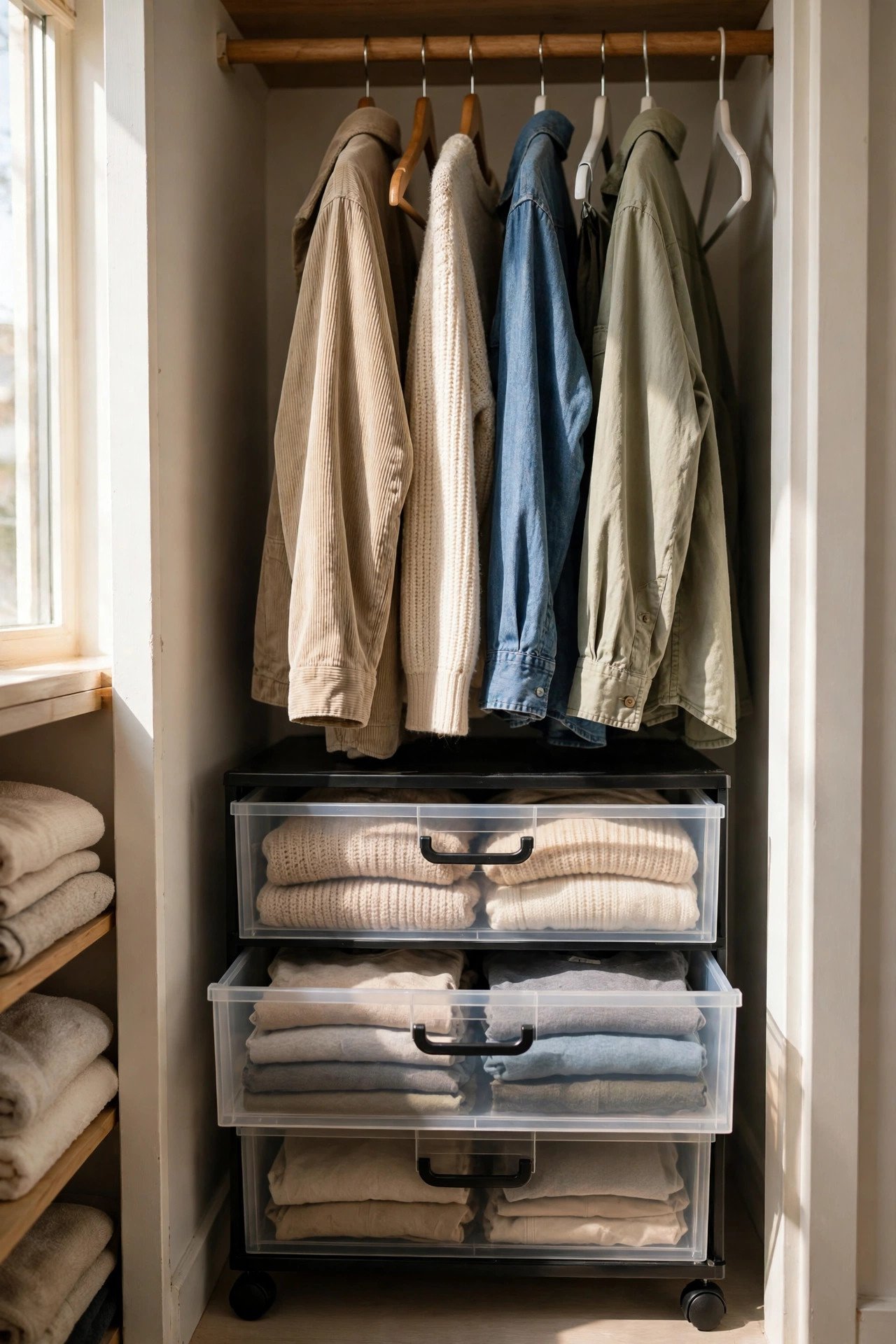
14. Add Rolling Drawers Under Hanging Clothes
Rolling drawers use the floor space under short hanging clothes. They hold underwear, socks, and T shirts in a spot that is often empty.
Choose a drawer unit on wheels so you can pull it out to clean behind it.
Pro tip: Leave 2 inches of clearance above the drawer unit.
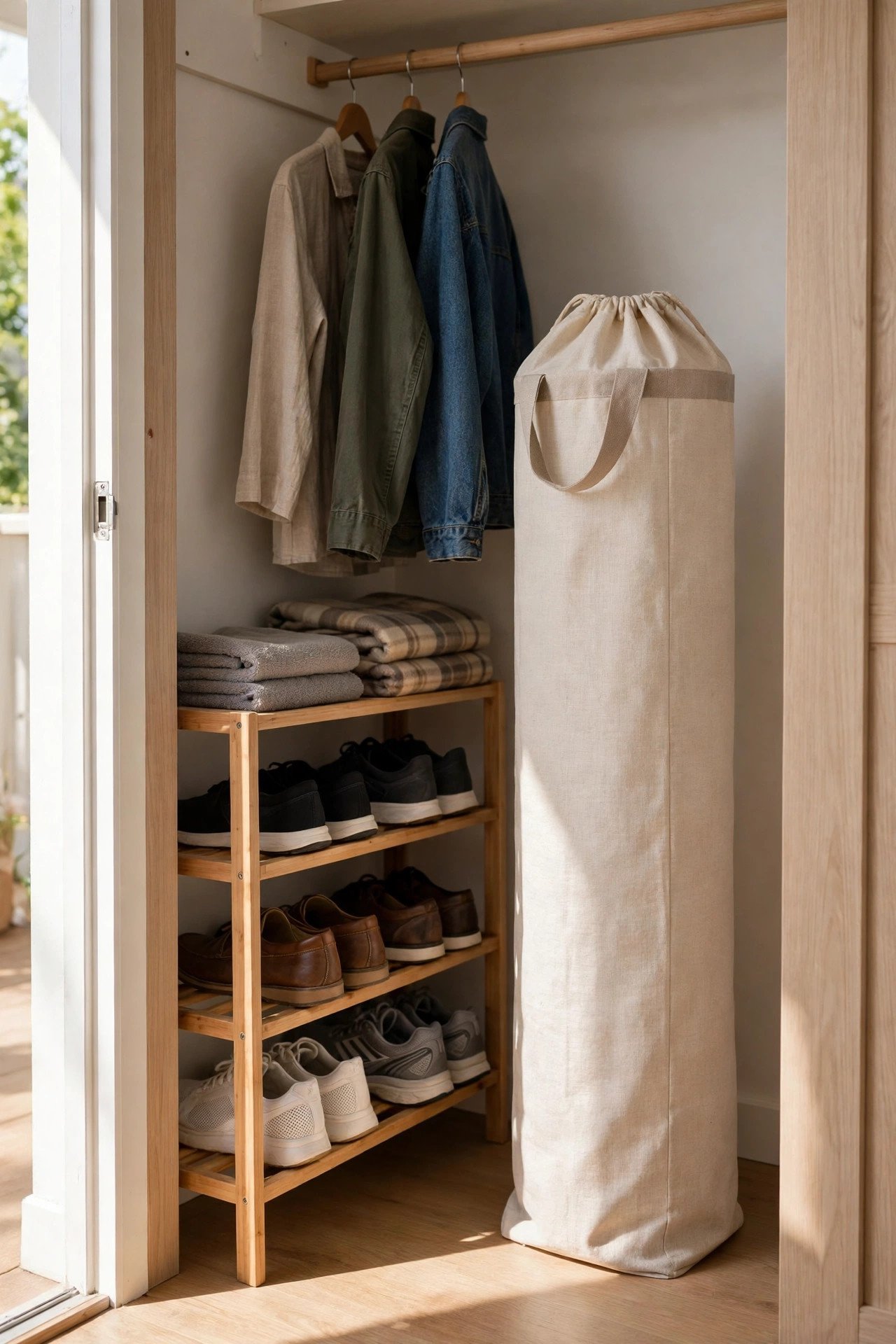
15. Keep a Slim Laundry Hamper in the Closet
A slim hamper in the closet keeps dirty clothes out of sight and off the bedroom floor. It also makes laundry day a one trip job.
Pick a tall narrow hamper that fits beside the shoe rack.
Pro tip: Empty the hamper every two or three days.
16. Use Under Shelf Baskets for Small Items
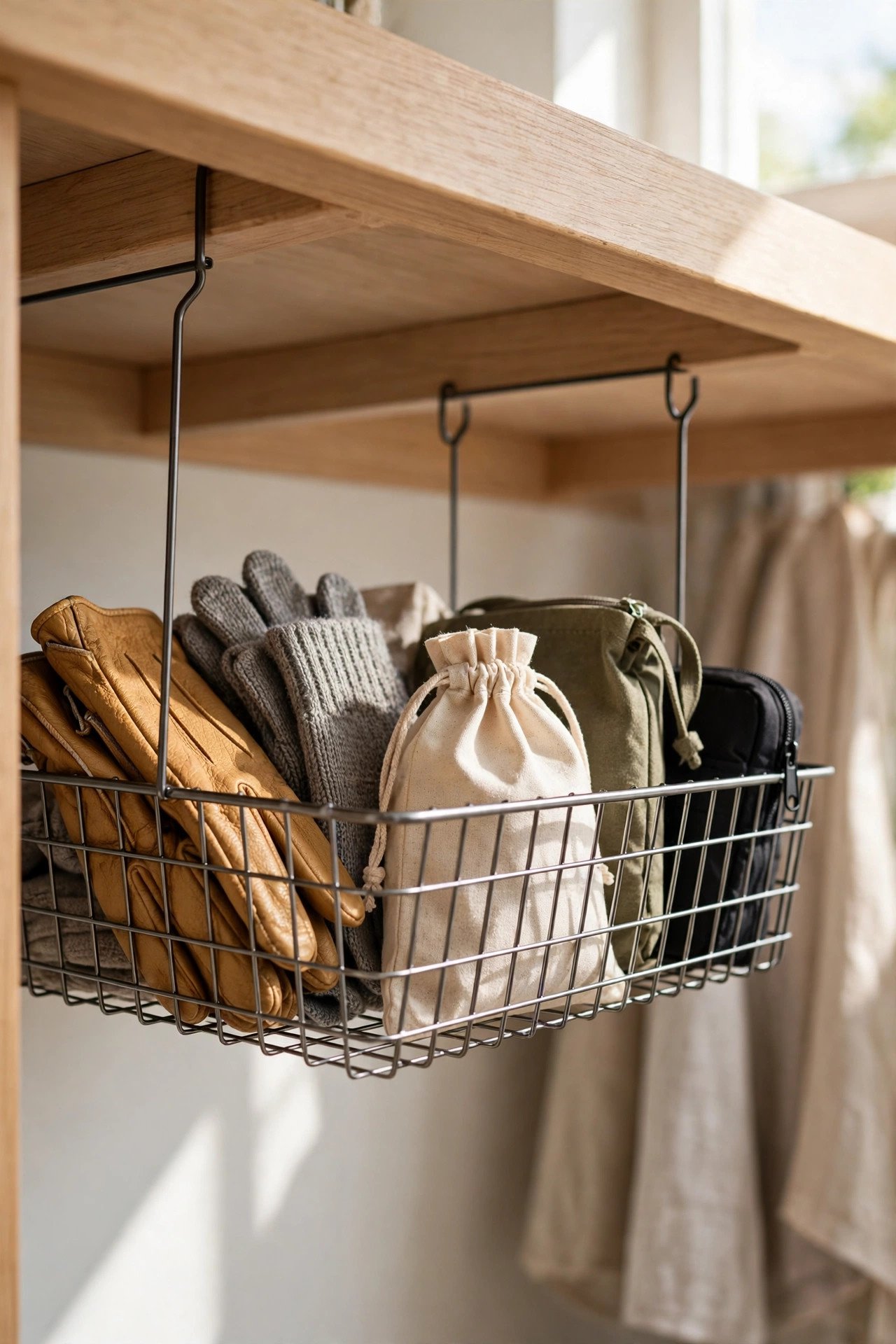
Under shelf baskets hook under the top shelf and use the dead space above hanging clothes. They hold gloves, belts, and small bags that have no home.
Slide the basket on and off with no tools. If a small bathroom closet is your second tight spot, these small bathroom organization ideas use the same bins and baskets.
Pro tip: Keep the basket light. A heavy basket pulls down on the shelf and makes it hard to slide out.
The Door and the Walls
17. Hang an Over the Door Organizer
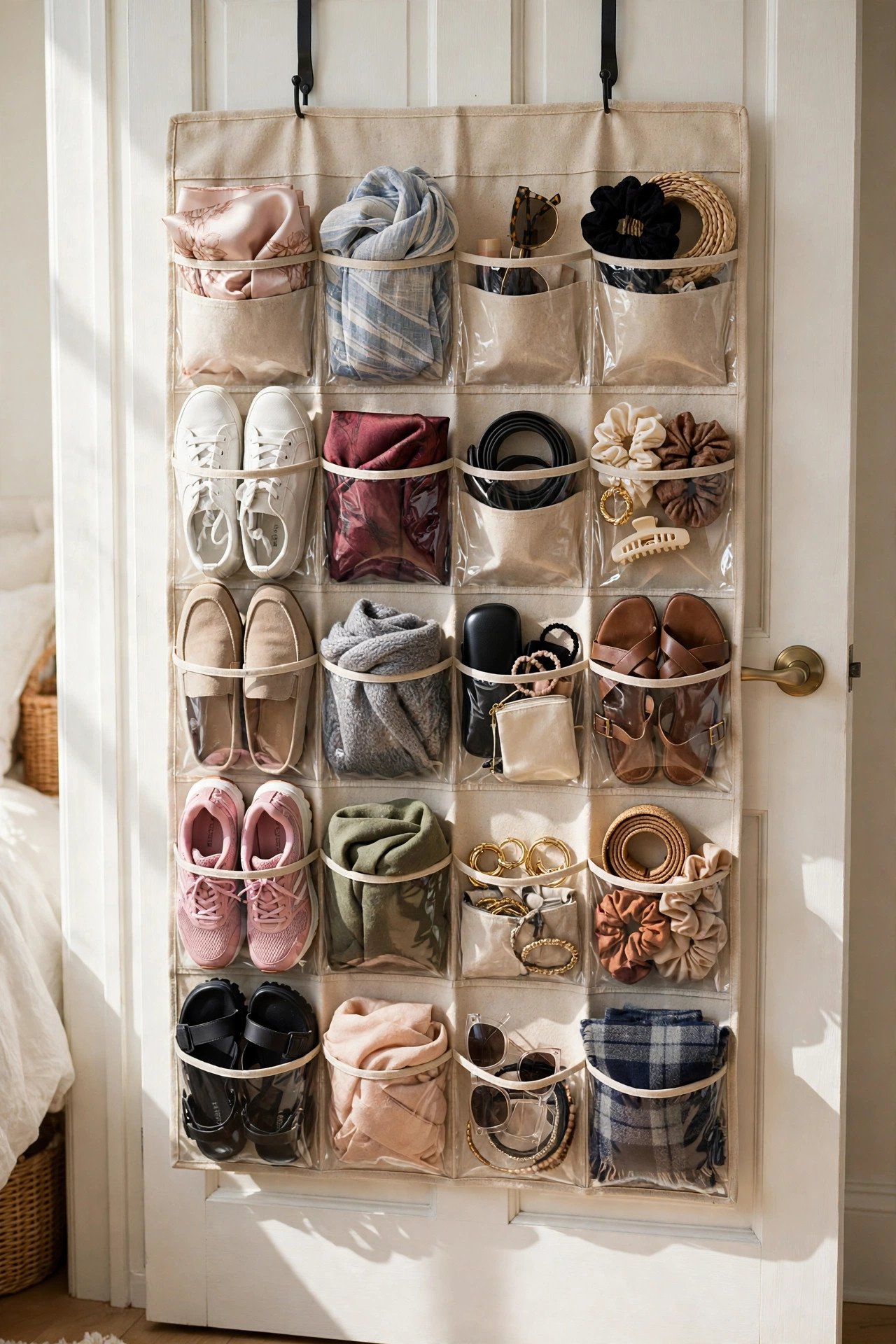
An over the door organizer turns the back of the door into storage. Clear pockets hold shoes, scarves, belts, and small accessories where you can see them.
Hang it over the door with no screws. Pick a fabric organizer if you want it to fold flat when you move.
Pro tip: Put daily items at eye level and rare items at the bottom.
18. Stick Adhesive Hooks Inside the Door
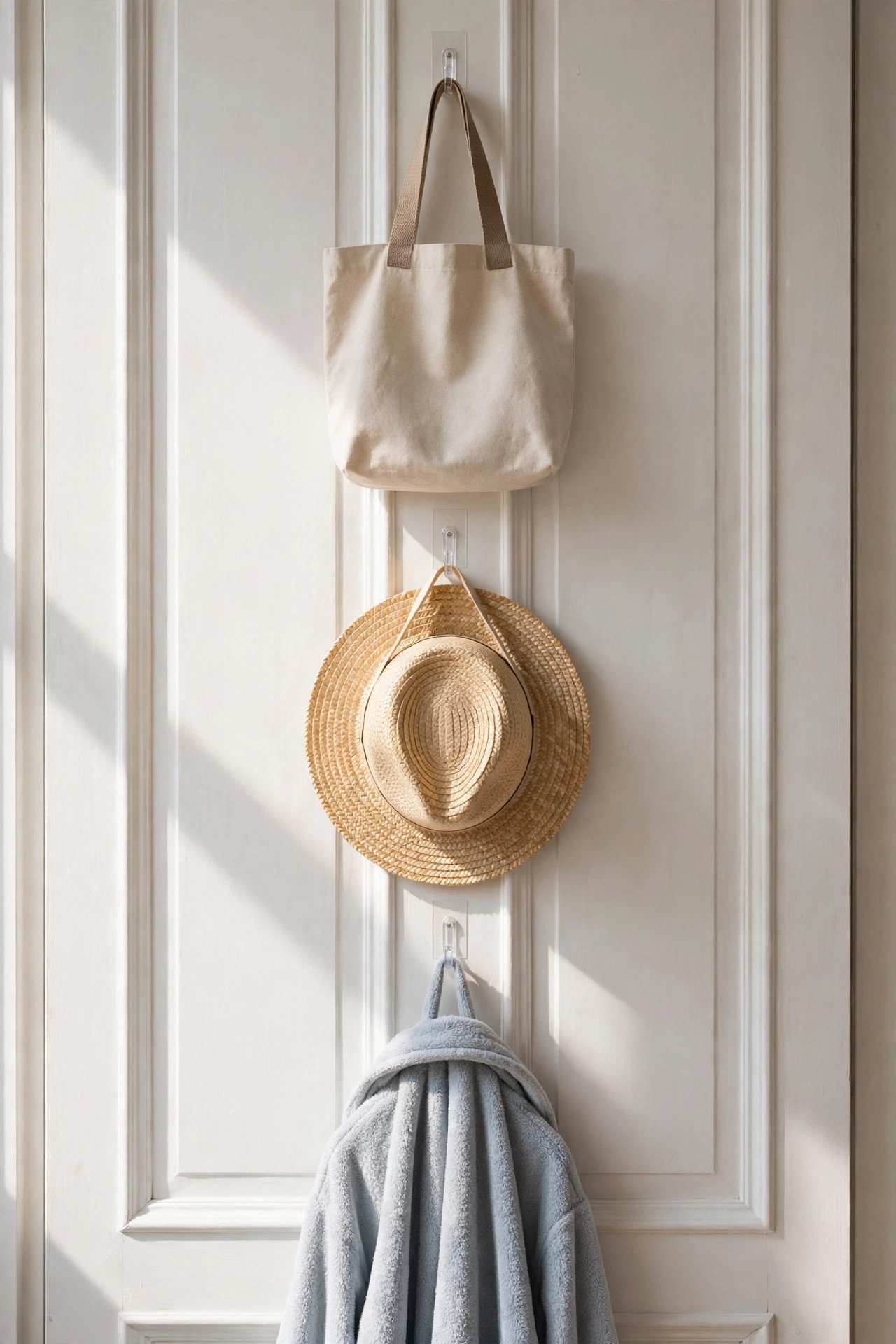
Adhesive hooks hold bags, hats, and a robe on the inside of the door. They peel off clean when you move if you follow the weight limit.
Put two hooks at shoulder height for bags and one lower hook for a robe. The same no drill rule helps in a wet room too, so look at these renter friendly bathroom ideas before you stick a hook near steam.
Pro tip: Clean the door with a dry cloth first.
19. Add a Belt and Scarf Rack
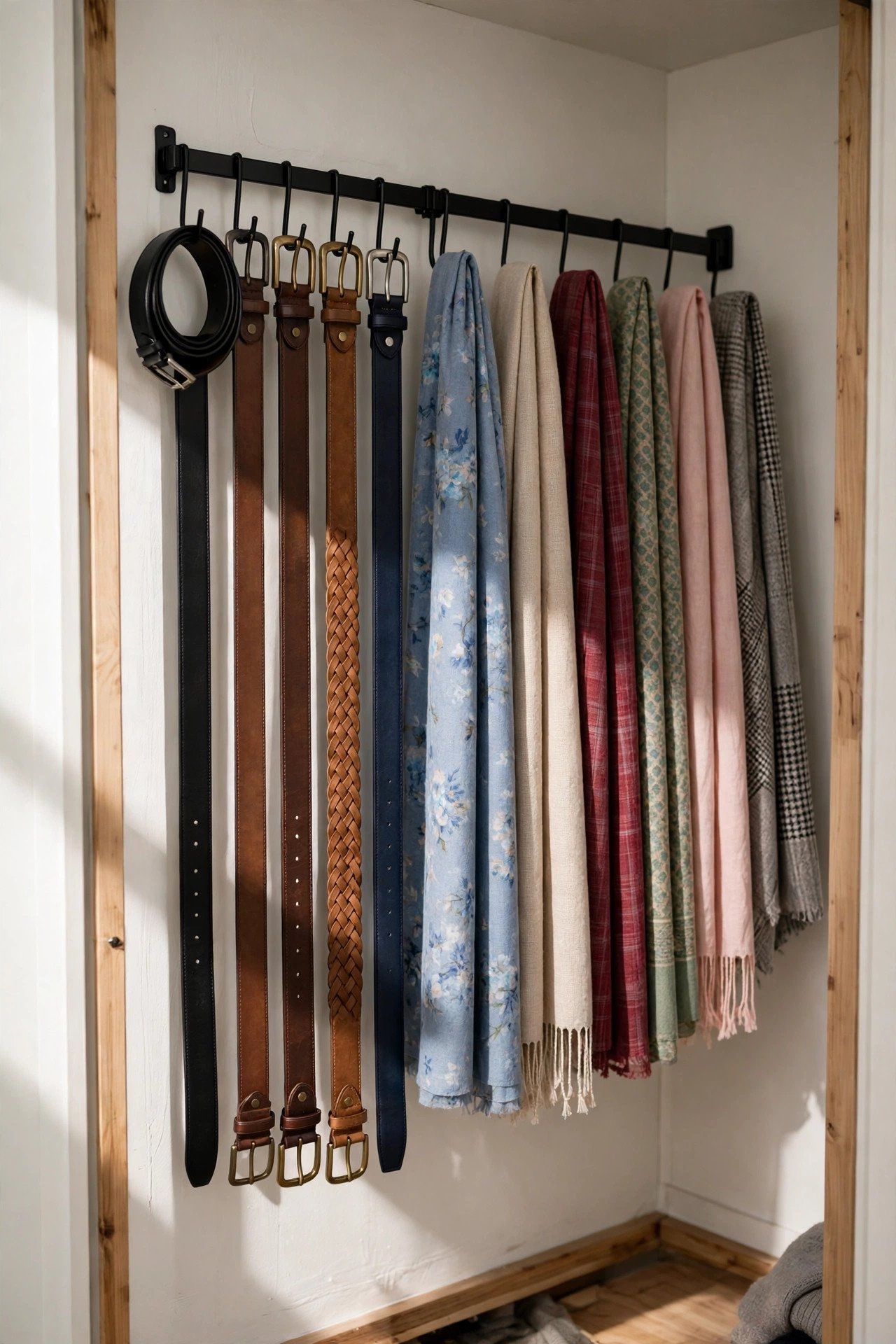
Belts and scarves tangle in a drawer. A small rack with rings or hooks hangs them in a row so you can pick one without undoing the rest.
Hang the rack on the rod or on the inside of the door.
Pro tip: Roll scarves instead of folding them on the rack.
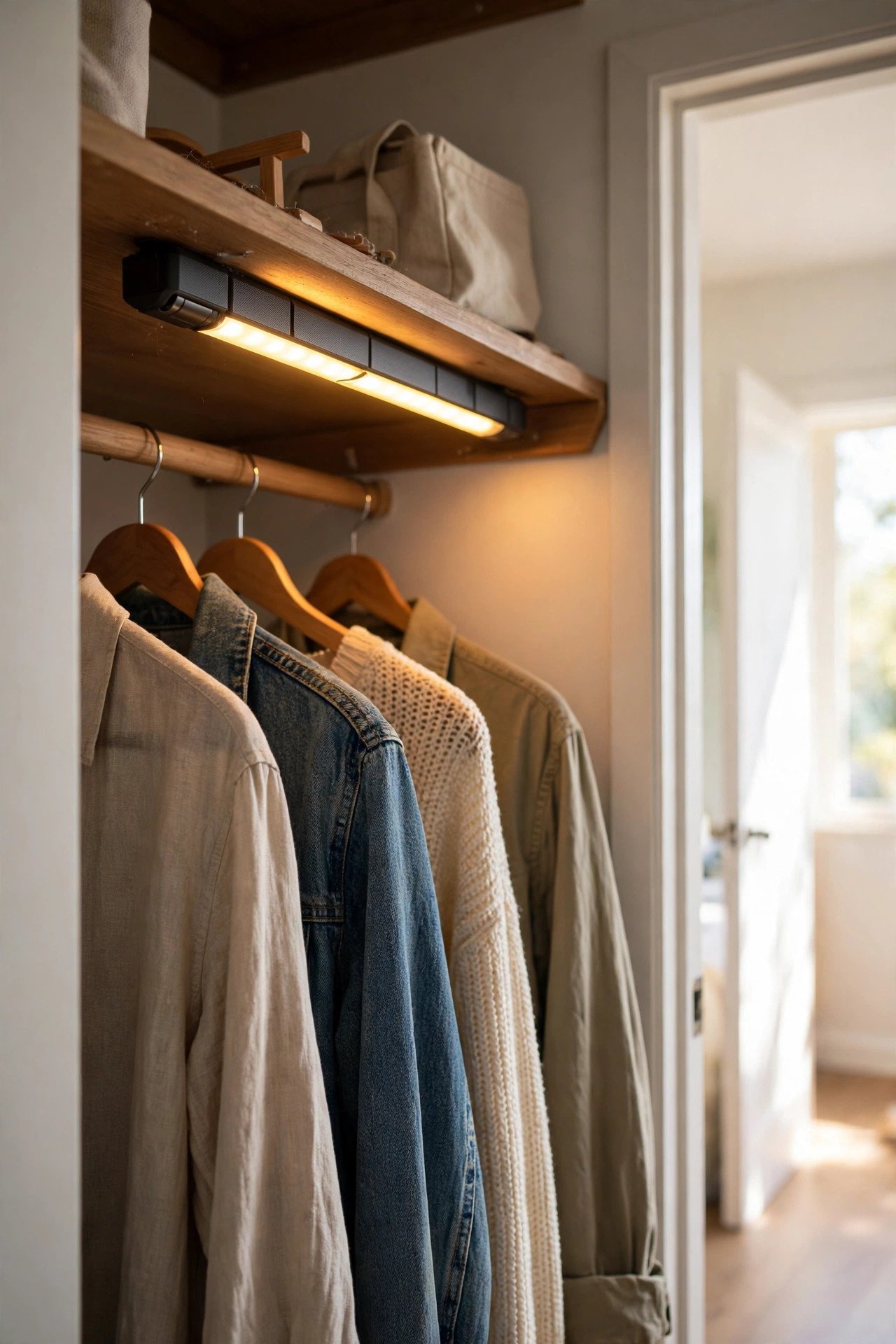
20. Add a Battery Light You Can Stick On
A dark closet hides half of what you own. A battery light with a sticky back or a magnet lights the rod and the shelf in seconds.
Stick one light under the top shelf. A motion sensor light turns on when you open the door and off when you close it.
Pro tip: Use warm white light, not cool white.
Folded Clothes and No Closet
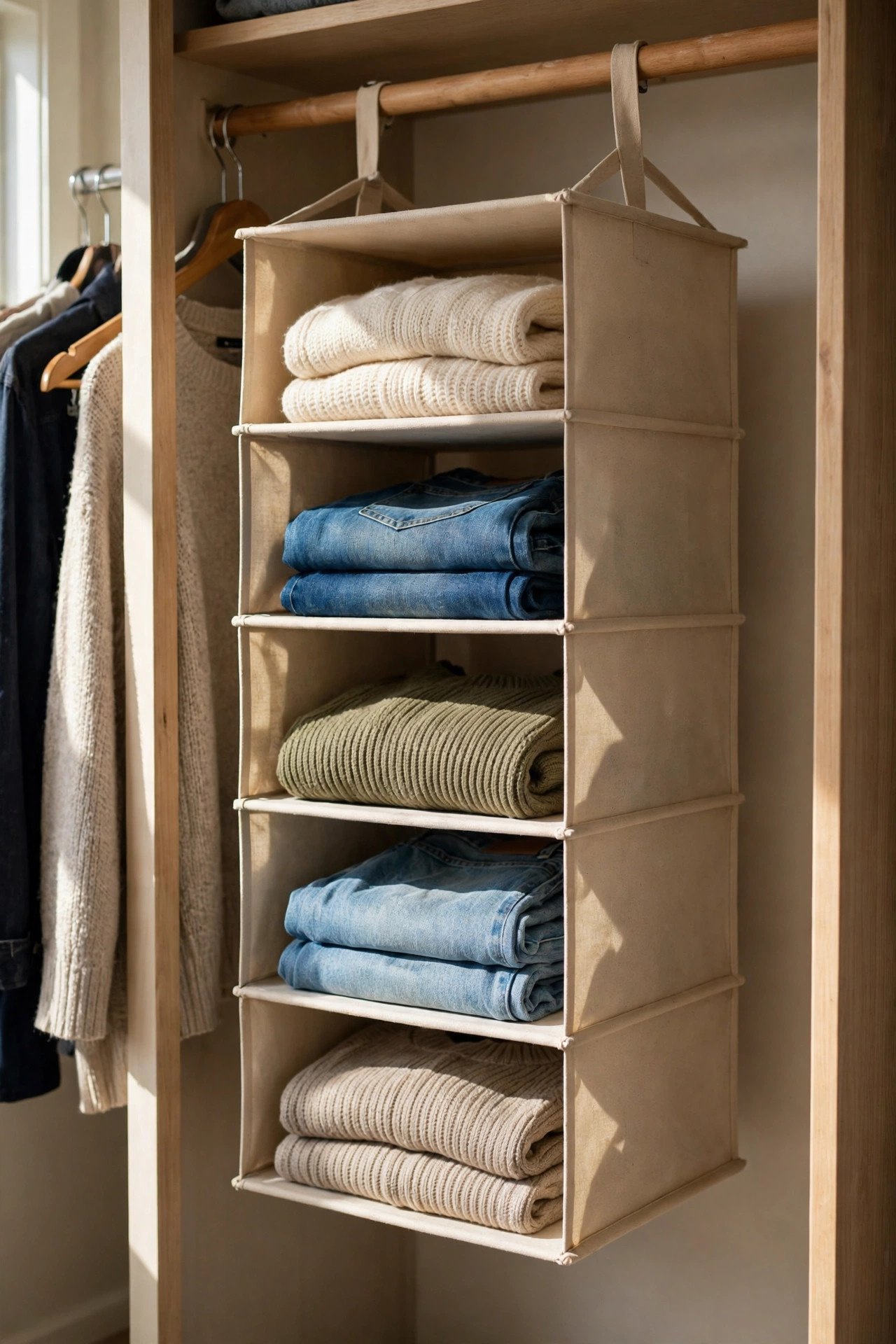
21. Use a Hanging Shelf Organizer for Folded Clothes
A hanging shelf organizer hooks over the rod and adds five or six fabric shelves in the air. It holds folded jeans, knitwear, and T shirts without a drawer unit.
Put heavy items at the bottom and light items at the top.
Pro tip: A six shelf organizer costs about 10 to 20 dollars.
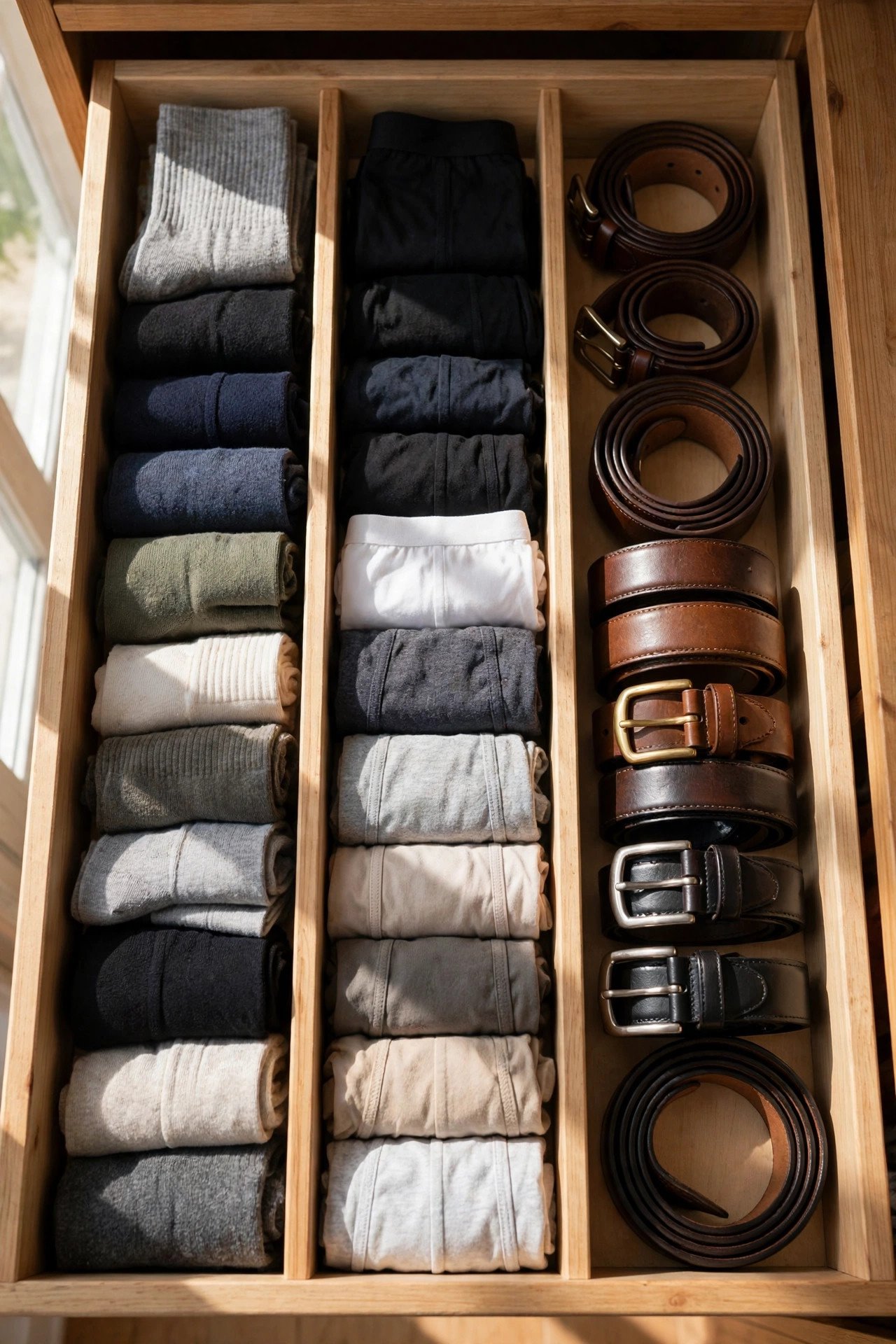
22. Add Drawer Dividers for Socks and Underwear
Small items vanish in a deep drawer. Dividers split the drawer into small boxes so each pair has a place.
Use fabric or plastic dividers that you can move as your needs change.
Pro tip: Roll socks into pairs instead of folding them flat.
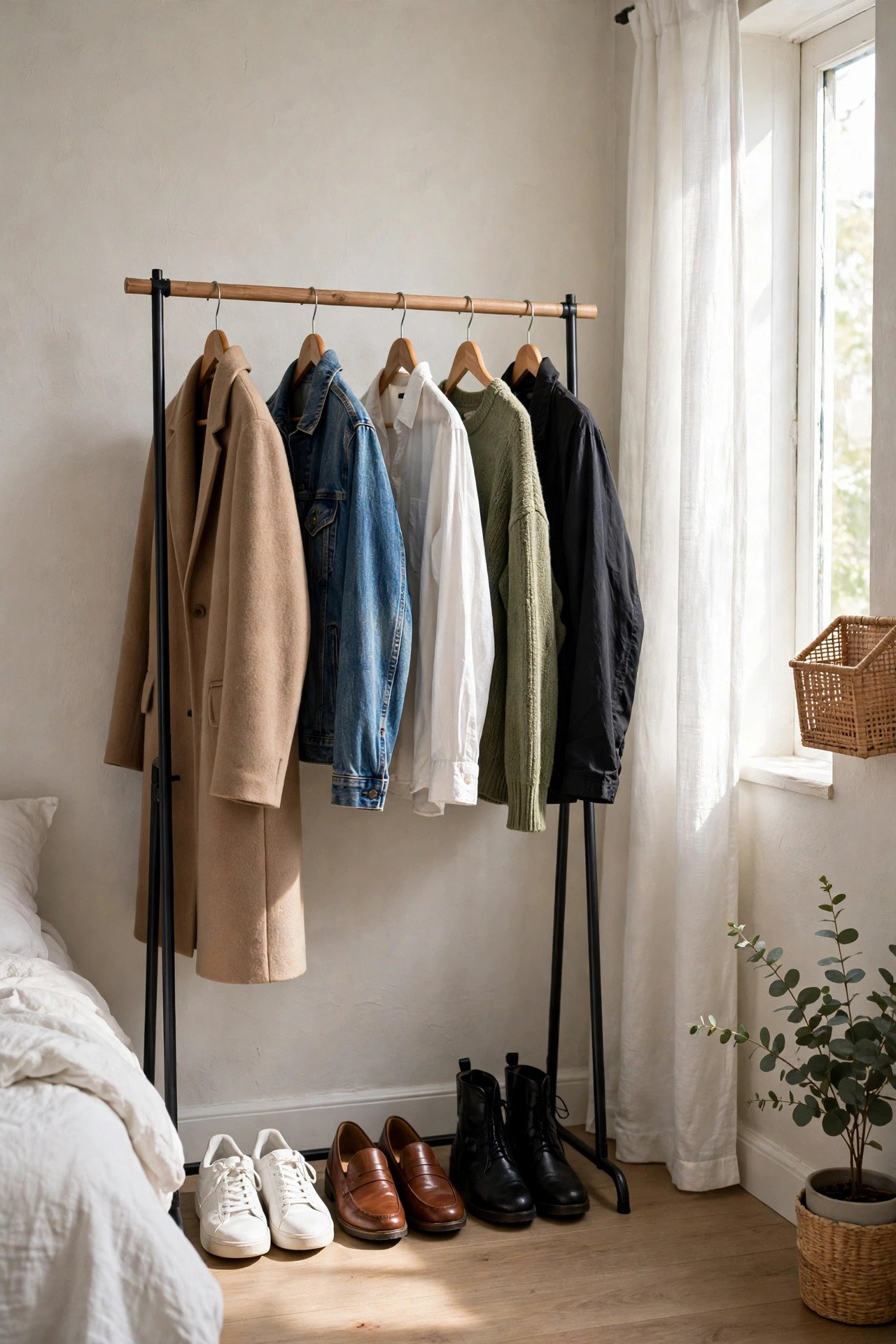
23. Set Up a Freestanding Rack When You Have No Closet
Some rentals have no closet at all. A sturdy freestanding rack with a bottom shelf for shoes gives you a closet you can move to any wall.
Pick a rack with a strong base and a bottom shelf. A rack also suits a student room, and these dorm room decor ideas show how to style a rack so it looks planned and not temporary.
Pro tip: Keep the rack against a wall, not in the middle of the room.
24. Do a Ten Minute Reset Every Sunday
A tidy closet stays tidy with a short weekly reset. Put back stray items, refold one stack, and check the floor for shoes that drifted out of place.
Use the reset to spot what you did not wear that week.
Pro tip: Set a timer for ten minutes. A short reset you actually do beats a long clean out you keep putting off.
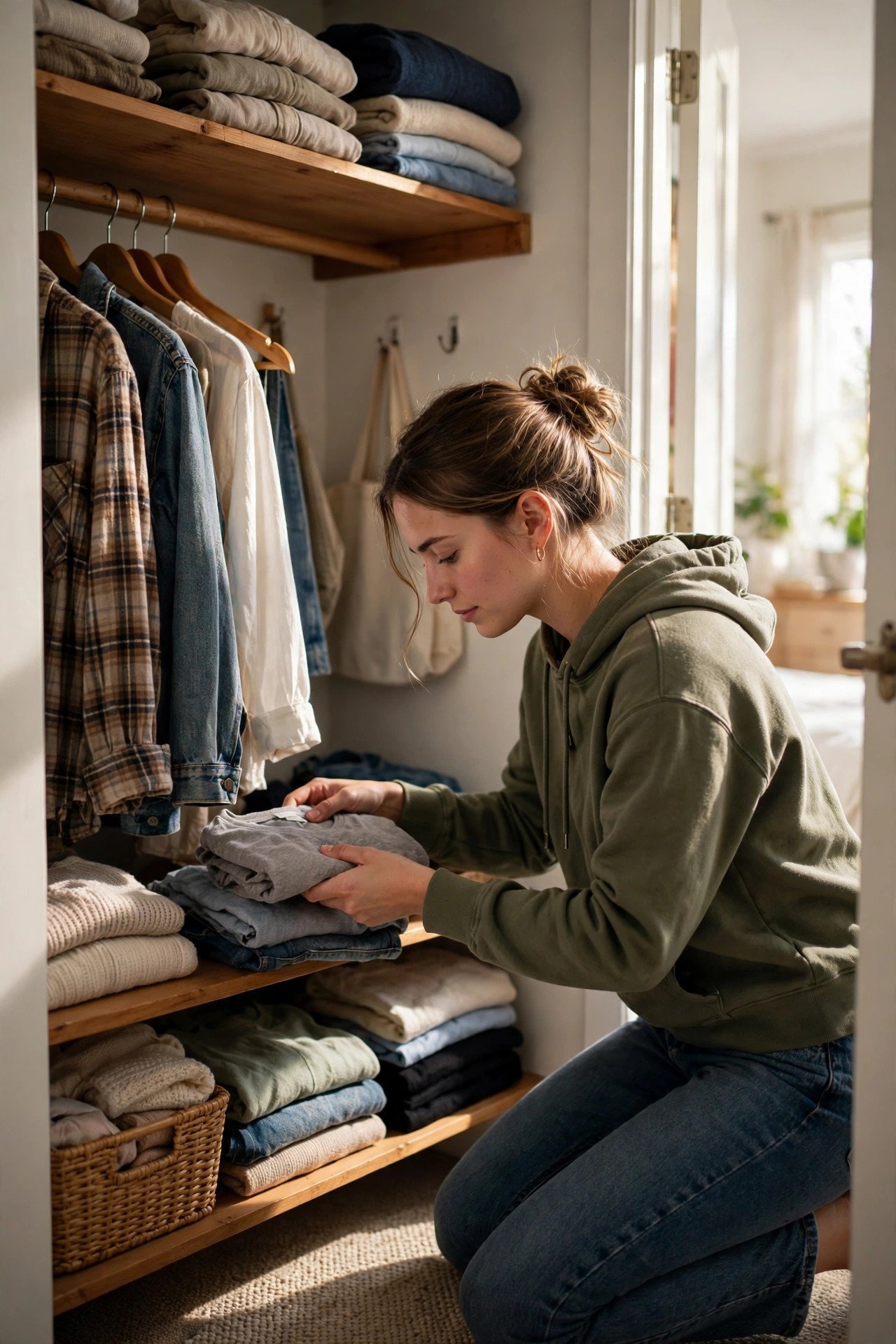
Measure First and Count What Must Fit
Measure the closet before you buy a single box. Note the width, the depth, and the height from the floor to the rod, usually about 60 inches. Count the clothes that must hang, then allow 2 inches of rod per shirt and 3 inches per coat. A rod 4 feet long holds about 20 shirts, not 40, so a second rod at 40 inches high doubles hanging space for shirts and folded trousers. Small closet organization for renters starts with these numbers, because a shelf that is 1 inch too deep blocks the door, and a rod that is overloaded sags in a month.
The Rod, the Shelf and the Floor
Use the closet in three zones. The rod zone holds daily clothes at eye level, between 40 and 66 inches from the floor. The top shelf holds out of season clothes and spare bedding in labelled boxes, because you reach it only a few times a year. The floor holds shoes and one rolling box, not piles of clothes, because piles on the floor get dusty and forgotten. Add a second rod with a tension rod, not screws, so the landlord sees no holes. Add hooks on the inside of the door for bags and belts, because the door is free storage in most small closets.
No Drill Storage That Holds
Adhesive hooks hold about 3 to 5 pounds each, so use two hooks for a heavy bag and one for a belt or a scarf. Over door racks need a door gap of at least a quarter inch, so check the gap before you buy one. Fabric hanging shelves clip to the rod and add 6 small cubbies without a single screw. Use clear boxes on the top shelf, because you can see what is inside without pulling every box down. Label the short end of each box, and keep one box empty, because a closet with no empty space fills up again in a week.
Budget for a Small Closet Refresh
Under 25 dollars: a tension rod, a set of matching hangers, and two fabric boxes. From 25 to 75 dollars: add a hanging shelf unit, an over door rack, and labels. Over 75 dollars: add a second tension rod, matching boxes for the whole closet, and a shoe rack. As a typical range, a tension rod costs about 10 to 20 dollars, and a fabric hanging shelf costs about 15 to 30 dollars. Buy matching hangers first, because thin matching hangers save more rod space than any organiser.
Common Mistakes to Avoid
- Buying organizers before you measure: a bin that does not fit wastes money and time. Measure the rod, the shelf, and the floor first.
- Skipping the clear out: new bins cannot fix a closet full of clothes you never wear. Edit first, then organize.
- Using thick mismatched hangers: thick hangers eat rod space and make the closet look messy. Switch to one slim hanger type.
- Ignoring the door: the back of the door is free storage. Leave it bare and you lose space for shoes and accessories.
- Overfilling the top shelf: a shelf packed to the ceiling is hard to reach and hard to keep neat. Leave a gap you can see over.
- Forgetting the weekly reset: a closet drifts back to a pile in two weeks without a short reset. Ten minutes a week keeps it working.
Start with the clear out and the slim hangers. Add the second rod and the door organizer next, then finish with bins and labels. A small closet for renters does not need a rebuild, just a plan for each zone.