
A front porch with no planters can look bare even when the house is neat. One or two well placed pots by the door add color, height, and life to the entry.
This guide gives you 23 front porch planter ideas that work all year. You will find door pairs, containers, plants for sun and shade, small porch fixes, and seasonal swaps.
Quick Picks
- Start with a door pair. Two matching pots give a balanced entry fast.
- Use one tall, one round, one trailing plant. This mix fills a pot well.
- Match pots to the house. Pot color should suit the door and trim.
- Check sun first. Sun loving plants fail in shade, and shade plants burn in full sun.
- Keep one evergreen base. Evergreens keep pots green in winter.
Did You Know?
Plants in pots dry out faster than plants in the ground, since pot soil holds less water. Porch pots need more frequent watering than garden beds.
Before You Start
- Measure the porch floor and walk width before buying pots.
- Watch the porch sun for one day and note sun and shade spots.
- Pick pots with drainage holes. Pots with no holes rot roots fast.
- Put saucers or pot feet under pots to protect wood and stone floors.
- Start with two or three pots. Add more after the first pots look full.
Classic Entry Looks
1. Matching Planters on Both Sides of the Door
Two matching planters by the door make the entry look planned. Use the same pot, size, and plants on each side.
Put a tall green plant in the middle, a round filler around it, and one trailing plant at the edge of each pot.
Pro tip: Leave at least 60 cm of clear walk space past each pot. Water both pots on the same days so one side does not outgrow the other.
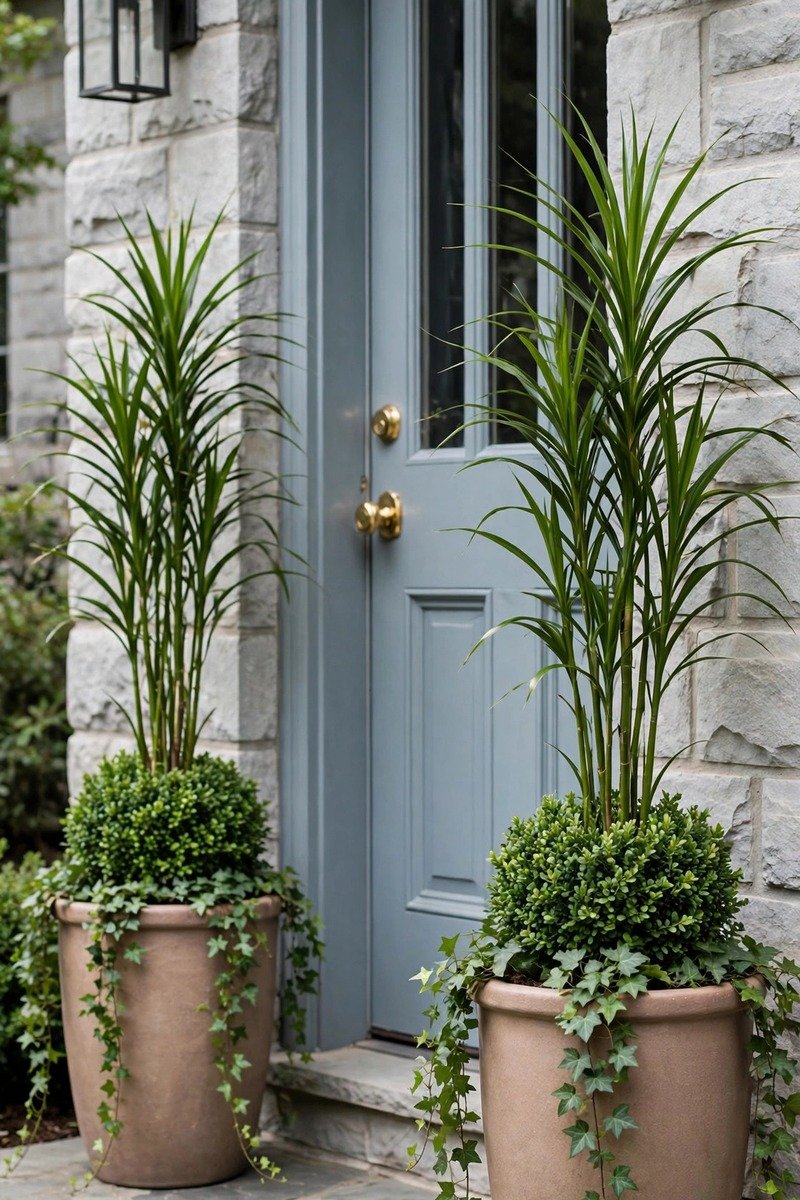
2. Tall Urns That Lift the Eye Up
Tall urns add height without taking much floor space. They keep plants visible above railings.
Use a boxwood ball, a small juniper, or an upright grass in the middle, with low flowers around the base.
Pro tip: A pot 60 to 75 cm tall suits a standard door. Add 5 cm of gravel at the bottom for drainage before the soil.

3. One Large Statement Pot by the Steps
One large pot can do more than five small pots scattered around. It gives the eye one place to land and care stays simple.
Pick a pot at least 50 cm wide, with one bold plant plus two low fillers.
Pro tip: Set the pot on pot feet so water does not stain the floor. Place it before adding soil, since a filled pot can weigh over 25 kg.

4. A Trio of Pots in Three Heights
Three pots in three heights look full without looking messy. Put the tallest at the back.
Use the same pot color for all three so the group reads as one set. Mix one upright, one round, and one trailing plant.
Pro tip: A good size mix is 45 cm, 35 cm, and 25 cm tall. Keep the group within 90 cm of the door.
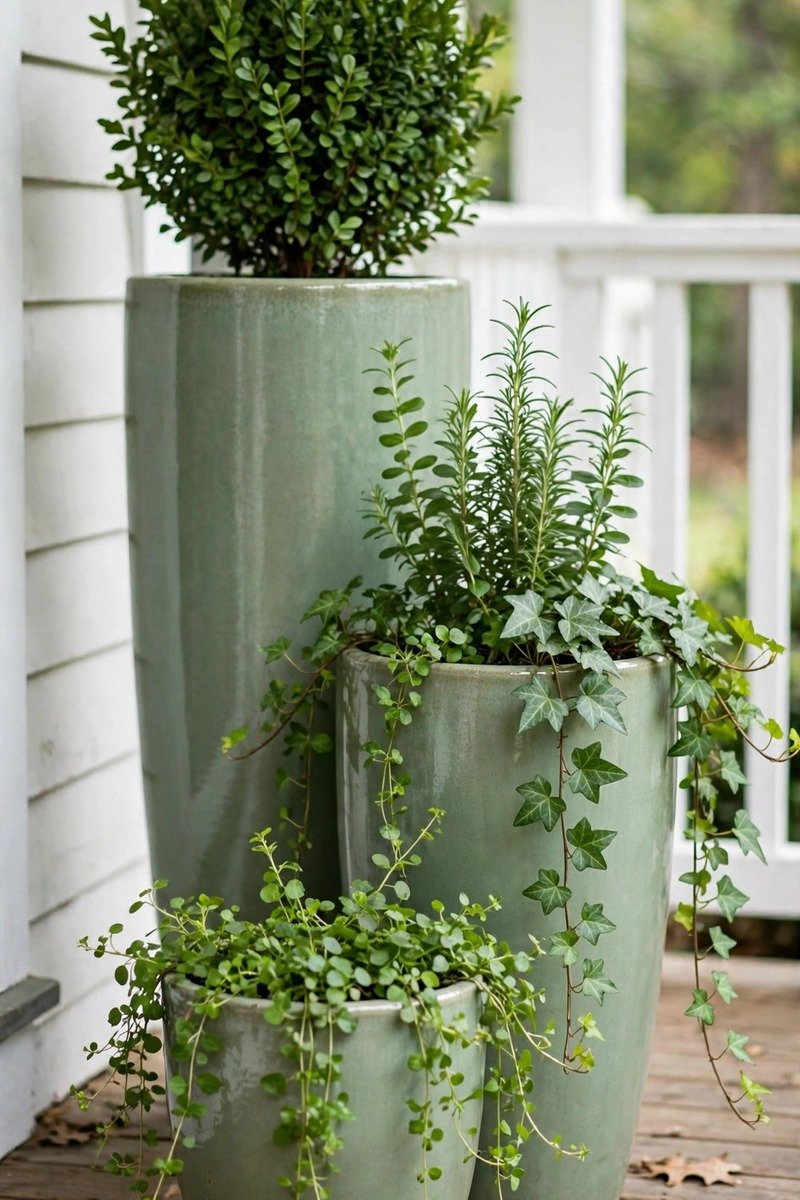
5. Layered Pots Along the Porch Steps
Steps act as shelves for planters. One pot on each step, or groups on the top and bottom steps, leads the eye to the door.
Use the same flower color on each step so the line looks calm. Keep pots close to the wall side of the steps.
Pro tip: Use pots no wider than 30 cm on most steps. Keep the middle of each step clear for feet and do not block the handrail.
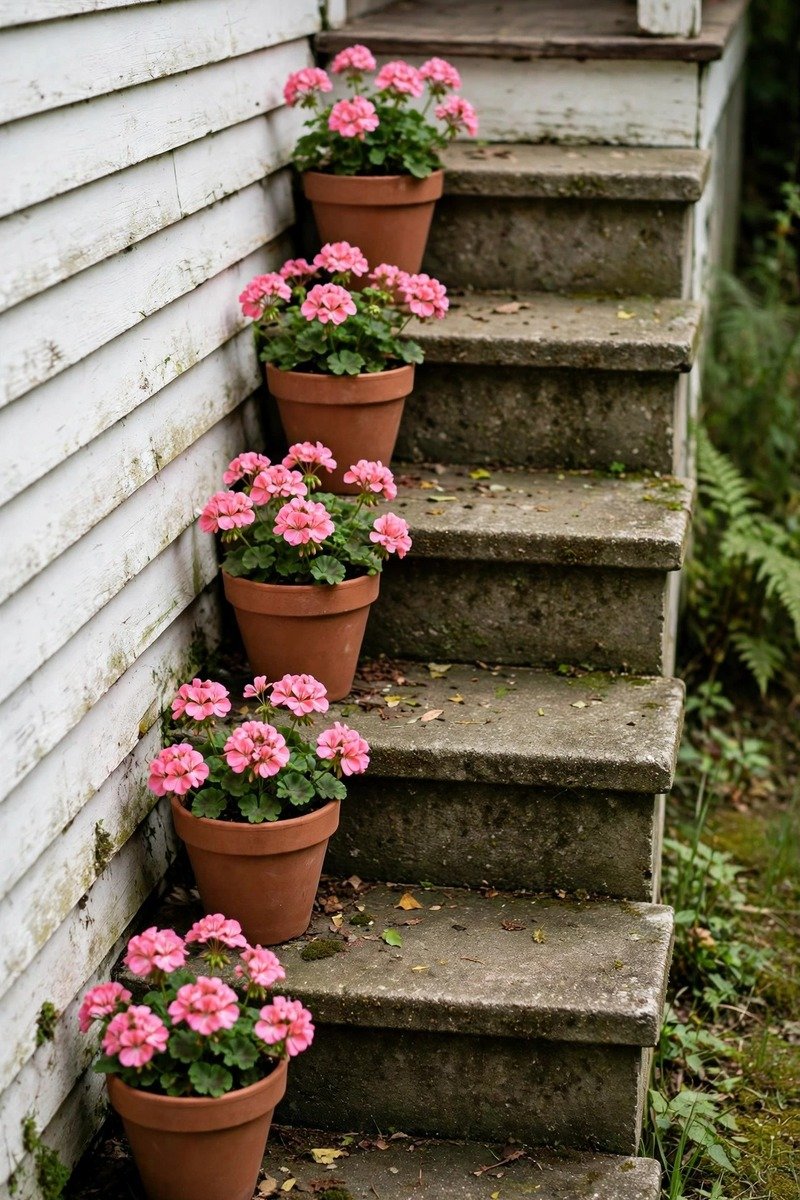
Containers and Materials
6. Warm Terracotta Pots in a Group
Terracotta pots suit brick, wood, and stone porches. A group in different sizes looks collected and warm.
Fill them with lavender, rosemary, small daisies, or trailing ivy. Terracotta dries fast, so it suits plants that like dry soil.
Pro tip: Soak a new terracotta pot in water for one hour before planting. Move pots to a sheltered spot in cold winters, since frozen wet clay can crack.
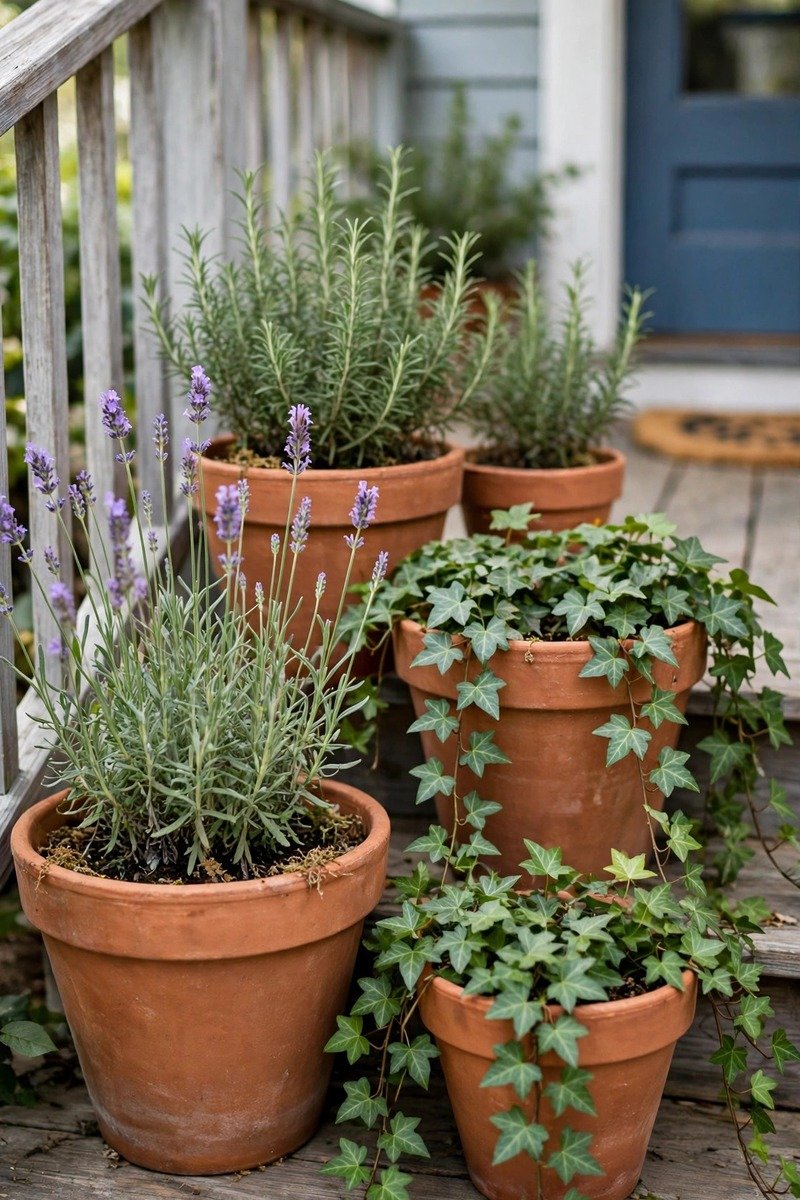
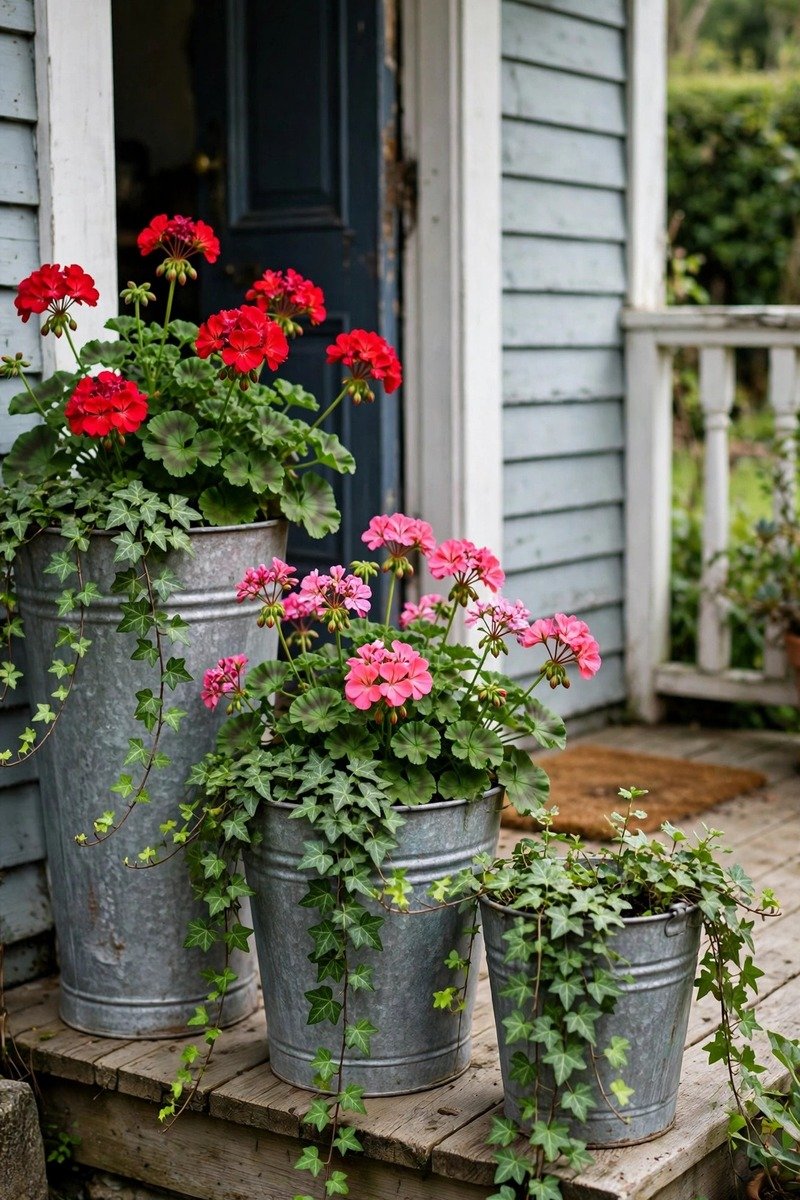
7. Galvanized Buckets for a Cottage Look
Galvanized buckets give a porch a relaxed cottage feel at a low cost. They are light, easy to move, and easy to find.
Use one large bucket as the main pot and one small bucket beside it. Fill them with geraniums, herbs, or trailing ivy.
Pro tip: Drill three drainage holes in the bottom of each bucket. A 20 litre bucket costs about 10 to 20 dollars.
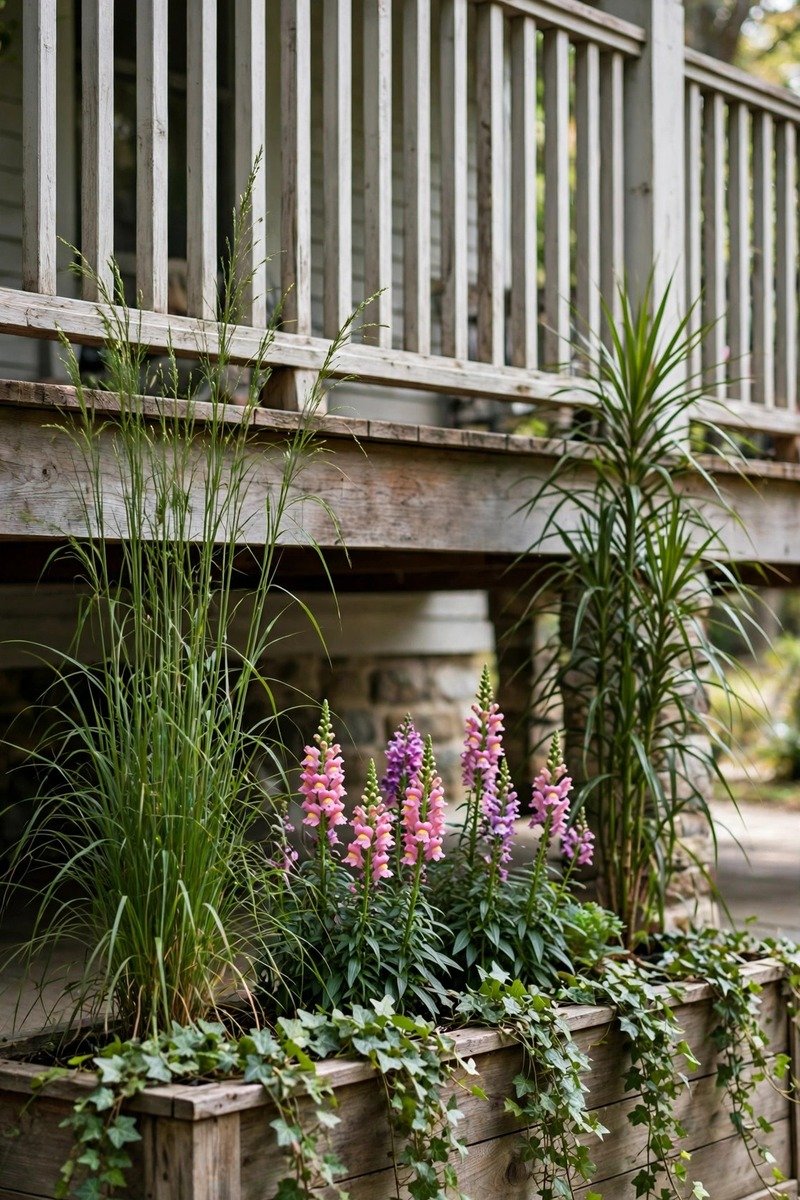
8. A Wooden Planter Box Under the Railing
A long wooden box under the railing turns an empty rail into a green edge. It holds many plants in one tidy line. For more wood and crate looks, see our farmhouse front porch ideas.
Put trailing ivy at the front, upright flowers in the middle, and one tall plant at each end of the box.
Pro tip: A box 90 cm long, 25 cm wide, and 25 cm deep suits most railings. Drill a hole every 20 cm along the bottom for drainage.
9. Sleek Black Pots for a Modern Entry
Black pots make green leaves and white flowers stand out. They suit modern homes and black doors.
Use a snake plant, a sculptural grass, or a single topiary in each pot. Keep the plant count low so the pot shape stays visible.
Pro tip: Black pots heat up fast in full sun. Water in the morning and mulch the soil surface. A fiberglass pot 45 cm tall costs about 30 to 60 dollars.

10. Painted Pots That Match the Door
Painted pots tie planters to the house at low cost. Paint old pots the same color as the door, shutters, or trim.
Use outdoor paint in two thin coats. Sage green, navy, cream, and terracotta wash all work well with green plants.
Pro tip: A small can of outdoor paint costs about 12 to 20 dollars and covers four to six medium pots. Seal it with clear outdoor spray.

Plants for Sun and Shade
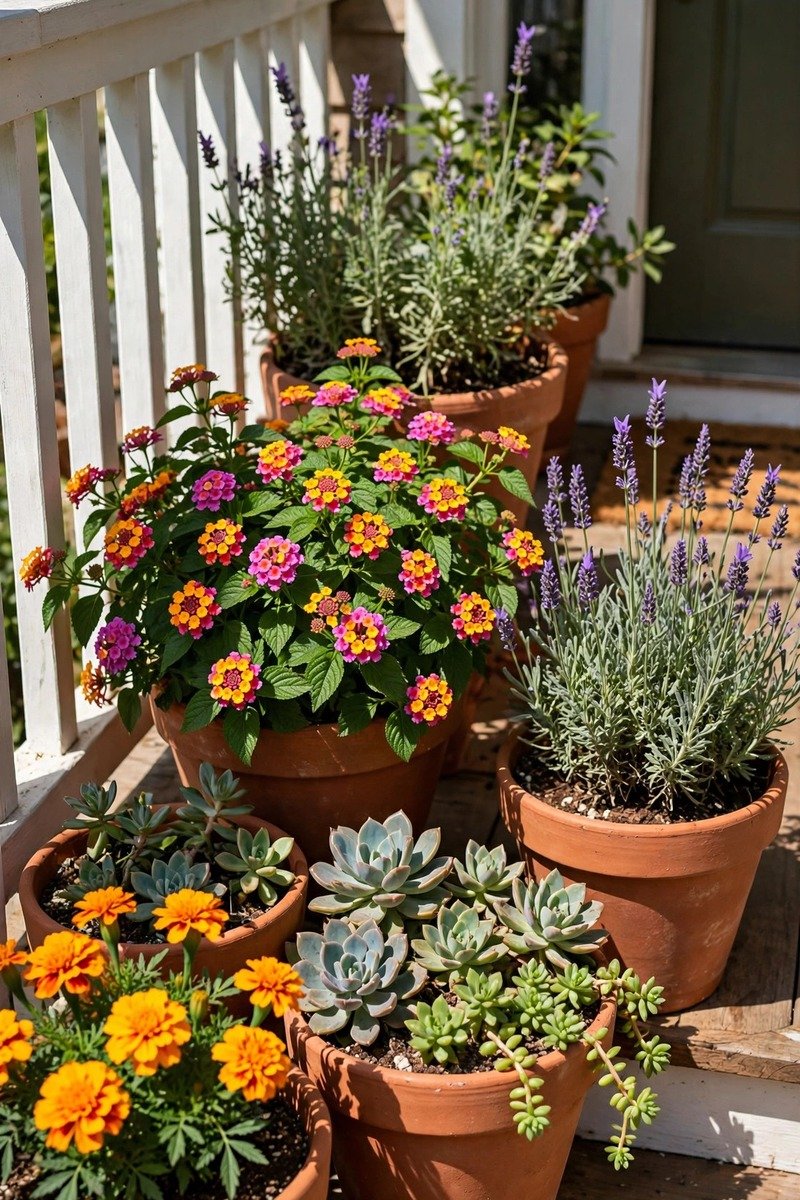
11. Full Sun Pots With Heat Loving Plants
A porch in full sun needs heat loving plants. Lantana, lavender, marigolds, and succulents hold up where other flowers fade.
Water deep in the morning so roots grow down. Mulch the soil surface to slow drying through the afternoon.
Pro tip: Full sun pots may need water every day in summer heat. Check soil 3 cm down. If it feels dry there, water until it runs from the holes.
12. Shade Pots With Ferns and Hostas
A shaded porch can still look lush. Boston ferns, hostas, begonias, and impatiens grow well with little direct sun.
Hang ferns from the ceiling or set large fern pots by the door. Mix one fern with one hosta and one trailing ivy for leaf variety.
Pro tip: Water ferns when the top 2 cm of soil feels dry. Feed shade pots once a month with half strength liquid feed in the growing season.

13. A Herb Pot by the Steps
A herb pot by the steps is useful and pretty. Rosemary, thyme, mint, and basil smell good and can be cut for cooking in seconds.
Put mint in its own small pot, since it spreads fast. Keep rosemary and thyme in the sunniest spot and basil in some midday shade.
Pro tip: A 35 cm pot holds three herb plants well. Pinch the tops often so plants stay bushy instead of tall and thin.

14. A Wide Succulent Bowl for Dry Spots
A wide shallow bowl of succulents suits a hot dry porch and a busy owner. Succulents store water in their leaves and need little care.
Mix rosette shapes, upright shapes, and one trailing succulent. Use cactus mix, not garden soil, and top it with small gravel.
Pro tip: Water only when the soil is fully dry, about once every two weeks in summer and less in winter. A 40 cm bowl costs about 20 to 40 dollars.

15. Evergreen Pots You Swap Around Each Season
Evergreen pots are the base for a porch that looks good all year. Boxwood, juniper, and small spruce stay green through winter.
Keep the evergreen in the center all year. Swap only the small color plants around it with each season.
Pro tip: Use a pot at least 45 cm wide so evergreen roots have room. Water evergreen pots during winter thaws so roots do not dry out.

Small Porches and Vertical Space
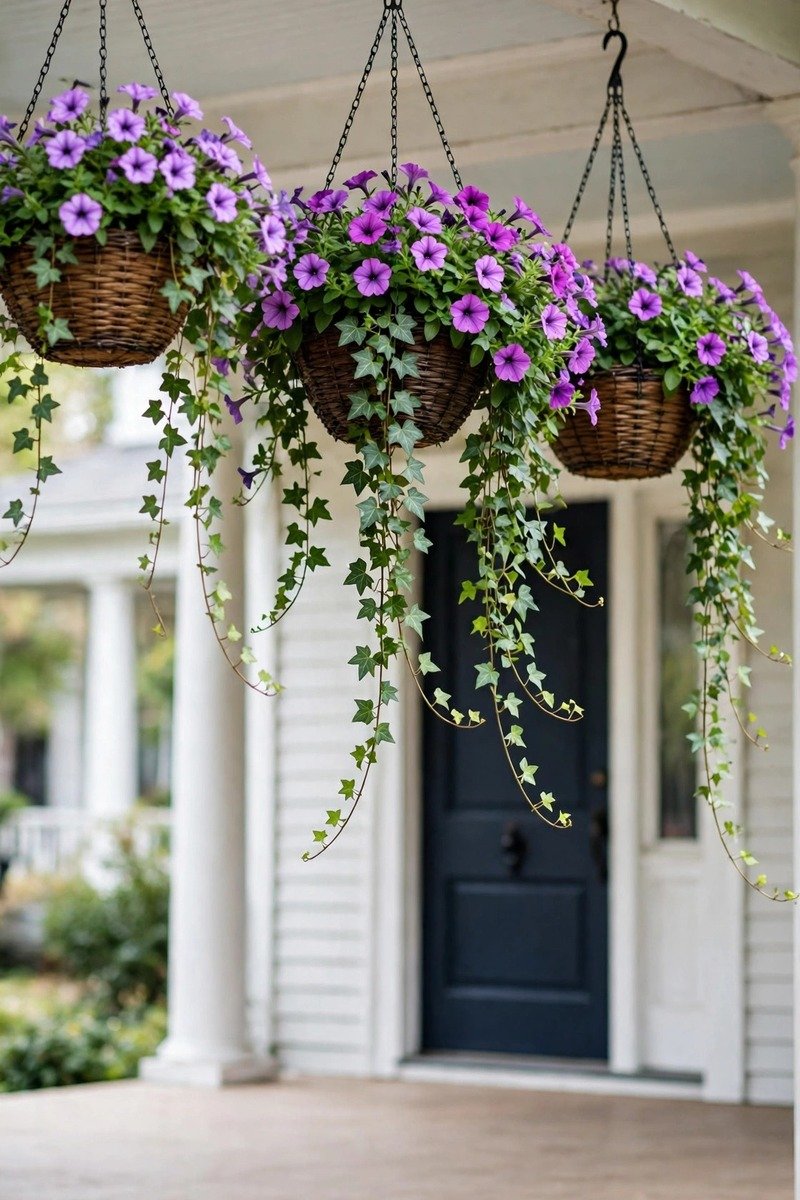
16. Hanging Baskets That Free the Floor
Hanging baskets add plants at eye level and keep the floor clear. They suit small porches where floor pots would block the walk.
Fill baskets with trailing petunias, fuchsia, or ivy, plus one upright plant in the center. Water slowly so soil does not wash out.
Pro tip: Hang baskets from a hook rated for at least 10 kg when wet. Check them daily in summer, since they dry fast. A 35 cm basket costs about 15 to 30 dollars.
17. Wall Planters on a Narrow Porch Wall
Wall planters use wall space when floor space is tight. A board or set of metal pockets on the wall holds small pots in a neat row.
Put trailing plants at the top so they spill down, and upright plants at the bottom. Keep them near the door, not over seating.
Pro tip: Fix wall planters into studs or masonry anchors, not just plaster. Each filled wall pot can weigh 5 to 8 kg.

18. A Narrow Trough Along the Railing
A narrow trough fits along a railing where a round pot would stick out too far. It gives a long line of green. For more tight space layouts, see our small front porch ideas.
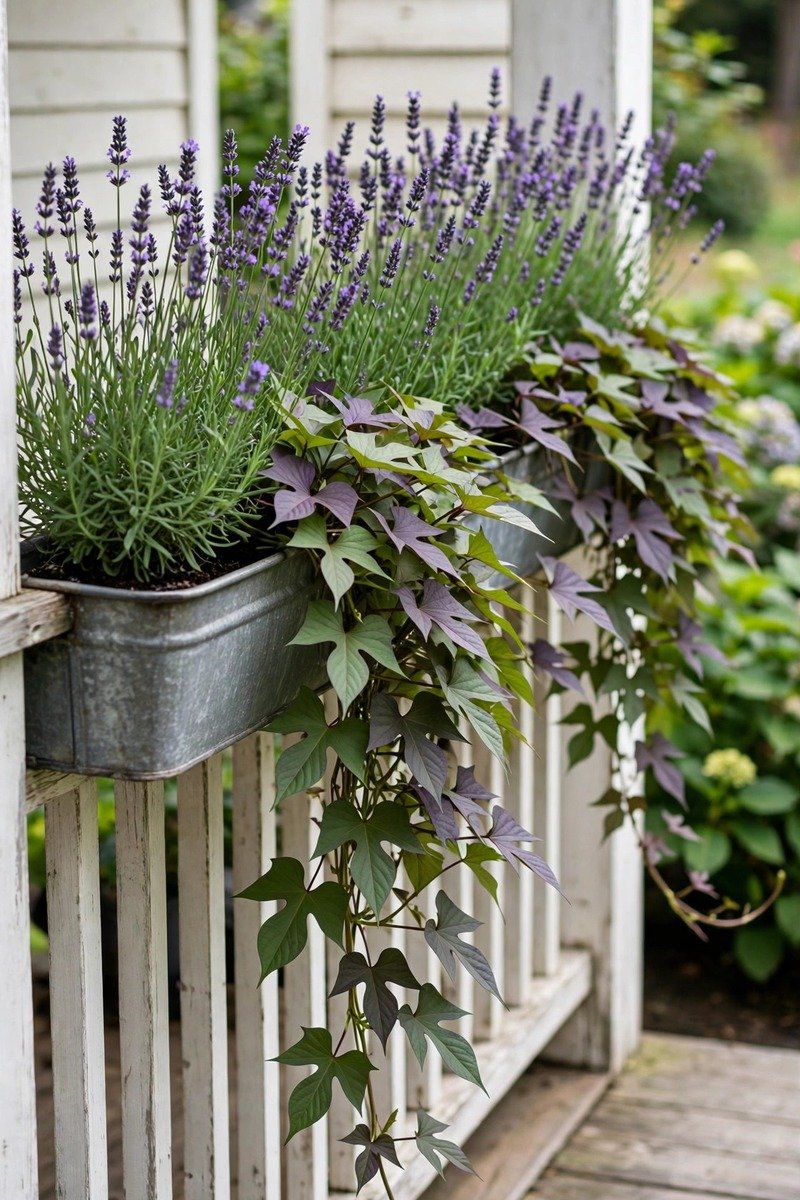
Fill a trough with one plant type, such as lavender, or mix upright snapdragons with trailing sweet potato vine.
Pro tip: A trough 60 cm long and 20 cm wide suits most railings. Secure it so wind cannot slide it off the rail.
19. One Corner Pot for an Awkward Corner
One large pot in an empty porch corner fixes it at once. A tall grass, a canna lily, or a small tree softens the angle and balances the door side.
Use a pot wider than it is tall in a windy corner so it stays stable. Add one trailing plant at the front edge.
Pro tip: A 50 cm corner pot needs about 60 cm of floor on each side. A wheeled base costs about 15 to 25 dollars and helps with cleaning.

Seasonal Swaps and Curb Appeal
20. Spring Bulbs in Pots by the Door
Spring bulbs in pots give early color with little work. Tulips, daffodils, and hyacinths planted in fall bloom in spring by the door.
Plant bulbs in layers in a deep pot, with late bulbs at the bottom and early bulbs on top. Leave the pot outside in a sheltered spot through winter.
Pro tip: Plant bulbs in fall, about 15 cm deep and 8 cm apart. Ten tulip bulbs plus soil cost about 8 to 15 dollars.

21. Summer Color Pots With a Simple Formula
Summer pots look full with one tall plant, one round filler, and one trailing plant. Petunias, geraniums, and coleus all work in this mix.
Pick two or three colors only, such as pink and white. Too many colors in one pot can look messy from the street.
Pro tip: Deadhead petunias and geraniums once a week so new blooms keep coming. For the full summer only version, see our summer porch planter ideas.

22. Fall Pots With Mums and Grasses
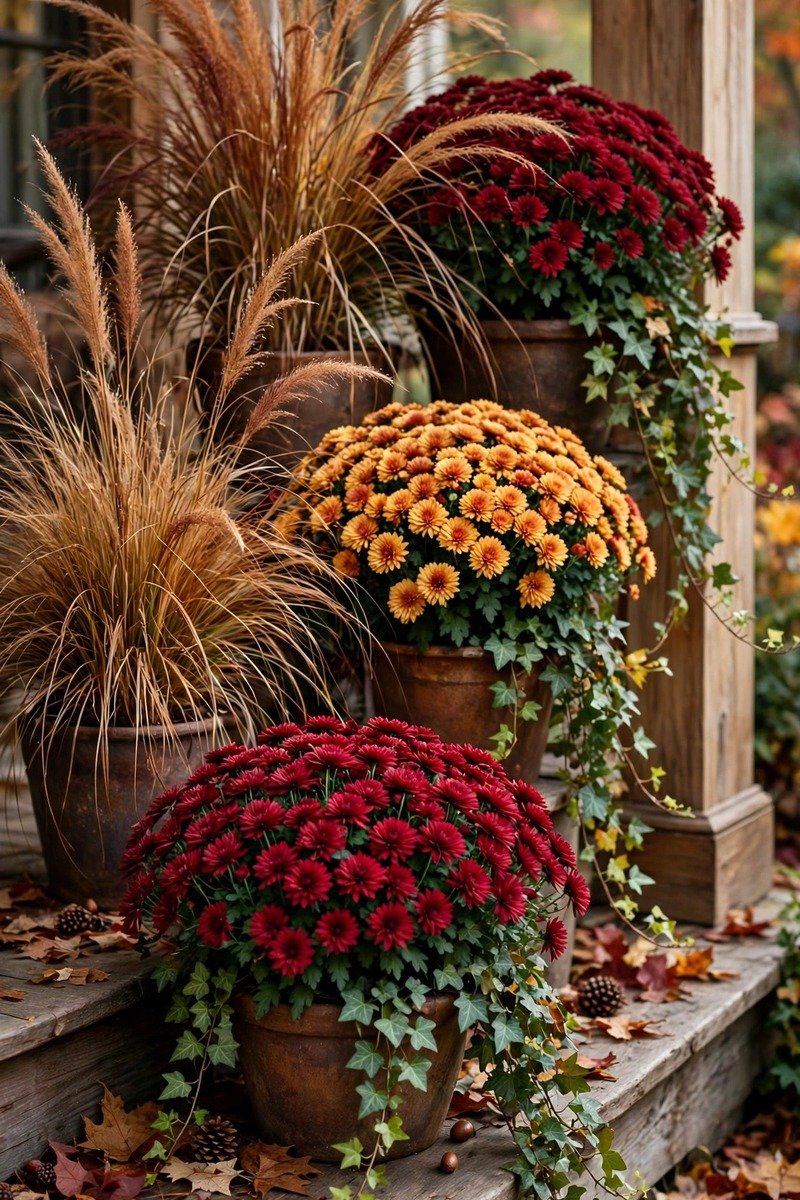
Fall pots need plants that like cool nights. Mums, ornamental cabbage, and small grasses hold color well into fall.
Use one mum as the main color, one grass for height, and one trailing ivy to soften the edge. Rust, gold, and deep red suit brick and wood porches.
Pro tip: Buy mums with more buds than open flowers so they last longer. A 25 cm mum costs about 8 to 15 dollars. Water at the base, not on the flowers.
23. Winter Pots With Evergreens and Berries
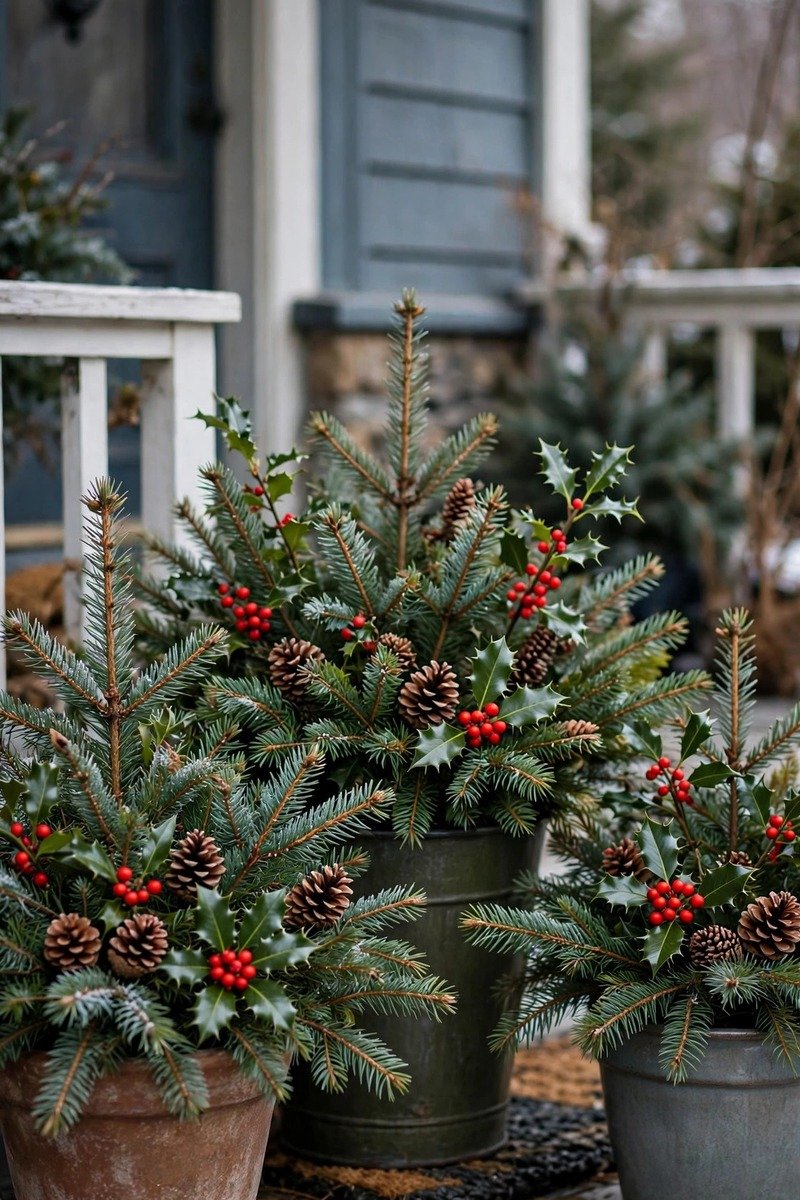
Winter pots keep the porch from looking bare after flowers end. Small spruce, pine branches, holly, and red berries look festive without a full holiday display.
Fill a pot with soil or foam, push pine branches in at an angle, add two or three berry stems, and finish with one or two pine cones.
Pro tip: Push branches 10 cm into the pot for stability. A winter pot made from cut branches costs about 15 to 30 dollars. Water once before a hard freeze.
Drainage First: Holes, Feet and Saucers
A planter without drainage drowns its plants in the first heavy rain. Check that every pot has at least one drainage hole about half an inch wide, and drill one if it has none, because a pot without a hole is a bucket. Raise the pot on small feet or a stand, about 1 inch off the porch floor, so water drains out and the porch does not stain. Use a saucer under indoor style pots on a painted porch, and empty the saucer after rain, because standing water breeds mosquitoes in two days. Put a piece of broken pot or a mesh square over the hole, so soil stays in and water flows out. Front porch planter ideas work best when the pot drains, because a drowned plant looks worse than an empty pot.
Planter Size by Door and Step Width
Match the planter to the door, not to the plant. A standard front door is 36 inches wide, so a planter beside it should be about 14 to 18 inches wide, tall enough to be seen from the street but not so tall it blocks the door. A pair of planters should frame the door with at least 6 inches of clear space between the pot and the door frame, so the door swings freely. On steps, a planter should be no wider than two thirds of the step depth, because a pot that overhangs the step is a trip risk. A small porch suits one large pot, about 18 inches wide, while a wide porch suits a pair of medium pots. Measure the step and the door before you buy, because a pot that is the wrong size is returned more often than any other garden item.
Soil Mix and Watering by Season
Porch pots dry out faster than garden beds, because sun and wind hit them from all sides. Fill pots with a mix of two parts potting soil, one part compost and one part perlite, because the compost feeds the plant and the perlite keeps the mix light and free draining. Water pots in summer every day, and in spring and autumn every two to three days, because a pot that dries out completely is hard to rewet. Water in the morning, so the leaves dry before night, and water the soil, not the leaves, because wet leaves invite disease. Feed potted plants every two weeks in the growing season with a half strength liquid feed, because the small amount of soil runs out of food fast. In winter, move tender pots against the house wall, because the wall gives off a little warmth on frosty nights.
Budget for a Porch Planter Pair
Under 30 dollars: two terracotta pots, potting soil and a bag of seasonal plants. From 30 to 100 dollars: add a pair of matching planters, a bag of compost and a watering can. Over 100 dollars: add large glazed pots, a pair of evergreen shrubs and a set of pot feet. As a typical range, a 14 inch terracotta pot costs about 15 to 30 dollars, a bag of potting soil costs about 8 to 15 dollars, and a pair of pot feet costs about 10 to 20 dollars. Buy the pots first, because the pot size decides the plant, and a good pot lasts ten years while a seasonal plant lasts one. Keep one spare pot empty, because a spare pot is ready when a plant fails, and an empty spot by the door is noticed by every visitor.
Common Mistakes to Avoid
- Blocking the walk. Pots should frame the door, not narrow the path.
- Using pots with no drainage. No drainage holes lead to wet roots.
- Mixing too many colors. Two or three colors look calm. Six look messy.
- Picking plants for the wrong sun. Match each plant to its exact porch spot.
- Forgetting winter water. Evergreens still need water in dry spells.
- Buying pots too small. Small pots dry out fast.