Open your bathroom closet and what do you see. For most of us it is a small avalanche waiting to happen. Half empty shampoo bottles lean against a stack of towels, the bandages are buried somewhere behind the sunscreen, and there is at least one mystery bottle with no label at all.
Here is the good news. A bathroom closet is one of the smallest storage spaces in your home, which means it is also one of the fastest to fix. Most of the ideas below take less than an hour, cost less than 25 dollars, and use simple tools like bins, baskets, and labels. You do not need a renovation. You need a plan.
You will find 21 bathroom closet organization ideas here, each one picked for real life small spaces. They work in linen closets, tiny hallway closets, and even the narrow cabinet above the toilet. If your powder room needs the same kind of help, these very small powder room storage ideas that actually work are a great next read after your closet reset.
Quick Picks for a Tidy Bathroom Closet
Short on time? Start here. These six moves fix most closet chaos in a single afternoon.
- Best first step: Pull everything out and toss expired products. You cannot organize clutter, so declutter first.
- Best for deep shelves: Clear stacking containers so you can see every layer without digging.
- Best for doors: An over the door organizer for sprays, medicines, and small bottles.
- Best for towels: Roll them instead of folding. Rolls fit tighter and look neater.
- Best for families: One basket per person so nobody hunts through anyone else’s stuff.
- Best budget win: Simple sticky labels. Labels are what keep the whole system alive.
Why Bathroom Closets Get Messy So Fast
A bathroom closet fails for one simple reason. Too many small items share too few shelves. Bottles, tubes, boxes, and towels all fight for the same space, and the smallest things always end up in front, blocking the big things behind them.
The fix is zones and visibility. Every category gets a home, every home gets a label, and nothing hides behind anything else. Once you can see what you own, you stop buying duplicates and the closet almost maintains itself.
1. Labeled Bins for Every Category
Labels are the cheapest organizing tool ever made. Group your products by type, daily face care, hair care, first aid, cleaning, and give each group its own bin. When every category has a labeled home, putting things back takes seconds.
Use bins that fit your shelf depth with a little room to spare. Shallow bins work best on narrow shelves because you can pull them out like drawers. A label on the front keeps everyone honest.
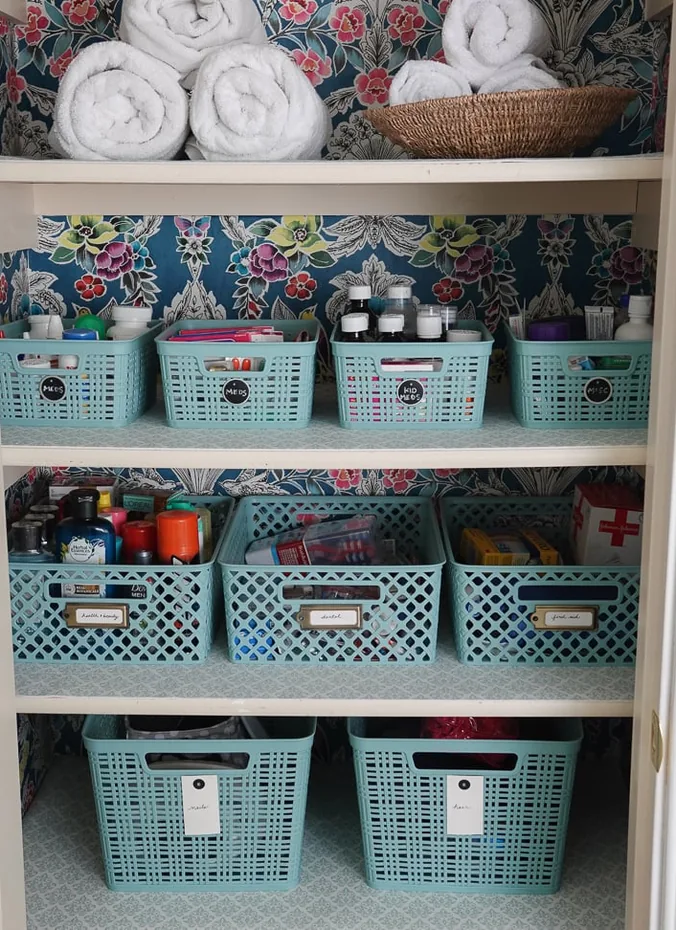
You do not need a fancy label maker. Painter’s tape and a marker work just as well and cost almost nothing. A set of bins plus labels usually runs 15 to 30 dollars.
2. A Slim Rolling Cart for Narrow Gaps
That dead space between the toilet and the wall is not dead at all. A slim rolling cart, usually 6 to 8 inches wide, slides right in and holds bottles, extra toilet paper, and cleaning sprays.
Look for a cart with at least three tiers and small rails so bottles do not tip when you roll it. The top tier is perfect for the things you grab daily.

These carts cost 20 to 35 dollars and need zero tools to assemble. When guests come over, just roll the whole thing into the closet.
3. Clear Stacking Containers
Deep closet shelves swallow small items whole. Clear stacking containers solve this by turning one deep shelf into two or three visible layers. You see everything without digging.
Stack two high at most. Any taller and the top one gets wobbly every time you reach for it. Keep the heaviest items on the bottom for stability.

Measure your shelf height before you buy. A set of four containers usually costs 18 to 28 dollars and works in kitchens and pantries too.
4. Over the Door Organizer
The back of the closet door is free storage most people ignore. An over the door organizer with clear pockets holds medicines, travel minis, extra toothbrushes, and all the small things that clog shelves.
Choose one with sturdy hooks that grip the door without screws. Clear pockets beat fabric ones because you can spot what you need in seconds.

These run 12 to 20 dollars. Just check your door clearance first so the door still closes flat.
5. Tiered Shelf Risers
A tiered riser works like stadium seating for your shelves. Bottles in the back sit higher, bottles in the front sit lower, and nothing hides anymore. It is one of the simplest upgrades on this list.
Use risers for medicines, vitamins, and small bottles. Keep daily items on the bottom tier where your hand lands first.

Two tier bamboo or plastic risers cost 10 to 18 dollars each. They fold flat if you ever want to move them.
6. Rolled Towels Instead of Folded
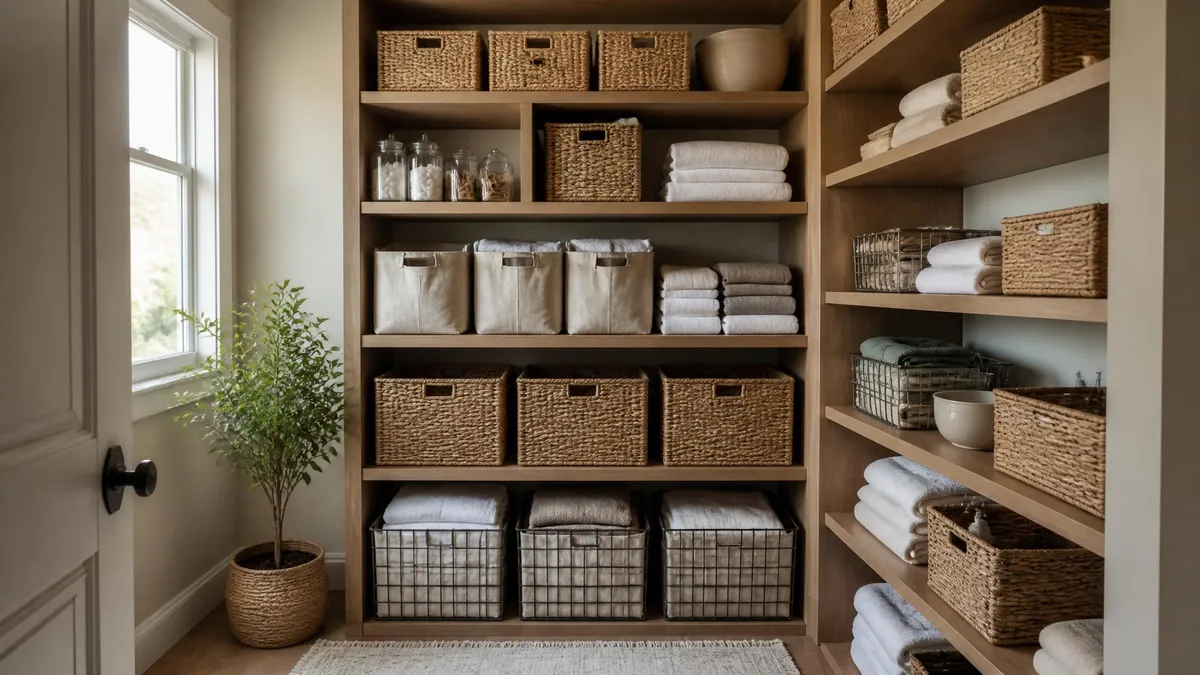
Rolling towels instead of folding them is a small change with a big payoff. Rolls fit tighter on shelves, they do not topple when you pull one out, and they give the whole closet a calm spa look.
Roll bath towels snugly and stand them upright in a basket or right on the shelf. Hand towels and washcloths can roll smaller and tuck into the gaps between the big rolls.

This one is free. It takes about ten minutes to reroll a whole shelf of towels, and guests always notice the difference.
7. Basket Zones for Each Family Member
In a shared bathroom, one person’s clutter becomes everyone’s problem. Give each family member their own basket on one shelf. Everything they use daily lives in their basket and nothing else.
Pick baskets in different colors or add a simple name tag. Kids are far more likely to put things back when the target is their own basket and not a vague shared shelf.

Simple woven or fabric baskets cost 6 to 12 dollars each. Three baskets usually cover a whole family.
8. A Lazy Susan for Deep Shelves
Deep shelves are where bottles go to disappear. A lazy susan turntable fixes that with one spin. Put your daily bottles on it and rotate to reach the back row without moving anything.
Pick a turntable with a small raised edge so bottles do not slide off mid spin. A 10 to 12 inch size fits most closet shelves.

Turntables cost 10 to 16 dollars. They also work wonders under sinks and in kitchen cabinets.
9. Hooks on the Inside of the Door
Adhesive hooks turn the inside of the closet door into hanging space. Hang your hair dryer, a small caddy, or the cleaning spray you reach for most. No drilling and no damage.
Use hooks rated for the weight you plan to hang. A hair dryer needs a stronger hook than a spray bottle, so check the package before you stick.

A pack of sturdy adhesive hooks costs 6 to 10 dollars. Press them onto clean dry surfaces and wait a day before loading them up.
10. A Dedicated First Aid Station
First aid supplies scattered across three shelves help nobody in a hurry. Gather bandages, antiseptic, pain relievers, and the thermometer into one clearly marked box on an easy to reach shelf.
Use a box with a lid and a handle so you can carry the whole station to wherever it is needed. A bold label makes it findable even in a panic.

Check expiration dates twice a year and toss what is old. The box itself can be any small container you already own.
11. Decant Everyday Items Into Matching Dispensers
Mismatched bottles with half torn labels make any shelf look messy. Decanting everyday items like cotton balls, swabs, and bath salts into matching jars or dispensers creates instant calm.
Keep the original labels for anything medicated or chemical. For simple things like cotton rounds, a pretty jar is all you need.

A set of matching jars costs 12 to 22 dollars. Refill them from bulk buys and you will save money over time too.
12. Vertical Dividers for Shelf Stacks
Stacks of towels and linens lean and topple without support. Slim vertical dividers stand between stacks like bookends and keep every pile neat.
Tension style dividers grip the shelf with no screws. Slide them in wherever a stack ends and adjust as your piles change with the seasons.

A set of four dividers runs 12 to 18 dollars. They work in bedroom closets for sweaters and bags too.
13. A Backstock Bin for Extras
Every bathroom collects duplicates. The extra shampoo, the spare toothpaste, the backup soap. Keep one bin just for backstock so extras never crowd your daily shelves.
Store the backstock bin on the highest or lowest shelf, out of the daily path. When a daily item runs out, you shop the bin before you shop the store.

This bin can be any container you already own. The rule matters more than the bin itself.
14. A Grab and Go Daily Caddy
If your mornings are rushed, build a small caddy with everything you use daily. Toothbrush, toothpaste, deodorant, moisturizer. Grab the caddy, use what you need, put it back.
A caddy with a handle works best because you can carry it to the sink and back in one trip. Keep it on the easiest shelf to reach.

Small caddies cost 8 to 14 dollars. This trick also helps kids learn a tidy morning routine.
15. A Lockable Box for Medicines
Medicines and vitamins need more than a shelf. They need a box with a lock, especially in homes with kids or curious pets. A small lockable box keeps everything safe and together.
Choose a box big enough for the whole family supply but small enough to fit on one shelf. A combination lock means no tiny key to lose.

Lockable boxes cost 15 to 30 dollars. Store the box up high as an extra layer of safety.
16. Hanging Pouches for Small Items
Small items like nail clippers, tweezers, and spare batteries vanish inside big bins. Slim hanging pouches with clear fronts keep them visible and sorted.
Hang pouches from a tension rod inside the closet or from hooks on the door. Group by task, nail care in one pouch and travel minis in another.
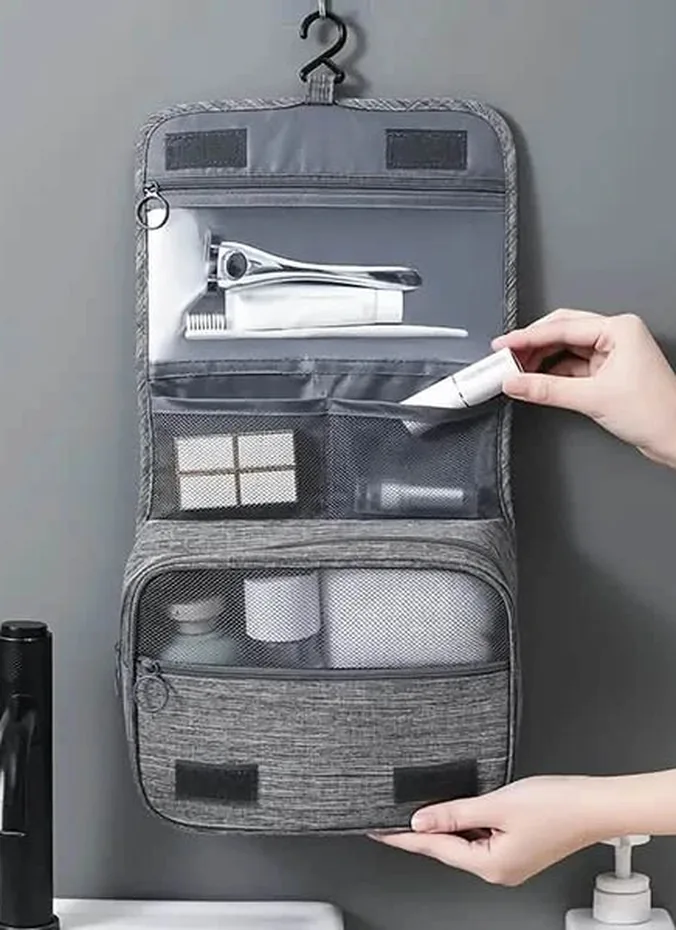
A set of hanging pouches costs 8 to 15 dollars. They also work inside luggage for trips.
17. Washable Shelf Liners
Bathroom shelves take a beating from drips and leaks. Washable shelf liners protect the surface and wipe clean in seconds when something spills.
Cut liners to fit with a little extra to fold up at the edges. That small lip catches drips before they reach the wood.

A roll of liner costs 8 to 12 dollars and covers several shelves. Replace it when it starts to look tired.
18. A Travel Kit That Lives on One Shelf
Travel minis scattered everywhere make packing a nightmare. Keep one packed toiletry bag on a dedicated shelf, always ready. When a trip comes up, you grab it and go.
Restock the kit the day you return from a trip, while you still remember what ran out. A simple checklist taped inside the closet door helps.

Use a bag you already own. The habit of restocking matters more than the bag itself.
19. A Cleaning Supply Corner
Bathroom cleaners deserve their own corner, not a random spot on every shelf. Dedicate one low shelf or one side of the closet to sprays, scrubbers, and gloves.
Keep daily cleaners separate from deep cleaning products. A small caddy for the weekly wipe down keeps you from hauling out the whole arsenal.
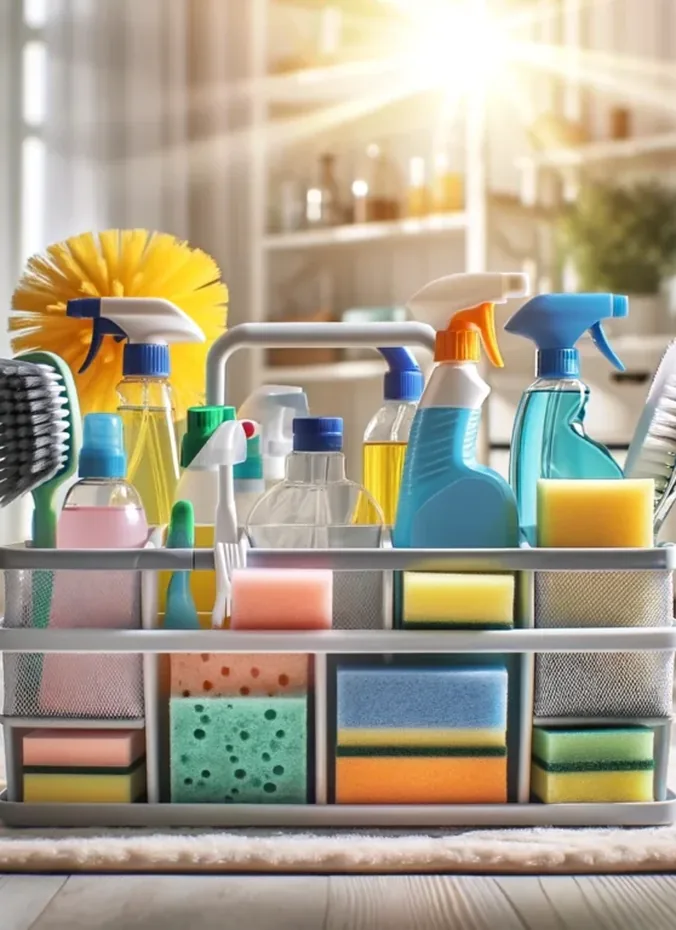
Store anything with strong fumes low and lidded. Safety first, especially with kids in the house.
20. The One In One Out Rule
Closets stay tidy when the system has a rule. One in one out means every new bottle that enters forces an old one out. It stops the slow creep of duplicates.
Tape the rule inside the closet door where everyone sees it. When the whole family follows it, the closet never fills past its limit again.

This rule is free and it is the reason tidy closets stay tidy. Pair it with a quick monthly check.
21. A Seasonal Rotation Box
Sunscreen in January and heavy foot cream in July do not need prime shelf space. Keep one box for off season items and swap it twice a year.
Label the box by season and store it on the top shelf. When the seasons change, swap the box contents in about ten minutes.
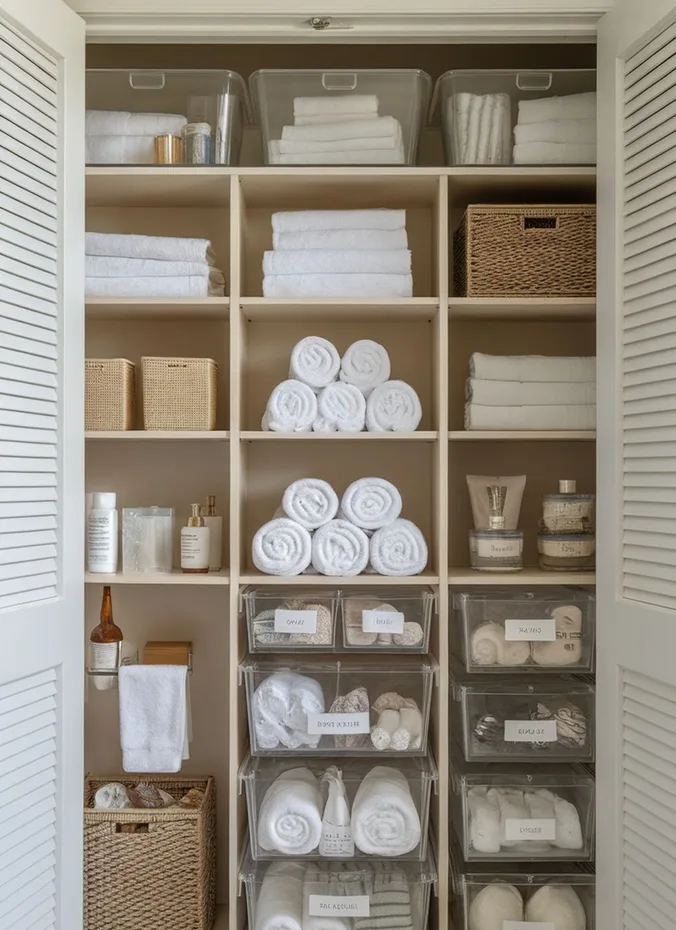
Any spare box works for this. The simple rotation keeps daily shelves focused on what you actually use right now.
How to Organize a Bathroom Closet on a Budget
A tidy closet does not need a big budget:
- Start by tossing expired products: The fastest free win. Check dates on medicines, sunscreens, and anything opened more than a year ago.
- Shop your home first: Baskets, jars, and small boxes from other rooms often work perfectly here.
- Buy bins in multipacks: Sets of four or six cost far less per bin than buying singles.
- Use the dollar store: Bins, baskets, hooks, and labels all live there for a few dollars each.
- Repurpose what you own: Shoe boxes covered in pretty paper make great shelf bins.
- Go clear where it counts: Spend on clear containers for deep shelves and go cheap on hidden spots.
- Do one shelf at a time: Spread the cost across weekends instead of buying everything at once.
Common Mistakes to Avoid With Bathroom Closet Organization
Small closets punish small mistakes. Steer clear of these:
- Buying organizers before decluttering: Measure your shelves and toss the expired stuff first. Organizers bought blind rarely fit.
- Choosing pretty over practical: A gorgeous basket you cannot see into becomes a junk drawer. Visibility beats style.
- Stacking too high: Anything above two containers tall gets wobbly. Keep stacks low and stable.
- Ignoring the door: The inside of the door is free storage. Hooks and pocket organizers double your space.
- Skipping labels: Unlabeled bins drift back to chaos within a month. Label everything on day one.
Frequently Asked Questions
What is the best way to start organizing a bathroom closet?
Pull everything out first. That is the whole secret behind bathroom closet organization ideas that work in real homes. Sort items into keep, toss, and relocate piles, wipe the shelves, then put back only what belongs. You cannot organize around expired sunscreen and empty bottles.
How do I organize a very small bathroom closet?
Go vertical and use the door. Stackable clear containers, tiered risers, and an over the door organizer triple your space without a single new shelf. Roll your towels to squeeze more onto each shelf, and keep a backstock bin for extras.
How often should I declutter bathroom products?
Do a quick check every three months. Toss expired medicines and sunscreens, recycle the empties, and make sure every bin still holds its own category. A ten minute seasonal reset keeps the whole system working.
Where should medicines go in a bathroom closet?
In a lockable box on a high shelf, away from heat and steam. Bathrooms get humid, so keep medicines in closed containers and check expiration dates twice a year.
What containers work best for bathroom closet organization ideas on a budget?
Clear stackable bins bought in multipacks give the most value. Pair them with dollar store baskets for towels and a simple over the door organizer for small items. Most small closets get fully organized for 30 to 50 dollars total.
Conclusion
A tidy bathroom closet is not about perfect matching bins or a showroom shelf. It is about knowing where things are and being able to grab them without a search party. Pick the ideas that fit your space and start with the messiest shelf.
Once the closet is calm, the whole bathroom feels bigger. If you want to carry that feeling further, these small bathroom decor ideas show how a few simple touches refresh the entire room.
Happy organizing, and enjoy opening that closet door from now on.