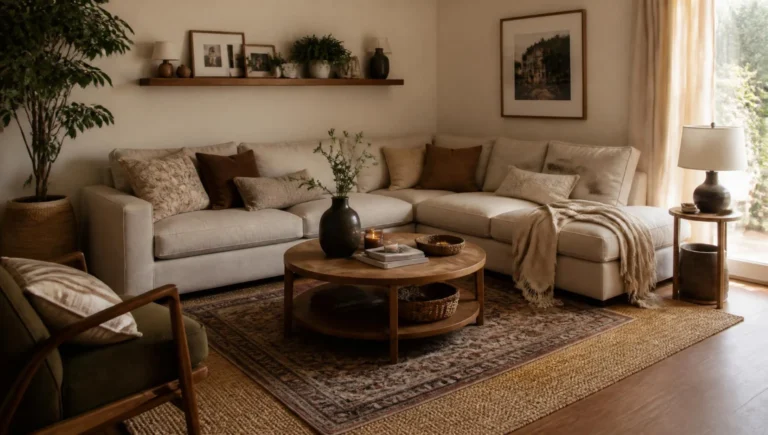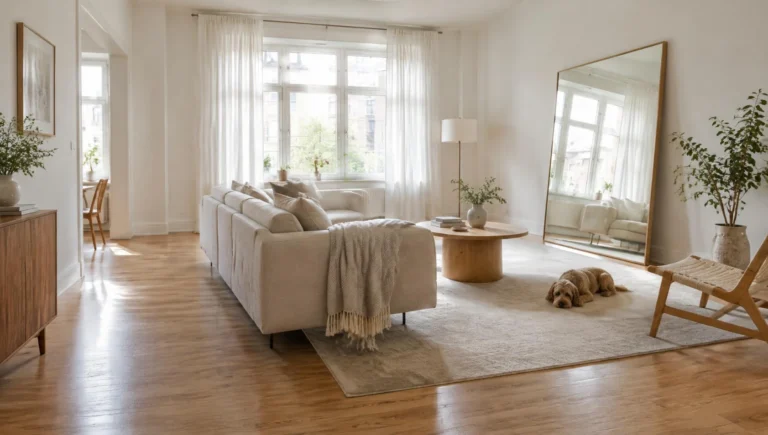
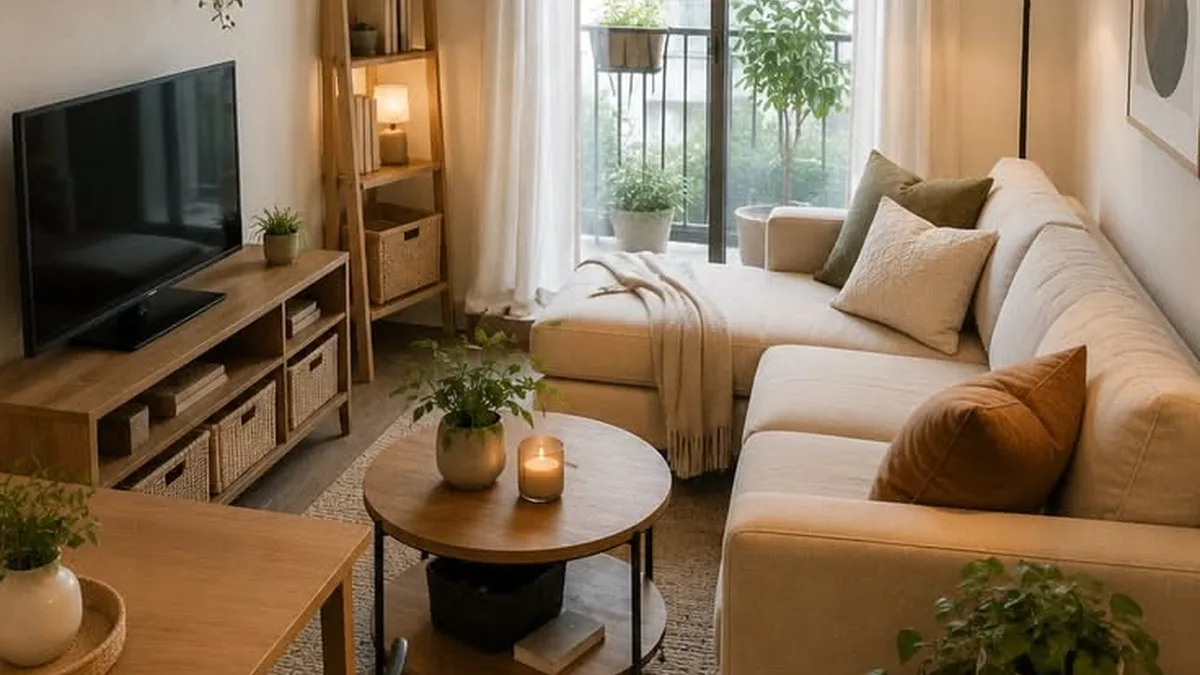
Your first apartment living room does not need a big budget to feel like home. It needs a few smart choices, a little patience, and the willingness to buy secondhand. The rooms that feel the most personal are rarely the ones with matching furniture sets.
Start with comfort and function, then add personality one layer at a time. A good sofa, warm lighting, and something on the walls will take you further than a cart full of trendy accessories. Most of these ideas cost under 100 dollars, and several cost nothing at all.
Below are 20 first apartment living room ideas that prove style has nothing to do with how much you spend. Work through them in order, skip what does not fit your space, and give yourself permission to finish the room slowly. It will come together faster than you think.
Quick Picks
- Fastest win: warm lamps instead of the harsh overhead light change the whole mood in minutes.
- Best on a budget: thrift stores and online marketplaces beat retail prices on sofas and tables every time.
- Biggest wow factor: one large rug makes a small rental look twice as pulled together.
- Easiest to reverse: removable wallpaper and peel and stick hooks leave no damage behind.
Before You Start
- Measure your room and doorways before buying anything big so the sofa actually fits through the door.
- Check your lease for rules about nails, paint, and wallpaper so you do not lose your deposit.
- Set a total budget first, then spend the biggest share on the sofa since you use it every day.
- Note where your outlets are so lamps and the TV land where they can actually plug in.
- Take a photo of the empty room so you can track how far the space has come.
Start With the Big Pieces
1. Thrift a Sofa and Add a Washable Slipcover
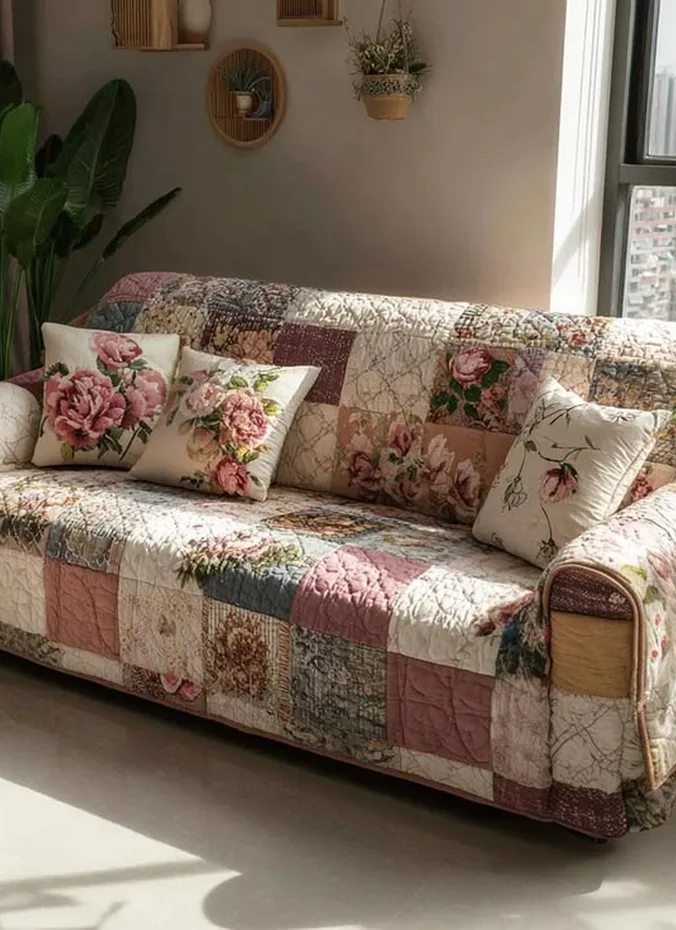
The sofa is the one piece worth hunting for, and thrift stores are full of solid ones for under 200 dollars. Look for a sturdy frame and comfortable cushions, and ignore ugly fabric since you will cover it. A washable slipcover in a neutral color makes any secondhand sofa look intentional and new.
Slipcovers cost 30 to 60 dollars and survive spills, pets, and movie nights. Choose a light color to keep a small room bright, or a dark one to hide wear. Wash it before first use so it fits snugly, and keep a lint roller nearby for the finishing touch.
2. Anchor the Room With One Big Rug

One large rug does more for a rental living room than almost anything else. It defines the seating area, adds color and pattern, and makes bare floors feel warm. Go as big as your space allows, with the front legs of the sofa and chairs sitting on the rug. Anything smaller will look like a postage stamp.
Budget friendly rugs in 5 by 8 or 8 by 10 feet run 80 to 150 dollars at discount stores. Low pile and darker patterns hide dirt best in a first apartment. If the rug slides on hard floors, a 20 dollar rug pad underneath keeps it in place and adds cushion.
3. Swap the Overhead Light for a Floor Lamp
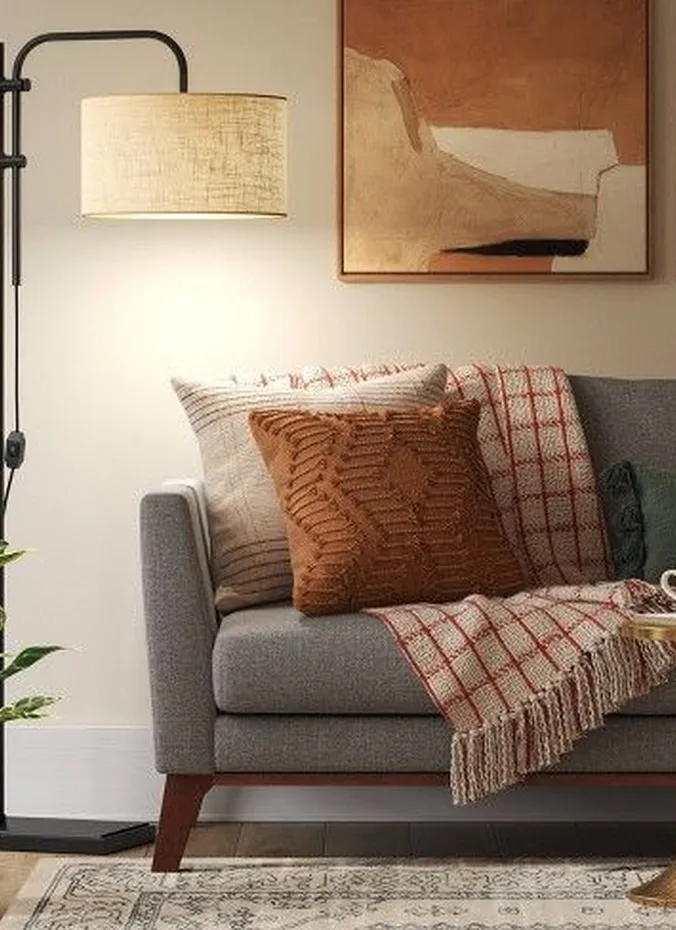
Overhead rental lighting is usually harsh and unflattering, so turn it off and use lamps instead. One arc or tripod floor lamp beside the sofa gives you warm light exactly where you read and relax. It is the single fastest mood upgrade in this whole list, and it takes five minutes.
Look for floor lamps with a fabric shade, which softens the light beautifully. Warm white bulbs around 2700K feel cozy, while daylight bulbs feel clinical. Thrift stores almost always have floor lamps for 10 to 20 dollars, so this upgrade barely dents the budget.
4. Score a Solid Wood Coffee Table Secondhand
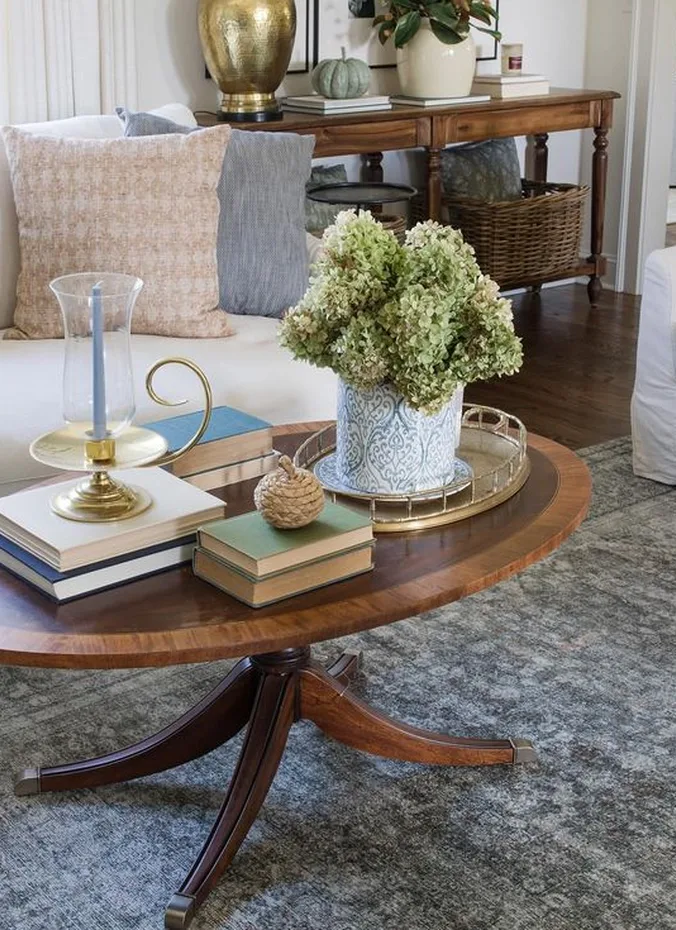
A solid wood coffee table from a thrift store or marketplace will outlast anything flat packed. Look for real wood with a sturdy build, then sand and restain it or paint it if the finish is rough. For easy styling once it is home, try these coffee table tray decor ideas to keep the surface tidy.
Round tables work best in tight spaces since there are no corners to bump into. If you find a table you love that is too tall, shorter legs are an easy swap. Expect to pay 20 to 50 dollars for a good one, which leaves plenty of budget for a tray and a small plant on top.
5. Mount the TV and Skip the Bulky Console
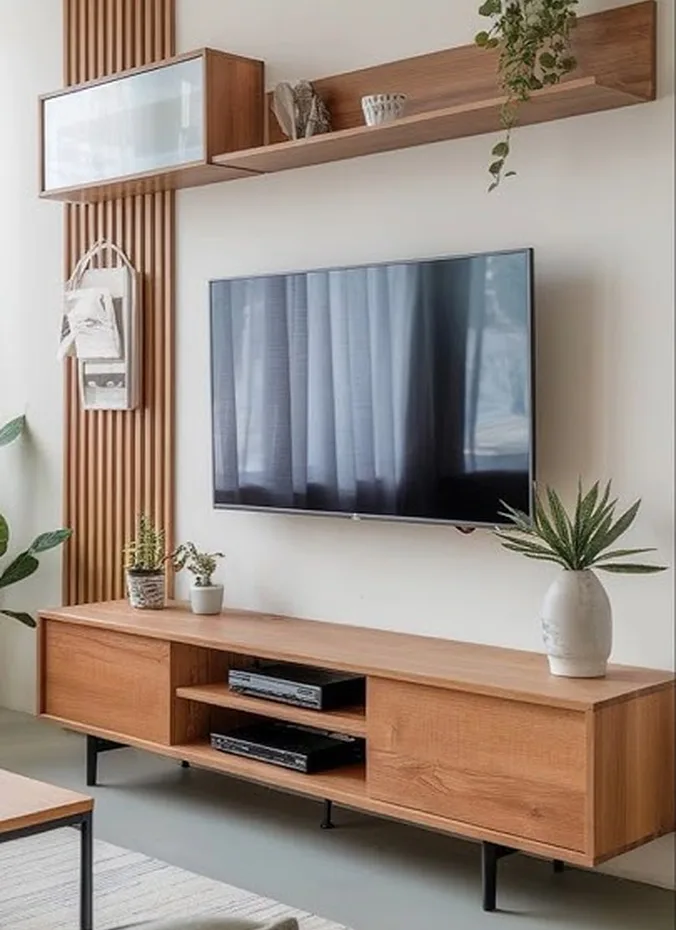
Mounting the TV on the wall frees up floor space and instantly looks more polished. A basic tilting mount costs about 25 dollars and most landlords allow the small holes, which are easy to fill later. Use a cord cover painted to match the wall so no cables dangle.
With the TV up, you can use a low dresser or a couple of cube shelves underneath instead of a bulky entertainment center. This keeps sight lines open and the room feeling bigger. If mounting is not allowed, a tall leaning shelf unit gives a similar lifted look.
Walls and Windows on a Budget
6. Build a Gallery Wall From Thrifted Frames
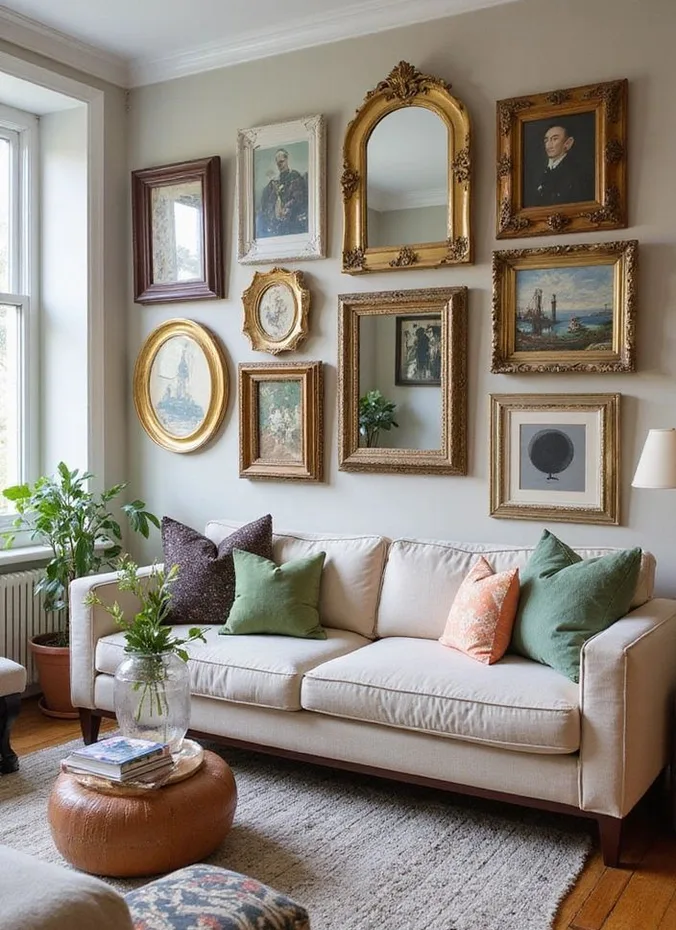
A gallery wall turns a blank rental wall into the most personal spot in the apartment. Collect mismatched frames from thrift stores for a dollar or two each and spray paint them one color for a unified look. Fill them with prints, photos, postcards, and even fabric scraps you love.
Lay the arrangement on the floor first and take a photo before hanging anything. Start with the biggest piece slightly off center, then build outward. Adhesive picture strips hold most frames with zero holes, which keeps your deposit safe when it is time to move.
7. Hang Curtains High and Wide
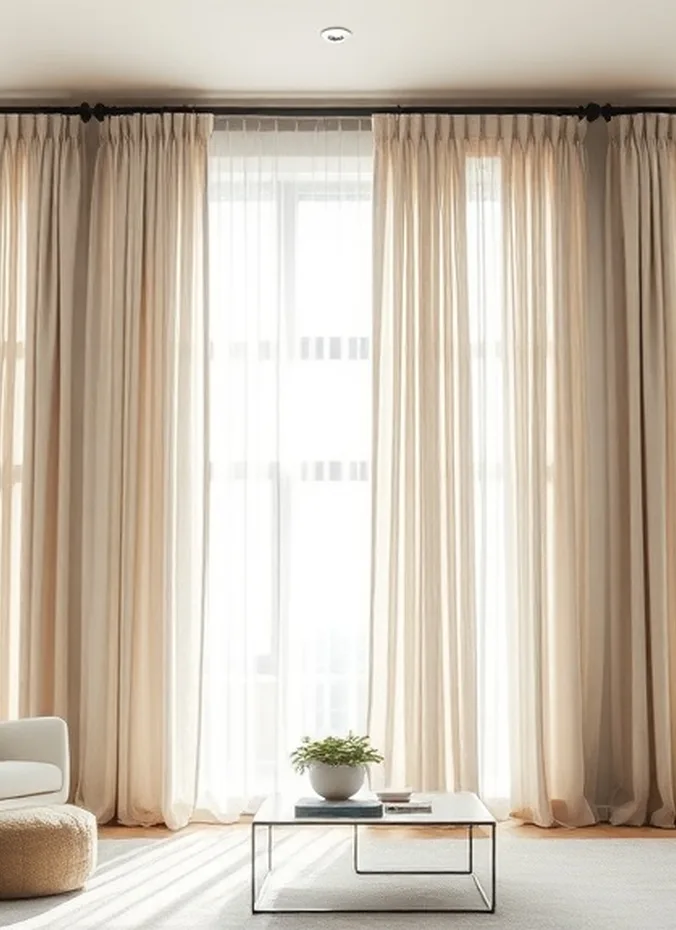
Curtains hung near the ceiling and extended past the window frame make windows look bigger and ceilings taller. It is a designer trick that costs nothing extra, just a wider rod and longer panels. Even basic 15 dollar panels look expensive when they are hung this way.
Choose curtains that just kiss the floor for a tailored look, and pick a light fabric to keep the room bright. If you cannot drill, tension rods or adhesive hooks work inside the window frame. Two panels per window always look fuller and more finished than one.
8. Add a Big Mirror to Bounce Light Around
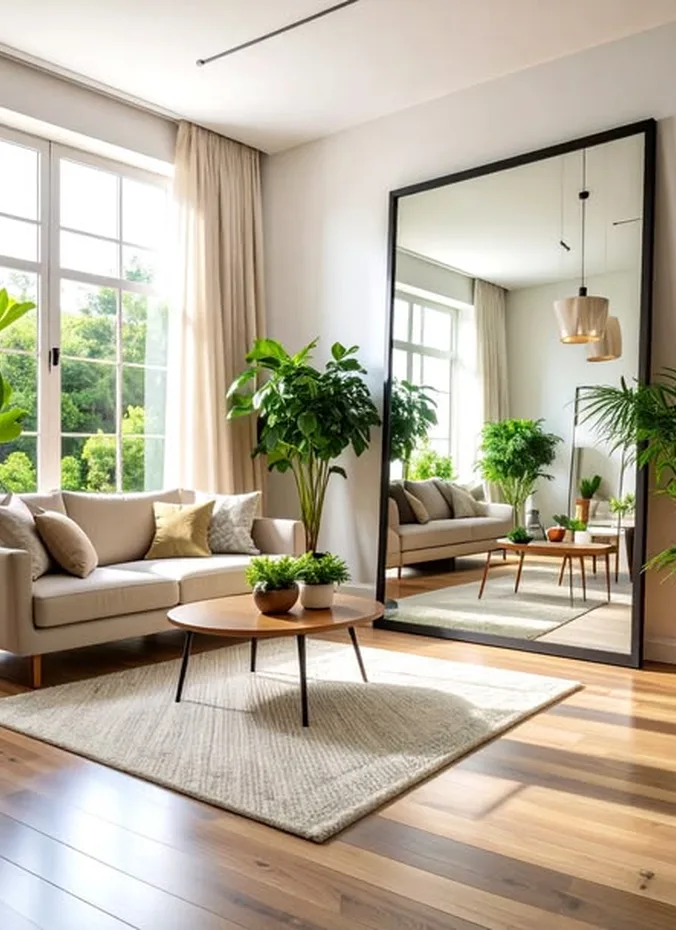
A large mirror is the oldest small space trick in the book because it actually works. Place it opposite a window to double the natural light, or lean a full length mirror in a dark corner to open it up. Thrift stores regularly have big mirrors for 15 to 30 dollars.
Check the mirror for a solid frame and clear glass with no dark spots around the edges. Lean it against the wall rather than hanging it for a relaxed look and zero holes. A mirror with a thin gold or black frame reads modern and goes with everything. For more tricks made for tight rentals, browse these very small living room ideas.
9. Try Removable Wallpaper on One Wall
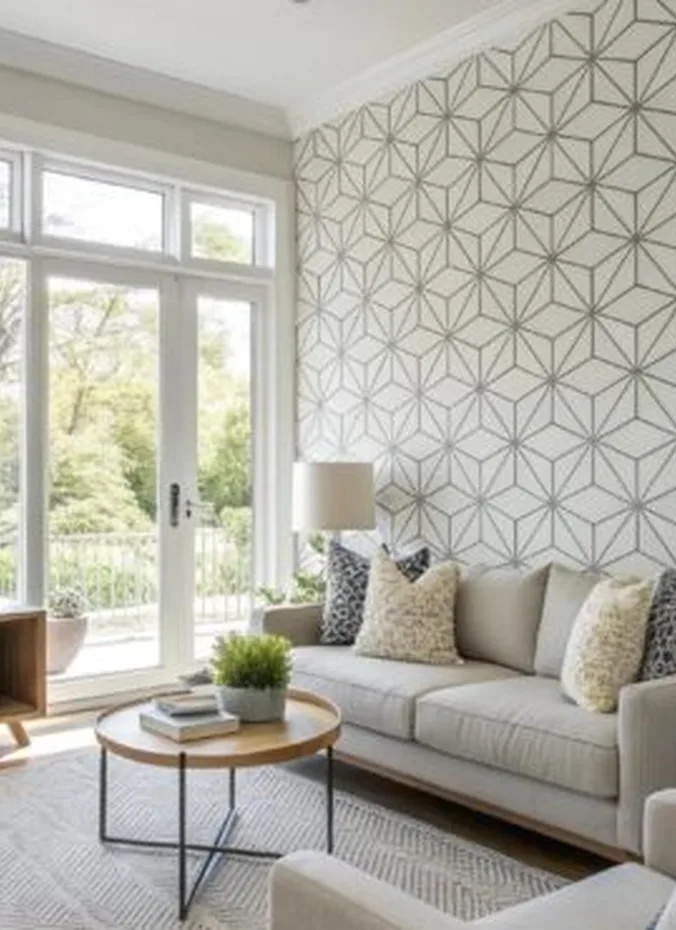
Removable wallpaper gives you the impact of an accent wall with none of the landlord drama. One wall behind the sofa is enough to transform the whole room. Peel and stick panels go up in an afternoon and come down cleanly when your lease ends.
A roll covering one wall typically costs 40 to 80 dollars. Start in a corner and smooth as you go, using a credit card to push out bubbles. Bold patterns look best in small doses, so keep the other walls simple and let the wallpaper be the star.
10. Put Up Floating Shelves for Storage and Display
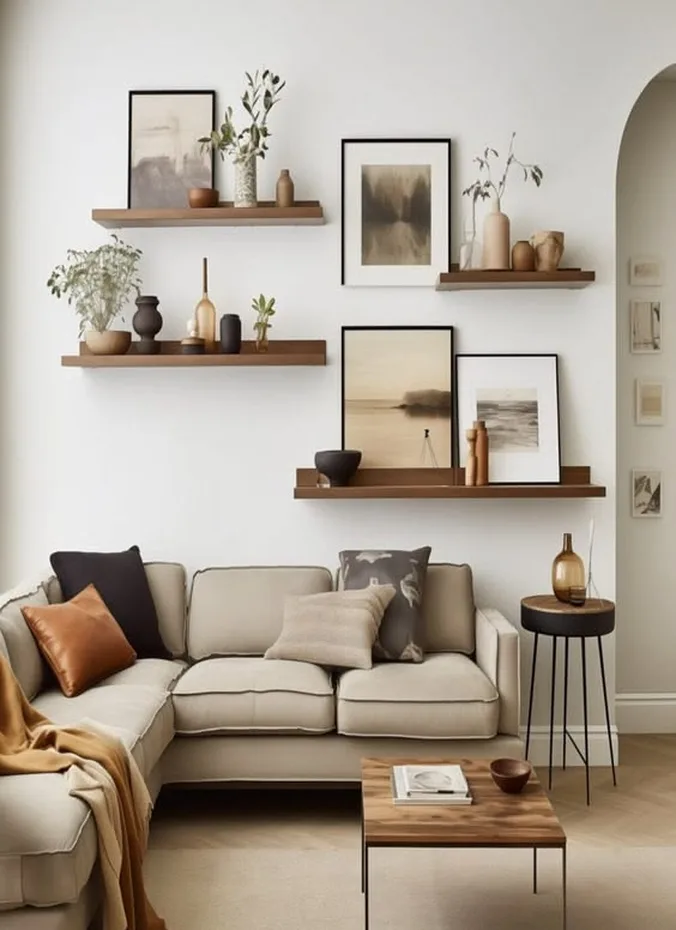
Floating shelves add storage and display space without eating any floor area. Two or three shelves above the sofa or beside the TV hold books, plants, and the little things that make a place feel like yours. Basic wood shelves with hidden brackets cost about 15 dollars each.
Style them with a mix of useful and pretty: books stacked sideways, a trailing plant, a framed photo. Leave some breathing room instead of filling every inch. If drilling is off limits, picture ledges on adhesive strips hold lighter items just fine.
Comfort Without the Cost
11. Mix and Match Throw Pillows
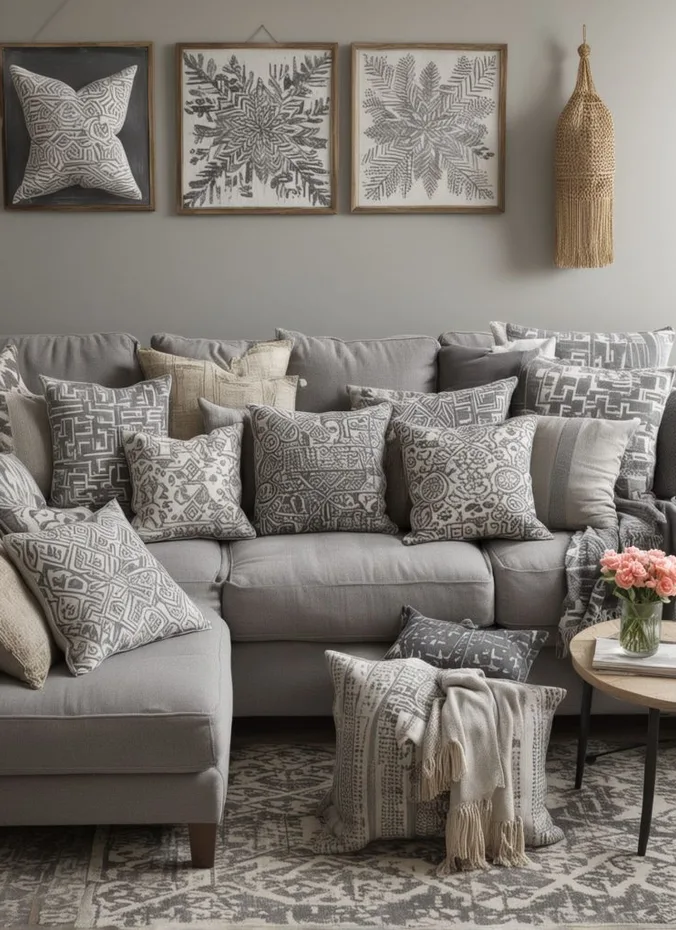
Throw pillows are the cheapest way to add color and personality to a plain sofa. Mix sizes, patterns, and textures instead of buying a matching set: a solid, a stripe, and something nubby looks collected rather than decorated. Discount stores sell good inserts and covers for a few dollars each.
Stick to two or three colors pulled from your rug or art so the mix feels intentional. Odd numbers look best, so try three or five pillows on a standard sofa. Swap the covers seasonally for a fresh look without buying new inserts every time.
12. Drape a Cozy Throw Blanket
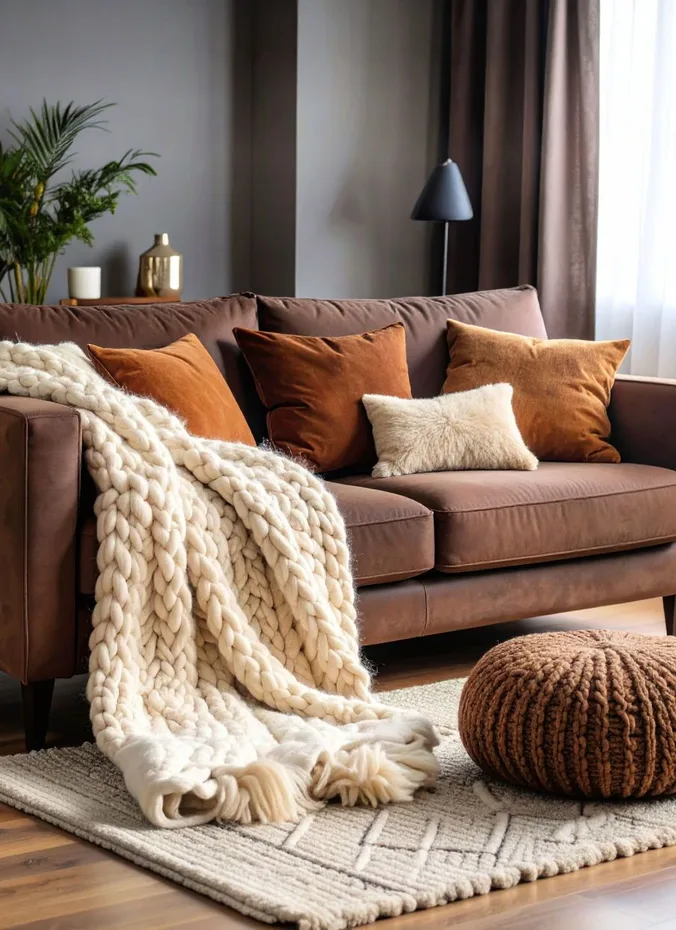
A throw blanket draped over the sofa arm adds instant coziness and a layer of texture. Chunky knits look luxurious and invite people to curl up, while lighter cotton throws work year round. Fold it in thirds lengthwise and drape it casually rather than arranging it perfectly.
You do not need to spend much here: good looking throws run 20 to 35 dollars at discount stores. Choose a color that contrasts with your sofa so it stands out. Keep one on the sofa and one in a basket nearby, and the room always feels ready for a movie night.
13. Bring In Low Cost Plants
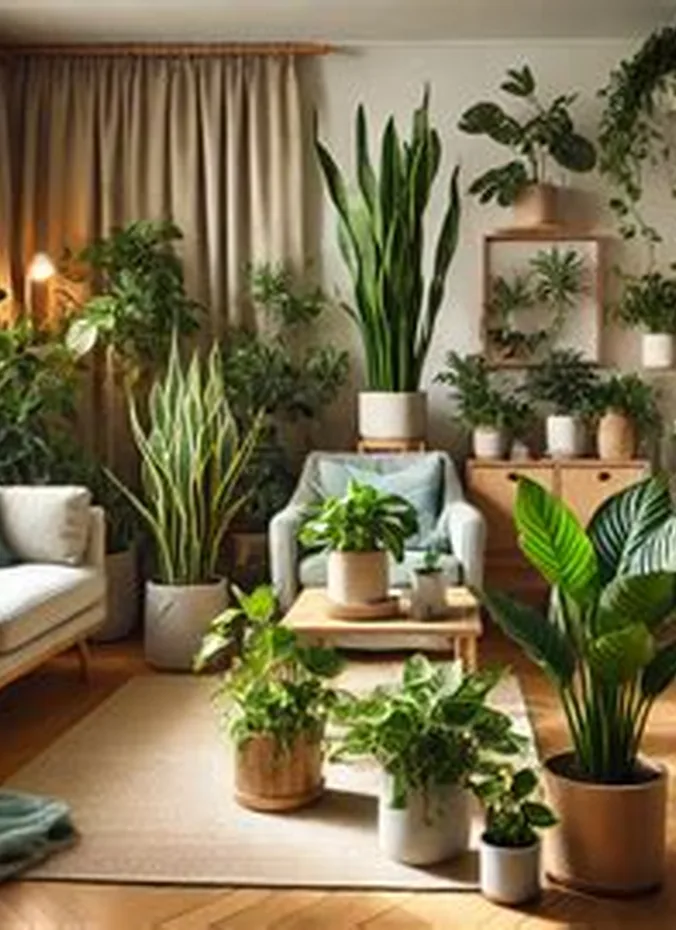
Plants make a first apartment feel alive and cared for, and they cost very little. Start with nearly unkillable picks like pothos, snake plants, and ZZ plants, which forgive forgotten waterings. A 5 dollar nursery plant in a thrifted pot looks just as good as an expensive one.
Group plants in odd numbers at different heights for a lush corner display. Hang one from the ceiling to draw the eye upward and save floor space. If your thumb is truly brown, good faux plants have come a long way and need nothing but an occasional dusting.
14. Hide Clutter in Pretty Baskets
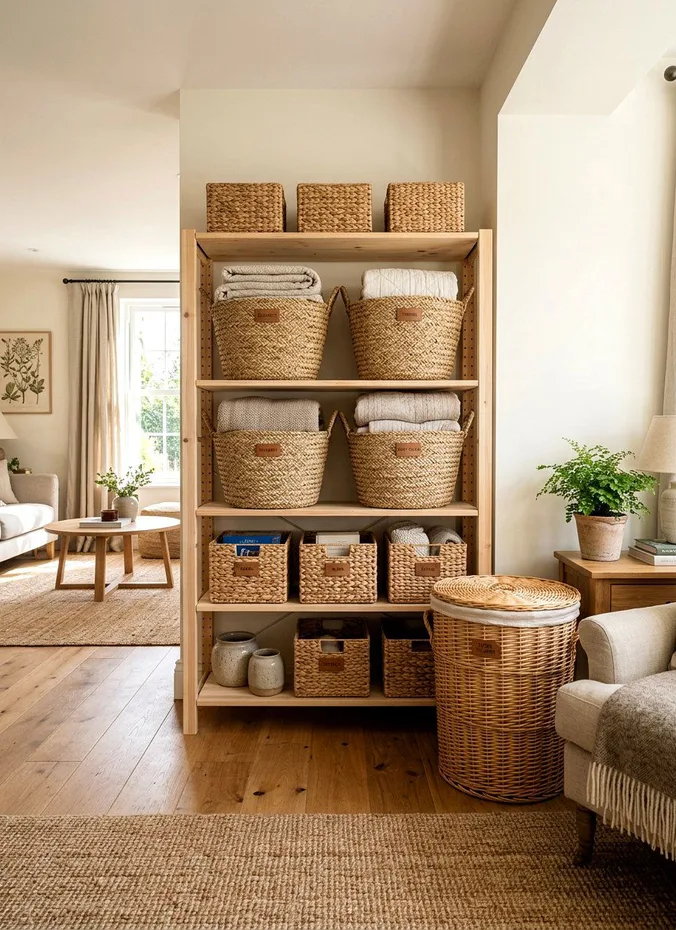
First apartments collect clutter fast, and baskets are the prettiest way to hide it. Use them for throw blankets, magazines, chargers, and all the small stuff that makes a room look messy. Woven baskets add natural texture that makes even cheap shelving look styled.
Buy baskets in a few sizes but stick to one material so they look like a set. Cube shelves with fabric or seagrass bins are a classic budget combo. Label the bins you use daily so things actually go back where they belong instead of piling up.
15. Carve Out a Tiny Reading Nook

That awkward empty corner can become the best seat in the house. For more ways to use tricky spots, see these empty corner in living room ideas. All you need is a comfortable chair, a small side table, and a lamp: thrift all three and the whole nook costs under 75 dollars.
Angle the chair slightly into the room so the corner feels intentional, not leftover. Add a floor lamp or a clip light for reading after dark, plus a small basket for books. Even in a studio, a defined nook makes the space feel larger because every zone has a purpose.
Make It Feel Like Yours
16. Make Your Own Large Scale Art
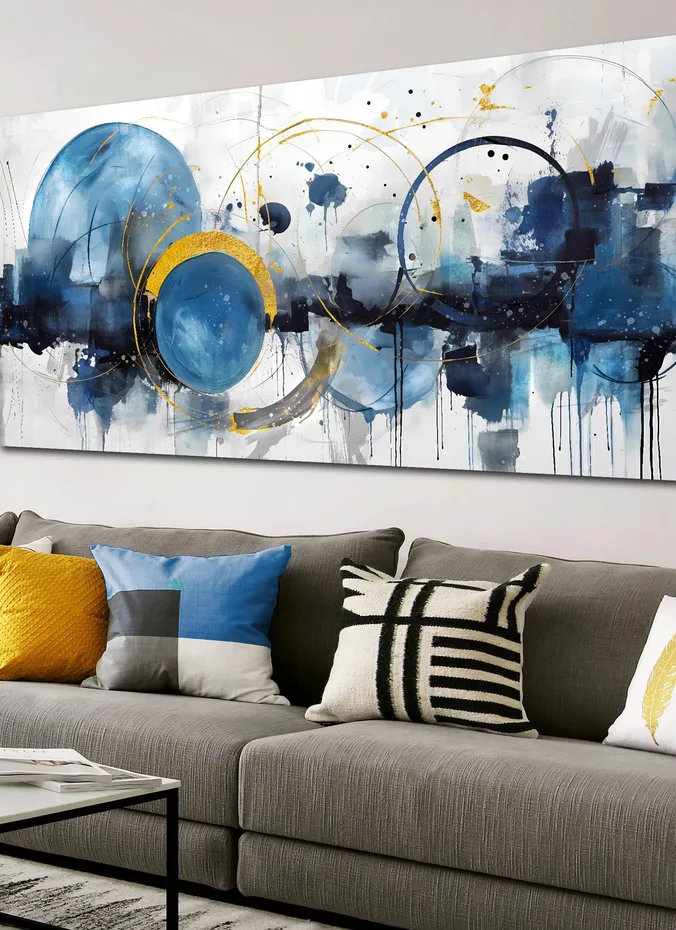
Big art makes a big impact, and you can make it yourself for the price of a canvas. Abstract brushstrokes in two or three colors that match your room always look intentional. There is no wrong way to do it, which is exactly why this works so well for beginners.
A 24 by 36 inch canvas costs about 20 dollars at craft stores, and sample paint pots are a few dollars each. Paint with the canvas on the floor and step back often to check the balance. Hang it low, with the center around eye level, for a gallery look.
17. Choose Furniture That Does Double Duty
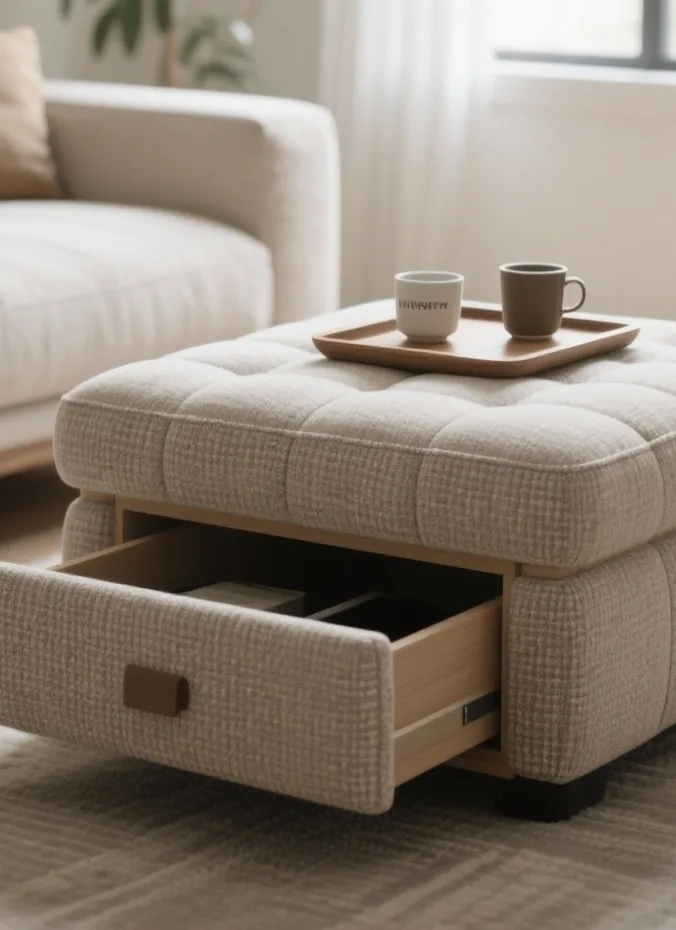
In a first apartment, every piece should earn its floor space. A storage ottoman holds blankets and works as extra seating, while a lift top coffee table becomes a desk. These hardworking pieces cost about the same as their single use versions but do twice the job.
Look for ottomans with removable lids and sturdy construction that can handle sitting. Nesting side tables tuck away when you need room and pull out when guests come. Thinking double duty from the start saves you from rebuying furniture in six months.
18. Fit a Small Dining Spot in the Corner
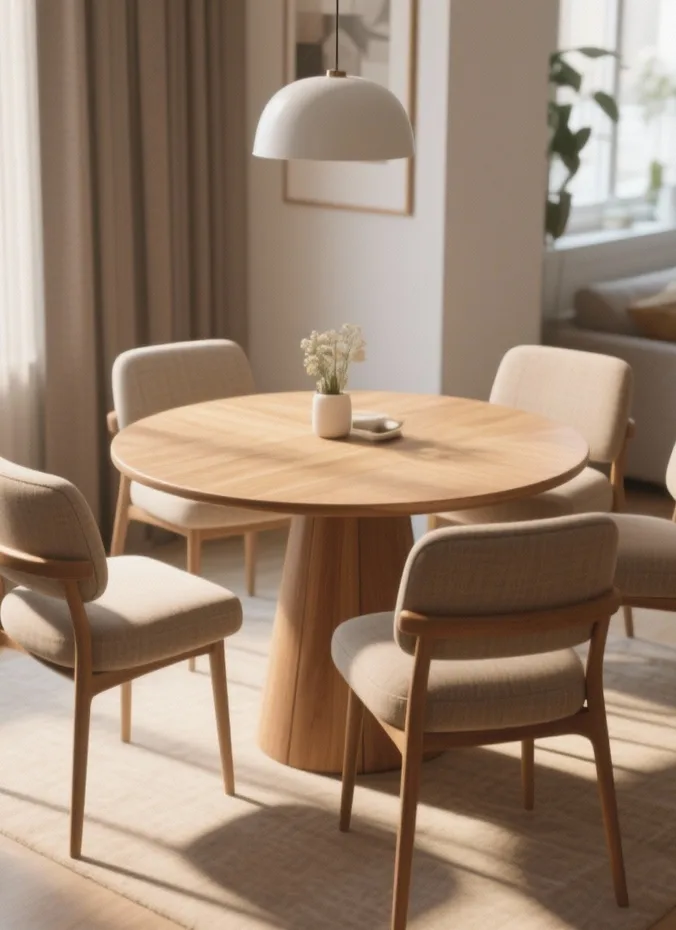
Most first apartments have no separate dining room, so claim a corner of the living room. A small round table with two chairs fits in a 4 foot square and seats you comfortably every day. Round shapes keep traffic flowing and nobody gets stuck in a corner seat.
Drop leaf or folding tables are perfect since they shrink when you need the space. Thrifted wooden chairs with new seat cushions look charming and cost almost nothing. A small pendant or even a plug in wall sconce above the table defines the zone beautifully.
19. Layer Cheap Lamps for Evening Glow
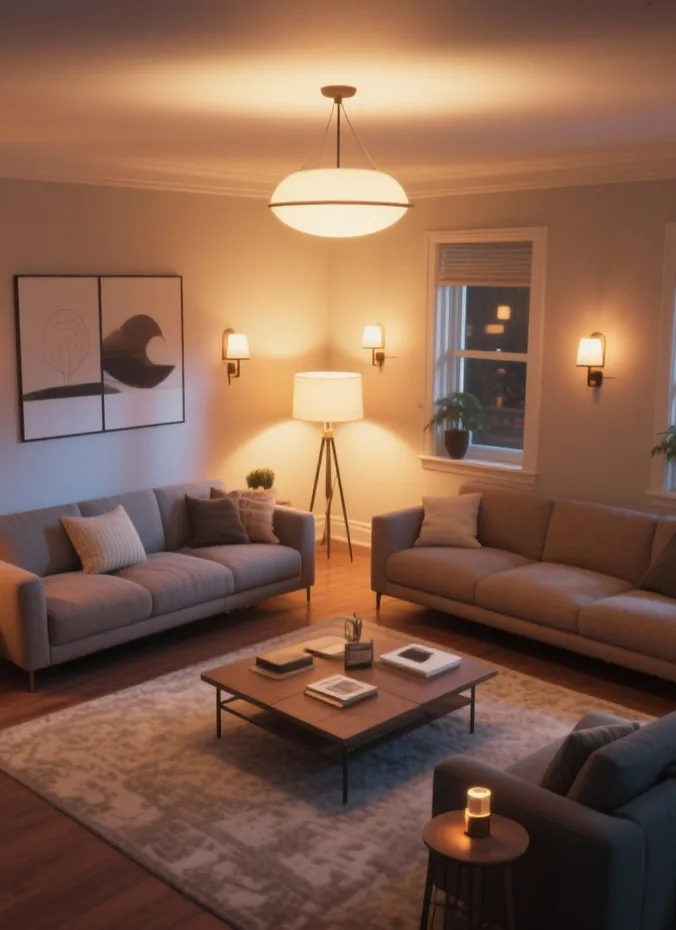
Designers layer light at three heights, and you can copy the trick for under 50 dollars. Combine a floor lamp, a table lamp on a side table, and something low like a candle or string lights. The mix of heights makes the room feel deep and cozy instead of flat.
Keep all the bulbs the same warm color temperature so the light feels unified. Put the two main lamps on a timer or smart plugs so the room greets you with a glow when you get home. This one change makes takeout on the couch feel like an occasion.
20. Display Photos and Souvenirs That Feel Like You

The difference between a decorated room and your room is the personal stuff. Frame a few favorite photos, put out the souvenirs from trips, and display the weird little things you love. These cost nothing and they are what guests remember and ask about.
Group personal items on one shelf or in one corner so they read as a collection rather than clutter. Mix heights with books or small boxes as risers. Rotate the display every few months to keep it fresh, and the room will always feel like it is evolving with you.
Budget Tips
- Buy the sofa used: a 150 dollar thrifted sofa with a 40 dollar slipcover beats a 900 dollar new one.
- Shop end of month: people moving out list great furniture cheap in the last week of the month.
- Use what you have: a dresser works as a TV stand and a trunk works as a coffee table.
- Ask for hand me downs: family and friends often have lamps and side tables gathering dust.
- DIY your art: a 20 dollar canvas and leftover house paint make wall art that looks custom.
- One room at a time: finishing the living room fully beats half decorating three rooms.
Common Mistakes to Avoid
- Buying a full matching furniture set, which looks flat and costs far more than mixing pieces.
- Pushing all the furniture against the walls, which actually makes a small room feel smaller.
- Skipping the rug to save money, when a rug is the fastest way to make the room feel finished.
- Using only the overhead light, which flattens everything and kills any cozy feeling.
- Hanging curtains at window height instead of near the ceiling, which makes ceilings look lower.
Frequently Asked Questions
How much should I budget for a first apartment living room?
Most people furnish a living room well for 500 to 1,000 dollars using secondhand finds. Spend the most on the sofa, then fill in with thrifted tables, lamps, and textiles.
What should I buy first for my living room?
Buy the sofa first, then a rug, then lighting. Those three set the comfort and mood of the room. Everything else can wait until you find the right pieces.
How can I decorate a rental without losing my deposit?
Use removable wallpaper, adhesive hooks, and leaning frames instead of nails. Keep the original paint and fill any small holes before you move out.
Where is the best place to find cheap living room furniture?
Thrift stores, online marketplaces, estate sales, and curbside finds on moving weekends. Check listings in nicer neighborhoods for the best quality at low prices.
How do I make a small apartment living room feel bigger?
Use a light rug, hang curtains high, add a large mirror, and keep furniture legs visible so the floor shows through. Fewer, larger pieces beat lots of small clutter.
Your first living room will not look like a magazine on day one, and that is completely fine. The best apartments grow piece by piece, with a story behind every thrifted find and hand me down. Give the room time and it will start to feel unmistakably yours.
Focus on the pieces you touch every day: a comfortable place to sit, light that flatters the room, and walls that show who lives there. Get those right and nobody notices what you spent.
A year from now you will look around and barely remember the empty room you started with. That is the real reward of decorating on a budget: a home that feels earned, personal, and completely you.