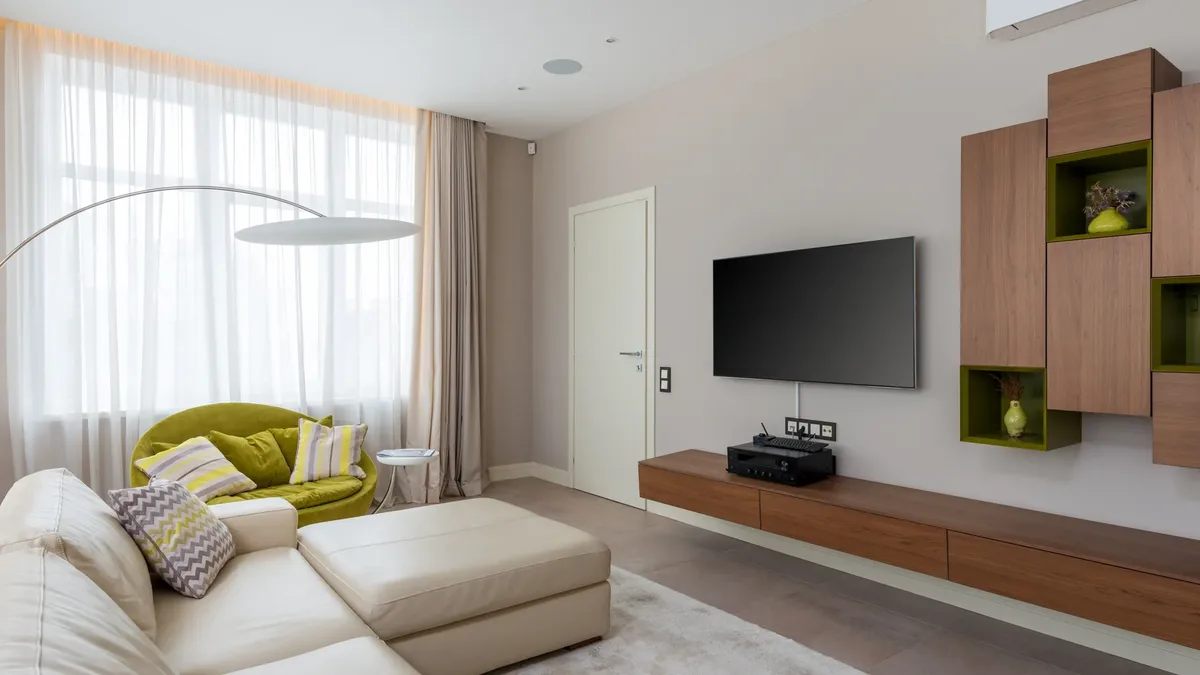
Learning how to decorate around a tv is one of those small projects that changes how your whole living room feels. That big black rectangle pulls every eye in the room, and on a bare wall even a pretty space can feel unfinished. A little styling around the screen fixes that fast, and you do not need a big budget to pull it off.
The trick is to treat the television like furniture instead of an obstacle. Frame it with art, shelves, plants, or color and it stops shouting for attention. Most ideas below cost less than a dinner out, and several use things you already own.
If your room is on the smaller side, these tricks work even harder for you. A styled TV wall gives a compact room a focal point instead of a dead zone. very small living room ideas pair beautifully with the styling moves below, so keep both in mind as you plan. Pick the two or three ideas that fit your space and your budget, and start there.
Quick Picks
- Short on time: hang two matching prints on either side of the screen for instant symmetry.
- Short on cash: paint the wall behind the TV a deep color and let the screen melt into it.
- Renters: lean oversized art against the wall and skip the drill entirely.
- Families: flank the TV with closed baskets that swallow remotes, controllers, and clutter.
- Small rooms: mount the TV and tuck a slim bench underneath to keep floor space open.
- Biggest impact: build a full gallery wall around the screen so it reads as one piece of art.
Why Your TV Wall Deserves Some Attention
Most of us arrange the whole living room around the television and then ignore the wall it hangs on. The sofa faces it, the coffee table serves it, and the wall behind it stays blank. That blankness is exactly why the screen feels so loud: our eyes need context, and without it the TV becomes the only thing to look at.
Styling the wall gives your eyes somewhere pleasant to land. Frames, shelves, and texture break up that big dark shape and make it one part of a larger picture. The room feels calmer and more pulled together, and because everything here is movable decor, you can change it with the seasons.
1. Build a Gallery Wall Around the Screen
A gallery wall is the fastest way to make a TV feel like decor instead of an interruption. Hang frames of different sizes around the screen with two to three inches between each piece. Mix photos, prints, and small mirrors so the wall feels collected, not staged.
Lay the arrangement on the floor first, marking the TV outline with painter’s tape to avoid extra nail holes. Keep frames in one color family for calm, or mix wood and black for relaxed.
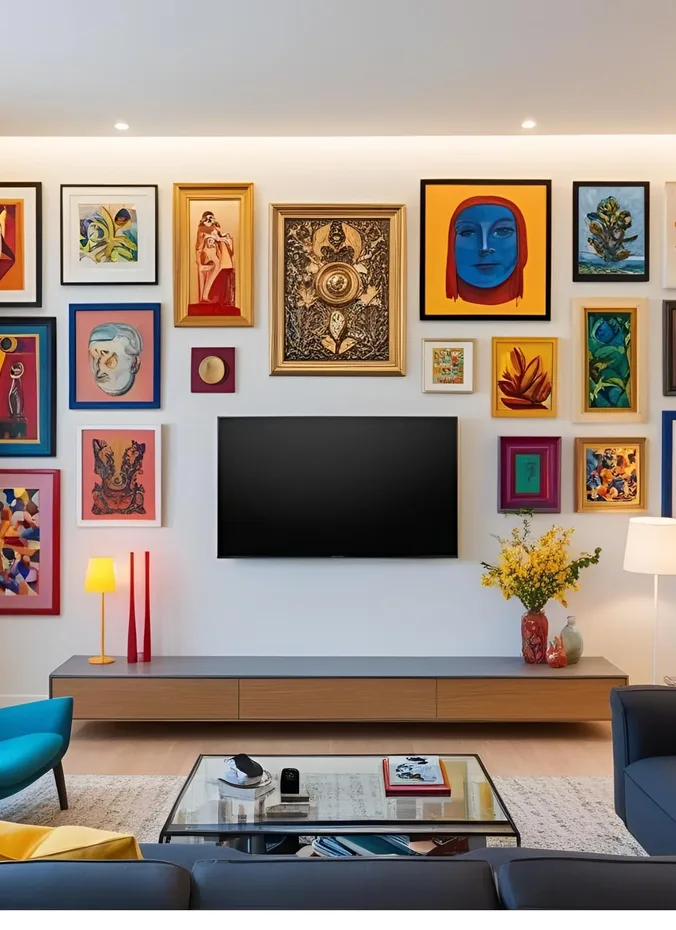
Once the frames go up, the TV stops being a black hole and becomes one tile in a bigger mosaic. Start with pieces you own and add to it over time.
2. Ground It With a Styled Console Table
A TV floating on a bare wall can look like it is hovering with no purpose. A console table underneath gives it a visual anchor. Choose one a few inches wider than the screen on each side for the best proportions.
Style the top in threes: books, a small plant, and something tall like a vase. Leave breathing room between groups. Tuck baskets underneath for remotes and controllers.
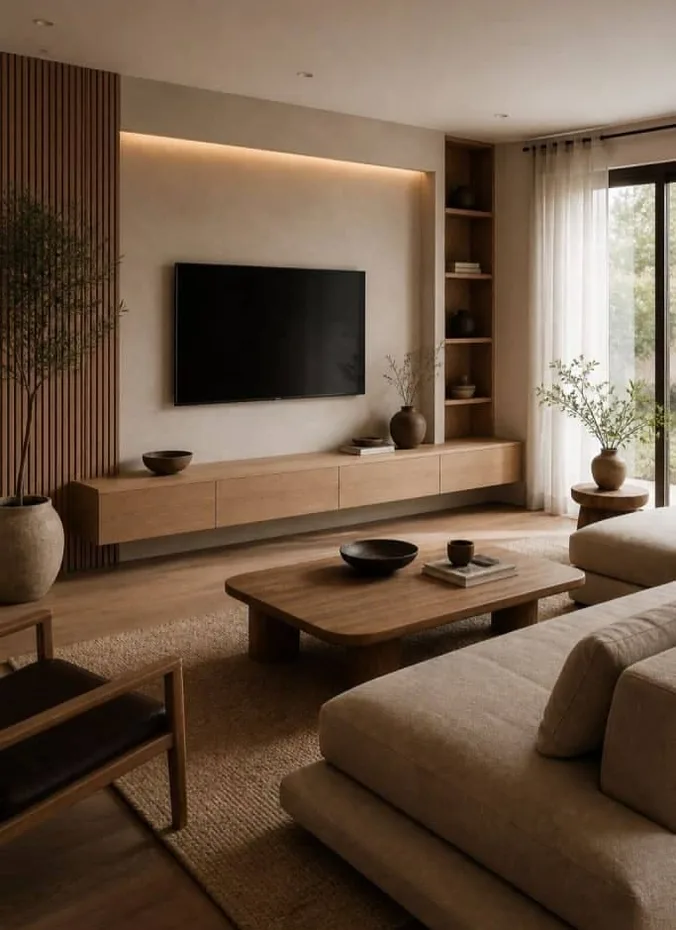
Thrift stores are full of solid wood consoles for 30 to 60 dollars. A coat of paint and new knobs can make a dated piece look brand new in one afternoon.
3. Flank It With Floating Shelves
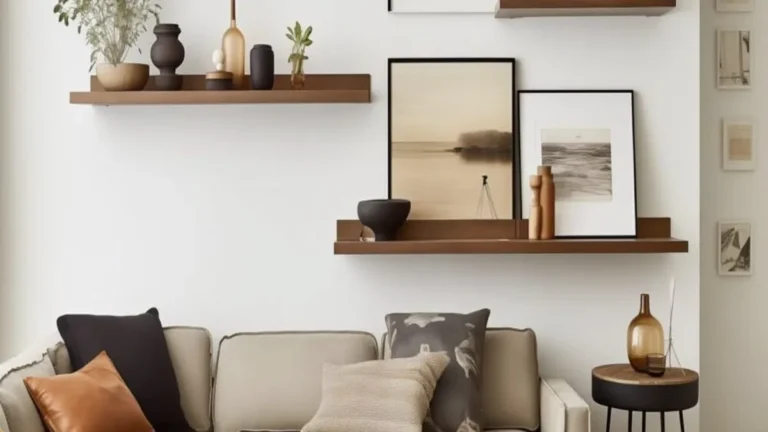
Floating shelves on one or both sides of the TV add storage and personality in one move. They are perfect for small plants, framed photos, and pretty boxes that hide the boring stuff. Two shelves per side is usually plenty.
Hang the lowest shelf near the middle height of the screen. Keep styling simple with empty space; a packed shelf looks like a store display.
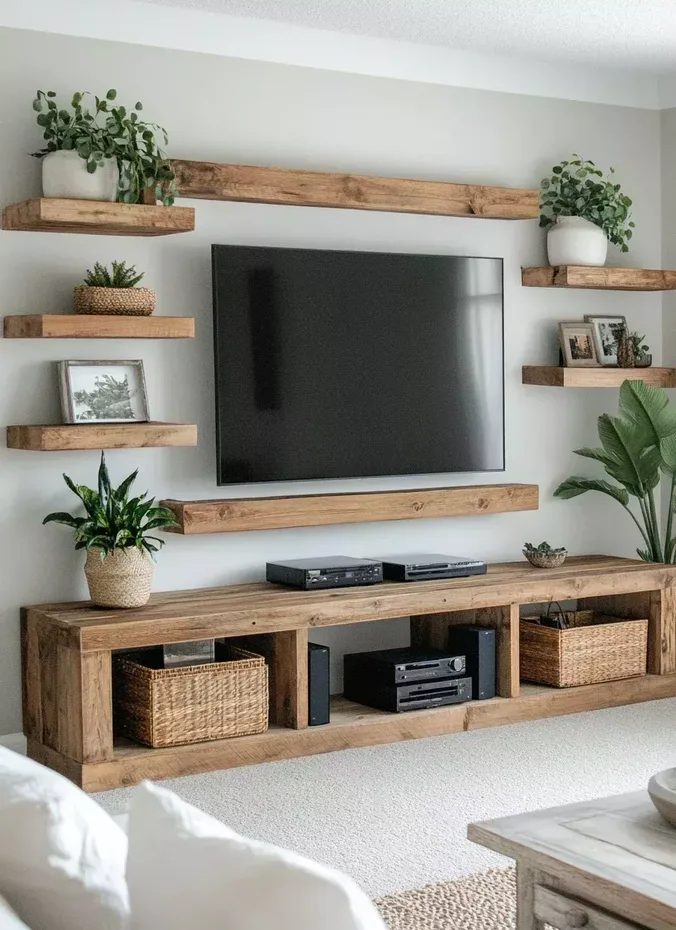
Most shelf pairs cost 20 to 40 dollars and go up with a drill and a level in under an hour. Renters can use heavy duty picture ledges hung from two small nails.
4. Add a Shiplap Accent Wall
Shiplap brings instant texture to the wall behind a TV, and texture is exactly what a flat screen needs. The lines draw the eye across the whole wall instead of letting it stop dead on the screen. White feels fresh, dark stain feels moody.
Peel and stick panels make this a weekend project needing only a utility knife. Start from the center so seams land evenly.
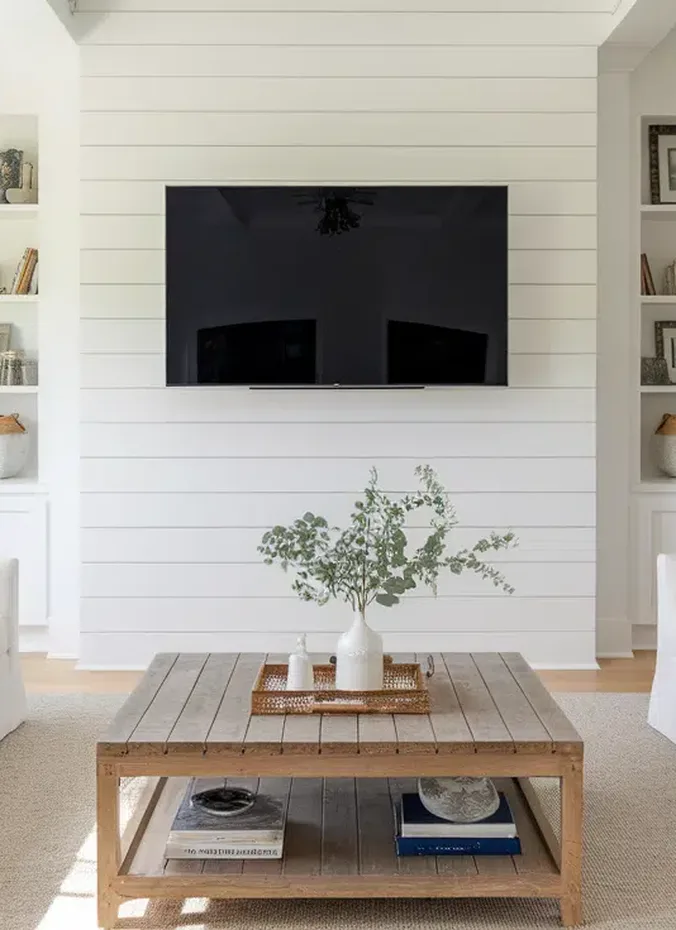
One wall needs 100 to 200 dollars in panels. For a cheaper echo of the look, try vertical battens spaced a few inches apart.
5. Frame It With Picture Molding
Thin trim boxes arranged around the screen mimic the paneled walls you see in expensive homes. The TV sits inside the largest panel like a painting in a frame, and the whole wall suddenly looks custom.
Plan the layout on paper first, keeping panels symmetrical. Paint molding the wall color for subtlety, or one shade darker for definition. Caulk seams before painting.
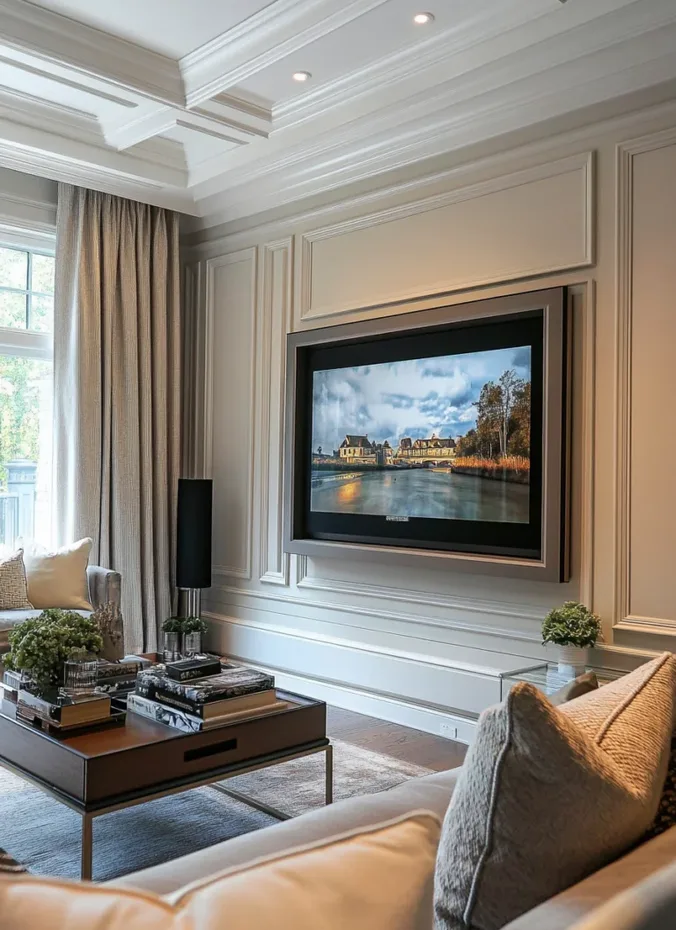
A miter box, some trim, and a nail gun rental run 40 to 80 dollars. The result looks like you hired a carpenter, which is the whole point.
6. Surround It With Bookshelves
Nothing makes a TV feel built in like bookshelves on both sides. The shelves give the screen a proper home and solve where to put all the books. Even two tall bookcases do the job if floor to ceiling is too much.
Style with books, baskets, and a few objects, leaving a third of each shelf empty. bookshelf ideas that turn books into beautiful decor can guide your styling so the shelves look curated instead of crammed.
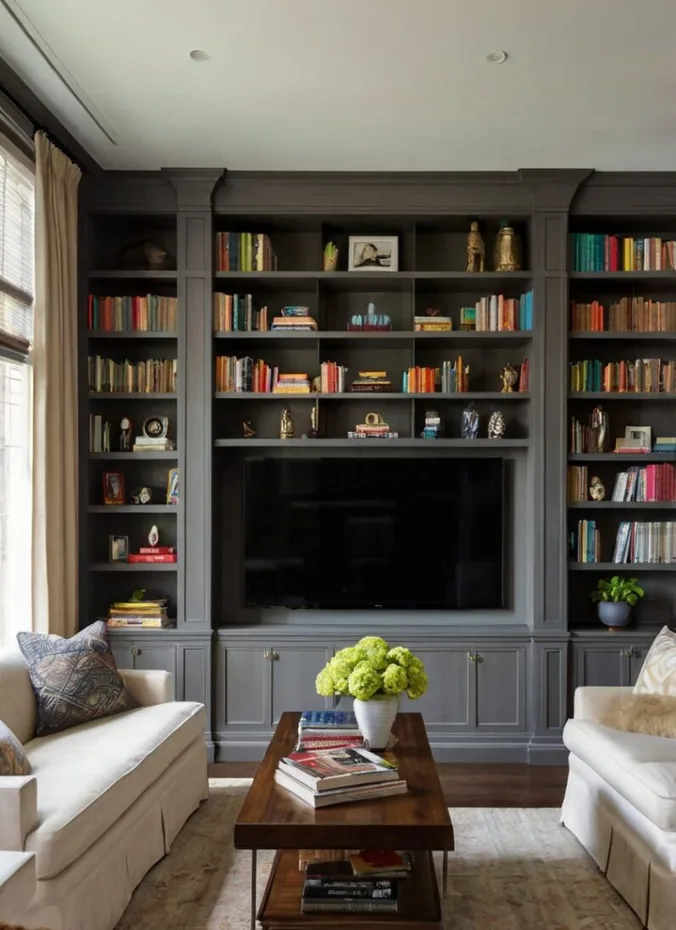
Two matching bookcases often cost less than 150 dollars total. Paint them the wall color and add top trim to fake the custom built in look.
7. Paint the Wall Behind It a Deep Color
This is the cheapest trick on the list. A dark wall makes the black screen blend right in, so the rectangle practically disappears when the TV is off. Navy, charcoal, and deep green all work beautifully.
You need one wall, one quart of paint, and a free afternoon. Sample the color in daylight and lamplight first, since dark paint shifts a lot between the two. Keep the rest of the room light so the wall feels like an accent.
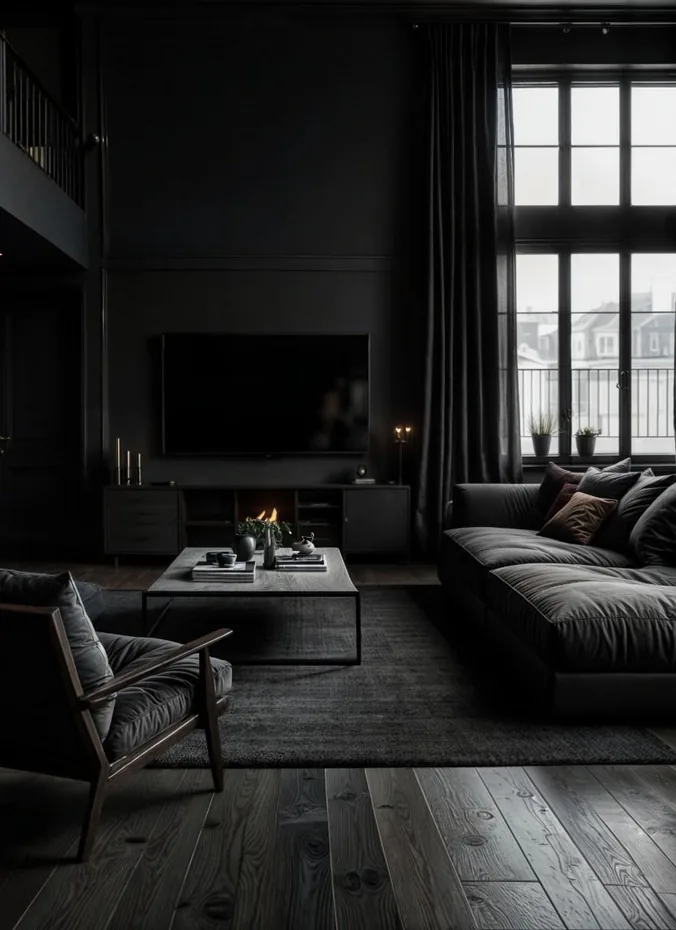
A quart of good paint costs 15 to 25 dollars. If you hate it, painting back takes one more afternoon.
8. Add Sconces on Both Sides
Sconces flanking the TV add warm light and a finished look in one move. They frame the screen the way a fireplace frames a mantel, and the glow softens the harsh edges of the technology. Plug in styles need no electrician.
Mount them at seated eye level, usually 60 to 66 inches from the floor. Warm white bulbs keep the room cozy instead of clinical.
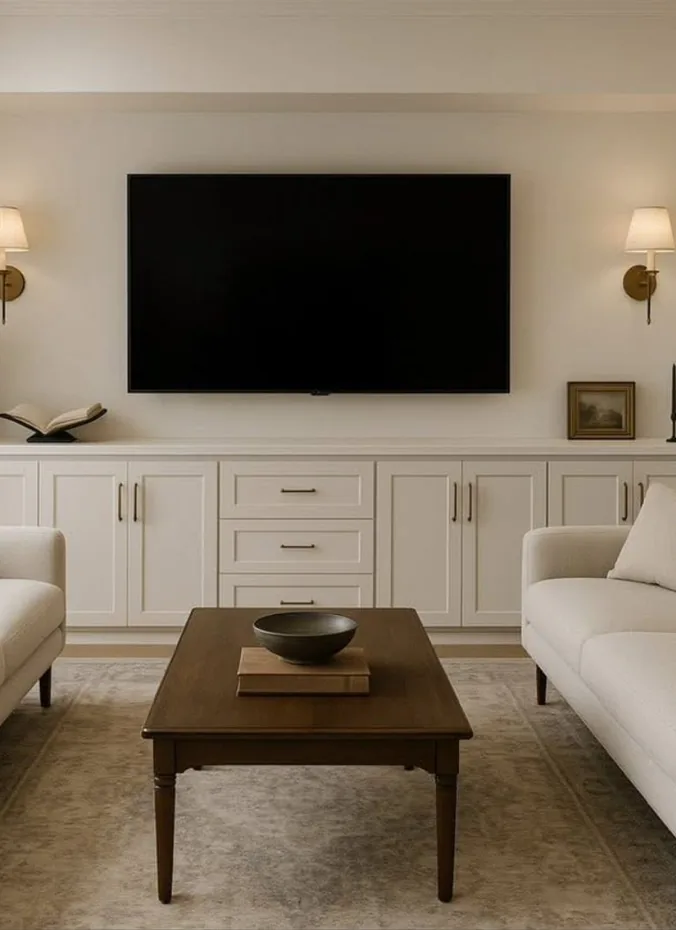
Decent plug in sconces start around 30 dollars a pair. Hide the cords in paintable covers and nobody will know they are not hardwired.
9. Hide It Behind Cabinet Doors
Sometimes the best way to decorate around a tv is to make it vanish when you are not watching. Sliding barn doors or shutters on a track can close right over the screen. Open for movie night, closed for dinner parties.
This works best with a wall mounted TV and doors that slide to the sides with a little overlap. Paint or stain the doors to match your furniture so they look intentional.

A track kit plus two flat doors runs 80 to 150 dollars. The wow factor when guests realize there is a TV behind the art is worth it.
10. Soften It With Plants
Plants do wonders for softening the hard edges of a TV setup. A tall fig or olive tree on one side balances the screen. Trailing plants on a shelf above add life without blocking the view.
Stick to plants that tolerate the low light and dry air near electronics. Snake plants, pothos, and ZZ plants are nearly indestructible. Keep leaves a few inches from the screen so they do not trap heat.
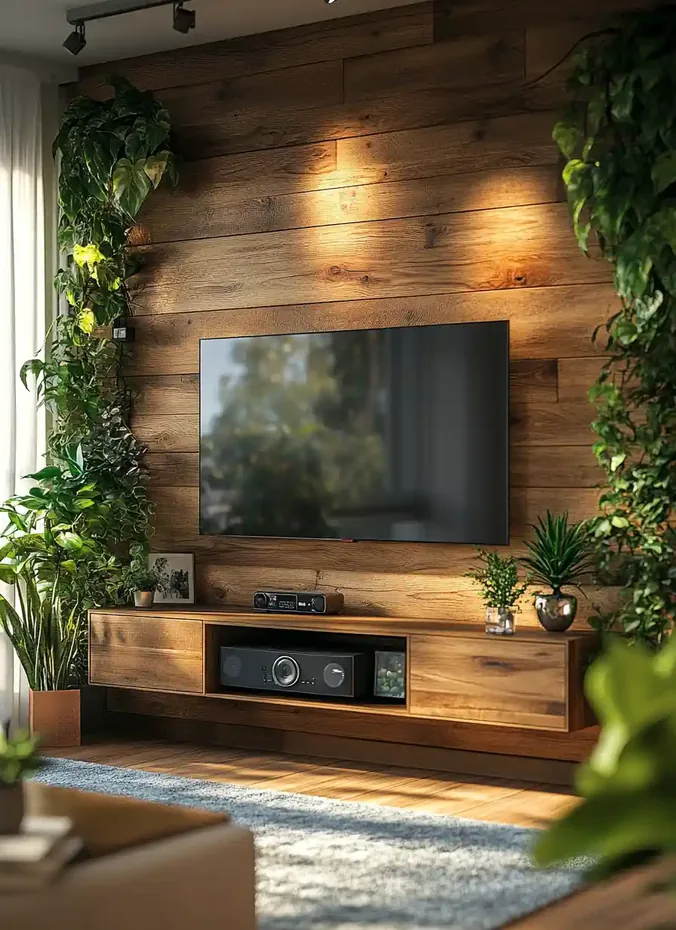
One statement plant in a nice pot costs 25 to 50 dollars. Faux plants have gotten very convincing if your thumb is more brown than green.
11. Create Symmetry With Matching Art
Two matching pieces of art, one on each side of the TV, snap the whole wall into balance. Symmetry reads as calm and intentional even when everything else in the room is relaxed.
Each piece should be roughly half to two thirds the height of the screen. Abstract prints, botanical drawings, and black and white photos all work. Keep the frames identical.
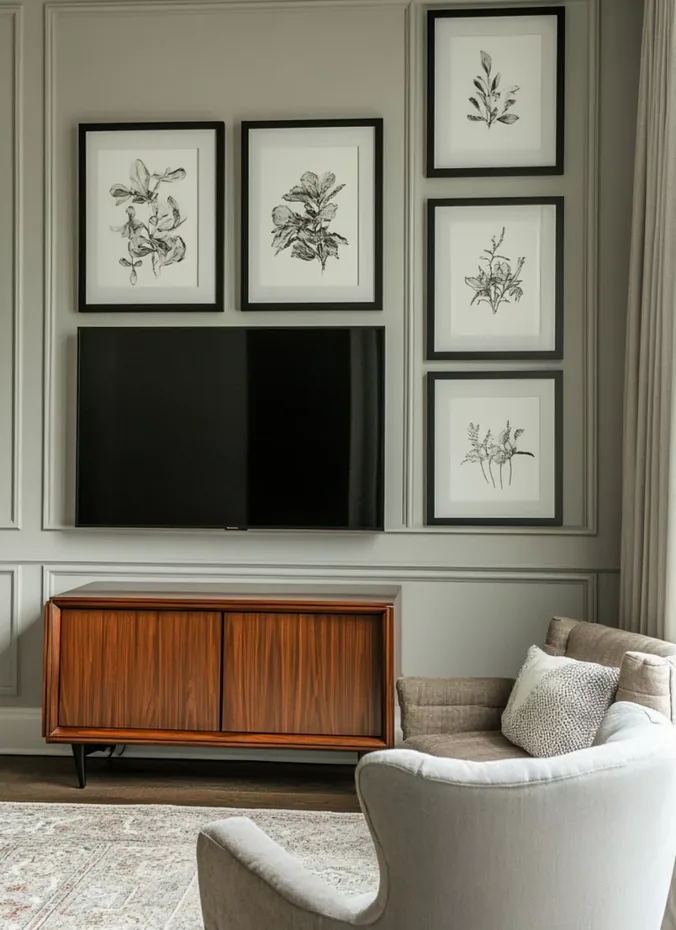
Two large prints plus basic frames often total under 60 dollars. This is the fastest idea on the list if you need results today.
12. Corral Clutter With a Basket Console
Every TV setup collects stuff: remotes, controllers, chargers, and mystery cables nobody claims. A console with baskets swallows all of it and looks good doing it. Open shelving with woven baskets hits the sweet spot.
Give each basket a job: remotes, controllers, chargers. It takes a week to become habit and ends the daily remote hunt.

Baskets run 10 to 20 dollars each, and simple open consoles are easy to find second hand. This idea pays for itself in lost remote frustration.
13. Go Bold With Wallpaper
Wallpaper behind the TV turns the whole wall into a feature. A bold pattern makes the black rectangle feel deliberate, like it was always part of the plan. Grasscloth and subtle geometrics are safe bets that age well.
Peel and stick paper goes up in an afternoon and peels off cleanly. Order samples first; patterns look different at full scale.
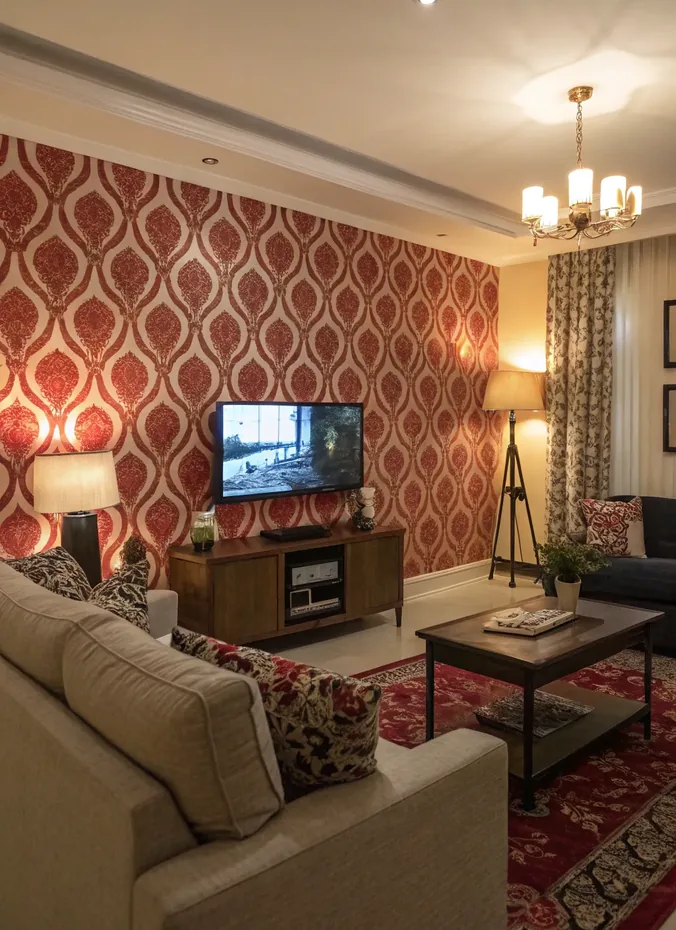
One wall needs two to three rolls, usually 60 to 120 dollars. Split the cost with a friend and do two rooms in one weekend.
14. Add a Warm Backlight Glow
An LED strip behind the TV casts a soft glow that makes the screen look like it is floating. It also reduces eye strain in a dark room. The effect is subtle by day and magical at night.
Stick the strip to the back of the TV two inches from the edge for an even wash. Most plug into the TV’s USB port and turn on automatically.
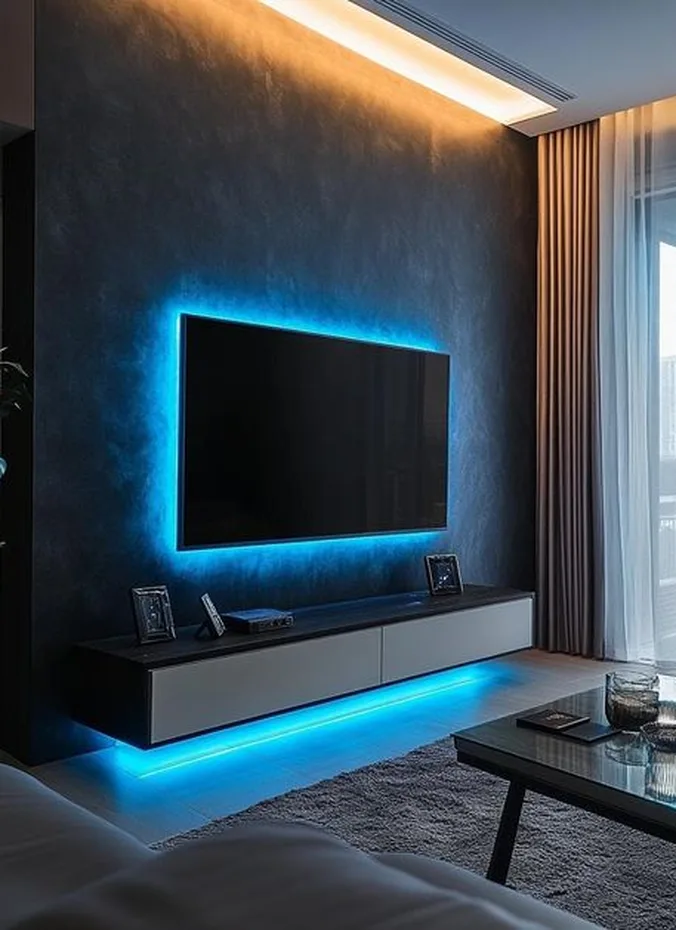
A quality strip costs 15 to 30 dollars and installs in ten minutes. Highest drama per dollar of anything here.
15. Style the Mantel Below It
A TV above the fireplace gives you a built in styling shelf right underneath. Anchor the center with something tall, then step down in height toward the edges. Treat it as one long vignette, not a random collection.
Keep heat in mind with a working fireplace. Candles can warp and photos can fade, so favor ceramics, stone, and faux greenery. Keep decor below the bottom edge of the screen so nothing fights the picture.
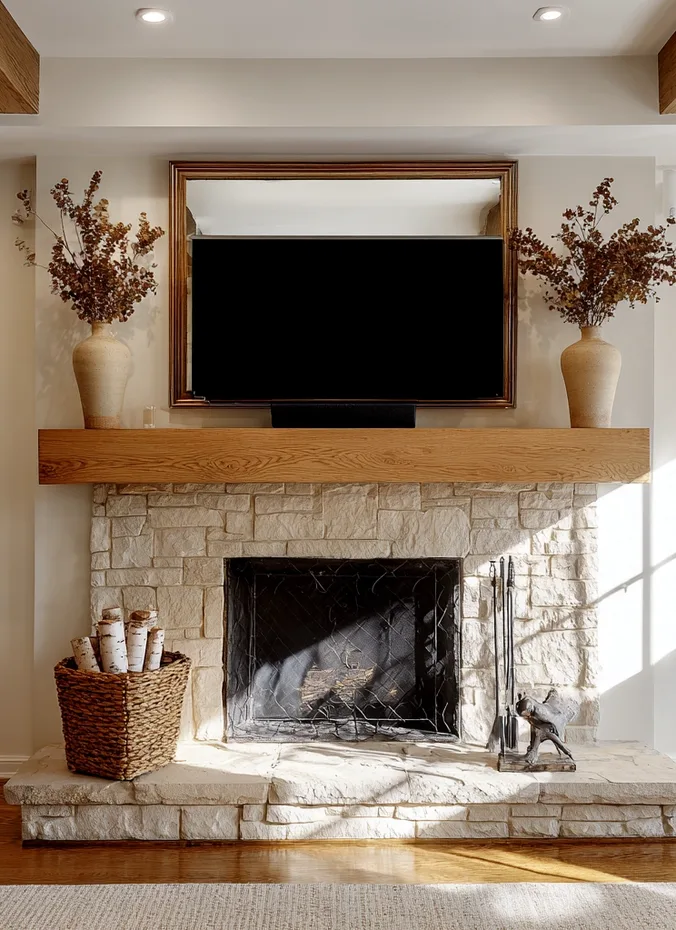
When in doubt, take one thing away. Restraint photographs better than abundance, and you can always add more later.
16. Tuck a Bench Underneath
A low bench under a wall mounted TV fills the awkward gap between screen and floor. It adds extra seating for crowded movie nights and a surface for throws. In small rooms it does double duty without eating floor space.
Pick a bench wider than the TV by a few inches on each side. Upholstered tops add comfort, open bottoms keep the look light. Tuck flat baskets underneath for the stuff that lands on the floor.

Storage benches start around 60 dollars and earn their keep fast. Great for apartments where every piece has to work hard.
17. Mix in Family Photos
Family photos around the TV remind everyone what the room is for: being together. A cluster of framed memories softens the technology in a way store bought art never can. Black and white prints keep a mixed collection cohesive.
Mix frame sizes but keep one finish consistent. Hang the largest piece first, then fill in around it, keeping favorites at eye level where you will actually see them.

Drugstore prints cost pennies and simple frames are a few dollars each. The most meaningful wall in your house for under 40 dollars.
18. Frame It With Curtains
Floor to ceiling panels on either side of the TV add softness and height. They frame the screen like theater curtains frame a stage.
Hang the rod high and wide, close to the ceiling and well past the TV on each side. Panels should just kiss the floor. Solid linen or cotton keeps it relaxed; skip busy patterns that fight the screen.

Two panels plus a rod run 50 to 90 dollars.
19. Add Wood Slat Texture
Wood slat panels bring warmth and rhythm that paint cannot match. The vertical lines soften the tech and suit modern, rustic, and Scandinavian styles.
Ready made slat sheets screw straight into studs, which keeps installation simple. A clear matte sealant protects the wood without adding shine.

Expect 150 to 300 dollars for a full wall, so this is a save up for it project. The result looks designer specified, because designers do specify it.
20. Make a Cozy Movie Corner
Lean into it and build the coziest viewing spot in the house: a soft rug, floor cushions, a chunky throw, and a side table for popcorn.
Lighting makes or breaks this idea. A dimmable lamp and a couple of candles give theater glow without total darkness. Keep a basket of throws nearby so nobody gets up once the movie starts.
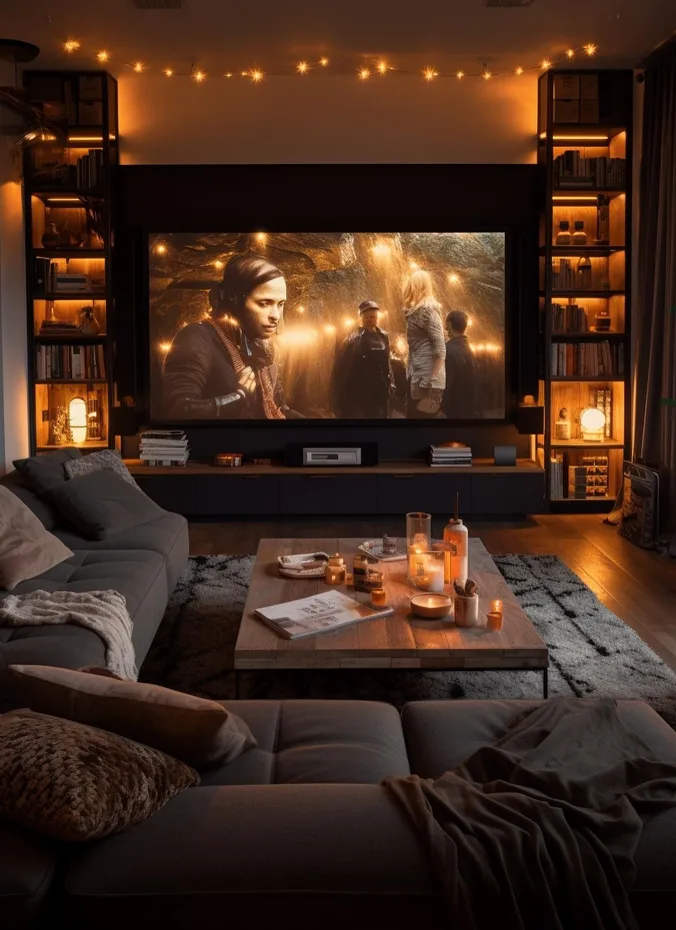
You probably own most of this already. A new throw and a dimmable bulb cost under 30 dollars, and the payoff is a corner everyone fights over.
Budget Tips
- Paint first: A 20 dollar quart of paint behind the TV delivers more impact than 200 dollars of accessories.
- Shop your home: Books, vases, baskets, and frames from other rooms often work perfectly around a TV.
- Buy frames in bulk: Multi packs from discount stores cost a few dollars per frame and make gallery walls affordable.
- Hide cords for 10 dollars: A paintable cord cover is the cheapest upgrade on this list and the one guests notice most.
- Thrift the big pieces: Consoles, bookcases, and benches are plentiful second hand for a fraction of retail.
- Print your own art: Free printable art sites plus cheap frames fill a gallery wall for under 30 dollars.
- Do one wall well: Spending your whole budget on the TV wall beats spreading it thin across the room.
Common Mistakes
- Mounting the TV too high: The center of the screen should sit at seated eye level, not up near the ceiling.
- Ignoring the cords: Dangling cables undo every styling effort. Cover or route them before you hang a single frame.
- Overcrowding the shelves: Crammed shelves look messy, not styled. Leave breathing room on every surface.
- Forgetting scale: Tiny frames around a huge TV look lost. Match your decor size to the screen size.
- Blocking the vents: TVs need airflow. Keep decor a few inches clear of the sides and back so nothing overheats.
Frequently Asked Questions
How high should I mount my TV when I decorate around a tv wall?
Mount it so the center of the screen sits at seated eye level, usually 42 to 48 inches from the floor. When you decorate around a tv that sits too high, every frame and shelf has to stretch upward too. Get the height right first, then style around it.
What is the cheapest way to decorate around a tv?
Paint is the cheapest way to decorate around a tv. One quart of dark paint behind the screen costs under 25 dollars and makes the TV visually disappear. After that, shop your own home for frames, books, and baskets, and add a 10 dollar cord cover.
How do I hide cords when I decorate around a tv?
Start with a paintable cord cover running from the TV to the console or floor; it installs in twenty minutes. When you decorate around a tv with a console table, route cables behind the furniture and bundle them with Velcro ties. An electrician can add an outlet behind the TV for 100 to 200 dollars.
Can I decorate around a TV in a rental?
Absolutely. Lean large art against the wall instead of hanging it, use peel and stick wallpaper or shiplap, and choose plug in sconces with cord covers. A styled console table needs no holes at all. Everything here except the molding and slat walls is renter friendly with small adjustments.
What colors work best on the wall behind a TV?
Dark, muted colors work best because they let the black screen blend in. Charcoal, navy, deep green, and warm black are all excellent choices. If dark feels like too much, a mid tone warm gray or greige still softens the contrast between screen and wall without committing to drama.
A TV Wall You Will Actually Love
You do not need a renovation budget to make peace with the biggest screen in your house. A quart of paint, a few frames, and an afternoon can turn a blank wall into a corner you enjoy looking at. Start with the idea that excited you most.
The best TV walls look collected over time, not installed in a day. Add a frame here, a plant there, and swap things until it feels like you.
So grab the painter’s tape, measure twice, and give that wall the attention it deserves. Movie night is about to get a serious upgrade, and your living room will thank you every single day.