
A small bathroom does not fail because it is small. It fails because too many things share the same few spots, and no item has a clear home. When the counter holds backups and the drawer holds loose tools, even a tidy room looks full.
This guide gives you 26 small bathroom organization ideas for storage, zones, and routines, not paint or tile styles. For looks and style only, see our small bathroom decor ideas as a different guide.
Quick Picks
- Start by removing, not buying. Take out what you do not use each week first.
- Sort by how often you reach for it. Daily items stay at eye level, weekly items go in a drawer, and backups leave the room.
- Use walls and doors first. They add storage without taking floor space.
- Give each category one home. Hair, paper, and cleaning items should never share one pile.
- Leave some space empty. A packed system breaks when you buy toothpaste.
Did You Know?
The best spots in a small bathroom are vertical: the wall above the toilet, the back of the door, the inside of a cabinet door, and the gap beside the vanity.
Before You Start
- Measure the spots you plan to use, including door swing, drawer clearance, and the gap beside the toilet or vanity.
- Empty one area at a time, so the bathroom stays usable while you work.
- Check weight limits on adhesive hooks and suction cups, since steam can weaken their grip.
- Keep cleaning products apart from skin care and medicines, and out of reach of small children.
- For one area in more depth, see our under bathroom sink organization ideas as a single area guide.
Clear and Sort First
1. Empty Every Spot Before You Buy Anything
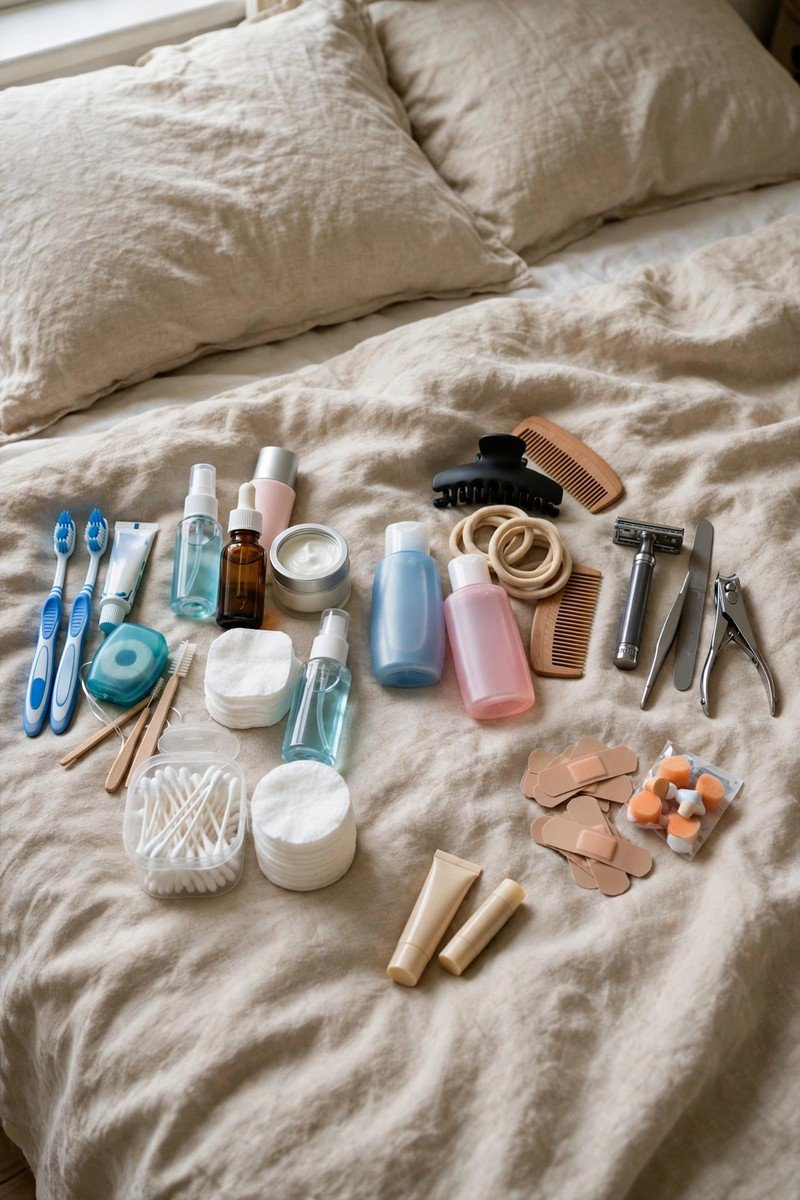
Pull everything out of the vanity, the drawers, the medicine cabinet, and the shower, and put it on a towel on the bed. You will spot duplicates and forgotten items.
Pro tip: Work in 30 minute blocks, with a bag for trash and a box for items that belong in another room.
2. Sort by Use, Not by Shelf
Group skin care with skin care, hair products with hair products, and cleaning items together, no matter which shelf they came from. Sorting by job shows which groups are too large.
Pro tip: Start with five piles: daily care, hair and grooming, shower and bath, paper and backups, and cleaning.
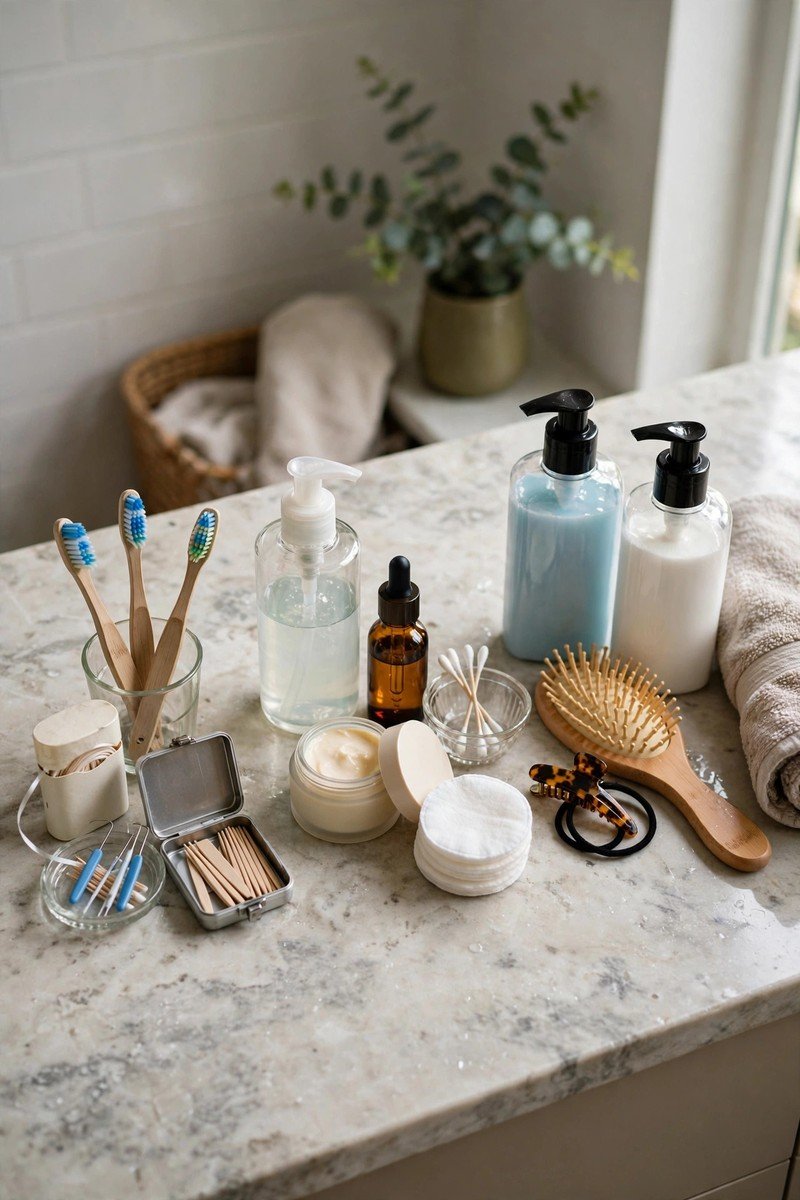
3. Give Daily, Weekly, and Backstock Their Own Homes
Daily items belong at eye level or within arm’s reach, weekly items belong in a drawer or on a higher shelf, and backups belong in a closet or a bin outside the bathroom. When backups take the best spots, daily items end up on the counter.
Pro tip: Keep only 6 to 8 daily items in the prime spot, and move anything past that count to the weekly or backstock home.

4. Use the One In One Out Rule
Every new product that enters the daily spot should push one item out, either finished, expired, or moved to backstock. Without it, new bottles pile beside old ones.
Pro tip: Tape a small note inside the cabinet door for one month, until checking before you buy becomes a habit.

Walls and Doors
5. Put Shelves Above the Toilet
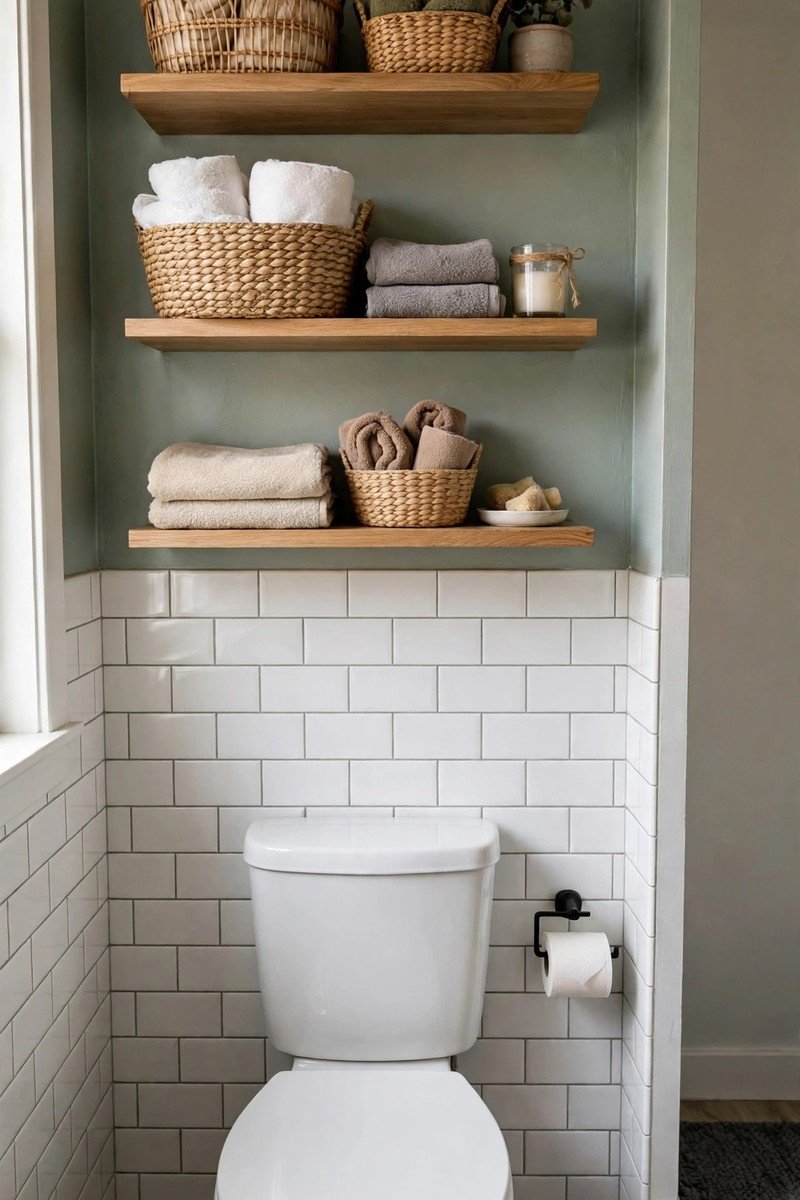
The wall above the toilet is often the largest empty wall in a small bathroom, and two or three floating shelves there can hold towels, spare rolls, and small baskets. Keep daily items lower and backstock higher.
Pro tip: Hang the lowest shelf high enough to lift the tank lid off, and use lidded baskets on the top shelf to hide spare rolls.
6. Hang a Pocket Organizer on the Door
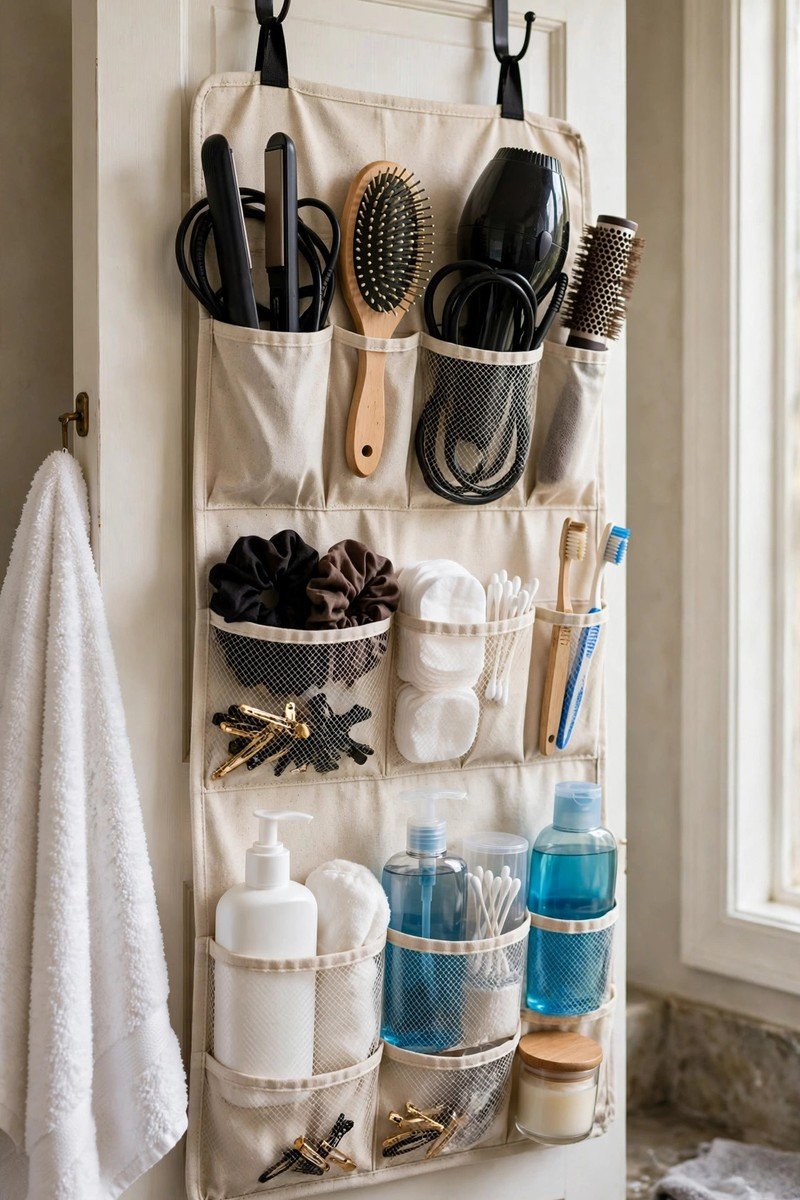
An over the door organizer adds a full column of pockets without drilling, floor space, or a new cabinet. The pockets suit hair products and small toiletries.
Pro tip: Pick hooks that fit your door thickness, and keep heavy items like a hair dryer in the lower pockets.
7. Swap One Towel Bar for a Row of Hooks
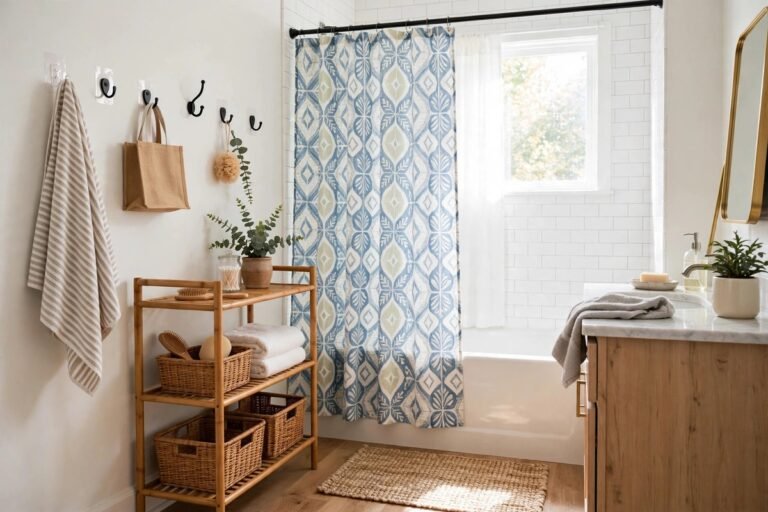
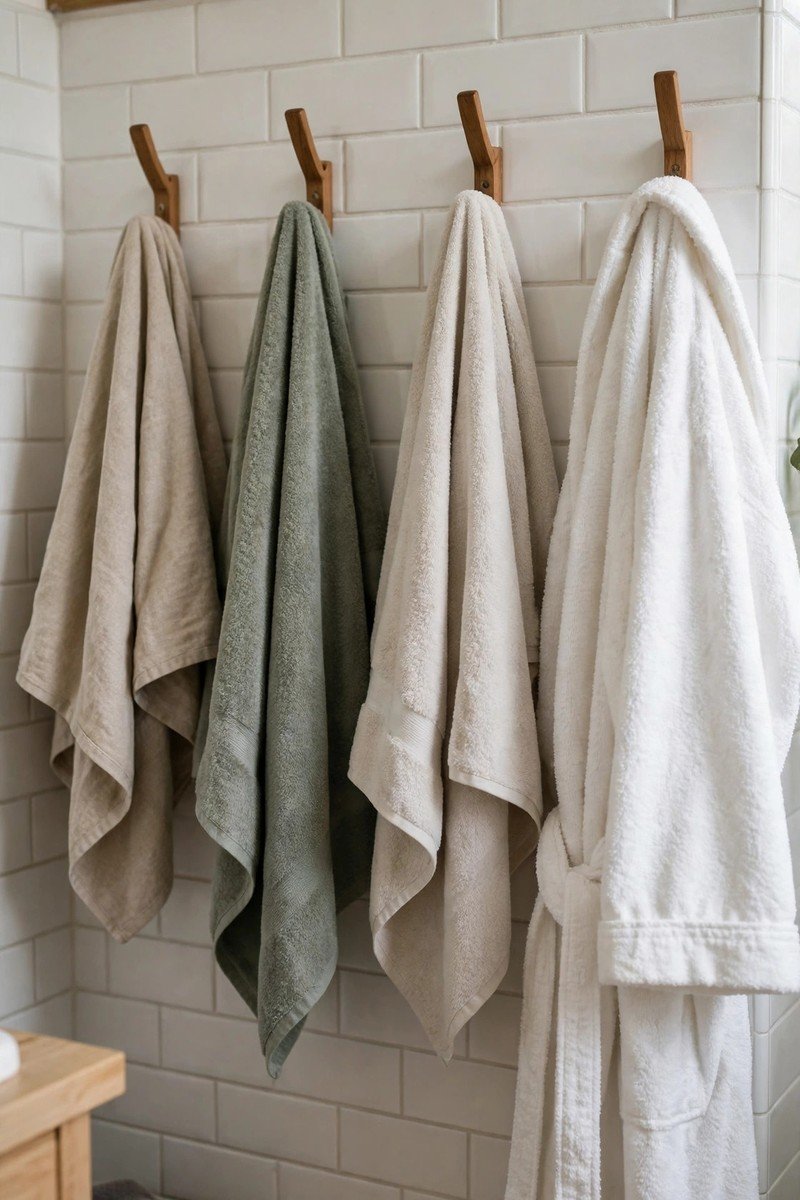
A towel bar often holds one towel well and a second towel poorly, while a row of hooks in the same space can hold four towels plus a robe. Hooks also dry towels faster, since air moves around each towel.
Pro tip: Space hooks 15 to 20 cm apart, with at least 5 cm of projection from the wall.
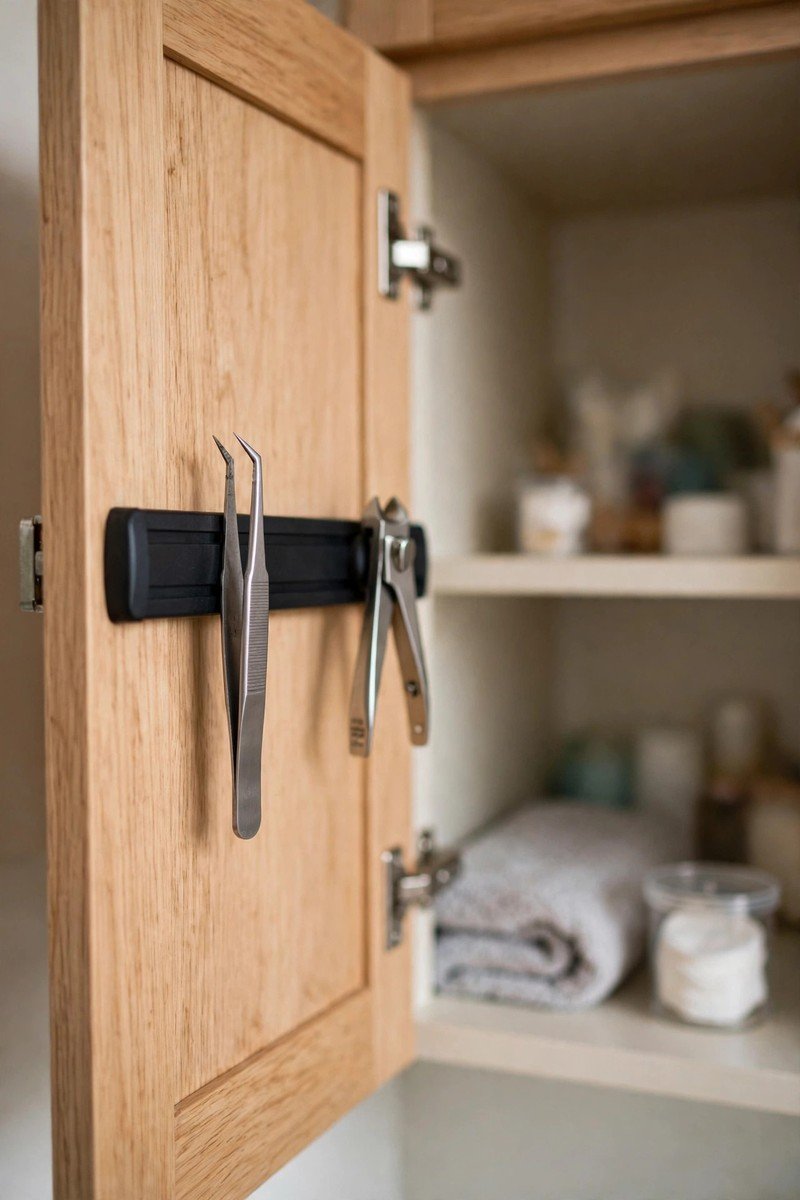
8. Stick a Magnetic Strip Inside a Cabinet Door
Small metal tools vanish in drawers, but a magnetic strip inside a cabinet door keeps tweezers, nail clippers, hair clips, and small scissors in one visible line. It costs little.
Pro tip: A strip 30 cm long costs about 8 to 15 dollars, and you should test it with your heaviest tool before loading it fully.
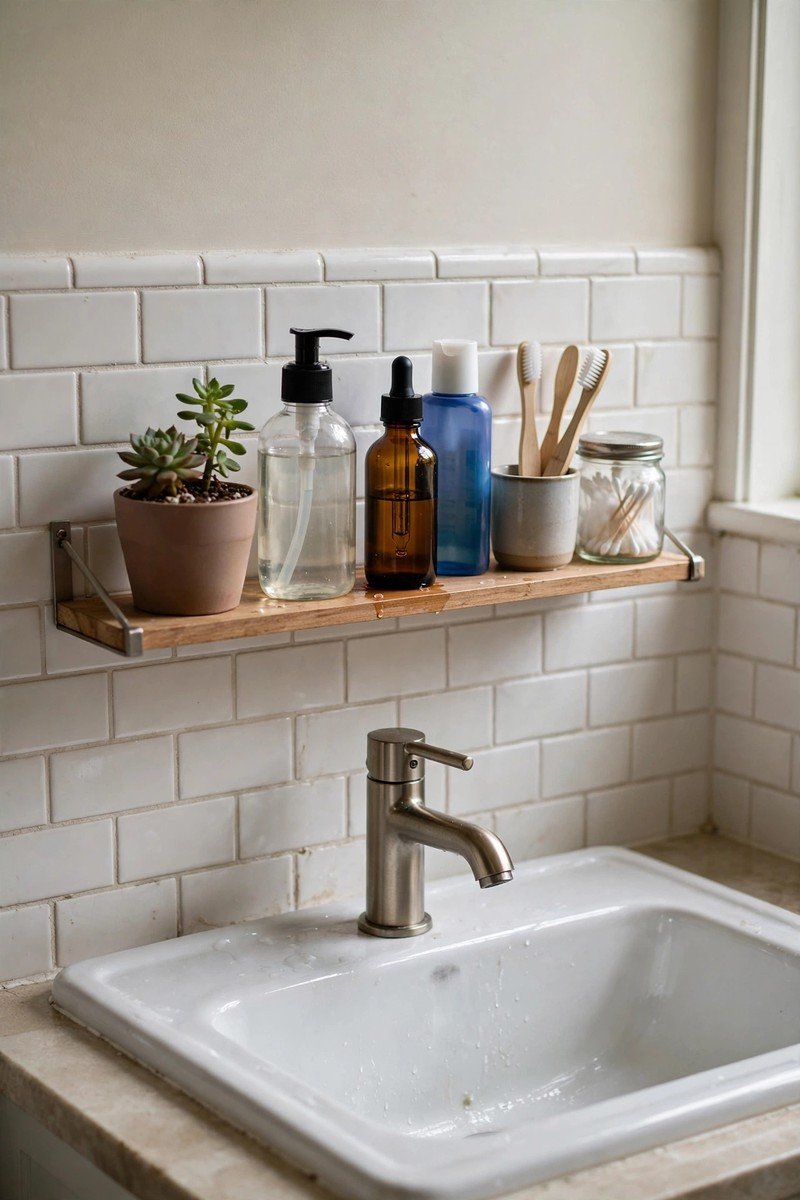
9. Add a Narrow Shelf Above the Sink
A shallow shelf between the faucet and the mirror holds the bottles you use each day, and it frees the counter for hand washing. A slim spice rack style shelf fits small bottles well.
Pro tip: Keep the shelf 15 to 20 cm deep and mount it at eye level, so you can read labels without bending over the sink.
Vanity and Drawers
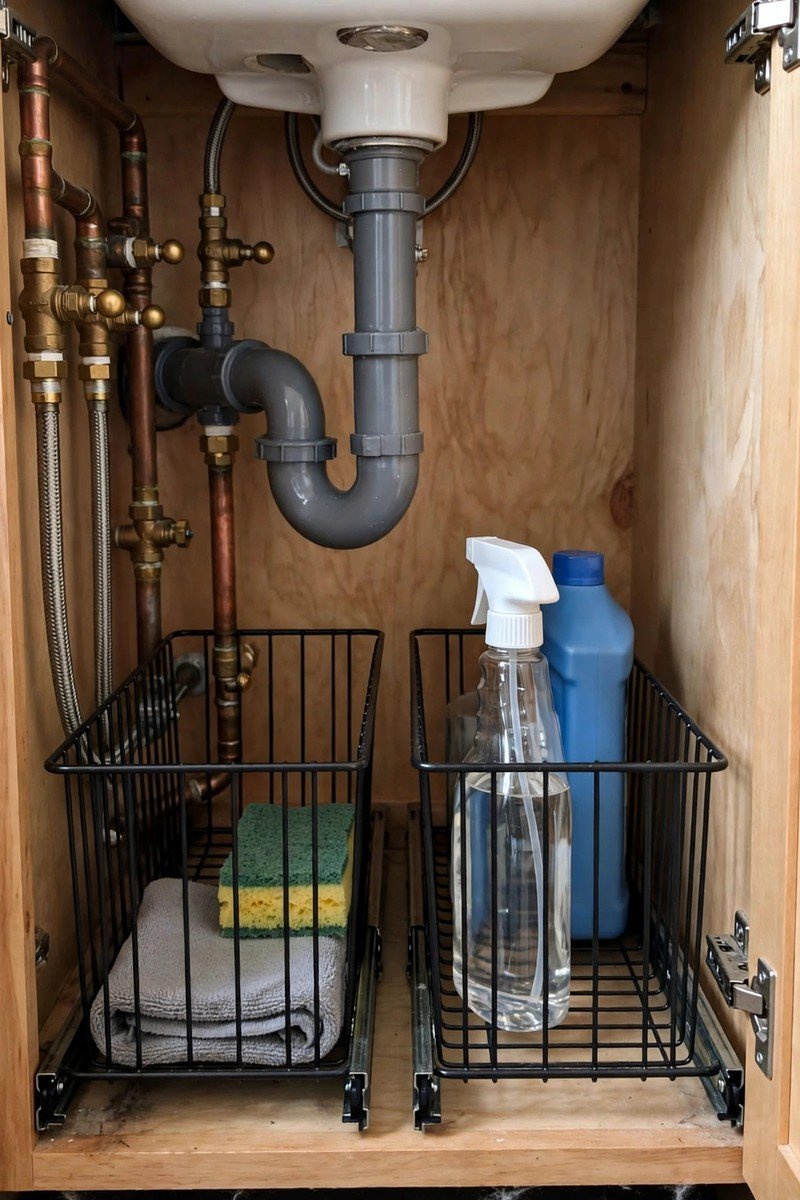
10. Fit Pull Out Bins Under the Sink
Pipes split the under sink cabinet in two, and loose bottles at the back soon get lost behind the ones at the front. Pull out bins bring the back to you, and U shaped bins fit around the drain pipe.
Pro tip: Measure around the pipes before you buy, and leave 5 cm of clearance on each side so bins slide out without catching.
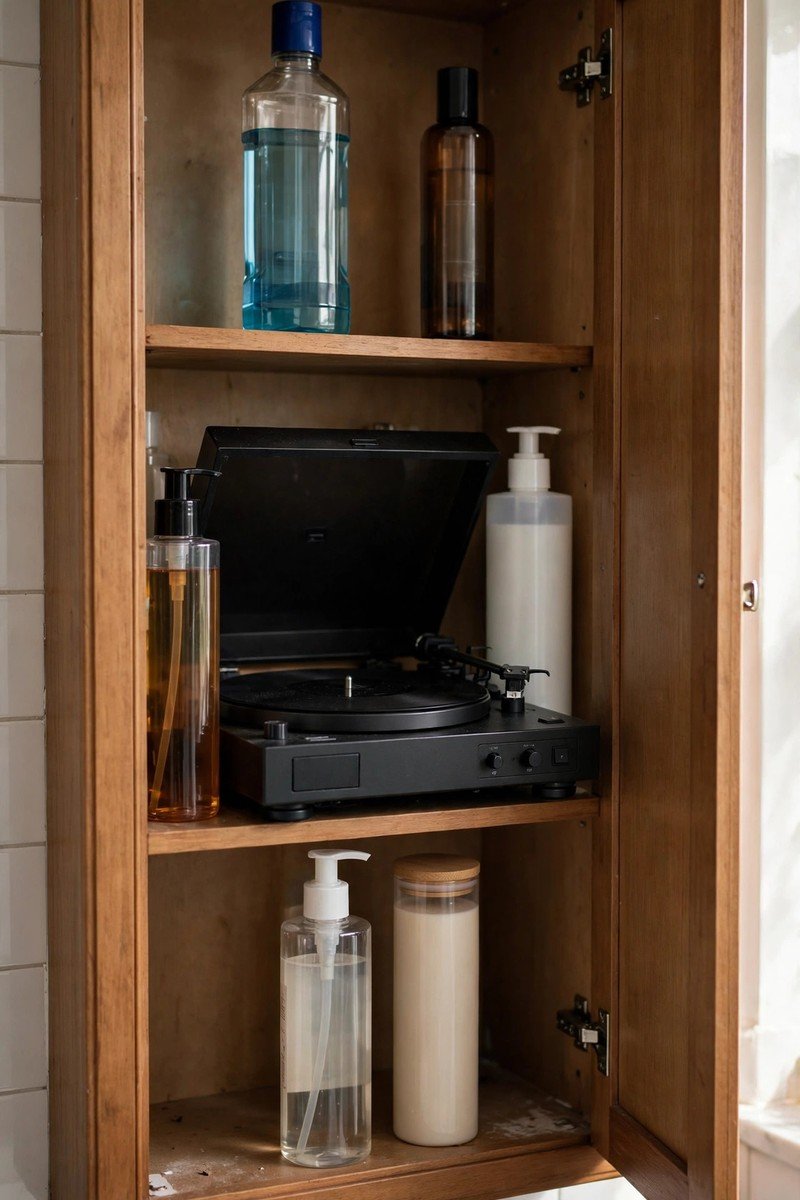
11. Add a Turntable for the Back of the Cabinet
A small turntable stops tall bottles from hiding at the back of a deep cabinet, because one spin brings every item to the front. It suits products you reach for often.
Pro tip: Use a turntable 25 to 30 cm wide for most vanity cabinets, and put the tallest bottles in the center so they do not tip.
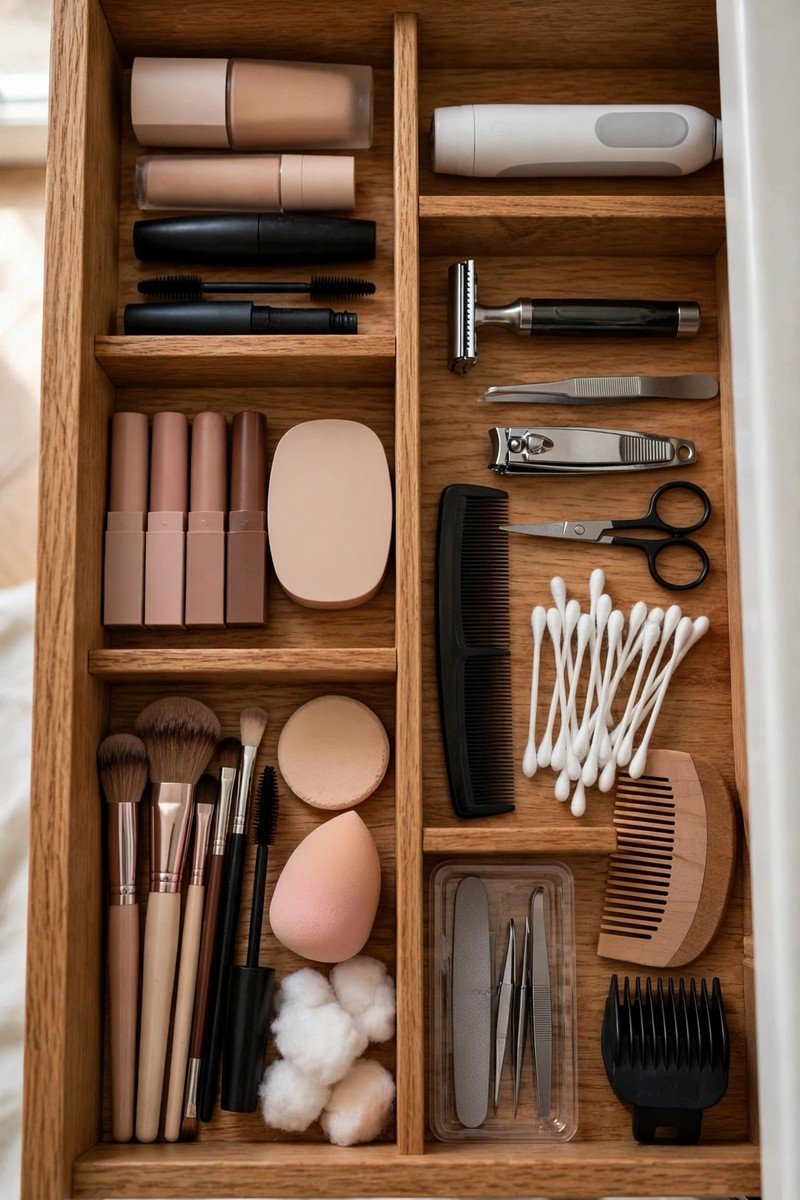
12. Divide Every Drawer by Job
Drawers get messy because small items slide into each other, so dividers turn one deep drawer into clear lanes for makeup, grooming tools, and dental care. Small trays or bamboo dividers work as well as costly inserts.
Pro tip: Set the top drawer for daily items only, and if you must move five things to reach your moisturizer, that drawer holds too much.
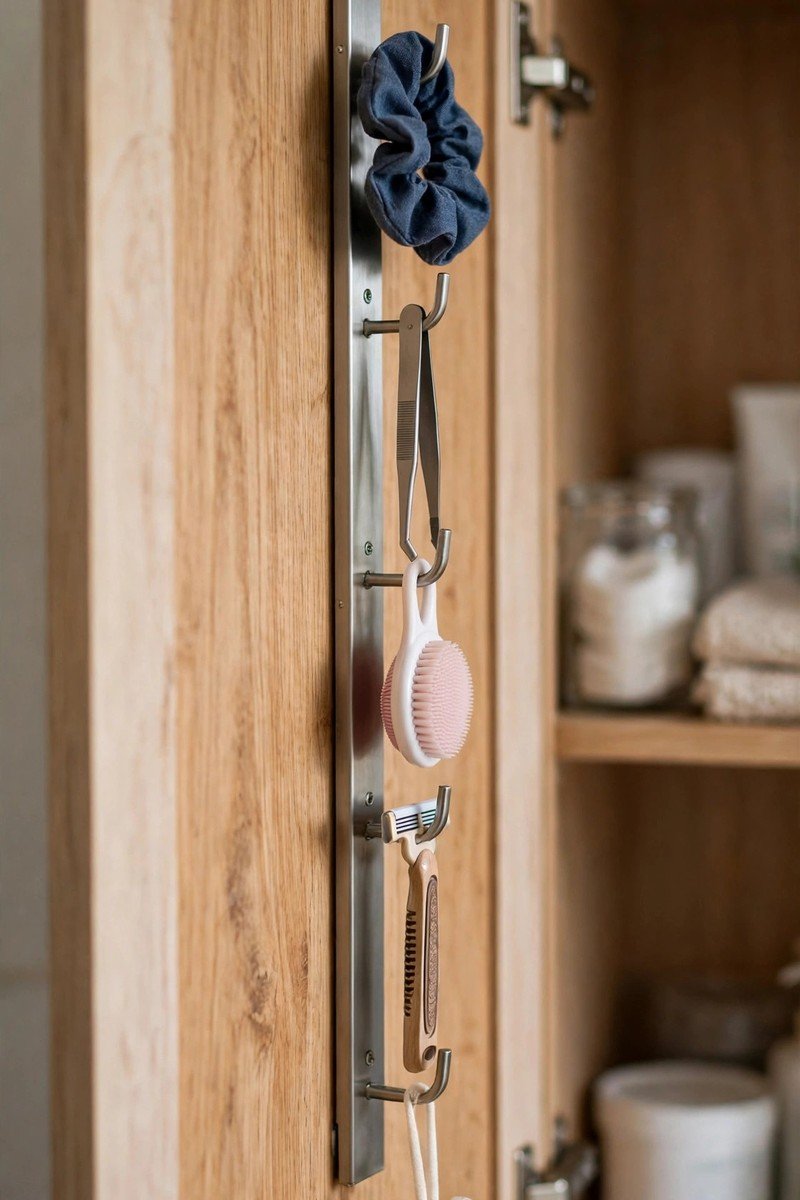
13. Use the Inside of the Cabinet Door
The inside of a vanity or medicine cabinet door is hidden storage that costs no floor space at all. A slim rack or adhesive hooks there can hold a hair dryer and brushes, if items stay shallow.
Pro tip: Keep door items under 8 cm deep, and close the door slowly once after fitting, to check that nothing hits the pipes inside.
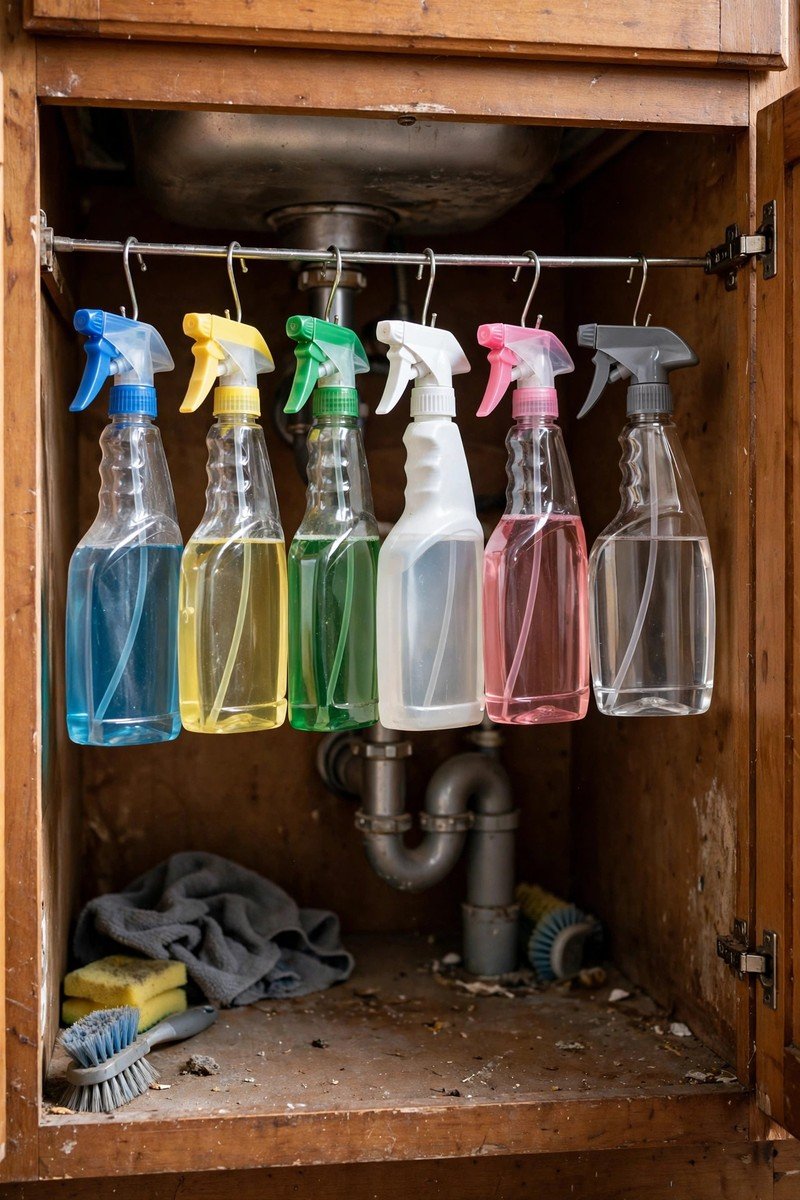
14. Hang Spray Bottles on a Tension Rod
A tension rod fitted across the top of the under sink cabinet lets you hang spray bottles by their triggers, which frees the cabinet floor for bins. Keep it to two or three bottles.
Pro tip: A tension rod costs about 8 to 15 dollars, and you should hang it high enough that bottles do not rest on the bins below.
Counter and Sink
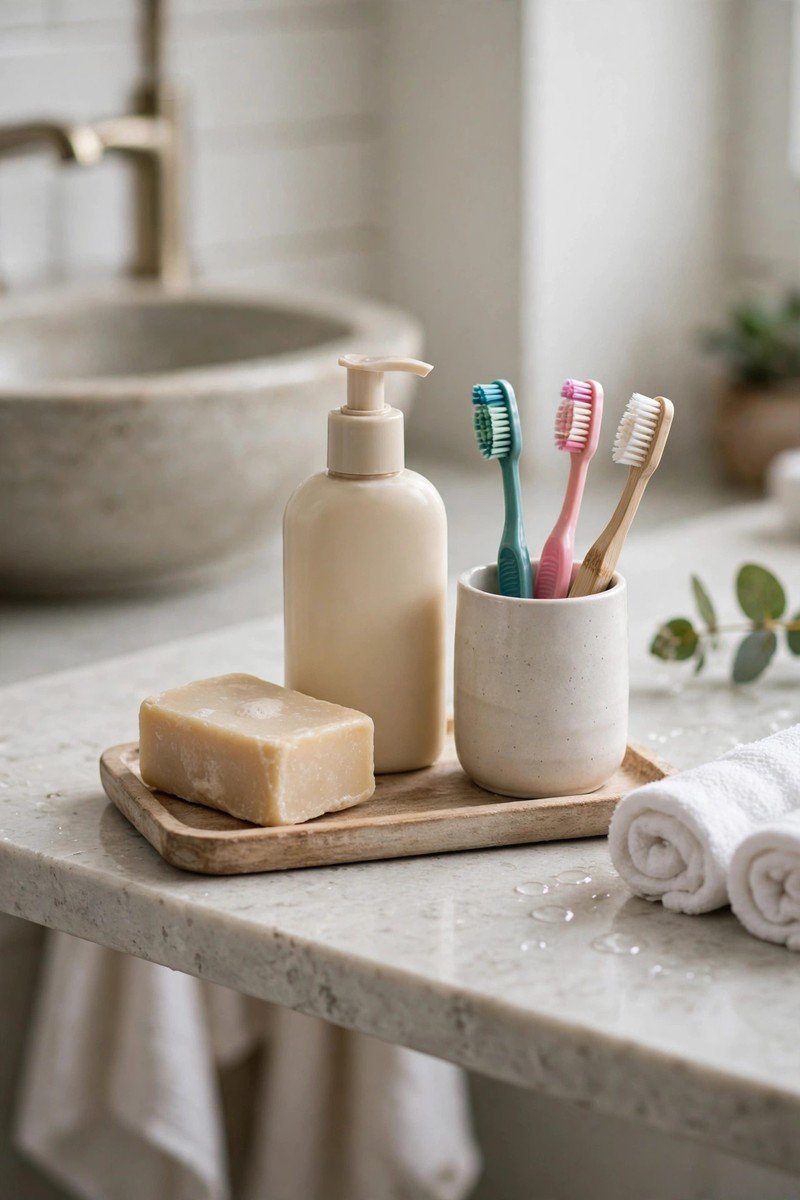
15. Keep Daily Items on One Small Tray
A fully empty counter is not realistic for most homes, but one small tray can still make the counter look planned. Put soap, lotion, and a toothbrush cup on it, and move overflow to a drawer.
Pro tip: Pick a tray about 25 by 18 cm, and wipe it once a week so soap rings do not build up under the bottles.
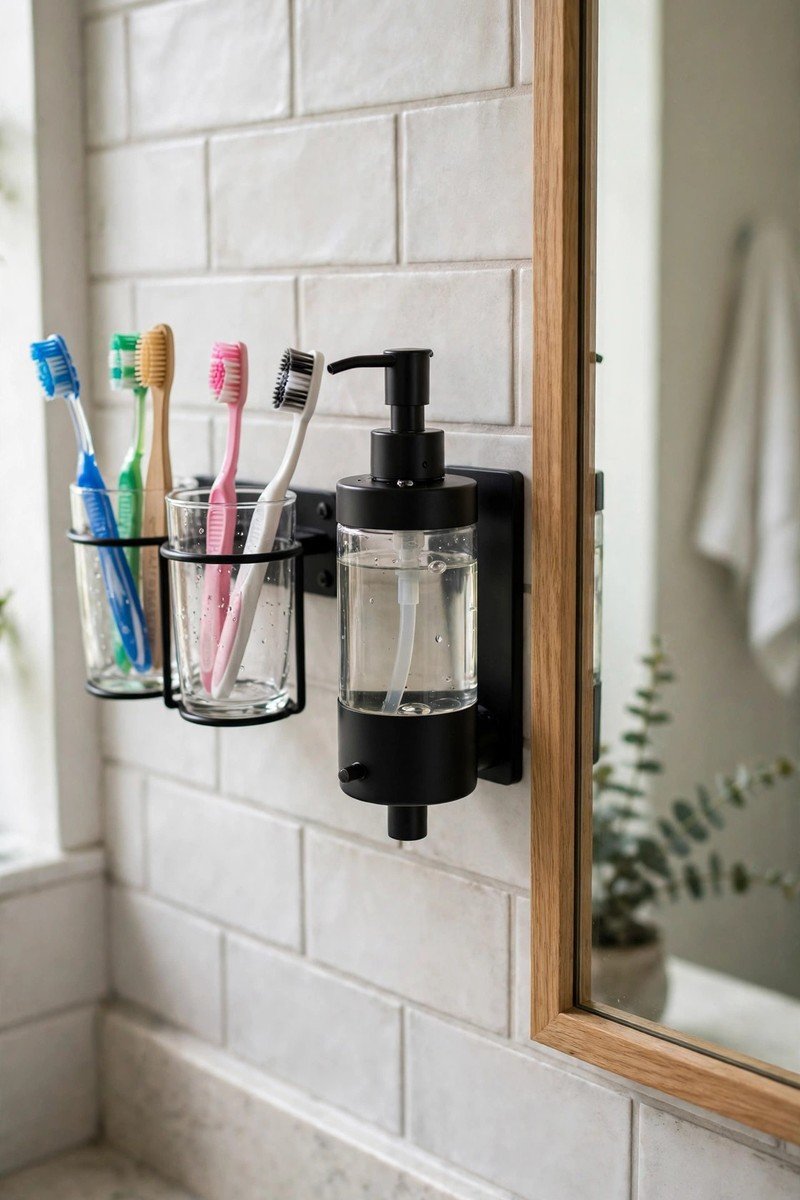
16. Move Toothbrushes and Soap Off the Counter
Wall cups for toothbrushes and a wall mounted soap dispenser free the small patch of counter beside the sink, which is often the only free spot in the room. Check the weight rating on adhesive cups before loading them.
Pro tip: Mount cups at least 10 cm above the counter, so water does not pool under them and the counter stays easy to wipe.
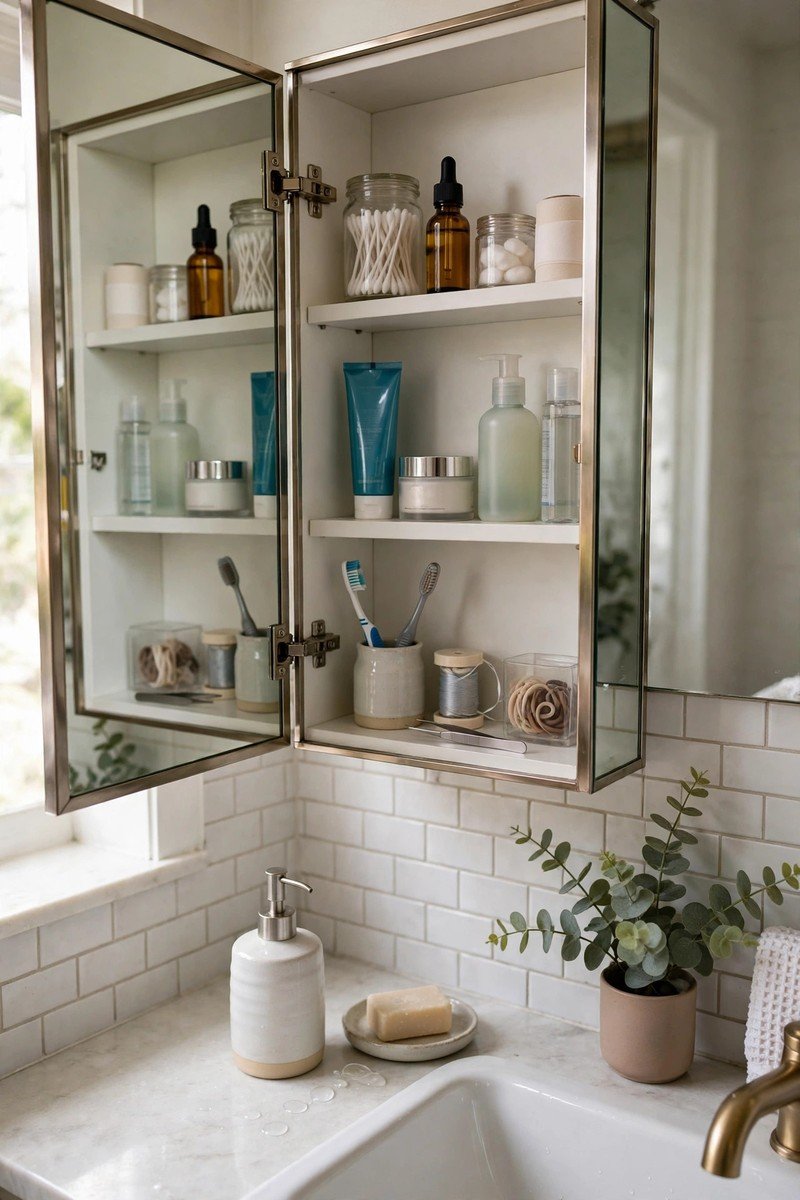
17. Swap a Plain Mirror for a Medicine Cabinet
A mirrored medicine cabinet adds storage at eye level without using any floor or counter space, and it keeps daily skin care and medicines behind a door. Recessed models sit flush with the wall, while surface mounted models are simpler to fit.
Pro tip: Measure the wall depth before you pick a recessed model, and keep the most used items on the middle shelf.
Shower and Tub
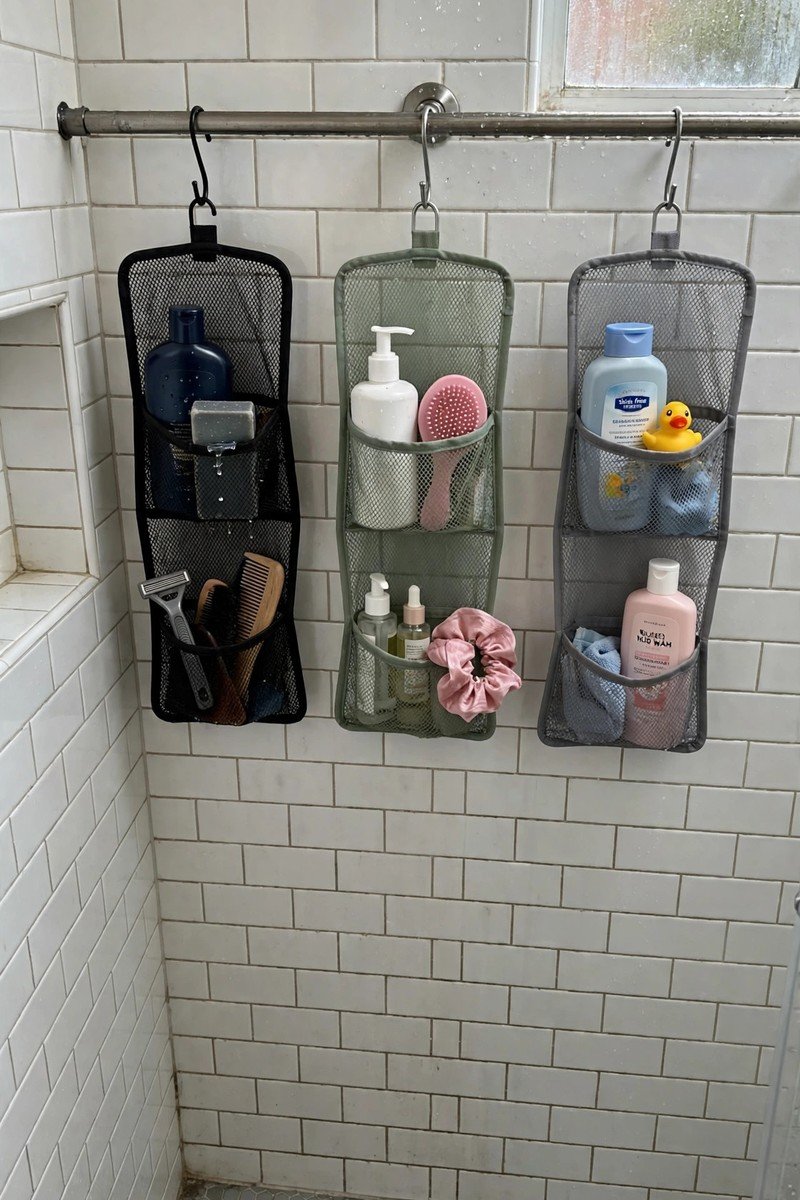
18. Give the Shower One Caddy Per Person
When three people share one shower, bottles pile on the ledge and no one can find their own shampoo. One caddy per person gives each routine its own spot.
Pro tip: Label each caddy with a name or a color, and limit each person to the bottles they use each week.
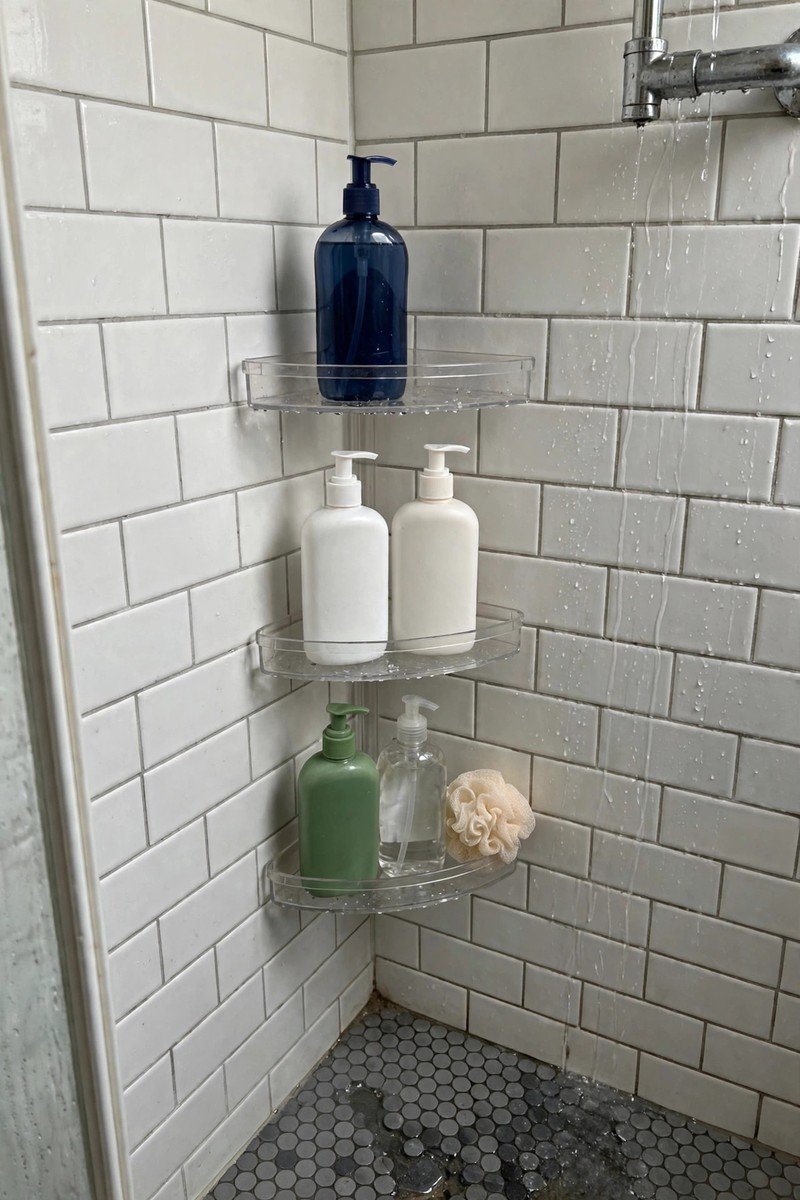
19. Use Corner Shelves in a Small Shower
Corner shelves use the one spot in a shower that no one stands in, and they keep bottles off the tub edge where they slip and fall. Two shelves are often enough.
Pro tip: Pick shelves that drain fully, and rinse them once a week so soap film does not stain the grout behind them.
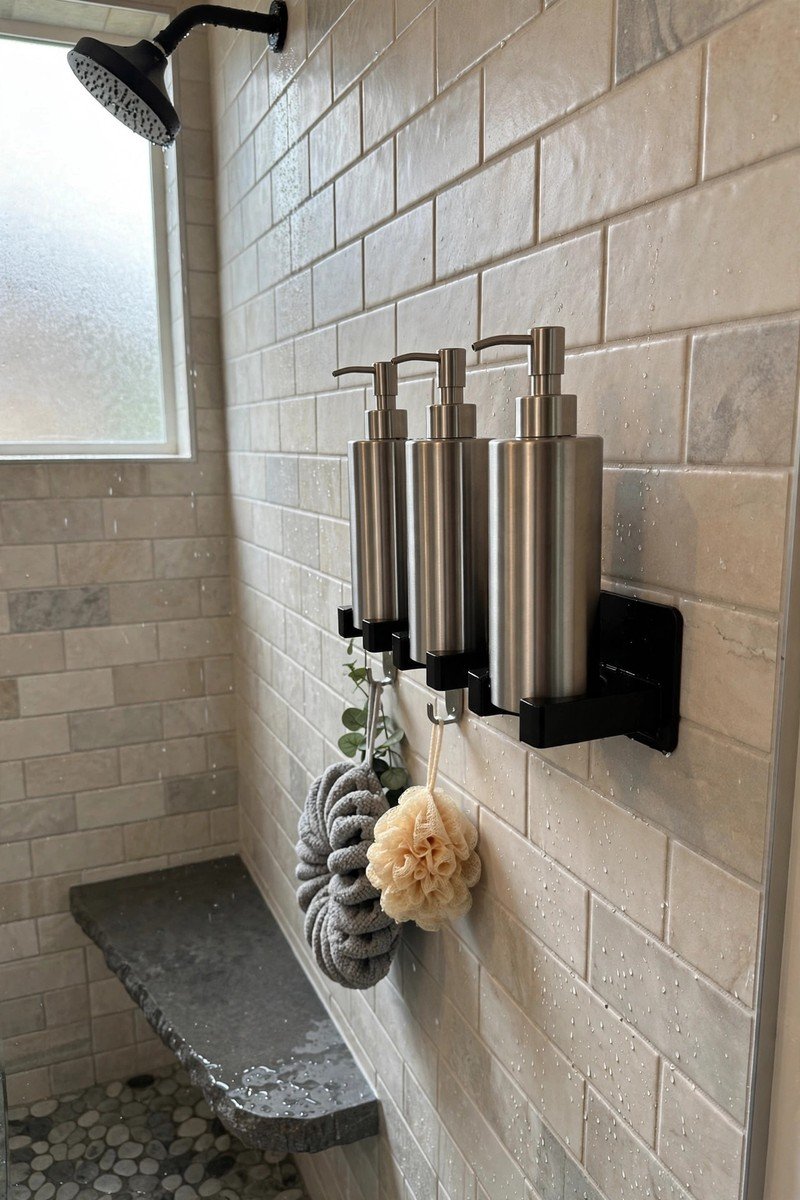
20. Replace Loose Bottles With Wall Pumps
Wall mounted pump dispensers for shampoo, conditioner, and body wash replace a row of loose bottles with three fixed pumps, and they free the ledge for good. This works best when everyone in the home likes the same products.
Pro tip: Use waterproof labels or a paint marker on each pump, and do not rely on memory when shampoo and body wash look the same.
Towels, Paper, and Shared Bathrooms
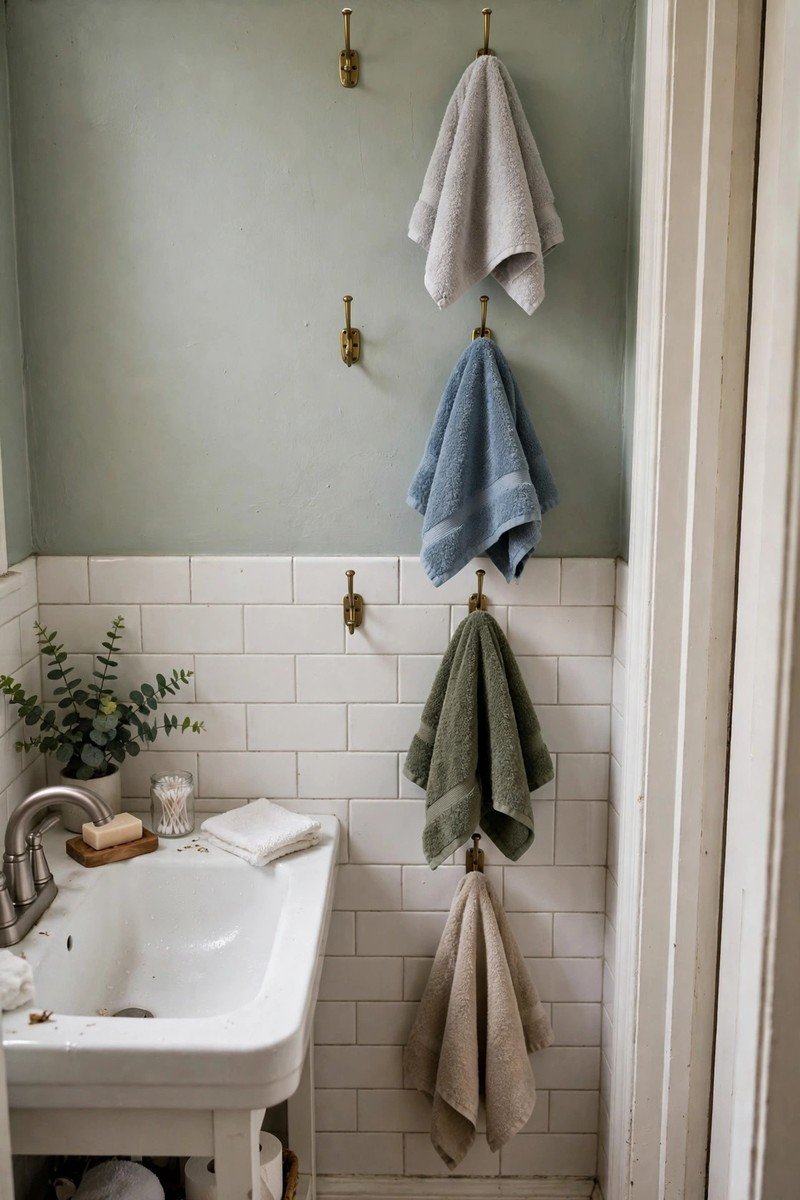
21. Give Each Towel a Hook, Not a Pile
Towels piled on a chair or on top of the toilet stay damp and take over the room, while one hook per towel keeps each towel separate and easy to grab. In a shared bathroom, assign each person a hook spot.
Pro tip: Wash bath towels after 3 to 4 uses, and hang them with the full length open, not folded double, so they dry between showers.
22. Park a Slim Rolling Cart in the Gap
The gap between the toilet and the wall or vanity often sits empty, and a slim rolling cart made for that gap can hold towels, grooming items, or spare toiletries. It rolls out when needed and slides back after.
Pro tip: Measure the gap first, since many carts sold as slim are 20 cm wide or more, and a cart that does not fit is worse than no cart.

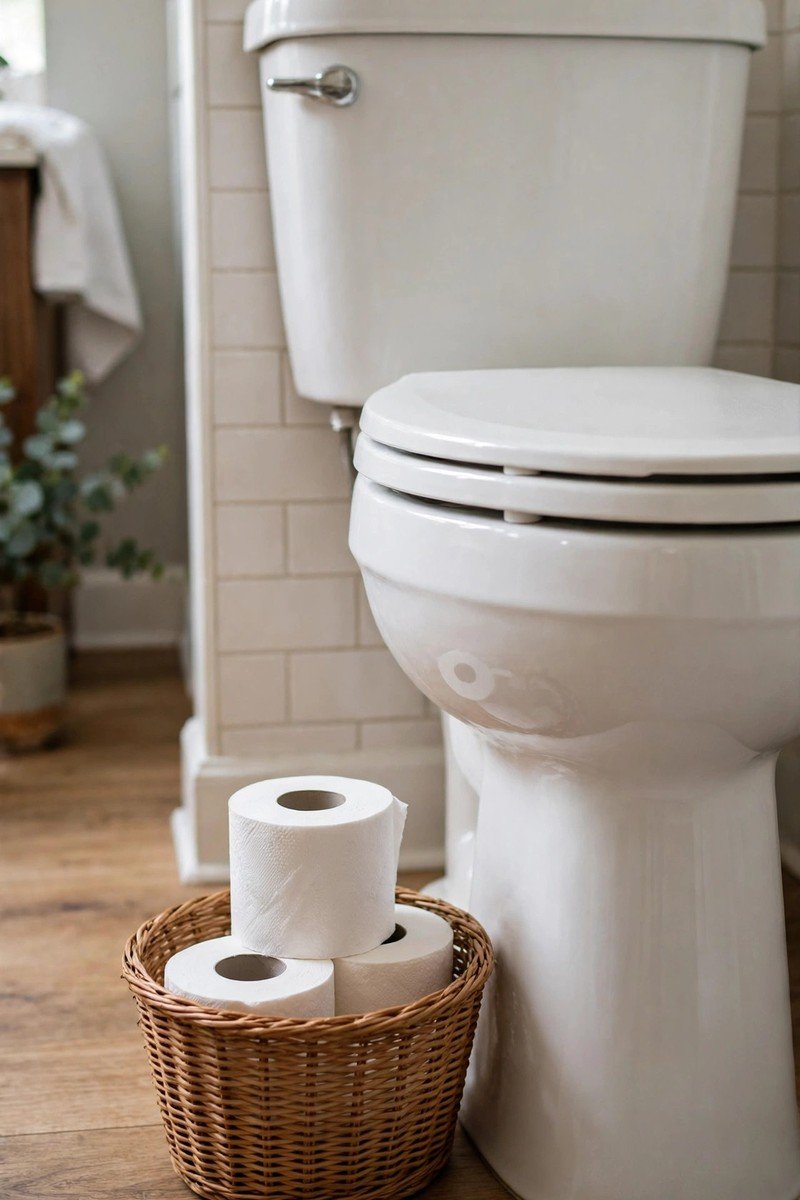
23. Keep Only a Few Toilet Paper Rolls in the Room
A bulk pack of toilet paper can swallow a whole cabinet, so keep only 3 to 4 rolls in the bathroom and store the rest in a hall closet or linen cupboard. A small lidded basket near the toilet holds the daily supply without crowding the room.
Pro tip: For the over toilet area in more depth, see our bathroom over the toilet storage ideas as a single area guide.
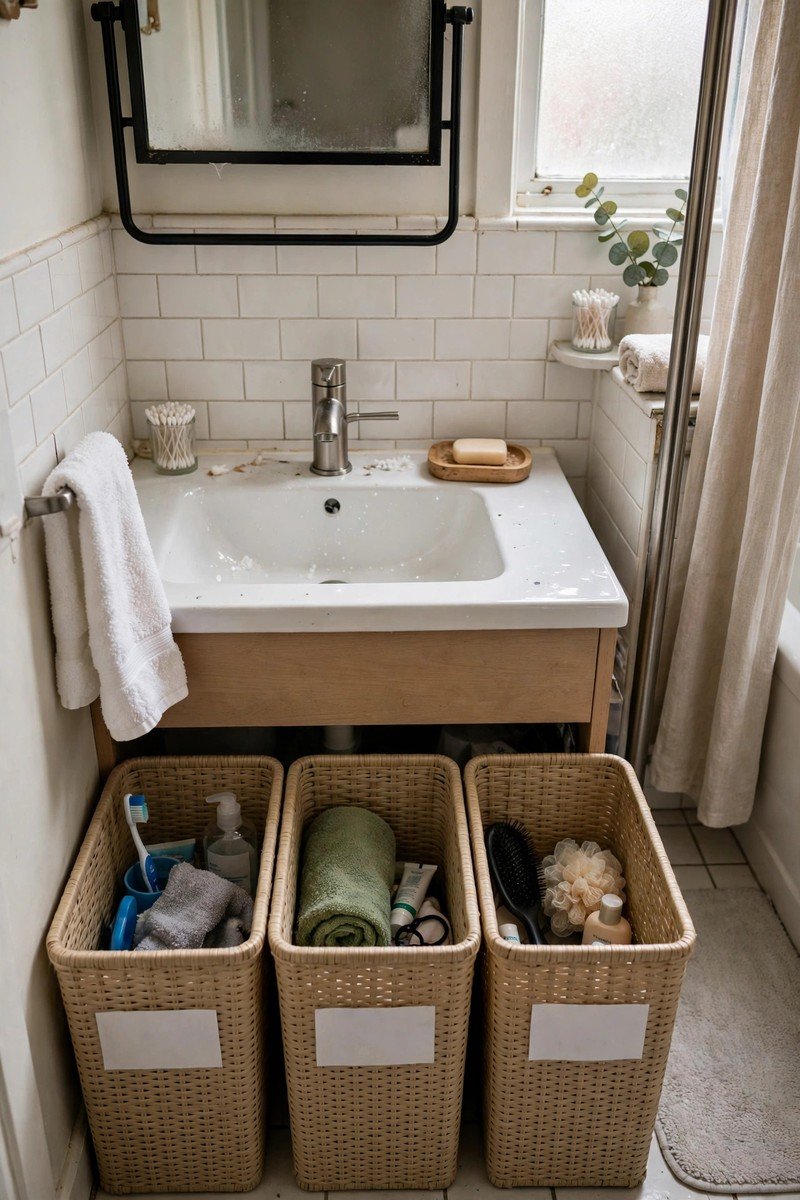
24. Give Each Person One Bin in a Shared Bathroom
One person’s routine can soon take over a shared bathroom, but one bin per person keeps daily products contained and makes editing simple. When a bin is full, its owner edits it.
Pro tip: Use bins about 25 by 18 cm, label each with a name, and keep shared items like hand soap and towels in a separate shared spot.
Keep the System Working
25. Label With Broad Words Only
Labels help when more than one person uses the bathroom, but tiny labels for clips, elastics, combs, and pins take more effort than they save. Broad labels like hair, daily care, first aid, cleaning, travel, backstock, and towels are easier to keep up with.
Pro tip: Use a label maker or clear tape and a marker, and replace a label the moment its bin changes job.

26. Review the System Once Each Season
A system that looks great for one weekend can fall apart by Wednesday if no one checks it, so a short seasonal review keeps it honest. Sort products into use now, put away, donate, and discard piles.
Pro tip: Set the review for the first weekend of each season, keep it to 30 minutes, and leave every container about three quarters full.
Sort by Person and by Job
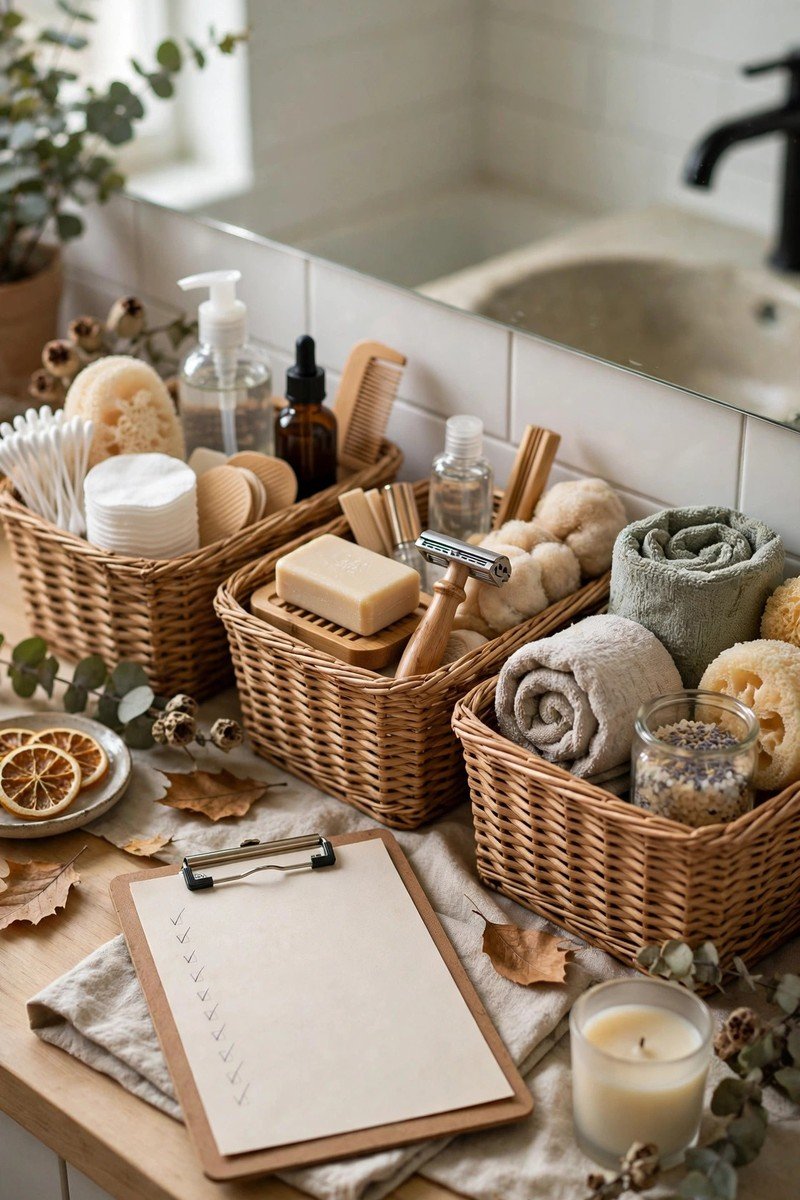
A small bathroom system starts with sorting, not with buying bins. Sort every item by who uses it, then by job: daily face, daily hair, cleaning, and backstock. Give each person one bin for daily items, and give cleaning its own bin under the sink, because cleaning items mixed with face items get used on the wrong surface. Put backstock, such as spare toilet paper and spare soap, on a high shelf, because backstock is reached once a week, not daily. Small bathroom organization ideas work best when the sort comes first, because bins bought before the sort are the wrong size for what must fit in them.
Bins and Labels That Survive Steam
Bins and labels must survive steam, or they fall apart in months. Use plastic bins with drainage holes, or open wire baskets, because closed fabric bins hold damp and smell. Pick bins 6 to 10 inches wide for a small bathroom, because wider bins do not fit between the sink and the wall. Label with broad words only, such as Daily, Hair, and Cleaning, because a narrow label, such as Night Cream, is wrong when the product changes. Use a label maker or waterproof tape, not paper labels, because paper labels peel off in steam. Check the bins once a month, and throw out any item that has leaked, because one leaking bottle ruins a whole bin.
The Weekly Ten Minute Bathroom Reset
A bathroom system stays working when it is reset every week, not when it is rebuilt every year. Take everything out of one area, such as the vanity drawer, wipe it, and put back only what belongs there. Check the shower caddy for empty bottles, and throw them out at once, because empty bottles take the space of full ones. Check the towel hooks, and wash any towel that has been up for more than a week. The reset takes about ten minutes, and it keeps the system working for the next week. If an area keeps failing, move one item, not the whole system, because a small change is kept and a big rebuild is not.
Storage Costs for a Small Bathroom
Under 30 dollars: three bins, a set of hooks and a small rolling cart. From 30 to 100 dollars: add pull out bins under the sink, a turntable for the cabinet, and a medicine cabinet. Over 100 dollars: add a narrow tall cabinet, a set of matching bins and a wall mounted pump set for the shower. As a typical range, a slim rolling cart costs about 25 to 60 dollars, and a set of pull out under sink bins costs about 20 to 50 dollars. Buy the bins first and measure the gaps they must fit, because a bin bought without a measurement is returned, and a bin bought with one is used for years.
Common Mistakes to Avoid
- Buying storage before sorting. New bins just hide the same clutter.
- Filling every shelf and basket. Packed storage breaks when you buy one more product.
- Putting backups in the prime spot. Daily items should reach easiest.
- Using tiny categories. One broad hair bin beats five tiny ones.
- Ignoring weight limits. Adhesive hooks fail in steam.
- Skipping the reset. A one minute nightly reset beats a monthly deep clean.