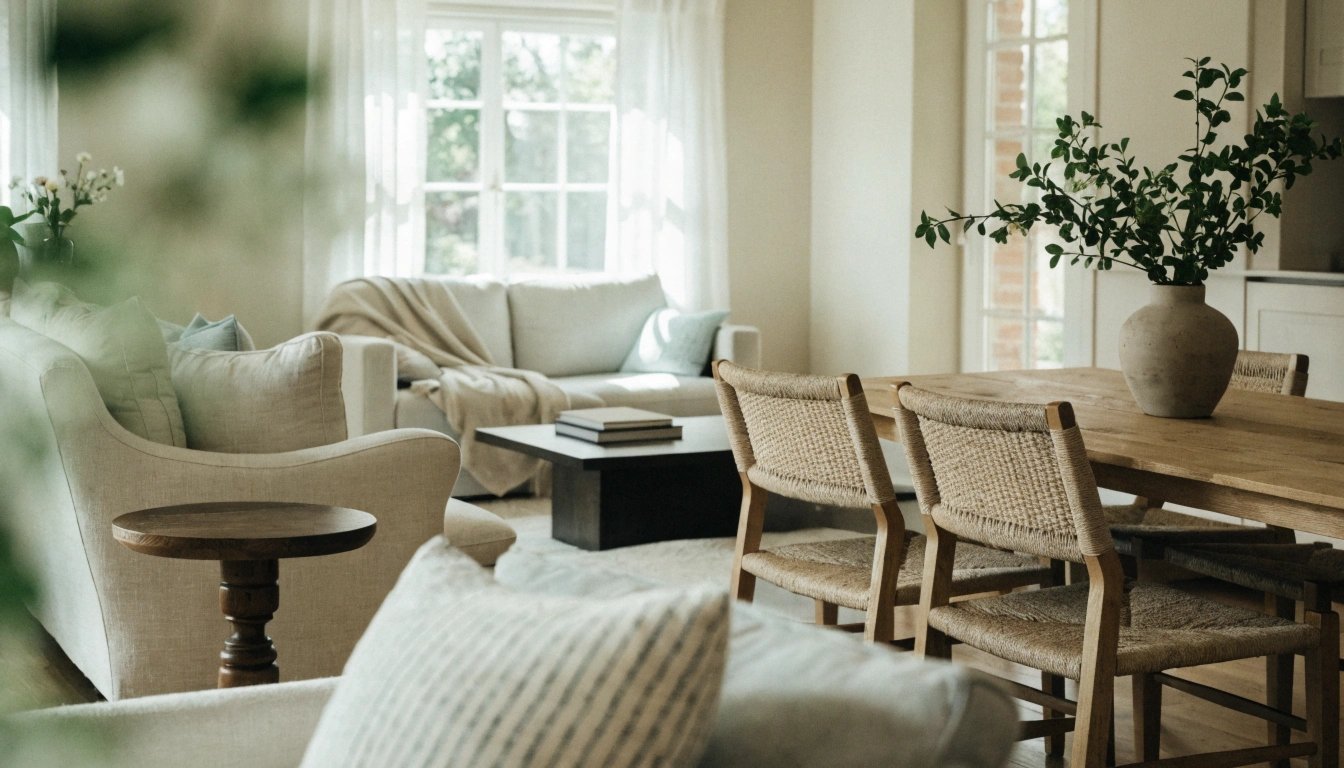
Spring has a way of making everything inside the house look a little different. The same sofa that felt cozy in January can suddenly feel heavy, and those dark throws and layered accessories that made sense all winter can start making a room feel crowded.
That doesn’t mean you need to redecorate your entire home.
A spring refresh can be as simple as changing a few textiles, bringing in something green, clearing a crowded surface, or moving a piece of furniture closer to the light. The goal is to make your rooms feel lighter and more open while keeping the warmth that makes them comfortable.
The best spring home decor ideas aren’t necessarily the ones that require the most shopping. Some of the most noticeable changes come from editing what is already there and then adding a few thoughtful seasonal touches.
From the living room and kitchen to the bedroom, bathroom, entryway, and dining area, these 22 ideas will help you give every room a fresh spring feeling without making your home look overly themed.
Quick Picks
- Best no-cost refresh: Rearrange furniture and edit winter decor.
- Best way to add color: Introduce soft spring accents through textiles.
- Best natural touch: Bring in fresh branches or greenery.
- Best small-space idea: Use mirrors to reflect natural light.
- Best seasonal update: Replace heavy fabrics with lighter layers.
- Best whole-home trick: Repeat one spring color throughout several rooms.
Before You Start Your Spring Refresh
Before buying anything new, walk through your home with fresh eyes.
Put away the pieces that feel especially wintery, remove anything that has started to look like clutter, and notice where the rooms feel dark or visually heavy. You may find that you need far fewer new decorations than you expected.
I also like the idea of choosing a loose spring palette before adding anything. Soft greens, pale blues, warm whites, blush, buttery yellow, and natural wood can all work beautifully, but you don’t need every spring color in one room.
Pick two or three tones and let them quietly repeat throughout the house.
That small bit of consistency can make a seasonal refresh feel intentional rather than like a collection of unrelated decorations.
1. Start With a Lighter Living Room
The living room is usually the easiest place to notice the change of season.
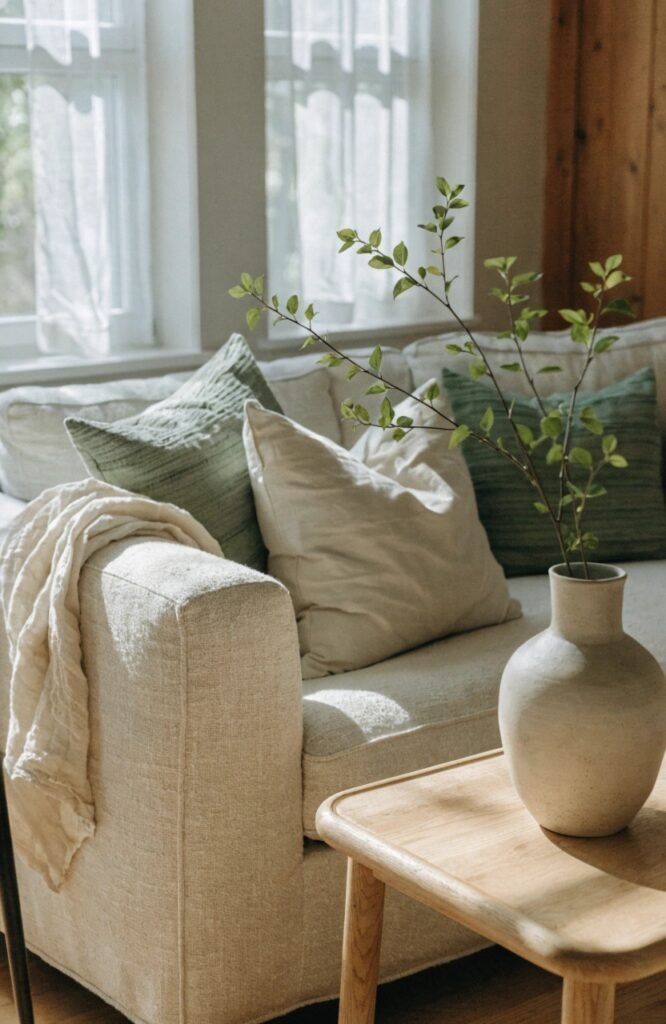
Start by removing anything that feels especially heavy, such as thick throws, overly dark pillow covers, or layers of winter accessories. Replace just a few of them with linen-look, cotton, or other lighter-weight textiles.
You don’t have to make the room completely pale. Keeping a few deeper accents gives the lighter pieces something to balance against.
The goal is a living room that feels lighter, not empty.
2. Bring Fresh Greenery Into the Living Room
Nothing says spring quite as naturally as something growing.
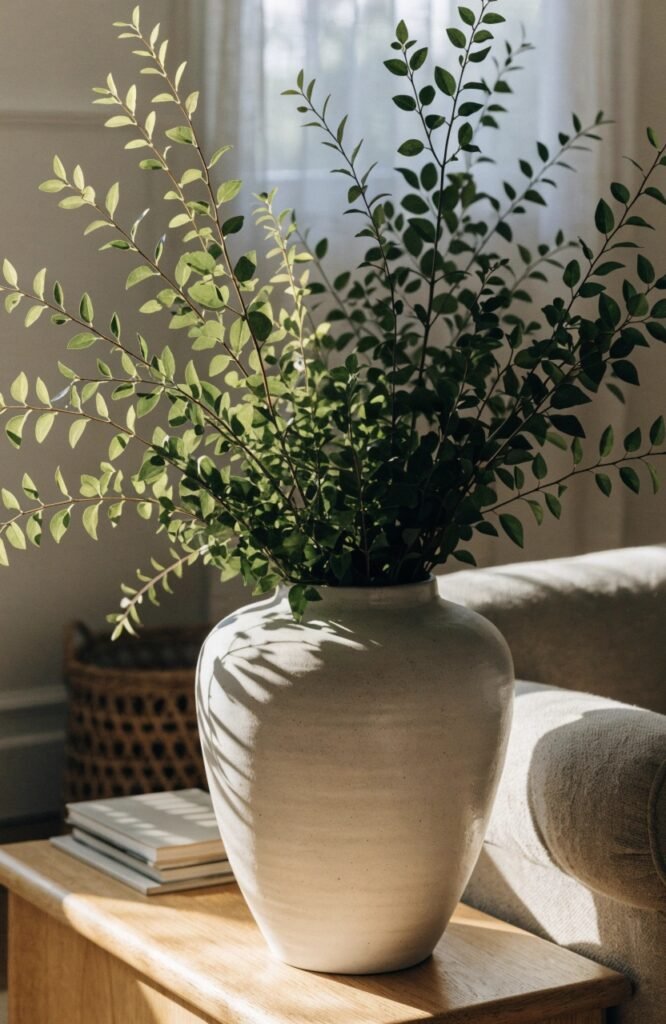
A vase of leafy branches, a small potted plant, or a simple arrangement of fresh stems can bring life to a coffee table, console, mantel, or empty corner.
If fresh flowers aren’t practical, greenery can still create the same visual effect without making the room feel overly floral.
Try using one larger arrangement instead of scattering tiny plants everywhere. A stronger focal point usually looks more intentional and creates less visual clutter.
3. Swap Heavy Throws for Lighter Layers
One of the quickest seasonal changes is hiding the thickest winter blankets.
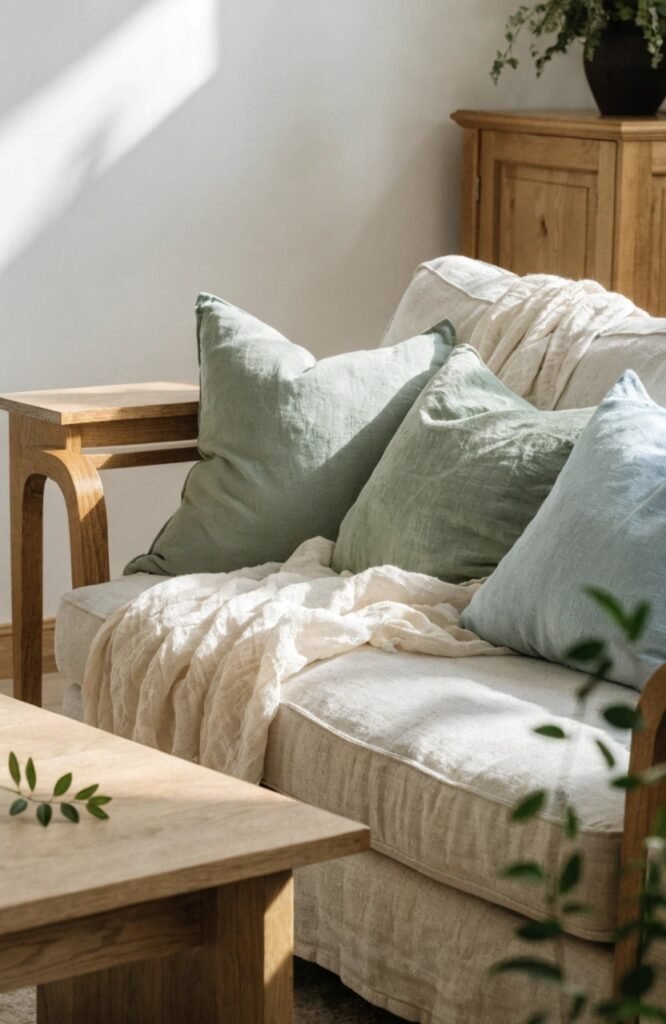
You can still keep a throw on the sofa, but choose something with a lighter visual weight. Cotton, linen blends, lightweight knits, and textured woven fabrics work well for spring.
This is also a good opportunity to change the color.
Instead of replacing every pillow and blanket, switch one or two pieces to sage green, soft blue, warm cream, pale yellow, or another color that works with the room.
Small textile changes can make an entire seating area feel different.
4. Let More Natural Light Into the Room
Spring is a good excuse to rethink anything blocking your windows.
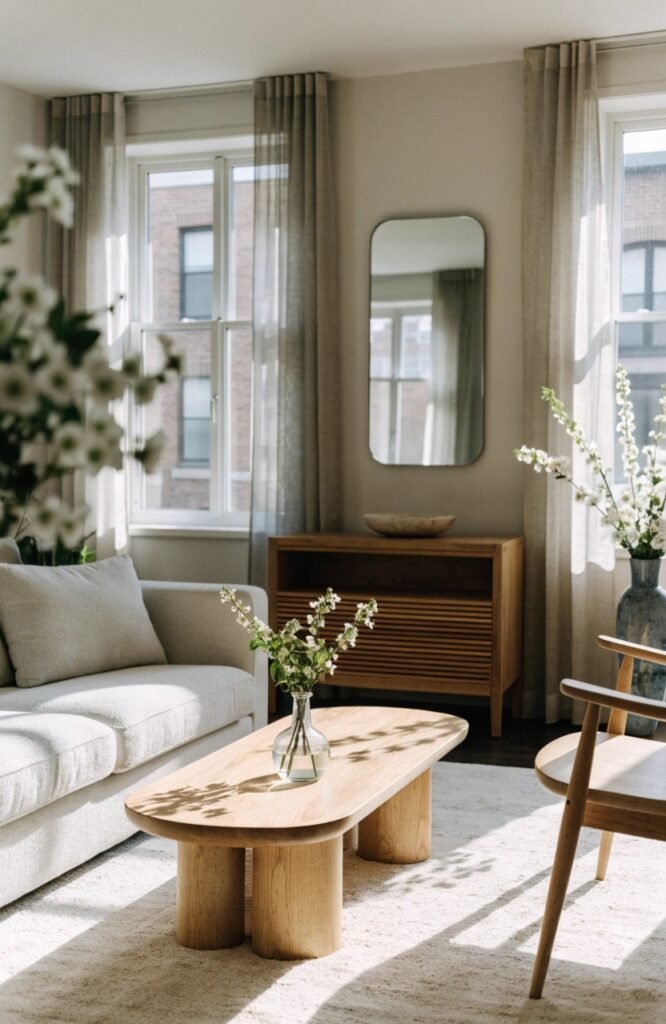
Pull curtains farther to the sides during the day, clean the glass, and move tall furniture away from the brightest part of the room if the layout allows.
You can also use a mirror opposite or near a window to help bounce available light around the space.
The idea isn’t complicated: make the natural light you already have work harder.
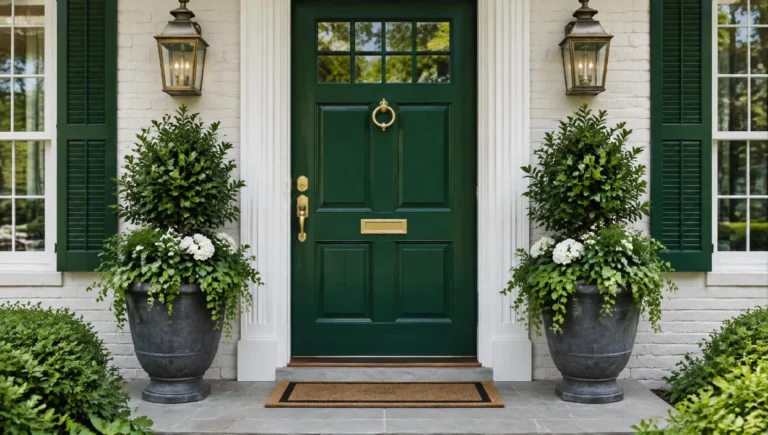
5. Refresh the Entryway With One Spring Moment
Your entryway doesn’t need a complete makeover to feel seasonal.
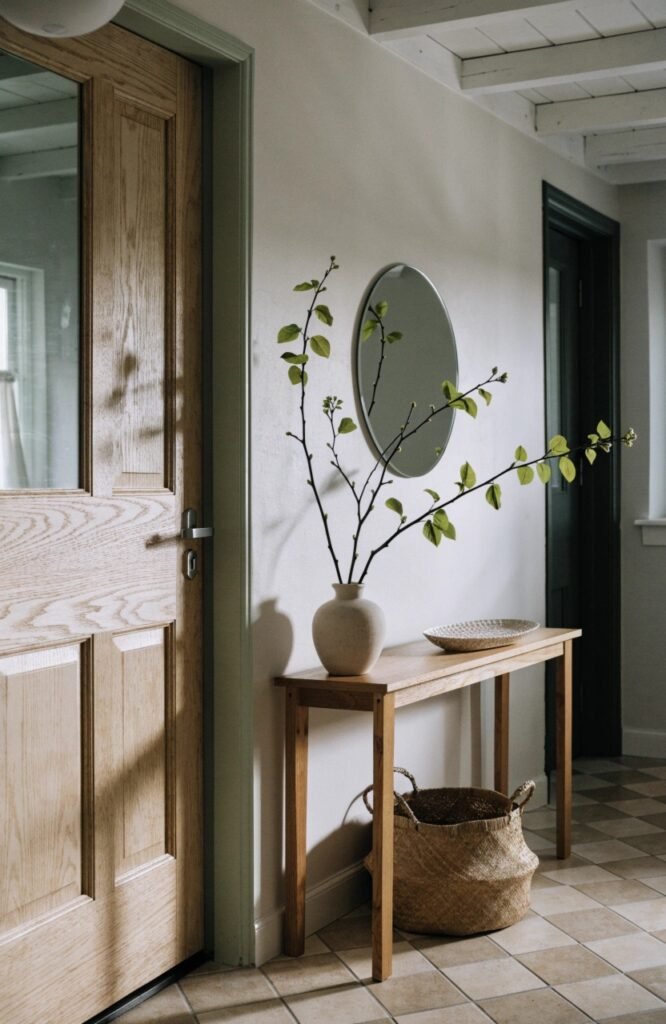
Try a simple combination on a console or entryway table: a small vase of greenery, a bowl or tray for everyday items, and one decorative object with a little color or texture.
A spring wreath can work beautifully on the door, but it’s not the only option. A branch arrangement or simple natural material can create a more understated look.
Keeping the arrangement relatively restrained helps the entryway remain functional.
6. Add a Soft Spring Color to the Kitchen
The kitchen can be one of the easiest rooms to refresh because you don’t have to change permanent finishes.
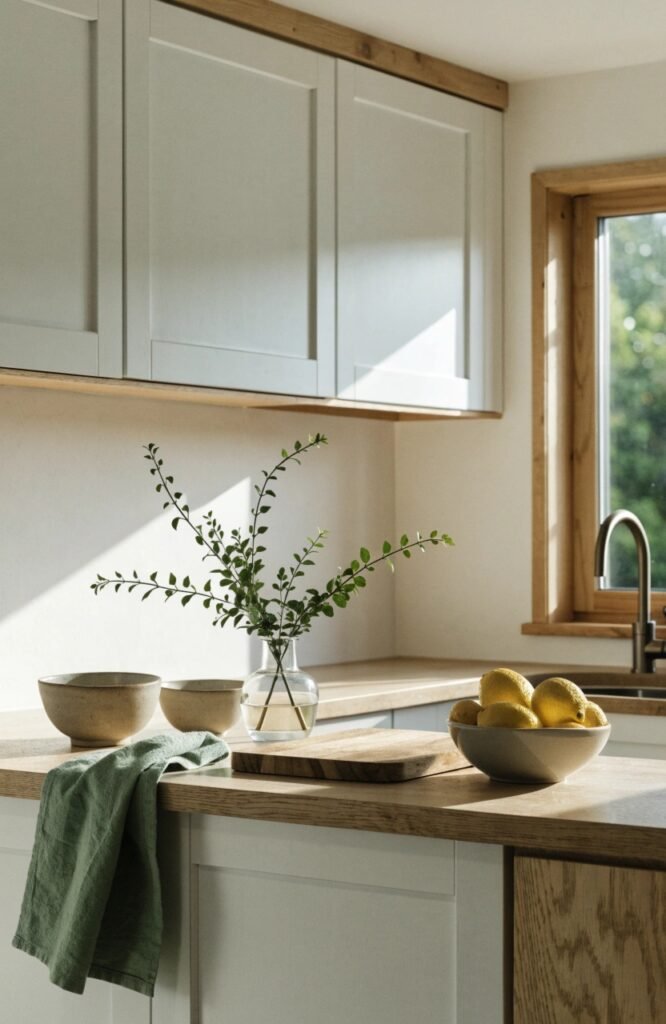
Introduce spring color through:
- dish towels
- small bowls
- ceramic pieces
- a fruit bowl
- a runner
- countertop flowers
- open shelving accessories
Soft green is especially useful because it connects naturally with herbs, plants, and other organic elements.
Rather than introducing five new colors, choose one accent and repeat it a few times.
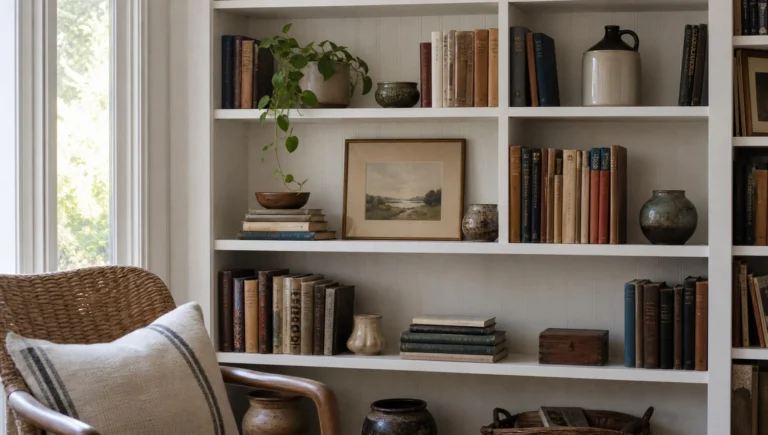
7. Style Open Shelves With More Breathing Room
If your kitchen has open shelving, spring is a perfect time to edit it.
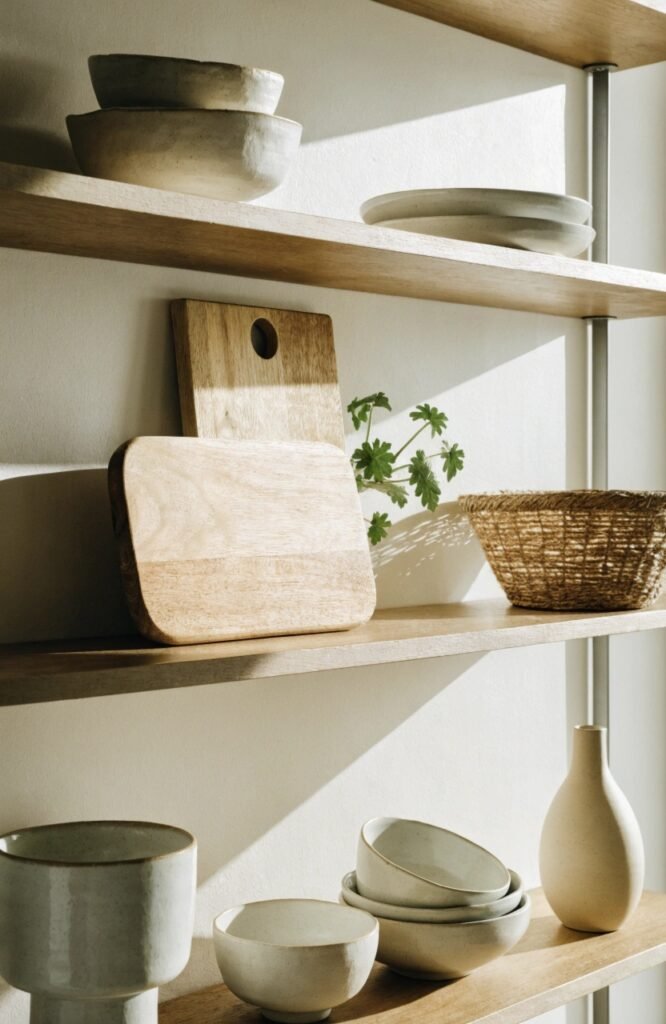
Remove a few pieces first.
Then put back the items that are most useful or visually appealing, leaving some empty space between groups.
Add one or two natural elements such as a small plant, wooden board, woven basket, or simple ceramic vase.
This creates a lighter spring feeling without requiring new shelves or expensive accessories.
8. Create a Simple Spring Kitchen Countertop Vignette
Choose one small section of the countertop for seasonal styling rather than decorating every available surface.
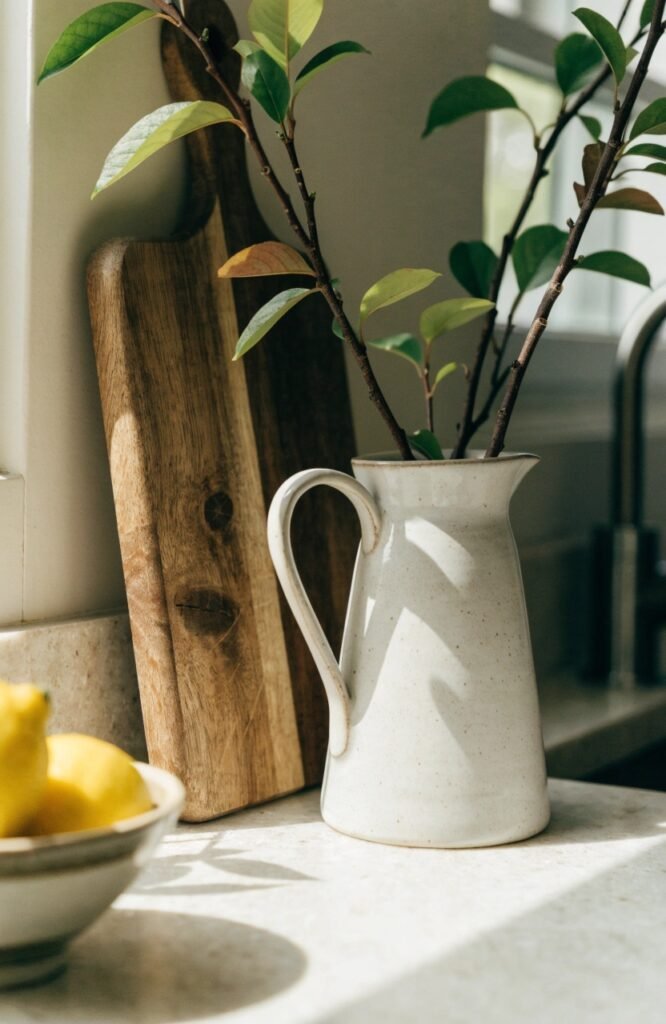
A wooden cutting board leaned against the backsplash, a ceramic pitcher filled with greenery, and a small bowl of lemons can create a cheerful arrangement without making the kitchen feel cluttered.
The trick is to combine different heights.
A taller piece gives the arrangement a visual anchor while smaller objects keep it grounded.
9. Give the Dining Table a Fresh Centerpiece
You don’t need a formal tablescape every day.
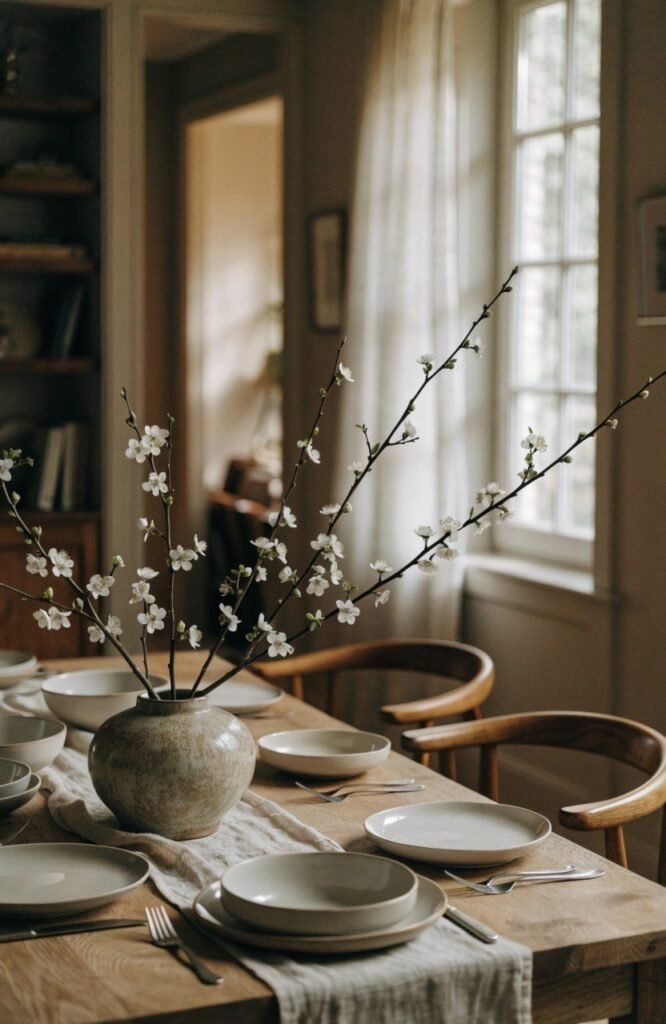
For an everyday spring centerpiece, try a low vase with branches or flowers placed in the middle of the table. Add a runner or a few natural textures if the table needs more warmth.
If your table is small, skip the large arrangement and use one interesting vessel instead.
Keeping the centerpiece low is especially helpful because it allows conversation and keeps the table practical.
10. Use Fresh Flowers Without Making the Room Feel Overly Seasonal
Flowers are an obvious spring choice, but the way you display them can make a big difference.
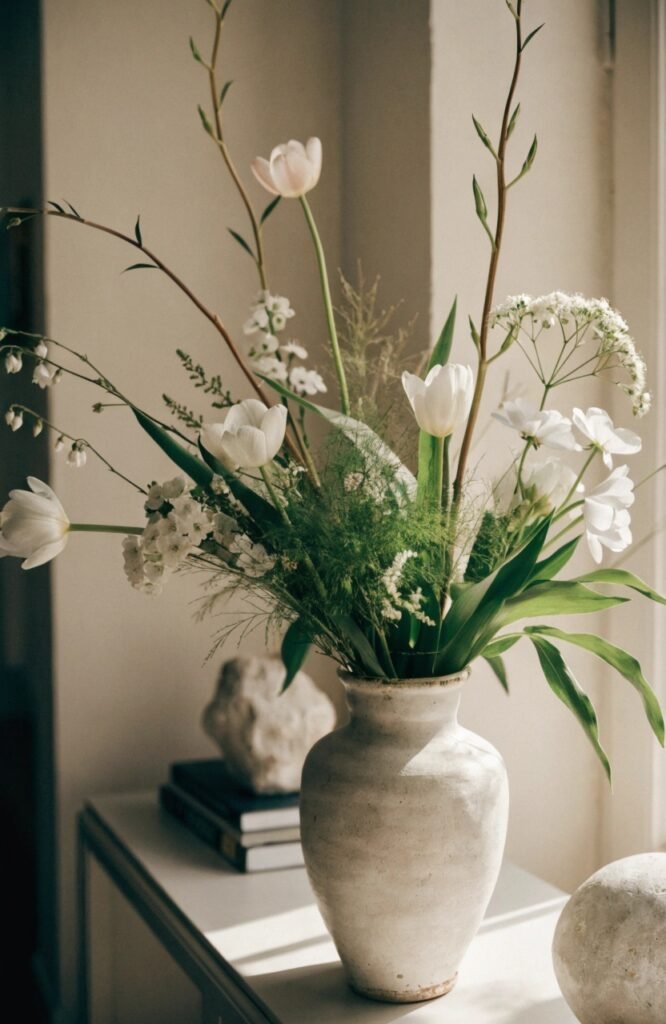
Instead of filling every room with bright floral arrangements, choose one or two places where flowers can become a focal point.
A loose arrangement often feels more relaxed than a perfectly symmetrical bouquet.
You can also use branches, flowering stems, or greenery when you want the seasonal feeling without a strongly floral look.
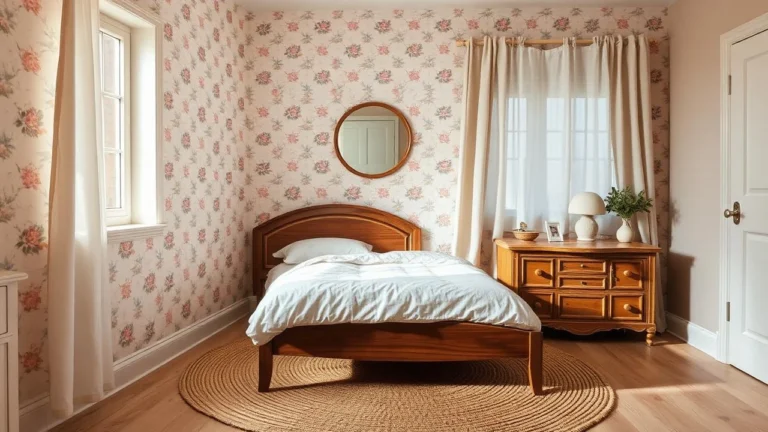
11. Refresh the Bedroom With Lighter Bedding
Your bedroom can often feel instantly different just by changing the top layer of the bed.
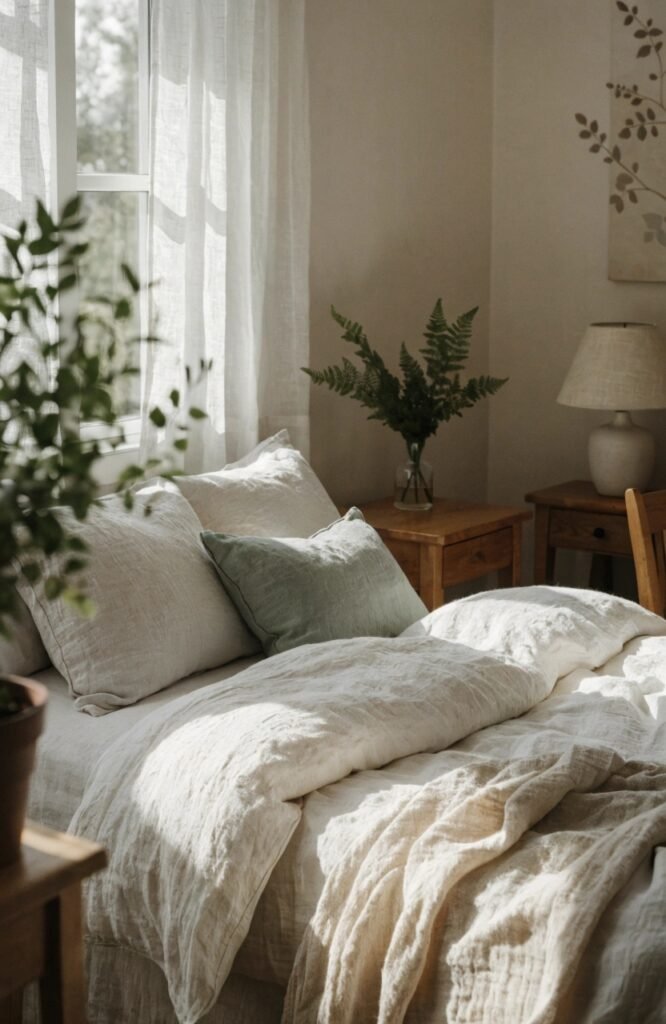
Pack away the heaviest winter blanket and introduce lighter bedding or a breathable coverlet. Keep the color palette calm so the room remains restful.
White, cream, pale blue, muted green, and soft blush can all work well depending on the existing room.
You don’t need a completely new bedding set. Sometimes replacing the duvet cover or adding two lighter pillow covers is enough.
12. Add a Spring Accent to the Nightstand
A bedroom doesn’t need obvious seasonal decorations.
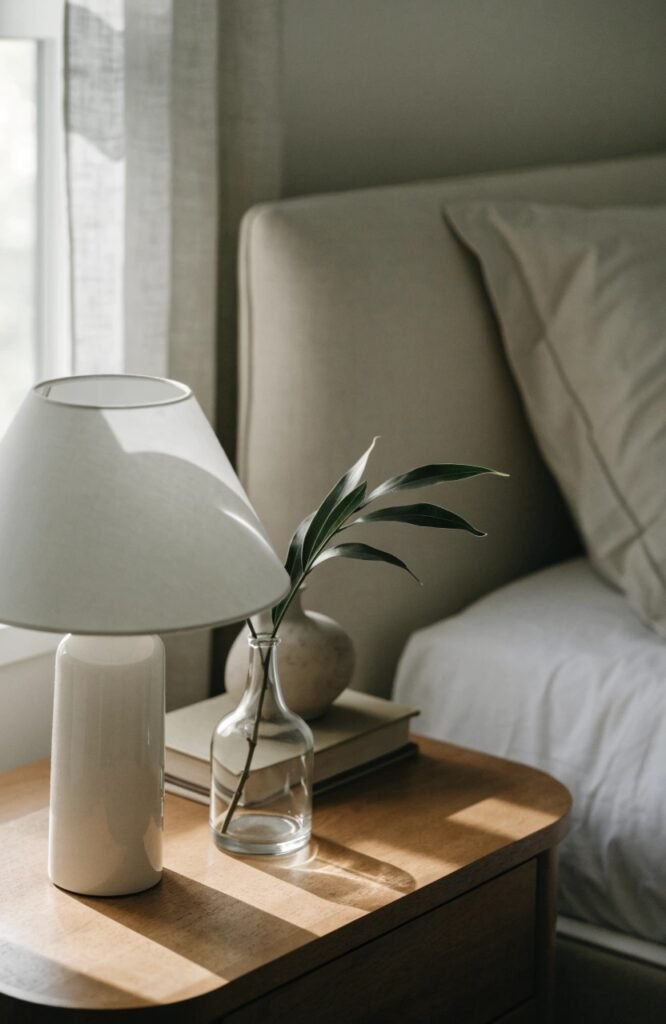
Instead, add one small spring-inspired detail to your nightstand.
A tiny vase, a small branch, a light-colored ceramic lamp, or a framed botanical print can give the space a subtle seasonal update.
Keep the surface useful, though. Your nightstand should still have room for the things you actually use at night.
A little negative space makes the entire bedroom feel calmer.
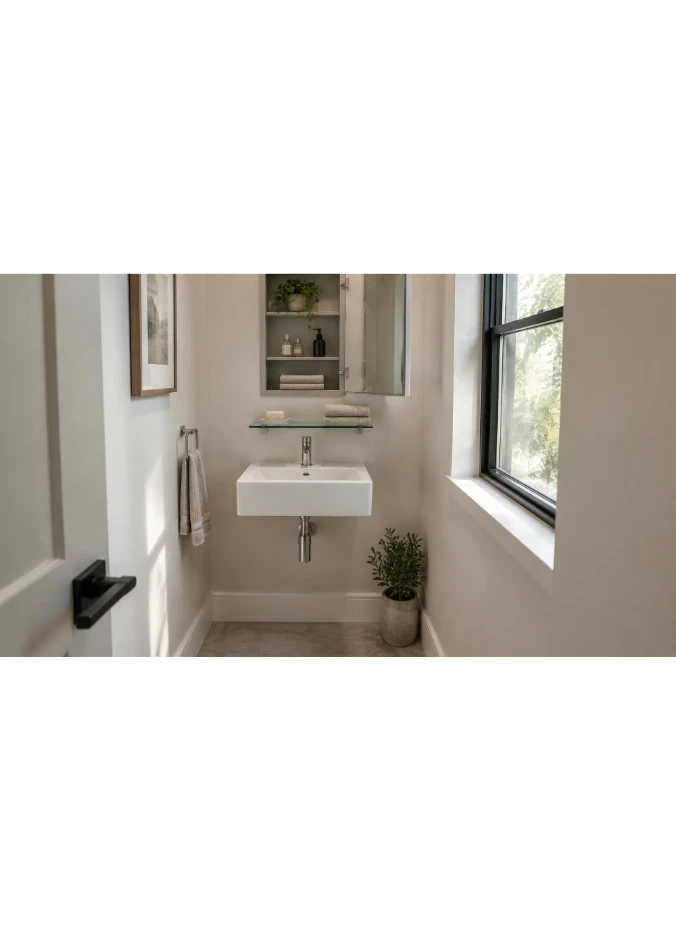
13. Switch the Bathroom Towels and Textiles
Bathrooms are often overlooked during seasonal decorating, but textiles can change their mood quickly.
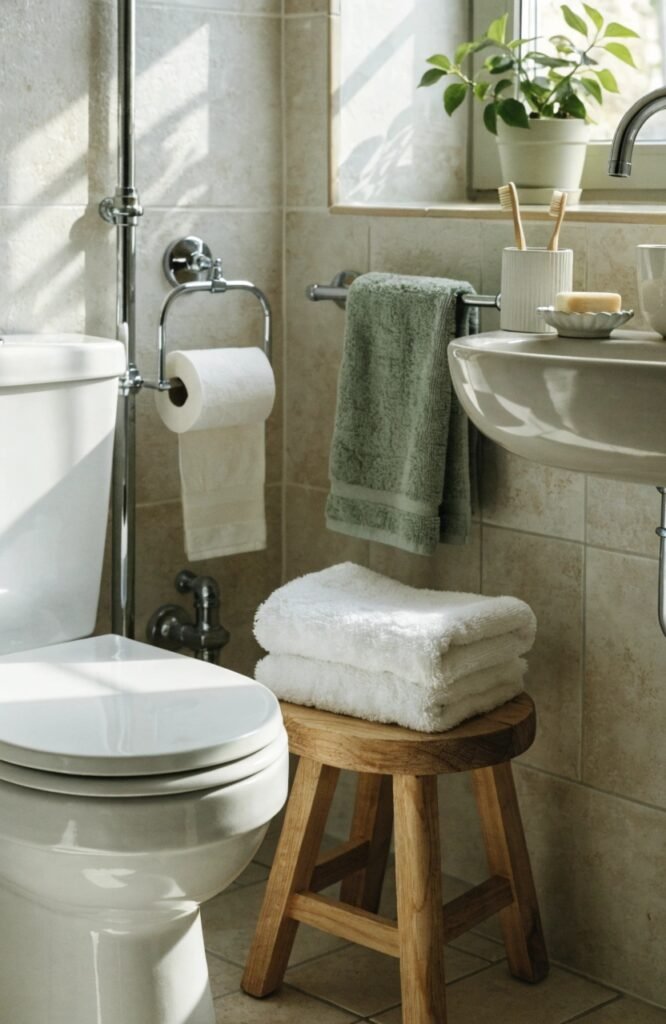
Replace darker or heavier-looking towels with lighter neutrals or a soft spring accent color.
You can also switch the bath mat, shower curtain, or small decorative accessories if the room needs more of a change.
Because bathrooms are usually smaller than other rooms, even one color change can have a noticeable effect.
14. Add Greenery to the Bathroom
A small plant can soften a bathroom filled with hard surfaces.
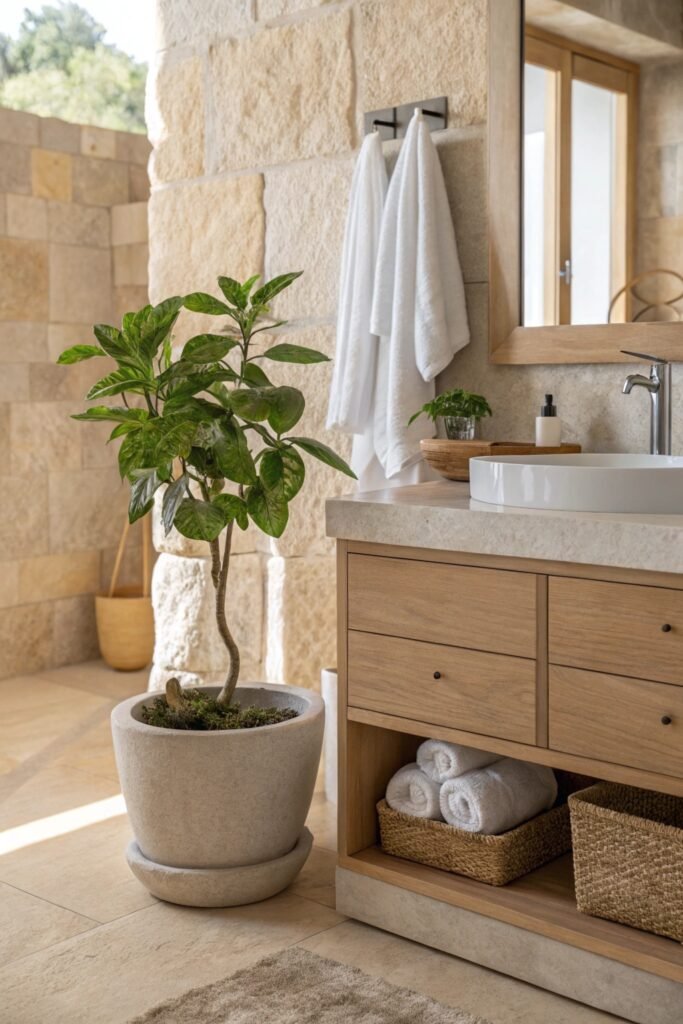
Choose a variety that suits the amount of natural light available, or use a simple branch arrangement if maintaining a live plant isn’t practical.
Place it on a vanity, shelf, or nearby stool where it won’t interfere with everyday use.
The natural texture adds warmth without requiring a large decorating project.
15. Turn a Quiet Corner Into a Spring Reading Spot
Spring isn’t only about changing accessories.
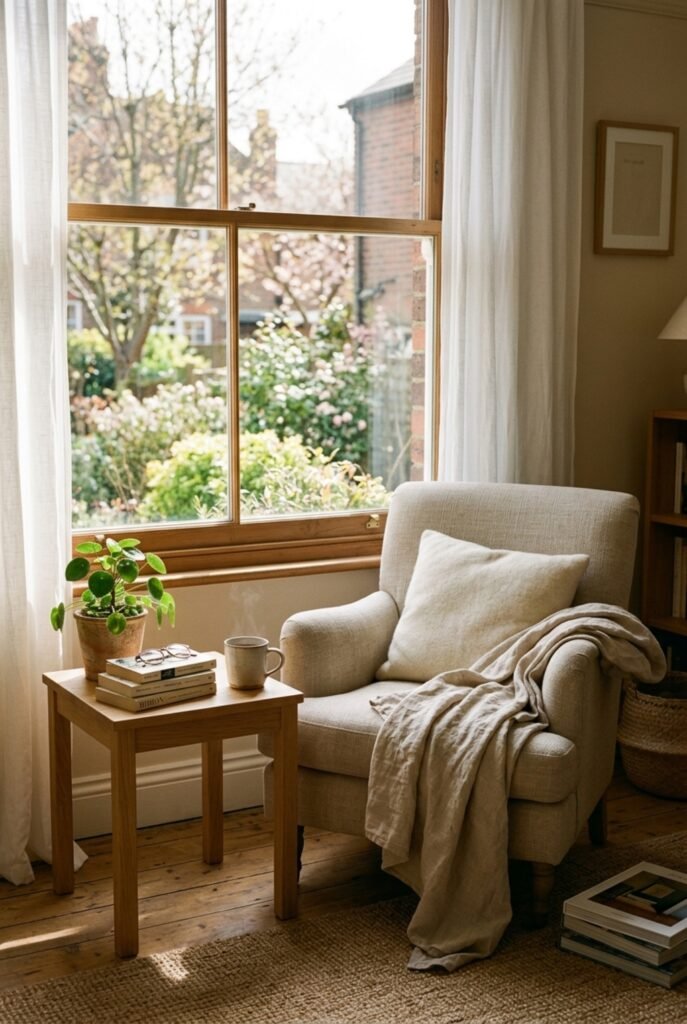
Sometimes the best refresh is changing how you use a space.
If you have an unused corner near a window, create a simple reading spot with a comfortable chair, small side table, and lightweight throw.
You don’t need a dedicated reading room. Even a small corner can become useful when the furniture is arranged around an activity.
The extra daylight makes this especially appealing in spring.
Image Prompt: Create a realistic editorial photograph of a peaceful spring reading corner beside a bright window, featuring a comfortable neutral upholstered armchair, small light wood side table, lightweight linen throw, simple ceramic cup, a few books, and one small leafy plant. Natural afternoon sunlight, soft shadows, warm neutral colors, realistic lived-in home, elegant but attainable, no people, no text, no lettering.
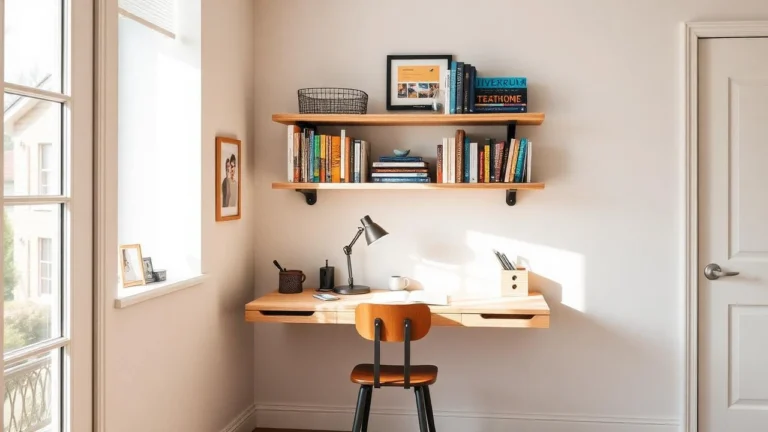
16. Give the Home Office a Lighter Feel
If you work from home, don’t overlook your desk area.
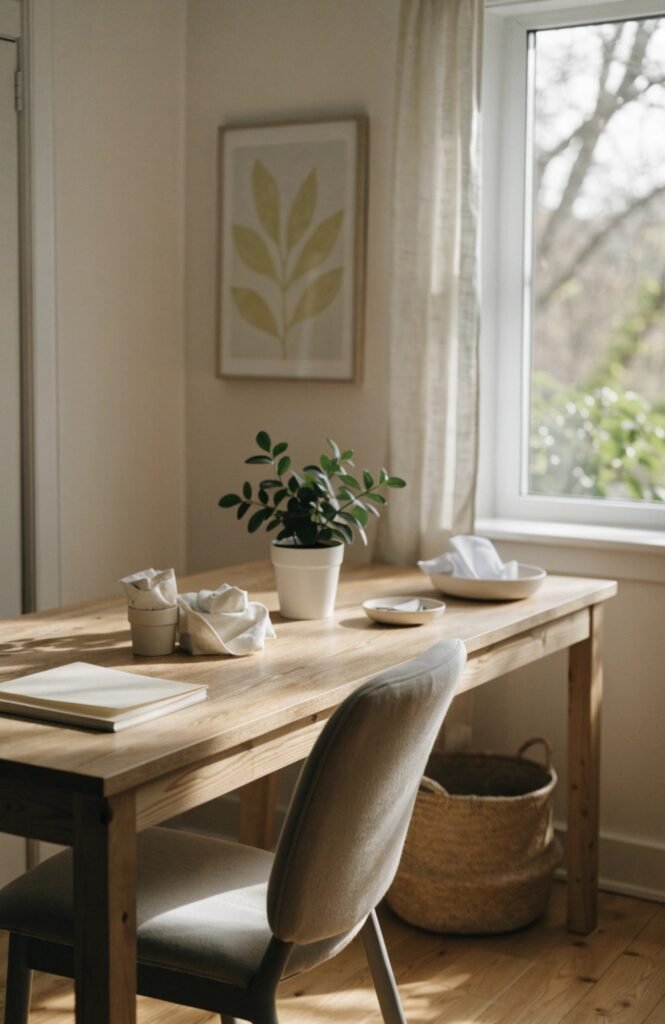
Clear away unnecessary papers and objects, then introduce one or two lighter elements.
A small plant, simple artwork, woven storage basket, or lighter desk accessory can make the workspace feel less visually heavy.
Avoid turning the desk into a decorative display. The goal is to make it feel fresh while keeping it functional.
17. Refresh the Fireplace or Mantel With Restraint
If you have a fireplace, spring is a good time to remove the heavier seasonal styling and simplify the mantel.
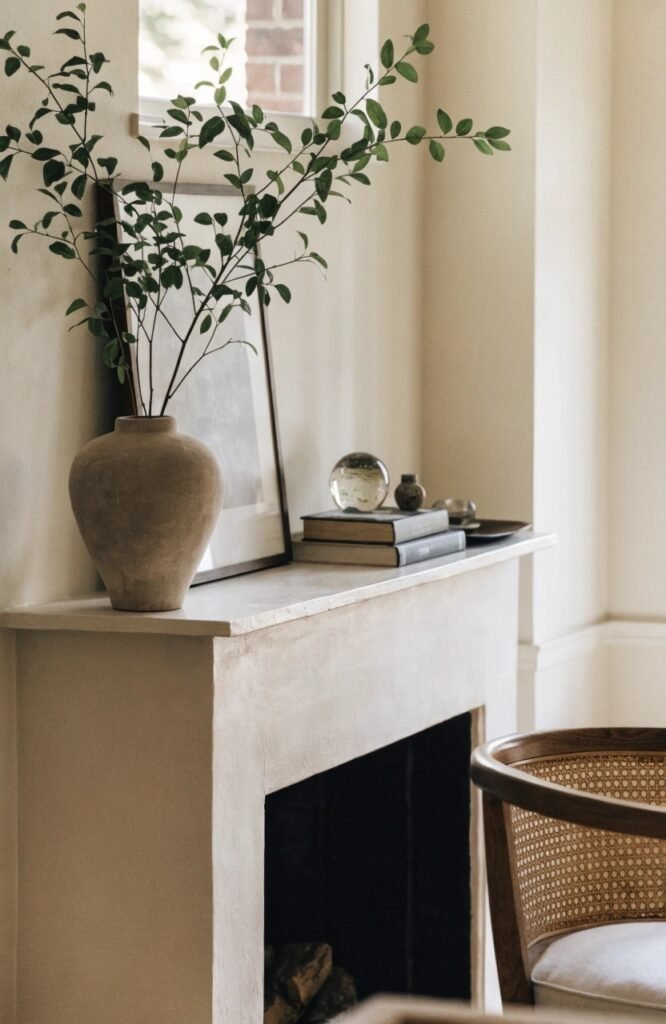
Try a large vase, branches, a mirror, or artwork as the main focal point.
Then add only a few smaller objects around it.
A restrained arrangement often feels more sophisticated than covering the entire mantel with seasonal decorations.
This is particularly useful if your fireplace already has a strong architectural presence.
18. Create a Spring Moment on a Console Table
A console table can become a visual transition between rooms.
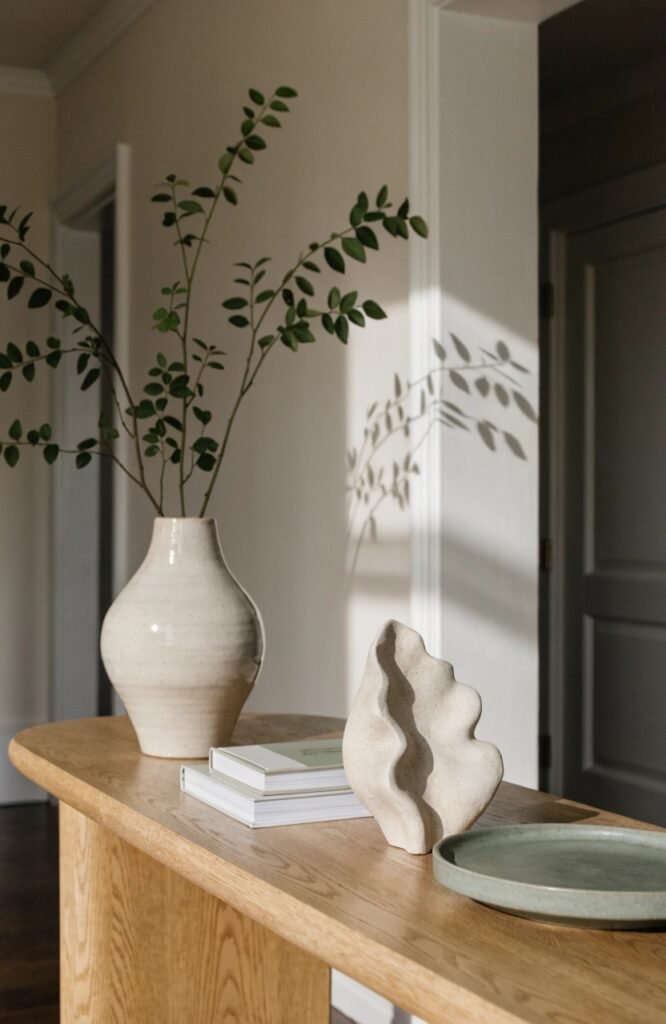
Instead of filling it with small accessories, choose three or four pieces with different heights and textures.
For example:
- a tall vase with branches
- a stack of books
- a small sculptural object
- a shallow tray
The combination works because the pieces aren’t competing for attention.
Use the same spring accent color that appears elsewhere in your home to make the refresh feel connected.
19. Use Mirrors to Make Spring Light Feel Brighter
Spring brings more daylight, so take advantage of it.
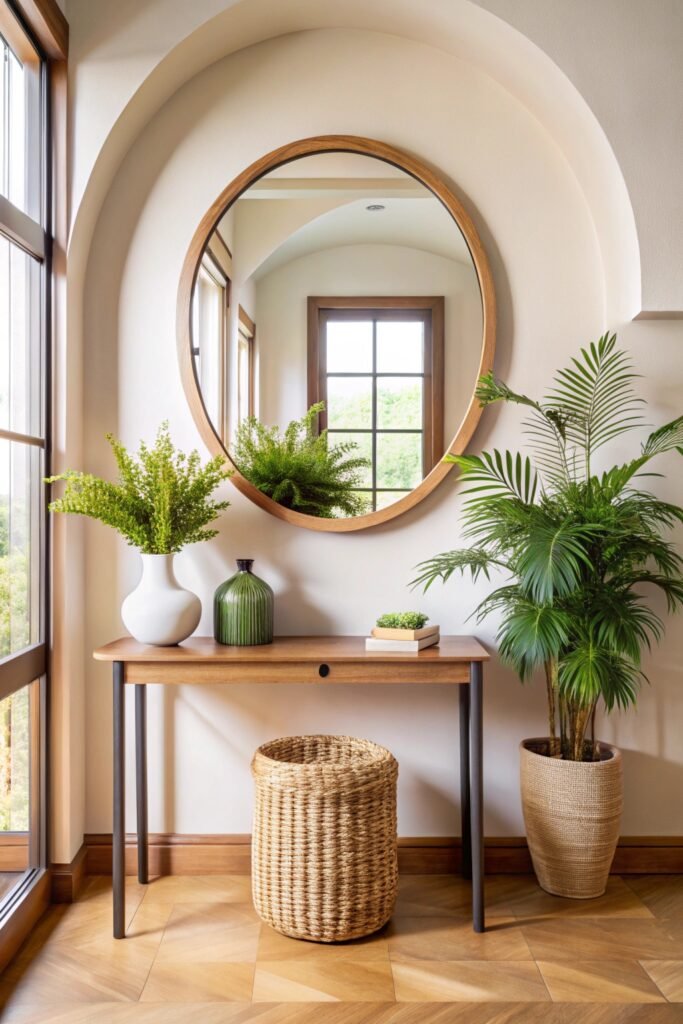
A well-positioned mirror can reflect light and create the impression of more depth, especially in a darker hallway, small dining room, or compact living area.
Choose the largest size that makes sense for the wall without overwhelming the furniture beneath it.
For a more relaxed look, pair the mirror with natural materials such as wood, woven texture, or greenery.
20. Bring Natural Materials Into the Decor
Spring decorating doesn’t have to mean pastel everything.
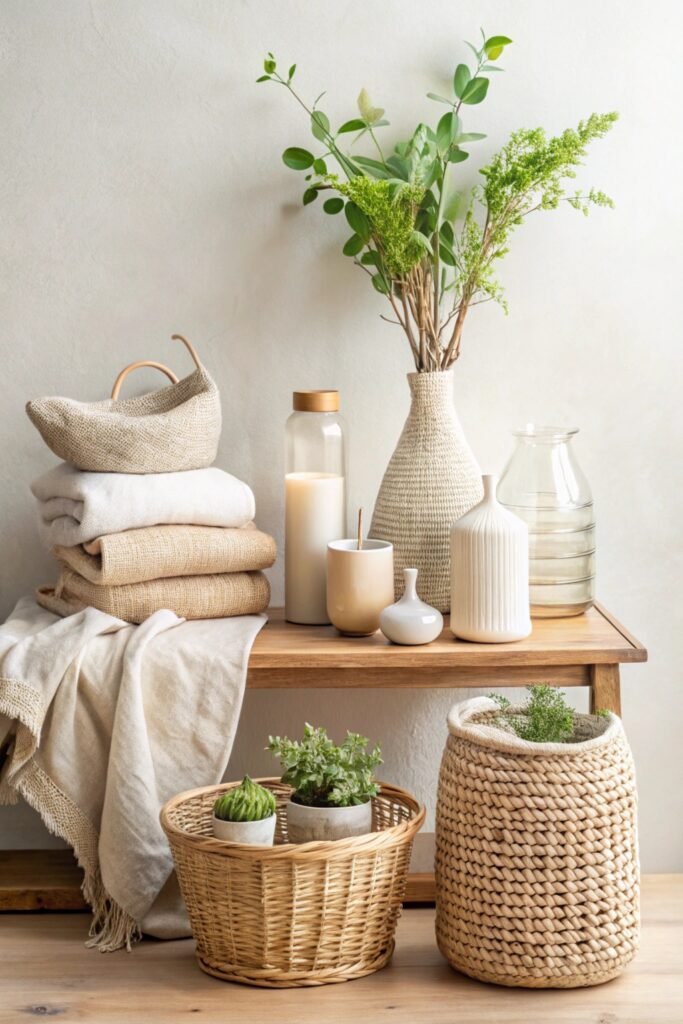
Natural materials can give the home a fresh feeling while keeping it grounded.
Try:
- woven baskets
- rattan
- light wood
- linen
- cotton
- ceramic
- stone
- glass
These materials add texture without relying heavily on seasonal patterns.
That also makes the decor easier to transition into summer.
21. Repeat One Spring Color Throughout the House
One of the easiest ways to make a whole-home refresh look intentional is to repeat one accent color.
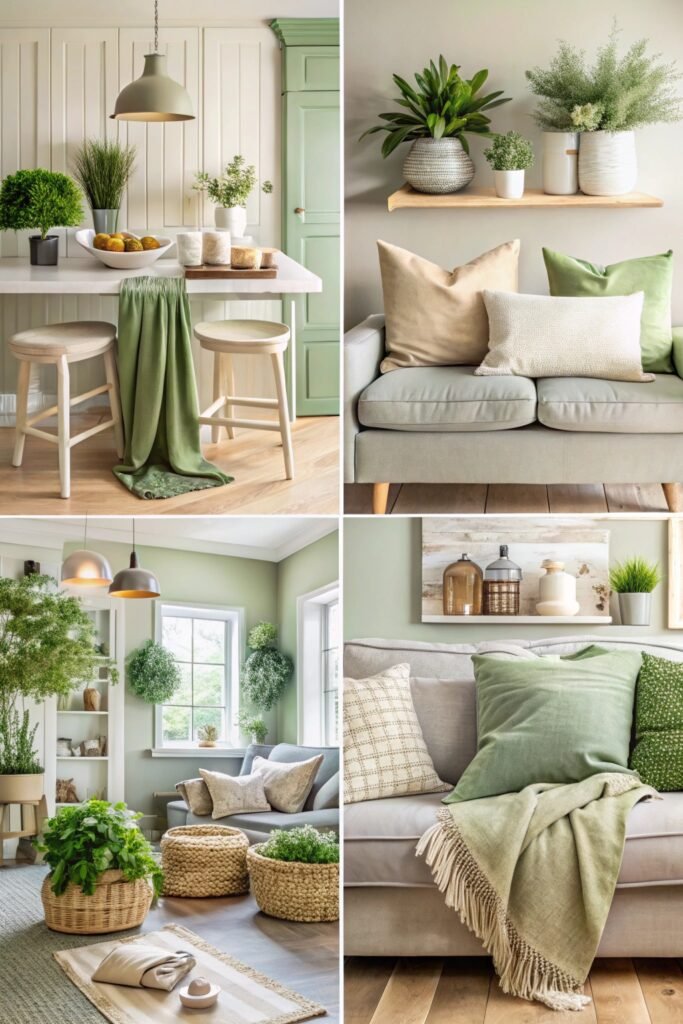
You might choose sage green and introduce it through a kitchen towel, living room pillow, bedroom throw, and small entryway accessory.
The pieces don’t have to match.
They simply need to share a visual connection.
This approach gives different rooms their own personality while creating a subtle thread throughout the house.
22. Edit Before You Add Anything Else
This might be the most useful spring decorating idea of all.
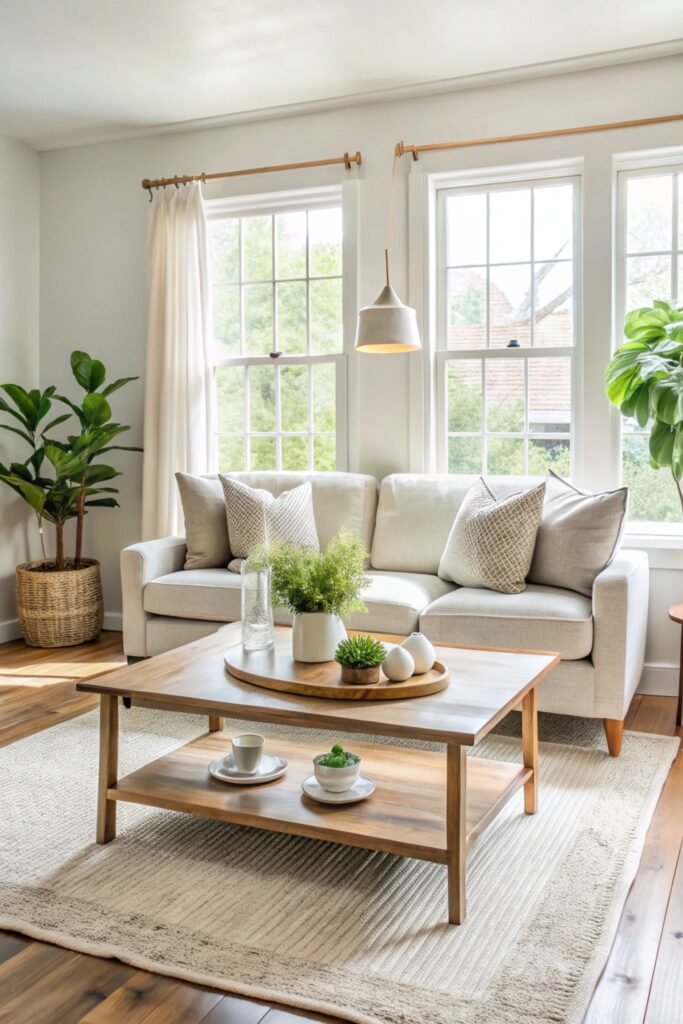
Before buying another vase, pillow, basket, or piece of artwork, remove five things from the room.
They don’t necessarily need to be thrown away. Put them in storage, move them to another room, or simply give yourself a few days to decide whether you miss them.
Spring is a natural time to let rooms breathe.
The goal isn’t to make your home look like a seasonal showroom. It’s to make it feel lighter, fresher, and more comfortable for the months ahead.
Sometimes removing one layer does more than adding three new decorations.
Common Spring Decorating Mistakes to Avoid
1. Adding Too Many Seasonal Colors
You don’t need every pastel shade in one room. Choose a small palette and let it repeat.
2. Decorating Every Surface
Leaving some empty space helps the pieces you do display stand out.
3. Replacing Everything at Once
A few thoughtful swaps can create a bigger impact than a complete seasonal shopping spree.
4. Forgetting Texture
Spring isn’t only about color. Linen, woven materials, wood, ceramic, and greenery can make a room feel fresh without becoming overly colorful.
5. Making the Decor Too Obviously Seasonal
If you want the refresh to last beyond a few weeks, focus on lighter textures, natural elements, and flexible colors rather than highly themed decorations.
6. Ignoring the Practical Side of the Room
A beautiful centerpiece isn’t helpful if it blocks conversation at the dining table or makes a kitchen counter difficult to use.
Frequently Asked Questions
How Can I Decorate My House for Spring Without Spending a Lot?
Start by removing heavy winter decor and rearranging what you already own. Then add inexpensive seasonal touches such as greenery, fresh flowers, lighter textiles, or a new accent color.
What Colors Are Good for Spring Home Decor?
Soft greens, pale blues, warm whites, blush, buttery yellow, and other gentle nature-inspired tones work well. You don’t need to use all of them; choosing one or two accents usually creates a more cohesive look.
How Do I Make My Living Room Look More Spring-Like?
Start with the textiles. Replace heavy throws or dark pillow covers with lighter fabrics and colors, then add greenery or flowers and make the most of natural light.
How Can I Make Spring Decor Look Elegant?
Keep the palette restrained, avoid overcrowding surfaces, and mix seasonal touches with natural materials such as linen, wood, glass, ceramic, and woven textures.
Do I Need to Decorate Every Room for Spring?
Not at all. Focus on the rooms you use most. Repeating one or two colors or materials between those spaces can make the entire home feel refreshed without decorating every corner.
Final Thoughts
A spring home refresh doesn’t have to mean starting over.
The most effective changes are often surprisingly small: folding away a heavy throw, opening up a crowded shelf, bringing in a branch from the garden, changing a few pillow covers, or moving furniture so the room can take better advantage of the light.
I think the best spring interiors strike a balance between fresh and familiar. You want your home to feel different enough to notice, but still like your home.
So start with the room that feels heaviest after winter, make a few thoughtful changes, and let that lighter feeling guide the rest of the house.