The first vintage piece I ever bought was a chipped milk glass lamp from an estate sale, and I almost put it back because it didn’t match anything else in my apartment. That was the mistake. Vintage home decor doesn’t work when you shop for a match, it works when you let one piece with real age and wear set the tone, then build everything modern around it. Once I stopped chasing a coordinated “look” and started collecting pieces with actual history, my rooms finally stopped feeling like they came out of a catalog.
What separates good vintage styling from a thrift-store jumble is restraint and material honesty: real wood, real brass, real glass, one flea-market find per room rather than five competing eras crammed together. I’ve sourced most of what’s below from estate sales, antique malls, and secondhand marketplaces myself, and priced everything against current listings rather than guessing, so you know roughly what you’re working with before you go looking.
I’ve grouped these vintage home decor ideas by what you’re actually changing, whether that’s color and walls, furniture, lighting, textiles, or the small finishing touches that make a room feel collected instead of decorated all at once.
Quick Picks
- Best first buy: One real antique piece with visible age, not a full matching set
- Best wall change: A warm, aged paint color instead of bright white
- Best lighting swap: A vintage brass pendant or milk glass lamp
- Best finishing touch: A vintage rug to anchor the room
Before You Start
- Pick one era to lean into, whether that’s 1920s Art Deco, 1950s mid-century, or 1970s brass-and-glass, rather than mixing four decades in one room. One consistent era reads as intentional; four reads as a garage sale.
- Buy the real thing for at least one statement piece per room. A single authentic antique does more for the room’s character than ten “vintage-inspired” reproductions combined.
- Check joints, drawers, and upholstery seams before buying secondhand furniture. Loose joints and water rings are usually fixable; structural cracks and heavy woodworm damage usually aren’t worth the repair cost.
- Budget for reupholstery or refinishing separately from the purchase price. A $60 secondhand chair with great bones can easily need another $200 to $400 in new fabric and labor.
- Shop estate sales early in the day and antique malls at the end of the month, when dealers are more open to negotiating on pieces that have been sitting a while.
Color and Walls
1. Choose a Warm, Aged Paint Color Instead of Bright White

Bright white walls made every vintage piece I owned look out of place, like it had wandered into the wrong room.
A muted, slightly warm paint color, something in the range of a deep terracotta, faded sage, or warm putty, generally runs $45 to $70 per gallon for a quality matte or eggshell finish, and most rooms need one to two gallons. Look for colors described as “historic” or “heritage” palettes, since most major paint brands sell a curated line matched to older building interiors.
It works because stark white is a modern convention, and older furniture, brass fixtures, and aged wood were never designed to sit against it. A warmer wall color lets the actual patina of a vintage piece read as intentional rather than mismatched.
2. Add Faded Floral or Toile Wallpaper to One Wall
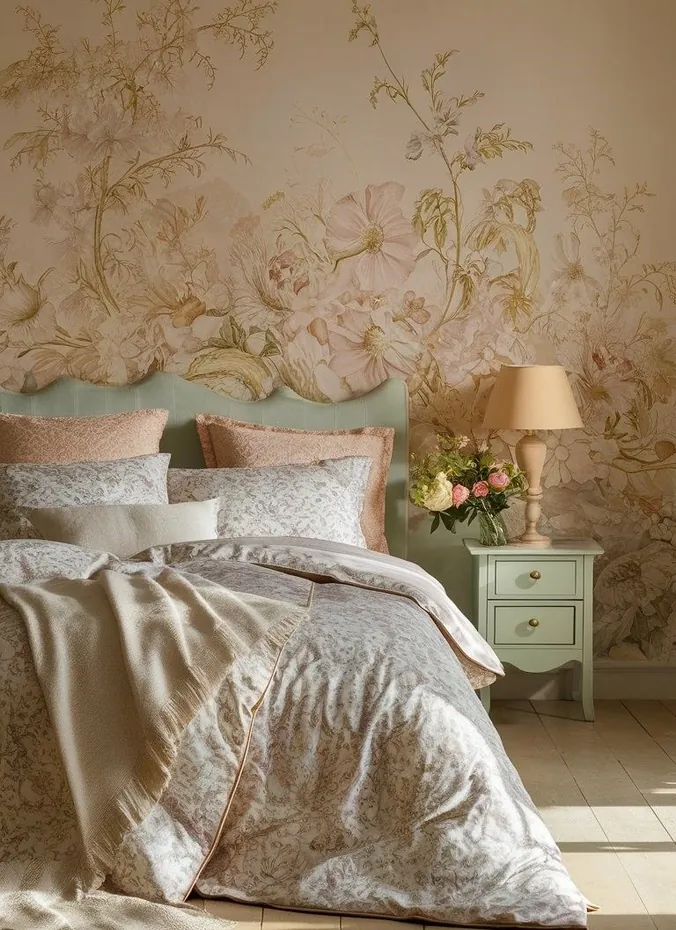
I was nervous about wallpaper feeling dated in the wrong way, until I saw how different a muted, faded print looks from a bold saturated one.
A faded floral, toile, or damask peel-and-stick wallpaper in muted tones typically costs $35 to $80 per roll, with most accent walls needing two to three rolls depending on ceiling height. Reproduction prints based on genuine 19th and early 20th century archives are widely available and hold up better over time than trend-driven bold prints.
It works because a soft, worn-looking print reads as inherited rather than trendy, and confining it to one wall keeps the room from tipping into costume territory.
3. Hang a Collection of Mismatched Vintage Frames

My gallery wall didn’t come together until I stopped buying matching frame sets and started collecting odd ones instead.
Ornate gilt, carved wood, and gesso frames from estate sales or antique malls usually run $10 to $40 each depending on size and condition, so a wall of eight to twelve frames costs somewhere between $100 and $350 total. Keep the artwork itself simple, botanical prints, family photos, or small oil paintings, and let the frame variety carry the visual interest.
It works because mismatched frames look accumulated over years rather than bought in a single trip, which is exactly the effect that makes vintage styling feel authentic instead of staged.
4. Use Reclaimed Wood Paneling for Texture
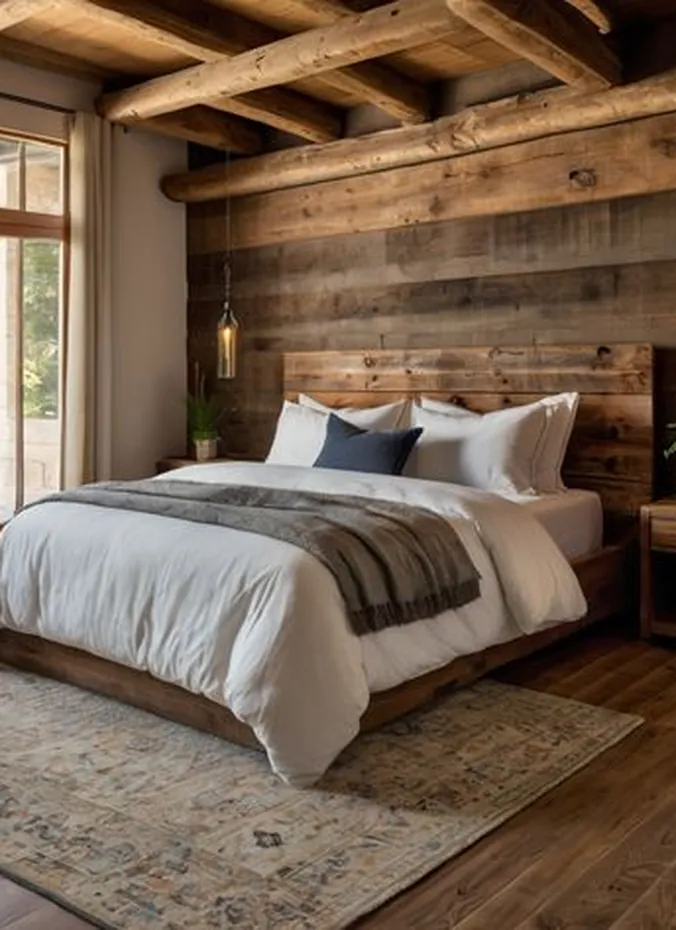
Adding wood paneling felt like a big commitment until I realized reclaimed boards do more work per square foot than almost anything else I tried.
Reclaimed shiplap or board-and-batten paneling, sourced from salvage yards or barn-wood suppliers, runs about $4 to $9 per square foot including basic finishing, so a single accent wall in an average bedroom typically lands between $200 and $500 for materials. Leave the wood unpainted or lightly whitewashed to keep the grain and saw marks visible.
It works because genuine reclaimed wood carries visible saw marks, nail holes, and grain variation that no new lumber replicates convincingly, and that imperfection is what reads as old rather than “farmhouse trend.”
Furniture and Layout
5. Mix in One Real Antique Piece, Not a Full Set
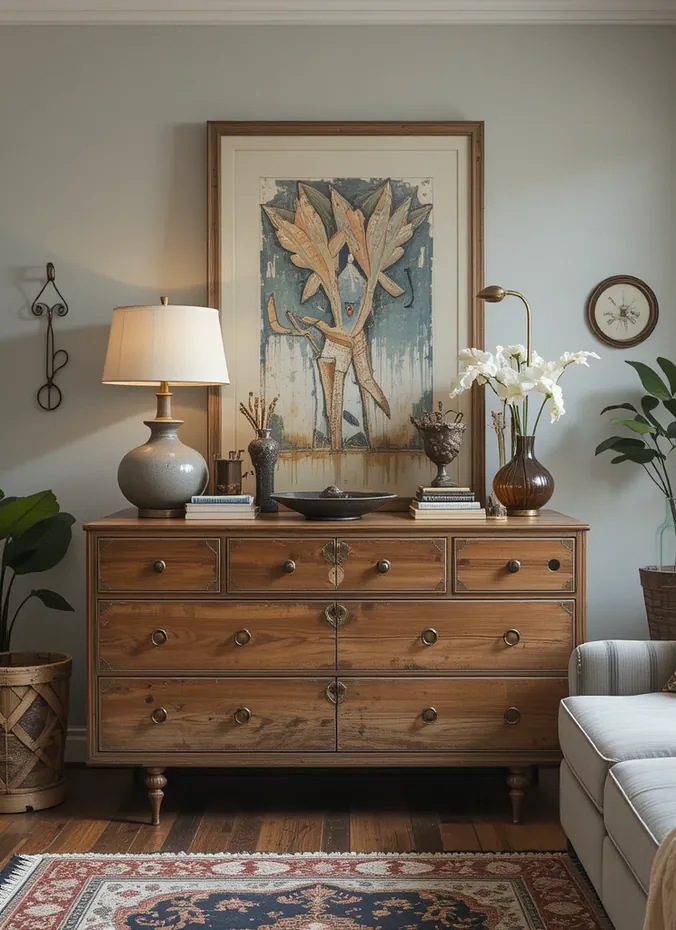
My living room changed more from one real antique dresser than it did from any amount of new furniture I’d bought before it.
A single authenticated antique piece, a dresser, a side table, or a writing desk in solid wood, generally costs $150 to $600 at an antique mall depending on age, maker, and condition, considerably less than reproduction “vintage-style” furniture from a big-box retailer. Pair it with plain, modern pieces around it rather than surrounding it with more antiques.
It works because one genuine antique carries enough visual weight and history to anchor an entire room, while a full matching antique set can start to feel like a period movie set rather than a home someone actually lives in.
6. Choose a Chesterfield or Camelback Sofa Silhouette
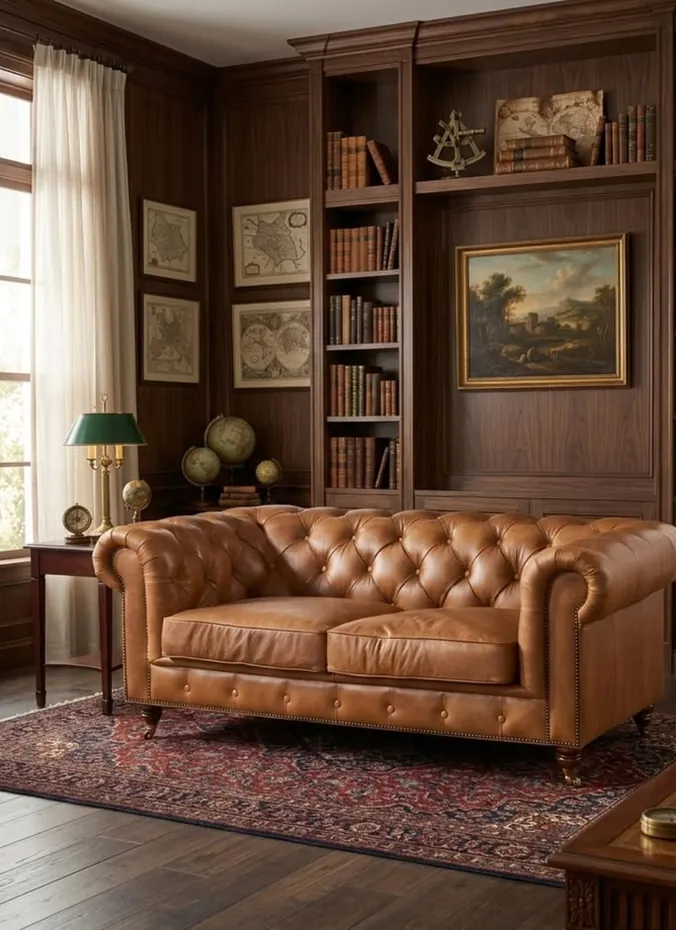
Swapping a straight modern sofa for a curved camelback shape changed the whole feel of the room before I’d added a single accessory.
A secondhand Chesterfield or camelback sofa in usable condition typically runs $300 to $800, while a fully reupholstered one from an estate or antique dealer can run $800 to $1,800 depending on the leather or fabric chosen. Rolled arms, tufted backs, and turned wood legs are the details to look for that signal genuine period design rather than a modern reproduction.
It works because the curved silhouette alone reads as older and more considered than the straight, low-profile sofas most modern furniture lines default to, and it becomes the room’s focal point without needing extra styling around it.
7. Reupholster Instead of Replace

I almost donated a chair with a broken frame before a furniture restorer talked me out of it, and it turned out to be the best piece I own.
Professional reupholstery for a single armchair typically costs $250 to $500 in labor plus $10 to $40 per yard for fabric, with most chairs needing four to six yards. Solid hardwood frames from the 1940s through 1960s are usually worth the investment, since that era’s construction tends to outlast most furniture made today.
It works because the underlying frame, the part that actually determines whether a piece feels solid and well-made, is often better on an old chair than on a new one at the same price point, and fresh fabric hides decades of wear instantly.
8. Anchor the Room with a Vintage Rug

A worn Persian-style rug did more to make my living room feel established than any piece of furniture in it.
A genuine vintage or antique hand-knotted rug, sized 8×10 or larger, generally runs $400 to $1,200 depending on origin, age, and condition, while a lower-cost machine-made “vintage-look” distressed rug runs $150 to $350 for a similar size. Some visible wear and slight color fading are normal on an authentic piece and add to the look rather than detracting from it.
It works because a rug with genuine wear reads as something that has lived in a room for decades, grounding new furniture around it the way a brand-new rug simply can’t replicate.
Lighting
9. Swap Modern Fixtures for a Vintage Brass Pendant

Changing one overhead fixture to an aged brass pendant did more for the room’s mood at night than repainting the walls did.
An original unlacquered brass pendant from the 1960s or 1970s typically costs $80 to $250 depending on maker and size, and a licensed electrician should always check and rewire vintage fixtures before installation, which usually adds $75 to $150. Unlacquered brass is worth the extra step since it develops a natural patina over time instead of staying artificially shiny.
It works because warm brass light is noticeably softer and more flattering than the cool white light most modern fixtures emit by default, and the aged metal tone ties directly into other vintage pieces in the room.
10. Add a Milk Glass or Ribbed Glass Table Lamp
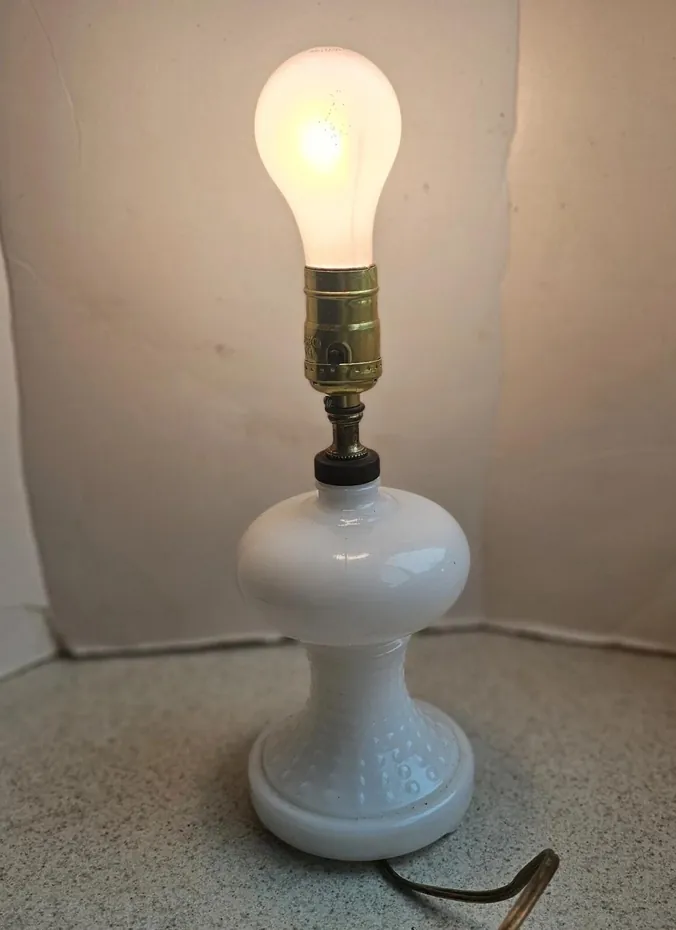
My very first vintage find, that chipped milk glass lamp, still sits on my nightstand and still gets asked about more than anything else in the room.
Milk glass or ribbed pressed-glass table lamps from estate sales generally run $25 to $70, and most need only a new cord and socket, a repair that costs about $15 to $30 in parts if you rewire it yourself, or $40 to $60 through a lamp repair shop. Minor chips or bubbles in the glass are common on authentic pieces and don’t affect how the lamp reads.
It works because the glass diffuses light with a soft, slightly uneven glow that new frosted glass rarely matches exactly, and the imperfect texture is part of what makes it look genuinely old rather than manufactured to look old.
11. Layer in a Vintage Floor Lamp for Ambient Light

The room felt flat at night until I added a second light source at a completely different height than the lamps I already had.
A vintage floor lamp with a brass or wood pole and a fabric drum shade typically costs $50 to $150, and swapping the shade for a new one if the original is stained or torn adds another $30 to $60. Torchiere-style and arc lamps from the mid-century period are especially common and tend to be priced lower than more ornate styles.
It works because uplighting from a floor lamp fills the upper part of a room that table lamps and overhead fixtures both miss, and it’s the layer most rooms are missing without anyone quite noticing why the lighting feels flat.
Textiles and Accents
12. Layer in Vintage Quilts or Linens
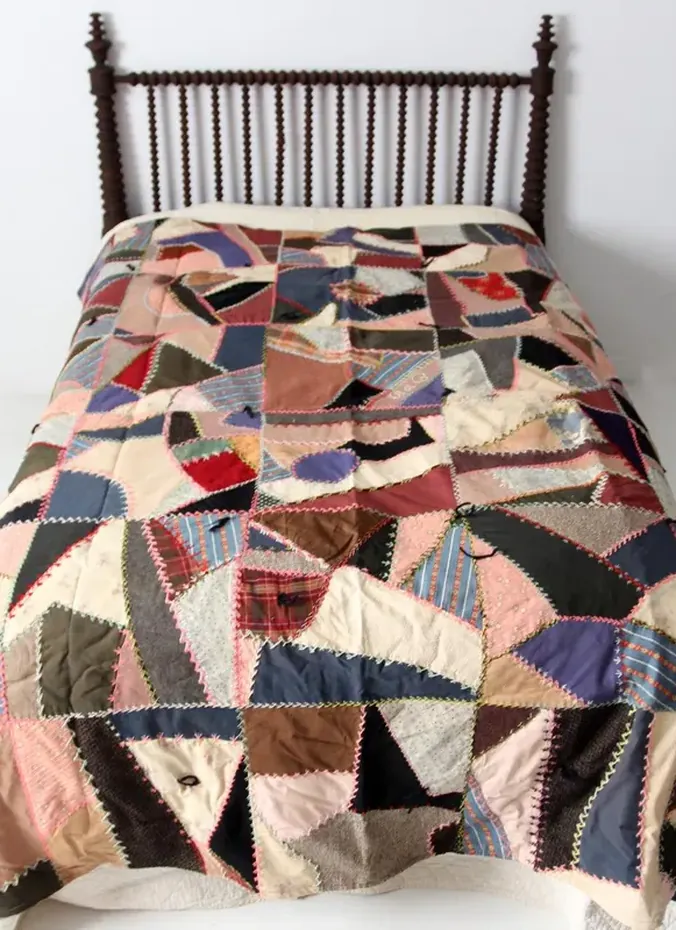
A hand-stitched quilt folded at the foot of the bed did more to make the room feel lived-in than any new bedding I’d bought.
Authentic hand-pieced quilts from the mid-20th century or earlier generally run $60 to $200 depending on pattern complexity and condition, and should be spot-cleaned or gently hand-washed rather than machine washed to preserve the stitching. Vintage linen tea towels and pillowcases are considerably cheaper, usually $5 to $15 each.
It works because hand-stitching has small irregularities that machine-made textiles don’t, and that imperfection is exactly what signals “made by a person, decades ago” rather than “bought last week.”
13. Display Vintage China on Open Shelving
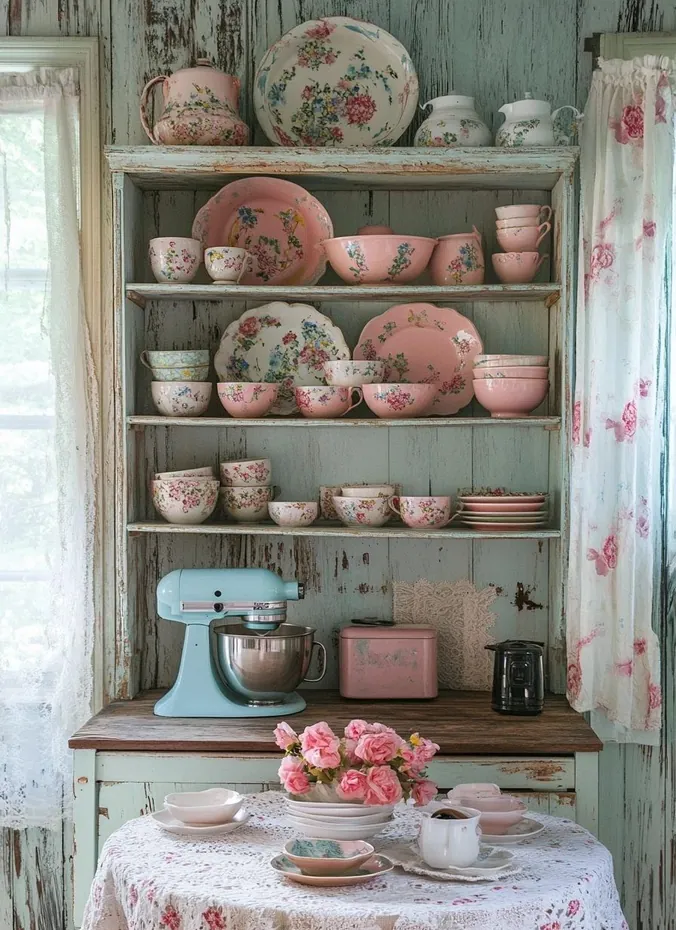
Putting my grandmother’s mismatched china on open shelves instead of hiding it in a cabinet turned it into the kitchen’s best decoration.
Individual vintage china plates from estate sales or antique malls typically run $5 to $20 each, so a curated wall or shelf display of eight to ten pieces usually costs $60 to $150 total. Mixing patterns from the same general color family, rather than matching a single set, gives more flexibility to add pieces over time.
It works because open display turns functional objects into decor, and mismatched patterns read as a collection built over years rather than a boxed set purchased in one trip.
14. Add a Vintage Mirror with an Aged Frame

An old mirror with a slightly cloudy, foxed surface reflects light differently than a new one, and I didn’t expect to notice until I had both side by side.
A vintage mirror with a carved wood, gilt, or brass frame typically runs $60 to $200 depending on size and ornamentation, with larger statement pieces going higher. Some cloudiness or “foxing” in the glass, small dark spots from age, is normal and generally adds character rather than reducing the value for decorative purposes.
It works because the slightly imperfect reflection and ornate frame both signal age instantly, doing more visual work in one object than most new decor accomplishes across an entire wall.
15. Use Vintage Glass Bottles or Jars as Vases
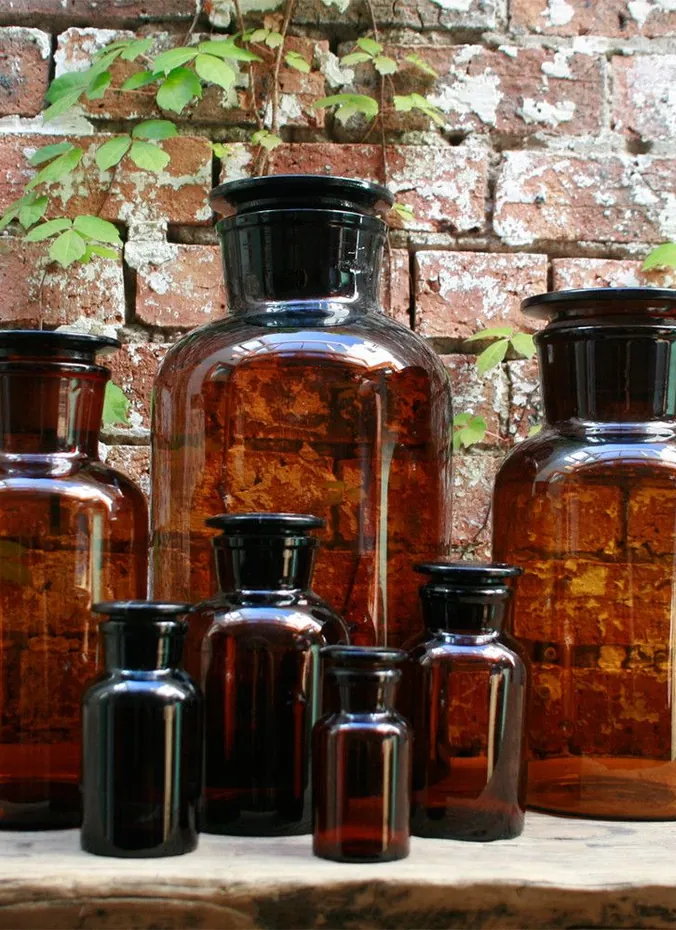
Some of my favorite “vases” were never vases at all, just old apothecary bottles I found for a dollar each.
Vintage apothecary bottles, milk bottles, and mason jars generally cost $3 to $15 each at flea markets and antique malls, and grouping three to five in varying heights on a windowsill or mantel costs well under $50 total for a full display. Colored or embossed glass, in amber, cobalt, or pale green, adds more visual interest than clear glass alone.
It works because the low cost means you can build a whole tablescape or shelf display for less than a single new decorative vase, and the mix of shapes and slight glass imperfections reads as collected rather than bought as a set.
Finishing Touches
16. Build a Gallery Wall of Real Vintage Art

I stopped buying reproduction prints once I realized original small oil paintings from estate sales often cost about the same.
Small original oil or watercolor paintings, especially unsigned landscapes and portraits from estate sales, typically run $20 to $80 each, competitive with mass-produced framed prints from a home goods store. Look for canvases with visible brushwork and slightly yellowed varnish, both signs of age rather than damage.
It works because an original painting, even an unsigned or unattributed one, has a texture and depth that a printed reproduction can’t replicate, and it’s genuinely one of a kind hanging in your home instead of in thousands of others.
17. Add a Vintage Clock as a Focal Point
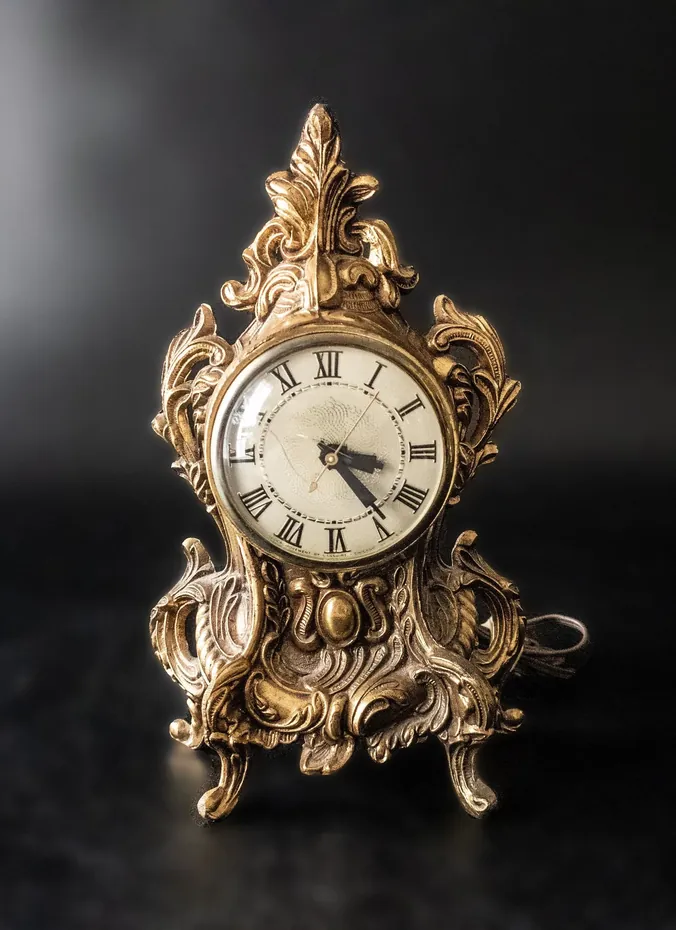
A working mantel clock became the thing every guest picked up and asked about, more than any piece of art in the room.
A vintage wind-up mantel or wall clock, in working or easily serviceable condition, typically runs $40 to $150 depending on maker and case material, with brass carriage clocks running higher. Have a clock repair specialist service the movement before regular use if it hasn’t been wound in years, usually $30 to $60.
It works because a ticking clock adds a subtle sensory detail that photographs can’t capture but that changes how a room actually feels to sit in, and the mechanical face alone reads as an object with real history.
18. Use Vintage Books as Styling Props, Not Just Reading Material

A stack of old cloth-bound books did more to fill an awkward empty shelf corner than any decorative object I tried there.
Vintage cloth-bound or leather-bound books, sold by the box or individually at estate sales and used bookstores, typically run $2 to $10 each, so a styled stack of ten to fifteen books costs $30 to $100 total. Group by spine color or size rather than by subject for the cleanest visual effect on open shelving.
It works because worn spines and foxed pages add warmth and texture to a shelf in a way that new hardcovers with glossy jackets simply don’t, and it’s one of the cheapest ways to add volume to sparse shelving.
19. Incorporate a Vintage Trunk as a Coffee Table or Storage
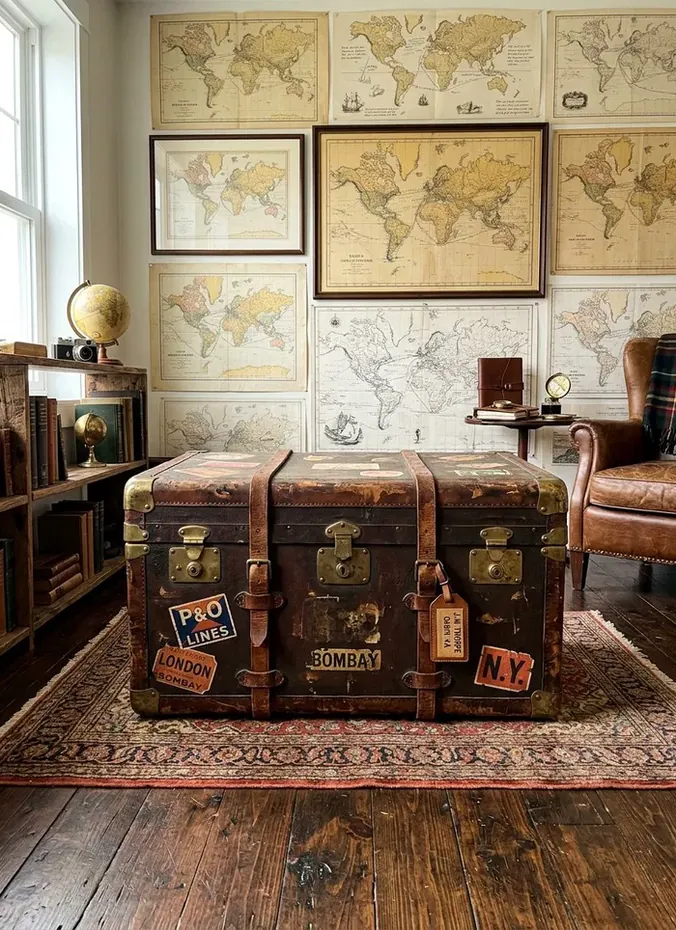
My steamer trunk does double duty as a coffee table and hides all the blankets I never had a good spot for.
A vintage steamer or camelback trunk in sturdy, usable condition typically costs $80 to $250 depending on size, hardware, and original condition of the leather or canvas exterior. Add a round glass or wood tray on top to give it a stable, usable surface without altering the original piece.
It works because it solves a real storage problem while doubling as the room’s most conversation-worthy piece, and the hardware and travel stickers or stencils carry more visible history than almost any other single object you can add to a living room.
20. Add One Piece with a Real Story or Provenance
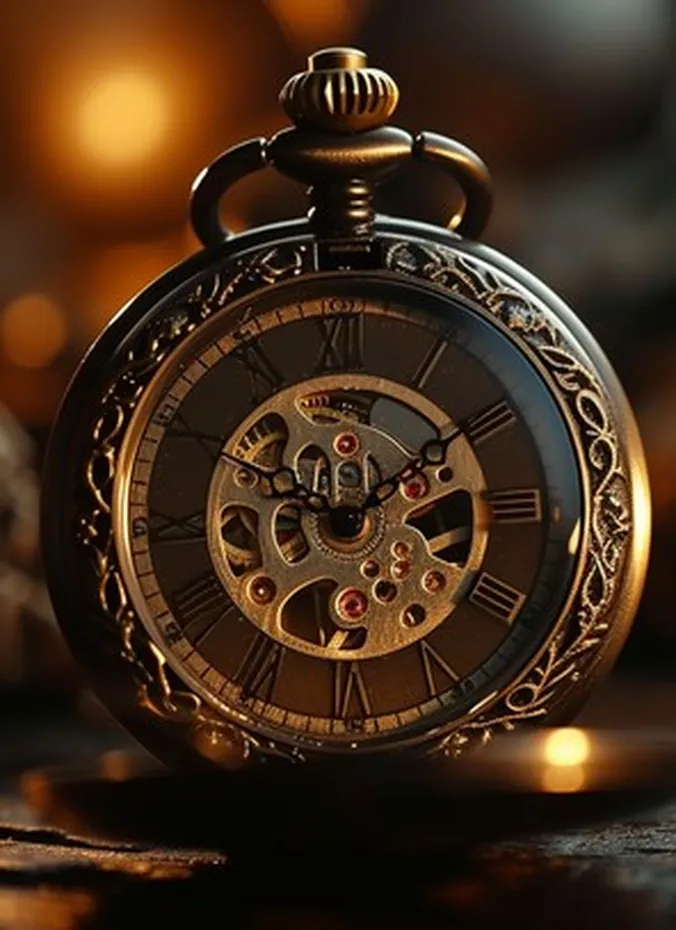
The piece people always ask about first isn’t the most expensive thing I own, it’s the one I can actually tell a story about.
This isn’t really about price, since a piece with real provenance, a family heirloom, something bought on a specific trip, or a documented maker’s piece, can range anywhere from $20 to several thousand dollars. What matters is keeping any paperwork, receipts, or family history attached to it, since that documentation is what turns an object into a story worth telling.
It works because a home entirely furnished from catalogs, however tasteful, doesn’t have anything to talk about, while even one piece with a real story gives the whole room a reason for being exactly the way it is.
Budget Tips
- Go to estate sales on the last day. Prices often drop by half in the final hours.
- Learn one skill, like reupholstering a chair seat or rewiring a lamp. It turns a $20 find into a $200 piece.
- Buy the rug first and build around it. A good vintage rug sets the whole color story.
- Paint is the cheapest vintage trick there is. A warm aged color makes even new furniture look older.
- Check the free section of local marketplaces. Solid wood pieces with good bones show up weekly.
- One real antique beats five reproductions, and often costs less than the reproductions would.
- Thrift brass and glass, not upholstery. Hard goods are easy to judge; soft goods hide surprises.
Common Mistakes to Avoid
- Buying a full matching set of vintage style furniture. Real vintage rooms are mixed, never matched.
- Cramming five eras into one room. Pick one or two periods and let them breathe.
- Painting over good patina. Wear and age are the whole point, so clean it, don’t erase it.
- Ignoring scale. A tiny antique gets lost in a big modern room, so give statement pieces room to stand alone.
- Skipping the sniff test on upholstery. Musty smells rarely come out fully, no matter how good the frame is.
Frequently Asked Questions
How do I start decorating with vintage pieces?
Start with one piece you genuinely love. The best vintage home decor ideas begin with a single find, a lamp, a rug, a chair, and build the room around it rather than shopping for a whole set at once.
Where is the best place to buy vintage home decor?
Estate sales and antique malls give you the most for your money, especially on furniture. For smaller pieces, thrift stores and secondhand marketplaces are worth checking weekly since stock turns over fast.
How can I tell if a vintage piece is good quality?
Check the joints, the weight, and the materials. Dovetail drawers, solid wood, and real brass hardware are good signs. If it feels light and wobbly, the age is probably the only thing it has going for it.
How do I mix vintage and modern without clashing?
Keep the ratio around one vintage piece to three modern ones per room. Let the vintage item be the character piece and keep everything around it simple, so it reads as intentional rather than cluttered.
How do I clean and care for vintage finds?
Start gentle: dust, then a damp cloth, then decide if it needs more. Avoid harsh chemicals on old finishes, and test any cleaner on a hidden spot first. When in doubt, leave the patina alone.
Conclusion
If you’re only starting with one thing, start with a real antique piece and a warmer wall color, since those two decisions set the tone that everything else on this list builds on. Add the lighting and textiles next, since those are the layers that make a room feel warm rather than staged, and save the smaller finishing touches, the books, the bottles, the mismatched frames, for whenever you happen to find them rather than buying them all at once. Vintage styling isn’t really about following a shopping list anyway. It’s about collecting pieces slowly enough that each one still has a story attached when someone asks about it.