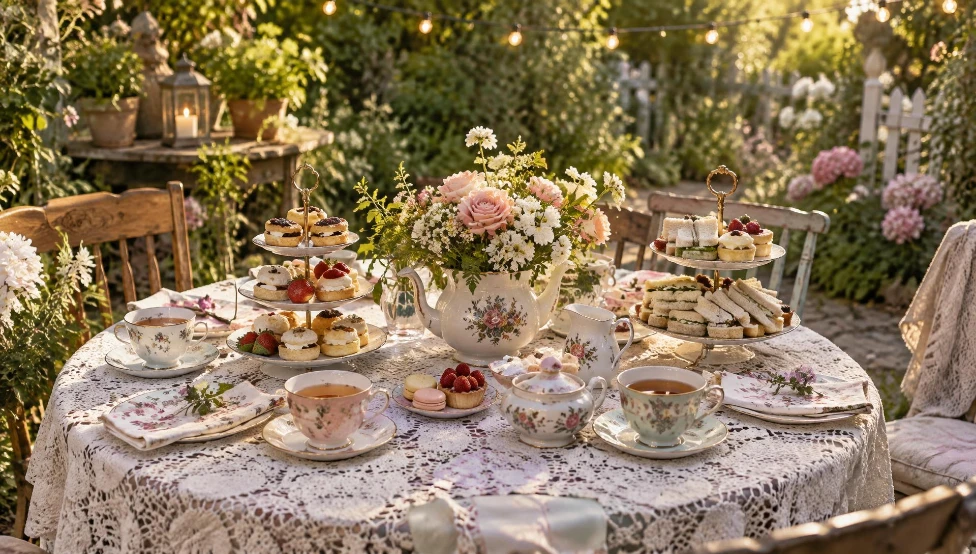
My first attempt at a tea party table looked more like a mismatched thrift haul than a garden affair, until I learned the trick is layering, a base cloth, a runner, then texture on top of that, rather than picking one pretty tablecloth and calling it done. A whimsical tea party table isn’t about matching everything perfectly, it’s about building up soft layers of pattern, height, and a little bit of shine so the table feels styled rather than simply set.
The ideas below are grouped by what they add to the table, linens and layers first, then centerpieces, tableware, lighting, and the small finishing touches that make guests linger. If you’ve styled an outdoor gathering before, the same layering approach used in these backyard party aesthetic ideas applies here too, just scaled down to a single table instead of a whole yard.
Before You Start
- Pick a two- or three-color palette before shopping, most whimsical tea party tables lean into soft pastels or one dominant color with white and gold as neutrals.
- Build the table in layers from the bottom up: base cloth, runner, chargers, china, then centerpieces last, so nothing gets hidden by the next layer.
- If the table is outdoors, weight down linens and lightweight decor with small clips or discreet weights, even a light breeze can undo hours of styling.
- Set the table an hour or two before guests arrive if using fresh flowers, so they’ve had time to open up and settle into their arrangements.
Table Linens and Layers
1. Layer a Lace Tablecloth Over a Solid Base
A plain white base under a lace overlay gave the table more depth than either cloth managed on its own.
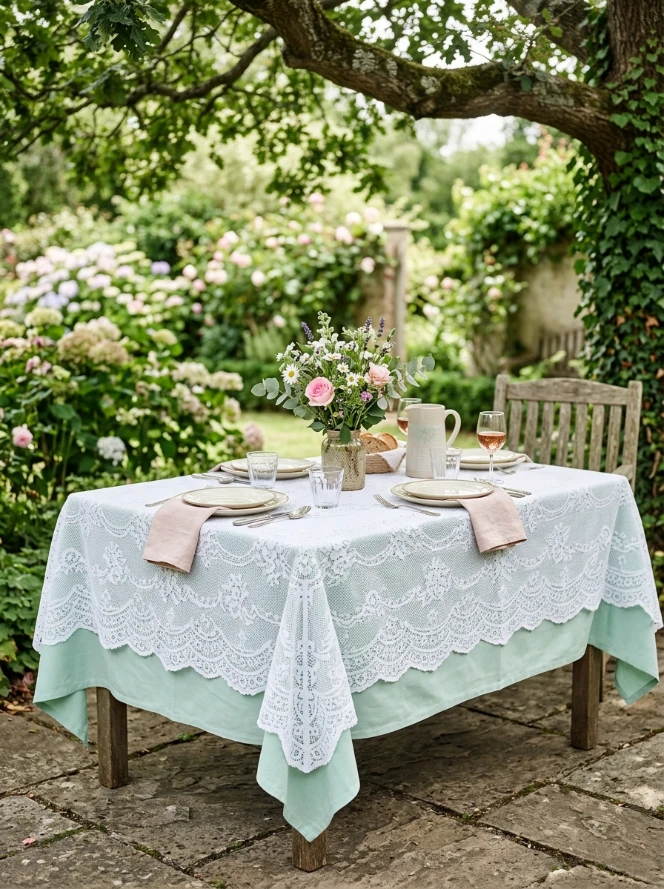
A solid base tablecloth runs $15 to $30, and a lace overlay in a coordinating or slightly contrasting shade adds another $12 to $25, both reusable for future gatherings.
It works because the solid layer underneath keeps the lace pattern from washing out against the table, giving the whole surface more visual texture than a single cloth alone.
2. Add a Runner in a Contrasting Pastel
A single runner down the center pulled the whole color scheme together once everything else was in place.
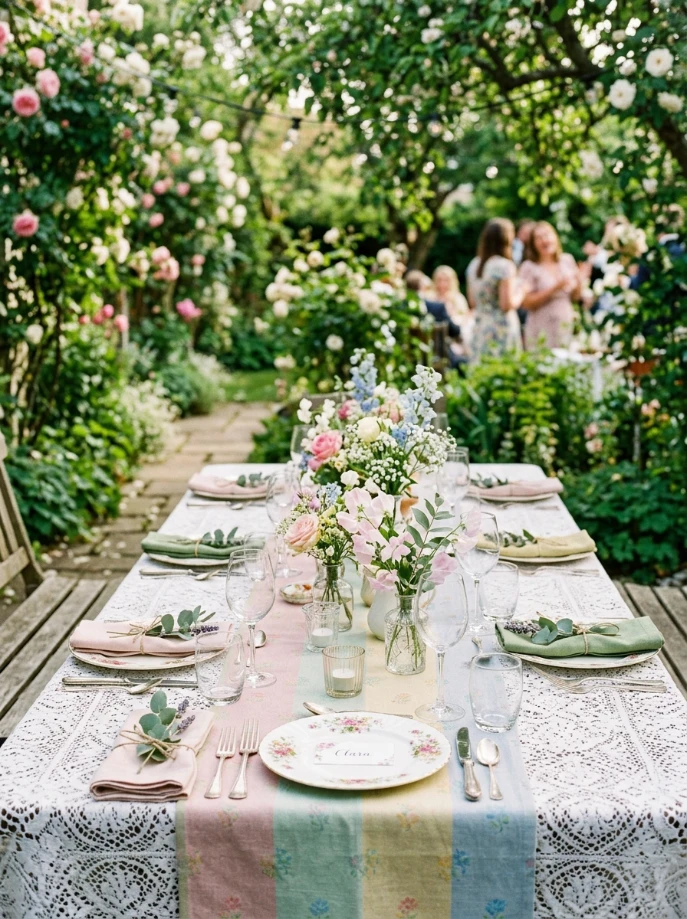
A fabric table runner runs $10 to $20, and choosing a shade one tone darker or lighter than the base cloth gives enough contrast to define the table’s centerline.
It works because it gives your eye a clear path down the table and a natural place to line up the centerpieces and place settings against.
3. Use Cloth Napkins Tied with Ribbon
Tying a simple silk ribbon around each folded napkin took five extra seconds per setting and noticeably upgraded the whole place setting.
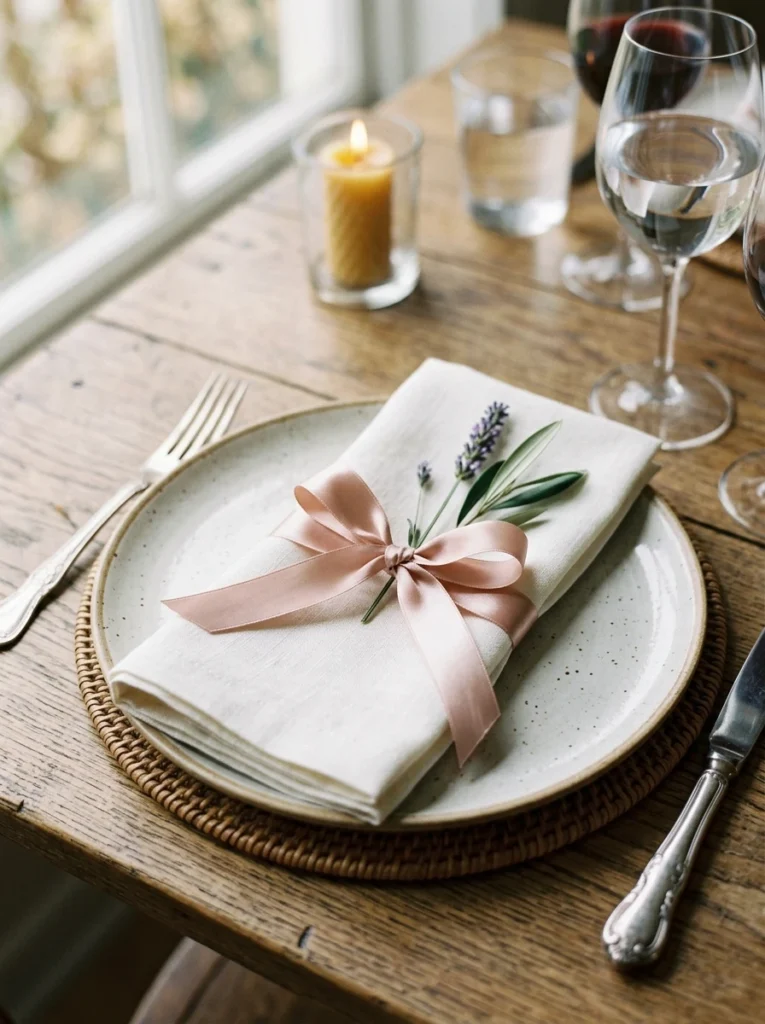
Cloth napkins run $2 to $5 each, and a spool of thin silk or satin ribbon for tying costs $6 to $12 and is enough for a table of ten or more.
It works because a tied ribbon adds a small decorative detail to every single place setting, multiplying the styling effort across the whole table for very little added cost.
4. Mix Vintage and Modern Table Textures
Pairing a crisp modern runner with older lace napkins kept the table from feeling like a costume set piece.
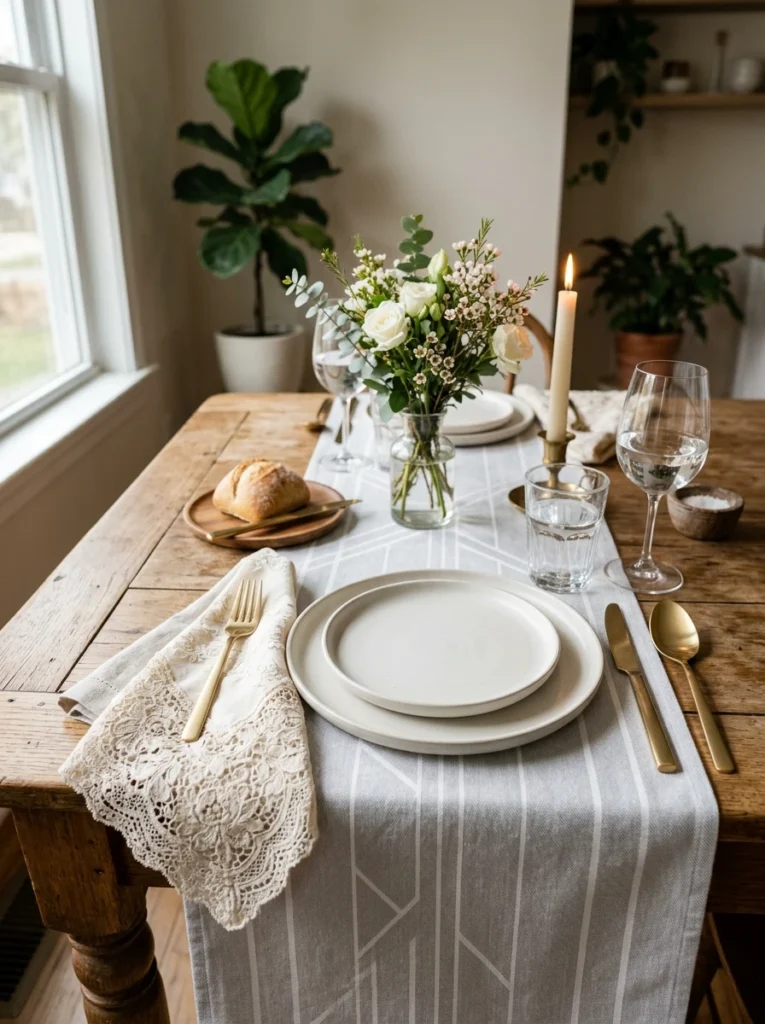
This is more of a styling approach than a purchase, mixing one or two vintage textile pieces, sourced for $5 to $20 each at an estate sale or antique shop, with otherwise modern, clean-lined linens.
It works because an entirely vintage table can start to feel like a period reenactment, while mixing in modern pieces keeps it feeling like a real, current gathering.
5. Add a Table Skirt for Outdoor Wind Coverage
A fitted table skirt kept my table looking finished even with a light breeze coming through the yard.
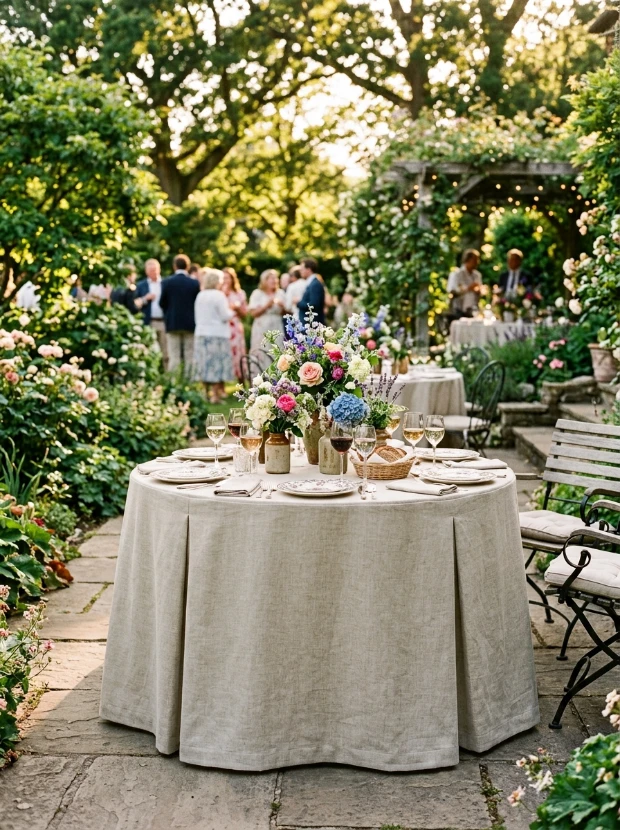
A fitted or gathered table skirt for a standard rectangular or round table runs $15 to $35, and clip-on styles are easiest to secure quickly outdoors.
It works because it hides table legs and any folding-table hardware underneath, which matters more outdoors where the whole table is visible from every angle.
Centerpieces and Florals
6. Build a Low Floral Centerpiece in Teapots
Using an old teapot instead of a vase for the centerpiece flowers tied the whole tea party theme together without saying it outright.
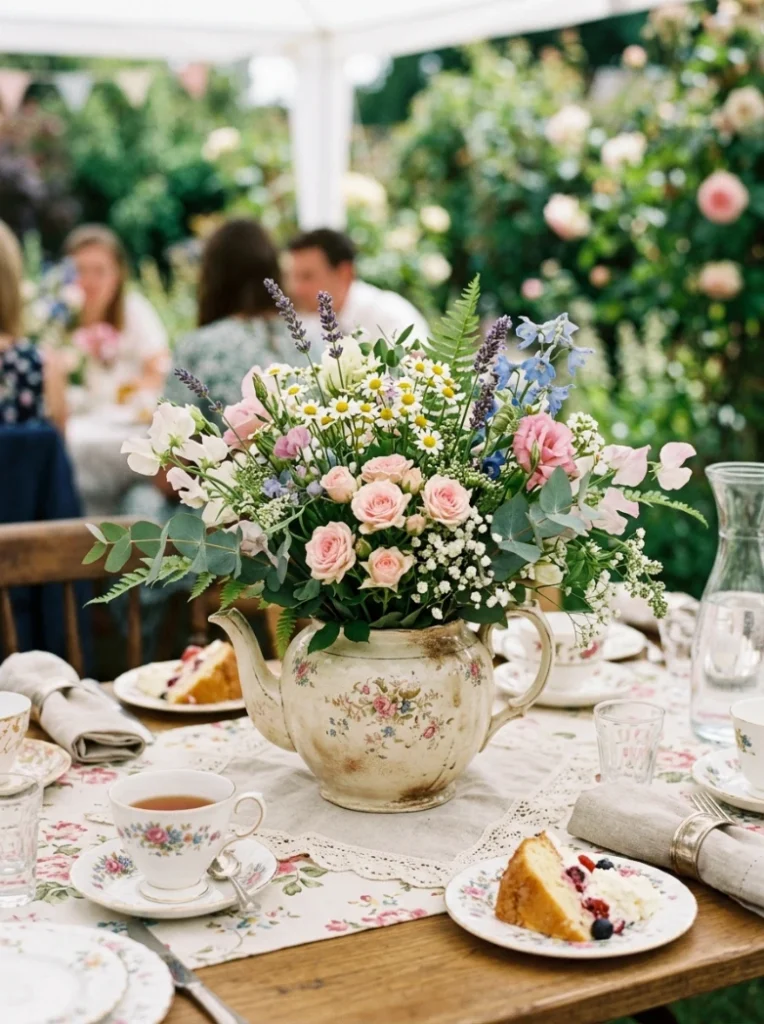
A secondhand teapot runs $8 to $20, and a small bunch of seasonal garden flowers to fill it typically costs $10 to $20 depending on the season and variety.
It works because a low arrangement keeps sightlines open across the table, letting guests actually see and talk to each other, unlike a tall centerpiece that blocks the view.
7. Add Trailing Greenery Down the Table
A loose trail of greenery down the runner filled the gaps between centerpieces without needing more flowers.
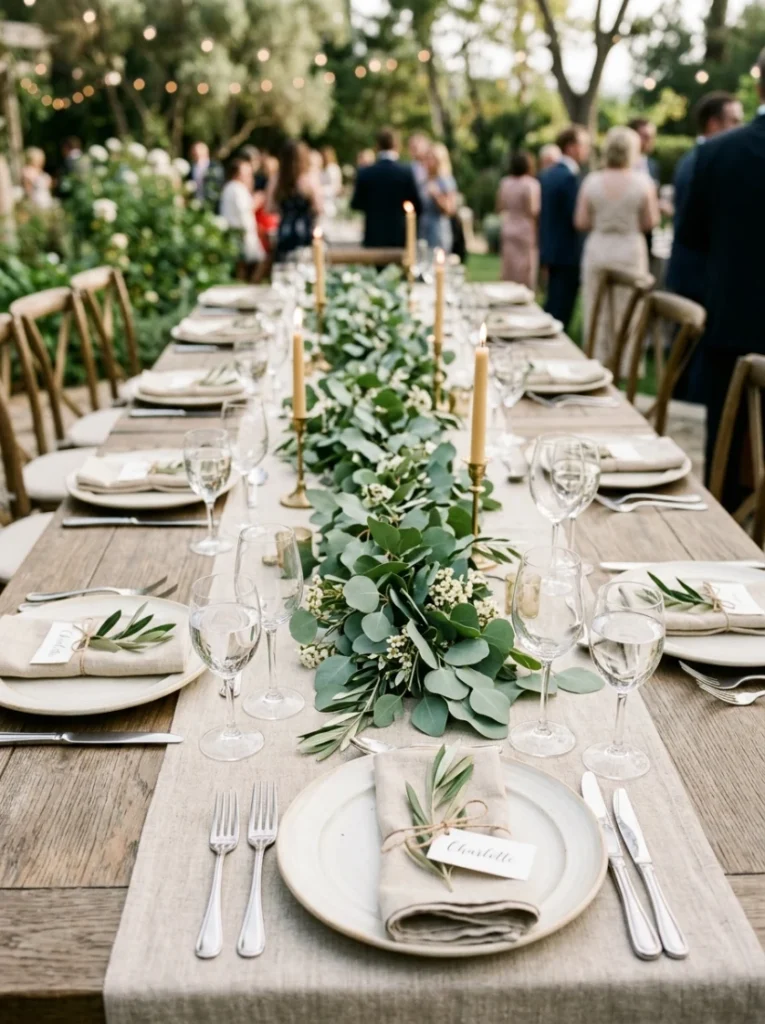
Trailing greenery like ivy, eucalyptus, or ferns runs $8 to $18 per bunch, and one or two bunches is usually enough to trail the length of a six- to eight-foot table.
It works because it fills the visual gaps between centerpieces at almost no cost, softening the hard edges of plates and glassware along the runner.
8. Use Bud Vases Down the Table Runner
A row of small bud vases, each with just one or two stems, ended up looking more intentional than one big arrangement.
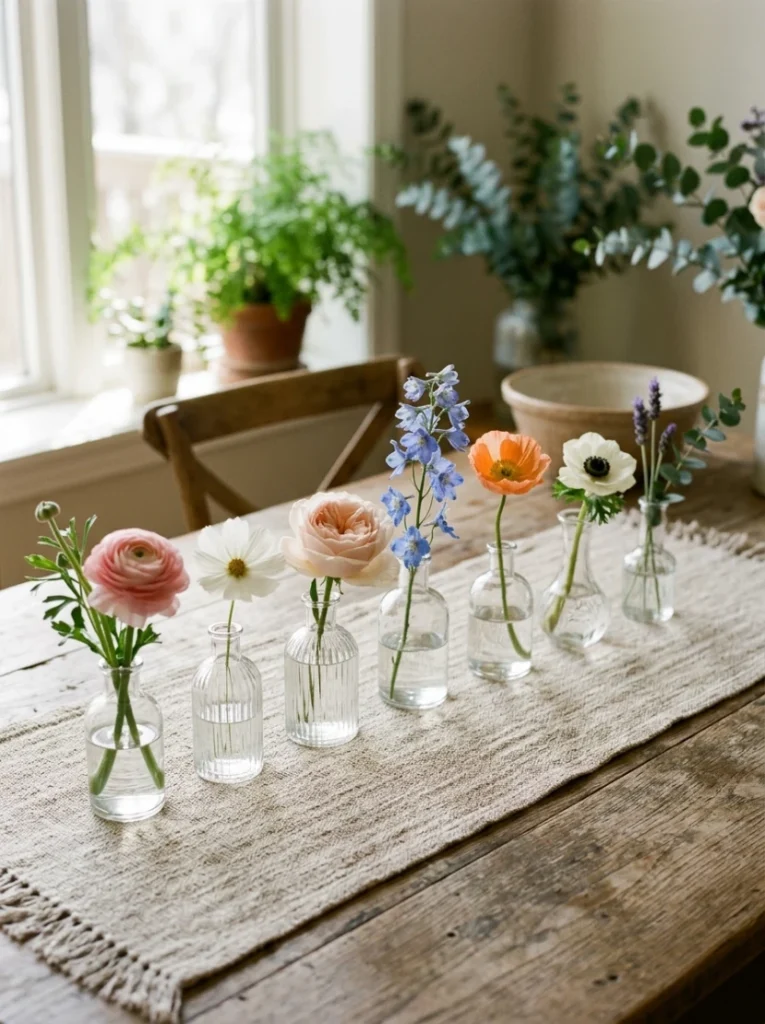
Small glass bud vases run $3 to $8 each, and five to seven spaced down the table runner cost less in total than a single large floral centerpiece.
It works because repeating a small element down the table reads as deliberate styling, and it keeps every seat close to a bit of the floral display.
9. Incorporate Fresh Herbs Like Mint or Lavender
A few lavender sprigs tucked between the place settings added scent to the table, something flowers alone never quite manage.
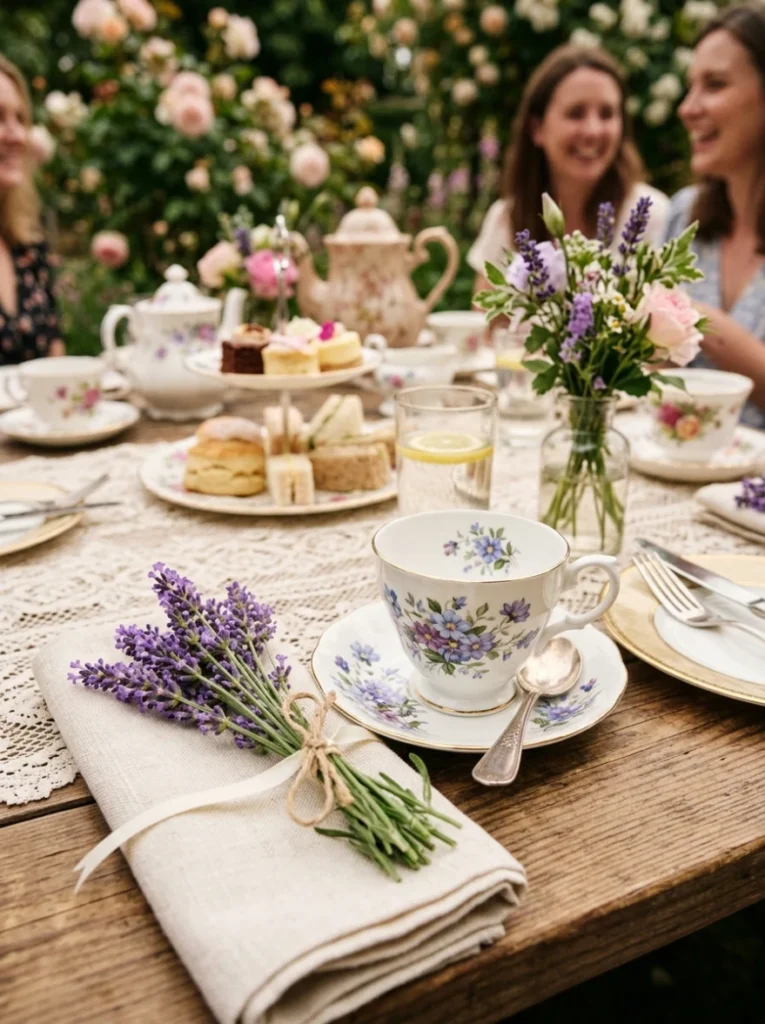
Fresh mint or lavender sprigs cost $4 to $10 for enough to tuck around a full table setting, and lavender in particular holds its shape and scent well through a few hours outdoors.
It works because scent is a layer most table styling skips entirely, and a subtle herbal note adds to the whole sensory experience of the party, not just how it looks in photos.
10. Add a Tiered Cake Stand Filled with Blooms
Using a tiered cake stand for flowers instead of food gave the centerpiece height without blocking anyone’s view across the table.
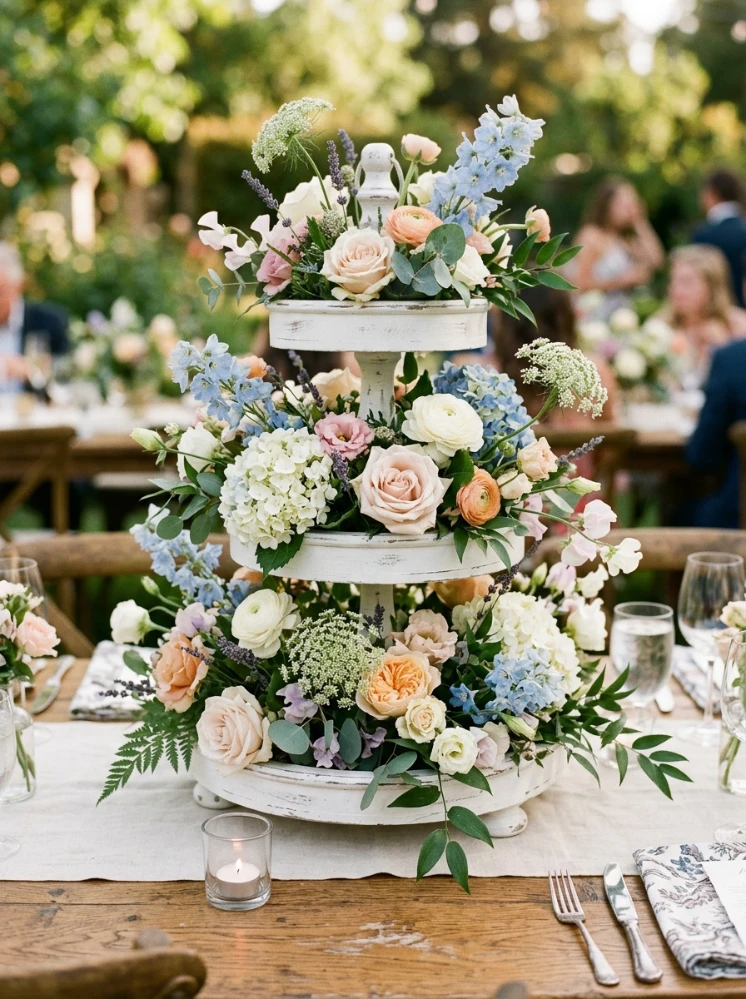
A two- or three-tier cake stand runs $20 to $45, and filling each tier with loose blooms and greenery rather than a formal arrangement keeps the look relaxed and garden-inspired.
It works because the tiers add height at one focal point of the table while the open framework between levels still lets guests see through it, unlike a solid tall vase.
Tableware and Place Settings
11. Mix Mismatched Vintage China
No two place settings at my table matched exactly, and that turned out to be exactly the point.
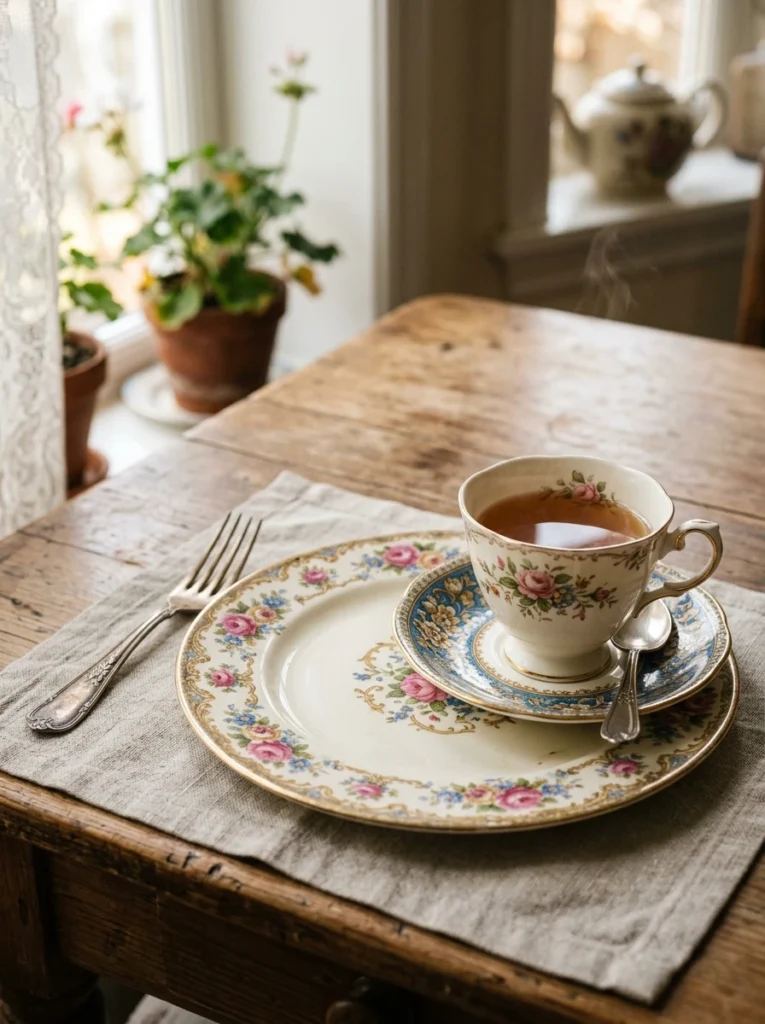
Individual vintage china plates and teacups from estate sales typically run $5 to $18 each, so a full mismatched set for six to eight guests costs $60 to $150 total.
It works because mismatched patterns feel collected and personal in a way a boxed matching set never does, and it’s exactly the kind of detail that makes a tea party table feel whimsical rather than formal.
12. Add Gold-Rimmed Teacups
A little bit of gold trim on the teacups caught the light beautifully once the afternoon sun hit the table.
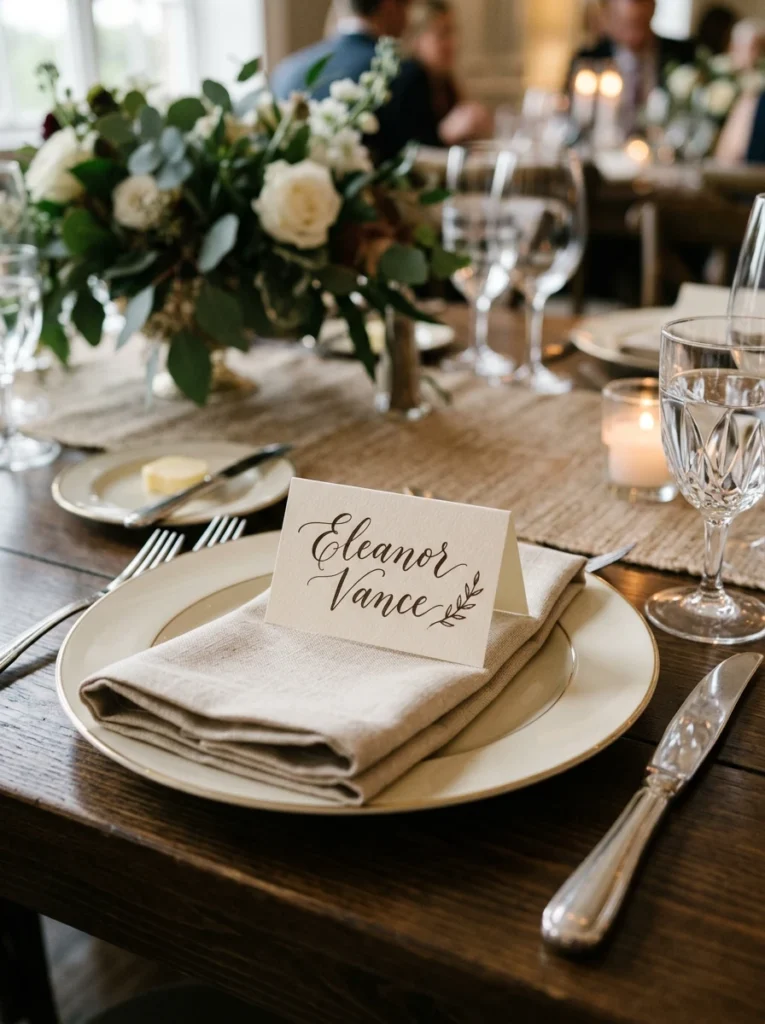
Gold-rimmed teacups run $8 to $20 each secondhand, and even mixing just two or three gold-rimmed pieces among plainer china adds a subtle shimmer across the table.
It works because a small amount of gold reflects light in a way flat white china doesn’t, adding a bit of shine without requiring an entirely gold-accented table.
13. Use Cloth Place Cards with Calligraphy
Hand-lettered place cards took maybe twenty minutes total and made every guest feel like their seat had been chosen just for them.
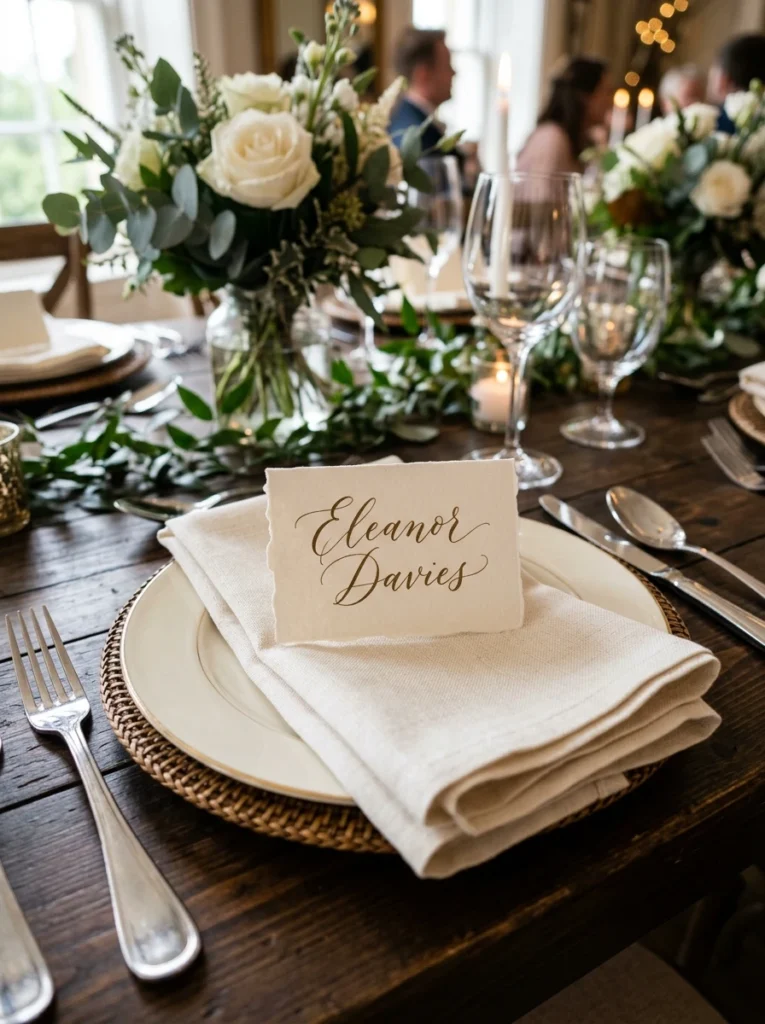
Small cardstock place cards cost $5 to $12 for a full set, and a basic calligraphy pen runs $8 to $15 if you want to hand-letter them yourself instead of printing.
It works because assigned, hand-lettered seating feels more considered than a free-for-all, and it’s one of the cheapest details on this whole list relative to how much it adds.
14. Layer Charger Plates Under China
Adding a simple charger under each plate made the mismatched china above it look intentional rather than random.
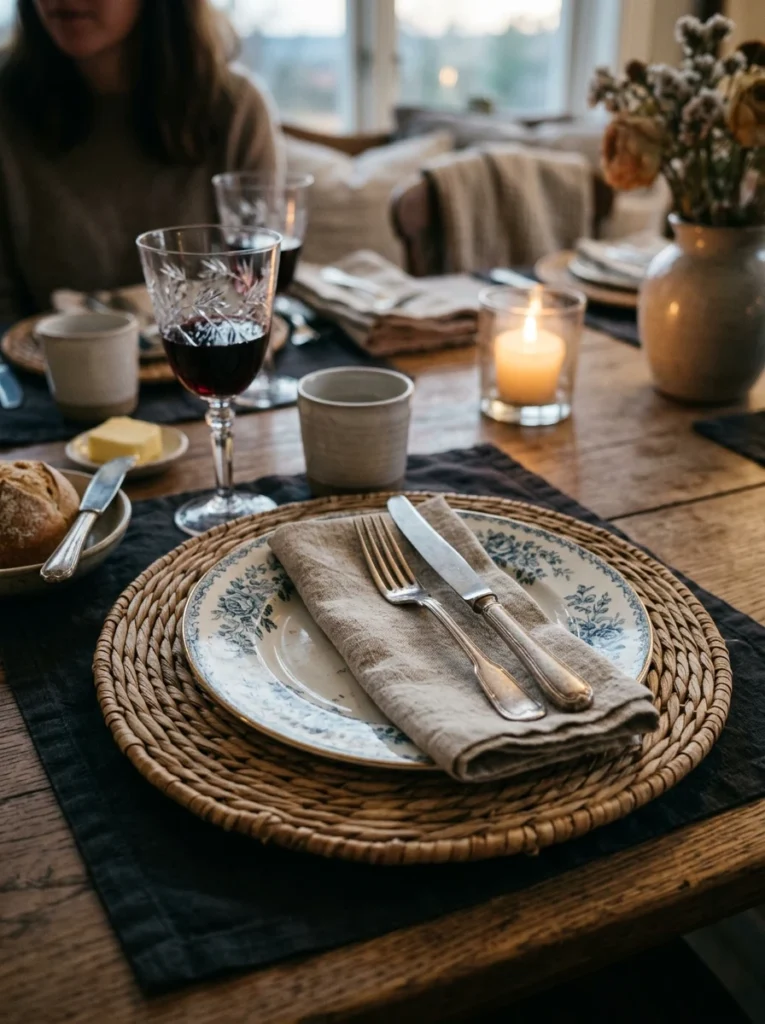
Basic charger plates in gold, white, or woven rattan run $3 to $8 each, an inexpensive way to unify a table full of otherwise mismatched china.
It works because the charger gives every place setting a consistent visual base, letting the china on top vary freely without the table looking disorganized.
15. Add Vintage Silverware Sets
Old silverware with an ornate handle pattern photographed better than any of my regular flatware ever has.
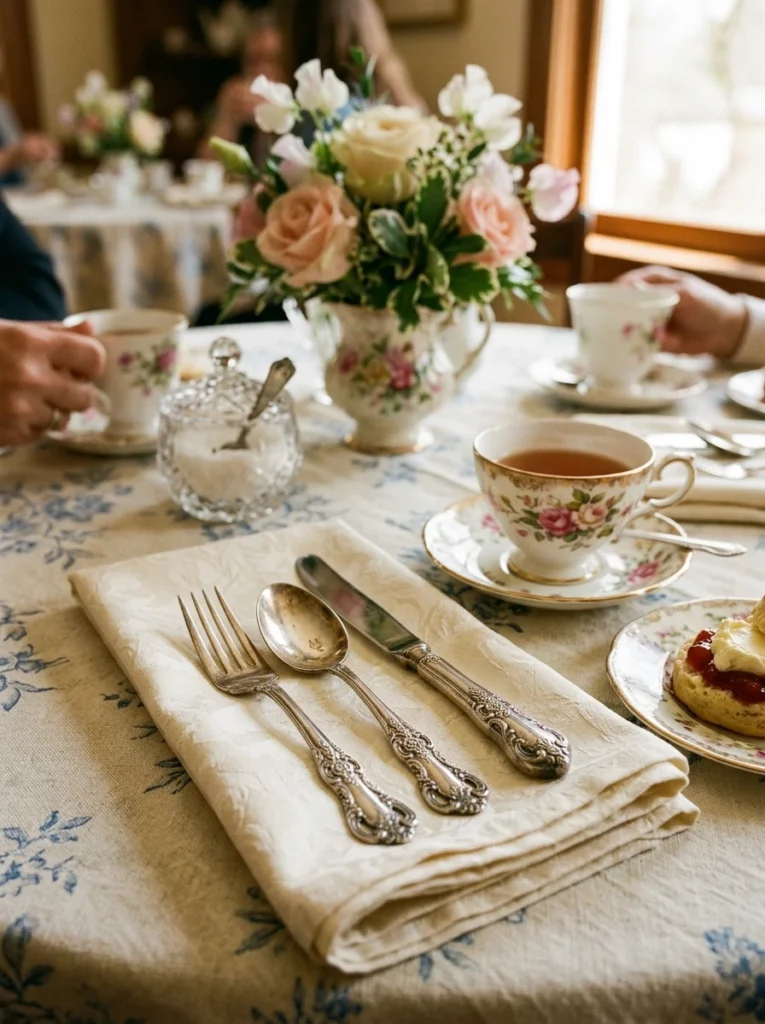
Vintage silverware sets typically run $15 to $40 for a set of four place settings, sourced from estate sales or antique malls, and slight tarnish is normal and adds to the vintage look.
It works because ornate handles catch detail in photos and up close in a way plain modern flatware doesn’t, adding one more small layer of texture to the table.
Lighting and Ambiance
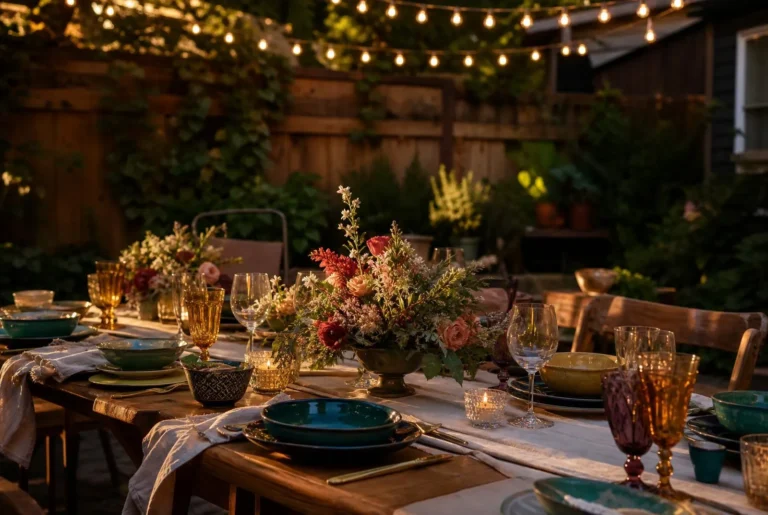
16. String Fairy Lights Overhead
Stringing fairy lights above the table meant the party could naturally continue into the evening without anyone reaching for a phone flashlight.
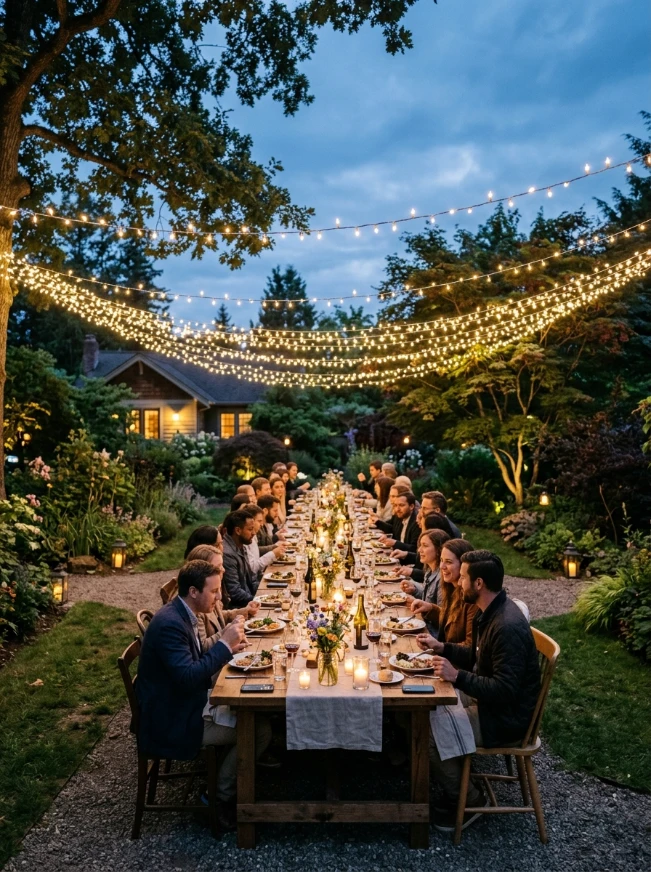
A 20 to 30 foot strand of warm white fairy lights runs $10 to $25, and battery-powered strands are easiest for outdoor setups without a nearby outlet.
It works because warm overhead light extends how long the table stays usable and photogenic well past sunset, without changing anything about the daytime setup.
17. Add Taper Candles in Vintage Holders
A few taper candles at varying heights added the kind of soft flicker that overhead lighting alone can’t replicate.
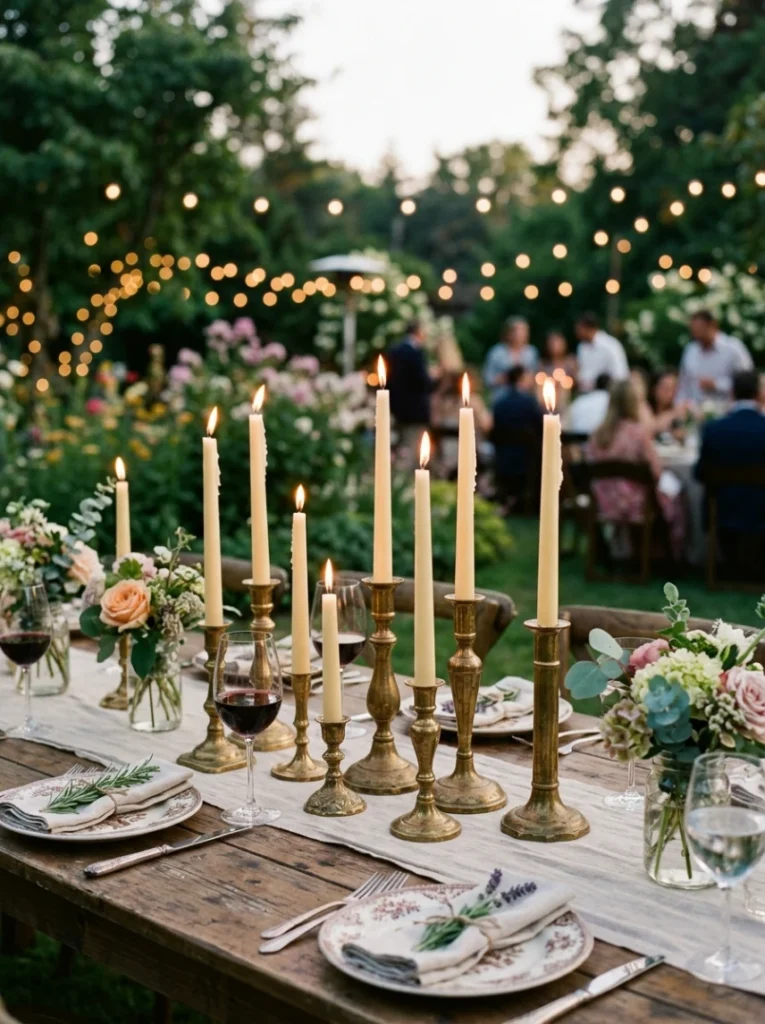
Taper candles run $1 to $3 each, and vintage brass or glass candle holders sourced secondhand typically cost $8 to $20 per holder.
It works because candlelight adds movement and warmth to a table in a way string lights alone don’t, and mixed candle heights add another layer of visual variation down the runner.
18. Use Paper Lanterns for Soft Color
A cluster of pastel paper lanterns hung above the table added color to the space above the table, not just on it.
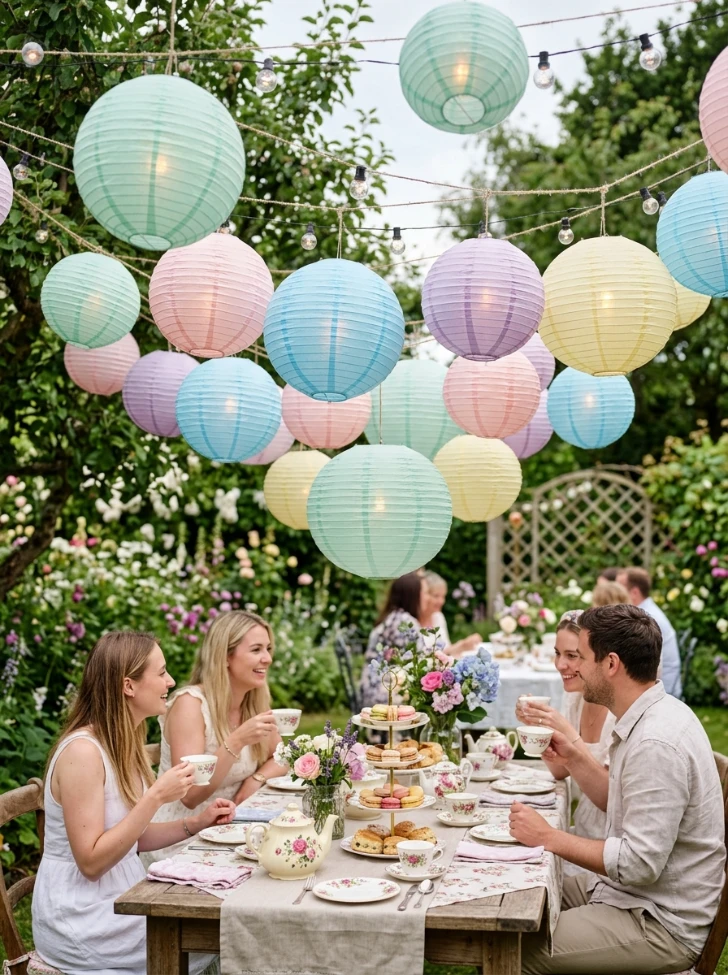
Paper lanterns in pastel shades run $3 to $10 each depending on size, and a cluster of five to eight in varying sizes hung at different heights reads better than a single row.
It works because it extends the color palette upward into the empty air space above the table, an area most table styling completely ignores.
19. Add a Floral Arch Behind the Table
A small floral arch placed behind the head of the table became the backdrop for nearly every photo taken that afternoon.
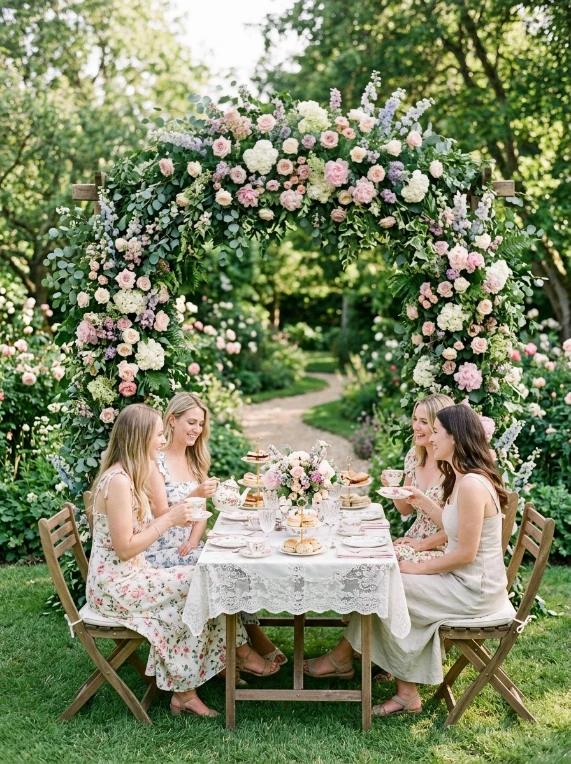
A basic metal arch frame runs $25 to $50, and dressing it with greenery and a few floral clusters typically adds another $20 to $40 depending on flower choice.
It works because it gives the table a clear focal backdrop, which is especially useful if the tea party is also functioning as a photo spot for the event.
Finishing Touches and Favors
20. Add a Tiered Stand for Tea Sandwiches
A tiered stand did double duty as both food display and decor, saving a whole section of table space for other styling.
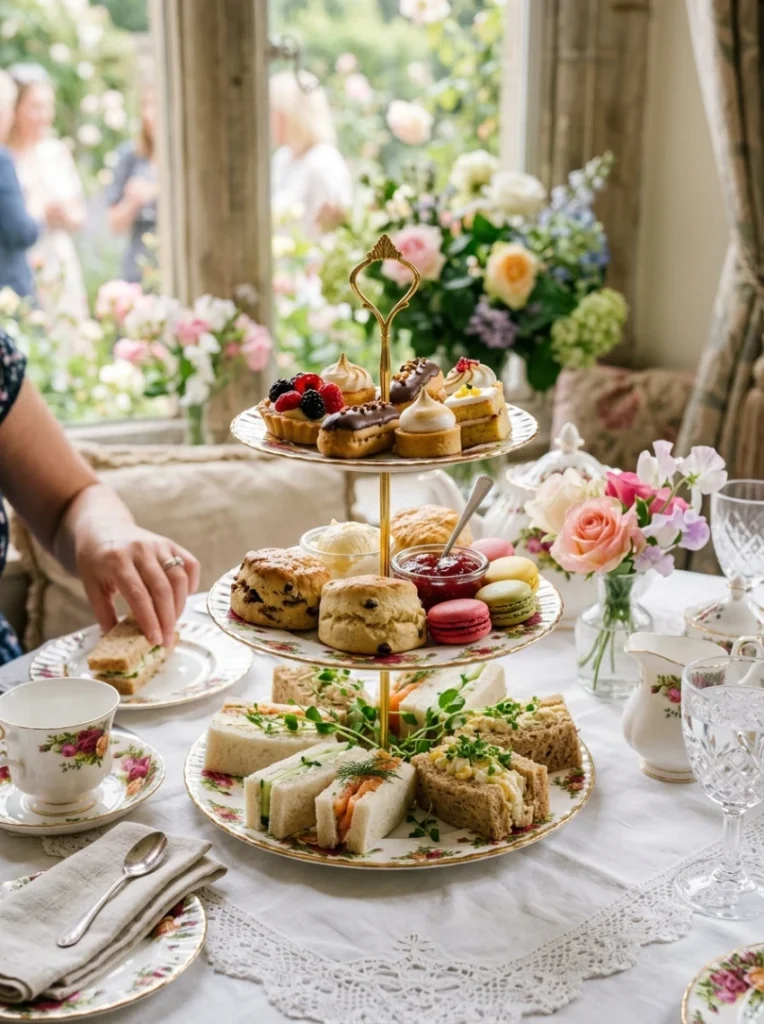
A three-tier serving stand runs $20 to $40, and it works for both the food display and, once cleared, as an extra decorative element for the rest of the gathering.
It works because it lifts the food display off the main table surface, freeing up room for centerpieces and place settings without crowding everything onto one flat plane.
21. Include Individual Favor Boxes at Each Seat
Small favor boxes at each place setting gave guests something to take home and doubled as an extra decorative element at every seat.
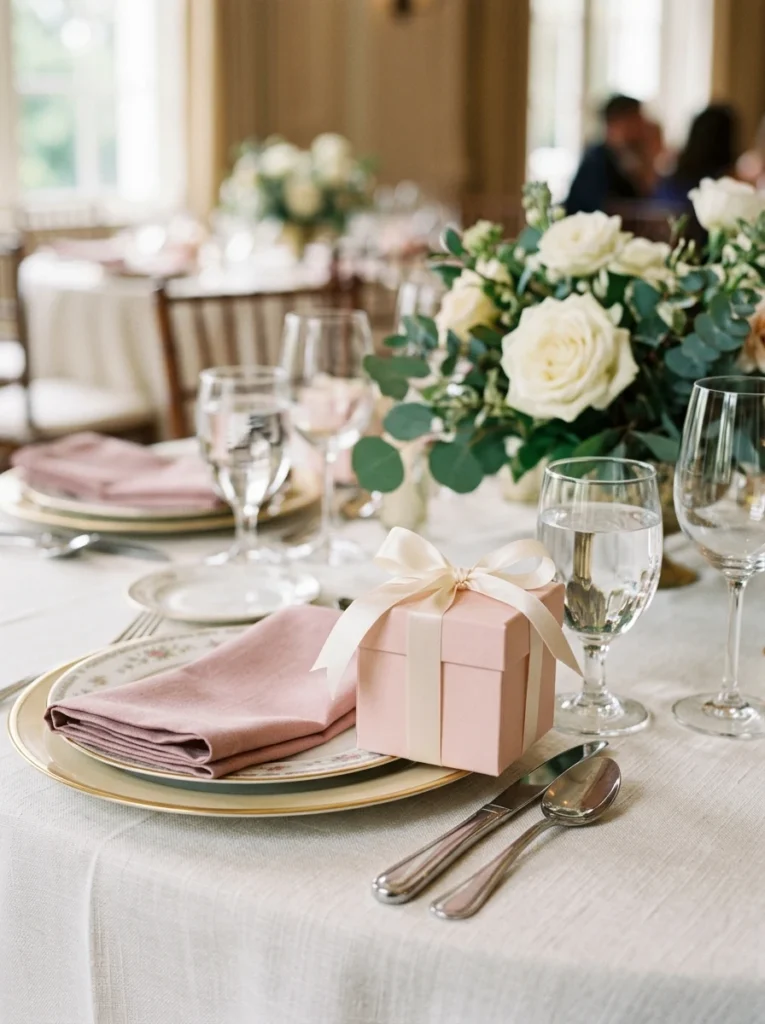
Small pastel favor boxes run $1 to $3 each, and filling them with a few pieces of candy or a small tea sachet costs another $2 to $5 per guest.
It works because it gives every seat a personal decorative accent while also functioning as a genuinely useful take-home gift, doing two jobs for the price of one.
22. Add a Chalkboard or Calligraphy Menu Sign
A small chalkboard sign listing the tea flavors and sandwiches saved guests from asking the same question over and over.
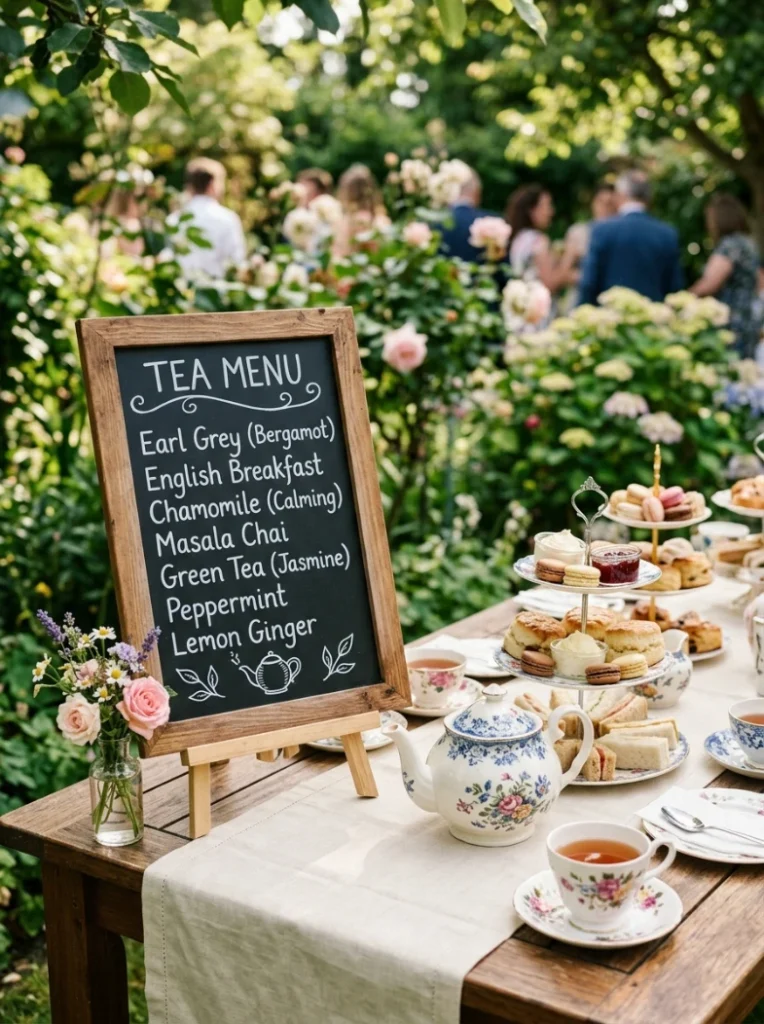
A small tabletop chalkboard or sign easel runs $10 to $20, and chalk markers for writing on it cost another $5 to $10.
It works because it’s both functional, guests know what’s on offer, and decorative, adding a bit of hand-lettered charm to the table, similar to how a well-placed sign anchors a bridal shower dessert table.
23. Use Fresh Flower Napkin Ties
Tucking a single small bloom into each napkin tie was the very last thing I added, and it’s the detail most guests commented on first.
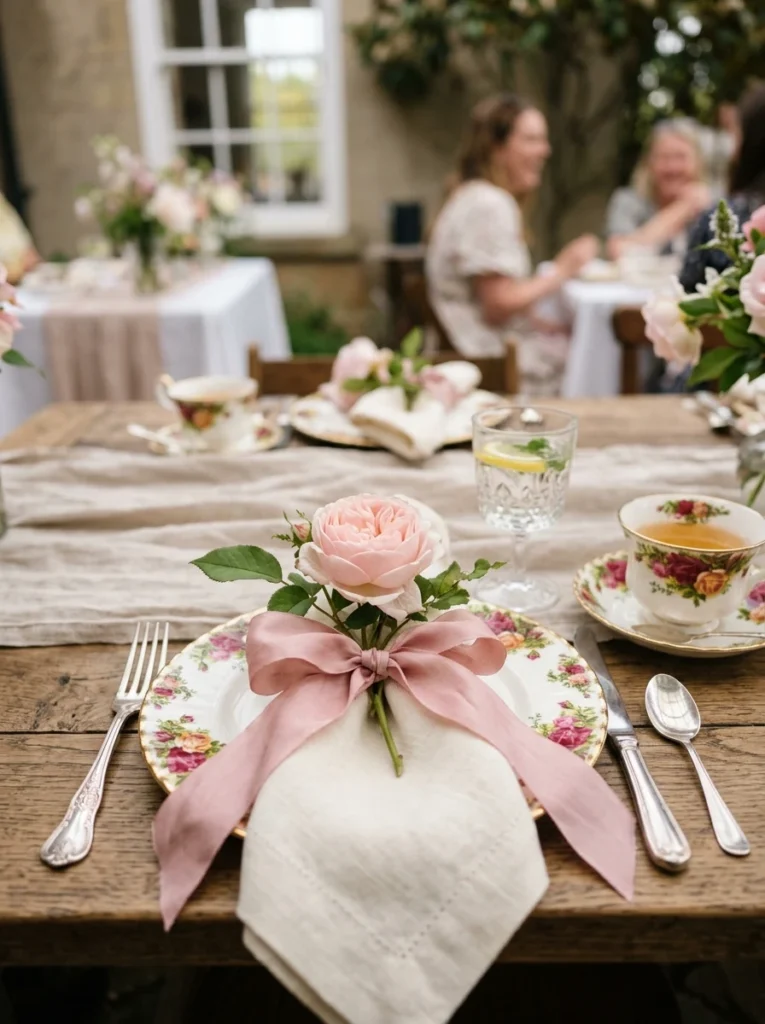
A single stem per place setting, using leftover flowers from the centerpieces, adds essentially no extra cost if you’re already buying blooms for the table.
It works because it’s a tiny detail repeated at every single seat, and repetition of a small element across a whole table reads as far more polished than one big showy piece.
Conclusion
If you’re starting with a blank table, layer the linens first, base cloth, then runner, then chargers, since that foundation is what everything else sits on. Add a low centerpiece and mismatched china next, then finish with lighting and the small repeated details, napkin flowers, place cards, favor boxes, that make each individual seat feel just as styled as the table as a whole. None of these ideas require a big budget on their own, it’s the layering of several small details together that gives a tea party table its whimsical, put-together feel.
FAQ
How do I keep an outdoor tea party table from blowing around?
Use tablecloth clips at each corner, keep centerpieces low and weighted, and skip loose paper items like place cards in favor of slightly heavier cardstock on a breezy day.
Do I need to use real vintage china for a tea party table?
No, mismatched modern china in a coordinated color palette works just as well, real vintage pieces simply add an extra layer of texture and history if you already have or can easily source them.
What’s the easiest way to add whimsy on a small budget?
Focus on repeated small details across every place setting, a tied napkin ribbon, a single flower stem, a hand-lettered place card, since repetition reads as more polished than one large, expensive centerpiece.