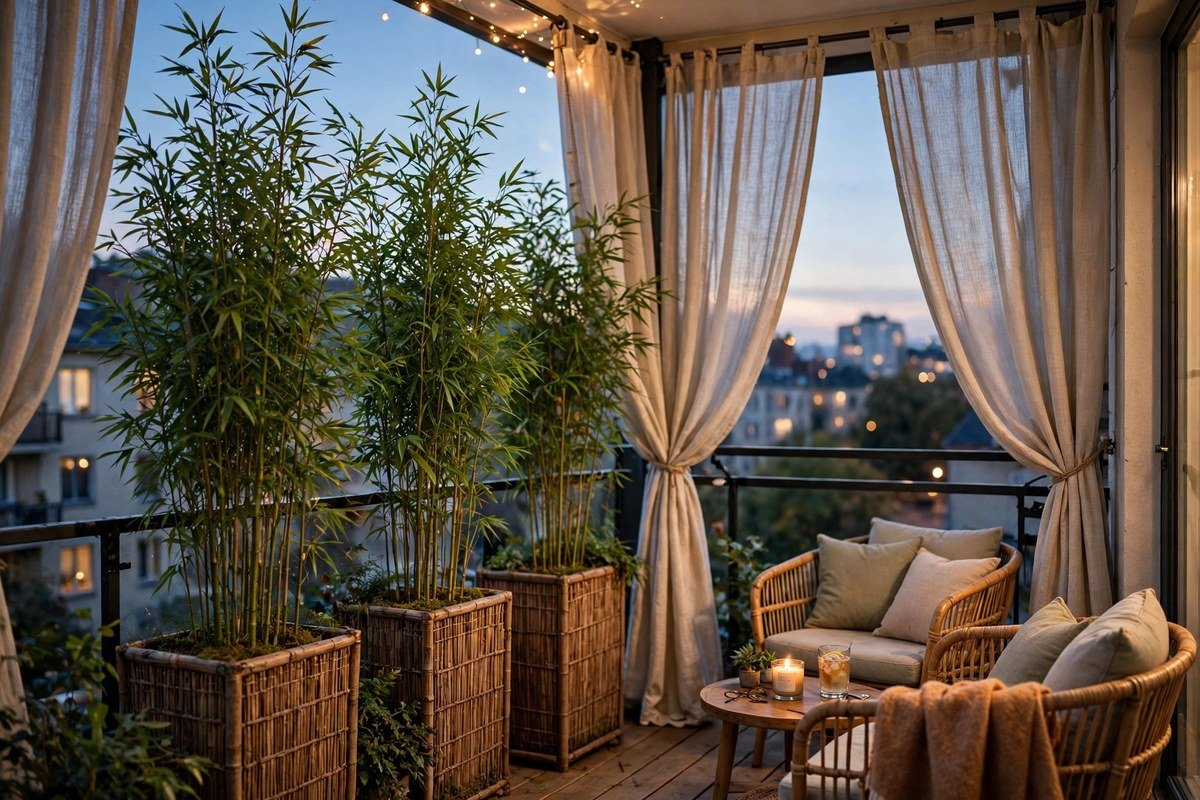
An apartment balcony can feel like a stage. Neighbours look across from the next building, people walk past below, and the space you want for morning coffee feels open to every eye. Privacy changes that feeling fast. A tall plant, a soft curtain, or a simple screen can turn the same small floor into a quiet outdoor room.
You do not need to drill, build, or spend a lot. Most of the ideas here are renter friendly, light, and easy to move. Pick one idea for the side that faces the most eyes, then add a second layer for the corner where you sit. Each idea works on its own, and two layers together feel much more private than one.
Quick Picks
- Start with plants: tall bamboo or grass in large pots blocks the view and feels soft.
- Add one screen: a bamboo roll or a freestanding slat screen covers the worst sightline fast.
- Soften with fabric: outdoor curtains or a roller shade let you open and close the view in seconds.
- Keep light and air: use slats, sheer fabric, and gaps at the top so the balcony stays bright.
- Check the rules first: read the lease and ask the building before you attach anything to a railing or wall.
Did You Know?
Privacy does not need a full wall. A screen that covers the eye level band from about 3 feet to 6 feet high blocks most direct views from nearby windows and balconies. That is why a tall planter, a curtain, or a panel at sitting height can feel so private even when the top of the balcony stays open to the sky.
Before You Start
- Stand on the balcony and sit in your usual chair. Note which side faces the most windows, the street, or the next balcony.
- Read the lease for rules on railing covers, drilling, weight, and fire safety. Freestanding items are the safest choice in most rentals.
- Measure the width of the railing, the height from the floor to the rail top, and the space for pots and chairs.
- Check wind on your floor. High balconies need heavy pots, low screens, and ties that hold in a strong gust.
- Plan for water. Pots need drainage trays, and fabric screens need to dry after rain.
Living Green Screens
1. Line the Railing With Tall Potted Bamboo
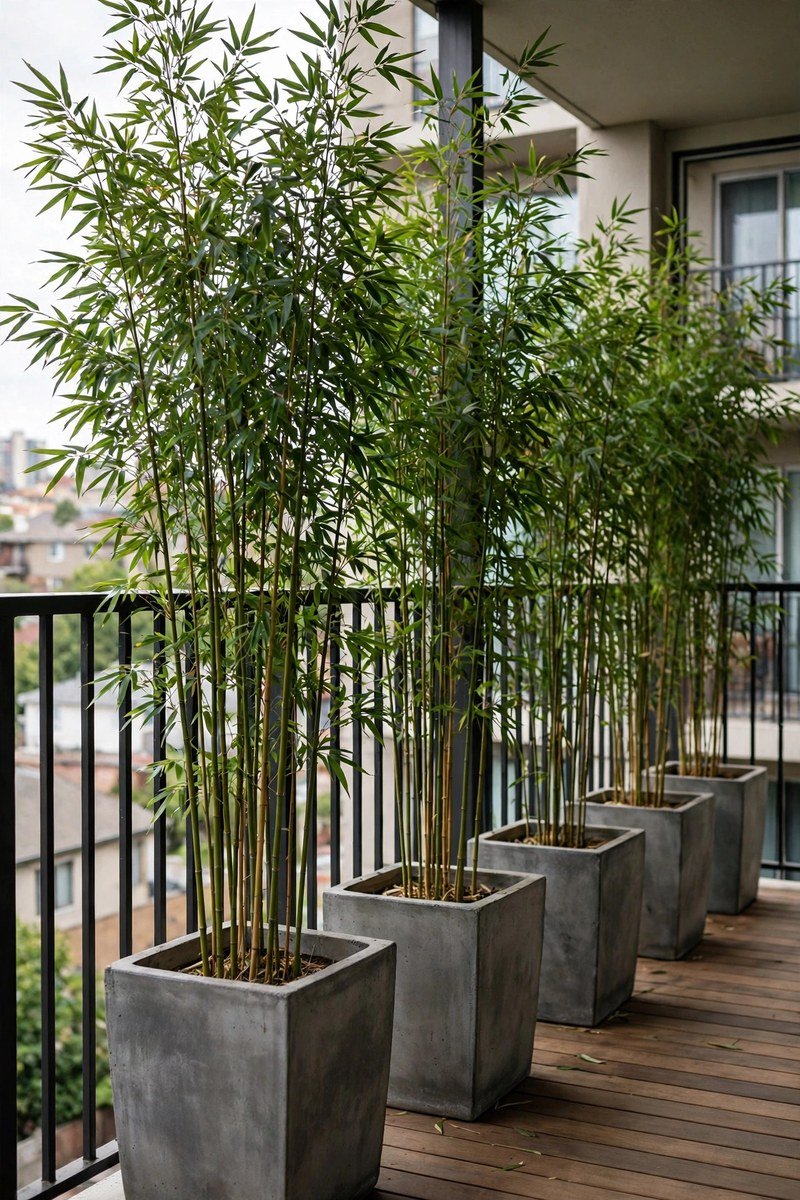
Bamboo in tall pots is the fastest living screen for a balcony. It grows tall, stays dense, and moves with you when you move home.
Choose clumping bamboo, not running bamboo.
Pro tip: A large pot with bamboo costs 40 to 90 dollars. Water bamboo often in summer and use a tray under each pot.
2. Grow Ornamental Grass in a Row
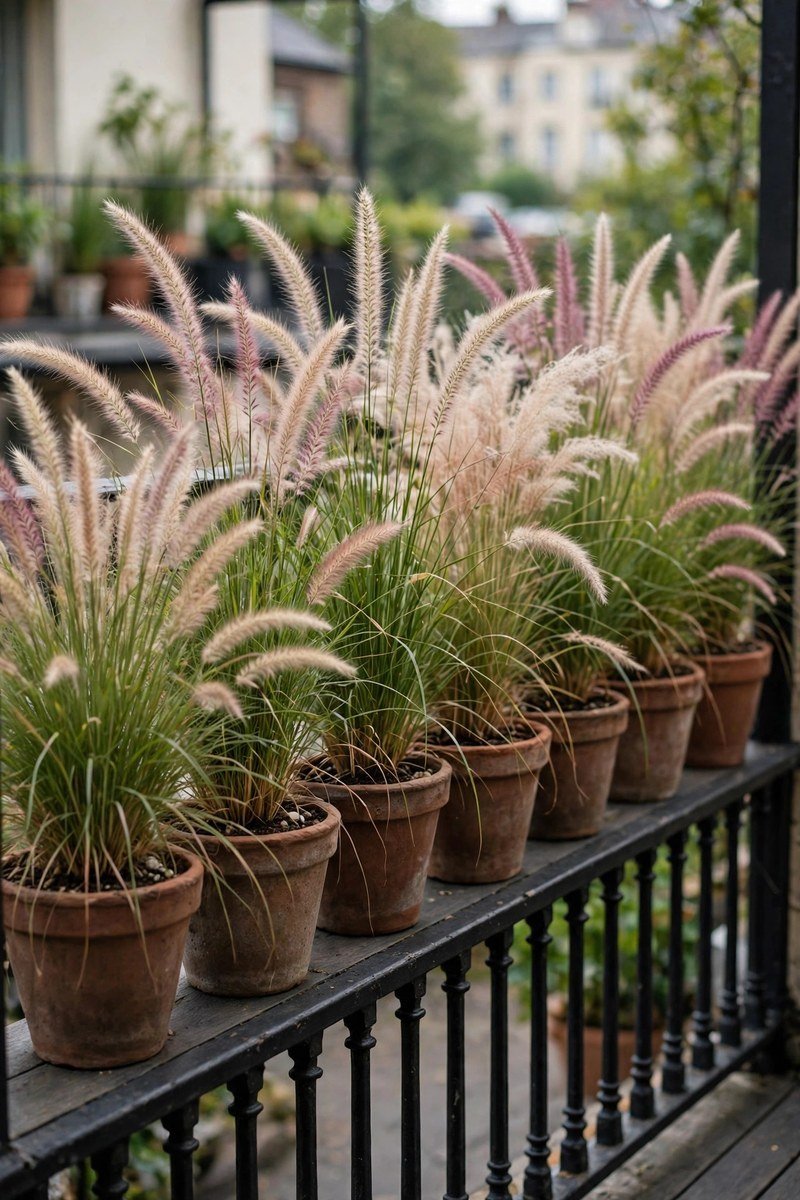
Ornamental grass gives a soft screen that moves in the wind.
Pick grasses that grow 4 to 5 feet tall, such as fountain grass or pampas grass in a pot.
Pro tip: One pot of ornamental grass costs 15 to 35 dollars. Cut the grass back in early spring so new growth comes in full.
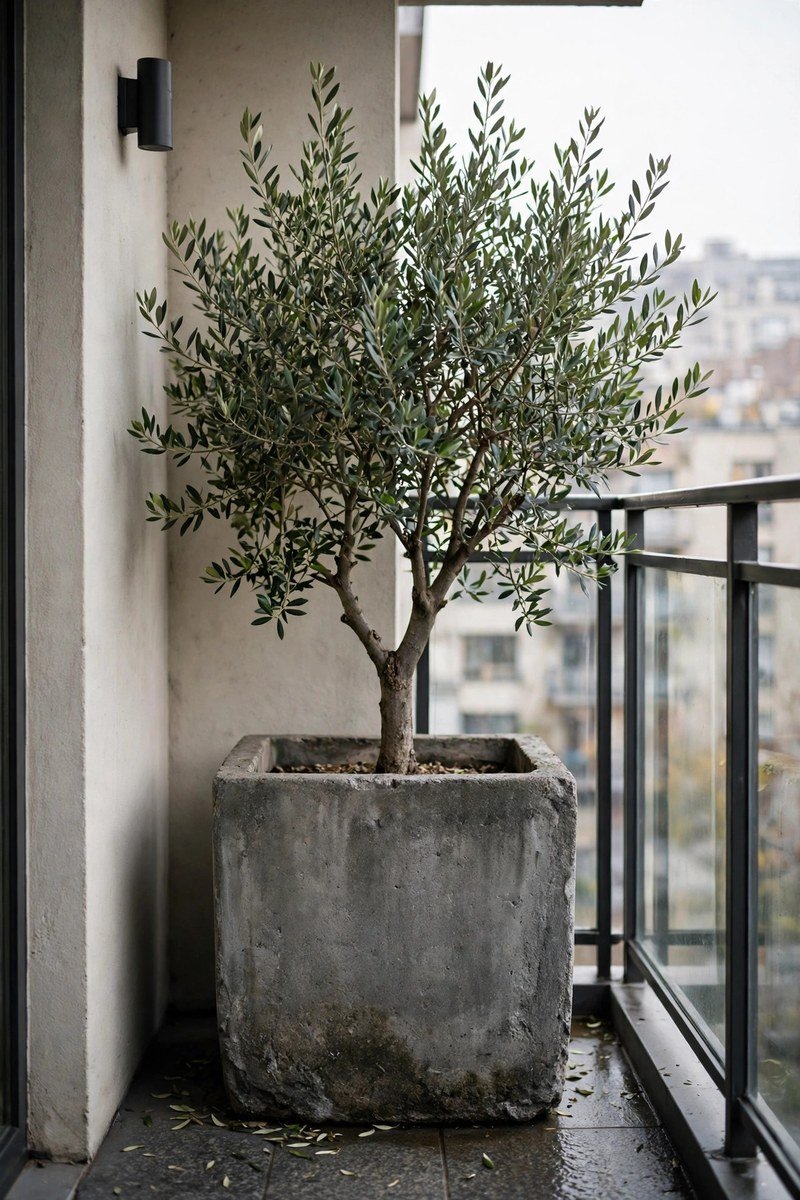
3. Place a Potted Tree in the Exposed Corner
One potted tree can solve the worst corner of a balcony.
Use a heavy pot with wheels so you can move the tree for sun and cleaning.
Pro tip: A potted tree 5 to 6 feet tall costs 60 to 150 dollars. Prune the lower branches so the canopy starts at eye level.
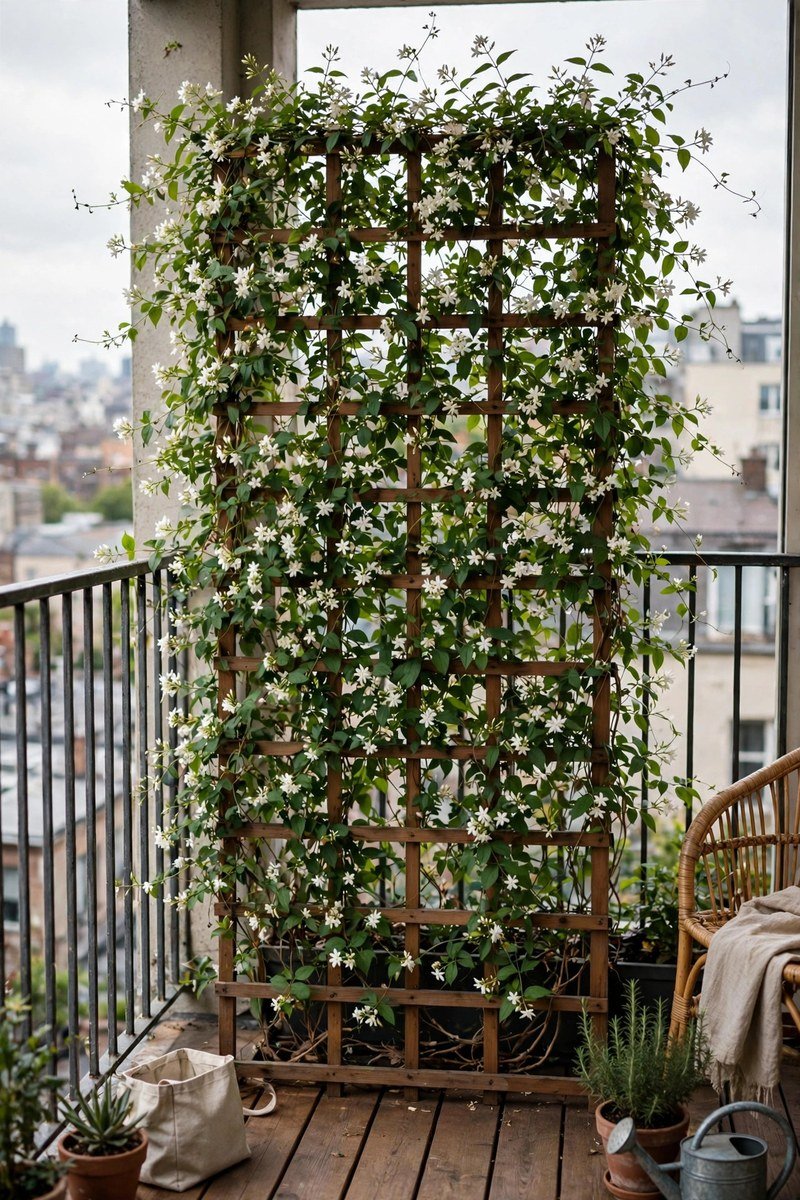
4. Grow Climbing Plants on a Freestanding Trellis
A trellis with climbing plants looks like a garden wall, not a barrier.
Lean the trellis in a large planter base or set it in two pots.
Pro tip: A freestanding trellis 5 to 6 feet tall costs 50 to 120 dollars. Jasmine plants cost 12 to 25 dollars each.
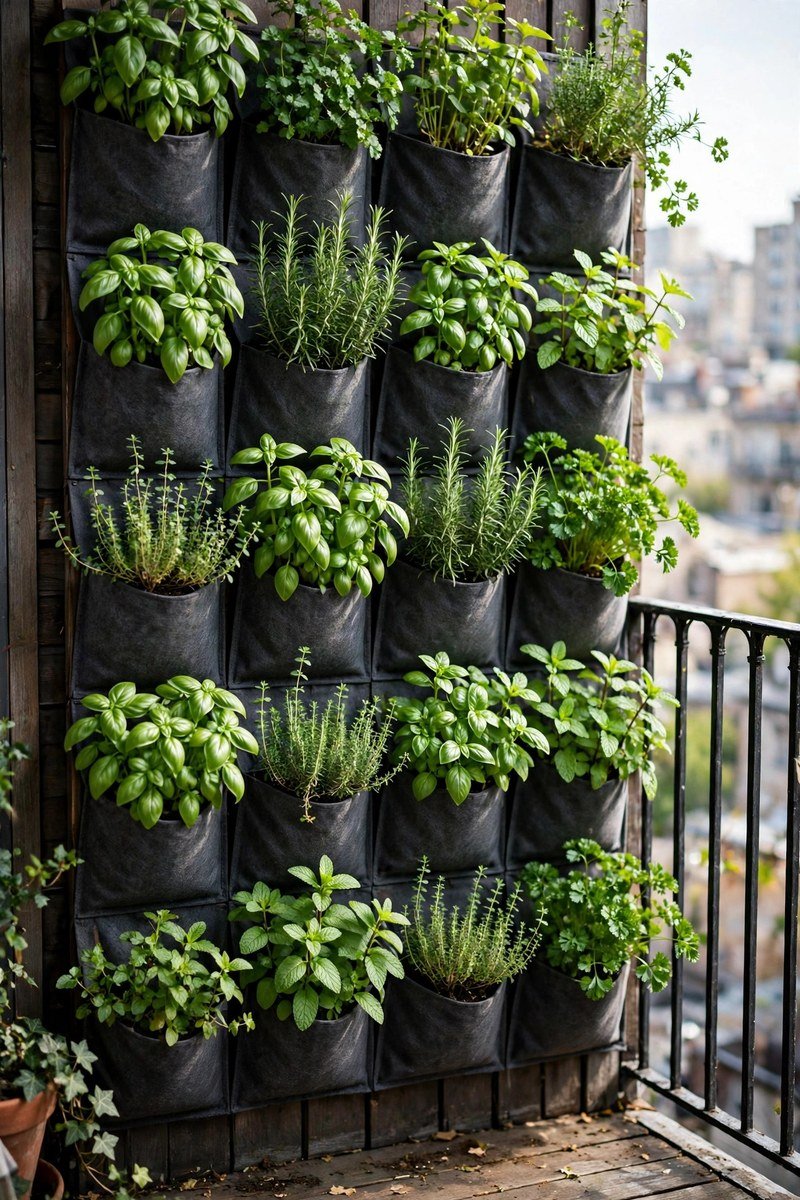
5. Build a Vertical Garden Wall With Pocket Planters
A vertical garden turns a bare wall into a green screen.
Hang the pockets on a freestanding frame or on a railing hook, not on a drilled wall.
Pro tip: A set of pocket planters costs 20 to 45 dollars. Water the top row first so the water drips down to the lower rows.
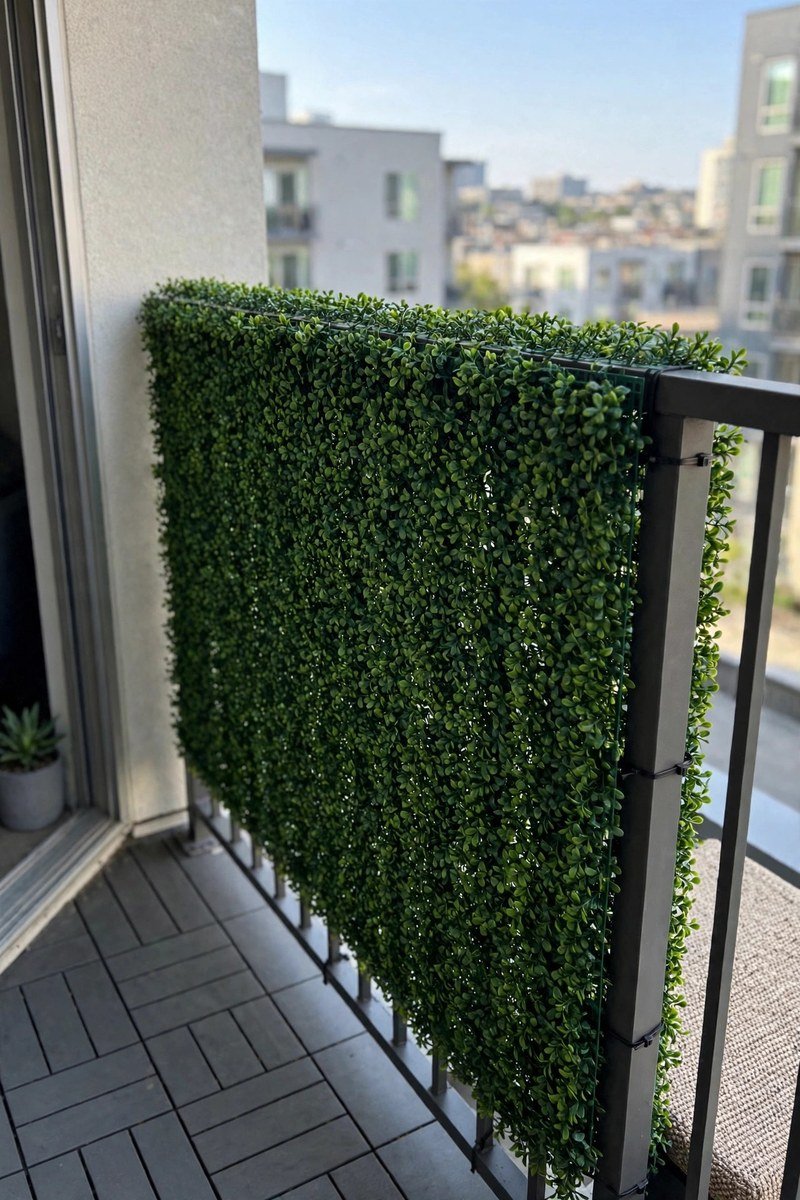
6. Add an Artificial Privacy Hedge on the Railing
An artificial hedge gives instant green cover with no watering and no wait for growth.
Choose a hedge panel with dense leaves and a dark green tone.
Pro tip: One artificial hedge panel 3 by 6 feet costs 25 to 50 dollars. Rinse it once a month to keep dust off the leaves.
Screens and Panels
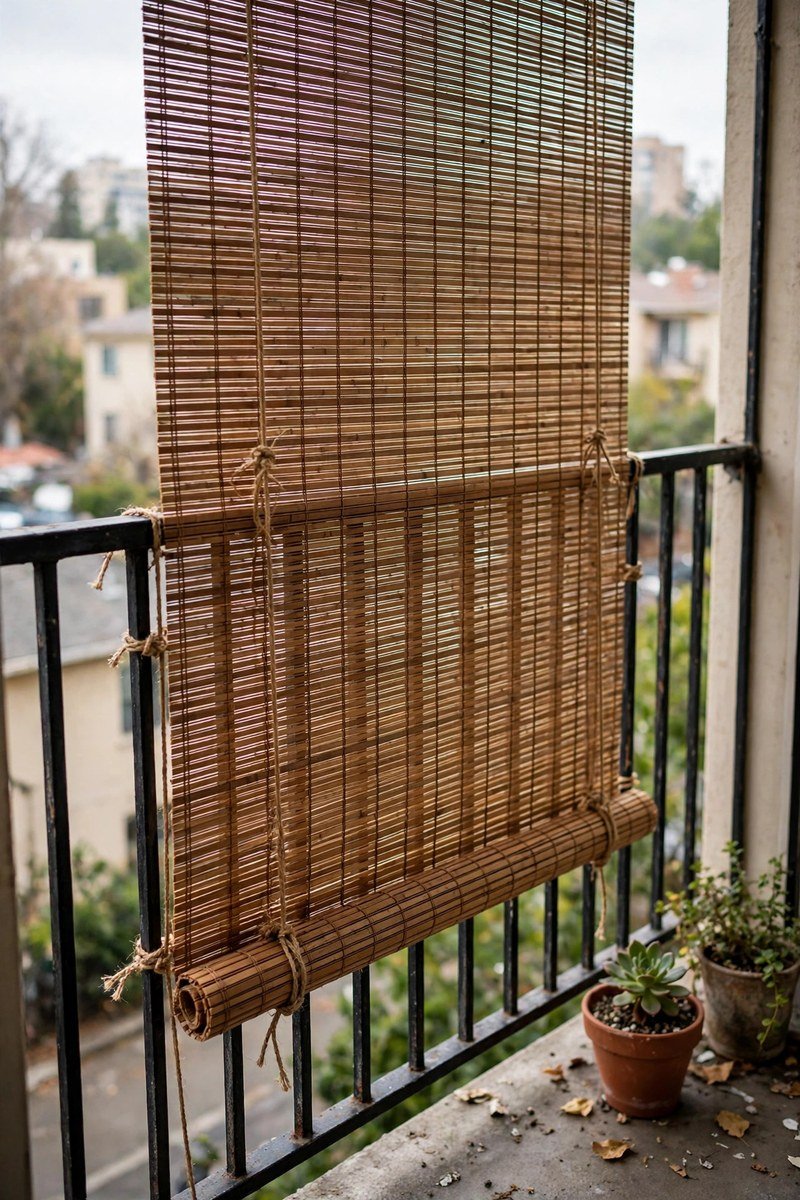
7. Hang a Bamboo Roll Screen on the Railing
A bamboo roll screen is one of the most used balcony privacy fixes.
Tie the screen to the railing with zip ties or rope at the top and bottom.
Pro tip: A bamboo roll screen 6 feet wide costs 30 to 70 dollars. Use outdoor rated ties so they do not snap in sun and rain.
8. Use Reed Roll Up Blinds for Adjustable Cover
Reed roll up blinds work like a bamboo screen, but they feel lighter and more natural.
Hang the blinds with rope ties or hooks that clip to the beam.
Pro tip: One reed blind 4 feet wide costs 25 to 60 dollars. A balcony 8 feet wide needs two blinds side by side.

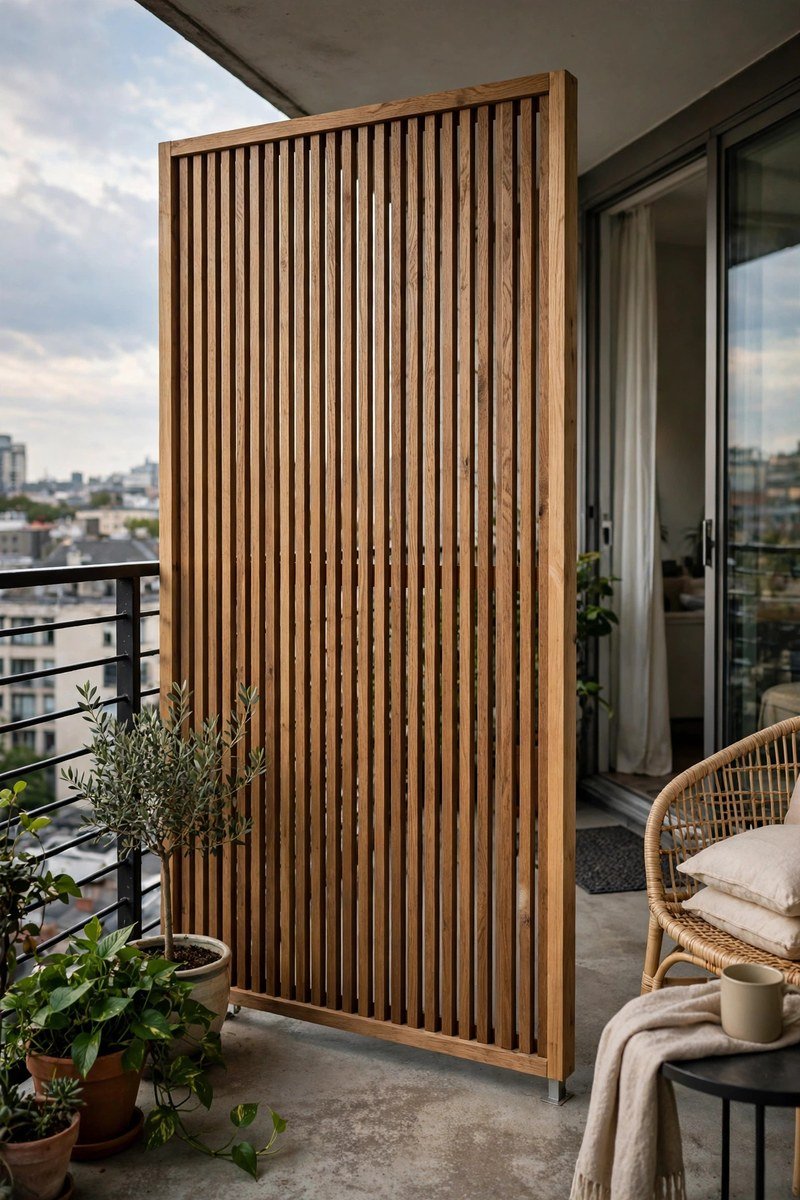
9. Set Up a Freestanding Wood Slat Screen
A wood slat screen gives a clean modern look and strong privacy at sitting height.
Place the screen behind your chair, not across the whole balcony.
Pro tip: A freestanding slat screen 6 feet tall costs 80 to 180 dollars. Add a planter at the base for extra weight in wind.
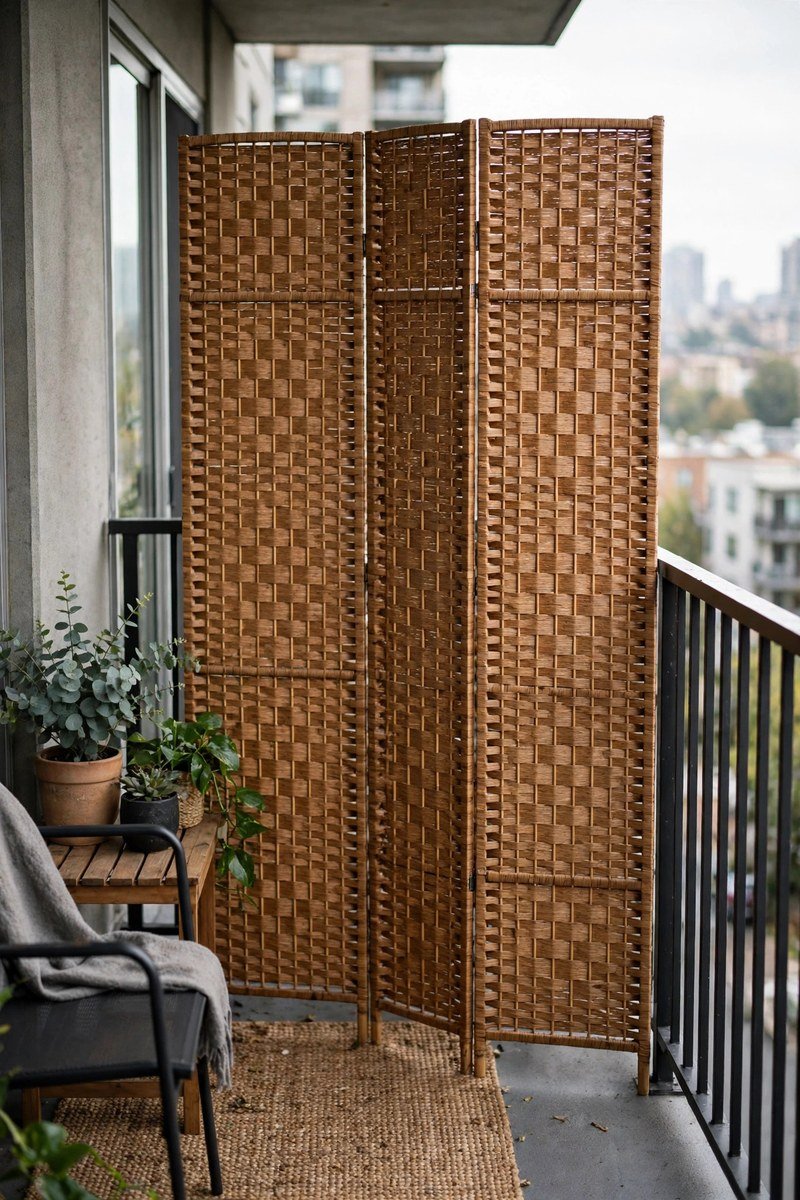
10. Place a Woven Wicker Panel Screen
A woven wicker panel adds texture and warmth to a plain balcony.
Set the panel in a sturdy base or lean it against a heavy planter.
Pro tip: A woven wicker panel 5 feet tall costs 60 to 130 dollars. Seal the weave once a year with an outdoor spray.
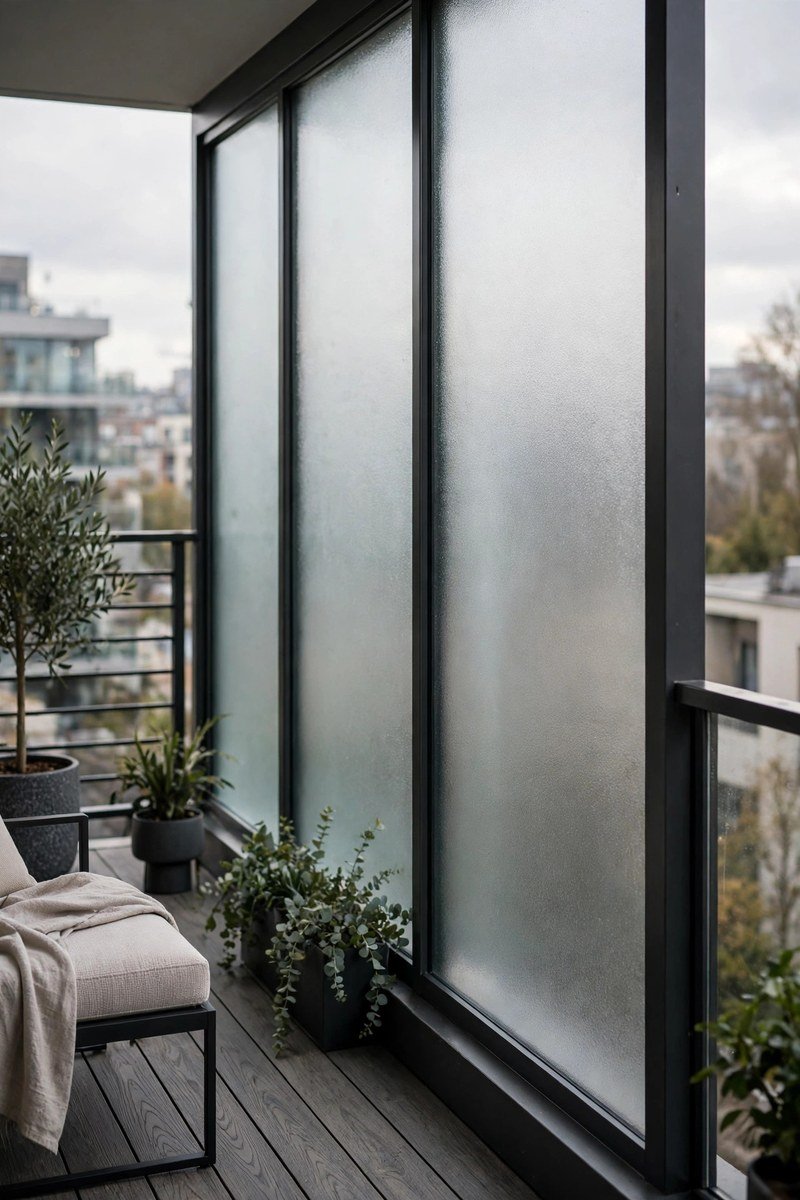
11. Fit a Frosted Glass or Acrylic Panel
A frosted glass panel gives a modern look with no loss of light.
Fit the panel into the existing railing frame or set it in a freestanding base on one side only.
Pro tip: One frosted acrylic panel 3 by 5 feet costs 70 to 160 dollars. Clean it with a soft cloth so the frosted finish stays clear.
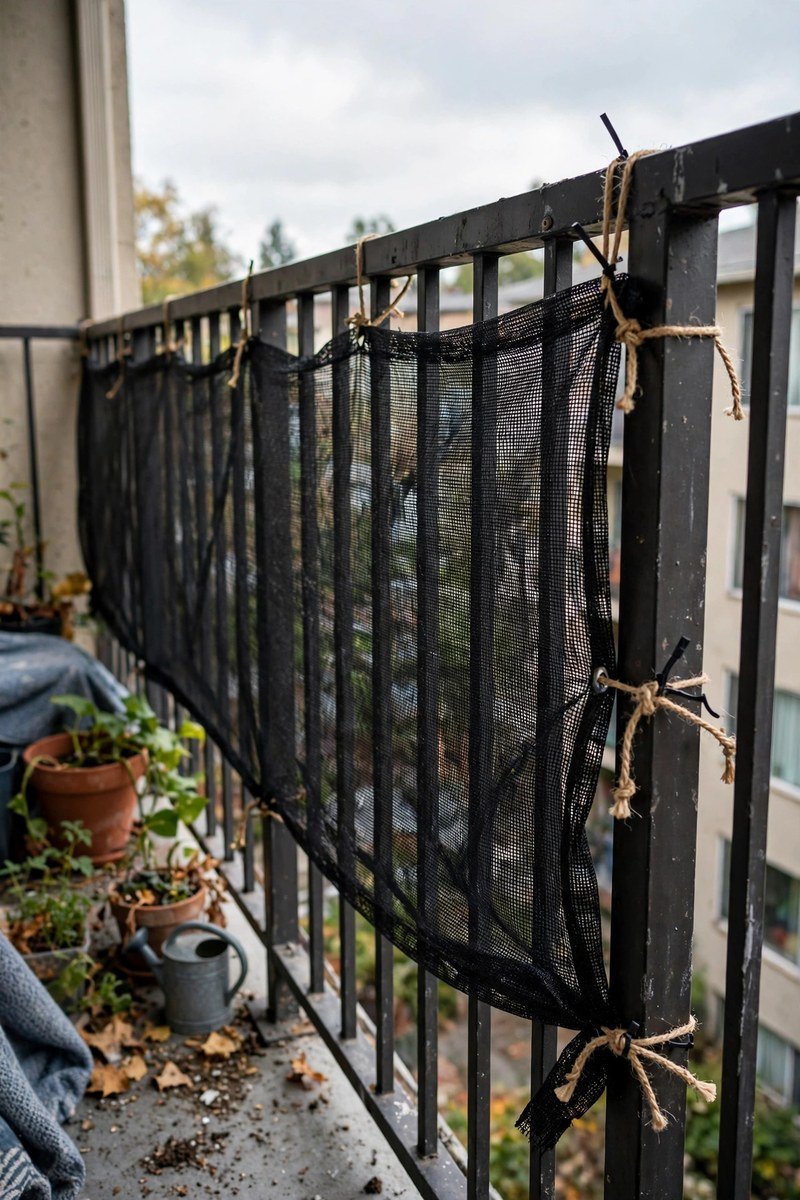
12. Cover the Railing With Mesh Privacy Fabric
Mesh privacy fabric is the cheapest fast fix for a balcony. It ties to the railing in minutes, blocks the view from the street, and still lets air pass through.
Choose a dark green or charcoal mesh for the best cover.
Pro tip: Mesh privacy fabric costs 15 to 35 dollars for a full railing length. Replace it each year if the sun fades the colour.
Soft and Movable Privacy
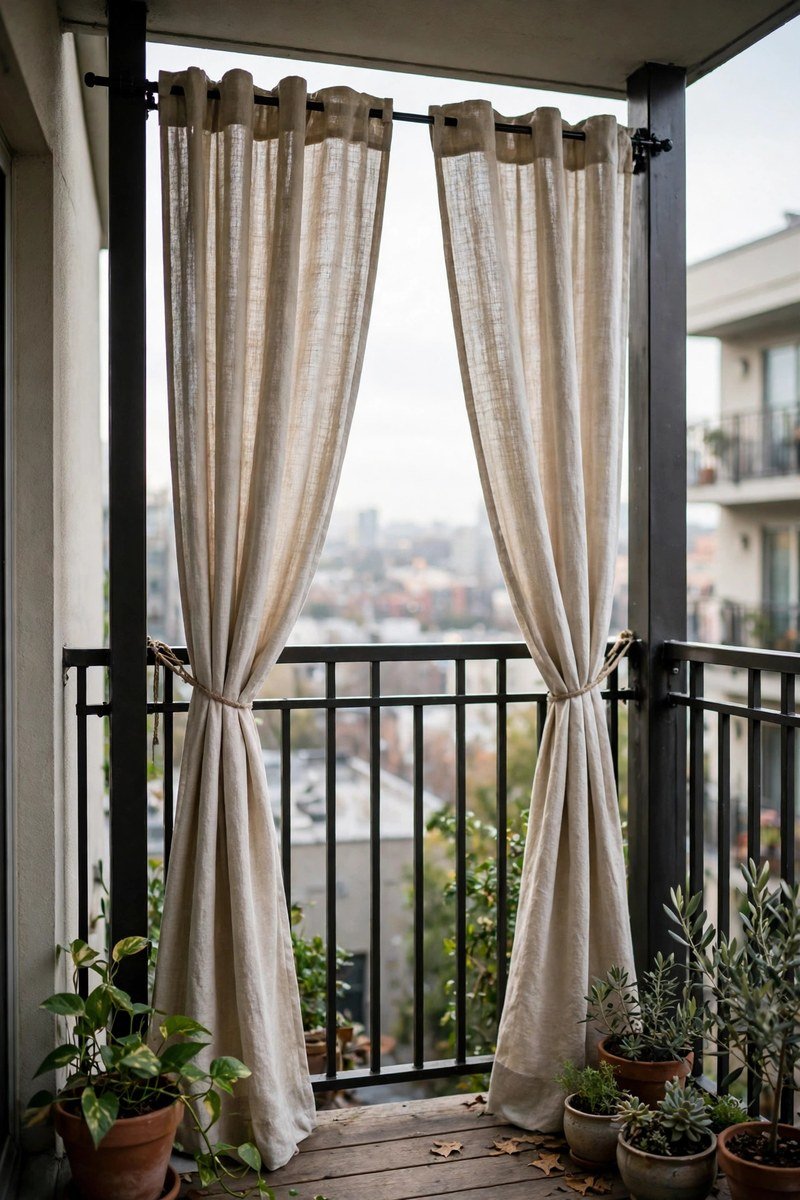
13. Hang Outdoor Curtains on a Tension Rod
Outdoor curtains give the softest privacy on a balcony.
Use weather proof outdoor fabric in a light cream or soft grey.
Pro tip: A pair of outdoor curtains costs 30 to 70 dollars. A tension rod costs 15 to 30 dollars and fits most small balconies.
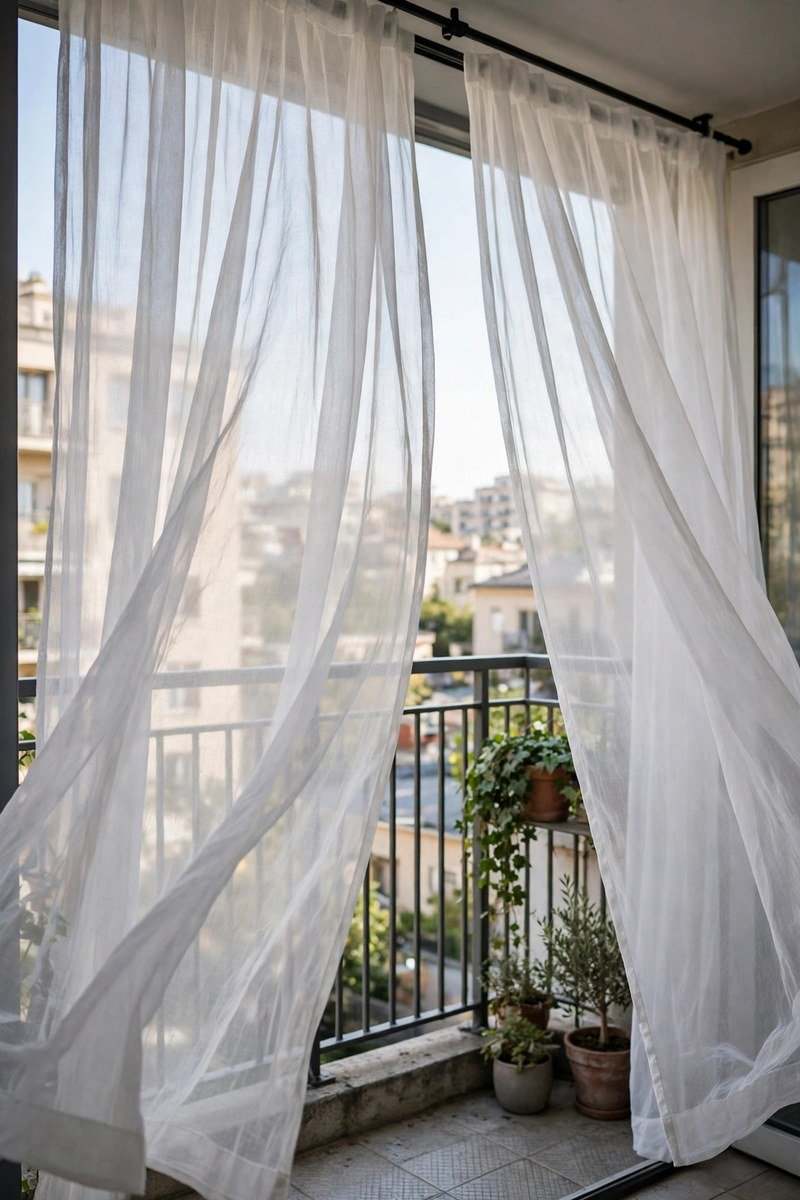
14. Use Sheer Curtains for Light and Privacy
Sheer curtains block the view without blocking the light.
Hang sheer panels on a ceiling track or a wire cable across the open side.
Pro tip: Sheer outdoor panels cost 20 to 45 dollars a pair. Wash them once a month so they stay bright and clear.
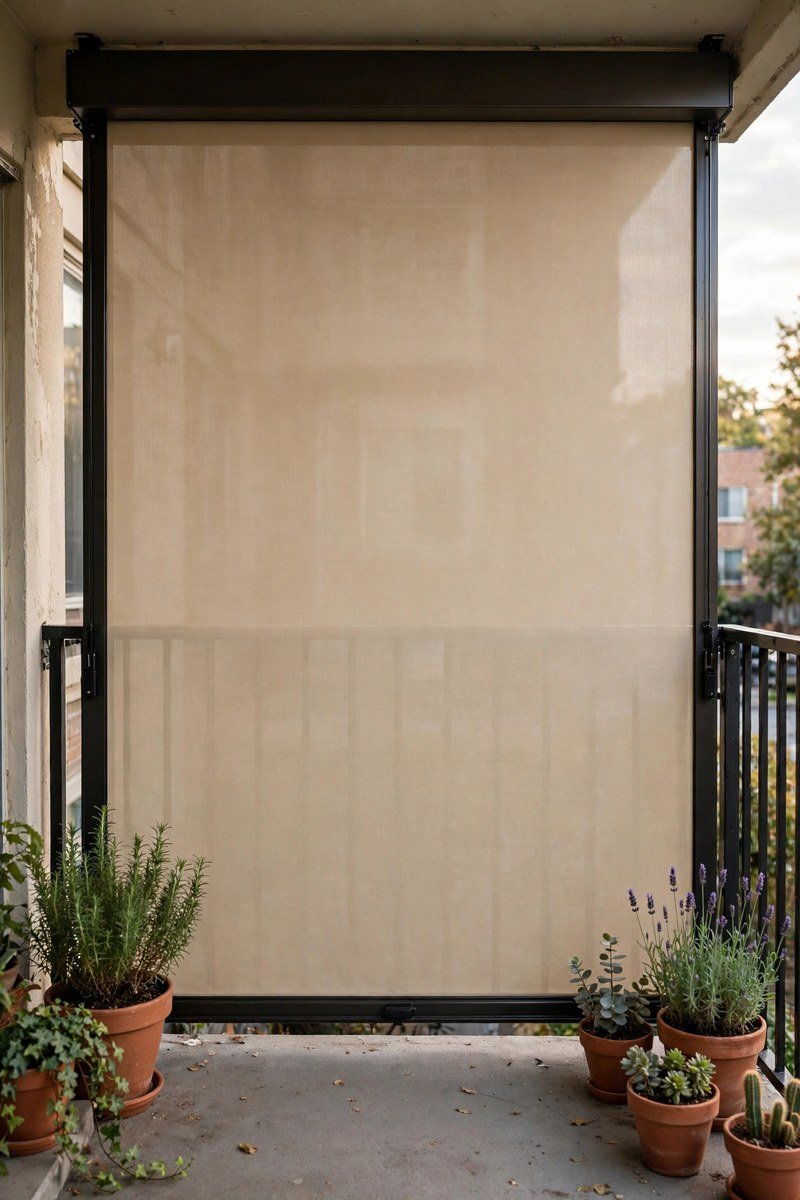
15. Add Outdoor Roller Shades for Instant Cover
Outdoor roller shades roll down in seconds and roll up just as fast.
Mount the shade on a ceiling hook or a freestanding frame, not on a drilled wall.
Pro tip: One outdoor roller shade 5 feet wide costs 50 to 120 dollars. Measure twice, as a shade that is too short leaves a gap at the side.
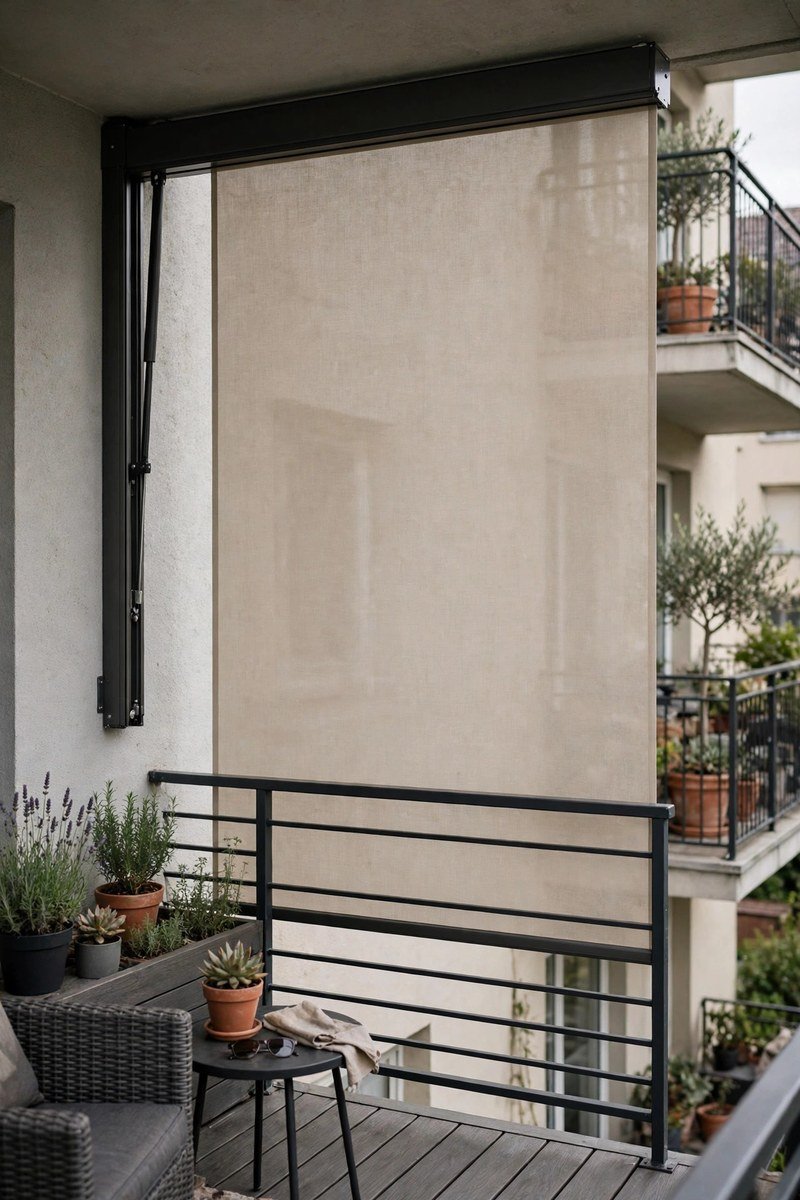
16. Fit a Retractable Side Awning
A retractable side awning blocks the view from the next balcony without blocking the sky.
Fix the awning cassette to a freestanding post or a heavy base, not to the building wall.
Pro tip: A retractable side awning 5 feet long costs 80 to 200 dollars. Keep the fabric dry before you fold it away.
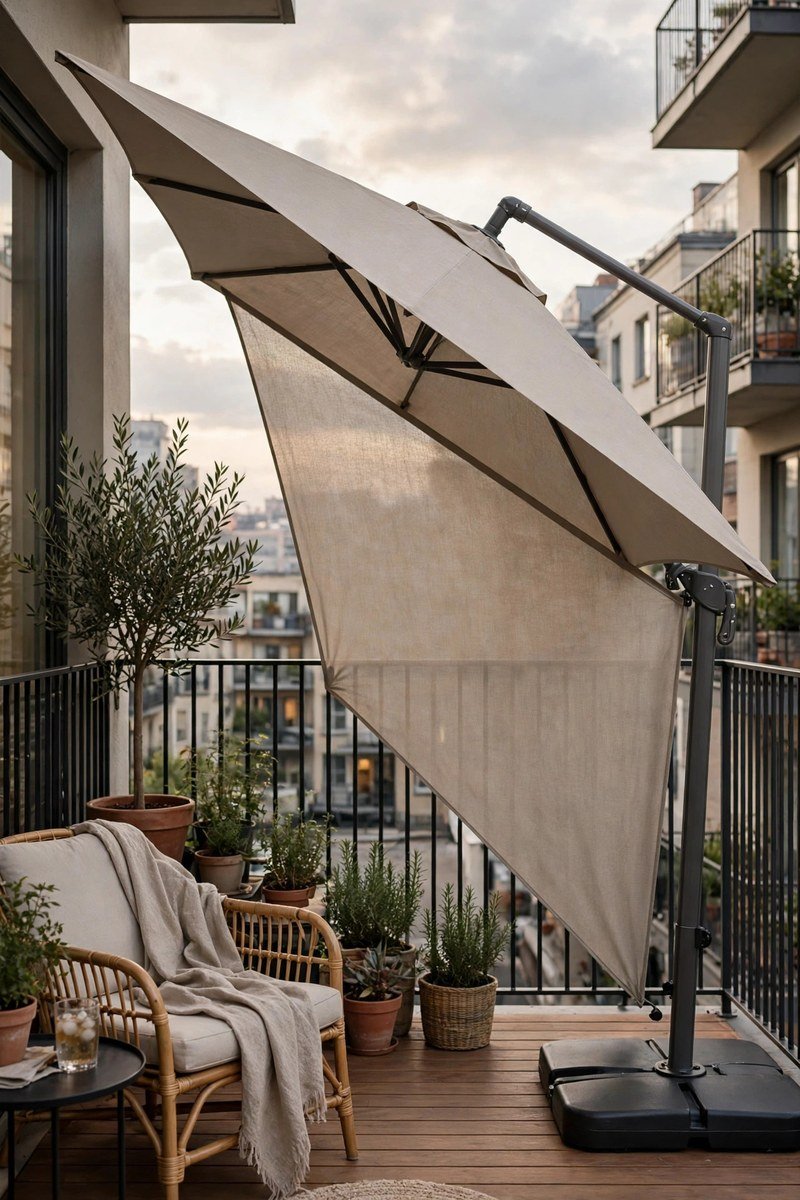
17. Angle a Large Balcony Umbrella for Side Privacy
A large umbrella does more than block the sun. Angled to the side, it blocks the view from the building across the way and creates a small shaded room in the corner.
Use a cantilever umbrella with a heavy base so you can tilt it toward the worst sightline.
Pro tip: A cantilever umbrella costs 90 to 220 dollars. A heavy base costs 40 to 80 dollars and keeps the umbrella safe in wind.
Layout, Planters, and Evening Privacy
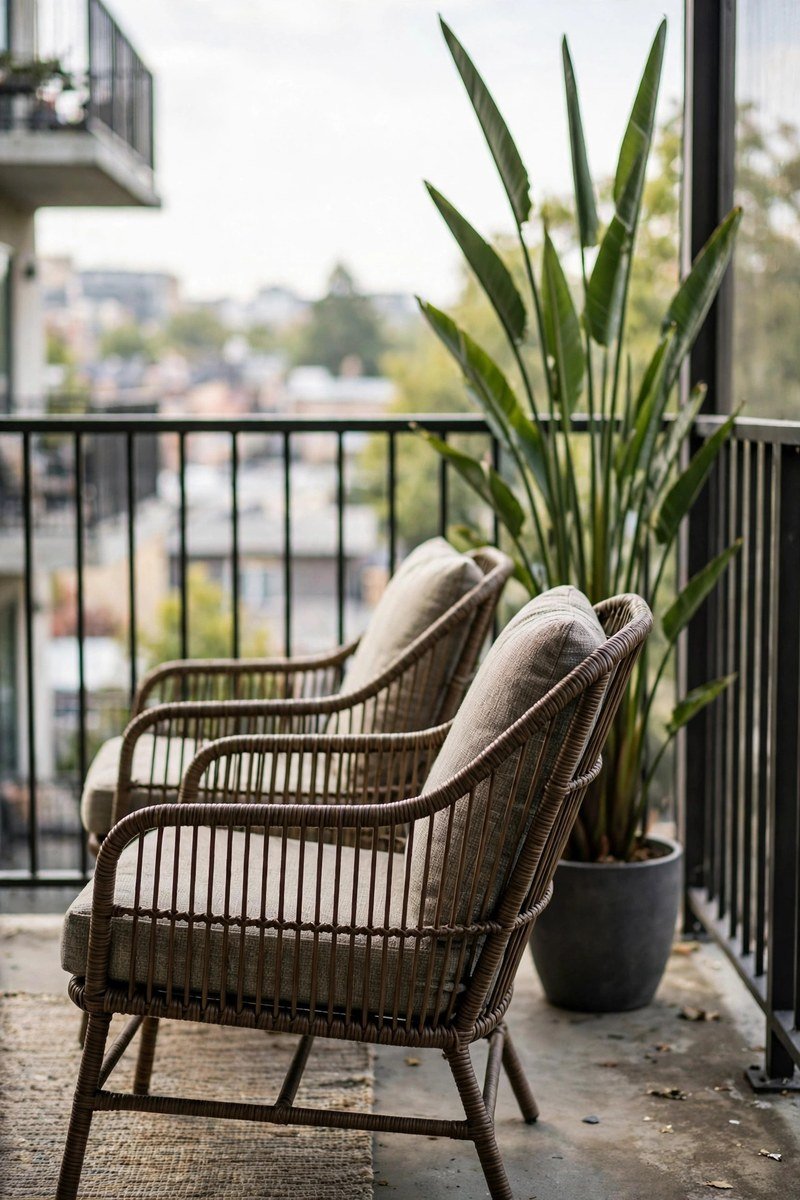
18. Angle Furniture to Block the Main Sightline
Privacy is not only about screens. The way you place chairs can block the view into your seat.
For a tiny floor, start with these small balcony decor ideas to maximize outdoor living and keep only two seats and one small table. A clear floor with two well placed seats feels more private than a crowded balcony with a screen.
Pro tip: Keep at least 2 feet of clear space behind your chair so you can stand and move with ease.
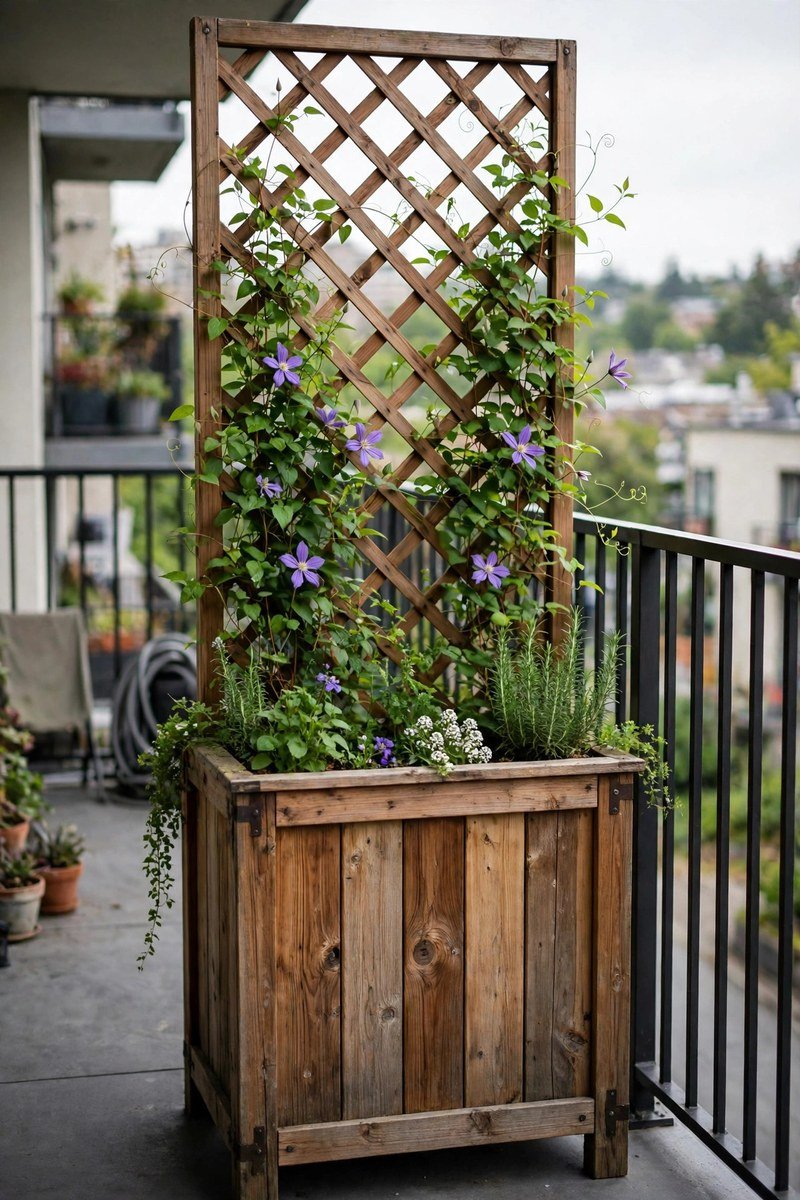
19. Build a Tall Planter Box With a Lattice Top
A planter box with a lattice top does two jobs at once.
Build or buy a cedar box about 4 feet wide and set it against the railing. Borrow planter shapes from these front porch planter ideas and keep the plants tall at the back and short at the front for a layered look.
Pro tip: A cedar planter box with lattice costs 90 to 200 dollars. Line the box so soil does not leak onto the balcony floor.
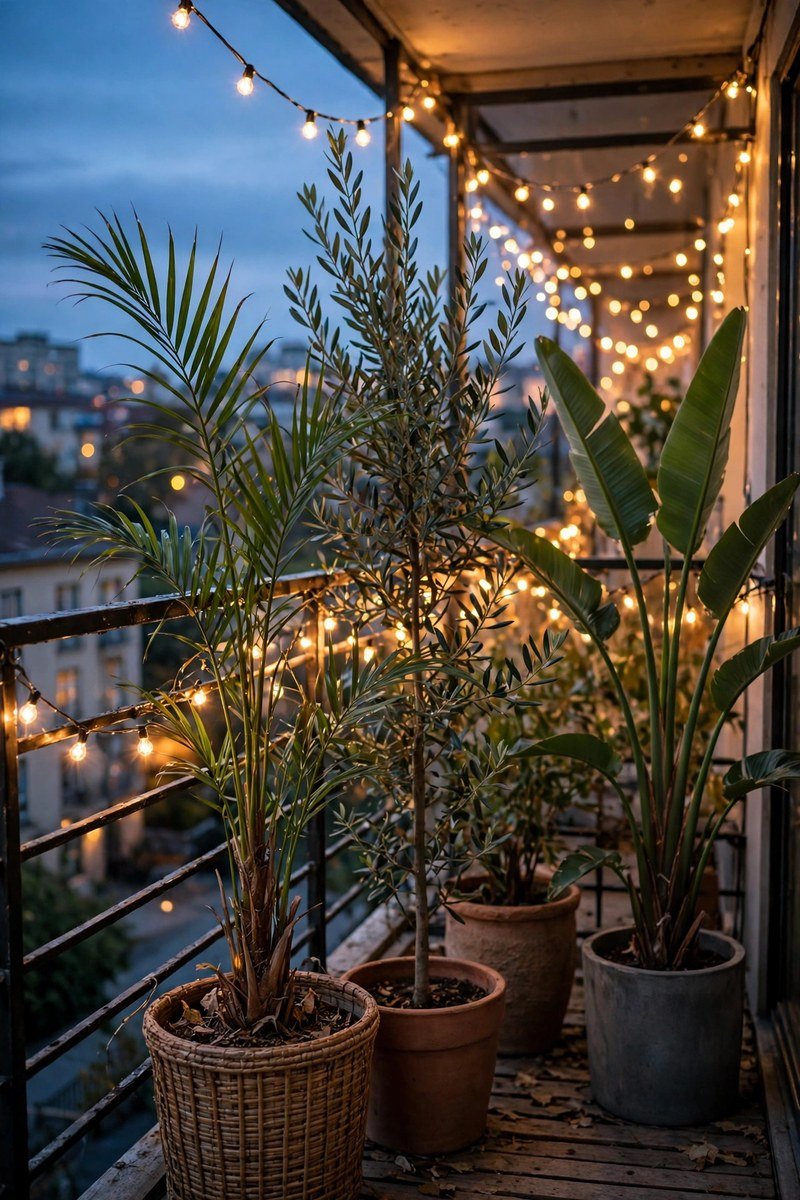
20. Layer String Lights Behind Tall Plants for Evening Privacy
Evening privacy is different from day privacy. At night, light from inside the flat can make the balcony feel open.
Run one warm white string along the railing behind the pots, not across the open sky. For a soft evening glow, see these outdoor string light ideas and keep the lights low and warm, not bright and white.
Pro tip: One warm white string 20 feet long costs 12 to 25 dollars. Use a timer for 6 pm to 10 pm so the lights switch off on their own.
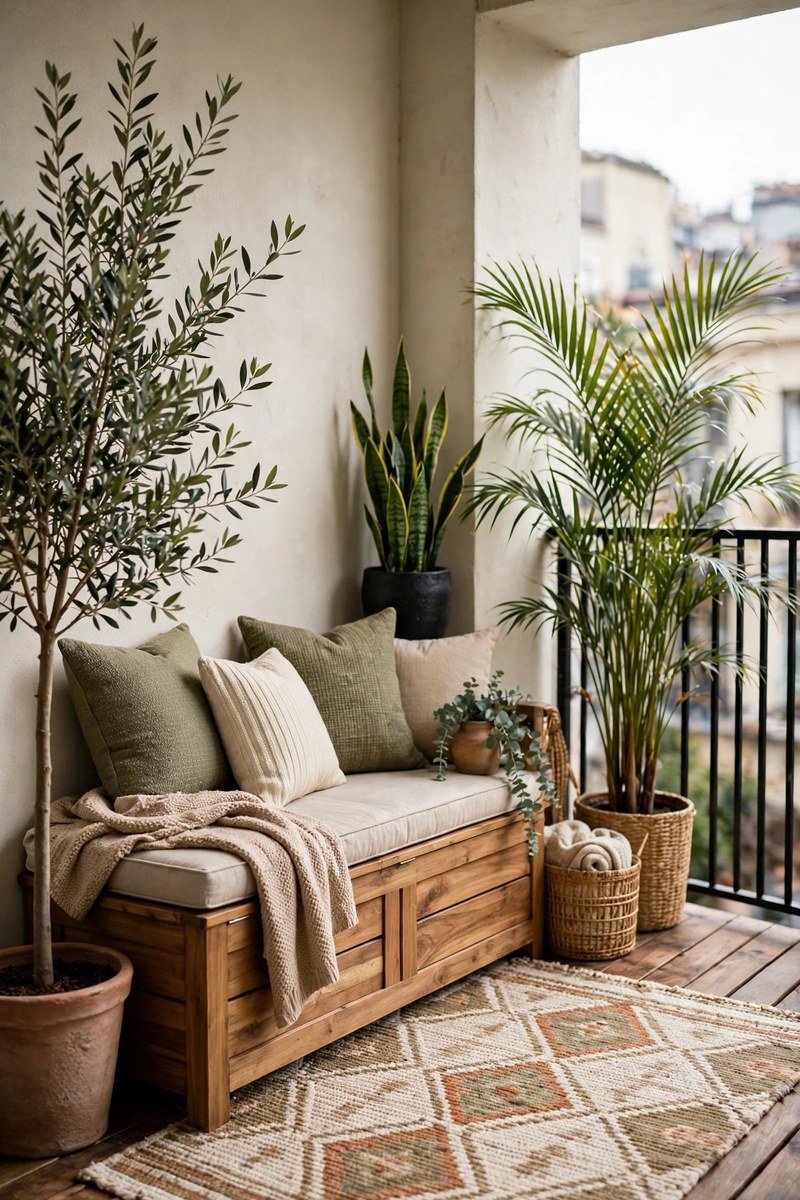
21. Create a Cozy Corner With a Rug, Bench, and Storage
A cozy corner feels private because it has a clear edge. An outdoor rug marks the floor, a storage bench marks the back, and a tall plant marks the side.
Finish the corner with ideas from small patio decorating ideas and keep the palette to two or three soft colours. Add two cushions, one throw, and a small lantern on the bench for evening use.
Pro tip: An outdoor rug 4 by 6 feet costs 30 to 70 dollars. A storage bench costs 80 to 180 dollars and hides cushions from rain.
Measure First and Check the Building Rules
Measure the railing height, the width of each open side, and the depth of the balcony floor before you buy a screen. Most apartment balcony railings are 36 to 42 inches high, and a privacy screen should cover from the floor to at least 6 inches above the railing. Check the building rules before you drill or hang anything, because many buildings ban drilling into railings and limit what can hang over the edge. Ask the building manager in writing what is allowed, and keep the answer, so a later complaint does not cost you the whole setup. Apartment balcony privacy starts with the rules, because a screen that must come down in a week is money wasted.
Plant Screen Spacing and Pot Sizes
A living screen needs the right spacing. Place tall plants 12 to 18 inches apart so the leaves overlap as they grow, and use pots at least 12 inches wide and 12 inches deep so roots have room and the pot does not tip in wind. Bamboo in a trough planter works well for a long edge, with one trough per 3 feet of railing. Climbing plants need a trellis fixed to the railing, not to the wall, and the trellis should sit 2 inches from the wall so air moves behind the leaves. Water plants in the morning, because evening watering leaves damp leaves overnight and invites pests on a small balcony.
Wind Safety and Weight Limits
A balcony screen catches wind like a sail. Fix screens at the top and the bottom, not only at the top, or the bottom will flap and tear. Keep heavy pots on the floor, never on the railing, and check the balcony weight limit in your lease, because soil and water are heavier than they look. A 12 inch pot full of wet soil can weigh 25 to 35 pounds. Never hang a screen or a planter over the outside of the railing, because a falling planter is a safety risk for people below. Bring light fabric screens inside before a storm, and check fixings once a month, because sun and rain loosen ties and hooks.
Budget for Balcony Privacy
Under 50 dollars: one fabric screen for the most exposed side, plus cable ties and hooks. From 50 to 150 dollars: a fabric screen for two sides and two trough planters with bamboo or tall grasses. Over 150 dollars: a full screen set, three or more planters, and a trellis with climbing plants. As a typical range, a 6 by 3 foot balcony privacy screen costs about 15 to 40 dollars, and a trough planter with bamboo costs about 30 to 70 dollars. Start with the side your neighbours see most, and add the next side only after the first one holds through a windy week.
Common Mistakes to Avoid
- Blocking all light and air: a solid screen on every side makes a balcony hot and dark. Leave the top open and use slats or sheer fabric on at least one side.
- Skipping the lease check: a drilled screen can cost your deposit. Use freestanding, clip on, and tie on fixes in a rental.
- Using heavy pots on a high floor: check the weight limit before you add soil, stone, and water. Use light pots and a tray, not concrete planters.
- Covering only the railing: the view from above matters too. Add a tall plant or a shade for the sightline from the floor above.
- Choosing fabric that holds water: indoor curtains sag and grow mould outside. Use outdoor fabric that dries fast after rain.
- Forgetting wind: a loose screen can flap, tear, or fall. Tie every screen at the top and bottom and fold awnings in before a storm.
Start with the side that faces the most eyes. Add tall plants first, then one screen or curtain for the sitting corner. Finish with warm light and a small rug so the space feels like a room, not a barrier. The best test is simple: sit in your chair at dusk and see if you feel hidden, calm, and at home.