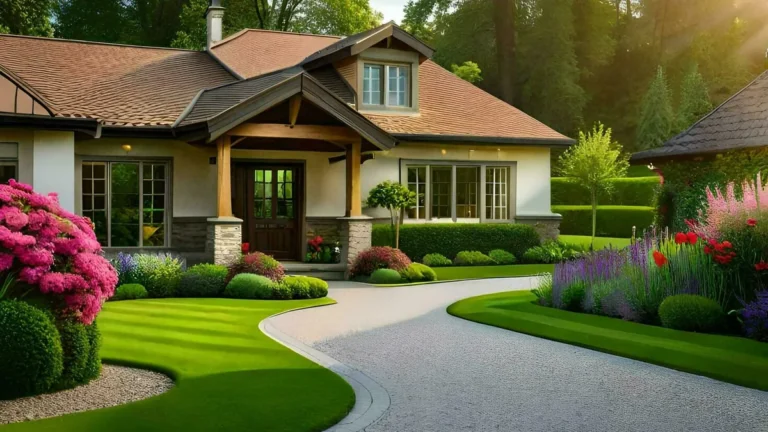
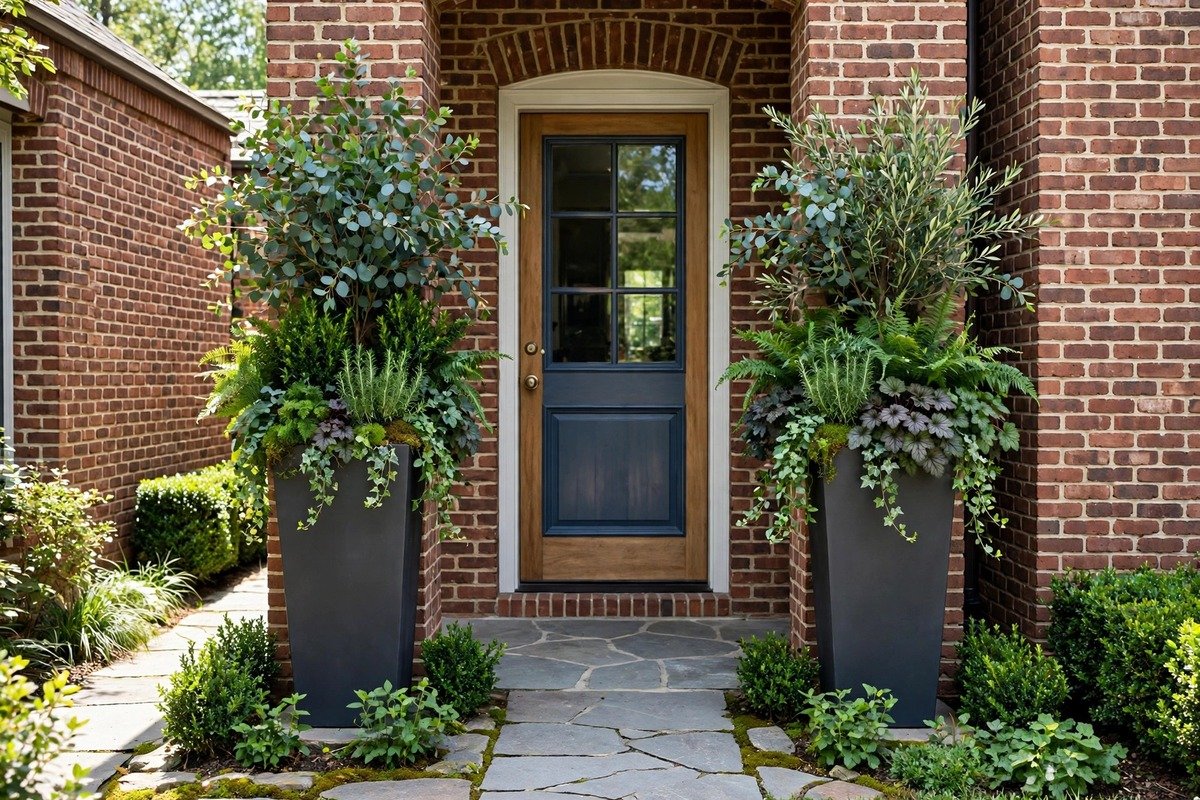
A flat front yard can look plain even when the lawn is neat. Low pots sit below eye level, so the house has nothing to draw the eye upward. Tall outdoor planters fix that fast. One tall pot by the door or a row along a fence adds height, shape, and a clear focal point without any digging.
This guide gives you 23 tall outdoor planter ideas that lift curb appeal. Every idea uses tall pots only, so the height does the work. Pick one idea for your front door first, then add a second spot later. For the wider front yard picture, see our front yard landscaping ideas as a different guide.
Quick Picks
- Start at the front door. One matching pair of tall planters lifts curb appeal fastest.
- Pick the plant before the pot. Bamboo, grasses, and evergreens need different pot sizes.
- Keep pots heavy at the base. Tall pots tip in wind, so weight matters.
- Repeat one material. Two or three pots in one finish look planned.
- Leave room to walk. Tall pots should frame a path, not block it.
Did You Know?
A tall planter lifts the plant to eye level, so a small tree or a grass that would look lost in the ground suddenly reads as a feature. The pot is part of the design, and the plant above it adds a second layer of height.
Before You Start
- Measure the spot first. A pot 24 to 36 inches tall needs clear space above it for the plant.
- Check sun and wind. Sunny spots suit palms and grasses, while shaded spots suit ferns and boxwood.
- Every pot needs drainage holes. Standing water rots roots fast in a deep pot.
- Plan how you will move a full pot. Wet soil in a large pot can weigh over 100 pounds.
- Pick your climate zone before you buy plants, so winter does not kill a tender plant.
Front Door and Entryway Height
1. Flank the Front Door With a Matching Pair
Two matching tall planters, one on each side of the front door, make an entrance look finished at once. The symmetry pulls the eye to the door and makes the whole front look cared for.
Pro tip: Use pots 30 to 36 inches tall with boxwood balls or cone evergreens. A fiberglass pair costs about 80 to 200 dollars.

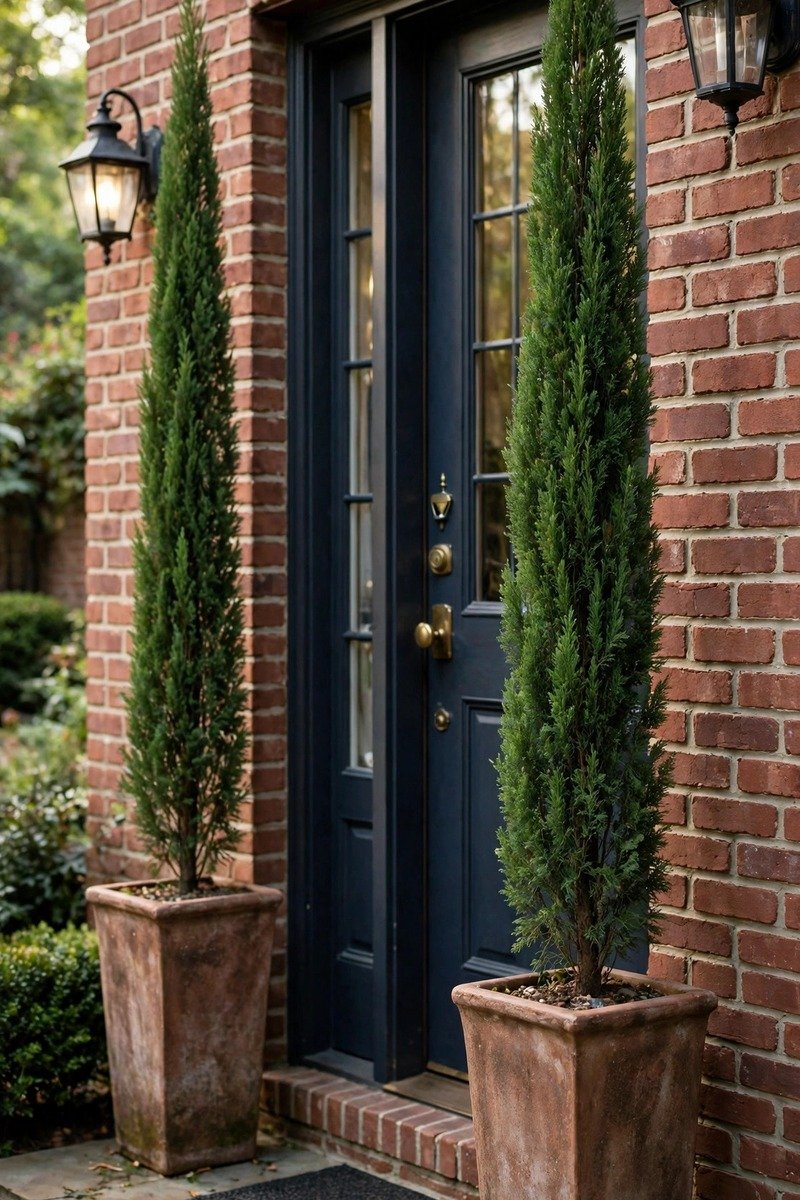
2. Stand Slim Italian Cypress by the Door
Italian cypress grows straight up in a narrow column, so it adds serious height without taking floor space. A pair by the door gives a calm, formal look that suits brick, stone, and white siding alike.
Pro tip: Choose pots at least 20 inches wide and 24 inches deep so the roots have room. A young cypress costs about 40 to 90 dollars.
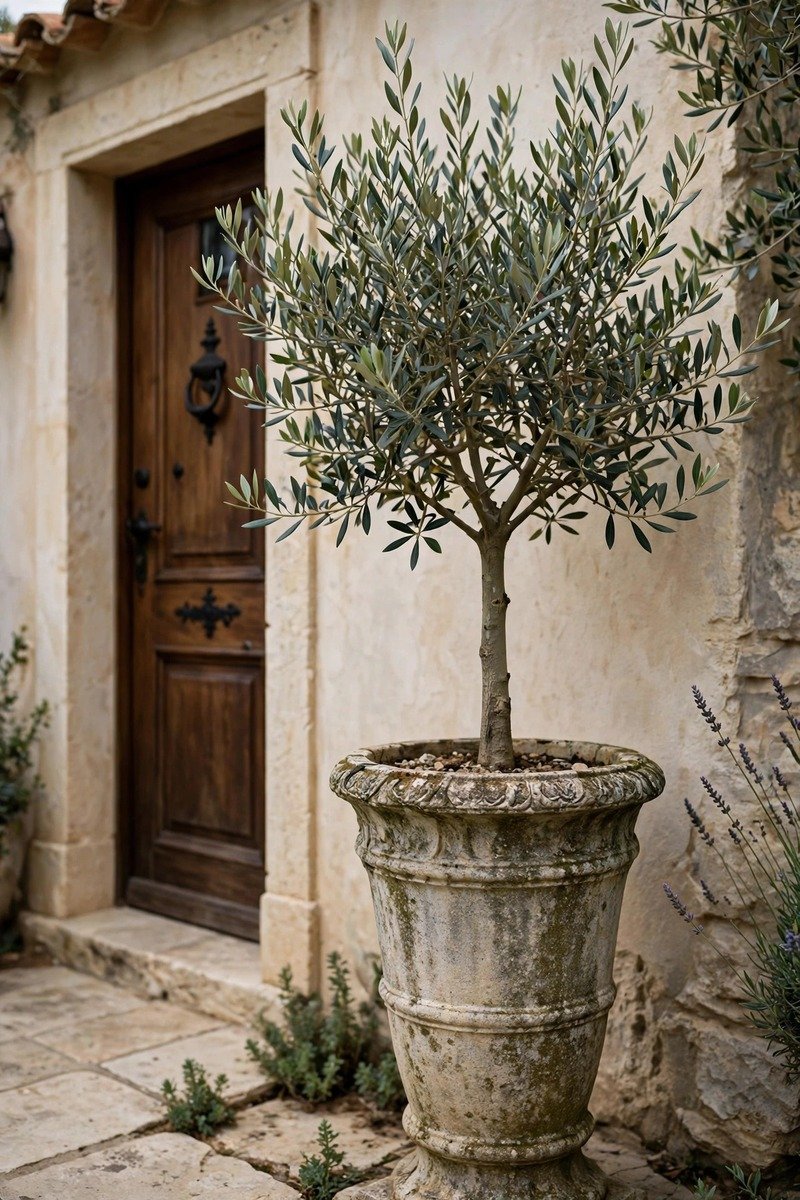
3. Put a Small Olive Tree in a Tall Urn
An olive tree in a tall urn brings a soft grey green color and a Mediterranean feel to an entry. The thin trunk looks light, while the urn below gives the weight and height the tree needs.
Pro tip: Use a frost proof urn 24 to 30 inches tall with free draining soil mix. A small olive tree costs about 60 to 120 dollars.
4. Step Tiered Tall Planters Beside the Front Steps
Tiered tall planters beside front steps guide the eye upward in stages instead of one hard jump. A tall pot at the back, a medium pot in front, and a low pot at the base make the steps feel wider and more welcoming.
Pro tip: Keep the same pot color across all three tiers and repeat one plant color too. Three tiered pots cost about 90 to 180 dollars in total.

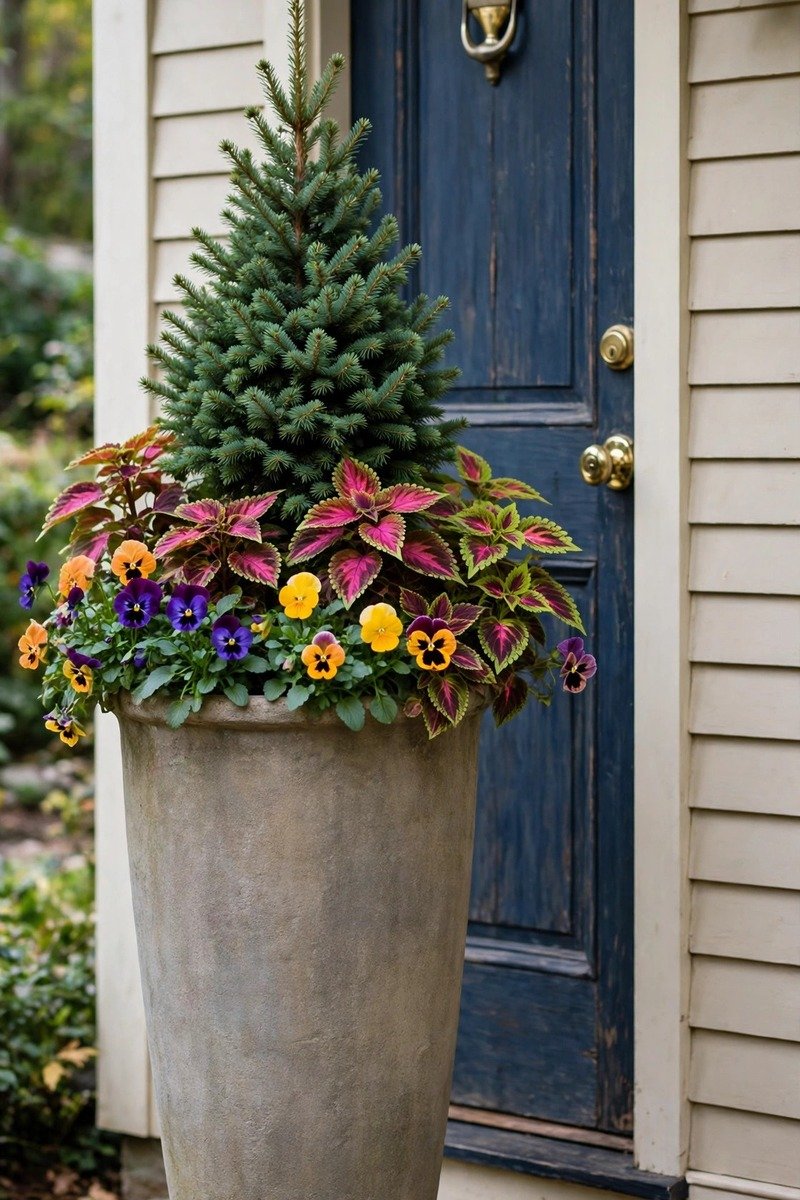
5. Swap Seasonal Color in One Tall Entry Planter
One tall planter at the entry can carry the whole season if you swap the top plants four times a year. Keep an evergreen center that never changes, then rotate pansies in spring, coleus in summer, and ornamental kale in fall around it.
Pro tip: A seasonal swap takes about 20 minutes and costs about 15 to 30 dollars in plants each time. Keep the evergreen center in a 3 gallon nursery pot inside the tall planter.
Privacy and Screening
6. Build a Clumping Bamboo Screen in Tall Pots
Clumping bamboo in a row of tall pots makes a green wall in one afternoon. It grows fast and blocks a neighbor view without a fence or a permit.
Pro tip: Use pots of at least 15 to 20 gallons with drainage holes, and space them 2 to 4 feet apart. Clumping bamboo costs about 35 to 70 dollars per plant.

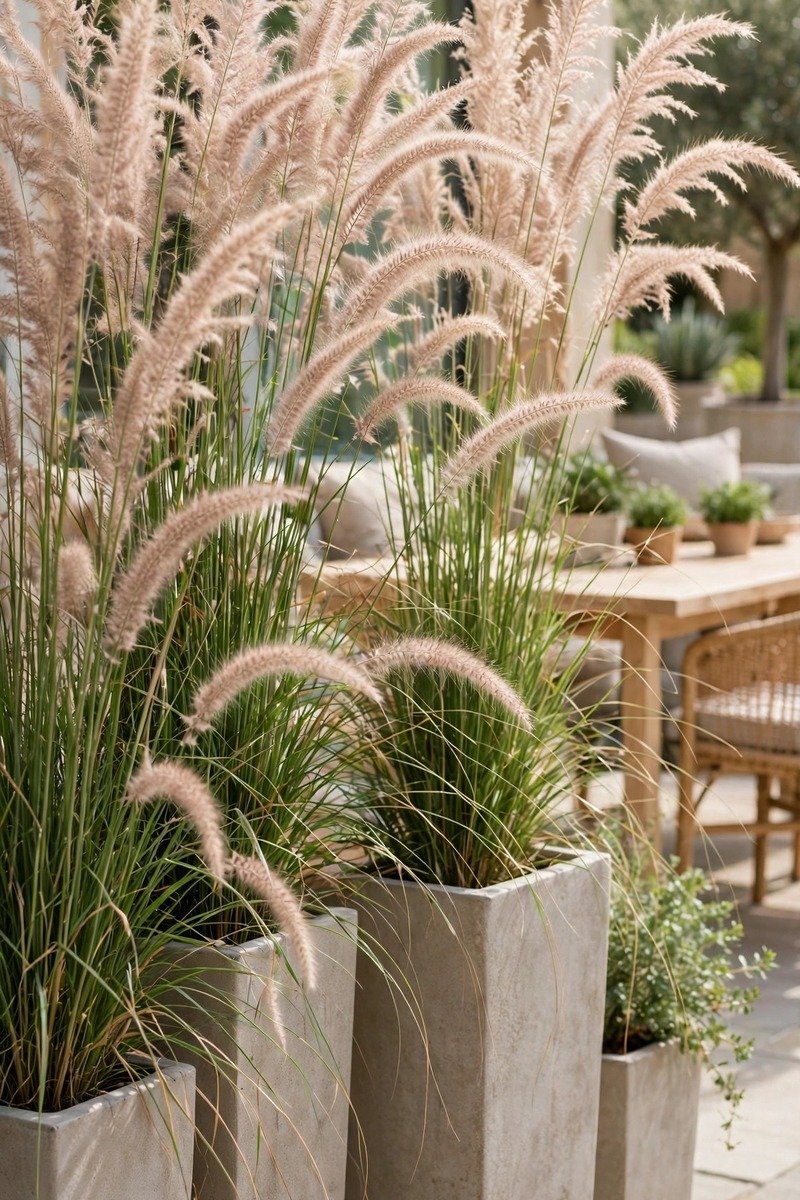
7. Soften a View With Ornamental Grasses
Ornamental grasses in tall planters screen a view in a soft way. Feather reed grass, maiden grass, and fountain grass let light and air through while they block a direct sightline.
Pro tip: Pick pots at least 18 inches wide so grass roots can spread. A grass plant costs about 12 to 25 dollars, and cut old growth back to 6 inches in late winter.
8. Line Up Evergreen Shrubs for a Year Round Hedge
Tall planters with arborvitae or boxwood work like a hedge you can move. The evergreens hold color through winter, so the screen never looks bare.
Pro tip: Space the pots 2 to 3 feet apart and trim the shrubs twice a year, in spring and midsummer. Each evergreen costs about 30 to 60 dollars.

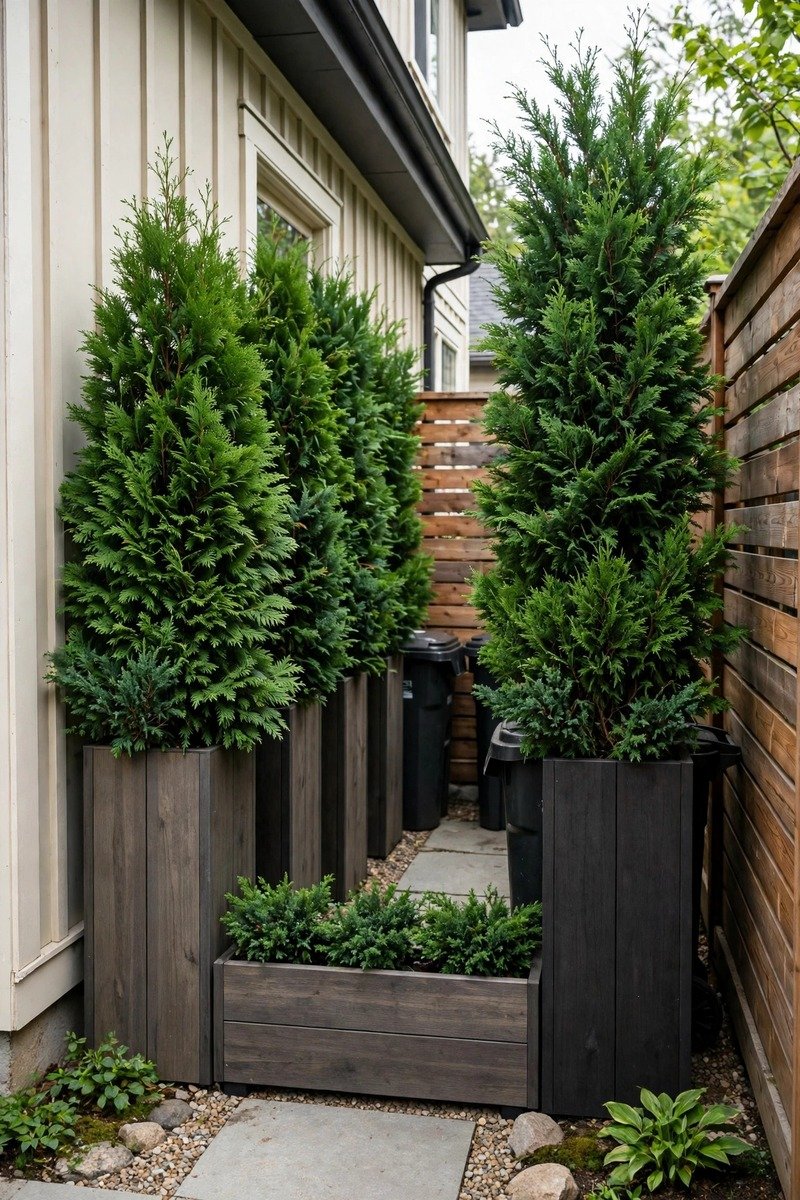
9. Hide Trash Cans and Utility Boxes With Tall Planters
A few tall planters in an L shape can hide trash cans, recycling bins, and utility boxes from the street. The pots block the view while they leave a gap at the back for access.
Pro tip: Use pots 3 to 5 feet tall with dense evergreens or tall grasses inside. Three pots cost about 120 to 250 dollars, and leave a 2 foot gap at the back.
Patios, Walkways and Outdoor Rooms
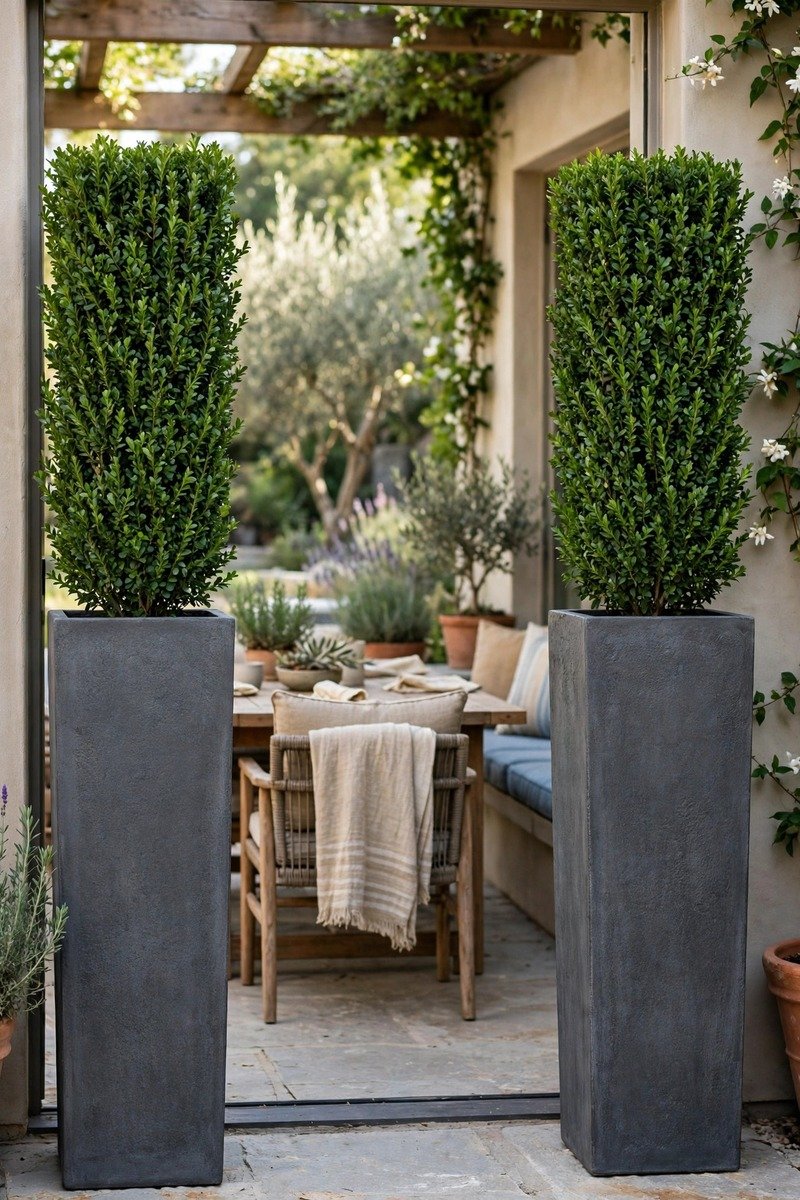
10. Frame a Patio Entrance With Matching Tall Planters
Two matching tall planters at a patio entrance work like posts. They mark where the patio starts and give the seating area a clear edge, so the yard feels like a set of rooms.
Pro tip: Use pots 28 to 34 inches tall with the same plant in each one, such as boxwood or ornamental grass. A matching pair costs about 70 to 180 dollars.
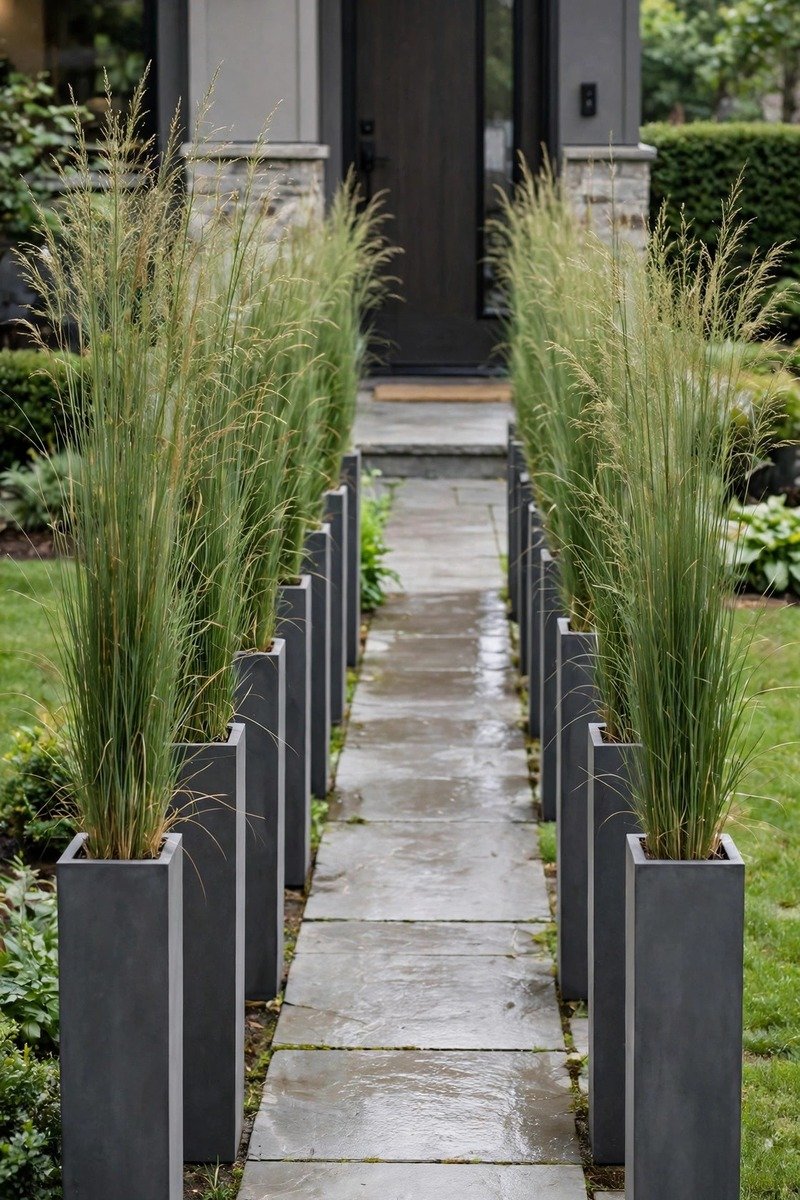
11. Line a Walkway With Slim Tall Planters
Slim tall planters along a walkway lead guests to the door in a clean, even rhythm. The narrow pots take little ground space, so they suit front paths that are only 3 to 4 feet wide.
Pro tip: Use rectangular pots 10 to 14 inches deep with upright grasses or compact evergreens. Space them 3 to 4 feet apart, and budget about 40 to 80 dollars per pot with plants.
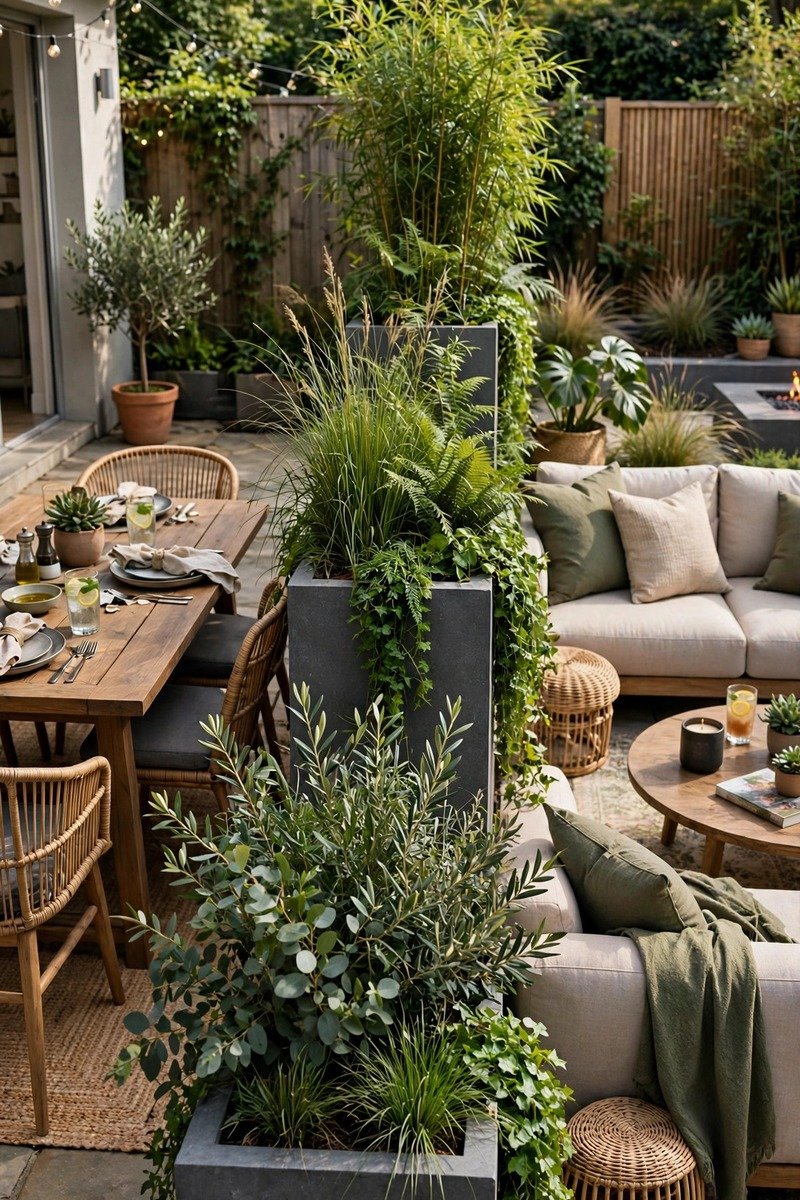
12. Divide the Yard Into Rooms With Tall Planters
A row of tall planters can split one open yard into a dining spot and a lounge spot. The pots act as a movable wall, so you can change the layout when the season changes.
Pro tip: Use three tall planters in a straight or staggered line, each 30 inches tall. Three pots with plants cost about 150 to 300 dollars.
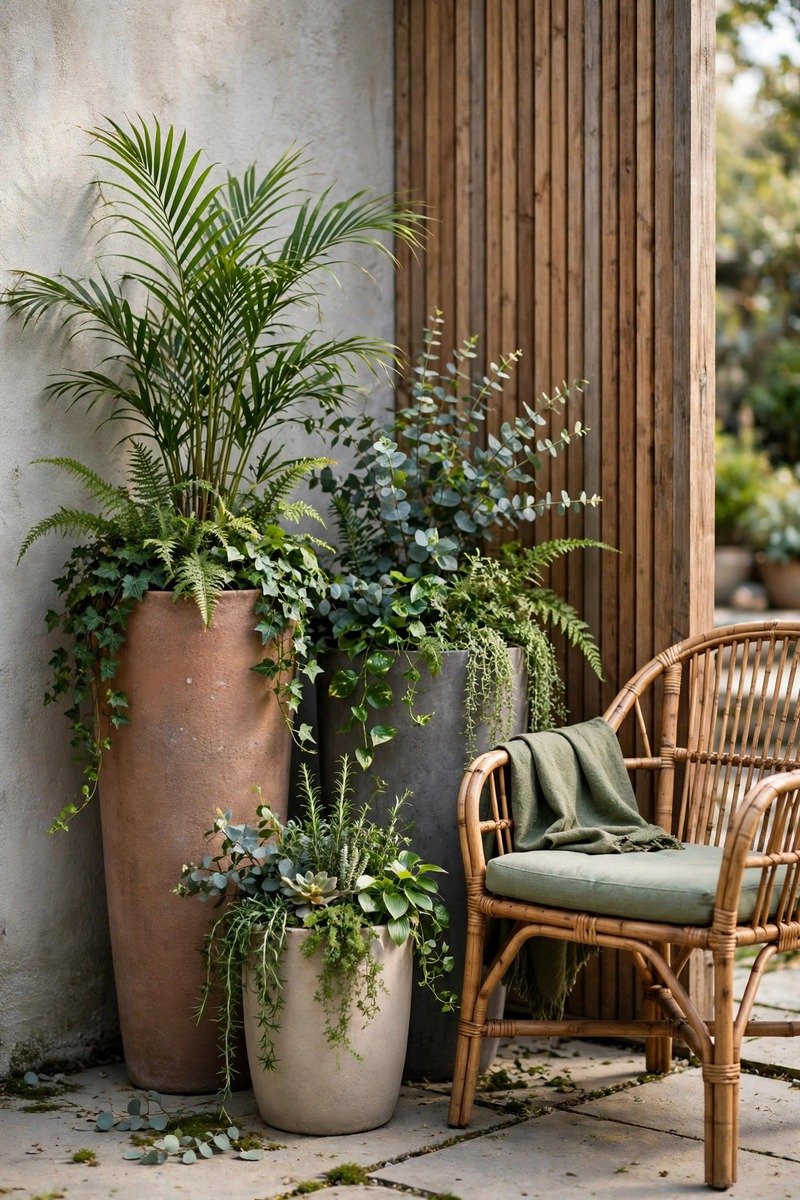
13. Build a Corner Retreat With Grouped Tall Planters
An empty patio corner turns into a quiet retreat with three or four tall planters grouped around it. Mix heights and plants, add one chair, and the corner becomes a place to sit.
Pro tip: Place the tallest planter at the back and step the heights down toward the front. A group of three pots costs about 120 to 240 dollars.
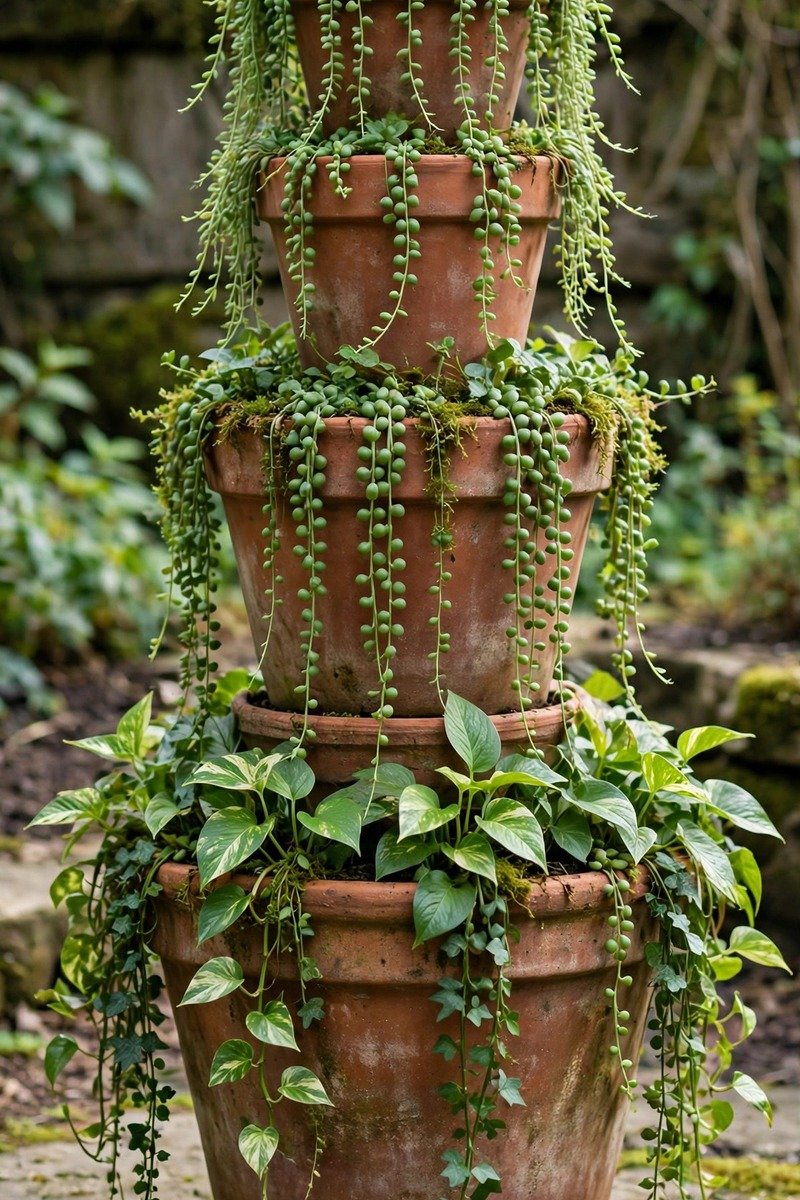
14. Stack Tall Planters Into a Vertical Tower
A stacked planter tower takes height to the next level. A 30 inch pot at the base, a 20 inch pot set on top of its soil, and spillers falling down the sides make one bold column of plants.
Pro tip: Use a heavy base pot and center the top pot, so the tower stays stable in wind. Two pots and plants cost about 60 to 130 dollars.
Statement Plants in Tall Pots
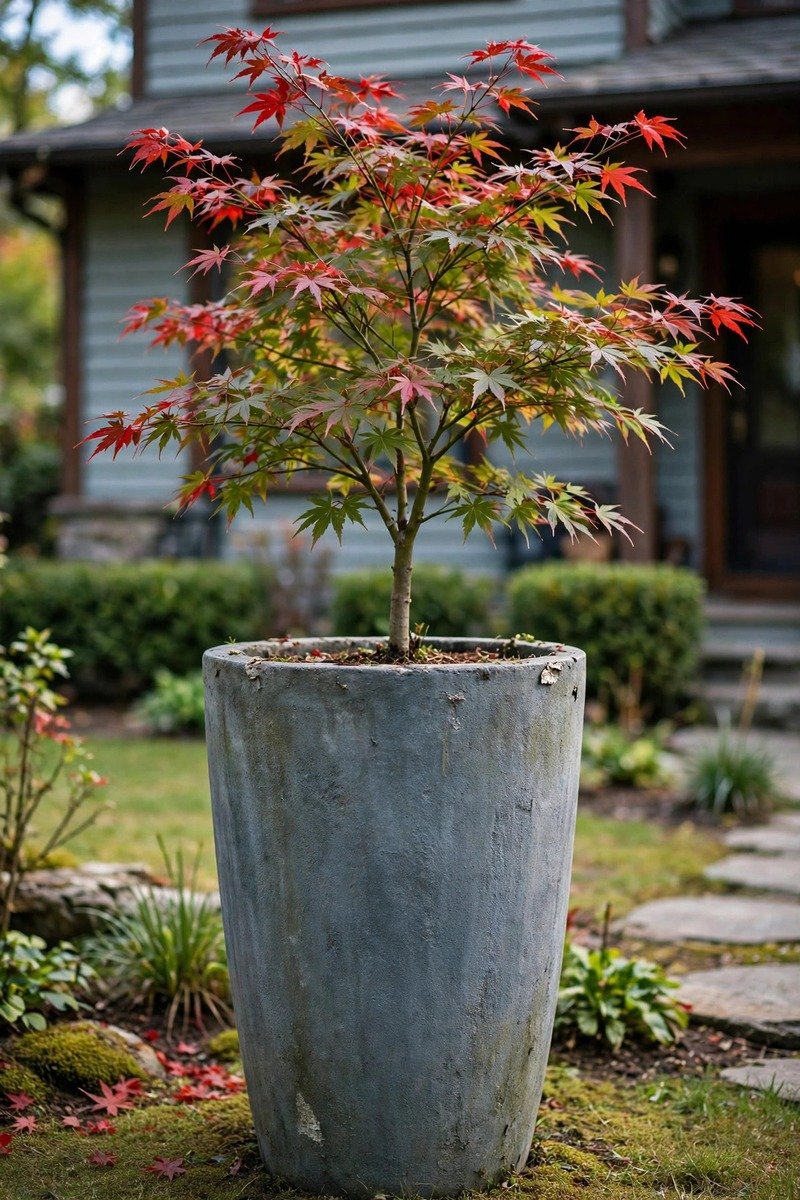
15. Grow a Small Tree in an Oversized Tall Planter
A small tree in an oversized tall planter is the strongest focal point a yard can get from pots alone. A Japanese maple, dwarf citrus, or bay tree in a deep pot gives shade, shape, and height.
Pro tip: Use a pot at least 24 inches wide and 24 inches deep with free draining soil. A small tree costs about 50 to 150 dollars, and refresh the top soil each spring.
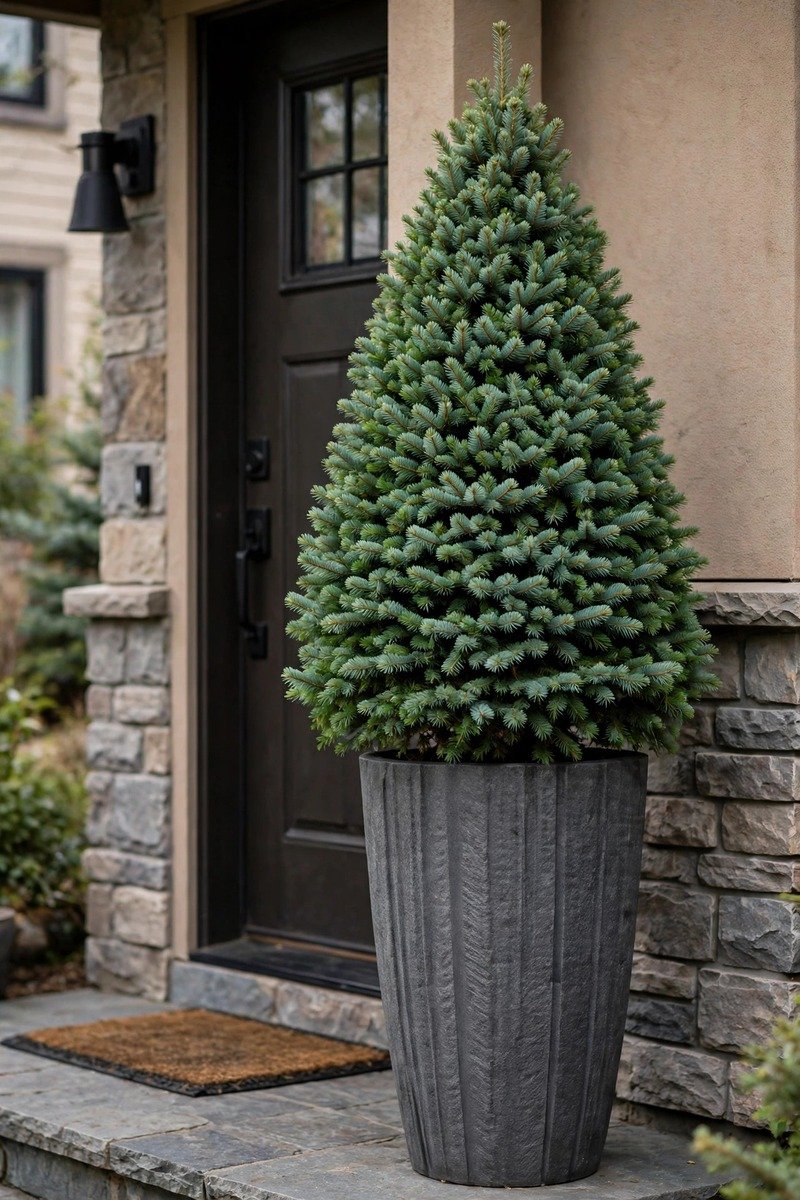
16. Plant an Alberta Spruce as a Single Statement
An Alberta spruce in a tall planter is a neat cone of green that looks good in every season. It suits front doors, porch corners, and driveway edges, and it takes lights well in winter.
Pro tip: Pick a pot 20 to 24 inches wide so the spruce has root room for several years. A young spruce costs about 30 to 60 dollars, and water it well in fall before the ground freezes.
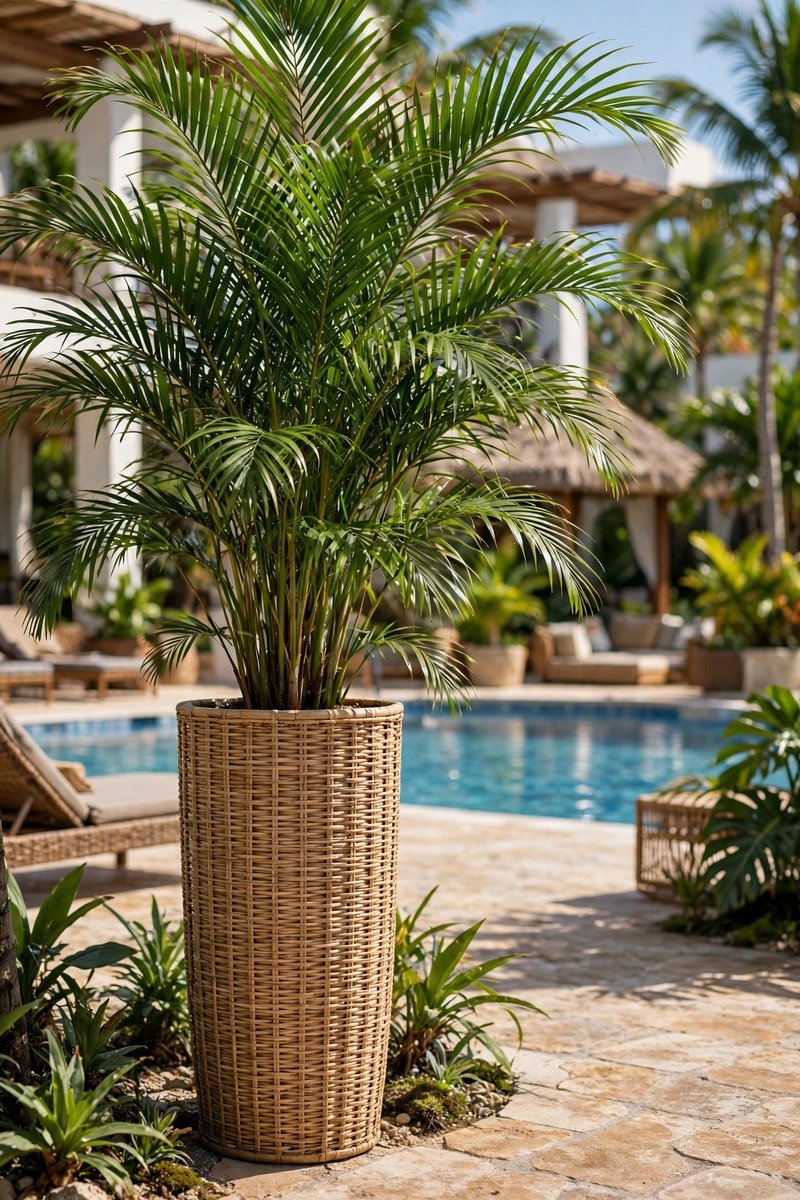
17. Go Tropical With a Palm or Dracaena
A palm or dracaena in a tall planter brings a resort feel to a patio or pool deck. The long leaves and tall stems read as tropical at once, and the pot lifts the leaves above chairs and tables.
Pro tip: Use a self watering tall planter if you can, since tropicals dry out fast in hot sun. A Kentia palm costs about 50 to 110 dollars, and move it to shelter when nights drop below 50 degrees.
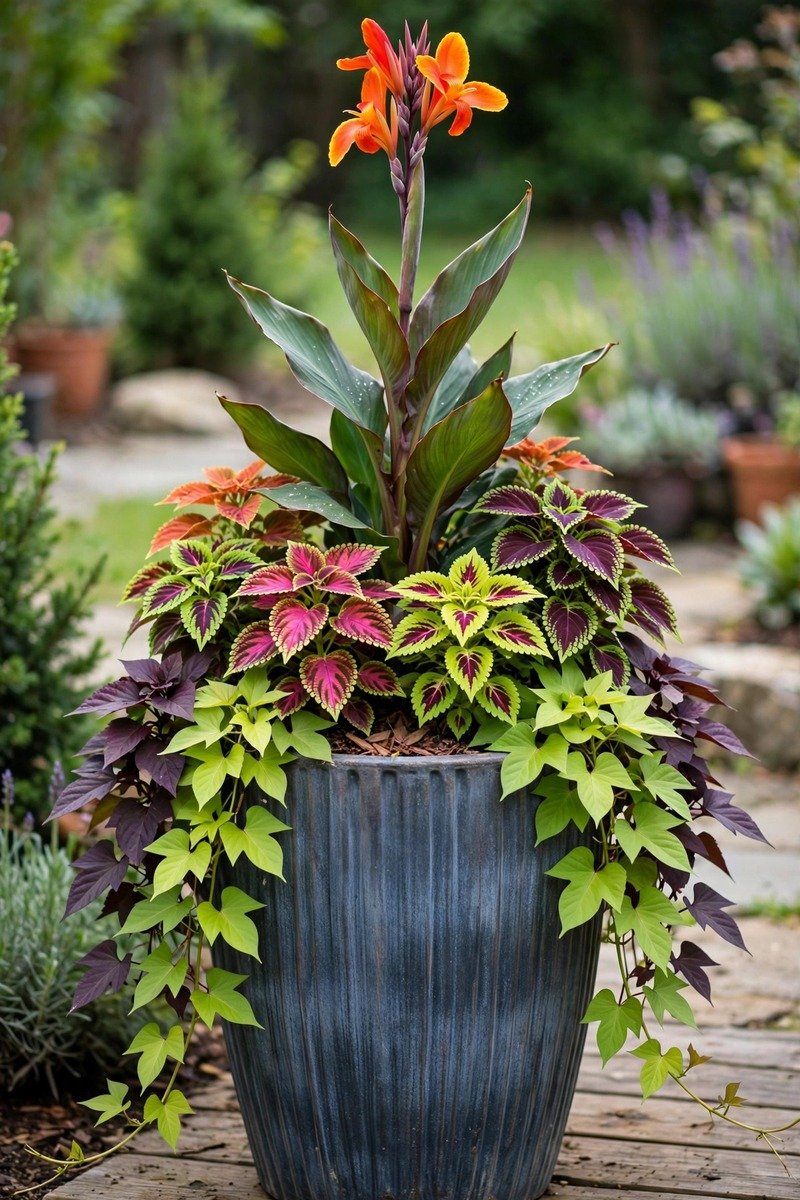
18. Build a Thriller Filler Spiller Tall Planter
The thriller filler spiller method works best at tall scale. A tall canna lily or dracaena stands in the center, coleus or petunias fill the middle, and sweet potato vine spills over the rim.
Pro tip: Plant the thriller first in the center, then add 3 to 5 fillers around it, then 2 to 3 spillers at the edge. One full planter costs about 35 to 70 dollars in plants.
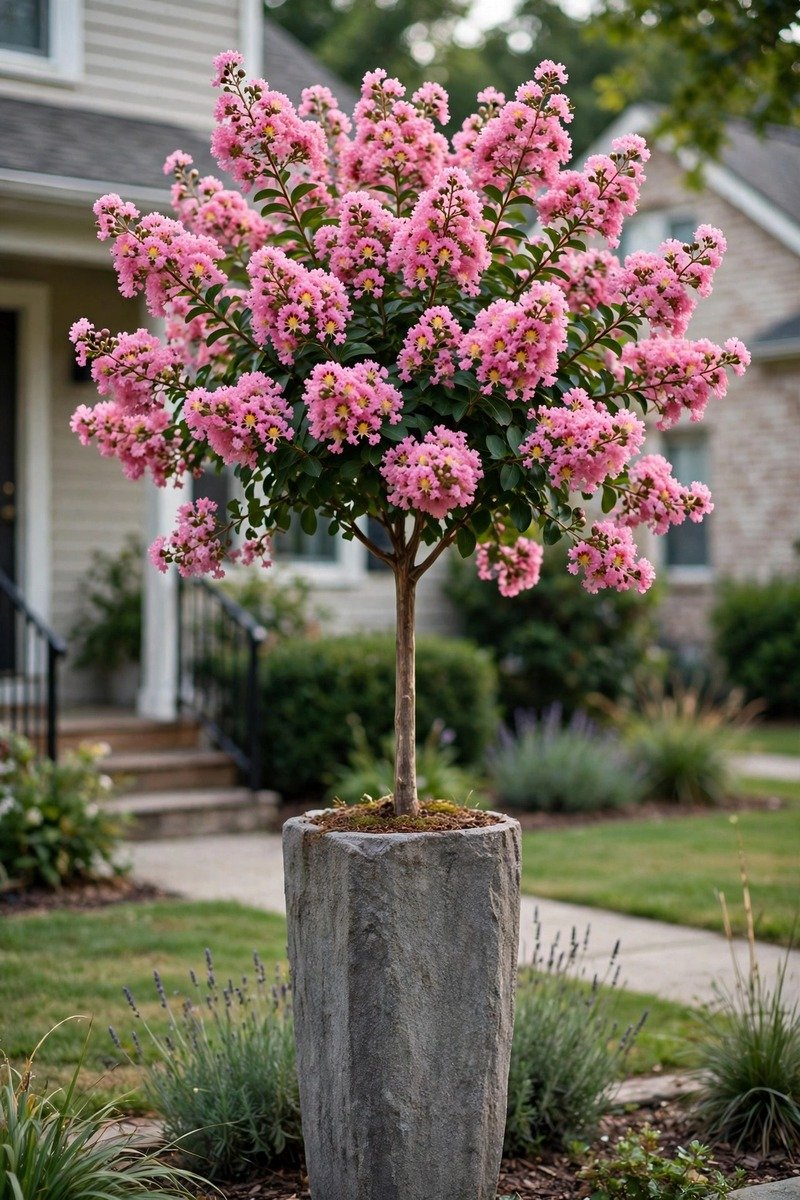
19. Add Color With a Flowering Crape Myrtle Standard
A crape myrtle trained as a small standard tree in a tall planter blooms for months. The flowers sit above the pot at eye level, so the color reads from the street.
Pro tip: Use a pot at least 22 inches wide and prune the standard in late winter to keep one clear trunk. A dwarf crape myrtle costs about 40 to 80 dollars.
Style and Finishing Touches
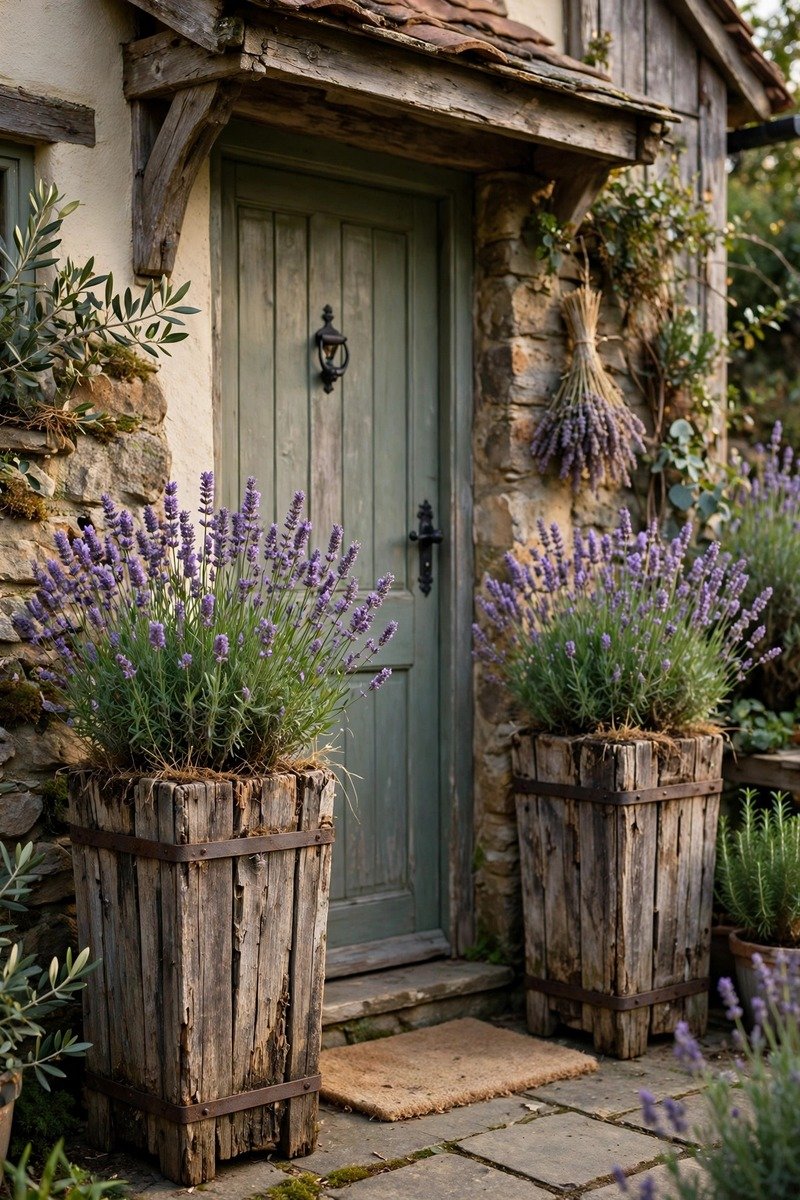
20. Choose Rustic Wood or Terracotta for Cottage Charm
Rustic tall planters in weathered wood or aged terracotta suit cottage and farmhouse homes. The warm texture softens the height, so the pots feel welcoming.
Pro tip: Seal wood planters inside with a liner to slow rot, and seal terracotta outside if winters freeze. A rustic wood tall planter costs about 60 to 140 dollars.
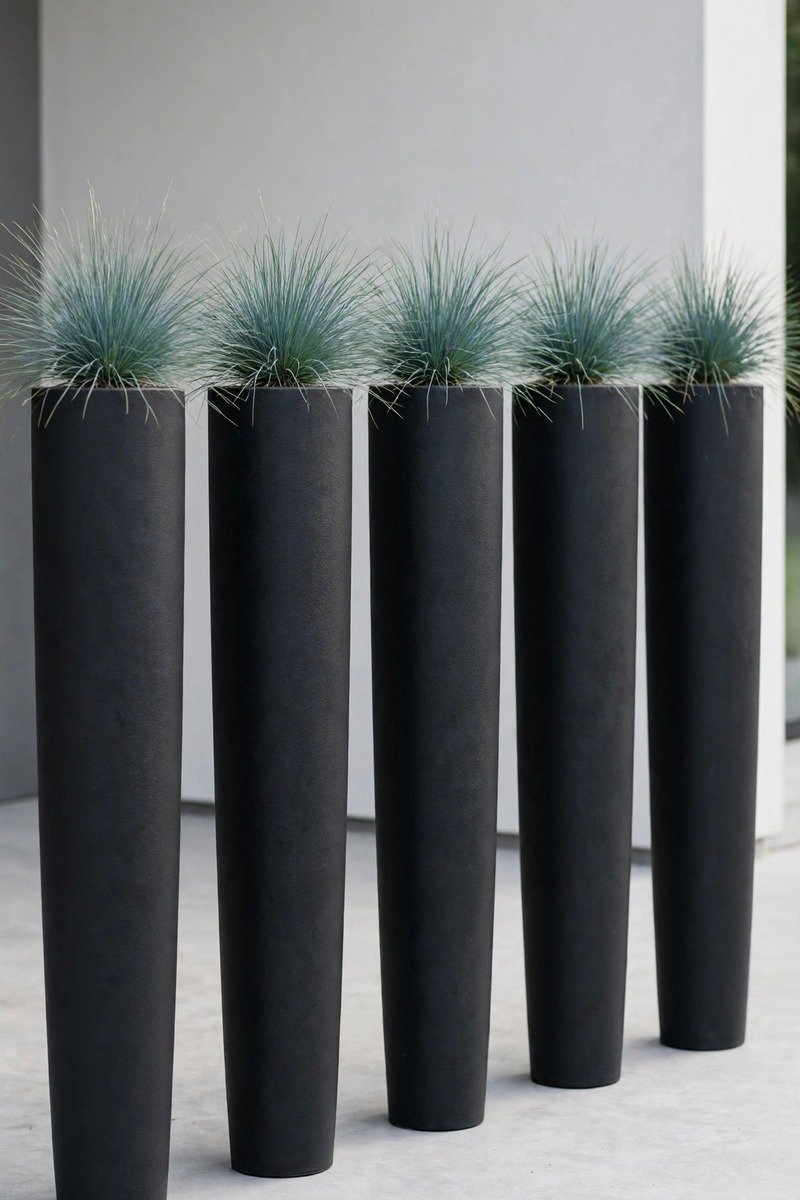
21. Repeat Matte Black Planters for a Modern Look
Five identical matte black tall planters in a straight line make a strong modern statement. The repetition reads as design, and one simple grass in each pot keeps the look calm.
Pro tip: Use pots of the same size and plant blue fescue grass in each one for a clean, even line. Five matte black planters cost about 150 to 300 dollars.
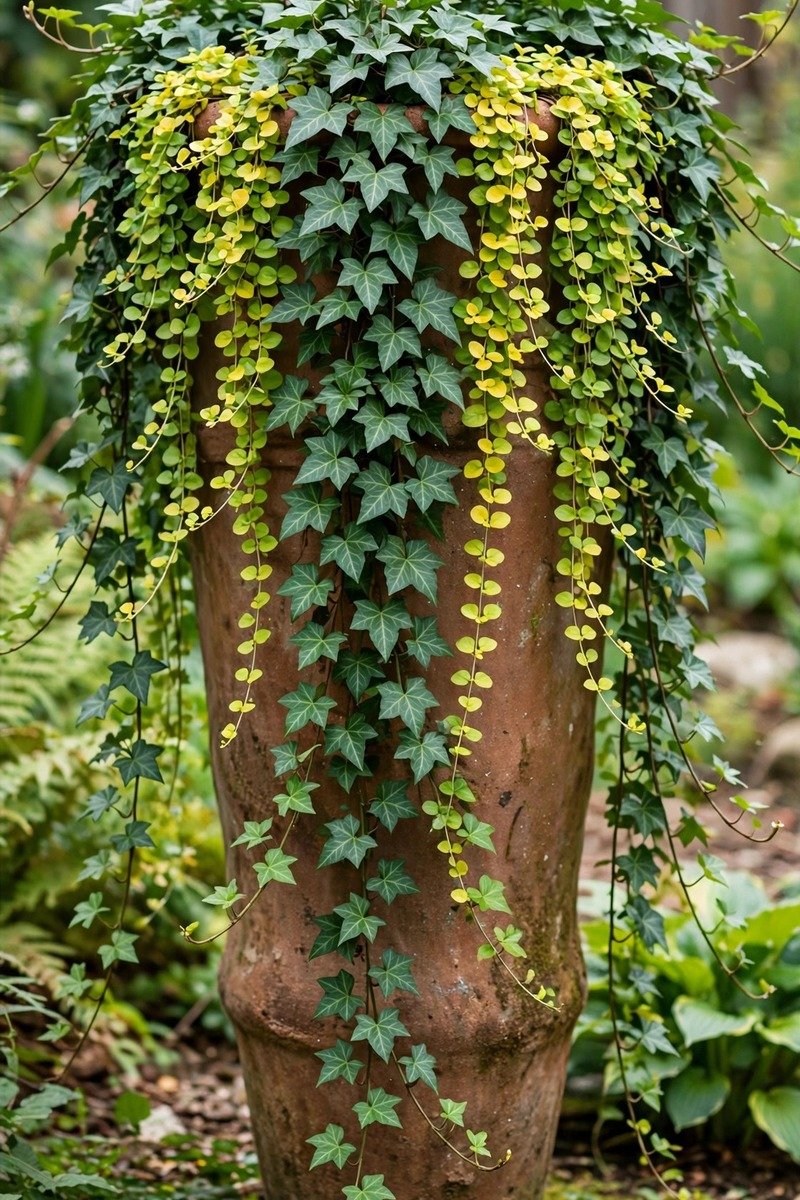
22. Soften Tall Pots With Trailing Spillers
Trailing plants soften the hard vertical lines of tall pots. Ivy, creeping jenny, or sweet potato vine falls down the sides and links the pot to the ground. For more ideas on styling pots at the door, see our front porch planter ideas as a different guide.
Pro tip: Plant 2 to 3 spillers at the rim and trim them to 12 to 18 inches long. A spiller plant costs about 5 to 12 dollars, and trim it once a month in summer.
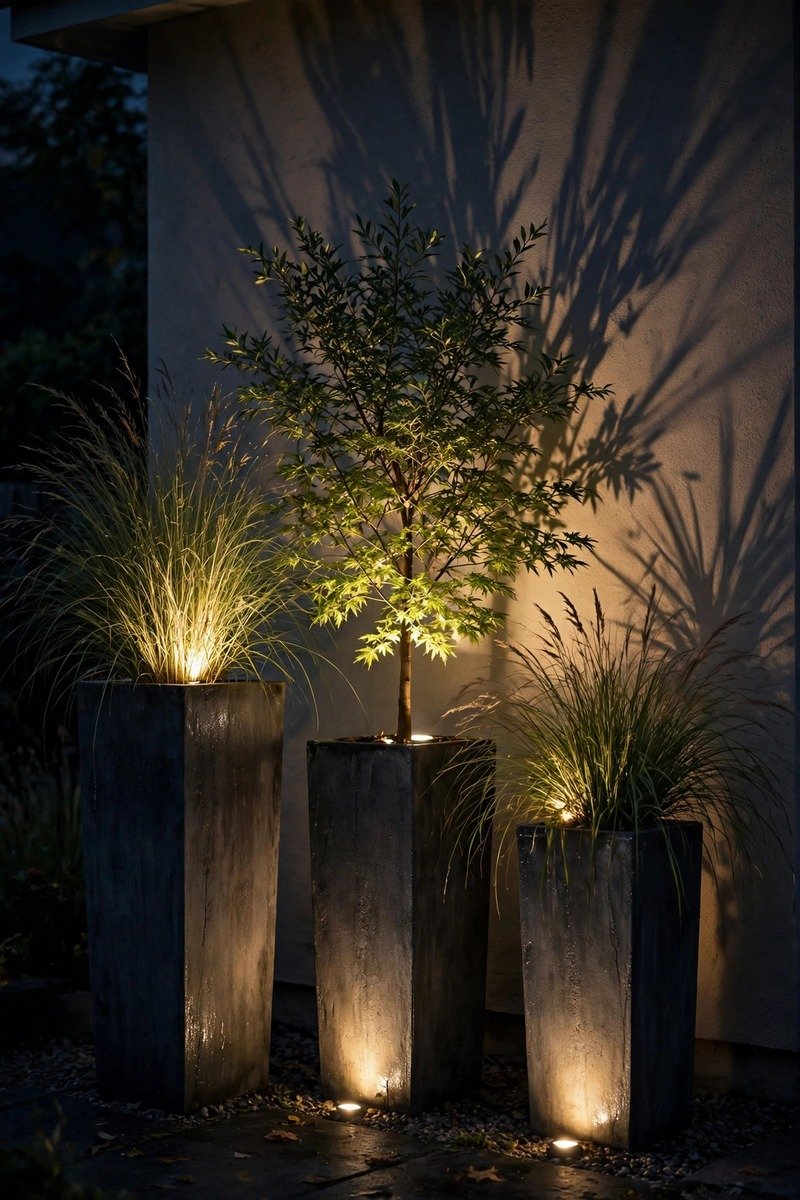
23. Light Tall Planters From Below at Night
Small lights under tall planters turn them into night features. A low LED spot aimed up at grasses, bamboo, or a small tree makes long shadows on the wall and marks the path after dark.
Pro tip: Use solar or low voltage LED spotlights rated for outdoor use, one light per planter. A set of four lights costs about 25 to 50 dollars, and angle each light at 45 degrees. For more night ideas, see our outdoor string light ideas as a different guide.
Wind and Weight: Keep Tall Planters Standing
A tall planter is a sail, and wind is its enemy. A planter 36 inches tall with a full plant can tip in a wind of 25 miles per hour if it is empty at the base. Add ballast before you add soil: put 3 to 4 inches of gravel or a paving stone in the bottom, about 20 to 30 pounds of weight, so the centre of gravity stays low. Place tall planters against a wall or a railing on the windy side, because a wall breaks the wind before it reaches the pot. On an exposed patio, group tall planters in twos or threes, because a group braces itself and a single pot stands alone. Tall outdoor planter ideas work best when the planter stays upright, because a tipped planter breaks the pot, the plant and the patio.
Height by Door, Fence and Ceiling
Choose the height by what stands next to the planter, not by the plant alone. Beside a front door, a planter 30 to 36 inches tall suits a standard 80 inch door, because the plant rises to about eye level. Beside a 6 foot fence, a planter 24 to 30 inches tall is enough, because the fence already gives the height. Under a porch roof, leave at least 12 inches between the top of the plant and the ceiling, so the plant has room to grow and the roof does not crush it. A planter taller than 40 inches suits a wide open yard, not a narrow entry, because a very tall pot on a narrow step blocks the view. Measure the door and the fence before you order, because a tall planter is heavy to return.
Soil Volume, Drainage and Watering Tall Pots
A tall planter holds more soil than it looks, and that soil behaves differently. Fill the bottom third with a light filler, such as upside down pots or packing foam, and put soil only in the top 12 to 18 inches, because roots do not reach the bottom and a full pot of soil weighs over 100 pounds. Drill a drainage hole about 1 inch from the base if the pot has none, and check it every spring, because a blocked hole turns a tall pot into a swamp. Water tall pots slowly, until water runs from the hole, because a fast pour runs down the sides and leaves the centre dry. In summer, a tall pot in full sun needs water every day, and a pot in shade needs water every two to three days. Use a moisture meter, about 10 to 15 dollars, and water only when the top 2 inches of soil feel dry.
Tall Planter Costs by Material
The material decides the price, the weight and the life of a tall planter. Fibreglass planters cost about 60 to 150 dollars each, weigh little, and survive frost without cracking. Terracotta planters cost about 40 to 100 dollars each, look warm and classic, but crack in a hard frost if they hold wet soil. Wood planters cost about 50 to 120 dollars each, and need a liner and a yearly coat of sealer to last. Concrete planters cost about 80 to 200 dollars each, never tip in wind, but weigh over 80 pounds empty and cannot be moved alone. As a typical range, a bag of potting soil costs about 8 to 15 dollars, and a paving stone for ballast costs about 5 to 10 dollars. Buy fibreglass for a windy spot, terracotta for a sheltered porch, and concrete for a spot that will never move.
Common Mistakes to Avoid
- Picking a pot that is too light. A tall pot with a tall plant tips in strong wind, so weight and a wide base come first.
- Filling the whole pot with soil. Roots only use the top part, so use light filler at the bottom with landscape fabric over it.
- Skipping drainage holes. Water pools at the bottom of a deep pot and rots roots, so check the holes before you plant.
- Mixing too many pot styles. Five different finishes look random, so repeat one material and one color.
- Planting running bamboo. Running bamboo spreads fast and cracks pots, so always pick a clumping type.
- Blocking the walkway. Tall pots need clear space, so measure the path before you set a pot down.