
The kitchen window sill is a small strip of space, but it can change how the whole kitchen feels. Most kitchens have one above the sink. With a little thought, that narrow ledge can hold green plants, useful items, and pretty objects.
This guide gives you 23 kitchen window sill ideas that bring life to the space. Every idea stays on the sill itself. Pick two or three that fit your light and sill depth, then build from there. For ideas that style the counter below the window, see our kitchen counter decor ideas as a separate guide.
Quick Picks
- Start with one living plant. A basil pot or a small pothos adds life at once, even on a plain sill.
- Keep the sill shallow in mind. Most sills are only 5 to 10 cm deep, so choose small pots and slim items.
- Group items in threes. Three small objects look planned, while ten small objects look messy.
- Leave one empty gap. An empty patch of sill lets light through and keeps the window easy to open.
- Choose water safe materials. The sill above a sink gets splashed, so glass, ceramic, stone, and sealed wood work best.
Did You Know?
A south facing window can give herbs six hours of direct sun a day, enough for basil, rosemary, and thyme. A north facing window gives soft light all day, which suits pothos and succulents. Check the light before you buy a plant.
Before You Start
- Measure the depth and length of your sill before you buy pots, trays, or jars.
- Check how the window opens, so nothing blocks the handle or the latch.
- Use a tray under every plant to protect the sill from water marks.
- Keep tall items away from the centre if they block your view.
- Wipe the sill once a week, since cooking steam and dust settle there fast.
Fresh Green on the Sill
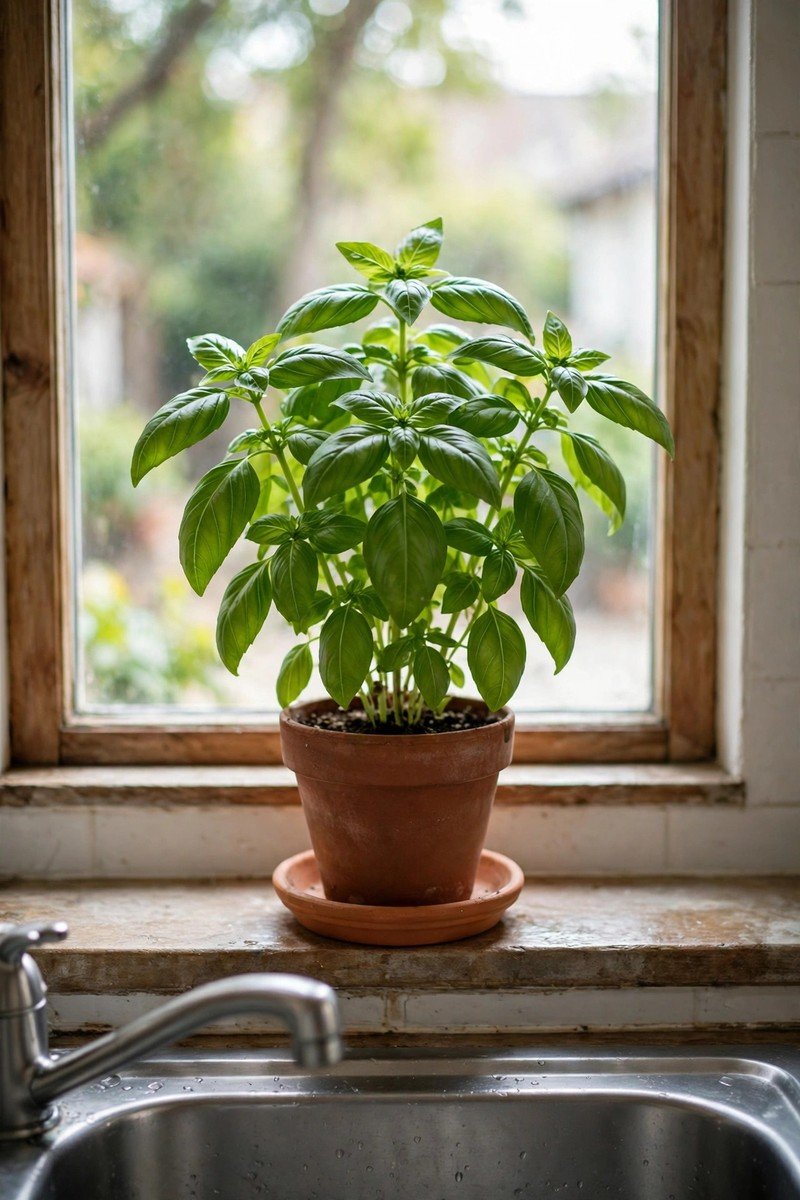
1. Grow a Basil Pot
A basil pot is the classic kitchen sill plant, and it earns its place. The leaves smell fresh, and you can pick a few for pasta or salad in seconds.
Pro tip: Use a 12 to 15 cm pot with a drainage hole and a saucer. Basil needs about 6 hours of sun a day and water when the top 2 cm of soil feels dry. A small pot costs about 5 to 10 dollars.
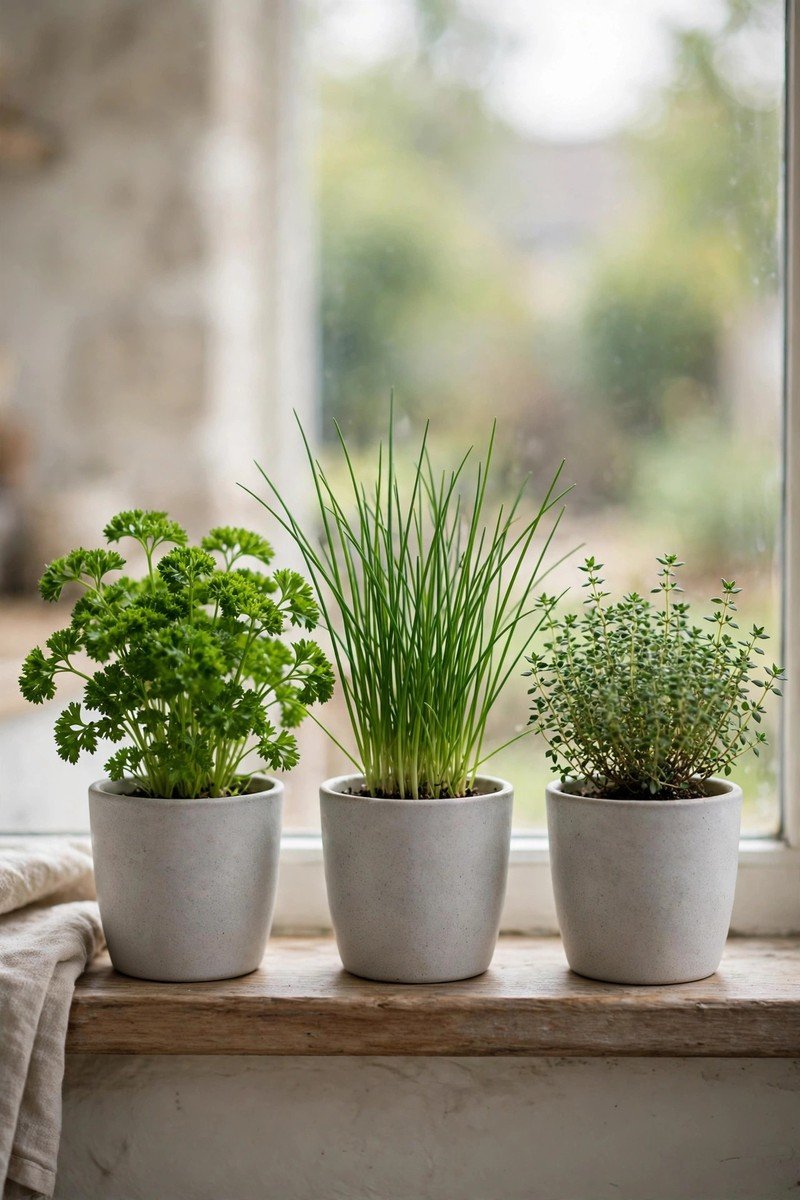
2. Plant a Row of Small Herbs
Three small herb pots in a row turn the sill into a garden. Parsley, chives, and thyme sit neatly side by side in matching pots.
Pro tip: Use identical pots that are 10 cm wide so the row stays even. Leave 2 cm between pots for air flow. Three pots and soil cost about 15 to 25 dollars.
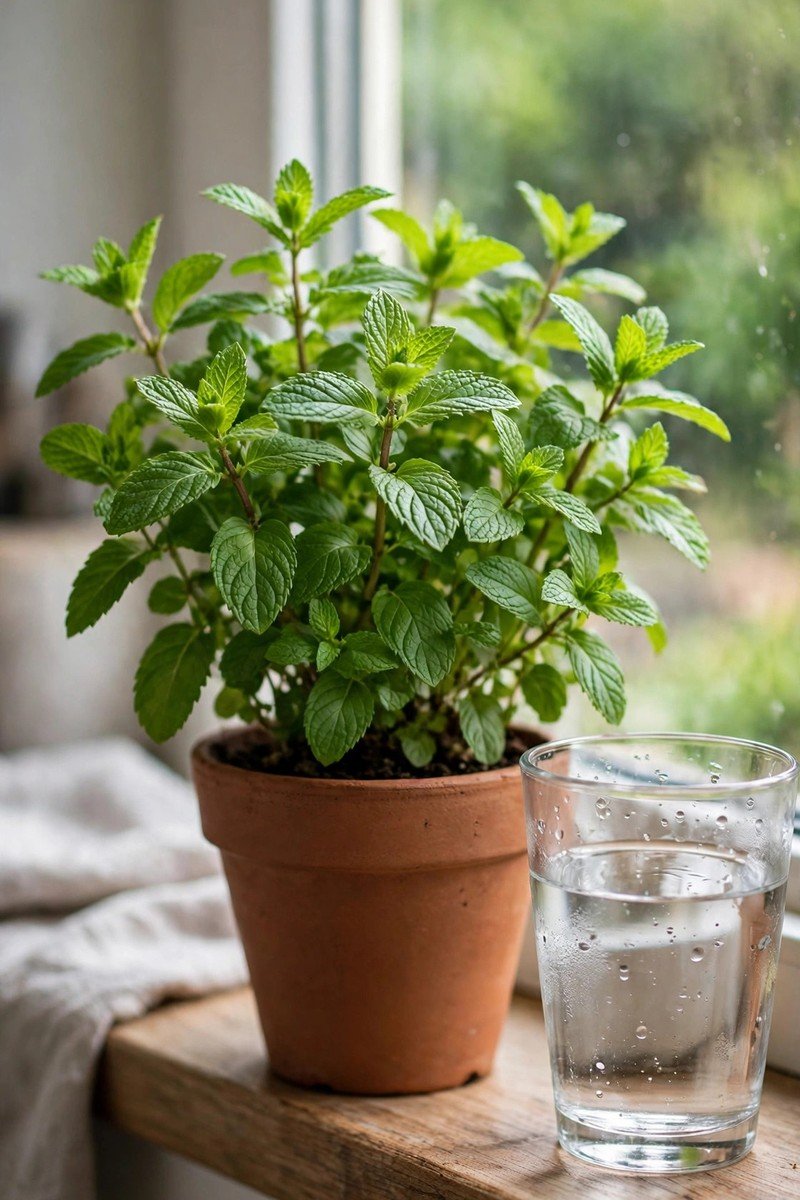
3. Keep a Mint Pot for Drinks
Mint grows fast and smells bright, which makes it perfect for a kitchen window. A few leaves lift a glass of water or a cup of tea, and the plant keeps coming back after you pick it.
Pro tip: Grow mint in its own pot, since it spreads fast and crowds other herbs. A 12 cm pot is enough. Pinch the top leaves weekly to keep it bushy, and water twice a week in warm weather.
4. Grow Microgreens in a Shallow Tray
Microgreens grow in a shallow tray on the sill, and they are ready to eat in about 10 days. Radish, pea shoots, and cress add fresh green to sandwiches with almost no effort.
Pro tip: Use a tray about 25 cm long and 15 cm wide with drainage holes. Sow seeds close together, mist daily, and cut shoots at 5 to 8 cm tall. Seeds cost about 3 to 6 dollars.

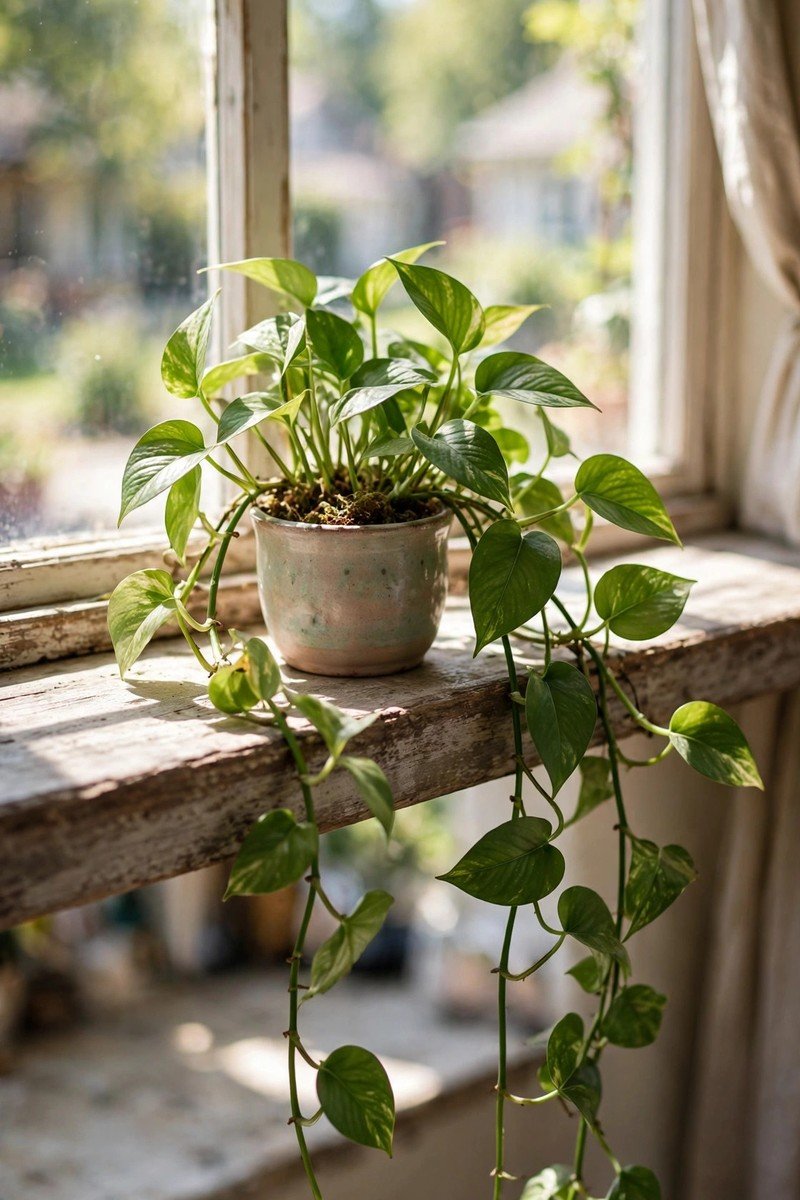
5. Place a Trailing Pothos in a Small Pot
A pothos adds soft green leaves that trail over the edge of the sill. It looks relaxed and full, and it forgives a missed watering.
Pro tip: Use a pot about 12 cm wide and trim the vines when they reach 30 cm long. Pothos likes bright light without direct sun and water about once a week. A small plant costs about 8 to 15 dollars.
6. Add a Small Succulent in a Ceramic Pot
A succulent brings a sculpted green shape to the sill with very little care. The thick leaves hold water, so it stays neat for weeks.
Pro tip: Use cactus soil and a pot with a drainage hole, since succulents rot in wet soil. Water once every two to three weeks with at least 4 hours of light a day. A small succulent costs about 5 to 12 dollars.

Useful Everyday Items
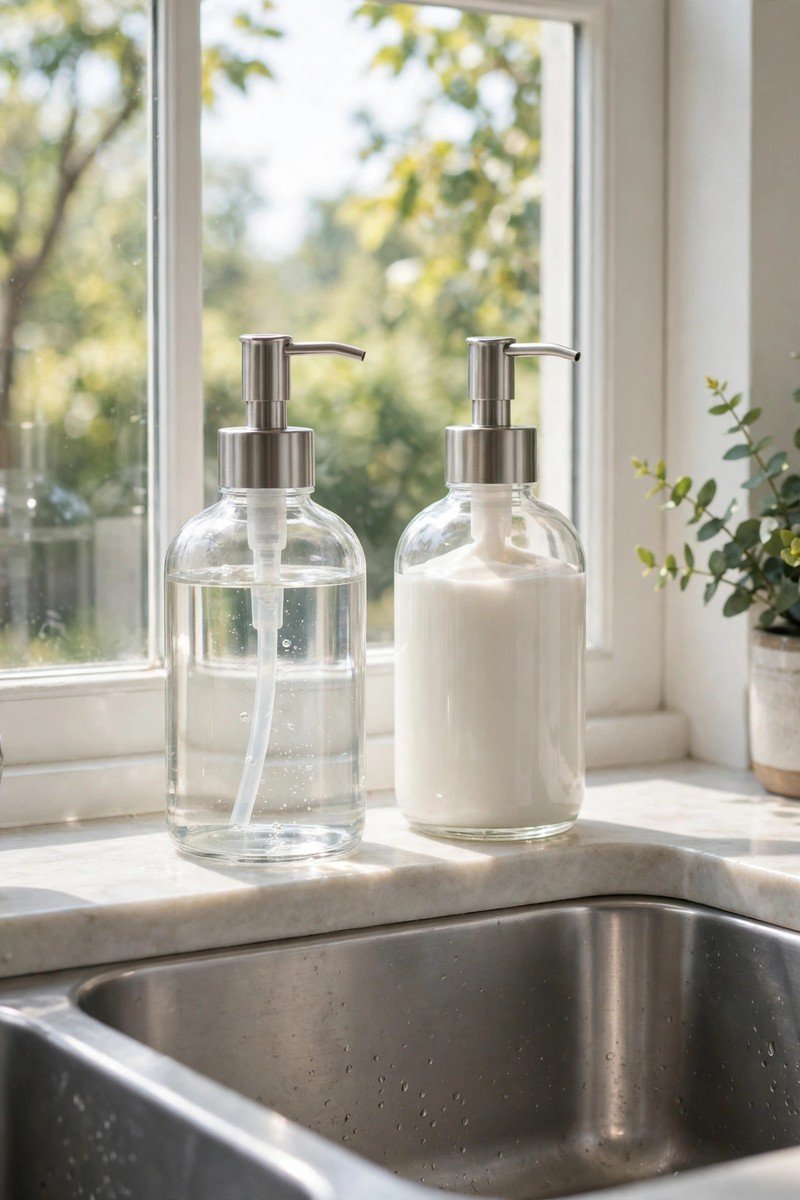
7. Set Out Matching Soap Dispensers
Matching soap and lotion dispensers turn a chore into a pleasure. The bottles sit where you wash your hands, and matching glass looks far better than plastic bottles.
Pro tip: Choose pump bottles about 250 ml in size with a wide base so they do not tip over. A pair costs about 12 to 25 dollars, and refills cost less than new pumps.
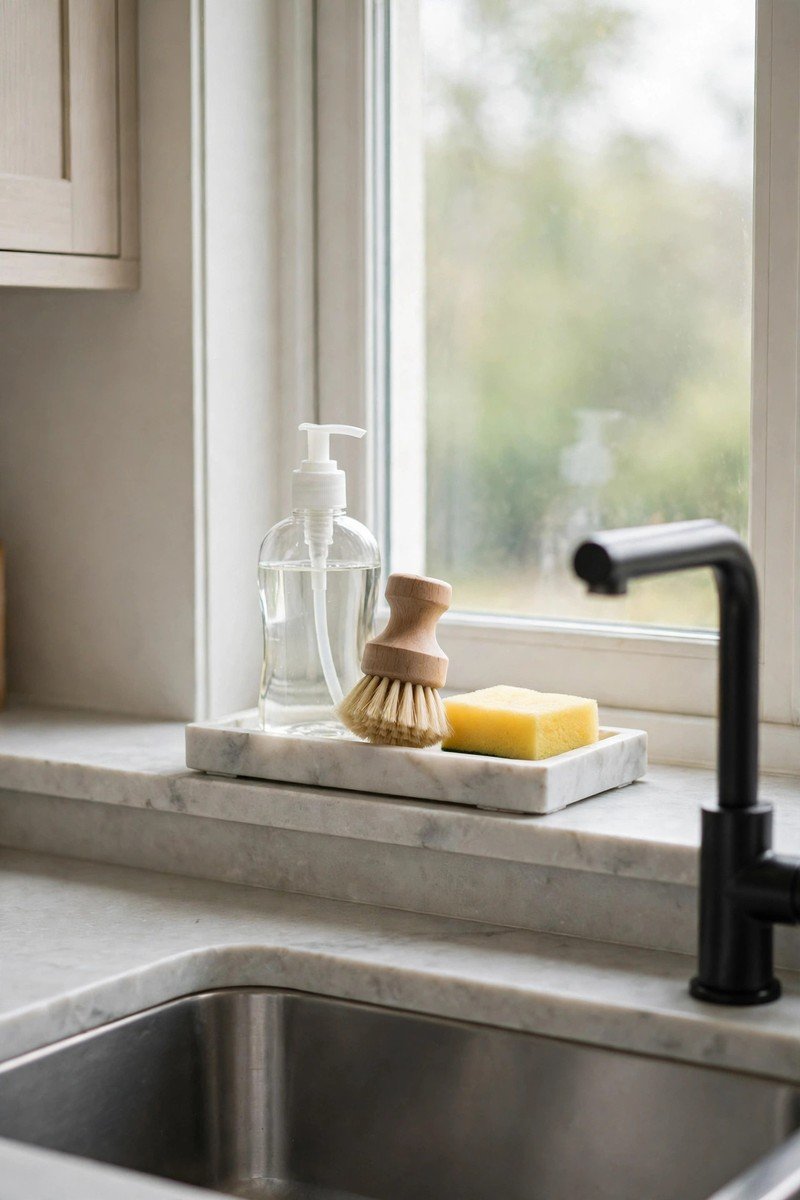
8. Corral Sink Items on a Small Tray
A small tray keeps soap, a brush, and a sponge in one tidy group. Without a tray they drift across the sill, but on a tray they look like a planned set.
Pro tip: Use a marble, wood, or ceramic tray about 25 cm long and 10 cm deep. Wipe it weekly to stop soap scum. A small tray costs about 10 to 20 dollars.
9. Keep a Sponge Holder on the Sill
A sponge holder lifts the sponge off the sill so it dries fast and stays clean. It stops the damp ring a wet sponge leaves on wood or paint.
Pro tip: Pick a holder with drainage slots and a drip tray underneath. A holder costs about 8 to 15 dollars. Replace the sponge every two to three weeks.

10. Store Wooden Spoons in a Small Jar
A small jar of wooden spoons keeps your most used tools within reach. The warm wood softens the hard lines of the sink, and the jar stops spoons sliding in a drawer.
Pro tip: Use a jar about 12 cm tall and 10 cm wide with a heavy base. Keep only four or five spoons in it. A sturdy jar costs about 8 to 15 dollars.

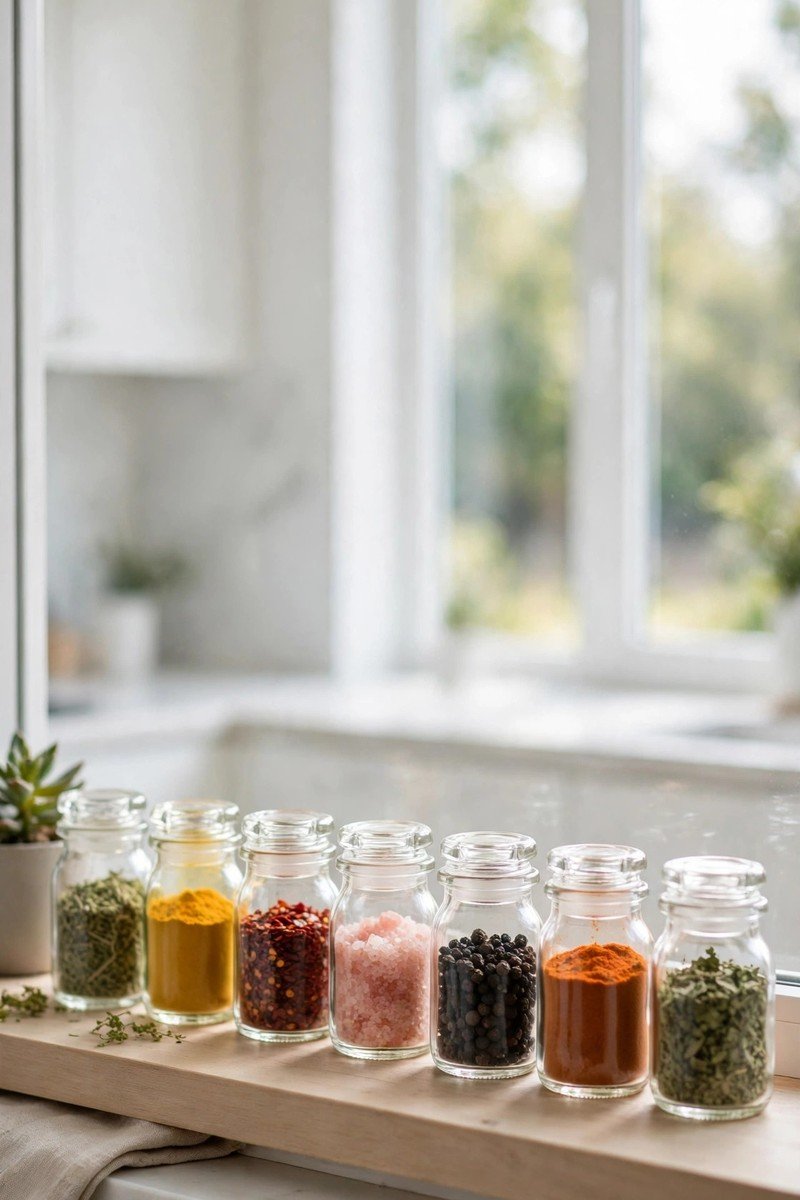
11. Line Up Small Spice Jars
Small spice jars on the sill put colour and scent right where you cook. Paprika and dried herbs look bright through clear glass, and you can reach them without opening a cupboard.
Pro tip: Use matching glass jars about 8 cm tall with tight lids, and keep them out of direct sun so the spices stay fresh. Label the lids so the colours show. A set of six jars costs about 12 to 20 dollars.
Pretty Objects and Light
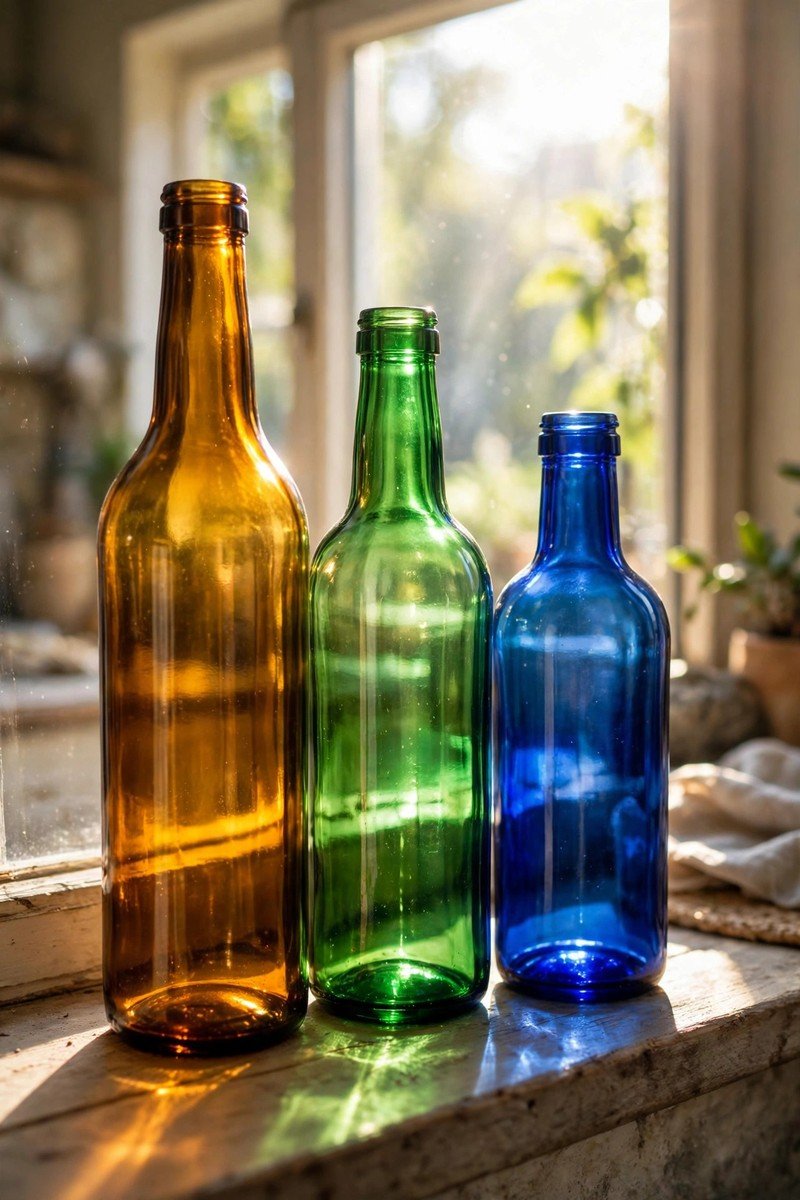
12. Display Colored Glass Bottles
Colored glass bottles catch the light on a sunny sill. Amber, green, and cobalt bottles look lovely empty, and three in different heights add shape.
Pro tip: Use bottles about 15 to 25 cm tall and place the tallest in the middle or at one end. Vintage bottles cost about 5 to 15 dollars each. Wash them inside before you display them.
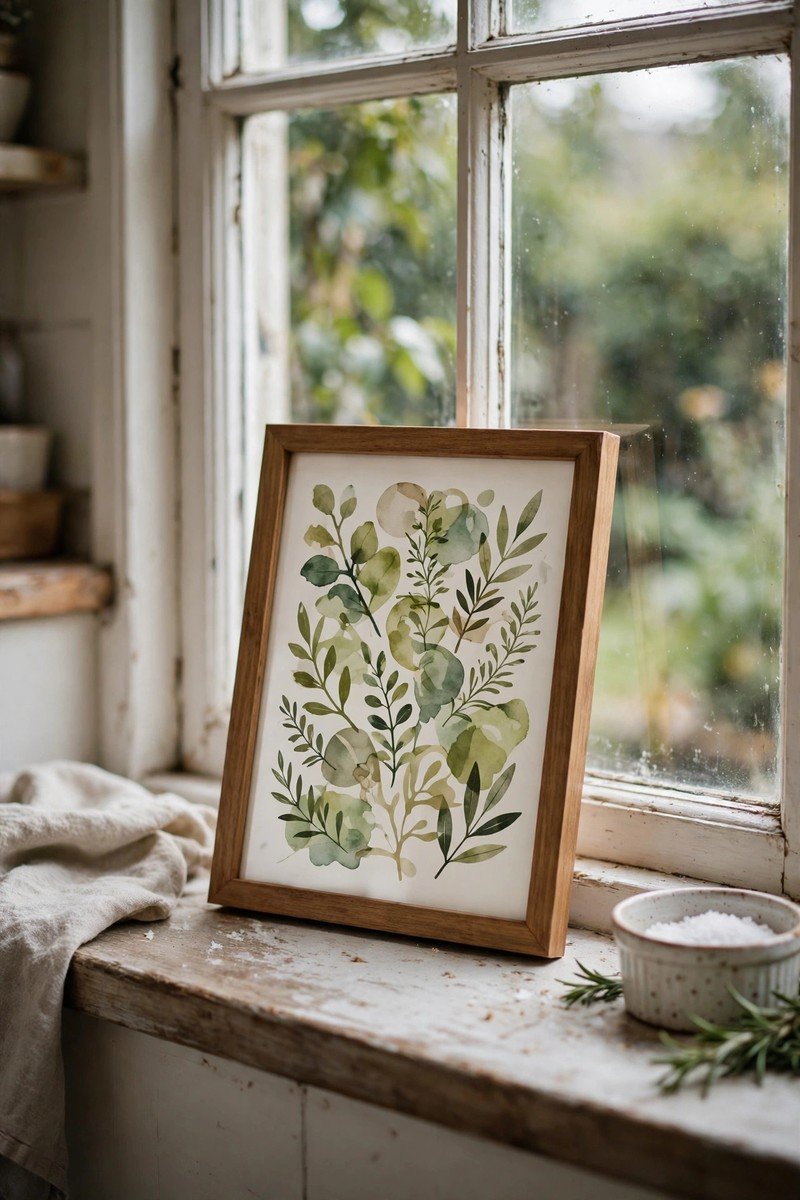
13. Lean a Small Framed Print
A small framed print leaned against the window adds art to the sill. A food print or herb chart suits a kitchen, and the lean feels casual and warm.
Pro tip: Use a frame about 15 by 20 cm with glass to protect the print from steam. Keep it 3 cm from the glass so air can move behind it. A small frame costs about 8 to 18 dollars.
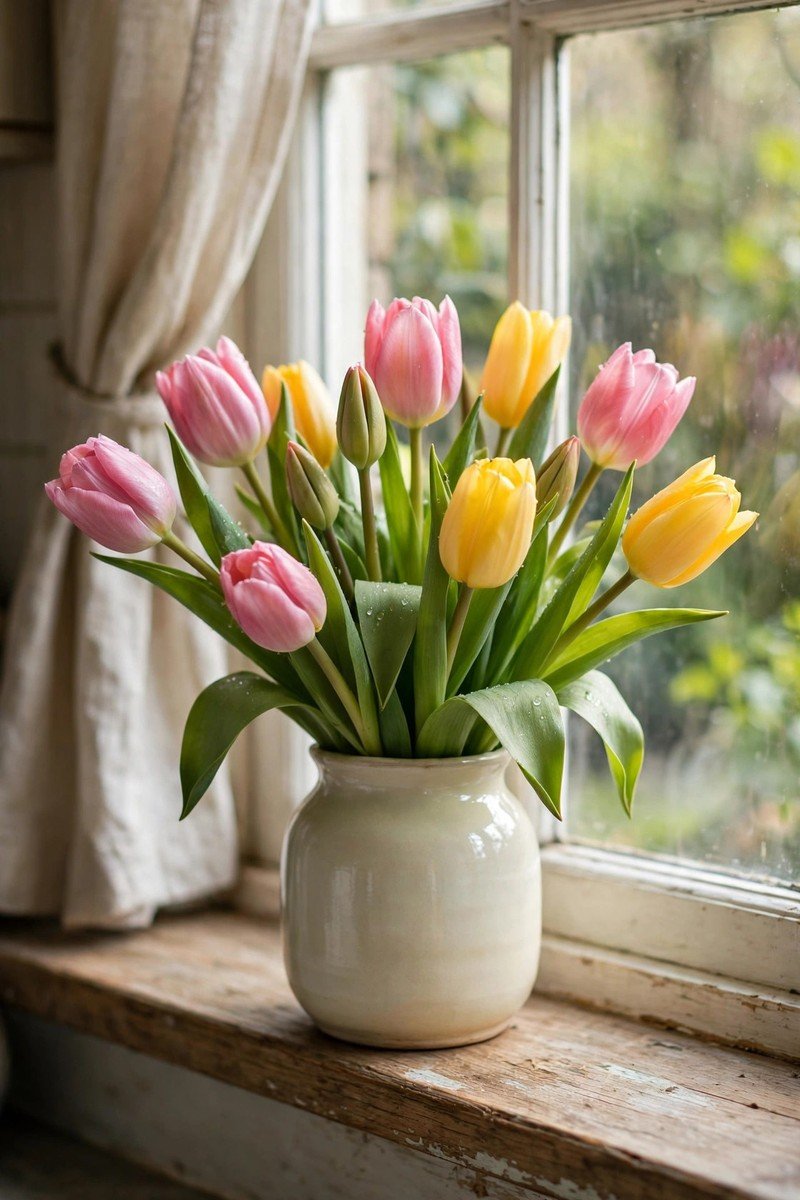
14. Place a Short Vase with Fresh Flowers
A short vase with fresh flowers brings colour and scent to the sill in minutes. Tulips or daisies all work, and the vase needs only a small patch of sill.
Pro tip: Use a vase about 12 to 15 cm tall so it does not block the view. Change the water every two days. Market flowers cost about 5 to 12 dollars and last about a week.
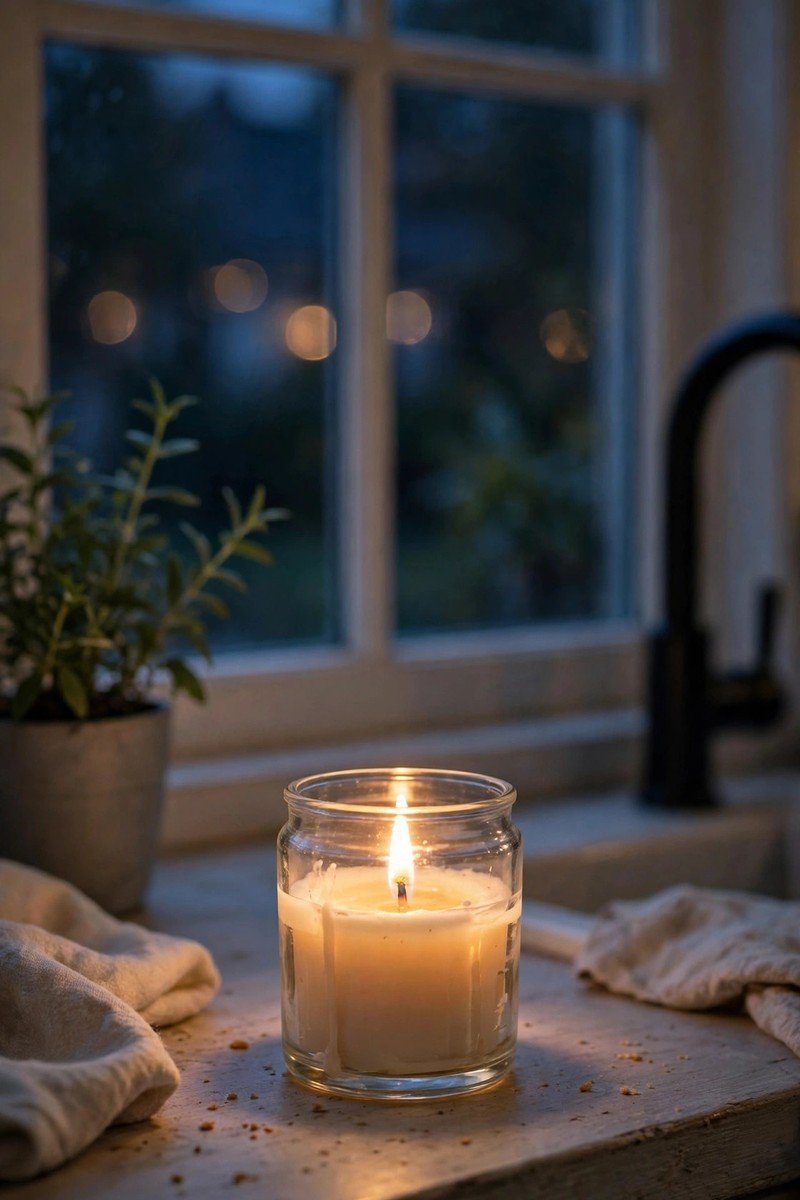
15. Add a Small Candle in a Glass Jar
A candle in a glass jar adds a soft glow in the evening. The glass protects the flame, and a citrus scent makes the room feel calm after cooking.
Pro tip: Use a jar candle about 8 cm wide and keep it at least 10 cm from curtains, plants, and paper. Burn it for 1 to 2 hours at a time. A good jar candle costs about 10 to 20 dollars.
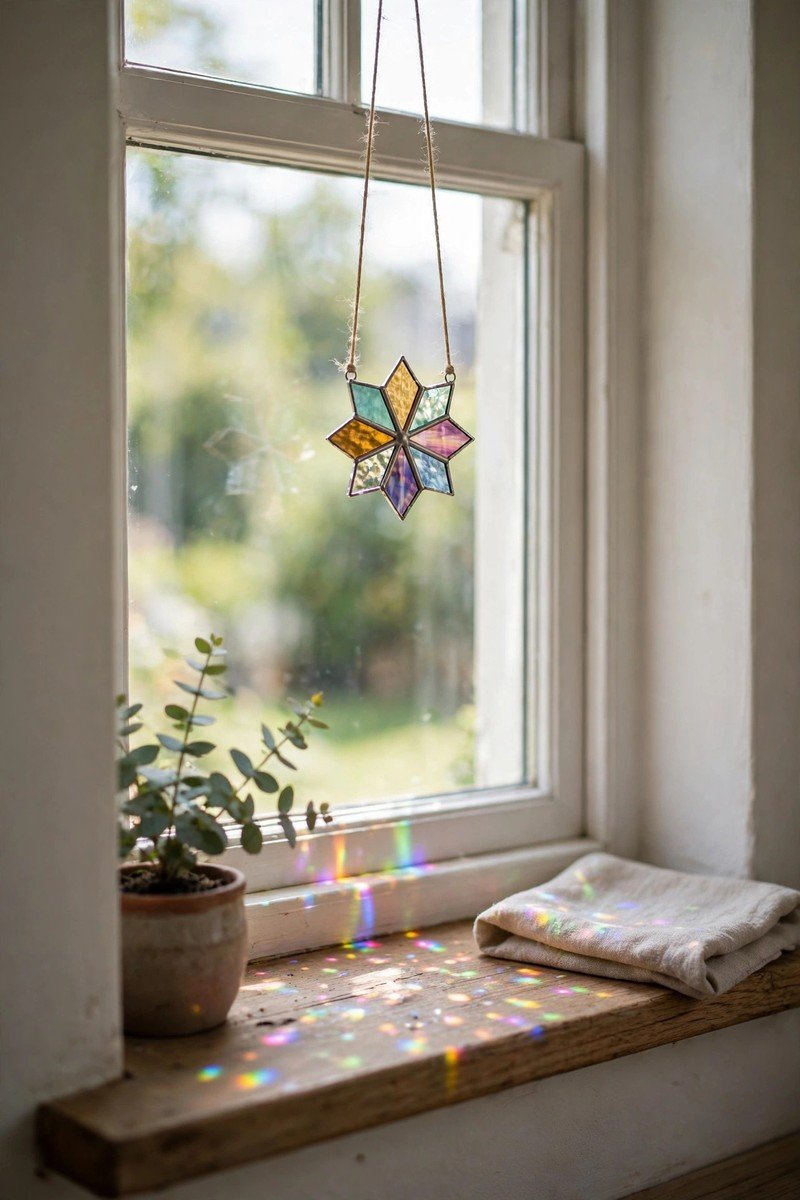
16. Hang a Tiny Suncatcher
A tiny suncatcher throws spots of colour across the kitchen in the sun. It hangs above the sill, so it takes no sill space, and it turns plain daylight into a small show.
Pro tip: Hang the suncatcher from a small suction hook rated for 500 grams, and keep it clear of the window latch. A glass suncatcher costs about 8 to 18 dollars. Wipe it once a month.
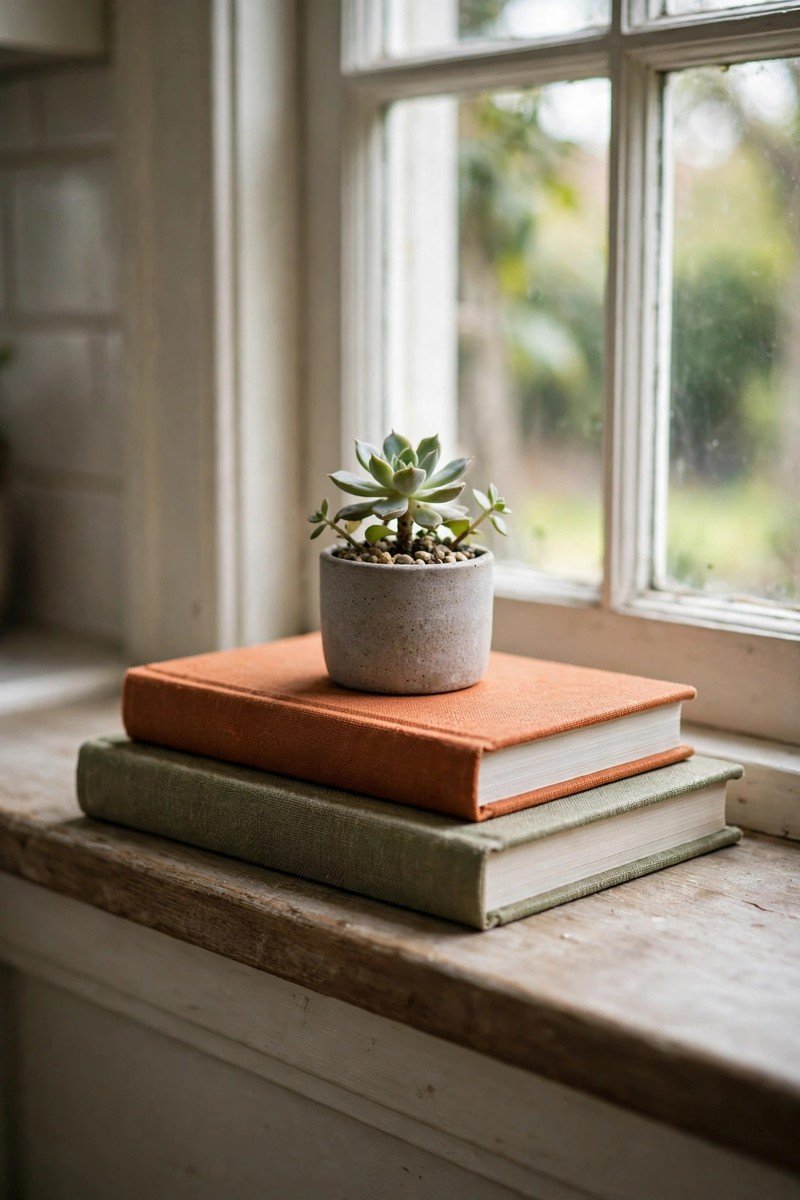
17. Stack Two Small Cookbooks Flat
Two small cookbooks stacked flat on a deep sill add height and a personal touch. The books look lived in, and they lift a small plant above the sill line.
Pro tip: Use this idea only if your sill is at least 12 cm deep, so the books sit fully on the ledge. Choose books about 20 cm long. A second hand cookbook costs about 5 to 10 dollars.
Seasonal and Personal Touches
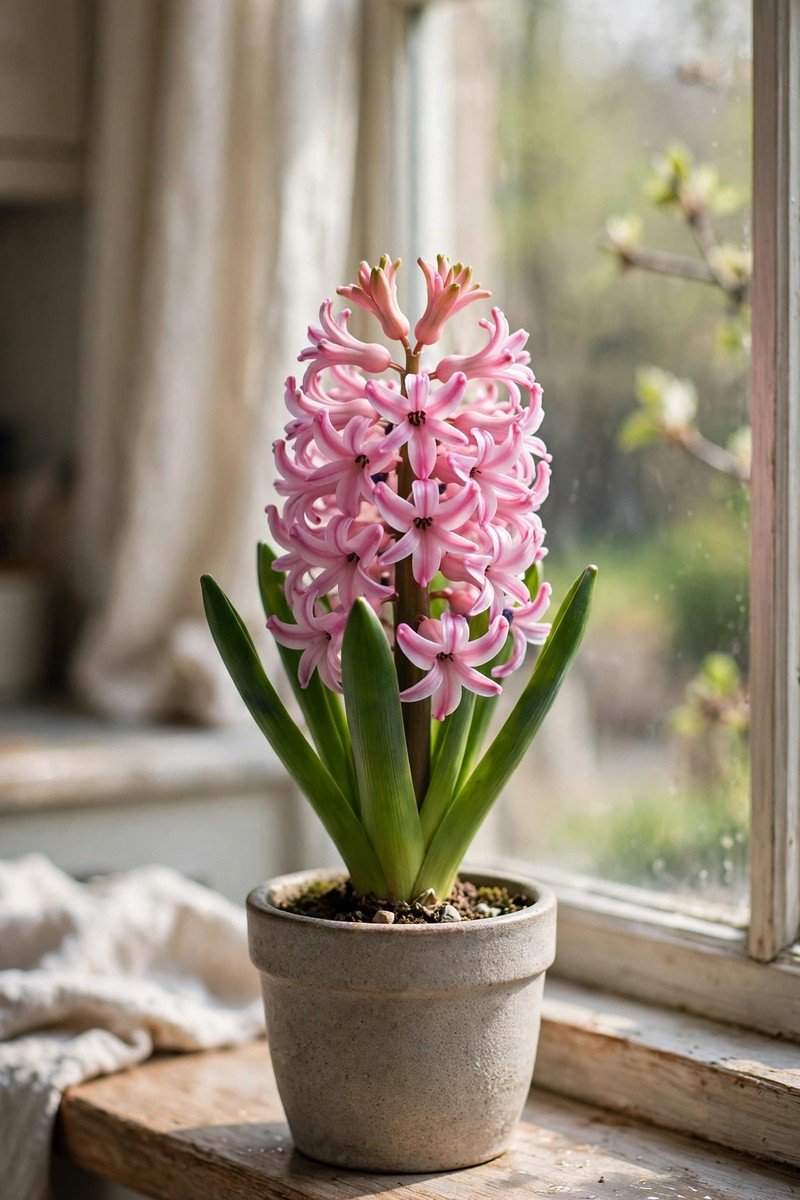
18. Swap in a Seasonal Plant
A seasonal plant keeps the sill fresh all year. A poinsettia in winter or a hyacinth in spring marks the season in one small pot.
Pro tip: Buy the plant in a 10 to 12 cm pot and keep it for 4 to 6 weeks, then move it to another room or compost it. Seasonal plants cost about 5 to 15 dollars. Water lightly, since small pots dry out fast.
19. Add a Small Bowl of Lemons
A small bowl of lemons adds yellow and a fresh scent to the sill. The fruit looks bright against green plants, and you can use the lemons in cooking.
Pro tip: Use a bowl about 15 cm wide and keep four or five lemons in it. Lemons last about two weeks at room temperature. A small bowl costs about 8 to 15 dollars.

20. Place a Tiny Clock or Timer
A tiny clock or timer on the sill is both pretty and useful. You can glance at it while you cook, and a round clock adds charm to the ledge.
Pro tip: Choose a clock about 10 cm wide with a clear face you can read from the stove. A timer costs about 8 to 15 dollars and runs a year on one battery. Keep it away from splashes.

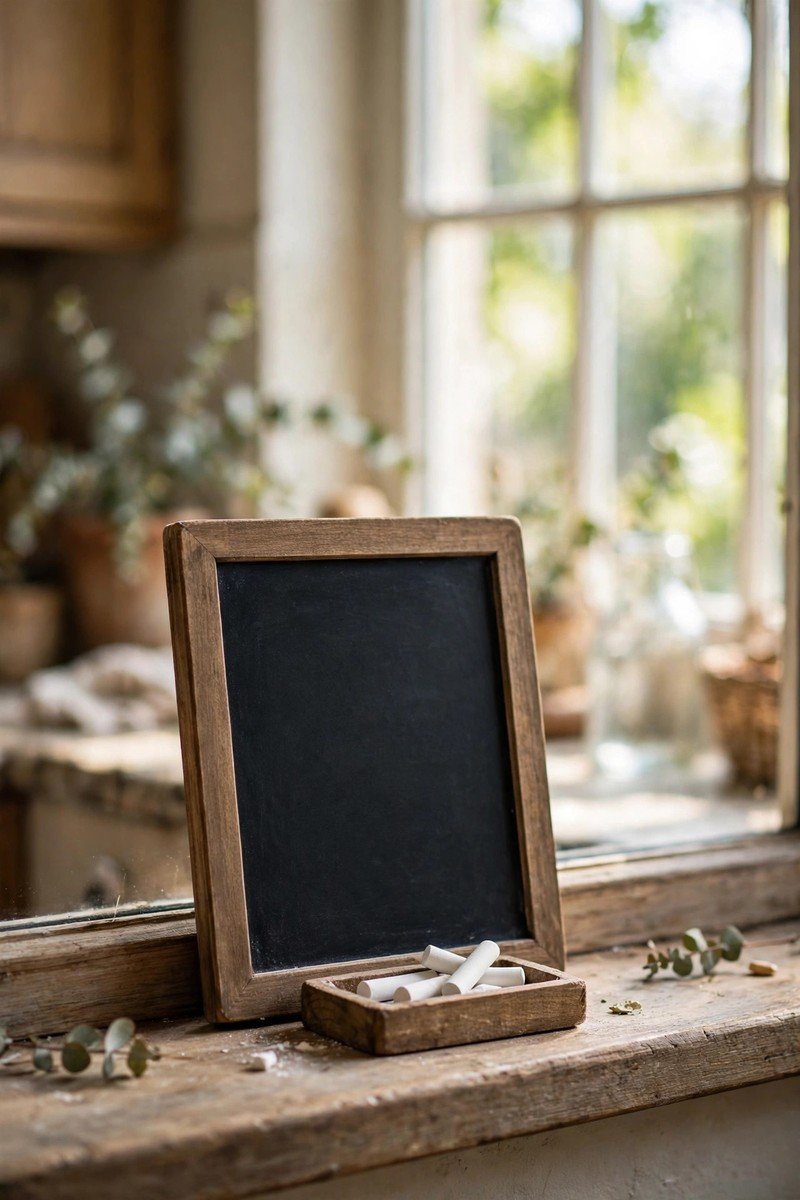
21. Keep a Small Chalkboard for Notes
A small chalkboard on the sill holds shopping notes or a dinner plan. It adds a personal note, and you can wipe it clean in seconds.
Pro tip: Use a board about 20 cm wide with a small chalk tray, and write with chalk markers so the words stay clear. A small chalkboard costs about 10 to 18 dollars. Wipe it weekly.
22. Add a Woven Basket for Cloths
A small woven basket holds folded dish cloths in one neat pile. The natural texture warms up tile and glass, and it keeps cloths off the counter.
Pro tip: Use a basket about 20 cm long and 12 cm deep with a tight weave. Keep two or three cloths in it. A small basket costs about 10 to 20 dollars.

23. Finish with One Statement Piece
One statement piece gives the sill a focal point. A large ceramic jug or handmade pot draws the eye first, and smaller items fall into place. For tips on keeping the rest of the kitchen tidy around a styled sill, see our kitchen counter organization ideas as a separate guide.
Pro tip: Choose one piece about 20 to 25 cm tall and place it at one end of the sill, not in the centre. A handmade jug costs about 20 to 40 dollars. Check the view from the door before adding anything else.

Sill Depth, Width and Light
Measure the sill before you buy a single pot. Most kitchen window sills are 4 to 6 inches deep, so a pot wider than 5 inches overhangs the edge and risks a fall. Measure the full width of the window, and leave at least 2 inches clear at each end, so the curtains close without knocking a pot over. Check the light: a south facing window gets 6 or more hours of direct sun, and suits herbs such as basil and rosemary, while a north facing window gets soft light only, and suits leafy herbs such as mint and parsley. Kitchen window sill ideas work best when the pot fits the sill and the plant fits the light, because a plant in the wrong light dies in a month no matter how often you water it.
Herbs and Plants That Suit a Kitchen Sill
Choose plants you will use, not plants that only look good. Basil, chives, mint, and parsley are the easiest kitchen herbs, and they grow in pots 4 to 6 inches wide. Mint needs its own pot, because it spreads and chokes other herbs in a shared planter. Water herbs when the top inch of soil feels dry, usually every 2 to 3 days in summer and once a week in winter. Feed them once a month with a weak liquid feed, because a small pot runs out of nutrients fast. Snip herbs from the top, not from the base, because cutting the top makes the plant branch out and grow fuller. As a typical range, a small herb pot costs about 5 to 12 dollars, and a set of three herb pots costs about 15 to 30 dollars.
Keep Water and Soil Off the Wall
A kitchen sill sits above a worktop, so drips matter. Put every pot on a saucer or a tray, and choose a tray with a rim at least half an inch high, so water stays in the tray and off the wall. Wipe the sill once a week, because soil and water leave stains on paint and wood. Repot plants over the sink, not over the sill, because soil in a sink rinses away and soil on a sill does not. Check the wall behind the sill once a month for damp or mould, because a slow drip hides behind a pot for weeks. If the sill is wood, seal it with a clear waterproof finish, because unsealed wood swells and peels in a steamy kitchen.
Style the Sill Without Blocking the Window
A styled sill should frame the window, not block it. Keep plants and objects under 12 inches tall, so they do not cut the light in half. Place the tallest item at one end, not in the centre, because a tall item in the centre splits the window in two. Use one or two decorative objects only, such as a small jar or a candle, and keep the rest of the sill for plants. Leave at least 6 inches of clear sill at the centre, so you can open the window without moving anything. If the window opens inward, keep the sill clear on the opening side, because a pot in the swing of the window gets knocked over the first time the window opens.
Common Mistakes to Avoid
- Filling every inch of the sill. A crowded sill blocks light and looks messy, so leave one empty gap.
- Using pots without saucers. Water runs onto wood and paint fast, so every plant needs a saucer or tray.
- Blocking the window handle. Tall items in front of the latch make the window hard to open, so keep that spot clear.
- Mixing too many colours. Pick two main colours for pots and objects, then repeat them across the sill.
- Putting paper or fabric near the sink. Steam and splashes ruin paper art and cloth, so use glass, ceramic, or sealed wood there.
- Forgetting the light direction. Sun loving herbs fail on a north facing sill, so match the plant to the light you have.