
A covered porch lets you sit outside in rain, strong sun, and cool evenings. The roof keeps chairs dry and cushions safe, and turns a plain porch into a room you can use in every season.
This guide gives you 25 covered porch ideas focused on the cover itself, plus seating, light, and heat that work well under it. For a general porch guide without this roof focus, see our back porch ideas as a different guide.
Quick Picks
- Start with the roof. A roof past your chairs matters more than new cushions.
- Plan for air. A fan and open sides keep it cool in summer.
- Plan for heat. One good heater makes it usable in cool months.
- Use outdoor rated gear. Damp air still reaches a covered porch, so indoor only items will not last.
- Leave a dry path. Keep the walk from door to seats clear and dry.
Did You Know?
A roof changes how furniture ages. Chairs under a solid roof get less rain and sun, so fabric and wood last longer than on an open patio. That is why a covered porch can hold a real sofa, a rug, and soft cushions.
Before You Start
- Measure the covered area first, from the house wall to the roof edge.
- Check what the roof can hold. Swings, fans, and lights need solid beams, not thin trim.
- Check local rules before you add a fireplace, a gas heater, or a new roof.
- Think about water flow. A roof must send rain away from the door and seats.
- Pick one main use. A dining porch needs a table. A lounge porch needs deep seats. A small porch may need a bench and one chair. For tiny spaces, see our small front porch ideas as a different guide.
Roof and Ceiling
1. Solid Roof Extension That Reaches Past Your Chairs
A solid roof extension is the simplest way to make a porch usable in rain. It should reach at least 60 cm past the front chair legs.
That extra reach keeps rain off seat cushions in a light shower and gives shade at midday.
Pro tip: After the first hard rain, check the roof edge. If water drips on the seats, add a gutter or move seats back 30 cm.

2. Gable Roof That Sheds Rain and Snow
A gable roof has a peak and two slopes. Rain and snow slide off instead of sitting on top.
The peak adds height inside, so the porch feels open even with a full roof.
Pro tip: A gable roof needs a slope of at least 15 degrees to shed water well. Ask your builder to check it first.

3. Metal Roof for Long Life and Low Care
A metal roof lasts for decades and needs little care. It sheds rain fast and stands up well to wind.
Metal reflects heat, which helps in hot climates. Pick a light color for full afternoon sun.
Pro tip: Metal can sound loud in heavy rain. Add roof boards and insulation under it to cut the noise.
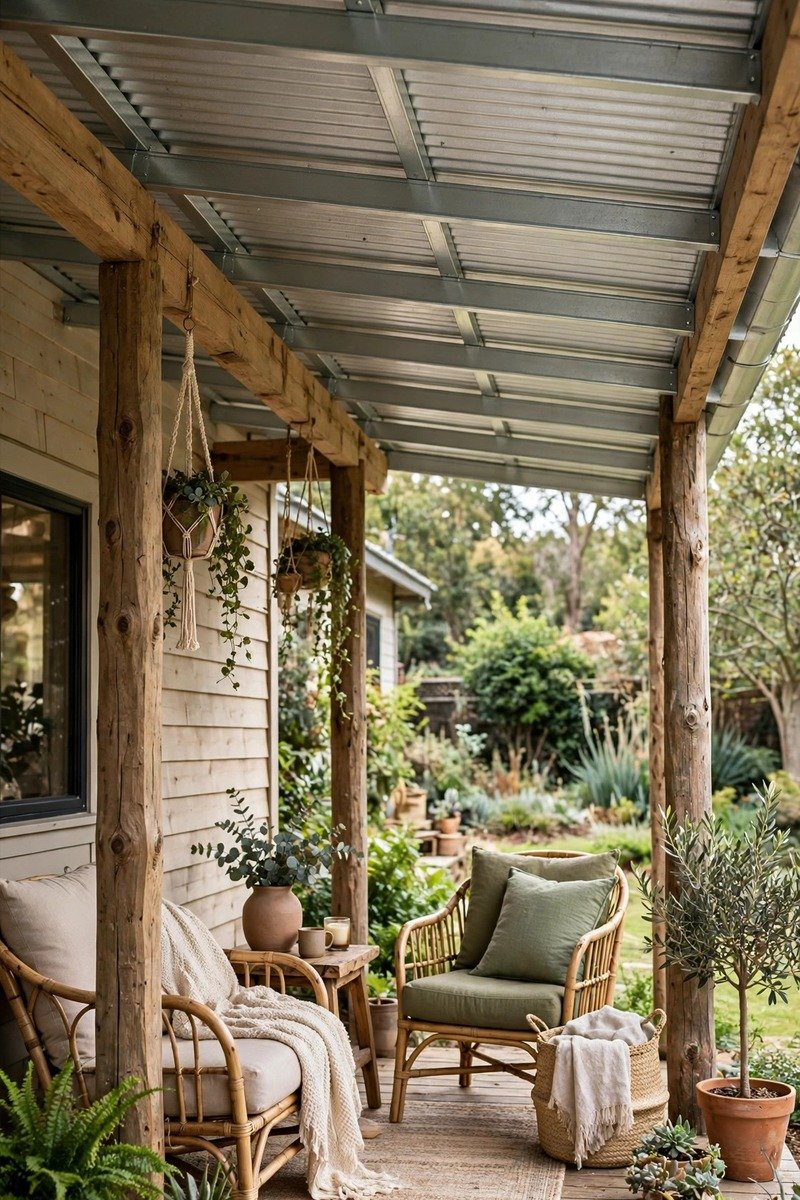
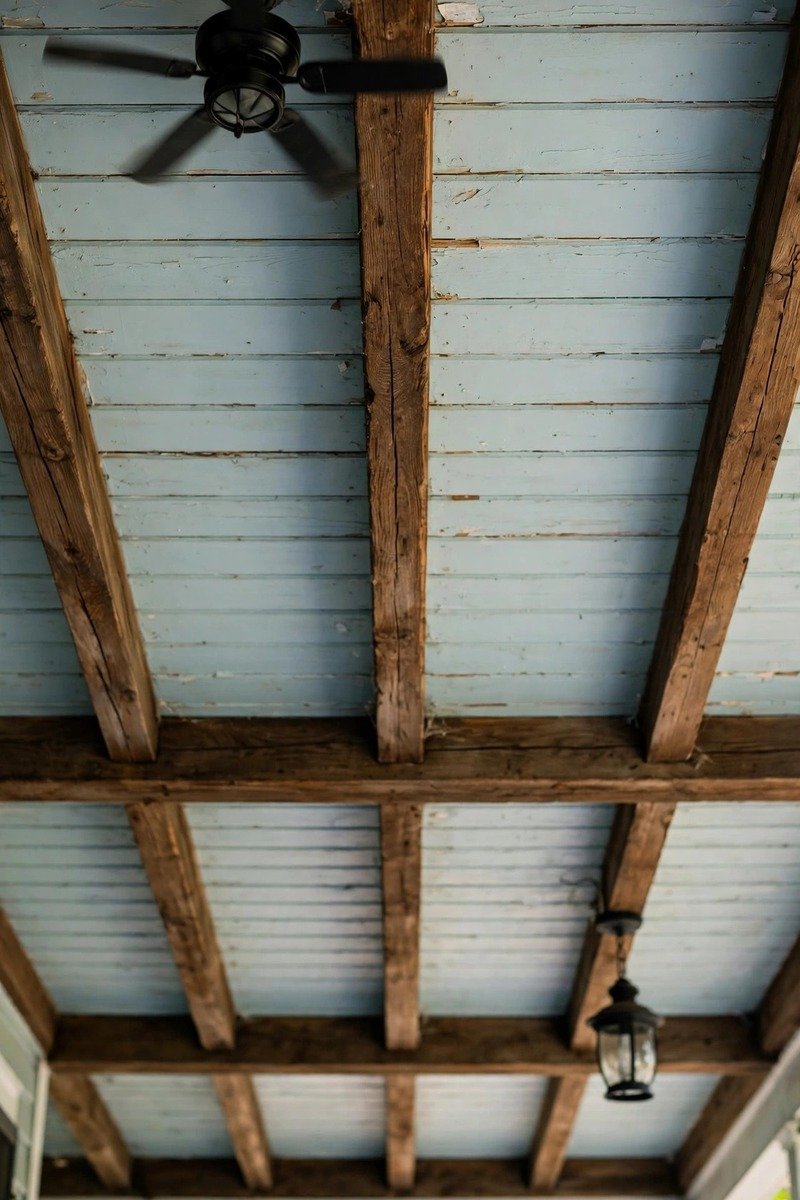
4. Exposed Wood Beams With a Painted Ceiling
Exposed beams make a plain roof look finished. Paint the ceiling boards soft white or pale blue.
The beams also give strong points to hang a fan, a swing, or lights.
Pro tip: Seal wood beams with exterior stain or paint every 3 to 4 years. Unsealed wood can crack in wet climates.
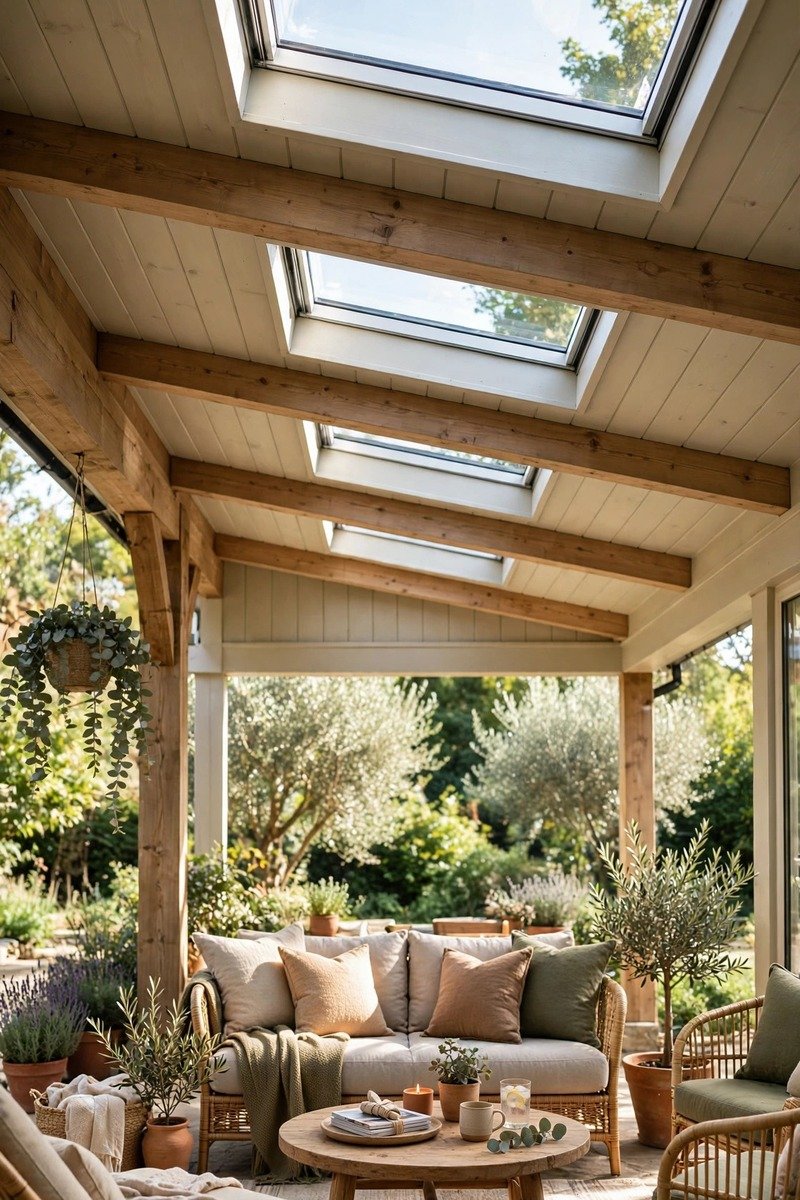
5. Skylights for Daylight Under a Solid Roof
Skylights bring daylight into a north facing porch or one under a deep roof. You keep full rain cover and still get bright light.
Place one skylight over the seats and one over the walk path. Fixed skylights cost less and leak less than opening ones.
Pro tip: A fixed skylight costs about 150 to 400 dollars plus fitting. Check the flashing each spring.
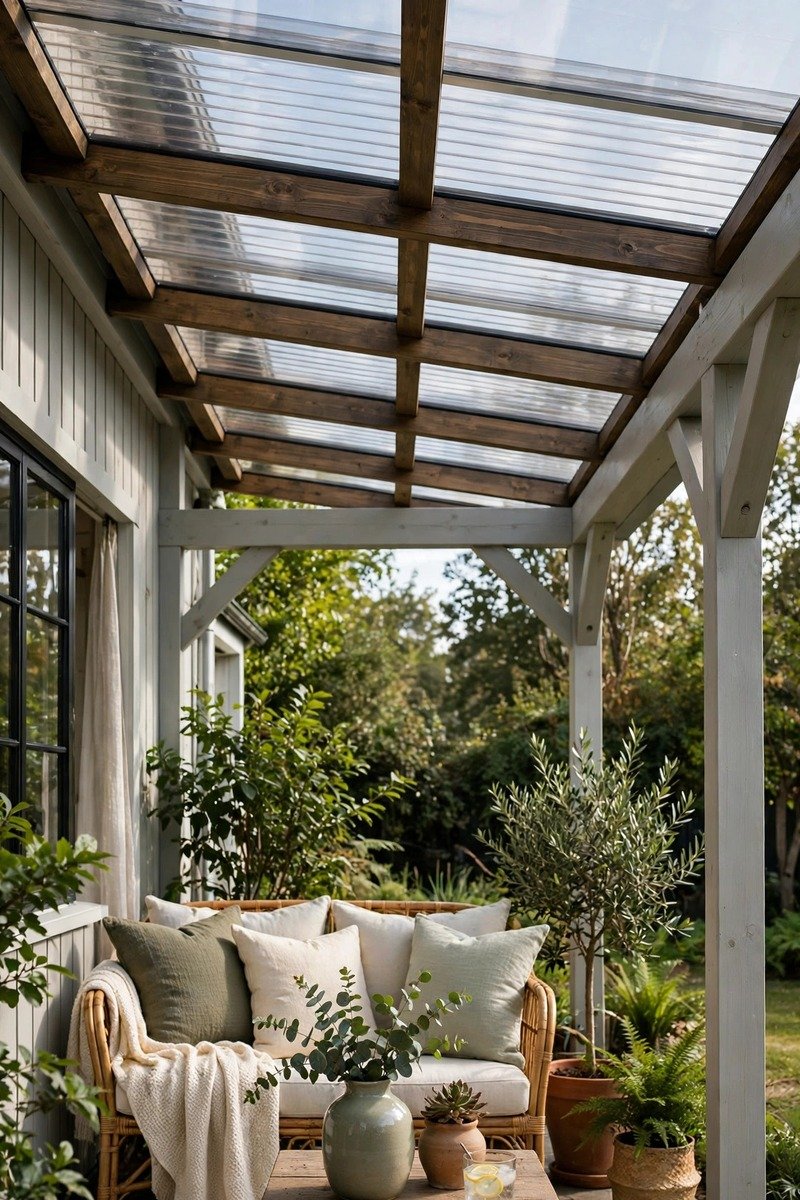
6. Clear Roof Panels on Part of the Roof
Clear polycarbonate panels let light through while they block rain. Use them on one part of the roof only.
That mix gives a bright spot for plants and reading, plus shade for hot afternoons.
Pro tip: Pick UV protected panels. Plain clear panels can yellow in 2 to 3 years in strong sun.
Walls, Air and Light
7. Screen Walls for Bugs and Wind
Screen walls let air through and keep bugs out. They make summer evenings usable without bites.
Use fixed screens on the garden sides. Leave the door side open for easy access.
Pro tip: Screen mesh costs about 20 to 40 dollars per roll. Keep a spare roll so a torn screen is a 30 minute fix.

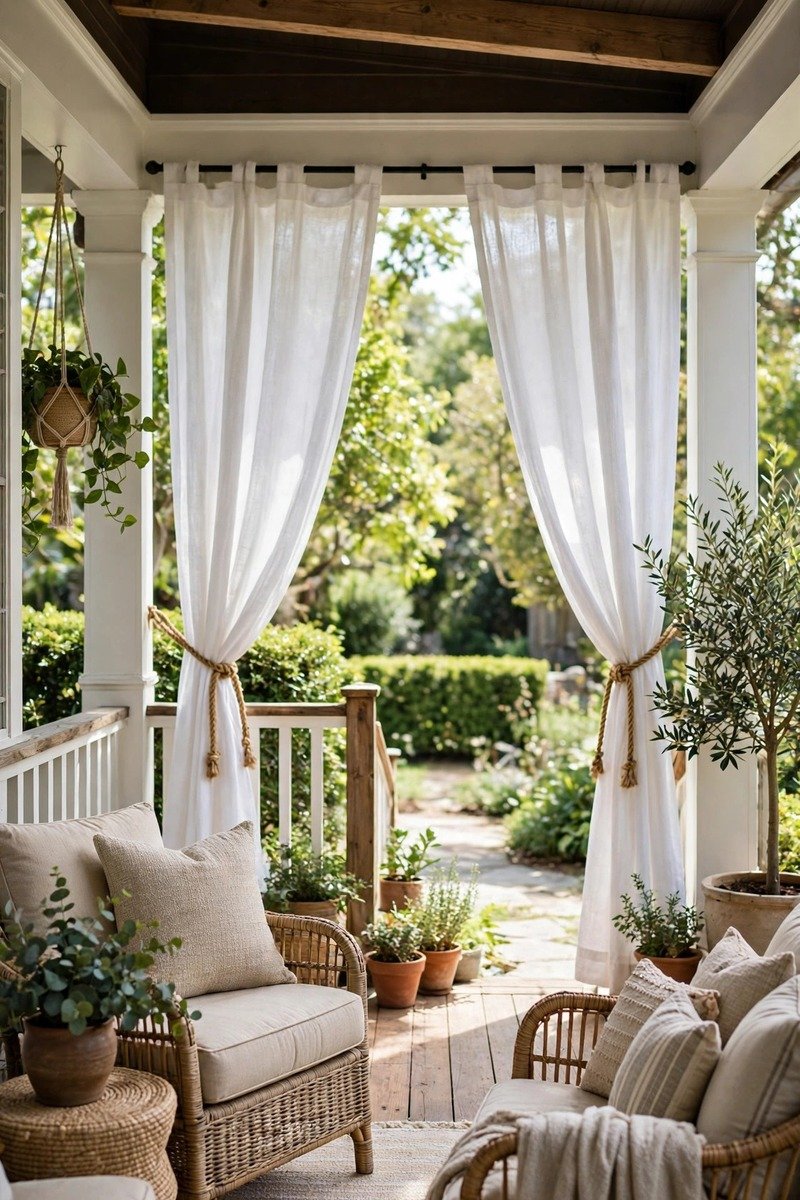
8. Outdoor Curtains You Can Open and Close
Outdoor curtains give shade and privacy when you want them, and open views when you do not. Hang them on a rod or wire under the roof edge.
Use outdoor fabric that dries fast. Sheer panels soften sun. Heavier panels block wind and glare.
Pro tip: Leave curtains 5 cm above the floor so they do not sit in puddles. Tie them back on windy days.
9. Ceiling Fan Rated for Damp Spaces
A ceiling fan moves air on still, hot days and helps keep flies away from food and seats.
Pick a damp rated fan, not an indoor only fan. Damp rated fans have sealed motors for humid air.
Pro tip: A damp rated fan costs about 80 to 200 dollars. Hang it at least 2.1 metres above the floor.

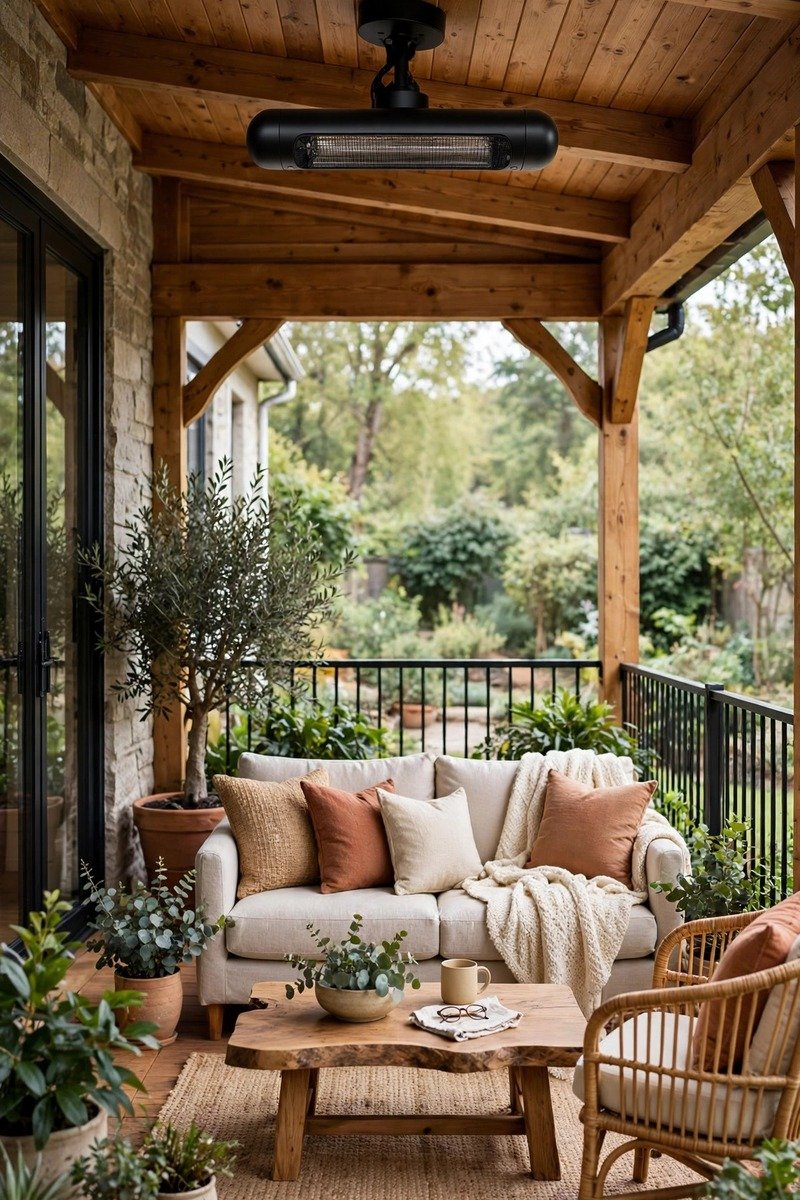
10. Ceiling Heaters for Cold Evenings
Ceiling heaters warm people, not the air. That makes them work well on an open sided porch.
Mount one heater over the main seats and one over the dining spot on a long porch.
Pro tip: A 1500 watt infrared heater covers about 3 by 3 metres. Put it 2.1 to 2.4 metres above the seats.
11. Portable Patio Heater for Cool Nights
A portable heater adds heat only where you need it. Move it next to the chairs on a cool night and store it in summer.
Propane models give strong heat with no plug. Electric models are quiet and need a safe outdoor socket.
Pro tip: Keep 60 cm of clear space around a portable heater. Never place it under low curtains.

12. Layered Light With String Lights and Lanterns
One bright porch light can feel harsh at night. String lights and lanterns give soft light in layers.
Run string lights along the ceiling beams. Add two or three lanterns on tables and steps.
Pro tip: Use outdoor rated string lights with shatterproof bulbs. A 7.5 metre strand costs about 15 to 30 dollars.

Seating and Relaxing
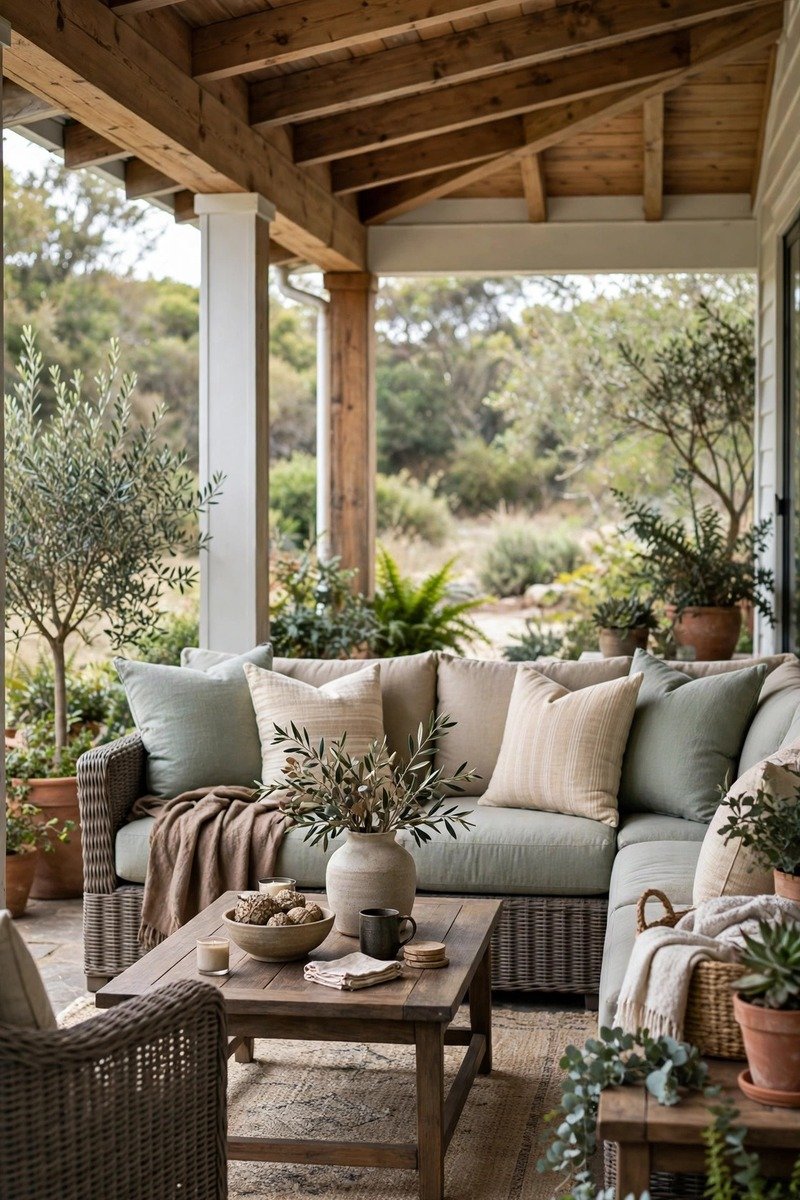
13. Deep Sofa Set for a Real Outdoor Room
A deep sofa set makes a covered porch feel like a living room. The roof protects the cushions, so thick, soft seats work well.
Pick a sofa, two chairs, and a low coffee table. Leave 75 cm of walk space around the set.
Pro tip: Store cushions in a deck box on wet weeks. Wind driven rain can dampen cushions left out for days.
14. Porch Swing Hung From Solid Beams
A porch swing is a classic covered porch seat. The roof keeps it dry, and the motion suits slow mornings and evenings.
Hang it from ceiling beams, not thin ceiling boards. A swing for two needs a frame that holds at least 250 kg.
Pro tip: A wood porch swing costs about 100 to 300 dollars. Check chains and hooks each spring and oil them.

15. Daybed for Naps and Rain Watching
A daybed gives you a place to stretch out fully, for naps, reading, and watching rain from under the roof.
Pick a weatherproof frame and a thick outdoor mattress. Add a light blanket and two large pillows.
Pro tip: An outdoor daybed mattress cover costs about 40 to 80 dollars. Wash it monthly in summer.

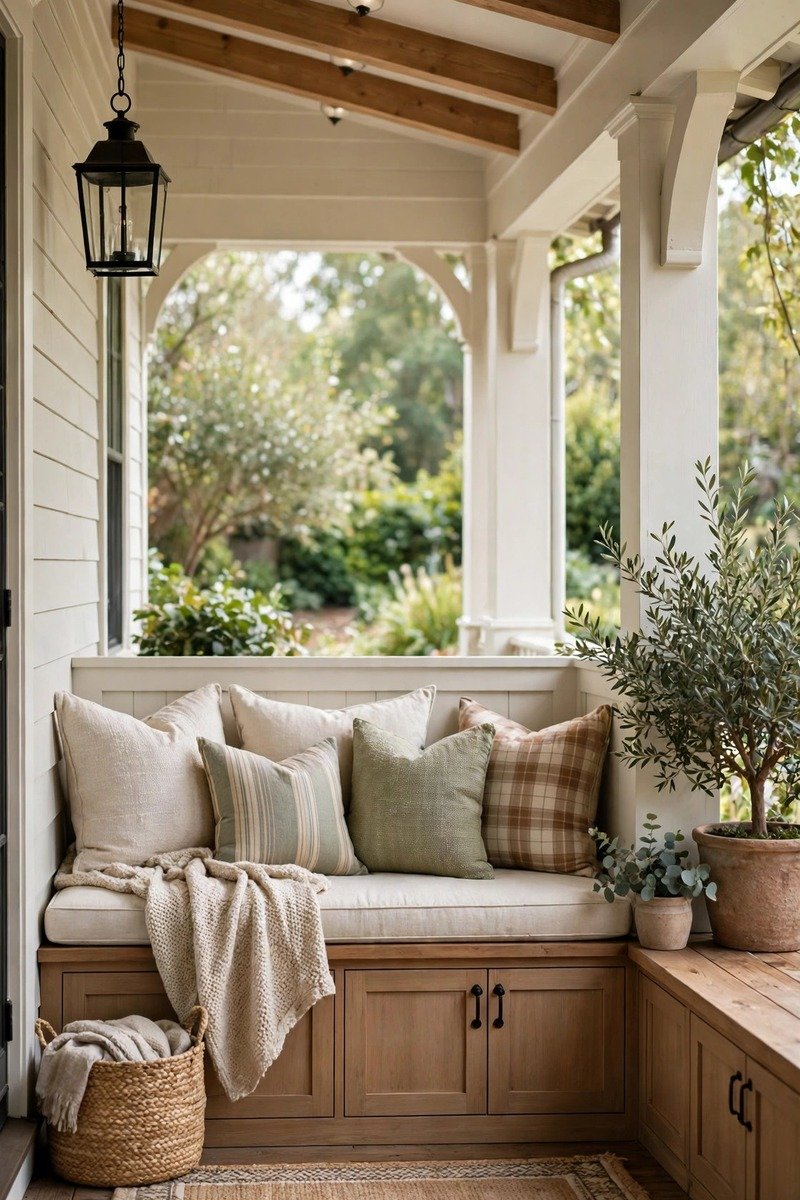
16. Built In Bench With Storage Underneath
A built in bench fits a narrow porch well. It sits against the wall and takes less floor space than loose chairs.
Build storage under the seat for cushions and throws. A hinged top keeps it easy to reach.
Pro tip: Make the bench seat 45 cm high and 40 cm deep. That suits most adults and leaves room for a cushion.
17. Rocking Chairs for Slow Mornings
Rocking chairs suit a covered porch because they need little space and no power. Two chairs and a small table make a morning spot.
Wood rockers last well under a roof. Add a thin seat pad and keep them on a flat floor.
Pro tip: A solid wood rocker costs about 80 to 250 dollars. Check the rails each year, since uneven rails tip the chair.

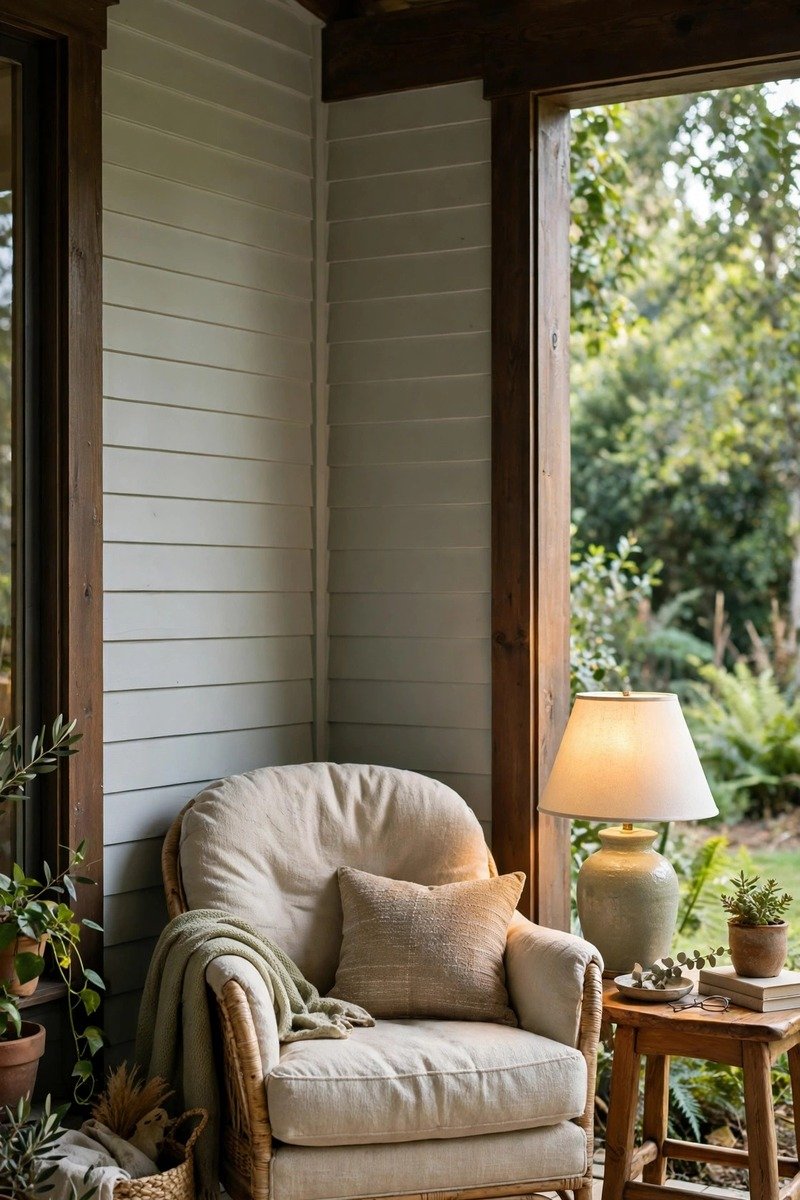
18. Corner Reading Chair With a Small Lamp
A corner chair turns an unused porch corner into a reading spot. The roof blocks glare on book pages.
Add a small side table for a drink and a book, plus a small lamp for evening reading.
Pro tip: Place the chair at a right angle to the main seats. That keeps the reading corner quiet.
Eating and Hosting
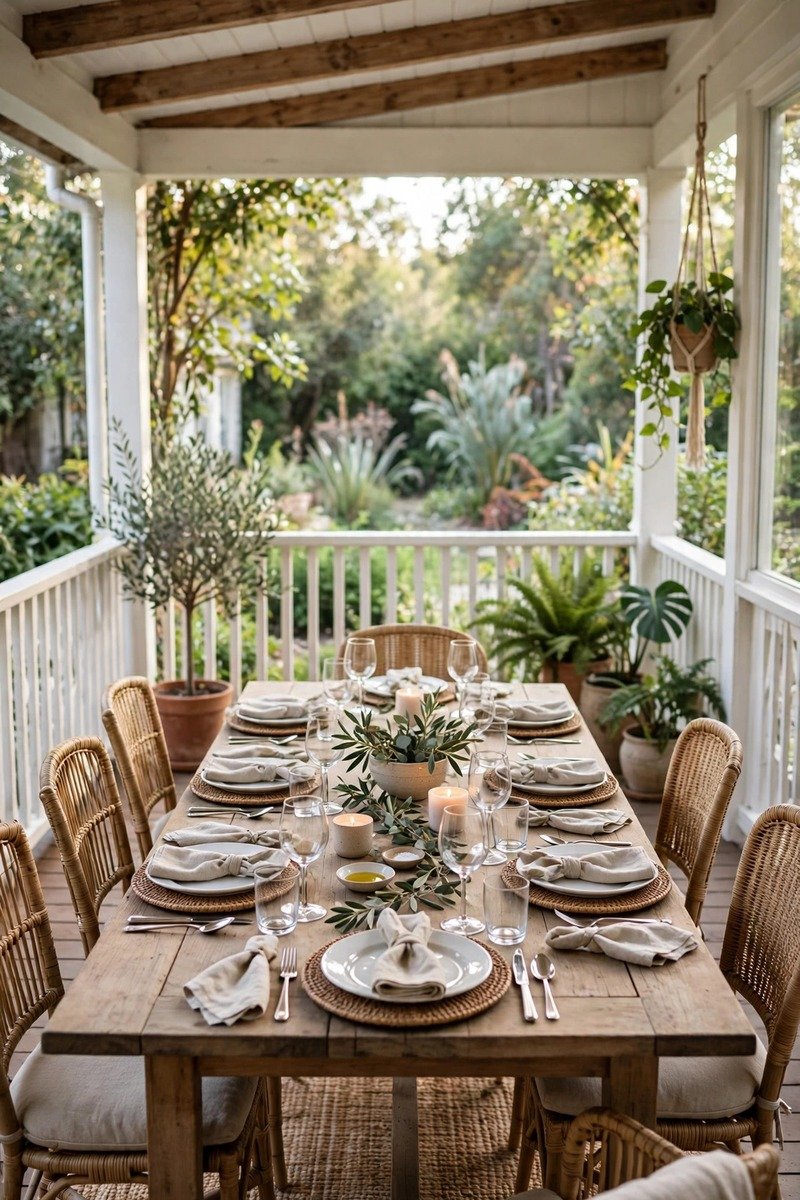
19. Outdoor Dining Table for Six
A dining table under a roof means meals do not end when rain starts. A table for six suits family dinners.
Pick a table 1.8 metres long so plates and bowls fit with ease. Use cushioned chairs, not benches.
Pro tip: A teak or metal dining set for six costs about 400 to 900 dollars. Wipe the table after meals.
20. Outdoor Kitchen Corner Under Cover
A small kitchen corner under a roof makes cooking outside easy. A grill, a prep counter, and a sink cover most needs.
Keep the grill near the open side so smoke drifts out, and the counter near the house door.
Pro tip: A basic outdoor grill station costs about 300 to 800 dollars. Never grill under a low wood ceiling without a vent hood.

21. Bar Cart or Drinks Station by the Seats
A bar cart keeps drinks close to the seats and off the dining table. It rolls away when more floor space is needed.
Stock it with glasses and a jug for water. Use a cart with locking wheels.
Pro tip: A metal bar cart costs about 60 to 150 dollars. Bring glass items inside in winter.

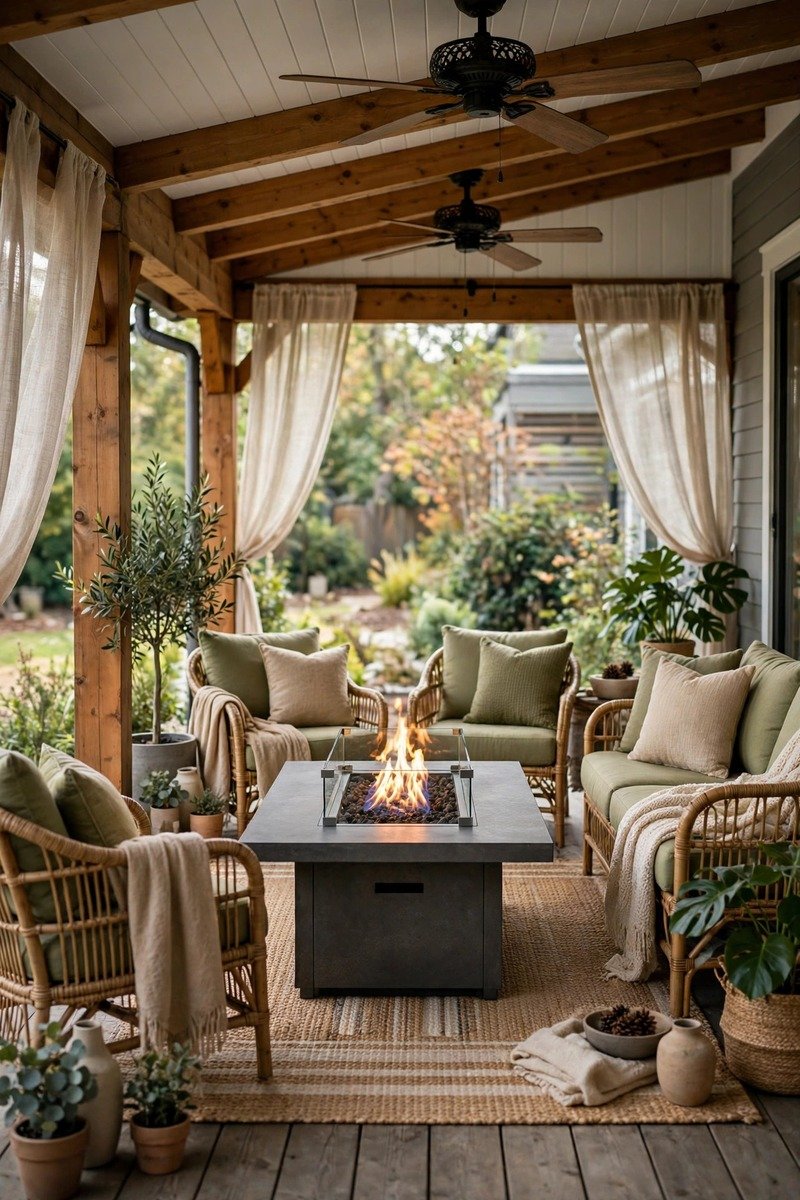
22. Fireplace or Fire Table for Cold Months
A fireplace or fire table adds heat and a focal point in cold months. Gas and ethanol models suit covered porches better than smoky wood fires.
Place it where all seats can see it, with the roof high above and the area clear of curtains.
Pro tip: Check local fire rules and the maker guide before you buy. Some porches need a vent or height clearance.
Floors, Plants and Finishing Touches
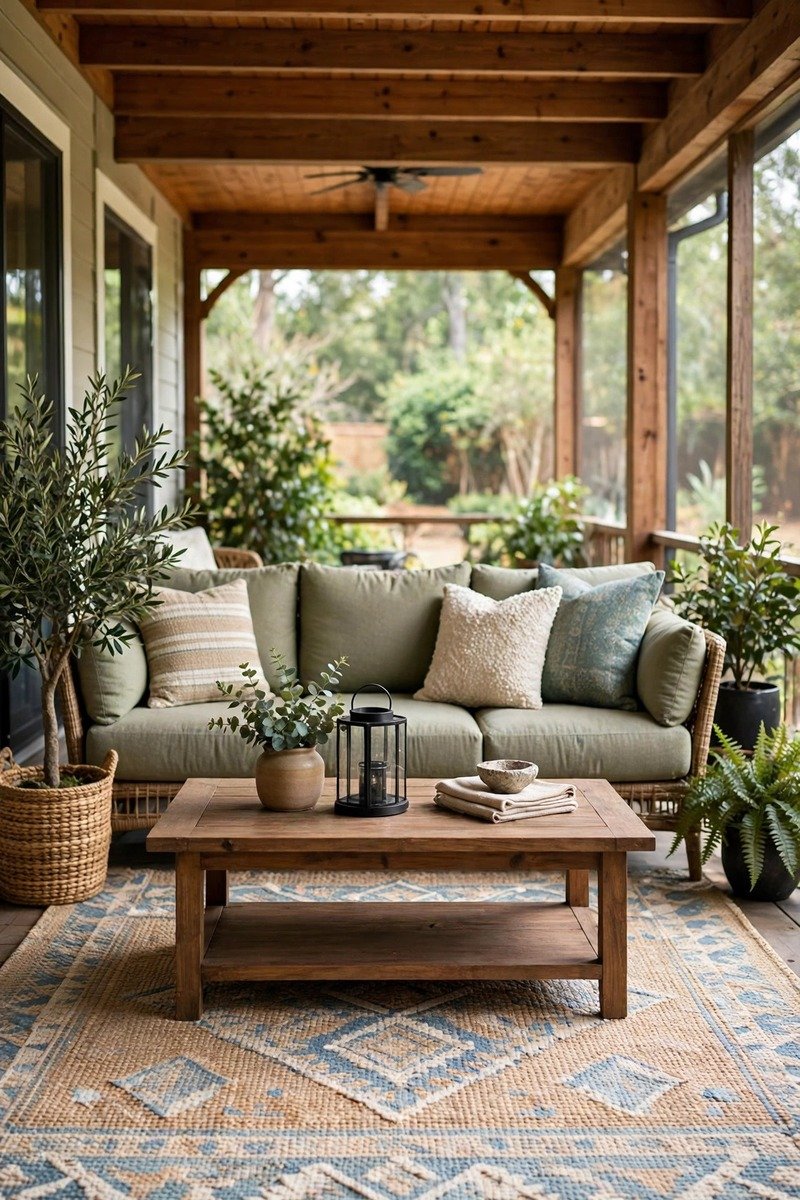
23. Outdoor Rug That Defines the Room
An outdoor rug marks the seating area and softens a hard porch floor. It makes the porch feel like a room.
Pick a flat weave polypropylene rug. It dries fast if rain blows in and shakes clean with ease.
Pro tip: A 1.6 by 2.3 metre outdoor rug costs about 40 to 100 dollars. Hose it down monthly and dry it flat.
24. Hanging Plants and Tiered Planters at the Edges
Plants soften the hard lines of a roof and posts. Hang ferns from beams and place tiered planters at the edges.
Ferns and pothos suit filtered light under a roof. Mint and basil suit a sunny edge.
Pro tip: A wet fern basket can weigh 5 to 8 kg, so use hooks rated for at least 10 kg.

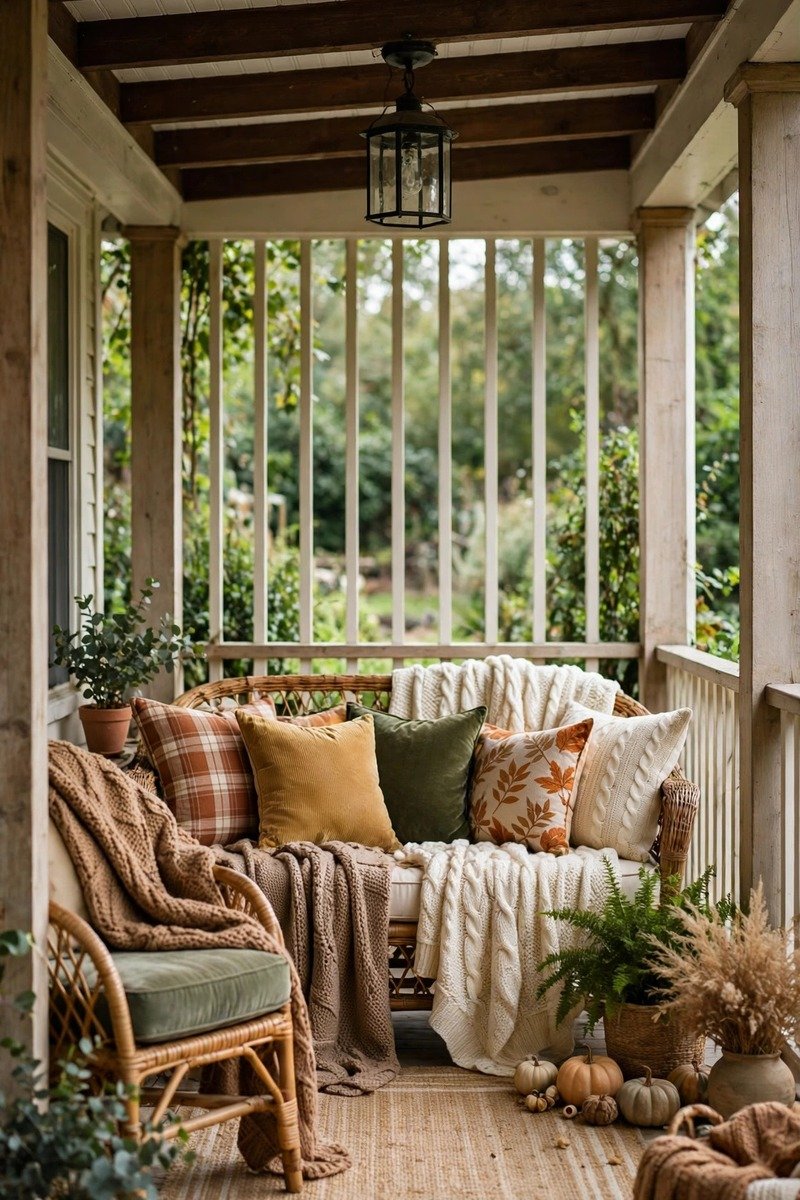
25. Seasonal Swap Kit With Throws and Storage
A swap kit lets you change the porch for each season in minutes. Keep throws and cushion covers in one storage box.
Use light cotton throws in summer and thick knit throws in winter. Swap cushion covers twice a year for a fresh look.
Pro tip: Label the box by season and store it near the porch door. A clear label means the swap takes 15 minutes. For more front porch styling, see our farmhouse front porch ideas as a different guide.
Rain Protection: Roof Overhang and Drip Lines
A covered porch only works if the roof keeps rain off the chairs. Check the overhang first. An overhang of 12 to 18 inches past the seating keeps most wind driven rain off the cushions. If the roof ends flush with the posts, rain will blow in from the sides, and the outer 2 feet of the porch will stay wet. Add a gutter along the front edge, because a gutter stops water from dripping onto the step and onto guests. Watch where the water goes after it leaves the gutter, and point the downspout away from the porch floor, so the floor does not puddle. For covered porch ideas that work all year, the roof is the first fix, because furniture and lighting mean nothing if the floor is wet every time it rains.
Lighting a Covered Porch for Dark Afternoons
A roof cuts the daylight, so a covered porch needs more light than an open one. Put one overhead light in the centre of the ceiling, and add one lamp or lantern near each seat, because a single overhead light leaves the corners dark. Use fixtures rated for damp locations, and check the rating on the box, because a porch ceiling is damp even when it never gets rained on. Use warm bulbs around 2700 Kelvin, because cool white light makes a covered porch feel like a garage. Put the lights on a dimmer or a timer, so the porch glows at dusk without anyone remembering to switch it on. Check the light from the garden at night, because a porch that looks lit from outside is the one people use after dark.
Furniture by Exposure Zone: Dry Centre, Wet Edge
Divide the porch into two zones. The dry centre, at least 3 feet from any open edge, suits upholstered pieces, cushions and wood. The wet edge, the outer 2 feet near the posts, suits only metal, resin wicker or teak, because rain reaches it in every storm. Keep cushions in the dry centre, and bring them inside when heavy rain is forecast, because a soaked cushion takes two days to dry under a roof. Use outdoor rated fabric on every cushion, and store throws in a sealed box on the porch, not on the chairs, because a throw left on a chair absorbs damp overnight. As a typical range, a set of two outdoor cushion covers costs about 20 to 40 dollars, and a weatherproof storage box costs about 40 to 80 dollars. Buy the box first, because dry storage is what keeps porch furniture usable all year.
Budget for a Year Round Covered Porch
Under 100 dollars: a storage box, two outdoor cushion covers, and a set of warm bulbs. From 100 to 400 dollars: add a ceiling fan rated for damp spaces, an outdoor rug, and a pair of lanterns. Over 400 dollars: add a ceiling heater, an outdoor sofa set, and a full set of weatherproof cushions. As a typical range, a damp rated ceiling fan costs about 80 to 200 dollars, and a ceiling heater costs about 100 to 250 dollars. Start with the roof and the storage, because a dry porch with a place to store cushions is used more than a pretty porch that is wet and cluttered.
Common Mistakes to Avoid
- Building a roof that is too small. A short roof leaves chairs wet in wind driven rain. Extend it past the seats.
- Using indoor only fans and lights. Damp air can damage indoor gear. Use damp rated models.
- Blocking all air flow. Full walls trap heat. Leave at least one side open.
- Placing a fire feature too close to the roof. Heat and smoke need height and clear space. Check the guide first.
- Skipping a gutter. Roof water at the porch edge soaks the floor. Add a gutter and a downpipe.
- Filling every corner. A crowded porch is hard to walk through. Leave clear paths to each seat group.