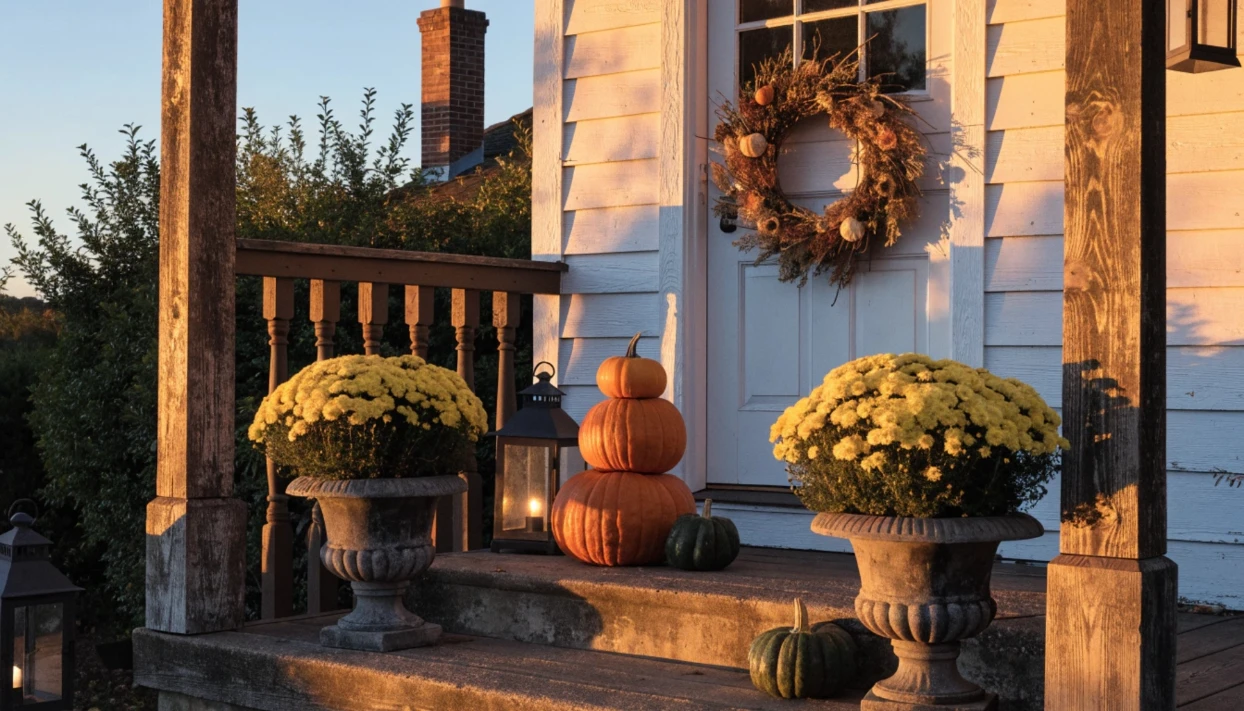
My front door used to get one plastic pumpkin from the dollar store every October, propped against the mat and forgotten within a week. What actually makes a fall entrance feel welcoming isn’t buying more stuff, it’s layering, a wreath at eye level, pumpkins grouped by the steps, warm lighting once the sun goes down, so the whole entrance reads as one considered scene instead of a single leftover decoration.
The ideas below are grouped by what they build, wreaths and door toppers first, then pumpkins and gourds, planters and greenery, color and layering, lighting, and the finishing touches that make the entrance feel complete. The same layout logic used in these small patio decorating ideas applies to a front entrance too, pick a focal point and build the smaller details around it rather than scattering decor evenly across the whole porch.
Before You Start
- Pick a two- or three-color palette before shopping, most elegant fall entrances lean into muted, earthy tones rather than bright orange and black.
- Build the display in layers, wreath at eye level, planters at ground level, pumpkins grouped by the steps, so nothing gets visually lost.
- Check that anything left outside for weeks, real pumpkins, dried florals, can handle exposure to rain and sun without falling apart too quickly.
- Group similar items in odd numbers, pumpkins, lanterns, planters, since odd groupings tend to look more natural than even pairs.
Wreaths and Door Toppers
1. Hang a Dried Floral Wreath in Muted Tones
A dried floral wreath in cream and rust tones lasted the entire season without a single petal falling off, unlike the fresh version I’d tried the year before.
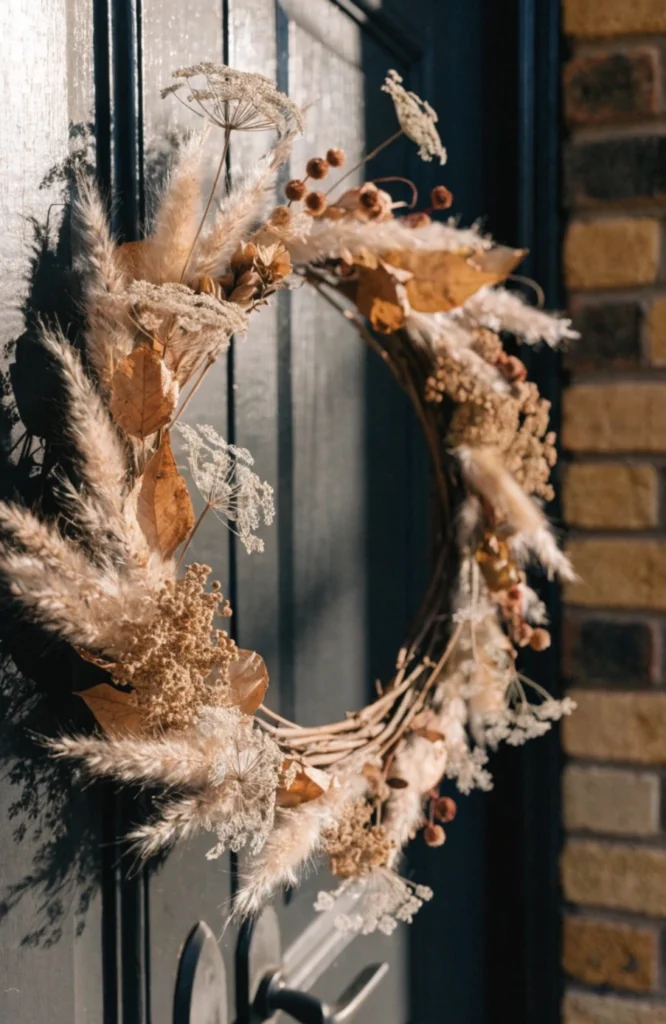
A dried floral wreath runs $40 to $90 depending on size and the density of the florals used, and choosing one built on a grapevine or straw base tends to hold up better against wind than a foam base. Since it’s made from dried rather than fresh material, it doesn’t need any water or maintenance once it’s hung, and it typically keeps its shape and color for the full two to three months of the season. Storing it indoors between uses each year also extends its lifespan across multiple seasons rather than needing to be replaced annually.
It works because muted, dried tones read as elegant and timeless rather than costume-like, and the wreath becomes the entrance’s clear focal point the moment anyone approaches the door. A dried wreath also survives an entire season of sun and light rain far better than a fresh floral one, which starts wilting within days outdoors.
2. Add a Grapevine Wreath for Texture
A plain grapevine wreath with just a few added accents gave the door texture without needing a fully florist-arranged design.
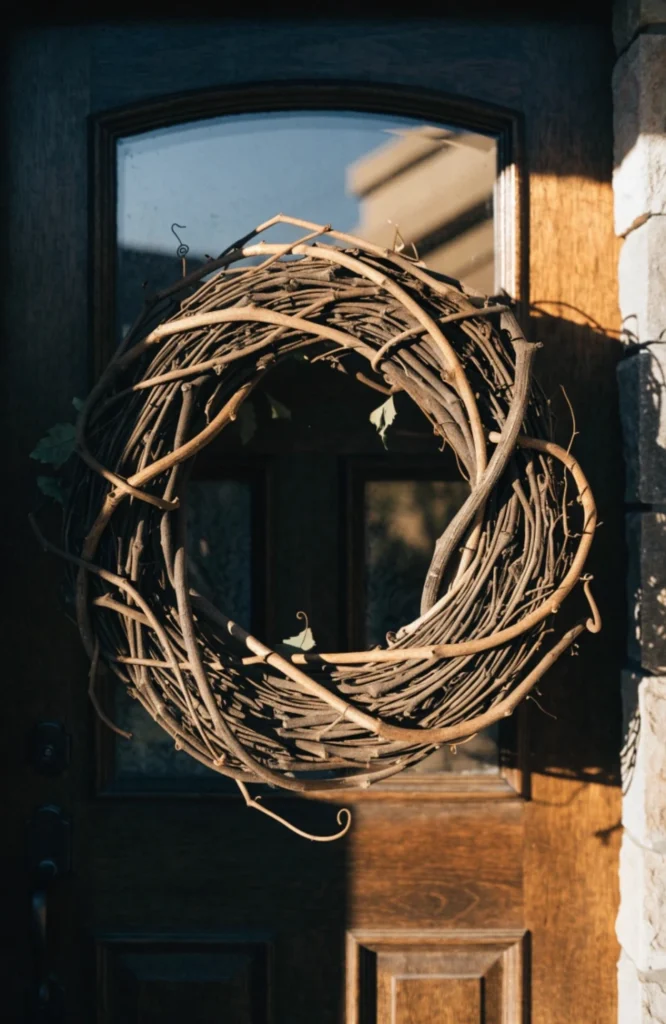
A plain grapevine wreath base runs $15 to $30, considerably less than a fully decorated version, since it leaves room to add your own accents like ribbon, a few dried stems, or small pinecones separately. This makes it one of the more budget-friendly starting points on this whole list, since additional embellishments can be added gradually over a few seasons rather than all at once. The natural woven texture also holds up well outdoors without fading the way painted or fabric elements sometimes do.
It works because the woven vine texture adds visual interest on its own, meaning it can be styled minimally with just one or two accents rather than requiring a fully built arrangement. This makes it a flexible base that can be restyled easily as your seasonal color preferences shift from year to year.
3. Use a Corn Husk Wreath for Classic Fall
A corn husk wreath gave the entrance an unmistakably classic harvest look that no floral arrangement quite matched.
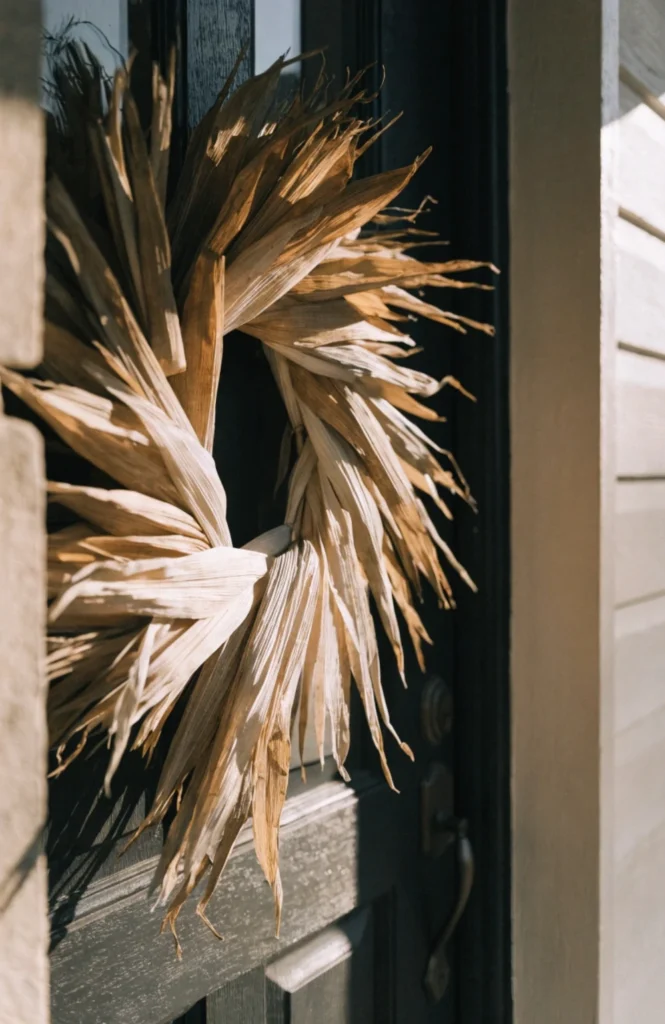
A corn husk or dried cornstalk wreath runs $30 to $55, and the natural tan and cream tones of dried corn husks fit almost any muted fall palette without needing to be color-matched precisely. Because the material is fully dried before the wreath is assembled, it holds up well through a full season of outdoor exposure, though it should be brought inside or stored in a covered area during heavy rain to avoid mold. Its rustic, textured look tends to suit farmhouse-style homes especially well.
It works because it’s one of the most immediately recognizable classic fall motifs, evoking harvest season in a way that reads clearly even from the street. Unlike some trendier wreath styles, a corn husk design tends to feel timeless rather than tied to a specific passing decor trend.
4. Layer a Ribbon Bow Onto a Simple Wreath
A single oversized velvet bow turned a fairly plain wreath into something that looked custom-designed for the door.
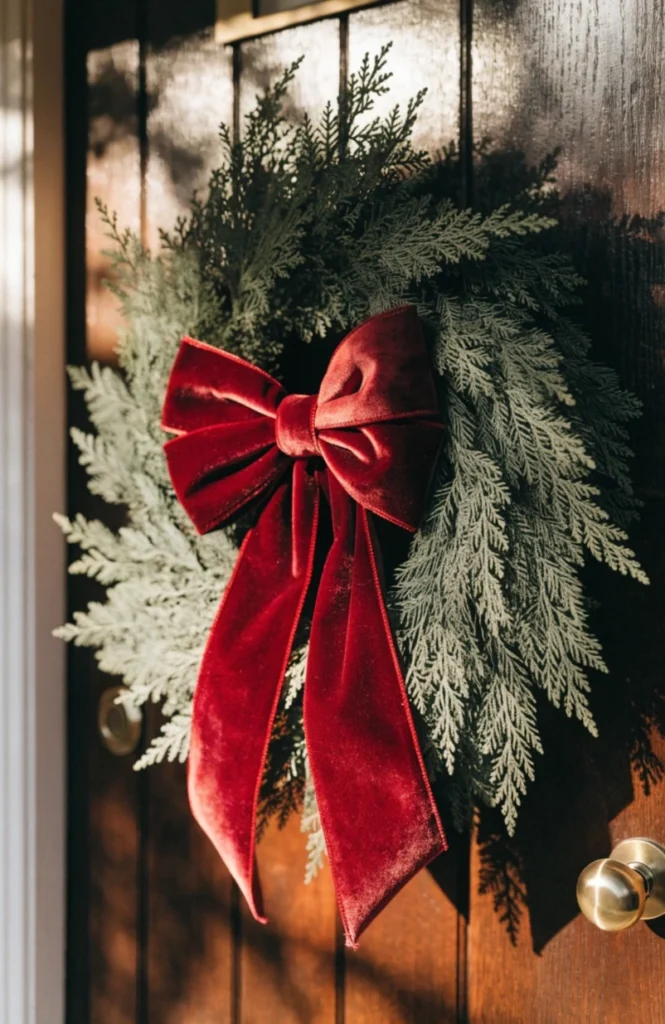
Wide velvet or burlap ribbon to create a bow runs $10 to $20 per spool, and one spool is typically enough for two or three bows if you want to coordinate other porch elements as well. Tying the bow yourself takes practice to get the loops even, so it’s worth watching a quick tutorial or practicing on a smaller ribbon first before committing to the final version. A wire-edged ribbon holds its shape noticeably better in wind than a soft fabric one.
It works because a single bold accent, in this case a bow, can transform an otherwise plain wreath without needing to rebuild the whole design from scratch. It’s also one of the easiest elements to swap out between seasons, since the underlying wreath base can stay the same while just the bow color or fabric changes.
5. Add a Swag Above the Door Instead of a Wreath
Switching from a round wreath to a horizontal swag above the door frame gave the entrance a different silhouette than every other house on the block.
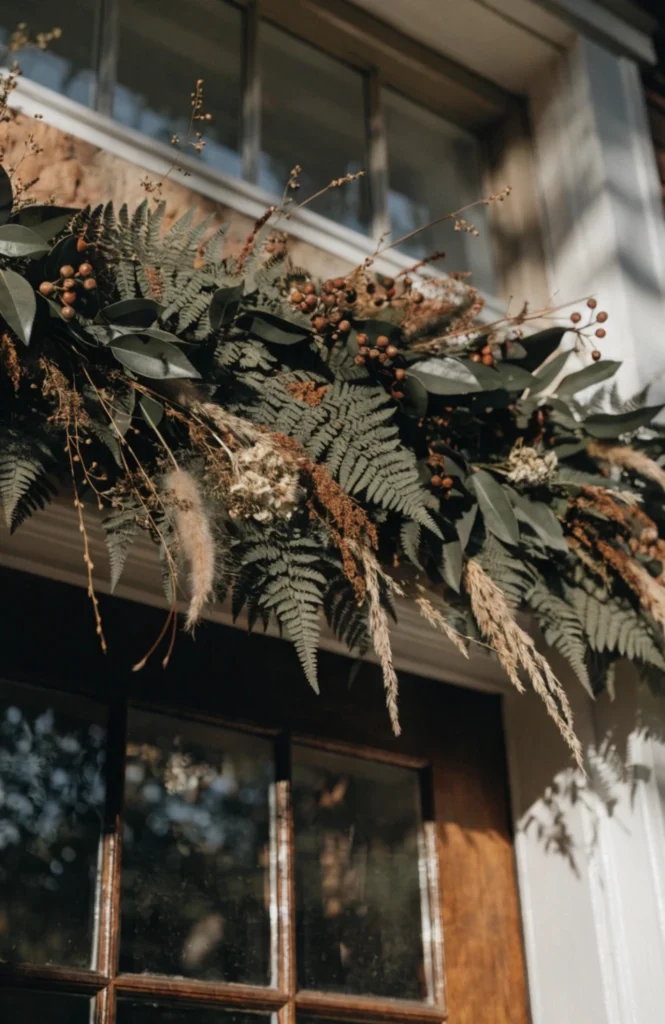
A fall floral or greenery swag runs $35 to $70 depending on length and density, and it typically mounts above the door frame using simple hooks rather than the centered hanger a wreath requires. Because a swag spans horizontally rather than being contained in a circle, it tends to work especially well on doors with wider frames or transom windows above them. Choosing one with a mix of dried florals and greenery gives it more textural variety than a single-material design.
It works because it’s a genuinely different shape than the wreath every neighboring house likely has, giving the entrance a distinct look without needing an unusual color palette or theme to stand out. The horizontal shape also draws the eye across the whole width of the doorway rather than concentrating attention in one central circle.
Pumpkins and Gourds
6. Group Pumpkins in Varying Sizes by the Steps
Grouping pumpkins in three different sizes instead of a matched set gave the display a natural, harvested-that-morning look.
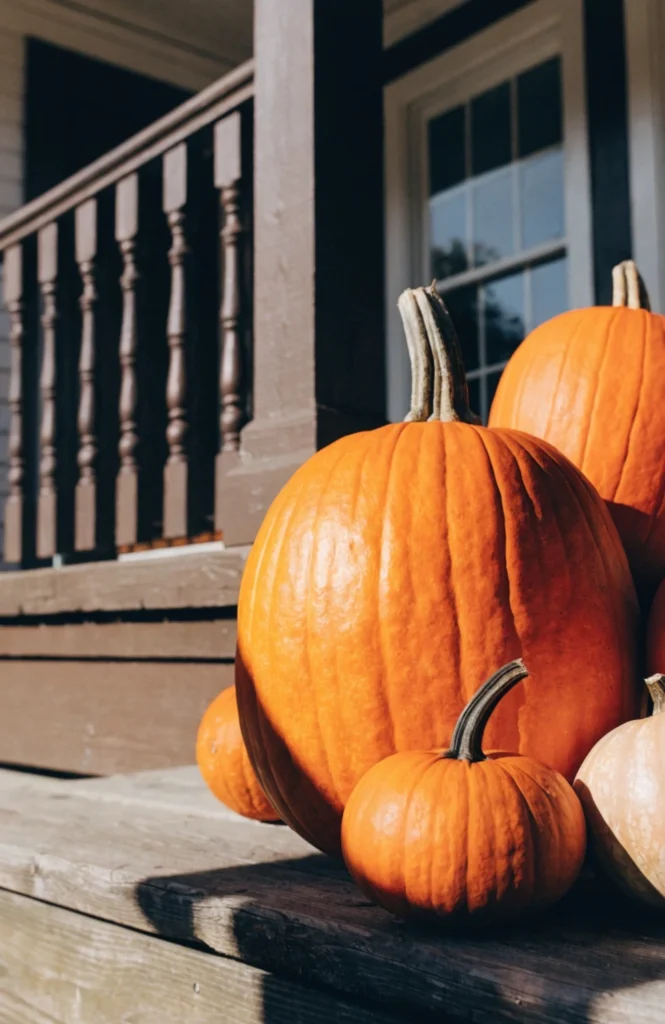
Real pumpkins run $5 to $20 each depending on size, and a mixed grouping of one large, one medium, and two or three small pumpkins typically runs $30 to $60 total. Arranging them slightly off-center near the steps, rather than in a perfectly straight line, reinforces the natural, gathered look this technique is going for. Real pumpkins do need occasional checking for soft spots as the season progresses, especially after rain, so plan to refresh them if they start to break down.
It works because varied sizes create the same visual rhythm used throughout good centerpiece and vignette styling, keeping the grouping from looking like a uniform, store-bought display. It’s also one of the most budget-flexible ideas on this whole list, since the total cost scales easily up or down with however many pumpkins you choose to include.
7. Use White and Cream Pumpkins for a Muted Look
Swapping traditional orange pumpkins for white and cream ones matched my entrance’s muted palette far better than I expected.
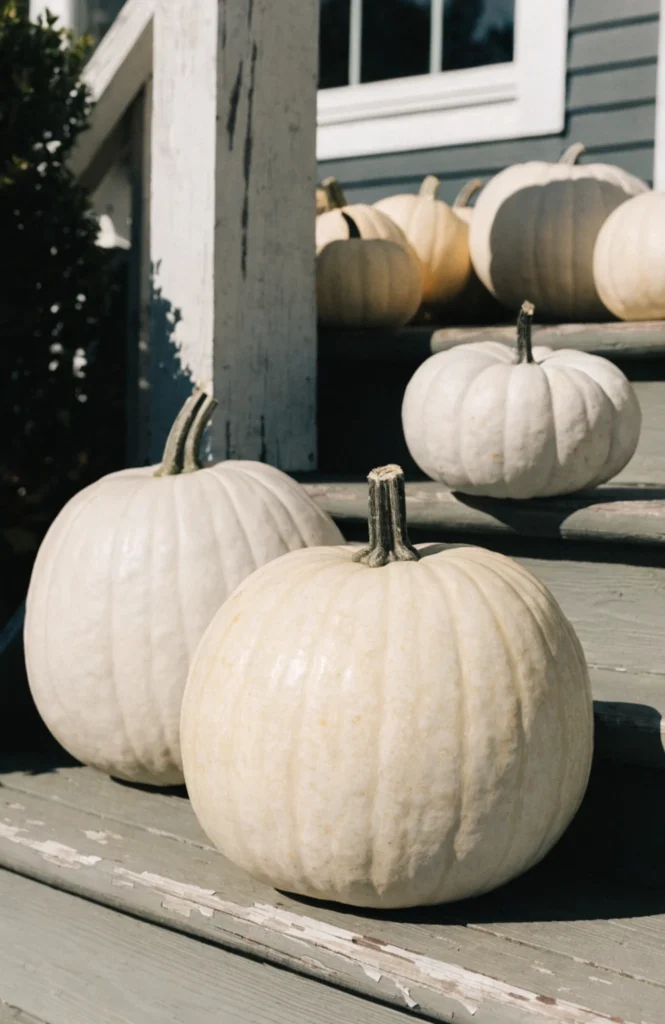
White and cream heirloom pumpkin varieties run $8 to $25 each depending on size and where you source them, often a bit more than standard orange pumpkins since they’re grown as specialty varieties. They pair especially well with neutral porch furniture and wood tones, extending the entrance’s overall color scheme rather than introducing a bright, contrasting orange. Farm stands and specialty pumpkin patches tend to carry a wider selection of these varieties than a standard grocery store.
It works because a muted pumpkin palette photographs and reads as more sophisticated, fitting a broader range of home exterior colors than traditional bright orange, which can clash with certain brick, siding, or door colors. It’s a small swap that changes the whole tone of the display without altering anything structural about the arrangement itself.
8. Add Painted Pumpkins in Deep Jewel Tones
A few pumpkins painted in deep emerald and burgundy added a richness to the porch that plain orange ones never quite provided.
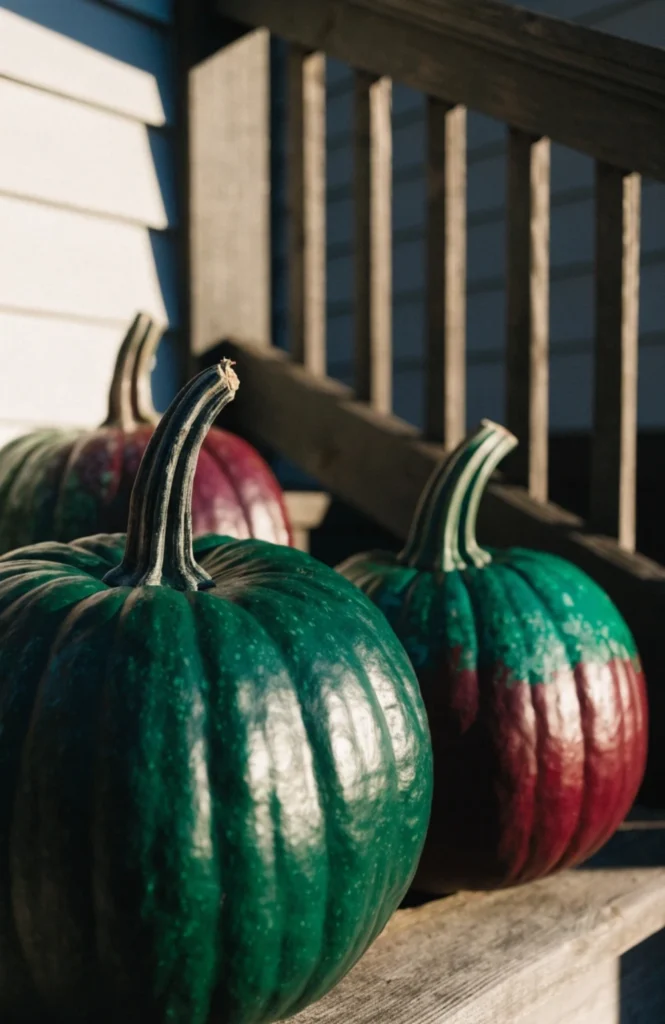
Real pumpkins run $5 to $15 each, and a can of outdoor-rated spray paint in a deep jewel tone costs another $8 to $12 and covers several pumpkins with two coats. Painting rather than carving also means the pumpkins last considerably longer outdoors, since an unpainted, uncarved pumpkin generally holds up better against rot than a carved one exposed to the elements. Applying paint in thin, even coats and allowing full drying time between coats prevents drips and gives the most polished finish.
It works because deep jewel tones read as elegant and moody rather than playful, fitting an entrance going for a more sophisticated fall look than traditional bright orange allows. It’s also a fun, low-cost project that can be done with kids or as a quick weekend activity before the porch gets fully decorated.
9. Include Warty or Textured Gourds for Interest
A handful of warty, textured gourds tucked among the smooth pumpkins added a visual detail that made guests actually stop and look closer.
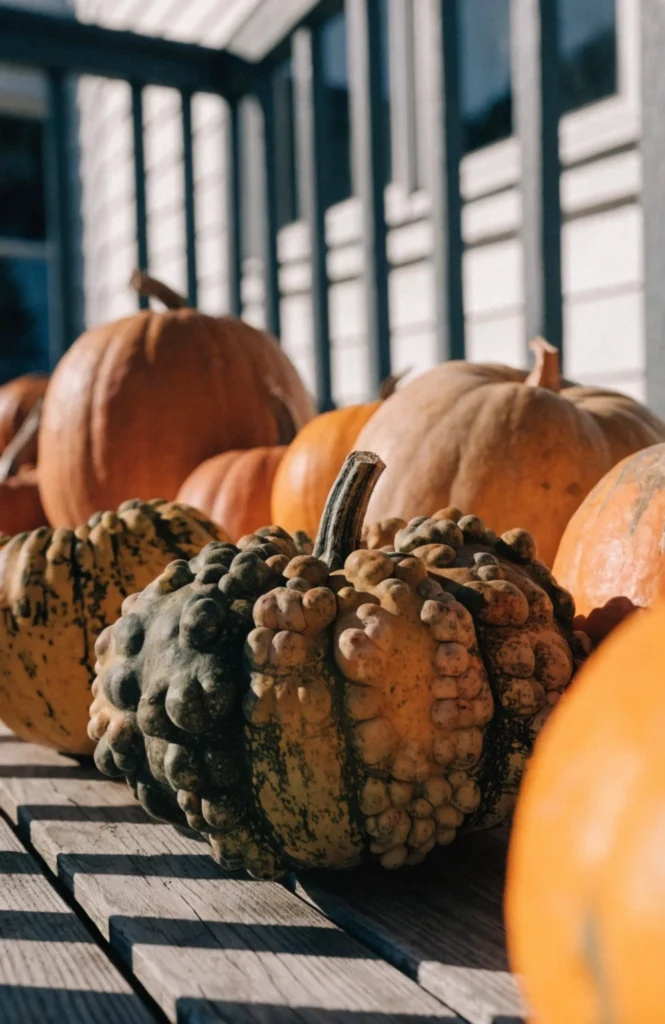
Warty or textured decorative gourds run $3 to $8 each, and a farmers market or pumpkin patch typically carries a wider variety of unusual textures and colors than a standard grocery store display. Mixing four to six different textured gourds in among the main pumpkin grouping adds detail without overwhelming the overall display. Because they’re generally smaller and lighter than pumpkins, they also work well tucked into gaps between larger pieces.
It works because the bumpy, unusual texture contrasts against the smooth surface of standard pumpkins, adding visual detail that rewards a closer look rather than reading as flat from a distance. This kind of textural variety is what separates a thoughtfully arranged pumpkin display from one that’s just pumpkins lined up in a row.
10. Stack Pumpkins in a Tiered Arrangement
Stacking three pumpkins in decreasing size instead of setting them side by side turned a simple grouping into a real focal point by the front door.
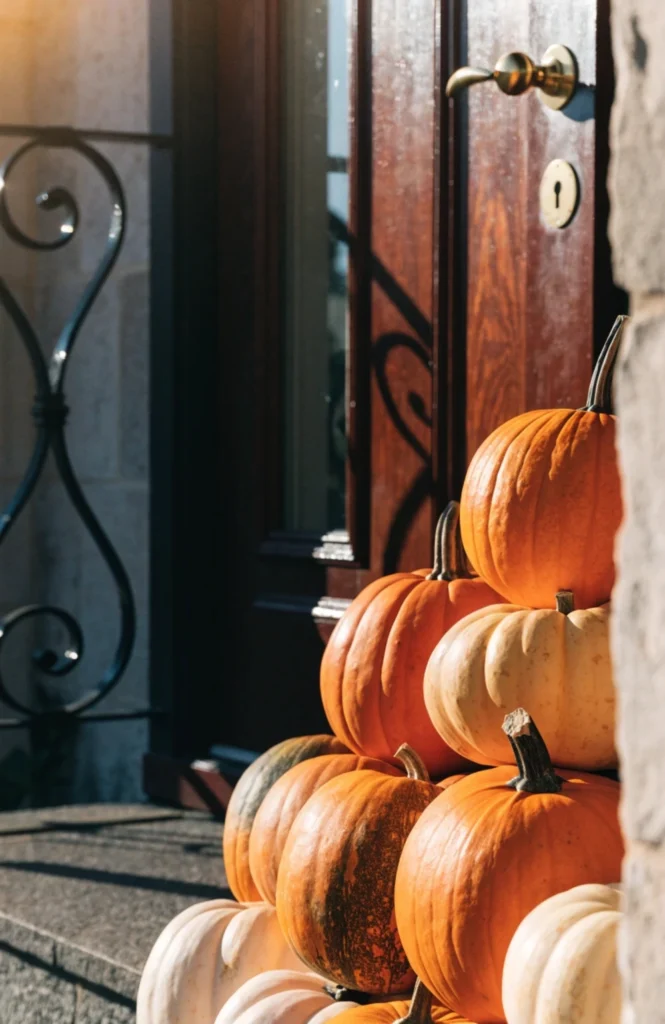
This uses pumpkins already in your grouping, running the same $5 to $20 per pumpkin as any other arrangement, though a small dowel or skewer to help secure the stack costs an extra few dollars. Choosing pumpkins with relatively flat tops and bottoms makes stacking noticeably more stable than trying to balance uneven, rounded varieties. Placing the stack somewhere it won’t get bumped by regular foot traffic helps it stay intact for the whole season.
It works because it adds genuine height to a pumpkin display, which flat, side-by-side groupings can’t achieve on their own, giving the entrance a more dramatic vertical element right at the door. A tiered stack also tends to photograph particularly well, making it a strong choice if the porch doubles as a photo spot during the season.
Planters and Greenery
11. Fill Urns with Mums and Ornamental Kale
Filling the existing summer planters with mums and ornamental kale meant I didn’t need to buy new urns, just swap what was growing inside them.
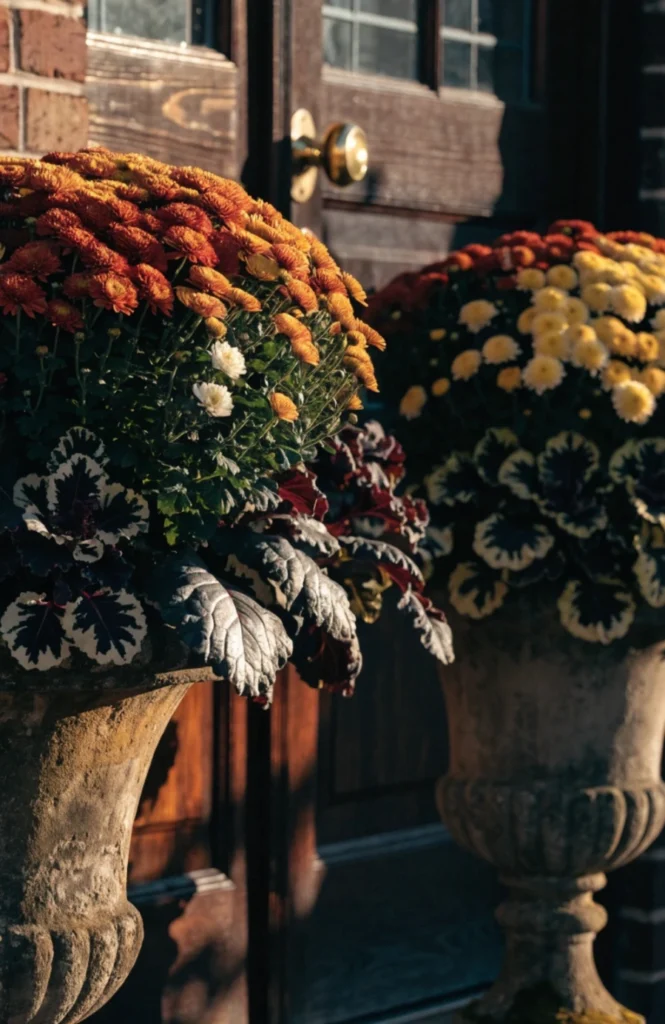
A potted mum runs $8 to $18 depending on size, and ornamental kale starts run $5 to $10 each, with two to three of each typically filling a standard porch urn generously. Both plants tolerate cooler fall temperatures and light frost well, meaning the display holds up through most of the season without needing to be swapped again. Watering consistently through any remaining warm early-fall days keeps both plants looking full rather than wilted.
It works because mums and kale are two of the most reliable cool-season bloomers and foliage plants available, holding their color and shape far longer than summer annuals would if left in place. Reusing existing planters rather than buying new ones also keeps this one of the more budget-friendly ideas on the whole list.
12. Add Corn Stalks Flanking the Door
Two bundles of dried corn stalks tied to the porch railing added height and a classic harvest silhouette that no pumpkin grouping alone could achieve.
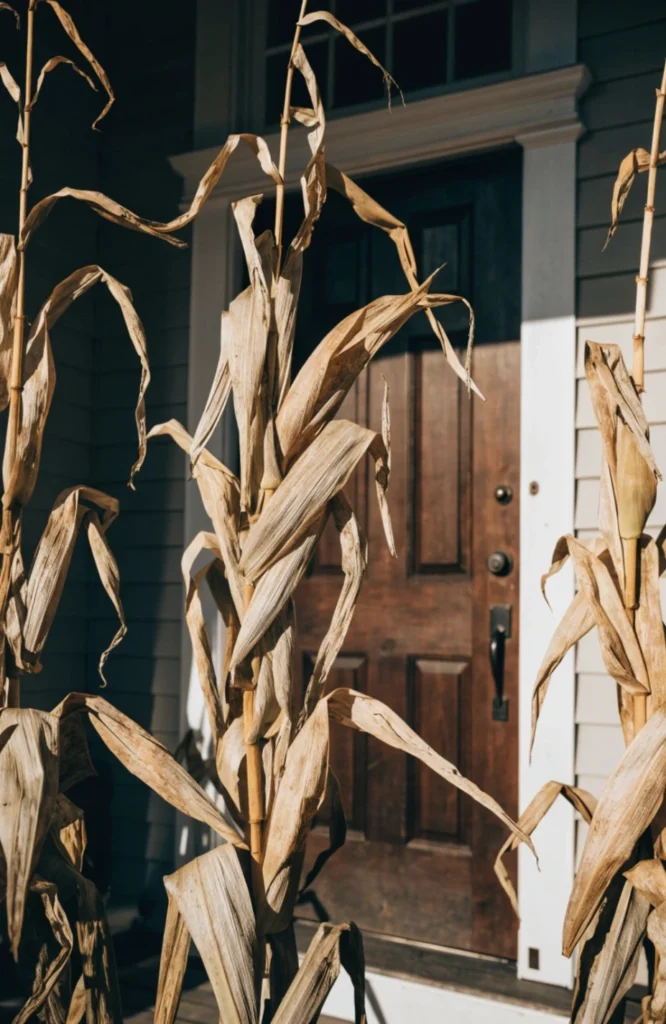
Dried corn stalk bundles run $15 to $30 per bundle, and two bundles positioned on either side of the door create a symmetrical frame around the entrance. Securing them to the railing or a porch post with twine or zip ties keeps them stable through wind, and they hold their shape and color for the full season without any watering or maintenance required. Some sellers offer pre-bundled stalks specifically sized for porch decorating, saving the extra step of tying them together yourself.
It works because tall corn stalks add genuine height right at the entrance, framing the door in a way that ground-level pumpkins and planters alone can’t achieve. It’s also one of the most instantly recognizable harvest season symbols, reading clearly as fall decor even from across the street.
13. Include Dried Wheat Bundles in Planters
Tucking a bundle of dried wheat into the corner of each planter added height and movement without needing to plant anything additional.
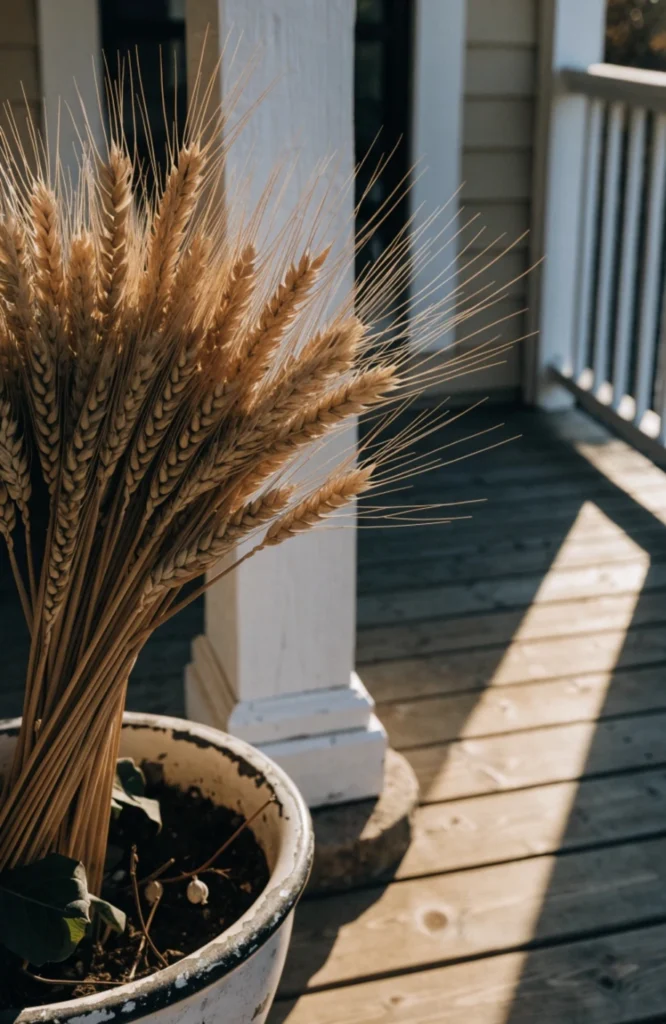
Dried wheat bundles run $8 to $15 each, and tucking one into the back corner of an existing planter takes just a minute and requires no additional soil or planting. The tall, thin stems add height without much visual bulk, meaning they work well even in a smaller planter that couldn’t accommodate a bulkier addition like corn stalks. Because they’re already fully dried, they hold their look for the whole season regardless of weather.
It works because it adds a subtle harvest nod without being an obvious cliché, fitting a more understated, timeless fall aesthetic than some of the bolder options on this list. It’s also one of the easiest and cheapest additions to make, requiring no planting or special care once it’s tucked into place.
14. Add Trailing Sweet Potato Vine to Soften Edges
Leftover sweet potato vine from summer planters kept growing well into fall and softened the edges of the whole arrangement.
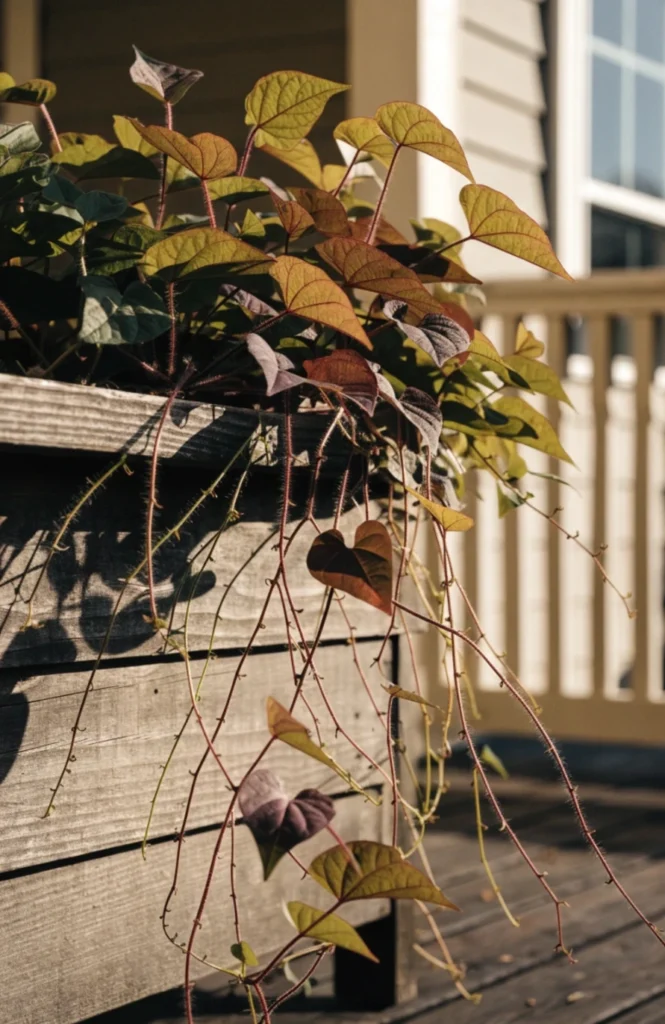
A sweet potato vine start runs $6 to $12, and it continues growing through early fall in most climates before finally dying back with the first hard frost. Its trailing habit means it spills over the edge of a planter or urn, softening the hard line where the container meets the porch floor. Because it grows quickly, even a small start added in late summer will have filled in considerably by the time fall decorating begins.
It works because trailing greenery softens the hard edges of planters and urns, adding movement and a slightly overgrown, natural look that structured mums and pumpkins alone don’t provide. It’s a detail that costs very little if the vine is already established from summer planting, essentially extending its usefulness into a second season.
Color and Layering
15. Layer a Doormat Under a Patterned Rug
Layering a smaller patterned rug on top of a plain coir doormat gave the entrance a textile layer that a single mat alone never provided.
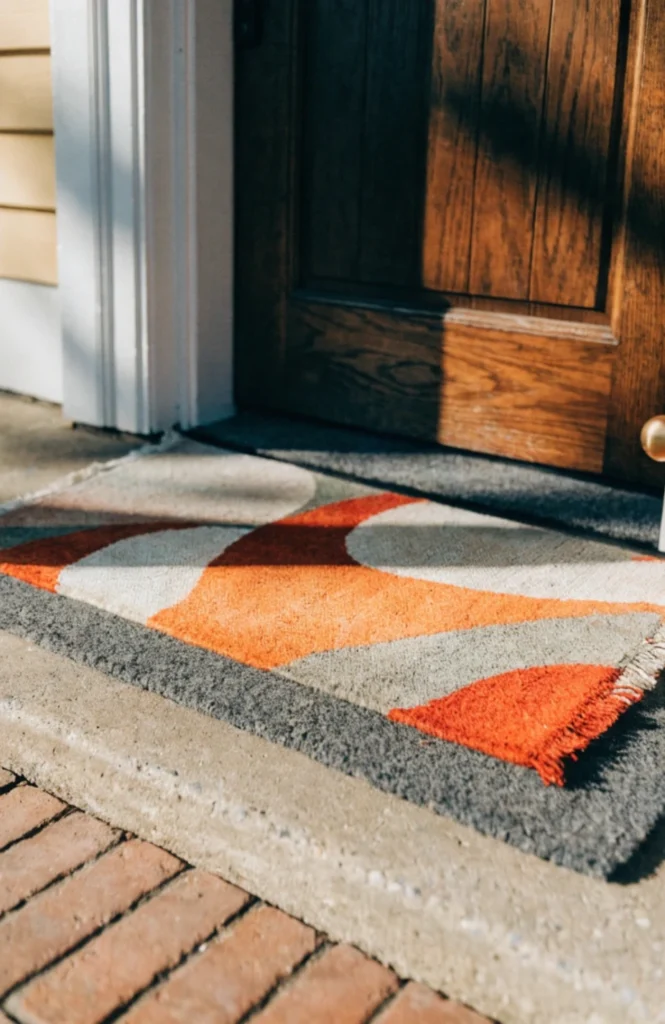
A plain coir doormat runs $15 to $30, and a smaller patterned outdoor rug to layer on top costs another $25 to $50 depending on size and design. Choosing a rug with a fall-appropriate pattern, plaid, botanical, or a simple stripe, ties the ground-level layer into the rest of the entrance’s color scheme. Both pieces should be rated for outdoor use to withstand regular foot traffic and weather exposure throughout the season.
It works because layering two textiles at the door adds visual interest at ground level, an area most entrance styling overlooks in favor of focusing entirely on the door and wreath above. It’s a technique borrowed directly from indoor rug layering, and it translates surprisingly well to an outdoor entrance.
16. Stick to a Muted, Earthy Color Palette
Swapping bright orange and black for cream, rust, and sage completely changed how sophisticated the whole entrance felt.
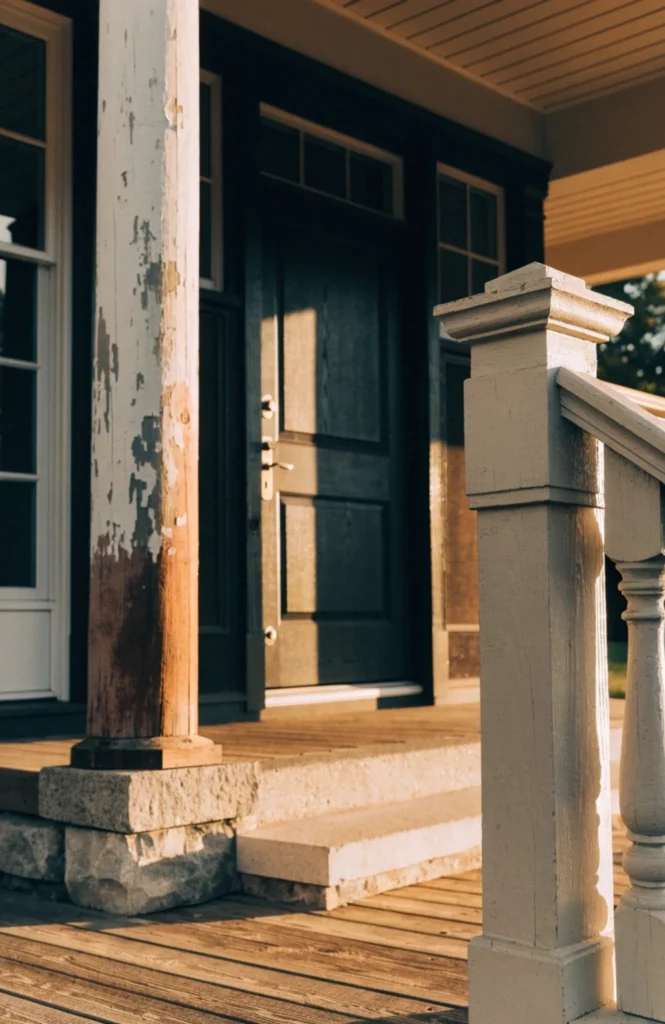
This is largely a styling and sourcing decision rather than a specific purchase, though muted-toned decor items typically cost about the same as brightly colored ones. Look specifically for cream, rust, sage, and warm brown tones when shopping for wreaths, pumpkins, and planters, since these read as more elegant and timeless than saturated primary colors. A muted palette also tends to coordinate more easily with a home’s existing exterior colors, brick, siding, trim, than bold seasonal colors would.
It works because a muted palette photographs and reads as more sophisticated, avoiding the costume-like feel that an all-orange-and-black display can sometimes have. This restraint is part of what separates an elegant, curated fall entrance from one that simply has a lot of seasonal decorations on it.
17. Add a Painted Front Door in a Deep Fall Tone
Repainting the front door a deep terracotta made every wreath and pumpkin arrangement since look better against it, no matter what colors I chose.
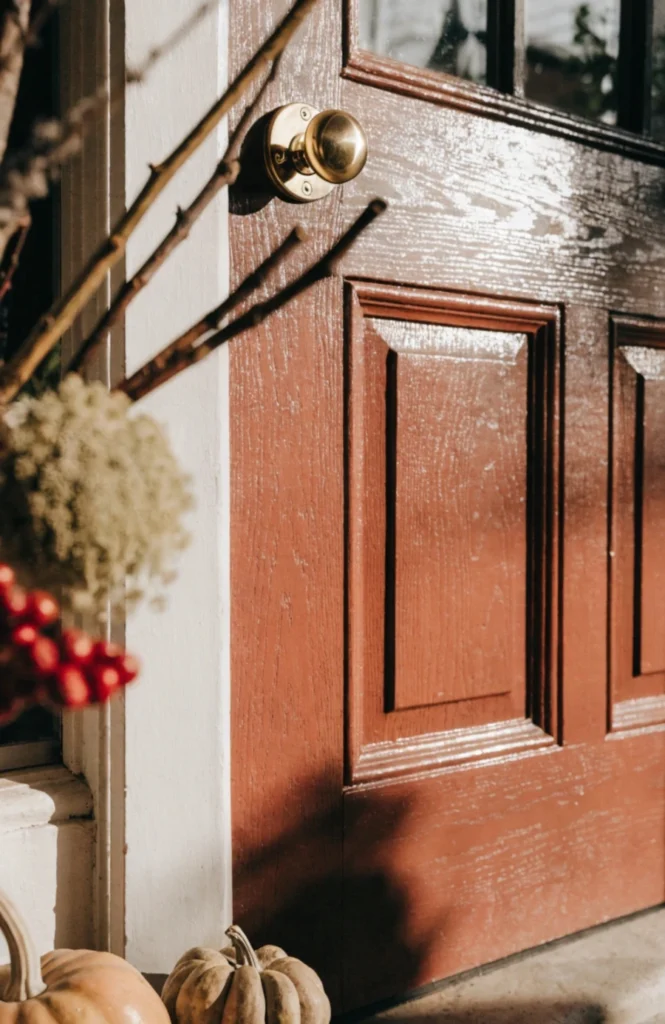
A quart of exterior door paint runs $20 to $35, and most standard front doors need just one quart for two coats. A deep terracotta, forest green, or warm brown all work well as a backdrop for seasonal decor, since they’re rich enough to feel intentional without needing to match the fall palette exactly. This is a more permanent change than most items on this list, so it’s worth choosing a color that also works well outside of the fall season.
It works because the door itself becomes the backdrop for every other piece of seasonal decor, and a rich, deep color makes wreaths, pumpkins, and planters stand out more than they would against a plain white or beige door. It’s also one of the few changes on this list that continues adding value to the home’s curb appeal well beyond the fall season.
18. Use Layered Textures, Wood, Wicker, Fabric
Mixing a wood bench, a wicker planter, and a fabric pillow gave the porch a layered feel that using all-matching materials never achieved.
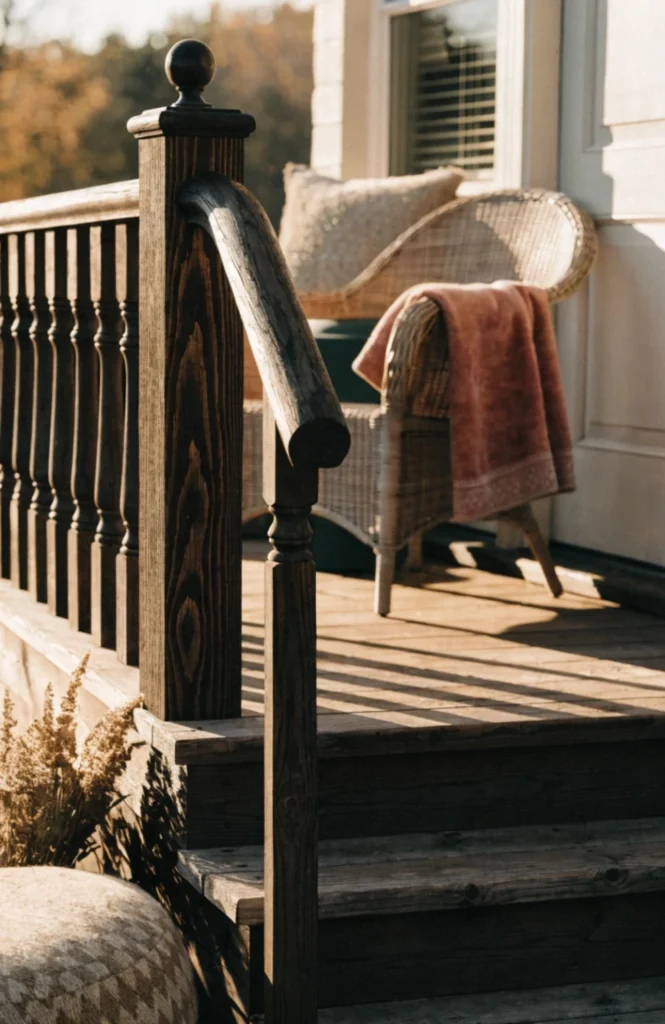
This is a styling principle rather than a specific purchase, and it works with materials already present on most porches, existing furniture, planters, and textiles, rather than requiring anything new. Aim for at least three different materials within view of the entrance, wood, wicker, metal, fabric, so the eye has variety to move across rather than a single repeated texture. Small additions like a woven planter liner or a wood sign can introduce a missing texture without a large purchase.
It works because varied texture adds depth to an entrance the same way it does indoors, keeping the display from feeling flat even within a limited color palette. A porch built entirely from one material, all metal furniture, for instance, tends to feel colder and less inviting than one mixing several natural textures together.
Lighting and Ambiance
19. Add Lanterns on Either Side of the Door
A pair of black metal lanterns flanking the door gave the entrance symmetry and a warm glow once evening settled in.
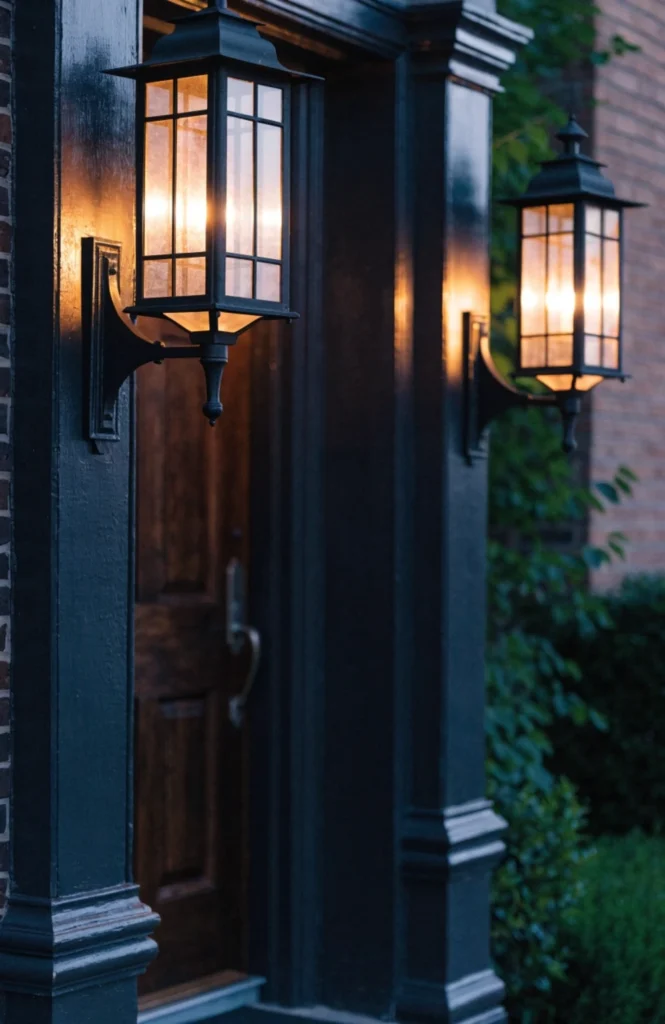
A pair of decorative lanterns runs $40 to $90 total depending on size and finish, and battery-operated flameless candles inside cost another $10 to $20 for a set. Positioning them at consistent height on either side of the door, on the ground, a step, or a small table, creates the symmetry that makes this idea work so well. Solar-powered versions eliminate the need to swap batteries regularly, though they typically produce softer light than battery-powered options.
It works because symmetrical lighting immediately draws the eye to the door itself, framing the entrance in a way that a single light source off to one side doesn’t achieve. It also extends the entrance’s usable, welcoming hours well past sunset, which matters for trick-or-treaters and evening guests throughout the season.
20. Use String Lights Along the Porch Railing
Stringing warm lights along the porch railing extended the cozy feeling of the entrance beyond just the door itself.
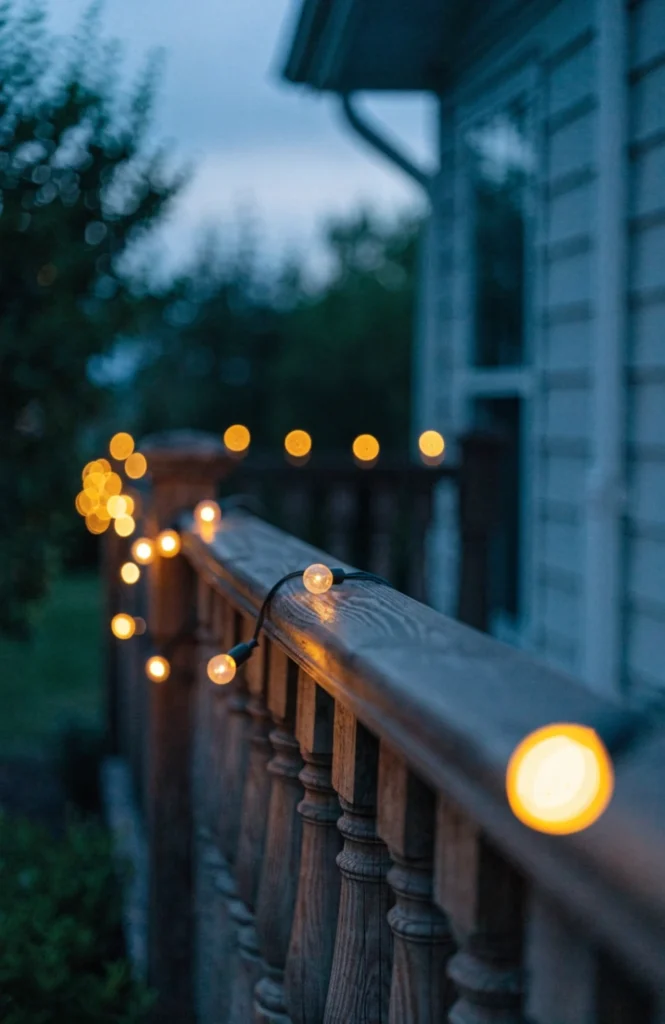
A strand of warm white outdoor-rated string lights runs $15 to $30 depending on length, and most porches need one to two strands to cover the full railing. Choosing an outdoor-rated strand specifically, rather than an indoor one, ensures the lights hold up through fall’s mix of sun, wind, and occasional rain. A timer or smart plug lets the lights turn on automatically each evening without needing to be switched on by hand.
It works because it extends the warm, welcoming feeling of the entrance beyond just the door, wrapping the whole porch in soft light rather than concentrating it in one spot. This is especially effective for porches that get regular evening use, whether for trick-or-treaters, guests, or just enjoying the cooler fall evenings outside.
21. Include Flameless Candles in Glass Hurricanes
A pair of glass hurricanes with flameless candles inside gave the porch table a warm glow without any fire risk in the wind.
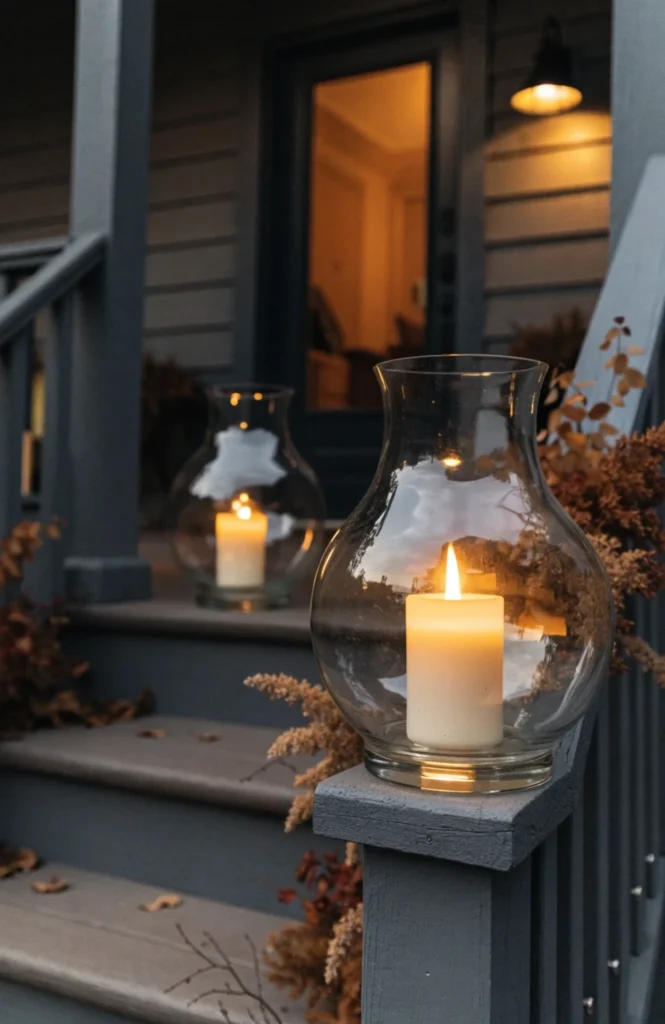
A glass hurricane vase runs $15 to $35 each, and a flameless LED pillar candle to place inside costs another $10 to $20. The glass shields the light from wind while still letting the warm glow show through, making this a more reliable outdoor lighting option than an exposed candle or lantern in a breezy spot. Filling the base with a bit of dried moss or small gourds adds an extra decorative layer around the candle itself.
It works because it delivers the same warm ambiance as an open flame without the fire risk or the frustration of a candle blowing out in the wind, which matters more on an exposed porch than almost anywhere else a candle might be used. It’s a reliable, low-maintenance way to add lit ambiance to a small side table or the top of a planter.
22. Add a Pathway of Small Lanterns
A row of small lanterns lining the front walkway meant guests could actually see their footing on the way up, not just admire the door once they arrived.
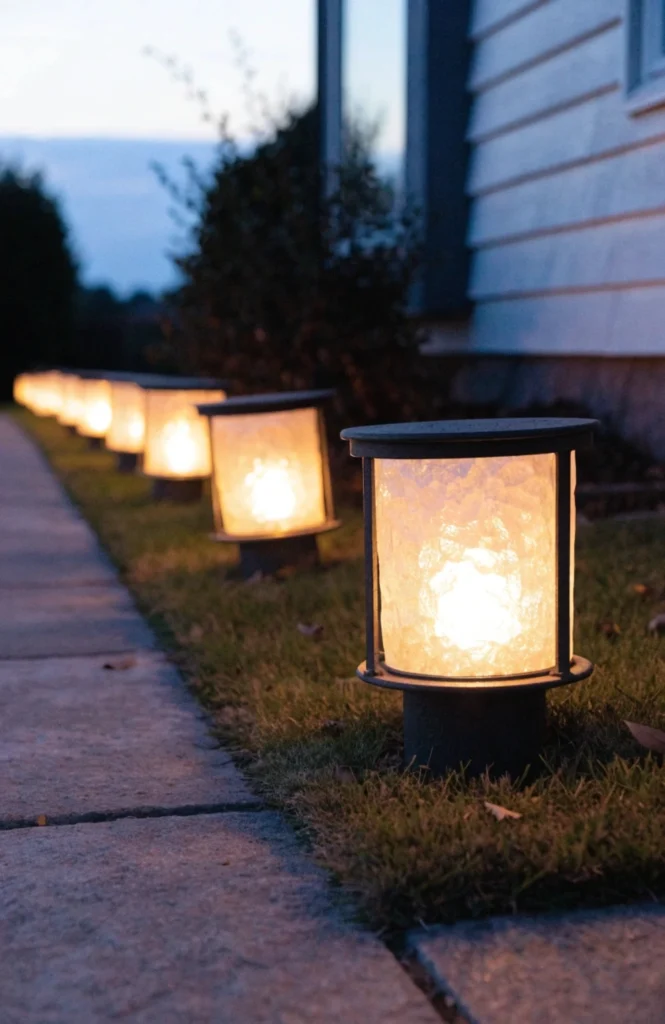
A set of six to eight small solar or battery-powered lanterns runs $25 to $50 for the full set, and solar versions require no wiring or extension cords running across the yard. Spacing them evenly along both sides of the walkway creates a clear, welcoming path leading up to the front door. Most solar versions turn on automatically at dusk after charging during the day, making them essentially maintenance-free once installed.
It works because it extends the styled entrance beyond just the door itself, guiding guests along the whole approach rather than leaving the walkway dark and separate from the rest of the display. It’s also a genuine safety improvement, helping visitors see uneven steps or walkway edges after dark.
Finishing Touches and Signage
23. Add a Seasonal Welcome Sign
A simple wood welcome sign leaning against the door frame set the tone for the whole entrance before guests even noticed the wreath.
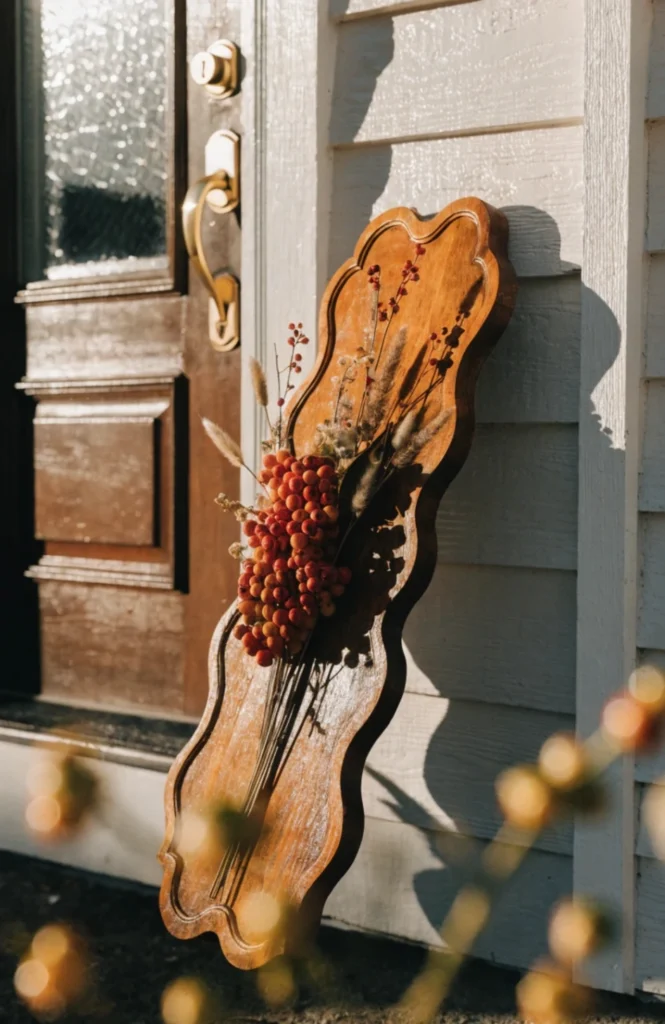
A wood or metal seasonal welcome sign runs $20 to $45 depending on size and material, and leaning it against the door frame or a nearby planter avoids needing to drill any mounting holes. Choosing a sign with a simple, muted design rather than a busy graphic keeps it fitting into an elegant, understated entrance rather than a more novelty-driven look. Many are reversible or interchangeable between seasons, letting the same sign frame work year-round with different insert panels.
It works because it adds a genuinely welcoming, personal touch right at the entrance, reinforcing the overall mood of the display with an actual written greeting rather than relying on decor alone to convey it. It’s also one of the easiest elements to update seasonally without needing to change anything else about the display.
24. Include a Cozy Bench with Layered Pillows
Adding a small bench with a few layered pillows turned the porch into somewhere people actually wanted to sit, not just walk past.
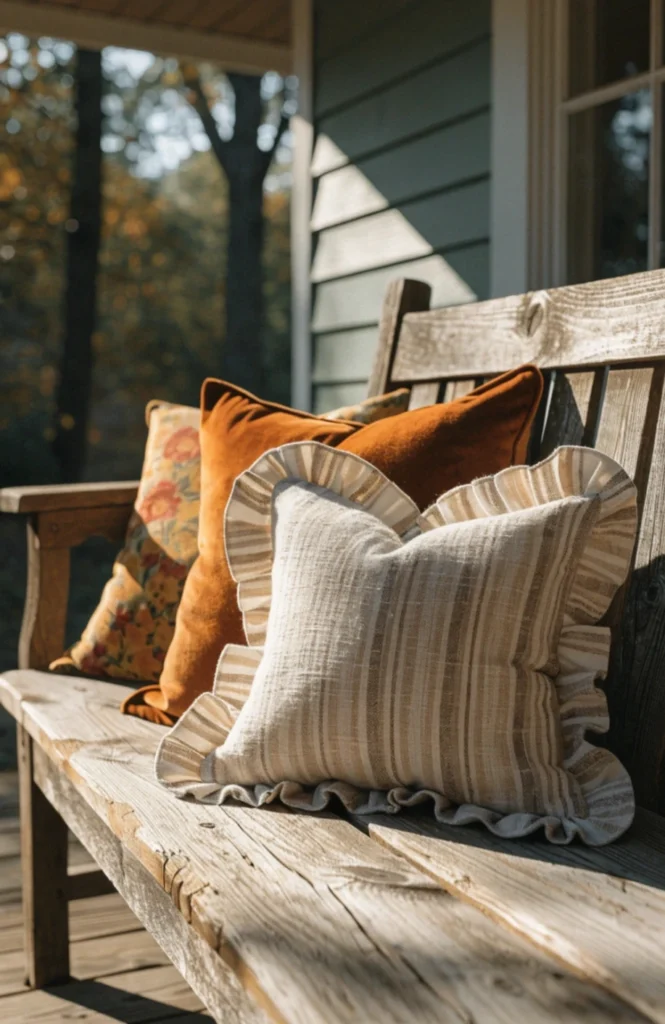
A small outdoor bench runs $80 to $180 depending on material and size, and two to three outdoor-rated throw pillows to layer on it cost another $15 to $25 each. Choosing weatherproof cushion covers keeps them from getting damaged by fall’s mix of sun and occasional rain, and a removable, washable cover makes seasonal cleaning easier. Positioning the bench where it gets some coverage from rain, under a porch roof or overhang, helps it and its cushions last longer.
It works because it turns the entrance into a functional space, not just something to look at while walking past, giving the whole porch more purpose and inviting people to actually spend time there. A styled bench also adds another layer of texture and color to the overall display, complementing the wreath and planters nearby.
25. Add a Chalkboard with a Fall Greeting
A small chalkboard with a hand-lettered fall greeting became something I actually enjoyed updating every few weeks throughout the season.
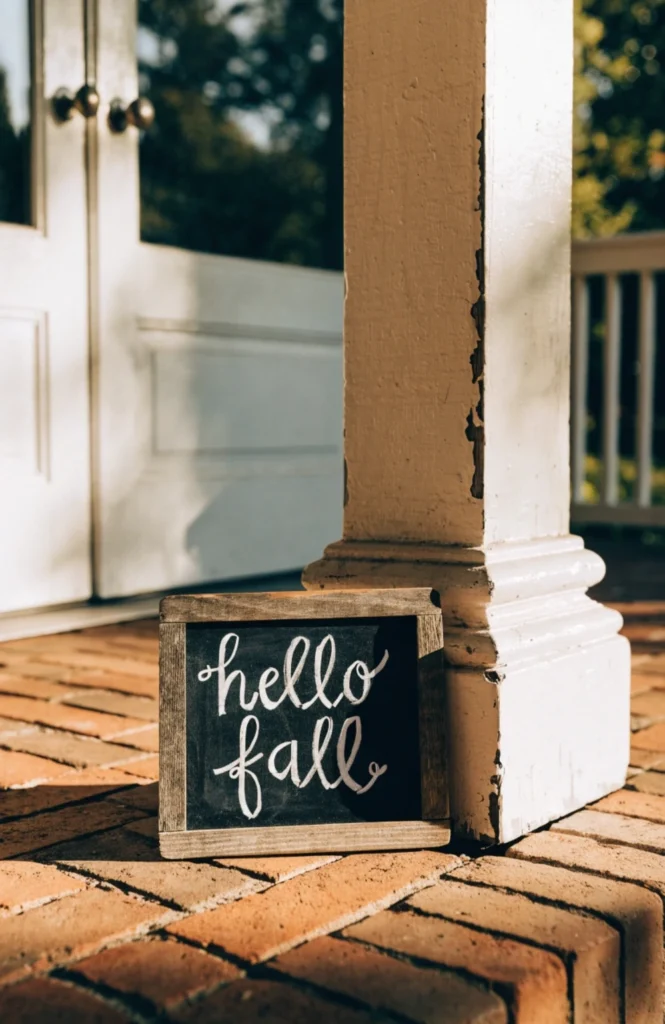
A small freestanding or wall-mounted chalkboard runs $15 to $30, and chalk markers for writing on it cost another $6 to $12. Because the message can be updated anytime, it’s one of the few elements on this list that can change throughout the season, from a general fall greeting in September to a Halloween-specific one in late October. Weatherproofing the chalkboard surface, or keeping it under a covered porch area, prevents the writing from smudging in rain.
It works because it adds a personal, hand-lettered touch that mass-produced decor can’t replicate, and the ability to update it keeps the entrance feeling fresh throughout a two to three month season rather than static the whole time. It’s also one of the more interactive elements, since kids often enjoy helping choose and write the message.
26. Include a Personalized Address Sign
A wood address sign with the house number carved into it became a permanent addition that still fits perfectly into the fall display each year.
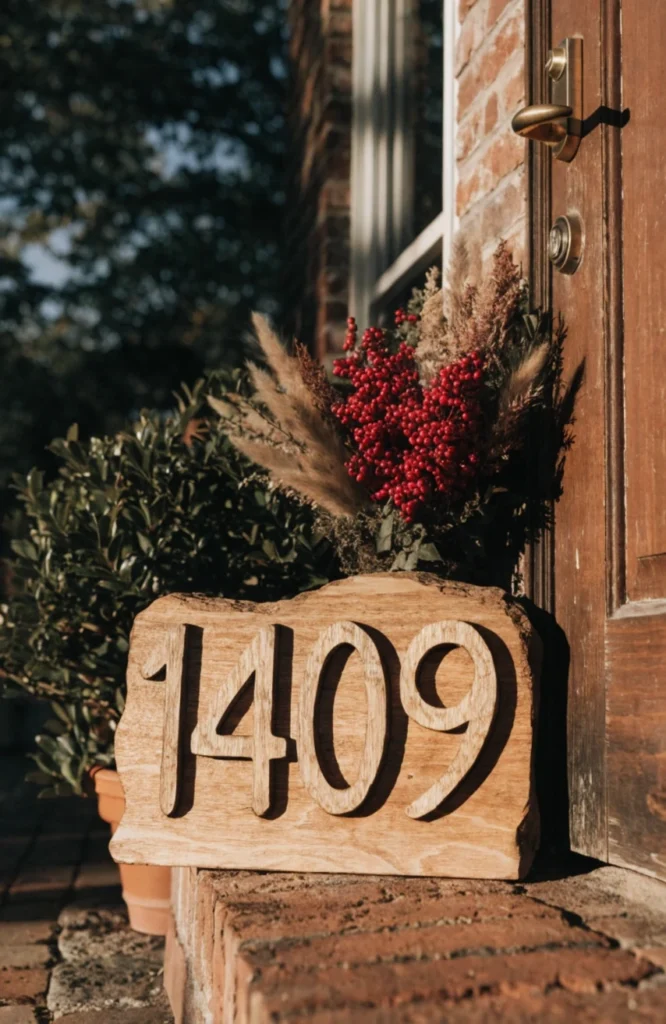
A custom wood or metal address sign runs $30 to $70 depending on material and size, and it typically mounts near the door or by the front walkway as a permanent fixture rather than a seasonal one. Choosing a design in a material that matches the porch’s other fall elements, wood tones, black metal, keeps it blending into the seasonal display rather than looking out of place. Because it stays up year-round, it’s an investment that continues adding value well beyond the fall decorating season.
It works because it’s both functional, helping visitors and delivery drivers find the right house, and decorative, adding a personalized detail that generic seasonal decor can’t provide. It’s a piece that ties the whole entrance together across every season, not just fall, making it one of the more practical long-term additions on this list.
Conclusion
If you’re starting from a bare entrance, a wreath and a grouped pumpkin display cover the two things that matter most, a focal point at eye level and one at ground level, before you add anything else. Layer in planters and lighting next, since those extend the display’s presence and usable hours, then finish with the smaller personal touches, a welcome sign, a chalkboard greeting, once the main elements are working together. The entrances that feel most welcoming aren’t the ones packed with the most decorations, they’re the ones where a few well-chosen pieces work together to tell one cohesive fall story from the street to the door.
FAQ
How long do real pumpkins last outside in fall?
Uncarved pumpkins typically last six to eight weeks outdoors in moderate fall weather, though checking regularly for soft spots after rain helps catch any that are starting to break down.
What’s the best way to make a fall entrance look elegant instead of costume-like?
Stick to a muted, earthy color palette, cream, rust, sage, warm brown, rather than bright orange and black, and let texture do more of the visual work than saturated color.
Do I need to buy a new wreath every year?
No, a quality dried floral or grapevine wreath can be stored indoors between seasons and reused for several years, especially if it’s kept out of direct sun and moisture when not in use.