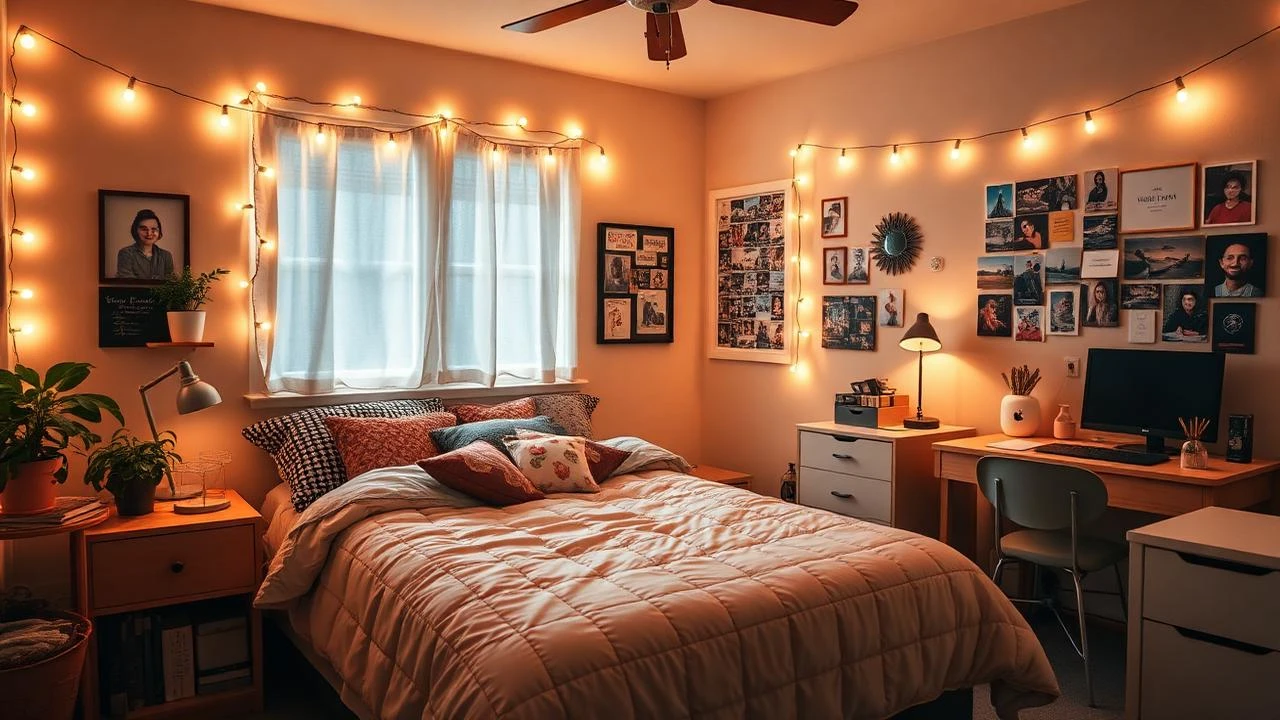
My freshman year dorm room was just a bare mattress and a stack of boxes for the first two weeks, and it showed in how homesick I felt every single night. Once I actually decorated it, cozy bedding, a rug, some string lights, it stopped feeling like a temporary holding cell and started feeling like somewhere I actually wanted to spend time. None of it required painting a wall or breaking any housing rules, just layering in the right details.
The ideas below are grouped by what they solve, bedding and textiles first, then storage, wall decor, lighting, the desk and study space, and a couple of finishing touches that make the room feel like yours. If your dorm setup includes a small desk corner, pair these with a few ideas from these homework station ideas for small spaces, since a dorm desk deals with exactly the same space constraints.
Before You Start
- Check your dorm’s housing rules before decorating, some buildings restrict nails, tape, or certain lighting types, and most decor on this list works within standard restrictions.
- Measure your specific mattress size before buying bedding, dorm mattresses often run a nonstandard “twin XL” length that regular twin sheets won’t fit.
- Prioritize vertical storage over floor storage, dorm rooms are almost always short on floor space but often have unused wall and closet height.
- Bring at least one item from home that has nothing to do with function, a photo, a small object, since it’s often what makes the room feel less temporary.
Bedding and Textiles
1. Layer a Cozy Comforter Over the Standard Dorm Mattress
Swapping the thin dorm-issued sheets for a real comforter is what finally made the bed look like an actual bed instead of a cot.
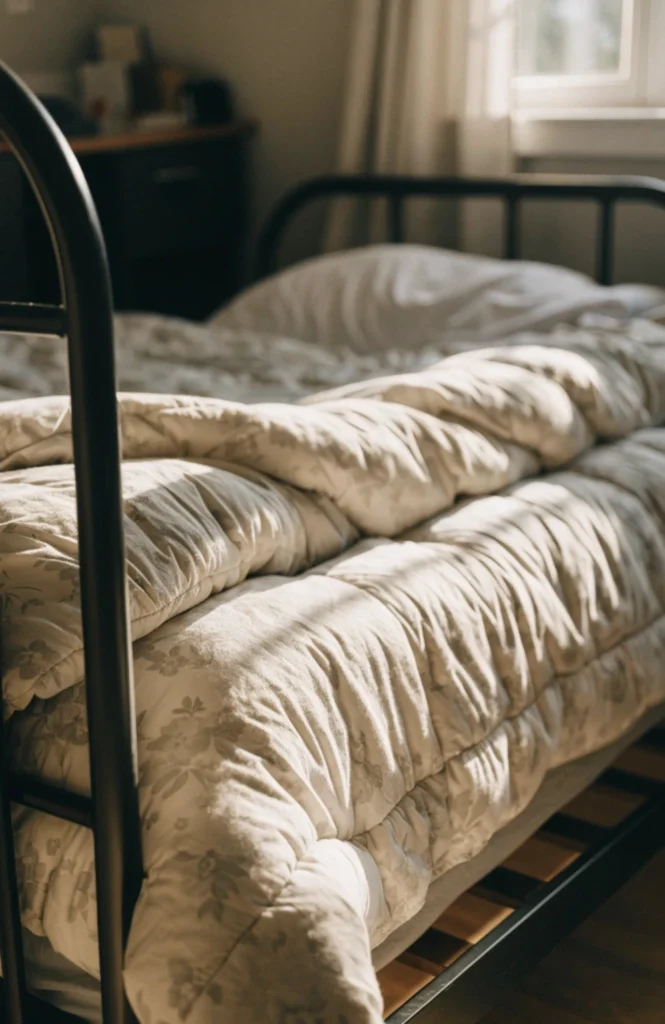
A twin XL comforter runs $30 to $60 depending on material, and checking that it’s specifically sized for twin XL avoids a mattress that looks too short for its bedding.
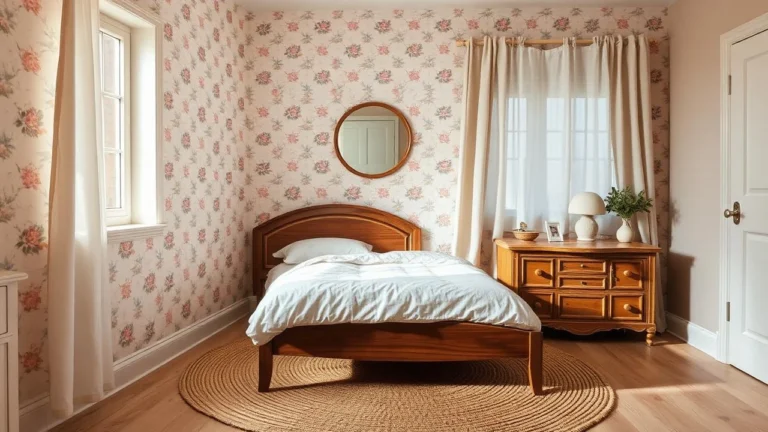
It works because bedding takes up the largest visual footprint in most dorm rooms, so upgrading it changes the whole room’s feel more than almost any other single item.
2. Add a Bed Skirt to Hide Under-Bed Storage
A simple bed skirt hid all the storage bins underneath and made the whole setup look intentional instead of like a storage overflow zone.
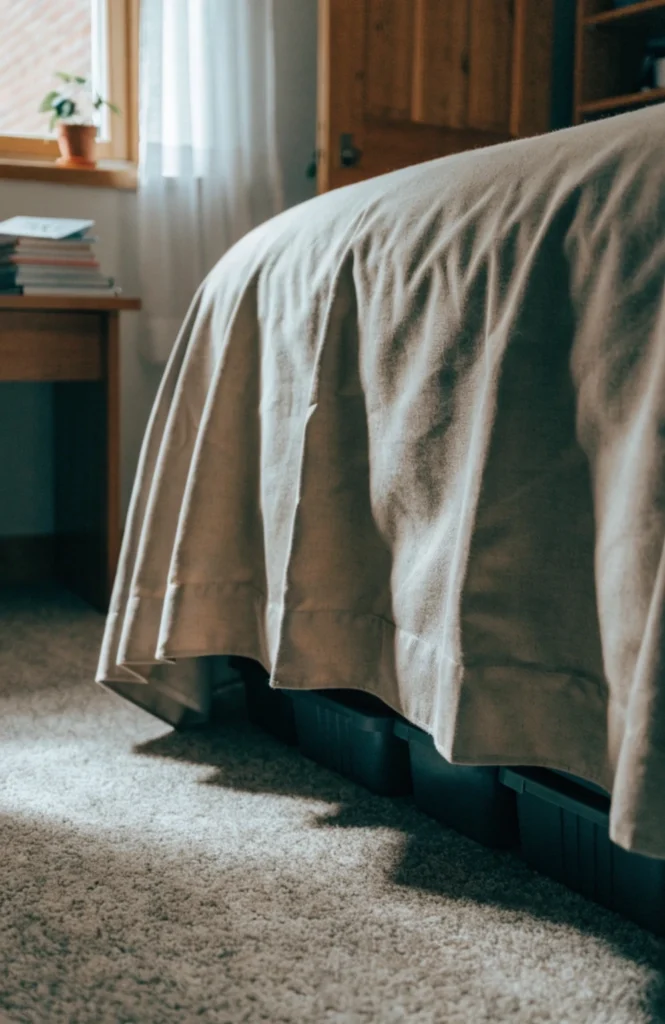
A twin XL bed skirt runs $15 to $30, and choosing one in a solid neutral tone keeps it flexible with whatever comforter you pair it with.
It works because it hides under-bed storage while still allowing full use of that space, giving you both function and a finished look at the same time.
3. Use a Soft Area Rug to Warm Up the Floor
Adding a small rug over the cold dorm flooring made the biggest difference in how the room actually felt to walk around barefoot.
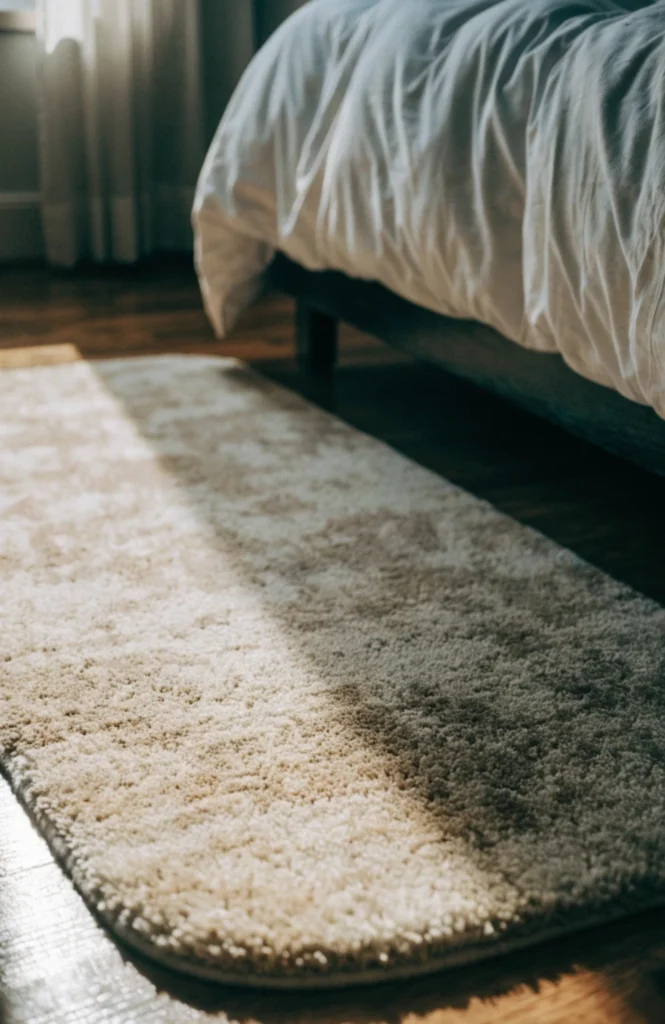
A small area rug sized for a dorm room floor runs $25 to $50, and a low pile makes it easier to vacuum and less likely to trap dust.
It works because most dorm flooring is hard tile or industrial carpet, and a soft rug adds warmth and softens the sound of footsteps in a shared space.
4. Add Throw Pillows in Coordinating Colors
A couple of throw pillows in colors that matched the rest of the room made the bed look styled instead of just slept in.
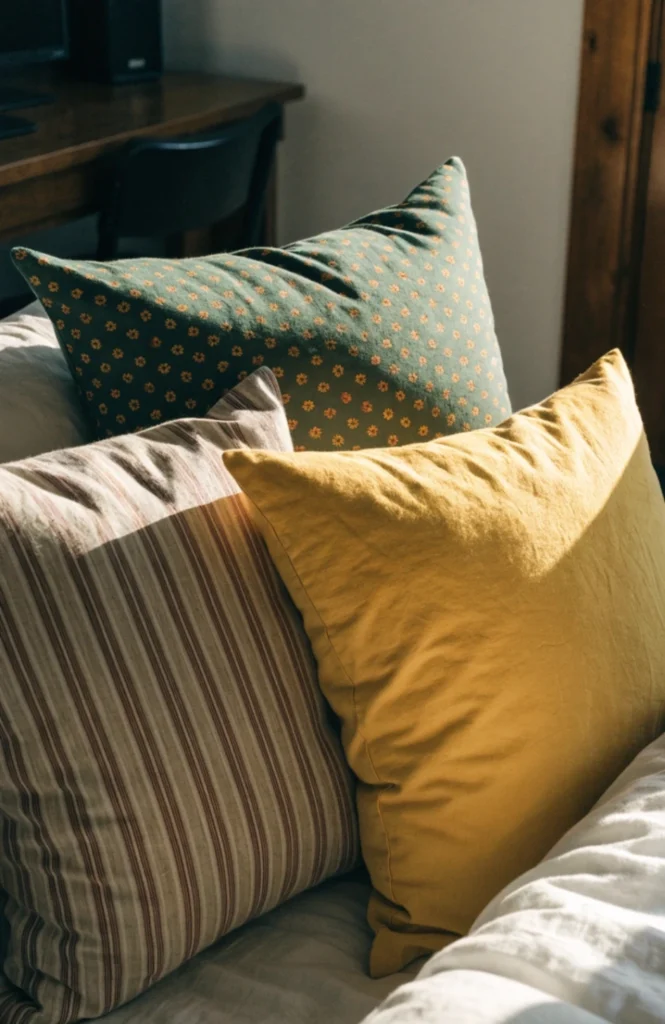
Throw pillows run $10 to $20 each, and two to three in coordinating tones give the bed a finished look without much added cost.
It works because it’s one of the cheapest ways to tie the whole room’s color palette together, and pillows are easy to swap out if your taste changes by the next semester.
Storage and Organization
5. Use Under-Bed Storage Bins
Storing off-season clothes and extra supplies under the bed reclaimed the only real storage space most dorm rooms actually have.
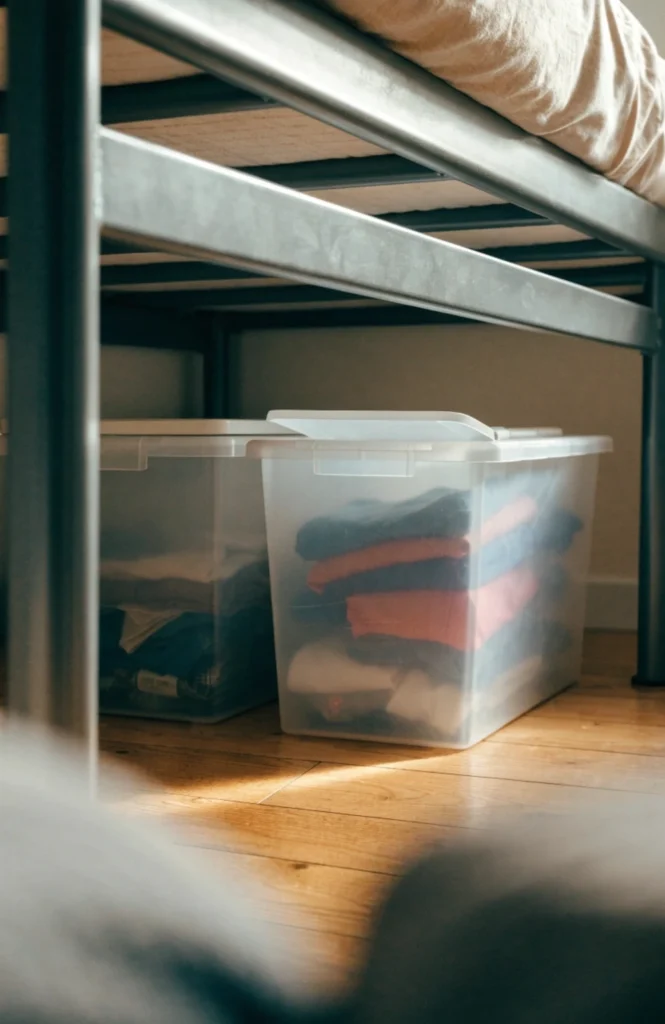
Low-profile under-bed storage bins run $12 to $25 each, and most dorm bed frames have enough clearance for a standard bin height.
It works because under-bed space is usually the largest untapped storage area in a dorm room, and bins keep it organized rather than becoming a catch-all.
6. Add a Hanging Closet Organizer
A hanging shelf organizer in the closet doubled my usable storage without needing to install anything permanent.
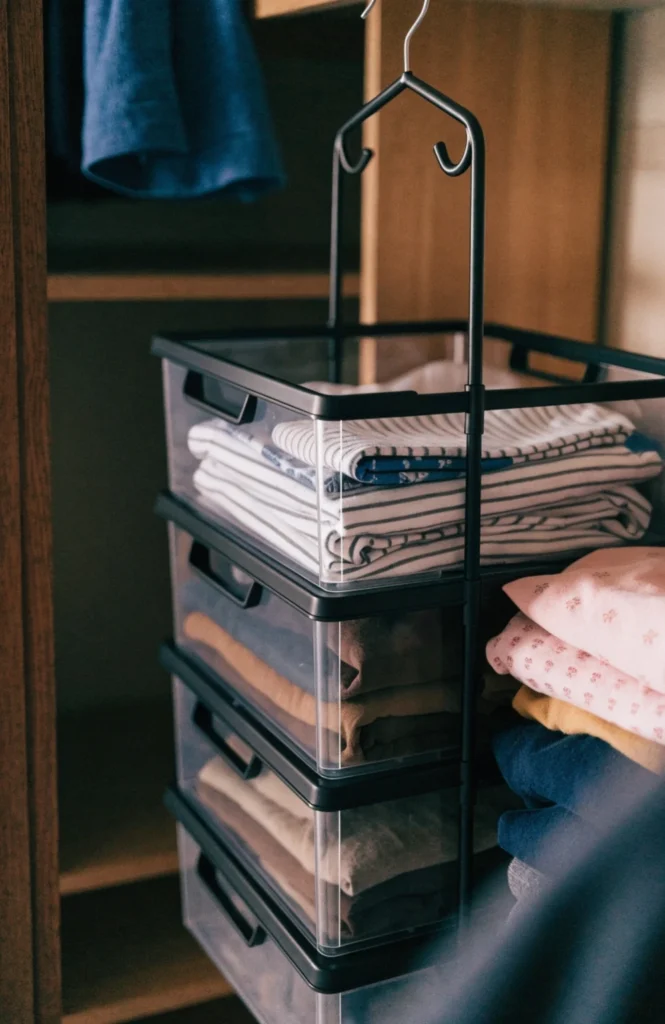
A hanging closet organizer with multiple shelves runs $15 to $30 and hangs directly from the existing closet rod.
It works because most dorm closets have a single rod and no shelving, and a hanging organizer adds folded storage without any tools or installation.
7. Install Over-the-Door Hooks
Over-the-door hooks gave us a spot for towels, bags, and jackets that didn’t require damaging the walls at all.
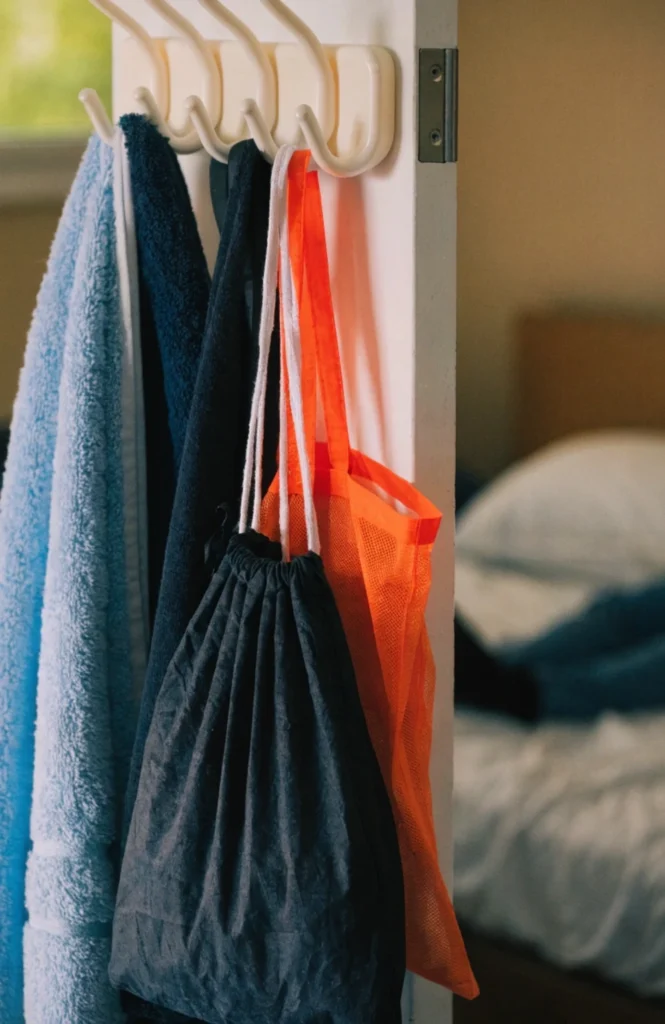
An over-the-door hook rack runs $10 to $20 and requires no drilling or adhesive, making it one of the safest storage options for dorm walls and doors.
It works because it uses a completely overlooked surface, the back of the door, without needing any wall damage that could risk a security deposit.
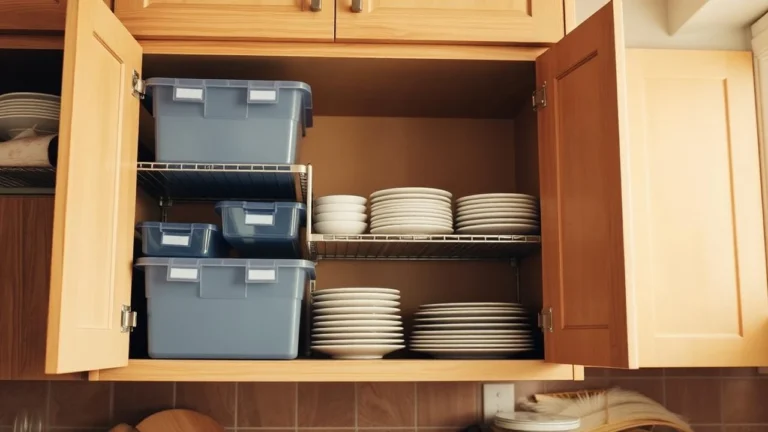
8. Use Stackable Bins for the Closet Shelf
Stackable bins on the closet’s top shelf let me use that awkward high space without everything sliding around every time the door opened.
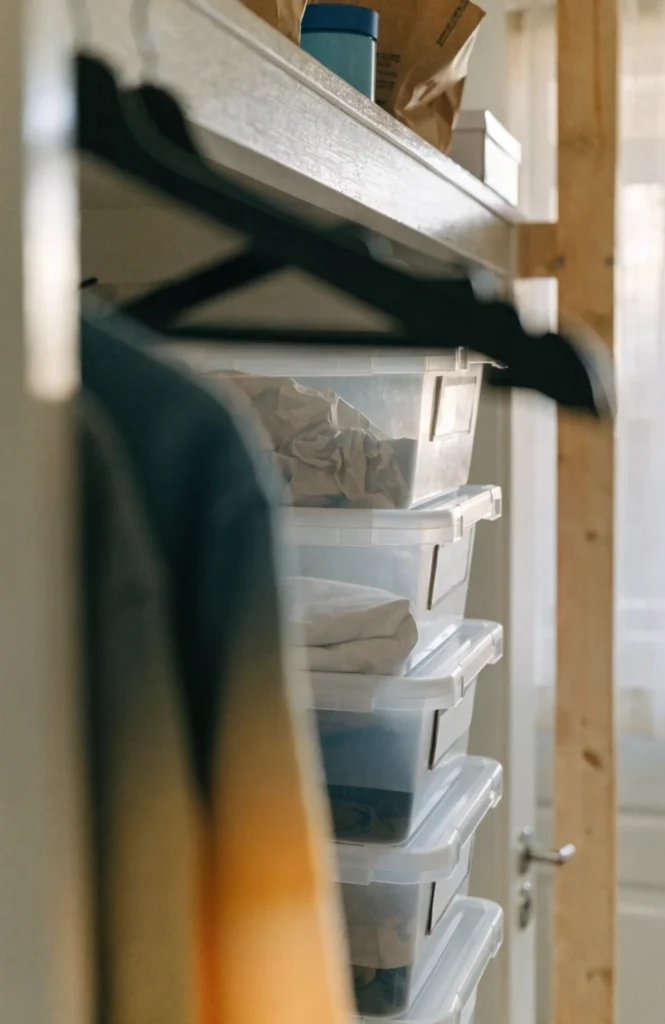
Stackable plastic bins run $6 to $15 each, and labeling each one saves time digging through them later in the semester.
It works because it makes use of the closet’s often-wasted top shelf, which is usually too high and awkward to hold loose items without something to contain them.
9. Add a Rolling Cart for Extra Storage
A slim rolling cart squeezed into the gap between my desk and the wall and became extra storage that no other furniture could have fit into.
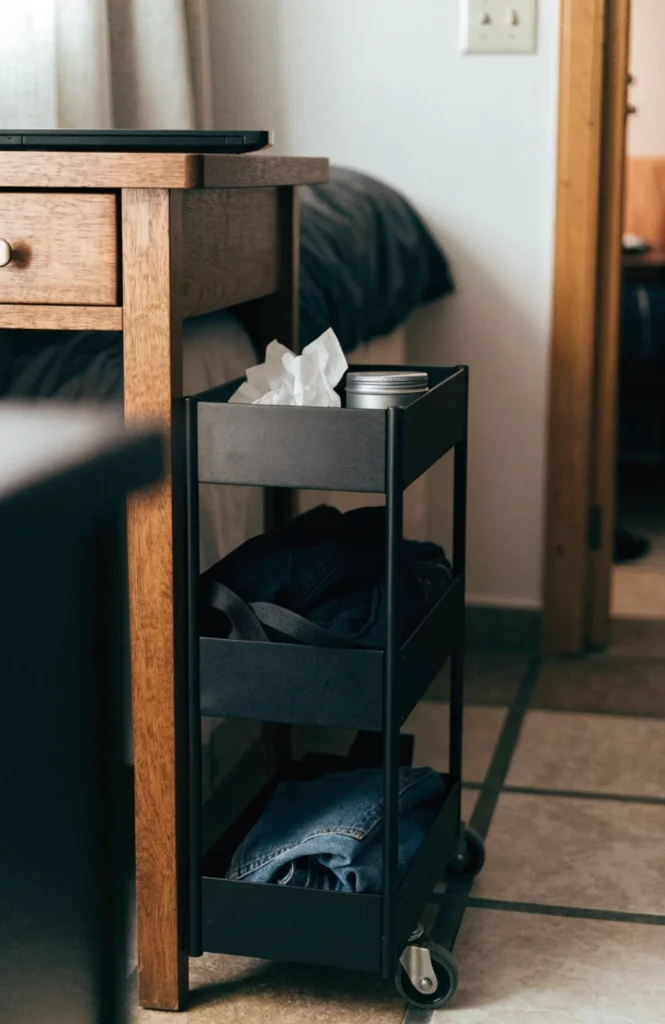
A slim three-tier rolling cart runs $20 to $40 and fits into narrow gaps that built-in storage typically can’t.
It works because it fits narrow leftover gaps that fixed furniture can’t use, and it rolls out easily when you need full access.
Wall Decor and Personalization
10. Build a Photo Collage Wall
A wall of printed photos from home and friends became the first thing I looked at every morning, and it made the room feel unmistakably mine.

Printing a set of 20 to 30 small photos runs $8 to $15 at most photo kiosks, and damage-free mounting squares to hang them cost another $6 to $10.
It works because it’s one of the most personal and lowest-cost ways to fill wall space, and it makes a rented, temporary room feel genuinely lived-in.
11. Add Removable Wallpaper to One Wall
Peel-and-stick wallpaper on the wall behind my bed added color and pattern without breaking any of the building’s no-paint rules.
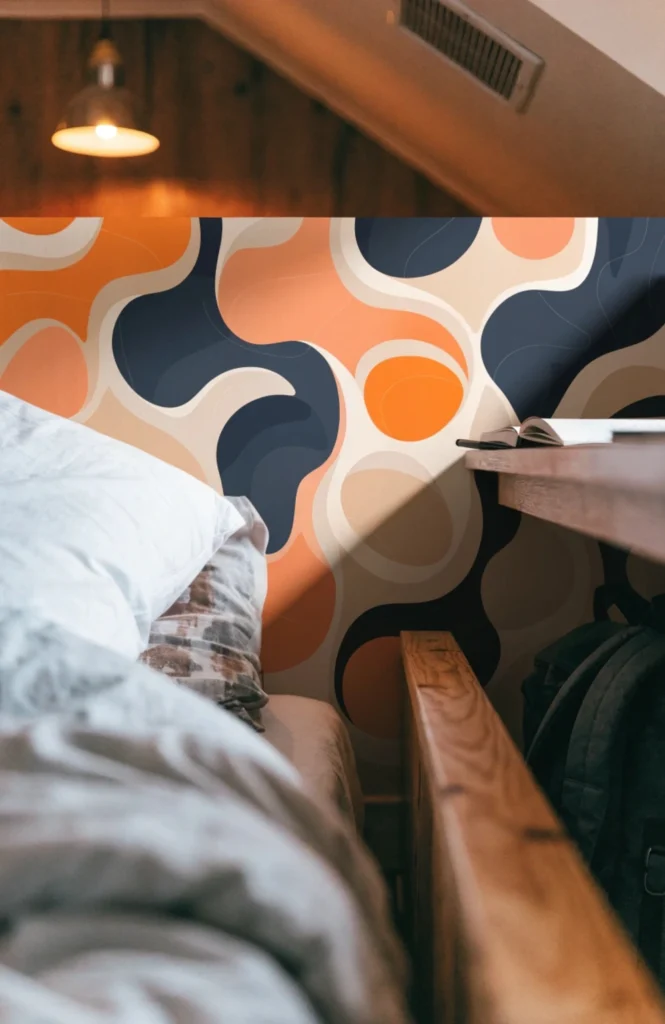
Removable peel-and-stick wallpaper runs $25 to $50 per roll, and most dorm walls need one to two rolls to cover a single accent wall.
It works because it adds real color and pattern to the room without violating most housing rules against paint, and it peels off cleanly at the end of the year.
12. Hang String Lights Around the Perimeter
String lights along the top of the wall gave the room a soft glow that made it feel warmer than the harsh overhead fixture alone.
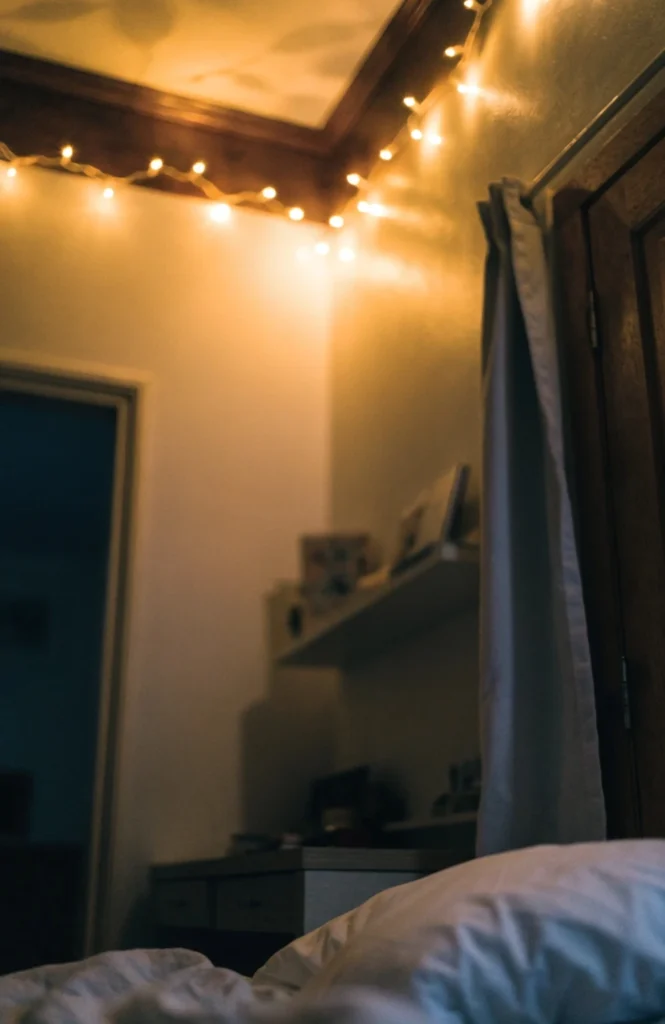
A strand of warm white string lights runs $10 to $20, and command hooks to mount them without damaging the walls cost another $5 to $10.
It works because it softens the harsh overhead lighting most dorm rooms come with, giving the space a cozier evening atmosphere for studying or relaxing.
13. Use Command Strip Hooks for Art
Command hooks let me hang real framed pieces instead of just tape-up posters, without risking any damage to the walls.
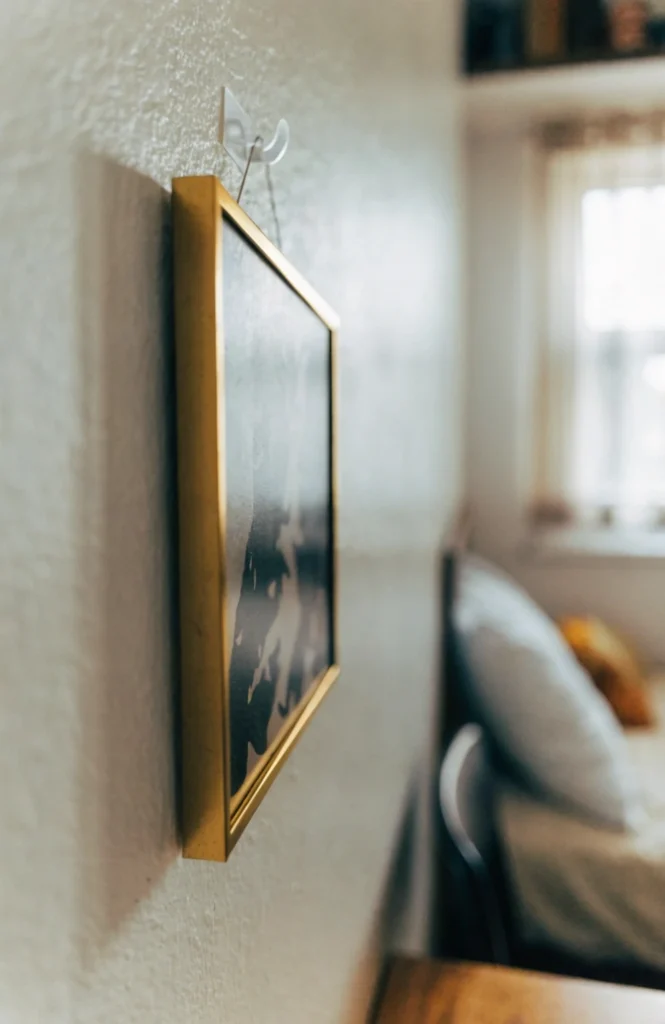
A pack of damage-free adhesive hooks runs $8 to $15, rated to hold small to medium framed art without leaving marks when removed.
It works because it lets you hang real framed pieces, not just taped posters, while still meeting most dorm policies against nails or drilling.
Lighting and Ambiance
14. Swap the Overhead Bulb for a Warmer Tone
Swapping the harsh cool white bulb for a warm one changed the entire mood of the room without touching anything else.
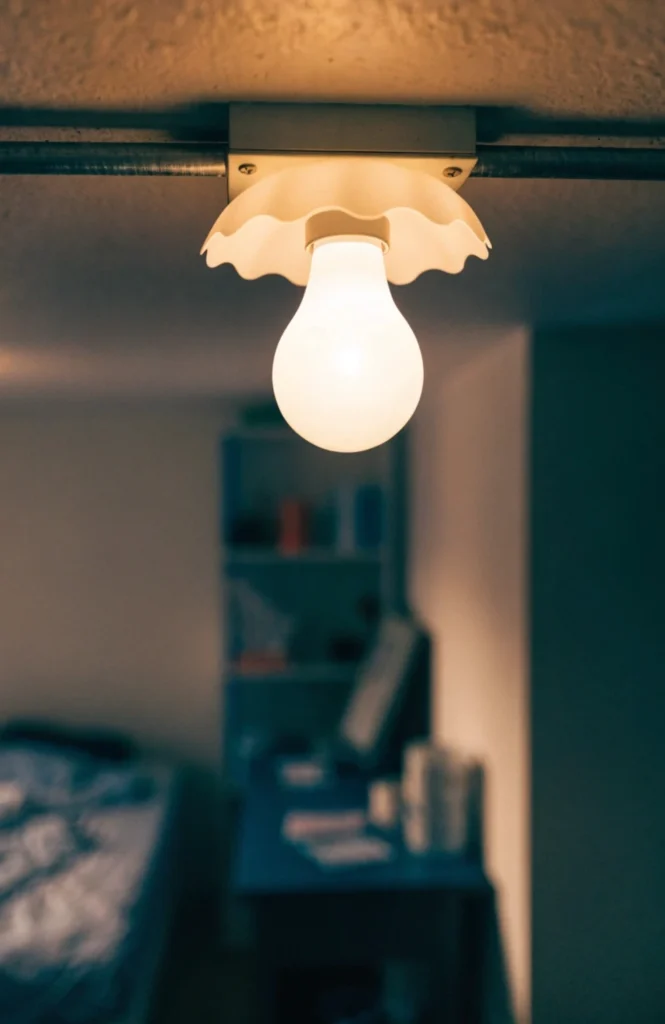
A warm white LED bulb runs $3 to $8, and it’s one of the cheapest single changes on this whole list relative to how much it affects the room.
It works because most dorm-issued overhead lighting runs cool and clinical, and a warm bulb instantly makes the space feel more like a bedroom than a hallway.
15. Add a Desk Lamp with Adjustable Brightness
An adjustable desk lamp meant I could study without waking up a roommate who’d already gone to bed.

An LED desk lamp with adjustable brightness runs $15 to $35, and dimmable settings make it flexible for both late-night studying and reading before sleep.
It works because it gives you control over lighting that suits your own schedule, which matters more in a shared room than almost anywhere else.
16. Include a Small Salt Lamp or Accent Light
A small accent light on the shelf gave the room a soft secondary glow for evenings when the overhead light felt like too much.
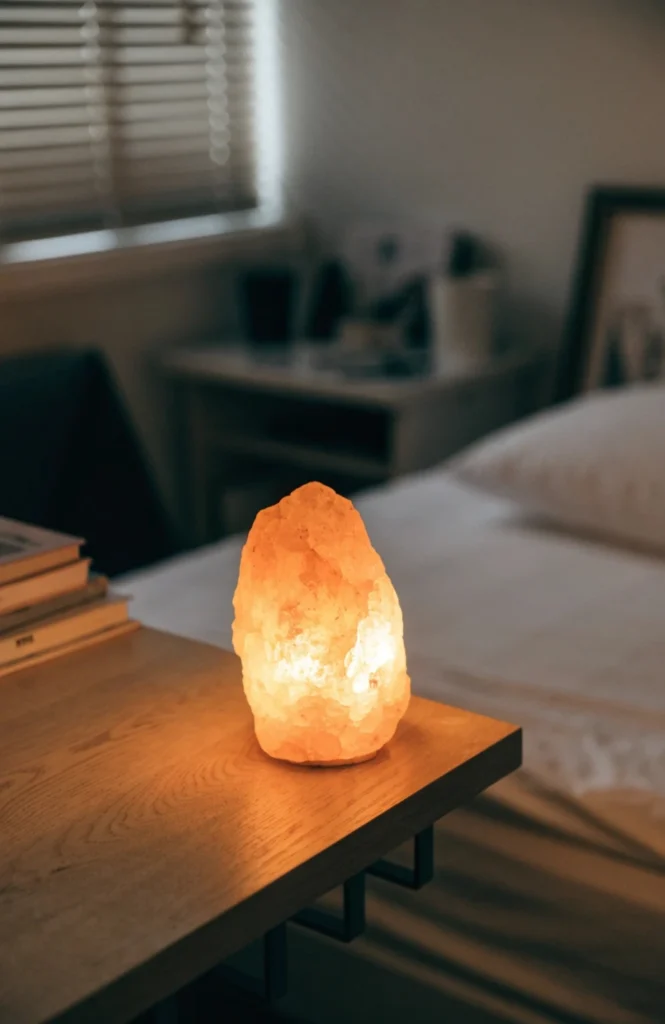
A small salt lamp or LED accent light runs $15 to $30 and adds a warm secondary light source to the room.
It works because layered lighting, more than one source at different heights, gives the room a cozier feel than a single overhead fixture ever can alone.
17. Add a Diffuser for Scent
A small reed diffuser made the room smell like something other than a dorm hallway, which mattered more than I expected once I actually had it.
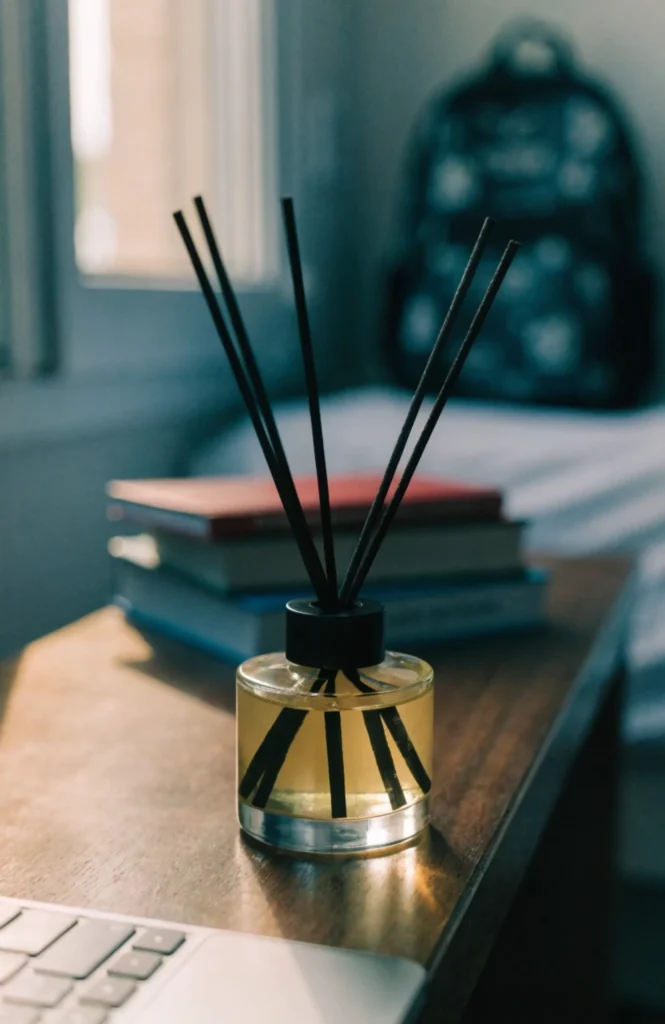
A reed diffuser runs $15 to $30 and typically lasts two to three months, a safer option than candles in most dorm buildings where open flames aren’t allowed.
It works because scent is a sensory layer most dorm decorating skips, and a diffuser is a flame-free way to add it in buildings where candles aren’t permitted.
Desk and Study Space
18. Add a Desk Organizer Caddy
A small caddy for pens and loose supplies stopped my desk from turning into a pile of clutter by midterms.

A compact desk organizer with a few compartments runs $10 to $20 and keeps daily supplies contained on a desk that’s usually smaller than a standard one.
It works because dorm desks are almost always smaller than a standard desk, so containing loose supplies matters even more than it would in a bigger space.
19. Use a Corkboard for Reminders
A small corkboard above the desk kept assignment due dates and event flyers visible instead of buried in a backpack somewhere.
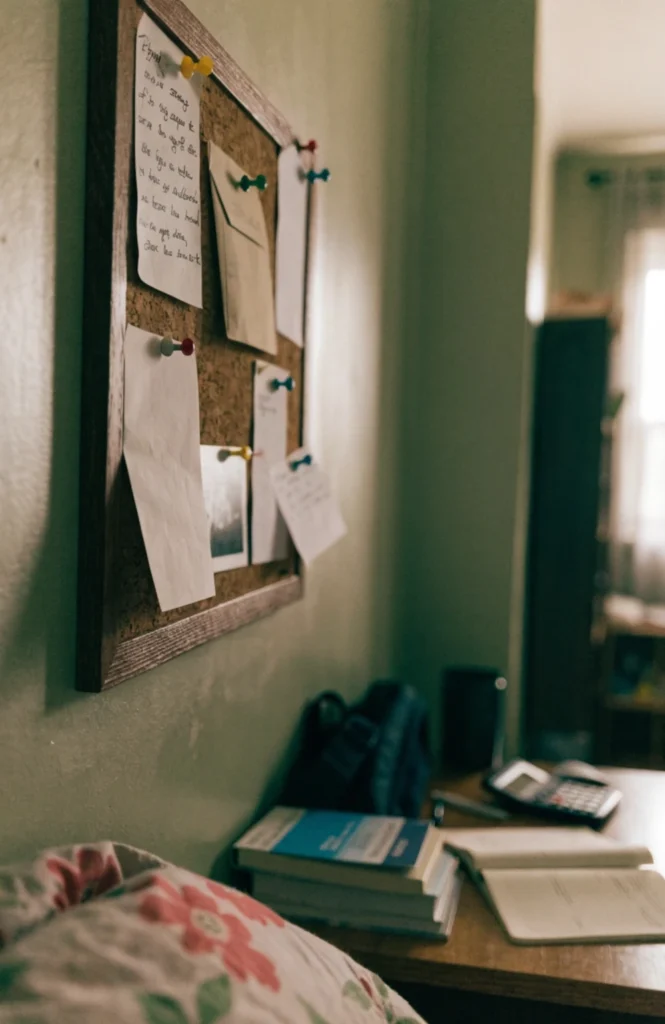
A small corkboard runs $10 to $20 and mounts easily with adhesive strips or hooks over the desk area.
It works because it keeps time-sensitive reminders visible at a glance, which matters more in a busy semester than any digital reminder buried in a phone.
20. Add a Laptop Stand for Better Ergonomics
A simple laptop stand raised my screen to eye level and made a noticeable difference after long study sessions at the desk.
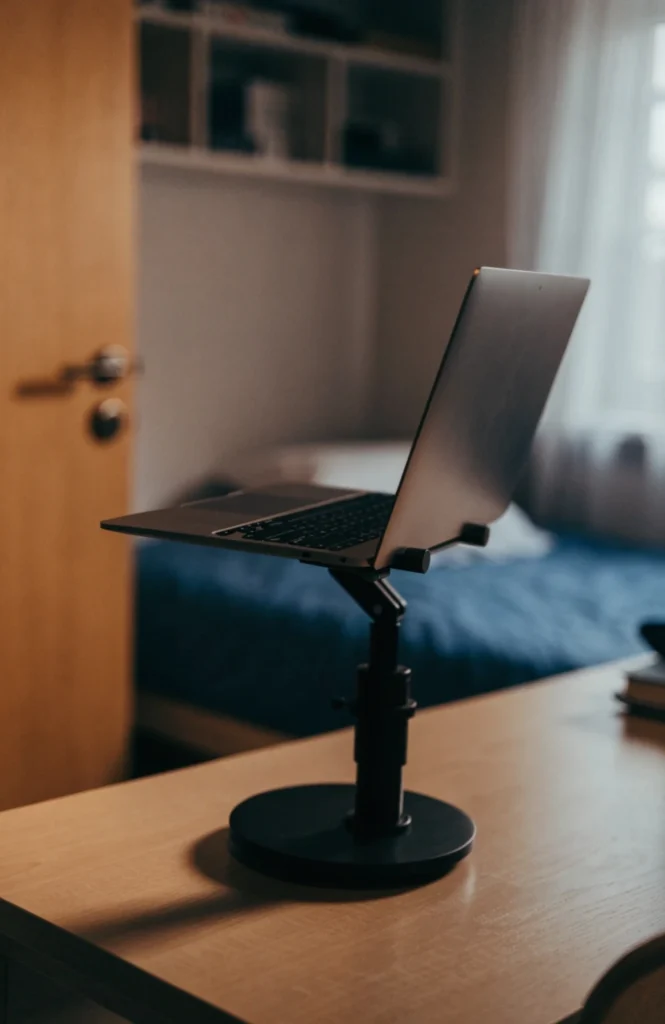
A laptop stand runs $15 to $35, and an adjustable-angle version works for both typing and video calls.
It works because it improves posture during long study sessions, which matters more over a full semester than it might seem on day one.
Finishing Touches
21. Add a Small Plant That Tolerates Low Light
A small pothos on the windowsill was the one thing in the room that made it feel a little more alive, even during finals week.
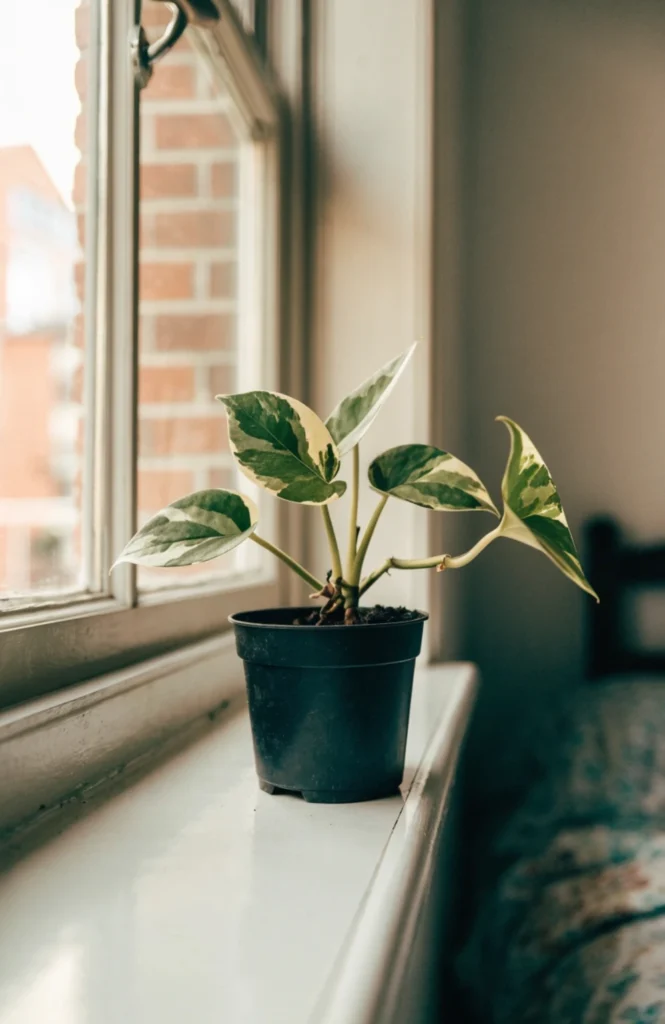
A small low-light tolerant plant like pothos or a snake plant runs $8 to $20 depending on pot and size.
It works because most dorm rooms don’t get much direct sunlight, and choosing a plant suited to those conditions means it actually survives the semester.
22. Include a Personal Item from Home
A small object from my childhood room, more than any decoration I bought, is what made the dorm feel like it was actually mine.
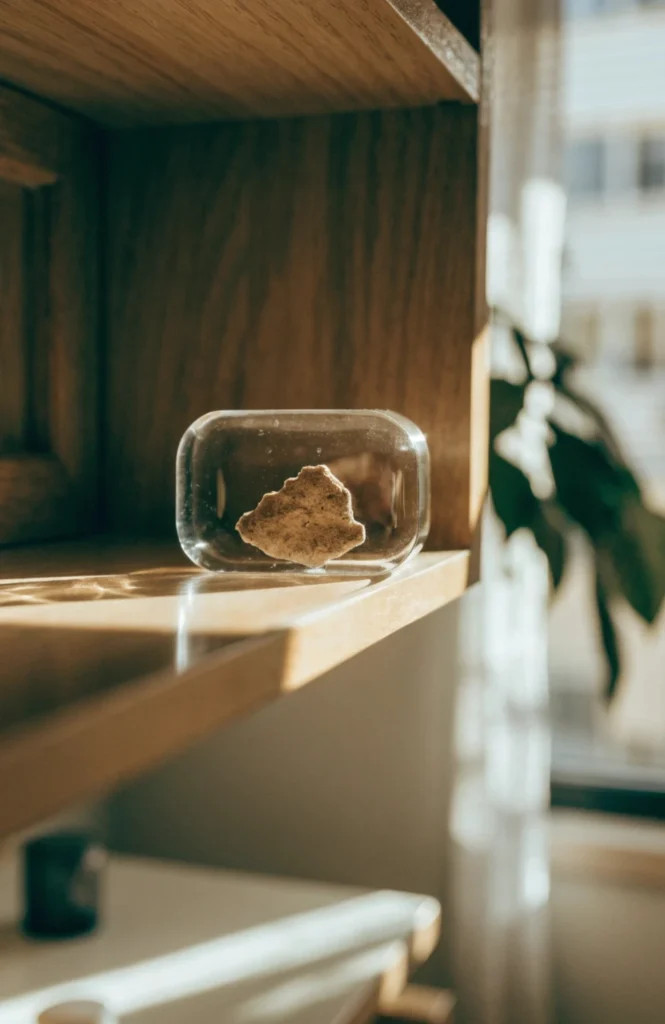
This costs nothing since it’s something you already own, and its value comes entirely from what it means to you rather than what it cost.
It works because a genuinely personal object grounds the whole room in something familiar, which matters most during the early weeks when everything else still feels new.
Conclusion
If you’re starting with move-in day, real bedding and a warm light bulb are the two fastest ways to make the room feel less institutional, both achievable in the first afternoon. Add storage and string lights next, since those solve function and mood at the same time, then finish with the wall decor and personal touches once you’ve settled into the space and know what you actually want to look at every day. The dorm rooms that feel most like home usually aren’t the most expensive ones, they’re the ones with the most personal detail packed into a small footprint.
FAQ
What size sheets do I need for a dorm bed?
Most dorm mattresses are twin XL, five inches longer than a standard twin, so double-check before buying bedding since regular twin sheets won’t fit properly.
How do I decorate without damaging dorm walls?
Damage-free adhesive hooks, command strips, and removable wallpaper all let you hang art, lights, and even pattern on the walls without violating most no-nail or no-paint policies.
What’s the most affordable way to make a dorm feel cozy fast?
A warm light bulb swap and a strand of string lights together typically cost under $30 and change the room’s overall mood more than almost any other combination.