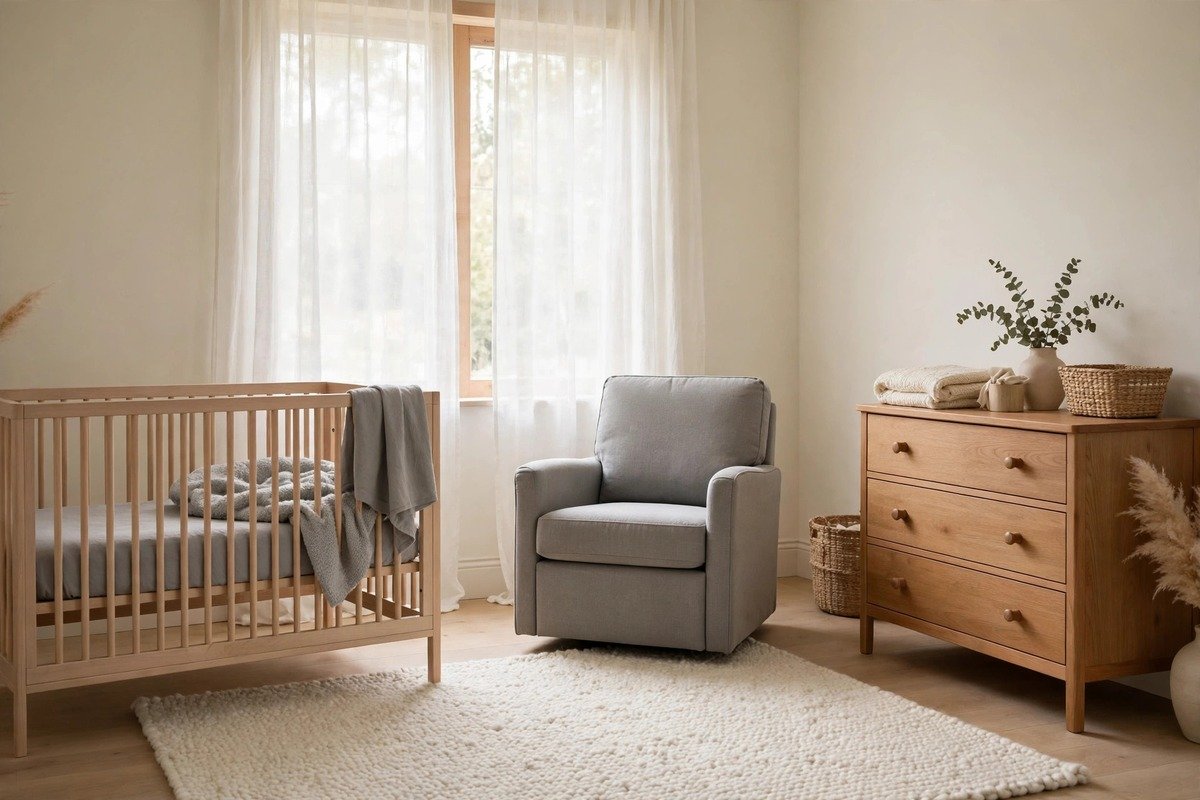
A neutral nursery is a calm room for a new baby. Cream walls, light wood, and soft grey bedding make the space feel quiet at nap time and easy to use at night. There is no loud color to fight with, so the room stays restful.
Neutral does not mean plain. Texture does the work here. Linen, wool, rattan, and light oak add warmth, while a few soft prints keep the room sweet. Pick three main tones and repeat them. If you like this calm palette in a grown up room too, see our cozy neutral bedroom ideas for the same soft tones in a larger space.
Quick Picks
- Start with three tones. Cream, beige, and soft grey cover most of the room, with light wood as the fourth warm note.
- Buy a crib that converts. A crib that turns into a toddler bed saves money and keeps the room calm for years.
- Layer texture, not color. Linen, wool, rattan, and cotton add depth without bright shades.
- Plan the night feeds first. A glider, a dim lamp, and a small table matter more than wall art.
- Keep storage simple. Woven baskets and low shelves hold daily items where you can reach them fast.
Did You Know?
Soft neutral walls make a small nursery look bigger. Light cream and warm beige bounce daylight around the room. Dark or bright walls do the opposite in a small space.
Before You Start
- Measure the crib, glider, and dresser first, then tape the outlines on the floor.
- Pick paint with a low smell and let the room air out for at least 48 hours.
- Test paint chips in morning light and at night, since lamps change grey and beige tones.
- Fix all heavy furniture to the wall with straps, and keep cords out of reach of the crib.
- Choose washable bedding, rugs, and slipcovers, since spit up and spills are part of daily life.
Warm Walls and Calm Color
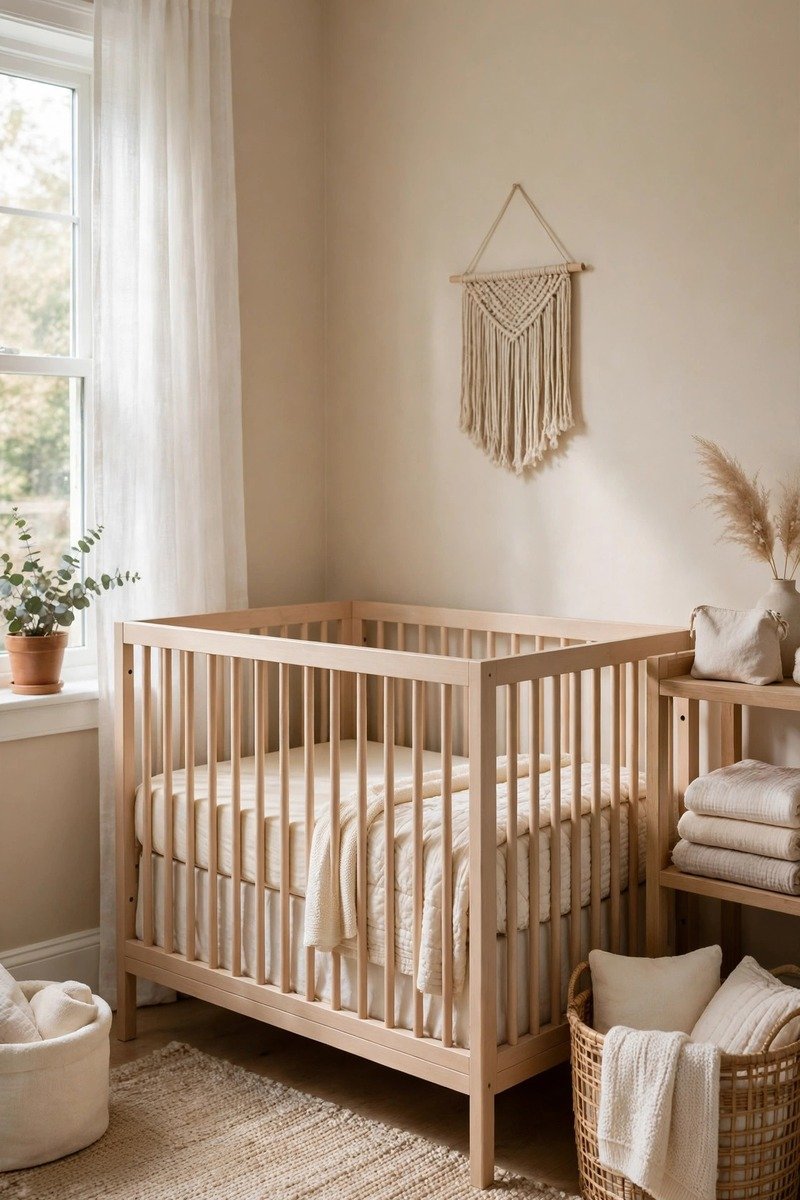
1. Paint the Walls Warm Beige
Warm beige walls give the nursery a soft base that works with any wood tone. The room feels warm in the morning and calm at night, and beige hides small marks better than bright white.
Pro tip: Try a warm beige like Benjamin Moore White Sand or a close match from your local paint shop. One gallon covers about 350 square feet, and two coats take about 4 hours with drying time.
2. Use Greige for a Soft Modern Base
Greige sits between grey and beige, so it feels modern without feeling cold. It pairs well with white cribs, light oak, and soft grey bedding. Greige also works in rooms with little sun, since it does not turn blue in shade.
Pro tip: Sherwin Williams Agreeable Gray SW 7029 is a popular greige for nurseries. Paint a large test patch of at least 60 by 60 cm and check it for two days before you buy the full gallon.
3. Keep the Walls Creamy White
Creamy white walls make a nursery feel bright and airy. Cream is softer than stark white, so the room feels warm instead of bare. It also lets wood, rattan, and linen stand out.
Pro tip: Pick a creamy white with a warm base, not a cool blue white. A 5 liter can of nursery safe paint costs about 35 to 50 dollars, and a small room needs about 2 gallons for two coats.

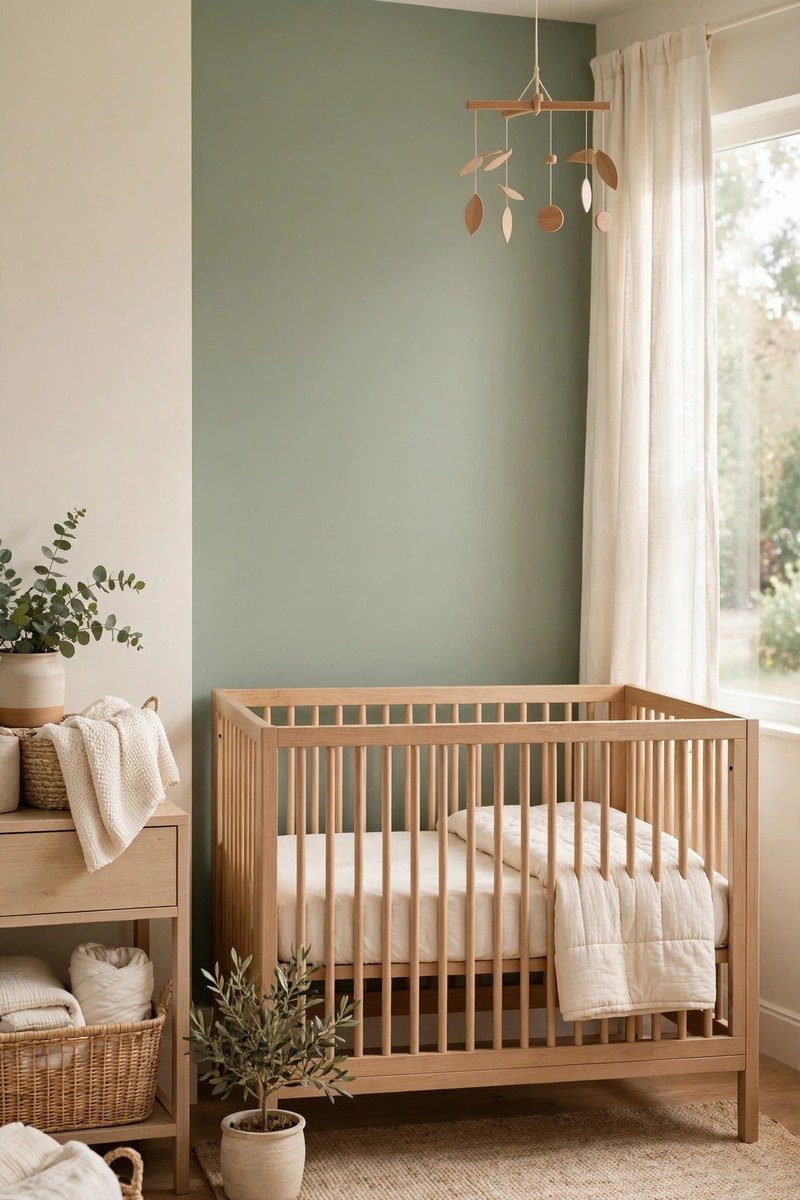
4. Add One Soft Sage Accent Wall
One sage wall adds a gentle green note without breaking the neutral palette. Sage feels calm and fresh, and it suits both boys and girls. Keep the other three walls cream, so the sage stays soft.
Pro tip: Paint the wall behind the crib, since that is the wall you see first. One quart of paint is often enough for one accent wall in a small room, and it costs about 15 to 25 dollars.
5. Use Soft Grey on the Lower Wall
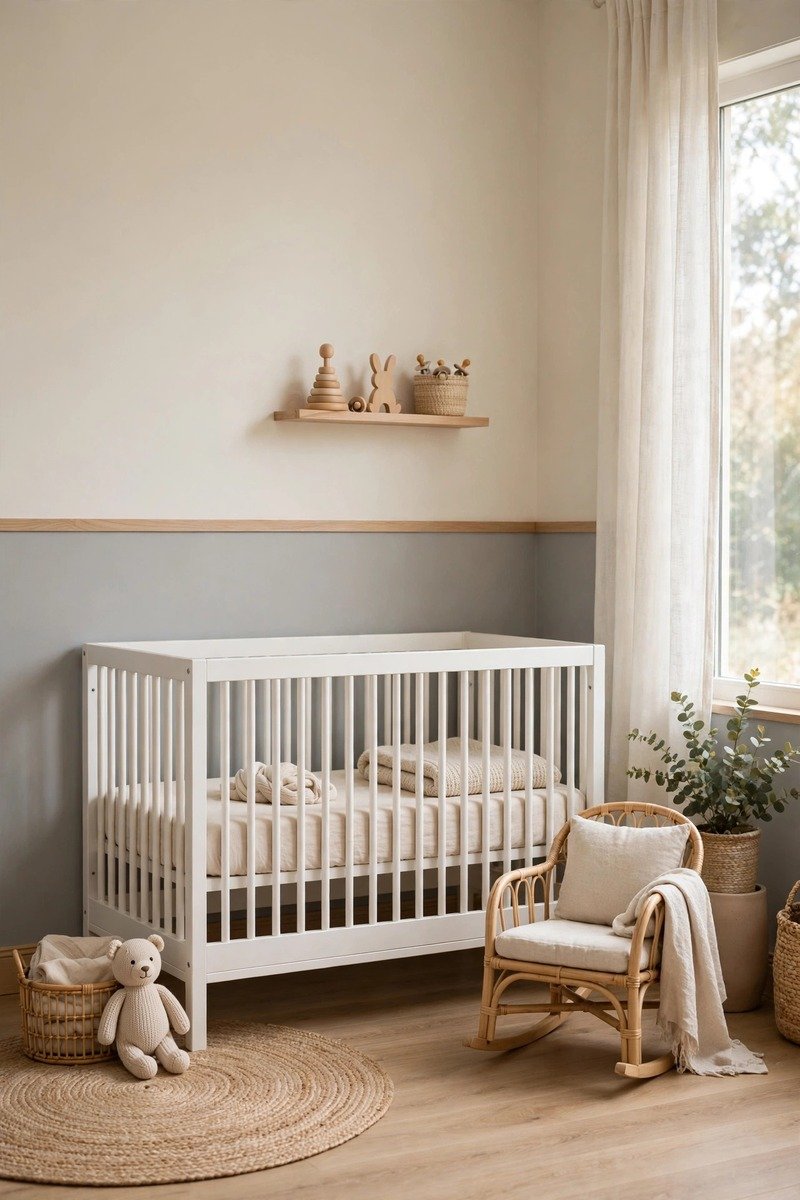
Soft grey on the lower half of the wall adds depth and hides scuffs from toys and the crib. Paint the top half cream and add a thin wood trim strip where the two colors meet. The line gives the room a finished look.
Pro tip: Mark the line at about 90 cm from the floor with a level and painter tape. A small tin of grey paint and a 2 meter trim strip cost about 20 to 30 dollars together, and the job takes about 2 hours.
Sleep Space and Crib
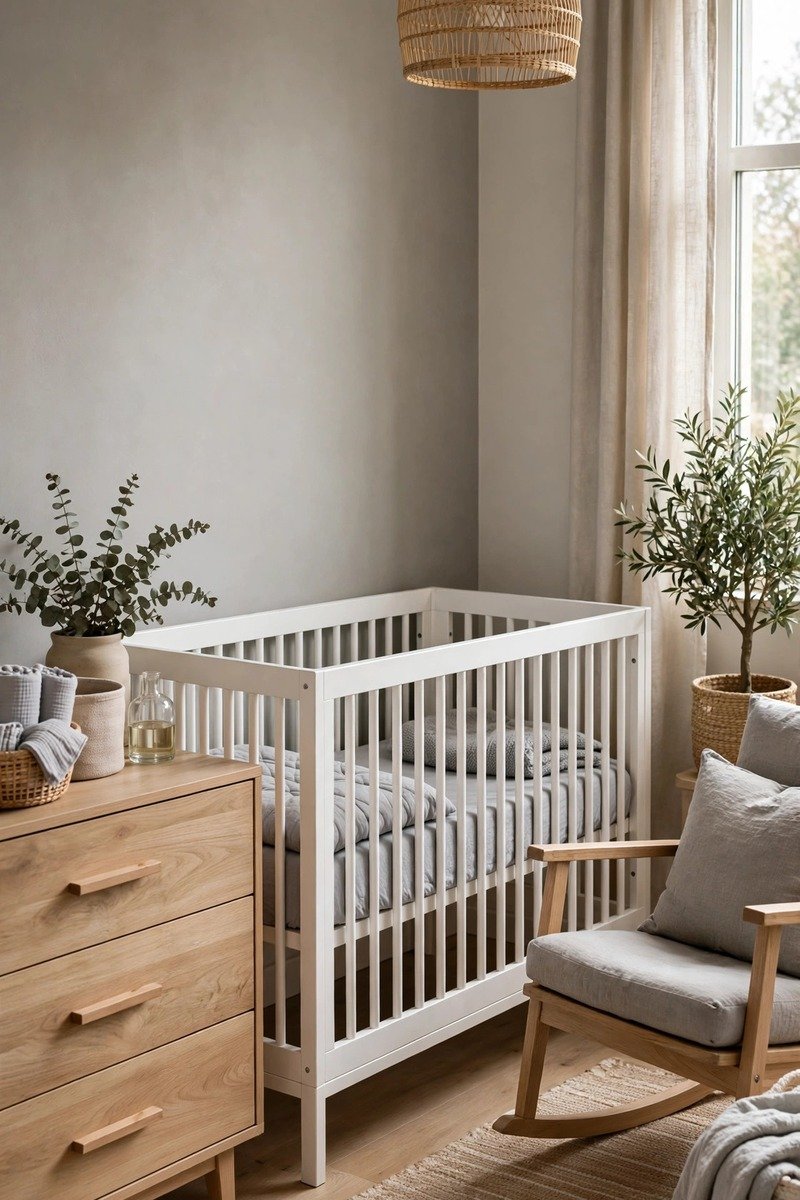
6. Choose a White Crib with Light Wood Legs
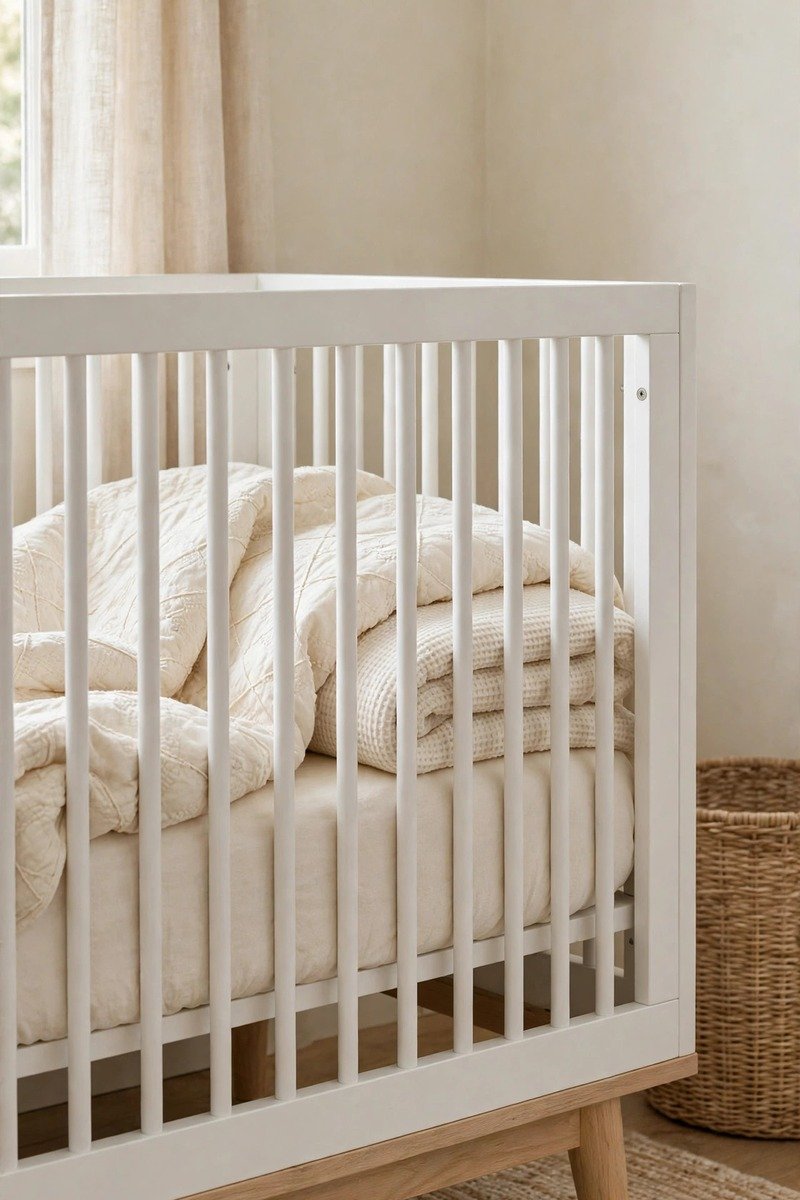
A white crib with light wood legs is the classic neutral nursery piece. The white keeps the room bright, and the wood legs add warmth. This crib style suits almost any bedding, so you can change the look later with new sheets.
Pro tip: Check that the crib meets current safety rules, with slats no more than 6 cm apart. A good crib costs about 200 to 400 dollars, and a firm mattress that fits with no gaps costs about 80 to 150 dollars.
7. Buy a Convertible Crib That Grows
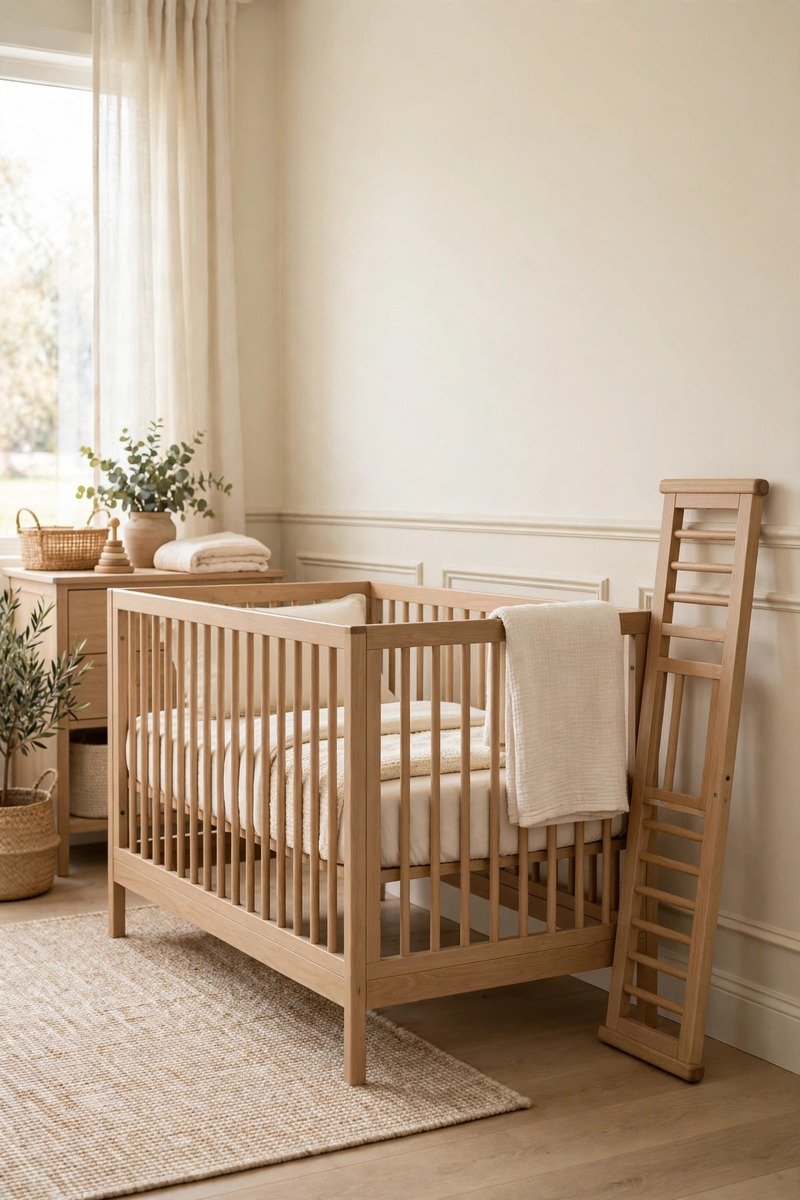
A convertible crib turns into a toddler bed and then a daybed, so you do not buy new furniture each year. The frame stays the same, and only the side rail changes.
Pro tip: Buy the conversion kit at the same time as the crib, since kits can sell out later. A convertible crib costs about 250 to 500 dollars, and the kit adds about 80 to 120 dollars.
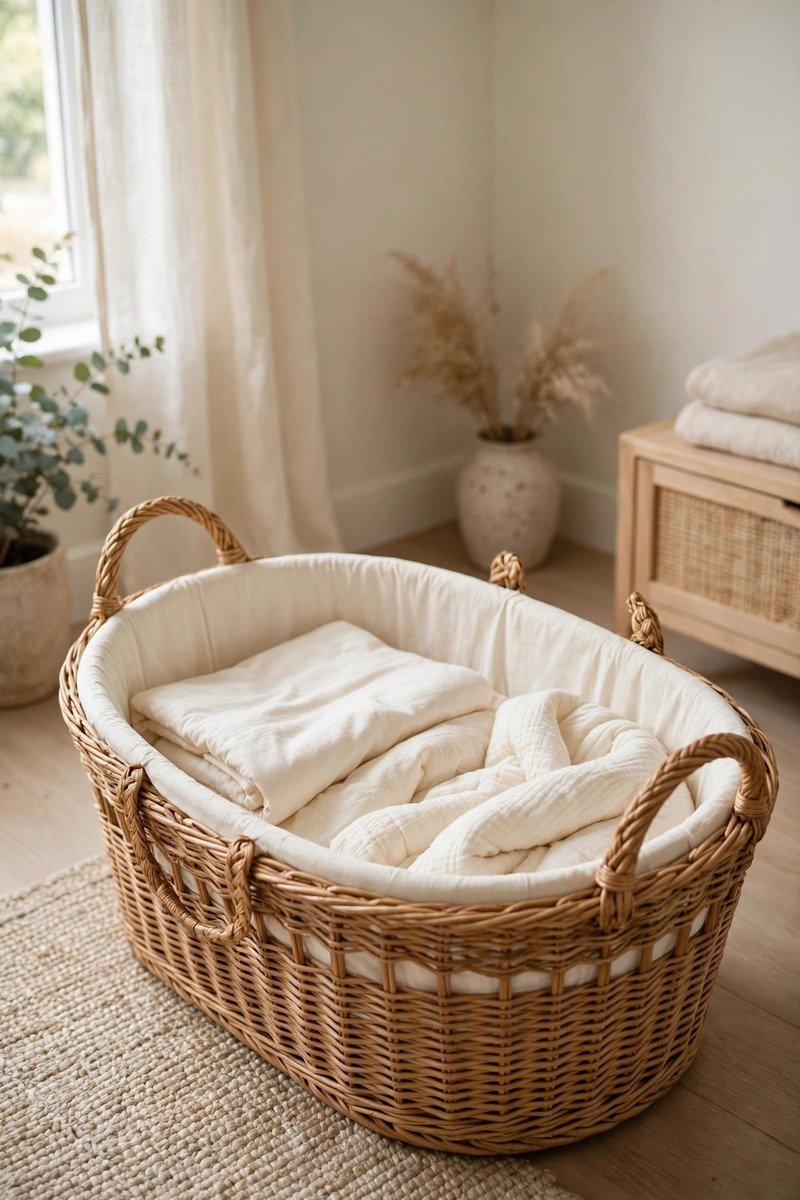
8. Add a Wicker Bassinet for the First Months
A wicker bassinet is light and easy to move, so the baby can nap near you in the day. The natural weave adds texture, and a cream cotton liner keeps it soft. Use it only until the baby can push up.
Pro tip: A wicker bassinet costs about 100 to 200 dollars, and a fitted sheet set costs about 20 to 30 dollars. Keep the bassinet away from curtains and cords, and stop use once the baby weighs about 9 kg or can sit up.
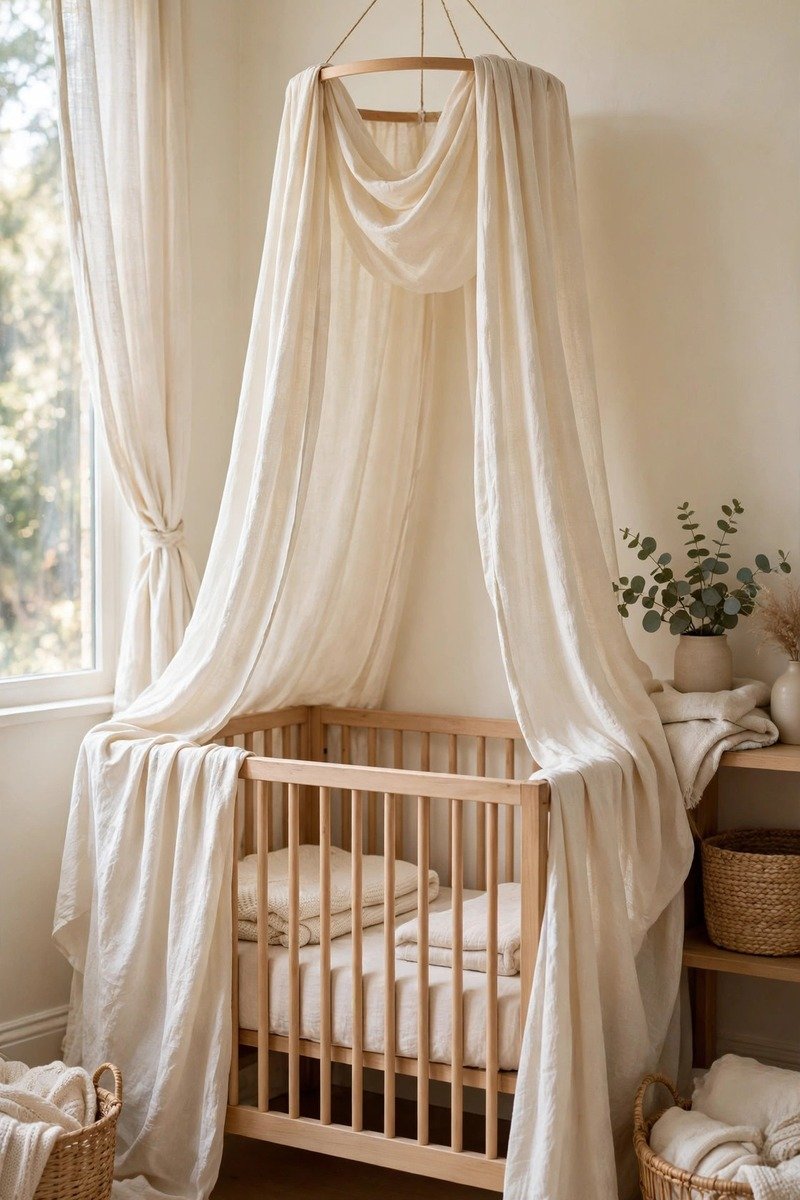
9. Hang a Linen Canopy Over the Crib
A linen canopy over the crib adds a soft, dreamy shape without strong color. Cream or oat linen drapes gently from a slim wooden hoop. Keep the fabric light so air moves freely.
Pro tip: A linen canopy costs about 40 to 80 dollars. Fix the hoop well above the crib and out of the baby’s reach, and wash the linen once a month, since it collects dust fast.
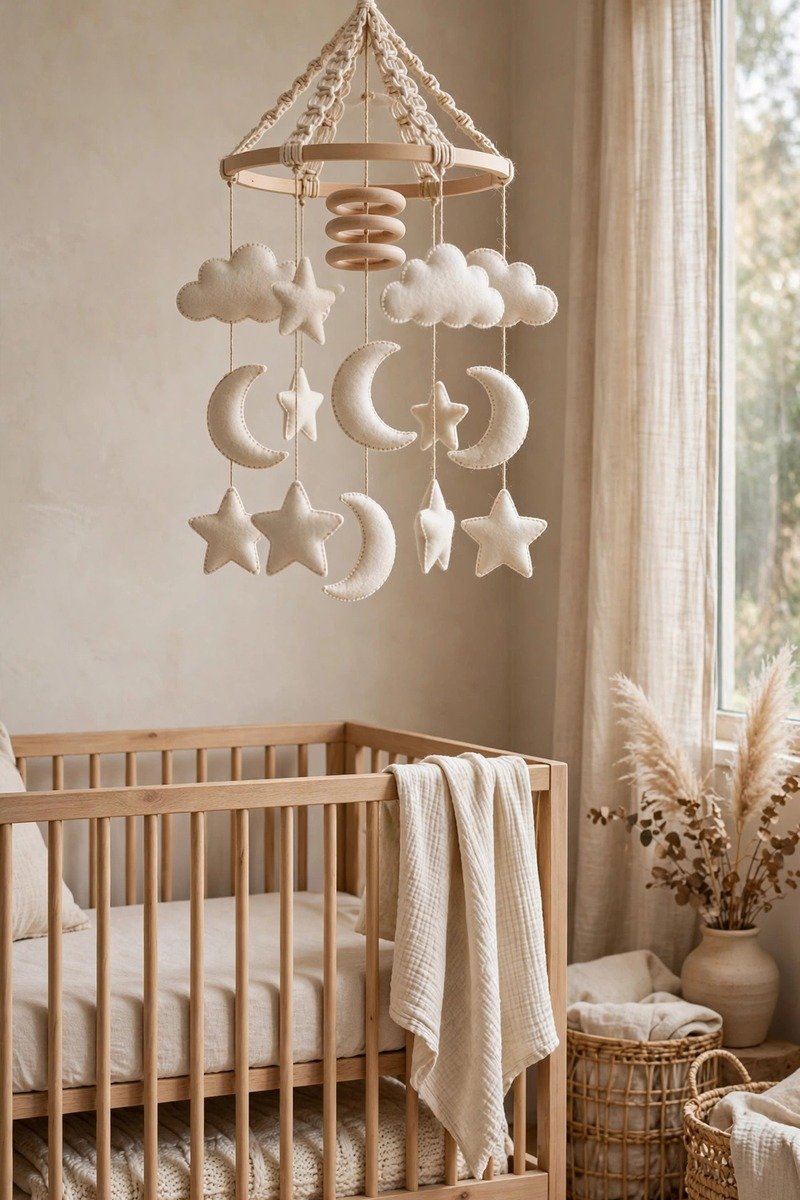
10. Hang a Natural Fiber Mobile
A mobile made from cotton rope, felt, and light wood gives the baby something slow and gentle to watch. Soft shapes like clouds, stars, and moons in cream, sand, and warm grey add interest without bright color.
Pro tip: Hang the mobile at least 40 cm above the mattress and out of reach. A handmade felt mobile costs about 25 to 50 dollars, and you can make one in about 2 hours with felt, wood rings, and cotton thread.
Feeding and Care Corner
11. Set Up a Stone Grey Glider Nook
A stone grey glider in the corner turns night feeds into a quiet routine. The grey fabric hides marks, and the smooth glide helps settle the baby. Add a small side table for water and a book, so you do not need to get up mid feed.
Pro tip: A glider with an ottoman costs about 250 to 450 dollars. Place it near the crib but not blocking the door, and add a washable slipcover for about 40 to 60 dollars, since spills are common.

12. Use a Taupe Dresser as a Changing Table
A taupe dresser with a changing pad on top does two jobs at once. The drawers hold nappies, vests, and blankets, and the pad comes off later, so the dresser stays useful for years.
Pro tip: A dresser costs about 200 to 350 dollars, and a changing pad costs about 30 to 50 dollars. Fix the pad with the strap that comes with it, and keep nappies and wipes in the top drawer, within arm’s reach.

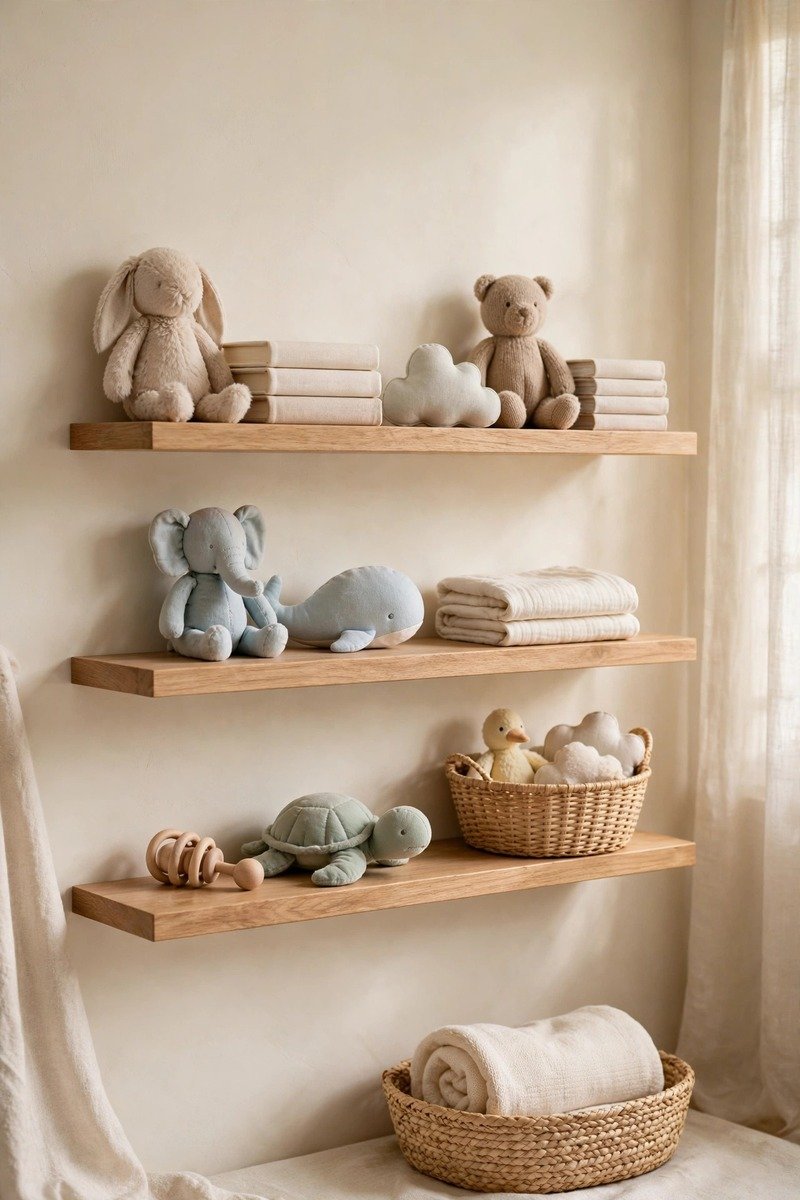
13. Add Warm Wood Open Shelves
Warm wood open shelves hold books, soft toys, and keepsakes at eye level. Light oak or walnut shelves add warmth to cream walls. Keep the shelves high enough that a crawling baby cannot pull items down.
Pro tip: Two floating shelves of 60 cm each cost about 30 to 60 dollars. Fix them into wall studs with brackets rated for at least 10 kg each, and leave one shelf clear for books you read at bedtime. For book display ideas, see our bookshelf ideas that turn books into beautiful decor.
14. Store Daily Items in Woven Baskets
Woven baskets in seagrass or cotton rope hold blankets, toys, and spare clothes without looking messy. The texture adds warmth, and the baskets are light enough to carry from room to room.
Pro tip: A set of three woven baskets costs about 25 to 45 dollars. Label the baskets with small wood tags, and wash cotton rope baskets in the machine on a gentle cycle once a month.

Floor, Light, and Texture
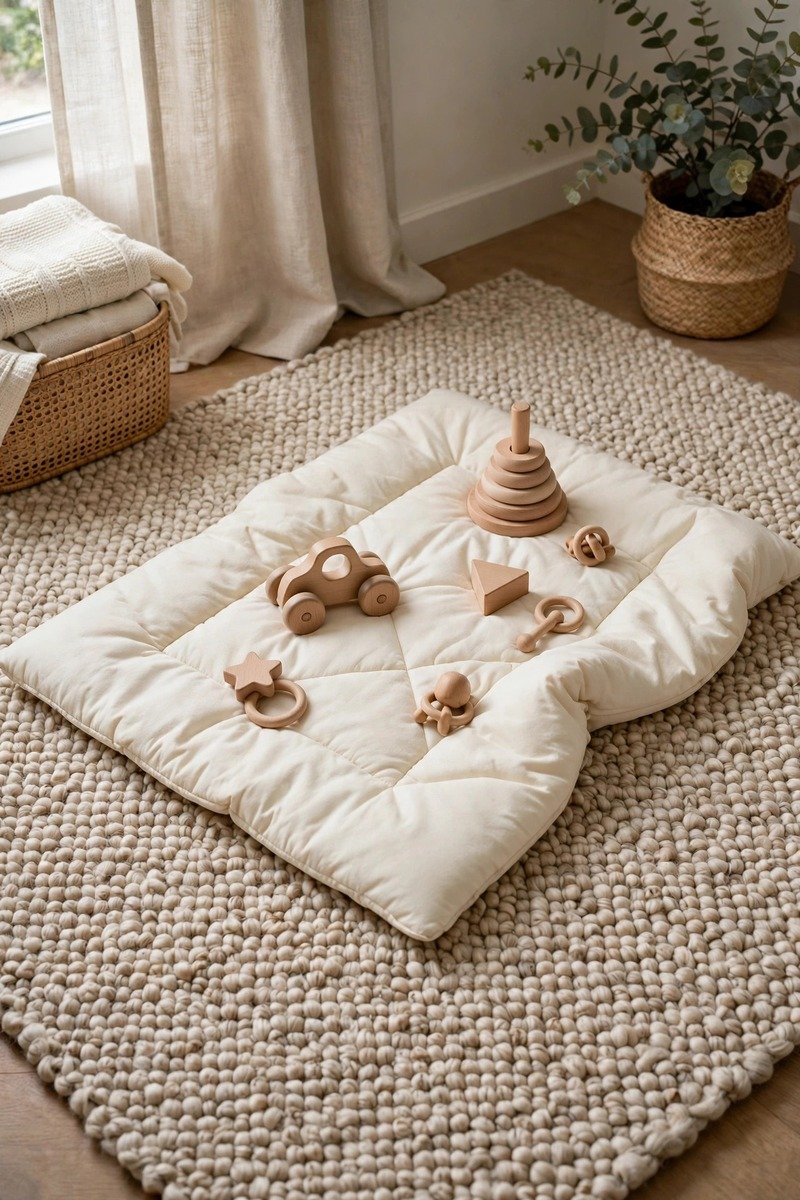
15. Layer a Textured Wool Rug in the Play Zone
A textured wool rug in oatmeal or warm grey marks out the play zone and softens the floor. Wool is warm in winter and breathes in summer, and a low pile is easy to clean.
Pro tip: A wool rug of 120 by 180 cm costs about 80 to 180 dollars. Pick a low pile rug with a non slip pad under it, and vacuum it twice a week, since wool holds dust and crumbs.
16. Layer Soft Lighting for Night Feeds
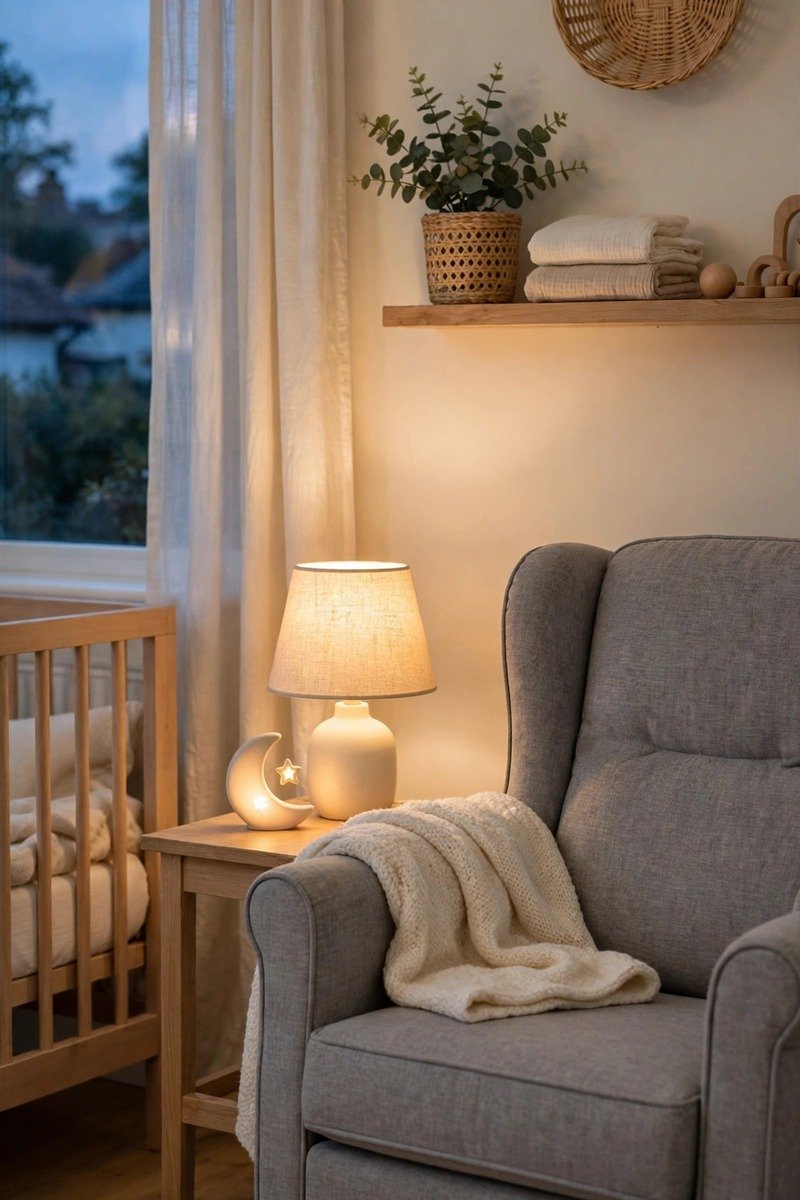
Layered lighting lets you change the mood without turning on a bright ceiling light. A dimmable ceiling light, a small lamp by the glider, and a soft nightlight cover feeds, play, and bedtime.
Pro tip: Use warm white bulbs at 2700K for all three lights. A dimmable lamp costs about 25 to 40 dollars, and a plug in nightlight costs about 10 to 15 dollars. Keep the lamp cord behind furniture, out of reach.
17. Hang Sheer Linen Curtains with Blackout Lining
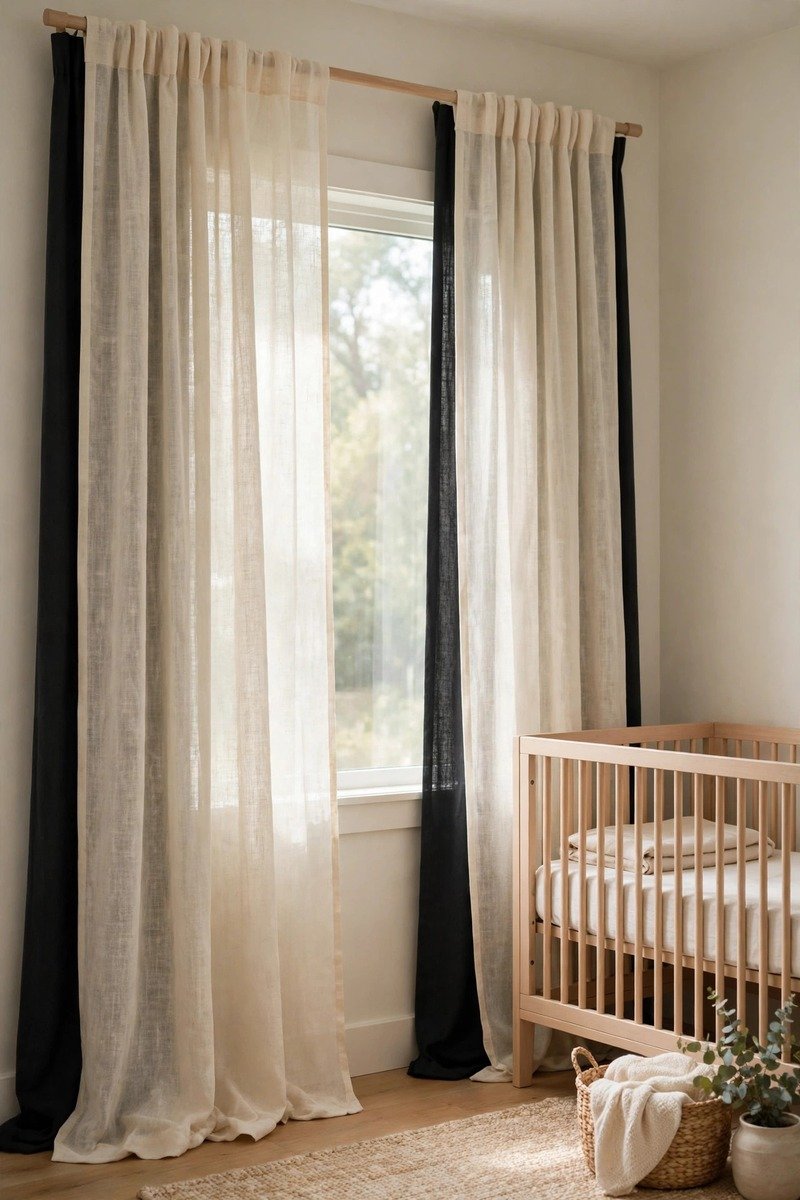
Sheer linen curtains soften the window in the day, and blackout lining behind them blocks light at nap time. Cream linen looks soft and lets some light through. The two layers give you control without heavy drapes.
Pro tip: Hang the curtain rod about 15 cm above the window frame and 10 cm wider on each side, so the curtains cover the full window. Linen curtains cost about 40 to 80 dollars per panel, and blackout lining adds about 20 dollars per panel.
Gentle Details That Finish the Room
18. Hang Neutral Animal Prints in Soft Hues
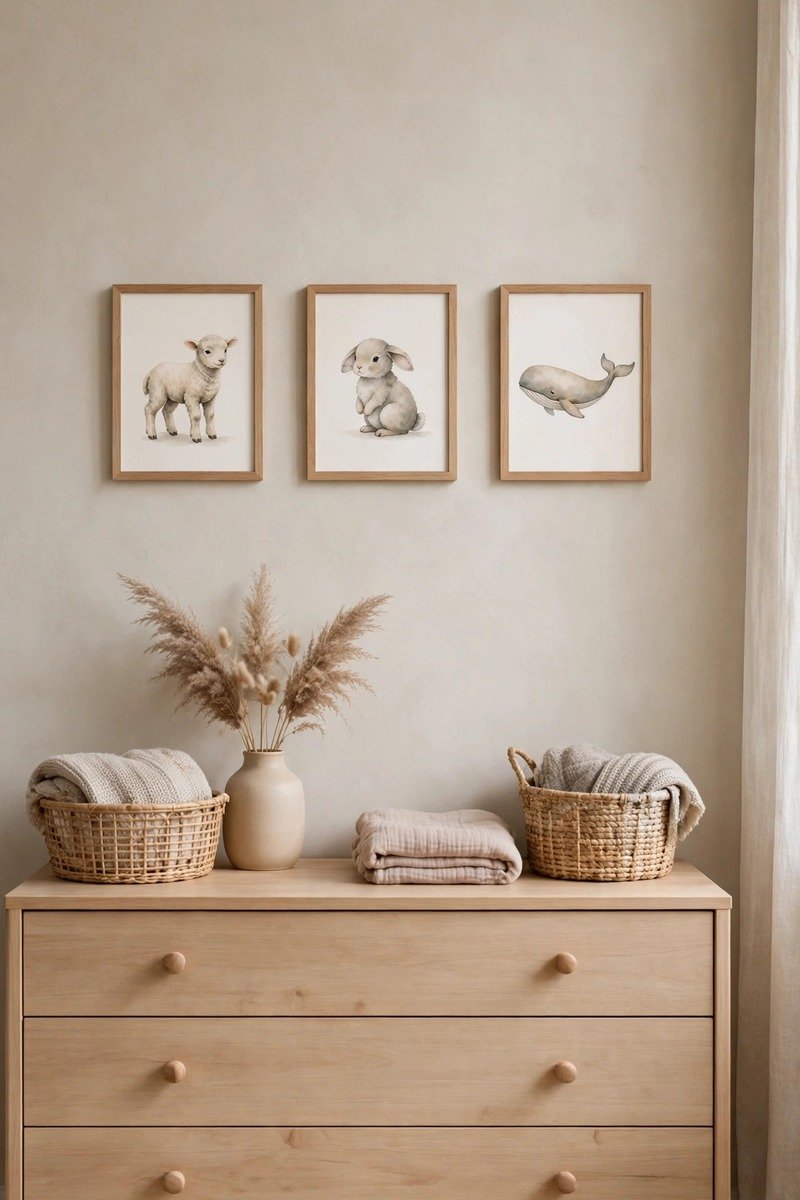
Soft animal prints in beige, warm grey, and cream add a sweet touch. Watercolor lambs, bunnies, and whales in muted tones suit a neutral nursery, and three small frames make a simple gallery wall above the dresser.
Pro tip: Three framed prints of 20 by 25 cm cost about 30 to 60 dollars with frames. Hang them at adult eye level, about 150 cm from the floor, and keep them away from the crib, so the baby cannot reach the glass.
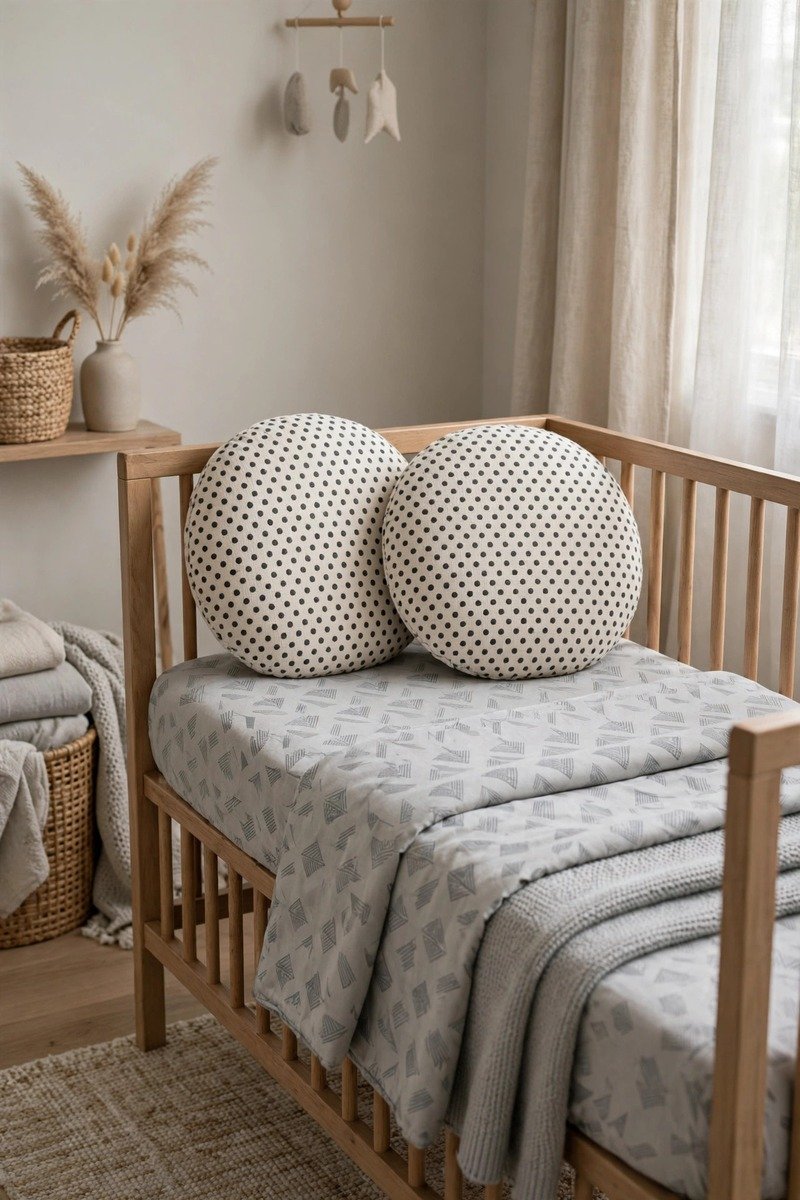
19. Add Monochrome Dots and Subtle Prints
Monochrome dots or small geometric prints add gentle play. Charcoal dots on a cream cushion, or a soft grey print on a cot sheet, give the baby something to look at. Keep prints to one or two spots, so the room stays calm.
Pro tip: A dot print cushion costs about 15 to 25 dollars, and a matching fitted sheet costs about 20 dollars. Mix one large scale print with one small scale print, and keep the rest of the bedding plain.
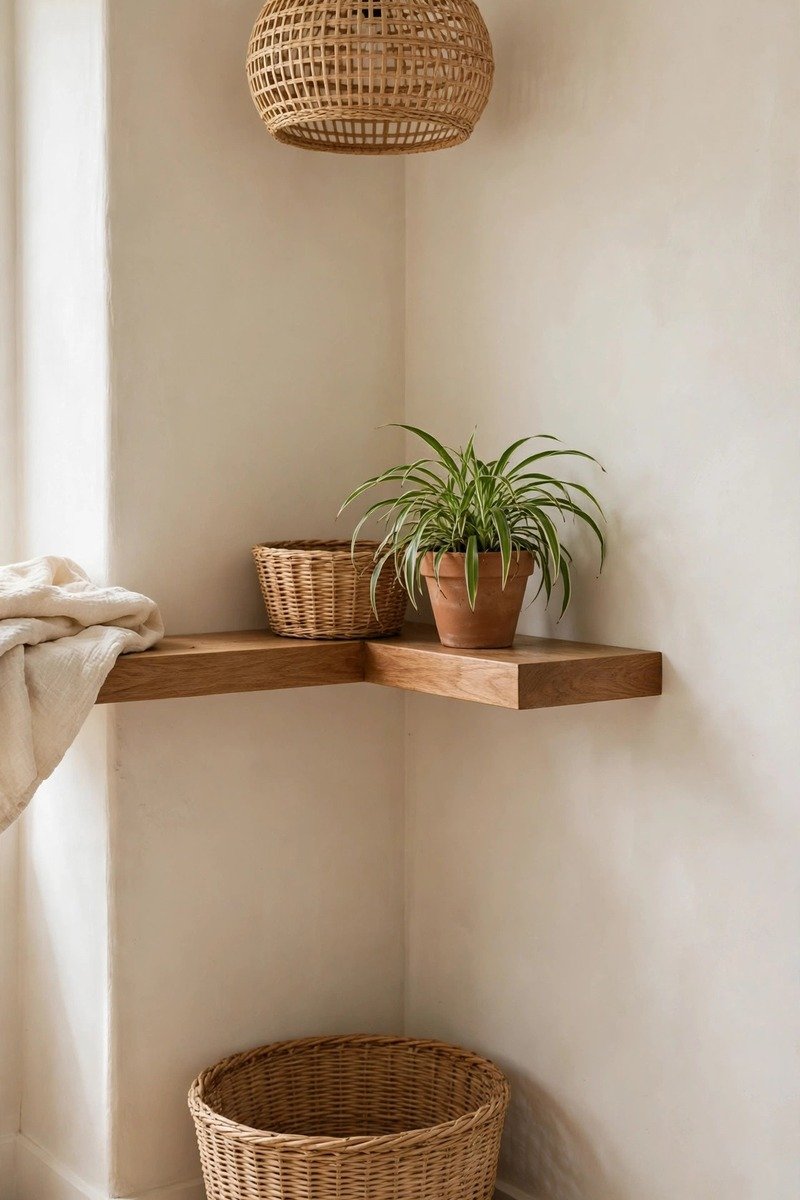
20. Finish with Rattan and a Small Plant Corner
Rattan and a small plant bring the room to life. A rattan pendant light, a rattan basket, and one small plant in a clay pot add natural texture and a soft green note. Keep the plant out of reach as the baby grows.
Pro tip: A rattan pendant light costs about 40 to 70 dollars, and a small potted plant costs about 10 to 20 dollars. Pick a safe, non toxic plant like a spider plant, and place it on a high shelf, not on the floor.
Crib Safety Clearances First
A nursery is a sleep room first, so safety comes before style. Place the crib at least 3 feet from a window, because a window brings drafts, cords and cold air, and keep it at least 12 inches from any wall with a picture or a shelf above it, because nothing should hang over a sleeping baby. Check the crib slats: the gap between slats must be no more than 2 and 3/8 inches, so a baby’s head cannot fit through. Use a firm mattress that fits the crib with no gap wider than two fingers at the edge, and keep the crib free of pillows, blankets and toys, because a bare crib is the safest crib. Neutral nursery ideas work best when the sleep space is planned first, because a beautiful nursery with an unsafe crib is not finished.
Non Toxic Paint and Finishes
A baby spends hours breathing nursery air, so choose finishes that do not add fumes. Use paint labelled low VOC or zero VOC, and paint at least two weeks before the baby arrives, because even low VOC paint needs time to cure. Choose a washable finish, because nursery walls are wiped often, and a washable paint survives wiping without marking. Use solid wood furniture where you can, and avoid pressed wood with a strong smell, because pressed wood can give off fumes for months. Wash all new bedding and soft toys before the baby uses them, because new fabric carries dust and finishes from the factory.
Blackout and Night Light: Sleep Friendly Light
Light decides how well a baby sleeps, so plan it like the crib. Fit blackout curtains or a blackout blind, because a dark room at nap time adds hours of sleep a week, and keep the curtains at least 6 inches wider than the window on each side, so no light leaks around the edges. Use a night light with a warm, dim glow, about 2700 Kelvin, and place it low, near the floor, because a bright light overhead wakes a baby fully. Keep the night light on the side where you change nappies, so you can see without switching on the main light. Test the room at night before the baby arrives, because a room that looks dark at noon can leak light at 6 in the morning.
Budget for a Neutral Nursery by Stage
Under 200 dollars: a crib sheet set, a blackout curtain, and a soft rug for the floor. From 200 to 600 dollars: add a changing table, a rocking chair, and a set of storage baskets. Over 600 dollars: add a quality crib, a wardrobe, and a full set of matching storage. As a typical range, a blackout curtain costs about 25 to 60 dollars, and a rocking chair costs about 150 to 400 dollars. Buy the blackout curtain first, because sleep is the most important job of a nursery, and a dark room costs less than any piece of furniture. Keep the room calm and uncluttered, because a nursery with fewer things is easier to clean, easier to keep safe, and easier for a tired parent to use at 3 in the morning.
Common Mistakes to Avoid
- Using too many neutral tones at once. Pick three main tones and repeat them, or the room will look flat and muddy.
- Buying a crib that does not convert. A plain crib is outgrown fast, so a convertible crib saves money and keeps the room calm.
- Skipping blackout lining. Sheer curtains alone let in too much light at nap time.
- Placing the crib near cords or curtains. Keep the crib at least 30 cm from windows, cords, and blinds for safety.
- Overfilling the shelves. Too many toys and books make a calm room feel busy, so keep one shelf partly clear.
- Forgetting washable fabrics. Non washable rugs and slipcovers stain fast in a nursery, so check the label before you buy.