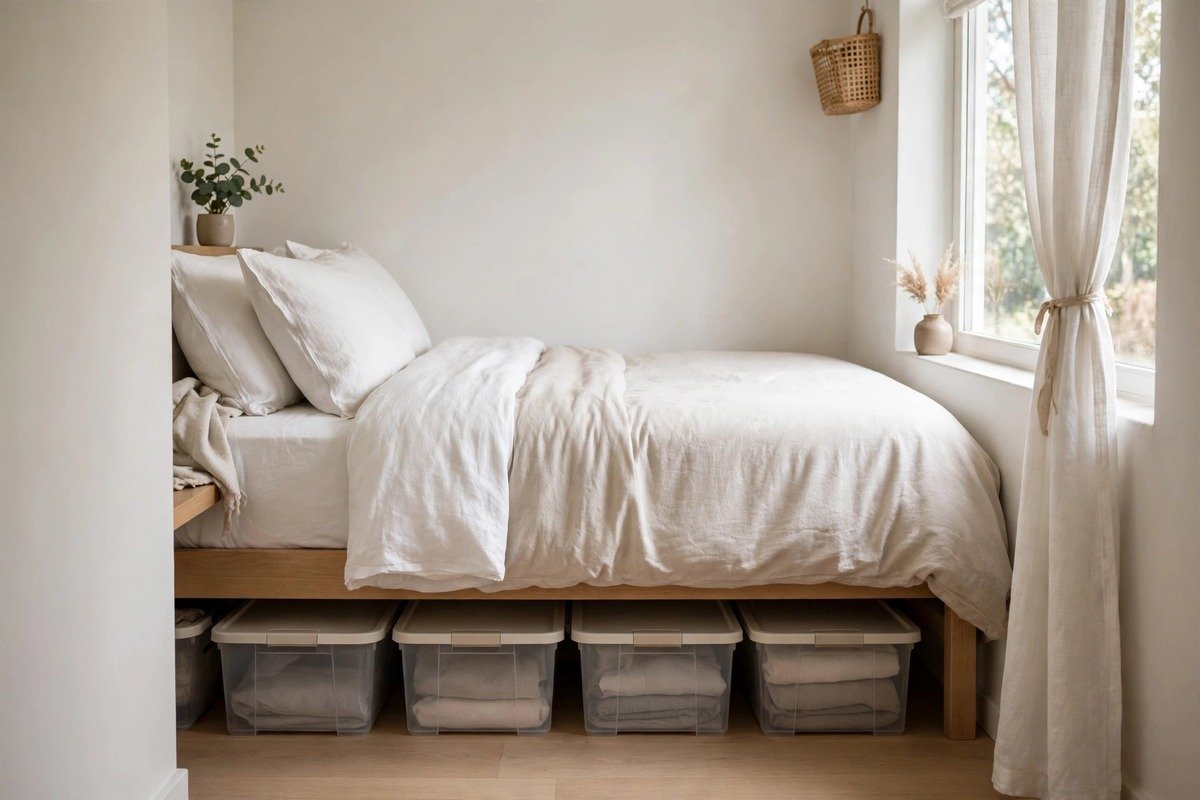
A small bedroom feels bigger when the floor stays clear. The space under the bed is often the largest empty spot in the room, and it can hold a surprising amount without adding one more piece of furniture.
You do not need a new bed or a big budget to use it well. Measure the gap once, pick containers that fit that gap, and give every bin one clear job. Most take less than one hour to set up.
Quick Picks
- Start with rolling bins: they pull out with one hand and suit clothes you reach for often.
- Use clear lids: you can see what is inside without opening every box.
- Compress bulky bedding: vacuum bags shrink a thick comforter to a flat pouch.
- Label the end you see: a label on the outer end stops the guesswork later.
- Keep daily items out: under the bed suits weekly and seasonal items best.
Did You Know?
Most standard bed frames leave 7 to 8 inches of space under the bed, while many platform beds leave only 3 to 4 inches. That gap decides everything. A bin that is one inch too tall will not slide, and a bin that is too short wastes space you could have used.
Before You Start
- Measure from the floor to the lowest part of the frame, not to the top of the mattress.
- Take away a half inch from that number so bins slide without catching on carpet or wood.
- Check the side space too. You need room to pull a bin out past the nightstand.
- Wash and dry everything before you store it, and skip damp items under the bed.
Measure First, Store Smart
1. Rolling Bins With Wheels for Everyday Clothes
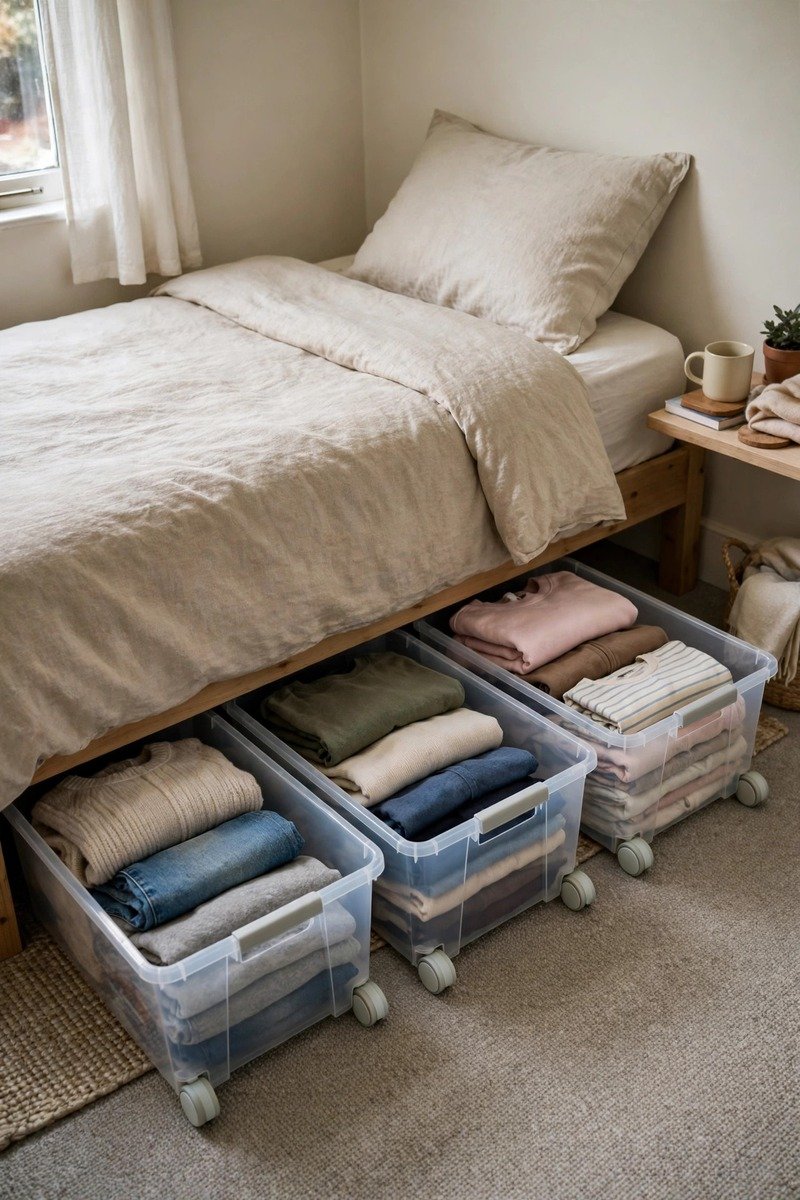
Rolling bins are the easiest win in a small bedroom. They glide out on casters, so you can reach folded clothes without moving the bed.
Use them for pajamas, workout clothes, and spare sheets that crowd the dresser. When folded clothes move under the bed, the dresser top stays clear, so try these top of dresser decor ideas to style the space you just freed.
Pro tip: A pair of rolling bins 30 inches long costs 30 to 50 dollars. Pick bins with four swivel wheels for easy turns.
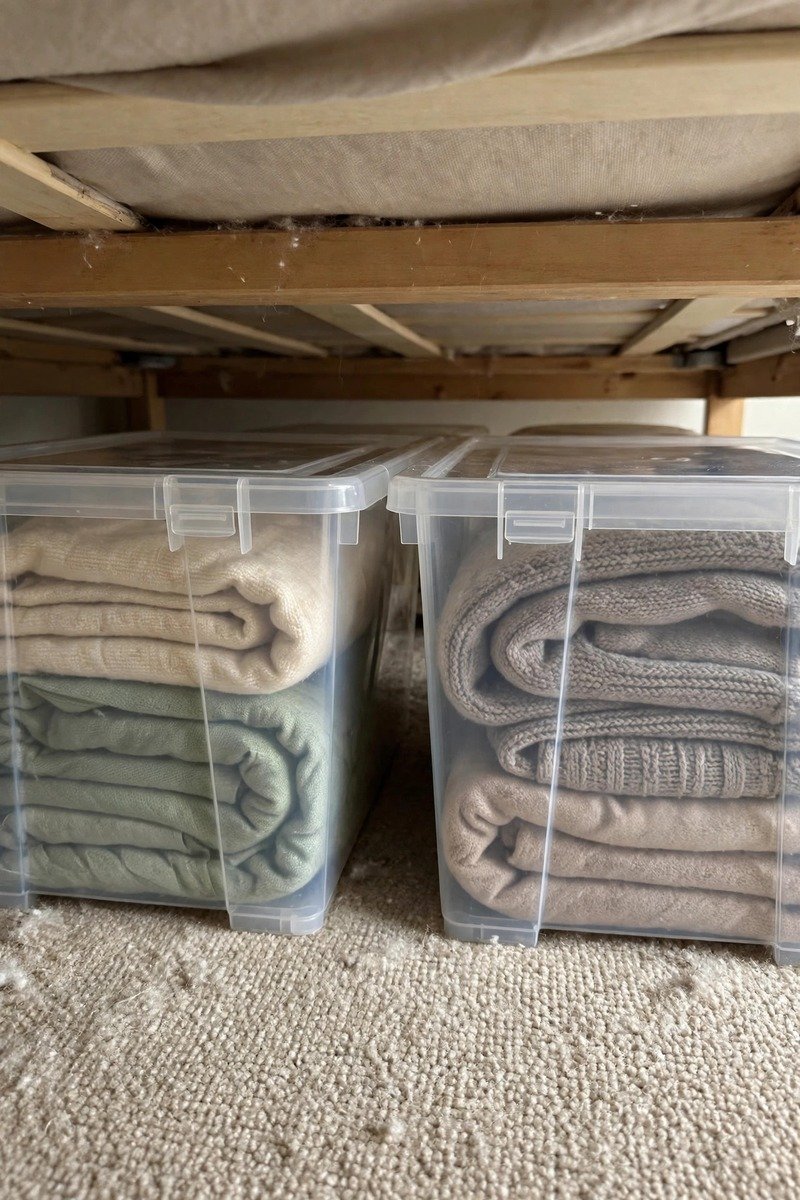
2. Clear Lidded Totes So You See What Is Inside
Clear totes solve the most common under bed problem. You forget what you stored, then you buy it again.
Choose hard sided totes with snap on lids to keep dust out.
Pro tip: A clear tote 32 inches long costs 12 to 20 dollars. Keep the label on the short end that faces the room.
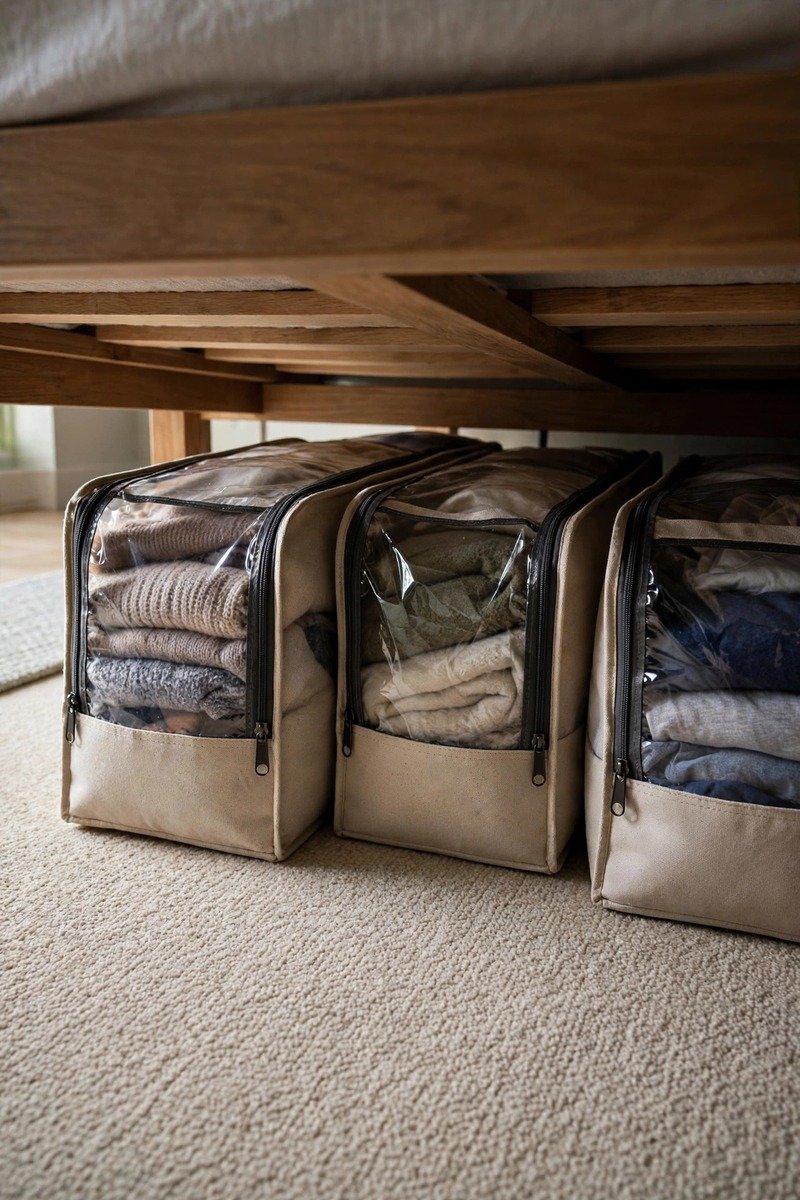
3. Zippered Fabric Bags for Low Beds
Platform beds leave very little room, and fabric bags are the thinnest option that still works. They squeeze past frame legs and fit odd shapes.
Use them for extra blankets, spare pillows, and off season clothing.
Pro tip: A pair of zippered fabric bags costs 15 to 25 dollars. Make sure items are fully dry before you zip them in.
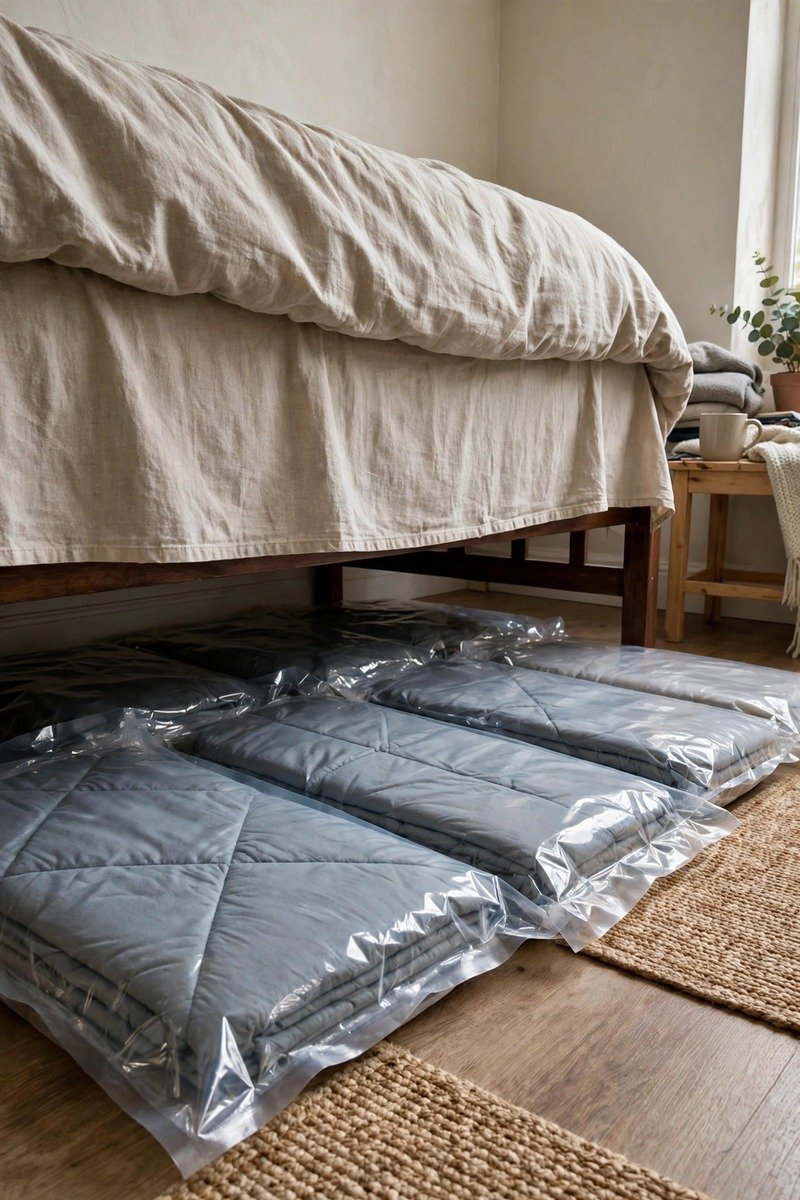
4. Vacuum Bags for Bulky Bedding and Coats
A thick comforter can fill a whole closet shelf on its own. A vacuum bag shrinks it to a flat pouch in minutes.
Use vacuum bags for winter coats, spare duvets, and extra pillows. Seal clean dry items only.
Pro tip: A pack of six vacuum bags costs 20 to 30 dollars. Skip long term storage for delicate down fills.
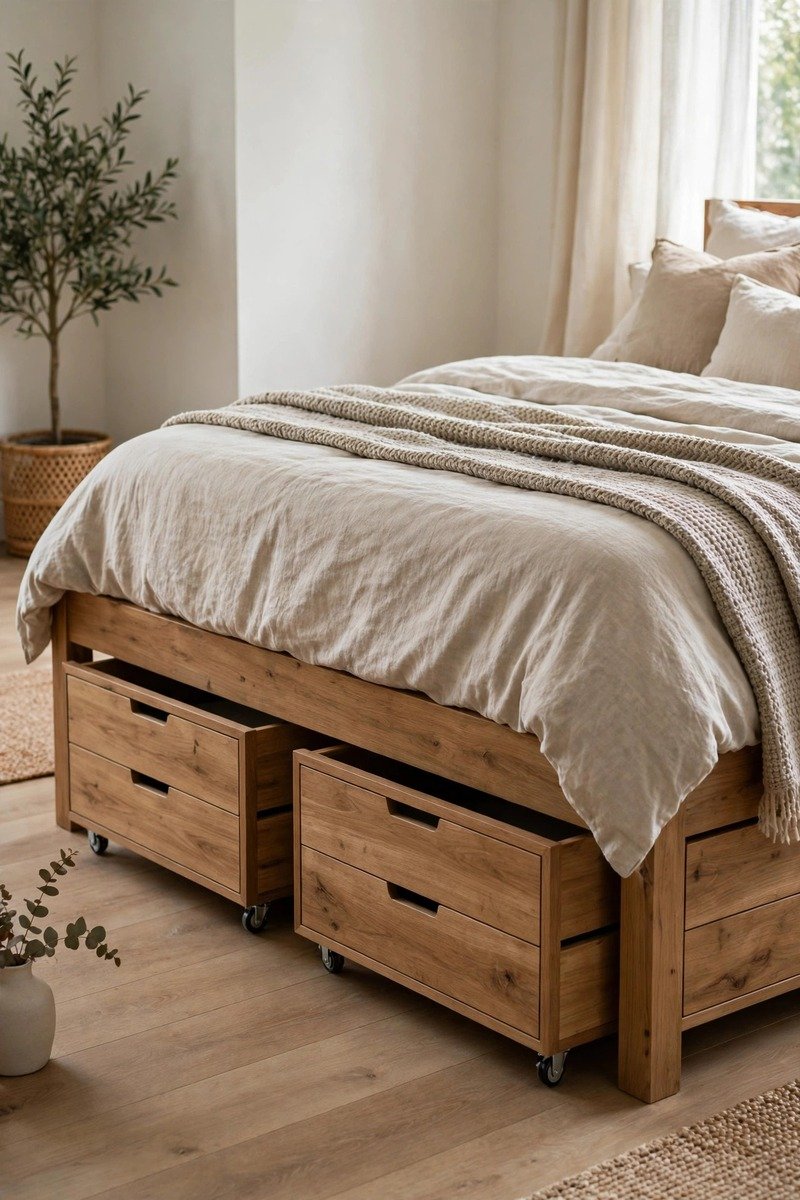
5. Low Drawer Units on Casters for a Built In Look
Drawer units on casters look like part of the bed, not like storage you added later. They pull out smooth and stay in line.
Keep daily clothes on the side you use most, and seasonal items on the far side.
Pro tip: A low drawer unit on casters costs 40 to 80 dollars. Measure the width so it clears the bed legs.
Shoes, Clothes and Linens
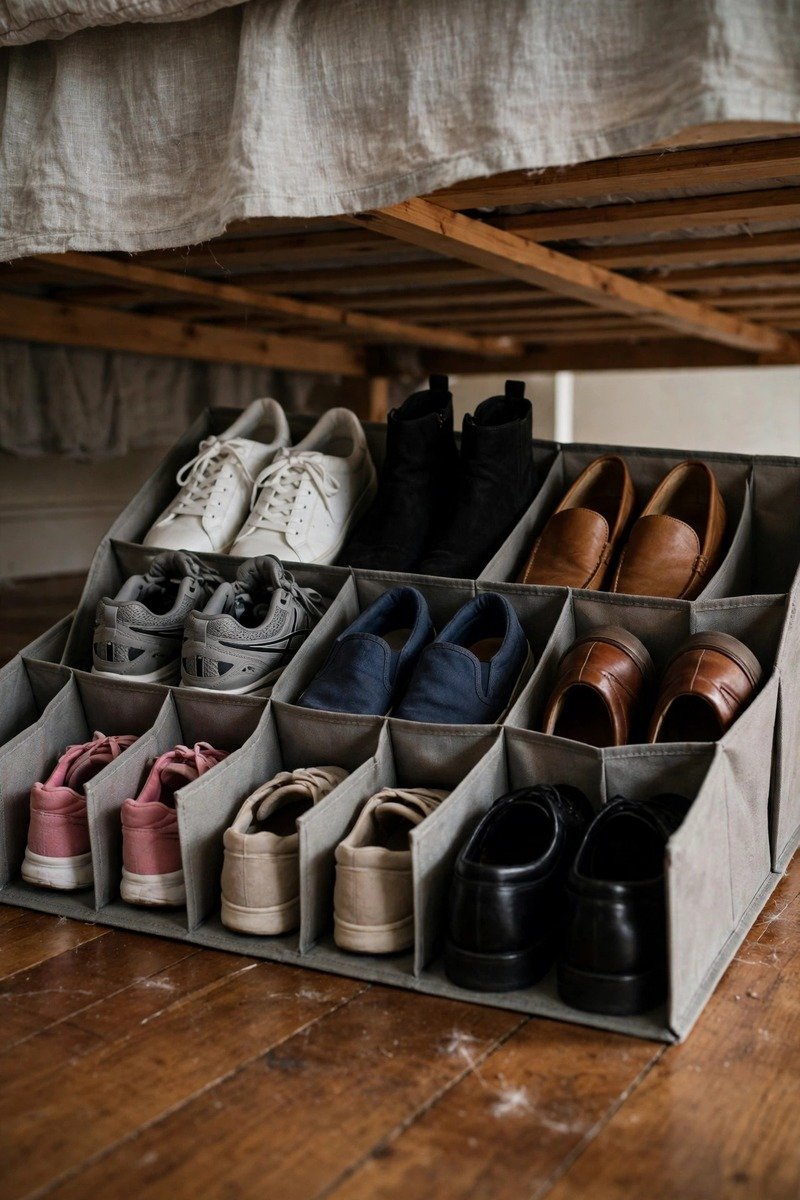
6. Divided Shoe Organizers for Pairs Without Closet Space
Shoes pile up fast by the door and in the closet. A divided organizer under the bed gives every pair its own slot.
Use it for flats, sandals, slippers, and sneakers you wear now and then.
Pro tip: A divided shoe organizer with 12 slots costs 15 to 25 dollars. Roll each pair heel to toe to save space.
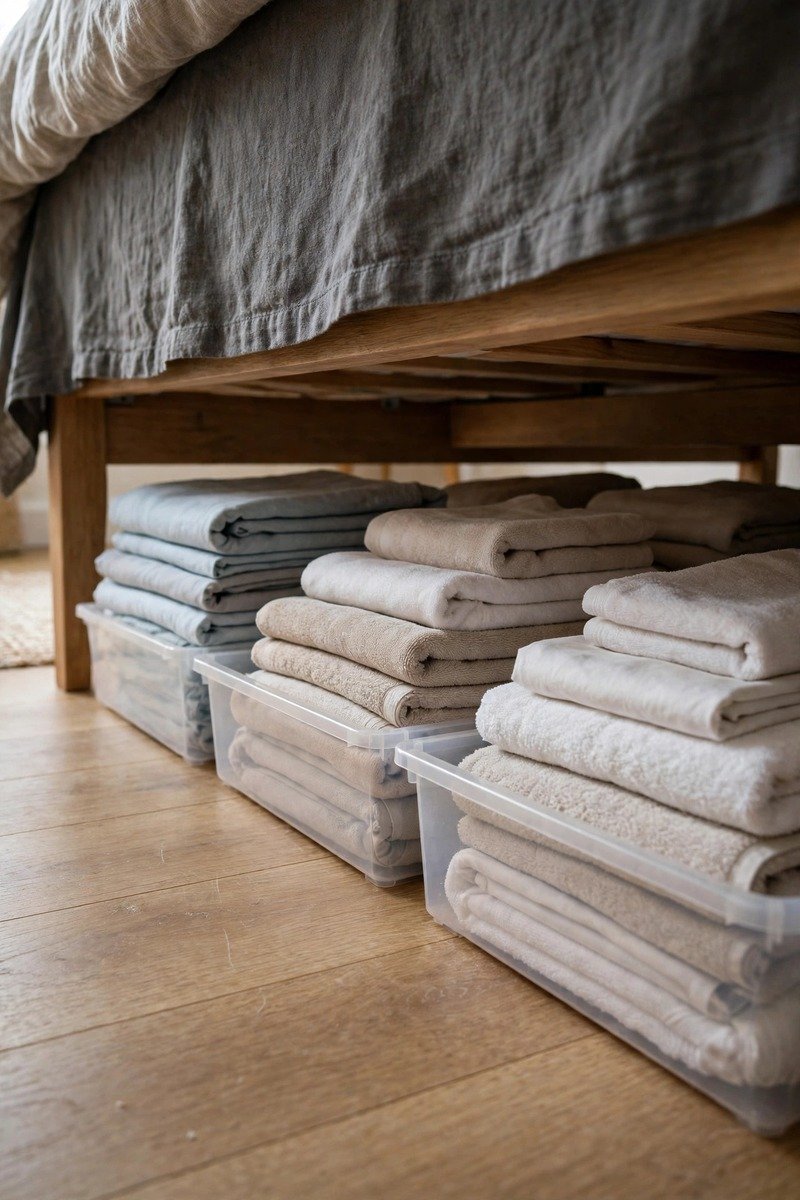
7. Long Shallow Bins for Spare Sheets and Towels
Long shallow bins fit the full length of the bed, so they hold a full sheet set in one place. No more hunting for the matching pillowcase.
Store one spare sheet set and two spare towels in each bin. The same zone system works in these small bathroom organization ideas for the rest of your home.
Pro tip: A long shallow bin 36 inches long costs 15 to 25 dollars. Fold sheets in sets so the set stays together.
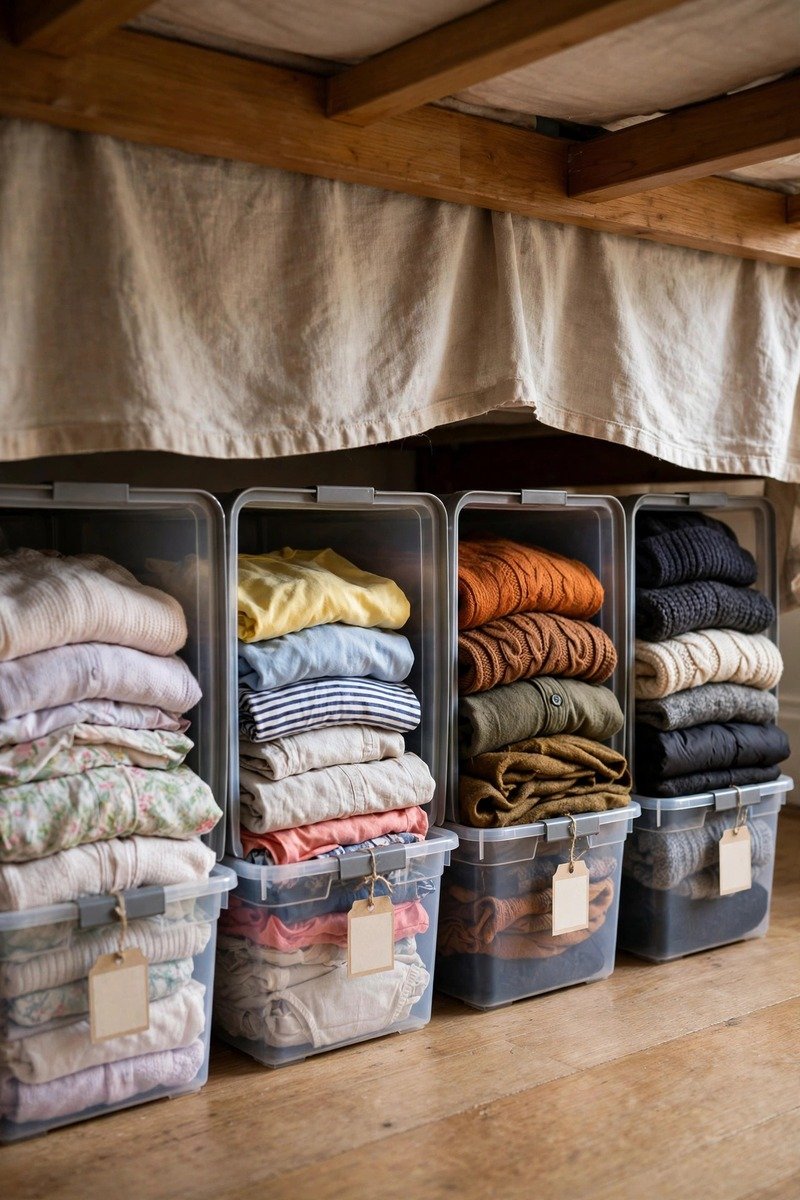
8. Off Season Clothes in Labeled Bins by Season
Off season clothes take up closet space for months when you do not wear them. Move them under the bed and free the closet for the current season.
Use one bin for winter knits and one bin for summer clothes. Label each bin with the season and the year, so the swap takes minutes.
Pro tip: Swap the bins twice a year, in spring and in fall. Wash each item before the swap so it stays fresh.
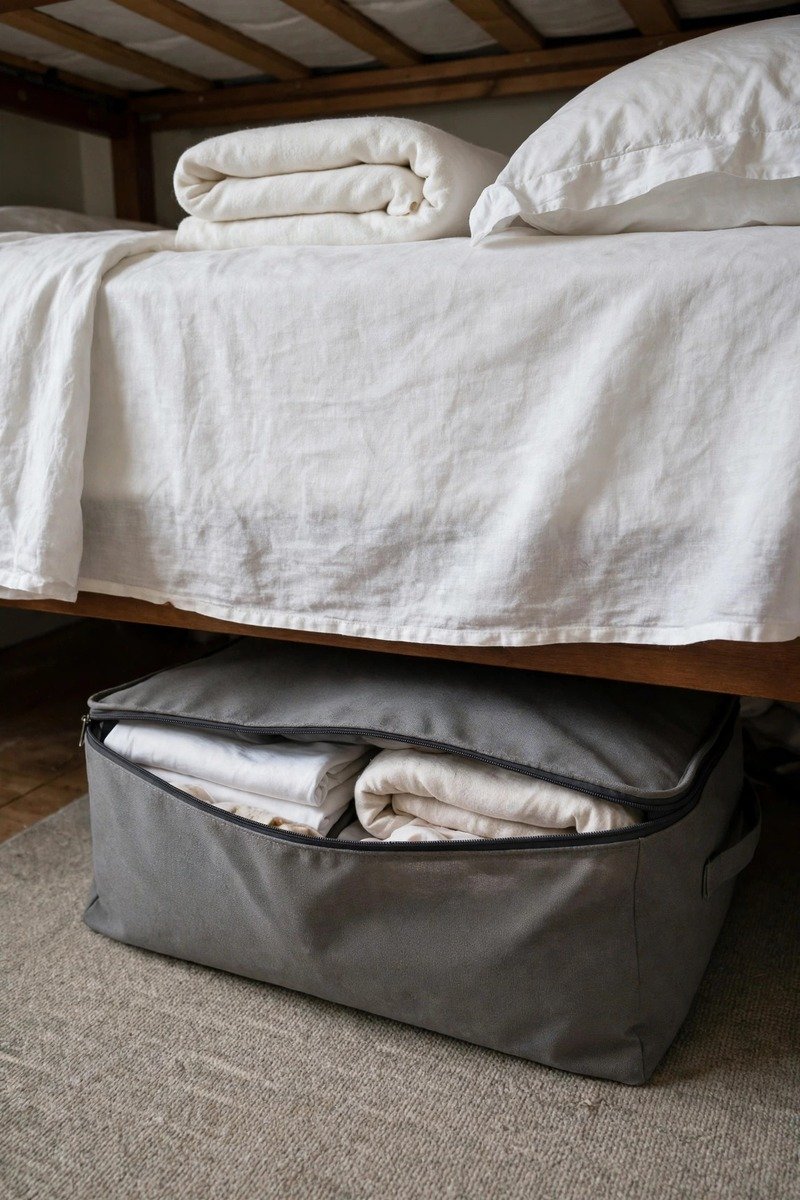
9. A Guest Bedding Kit Under the Bed
Guests feel welcome when clean bedding is ready in minutes. A guest kit under the bed keeps it all in one place.
Pack a sheet set, a spare pillow, a light blanket, and a hand towel in one zippered bag.
Pro tip: A full guest kit fits in one large bag. Air the blanket out for one hour before guests arrive.
10. A Kids Clothes Swap Bin for Outgrown Sizes
Kids outgrow clothes in a rush, and the next size up often sits in a pile. One bin under the bed keeps the swap tidy.
Use the bin for the next size up only, not for every spare item. When the current clothes get small, move them to the bin and pull the next size out.
Pro tip: Label the bin with the size inside, such as size 5 to 6. Check the bin once a month as kids grow.
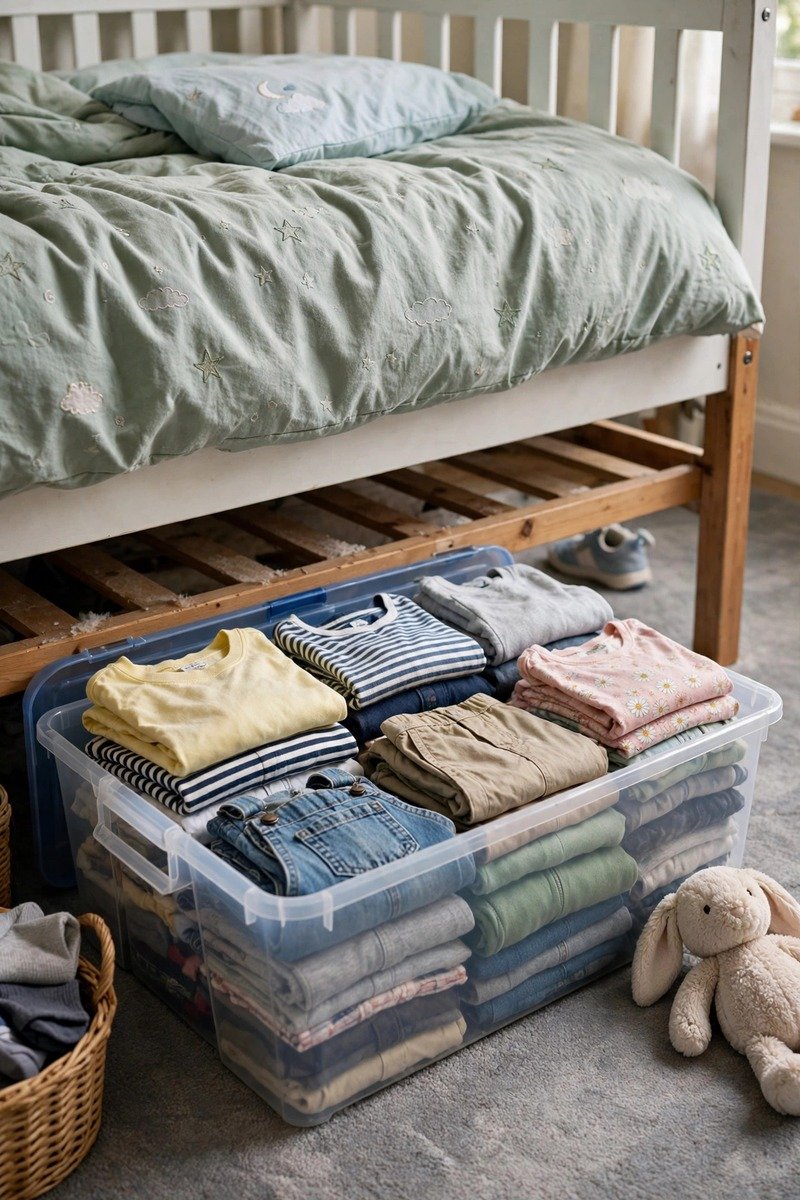
11. A Donation Bin That Stays Ready to Fill
Clutter builds when there is no easy place to put things you no longer need. A donation bin under the bed fixes that in one step.
Keep one rolling bin labeled Donate near the foot of the bed.
Pro tip: Take the bin out when it is full, not when it overflows. A monthly drop keeps the room light.

Hidden, Pretty and Renter Friendly
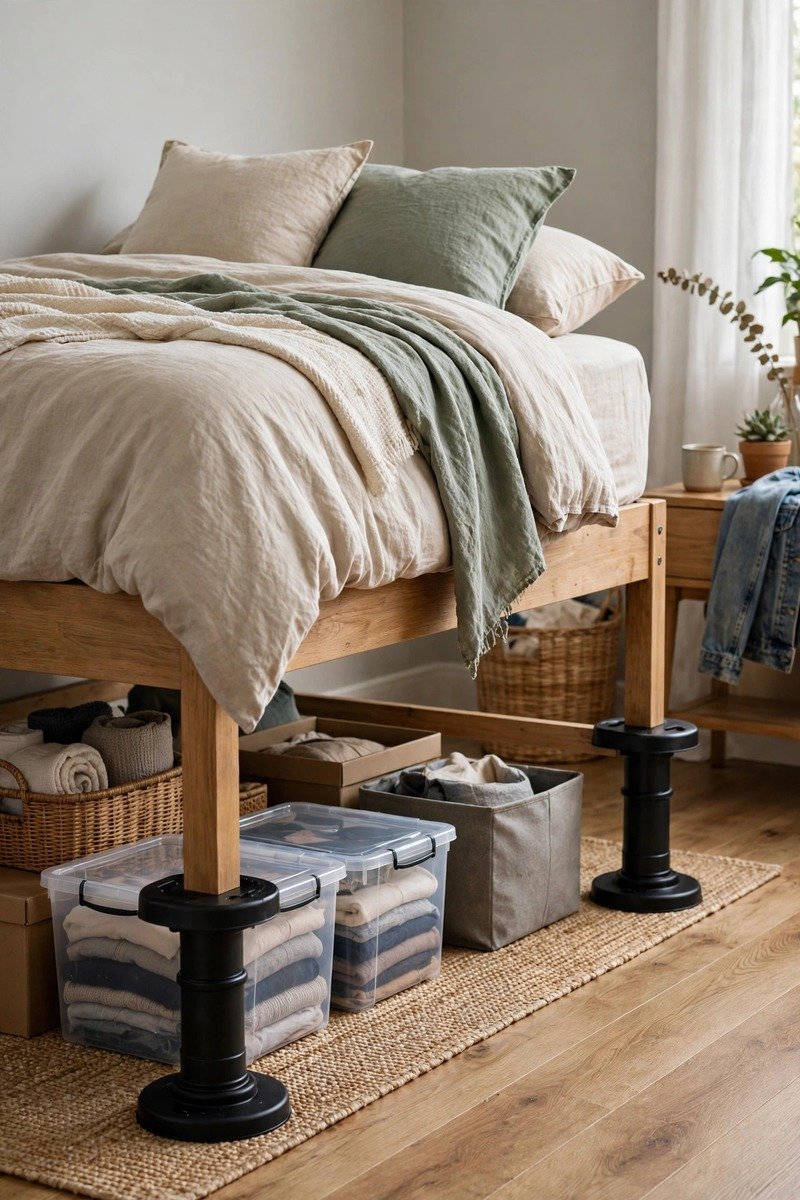
12. Bed Risers That Add Inches of Clearance
Some beds sit so low that almost nothing fits underneath. Bed risers lift the whole frame by a few inches and open up real storage space.
Choose wide flat risers rated for your bed weight. Skip stacked risers, books, and bricks, which can shift.
Pro tip: A set of four bed risers costs 15 to 30 dollars. Check that the bed still feels stable before you load bins.
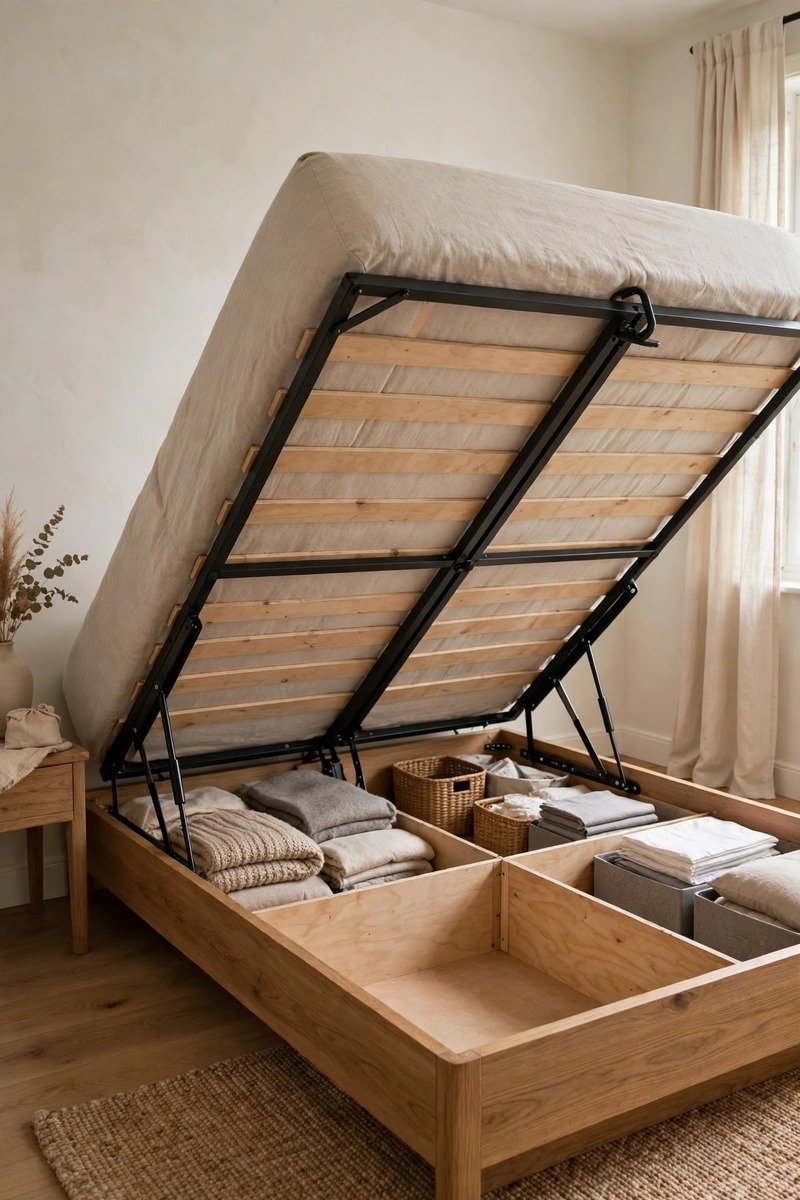
13. A Lift Up Storage Bed When You Replace the Frame
A lift up bed hides a huge storage box under the mattress. You lift the base, load it once, and close it again.
This suits rooms with no side space to pull bins out. Check the lift weight rating first.
Pro tip: A lift up storage bed costs 300 to 800 dollars. Use it for bulky items you reach for a few times a year.
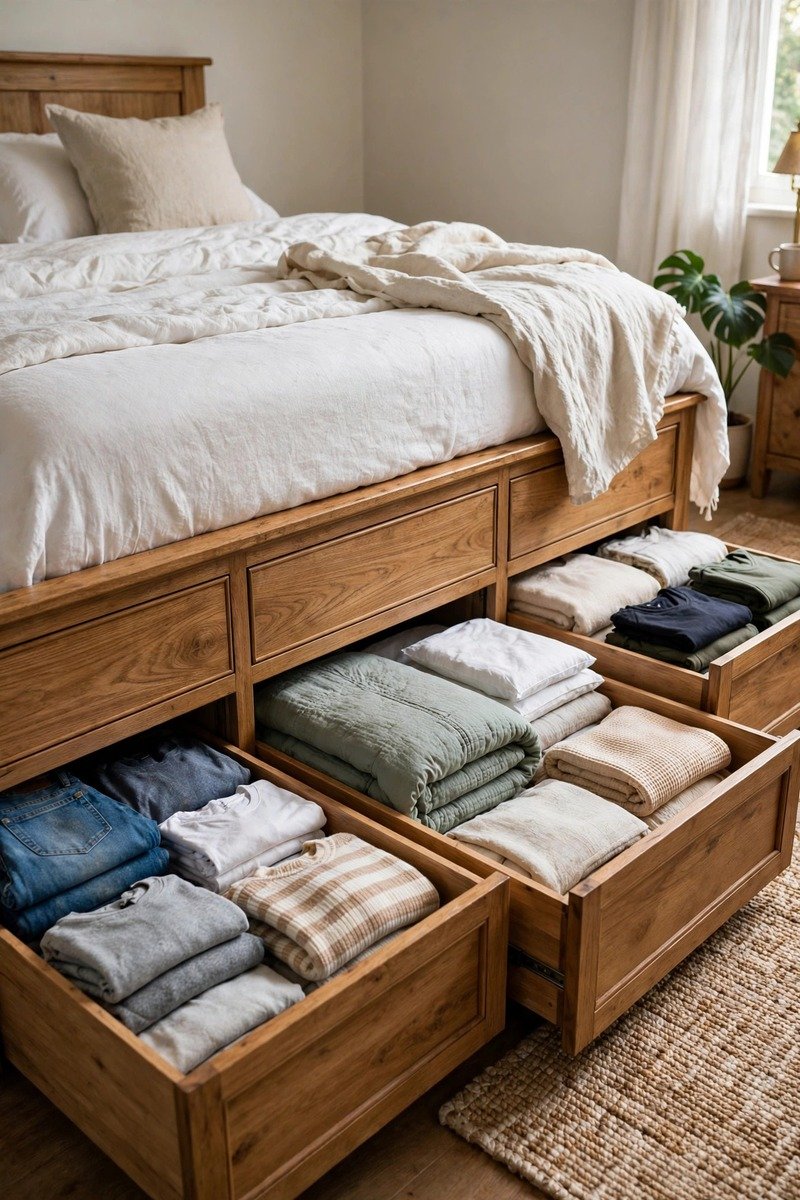
14. Built In Drawers in a Captain Bed
A captain bed has drawers built into the base, so storage looks like furniture from day one. No bins show at all.
Use the drawers for clothes, bedding, and books.
Pro tip: A captain bed costs 400 to 900 dollars. Measure the drawer depth before you buy sheet sets for it.
15. A Bed Skirt That Hides Mismatched Bins
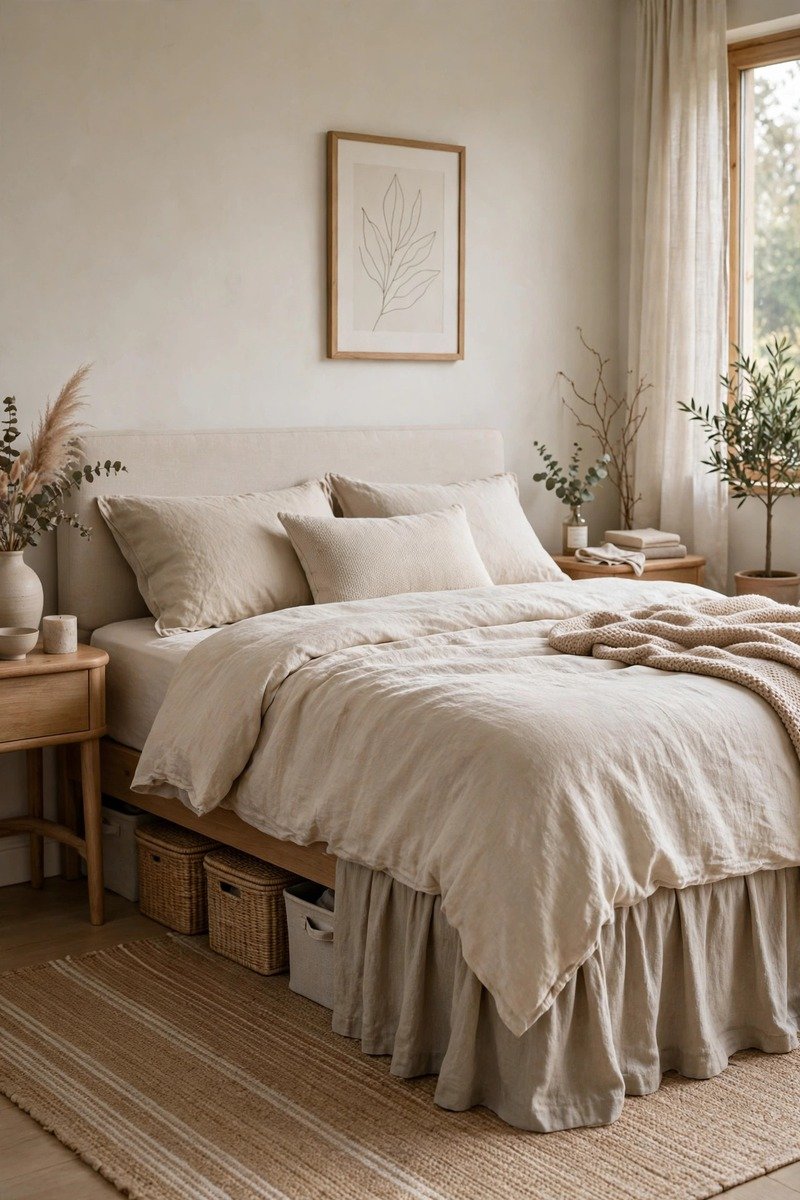
Mismatched bins can look messy even when they are tidy inside. A bed skirt hides them all in one clean line.
Choose a simple linen skirt in a calm neutral tone. Keep the bedding calm and neutral too, and take the rest of the room from these cozy neutral bedroom ideas for a soft finish.
Pro tip: A linen bed skirt costs 25 to 45 dollars. Wash it twice a year so dust does not build up on the hem.
16. Woven Baskets That Look Like Decor
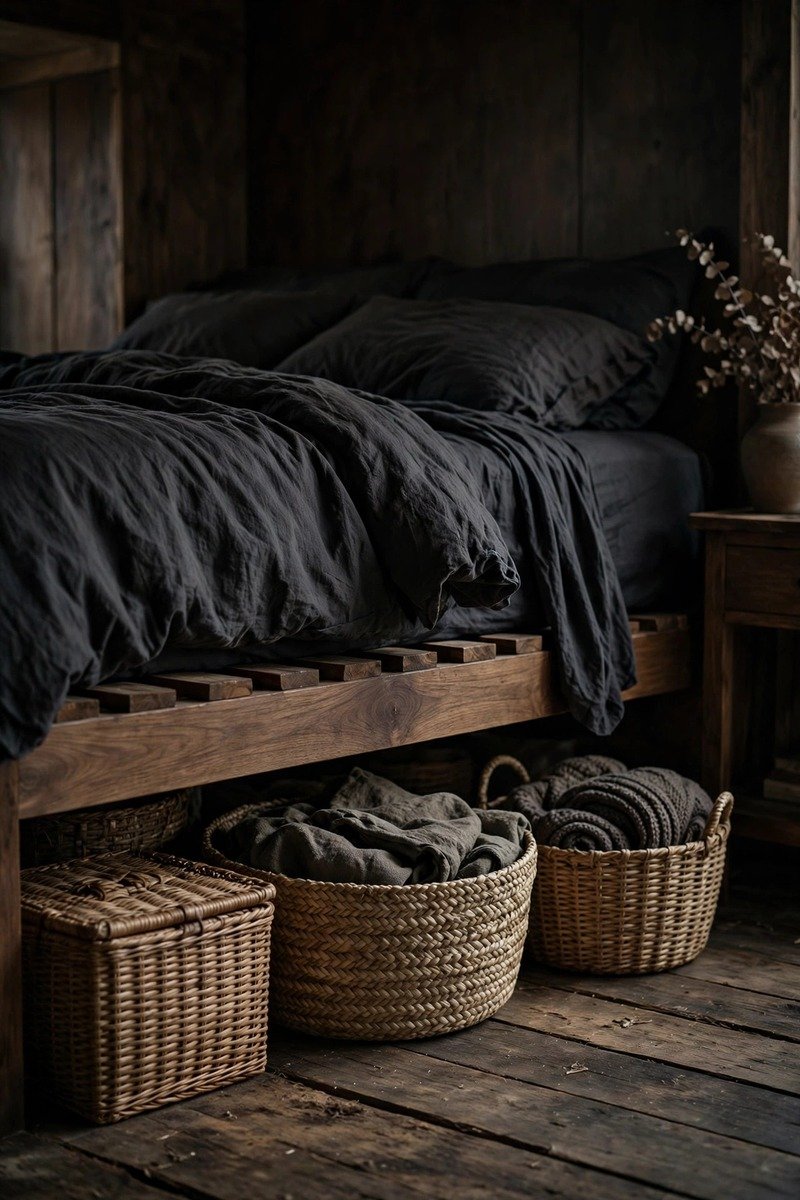
Woven baskets work best when the under bed area is easy to see. They add texture, so storage looks planned, not hidden.
Use low baskets with handles for blankets and books. Dark wood and deep bedding suit this look, and you can build the full mood from these moody bedroom ideas.
Pro tip: A pair of low woven baskets costs 30 to 60 dollars. Line each basket so small items do not slip through.
17. Cedar Boxes That Protect Wool and Keep Moths Away
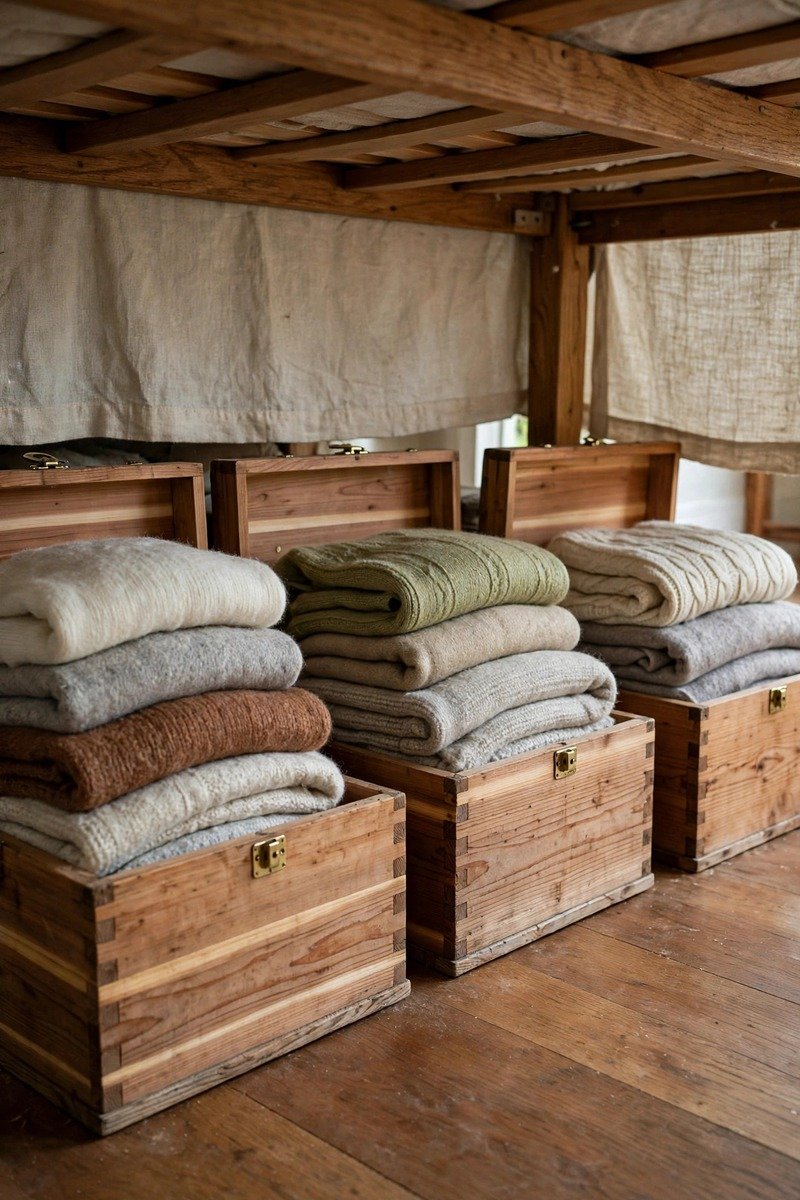
Wool knits and cashmere need more care than cotton. Cedar boxes protect them and keep moths away without sprays.
Use cedar boxes for winter sweaters, scarves, and wool blankets. Keep the lid closed.
Pro tip: A cedar under bed box costs 40 to 70 dollars. Store only clean dry wool inside for best results.
Small Extras That Stay Tidy
18. Slide Out Trays for Crafts and Office Supplies
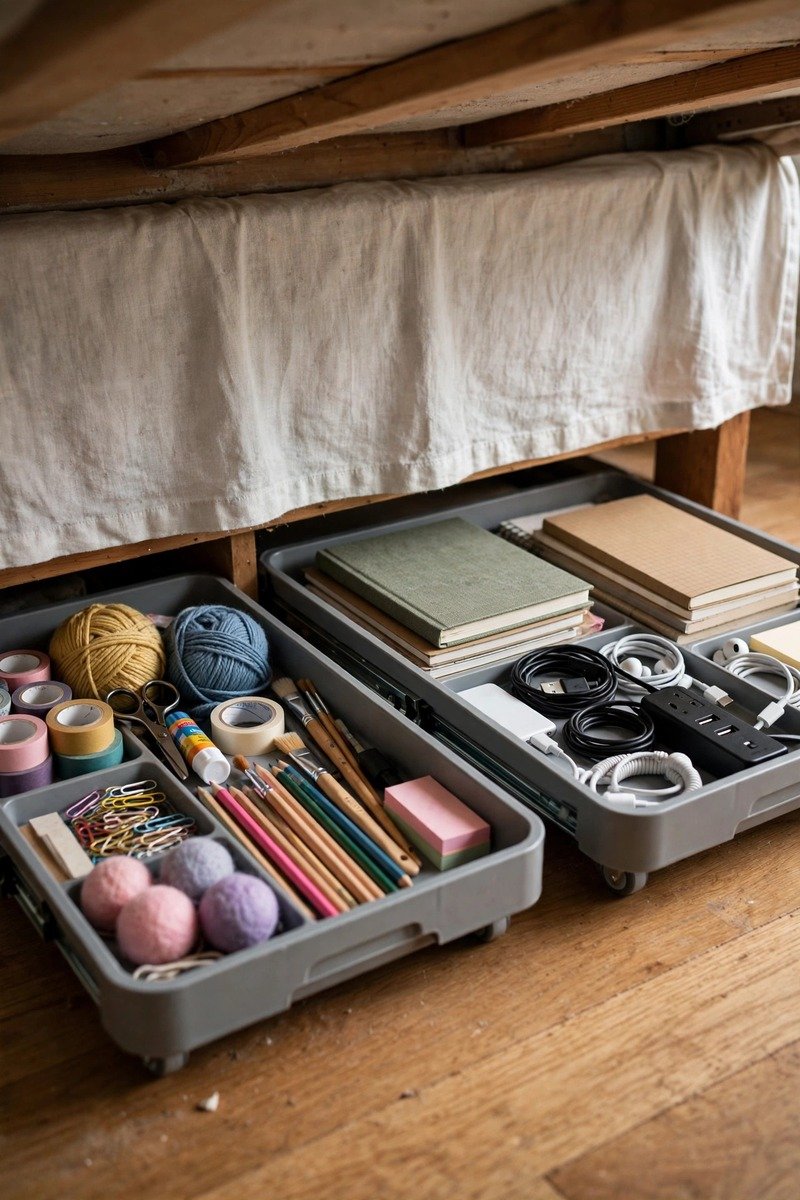
Small supplies get lost in deep bins. A slide out tray keeps them in thin layers you can see at a glance.
Use trays for craft paper, notebooks, chargers, and pens.
Pro tip: A set of two slide out trays costs 25 to 45 dollars. Label the front edge of each tray in plain words.
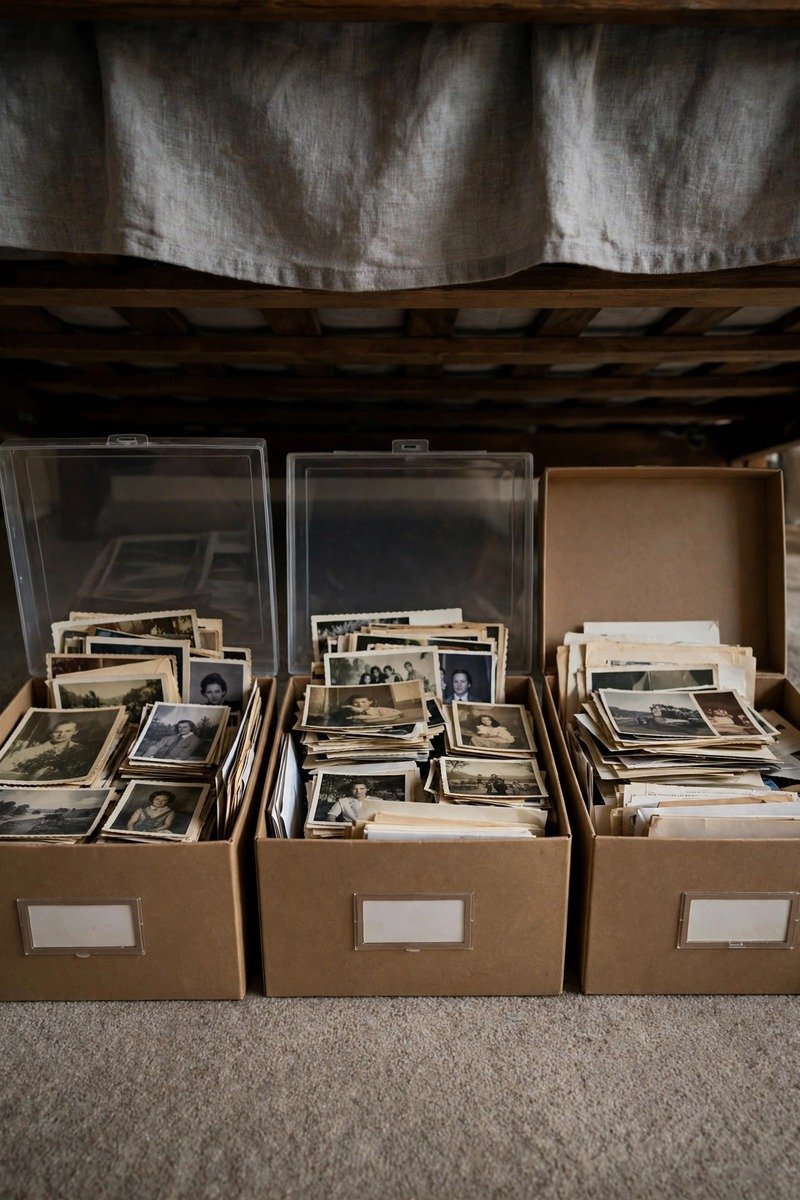
19. Labeled Photo Boxes for Keepsakes and Papers
Keepsakes need a dry safe spot, and photo boxes are thin enough to slide under most beds. They stack neat and stay dust free.
Use one box for photos, one box for letters, and one box for key papers.
Pro tip: A set of three photo boxes costs 20 to 35 dollars. Keep the boxes on the side away from the window.
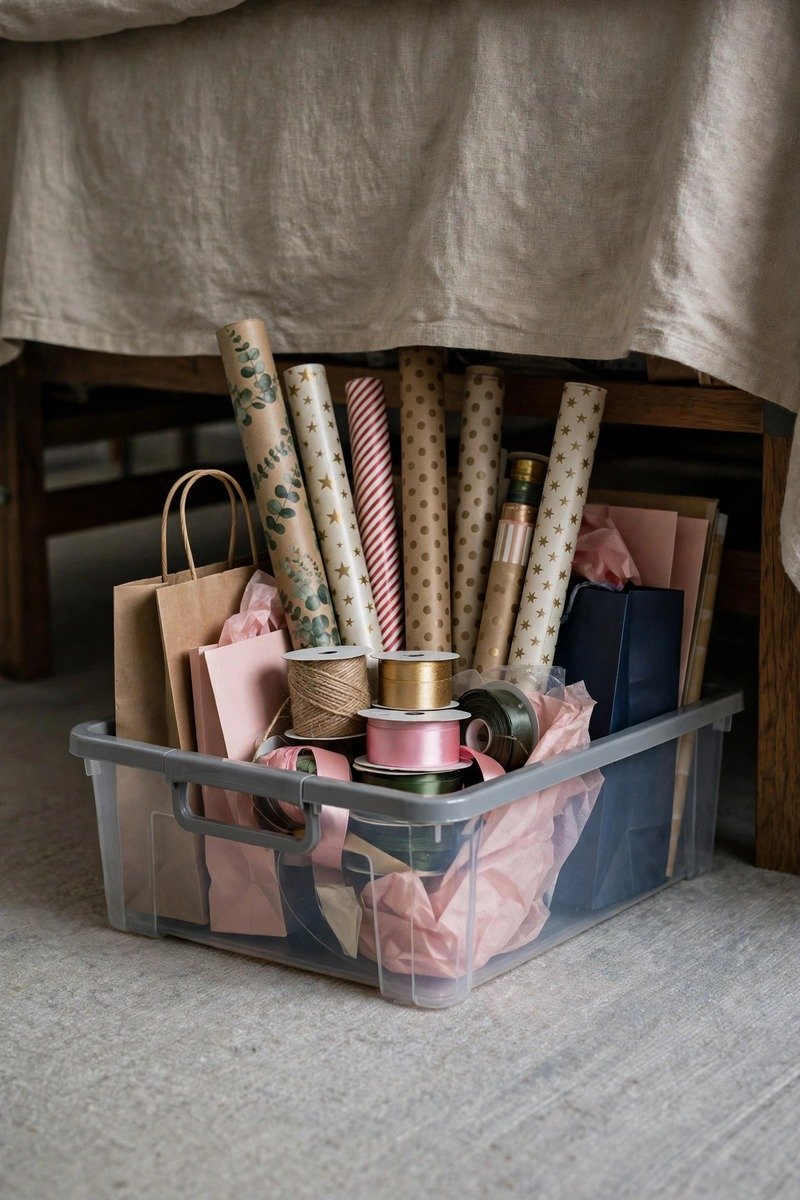
20. A Slim Bin for Wrapping Paper and Gift Supplies
Gift wrap rolls are long, thin, and hard to store in a closet. A slim bin under the bed fits them end to end.
Store two or three rolls, tape, ribbon, and gift bags in one bin.
Pro tip: A slim bin 36 inches long costs 15 to 25 dollars. Stand the rolls upright at one end for easy grabs.
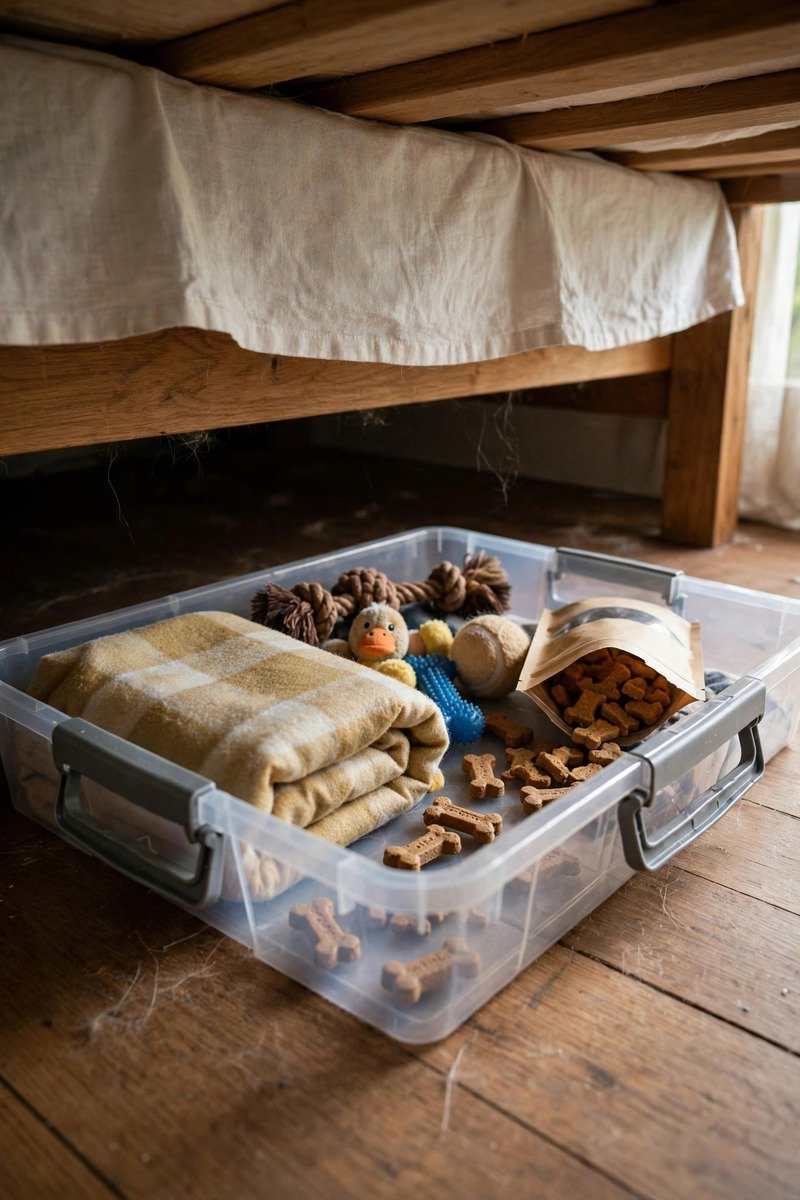
21. A Pet Bed Storage Spot With Toys in One Bin
Pets need a spot too, and under the bed can hold their extras without cluttering the floor. One bin keeps toys, treats, and a spare blanket together.
Use a low bin with a lid that your pet cannot open.
Pro tip: A low pet bin costs 15 to 25 dollars. Wash the spare blanket once a month to keep it fresh.
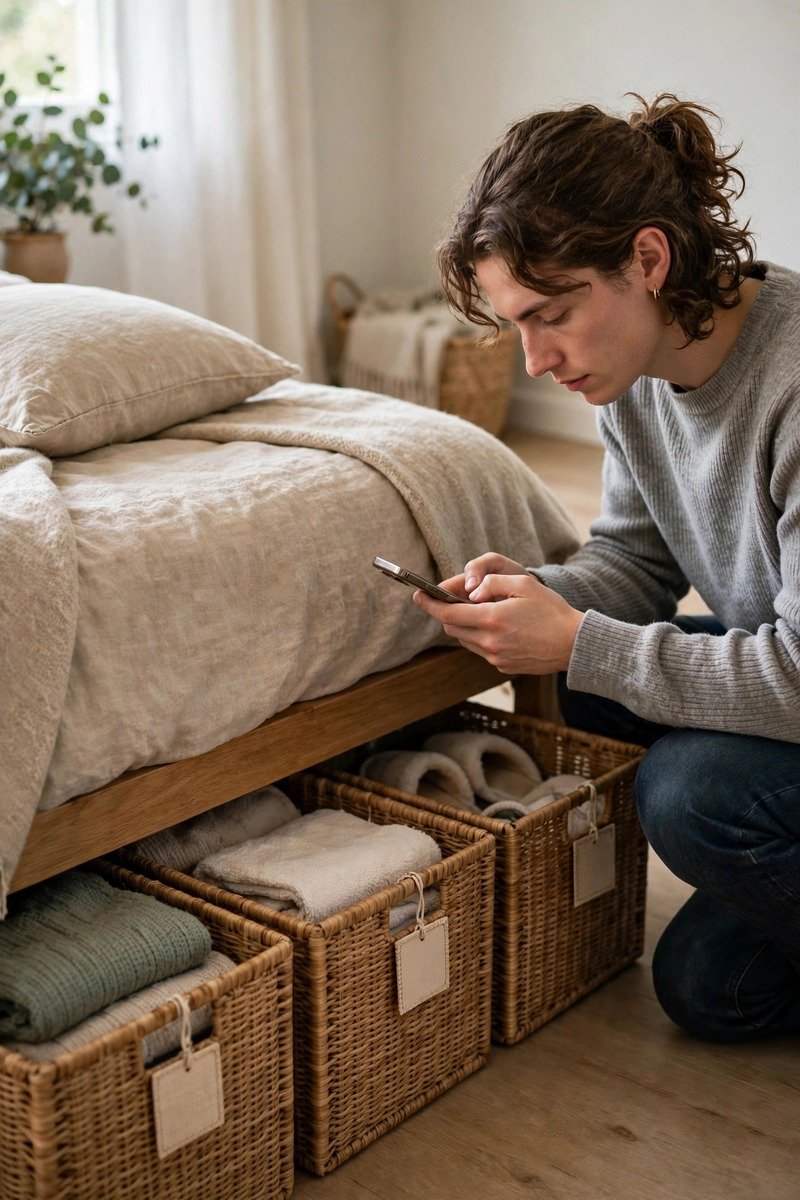
22. A Seasonal Swap System With a Phone List
Under bed storage fails when you forget what is under there. A simple swap system and a phone list fix that for good.
Keep a note on your phone with each bin name and its contents. Update it at every seasonal swap.
Pro tip: Set a phone reminder for March and September. A ten minute swap twice a year keeps the system working.
Measure the Clearance First
Measure the space under the bed before you buy a single box. Most beds offer 6 to 12 inches of clearance, and a storage box needs at least 1 inch less than the clearance to slide in and out. Measure in three places, at the head, the middle, and the foot, because floors are rarely perfectly level and a bed frame can sag in the middle. Note the width between the legs, because a box that fits the height but not the width is useless. Under bed storage ideas only save space when the box fits on the first try, so write the three measurements down and take them to the shop.
What Goes Where by How Often You Need It
Put things you need weekly at the front edge, and things you need twice a year at the back. Shoes and extra bedding suit the front, because you reach them often. Out of season clothes and spare linens suit the back, because you open them a few times a year. Keep one box per category, and label the short end that faces out, so you can see the label without pulling the box fully out. Do not mix categories in one box, because a mixed box means pulling out three boxes to find one item. If a box is opened more than once a week, it belongs in the closet, not under the bed.
Dust and Moisture Protection
The floor under a bed collects dust and damp. Use boxes with lids, not open trays, and choose a hard box or a fabric box with a rigid lid. Add a silica gel pack to each box if the room is damp, and replace the packs every 3 months. Vacuum under the bed once a month, because dust builds up fast in a space you never see. Never store leather, silk, or important papers directly on the floor under a bed, even inside a box, because a small leak or a spill reaches the floor first. Keep valuables in the closet, and use under bed space for bedding, shoes, and out of season clothes only.
Budget for Under Bed Storage
Under 25 dollars: two flat fabric boxes with lids for shoes or out of season clothes. From 25 to 75 dollars: a set of four matching boxes, plus labels and silica gel packs. Over 75 dollars: hard rolling boxes with wheels, or a bed riser set that adds 3 to 6 inches of clearance. As a typical range, a flat under bed box costs about 8 to 20 dollars, and a set of bed risers costs about 15 to 30 dollars. Buy the boxes first and measure again before you buy risers, because risers change the bed height and the way the room feels.
Common Mistakes to Avoid
- Skipping the measure: a bin that is too tall will not slide. Measure the gap first, then buy.
- Storing damp items: damp fabric under a bed can grow mildew. Store clean dry items only.
- Hiding daily items: if you pull a bin out every morning, it is not storage. Keep daily items in a drawer.
- Mixing everything in one bin: one mixed bin becomes a junk pile. Give each bin one job and one label.
- Forgetting dust: dust and pet hair collect fast in a low space. Vacuum under the bed twice a year.
- Using weak risers: cheap or stacked risers can shift under weight. Use wide flat risers rated for your bed.
Start with one rolling bin and one clear tote this weekend. Add vacuum bags for bulky bedding, then a label on each bin end. In one small afternoon, the space under your bed can hold the clutter that used to fill your closet and your floor.