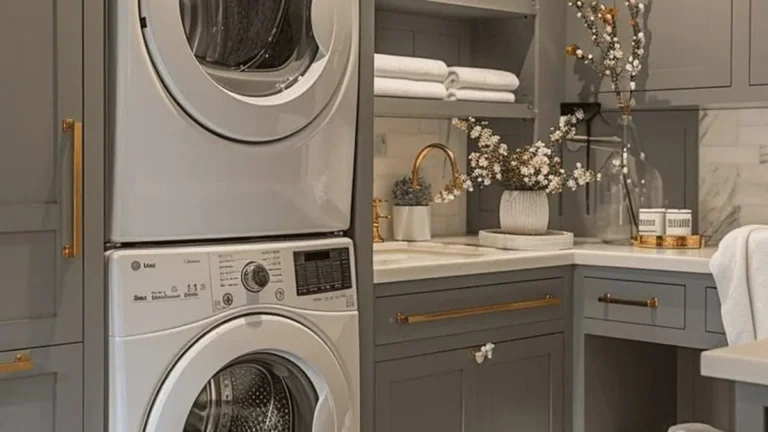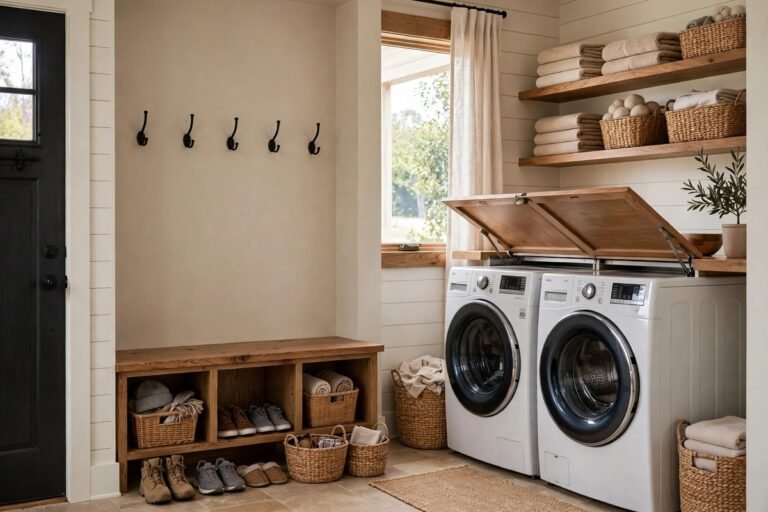
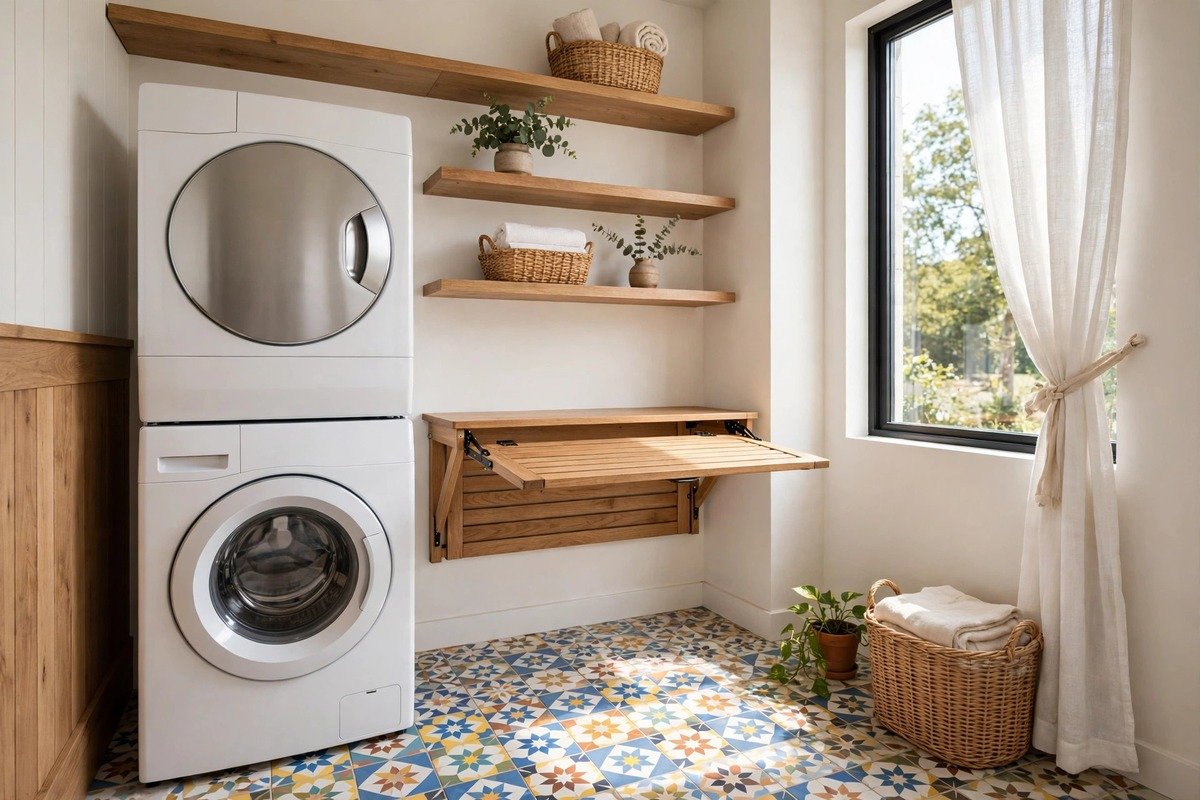
A small laundry room can still work well and look good. Most laundry rooms are tight, dark, or shared with a hallway, a closet, or a corner of the garage. The machines take up most of the floor, and the baskets, detergent, and drying clothes fill the rest. It is easy to give up on style in a room like that.
You do not need a big room to fix it. A stacked pair, a shelf, a folding counter, and a drying rack can change how the room feels in one weekend. This guide gives you 24 small laundry room ideas for compact spaces, stacked machines, and tiny laundry closets. Most of them cost less than a full remodel. If you want more stacked machine looks first, see our stacked washer and dryer ideas as a different guide.
Quick Picks
- Stack first. A stacked pair or a single combo unit frees the most floor space.
- Build up, not out. Shelves, cabinets, rods, and peg rails use wall space that is usually empty.
- Give every job a spot. Sorting, washing, drying, folding, and ironing each need a small clear zone.
- Hide the mess. Doors, curtains, baskets, and closed bins keep a tiny room calm.
- Add one bold touch. A patterned floor, a bright paint color, or a fun wallpaper makes the room feel finished.
Did You Know?
A stacked washer and dryer pair can fit in a closet about 3 feet wide, while a side by side pair usually needs 5 to 6 feet of width plus room for the doors to open. That one change can free floor for a hamper, a folding counter, or a drying rack.
Before You Start
- Measure the width, depth, and height of the room, plus the door swing, before you buy anything.
- Check the water hookups, the drain, the vent, and the power outlet, and keep them easy to reach.
- Leave at least 1 inch of air space on each side of the machines so they do not hit the wall.
- Pick your folding and drying spots first, then plan shelves around them.
- Use moisture resistant paint and materials, since a small laundry room gets warm and damp fast.
Layouts That Save Floor Space
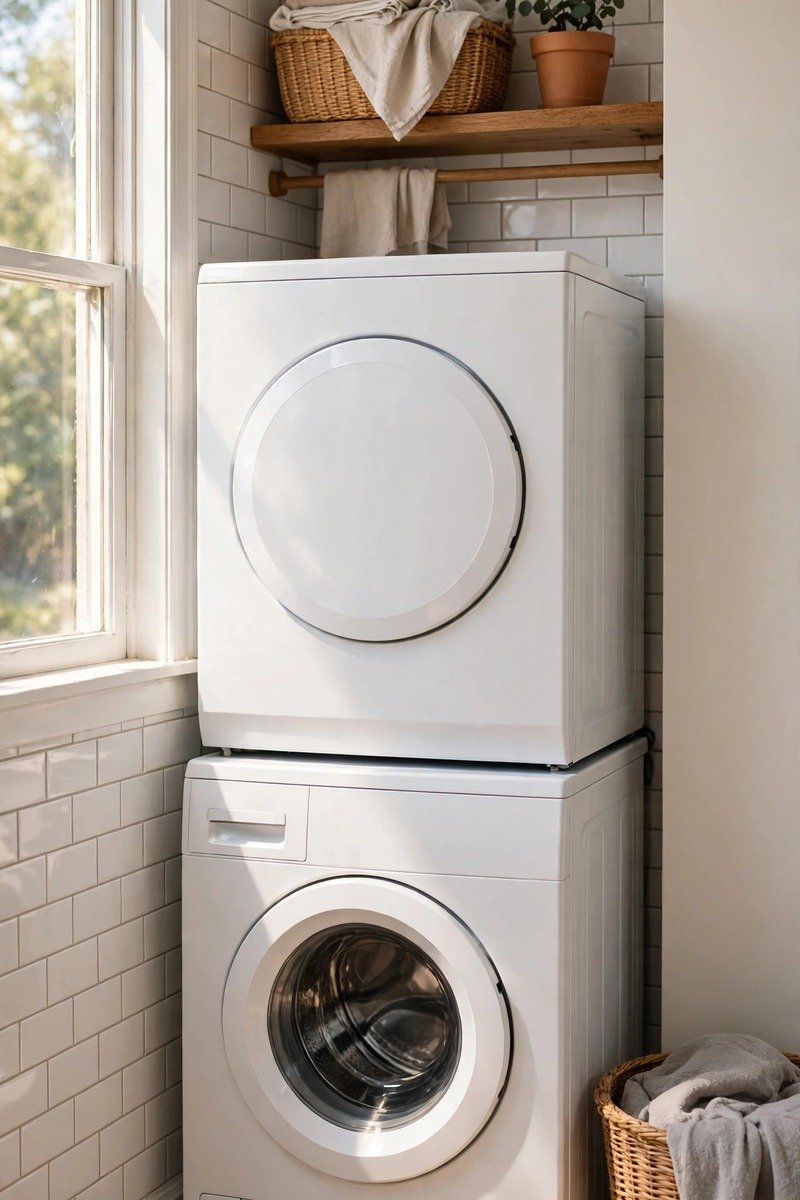
1. Stack the Washer and Dryer
Stacking is the single biggest space saver in a small laundry room. The dryer sits on top of the washer, so you free the full footprint of one machine.
Pro tip: Use a stacking kit made for your exact machine brand and model. Most stacked pairs need about 75 inches of ceiling height, and the kit costs about 25 to 60 dollars.
2. Use a Single Washer Dryer Combo Unit
A combo unit washes and dries in one machine, so it takes up half the space of a pair. It suits a laundry closet or a one bedroom apartment.
Pro tip: A ventless combo unit works in a room with no outside vent. Most models cost 900 to 1600 dollars, and a load takes about 2 to 4 hours.
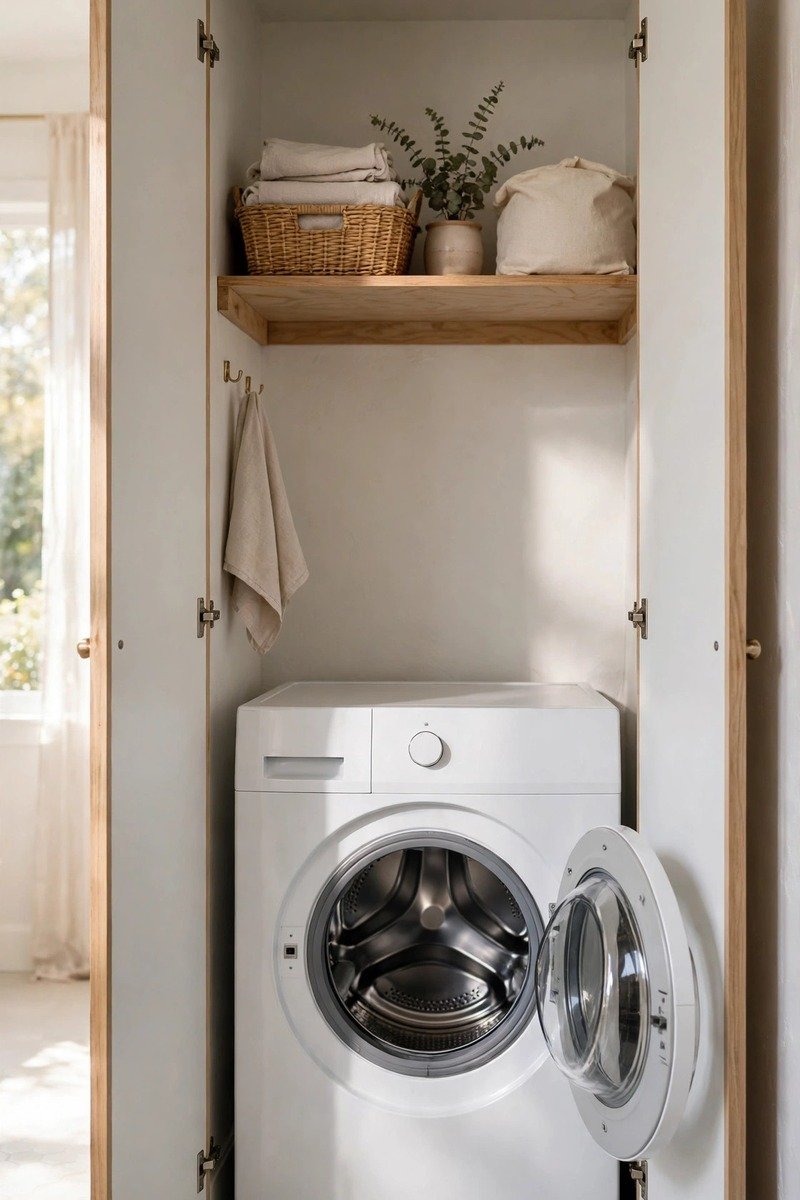
3. Hide the Laundry in a Closet
A laundry closet tucks the machines behind doors in a hallway, a kitchen, or a bedroom. When the doors close, the laundry disappears.
Pro tip: Use bifold or pocket doors so the doors do not swing into the room. A pair costs about 80 to 200 dollars, and you need about 60 inches of clear width for a stacked pair inside.
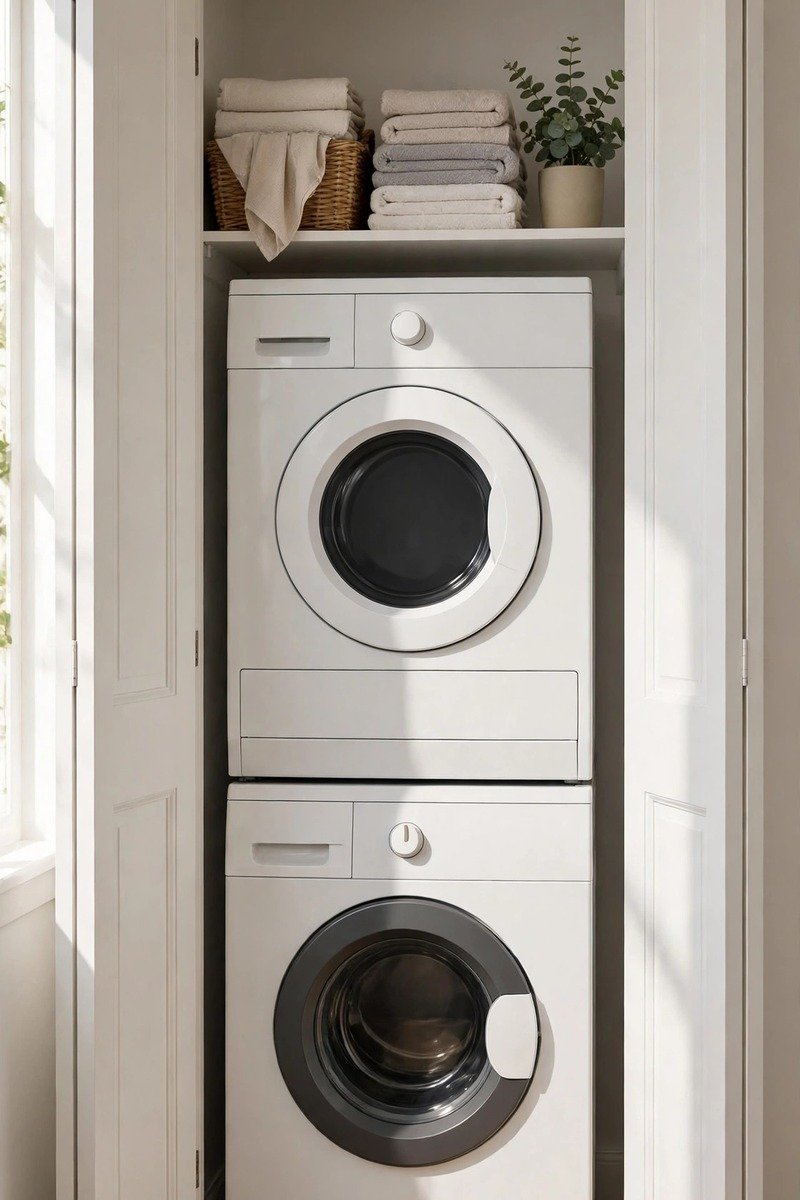
4. Try a Galley Layout for Two Machines
A galley layout puts the machines on one wall and a narrow counter on the opposite wall, with a small aisle between them. It works well in a long narrow room.
Pro tip: Leave an aisle at least 36 inches wide so you can carry a basket through it. A 12 inch deep counter still holds folded clothes without blocking the walkway.
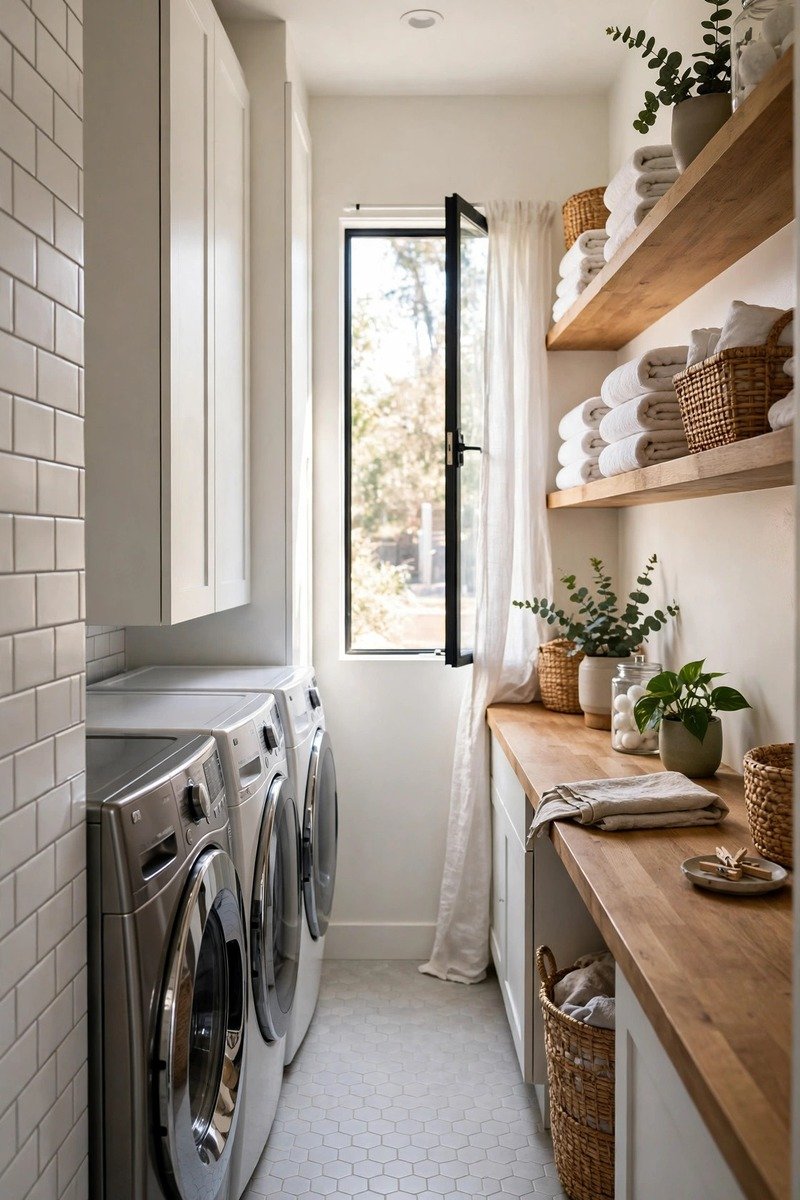
5. Add a Countertop Over Front Load Machines
A countertop laid across two front load machines gives you a folding surface at waist height. It also hides the tops of the machines.
Pro tip: Use a butcher block or laminate top about 27 inches deep. A 60 inch wide top costs about 100 to 250 dollars, and seal the back edge so water cannot drip behind the machines.

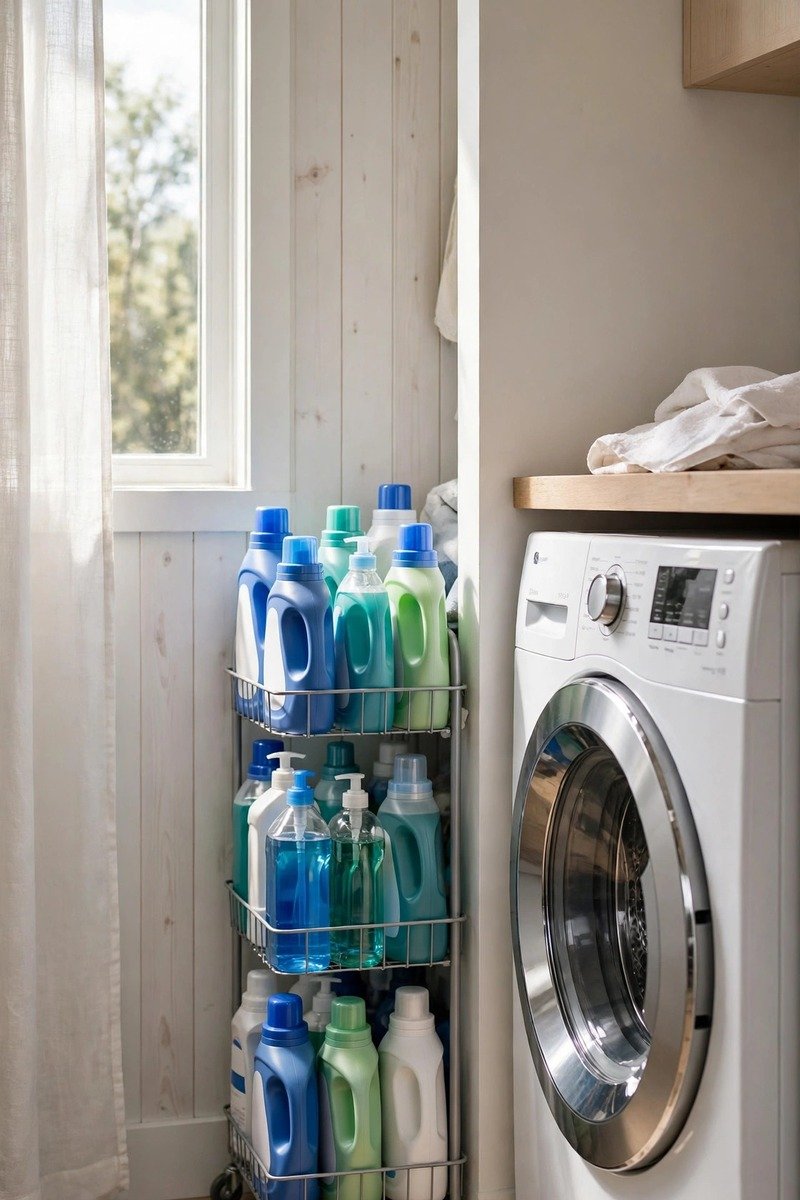
6. Slide a Slim Rolling Cart Into the Gap
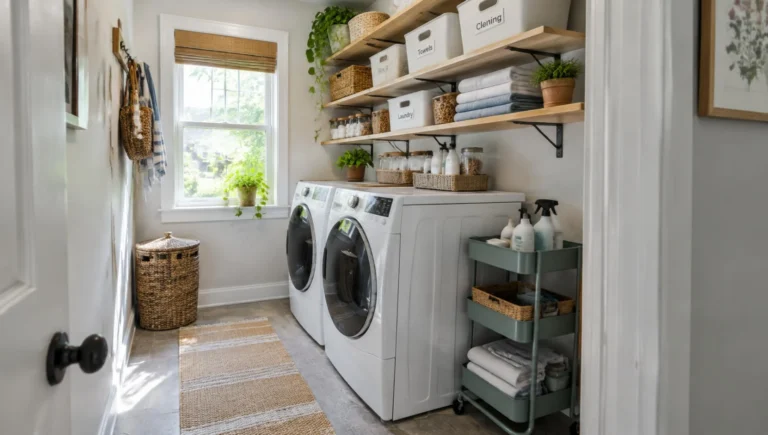
The narrow gap beside the washer is not wasted space. A slim rolling cart slides in and out on wheels and holds detergent, stain spray, and dryer sheets on tiered shelves.
Pro tip: Measure the gap first, since carts come in widths from about 5 to 8 inches. A three tier cart costs about 20 to 40 dollars, and it should roll out fully.
Storage That Goes Up the Wall
7. Add Floating Shelves Above the Machines
The wall above the machines is the best storage spot in a small laundry room. Two or three floating shelves hold detergent and stain remover without using any floor space.
Pro tip: Space the shelves 12 to 15 inches apart so tall bottles fit. A pair of 24 inch wood shelves costs about 30 to 60 dollars, and fix them into studs for safety.

8. Install Wall Cabinets Above the Machines
Wall cabinets give you closed storage above the machines, so the room looks tidy even when the shelves inside are full.
Pro tip: Hang cabinets at least 18 inches above a top load washer lid so the lid can open fully. A 30 inch wide stock cabinet costs about 80 to 180 dollars.

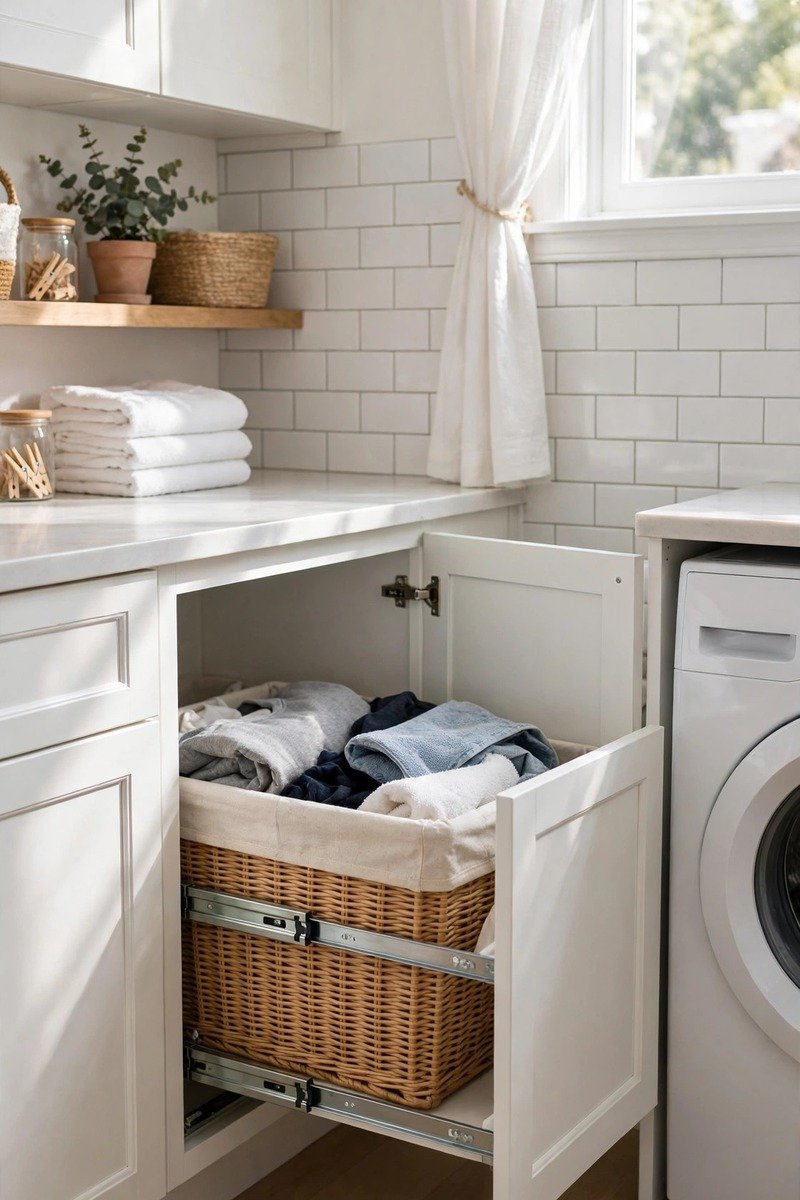
9. Hide a Pull Out Hamper in a Cabinet
A pull out hamper hides dirty clothes inside a cabinet on runners. You pull it out to load it, then push it back.
Pro tip: A 60 liter hamper on runners costs about 50 to 120 dollars. Mount it in a cabinet at least 14 inches wide, and use a washable liner.
10. Build a Stacked Basket Tower Beside the Dryer
A narrow tower of three or four pull out baskets fills the gap beside the dryer and sorts laundry in one spot. One basket holds lights, one holds darks, and one holds towels.
Pro tip: A tower about 12 inches wide and 48 inches tall costs about 60 to 130 dollars. Label each basket so the family sorts clothes in the right place.

11. Hang a Peg Rail or Pegboard Wall
A peg rail or pegboard turns a blank wall into flexible storage. Hooks hold a dustpan, a lint roller, and a small broom, and you can move the hooks whenever the layout changes.
Pro tip: A 24 by 36 inch pegboard costs about 15 to 35 dollars, plus 10 to 20 dollars for hooks and baskets. Hang it at eye level, about 60 inches from the floor.

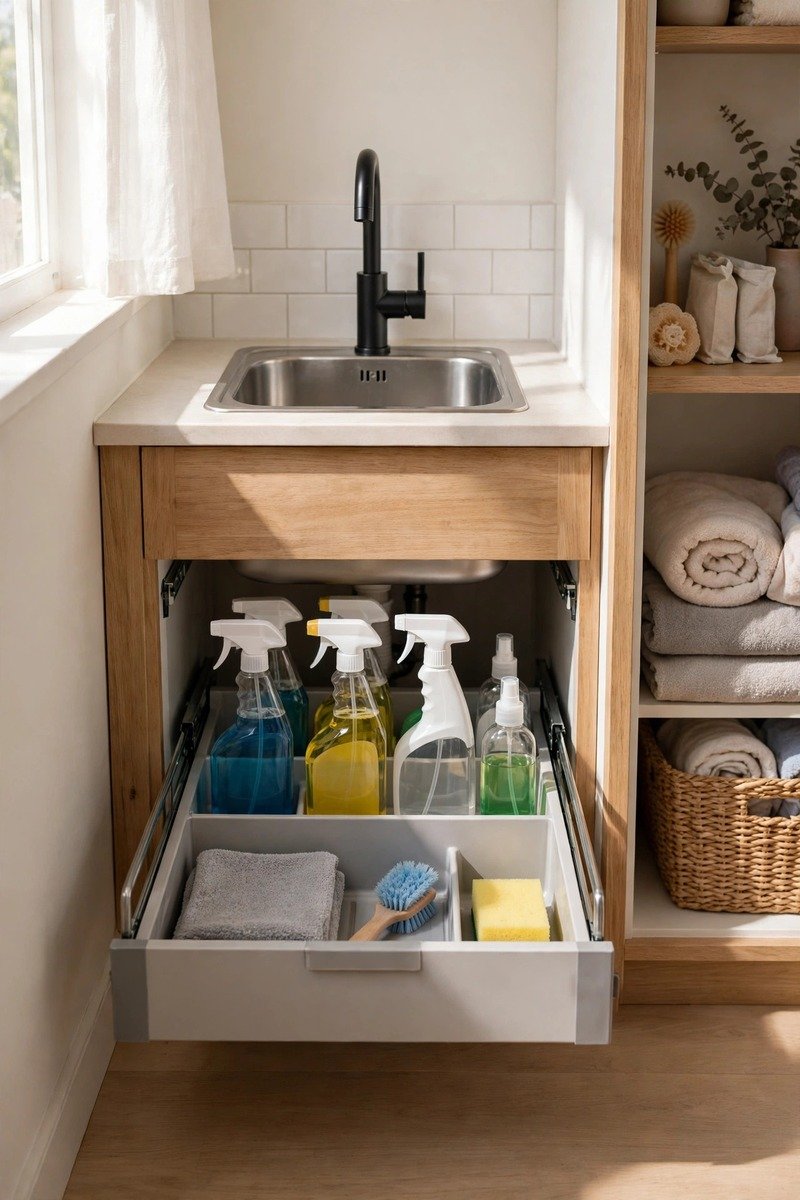
12. Add a Pull Out Caddy Under the Sink
The space under a small laundry sink is perfect for a pull out caddy. It holds cleaning sprays and stain sticks in one neat row, and you can pull it out to reach the back bottles.
Pro tip: Measure the cabinet opening before you buy, since most caddies need at least 11 inches of width. A two tier pull out caddy costs about 25 to 50 dollars.
Folding, Drying, and Ironing in Tight Spots
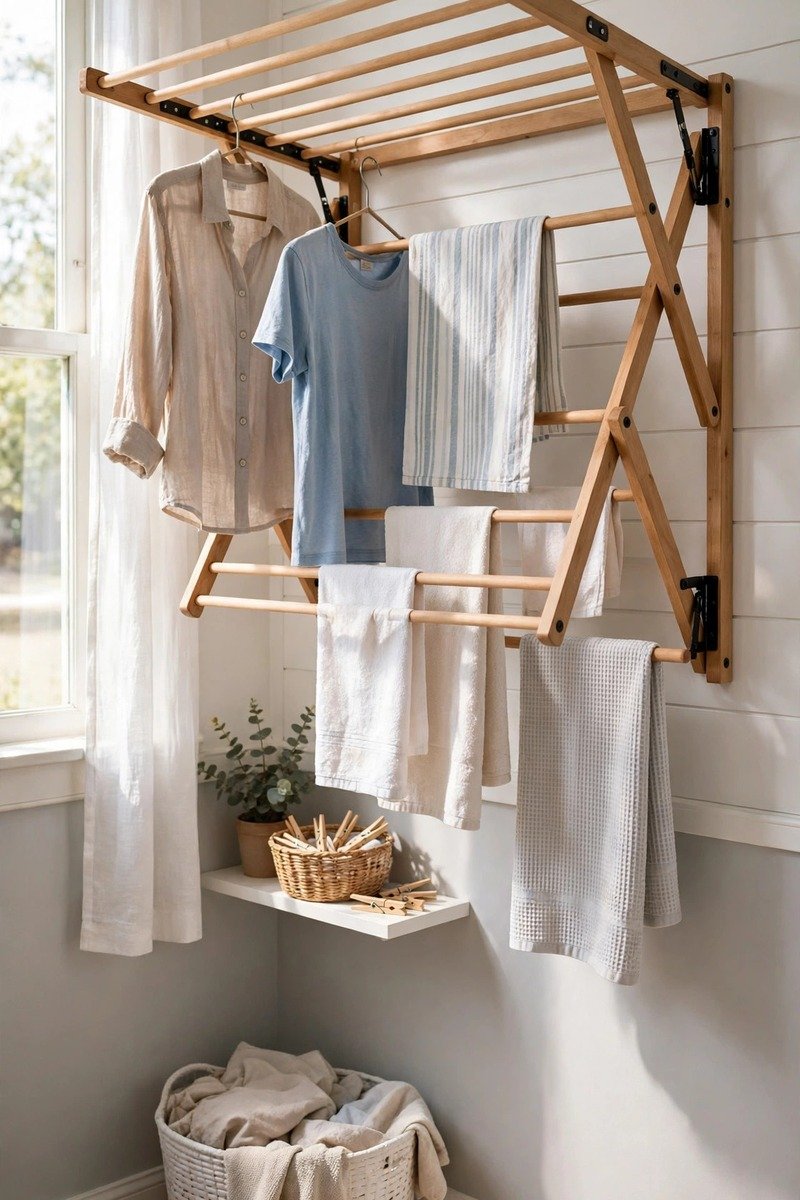
13. Install a Fold Down Drying Rack
A fold down drying rack opens when you need it and folds flat against the wall when you do not. It gives you drying space for delicates without a floor rack.
Pro tip: Mount the rack 48 to 60 inches from the floor, near the washer. A wood fold down rack costs about 30 to 70 dollars, and it should hold at least 15 pounds.
14. Hang a Wall Mounted Drying Rod
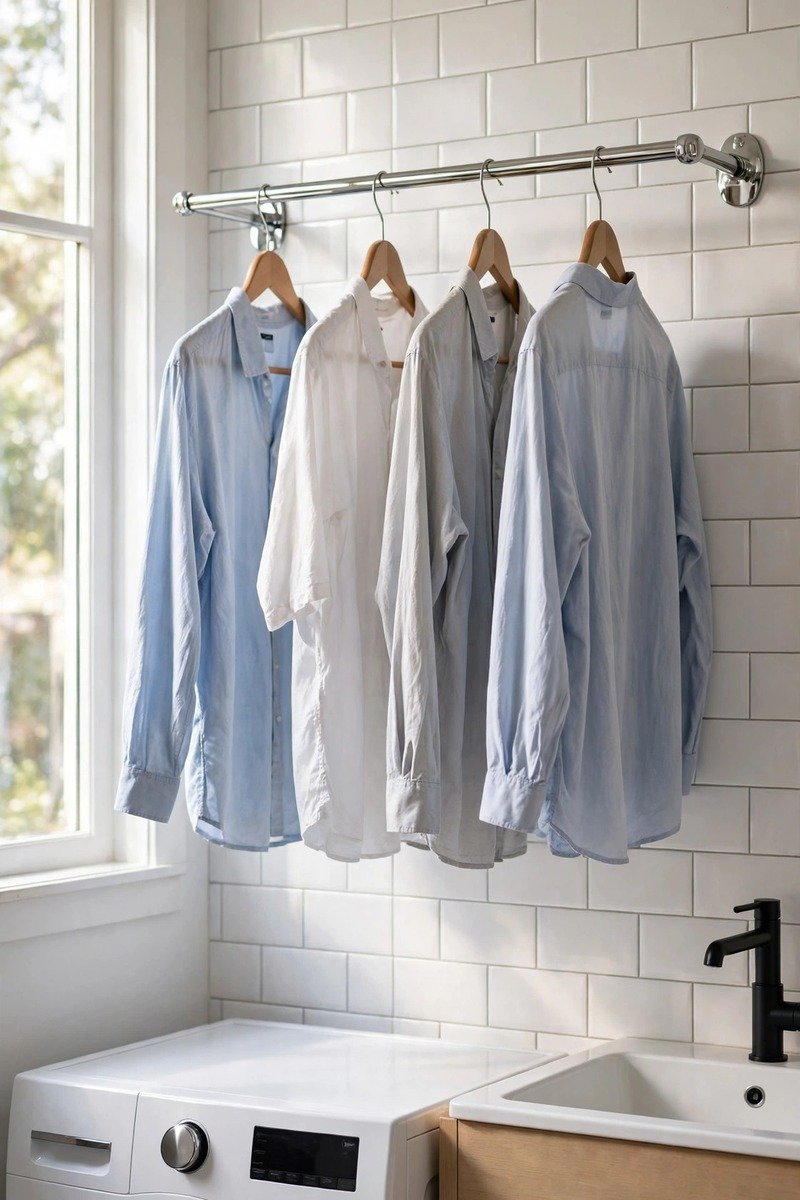
A single sturdy rod gives you a permanent spot for hang dry clothes. It fits between two walls, or it pulls out from under a shelf.
Pro tip: Mount the rod 60 to 66 inches from the floor so shirts hang clear of the counter below. A 24 inch chrome rod costs about 15 to 30 dollars, and fix it into studs.
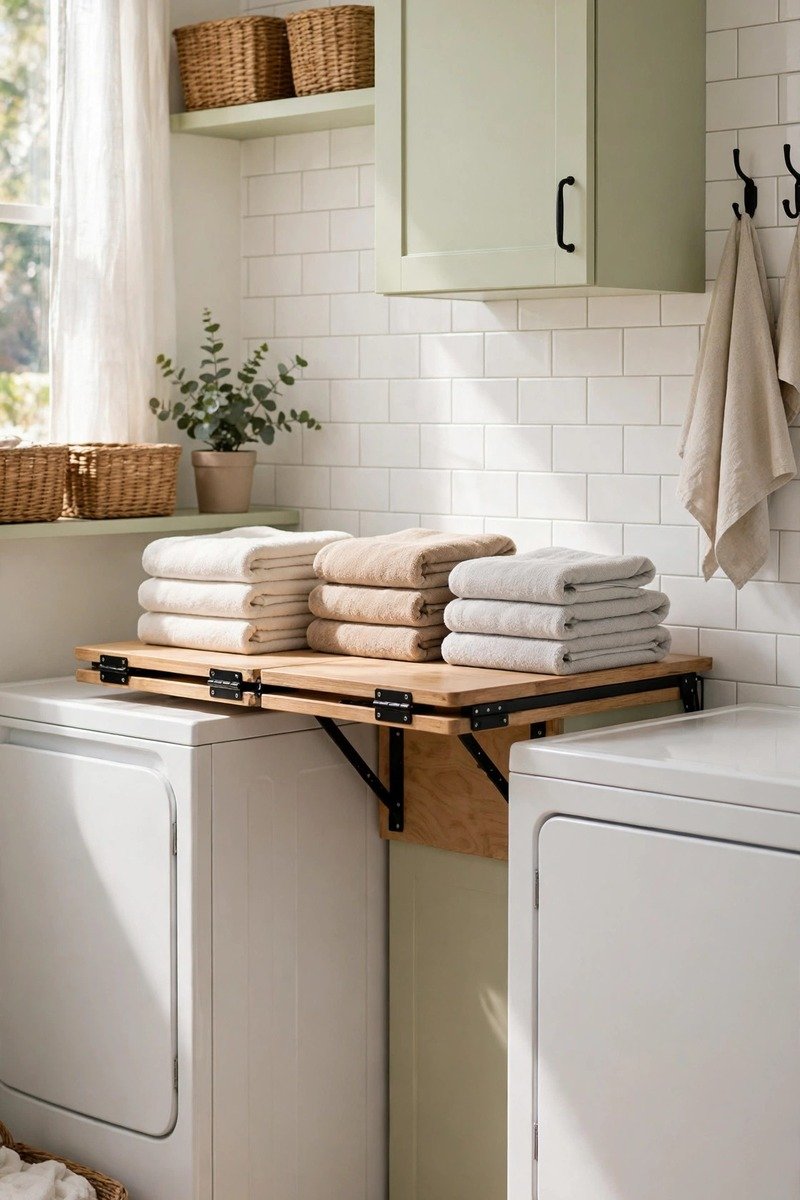
15. Add a Fold Away Counter That Doubles as a Bench
A fold away counter mounts to the wall and drops down into a full folding surface when you need it. When it folds up, it looks like a slim bench.
Pro tip: A 24 by 30 inch fold away counter costs about 60 to 140 dollars. Use a folding bracket rated for at least 50 pounds, and keep the height at about 36 inches.
16. Mount a Wall Ironing Board
A wall mounted ironing board folds down from a cabinet or a wall panel, so you never need floor space for a full size board. It hides away when you finish.
Pro tip: A wall mounted ironing board costs about 80 to 180 dollars. Mount it near an outlet, about 36 inches from the floor when open.

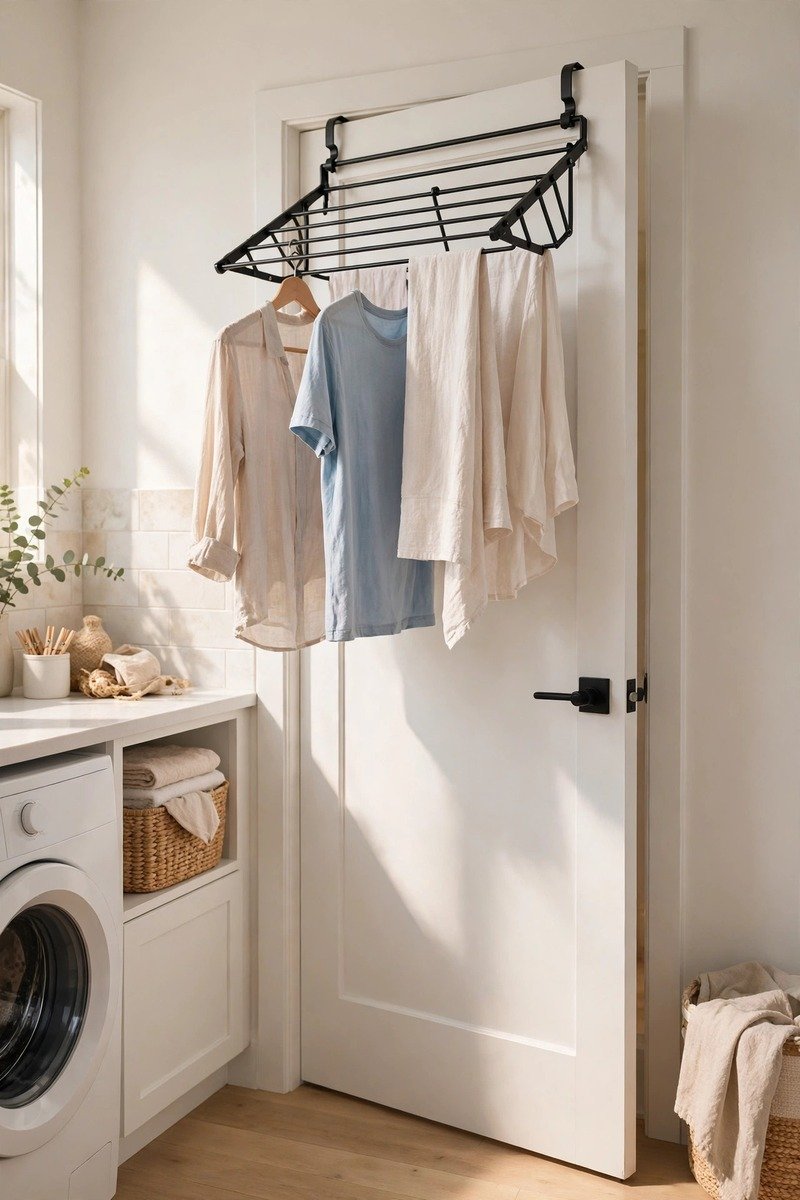
17. Use an Over Door Drying Rack
An over door drying rack hooks over the laundry room door and adds drying space with no drilling at all. It suits renters and tiny rooms.
Pro tip: An over door rack costs about 15 to 35 dollars and adds about 3 meters of drying line. Use it for light items only.
18. Fit a Small Corner Sink
A small corner sink gives you a spot to soak stains and rinse delicates without taking up a whole wall. It fits in a corner that would otherwise stay empty.
Pro tip: A compact corner sink costs about 80 to 200 dollars, plus 100 to 250 dollars for a plumber if the pipes are not already there. Pick a deep basin, at least 10 inches deep.

Style, Color, and Light in a Small Room
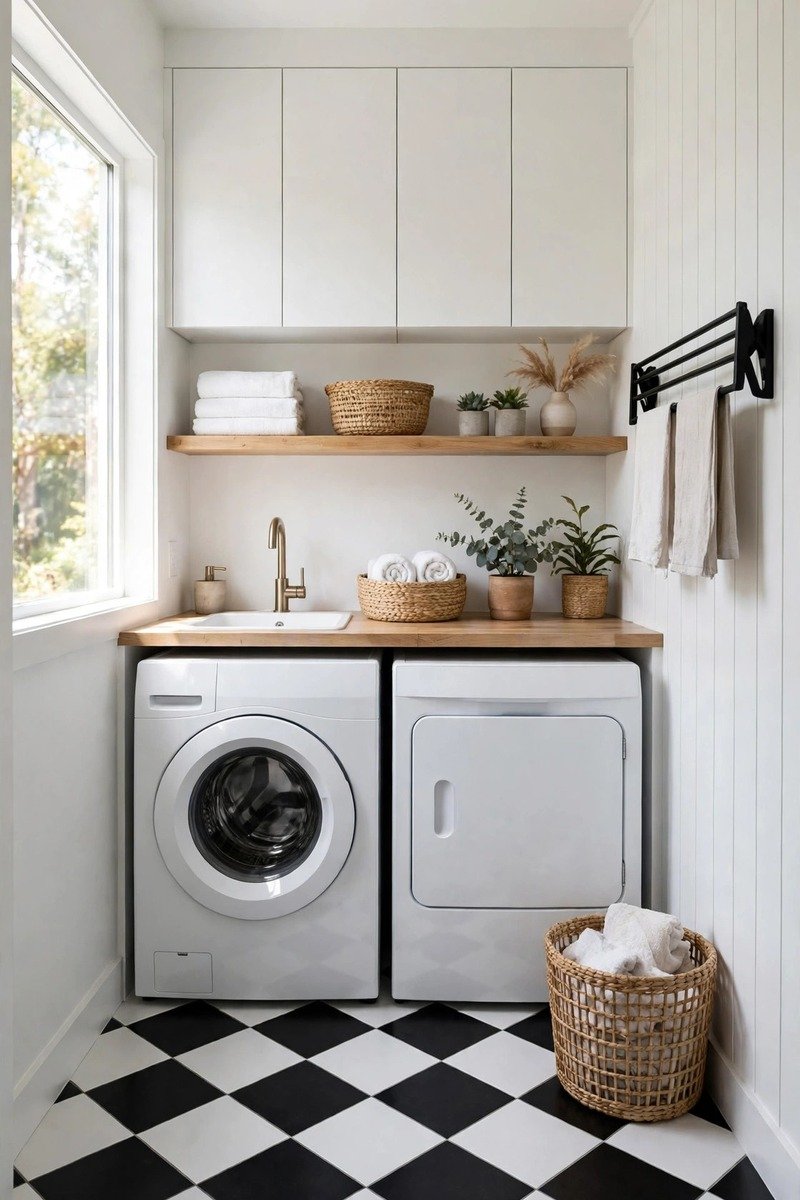
19. Lay a Bold Tile Floor
A patterned or checkerboard tile floor becomes the main feature of a small laundry room, since the walls stay busy with machines and shelves. It adds style and is easy to clean.
Pro tip: A small laundry floor is often 20 to 30 square feet, so tile costs about 100 to 300 dollars in total. Pick a slip resistant finish, and seal the grout.
20. Paint the Walls Light and Bright
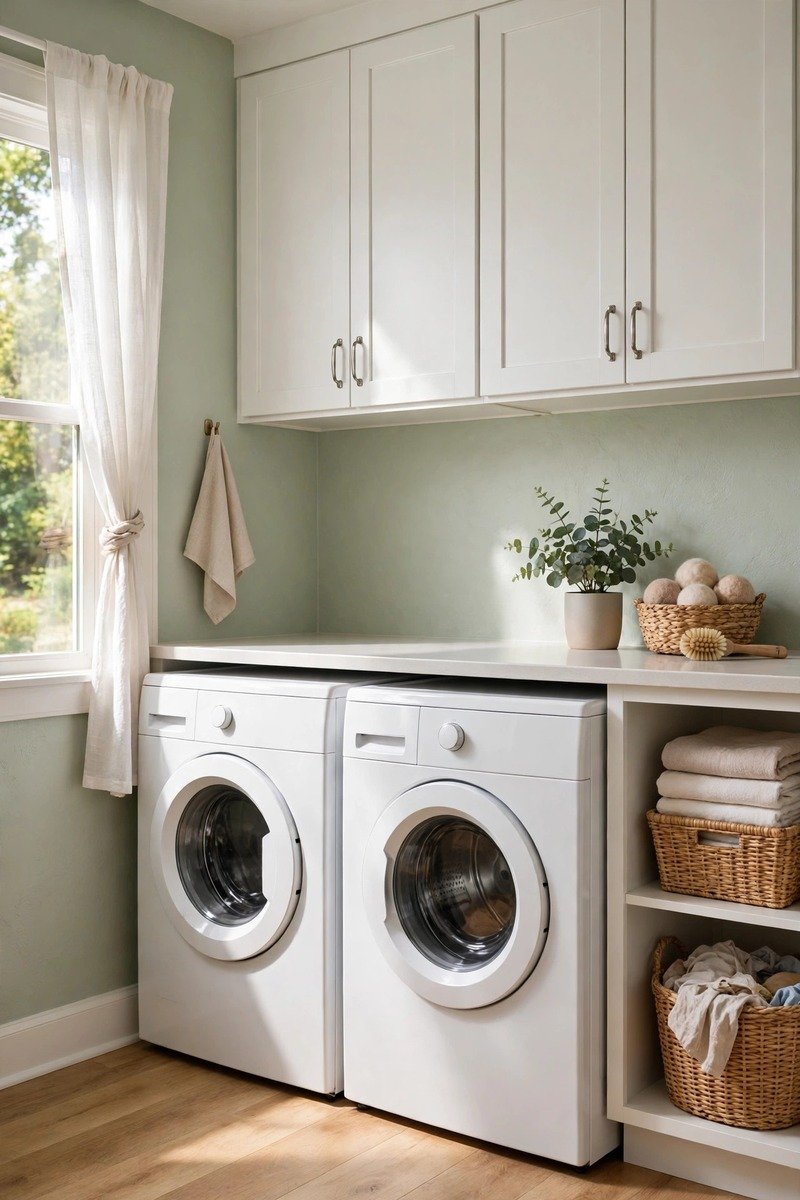
Light paint makes a small laundry room feel bigger and cleaner. Soft white, pale sage, or light blue bounce the light around, while a darker color on one wall adds depth.
Pro tip: Use moisture resistant paint in a satin finish so it wipes clean. One liter covers about 10 square meters, and two coats take about 3 to 4 hours.
21. Use Glass Jars and Labels on Open Shelves
Glass jars filled with detergent pods and clothespins look neat and make it easy to see when supplies run low. Small labels keep every jar in its place.
Pro tip: A set of three glass jars costs about 15 to 25 dollars. Label the lids, not the fronts, and keep pods on a high shelf away from small children.

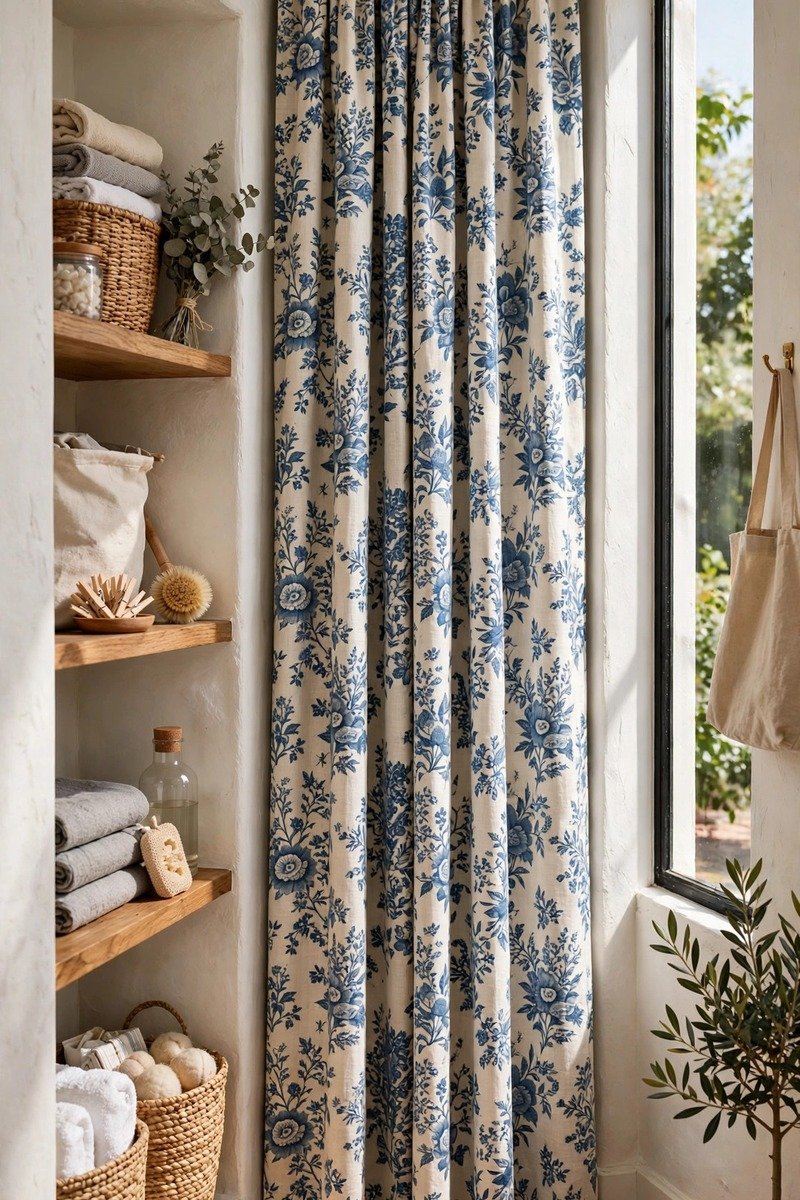
22. Hang a Patterned Curtain Instead of a Door
A patterned curtain can replace a cabinet door or a closet door in a tiny laundry nook. It softens the hard edges and adds color, and it costs far less than a new door.
Pro tip: A washable curtain costs about 15 to 35 dollars, plus 10 to 20 dollars for a tension rod. Pick a fabric that washes well, since these curtains pick up dust fast.
23. Add Bright Light and a Mirror
Good light makes a small laundry room feel twice as big. A bright ceiling light plus a small mirror bounces light into dark corners and helps you see stains clearly.
Pro tip: Use a daylight LED bulb of about 4000K for true colors. A small mirror costs about 20 to 40 dollars, and hang it opposite the light source.

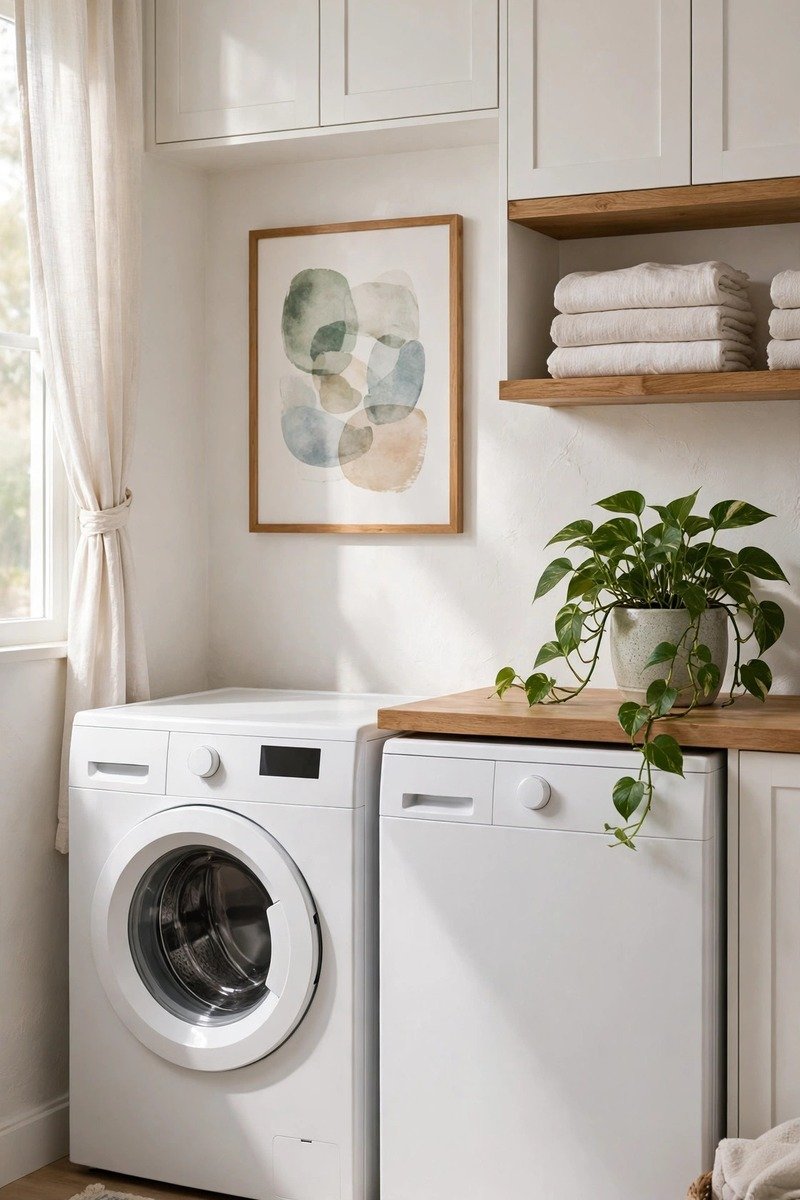
24. Finish With a Plant, Art, and a Rug
A small plant, one framed print, and a washable rug give a tiny laundry room a finished look. These small touches cost little, but they make laundry day feel less like a chore. For more small space storage ideas that pair well with this room, see our small bathroom organization ideas as a different guide.
Pro tip: Pick a low light plant like pothos, since laundry rooms often have small windows. A small rug costs about 15 to 30 dollars, and pick a washable one.
Machine Size and Door Swing First
Measure the machines and the door before you plan anything else. A standard washer is about 27 inches wide and 27 inches deep, and a stacked pair needs about 30 inches of width and 76 inches of height. Measure the door swing, because a door that opens into the room steals about 30 inches of floor, and a door that swings out gives the room back. If the door swings in, consider a sliding door or a curtain, because a small laundry room cannot spare the swing space. Small laundry room ideas work best when the machines and the door are measured first, because a room planned around the wrong machine size is rebuilt, not restyled.
Go Vertical: Shelves, Rods and Wall Storage
A small laundry room has more wall than floor, so use the walls. Hang shelves above the machines, about 12 inches deep, and keep the bottom shelf at least 18 inches above the machine lids, so the lids open fully. Hang a drying rod under a shelf, about 24 inches long, for shirts on hangers, because a rod uses air space, not floor space. Use wall mounted baskets for detergent and supplies, and keep the heaviest items on the lowest shelf, because a heavy bottle falling from a high shelf is a hazard. Check the wall fixings before you load a shelf, because a shelf in plasterboard needs proper anchors, and a shelf that pulls out of the wall drops everything on the machines.
Folding and Drying Without Floor Space
A small laundry room has no room for a drying rack on the floor, so fold and dry on the wall. Fit a fold down table on the wall opposite the machines, about 24 by 18 inches, and fold it up when it is not in use, because a table that folds away gives the floor back. Use a wall mounted drying rack that folds flat, about 30 inches wide, for delicates, and hang it where air moves, near the door or a vent. Keep a small basket for clean laundry on the counter, and fold straight from the machine, because laundry folded at once is put away, and laundry left in a pile is folded never. Dry one load at a time, because two loads drying at once fill the room with damp air.
Budget for a Small Laundry Refresh
Under 50 dollars: a shelf, a drying rod, and a set of baskets. From 50 to 200 dollars: add a fold down table, a wall mounted drying rack, and matching containers. Over 200 dollars: add a new set of shelves, a countertop over front load machines, and a rolling cart for the gap between machines. As a typical range, a fold down wall table costs about 40 to 100 dollars, and a wall mounted drying rack costs about 25 to 60 dollars. Buy the shelves first, because wall storage frees the counter, and a free counter is what makes a small laundry room work. Keep the floor clear every night, because a laundry room with a clear floor feels twice as big.
Common Mistakes to Avoid
- Blocking the machine doors. Leave room for the washer and dryer doors to open fully.
- Skipping ventilation. A small laundry room traps heat and moisture, so keep a vent clear.
- Using deep shelves above top load machines. Deep shelves block the lid, so use shallow shelves set higher up.
- Buying storage before measuring. Measure every gap and wall first, since a cart or cabinet that is one inch too wide wastes money.
- Forgetting a folding spot. Without a counter or a fold away surface, clean clothes pile up on the machines.
- Mixing too many patterns. Pick one bold pattern for the floor or the curtain, then keep the rest of the room plain.