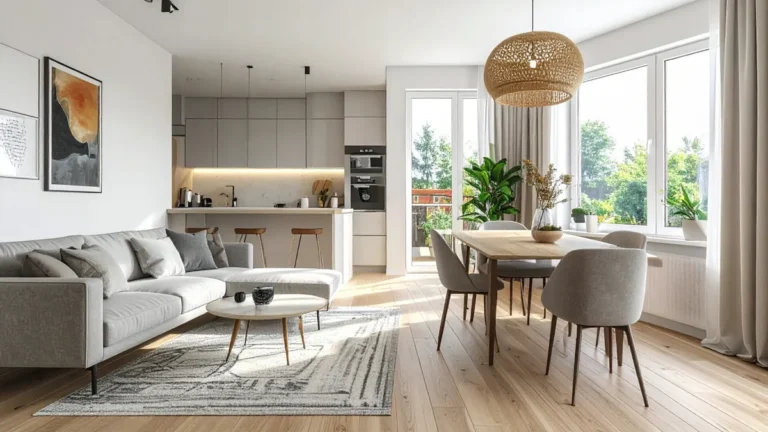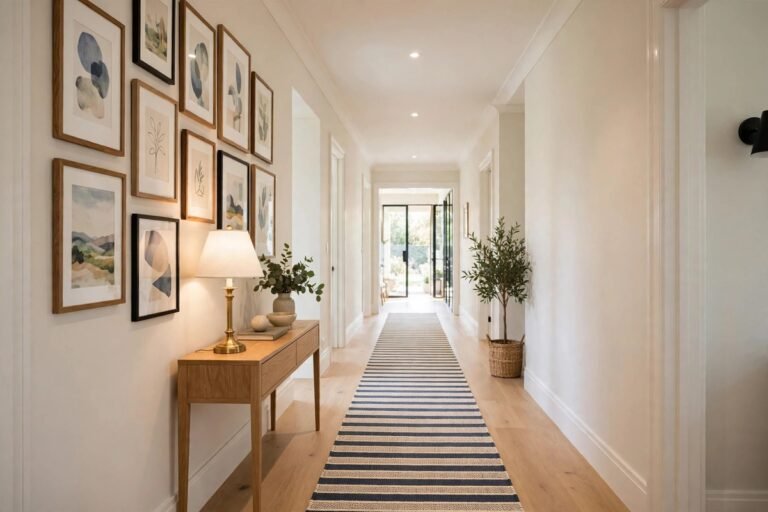

A neutral bedroom can look plain if you pick one pale colour and stop there. It can also feel calm and warm if you layer soft tones, soft cloth and warm wood in the right order.
This guide gives you 23 cozy neutral bedroom ideas that work in a small room or a large room. The palette stays in cream, beige, taupe, soft grey and white. This is not a seasonal room. For a warm autumn room, see our fall bedroom ideas as a separate guide.
Quick Picks
- Start with warm white walls. They bounce light and make cream bedding look soft, not stark.
- Pick one warm or cool base. Warm cream and beige feel soft. Soft grey and stone feel fresh.
- Use three textures on the bed. Smooth sheets, a woven quilt and a knit throw stop a pale bed from looking flat.
- Add warm light. Lamps with warm bulbs make beige and taupe look rich at night.
- Keep the floor soft. A large rug in oat or mushroom warms the room at once.
Did You Know?
Soft neutral colours can help a bedroom feel quiet because the eye has less contrast to sort out. That is why many calm rooms use only three or four close tones and let texture do the work.
Before You Start
- Test paint in morning light and at night before you buy a full can.
- Pick your bed base first. Walls, rug and curtains should sit close to that tone.
- Use light, mid and dark neutrals in the room. All pale tones can look washed out.
- Keep this room light. If you like a darker room, our dark boho bedroom ideas use a different palette.
- Clear one surface before you add new items. A calm room needs space to breathe.
Colour and Walls
1. Warm White Walls With Cream Bedding
Warm white walls are a safe base for a calm bedroom. They reflect light and they suit most wood tones.
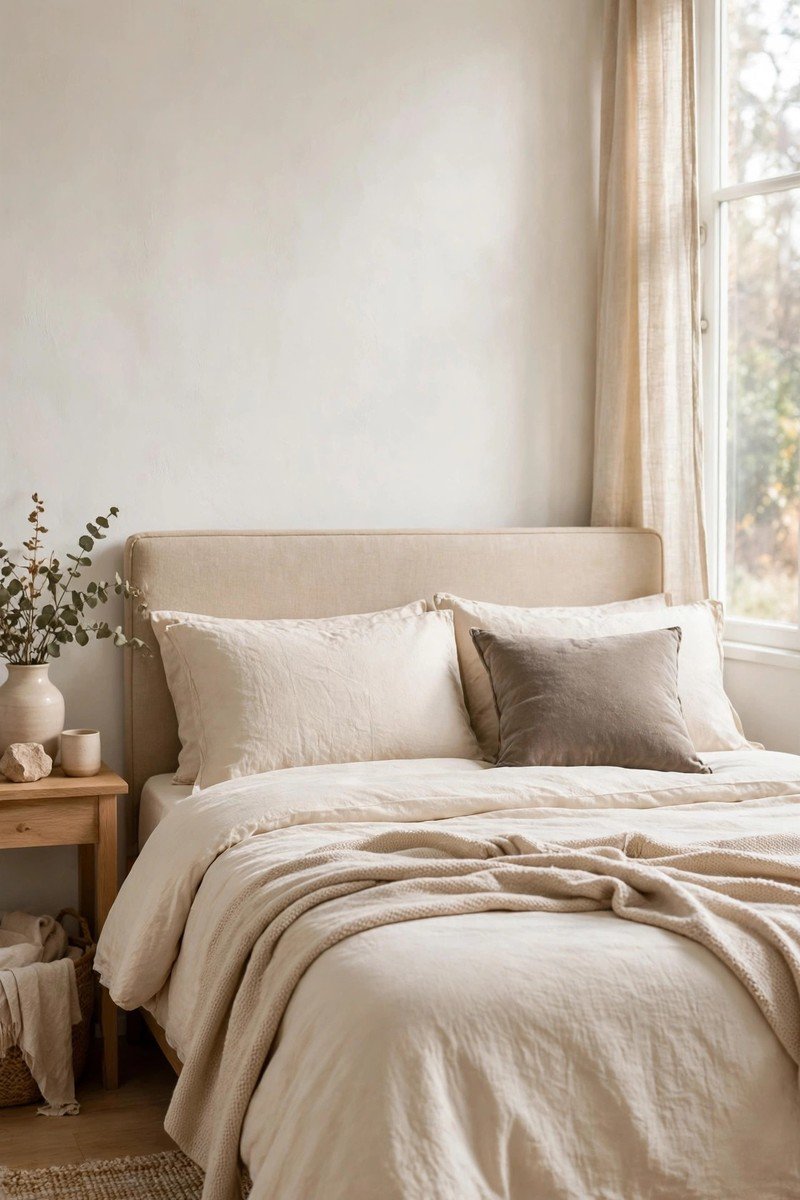
Pair them with cream sheets, a cream duvet and a beige throw. Add a taupe cushion so the bed has shape.
Pro tip: Pick a warm white, not a stark white. A stark white can look cold on a north facing wall. A sample pot costs about 5 to 8 dollars and saves a full repaint.
2. Greige Walls With Taupe Layers
Greige sits between grey and beige. It feels modern but it still feels warm.
Use greige on the walls and cream on the bed. Add taupe cushions and a light wood nightstand.
Pro tip: Test greige in daylight and lamplight. It can shift grey in cool light and beige in warm light. Live with two samples for two days before you choose.
3. Soft Beige Layered From Light to Mid Tone
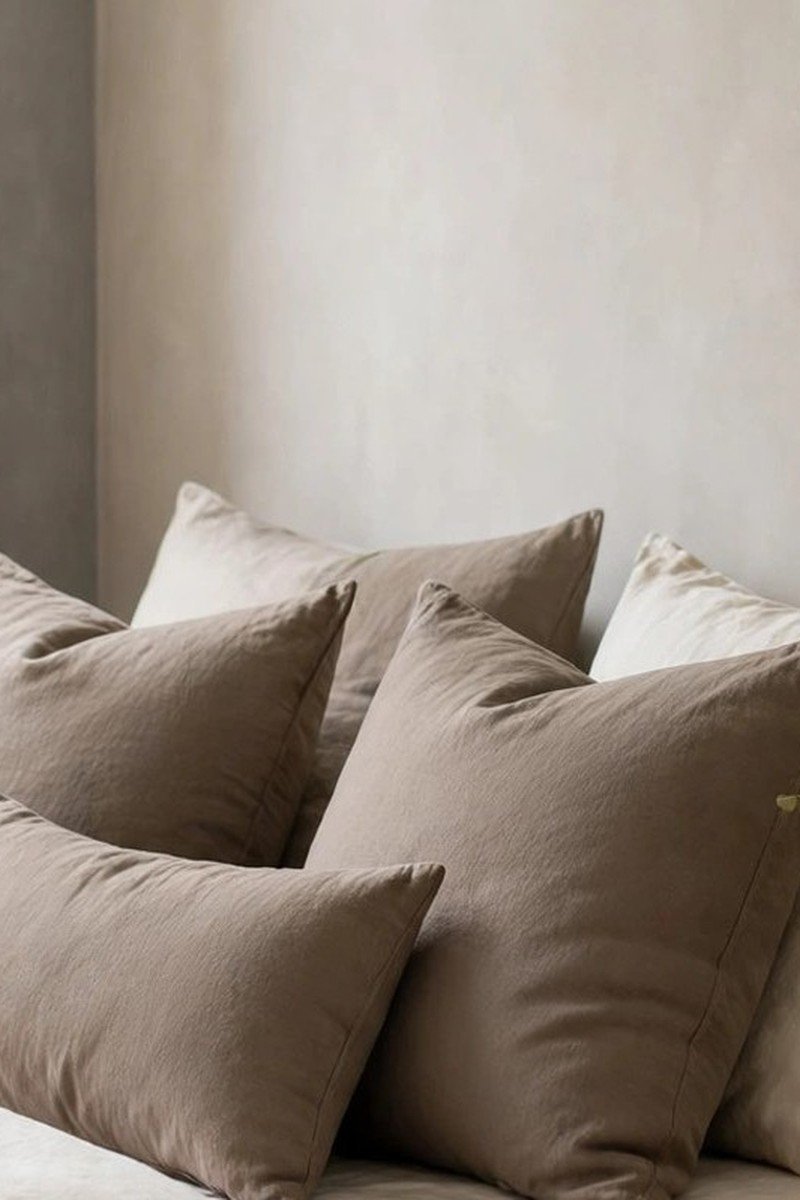
Beige works best in layers. One beige alone can look dull. Three close beiges look rich.
Use pale sand on the walls, cream sheets and a mid beige throw. Add a light wood frame and a woven rug.
Pro tip: Limit the palette to three beiges. Add a fourth only in a small item, like a vase or a book cover, so the room stays tidy.
4. Soft Grey Walls With Cream and Wood
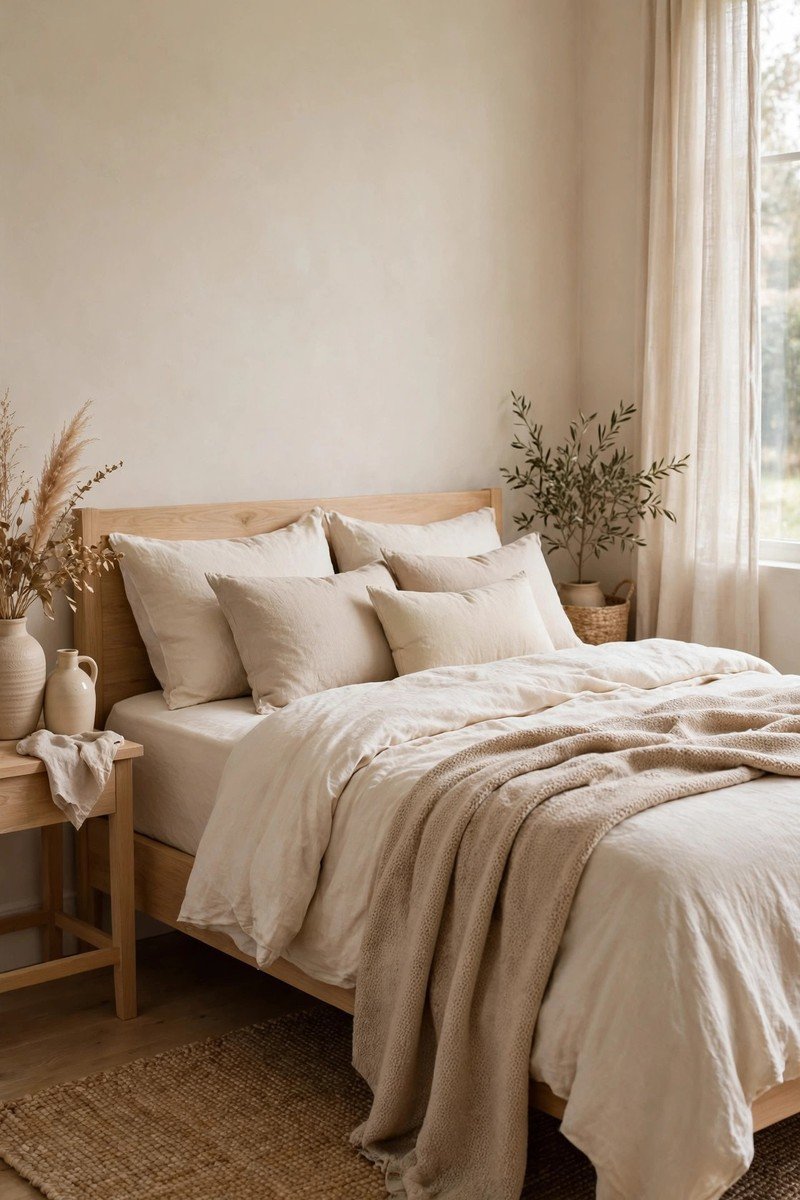
Soft grey can feel calm if you warm it up. Pair it with cream and wood and it will not feel cold.
Use a chalky grey on the walls, cream bedding and a light oak nightstand. Add a taupe throw to link the grey and the cream.
Pro tip: Avoid a blue grey if your room gets little sun. A warm grey with a beige base suits a dark room much better.
5. One Soft Sage Touch in a Neutral Room
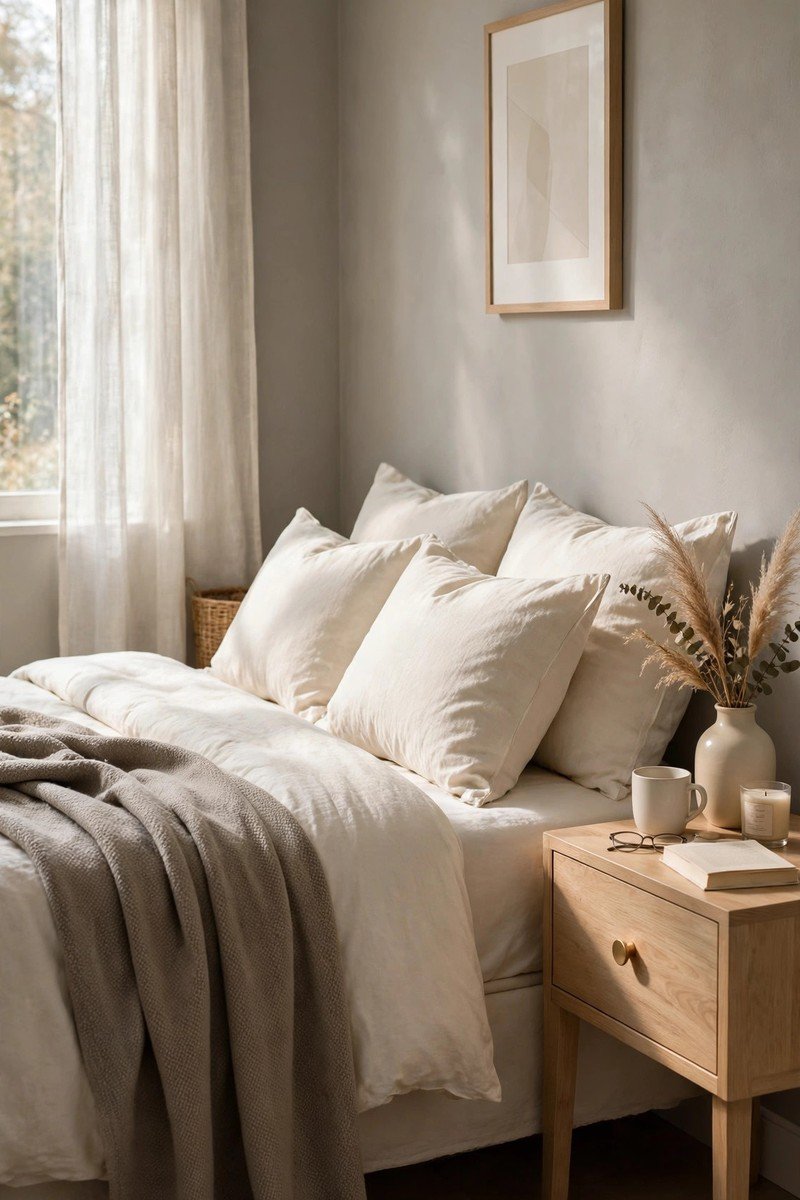
Sage is a muted green that acts like a neutral. A small touch adds life without breaking the calm.
Use one sage throw, two sage cushions or one plant in a pale pot. Keep the rest of the room in cream, beige and taupe.
Pro tip: Keep sage to about one tenth of the room. If you add sage curtains and sage bedding and sage art, the room stops being neutral.
Bed and Bedding
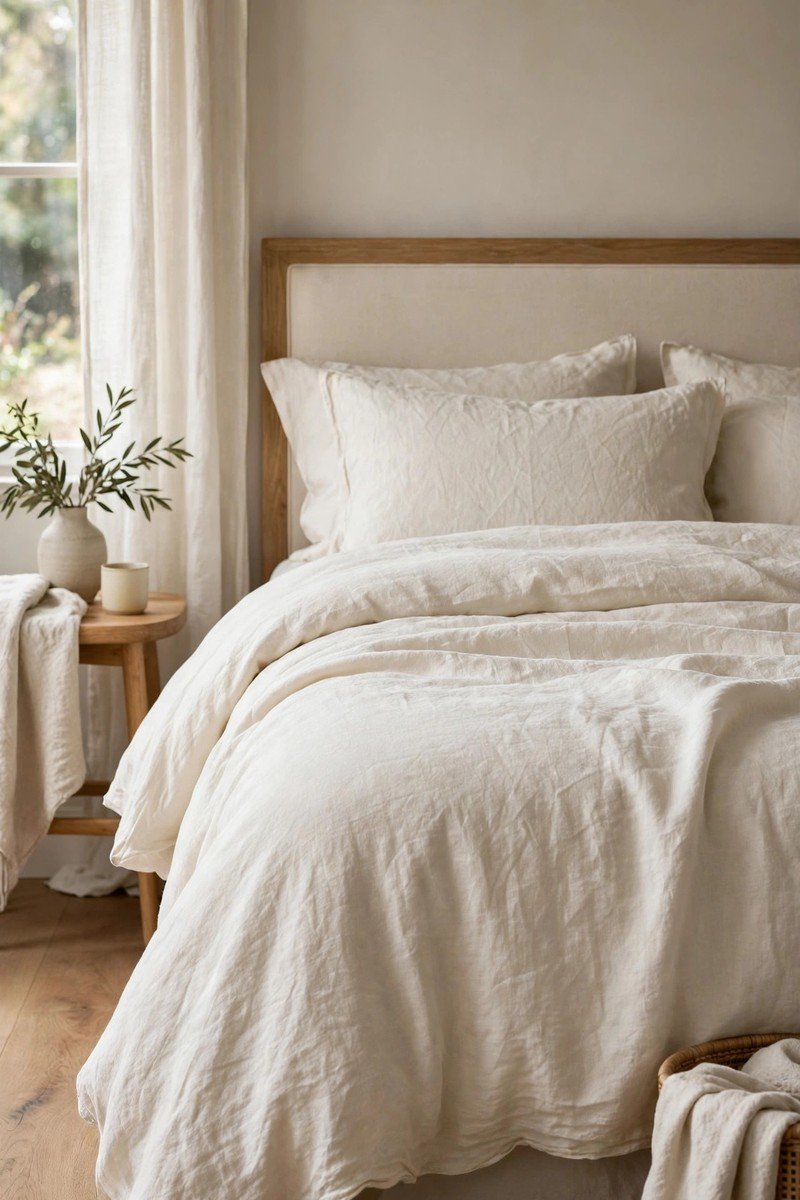
6. Linen Bedding in Cream
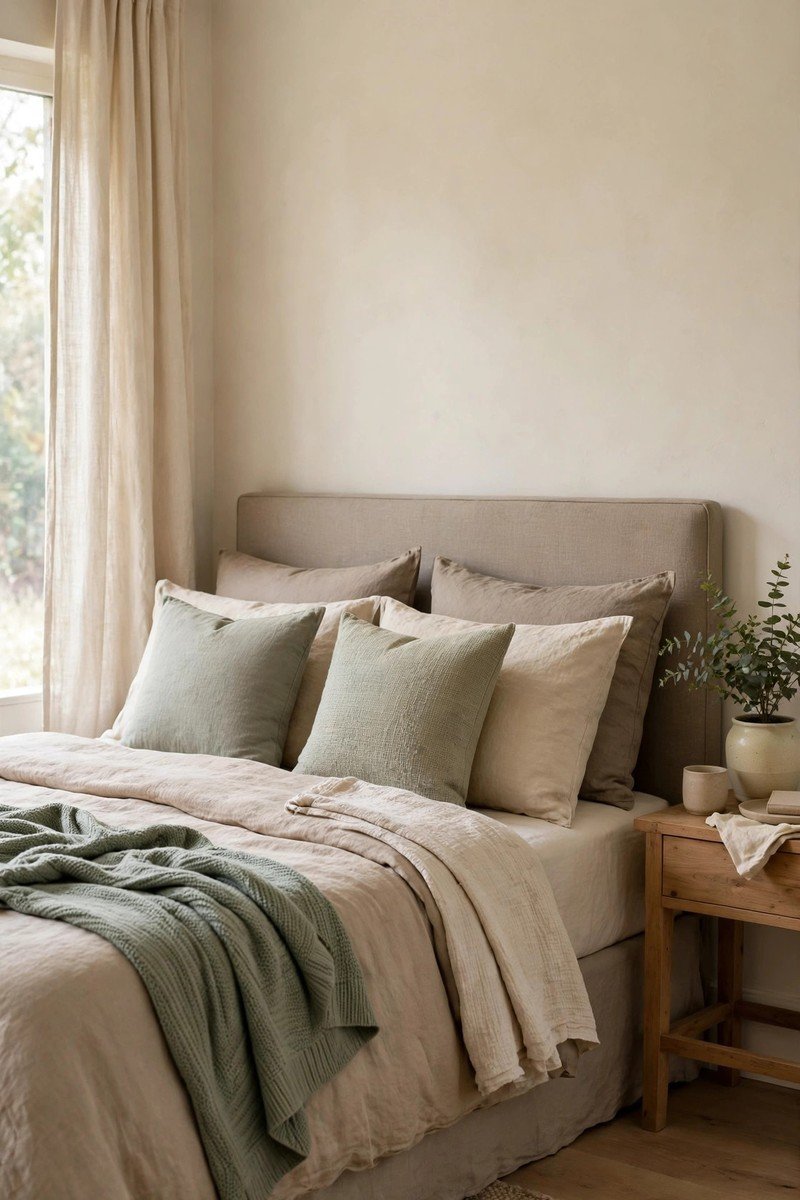
Washed linen looks relaxed from day one.
Pick a cream or sand linen duvet cover and plain linen pillowcases. Let the cloth wrinkle a little.
Pro tip: A washed linen duvet set costs about 80 to 140 dollars. Wash it on a gentle cycle and skip the iron so the texture stays.
7. Layered Bedding in Three Textures
A calm bed needs texture more than colour. Three textures give the eye something to rest on.
Start with smooth cotton sheets, add a woven quilt, and finish with a knit throw at the foot of the bed. Keep all three in cream, beige or taupe.
Pro tip: Use one smooth layer, one woven layer and one knit layer. Two smooth layers look flat. Four thick layers look heavy and hard to make each morning.

8. Chunky Knit Throw at the Foot of the Bed
A chunky knit throw is the fastest way to make a pale bed feel warm.
Fold a cream or oatmeal knit throw across the lower third of the bed. Pair it with plain bedding so the knit stands out.
Pro tip: A good knit throw costs about 30 to 60 dollars. Pick cotton or wool, not thin acrylic, so it holds its shape after washing.

9. Upholstered Headboard in Boucle
A soft headboard makes the bed the focal point and it makes reading in bed much more comfy.
Pick a simple shape in cream or beige boucle, linen or cotton. Keep the frame low and plain.
Pro tip: A boucle headboard in queen size costs about 150 to 300 dollars. Vacuum it once a week with a soft brush head to keep dust out of the loops.
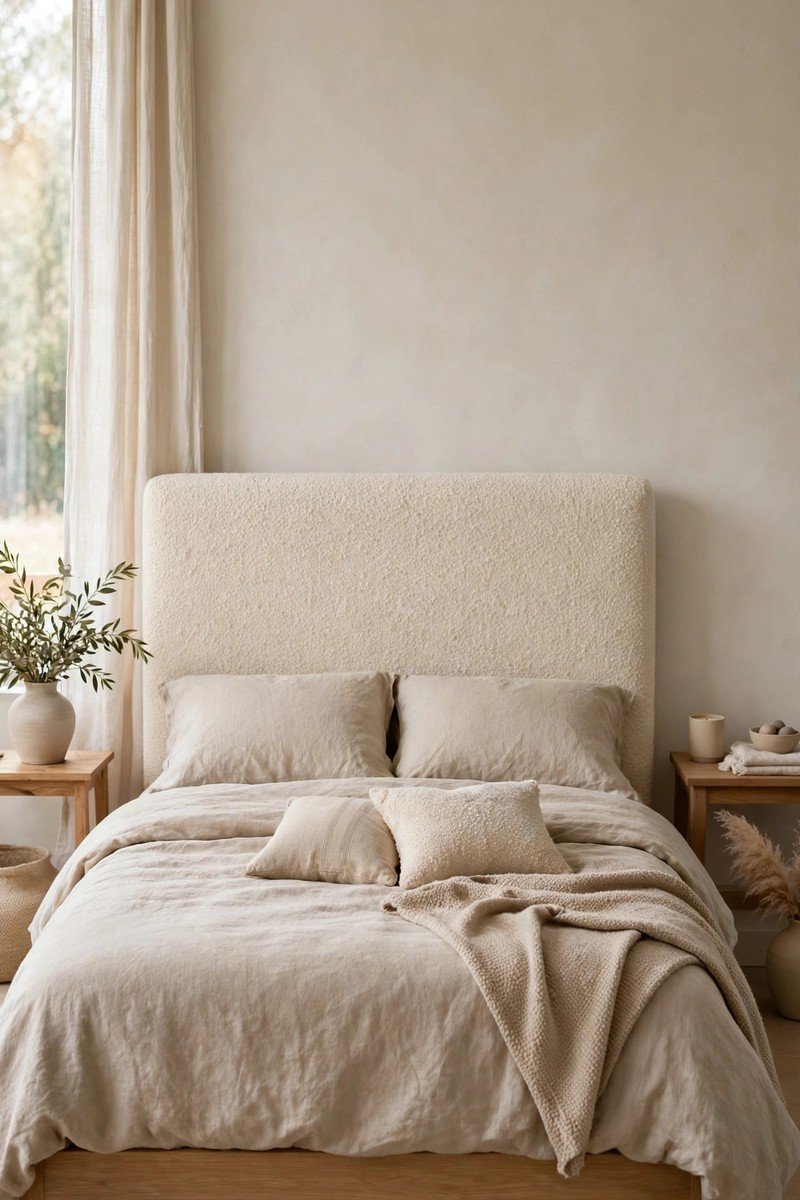
10. Pillows in Odd Numbers and Close Tones
Pillows look calm when the tones stay close. They look busy when each pillow fights for attention.
Use sleeping pillows at the back, two standard pillows in front and one small lumbar cushion in cream or taupe.
Pro tip: Use three or five pillows on the bed, not four. Odd numbers look relaxed. Keep pillow sizes mixed, with the largest at the back.
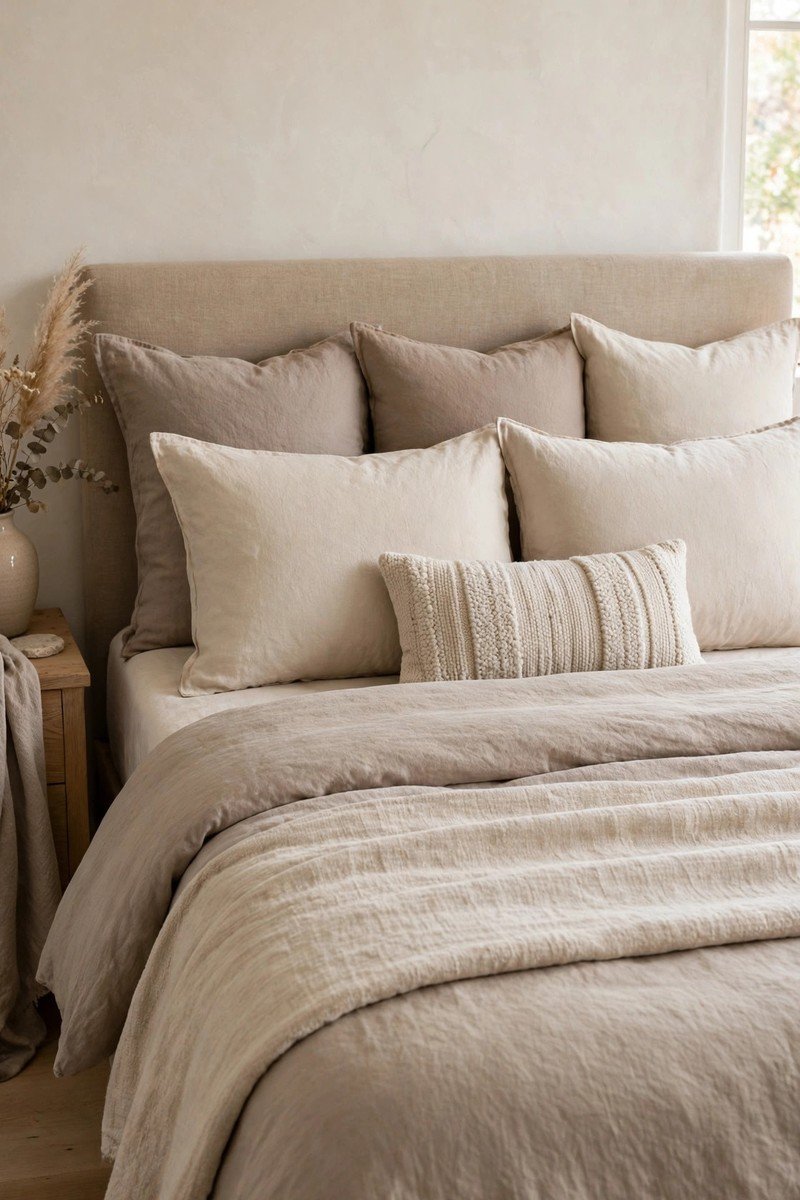
11. White Duvet With a Textured Coverlet
A white duvet can look fresh, but it can also look bare. A textured coverlet fixes that in seconds.
Fold a waffle or quilted coverlet in cream across the middle of the bed. Leave white duvet showing at the top and bottom.
Pro tip: A cotton waffle coverlet costs about 40 to 80 dollars. Wash it with the duvet so both age at the same rate and stay the same shade of white.

Furniture and Wood
12. Light Oak Bed Frame
Light oak warms a neutral room without adding colour. It also suits cream, beige and soft grey.
Pick a simple oak frame with clean lines and no heavy carving. Pair it with cream bedding and a jute or wool rug.
Pro tip: A solid oak queen frame costs about 300 to 700 dollars. Oil it once a year with a clear wood oil to keep the grain from drying out.

13. Rattan Touches for Warm Texture
Rattan adds a light, woven texture that suits a calm room. It feels natural and it does not add colour.
Try a rattan headboard, a woven pendant shade or a rattan tray on the dresser. Use one or two rattan items only.
Pro tip: A rattan headboard panel costs about 80 to 200 dollars. Dust it with a dry cloth and keep it out of direct sun so the weave does not dry and crack.
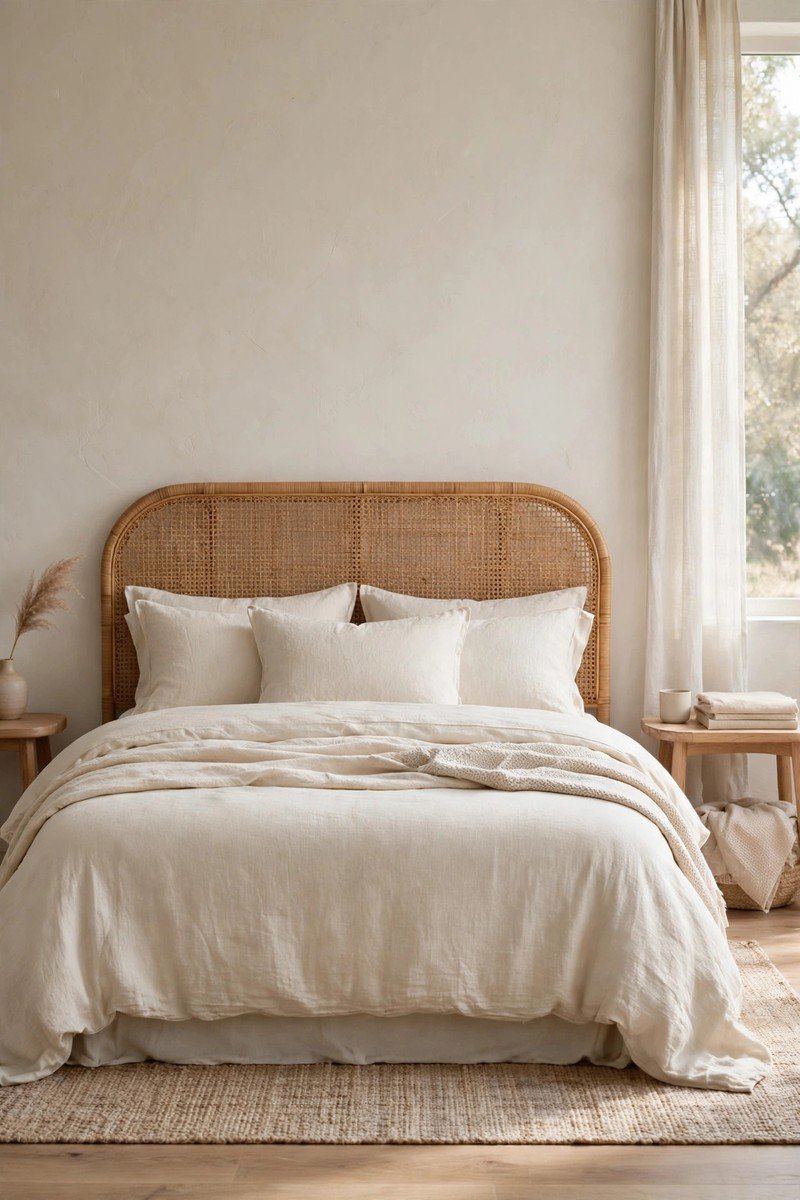
14. Low Platform Bed With Clean Lines
A low bed makes a bedroom feel open and calm. It also suits a simple neutral palette.
Use a low wood platform frame, plain cream bedding and one low nightstand on each side.
Pro tip: Leave at least 60 cm of clear floor on each side of a low bed. That space makes the room feel larger and it makes the bed easy to make.

15. Neutral Dresser in Light Oak or Whitewash
A large dresser can take over a small bedroom. A pale finish helps it blend in.
Pick light oak, whitewash or matte beige with a simple shape. For styling ideas, see our top of dresser decor ideas and keep the top to three items.
Pro tip: Keep dresser styling to a lamp, a small tray and one vase. More items on top make a calm room look cluttered fast.

Light, Windows and Floor
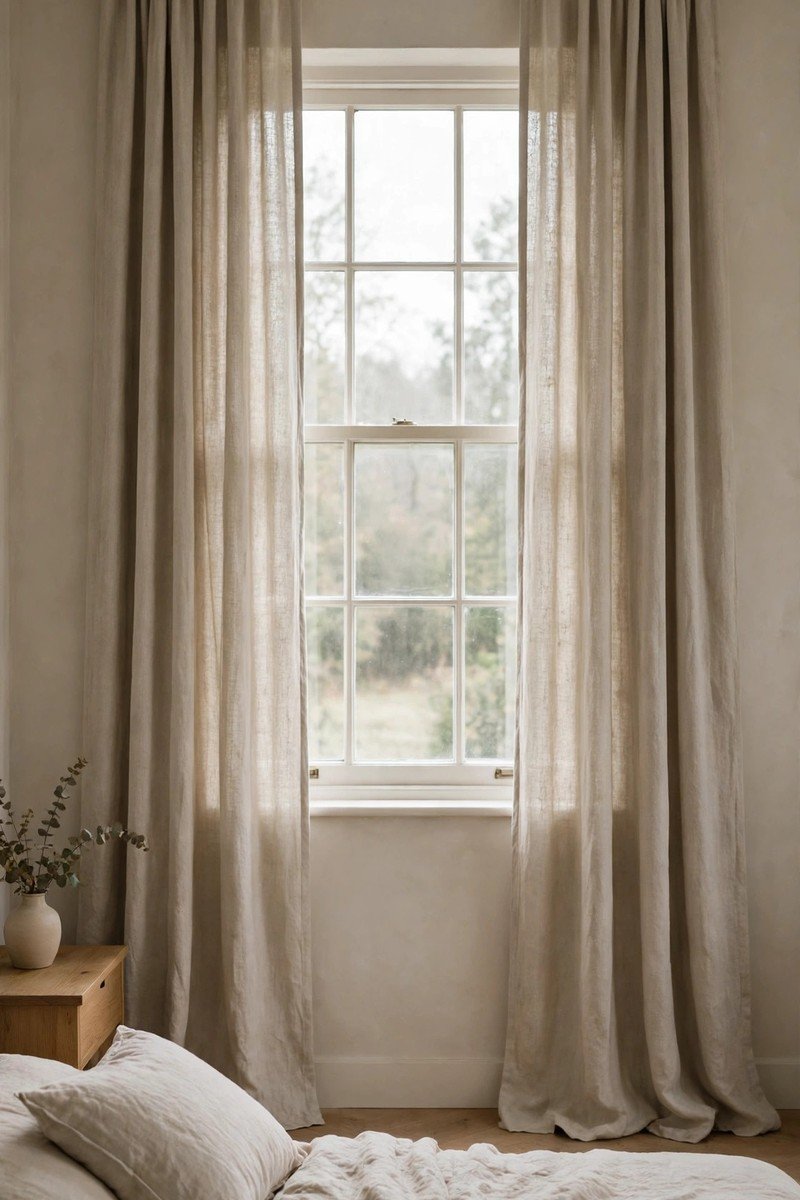
16. Floor Length Linen Curtains in Oatmeal
Long curtains soften a room and make the ceiling feel higher. Oatmeal linen keeps the light soft.
Hang the rod close to the ceiling and let the curtains fall to the floor. Use a plain weave with no bold pattern.
Pro tip: Buy curtains at least 15 cm wider than the window on each side. Narrow curtains look skimpy and they block less light at the edges.
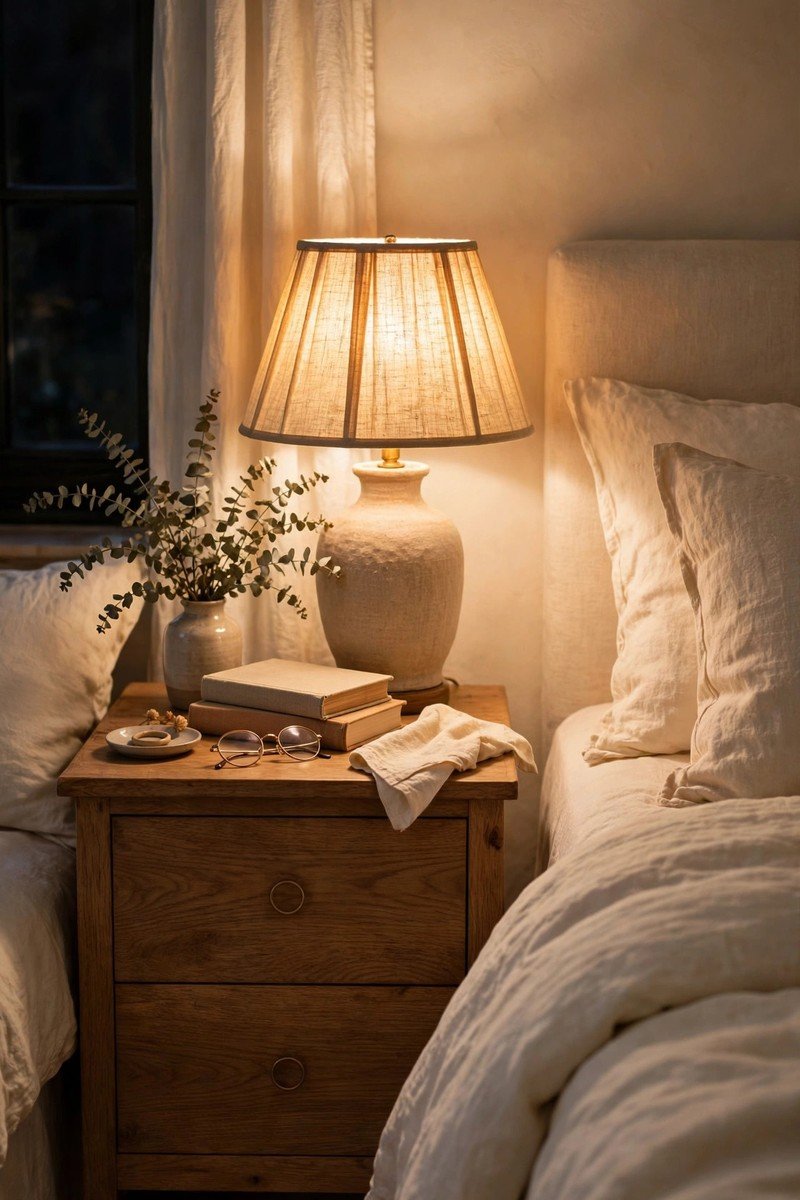
17. Warm Bedside Lamps for Night Light
Warm light is what makes beige and cream look rich after dark. Cool white light can make them look grey.
Use two matching lamps with linen or paper shades and warm bulbs near 2700K. Place one on each nightstand.
Pro tip: Put both lamps on dimmers if you can. Dim light at night helps you wind down and it costs about 10 to 20 dollars per dimmer plug.
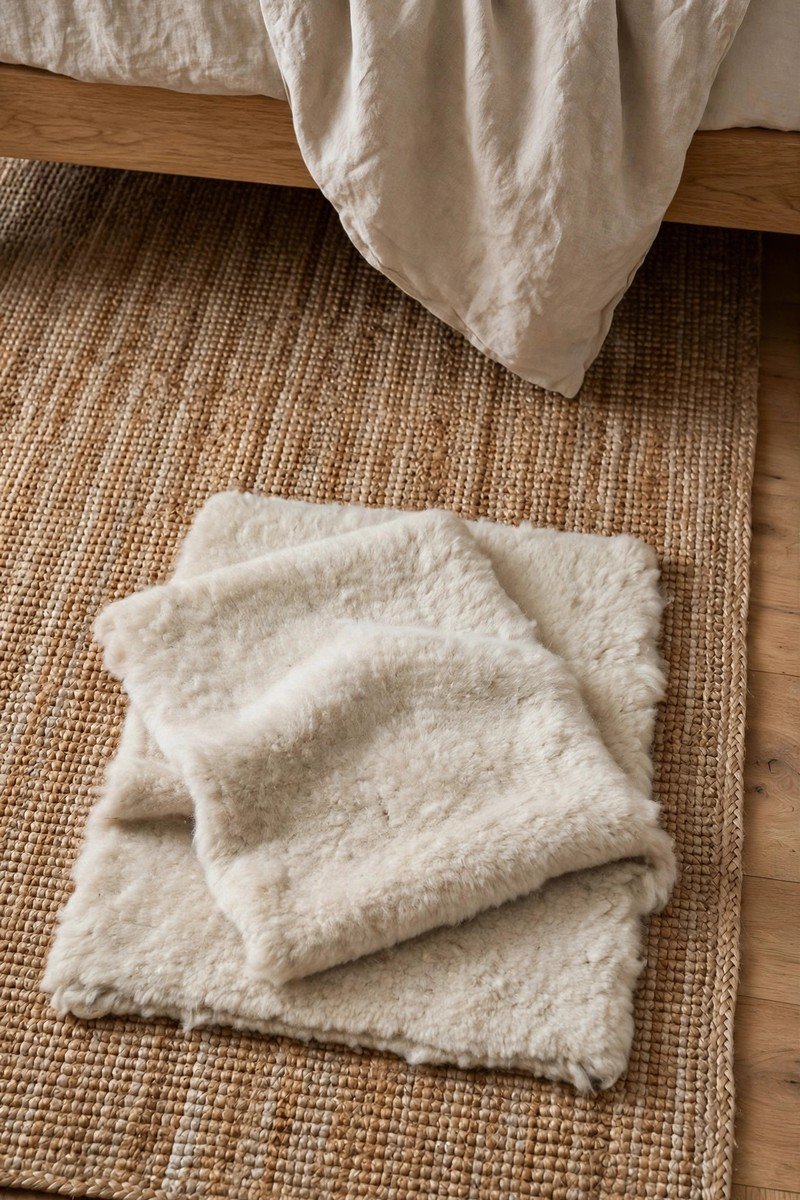
18. Layered Rugs in Jute and Wool
Two rugs can warm a hard floor better than one thin rug. The mix of jute and wool adds texture underfoot.
Start with a large flat jute rug under the bed. Add a smaller soft wool rug on top where you step out of bed.
Pro tip: The base rug should extend at least 45 cm past each side of the bed. A rug that is too small looks like a mat and it will slide around.
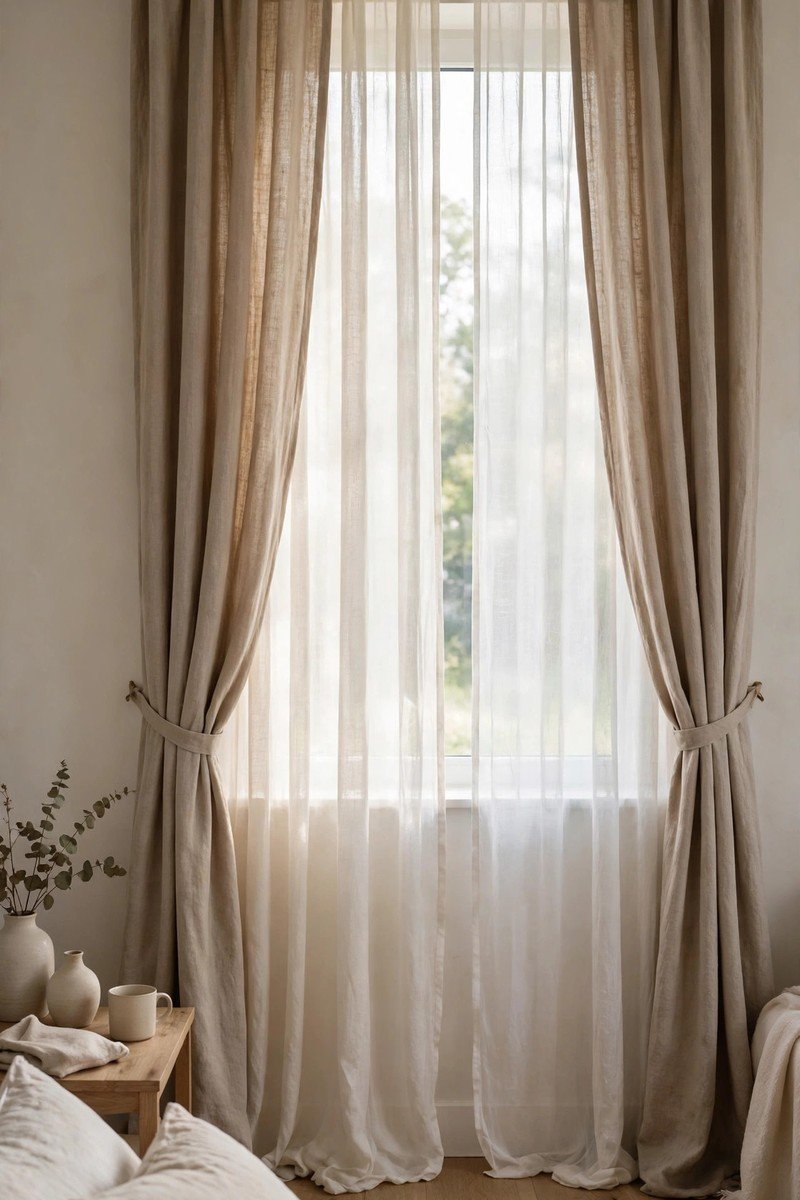
19. Sheer Curtains for Soft Daylight
Sheer curtains let light in while they soften the view from the window. They suit a calm room well.
Use white or ivory sheer panels behind your main curtains. They add privacy without darkening the room.
Pro tip: A pair of sheer panels costs about 20 to 40 dollars. Wash them twice a year so dust does not dull the white.
Small Details That Keep It Calm
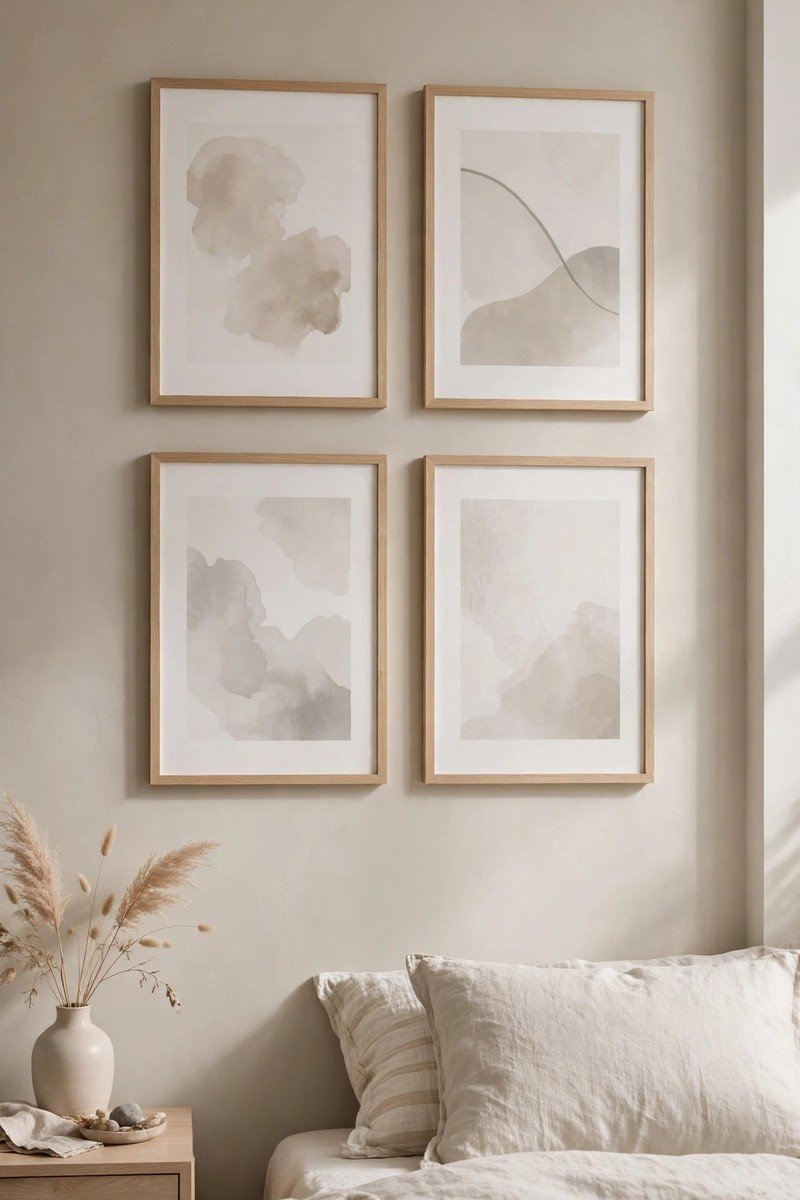
20. Simple Gallery Wall in Soft Tones
Art can add interest without adding colour. A soft toned gallery wall does that job well.
Pick three to five prints in beige, taupe, soft grey and white. Use simple frames in light wood, white or matte black.
Pro tip: Lay the frames on the floor first and test the layout. Leave 5 to 8 cm between frames for a relaxed but tidy look.
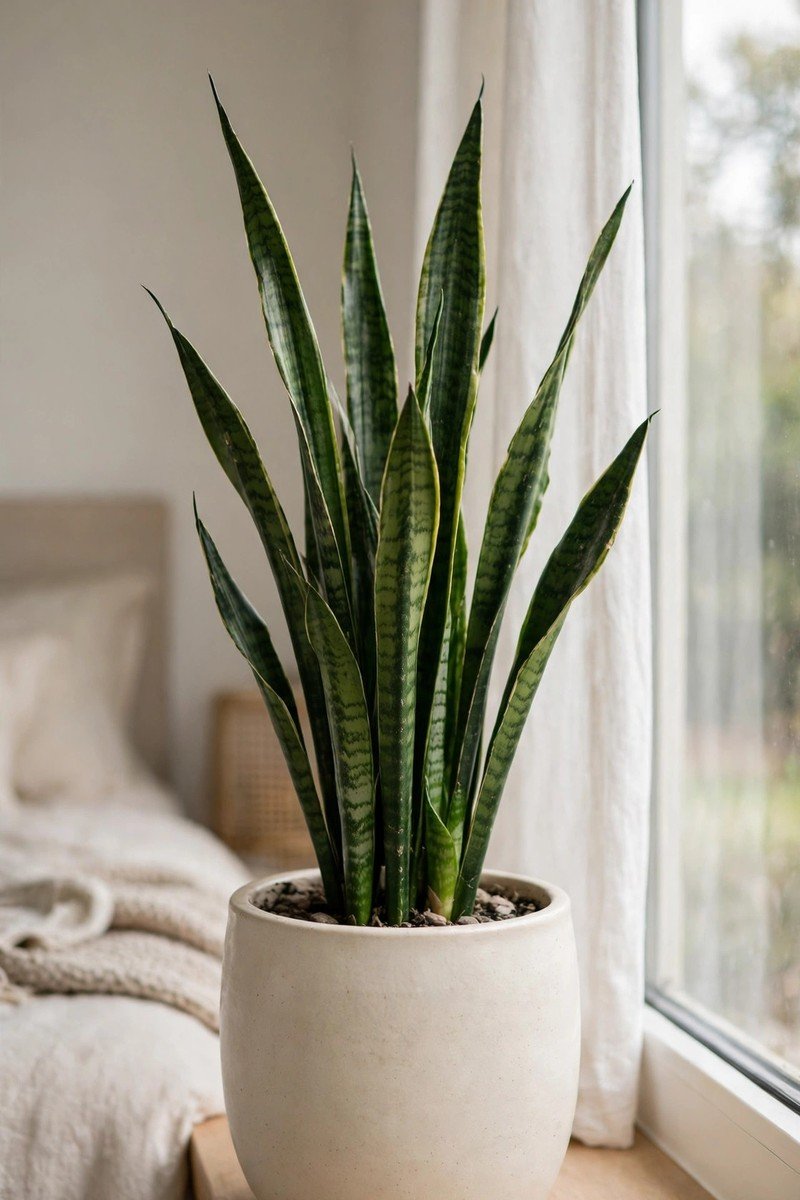
21. One Plant in a Pale Ceramic Pot
One plant adds life to a neutral room. Five plants can make it feel like a garden shop.
Pick an easy plant like a snake plant, a peace lily or a pothos. Put it in a cream or stone ceramic pot near the window.
Pro tip: Water most bedroom plants only when the top 3 cm of soil feels dry. Overwatering kills more houseplants than low light does.
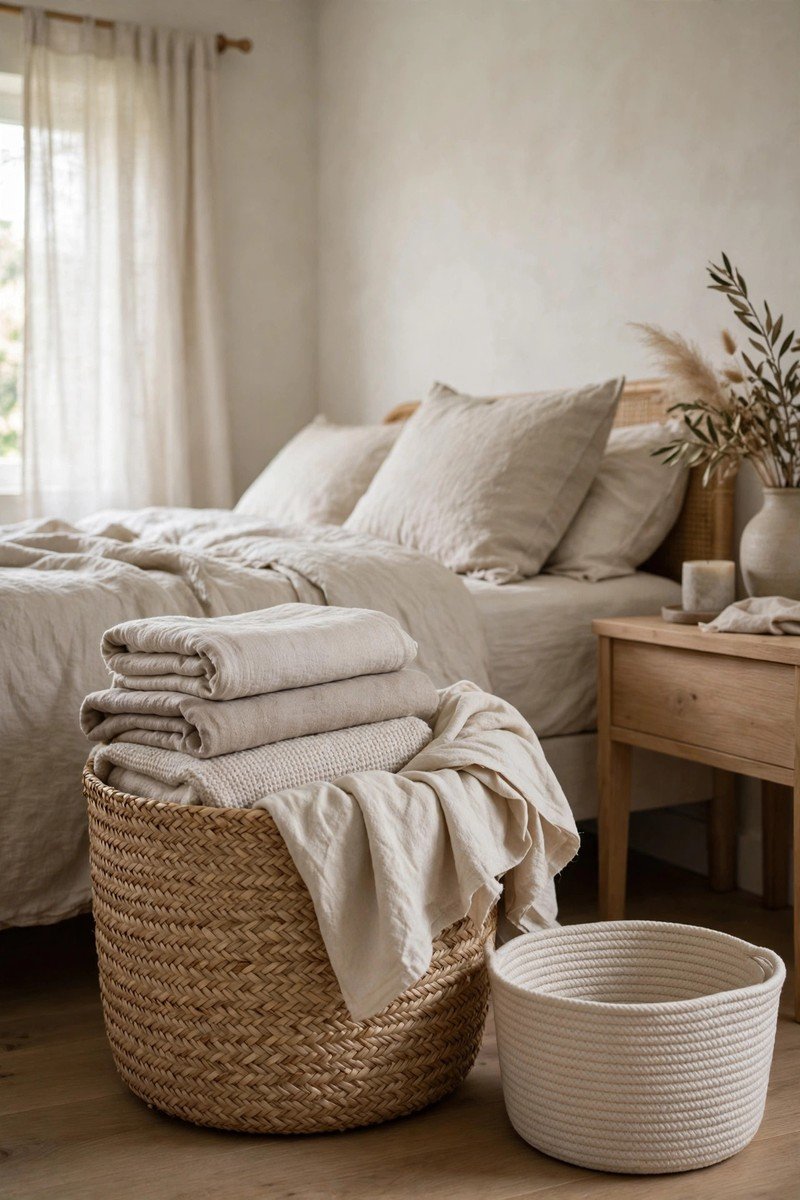
22. Woven Baskets for Quiet Storage
Baskets hide clutter and they add warm texture at the same time. They suit a neutral room better than bright boxes.
Use one large basket for extra throws and one small basket on a shelf for chargers and small items. Pick seagrass, cotton rope or willow in natural tones.
Pro tip: Label nothing on the outside. Keep one basket for throws and one for small tech items so you always know where things live.
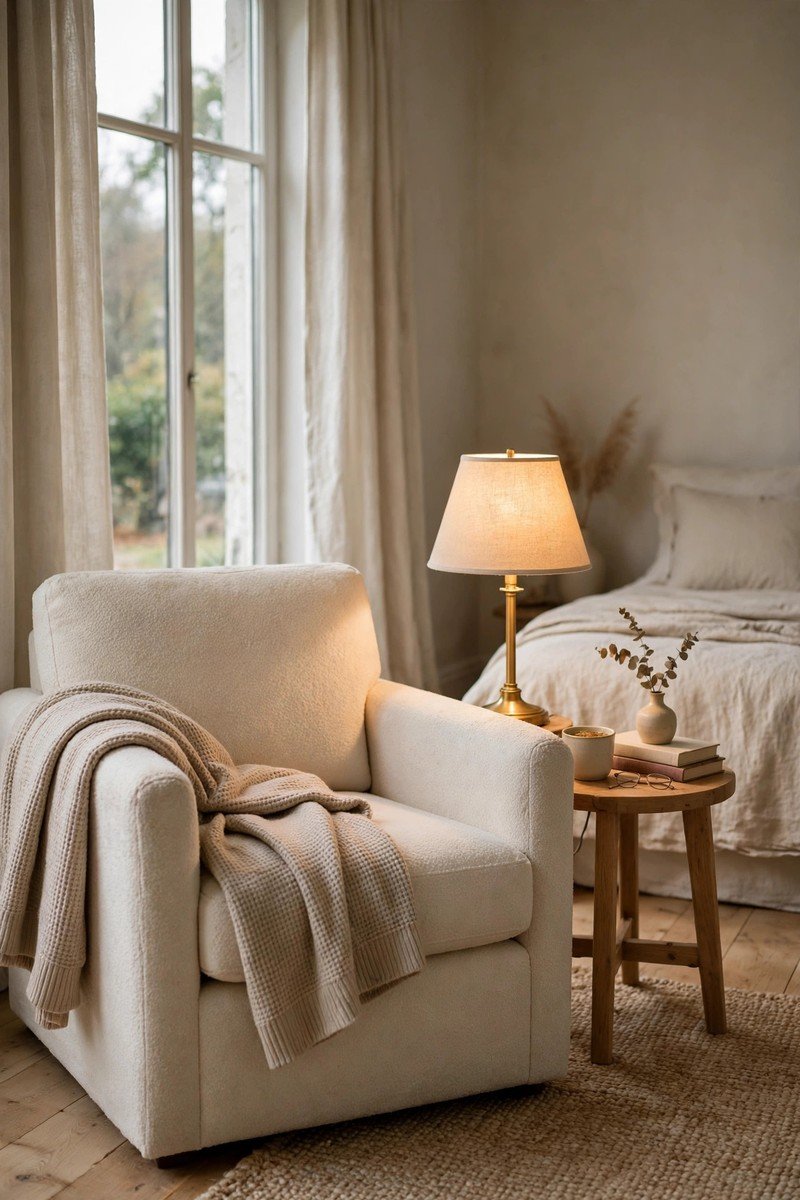
23. Reading Corner in a Cream Chair
A small chair by the window turns a spare corner into a place you will actually use. It also adds a soft shape to the room.
Pick a cream or beige armchair with a soft cushion. Add a small side table, a warm lamp and a folded throw.
Pro tip: A comfy reading chair costs about 120 to 300 dollars. Sit in it before you buy and check that your feet reach the floor with ease.
Build the Neutral Base: Wall, Floor and Bed
A cozy neutral bedroom starts with the base, and the base is light. Paint the walls warm white or pale greige, because a cool white wall makes a neutral room feel cold. Check the undertone before you paint, because a greige with a pink undertone looks warm at noon and pink at night, while one with a green undertone looks calm all day. Keep the floor light too, with pale wood or a light rug, because a dark floor under pale walls splits the room in half. Choose the bed frame in light oak or whitewash, because the bed is the largest piece in the room and it sets the tone. For cozy neutral bedroom ideas that feel warm and not washed out, the base must be warm, because a neutral room built on cool tones feels empty, not calm.
Layer Texture Without Adding Colour
Texture is what makes a light neutral room feel cozy, and it does it without a single new colour. Layer three textures on the bed: linen sheets, a cotton or wool coverlet, and a chunky knit throw at the foot. Use a different texture on each layer, because two layers in the same fabric look flat even when the colours match. Add a soft rug beside the bed, about 2 by 3 feet on each side, so bare feet land on wool, not on hard floor. Use woven baskets for storage, because a basket adds texture and hides clutter at the same time. Keep the textures in the same light tones, cream, oatmeal and pale grey, because the texture is the interest, and the colour stays quiet.
Light That Keeps a Pale Room Warm
A pale room needs warm light, or it looks cold by evening. Use warm bulbs around 2700 Kelvin in every lamp, because cool white light makes cream walls look grey. Put a lamp on each nightstand, not only one side, because a pale room with light on one side looks lopsided. Use sheer curtains in daylight, because they soften the sun without blocking it, and add floor length linen curtains in oatmeal for the evening, because heavy curtains at night make the room feel finished. Dim the main light after 7 pm, and let the lamps do the work, because low warm light is what makes a neutral bedroom feel cozy. Check the room at night before you call it done, because a neutral room that looks calm at noon can look flat at 9 pm.
Budget for a Cozy Neutral Bedroom
Under 100 dollars: a set of linen pillowcases, a chunky knit throw, and two warm bulbs. From 100 to 300 dollars: add a wool rug, a set of woven baskets, and a pair of linen curtains. Over 300 dollars: add a boucle headboard, a light oak bed frame, and a full set of layered bedding. As a typical range, a chunky knit throw costs about 30 to 70 dollars, and a wool rug 5 by 7 feet costs about 80 to 200 dollars. Buy the bedding first, because the bed is where the texture is felt, and a well layered bed makes the whole room feel cozy.
Common Mistakes to Avoid
- Using only one pale tone. One shade all over looks flat. Mix light, mid and dark neutrals.
- Mixing warm and cool bases with no plan. Pick warm cream or cool grey as the base and repeat it in large items.
- Skipping texture. Smooth bedding, smooth walls and smooth floors together look bare. Add knit, linen, wool and wood.
- Adding too many small items. A calm room needs empty space. Remove one item from each surface before you add a new one.
- Using cool white light. Cool bulbs can turn beige grey. Use warm bulbs near 2700K in lamps.
- Copying a dark room by mistake. Dark walls and heavy velvet belong to a different style. Keep this room light, soft and pale.